Monday, August 14, 2006
The Trouble With ‘Profiling’
The Today Programme this morning broadcast someone criticising airport security for carrying out checks on passengers like ‘grannies’, who ‘obviously’ aren’t terrorists, and called for passenger (racial) profiling instead. It was in my blearier part of the morning, so I can’t be certain who came up with this, though I think it was a representative of one of the airlines rather than the Daily Mail direct. Remember that several of the suspects arrested in the latest alleged terror plot are white, middle-class men described as ‘sons of the stockbroker belt’; might they not have been picked deliberately to beat ‘profiling’? So this particular ‘common sense’ argument – of the many always rattled off at times like these – seems even dimmer than usual this week.
If terrorist planners are clever enough to come up with ways round high-tech airport security scanners, it’s probably occurred to them to pick volunteers who don’t look like the Daily Mail’s idea of ‘a terrorist’ (oh, I dunno, though – that net’s probably spread pretty wide). Of course, it also makes sense for the authorities to treat everyone equitably because it’s fair, and seen to be fair; you’re much more likely to get Muslim co-operation, obviously, if you’re not ostentatiously victimising innocent Muslims of Asian descent but saying every white person is automatically a non-Muslim and automatically innocent.
So what are people calling for this sort of discriminatory ‘common sense’ actually asking for? Three things, mainly. First, they’re saying “I’m deeply shocked and offended that you should think I’m a potential terrorist.” Well, so is almost anyone who isn’t a terrorist. Next, they’re desperately trying to reassure themselves that “A terrorist can’t be someone like me or someone from my nice street,” which is entirely understandable but not exactly an intelligence-led security strategy. And, in policy terms, they’re then saying “Look, I don’t care what you do to anyone else, but I’ll kick up an enormous fuss if you do it to me. I want special treatment.”
Tough.
If terrorist planners are clever enough to come up with ways round high-tech airport security scanners, it’s probably occurred to them to pick volunteers who don’t look like the Daily Mail’s idea of ‘a terrorist’ (oh, I dunno, though – that net’s probably spread pretty wide). Of course, it also makes sense for the authorities to treat everyone equitably because it’s fair, and seen to be fair; you’re much more likely to get Muslim co-operation, obviously, if you’re not ostentatiously victimising innocent Muslims of Asian descent but saying every white person is automatically a non-Muslim and automatically innocent.
So what are people calling for this sort of discriminatory ‘common sense’ actually asking for? Three things, mainly. First, they’re saying “I’m deeply shocked and offended that you should think I’m a potential terrorist.” Well, so is almost anyone who isn’t a terrorist. Next, they’re desperately trying to reassure themselves that “A terrorist can’t be someone like me or someone from my nice street,” which is entirely understandable but not exactly an intelligence-led security strategy. And, in policy terms, they’re then saying “Look, I don’t care what you do to anyone else, but I’ll kick up an enormous fuss if you do it to me. I want special treatment.”
Tough.


Friday, August 11, 2006
Possibly Not the Worst Home Secretary Conceivable
Jonathan Calder has written a penetrating (if depressing) analysis of Home Secretary John Reid. In the early days of New Labour, Liberals who had hopes for it saw Home Affairs as an embarrassing aberration; even those suckered at the time have now long known that the occasional early liberal noises were the aberration, but remember how shockingly authoritarian Jack Straw seemed back then? People who were New Labour sceptics from the beginning used to mention Mr Straw as code to make Paddy Ashdown wince. In Opposition, he had been in a bidding war to be more illiberal than Michael Howard. You got the feeling that if Judge Death had become Tory Home Secretary, announcing that all crime was committed by the living and so the pre-emptive sentence for the entire population was death, Mr Straw would have jumped up to shout, “Not tough enough!” And when, in government, he announced curfews for children, who can forget John Redwood’s statement that “Even I’m not that right-wing”?
Back in 1994 I was describing Tony Blair as a Christian Democrat, and I constantly hammered his 1997 programme as a Tory one. Where I was wrong is that I, too, thought Jack Straw was the worst they could do. While he was the jemmy that helped prise Liberal Democrats away from New Labour – before Iraq turned ‘ceasing co-operation’ into ‘implacable opposition’ – he wasn’t some bizarre authoritarian extreme of their coalition, but symptomatic of its whole approach, and not even the worst they could do as Home Secretary. Yes, I remember joking at the time that the only way things could get worse would be with David Blunkett in the Home Office. Sigh. Similarly, the only partisan bully who seemed worse than Charles Clarke would have been… DrStrangelove Reid. The current Home Secretary’s latest speech about freedoms we have to ‘temporarily’ chuck away (when we ought to defend them, not least to stick two old-fashioned British fingers up at terrorists who want to destroy our way of life, rather than the government doing it for them) has already been excoriated by Will Howells, but Jonathan Calder brilliantly exposes what it means in his understatedly-titled ‘John Reid: The cloven hoof pops out’:
Similarly, the Labour Party since 1997 has always managed to be more appalling than my very low expectations. Yes, Dr Reid is what we used to call at uni a ‘tankie’ – an ‘official’ communist long after the tanks rolled into Hungary and Czechoslovakia, as Jonathan points out. But Labour’s authoritarianism today is endemic to their culture, not down to any one individual, and I can no longer get excited about how bad any particular one of them might be: it’s a government that hates freedom, full stop. John Reid may well be the worst Home Secretary conceivable – but in the light of their impressive record so far, I will make no rash commitments.
Back in 1994 I was describing Tony Blair as a Christian Democrat, and I constantly hammered his 1997 programme as a Tory one. Where I was wrong is that I, too, thought Jack Straw was the worst they could do. While he was the jemmy that helped prise Liberal Democrats away from New Labour – before Iraq turned ‘ceasing co-operation’ into ‘implacable opposition’ – he wasn’t some bizarre authoritarian extreme of their coalition, but symptomatic of its whole approach, and not even the worst they could do as Home Secretary. Yes, I remember joking at the time that the only way things could get worse would be with David Blunkett in the Home Office. Sigh. Similarly, the only partisan bully who seemed worse than Charles Clarke would have been… Dr
“So the problems we face are the existence of politicians who disagree with the government, an independent judiciary and a free press. In short, the central institutions of a liberal democracy.”The radio comedy series Hordes of the Things saw Paul Eddington’s Good King Yulfric the Wise the Third let Albion fall by increments to a murderous brotherhood of cannibal monks (or, as Mr Blair would put it, implement a bold series of faith-based initiatives). His queen, finding a helm marked ‘T.E.O.’ in the advance luggage of the bishop’s latest guest, confronts Yulfric with her fears. “I’ve just had the most terrible thought!” he declares. “Isn’t that awful great aunt of yours called ‘Teresa’, or something?” “Yulfric, I’m afraid it’s worse than that.” “What can possibly be worse than that? Unless of course,” he laughs, “it’s The Evil One. The Evil One…” His laughter tails away.
Similarly, the Labour Party since 1997 has always managed to be more appalling than my very low expectations. Yes, Dr Reid is what we used to call at uni a ‘tankie’ – an ‘official’ communist long after the tanks rolled into Hungary and Czechoslovakia, as Jonathan points out. But Labour’s authoritarianism today is endemic to their culture, not down to any one individual, and I can no longer get excited about how bad any particular one of them might be: it’s a government that hates freedom, full stop. John Reid may well be the worst Home Secretary conceivable – but in the light of their impressive record so far, I will make no rash commitments.
Thursday, August 10, 2006
The Avengers – The Hour That Never Was
Tonight’s Avengers on BBC4 (7.10, or 11.30 tomorrow night) features eerie goings-on at a deserted airfield, and is often raved about. It’s certainly atmospheric, but I tend to find it a little slow; for half of it, Steed and Mrs Peel are the only characters on screen, and while it’s all terribly well-shot there’s not a lot of dialogue to make it sparkle. If it was made today rather than 41 years ago, it would probably be called ‘ambient television’. When other actors finally appear, look out for scene-stealing Roy Kinnear and Gerald Harper, star of BBC-answer-to-The-Avengers Adam Adamant Lives.
Anyway, it’s suggested that Steed – usually an army man – flew out of RAF Station 472 Hamelin frequently in the war, probably to be dropped on some intelligence mission rather than doing the flying himself. Two decades later, the base is closing down and Steed’s been invited to the party, trying to get Mrs Peel interested with lots of those ‘You’ll really like this bit…’ conversations that never go that well. However, something odd is going on, and after crashing his car by a rather pretty lake in the opening scene (a dog runs in front of him, which links rather well to the plot) they wake up to find the base deserted. It takes a keen eye and the new-fangled ‘pause button’ to see if Mrs Peel is actually in the car before it crashes, which is rather a clever touch; when, nearly two-thirds of the way through the episode, Steed wakes up a second time to find his car still crashed but no Mrs Peel, it’s some time before the viewer is given any evidence as to whether or not the bulk of the episode is a dream.
Hallucination or not, I’ve always loved the image of Emma sauntering across the top of a peculiarly memorable bridge (it turns up a lot in The Avengers, even making it to the Tara King titles; I’ve always rather wanted to visit) and the way our heroes stride purposefully around the airfield in cool hand-held camerawork after they find the officers’ mess deserted.
Of course, this time the base is full of people and the time appears to have jumped back an hour, so perhaps it was all a dream. Hmm, I wonder. He’s greeted by Gerald Harper as his old friend Squadron-Leader Ridsdale, who seems slightly sinister, and the jolly camp dentist, filling in for the MO. Ooh, which of them could be the villain? I have to admit, having spent so long building up the tension, it’s all finished off in a bit of a rush – no sooner do we have the dastardly and slightly improbable plan explained than there’s a fight and, oh, it’s over (still, they were right and the studio was wrong – their exit with milk float is funny). It slightly gives the feel of an old Doctor Who structure with the middle cut out; the series tended to have intriguing first episodes made up largely of unanswered questions, then follow with various complications of plot and character building up to the eventual climax. This contrasts with the new series which, usually giving the story all in one go at an Avengers sort of length of 50 minutes as opposed to the old four or so 25-minute episodes, tends to skip most of the atmospheric buildup so as to fit in enough ‘meat’. Back in the ’70s, there was a two-part story called The Sontaran Experiment which has a very similar feel to this; an eerie, atmospheric outdoor first half, then spends the second half falling over itself to try and get it all wrapped up in time because not enough happened except moodiness in the earlier part, as if the vital middle bit’s just missing and consequently much-missed. That was initially impressive but not terribly satisfying in the end, too…
Next week’s episode of The Avengers, on the other hand, is magnificent.
Steed has to face the music – Emma disappearsThis is definitely one of those sinister stories where you wonder what’s going on, always a good question to be teased with, though the question is probably more satisfying than the answer. It’s very evocative, with a keen sense of nostalgia for a Britain that’s passing, but also for the Second World War – perhaps it’s nostalgia for less complicated enemies, with the villain here (while a jolly performance) rather greedy and underhand. Apparently inspired by location visits to abandoned airfields for the rather more diverting The Town of No Return, it seems to have done particularly well for anecdotes. Dave Rogers’ The Ultimate Avengers, for example, suggests they wanted We’ll Meet Again for the scenes wandering around the deserted base, while Cornelltoppingday’s less authoritative but much more amusing The Avengers Dossier suggests that Roy Kinnear’s part of Hickey (whose name they get wrong) was written for Harold Pinter. Both note that the studio wanted to drop the comedy speeded-up end scene, too.
Anyway, it’s suggested that Steed – usually an army man – flew out of RAF Station 472 Hamelin frequently in the war, probably to be dropped on some intelligence mission rather than doing the flying himself. Two decades later, the base is closing down and Steed’s been invited to the party, trying to get Mrs Peel interested with lots of those ‘You’ll really like this bit…’ conversations that never go that well. However, something odd is going on, and after crashing his car by a rather pretty lake in the opening scene (a dog runs in front of him, which links rather well to the plot) they wake up to find the base deserted. It takes a keen eye and the new-fangled ‘pause button’ to see if Mrs Peel is actually in the car before it crashes, which is rather a clever touch; when, nearly two-thirds of the way through the episode, Steed wakes up a second time to find his car still crashed but no Mrs Peel, it’s some time before the viewer is given any evidence as to whether or not the bulk of the episode is a dream.
Hallucination or not, I’ve always loved the image of Emma sauntering across the top of a peculiarly memorable bridge (it turns up a lot in The Avengers, even making it to the Tara King titles; I’ve always rather wanted to visit) and the way our heroes stride purposefully around the airfield in cool hand-held camerawork after they find the officers’ mess deserted.
“I don’t hear a plane.”The twenty minutes or so of them on their own does start to make you wonder when something’s going to happen, though; it really makes me appreciate the scripting of Doctor Who: The Ark in Space, which also starts with pretty much a two-handed episode but never feels sparse. It’s only after a mysterious vibration causes Steed to lurch into the fall-out shelter (as he tumbles, we actually see his immaculate suit covered in grass, if briefly) that he’s separated from Mrs Peel and then, dead-on half-way through, meets another living soul at last. It’s one Benedict Napoleon Hickey, and this bit part is of course played by one of the half a dozen most outstanding Avengers guest stars, each appearing at least four times and always stealing the show – give a big hand to ‘Loveable Roy Kinnear’, playing a tramp who collects string but absolutely not stamps, and always scavenges at air bases.
“Takes a bit of coaxing to get it started. So will you when you’re that age.”
“Oh, yes, sir, serpently. None of that army or navy rubbish for me. I’m loyal, I am, loyal to the air force – always have been. Best dustbins in the business.”It’s almost as if, with hardly any dialogue in the episode, his is overwritten to compensate, but who could complain when he’s so fantastic? Patrick Macnee, too, gives a great performance as his usual urbanity becomes harsher through his worry for Emma. Before long he’s unconscious again, back at the car, and when he staggers back to the base he looks more wrecked than we ever see him. Why, his tie’s even askew and his top button’s undone.
Of course, this time the base is full of people and the time appears to have jumped back an hour, so perhaps it was all a dream. Hmm, I wonder. He’s greeted by Gerald Harper as his old friend Squadron-Leader Ridsdale, who seems slightly sinister, and the jolly camp dentist, filling in for the MO. Ooh, which of them could be the villain? I have to admit, having spent so long building up the tension, it’s all finished off in a bit of a rush – no sooner do we have the dastardly and slightly improbable plan explained than there’s a fight and, oh, it’s over (still, they were right and the studio was wrong – their exit with milk float is funny). It slightly gives the feel of an old Doctor Who structure with the middle cut out; the series tended to have intriguing first episodes made up largely of unanswered questions, then follow with various complications of plot and character building up to the eventual climax. This contrasts with the new series which, usually giving the story all in one go at an Avengers sort of length of 50 minutes as opposed to the old four or so 25-minute episodes, tends to skip most of the atmospheric buildup so as to fit in enough ‘meat’. Back in the ’70s, there was a two-part story called The Sontaran Experiment which has a very similar feel to this; an eerie, atmospheric outdoor first half, then spends the second half falling over itself to try and get it all wrapped up in time because not enough happened except moodiness in the earlier part, as if the vital middle bit’s just missing and consequently much-missed. That was initially impressive but not terribly satisfying in the end, too…
Next week’s episode of The Avengers, on the other hand, is magnificent.
Labels: Reviews, Roy Kinnear, The Avengers, The Avengers Season 4
Of Course We Should Elect the Lords!
It’s ‘Lords Reform Day’, which leaves me in a quandary. No, not about whether to elect our second chamber (puh-lease!), but about what possibly to blog other than “Of course Parliament should be elected in a democracy! Are you a fuckwit, or what?” So, for fun, if you see a Lib Dem MP looking very sober and smug about how ludicrous it is that senior offices in the land should still be filled by the cronies of Prime Ministers and the descendents of the cronies of kings, just ask, “So you’d abolish the monarchy, then?” and watch them turn puce.
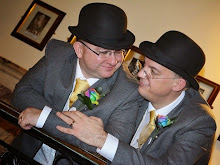
Only one Lord should still be about, and the hereditary principle in his case is a bit of a contentious issue. He’s got a new suit today (not bad, nasty breast pocket), and a new companion. You can distinguish her from a suspiciously similar-looking character because this one’s got a pineapple on her head.
Only one Lord should still be about, and the hereditary principle in his case is a bit of a contentious issue. He’s got a new suit today (not bad, nasty breast pocket), and a new companion. You can distinguish her from a suspiciously similar-looking character because this one’s got a pineapple on her head.
Labels: British Politics, David Tennant, Lords, Republic
Wednesday, August 09, 2006
Senator Lieberman (I, Conn)
Today’s big news from the USA is the ‘shock defeat’ of Joe Lieberman in the Senate Democratic primary in Connecticut by an unknown multi-millionaire, Ned Lamont. Yes, I know; America, the country where any underdog multi-millionaire can spend vast amounts of money to represent ordinary people, but the Lib Dem blogosphere can only look on in awe at the power of US bloggers, credited with starting up the ‘hopeless’ fight against the ‘safe’ three-term Senator from the heart of the party establishment for, it seems, both parties. He now intends to do the egotistical hat-trick and stand as an Independent.
Joe Lieberman ran for Vice-President in Al Gore’s 2000 campaign for the Presidency, and it’s difficult not to see this as a major source of his troubles today. First, he was widely seen as both arrogant and uncommitted by hedging his bets and running for Senate re-election in Connecticut six years ago at the same time as he was meant to be pushing Mr Gore for the White House; then he became President Bush’s closest Democratic ally, seen by many not just as selling out the Democratic Party but as making a personal betrayal after his part in the ‘losing’ side of an election widely regarded as stolen. As Mr Bush’s biggest Democratic supporter over the Iraq war, that issue’s been widely blamed for his sudden downfall.
Senator Clinton of New York is another ‘moderate’ Democrat who’s bolstered her national security credentials by being strongly pro-war and backed Senator Lieberman in the primary, but also made what could be two crucial moves in the last few weeks to show which way the wind is blowing. While urging voters to back Sen. Lieberman in the Connecticut Democratic primary, she announced well in advance of the result that she would then support whoever became the Democratic nominee – and she’s hired two well-known liberal bloggers to work on her campaign, presumably to reach back out to the Democratic base. I’ve not seen a statement from another potential Democratic Presidential runner who (unlike Hillary’s almost certain campaign) remains a big but will-he-won’t-he name, but given how Al’s become something of a liberal standard-bearer since 2000, I’d be surprised if he’ll back his old running-mate, either. So Mr Lieberman still might get back in on a split vote in November, but while he’s not exactly flavour of the month in Connecticut he’s going to be outright poison throughout the rest of the country. Will Democrats in the Senate allow him to retain all his senior positions there now he’s announced his ego comes before his party?
It may also not be lost on his former allies that Senator Lieberman’s ‘unbeatable’ lead in the polls gradually slipped away as he campaigned negatively against his Democratic opponent and claimed to be bipartisan, but that – as Mr Lamont went into a strong lead in the last few weeks – he’d just started to claw back support in the polls after suddenly going on the offensive instead against President Bush, belatedly listing all the issues on which he disagrees with the President. The primary campaign had seen constant TV replays of President Bush giving Sen. Lieberman a kiss after last year’s State of the Union speech, highlighting White House statements that Sen. Lieberman was its favourite Democrat.
It wasn’t just the war; on school vouchers, on confirming a conservative to the Supreme Court, on being the last Democratic senator to oppose President Bush’s Social Security privatisation scheme… On a host of issues, Senator Lieberman has sounded just like Mr Blair – telling his voters that any conservative thing he decides is unquestionable because it’s a matter of conscience, but that anyone who disagrees with him can only be doing so because they’re playing partisan politics, extremists and, by extension, evil. Connecticut Democrats seem finally to have decided that they’d like to vote for someone who agrees with their values rather than telling them off for having them. In a last-ditch attempt to recover support, Mr Lieberman last weekend did a u-turn of the sort many Labour voters are still praying for from Mr Blair and defended dissenters opposed to the war instead of (as previously) criticising them for standing up for their own consciences. Too little, too late, though. Ironically, if he’d not been so selfish and arrogant as to announce that he would run as an Independent should Democratic voters prove themselves unworthy by rejecting him, he’d probably have won.
It would help Senator Lieberman’s protestations of purity amid an unfair campaign if all accounts didn’t suggest he fought one of the most negative campaigns in Senate primary history, and all in an ill-tempered and arrogant way that suggested to all concerned that it was an outrage any critic should have the temerity to question his sinecure. His campaign’s final fling appeared to be to accuse Mr Lamont of hacking his website, despite admitting there was no actual evidence and all apparently as an excuse for the server simply going down because it was done on the cheap and got too busy. It’s still not all plain sailing for his opponent after his initial victory. For the moment, Iraq seems to be the only issue that people are listening to Ned Lamont over, though ironically he seems to be described – except in the overblown negative rhetoric of Sen. Lieberman – as a moderate on foreign policy, with his other views socially liberal and fiscally conservative. I’m sure he’ll be tested on more of them over the next three months.
So will the big story from this be ‘Democrats still split down the middle’ or ‘anyone close to President Bush and his war faces wipeout’? Each is obviously much worse for one party than the other, but I suspect both may be true. Republicans are, of course, already saying the Democrats are rejecting ‘moderates’ (confusing a plural with a singular there) and are all now extremists deliberately undermining national security. That’s what they’re saying. But what many Republican Congressmen and Senators are doing is running without mentioning the President or even the name of their party (like Tory councillors here ten years ago). The Republican Party is hugely unpopular, with President Bush’s approval ratings still bumping along below 40% and the entirely Republican-controlled Houses of Congress lucky to get 10% below that. There are even signs that the Republican coalition is fracturing, with fiscal conservatives angry at a big-government conservatism that throws money at pet projects while the deficit soars and everyone angry at the religious right, who are seen as the only people the President cares about. Those evangelical voters, meanwhile, think they’re getting lip service but not enough real meat in turning the country into a Christian theocracy. Tragic.
It may be that the only thing that can save the Republicans in November is the Democratic Party, which hasn’t had a message they can agree on since they were removed from the White House. President Bush has tried enormously hard to paint them as weak and split them on every issue around national security and, well, it’s worked. I find it very difficult not to see Senator Lieberman’s rejection of democracy as selfish, self-serving and deeply destructive to his party. A man who announces in his ‘concession’ speech that “For the sake of our state, our country and my party, I cannot and will not let that result stand” has, at the least, an inflated sense of his own importance. He’s not Winston bloody Churchill. Coming to love Big Bush, he’s more Winston Smith. With President Bush spectacularly partisan on almost every issue – but especially the most important ones – it seems Democratic voters have become fed up with Democrats who claim to practise bipartisanship, seeing it as merely queuing up to help the enemy give their own party a good kicking to bolster their personal position. This perception will not have been diluted by Sen. Lieberman’s announcement well before the result that, whatever his voters decided, he was going to run anyway.
This was not a small group ambushing him while the state was on holiday. He may only have been defeated in the end by 52% to 48%, but virtually the Democratic establishment from President Clinton down turned out to campaign for him, and turnout hit 50% - twice what you’d expect for a primary. The fact is that despite what all the Democratic bigwigs told them, ordinary Democratic voters just didn’t believe he was enough of a Democrat. It takes astounding chutzpah that this morning this quintessential Washington insider is attacking outsider Ned Lamont as a partisan Washington politician. Richard and I have been watching Seasons Three to Five of The West Wing over the last few months, and in one of the best episodes, President Bartlet whups the Republican candidate for President in debate. Among his points is a blazing defence of partisan politics, because it gives people a choice. In another recent episode, a Democrat who always votes with the Republicans and holds his party to ransom for the privilege has his bluff called, and crosses the floor. No relation.
I imagine some British readers will be thinking of Merseyside at this stage, but a primary is really the opposite of entryism. The hard left managed to gain control of some Labour constituencies by flooding people in to take over the ruling cliques; in Connecticut, rather than opposition to the incumbent coming from a coup in the party establishment, there was a mass rebellion by ordinary voters asking the question ‘Is it worth it nominally to have a seat in Congress if someone nominally of your party never votes with you on the big issues and openly castigates every liberal idea?’ Even in the far looser party groupings of the States, there are limits to how much you can be the enemy’s best buddy. If you’re thinking of Merseyside, it’s not so much that Senator Lieberman’s opponents are militants, and more that he’s a bit of a David Alton.
With the Tories having a bit of a nightmare week for Mr Cameron’s ‘big idea’ of a primary to decide their candidate for Mayor of London, I suspect this result – showing that primaries might favour big money, but they also give a great opportunity for airing party splits and giving party establishments a smack in the chops if people are riled enough – will further put off those in the Conservative Party who see democracy as dangerous madness.
Meanwhile, I’m hugely enjoying another tale of poisonous Senate campaigns as I, Claudius airs again on BBC4, followed each evening by Up, Pompeii. Sample joke from the latter: “Where is Puberty?” “It’s where the Pubic Wars were fought.” Even the filthy jokes were cultured back then.
Joe Lieberman ran for Vice-President in Al Gore’s 2000 campaign for the Presidency, and it’s difficult not to see this as a major source of his troubles today. First, he was widely seen as both arrogant and uncommitted by hedging his bets and running for Senate re-election in Connecticut six years ago at the same time as he was meant to be pushing Mr Gore for the White House; then he became President Bush’s closest Democratic ally, seen by many not just as selling out the Democratic Party but as making a personal betrayal after his part in the ‘losing’ side of an election widely regarded as stolen. As Mr Bush’s biggest Democratic supporter over the Iraq war, that issue’s been widely blamed for his sudden downfall.
Senator Clinton of New York is another ‘moderate’ Democrat who’s bolstered her national security credentials by being strongly pro-war and backed Senator Lieberman in the primary, but also made what could be two crucial moves in the last few weeks to show which way the wind is blowing. While urging voters to back Sen. Lieberman in the Connecticut Democratic primary, she announced well in advance of the result that she would then support whoever became the Democratic nominee – and she’s hired two well-known liberal bloggers to work on her campaign, presumably to reach back out to the Democratic base. I’ve not seen a statement from another potential Democratic Presidential runner who (unlike Hillary’s almost certain campaign) remains a big but will-he-won’t-he name, but given how Al’s become something of a liberal standard-bearer since 2000, I’d be surprised if he’ll back his old running-mate, either. So Mr Lieberman still might get back in on a split vote in November, but while he’s not exactly flavour of the month in Connecticut he’s going to be outright poison throughout the rest of the country. Will Democrats in the Senate allow him to retain all his senior positions there now he’s announced his ego comes before his party?
It may also not be lost on his former allies that Senator Lieberman’s ‘unbeatable’ lead in the polls gradually slipped away as he campaigned negatively against his Democratic opponent and claimed to be bipartisan, but that – as Mr Lamont went into a strong lead in the last few weeks – he’d just started to claw back support in the polls after suddenly going on the offensive instead against President Bush, belatedly listing all the issues on which he disagrees with the President. The primary campaign had seen constant TV replays of President Bush giving Sen. Lieberman a kiss after last year’s State of the Union speech, highlighting White House statements that Sen. Lieberman was its favourite Democrat.
It wasn’t just the war; on school vouchers, on confirming a conservative to the Supreme Court, on being the last Democratic senator to oppose President Bush’s Social Security privatisation scheme… On a host of issues, Senator Lieberman has sounded just like Mr Blair – telling his voters that any conservative thing he decides is unquestionable because it’s a matter of conscience, but that anyone who disagrees with him can only be doing so because they’re playing partisan politics, extremists and, by extension, evil. Connecticut Democrats seem finally to have decided that they’d like to vote for someone who agrees with their values rather than telling them off for having them. In a last-ditch attempt to recover support, Mr Lieberman last weekend did a u-turn of the sort many Labour voters are still praying for from Mr Blair and defended dissenters opposed to the war instead of (as previously) criticising them for standing up for their own consciences. Too little, too late, though. Ironically, if he’d not been so selfish and arrogant as to announce that he would run as an Independent should Democratic voters prove themselves unworthy by rejecting him, he’d probably have won.
It would help Senator Lieberman’s protestations of purity amid an unfair campaign if all accounts didn’t suggest he fought one of the most negative campaigns in Senate primary history, and all in an ill-tempered and arrogant way that suggested to all concerned that it was an outrage any critic should have the temerity to question his sinecure. His campaign’s final fling appeared to be to accuse Mr Lamont of hacking his website, despite admitting there was no actual evidence and all apparently as an excuse for the server simply going down because it was done on the cheap and got too busy. It’s still not all plain sailing for his opponent after his initial victory. For the moment, Iraq seems to be the only issue that people are listening to Ned Lamont over, though ironically he seems to be described – except in the overblown negative rhetoric of Sen. Lieberman – as a moderate on foreign policy, with his other views socially liberal and fiscally conservative. I’m sure he’ll be tested on more of them over the next three months.
So will the big story from this be ‘Democrats still split down the middle’ or ‘anyone close to President Bush and his war faces wipeout’? Each is obviously much worse for one party than the other, but I suspect both may be true. Republicans are, of course, already saying the Democrats are rejecting ‘moderates’ (confusing a plural with a singular there) and are all now extremists deliberately undermining national security. That’s what they’re saying. But what many Republican Congressmen and Senators are doing is running without mentioning the President or even the name of their party (like Tory councillors here ten years ago). The Republican Party is hugely unpopular, with President Bush’s approval ratings still bumping along below 40% and the entirely Republican-controlled Houses of Congress lucky to get 10% below that. There are even signs that the Republican coalition is fracturing, with fiscal conservatives angry at a big-government conservatism that throws money at pet projects while the deficit soars and everyone angry at the religious right, who are seen as the only people the President cares about. Those evangelical voters, meanwhile, think they’re getting lip service but not enough real meat in turning the country into a Christian theocracy. Tragic.
It may be that the only thing that can save the Republicans in November is the Democratic Party, which hasn’t had a message they can agree on since they were removed from the White House. President Bush has tried enormously hard to paint them as weak and split them on every issue around national security and, well, it’s worked. I find it very difficult not to see Senator Lieberman’s rejection of democracy as selfish, self-serving and deeply destructive to his party. A man who announces in his ‘concession’ speech that “For the sake of our state, our country and my party, I cannot and will not let that result stand” has, at the least, an inflated sense of his own importance. He’s not Winston bloody Churchill. Coming to love Big Bush, he’s more Winston Smith. With President Bush spectacularly partisan on almost every issue – but especially the most important ones – it seems Democratic voters have become fed up with Democrats who claim to practise bipartisanship, seeing it as merely queuing up to help the enemy give their own party a good kicking to bolster their personal position. This perception will not have been diluted by Sen. Lieberman’s announcement well before the result that, whatever his voters decided, he was going to run anyway.
This was not a small group ambushing him while the state was on holiday. He may only have been defeated in the end by 52% to 48%, but virtually the Democratic establishment from President Clinton down turned out to campaign for him, and turnout hit 50% - twice what you’d expect for a primary. The fact is that despite what all the Democratic bigwigs told them, ordinary Democratic voters just didn’t believe he was enough of a Democrat. It takes astounding chutzpah that this morning this quintessential Washington insider is attacking outsider Ned Lamont as a partisan Washington politician. Richard and I have been watching Seasons Three to Five of The West Wing over the last few months, and in one of the best episodes, President Bartlet whups the Republican candidate for President in debate. Among his points is a blazing defence of partisan politics, because it gives people a choice. In another recent episode, a Democrat who always votes with the Republicans and holds his party to ransom for the privilege has his bluff called, and crosses the floor. No relation.
I imagine some British readers will be thinking of Merseyside at this stage, but a primary is really the opposite of entryism. The hard left managed to gain control of some Labour constituencies by flooding people in to take over the ruling cliques; in Connecticut, rather than opposition to the incumbent coming from a coup in the party establishment, there was a mass rebellion by ordinary voters asking the question ‘Is it worth it nominally to have a seat in Congress if someone nominally of your party never votes with you on the big issues and openly castigates every liberal idea?’ Even in the far looser party groupings of the States, there are limits to how much you can be the enemy’s best buddy. If you’re thinking of Merseyside, it’s not so much that Senator Lieberman’s opponents are militants, and more that he’s a bit of a David Alton.
With the Tories having a bit of a nightmare week for Mr Cameron’s ‘big idea’ of a primary to decide their candidate for Mayor of London, I suspect this result – showing that primaries might favour big money, but they also give a great opportunity for airing party splits and giving party establishments a smack in the chops if people are riled enough – will further put off those in the Conservative Party who see democracy as dangerous madness.
Meanwhile, I’m hugely enjoying another tale of poisonous Senate campaigns as I, Claudius airs again on BBC4, followed each evening by Up, Pompeii. Sample joke from the latter: “Where is Puberty?” “It’s where the Pubic Wars were fought.” Even the filthy jokes were cultured back then.
Friday, August 04, 2006
Time Trumpet: Play Loud
Yes, I’m taking a short break from looking at television from forty years in the past by bringing you television from twenty-five years in the future (or “thirty,” if you read all the publicity from media who can’t do the sum ‘2031-2006’). The most exciting thing I saw on TV last night was still a trailer for I, Claudius (1976) being repeated on BBC4 at 9 every night from Saturday, though, so you needn’t worry I’m getting too modern. Anyway, is Armando Iannucci's new TV series any good? Well, like many sketch shows, it depends which three minutes you watch.
Driven to fury by all those ‘I Love the Day Before Yesterday’ shows featuring alternately banal and bemused celebrity reminiscences, Mr Iannucci is now beaming a look back at the next few years from a couple of decades later. We get a brief shot of 2031’s Leeds after the floods that killed millions, a futuristic city set in a huge lake that could have fitted in snugly as a shot from Doctor Who: New Earth, but it concentrates ‘looking back’ at years such as 2007 and 2008; like all satire and much sci-fi, it’s all about today.
If you hoped to see the ‘Terrorism Awards’ fulminated against by the Daily Mail (hat-tip to The Whiskey Priest), they’re still to look forward to in a future episode. Shocking, isn’t it, that a programme should release details way in advance just to build up shock value? Most of the ‘shock’ in last night’s edition came not from politics but from ‘celebrities’. There was Charlotte Church vomiting her insides out, which featured an engaging actress doing interviews as the older Ms Church but went on quite a way too long, and an extended joke building on David Beckham’s tattoos and perceived androgyny; the ‘older Mr Beckham’ didn’t cut it, and on the whole it seemed a tired attempt to get ‘Oh, I’ve never been so / too disgusting to print in a family newspaper’ headlines. But, really, David Beckham? Even I gave up making jokes about him several years ago, so 2031 is well past their laugh-by date.
Much more successful was CBBC’s children's plastic surgery show Spicy Slicey, with cutting remarks from a rather unimpressive ‘older Anne Robinson’. It worked, though, because the ‘celebrity’ was an aside rather than the main target, and it seemed horribly plausible in a Nigel Kneale sort of way. Particularly the advice that to reset your bone structure at home, one good whack with a hammer is worth several tentative taps. A bearish old Jamie Oliver still being shocked that it can’t be healthy for the kids raised a smile, too.
On the other hand, I do wonder how they can miss a comic target as big as Newsnight’s feeble Martha Kearney. But, in ‘Honey, I Shrunk Martha Kearney’, with her reduced to one-third of her original height, they seemed to think Ms Kearney being small and squeaky was funny enough on its own. It wasn’t, you know. Question Time fared slightly better, with members of the audience haranguing rather well-selected clips of Boris Johnson and Harriet Harman.
Following on from that, the art of the video montage provided the real gold in the programme and those most effectively targeted were, appropriately, Mr Blair and Mr Cameron. It’s all too plausible that Tony Blair sees ghosts wherever he goes, and David Cameron making sure his ‘England’ wristband is visible, then glancing up at the camera, didn’t even require editing. I know the two most important lines in a speech – the first, to get people listening, and the last, to get people clapping. Now, I don’t remember what opened the programme, but they undoubtedly finished on the best bit, to get you tuning in again next week. With an elderly and – unusually for the programme and for the writer of The Thick of It – less foul-mouthed Alastair Campbell to point out just how much Mr Cameron was copying Mr Blair, the closing minutes scarily cut together speeches from the two. Word-for-word, gesture for gesture, only missing a trick in giving Mr Blair a red background and Mr Cameron blue (when I’m sure they’ve both used purple), it climaxed with a stunning sequence in which, between them, they delivered David Bowie’s Changes from the podium.
Uncannily, when we switched over from BBC2 to BBC4 for Charlie Brooker’s Screen Wipe – full of satirical voiceovers on current television and unflattering edits – it was like we were still watching the same programme, only with more swearing. I had to keep reminding myself that the programmes in the later show weren’t actually made up.
Time Trumpet is going to face a mass of comparisons with The Thick of It, Armando Iannucci's very funny minister-in-a-panic series (I’d call it a sit-com, but in television today that’s virtually a synonym for ‘rubbish’), and it’ll suffer from that. It’s much more patchy, and from its sketch-like format it has an uphill struggle to build up such vivid characters. The two programmes I’d most compare it to are surely the greatest satirical sketch show, Not the 9 O’Clock News, and Nigel Kneale’s satirical look at TV from the future, The Year of the Sex Olympics. No, it’s not as good as either, but at least it has a stab at it. It has the virtue that there wasn’t much in it that was ‘mildly amusing’ in the standard BBC comedy way, though; it was either very good indeed, or just feeble, and it’s worth tuning in for the great bits alone. Even if there are apparently no Liberal Democrats in 2031.
Accidental satire of the day: Lib Dem Blogs published my review of A Surfeit of H2O immediately above Colin Ross’ serious story, How much water do you use?
Driven to fury by all those ‘I Love the Day Before Yesterday’ shows featuring alternately banal and bemused celebrity reminiscences, Mr Iannucci is now beaming a look back at the next few years from a couple of decades later. We get a brief shot of 2031’s Leeds after the floods that killed millions, a futuristic city set in a huge lake that could have fitted in snugly as a shot from Doctor Who: New Earth, but it concentrates ‘looking back’ at years such as 2007 and 2008; like all satire and much sci-fi, it’s all about today.
If you hoped to see the ‘Terrorism Awards’ fulminated against by the Daily Mail (hat-tip to The Whiskey Priest), they’re still to look forward to in a future episode. Shocking, isn’t it, that a programme should release details way in advance just to build up shock value? Most of the ‘shock’ in last night’s edition came not from politics but from ‘celebrities’. There was Charlotte Church vomiting her insides out, which featured an engaging actress doing interviews as the older Ms Church but went on quite a way too long, and an extended joke building on David Beckham’s tattoos and perceived androgyny; the ‘older Mr Beckham’ didn’t cut it, and on the whole it seemed a tired attempt to get ‘Oh, I’ve never been so / too disgusting to print in a family newspaper’ headlines. But, really, David Beckham? Even I gave up making jokes about him several years ago, so 2031 is well past their laugh-by date.
Much more successful was CBBC’s children's plastic surgery show Spicy Slicey, with cutting remarks from a rather unimpressive ‘older Anne Robinson’. It worked, though, because the ‘celebrity’ was an aside rather than the main target, and it seemed horribly plausible in a Nigel Kneale sort of way. Particularly the advice that to reset your bone structure at home, one good whack with a hammer is worth several tentative taps. A bearish old Jamie Oliver still being shocked that it can’t be healthy for the kids raised a smile, too.
On the other hand, I do wonder how they can miss a comic target as big as Newsnight’s feeble Martha Kearney. But, in ‘Honey, I Shrunk Martha Kearney’, with her reduced to one-third of her original height, they seemed to think Ms Kearney being small and squeaky was funny enough on its own. It wasn’t, you know. Question Time fared slightly better, with members of the audience haranguing rather well-selected clips of Boris Johnson and Harriet Harman.
Following on from that, the art of the video montage provided the real gold in the programme and those most effectively targeted were, appropriately, Mr Blair and Mr Cameron. It’s all too plausible that Tony Blair sees ghosts wherever he goes, and David Cameron making sure his ‘England’ wristband is visible, then glancing up at the camera, didn’t even require editing. I know the two most important lines in a speech – the first, to get people listening, and the last, to get people clapping. Now, I don’t remember what opened the programme, but they undoubtedly finished on the best bit, to get you tuning in again next week. With an elderly and – unusually for the programme and for the writer of The Thick of It – less foul-mouthed Alastair Campbell to point out just how much Mr Cameron was copying Mr Blair, the closing minutes scarily cut together speeches from the two. Word-for-word, gesture for gesture, only missing a trick in giving Mr Blair a red background and Mr Cameron blue (when I’m sure they’ve both used purple), it climaxed with a stunning sequence in which, between them, they delivered David Bowie’s Changes from the podium.
Uncannily, when we switched over from BBC2 to BBC4 for Charlie Brooker’s Screen Wipe – full of satirical voiceovers on current television and unflattering edits – it was like we were still watching the same programme, only with more swearing. I had to keep reminding myself that the programmes in the later show weren’t actually made up.
Time Trumpet is going to face a mass of comparisons with The Thick of It, Armando Iannucci's very funny minister-in-a-panic series (I’d call it a sit-com, but in television today that’s virtually a synonym for ‘rubbish’), and it’ll suffer from that. It’s much more patchy, and from its sketch-like format it has an uphill struggle to build up such vivid characters. The two programmes I’d most compare it to are surely the greatest satirical sketch show, Not the 9 O’Clock News, and Nigel Kneale’s satirical look at TV from the future, The Year of the Sex Olympics. No, it’s not as good as either, but at least it has a stab at it. It has the virtue that there wasn’t much in it that was ‘mildly amusing’ in the standard BBC comedy way, though; it was either very good indeed, or just feeble, and it’s worth tuning in for the great bits alone. Even if there are apparently no Liberal Democrats in 2031.
Accidental satire of the day: Lib Dem Blogs published my review of A Surfeit of H2O immediately above Colin Ross’ serious story, How much water do you use?
Thursday, August 03, 2006
The Avengers – A Surfeit of H2O
Tonight’s Avengers on BBC4 (7.10, or 11.30 tomorrow night) is one of the first I saw on starting to collect the videos in the mid-’90s, and the first that disappointed me. I know a lot of fans think of it very highly, but somehow I’ve never found it very engaging. It has three main problems: an insufficiently witty script, an overly obvious plot and a lack of endearing characters in the guest cast. On the up side, Patrick Macnee is amusingly fey when Steed goes undercover as a wine merchant, and this week’s ‘bizarre death’ is a strikingly memorable image…
Our heroes have been attracted by the local religious maniac, Jonah Barnard, who’s written to The Times ten times in a month to announce that the great flood is coming. Will is excited by his acolyte Talfryn Thomas, London-based TV’s stock shifty Welshman of the ’60s and ’70s and with enormous teeth, but it’s difficult to ignore Noel Purcell as Jonah himself. He appears to be acting in a different production to everyone else; possibly a stage production for which he must project his voice sufficiently to reach every individual home. Still, even if he’s almost the definition of ‘trying too hard’, I feel for him when he’s found preaching to just a child and a dog – I’ve been a speaker at ‘public meetings’ like that. Despite all the water, though, there’s not much in the way of red herrings, as within minutes of arrival we’ve spotted the everlasting (stock footage) cloud above Grannie Gregson’s Glorious Grogs Incorporated, run by vaguely sinister but underused Geoffrey Palmer and Germanic scientist Dr Sturm. Bit of a giveaway, there. A mad scientist out to use weather as a weapon is also, of course, the plot of the ill-fated Avengers movie, and it’s a testament to how lacklustre this original is that Sean Connery threatens the world with rather more style (all right, Richard prompts me to admit I quite enjoyed the villain’s side of the movie).
The performances leave this all feeling subtly wrong. In most Avengers stories, you’d be fond of the local eccentrics and love to hate the larger-than-life villains, but here the locals aren’t part of an eccentric world but temperance-shoving, ark-building religious fundamentalists who no one takes seriously for a moment, even on their own terms, making it difficult to side with them (and it doesn’t help that Purcell in particular has taken ‘overacted’ as a synonym for ‘eccentric’). The villains are all just rather flat by contrast, with Sturm not even particularly hissable when about to flatten Emma. She’s given very little in the way of witty lines with which to shine against him: exclaiming “You diabolical mastermind, you!” from a giant wine press ought to be something the episode builds towards, but it’s telling that it works much better when, inevitably, used in clip shows. There’s a point where Steed and Emma rather blow their individual covers by investigating together in the middle of the field and are spotted by the villain – who then forgets about it. Says it all, really.
Thank heavens, then, for Steed playing it light and single-handedly rescuing the whole thing. Striding about the mythically British countryside of Avengerland in a rather marvellously old-fashioned outfit – I’m told it’s Edwardian, with cravat and taller hat; I’ll have to ask a friend who knows about antique fashions – or being given flowers by Emma, he simply looks the part and makes it fun to watch, but he completely steals the show when he appears at the grog factory to sample honeyed blarberry wine on behalf of Steed, Steed, Steed and Jacques Limited. Running rampant over the villain’s HQ, he delivers a paean to fine wine and fruit “gathered by barefoot peasant girls” before turning his nose up at the variety of unappetising vegetable concoctions put before him: sampling ‘Old Bark,’ he mutters, “Must have put the dog in it.” And there’s a priceless innuendo on ‘Old Buttercup’. So, watch it for Steed, the opening death and a very wet fight at the end, but don’t expect much more from tonight’s as a whole than TV that’s just… average. Which, for The Avengers, is a long way below standard.
Steed plans a boat trip – Emma gets very wetAfter Inferno last week during the hot spell, this story’s all about sudden torrential rain; it was only a shower when I got up this morning, but give it time. Steed and Mrs Peel are called to Lower Storpington after someone drowns in the middle of a field, leaving a water-filled hole in the shape of a man. It’s an image you won’t forget in a hurry, and the most striking thing in the episode. However, perhaps I just don’t like the idea of drowning, but the mysterious deaths here seem unpleasant rather than sinister or amusingly surreal, especially when the nearest there is to a sympathetic guest character goes out that way. We also get rather a lot of these drownings, which undercuts their effectiveness (‘Yes, we’ve seen that man-shaped hole in the field twice already, thank you’).
Our heroes have been attracted by the local religious maniac, Jonah Barnard, who’s written to The Times ten times in a month to announce that the great flood is coming. Will is excited by his acolyte Talfryn Thomas, London-based TV’s stock shifty Welshman of the ’60s and ’70s and with enormous teeth, but it’s difficult to ignore Noel Purcell as Jonah himself. He appears to be acting in a different production to everyone else; possibly a stage production for which he must project his voice sufficiently to reach every individual home. Still, even if he’s almost the definition of ‘trying too hard’, I feel for him when he’s found preaching to just a child and a dog – I’ve been a speaker at ‘public meetings’ like that. Despite all the water, though, there’s not much in the way of red herrings, as within minutes of arrival we’ve spotted the everlasting (stock footage) cloud above Grannie Gregson’s Glorious Grogs Incorporated, run by vaguely sinister but underused Geoffrey Palmer and Germanic scientist Dr Sturm. Bit of a giveaway, there. A mad scientist out to use weather as a weapon is also, of course, the plot of the ill-fated Avengers movie, and it’s a testament to how lacklustre this original is that Sean Connery threatens the world with rather more style (all right, Richard prompts me to admit I quite enjoyed the villain’s side of the movie).
The performances leave this all feeling subtly wrong. In most Avengers stories, you’d be fond of the local eccentrics and love to hate the larger-than-life villains, but here the locals aren’t part of an eccentric world but temperance-shoving, ark-building religious fundamentalists who no one takes seriously for a moment, even on their own terms, making it difficult to side with them (and it doesn’t help that Purcell in particular has taken ‘overacted’ as a synonym for ‘eccentric’). The villains are all just rather flat by contrast, with Sturm not even particularly hissable when about to flatten Emma. She’s given very little in the way of witty lines with which to shine against him: exclaiming “You diabolical mastermind, you!” from a giant wine press ought to be something the episode builds towards, but it’s telling that it works much better when, inevitably, used in clip shows. There’s a point where Steed and Emma rather blow their individual covers by investigating together in the middle of the field and are spotted by the villain – who then forgets about it. Says it all, really.
Thank heavens, then, for Steed playing it light and single-handedly rescuing the whole thing. Striding about the mythically British countryside of Avengerland in a rather marvellously old-fashioned outfit – I’m told it’s Edwardian, with cravat and taller hat; I’ll have to ask a friend who knows about antique fashions – or being given flowers by Emma, he simply looks the part and makes it fun to watch, but he completely steals the show when he appears at the grog factory to sample honeyed blarberry wine on behalf of Steed, Steed, Steed and Jacques Limited. Running rampant over the villain’s HQ, he delivers a paean to fine wine and fruit “gathered by barefoot peasant girls” before turning his nose up at the variety of unappetising vegetable concoctions put before him: sampling ‘Old Bark,’ he mutters, “Must have put the dog in it.” And there’s a priceless innuendo on ‘Old Buttercup’. So, watch it for Steed, the opening death and a very wet fight at the end, but don’t expect much more from tonight’s as a whole than TV that’s just… average. Which, for The Avengers, is a long way below standard.
Labels: Reviews, The Avengers, The Avengers Season 4
Wednesday, August 02, 2006
Another Poptastic Chart
News today from Q Magazine of their latest survey: pop songs that are both deeply unfashionable and irresistibly attractive, termed ‘guilty pleasures’. They’ve publicised a top ten of these, presumably as an advertising feature for a hundred in the next issue of Q, but before I list them I’ll tell you that I think four of them are terrific. Indeed, were I ever to whittle down my tastes to a ‘Desert Island Discs’-style list, one song in particular would almost certainly be there (while another is to become Earth’s national anthem). No prizes for guessing – it’s just for fun. You’re not surprised, though, are you?
So who wins the showdown of the brilliantly unhip? Following their recent exposure on Doctor Who (the groovy Love and Monsters), the Electric Light Orchestra consolidate their position as Britain’s most fashionable unfashionable band. Their 1976 single Livin’ Thing tops the poll – fittingly described as “gloriously bonkers,” it’s not quite my favourite of their songs, but does hail from my favourite of their albums, A New World Record. Other tracks which you may remember from there include the magnificently camp Rockaria! and So Fine, one of my favourite stompers Do Ya, and the elegiac Shangri-La (“fading like the Beatles on Hey Jude…”). I’ve been meaning to get it on CD for ages, and notice it’s just about to be re-released with extra tracks. Hurrah! A reward for dithering. “ELO may never be fashionable but, in terms of sheer aural elation, this betters more revered bands’ entire back catalogues,” says a Q spokesperkin. Absolutely. Pop is so often better when it’s not so serious. BBC4, bless them, showed an ELO live concert three weeks ago, prefacing it with the promo for Don’t Bring Me Down (nice song, shame about the video). Fabulously, the announcer introduced it as “Elton’s favourite,” suggesting not only that they were showing it purely in honour of Love and Monsters a month earlier, but that (as that was all the explanation given) they assumed everyone would have watched it and get the reference. They were right, of course.
Hold on tight, then. Ready to see which ones you like, and guess which ones I do (you can have ELO for free)? Here is the news of the ‘Top Ten Guilty Pleasures’:
1. ELO – Livin’ Thing
2. Boston – More Than A Feeling
3. S Club 7 – Don’t Stop Movin’
4. 10cc – I’m Not In Love
5. Gary Glitter – Rock’n’Roll Part 2
6. Foreigner – Cold As Ice
7. Billy Idol – Rebel Yell
8. Status Quo – Whatever You Want
9. Gerry Rafferty – Baker Street
10. Gloria Gaynor – I Will Survive
But why don’t people feel guilty about Bohemian Rhapsody?
So who wins the showdown of the brilliantly unhip? Following their recent exposure on Doctor Who (the groovy Love and Monsters), the Electric Light Orchestra consolidate their position as Britain’s most fashionable unfashionable band. Their 1976 single Livin’ Thing tops the poll – fittingly described as “gloriously bonkers,” it’s not quite my favourite of their songs, but does hail from my favourite of their albums, A New World Record. Other tracks which you may remember from there include the magnificently camp Rockaria! and So Fine, one of my favourite stompers Do Ya, and the elegiac Shangri-La (“fading like the Beatles on Hey Jude…”). I’ve been meaning to get it on CD for ages, and notice it’s just about to be re-released with extra tracks. Hurrah! A reward for dithering. “ELO may never be fashionable but, in terms of sheer aural elation, this betters more revered bands’ entire back catalogues,” says a Q spokesperkin. Absolutely. Pop is so often better when it’s not so serious. BBC4, bless them, showed an ELO live concert three weeks ago, prefacing it with the promo for Don’t Bring Me Down (nice song, shame about the video). Fabulously, the announcer introduced it as “Elton’s favourite,” suggesting not only that they were showing it purely in honour of Love and Monsters a month earlier, but that (as that was all the explanation given) they assumed everyone would have watched it and get the reference. They were right, of course.
Hold on tight, then. Ready to see which ones you like, and guess which ones I do (you can have ELO for free)? Here is the news of the ‘Top Ten Guilty Pleasures’:
1. ELO – Livin’ Thing
2. Boston – More Than A Feeling
3. S Club 7 – Don’t Stop Movin’
4. 10cc – I’m Not In Love
5. Gary Glitter – Rock’n’Roll Part 2
6. Foreigner – Cold As Ice
7. Billy Idol – Rebel Yell
8. Status Quo – Whatever You Want
9. Gerry Rafferty – Baker Street
10. Gloria Gaynor – I Will Survive
But why don’t people feel guilty about Bohemian Rhapsody?
Labels: Music
Tuesday, August 01, 2006
Stop of the Pops
Last weekend saw the final edition of Top of the Pops, a show that’s been fading away on BBC2 life support for some time. I’d intended to watch it but, come Sunday, we were watching DVDs and didn’t remember. I suspect that’s pretty much been the story of the end of its life: with so many other pop outlets, it simply wasn’t essential viewing for anyone any more. I did, however, celebrate the programme earlier in the week by buying a couple of singles. The Pet Shop Boys’ Minimal was for Richard, and the Who’s Wire & Glass for me.
The Pet Shop Boys’ single is by a long way the stronger of my two purchases. While I was minimal in my review of the song as part of their new album, it’s got a good, driving beat and even a rather lovely sense of space to the bridge. The video, available on the DVD single, is distinctly stylish as well (though I wouldn’t bother with the rather sparse remix. Two other quite nice B-side tracks, though). I admit to a mild disappointment that the second single from Fundamental wasn’t the epic, angry, anti-Blair anthem Integral, but there’s still time for a third, chaps. It’s hit the top twenty anyway, which is good, and rather more than the Who’s latest has done.
On the one hand, I appreciate a ’60s band still coming up with new material; on the other, they’ve missed an open goal in the form of re-releasing Won’t Get Fooled Again when it was getting saturation play on the BBC’s ads for the World Cup. That is, of course, a great single, and runs to anything from about four to about ten minutes, so I never thought I’d be complaining that the Who were too short. The trouble with Wire & Glass for me isn’t that it missed a commercial opportunity, but that it’s not really a single at all. It’s billed, rather ominously, as “Six songs from a mini-opera,” and all but one of them come in at well below two minutes in length. While the first, Sound Round, has a bit of oomph to it, it’s gone before it gets going, and none of the others display much fire. The second song – if it’s not breaking the Trades Descriptions Act to describe minute-long snippets in that way – sounds appealing for approximately the opening three seconds that it sounds like I Can See For Miles, while the third is just a dirge. By the fourth, things are slightly livelier again, but calling it We Got a Hit was unwise; and They Made My Dreams Come True really didn’t. The closing live song isn’t remotely memorable either but at least is a song in its own right, which belatedly gets a few points. All these are bundled together in one track on the CD, so they’ve got so little individual life you can’t even skip between them. It’s not bad, exactly, but I can’t help feeling done; two or three of these as songs and I’d have been happier, but a handful of unfinished snippets and it’s like I’ve been conned into shelling out for what ought to have been a free sampler posted out to advertise the album. A great single, even a mediocre or a poor one, still has the merit of being singular – it should stand on its own.
Incidentally, though the ads didn’t use any of the vocals from the song, did anyone else think the BBC’s wide-eyed enthusiasm that, yes, England really, really were going to win this time was just a teeny bit undermined when underscored by Won’t Get Fooled Again?
Meanwhile, Top of the Pops was never a programme I followed religiously, though some friends did (hello, Paul, if you’re reading), and after the shift of day and channel some months ago it always felt like it was on borrowed time, anyway. Perhaps I should pretend the George Michael reference was an early tribute… It may have been an institution, but not one that deserved listing, and I can’t say I feel a great sense of loss.
I felt the same about Commander in Chief; we’d been watching this treaclysoap drama about the first woman President of the United States on ghastly, overstuffed-with-advertising import channel ABC for the last three months, and it’s noticeable that while the UK premiere of the end of The West Wing last weekend caused much weeping and gnashing of teeth around the blogosphere, nothing as loud as a tumbleweed has been heard about its ‘successor’. Geena Davis had star quality as the President and Donald Sutherland was often delightfully hissable as her main opponent, but the whole thing was so inclined to take the easy answers throughout that it was hard to care. For the last couple of months, we’ve also been watching The West Wing on DVD alongside it, and the comparison is painful. Without even starting at our favourite period of The West Wing, its first two years, and having dashed instead through Seasons Three and Four and now into a fifth season where everyone’s characters suddenly seem to have disappeared, it still knocks so many spots off Commander in Chief it seems mean to put them in competition. Two examples stick in my mind: The West Wing’s storylines often meandered, but even the weaker ones built to a pay-off over time, while the later series needs instant gratification on every shallow twist (we barely even noticed the Vice-President’s sudden falling under the wheels); the most embarrassing comparison for the cast is that both series feature female press secretaries, but the resemblance ends there. CJ Cregg is awesomely effective, a consummate political operator who commands universal respect, has a phenomenally quick brain combining a conscience and political nous, and, incidentally, looks terrific. Kelly Ludlow is… What can I say that’s positive about her? She’s mean to be endearingly ditzy, and sometimes she succeeds. Most of the time she’s merely wet (appropriate to someone so completely out of her depth). She could be shuffled unnoticed into any bland American series featuring a blandly improbable ‘professional’ woman who, gosh, you know, looks all flustered and is all upset without a man to hold her pretty little hand. Remind me, what decade is this?
The Pet Shop Boys’ single is by a long way the stronger of my two purchases. While I was minimal in my review of the song as part of their new album, it’s got a good, driving beat and even a rather lovely sense of space to the bridge. The video, available on the DVD single, is distinctly stylish as well (though I wouldn’t bother with the rather sparse remix. Two other quite nice B-side tracks, though). I admit to a mild disappointment that the second single from Fundamental wasn’t the epic, angry, anti-Blair anthem Integral, but there’s still time for a third, chaps. It’s hit the top twenty anyway, which is good, and rather more than the Who’s latest has done.
On the one hand, I appreciate a ’60s band still coming up with new material; on the other, they’ve missed an open goal in the form of re-releasing Won’t Get Fooled Again when it was getting saturation play on the BBC’s ads for the World Cup. That is, of course, a great single, and runs to anything from about four to about ten minutes, so I never thought I’d be complaining that the Who were too short. The trouble with Wire & Glass for me isn’t that it missed a commercial opportunity, but that it’s not really a single at all. It’s billed, rather ominously, as “Six songs from a mini-opera,” and all but one of them come in at well below two minutes in length. While the first, Sound Round, has a bit of oomph to it, it’s gone before it gets going, and none of the others display much fire. The second song – if it’s not breaking the Trades Descriptions Act to describe minute-long snippets in that way – sounds appealing for approximately the opening three seconds that it sounds like I Can See For Miles, while the third is just a dirge. By the fourth, things are slightly livelier again, but calling it We Got a Hit was unwise; and They Made My Dreams Come True really didn’t. The closing live song isn’t remotely memorable either but at least is a song in its own right, which belatedly gets a few points. All these are bundled together in one track on the CD, so they’ve got so little individual life you can’t even skip between them. It’s not bad, exactly, but I can’t help feeling done; two or three of these as songs and I’d have been happier, but a handful of unfinished snippets and it’s like I’ve been conned into shelling out for what ought to have been a free sampler posted out to advertise the album. A great single, even a mediocre or a poor one, still has the merit of being singular – it should stand on its own.
Incidentally, though the ads didn’t use any of the vocals from the song, did anyone else think the BBC’s wide-eyed enthusiasm that, yes, England really, really were going to win this time was just a teeny bit undermined when underscored by Won’t Get Fooled Again?
Meanwhile, Top of the Pops was never a programme I followed religiously, though some friends did (hello, Paul, if you’re reading), and after the shift of day and channel some months ago it always felt like it was on borrowed time, anyway. Perhaps I should pretend the George Michael reference was an early tribute… It may have been an institution, but not one that deserved listing, and I can’t say I feel a great sense of loss.
I felt the same about Commander in Chief; we’d been watching this treacly
Labels: American Politics, Music, Reviews
Saturday, July 29, 2006
Sex Again
I’ve just heard Nick Harvey on Any Questions condemning George Michael for cruising for sex because “It’s not a good example.” Sigh. Nick grudgingly admitted it wasn’t against the law, but why couldn’t he have sounded as liberal as the Labour and Tory MPs on the panel, each of whom used a variant of ‘not my business’?
Criticising anyone else’s consenting sexual activity is not just wrong but a bloody stupid thing for a Liberal to do. Repeat: “So what? They were adults, they knew what they were doing, and it’s none of your business. Good luck to them.”
Aside from anything else, aren’t pop stars supposed to set an example of doing things your parents don’t want you to do?
Criticising anyone else’s consenting sexual activity is not just wrong but a bloody stupid thing for a Liberal to do. Repeat: “So what? They were adults, they knew what they were doing, and it’s none of your business. Good luck to them.”
Aside from anything else, aren’t pop stars supposed to set an example of doing things your parents don’t want you to do?
Friday, July 28, 2006
Doctor Who – Inferno
A pretty good little Doctor Who story is out on DVD this week – 1976’s The Hand of Fear. With so many features on them, we’ve only just finished watching last month’s release which, appropriately for the current heatwave, was Inferno. From 1970, early in Jon Pertwee’s time as the Third Doctor, it’s the nearest Doctor Who ever got to a full-blooded disaster movie. This two-disc DVD has some impressive extras, but it’s mainly the gripping story of an attempt to drill deep into the Earth for new energy while the Doctor’s flung sideways in time to a fascist Britain.
Britain’s energy crisis – no, that’s not a new issue – is to be solved by an alternative power source from deep inside the Earth, discovered by the typically unpleasant Professor Stahlman (yes, he’s even got his name from an eeevil job lot) and named with typical modesty as Stahlman’s Gas. With his project nicknamed ‘The Inferno,’ you won’t be surprised to learn this turns out to be a bad idea. You might be more surprised to learn it’s rather intelligently written and strikingly well directed, and mostly looks terrific. However, it’s not because of the disaster that this story is so frequently raved about, but because the Doctor spends half the story stuck in an alternative Britain where all his friends are fascists. While ‘our’ 1970 is showing its age a bit, the fascist scenes still have complete conviction. Ironically, if you remember the Brigadier and his friendly UNIT soldiers, this is where you see them at their best. And, as it’s a double-disc release, it’s a double-length review, too. No fainting at the back, there! I’m having enough difficulty keeping going in this heat as it is…
Before I look at the story in depth and to provide a gap in case you don’t want it spoiled for you, what’s the whole double-disc package like? Well, as usual with Doctor Who there’s something far better than a bare-bones release. Back in the days before home video, the BBC used to destroy a lot of their programmes once they were no longer selling them to other stations. As a result, there are still large gaps in 1960s Doctor Who, though once into colour in the ’70s the series was more fortunate. Because a lot of countries switched to colour later, all that’s missing are a few episodes where the BBC chucked out the colour originals, but kept black and white prints for sale. You might notice the picture on Inferno looks slightly softer than usual, but it’s far better than the VHS available a few years ago, and better still than the monochrome prints the BBC had before that. Yes, they’ve lovingly cleaned up the picture and even restored the colour, so it’s difficult to realise what a state it had been in. The DVD cover makes good use of colour as well, a fiery photomontage featuring the Doctor hanging off a wall and the brooding, eye-patched face of the alternative universe’s Brigadier… Though adding in a mutated technician on a gantry, too, makes it just that little bit too busy and it would have been better off without it (after all, that picture alone was good enough to be turned into the cover painting of the novel).
Extras include two 35-minute documentaries, the first a hugely informative one on the making of Inferno, ‘Can You Hear The Earth Scream?’ It’s quite well put together, despite the odd error, but in need of an actor with a richer voice and more confident delivery for the voiceover (sounds like somewhere they cut corners to keep within budget. I wouldn’t do it again). The other’s on the early years of UNIT, and also pretty impressive, with an engaging set of interviews. Between them and the full-length commentary track on all the episodes (not one of the most scintillating), you’ll learn several times that villainous Professor Stahlman, actor Olaf Pooley, didn’t like his monster make-up, and feel for the late Douglas Camfield, who worked so hard directing this story he put himself in hospital. Widely regarded as the old series’ best director and the only one who regularly had such a huge impact on his stories I’d not blush to call an auteur, he was hugely talented but sometimes a bit too macho for me. When he suffered heart problems, producer Barry Letts took over; I tend to think of him as all right, but lacking a hard edge, yet through some strange alchemy he finished off Mr Camfield’s work tremendously well. I also felt for poor Caroline John, who plays the Doctor’s assistant Dr Liz Shaw, or “Miss Shaw” as she was invariably known in these high days of Who sexism. Told she was to be ‘let go’ (though she’d already planned to leave) because, essentially, her character was too intelligent and she was too tall for Mr Pertwee to ‘protect’, she still seems insecure about whether she was any good. For most of the reasons the producer thought she was unsuitable, ever since I was a small boy reading about her in books I’ve loved this strong, independent character, and growing up to see her on screen she’s won me over completely. Should you ever meet her, do tell her that she’s appreciated.
This story also contains possibly the single most often-told Doctor Who anecdote. The Brigadier’s cold alternate self, Brigade-Leader Lethbridge-Stewart, wears no moustache but has an eyepatch across a long duelling scar. Filming his first scene, he swung round in his chair to reveal himself – only to see all the other actors facing him with eyepatches of their own. Actor Nicholas Courtney carried on without batting his single visible eyelid, while the pranksters corpsed at their own humour. I don’t know how I first came across that story, but, boy, there have been a lot of references to it over the years, and I’m glad to say it’s told twice here to keep it alive for future generations, in person in a documentary and in on-screen notes across the appropriate episode. These factual notes are a third way to watch the whole story through, usually the last we come to (after ‘story’ and ‘commentary’), and a bit of a lottery. They’re always informative, though written alternately by two different chaps, and while they both know their stuff, one has a fluid and amusing writing style but the other would have justified this story’s working title of ‘Operation Mole-Bore’. Fortunately, this time round the text is by Martin Wiggins and consistently engaging to read.
Add to that quite a few other extras, including a deleted scene with Jon Pertwee as a sort of Lord Haw-Haw, a photo gallery and even a pdf of the 1971 Doctor Who Annual (hurrah, one of those I don’t have, though not a great set of stories), and it’s well worth getting hold of, even if it weren’t for…
There were four Doctor Who stories in 1970, the series’ first year in colour, and they’re probably the series’ most consistently high-quality run (creating a problem, in some ways, for the Third Doctor’s time in that only a couple of stories in his remaining four years could match up to any of these four). All four are pretty top-notch, though not absolutely to my taste; I like Doctor Who in fairly large part because it’s about an anti-establishment lead who travels anywhere in time and space doing whatever he wants to do, and there’s always going to be something a bit limiting about being exiled to Earth and hanging around with soldiers. Inferno’s one of the three coming in at an enormous seven episodes, too, leading to one of the silliest criticisms from fans, that they’re too long by definition because of some arbitrary running time. As if there’s some rule in drama that all stories have an identical perfect length. I’ve read long novels that feel like too much has been left out, and read short stories that could do with cutting down. Here, two of these seven-part stories certainly justify their length, while the other almost treats each episode as a separate mini-epic, and all three of them wear their episode count better than most of the later Jon Pertwee stories that weigh in at six parts and tend to feel slow and bloated on it.
Most reviewers tend to think Inferno’s the highlight of that year. Well, I think it’s terribly good, but I’d rate a couple of the others higher. It’s a strong story with much to recommend it – two great unexpected elements (the alternative Earth and the result of the Project there), a couple of truly great cliffhangers (though a couple of rather abrupt others that suggest the director’s looked at his watch and said, ‘Cue monster – end’), all accompanied by unsettling Radiophonic noises rather than music and with an unrelenting pace right up until the final episode… Where, sad to say, it all falls to pieces a bit. Still, points for the confidence that it was going to be good enough to risk having a character say of the drilling, “There’s never been a bore like this one!” and for no-one watching to agree.
It starts at a sprawling and impressive industrial complex, and pretty much stays there throughout, which gives an air of claustrophobia despite the place’s size. UNIT, formed to fight alien and unusual menaces to humanity, is rather peculiarly in charge of policing this alternative energy project, almost as if they know that within a few minutes greenish goo will start leaking from the centre of the Earth and mutating men into psychotic Primordial monsters. What are the odds, eh? Unusually, the most sympathetic character is Sir Keith Gold, the civil servant nominally second in charge (from this point in the series, anyone to do with the government tends to be a buffoon or a villain, or both) to Professor Stahlman, who’s an ill-tempered autocrat even before he gets a slight touch of the goo. The big advantage of Stahlman is, of course, that he gets even the likes of me firmly rooting for this most arrogant of Doctors, as Jon Pertwee’s version at last meets someone so utterly rude and objectionable that he seems fine in comparison.
A character clearly meant to be sympathetic but who I have to fight back my own Primordial psychopathy towards is Greg Sutton, well-played but from a rotten script as the bluff oil rigger called in to give advice that won’t be heeded. No, that side of him’s fine. The problem’s that, on meeting Stahlman’s PA Petra Williams, he immediately hits on her in the least subtle way, then when she notes she actually has work to do, he turns to Sir Keith with an “I’d say I’ve just been snubbed, wouldn’t you?” I’m amazed he’s not just been decked, after all but asking her ‘Get your jugs out, love.’ I’m only thankful that the lead sexist git in this story isn’t the Doctor, as it will be for much of Mr Pertwee’s reign; though the series is often damned unfairly for sexism, the early ’70s is the only period where it really is dreadfully sexist, probably because of a backlash against rising feminism. Despite being set ‘a few years in the future’ at the time, this 1970 has dated, along with the ‘safe, dependable’ power source for the drilling, which is of course nuclear. Ironically, though he’s rude to everyone in almost as repetitive a way as Greg is macho, Stahlman is the only man who doesn’t patronise the women.
Anyway, before long the odd goo-infected technician or soldier has gone greenish-blue in the face and a little hairy, and started screeching. One of the few failures of the direction is that we see a couple of these Primordial mutants well before the first cliffhanger, which – consisting entirely of a shock ‘reveal’ of a mutant – is rather lame as a result. No such complaints, though, when they go chasing around the scarily tall gantries and gasometers, which all looks absolutely stunning. By Episode Three, there’s a thrilling chase sequence, the first big action scene for this ‘man of action’ Doctor with a fight on a car and then up high, and when a mutant is shot from the top of a building and topples to the ground… Phew. It was, in fact, a record-breaking stunt fall of the type you usually only get in Bond movies, co-ordinated by the excitingly-named stunt team credited at the time as providing “Action by HAVOC” (Richard still wishes that the alternate universe had credited “Havoc by ACTION”).
Meanwhile, Professor Stahlman has been refusing to listen to advice and accelerating the drilling to a dangerous speed. When the Doctor catches him sabotaging his own computer to prevent the safety readings getting out, Stahlman’s response is just to cry “That man should be locked up!” You can see him gagging to be in a fascist state. Bit of a clue, there. Alternatively, you can see him as a playground bully who doesn’t like it when the Doctor stands up to him, and cuts off the power to the Doctor’s own experiments in a fit of pique. Oh, yes. Well, the Doctor gets bored just striding about the place being supercilious, so he’s been trying to get his disabled TARDIS to work. Rather improbably, he’s only using the control console from his time-space machine at the moment (imagine flying, not a spaceship, but a desk; a bit chilly without windows and things), presumably to save money on sets, but he gets it working enough to fling him to Earth, just not our Earth, and get stuck there without power.
At this point, of course, it all becomes rather less influenced by Quatermass and more by 1984 and the sort of sci-fi tales of parallel worlds also borrowed by Star Trek’s Mirror, Mirror. If it seems familiar, it’s not a device Doctor Who used very often, but it does crop up again in a fairly major way in the two Cyberman stories that have just been in the new series and, before that, in the late ’80s when Sylvester McCoy was the Doctor (several of his stories have direct nods to Inferno). Oddly enough, I recently decided to watch a Jon Pertwee and a Sylvester McCoy story back-to-back, thinking of each, ‘I’ve not seen this in ages and I remember it as fair-to-middling but quite fun,’ only to find my opinion of one sharply rising and the other sharply declining. But that’s another story (or two).
On this other Earth, greater efficiency means the drilling is a couple of days more advanced, but unfortunately ‘greater efficiency’ is synonymous with ‘fascist police state’, where cheery Sergeant Benton is a thug, Dr / Miss Shaw is a much better-dressed and impressively wigged security officer and Nick Courtney’s authoritative, unflappable but likeable Brigadier has become the very, very effective Brigade-Leader. Oh, and Stahlmann is… Exactly the same, save for an extra ‘N’ on his name and a shave. While ‘our’ 1970 hasn’t aged well, fascist chic stands the test of time rather better, and while it’s a thoroughly horrible place to be, by accident or design it’s suddenly no longer sexist (though I think I’m right in saying it’s all-white). Section-Leader Elizabeth Shaw gets far more respect from those around her than perpetually-demoted-from-her-doctorate-Miss Liz Shaw did, and instead of being the feeble ‘dollybird’ secretary in the vile blue wallpaper-pattern frock, Petra is now “Dr Williams” in the same white coat as the other scientists, Deputy Director of the Project and far better able to stand up for herself.
The scenes in the alternative universe are much-raved about and equally mocked after long familiarity, but really, they are brilliant. The Doctor tries to bluff his way around the new Republic (name-dropping the – executed – Royal Family goes down even less well than usual, after place-dropping Krakatoa in ‘our’ world), and while it’s entertaining to see this most establishment of Doctors suddenly very much on the wrong side of the authorities, before long you can’t help but take it soberly. We see him tortured, which is a shock and played dead straight, and he gets a chilling reply from the Brigade-Leader when he can’t prove his identity:
Oh, yes, that social disintegration. Well, in the almost unbearably tense cliffhanger that closes Episode Four, the Doctor gives a desperate warning but is held at gunpoint as the countdown reaches penetration-zero. It’s utterly compelling, and from that moment, the series can do something it could never normally get away with: the world is doomed. There are earthquakes and lava as the Earth’s fury is unleashed, and gradually everyone comes to realise it and panic, with the impression that the dictatorship is doing much the same thing ‘outside’. In the apocalyptic heat, I even warm to Greg Sutton, who becomes impressively pessimistic as the heat overwhelms his knob and forces him to think with his brain instead. With the fascist state abandoning all at the site to die, Greg’s rebellious streak explodes into reckless put-downs and an angry mock-salute. He shoots his mouth off to so many people that he makes the Doctor’s case rather more persuasively than the Doctor does. Not that anyone much is listening, nor that it can do much good for his world…
It’s not just earthquakes and lava, though. In the heat and expanding gases, the infected staff mutate into full-on Primords, personifications of the planet’s rage or, as some might have it, shaggy dogs. Admittedly, they’re a bit cuddly for zombie werewolves, but it’s still very disturbing when Stahlmann forces a technician’s face into the slime or spreads it over his own, and when – on hearing his guttural calls – Petra shouts “He needs help!” Richard makes the more pertinent observation, “He needed help before. Now, he needs dogfood and flea powder.” Actually, thinking about it, my beloved didn’t take that completely seriously, but though Episode Five consists in retrospect entirely of Greg finding different ways to shout, ‘We’re all going to die!’ it moves at a hell of a pace. We get occasional flash-asides to the less advanced drilling in ‘our’ world, too, where I have to admit I found Stahlman’s accidentally ironic complaint that “I’m literally dragged from my work by one of your ape-like minions!” far too entertaining.
The best of the story, however, remains in fascist Britain. The two whole episodes of the Earth crashing to its inevitable destruction are stunning – it keeps building the tension instead of having blown it at the end of the countdown, as you might have expected. It’s partly the red filters over the camera, but largely the reactions of the characters to their doom that has your heart in your mouth. Every character, put to the test, blazes as brightly as the hellish heat haze now smothering every exterior shot as the world begins to burn. Elizabeth Shaw is beginning to believe the Doctor and want to help him get enough power to return to ‘our’ world and warn it; the Brigade-Leader is starting to believe he’s going to die, and losing it. “All right, Brigade-Leader, we’re still here,” she sails, facing him down superbly. The Doctor, incidentally, gets a rather distracting line about people who aren’t impressed by his flying table expecting a spaceship “with Batman at the controls,” which makes me wonder… Do they show Batman in a fascist state, then? Mind you, a huge, handy notice says ‘NUCLEAR REACTOR SWITCH ROOM,’ so perhaps the ’60s Batman really is shown there and inspired their signage. But it’s the tension between the fascist bully-boy who’s discovering his inner coward and the fascist torturer discovering her inner decency that really grab the attention: “Hysteria won’t help us.” “Nothing will help us! We’ll all be burnt. Alive.” Before long, he’s trying to shoot Greg, but his gun’s empty. “Brigade-Leader’s shooting blanks!” Richard pointed out. “Subtle metaphor.” Of course, he reloads in time to threaten the Doctor into taking him away, only to be shot in the back by Section-Leader Shaw. It’s still a shock to this day.
So, after six episodes of building doom, the Doctor narrowly escapes as the world is destroyed in a rush of lava, along with all the ‘alternate’ characters we’ve come to know. It’s one of the most effective sequences Doctor Who has ever produced, as just for once the Doctor loses and, yes, it’s the end of the world as a result. Unfortunately, after this climax of tension at the end of the penultimate episode, there’s nowhere much for the final episode back in ‘our’ world to go, and even with a built-in anti-climax it badly fumbles it. It’s simply quite badly written all of a sudden, to a much greater extent than most weak endings in Doctor Who.
The first thing that goes wrong is an intellectual problem (repeated in this year’s otherwise excellent season finale Doomsday, but it’s taken from here). Now, it’s rather nicely played, and it superficially seems to be a good little dramatic moment, but when the Doctor comes round after making it back he murmurs that there must be
The next problem is a dramatic one that suddenly becomes obvious after the end of the (other) world. I’m so used to the brilliant Doctor fixing things that it took me a long while to spot him fixing something he really shouldn’t have. Yes, because the obsessive Stahlman is rushing things, there’s an accident and the Doctor comes up with a repair in the alternate world that saves the drill breaking up, twenty miles down, that would irreparably wreck the Project. The same thing’s about to happen in ‘our’ world and the Doctor deliriously supplies the same solution here. In other words… You know this thing that’s going to destroy the world? Without the Doctor, it couldn’t have kept going. If he’d not been there, each time, the Project would have destroyed itself and the world been saved. Even if it only meant a long delay, before the government could put millions more in to have another go the Project Director would raise those tricky-to-ignore safety issues by becoming a rampaging werewolf, so it would have been off either way.
There’s a promising moment as the Doctor pulls himself together and warns Sir Keith of disaster, haunted by having already seen it happen, but unfortunately everyone from that point acts in the way least calculated to stop the drilling. A victim of Stahlman causing an accident that nearly killed him, Sir Keith not only has begged ministerial authority to slow down, but should now be able to get the Professor arrested even without a fascist state. The only trouble is, he’s got no backbone to stand up to Stahlman. So, naturally, the Doctor goes off without listening to him and, abandoning brain altogether, just shouts at everyone to stop, then picks up a hammer to smash the place, after which even the friendly Brigadier looks embarrassed and accedes to Stahlman’s cry for two burly soldier boys. “You see, completely demented!” Sir Keith politely accuses Stahlman of attempted murder, and asks him to stop on the minister’s behalf. It might have been helpful to bring the odd policeman. “You can have as many inquiries as you like, Sir Keith – after we have penetrated the Earth’s crust.” He then orders everyone else out! Yes, the Doctor acts like a loony before the Professor does, and leaves it all to Sir Keith to be a wet fish. What timing. “I have no authority to intervene,” mumbles Sir Keith. But you do, you great haddock. That’s what you went to the minister for. Fortunately, just as Sir Keith is worrying about procedure and that there’s no proof, Stahlman handily transforms into a hairy, scary Primord. At long last, ‘our’ Petra does something and shuts it all down just in time, but, oh no, there’s a safety delay. Instead of ratcheting up the tension, though, the Doctor goes in to fix it, then comes out at ‘minus 35 seconds’ (35? 35? What sort of a number’s that? Have they never seen a Bond film?), without us seeing what he did, just like that. A bigger anti-climax is hard to imagine. Sir Keith, of course, now obeys the Doctor’s orders, the danger having passed.
Oh, and Greg and Petra end up together. I know we’re meant to see it as ‘love will out’, but he comes over today as a boorish chauvinist ‘rightly’ winning over the ‘frigid’ woman instead. The one consolation is that the woman he drives off with at the end isn’t Liz. Don’t scoff. Think of the role Petra fills, and how several female companions have been written out (shudder). Liz Shaw’s last scene, instead, gives no hint that she’s leaving but just some ham-fisted ‘comedy’ to let us laugh about how jolly it’s all been. Hmm…
So, I think Inferno’s terrific. Just not quite all the way through. For once, Doctor Who does a dark, character-driven, metaphorical piece masquerading as an all-action disaster movie, and the tense, brutal ‘sidetrack’ has, of course, all the best bits. There’s a remarkable mix of claustrophobia inside and huge, high industrial scale outside that’s not matched anywhere else in the series, and as a huge plus, though we sometimes get to hear about societies on the brink of collapse this is the only one I can think of when the story kicks it over the edge and then lingers horribly on the pieces. It’s just a shame that the ‘pre-climax’ is so much more exciting than anything in the final 25 minutes; while the climaxes of so many Doctor Who stories are let-downs because they just blow everything up, this is a let-down because it doesn’t.
“If you break through the Earth’s crust now, you’ll release forces you never dreamed could exist. Listen to that! That’s the sound of this planet screaming out its rage!”For me his passion in delivering those lines at one of the story’s cliffhangers is Jon Pertwee’s finest moment as the Doctor. He’s the tall one with the fluffy white hair and swirling cape, exiled to Earth and getting all establishment alongside the United Nations Intelligence Taskforce (that is, the army, but a teeny bit more liberal), and I tend to have rather mixed feelings about him. Here, though, he’s terrific, matching up to the intensity of the story. Like the later, more brightly-coloured The Green Death, this is an environmental fable before such things were fashionable, though it’s less concerned with looking at the issues behind alternative energy than with making a horror story.
Britain’s energy crisis – no, that’s not a new issue – is to be solved by an alternative power source from deep inside the Earth, discovered by the typically unpleasant Professor Stahlman (yes, he’s even got his name from an eeevil job lot) and named with typical modesty as Stahlman’s Gas. With his project nicknamed ‘The Inferno,’ you won’t be surprised to learn this turns out to be a bad idea. You might be more surprised to learn it’s rather intelligently written and strikingly well directed, and mostly looks terrific. However, it’s not because of the disaster that this story is so frequently raved about, but because the Doctor spends half the story stuck in an alternative Britain where all his friends are fascists. While ‘our’ 1970 is showing its age a bit, the fascist scenes still have complete conviction. Ironically, if you remember the Brigadier and his friendly UNIT soldiers, this is where you see them at their best. And, as it’s a double-disc release, it’s a double-length review, too. No fainting at the back, there! I’m having enough difficulty keeping going in this heat as it is…
The DVD
Before I look at the story in depth and to provide a gap in case you don’t want it spoiled for you, what’s the whole double-disc package like? Well, as usual with Doctor Who there’s something far better than a bare-bones release. Back in the days before home video, the BBC used to destroy a lot of their programmes once they were no longer selling them to other stations. As a result, there are still large gaps in 1960s Doctor Who, though once into colour in the ’70s the series was more fortunate. Because a lot of countries switched to colour later, all that’s missing are a few episodes where the BBC chucked out the colour originals, but kept black and white prints for sale. You might notice the picture on Inferno looks slightly softer than usual, but it’s far better than the VHS available a few years ago, and better still than the monochrome prints the BBC had before that. Yes, they’ve lovingly cleaned up the picture and even restored the colour, so it’s difficult to realise what a state it had been in. The DVD cover makes good use of colour as well, a fiery photomontage featuring the Doctor hanging off a wall and the brooding, eye-patched face of the alternative universe’s Brigadier… Though adding in a mutated technician on a gantry, too, makes it just that little bit too busy and it would have been better off without it (after all, that picture alone was good enough to be turned into the cover painting of the novel).
Extras include two 35-minute documentaries, the first a hugely informative one on the making of Inferno, ‘Can You Hear The Earth Scream?’ It’s quite well put together, despite the odd error, but in need of an actor with a richer voice and more confident delivery for the voiceover (sounds like somewhere they cut corners to keep within budget. I wouldn’t do it again). The other’s on the early years of UNIT, and also pretty impressive, with an engaging set of interviews. Between them and the full-length commentary track on all the episodes (not one of the most scintillating), you’ll learn several times that villainous Professor Stahlman, actor Olaf Pooley, didn’t like his monster make-up, and feel for the late Douglas Camfield, who worked so hard directing this story he put himself in hospital. Widely regarded as the old series’ best director and the only one who regularly had such a huge impact on his stories I’d not blush to call an auteur, he was hugely talented but sometimes a bit too macho for me. When he suffered heart problems, producer Barry Letts took over; I tend to think of him as all right, but lacking a hard edge, yet through some strange alchemy he finished off Mr Camfield’s work tremendously well. I also felt for poor Caroline John, who plays the Doctor’s assistant Dr Liz Shaw, or “Miss Shaw” as she was invariably known in these high days of Who sexism. Told she was to be ‘let go’ (though she’d already planned to leave) because, essentially, her character was too intelligent and she was too tall for Mr Pertwee to ‘protect’, she still seems insecure about whether she was any good. For most of the reasons the producer thought she was unsuitable, ever since I was a small boy reading about her in books I’ve loved this strong, independent character, and growing up to see her on screen she’s won me over completely. Should you ever meet her, do tell her that she’s appreciated.
This story also contains possibly the single most often-told Doctor Who anecdote. The Brigadier’s cold alternate self, Brigade-Leader Lethbridge-Stewart, wears no moustache but has an eyepatch across a long duelling scar. Filming his first scene, he swung round in his chair to reveal himself – only to see all the other actors facing him with eyepatches of their own. Actor Nicholas Courtney carried on without batting his single visible eyelid, while the pranksters corpsed at their own humour. I don’t know how I first came across that story, but, boy, there have been a lot of references to it over the years, and I’m glad to say it’s told twice here to keep it alive for future generations, in person in a documentary and in on-screen notes across the appropriate episode. These factual notes are a third way to watch the whole story through, usually the last we come to (after ‘story’ and ‘commentary’), and a bit of a lottery. They’re always informative, though written alternately by two different chaps, and while they both know their stuff, one has a fluid and amusing writing style but the other would have justified this story’s working title of ‘Operation Mole-Bore’. Fortunately, this time round the text is by Martin Wiggins and consistently engaging to read.
Add to that quite a few other extras, including a deleted scene with Jon Pertwee as a sort of Lord Haw-Haw, a photo gallery and even a pdf of the 1971 Doctor Who Annual (hurrah, one of those I don’t have, though not a great set of stories), and it’s well worth getting hold of, even if it weren’t for…
The Story (Spoilers)
There were four Doctor Who stories in 1970, the series’ first year in colour, and they’re probably the series’ most consistently high-quality run (creating a problem, in some ways, for the Third Doctor’s time in that only a couple of stories in his remaining four years could match up to any of these four). All four are pretty top-notch, though not absolutely to my taste; I like Doctor Who in fairly large part because it’s about an anti-establishment lead who travels anywhere in time and space doing whatever he wants to do, and there’s always going to be something a bit limiting about being exiled to Earth and hanging around with soldiers. Inferno’s one of the three coming in at an enormous seven episodes, too, leading to one of the silliest criticisms from fans, that they’re too long by definition because of some arbitrary running time. As if there’s some rule in drama that all stories have an identical perfect length. I’ve read long novels that feel like too much has been left out, and read short stories that could do with cutting down. Here, two of these seven-part stories certainly justify their length, while the other almost treats each episode as a separate mini-epic, and all three of them wear their episode count better than most of the later Jon Pertwee stories that weigh in at six parts and tend to feel slow and bloated on it.
Most reviewers tend to think Inferno’s the highlight of that year. Well, I think it’s terribly good, but I’d rate a couple of the others higher. It’s a strong story with much to recommend it – two great unexpected elements (the alternative Earth and the result of the Project there), a couple of truly great cliffhangers (though a couple of rather abrupt others that suggest the director’s looked at his watch and said, ‘Cue monster – end’), all accompanied by unsettling Radiophonic noises rather than music and with an unrelenting pace right up until the final episode… Where, sad to say, it all falls to pieces a bit. Still, points for the confidence that it was going to be good enough to risk having a character say of the drilling, “There’s never been a bore like this one!” and for no-one watching to agree.
It starts at a sprawling and impressive industrial complex, and pretty much stays there throughout, which gives an air of claustrophobia despite the place’s size. UNIT, formed to fight alien and unusual menaces to humanity, is rather peculiarly in charge of policing this alternative energy project, almost as if they know that within a few minutes greenish goo will start leaking from the centre of the Earth and mutating men into psychotic Primordial monsters. What are the odds, eh? Unusually, the most sympathetic character is Sir Keith Gold, the civil servant nominally second in charge (from this point in the series, anyone to do with the government tends to be a buffoon or a villain, or both) to Professor Stahlman, who’s an ill-tempered autocrat even before he gets a slight touch of the goo. The big advantage of Stahlman is, of course, that he gets even the likes of me firmly rooting for this most arrogant of Doctors, as Jon Pertwee’s version at last meets someone so utterly rude and objectionable that he seems fine in comparison.
A character clearly meant to be sympathetic but who I have to fight back my own Primordial psychopathy towards is Greg Sutton, well-played but from a rotten script as the bluff oil rigger called in to give advice that won’t be heeded. No, that side of him’s fine. The problem’s that, on meeting Stahlman’s PA Petra Williams, he immediately hits on her in the least subtle way, then when she notes she actually has work to do, he turns to Sir Keith with an “I’d say I’ve just been snubbed, wouldn’t you?” I’m amazed he’s not just been decked, after all but asking her ‘Get your jugs out, love.’ I’m only thankful that the lead sexist git in this story isn’t the Doctor, as it will be for much of Mr Pertwee’s reign; though the series is often damned unfairly for sexism, the early ’70s is the only period where it really is dreadfully sexist, probably because of a backlash against rising feminism. Despite being set ‘a few years in the future’ at the time, this 1970 has dated, along with the ‘safe, dependable’ power source for the drilling, which is of course nuclear. Ironically, though he’s rude to everyone in almost as repetitive a way as Greg is macho, Stahlman is the only man who doesn’t patronise the women.
Anyway, before long the odd goo-infected technician or soldier has gone greenish-blue in the face and a little hairy, and started screeching. One of the few failures of the direction is that we see a couple of these Primordial mutants well before the first cliffhanger, which – consisting entirely of a shock ‘reveal’ of a mutant – is rather lame as a result. No such complaints, though, when they go chasing around the scarily tall gantries and gasometers, which all looks absolutely stunning. By Episode Three, there’s a thrilling chase sequence, the first big action scene for this ‘man of action’ Doctor with a fight on a car and then up high, and when a mutant is shot from the top of a building and topples to the ground… Phew. It was, in fact, a record-breaking stunt fall of the type you usually only get in Bond movies, co-ordinated by the excitingly-named stunt team credited at the time as providing “Action by HAVOC” (Richard still wishes that the alternate universe had credited “Havoc by ACTION”).
Meanwhile, Professor Stahlman has been refusing to listen to advice and accelerating the drilling to a dangerous speed. When the Doctor catches him sabotaging his own computer to prevent the safety readings getting out, Stahlman’s response is just to cry “That man should be locked up!” You can see him gagging to be in a fascist state. Bit of a clue, there. Alternatively, you can see him as a playground bully who doesn’t like it when the Doctor stands up to him, and cuts off the power to the Doctor’s own experiments in a fit of pique. Oh, yes. Well, the Doctor gets bored just striding about the place being supercilious, so he’s been trying to get his disabled TARDIS to work. Rather improbably, he’s only using the control console from his time-space machine at the moment (imagine flying, not a spaceship, but a desk; a bit chilly without windows and things), presumably to save money on sets, but he gets it working enough to fling him to Earth, just not our Earth, and get stuck there without power.
The Other Earth (Spoilers)
At this point, of course, it all becomes rather less influenced by Quatermass and more by 1984 and the sort of sci-fi tales of parallel worlds also borrowed by Star Trek’s Mirror, Mirror. If it seems familiar, it’s not a device Doctor Who used very often, but it does crop up again in a fairly major way in the two Cyberman stories that have just been in the new series and, before that, in the late ’80s when Sylvester McCoy was the Doctor (several of his stories have direct nods to Inferno). Oddly enough, I recently decided to watch a Jon Pertwee and a Sylvester McCoy story back-to-back, thinking of each, ‘I’ve not seen this in ages and I remember it as fair-to-middling but quite fun,’ only to find my opinion of one sharply rising and the other sharply declining. But that’s another story (or two).
On this other Earth, greater efficiency means the drilling is a couple of days more advanced, but unfortunately ‘greater efficiency’ is synonymous with ‘fascist police state’, where cheery Sergeant Benton is a thug, Dr / Miss Shaw is a much better-dressed and impressively wigged security officer and Nick Courtney’s authoritative, unflappable but likeable Brigadier has become the very, very effective Brigade-Leader. Oh, and Stahlmann is… Exactly the same, save for an extra ‘N’ on his name and a shave. While ‘our’ 1970 hasn’t aged well, fascist chic stands the test of time rather better, and while it’s a thoroughly horrible place to be, by accident or design it’s suddenly no longer sexist (though I think I’m right in saying it’s all-white). Section-Leader Elizabeth Shaw gets far more respect from those around her than perpetually-demoted-from-her-doctorate-Miss Liz Shaw did, and instead of being the feeble ‘dollybird’ secretary in the vile blue wallpaper-pattern frock, Petra is now “Dr Williams” in the same white coat as the other scientists, Deputy Director of the Project and far better able to stand up for herself.
The scenes in the alternative universe are much-raved about and equally mocked after long familiarity, but really, they are brilliant. The Doctor tries to bluff his way around the new Republic (name-dropping the – executed – Royal Family goes down even less well than usual, after place-dropping Krakatoa in ‘our’ world), and while it’s entertaining to see this most establishment of Doctors suddenly very much on the wrong side of the authorities, before long you can’t help but take it soberly. We see him tortured, which is a shock and played dead straight, and he gets a chilling reply from the Brigade-Leader when he can’t prove his identity:
“But I don’t exist in your world!”It’s a great line, with the performance utterly different to ‘our’ Brigadier and deeply unsettling. First he’s laid back, then an authoritarian bully, then finally goes to pieces with his world, and Nick Courtney does the acting of his life; Caroline John, too, is superb, getting recklessly charismatic with her own sort of swagger when freed up by her society’s disintegration (though, distractingly, she has a much better hairdo inside than on location). It’s difficult not to conclude that it’s so much better in this world – horrid, of course, but far more gripping.
“Then you won’t feel the bullets when we shoot you.”
Oh, yes, that social disintegration. Well, in the almost unbearably tense cliffhanger that closes Episode Four, the Doctor gives a desperate warning but is held at gunpoint as the countdown reaches penetration-zero. It’s utterly compelling, and from that moment, the series can do something it could never normally get away with: the world is doomed. There are earthquakes and lava as the Earth’s fury is unleashed, and gradually everyone comes to realise it and panic, with the impression that the dictatorship is doing much the same thing ‘outside’. In the apocalyptic heat, I even warm to Greg Sutton, who becomes impressively pessimistic as the heat overwhelms his knob and forces him to think with his brain instead. With the fascist state abandoning all at the site to die, Greg’s rebellious streak explodes into reckless put-downs and an angry mock-salute. He shoots his mouth off to so many people that he makes the Doctor’s case rather more persuasively than the Doctor does. Not that anyone much is listening, nor that it can do much good for his world…
It’s not just earthquakes and lava, though. In the heat and expanding gases, the infected staff mutate into full-on Primords, personifications of the planet’s rage or, as some might have it, shaggy dogs. Admittedly, they’re a bit cuddly for zombie werewolves, but it’s still very disturbing when Stahlmann forces a technician’s face into the slime or spreads it over his own, and when – on hearing his guttural calls – Petra shouts “He needs help!” Richard makes the more pertinent observation, “He needed help before. Now, he needs dogfood and flea powder.” Actually, thinking about it, my beloved didn’t take that completely seriously, but though Episode Five consists in retrospect entirely of Greg finding different ways to shout, ‘We’re all going to die!’ it moves at a hell of a pace. We get occasional flash-asides to the less advanced drilling in ‘our’ world, too, where I have to admit I found Stahlman’s accidentally ironic complaint that “I’m literally dragged from my work by one of your ape-like minions!” far too entertaining.
The best of the story, however, remains in fascist Britain. The two whole episodes of the Earth crashing to its inevitable destruction are stunning – it keeps building the tension instead of having blown it at the end of the countdown, as you might have expected. It’s partly the red filters over the camera, but largely the reactions of the characters to their doom that has your heart in your mouth. Every character, put to the test, blazes as brightly as the hellish heat haze now smothering every exterior shot as the world begins to burn. Elizabeth Shaw is beginning to believe the Doctor and want to help him get enough power to return to ‘our’ world and warn it; the Brigade-Leader is starting to believe he’s going to die, and losing it. “All right, Brigade-Leader, we’re still here,” she sails, facing him down superbly. The Doctor, incidentally, gets a rather distracting line about people who aren’t impressed by his flying table expecting a spaceship “with Batman at the controls,” which makes me wonder… Do they show Batman in a fascist state, then? Mind you, a huge, handy notice says ‘NUCLEAR REACTOR SWITCH ROOM,’ so perhaps the ’60s Batman really is shown there and inspired their signage. But it’s the tension between the fascist bully-boy who’s discovering his inner coward and the fascist torturer discovering her inner decency that really grab the attention: “Hysteria won’t help us.” “Nothing will help us! We’ll all be burnt. Alive.” Before long, he’s trying to shoot Greg, but his gun’s empty. “Brigade-Leader’s shooting blanks!” Richard pointed out. “Subtle metaphor.” Of course, he reloads in time to threaten the Doctor into taking him away, only to be shot in the back by Section-Leader Shaw. It’s still a shock to this day.
The (Anti-)Climax (Great Big Spoilers)
So, after six episodes of building doom, the Doctor narrowly escapes as the world is destroyed in a rush of lava, along with all the ‘alternate’ characters we’ve come to know. It’s one of the most effective sequences Doctor Who has ever produced, as just for once the Doctor loses and, yes, it’s the end of the world as a result. Unfortunately, after this climax of tension at the end of the penultimate episode, there’s nowhere much for the final episode back in ‘our’ world to go, and even with a built-in anti-climax it badly fumbles it. It’s simply quite badly written all of a sudden, to a much greater extent than most weak endings in Doctor Who.
The first thing that goes wrong is an intellectual problem (repeated in this year’s otherwise excellent season finale Doomsday, but it’s taken from here). Now, it’s rather nicely played, and it superficially seems to be a good little dramatic moment, but when the Doctor comes round after making it back he murmurs that there must be
“An infinity of universes, ergo an infinite number of choices… So free will is not an illusion after all. The pattern can be changed.”I don’t want to get too intellectually demanding at the end of such a long review, but though it’s supposed to be rousing after the bleakness of the end of the world, this ‘infinite universes’ palaver as a justification for free will just doesn’t work. It’s not an answer to determinism, more a cop-out; if everything happens, then nothing matters. The Doctor both wins and loses all the time, and why bother doing anything if you know that one of the infinite yous will if you don’t? There’s a superb novel by Graham Dunstan Martin, Time-Slip, in which someone takes the ‘infinite worlds’ theory as foundation for a post-apocalyptic religion absolving God of blame. Of course, before long defendants are arguing that ‘If there are infinite possibilities, then every one must come true, so I might be the one of “me” that was forced to commit this murder to keep it infinite.’ Richard and I were surprised, then, to hear on the slightly dull commentary track (one speaker over-enthusiastic, one waspish, one cheery, one simply dull) that the producer and script editor of the time agreed with us. Why did they let the line go in, then?
The next problem is a dramatic one that suddenly becomes obvious after the end of the (other) world. I’m so used to the brilliant Doctor fixing things that it took me a long while to spot him fixing something he really shouldn’t have. Yes, because the obsessive Stahlman is rushing things, there’s an accident and the Doctor comes up with a repair in the alternate world that saves the drill breaking up, twenty miles down, that would irreparably wreck the Project. The same thing’s about to happen in ‘our’ world and the Doctor deliriously supplies the same solution here. In other words… You know this thing that’s going to destroy the world? Without the Doctor, it couldn’t have kept going. If he’d not been there, each time, the Project would have destroyed itself and the world been saved. Even if it only meant a long delay, before the government could put millions more in to have another go the Project Director would raise those tricky-to-ignore safety issues by becoming a rampaging werewolf, so it would have been off either way.
There’s a promising moment as the Doctor pulls himself together and warns Sir Keith of disaster, haunted by having already seen it happen, but unfortunately everyone from that point acts in the way least calculated to stop the drilling. A victim of Stahlman causing an accident that nearly killed him, Sir Keith not only has begged ministerial authority to slow down, but should now be able to get the Professor arrested even without a fascist state. The only trouble is, he’s got no backbone to stand up to Stahlman. So, naturally, the Doctor goes off without listening to him and, abandoning brain altogether, just shouts at everyone to stop, then picks up a hammer to smash the place, after which even the friendly Brigadier looks embarrassed and accedes to Stahlman’s cry for two burly soldier boys. “You see, completely demented!” Sir Keith politely accuses Stahlman of attempted murder, and asks him to stop on the minister’s behalf. It might have been helpful to bring the odd policeman. “You can have as many inquiries as you like, Sir Keith – after we have penetrated the Earth’s crust.” He then orders everyone else out! Yes, the Doctor acts like a loony before the Professor does, and leaves it all to Sir Keith to be a wet fish. What timing. “I have no authority to intervene,” mumbles Sir Keith. But you do, you great haddock. That’s what you went to the minister for. Fortunately, just as Sir Keith is worrying about procedure and that there’s no proof, Stahlman handily transforms into a hairy, scary Primord. At long last, ‘our’ Petra does something and shuts it all down just in time, but, oh no, there’s a safety delay. Instead of ratcheting up the tension, though, the Doctor goes in to fix it, then comes out at ‘minus 35 seconds’ (35? 35? What sort of a number’s that? Have they never seen a Bond film?), without us seeing what he did, just like that. A bigger anti-climax is hard to imagine. Sir Keith, of course, now obeys the Doctor’s orders, the danger having passed.
“Sir Keith, I think you’d better give orders for that shaft to be filled in straight away.”It’s only happened because Stahlman chose the most convenient moment to stop his uncanny resistance to the green goo and metamorphose in front of everybody. There can’t be as much tension as when the Earth really is doomed earlier in the story anyway, and the Doctor’s got curiously little to do here: be unconscious, rant, be dragged off, then solve it all ‘off’ with a wave of his sonic screwdriver. Surely with Stahlman so repeatedly and ostentatiously bonkers, there’d be a case to relieve him or at least sit the man down? Yet, after no-one dared challenge how vital it all was, suddenly they unilaterally abandon the government’s multi-billion pound investment as if a switch has been thrown. It’s ironic that the ‘other universe’ seems more real than the one we’re used to, but at least there the Doctor persuaded people, albeit too late. Here, his crazy desperation is too crazy to be useful and not crazy enough to be heart-rending, but the inescapable problem is that the cast have rowed back from knowing they’re doomed, and it’s impossible to replace that drama. Then the threat is not just averted, as we knew it was bound to be, but averted in such an offhand way that we can’t help but feel cheated.
“I certainly will.”
Oh, and Greg and Petra end up together. I know we’re meant to see it as ‘love will out’, but he comes over today as a boorish chauvinist ‘rightly’ winning over the ‘frigid’ woman instead. The one consolation is that the woman he drives off with at the end isn’t Liz. Don’t scoff. Think of the role Petra fills, and how several female companions have been written out (shudder). Liz Shaw’s last scene, instead, gives no hint that she’s leaving but just some ham-fisted ‘comedy’ to let us laugh about how jolly it’s all been. Hmm…
So, I think Inferno’s terrific. Just not quite all the way through. For once, Doctor Who does a dark, character-driven, metaphorical piece masquerading as an all-action disaster movie, and the tense, brutal ‘sidetrack’ has, of course, all the best bits. There’s a remarkable mix of claustrophobia inside and huge, high industrial scale outside that’s not matched anywhere else in the series, and as a huge plus, though we sometimes get to hear about societies on the brink of collapse this is the only one I can think of when the story kicks it over the edge and then lingers horribly on the pieces. It’s just a shame that the ‘pre-climax’ is so much more exciting than anything in the final 25 minutes; while the climaxes of so many Doctor Who stories are let-downs because they just blow everything up, this is a let-down because it doesn’t.
Labels: Doctor Who, DVD, In-Depth Doctor Who, Jon Pertwee, Reviews, The Brigadier
Wednesday, July 26, 2006
The Ruin of Two ‘Glamorous’ Prime Ministers, Fifty Years Apart
Fifty years ago today, Egypt’s President Nasser nationalised the Suez Canal. The British Prime Minister compared him to Hitler, and mounted an invasion with a remarkably small number of allies; it all ended in tears. The BBC website’s ‘Eden: A man under strain’ calls him a man who “entered Downing Street as… dashing and glamorous” but left “with his reputation in tatters”. Anthony Blair must be wishing comparisons with Anthony Eden weren’t so glaring on this anniversary. I wish they weren’t, too. Mr Eden’s tragedy was that he didn’t have America on his side. Mr Blair’s is that he does.
Comparisons are, of course, slightly unfair – to Mr Eden. Mr Blair is still hanging on by his fingernails, and every day he and Mr Bush remain in power is another day that poison grows against our countries in much of the world. The poison grows for the Labour Party here, too, and while that’s been an opportunity for our party, I can’t pretend it’s healthy for democracy. A large body of voters who used to support the Labour Party now loathe and despise it; Labour ministers respond with arrogance, bile and locking themselves into wilful denial. Yes, I want Labour to lose support, but not like this, not for any party, even though they’ve brought and are still bringing every tiny bit of it upon themselves. And they’re deluded if they think it’ll just go away; sure, feeling won’t be as strong as it was immediately after the invasion, but again, I can’t help but remember Conrad Russell telling me that, as he was wrestling with a move from Labour to Liberal half a century after the First World War, his father told him that “he could never vote for the party of the Somme”.
I wrote a few months ago about how the superficial analysis of the mid-’90s thought Labour and the Lib Dems were much the same, because 18 years of Tory government meant different opposition parties could see the same egregious faults. Few people think we and Labour are particularly close today, and while their relentless authoritarianism keeps digging away, the biggest individual mover has been the war in Iraq. While a few people are now talking about the Tories moving closer to us, but that’s one of only several directions in which they’re casting glances, and not yet policies. Again, Iraq is perhaps the most glaring example. Are they still more gung-ho than the government, as they were at the time? Are they retrospectively opposed to the war, as they were for the Dunfermline by-election? Or do they say it was the right thing to do, but with some hand-waving about how it wasn’t done well (checks watch: still Mr Cameron’s position of the hour).
These are the eerily prescient closing words of the Epilogue to Conrad Russell’s An Intelligent Person’s Guide to Liberalism, published in 1999. If you haven’t read it, you might go there first; it’s quite short – but this paragraph, written several years before it became starkly relevant, still sends shivers up my spine:
Comparisons are, of course, slightly unfair – to Mr Eden. Mr Blair is still hanging on by his fingernails, and every day he and Mr Bush remain in power is another day that poison grows against our countries in much of the world. The poison grows for the Labour Party here, too, and while that’s been an opportunity for our party, I can’t pretend it’s healthy for democracy. A large body of voters who used to support the Labour Party now loathe and despise it; Labour ministers respond with arrogance, bile and locking themselves into wilful denial. Yes, I want Labour to lose support, but not like this, not for any party, even though they’ve brought and are still bringing every tiny bit of it upon themselves. And they’re deluded if they think it’ll just go away; sure, feeling won’t be as strong as it was immediately after the invasion, but again, I can’t help but remember Conrad Russell telling me that, as he was wrestling with a move from Labour to Liberal half a century after the First World War, his father told him that “he could never vote for the party of the Somme”.
I wrote a few months ago about how the superficial analysis of the mid-’90s thought Labour and the Lib Dems were much the same, because 18 years of Tory government meant different opposition parties could see the same egregious faults. Few people think we and Labour are particularly close today, and while their relentless authoritarianism keeps digging away, the biggest individual mover has been the war in Iraq. While a few people are now talking about the Tories moving closer to us, but that’s one of only several directions in which they’re casting glances, and not yet policies. Again, Iraq is perhaps the most glaring example. Are they still more gung-ho than the government, as they were at the time? Are they retrospectively opposed to the war, as they were for the Dunfermline by-election? Or do they say it was the right thing to do, but with some hand-waving about how it wasn’t done well (checks watch: still Mr Cameron’s position of the hour).
These are the eerily prescient closing words of the Epilogue to Conrad Russell’s An Intelligent Person’s Guide to Liberalism, published in 1999. If you haven’t read it, you might go there first; it’s quite short – but this paragraph, written several years before it became starkly relevant, still sends shivers up my spine:
“At present, though this is not a Liberal government, and on many issues we must oppose it accordingly, it is closer to us than the alternative, and it would be foolish not to recognise that fact. Yet this fact is not eternal. We are no closer to Labour now than we were to the Conservatives in 1955, which is perhaps the year of greatest closeness to them in my memory. The next year, we had Suez, and the closeness vanished in a puff of smoke. What will be in the next puff of smoke?”
Labels: American Politics, British Politics, Conrad Russell, History, Iraq, Labour
Slow Newsnight Day
Along with several others, my post about Ming’s turn at the Circus Maximus has generated attention in blogs by Newsnight Deputy Editor Daniel Pearl and (…nearly) top Tory Iain Dale. I actually noticed these at the weekend but, whoops, I’ve been too clobbered by the heat or generally slothful to write about them since. Anyway, I thought I should wave. I suspect Mr Dale is rather more familiar with blogging than Mr Pearl: one knows above all that bloggers are hugely partial and love to be read; the other’s charmingly naïve (and thinks a fluffy elephant’s a top Lib Dem).
Yes, I know, this is blogging about blogs about my blog about a television appearance to tackle media spin, so it’s all got a bit ‘Blog Will Eat Itself’. Apologies to those of you wanting something more substantial, like The Avengers. To put it into perspective, I’d recommend a series of blog articles on this issue by the excellent Stephen Tall, who kindly describes me as “impeccably fair”. Among his pieces, he notes that the members of the public who took part in the programme have been far more positive about Ming than the world of journalism, which is just as incestuous but rather less generous than the blogosphere. He also replies to Newsnight’s Daniel Pearl, including raising some questions about his programme. Unaccountably, four days later Mr Pearl is yet to respond.
Another reply to Mr Pearl comes from my good friend Millennium Dome Elephant. His Very Flurry Diary was one of the two ‘Lib Dem blogs’ to which Mr Pearl linked (eventually; although I’d read his article, it was some time before he fixed his links and I realised I was in there). It’s a little strange that none of the 150 replies to Mr Pearl’s article note that he thinks a fluffy elephant is a prominent Liberal Democrat, nor that he illustrates “Two very contrasting views on LibDem Blogs” (well, I’m on Lib Dem Blogs Aggregated, at least) with, er, two views that generally agreed. It’s nice to be read and talked about, but I wondered just how balanced that was – I know, I know, I’m such a Liberal that I worry about balance even when it’s being provided by my other half’s fluffy elephant and me. I’ve scratched my head and had a look at our blogs, and I think I know the answer to why he picked us. Like everyone else, Mr Pearl and his chums at the BBC like to be talked about. A cursory glance at either blog will find, of all those in the latest Ming debate, probably the most enthusiastic support for the BBC. For example, I’m watching The Avengers on BBC4 as I type and I suspect you’ve noticed my partiality to Doctor Who; meanwhile, Millennium’s generously allowed Richard to write probably the most incisive reviews on the Internet of the new Doctor Who series. So thanks, Auntie Beeb, for plugging two of your fans.
Either that, or Millennium’s fan Mr Frank Luntz – who felt the need to give Millennium the longest reply of any Lib Dem blogger after he was caught being a stealth Republican – has encouraged all his (possibly former) friends at the Newsnight office to read The Very Fluffy Diary ever since. Any day now, one of them will probably slip and refer to the Tory Leader as “Mr Balloon” (please feel free to).
Anyway, hello again, Daniel!
Meanwhile, if you’ve not seen it, Iain Dale’s Diary is a teemingly busy blog – I don’t know how he finds the time; it’s a hugely impressive output – that’s fun to read for its vitriolic anti-Labour gossip, and from which continuing Tory sleaze is mysteriously absent (I’d ask you to guess the party of this fearless crusader for truth, but I’ve already blown it, haven’t I?). Mr Dale describes me as “a little more generous” to Ming than Rob Fenwick; blimey, I thought, was I that mean to our dear Emperor? You can tell Iain was a little worried Ming did pretty well by the way he jumps on poor old Paul Walter for being upbeat: take a look at how he characterises Paul’s comments with ludicrous hyperbole; then says Paul’s losing his marbles; then, unlike Paul, uses ludicrous hyperbole of his own to describe Ming. When someone goes so out of their way to squash something, you wonder why – as Goldfinger nearly said, once is happenstance, twice is coincidence, three times is frightened the enemy’s getting their act together.
Sadly, Iain didn’t put a link on his blog to Millennium. It’s possible he thinks he’s too dignified to respond to a cuddly elephant. Either that, or he’s worried about a new satirist on the block.
In moderately good news since last blogging, the government has announced the abolition of the Child Support Agency, after only about a decade of the Lib Dems calling for it to go; well, I say abolition, but apparently it’ll still be around for a few years to look after… All the people who have already been complaining about it. I’m not quite sure they’ve thought this through.
In unremittingly bad news, I’ve been trying not to blog about what the Israeli military and Hezbollah are throwing at each other and everyone in between; what is there to say? But getting tired of bombing civilians from the area and declaring war on the United Nations is appalling even by the standards of the Israeli army. Words fail me.
Yes, I know, this is blogging about blogs about my blog about a television appearance to tackle media spin, so it’s all got a bit ‘Blog Will Eat Itself’. Apologies to those of you wanting something more substantial, like The Avengers. To put it into perspective, I’d recommend a series of blog articles on this issue by the excellent Stephen Tall, who kindly describes me as “impeccably fair”. Among his pieces, he notes that the members of the public who took part in the programme have been far more positive about Ming than the world of journalism, which is just as incestuous but rather less generous than the blogosphere. He also replies to Newsnight’s Daniel Pearl, including raising some questions about his programme. Unaccountably, four days later Mr Pearl is yet to respond.
Another reply to Mr Pearl comes from my good friend Millennium Dome Elephant. His Very Flurry Diary was one of the two ‘Lib Dem blogs’ to which Mr Pearl linked (eventually; although I’d read his article, it was some time before he fixed his links and I realised I was in there). It’s a little strange that none of the 150 replies to Mr Pearl’s article note that he thinks a fluffy elephant is a prominent Liberal Democrat, nor that he illustrates “Two very contrasting views on LibDem Blogs” (well, I’m on Lib Dem Blogs Aggregated, at least) with, er, two views that generally agreed. It’s nice to be read and talked about, but I wondered just how balanced that was – I know, I know, I’m such a Liberal that I worry about balance even when it’s being provided by my other half’s fluffy elephant and me. I’ve scratched my head and had a look at our blogs, and I think I know the answer to why he picked us. Like everyone else, Mr Pearl and his chums at the BBC like to be talked about. A cursory glance at either blog will find, of all those in the latest Ming debate, probably the most enthusiastic support for the BBC. For example, I’m watching The Avengers on BBC4 as I type and I suspect you’ve noticed my partiality to Doctor Who; meanwhile, Millennium’s generously allowed Richard to write probably the most incisive reviews on the Internet of the new Doctor Who series. So thanks, Auntie Beeb, for plugging two of your fans.
Either that, or Millennium’s fan Mr Frank Luntz – who felt the need to give Millennium the longest reply of any Lib Dem blogger after he was caught being a stealth Republican – has encouraged all his (possibly former) friends at the Newsnight office to read The Very Fluffy Diary ever since. Any day now, one of them will probably slip and refer to the Tory Leader as “Mr Balloon” (please feel free to).
Anyway, hello again, Daniel!
Meanwhile, if you’ve not seen it, Iain Dale’s Diary is a teemingly busy blog – I don’t know how he finds the time; it’s a hugely impressive output – that’s fun to read for its vitriolic anti-Labour gossip, and from which continuing Tory sleaze is mysteriously absent (I’d ask you to guess the party of this fearless crusader for truth, but I’ve already blown it, haven’t I?). Mr Dale describes me as “a little more generous” to Ming than Rob Fenwick; blimey, I thought, was I that mean to our dear Emperor? You can tell Iain was a little worried Ming did pretty well by the way he jumps on poor old Paul Walter for being upbeat: take a look at how he characterises Paul’s comments with ludicrous hyperbole; then says Paul’s losing his marbles; then, unlike Paul, uses ludicrous hyperbole of his own to describe Ming. When someone goes so out of their way to squash something, you wonder why – as Goldfinger nearly said, once is happenstance, twice is coincidence, three times is frightened the enemy’s getting their act together.
Sadly, Iain didn’t put a link on his blog to Millennium. It’s possible he thinks he’s too dignified to respond to a cuddly elephant. Either that, or he’s worried about a new satirist on the block.
In moderately good news since last blogging, the government has announced the abolition of the Child Support Agency, after only about a decade of the Lib Dems calling for it to go; well, I say abolition, but apparently it’ll still be around for a few years to look after… All the people who have already been complaining about it. I’m not quite sure they’ve thought this through.
In unremittingly bad news, I’ve been trying not to blog about what the Israeli military and Hezbollah are throwing at each other and everyone in between; what is there to say? But getting tired of bombing civilians from the area and declaring war on the United Nations is appalling even by the standards of the Israeli army. Words fail me.
Monday, July 24, 2006
The Avengers This Week
The Avengers is on tonight at 7.10, BBC4. Yes, I know it isn’t Thursday; for this week only, it appears, they’re on Monday to Thursday with four different episodes – Death at Bargain Prices, Castle De’Ath, The Master Minds and The Murder Market (the last is repeated Friday at 11.30pm). So, this week I’m reviewing them all in a bundle: none are quite top-notch, but tonight’s Death at Bargain Prices is the most entertaining, and if you must miss one, Wednesday’s The Master Minds is a bit flat. Start tonight, then, with merry quips and something nasty behind Yogi Bear.
It’s not entirely perfect; with not quite enough plot to fill out what’s pretty much an episode in one location, it feels a bit like one of the Cathy Gale stories with the plot reduced and set-pieces boosted, so of the early Mrs Peels it’s the one with the most transitional feel. The old-fashioned nature isn’t helped by the sinister nature of a store receipt from a Sunday; yes, imagine! And if they thought department stores were scary and depersonalised, I wonder what they’d make of Internet shopping? Directed by Ealing stalwart Charles Crichton, his light touch makes a real treat of some cracking dialogue between Steed and Mrs Peel, though – look out for how she gets out of calling him “Ostentatious” or his innuendo in seeking her out on the shop floor – and we even get to see our heroes as puppets, as well as enjoying a few remarkably sinister sequences. One of my first Avengers memories is the death of a character in the jungle (yes, in the middle of the store), and the episode begins and ends with particularly deadly lifts…
If, incidentally, you’d rather eye up Patrick Macnee than Diana Rigg, this is the nearest my favourite celebrity naturist gets to a nude scene. Not only do you get to see his legs in that kilt, but he’s even topless at one stage. He makes a fine contrast with the villain; I shan’t say who it is, but you can spot he’s a bad sort because he – oh, I can hardly bring myself to say it – quite clearly wears something under his kilt in one scene. I know, call himself a Scotsman. I’m sure you’re aware that proper answers to “What’s worn under a kilt?” can include “Nothing is worn, it’s all in perfect working order,” “My boots” or “Good girls / boys don’t ask, and bad ones find out for themselves,” but never “white undies”.
This episode is, incidentally, by Robert Banks Stewart, who went on to write Doctor Who’s Terror of the Zygons (and Castle De’Ath isn’t the only Avengers episode of this period from which he later borrows).
I’ll probably be back to writing reams about each episode next week, but just in case you’re the reader who feels I’m skimping this time, you might like to try The Avengers Forever site, which is packed with all sorts of goodies, including reviews and – gasp – photos. These modern things; they’ll never catch on… Except on Millennium’s Diary, which Richard tells me Millennium plans more stunning special effects for later. You heard it here first.
The Avengers – Death at Bargain Prices
Steed fights in Ladies’ Underwear – Emma tries ‘feinting’An agent’s mysterious death, not unusually, leads Steed and Mrs Peel to strange goings-on in a department store. Soon she’s a shop assistant (selling Daleks and ladies’ underwear, one of which gets Steed strangely excited), serving under such guest villains as Andre Morell, TP McKenna and Allan Cuthbertson, who you may remember twitching in Fawlty Towers. Morell’s embittered old business tycoon steals not just the scenes he’s in but an atomic bomb specialist (that’s not good news). Mrs Peel has one of her most memorable fight scenes, choreographed to the music, no less, but really this is Steed’s story. Patrick Macnee gets to display a remarkable variety to his character: petulant child complaining of a bruise (“I think baby’s too big,” Mrs Peel remarks of him as he examines a pram); keen-eyed agent drawing out the diabolical mastermind; fop who ends a dirty fight distressed he’s broken his umbrella; and of course something of a charmer, his sly suggestions met with disdain by Mrs Peel and considerable interest from the woman in the food hall. I wouldn’t try cooking the recipe for steak, stilton and burgundy that he comes up with, though. Bit of a grey mess when I tried it… Ahem.
It’s not entirely perfect; with not quite enough plot to fill out what’s pretty much an episode in one location, it feels a bit like one of the Cathy Gale stories with the plot reduced and set-pieces boosted, so of the early Mrs Peels it’s the one with the most transitional feel. The old-fashioned nature isn’t helped by the sinister nature of a store receipt from a Sunday; yes, imagine! And if they thought department stores were scary and depersonalised, I wonder what they’d make of Internet shopping? Directed by Ealing stalwart Charles Crichton, his light touch makes a real treat of some cracking dialogue between Steed and Mrs Peel, though – look out for how she gets out of calling him “Ostentatious” or his innuendo in seeking her out on the shop floor – and we even get to see our heroes as puppets, as well as enjoying a few remarkably sinister sequences. One of my first Avengers memories is the death of a character in the jungle (yes, in the middle of the store), and the episode begins and ends with particularly deadly lifts…
The Avengers – Castle De’Ath
Steed becomes a strapping Jock – Emma lays a ghostMany aspects of Britain appear in the rosy mirror of Avengerland, and though most of them end up looking curiously like the Hertfordshire countryside, this time it’s Scotland. Oh, boy, is it Scotland. From the opening montage of windy moors, daunting castle and a bizarre death to keening bagpipes, it’s clear this is going to be as much a picture-postcard Scottishness as Doctor Who’s Terror of the Zygons: kilted historian Jock McSteed – not necessarily his real name, eagle-eyed viewer – intends to write a book about the massacre of Glen De’Ath and Black Jamie, Thirteenth Laird and now alleged ghost; modern consultant Mrs Peel wants to market the place. She’s from ABORCASHATA –
“It’s the Advisory Bureau On Refurbishing Castles And Stately Homes As a Tourist Attraction”– and you get the feeling it’s the result of a bet with Steed to see whose comedy cover story could be the more outrageous. They are, in fact, very entertaining, and a friend of mine still can’t hear it mentioned without screeching “Mr McSteed!” and “Mistress Peel!” in the most appalling cod accent and wanting to have fun with swords and crossbows. Gordon Jackson’s severe laird gives the whole thing a bit of gravity and really sets off the ‘porridge’ scene, though it’s slightly disappointing that the initial mystery (a frogman being four inches taller dead than alive) gives way to such a banal plot, less red herring than simply fish. Arguably there’s a bit of a wannabe Bond villain’s secret base, too, but then there’s also a car that Bond uses later, so that’s about even.
If, incidentally, you’d rather eye up Patrick Macnee than Diana Rigg, this is the nearest my favourite celebrity naturist gets to a nude scene. Not only do you get to see his legs in that kilt, but he’s even topless at one stage. He makes a fine contrast with the villain; I shan’t say who it is, but you can spot he’s a bad sort because he – oh, I can hardly bring myself to say it – quite clearly wears something under his kilt in one scene. I know, call himself a Scotsman. I’m sure you’re aware that proper answers to “What’s worn under a kilt?” can include “Nothing is worn, it’s all in perfect working order,” “My boots” or “Good girls / boys don’t ask, and bad ones find out for themselves,” but never “white undies”.
The Avengers – The Master Minds
Steed becomes a genius – Emma loses her mindA junior minister is caught red-handed in a treasonous theft, dressed as a horseguard, but doesn’t remember a thing about it… Unfortunately, of all the stories this week this is the one you’re least likely to remember, too. It’s not that it’s bad, exactly, but there’s really very little spark to it, and Steed wears a nasty cardigan (same in the next one, but here there’s less fun to distract me from it). Still, rather a jaunty piece of music as he turns up to investigate, and guest Bernard Archard’s impressive nose and eyebrows get the attention. The plot’s to do with the evil reality behind MENSA, sorry, Ransack, the organisation of geniuses being subjected to mass hypnosis in the gym (I always knew going to the gym was bad for you). Steed has Emma cheat for him to gain entry and enjoys himself with some good visual jokes in the girls’ school the group’s hired for the holidays, but it’s all a bit thin. You might enjoy watching the big bizarre fight, though, or of course Mrs Peel on a trampoline.
This episode is, incidentally, by Robert Banks Stewart, who went on to write Doctor Who’s Terror of the Zygons (and Castle De’Ath isn’t the only Avengers episode of this period from which he later borrows).
The Avengers – The Murder Market
Steed seeks a wife – Emma gets buriedThe first one filmed with Diana Rigg, and it’s in at the deep end; Steed suggests the widow Peel should remarry. Don’t panic – this one’s dastardly deaths revolve around the Togetherness Marriage Agency (isn’t there one in Carry On Regardless, too?). It’s light and frothy and lots of fun, which is just as well, seeing as how many people meet their grisly ends; top marks for the woman shooting her victim by an aquarium, with water pouring out of bullet holes behind him as he slides to the floor. You’ll recognise inspiration from a certain Hitchcock film, though this one makes an organised business of exchanging murders (there you go; Gaydar seems quite innocent after all). Emma wants “stamina” from her ideal partner, and also suggests one for Steed:
“A mixture of Lucretia Borgia and Joan of Arc.”Guest stars include arch comic actor Patrick Cargill, a chap called Edward Underdown, about whom Mad About the Boy was apparently written (not that you’d notice), an early appearance by the splendidly sinister John Woodvine (given little to do) and a very early appearance by blushing bride Penelope Keith (don’t blink). Just for a change, the men are all camp and harmless, so there’s a nasty fight between the principal women at the close. There’s an unusual twist on the plot favourite of ‘A dead man who isn’t dead,’ too, as Mrs Peel is killed by Steed. Again, I don’t feel I’m spoiling things too much to say you needn’t panic, and that the main effect of this is for her to try and fail not to get too tipsy dancing round her own coffin.
“Sounds like every girl I ever knew.”
I’ll probably be back to writing reams about each episode next week, but just in case you’re the reader who feels I’m skimping this time, you might like to try The Avengers Forever site, which is packed with all sorts of goodies, including reviews and – gasp – photos. These modern things; they’ll never catch on… Except on Millennium’s Diary, which Richard tells me Millennium plans more stunning special effects for later. You heard it here first.
Labels: Naturism, Reviews, The Avengers, The Avengers Season 4
Friday, July 21, 2006
David Maloney and Peter Hawkins, RIP
I’ve just seen the news that both director David Maloney and voice artist Peter Hawkins have recently died. David Maloney directed much of the best and scariest of Doctor Who; Peter Hawkins was the original voice of the Daleks, the Cybermen, Captain Pugwash and even Bill and Ben. Both made my childhood much richer, and without them, I doubt we’d have the superb new Doctor Who. To cheer myself up, I’ve read reviews of the latest series by two lovely men (and you might also watch Charlie Brooker’s Screen Wipe tonight on BBC4, like a blog but noisier. And funny).
David Maloney was a prolific Doctor Who director, one of the most impressive as well as one of the most reliable. I wouldn’t quite call him an auteur, but you could often recognise his style, inventive but not flashy, equally suited to whatever story was put his way, scary or surreal, studio or location. Very confident in getting the best performances out of his actors to make sure telling the story always stayed centre-stage, he also had certain visual ‘signatures’ – a love of freeze-frame cliffhangers to hold a scary image in your mind and upset Mary Whitehouse, for example, willing to turn the lights down for stories that were literally as well as metaphorically dark, gas-mask motifs long before The Empty Child, and endlessly inventive in finding ways to make even the TARDIS’ materialisation look interesting (in reflection, in fog, in a slow panning shot…).
Though it’s his bleak battlefields and filmic style that come first to mind, there’s a lighter touch in much of his work, too, with frequent sardonic humour; perhaps surprisingly for a director remembered for giving Doctor Who a serious, ‘realistic’ feel, he also devised the trippiest sequences going, with his own unique brand of gritty surrealism. He was, I’m sure, the director most likely to get complaints from Mrs Whitehouse and most associated with the original series’ move towards horror in the mid-’70s, the period of the show that I started with when a small boy and I still hold most dearly to this day. So much of the joy in my life has been down to him.
Some of Mr Maloney’s outstanding pieces of work include the surreal fantasy story The Mind Robber and the grim epic The War Games at the tail-end of the ’60s. The first time I saw his craft on screen was with the slow-motion massacre that opens Genesis of the Daleks with the point that it isn’t going to glamorise war like many gung-ho stories, a point lost on many who complained about it but not on the many who put it among the best stories in Doctor Who’s 43-year history. Aged just three, I was enthralled. I still am. The same distinction is given to the macabre but hugely entertaining Victorian extravagance of The Talons of Weng-Chiang, and of course my own favourite story, the creative, satirical, noirish The Deadly Assassin. Add to that the dark fable Planet of Evil, with its brilliantly shot alien jungle, and he was responsible for a brace of stories that I loved in childhood and have simply shown more layers as I’ve grown up with them. He just seemed to put in so much care and attention to making TV that you’d watch and remember; after Doctor Who, he went on to scare more people in 1981 with still the best adaptation of John Wyndham’s The Day of the Triffids, and successfully produced the first three years of cynical BBC sci-fi Blake’s 7. Among his work on that show he directed Star One, the climax of its second season and still the most stunning ‘season finale’ I can think of. Like The Mind Robber, Genesis of the Daleks and The Talons of Weng-Chiang, you can now buy all of Blake’s 7 on DVD.
Peter Hawkins mainly affected my childhood through an early delight in Captain Pugwash, and through his successors at Doctor Who carrying on the sort of voices he’d originally devised, especially for the Daleks. In later years I was able to hear his work on the series in the ’60s, where he defined the sound of the Doctor’s most famous opponents, a feat of invention nearly as important in creating them as Ray Cusick’s brilliant design. I was also won over by his original Cyber-voices; eerily sing-song rather than booming, their intonation is the least human, which, complete with chillingly wrong body language on screen, still makes the originals for me in many ways the most disturbing.
Condolences to their friends and families.
Now, if you’ll excuse me, I shall put on something scary, funny and with the lights turned right down…
Newer› ‹Older
David Maloney was a prolific Doctor Who director, one of the most impressive as well as one of the most reliable. I wouldn’t quite call him an auteur, but you could often recognise his style, inventive but not flashy, equally suited to whatever story was put his way, scary or surreal, studio or location. Very confident in getting the best performances out of his actors to make sure telling the story always stayed centre-stage, he also had certain visual ‘signatures’ – a love of freeze-frame cliffhangers to hold a scary image in your mind and upset Mary Whitehouse, for example, willing to turn the lights down for stories that were literally as well as metaphorically dark, gas-mask motifs long before The Empty Child, and endlessly inventive in finding ways to make even the TARDIS’ materialisation look interesting (in reflection, in fog, in a slow panning shot…).
Though it’s his bleak battlefields and filmic style that come first to mind, there’s a lighter touch in much of his work, too, with frequent sardonic humour; perhaps surprisingly for a director remembered for giving Doctor Who a serious, ‘realistic’ feel, he also devised the trippiest sequences going, with his own unique brand of gritty surrealism. He was, I’m sure, the director most likely to get complaints from Mrs Whitehouse and most associated with the original series’ move towards horror in the mid-’70s, the period of the show that I started with when a small boy and I still hold most dearly to this day. So much of the joy in my life has been down to him.
Some of Mr Maloney’s outstanding pieces of work include the surreal fantasy story The Mind Robber and the grim epic The War Games at the tail-end of the ’60s. The first time I saw his craft on screen was with the slow-motion massacre that opens Genesis of the Daleks with the point that it isn’t going to glamorise war like many gung-ho stories, a point lost on many who complained about it but not on the many who put it among the best stories in Doctor Who’s 43-year history. Aged just three, I was enthralled. I still am. The same distinction is given to the macabre but hugely entertaining Victorian extravagance of The Talons of Weng-Chiang, and of course my own favourite story, the creative, satirical, noirish The Deadly Assassin. Add to that the dark fable Planet of Evil, with its brilliantly shot alien jungle, and he was responsible for a brace of stories that I loved in childhood and have simply shown more layers as I’ve grown up with them. He just seemed to put in so much care and attention to making TV that you’d watch and remember; after Doctor Who, he went on to scare more people in 1981 with still the best adaptation of John Wyndham’s The Day of the Triffids, and successfully produced the first three years of cynical BBC sci-fi Blake’s 7. Among his work on that show he directed Star One, the climax of its second season and still the most stunning ‘season finale’ I can think of. Like The Mind Robber, Genesis of the Daleks and The Talons of Weng-Chiang, you can now buy all of Blake’s 7 on DVD.
Peter Hawkins mainly affected my childhood through an early delight in Captain Pugwash, and through his successors at Doctor Who carrying on the sort of voices he’d originally devised, especially for the Daleks. In later years I was able to hear his work on the series in the ’60s, where he defined the sound of the Doctor’s most famous opponents, a feat of invention nearly as important in creating them as Ray Cusick’s brilliant design. I was also won over by his original Cyber-voices; eerily sing-song rather than booming, their intonation is the least human, which, complete with chillingly wrong body language on screen, still makes the originals for me in many ways the most disturbing.
Condolences to their friends and families.
Now, if you’ll excuse me, I shall put on something scary, funny and with the lights turned right down…
Labels: Doctor Who, Obituary