Thursday, February 14, 2008
It’s All Because…
Why has it all gone so wrong for the poor Archbishop of Canterbury?
Why is brave, righteous President Bush so unpopular that even the Republican candidates won’t go near him?
Why is there so much binge-drinking? Why do kids get ASBOs? And what’s the real cause of global warming?
This video has the answer.
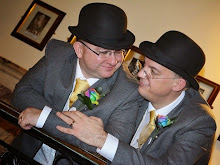
Happy Valentine’s Day!


I love you, Richard.
Why is brave, righteous President Bush so unpopular that even the Republican candidates won’t go near him?
Why is there so much binge-drinking? Why do kids get ASBOs? And what’s the real cause of global warming?
This video has the answer.
Happy Valentine’s Day!

I love you, Richard.
Labels: American Politics, Bigotry, Comedy, Doctor Who, Gay, Ian Richardson, Made-up DVD Sets, Music, Obscure Doctor Who Jokes


Monday, February 19, 2007
Tinker, Tailor, Soldier, Spy
Ten days after the death of one of Britain’s best actors, BBC4 will start reshowing one of his most famous roles. Though as with many people it must have been House of Cards in 1990 that really bowled me over, I remember having admired several of Ian Richardson’s earlier performances too, and tonight at 10.30 (just after Charlie Brooker) there’s the first episode of an outstanding adaptation from a decade earlier, John le Carré’s Tinker, Tailor, Soldier, Spy. Mr Richardson appeared alongside Alec Guinness and a host of British acting talent in this intricate and compelling drama. See it.
This is an absolutely gripping serial, though I have to admit that – despite doing fabulous work – Ian Richardson’s brilliant array of acting ‘business’ doesn’t quite steal the show; not when Alec Guinness’ implacable authority means he can steal the scene by underplaying (or simply by putting on his glasses). However, it is Mr Richardson who steals the very opening scene, two minutes of four men arriving for a meeting before the titles roll. His Bill Haydon is the last to arrive, and despite Michael Aldridge’s pipe and Bernard Hepton’s loud shirt, it’s the way he balances his tea cup and saucer, closes the door with his foot and does every other thing to make sure you keep looking at him that immediately grabs your attention. It’s a deceptively important scene for the story; while the only words spoken are, appropriately, “Right. We shall start,” it both sets the tone and displays the key figures in the plot. The tone is not that of 24 or James Bond – you won’t find the camera cutting to a different shot every five seconds, but superb actors delivering well-crafted lines that gradually reveal the story through their characters. And the plot is that of a mole in the British secret intelligence service, with the four men shown to us before we know who they are making up the suspects for the Soviet agent destroying ‘the Circus’ from within.
This is very of its time, beautifully shot but with Britain dispirited and losing its way at the end of the ’70s. I said this wasn’t like James Bond, but in many ways the first half of tonight’s opening episode is a James Bond pre-credits mini-adventure ‘for real’ and gone horribly wrong. ‘Control’, the ailing head of the Circus, sends an agent into Czechoslovakia in the desperate hope of pulling out a senior defector who can identify the mole he fears. He gives the suspects the code-names Tinker, Tailor, Soldier, Poor Man and Beggar Man so any news of them can reach him without them understanding the reference, but the mole is ahead of him and the operation is so disastrous that it instead brings Control down. The bulk of the story takes place many months later, with Control dead and his deputy, ‘Beggar Man’ George Smiley (Alec Guinness) clearly no longer a suspect by virtue of being also out on his ear. If you watch carefully for who gets which identifier and then look at the way those characters behave, you might deduce that ‘Poor Man’ is also out of the running, which may be why he’s not in the title of the story – the three plausible suspects throughout are going to be Tinker, Tailor and Soldier, though as you come to know them in later episodes one will be such an ostentatious fool you might be tempted to discount him. As in many of the best thrillers, it’s intricate enough that the villain is not obvious all along, but seems as if he must have been when finally revealed…
The surprising thing about the first episode is not just how gripping it is, how brilliantly played or how much is packed in at such a deceptively leisurely pace, but that the final scene in effect makes clear that it’s just the prologue, as a character tells his audience – both in the room where he’s being interrogated and those of us at home – “I’ve got a story to tell you; it’s all about spies…” Watch carefully, though, as many of the clues are there early on, with the all-important little details established as Peter Guillam, one of the agents not sacked but pushed to the periphery by the new regime, is sent to find the ‘retired’ and rather crabby George Smiley, considered by a worried Cabinet Office mandarin to be the only figure capable of investigating from ‘outside’ how compromised the Circus has become. So if he’s so good, how did he manage to be pushed out in the first place? The character’s potential weaknesses are heralded from the beginning as well as his brilliance; he was unable or unwilling to play the internal politics necessary to fight his own corner, through faithfulness (to Control, to his wife) and fairness (not wanting to think badly of those who brought down Control or are sleeping with his wife). In subsequent weeks we’ll see how these qualities have been exploited. Alec Guinness is outstanding as Smiley, making small talk that protests a lack of interest while ferreting out information, praising Guillam’s character in terms that hide a mild accusation (“I’m surprised you didn’t get thrown out with all the rest of us. You had all the qualifications: good at your work, loyal, discreet…”), and, at the close of the episode, turning in a moment from genial old buffer to pitiless inquisitor merely by gazing through his glasses.
I remember seeing a documentary on the serial where Ian Richardson recounted how Alec Guinness had a similarly mild-mannered but terrifying professionalism to that of his character; on arriving for the first read-through of the script, most of the cast gave it the usual knock-about levity, but one sobered them by being already word-perfect. Mr Richardson recalls a panicked, sing-song aside of “Alec’s learnt it” to Michael Jayston (who gives a terrific performance himself as Guillam). Despite the obvious star, you’ll still notice Ian Richardson, as indeed the script demands – with the serial starting ‘outside’ the upper echelons of the Circus and only gradually working its way in, we hardly see him to begin with, but his character is so noticeable that everyone talks about him even in his absence. Bill Haydon has “star quality” and “glamour,” “very dashing. Very audacious.” So when he does show up, his fey brilliance is a treat. Look out in the third episode, for example, for the way he draws attention to himself by sliding his glasses up his head, or slouching in a doorway to frame himself; he’s also at that stage part of one of the story’s most compelling sequences, as Smiley visits each of those ‘next in line’ on behalf of the possibly demented and messianic Control, only to be rebuffed in a different way by all three. In Part Four, as the top men become aware that something is up, watch Haydon’s priceless reactions as Guillam is interrogated. And of course he’s outstanding at the end, though when BBC4 last showed this I observed that the most mesmerising scene in the whole thing is the turning point of Part Six, when Alec Guinness and Michael Jayston face off against Bernard Hepton’s Toby Esterhase. Doctor Who fans may also notice the Production Assistant on this who borrows two of its actors when directing a much-regarded Who adventure of the ’80s, as well as writing a bit of the story into one of his Who scripts. Connoisseurs of fine TV from the BBC in the 1970s might just note the similarities and differences with Secret Army and I, Claudius – equally compelling scripts, very much more filming on location for this one rather than the studio, and the fun in spotting just how many actors they all have in common.
Following so closely on Mr Richardson’s sad and unexpected death, I suspect there hasn’t been time for this to be a ‘BBC4 tribute’ showing; my guess it that it was already planned, simply because it’s so good. That means, if we’re lucky, that there may yet be other pieces of great TV to come in celebration of this remarkable actor. I can’t run through everything he did for television and never saw him on the stage, but I particularly remember him stern and then quite mad in Gormenghast, sinister in the never-fulfilled Strange, authoritative in Murder Rooms and querulous in Bleak House. He was a rather good Sherlock Holmes in a couple of adaptations, doomed in part by their slightly inferior production (the cheap and nasty ’80s montage title sequences stick in my memory) but mainly through their being made just as Jeremy Brett started out in his portrayal for Granada; like Basil Rathbone before him, Mr Brett seemed simply the ideal Holmes for a generation. I know at least one Doctor Who author rated Ian Richardson so highly that there is an ‘Ian Richardson part’ in all of his books (his son Miles Richardson has also played a number of roles in Doctor Who audio plays himself, most strikingly the urbane, ambiguous Irving Braxiatel in the adventures of Professor Bernice Summerfield, and my condolences to him and the rest of the family). But if there’s one thing he’s remembered for, it’s the character that first hit our screens in November 1990, that of scheming master politician Francis Urquhart in House of Cards, its nearly as impressive sequel To Play the King and the slightly off-key concluding chapter The Final Cut.
Unlike Tinker, Tailor, Soldier, Spy, in House of Cards Ian Richardson is the undoubted star, and it was perfectly timed both for him and for political irony. In the previous decade, he’d matured from a fey, charismatic actor in middle age to a silver-haired figure with a commanding voice and real bottom. Several of my favourite actors really came into their own when older and suddenly hugely authoritative, but in parts with a hint of grand madness – William Hartnell and Graham Crowden also spring to mind – and F.U. became the ultimate in older politicians commanding absolute respect. One of my more infamous blog posts was during last year’s Lib Dem leadership election, urging Ming to be fearsome, to “put some stick about… as Francis Urquhart with a high moral tone.” You could see exactly why people might vote for Urquhart, just as you were drawn into siding with, well, a murderous Tory. Part of it was in the original books, but they serve as a lesson to anyone claiming that screen adaptations must inevitably cheapen their source material. Compared to Andrew Davies’ script (introducing the affair, the villain’s survival and even his best-known phrase), the book seems a little mediocre, and I suspect even Michael Dobbs would reply that I might very well think that, but he couldn’t possibly comment. The other vital ingredient to the creation of this sublime anti-hero came in Ian Richardson’s performance, sardonic, mercurial, and every word beautifully enunciated as he took us into his confidence and dared us not to root for him. Add to that the remarkable real-life irony in the serial being shown during the very weeks of Margaret Thatcher’s fall from power, yet dramatising the destruction of what to later viewers looks uncannily like her mild-mannered but useless successor. The only things House of Cards got wrong, in retrospect, were underestimating the stubbornness of John Major… And telling us there would be a Conservative Party politician of such brilliance on hand to succeed him. To this day, Ian Richardson’s greatest character looks more like a Prime Minister than Mrs Thatcher’s immediate successor ever did.
This is an absolutely gripping serial, though I have to admit that – despite doing fabulous work – Ian Richardson’s brilliant array of acting ‘business’ doesn’t quite steal the show; not when Alec Guinness’ implacable authority means he can steal the scene by underplaying (or simply by putting on his glasses). However, it is Mr Richardson who steals the very opening scene, two minutes of four men arriving for a meeting before the titles roll. His Bill Haydon is the last to arrive, and despite Michael Aldridge’s pipe and Bernard Hepton’s loud shirt, it’s the way he balances his tea cup and saucer, closes the door with his foot and does every other thing to make sure you keep looking at him that immediately grabs your attention. It’s a deceptively important scene for the story; while the only words spoken are, appropriately, “Right. We shall start,” it both sets the tone and displays the key figures in the plot. The tone is not that of 24 or James Bond – you won’t find the camera cutting to a different shot every five seconds, but superb actors delivering well-crafted lines that gradually reveal the story through their characters. And the plot is that of a mole in the British secret intelligence service, with the four men shown to us before we know who they are making up the suspects for the Soviet agent destroying ‘the Circus’ from within.
This is very of its time, beautifully shot but with Britain dispirited and losing its way at the end of the ’70s. I said this wasn’t like James Bond, but in many ways the first half of tonight’s opening episode is a James Bond pre-credits mini-adventure ‘for real’ and gone horribly wrong. ‘Control’, the ailing head of the Circus, sends an agent into Czechoslovakia in the desperate hope of pulling out a senior defector who can identify the mole he fears. He gives the suspects the code-names Tinker, Tailor, Soldier, Poor Man and Beggar Man so any news of them can reach him without them understanding the reference, but the mole is ahead of him and the operation is so disastrous that it instead brings Control down. The bulk of the story takes place many months later, with Control dead and his deputy, ‘Beggar Man’ George Smiley (Alec Guinness) clearly no longer a suspect by virtue of being also out on his ear. If you watch carefully for who gets which identifier and then look at the way those characters behave, you might deduce that ‘Poor Man’ is also out of the running, which may be why he’s not in the title of the story – the three plausible suspects throughout are going to be Tinker, Tailor and Soldier, though as you come to know them in later episodes one will be such an ostentatious fool you might be tempted to discount him. As in many of the best thrillers, it’s intricate enough that the villain is not obvious all along, but seems as if he must have been when finally revealed…
The surprising thing about the first episode is not just how gripping it is, how brilliantly played or how much is packed in at such a deceptively leisurely pace, but that the final scene in effect makes clear that it’s just the prologue, as a character tells his audience – both in the room where he’s being interrogated and those of us at home – “I’ve got a story to tell you; it’s all about spies…” Watch carefully, though, as many of the clues are there early on, with the all-important little details established as Peter Guillam, one of the agents not sacked but pushed to the periphery by the new regime, is sent to find the ‘retired’ and rather crabby George Smiley, considered by a worried Cabinet Office mandarin to be the only figure capable of investigating from ‘outside’ how compromised the Circus has become. So if he’s so good, how did he manage to be pushed out in the first place? The character’s potential weaknesses are heralded from the beginning as well as his brilliance; he was unable or unwilling to play the internal politics necessary to fight his own corner, through faithfulness (to Control, to his wife) and fairness (not wanting to think badly of those who brought down Control or are sleeping with his wife). In subsequent weeks we’ll see how these qualities have been exploited. Alec Guinness is outstanding as Smiley, making small talk that protests a lack of interest while ferreting out information, praising Guillam’s character in terms that hide a mild accusation (“I’m surprised you didn’t get thrown out with all the rest of us. You had all the qualifications: good at your work, loyal, discreet…”), and, at the close of the episode, turning in a moment from genial old buffer to pitiless inquisitor merely by gazing through his glasses.
I remember seeing a documentary on the serial where Ian Richardson recounted how Alec Guinness had a similarly mild-mannered but terrifying professionalism to that of his character; on arriving for the first read-through of the script, most of the cast gave it the usual knock-about levity, but one sobered them by being already word-perfect. Mr Richardson recalls a panicked, sing-song aside of “Alec’s learnt it” to Michael Jayston (who gives a terrific performance himself as Guillam). Despite the obvious star, you’ll still notice Ian Richardson, as indeed the script demands – with the serial starting ‘outside’ the upper echelons of the Circus and only gradually working its way in, we hardly see him to begin with, but his character is so noticeable that everyone talks about him even in his absence. Bill Haydon has “star quality” and “glamour,” “very dashing. Very audacious.” So when he does show up, his fey brilliance is a treat. Look out in the third episode, for example, for the way he draws attention to himself by sliding his glasses up his head, or slouching in a doorway to frame himself; he’s also at that stage part of one of the story’s most compelling sequences, as Smiley visits each of those ‘next in line’ on behalf of the possibly demented and messianic Control, only to be rebuffed in a different way by all three. In Part Four, as the top men become aware that something is up, watch Haydon’s priceless reactions as Guillam is interrogated. And of course he’s outstanding at the end, though when BBC4 last showed this I observed that the most mesmerising scene in the whole thing is the turning point of Part Six, when Alec Guinness and Michael Jayston face off against Bernard Hepton’s Toby Esterhase. Doctor Who fans may also notice the Production Assistant on this who borrows two of its actors when directing a much-regarded Who adventure of the ’80s, as well as writing a bit of the story into one of his Who scripts. Connoisseurs of fine TV from the BBC in the 1970s might just note the similarities and differences with Secret Army and I, Claudius – equally compelling scripts, very much more filming on location for this one rather than the studio, and the fun in spotting just how many actors they all have in common.
Ian Richardson
Following so closely on Mr Richardson’s sad and unexpected death, I suspect there hasn’t been time for this to be a ‘BBC4 tribute’ showing; my guess it that it was already planned, simply because it’s so good. That means, if we’re lucky, that there may yet be other pieces of great TV to come in celebration of this remarkable actor. I can’t run through everything he did for television and never saw him on the stage, but I particularly remember him stern and then quite mad in Gormenghast, sinister in the never-fulfilled Strange, authoritative in Murder Rooms and querulous in Bleak House. He was a rather good Sherlock Holmes in a couple of adaptations, doomed in part by their slightly inferior production (the cheap and nasty ’80s montage title sequences stick in my memory) but mainly through their being made just as Jeremy Brett started out in his portrayal for Granada; like Basil Rathbone before him, Mr Brett seemed simply the ideal Holmes for a generation. I know at least one Doctor Who author rated Ian Richardson so highly that there is an ‘Ian Richardson part’ in all of his books (his son Miles Richardson has also played a number of roles in Doctor Who audio plays himself, most strikingly the urbane, ambiguous Irving Braxiatel in the adventures of Professor Bernice Summerfield, and my condolences to him and the rest of the family). But if there’s one thing he’s remembered for, it’s the character that first hit our screens in November 1990, that of scheming master politician Francis Urquhart in House of Cards, its nearly as impressive sequel To Play the King and the slightly off-key concluding chapter The Final Cut.
Unlike Tinker, Tailor, Soldier, Spy, in House of Cards Ian Richardson is the undoubted star, and it was perfectly timed both for him and for political irony. In the previous decade, he’d matured from a fey, charismatic actor in middle age to a silver-haired figure with a commanding voice and real bottom. Several of my favourite actors really came into their own when older and suddenly hugely authoritative, but in parts with a hint of grand madness – William Hartnell and Graham Crowden also spring to mind – and F.U. became the ultimate in older politicians commanding absolute respect. One of my more infamous blog posts was during last year’s Lib Dem leadership election, urging Ming to be fearsome, to “put some stick about… as Francis Urquhart with a high moral tone.” You could see exactly why people might vote for Urquhart, just as you were drawn into siding with, well, a murderous Tory. Part of it was in the original books, but they serve as a lesson to anyone claiming that screen adaptations must inevitably cheapen their source material. Compared to Andrew Davies’ script (introducing the affair, the villain’s survival and even his best-known phrase), the book seems a little mediocre, and I suspect even Michael Dobbs would reply that I might very well think that, but he couldn’t possibly comment. The other vital ingredient to the creation of this sublime anti-hero came in Ian Richardson’s performance, sardonic, mercurial, and every word beautifully enunciated as he took us into his confidence and dared us not to root for him. Add to that the remarkable real-life irony in the serial being shown during the very weeks of Margaret Thatcher’s fall from power, yet dramatising the destruction of what to later viewers looks uncannily like her mild-mannered but useless successor. The only things House of Cards got wrong, in retrospect, were underestimating the stubbornness of John Major… And telling us there would be a Conservative Party politician of such brilliance on hand to succeed him. To this day, Ian Richardson’s greatest character looks more like a Prime Minister than Mrs Thatcher’s immediate successor ever did.
Labels: British Politics, Ian Richardson, Michael Jayston, Obituary, Reviews
Monday, September 04, 2006
Tinkering
I’ve spent today writing a 1,000-word article; while most people would work up to that number, obviously I tapped in 8,000 of notes, then started chipping away in a manner almost completely unlike that of Michelangelo. Taking a break, and as it’s three hours ‘til Tinker, Tailor, Soldier, Spy, it’s been time to potter on the Internet; some fabulous things about comics, Tony Benn agreeing with Lib Dem bloggers, a splendid anti-Labour song, Rob Fenwick on fibbing… Then I fell asleep on the keyboard and, while getting qwertyface, dreamt someone was mad enough to propose me for Lib Dem President.
Tinker, Tailor, Soldier, Spy is gripping television, despite being very, very slow. Everyone’s just so terribly watchable, particularly Ian Richardson doing every bit of acting ‘business’ known to man and Alec Guinness stealing the scene merely by putting his glasses on. If you’ve not been following the repeats on BBC4, there’s still time to catch the last two tonight and tomorrow; the final episode, of course, unmasks the mole, but tonight has the best scene of all those awfully good scenes. With strong support from Michael Jayston, Alec Guinness as George Smiley faces off against Bernard Hepton’s Toby Esterhase. Three spies, one small room, no flashy action, and absolutely mesmerising as within a few minutes of Smiley’s implacable interrogation by voice and eyes alone Esterhase cracks completely. Even though we have the DVD (worth buying, but look for a sale offer; with a solitary extra and no picture restoration, the BBC did it on the cheap and so should you), we’ve been putting on the odd episode anyway and I suspect we shall tonight.
In an earlier episode, Smiley visits each of those ‘next in line’ in the secret service on behalf of the ailing and possibly demented and messianic man at the top, only to be rebuffed by all three, none of whom think Control any longer has anything to offer them and all of whom are looking to his obvious successor for favours instead. While Smiley’s return from the wilderness to flatten Toby Esterhase through his sheer presence is the first and most stunning of the scenes where he turns the tables on each of those who denied him, I couldn’t help but think of mad-eyed Mr Blair. I wonder who he’s sending out to his formerly loyal followers, and what favours offered to plead for more time at the top are being rebuffed by those scenting the smell of death in the Labour Party?
Meanwhile, though not wishing to steal Quaequam Blog’s thunder, I’ve been reading 2000AD long enough to remember hackneyed author Alec Trench, and I’m delighted to have found a tribute to him (thanks to Dave Bishop’s blog article Beware the Pagan Acid-Spitting Plesiosaur). Alec Trench’s Thrill Pitcher randomly generates ‘pitches’ for new graphic epics, made from cut-up old 2000AD characters; so, for example, your strip might have anti-heroes where
With the V For Vendetta DVD in the shops and its grumpy author taking his name off the credits, as usual, Mr Bishop has also publicised a way of removing Alan Moore from his own graphic novels. Marvel at his famous creation Watchmen, as scripted by, er, Marvel maestro of mayhem Stan Lee…
It’s still not as funny, though, as the lovely Rob Fenwick pointing out that Newsnight’s Daniel Pearl is a fibber. Apparently I wasn’t alone in not getting a reply from the soon-to-be-ex-editor.
And, at last, as Mr Blair gets ready to deliver his most barking speech yet – well, all right, the competition’s fierce, but it has to make the shortlist – backed up by Social Nationalisation Minister Hilary Armstrong, Tony Benn’s trundled out to agree with Lib Dem bloggers that it’s scarily authoritarian. Shame they can’t find a current Labour politician who’s willing to criticise the policy instead of just gossiping about the personalities, isn’t it? As you say goodbye to the Summer, sit back and watch a brilliant anti-New Labour song that lemony Rob Morris has found on YouTube. I’ve got the single somewhere…
Tinker, Tailor, Soldier, Spy
Tinker, Tailor, Soldier, Spy is gripping television, despite being very, very slow. Everyone’s just so terribly watchable, particularly Ian Richardson doing every bit of acting ‘business’ known to man and Alec Guinness stealing the scene merely by putting his glasses on. If you’ve not been following the repeats on BBC4, there’s still time to catch the last two tonight and tomorrow; the final episode, of course, unmasks the mole, but tonight has the best scene of all those awfully good scenes. With strong support from Michael Jayston, Alec Guinness as George Smiley faces off against Bernard Hepton’s Toby Esterhase. Three spies, one small room, no flashy action, and absolutely mesmerising as within a few minutes of Smiley’s implacable interrogation by voice and eyes alone Esterhase cracks completely. Even though we have the DVD (worth buying, but look for a sale offer; with a solitary extra and no picture restoration, the BBC did it on the cheap and so should you), we’ve been putting on the odd episode anyway and I suspect we shall tonight.
In an earlier episode, Smiley visits each of those ‘next in line’ in the secret service on behalf of the ailing and possibly demented and messianic man at the top, only to be rebuffed by all three, none of whom think Control any longer has anything to offer them and all of whom are looking to his obvious successor for favours instead. While Smiley’s return from the wilderness to flatten Toby Esterhase through his sheer presence is the first and most stunning of the scenes where he turns the tables on each of those who denied him, I couldn’t help but think of mad-eyed Mr Blair. I wonder who he’s sending out to his formerly loyal followers, and what favours offered to plead for more time at the top are being rebuffed by those scenting the smell of death in the Labour Party?
Alec Trench Lives!
Meanwhile, though not wishing to steal Quaequam Blog’s thunder, I’ve been reading 2000AD long enough to remember hackneyed author Alec Trench, and I’m delighted to have found a tribute to him (thanks to Dave Bishop’s blog article Beware the Pagan Acid-Spitting Plesiosaur). Alec Trench’s Thrill Pitcher randomly generates ‘pitches’ for new graphic epics, made from cut-up old 2000AD characters; so, for example, your strip might have anti-heroes where
“He’s an umbrella-wielding curvacious telepath with New Wave hair. His ex-lover is a pagan axe-wielding bounty hunter on his death bed. They must save London from an invasion by thinly-disguised Soviet stereotypes!”It’s inspired by They Fight Crime! which uses the same sort of random snippets to create a thrillingly quirky crime-fighting series (well, it would) in which, for example,
“He’s a bookish pirate waffle chef on a mission from God. She’s a chain-smoking insomniac mermaid with a birthmark shaped like Liberty’s torch. They fight crime!”Reminds me of Richard and my pitch for a crime series, Russell and Russell, in which a dry-witted and penetratingly intelligent history professor solves crimes by recognising that the offence was committed in exactly the same way in 1647, assisted by his lovely, excitable Welsh super-TV-writing sidekick… Richard may frown that I’ve blown that story.
With the V For Vendetta DVD in the shops and its grumpy author taking his name off the credits, as usual, Mr Bishop has also publicised a way of removing Alan Moore from his own graphic novels. Marvel at his famous creation Watchmen, as scripted by, er, Marvel maestro of mayhem Stan Lee…
It’s still not as funny, though, as the lovely Rob Fenwick pointing out that Newsnight’s Daniel Pearl is a fibber. Apparently I wasn’t alone in not getting a reply from the soon-to-be-ex-editor.
Out With the New
And, at last, as Mr Blair gets ready to deliver his most barking speech yet – well, all right, the competition’s fierce, but it has to make the shortlist – backed up by Social Nationalisation Minister Hilary Armstrong, Tony Benn’s trundled out to agree with Lib Dem bloggers that it’s scarily authoritarian. Shame they can’t find a current Labour politician who’s willing to criticise the policy instead of just gossiping about the personalities, isn’t it? As you say goodbye to the Summer, sit back and watch a brilliant anti-New Labour song that lemony Rob Morris has found on YouTube. I’ve got the single somewhere…
Labels: Comics, Conrad Russell, Ian Richardson, Labour, Michael Jayston, Spies
Thursday, March 16, 2006
Ooh, I Do Feel Queer
The big ‘Ides of March’ story was whether Mr Blair could count on his sworn enemies to vote for more education power to be exercised direct from Whitehall – Labour MPs did vote against him, of course, so he had to rely on the Tories – while I wrapped myself up, made some chicken soup and looked for something appropriate to the day to watch muzzily from under a duvet. Carry On Cleo was tempting but obvious, so I looked up some TV anniversaries. I was delighted to find that the splendid Doctor Who story The Caves of Androzani had first been shown on the Fifteenth of March, 1984 (the third part, at least), so I pulled out the DVD. As that episode’s most memorable scene features the murder of a President by his leading industrialist backer while pretending to warn him of an assassination plot, this seemed so perfect it must be serendipity.
It’s an unusual story, in that the Doctor doesn’t want to sort out the small war and large political intrigues he lands up in, finding each side as bad as the other (pretty much everyone in the story’s a monster, amoral, greedy and self-centred), just to get himself and his friend out alive – but his mere presence starts a chain reaction that brings down everyone involved, and costs him his life. It’s Peter Davison’s last and best story in the lead role, and he gets his teeth into it so strongly here that it makes you sad to see him go. Amid moody, atmospheric music and direction, the cast really run with a great script, and you can spot here Robert Glenister of Hustle fame, though you won’t spot Christopher Gable, who spends the story masked as a Phantom of the Opera-style obsessive; he’s so stunning that normally he’d have stolen the show, but not when John Normington’s cynical, murderous businessman / politician is around. At the time I thought of it as putting an edge of Dallas into the series, with a similar mixture of archness and ruthlessness, but after House of Cards it’s impossible not to see him as Francis Urquhart. Was Andrew Davies watching this? The anti-hero here is so similar he even has asides direct to camera, too.
Both of these irresistible villains also have in common that stories making you guiltily root for them do exactly the reverse of promoting citizenship and civil society. Thank goodness.
‹Older
It’s an unusual story, in that the Doctor doesn’t want to sort out the small war and large political intrigues he lands up in, finding each side as bad as the other (pretty much everyone in the story’s a monster, amoral, greedy and self-centred), just to get himself and his friend out alive – but his mere presence starts a chain reaction that brings down everyone involved, and costs him his life. It’s Peter Davison’s last and best story in the lead role, and he gets his teeth into it so strongly here that it makes you sad to see him go. Amid moody, atmospheric music and direction, the cast really run with a great script, and you can spot here Robert Glenister of Hustle fame, though you won’t spot Christopher Gable, who spends the story masked as a Phantom of the Opera-style obsessive; he’s so stunning that normally he’d have stolen the show, but not when John Normington’s cynical, murderous businessman / politician is around. At the time I thought of it as putting an edge of Dallas into the series, with a similar mixture of archness and ruthlessness, but after House of Cards it’s impossible not to see him as Francis Urquhart. Was Andrew Davies watching this? The anti-hero here is so similar he even has asides direct to camera, too.
Both of these irresistible villains also have in common that stories making you guiltily root for them do exactly the reverse of promoting citizenship and civil society. Thank goodness.
Labels: Carry On, Doctor Who, Ian Richardson, Labour, Personal, Peter Davison