Sunday, December 25, 2016
Doctor Who 52: 06 – Ten Reasons to Watch Last Christmas
Introducing Doctor Who – Last Christmas…
Tonight will be Doctor Who’s next Christmas, for this Christmas! If you find Christmas a nightmare, it’s time first to watch Last Christmas, where the Doctor meets Father Christmas – or does he? – and some aliens – or does he? – a bit like the Alien (shh, he mentioned it once but he might have got away with it) – and is trapped within dreams within dreams, a bit like Inception – or is he (spoiler: yes)? If it sounds too disturbing for Christmas, it’s also got some of Doctor Who’s zingiest one-liners, cracking dialogue. Christmas crackers, if you will. Too soon? Or too late? Because Last Christmas is actually from the Christmas before last now.
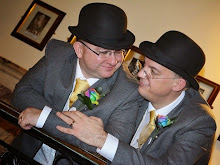
If you want last Christmas’ Doctor Who, which wasn’t Last Christmas but The Husbands of River Song, my husband Richard has a present for you – freshly delivered, his review. My Ten Reasons here were originally planned for last Christmas, when Last Christmas would in fact have been last Christmas. You see? It would have been immensely amusing. Well, cracker-standard, anyway. Before you grab a shepherd’s crook from the nearest nativity play or panto to pull me off the stage, there’s one more thing I should say in this introduction. I originally started these as a celebration of Doctor Who’s fifty-second anniversary, because the number suggested a year-round set of articles. That went off the rails along with my health. Although my health is if anything even poorer right now, I started again this November and am currently not so very far off target (I’m as surprised as you are). All the blog posts I’ve published in this series since then have been ones that I originally wrote last year, which I’ve re-read, rewritten and republished as Special Editions. I’ve actually now come to the one that I aimed to write last Christmas but wasn’t able to. Which means that, in a mind-bending twist, Christmas is the first time this is original programming and not a repeat. It’s all new today. Wish me luck for the rest.
Babylon 5 creator J. Michael Straczynski talked about sci-fi series having “Wham episodes”. He doesn’t mean this. It’s good, though.

Ten Reasons To Watch Last Christmas (warning: spoilers lower down the list)
1 – It’s Christmas!
And Christmas is always a day for Doctor Who now. This evening the twelfth Doctor Who Christmas special in a row will be part of BBC1’s festive line-up, so it seemed appropriate to choose one of the Twelfth. Last Christmas is an entertaining Christmas tale, funny, scary (a traditional Christmas horror story), and something to put you off your Christmas dinner – and, for me, easily the best of them since the very first official Christmas special, The Christmas Invasion. I’d better stop typing the word “Christmas” because at this point in the afternoon your eyes are probably already swimming as everything seems to be just Christmas, Christmas, Bloody Christmas (no, that’s TV Smith, not TV) and this won’t be helping. Some of you will be pointing out that there have been countless other, er, Yuletide specials in the worlds of Doctor Who, from Short Trips to audio adventures all the way back to A Girl’s Best Friend and The Feast of Steven, but casual readers will be too drunk to cope with that all right now and that’s my excuse. Anyway, that’s what Google is for.
I wonder if even Steven Moffat realised he’d pulled off a cracker, as the final scene of this one has not one but two callbacks to The Christmas Invasion… Oh no! I said the word. Better move on.
2 – The Doctor.
I love Peter Capaldi’s Doctor, and one of the reasons I so enjoy Last Christmas is that he gives here the most festively themed Doctor performance of all. More on that in a moment.
I was worried in a different way to the usual about the new Doctor when Mr Capaldi was announced for the part. In the past it’s been whether the actor would be right for it and waiting on tenterhooks for their first episode – though I loved Matt Smith from his prime-time interview being announced in the part onwards. But that very day I talked about my fantasy ‘any actor in all of space and time’ casting, too, and they were considerably older than Matt. There’s at least something I love about each Doctor, and my ‘favourites’ among the twelve – thirteen – fourteen – more – keep shifting, but for some years now, my absolute favourite Doctor’s been William Hartnell, and my preference instinctively for someone old, authoritative but unpredictable, acerbic but funny. I’d timescoop Graham Crowden – ironically once offered the role, but he turned it down and was too young anyway – for something like the demented majesty of A Very Peculiar Practice’s Dr Jock McCannon mixed with the child-like enthusiasm of his Tom in Waiting For God. Or go back further and take Alastair Sim (his extraordinary Inspector Poole often makes me wish for a Doctor Who reimagination of An Inspector Calls with Sylvester McCoy’s slightly sinister Time Lord). Coincidentally, my Grandad was rather dashing, came from Glasgow and was both testy and sparkling and I loved him very much. But, I’d keep reminding myself with every new Doctor, the Doctor doesn’t have to be a Scottish actor I’ve thought brilliant for years and who’s just at the right age to be crotchety with a twinkle.
And then they only went and cast bloody Peter Capaldi. This time I was terrified because he seemed just too perfect to be true and it could only go wrong. But you know what? He is nearly perfect after all. And going back to the famous Alastair Sim role inevitably shown again just yesterday, it is impossible to find a better Doctor for the Christmas special than the one who every time is a viper-tongued grouch before he throws everything he has into saving someone else (“There was only one way to get to you…”) and discovers joy all over again (“Yes, but – do you want a go…?”).
Peter Capaldi’s Doctor has always played Scrooge.

3 – Alien.
“They’re a bit like Facehuggers, aren’t they?”Of all the brilliant lines in Last Christmas, this is the one that never fails to crack me up. Especially the Doctor’s face going from incomprehension to being utterly appalled.
“Face… huggers?”
“Yeah, you know. Alien. The horror movie, Alien.”
“There’s a horror movie called Alien? That’s really offensive. No wonder everyone keeps invading you.”
4 – Father Christmas.
“There’s not just one Santa delivery team. How could there be? There are five hundred and twenty six million four hundred and three thousand and twelve children all expecting presents before tomorrow morning. So, hmm, that’s twenty-two million children per hour. It’s impossible!This year, going all-out for Christmas, it’s the big one – Santa Claus himself (or is he? etc). Nick Frost is utterly brilliant in the role, showing no signs of his usual casting as the dim but well-meaning hot bear (here at the Pole!) best friend, nor of the fear that surely any actor must suffer on being given a role with double nominative determinism. Nick is serious, powerful and only occasionally jolly. And with Dan Starkey (nearly naked from the neck up) and Nathan McMullan (grubby superhero – no relation to tonight) his equally perfectly-cast elves, the sexy one and the sassy one – your mileage may vary on which is which – Santa has assembled a perfect comic team. Because for all the Christmas spirit, drama, hero reindeer neigh, moral of the story and even army of slinkies, what really makes them and makes the episode is all the zingers.
“Obviously, I’ve got a second sledge.”
“OK. No. Hang on. Stop. Shut up. What? Seriously, you – you’re Father Christmas. You’re – real.”It’s probably my favourite Doctor Who story for Steven Moffat comic dialogue.
“Of course I’m real. Ho, ho, ho!”
“How could he not be real?”
“Huh? How do you think those presents got under the tree every year? By magic?”
“Well, I thought it was my Mum and—”
“Mum and Dad?”
[Derisive cheers and applause]
“Well, of course it was.”
“I mean, it makes perfect sense.”
“Yeah, your Mum and Dad, one day a year, for no particular reason, just out of the blue, suddenly decide to give you a great big pile of presents.”
“No, no, no. Because they love you so much. It’s a lovely story, dear.”
“Yeah, but it’s time to start living in the real world.”
“Not often we get upstaged on a rooftop.”

5 – The Dream Crabs.
One of the most ickily successful monsters of recent years, both conceptually and visually horrible, creatures that envelop your head and feed on your brain while twisting it into mind-bending dreams within dreams. They do, as has been noted, look rather like Facehuggers, and that’s not the only way in which they’re familiar, but they’re a terrific monster for all that.
They wriggle when you think of them, they leap from the ceiling on gooey strands, they tie your psyche up in knots. They have the extra-disturbing level in our household that – bear with me on this. You see, there’s another famous Doctor Who monster that’s a sort of crab that messes with your head and which may not be real. The Macra first appeared in 1967’s The Macra Terror with Patrick Troughton’s Doctor, but we saw them again with David Tennant in Gridlock (both brilliant stories, by the way). That 2007 episode was the first to use the season’s big new epic piece of music, known on soundtrack releases as All the Strange, Strange Creatures but always to Richard and me as ‘Dance of the Macra’. But only to us. No-one else has ever called it that. So when Santa Claus comes to save everyone from them one last time and his ‘hero theme’ sounds an awful lot like ‘Dance of the Macra (Reprise)’ after several years away to fight more crabs, that feels disturbingly like someone’s messing with our own reality. As long as none of the characters are revealed to be a dream that’s actually something like an account manager for a perfume company…
Just because we’re told they look like something out of Alien, though, doesn’t mean we have to take something out of a dream’s word for it. Look at the Dream Crabs. Horrid scary alien egg-heads. Eggs? Doesn’t that make them a bit Easter? No. Focus. What is it that always comes back at Christmas to terrify everyone yet, like all good horror, exerts a strange fascination? Grey-green. Gnarled. Round.
They. Are. Sprouts.
“We know Dream Crabs are still on Earth.”
“There are lots of dangerous things on this funny little planet of yours, Clara, most of which you eat.”

6 – Clara gets some closure.
“Clara? Page number. Make it a good one.”But not as much as you might expect.
“Twelve.”
This was, infamously, her last Christmas, the episode where she was going to go out, at last a Moffat-era companion letting go… Then going on, again. The touching last dream would have been a far better exit than she got, but I can’t begrudge it for all the marvellous moments she then got in between (before, at the last, being left dangling in between).
I loved the 2014 Doctor Who season – Season Thirty-Four or Series Eight, according to taste – and it’s by some way for me the best season since Steven Moffat took over. There are several reasons: Peter Capaldi being immediately marvellous as the Doctor; some terrific episodes from beginning to end (if not every single one in the middle); and Jenna Coleman and Clara suddenly becoming far more interesting. But no season’s perfect. It’s left dangling awkwardly for both the Doctor and Clara, and this Christmas special helps bring them both back together, telling the truth to each other at last, providing both an end to one strand of their relationship and the beginning of a better one.
That year was also defined by the other relationships for each of them. Two other people, neither quite in every story but both threaded throughout, both seeing themselves as the life partner of one of our heroes, both unable to see just why Clara or the Doctor didn’t fit in with exactly how they obviously ought to be, each finding ways to force them into the right shape. Missy is a terrible force for evil. Danny’s just a bit of a git. I found it much easier to enjoy Missy than Danny Pink. Perhaps this is because I enjoy a massive, deliciously evil villain, because I know where I stand with them, and so does everyone else watching, and so does the Doctor. But I’m not at all sure that the writers didn’t think Danny was a hero and a nice guy and a good catch, even as he bullied and blackmailed and controlled Clara in a very banally ordinary way and she went along with it. So one thing I like about Danny is that, here, he’s not that bad. Because he’s a dream. And Clara’s idealised version of him lets her let go. And she teeters, but decides to leave the dream of a nice Danny and live.
Besides, if Clara had left here we’d never have seen what a fantastic relationship she gets to have with Missy next time. Well, fantastic from Missy’s perspective, anyway. Maybe Thelma and Louise to Clara, Tom and Jerry to Missy. And totally exterminating hilarious. Plus (as – spoiler – she survived) – far healthier than the relationship with Mr Pink.
“VWORP VWORP”
“Oh, that noise! Never knew how much I loved it.”
7 – It’s a Moffat Selection Box.
What could be more Christmassy than being given the selection box, with just a little sweetie of each flavour, not enough to make you sick, or the greatest hits album, all the better tracks at single edit length so you don’t start skipping them?
Once upon a time, Steven Moffat was best-known as a sit-com writer with funny dialogue and intricate farce. He moved on to Doctor Who and became much better known for scary stories and intricate time-travel puzzles, and then for doing much of that over and again in several combinations. Last Christmas is a remarkable piece of television for several reasons, but one of the reasons that most appeals to me is that it presents some incredibly familiar Steven-Moffatiness and makes it fresh and likeable again. Perhaps because it’s all done in an hour. Perhaps because of the utter confidence it’s done with. But mostly, I think, because for the first time in his Doctor Who work, he rediscovers his sit-com roots not in the relationships but in the sheer blizzard of one-liners he lets loose. For all that this looks dark and has so much about death, at heart the story appeals to me because just this once Mr Moffat does funny again.
A perfect life for the straight couple, but it’s not real– today, in dreams. An everyday experience weaponised to make you neurotic – today, in dreams. And also, in ice cream! But which flavour Cornetto? A terrible scary new monster that you forget about or that appears when you think about it, and third go the Dream Sprouts are so much more fun and so much more horrible than the Silents, aren’t they? But new to Doctor Who, if not to Mr Moffat’s early work, Santa and the elves and zinger after zinger. It may not be quite the very best episode he’s written, but one especially good reason to watch it is if you want a story that shows off his writing to all his different strengths.
“The North Pole isn’t an actual pole.”Even the obligatory meta-reference to Doctor Who itself as a TV show and cultural phenomenon – well, one of them, anyway – is repurposed into a gag about some of the reaction to casting an older Doctor:
“Course it is. Look.”
“If it was an actual pole, it would not be stripy.”
“It’s got to be stripy.”
“Otherwise, you couldn’t see it moving round.”
“Mmm. It’s actually basic physics.”
“Urrghh! …We’ve – we’ve got ghosts!”
“Ghosts?”
“Yeah – yeah – it’s a skeleton man and a girl in a nightie!”
8 – It’s beginning to look a lot like Troughton.
An isolated base, in the ice, a team of scientists, appalling monsters, in the darkness, laying siege… And even a Troughton! Since its return to TV in 2005, Doctor Who has intriguingly reimagined and borrowed from and made a total dog’s Christmas dinner of and hauled off the back of the lorry elements from all periods and formats of the series, but some writers have been more drawn to some histories than others. Russell T Davies was especially eclectic, but kept coming back to the Jon Pertwee and Tom Baker eras, and to storylines from the Eighth Doctor novels; for Steven Moffat, there’s often a feeling of Patrick Troughton, perhaps with a dash of Sylvester McCoy (and the same Paul McGann novels lovingly ripped off).
Last Christmas both revels in and sends up the much-repeated Second Doctor trope of the ‘base under siege’, and does it brilliantly (so much so that when another one comes along in a couple of stories’ time it looks pre-ridiculed before we even have a chance to ridicule it on its own merits). That format is one reviewers particularly identify with Season Five of the show, and the season in which much of that Season took place was, as here, Winter. Michael Troughton makes his first appearance in TV Doctor Who – though he’s acted in Big Finish’s audio adventures – and as a “Professor”, one who even interacts with a TV screen in the way his father’s Doctor often did (though with less happy results). The Doctor tells everyone to run, and sets off with a moment of Chaplinesque physical awkwardness. Monsters rise from hospital beds, as they did in The Moonbase and Mr Moffat’s own The Empty Child – though what seems like a reference to the earlier story in Clara not in fact fetching a cup of tea for the Doctor seems to misunderstand what happened there with Polly and the coffee…

9 – But is it real?*
“You know what the big problem is in telling fantasy and reality apart?”Yes, it’s another of those tales that asks about the nature of reality and dreams and layer upon layer – and both script and direction do all that rather well. There are very effective shocks as people wake up from one dream only into another, but there’s more to it than making you jump. Father Christmas gets to be a metaphor for both religion and the Doctor – is the Doctor now as much a part of Christmas as Santa? That’s what the BBC is banking on. And are either real? And does that matter? Why should you ever stop believing, if it widens your life and might help you escape from it? As is, my husband muses, especially if this is all the Doctor’s dream, Santa Claus yet another aspect of the Doctor? He even has a disguise that’s become a bit of a trademark. He even does the science bit. Until he’s told not to.
“What?”
“They’re both ridiculous.”
Santa gets to interrupt the opening titles – or at least Nick Frost does – after interrupting the previous story’s end titles by waking the Doctor to cheer him up and stop him leaving things badly with Clara. So perhaps it’s all a dream. But within this story, the Doctor and Clara do indeed start telling each other the truth. So isn’t it…?
*Technically, no. It’s a story. Shh.
10 – “Yippee ai-yay…!”
The story ends with a beautiful scene of the Doctor helping Santa deliver everyone the presence of themselves back home for Christmas, swooping about the landmarks of London and, in surprisingly un-Christmassy turn, not destroying any of them.
“Hey. You want to take the reins, Doctor?”The unfolding joy on the Doctor’s face is wondrous to behold. The sleigh taking everyone home at the end of what may be a dream recalls The Box of Delights. But the Doctor’s cry of delight always brings to mind something else for me, a metatextual reference that I can’t be certain isn’t deliberate.
“You’re a dream construct. Currently representing either my recovering or expiring mind.”
“Yes, but – do you want a go?”
“Yeah. All right. …Look at me! I’m riding a sleigh. I’m riding a sleigh. Yippee ai-yay!”
At the time Peter Capaldi was announced as the new Doctor, he’d been a fantastic actor across many parts and several decades, but he’d become a household name for one role. Malcolm Tucker, the impossibly aggressive Labour spin doctor from political satire The Thick of It, the most explosively sweary man in the history of television and whose vocabulary is as far from the occasional gentle reference to the Doctor swearing in an obscure Martian dialect as could be. Months of hilarious redubbing of Doctor Who scenes with Tuckerisms spread across YouTube (no, really, some were funny, but definitely not for parents). Because of course the Doctor would never, ever say such things.
Yet every time I watch Peter Capaldi dashing through the sky, it is impossible to expunge from my brain a bit of Tucker as his line continues into the famous seasonal benediction from that most wholesome of family Christmas movies, Die Hard:
“Yippee ki yay, mo—”[Hurriedly queue theme from Blackadder’s Christmas Carol]

What Else Should I Tell You About Last Christmas?
Spoilers – in more than one sense – because there’s always someone at the big family Christmas dinner who says something that makes you wince and wonder what decade they’re living in. I like several of the women characters here, and that there are several women characters here. The only person who doesn’t get much of a character and ends up dead is (spoilers) the only man on the base. So far, so feminist. Except that… The first time I watched Last Christmas, I was appreciating the mix of ages and characters among the women scientists, and then remember suddenly shouting some Tuckerism as the rug was suddenly pulled.
Taking the mickey out of Troughton is one thing. But one of the problems with Second Doctor stories set in isolated bases with teams of scientists is that, while the teams were usually quite diverse in terms of nationality and even race, they tended all to be men. By the end, the Doctor’s “You don’t seem much like a scientist” turns queasily from a slightly crass line to something queasily like sexual determinism. When people say ‘You don’t look like a scientist / footballer / President’ to a woman, it tends not to be because it’s that particular woman.
“I thought I was a scientist. That’s rubbish.”It turns out that the base under siege isn’t real. But of course neither is the idea of a woman scientist. And because, in retrospect, the only one of the team we don’t find out is not a scientist is the man (even though it’s probably because he doesn’t survive long enough for us to see his real life). Which leaves an awkward feeling that, in all the silly dream of Troughton bases, the only bit that these bases got right is that it’s a silly dream to imagine there could have been any female scientists in them.
“Finally, something that makes sense.”
Then there’s the Doctor’s line about “texting women of low moral character”. Yes, it’s something to wind Clara up, deliberately. But it’s rather like the Doctor being appalled at a man’s internet browsing history and telling him to get a girlfriend back in The Eleventh Hour. In almost every other writer’s hands, the Doctor encourages difference and making your own mind up, and is more often than not a little baffled by other people’s sexuality, but never judgmental. I think Mr Moffat tries. I really do. And he often gets it right. But so often his Doctor just sounds like he’s telling everyone not to find their own way of life, but to follow the one that Mr Moffat has simply found is the best, so why wouldn’t you? It’s not heteronormativity: it’s just his normativity. And anyone who thinks that’s the point of Doctor Who is for me missing the point by so far I can barely countenance it.
But then there’s the Doctor’s relationship with Clara, which doesn’t feel like that at all, and which seems to me that Mr Moffat has really thought about – not least the way the Doctor’s mean when he tries to be kind and kind when he tries to be mean about her, especially her face. One of the reasons I think that scene near the surface of the sea of dreams would have made such an appropriate exit for Clara is that he’s always seen her with a different eye, and even here he still can’t tell how old she is or how to judge her ‘looks’, and that she doesn’t care either.
And, if you need one, my score:
8/10
If You Like Last Christmas, Why Not Try…
The Return of Doctor Mysterio, on BBC1 (or wherever you are) today at 17.45! It’s Christmas. There’s a Christmas special. I know next to nothing about it. Yippee ai-yay!
The Unquiet Dead. Doctor Who’s Christmas special from April 2005, before they knew the series would be a big enough hit to survive, let alone become a shining Christmas BBC star. Simon Callow is Charles Dickens. The yellow and blue gaslight glow suffusing the whole thing makes it an exceptionally beautiful piece of television. And it received just about the single best review Doctor Who has had in its entire history (as well as one pointing out a problem with its ‘no room at the inn’ attitude that you may have to search harder for).
And from actual last Christmas, a rather fun piece of new Doctor Who for Christmas 2015, where the Twelfth Doctor starts off on his own and is joined in an unexpected guest turn by everyone’s favourite time-travelling archaeologist, someone who’s been a big part in and out of the Doctor’s past, introducing herself with one of my favourite ever Doctor Who multiple-meaning in-joke lines, I recommend…
Big Bang Generation, by Gary Russell, available in all good bookshops.
And The Husbands of River Song is quite entertaining, too. It does, as my husband points out, have rather more decapitations than most screwball comedies, but’s it probably my favourite adventure with River Song. I’m ever so glad I’m Richard’s husband instead, though.
Next Time…
I’ve had to make my series travel in time to write this for Christmas, so once again next time, or previously if you’re pedantically reading them in order (I so hope you do, I’m an appalling pedant and it would make my Christmas): The next tale I have planned is a heart-warming nativity story… And there’s still no such thing as a final evolutionary form, but who’s going to tell them that?
Or, properly… An older and much younger Doctor discovers joy again in one of the series’ most Dickensian tales with absolutely no questions of whether any monsters or people are real.
Labels: Christmas, Doctor Who, Doctor Who 52, Last Christmas, Patrick Troughton, Peter Capaldi, Steven Moffat


Sunday, November 27, 2016
Five Reasons to Read Doctor Who and the Cybermen – Doctor Who 52 Extra: A (SE)
Introducing Doctor Who and the Cybermen…
After some of my reasons to love the first Doctor Who I ever saw, what could follow but the first book I ever read? Gerry Davis novelises Patrick Troughton’s fight with Cybermen on the Moon – or, as the back cover puts it with charmingly oblivious self-deprecation,
“Can the Doctor defeat an enemy whose threat is almost as great as that of the mighty Daleks?”Can I find five reasons you should read ‘Invasion of the Also-Rans’? It’s time to sit down, mix yourself a celebratory Cocktail Polly, and curl up with a book.
This is another Special Edition post, complete with a new photo from this very June (or from 1975, depending on where you stand). About this time last year I had the brilliant idea of choosing an exciting variety of Doctor Who stories in an idiosyncratic order to run through the year, one every week, inspired by the fifty-second anniversary – and, just to make it still more unlikely, I planned an erratic series of sidesteps away from television Doctor Who. This was originally one of the pieces I managed to write before hitting the horror that is 2016. I’m not promising to get through the whole list this time, but at least I’ve made it to the second one…

Five Reasons To Read – or Listen To – Doctor Who and the Cybermen (warning: spoilers lower down the list)
1 – Prologue: The Creation of the Cybermen
“Centuries ago by our Earth time, a race of men on the far-distant planet of Telos sought immortality. They perfected the art of cybernetics—the reproduction of machine functions in human beings. As bodies became old and diseased, they were replaced limb by limb, with plastic and steel.When this story was shown on TV in 1967, it was called The Moonbase. When Target Books published it in 1975 as one of their first Doctor Who novelisations, they gave it a more sales-friendly title but picked a 1967 hand to write the rest of it in his functional but endearing prose. Author Gerry Davis had been Doctor Who script editor for the TV version of this story, and though it’s credited to Kit Pedler, Gerry Davis worked with him as co-author and as co-creator of the Cybermen. So before the Cybermen enter the text as stealthy presences, then unleashing terrible Cyber-chops or gruesomely electrocuting Cyber-weapons, Mr Davis makes an appropriate start here with a two-page Cyber-mission statement (just as his TV script gave the Second Doctor his own manifesto about terrible things which must be fought). It’s later borrowed to introduce two more Cybermen novelisations, adding to its legendary quality. For all its hyperbole and even inaccuracy, there’s still something terribly thrilling about it, and you imagine Mr Davis was only disappointed that it wasn’t read in portentous tones as it scrolled down a screen full of flaming space battles and legions of Cybermen marching across the stars with the strength of ten men! The Twelfth Doctor sniffing last year that nobody adds the prefix “Space”? If you want someone who does, Gerry Davis is your man. He gives you Earth-things. He gives you Space-things. And most of all, he gives you TERRIBLE CYBER-THINGS.
“Finally, even the human circulation and nervous system were recreated, and brains replaced by computers. The first Cybermen were born.”
Many of the more marvellous Target Books add much more to the stories that were seen on TV. Gerry Davis doesn’t add much, but he adds this. It’s enough.
2 – Anneke Wills reading the Audiobook.
Anneke Wills was marvellous as the Doctor’s companion Polly in 1967, and she’s just as marvellous reading the 2009 audiobook. She has a great storyteller’s voice: slightly deep, intimate and reassuring, with a compelling array of characters (though her accents are variable). Her Polly is of course perfect, and her rather breathy Doctor is especially compelling in his determination towards the climax. Interestingly, she uses higher registers for the Doctor’s other companions, the cute young men Jamie and Ben (hearing the line “they were able to follow Ben’s keen gaze” read aloud, I thought, ‘Yes, I know quite a few of those’). She breathes new life into the book with one of the best of the readings. There’s just one slightly flubbed line which tickles me, when she invents a rather unusual colour as a side-effect of a word being split across two lines in the original printing as Moonbase ‘night’ falls and we hear about “red-
dish-coloured lights”.
Half-way through the audiobook Ms Wills is joined by Nick Briggs as the voices of the Cybermen. He’s known for a great many Doctor Who monster voices and recreates those of the TV version. The two big Cyber-reveals are also my favourite pieces of the score, where the music climbs into an electronic rasp not unlike the Space Adventure theme that accompanied the Cybermen in 1967’s TV stories (and gets a bit of bagpipes mixed in when Jamie defies them!). They also get a tensely scored ‘stalking’ sequence towards the end of the first CD, and in a later chase sequence there’s a very effective echoing boom, which stands for both the terrible Cyber-tread and their desperately running victim’s heart.
3 – The Doctor.
Patrick Troughton was a very visual actor, constantly fascinating to watch, which makes it even more frustrating that the BBC junked so many of his performances. This book was my first experience of his Doctor, and it does a remarkable job of evoking him. The text introduces his famous “terrible things” speech with Polly seeing a “far-horizons” look in his blue-green eyes, making us pay extra attention, but it’s the first half of this Doctor’s famous mixture of ‘Free-thinking fun’ and ‘Destroy all monsters’ that’s surprisingly more vivid here. Losing control of the TARDIS like a ship in a stormy sea; miscalculating the date, provoking applause and laughter from a tense Moonbase crew, and still being pleased with himself for being just twenty years out, then being suddenly brought down when asked to do some work; his “relieved, almost silly grin”; all these stuck in my head as characteristics of the Second Doctor. But what most appealed to me were the passages in which the Doctor is trying to trace a mysterious Space Plague that’s struck the Moonbase personnel.
“It was into this scene of concentrated activity that the Doctor, armed with a bottle of swabs, specimen tubes and a large pair of scissors entered and immediately began to disrupt. He was doing what he enjoyed best; research for a scientific, or in this case, a medical truth. With a mad gleam in his eye, he moved quickly round the room snipping off pieces of the men’s overalls and putting them into bottles. Scraping their shoes and boots and taking swabs from their hands. He seemed not at all put out by the irritated gestures of his victims.”I think the author tells us an explicit moral for the Doctor’s favourite thing so parents wouldn’t cop that investigation isn’t what the Doctor loves most at all. It’s being disruptive. It’s the “mad gleam”, the winding people up, and the nodding happily a few pages later when accused of turning the base upside-down. That’s what appealed to kids reading this, and the way we remember him. It’s anyone’s guess why Gerry Davis talks about his “long legs”, though…
4 – The Space-Food.
Even when I was thin and tiny I loved references to food almost as much as I liked food. So what could be better than food as a major plot point? Gerry Davis’ vision of the future was full of Space-age ‘food concentrate’ that were always off-putting to the Doctor’s companions from the Twentieth, Nineteenth and Eighteenth Centuries and a sign of dehumanising Cybermen on your plate. It didn’t work. They fascinated me decades before I ever touched a microwave. So I’m still fascinated by the story’s use of – sugar. Not sugar spray, or reconstituted sugar pellets, but actual bags of it. It sounds reassuring and familiar amid all the suspicious Space Food. But how are the Cybermen spreading their not-really-a-space-plague to weaken the base whose controller, to fans’ delight, actually says “from our point of view, we’re under siege”? Spoilers and spillages: it turns out to be the good, old-fashioned, comforting sugar that’s betraying them. Though personally I’m always more suspicious of the cream, given they have to wait a month for a rocket even for medical samples.
5 – Polly.
“‘Here’s our holy water,’ said Polly, holding up the small bottle of nail varnish remover. ‘I’m going to do an experiment… Voilà cocktail Polly!’”Context makes such a difference. When I read this book as a boy, I noticed and was influenced by the multi-national Moonbase crew and lack of jingoism. Four decades later, the progressive message is obscured by interloper Polly being the only woman (other than a bureaucrat on the radio) and the black guy dying first. People always cite Polly being told to make the coffee here, too. But then there’s the context. Feminism, like science, is not a language Gerry Davis writes fluently, but there’s no doubt who’s the lead companion here. Fellow sexy, modern (both he and Polly updated from 1960s to 1970s in the book) youth Ben is sent off to help with the ‘shopping’, wash the cups and fetch drinks first (he calls himself “the official Moonbase coffee-boy”); Jacobite Highlander Jamie’s injured and in bed; the main action each of them take is following Polly’s plan, which is the only successful attack on the Cybermen until the climax. This isn’t to put down Ben or Jamie. For me Polly, Ben and Jamie were the business, but Polly is obviously first among equals.
The Cybermen are both deeply weird and nearly robots in this book, as befits dead bodies walking around enclosed in metal and plastic and embalmed in circuitry. I once sketched an appropriately B-Movie Cyberman poster with the tagline “Mummy-wrapped zombies from the vampire planet”, perhaps inspired by the Doctor’s famous musings on their eldritch elements in Lawrence Miles’ Christmas On A Rational Planet. Using techno-holy water to dissolve their plastic unlife-support units is the most explicit of all of these. But on a base full of male scientists, none of them come up with the solution. It’s a very female-gendered idea from the only woman. Polly is the companion that the Doctor keeps by his side here to have the intelligent conversations with. In one of my favourite scenes, she basically asks him whether he’s up to it, hilariously spotting potential gaps in his qualifications. And in the book, marvellously, she does it as an aside while examining her nails. Then the Cybermen have a container like a giant powder compact. It’s the only Doctor Who book with Chekhov’s make-up kit.
When the Doctor patronises Polly, the text tells us he’s being patronising; when she’s finally asked to make the coffee, it’s when the Doctor’s run out of any other strategy to get the base commander off his back and several chapters after he sent Ben to do it; and when Ben and Jamie are sexist to her, she just ignores them and does what she was going to do anyway. Which is to use a mixture of solvents, inspired by nail varnish remover, to melt the Cybermen’s plastic vital systems into gruesome goo. A story with only one woman does at least have her save everyone’s life by weaponising Clarins and, to cap the Deb striking back, Anneke Wills puts a lot of joy into her exclamation, “A cocktail!”

What Else Should I Tell You About Doctor Who and the Cybermen?
If you’ve read my first TV entry in this fitful series, you’ll probably guess why I picked this book as my first sidestep. My primary school had a little bookshop in a corridor. You saved up 5p Wise Owl Stamps to buy them. This was eight stamps, and the first book I ever bought. It was Doctor Who! There was a Cyberman on the cover! And I couldn’t read. But buying my first book wasn’t the only thing that happened when I was five. I also fell seriously ill and was hospitalised… Which (unlike most of my long-term health problems) turned out to be one of the best things that ever happened to me. The various primary school books I’d been meant to be learning to read on had been having precisely zero impact on me through their banal ‘narratives’ of going to school, sometimes by bus, sometimes in the rain; I did that. Why would I want to read about it? But when my Mum, who’s never loved Doctor Who, eventually gave in and brought along my copy of Doctor Who and the Cybermen. The ‘If you go to the sickbay you’ll be carried off and possessed’ plot didn’t put me off at all, but it didn’t appeal as much to her. Half-way through reading this book to her little invalid, she could stand no more and did something that changed my life (and, within a couple of months, changed my measurable reading age from ‘off the bottom of the scale’ to well over double my actual age). Thanks, Mum; thanks, Gerry Davis. She told me to read it myself.
I did.
The TV Doctor Who story The Moonbase is one of many that suffered through BBC short-sightedness, so the DVD has two fully existing episodes and two recreated using animation and the soundtrack. The book was published in February 1975, two months before a new Cyberman story on TV which Gerry Davis had been working on at around the same time as this novelisation. Readers of Doctor Who and the Cybermen will spot several similarities with Revenge of the Cybermen as seen on TV, though the novel is more unadulterated Gerry Davis – despite his getting sole writer credit, parts of his later script were heavily rewritten. I wonder if that’s why the book keeps in the lines where Cybermen sneer about how silly “revenge” is. He does give us a preview here of Cyberleaders with black helmets, though, so that’s one ultra-modern 1975 touch.
Chris Achilleos’ cover boasts a threatening closer-to-1975-than-1967-look Cyberman, as well as a thrilling fizz around the Moon and a great Patrick Troughton. In Spring of this year, the Cartoon Museum in Bloomsbury held an exhibition of Target Books Doctor Who Artwork, and – fabulously – this was one of the paintings on display. Thirty-nine years after I read my first book, I was enthralled to be able to see the original art up close. You had to be there to admire the sheer detail in the Doctor’s face and the Moon’s surface, or the vibrancy of the colours, but it was a real treat for me (and I’m sure for a great many other visitors besides). Alan Willow’s internal illustrations can be found right through to the 2011 BBC Books edition, though sadly for the audiobook they’re printed the size of postage stamps in its apologetic little insert. Gerry Davis always struggled slightly with the science – trying valiantly, but despite, say, using vacuum as a major threat, occasionally forgetting that the Moon doesn’t have air, or that a laser beam isn’t the same as a flaming torch. Then the editors of the 2011 BBC Books edition pay tribute to Gerry Davis’ trying really hard but sometimes making a howler by seriously informing us that the Kit Pedler and Gerry Davis-inspired Doctor Who story The War Machines was scripted not by Ian Stuart Black but by slightly more famous television writer Ian Kennedy Martin…
This is not the best Doctor Who book ever, but it’s still a load of fun, and I love it. My Mum hates it. Take your pick.
And, if you need one, my score:
7/10, or 9/10 when Anneke Wills is reading it.

If You Like Doctor Who and the Cybermen, Why Not Try…
Two other novelisations of stories pitting Patrick Troughton’s Doctor against more of his iconic monsters: Terrance Dicks’ Doctor Who and the Abominable Snowmen and Brian Hayles’ Doctor Who and the Ice Warriors. Each of them is also available in modern BBC Books editions, and as audiobooks – both David Troughton and Frazer Hines give quite uncanny readings of their Doctor. But there’s a suddenly topical and high-profile tie-in with a more iconic monster still…
Doctor Who – The Power of the Daleks is currently high in the new DVD charts (amongst a wide array of formats, led by BBC Store). One frustration to my love of Ben and Polly is that so little of their time with the Doctor still fully exists; well, it’s some consolation as well as excitement that to celebrate its fiftieth anniversary, the BBC have just released one of their most thrilling adventures. Ben and Polly are crucial in coping, alongside the audience, with the Doctor’s very first regeneration. This is Patrick Troughton’s first story as the Doctor – but in new and rather stylish animated form. Though the BBC destroyed many of Doctor Who’s early episodes a few years after broadcast, Doctor Who inspired such fascination from the very first that some viewers made home sound recordings of all the TV stories later short-sightedly exterminated. So although no episodes of The Power of the Daleks survive to be seen as they were in 1966, you can now watch the whole thing remade to the original soundtrack in the most ambitious Doctor Who animation project yet. If that puts you in the mood for more Ben and Polly, I’d also recommend the DVDs of The Moonbase itself and original Cyberman story The Tenth Planet, each of which can now be seen in full but in a mixture of existing episodes and similarly recreated ones of animation and audio to fill in the ones the BBC destroyed.
The only story where Michael Craze and Anneke Wills’ original performances as Ben and Polly survive in full on screen as well as in their voices, however enticing their cartoon versions, is their first – The War Machines, where they join the TARDIS with William Hartnell’s Doctor. Fortunately, it’s a good one, but it’s still dispiriting that this wonderful team has just a single ‘complete’ outing. But my favourite story for Ben, Polly and Jamie is one you can only get as a soundtrack, as there’s almost nothing left of the TV bar a few dozen still images (though it’s worth searching online for Reconstructions combining those photos and even a little CGI with the soundtrack to aid the storytelling). It’s The Macra Terror, and it’s eerily glorious and super-liberal fun. That’s the story that originally followed The Moonbase on TV, and if there’s one thing this book’s missing, it’s ending with a giant claw…
Labels: Books, Chris Achilleos, Doctor Who, Doctor Who 52, Doctor Who and the Cybermen, Food, Patrick Troughton, Personal, Pictures, Repeats Er I Mean Special Editions, The Moonbase
Monday, November 23, 2015
Five Reasons to Read Doctor Who and the Cybermen – Doctor Who 52 Extra: A
Introducing Doctor Who and the Cybermen…
Today is Doctor Who’s fifty-second anniversary! So here’s an extra in my Doctor Who 52 – not the DVD but Gerry Davis’ novelisation of Patrick Troughton’s fight with Cybermen on the Moon. Or, as the back cover puts it with charmingly oblivious self-deprecation,
“Can the Doctor defeat an enemy whose threat is almost as great as that of the mighty Daleks?”Will I find five reasons you should read ‘Invasion of the Also-Rans’? Of course I will! It’s time to sit down, mix yourself a celebratory Cocktail Polly, and curl up with a book.
Five Reasons To Read – or Listen To – Doctor Who and the Cybermen (warning: spoilers lower down the list)
1 – Prologue: The Creation of the Cybermen
“Centuries ago by our Earth time, a race of men on the far-distant planet of Telos sought immortality. They perfected the art of cybernetics—the reproduction of machine functions in human beings. As bodies became old and diseased, they were replaced limb by limb, with plastic and steel.When this story was shown on TV in 1967, it was called The Moonbase. When Target Books published it as one of their first Doctor Who novelisations in 1975, they gave it a more sales-friendly title but picked a 1967 hand to write the rest of it in his functional but endearing prose. Author Gerry Davis had been Doctor Who script editor for the TV version of this story, and though it’s credited to Kit Pedler, Gerry Davis worked with him as co-author and as co-creator of the Cybermen. So before the Cybermen enter the text as stealthy presences, then unleashing terrible Cyber-chops or gruesomely electrocuting Cyber-weapons, Mr Davis makes an appropriate start here with a two-page Cyber-mission statement. It’s later borrowed to introduce two more Cybermen novelisations, adding to its legendary quality. For all its hyperbole and even inaccuracy, there’s still something terribly thrilling about it, and you imagine Mr Davis was only disappointed that it wasn’t read in portentous tones as it scrolled down a screen full of flaming space battles and legions of Cybermen marching across the stars with the strength of ten men! The Doctor sniffing that nobody adds the prefix “Space” on TV a week ago? Gerry Davis is your man. He gives you Earth-things. He gives you Space-things. And most of all, he gives you TERRIBLE CYBER-THINGS.
“Finally, even the human circulation and nervous system were recreated, and brains replaced by computers. The first Cybermen were born.”
Many of the more marvellous Target Books add much more to the stories that were seen on TV. Gerry Davis doesn’t add much, but he adds this. It’s enough.
2 – Anneke Wills and the Audiobook. Anneke Wills was marvellous as the Doctor’s companion Polly in 1967, and she’s just as marvellous reading the 2009 audiobook. She has a great storyteller’s voice: slightly deep, intimate and reassuring, with a compelling array of characters (though her accents are variable). Her Polly is of course perfect, but interestingly she uses higher registers for the Doctor’s other companions Ben and Jamie, and her rather breathy Doctor is especially compelling in his determination towards the climax. She breathes new life into the book with one of the best of the readings. There’s just one slightly flubbed line which tickles me, when she invents a rather unusual colour as a side-effect of a word being split across two lines in the original printing as Moonbase ‘night’ falls and we hear about “red-
dish-coloured lights”.
Half-way through the audiobook Ms Wills is joined by Nick Briggs as the voices of the Cybermen. He’s known for a great many Doctor Who monster voices and recreates those of the TV version. The two big Cyber-reveals are also my favourite pieces of the score, where the music climbs into an electronic rasp not unlike the Space Adventure theme that accompanied the Cybermen in 1967’s TV stories (and gets a bit of bagpipes mixed in when Jamie defies them!). They also get a tensely scored ‘stalking’ sequence towards the end of the first CD, and in a later chase sequence there’s a very effective echoing boom, which stands for both the terrible Cyber-tread and their desperately running victim’s heart.
3 – The Doctor. Patrick Troughton was a very visual actor, constantly fascinating to watch, which makes it even more frustrating that the BBC junked so many of his performances. This book was my first experience of his Doctor, and it does a remarkable job of evoking him. The text introduces his famous “terrible things” speech with Polly seeing a “far-horizons” look in his blue-green eyes, making us pay extra attention, but it’s the first half of this Doctor’s famous mixture of ‘Free-thinking fun’ and ‘Destroy all monsters’ is surprisingly more vivid here. Losing control of the TARDIS like a ship in a stormy sea; miscalculating the date, provoking applause and laughter from a tense Moonbase crew, and still being pleased with himself for being just twenty years out, then being suddenly brought down when asked to do some work; his “relieved, almost silly grin”; all these stuck in my head as characteristics of the Second Doctor. But what most appealed to me were the passages in which the Doctor is trying to trace a mysterious Space Plague that’s struck the Moonbase personnel.
“It was into this scene of concentrated activity that the Doctor, armed with a bottle of swabs, specimen tubes and a large pair of scissors entered and immediately began to disrupt. He was doing what he enjoyed best; research for a scientific, or in this case, a medical truth. With a mad gleam in his eye, he moved quickly round the room snipping off pieces of the men’s overalls and putting them into bottles. Scraping their shoes and boots and taking swabs from their hands. He seemed not at all put out by the irritated gestures of his victims.”I think the author tells us an explicit moral for the Doctor’s favourite thing so parents wouldn’t cop that investigation isn’t what the Doctor loves most at all. It’s being disruptive. It’s the “mad gleam”, the winding people up, and the nodding happily a few pages later when accused of turning the base upside-down. That’s what appealed to kids reading this, and the way we remember him. It’s anyone’s guess why Gerry Davis talks about his “long legs”, though…
4 – The Food. Even when I was thin and tiny I loved references to food almost as much as I liked food. So what could be better than food as a major plot point? Gerry Davis’ vision of the future was full of ‘food concentrate’ that were always off-putting to the Doctor’s companions from the Twentieth, Nineteenth and Eighteenth Centuries and a sign of dehumanising Cybermen on your plate. It didn’t work. They fascinated me decades before I ever touched a microwave. So I’m still fascinated by the story’s use of – sugar. Not sugar spray, or reconstituted sugar pellets, but actual bags of it. It sounds reassuring and familiar amid all the suspicious Space Food. But how are the Cybermen spreading their not-really-a-plague to weaken the base whose controller, to fans’ delight, actually says “from our point of view, we’re under siege”? Spoilers and spillages: it’s the good, old-fashioned, comforting sugar that’s betraying them. Though personally I’m always more suspicious of the cream, when they have to wait a month for a rocket even for medical samples.
5 – Polly.
“‘Here’s our holy water,’ said Polly, holding up the small bottle of nail varnish remover. ‘I’m going to do an experiment… Voilà cocktail Polly!’”Context makes such a difference. When I read this book as a boy, I noticed and was influenced by the multi-national Moonbase crew and lack of jingoism. Four decades later, the progressive message is obscured by interloper Polly being the only woman (other than a bureaucrat on the radio) and the black guy dying first. And people always cite Polly being told to make the coffee. But then there’s the context. Feminism, like science, is not a language Gerry Davis writes fluently, but there’s no doubt who’s the lead companion here. Fellow sexy modern (both he and Polly updated from 1960s to 1970s in the book) youth Ben is sent off to help the ‘shopping’ and fetch drinks first (he calls himself “the official Moonbase coffee-boy”); Jacobite Highlander Jamie’s injured and in bed; the main action each of them take is following Polly’s plan, which is the only successful attack on the Cybermen until the climax. This isn’t to put down Ben or Jamie. For me Polly, Ben and Jamie were the business, but Polly is obviously first among equals.
The Cybermen are both deeply weird and nearly robots in this book, as befits dead bodies walking around in circuitry. Lawrence Miles famously mused on their eldritch elements in Christmas On A Rational Planet, and I once sketched an appropriately B-Movie Cyberman poster with the tagline “Mummy-wrapped zombies from the vampire planet!” Using techno-holy water to dissolve their plastic unlife-support units is the most explicit of all of these. But on a base full of male scientists, none of them come up with the solution. It’s a very female-gendered idea from the only woman. Polly is the companion that the Doctor keeps by his side here to have the intelligent conversations with. In one of my favourite scenes, she basically asks him whether he’s up to it, hilariously spotting potential gaps in his qualifications. And in the book, marvellously, she does it as an aside while examining her nails. Then the Cybermen have a container like a giant powder compact. It’s the only Doctor Who book with Chekhov’s make-up kit.
When the Doctor patronises Polly, the text tells us he’s being patronising; when she’s finally asked to make the coffee, it’s when the Doctor’s run out of any other strategy to get the base commander off his back and several chapters after he sent Ben to do it; and when Ben and Jamie are sexist to her, she just ignores them and does what she was going to do anyway. Which is to use a mixture of solvents, inspired by nail varnish remover, to melt the Cybermen’s plastic vital systems into gruesome goo. A story with only one woman does at least have her save everyone’s life by weaponising Clarins and, to cap the Deb striking back, Anneke Wills puts a lot of joy into her exclamation, “A cocktail!”
What Else Should I Tell You About Doctor Who and the Cybermen?
If you’ve read this week’s main entry, you’ll probably guess why I picked this book. My primary school had a little bookshop in a corridor. You saved up 5p Wise Owl Stamps to buy them. This was eight stamps, and the first book I ever bought. It was Doctor Who! There was a Cyberman on the cover! And I couldn’t read. But buying my first book wasn’t the only thing that happened when I was five. I also fell seriously ill and was hospitalised… Which turned out to be one of the best things that ever happened to me. The various primary school books I’d been meant to be learning to read on had been having precisely zero impact on me through their banal ‘narratives’ of going to school, sometimes by bus, sometimes in the rain; I did that. Why would I want to read about it? But when my Mum, who’s never loved Doctor Who, eventually gave in and brought along my copy of Doctor Who and the Cybermen. The ‘If you go to the sickbay you’ll be carried off and possessed’ plot didn’t put me off at all, but it didn’t appeal as much to her. Half-way through reading this book to her little invalid, she could stand no more and did something that changed my life (and, within a couple of months, changed my measurable reading age from ‘off the bottom of the scale’ to more than double my actual age). Thanks, Mum; thanks, Gerry Davis. She told me to read it myself.
I did.
The TV story The Moonbase is one of many that suffered through BBC short-sightedness, so the DVD has two fully existing episodes and two recreated using animation and the soundtrack. The book was published in February 1975, two months before a new Cyberman story on TV. Revenge of the Cybermen was credited to Gerry Davis, but though readers of Doctor Who and the Cybermen will spot several similarities, it had been heavily rewritten. I wonder if that’s why he left in the lines where Cybermen sneer about how silly “revenge” is. He does give us a preview here of Cyberleaders with black helmets, though, and Chris Achilleos’ cover boasts a threatening closer-to-1975-than-1967-look Cyberman, as well as a thrilling fizz around the Moon and a great Patrick Troughton. Alan Willow’s internal illustrations can be found right through to the 2011 BBC Books edition, though sadly for the audiobook they’re printed the size of postage stamps in its apologetic little insert. Gerry Davis always struggled slightly with the science – trying valiantly, but despite, say, using vacuum as a major threat, occasionally forgetting that the Moon doesn’t have air, or that a laser beam isn’t the same as a flaming torch. Modern Doctor Who TV writer Gareth Roberts pays tribute to Gerry Davis’ ability to tell a cracking yarn in his introduction to the BBC Books edition; the book’s 2011 editors pay tribute to his trying really hard but sometimes making a howler by seriously informing us that the Kit Pedler and Gerry Davis-inspired Doctor Who story The War Machines was then scripted by Ian Kennedy Martin…
This is not the best Doctor Who book ever, but it’s still a load of fun, and I love it. My Mum hates it. Take your pick.
And, if you need one, my score:
7/10, or 9/10 when Anneke Wills is reading it.
If You Like Doctor Who and the Cybermen, Why Not Try…
Two other novelisations of stories pitting Patrick Troughton’s Doctor against more of his iconic monsters: Terrance Dicks’ Doctor Who and the Abominable Snowmen and Brian Hayles’ Doctor Who and the Ice Warriors. Each of them is also available in modern BBC Books editions, and as audiobooks – both David Troughton and Frazer Hines give quite uncanny readings of their Doctor.
Or, if you want more Ben and Polly, there’s their first and shockingly just one complete story available on DVD – The War Machines. The Moonbase is available on DVD with the existing episodes plus animation and soundtracks filling in the ones the BBC destroyed, as is original Cyberman story The Tenth Planet; the newly released and possibly final Twentieth Century Doctor Who DVD, The Underwater Menace, isn’t quite so lucky and has the missing bits filled in by still pictures. But my favourite story for Ben, Polly and Jamie is one you can only get as a soundtrack, as there’s almost nothing left of the TV images. It’s The Macra Terror, and it’s eerily glorious and super-liberal fun. That’s the story that originally followed this one on TV, and if there’s one thing this book’s missing, it’s ending with a giant claw…
Labels: Books, Doctor Who, Doctor Who 52, Doctor Who and the Cybermen, Food, Patrick Troughton, Personal, The Moonbase
Thursday, April 30, 2015
Doctor Who – Thirteen Reasons To Watch #WhoOnHorror
The Horror Channel goes back to the very beginning of Doctor Who today as it starts showing forty-seven stories across the following months, beginning with the very first. So here are my idiosyncratic picks for the thirteen best stories showing (or just watch the lot, obviously). Horror’s now on both Freesat and Freeview, so everyone can watch it.
Liberal Democrats: activate your TV recording devices of choice and bookmark this article as number 337 of things to catch up with post-election.
Active members of other parties: sit down, put your feet up, watch Doctor Who and argue with my tendentious choices online!

If you’ve never watched Doctor Who before – just pick one, and watch one. This selection suggests which ones I most enjoy watching, but if you need something to tell you who is this Doctor anyway, here’s one I prepared earlier.
The Horror Channel has been broadcasting Doctor Who since last Easter under the banner #WhoOnHorror – initially a selection of stories from the first seven Doctors, they’ve been a ratings hit and so bought the rights to show more. It’s on every weekday in a double bill at around 10am, 2.40pm and 7.50pm, in more or less the original story order, with random movie-format stories (that is, with the cliffhangers and credits taken out) at the weekend. This is the first time their whole cycle of Doctor Who stories has started up again since the Horror Channel arrived on Freeview, so why not begin at the beginning?

The Thirteen Best of #WhoOnHorror
These are my choices. No doubt every other fan will disagree, so why not champion your own? You can point out (and I usually do) that every story has its faults – but I’m looking at what excites me this time. And why choose thirteen? Well, it is the Horror Channel…
1 – The Deadly Assassin
Tom Baker versus the Master and all the Time Lords in the greatest Doctor Who story of them all. It’s got Gothic horror, political satire, film noir, a major reimagining of the Time Lords (and the Master)… And just when you think you know what’s going on, it changes completely into gritty surrealism.
Reasons to watch: the Part One cliffhanger (you keep being told it’s coming, but still the series’ best WTF moment); it enters the Matrix (20+ years before The Matrix); one of the most bitter face-offs between the Doctor and the Master; it’s constantly inventive; it looks amazing (even if Horror’s print is a bit grubby and cuts a bit. If you enjoy it, buy the DVD).
My (surprisingly short) review here.
A brilliant scene here for the Master.
2 – The Curse of Fenric
Sylvester McCoy versus Evil From the Dawn of Time and vampires from the future. A multi-layered story intermixes the World War Two, Norse mythology, Dracula and a touch of The Arabian Nights, and contrasts the 1940s and the 1980s.
Reasons to watch: a brilliant villain; what really repels vampires; the Part Three cliffhanger twist and many other twists and turns; another one fizzing with ideas.
A brilliant scene here under water.
A brilliant line and a bit of a subtext here.
A brilliant scene here where the Parsons’ in trouble.
Yes, it has quite a few brilliant scenes. And keep that last page open, as several more I’ve written about there are coming up…
3 – The Talons of Weng-Chiang
Tom Baker versus good taste. ‘Doctor Who in the inner city: gangs, guns, stabbings and drugs’. But all in the Victorian era, so there were fewer complaints despite even more to offend everyone. From murders in the fog to a night at the theatre, it revels in Victorian cliché – and is probably the most utterly entertaining Doctor Who story of all (Russell T Davies: “It’s the best dialogue ever written”).
Reasons to watch: it looks like perfect horror, but is horribly funny throughout; the Doctor does Sherlock; the Doctor’s friend Leela takes no s**t; a double-act so brilliant they now have their own long-running series, Jago and Litefoot; one whole episode a brilliant conjuring trick.
A brilliant scene here with a comedy of manners.
4 – An Unearthly Child
William Hartnell – the Doctor – versus stupid humans for the very first time. Two teachers investigate a strange old man’s granddaughter… Their lives, and ours, are never the same again, as they fall into the TARDIS and into history. A brilliant beginning that starts off the series’ anti-authoritarian bent by showing how little teachers know – but at least they know slightly more than Stone Age tribespeople…
Reasons to watch: the first episode might just be the greatest piece of television ever; a fantastic introduction to the TARDIS; the Doctor as an hilarious git with brilliant facets; “Have you ever thought what it’s like to be wanderers in the fourth dimension? Have you? To be exiles…?”
My review here (made of many one-liners).
A brilliant scene here where the Doctor invents Columbo.
And it’s on tonight!
5 – Genesis of the Daleks
Tom Baker versus Davros, the Daleks and history. A superbly filmed and scored war story. Perhaps the Doctor’s sharpest moral dilemma is whether to destroy the Daleks at their birth, but this is essentially the story of Davros, a fascist with depth and intelligence, who engineers his own destruction.
Reasons to watch: a completely compelling villain; the Daleks shot like tanks, as they should be; doubt as essential, and certainty essentially fascist; the big confrontation between the Doctor and Davros might be the most electric in the whole series.
My review here of the politics of the story (and of the CD).
My mini-review in the context of the stories it was first broadcast with and how they all fit together here.
A brilliant scene here where the Daleks exterminate for the first time.
6 – The Mind Robber
Patrick Troughton versus some very weird s**t indeed. Funny, silly, literary, intelligent… Our heroes find themselves first in a void where they get a massive shock, then marooned in a Land of Fiction.
Reasons to watch: the shocking Part One cliffhanger; the Doctor’s playfulness turning into steely determination; Jamie losing face; Zoe going all The Avengers (UK) against someone who might be from The Avengers (US).
7 – The Androids of Tara
Tom Baker versus the wicked Count Grendel. Imagine a Doctor Who summer holiday, with fabulous frocks, fishing and fencing with electric swords, where the big, serious quest is dealt with in a five-minute joke. Add Peter Jeffrey as a moustache-twirlingly wicked Count, a bargained-down bribe and a dash of sex, then sit back and enjoy.
Reasons to watch: it’s just about the least ‘horror’ Doctor Who gets; it’s sheer fun; it finishes with a proper duel. “Next time, I shall not be so lenient!”
A brilliantly ‘romantic’ scene or two here that should put you off weddings (we had it at ours).
8 – The Caves of Androzani
Peter Davison versus death (and versus big business, gun-runners, the army, poison, the phantom of the opera…). A cynical desert war, noirishly twisted love and revenge drama: an extraordinary mixture of the Fifth Doctor’s competing ‘arthouse’ and ‘macho’ styles, with a terrific script, dazzling direction, rattlesnake-eerie music and compelling actors.
Reasons to watch: pride comes before a fall in a fabulously nasty Part Three scene; brilliant debut for a director so good he did a lot of the 2000s stories too; an explosive regeneration before they were fashionable.
A brilliantly long-suffering moment here.
9 – Logopolis
Tom Baker versus the Master and the end of everything. A small-scale story of the TARDIS itself becoming perilous turns into portents of doom and the unravelling of the entire Universe – before the threat telescopes back in to the Doctor himself.
Reasons to watch: making the familiar sinister; a gorgeous, funeral music score; the Doctor’s most hearts-rending regeneration.
A brilliant scene here for the Master.
10 – The Dæmons
Jon Pertwee versus the Master, a great big Dæmon and the English village; science versus magic. If ever there was a Doctor Who story you’d expect to see on the Horror Channel, this is it. It’s not quite Dennis Wheatley or The Wicker Man, but it does have a Satanic vicar – in truth, the MASTER – and evil Morris dancing.
Reasons to watch: the victim of the Part Three cliffhanger; the perfect locations; the Brigadier and the rest of UNIT getting out and about; the pub. “Five rounds rapid!”
My in-depth review of the novelisation and how it compares here.
11 – The Ark in Space
Tom Baker versus Alien. This is much less comfy Doctor Who horror, out in pitiless space where the last humans are being devoured by giant insects – or possessed by them.
Reasons to watch: it was the first Doctor Who I saw all the way through, and it worked on me – it gave me nightmares; the Doctor’s friends Sarah Jane Smith and Harry Sullivan are wonderful; a huge influence on both Ridley Scott and Doctor Who’s 2005 relaunch.
My mini-review in the context of the stories it was first broadcast with and how they all fit together here.
A brilliant scene here after the end of the world.
12 – The Two Doctors
Colin Baker versus the Sontarans. And versus aliens who live to eat everyone in sight. With guest star Patrick Troughton being turned into one of them… Appallingly funny black humour. Like some of the other #WhoOnHorror, this was originally in forty-five-minute episodes, so Horror’s split it into their own twenty-five-minute episodes. Thrill at aliens attempting to order dinner before the music screams in!
Reasons to watch: the Sixth Doctor at his most charming and wistful; the Second Doctor at his most disturbing; Sontaran ships on the march to a great musical march.
A brilliant scene here in which the Doctor is interested in everything.
13 – Planet of Evil
Tom Baker versus a terrible scientific mistake at the edge of the Universe. More deep-space horror, more body horror and possession, a seriously convincing and icky alien world.
Reasons to watch: the series’ most alien planet; a Part Three cliffhanger that gave me the most recurring nightmares.
And here is what I think of that brilliant cliffhanger.

The Rest of #WhoOnHorror
As far as I’m concerned, they’ve made an excellent set of choices. The current forty-seven Horror Channel Doctor Who stories include twenty-three that I’d give nine or ten out of ten to – which is as dead-on half as makes no difference – and just six I’d score lower than five out of ten (which I suspect may have been chosen for their famous monsters rather than their quality). I won’t go into detail about the remaining thirty-four stories, but if you’re interested, here’s one line on each, from the completely brilliant to the, er, not completely brilliant, in roughly descending order of enthusiasm…
- Doctor Who and the Silurians – Jon Pertwee versus ignorance and racial hatred. The first appearance of Madame Vastra’s Earthlien race, an apocalyptic disease plot and a tragic ending. My review here, and in its message that green scaly rubber people are people too, one of the stories that made me a Liberal.
- The Keeper of Traken – Tom Baker versus an eerie walking statue. A fairy-tale love story turned Faustian pact, it’s like a film noir Shakespeare, with the underlying Liberal message of just how very wrong things go if you make everyone’s decisions for them. My review here, and a brilliant scene here for the villain (spoilers).
- The Daleks – William Hartnell versus the Daleks, for their very first time. The series’ first monsters, a dead planet after a war, and a wonderfully gittish Doctor starting to discover his morals. My review here (made of many one-liners), and, here, the most important cliffhanger the series has ever had.
- The Brain of Morbius – Tom Baker versus an obsessive scientist and a Time Lord war criminal. Another story perfect for Horror: it’s Doctor Who Does Frankenstein. A brilliant scene here (just how many Doctors are there?).
- Snakedance – Peter Davison versus a snake-demon from the Dark Places of the Inside, the rather better sequel. A busy world looks forward to its biggest festival, but some party poopers claim everyone’s forgotten its true meaning. It’s true, but no-one’s happy when they find out what it is. Snakemas treats include future sit-com stars, memorably scary images and the Demonic Antiques Roadshow.
- The Robots of Death – Tom Baker versus, well, mechanical people who are killing the non-mechanical people. But at whose behest? A futuristic murder mystery where robots are the weapon, not the real murderers, gorgeously designed and featuring a particularly memorable ‘explanation’ of the TARDIS for the Doctor’s sceptical, skin-clad companion Leela.
- Carnival of Monsters – Jon Pertwee versus great screaming dragons, UKIPpers, and television. The TARDIS lands on a cargo ship crossing the Indian Ocean in 1926… Or does it? My in-depth review here of the novelisation and how it compares, and though it’s mostly very funny, there’s also a brilliant cliffhanger with those alien dragons.
- The Ribos Operation – Tom Baker versus an ex-warrior-emperor who’s one very big jewel short of a crown. Hustle on a marvellously imagined world with its own Galileo. My review here, plus a brilliant scene here where the Doctor doesn’t like being sent on a mission from god, and another here with a brilliant con-artist double-act.
- The Pirate Planet – Tom Baker versus a cyborg pirate captain. Douglas Adams’ first script for the series, fizzing with ideas, as funny as you’d expect, but with brilliant and deadly serious twists. Follows on from The Ribos Operation and with even more blatantly gay characters (wait until you get to the third from this season…).
- Kinda – Peter Davison versus a snake-demon from the Dark Places of the Inside, the first time. Fantastic scenes inside the Doctor’s friend Tegan’s head. My review here.
- City of Death – Tom Baker versus Scaroth, last of the Jagaroth, who both as a tentacle-faced alien and as urbane but subtly green Julian Glover is a fabulous villain. Great filming in Paris, beautiful music, much of the script from Douglas Adams, the Mona Lisa and even a cameo from John Cleese. A brilliant opening scene here, plus another very witty moment here.
- The Three Doctors – Jon Pertwee versus Patrick Troughton, mainly, and against legendary Time Lord Omega. The series’ tenth anniversary special, with guest appearances from William Hartnell and a titanic but ultimately tragic villain.
- The Masque of Mandragora – Tom Baker versus the Mandragora Helix, and science versus magic in a very big way. Gothic horror in Renaissance Italy, dastardly villains and a terrible fate for one of them (or is it both?) in the Part Three cliffhanger. My full review here, and a brilliant scene here where the Doctor takes down astrology.
- Remembrance of the Daleks – Sylvester McCoy versus the Daleks. Revisiting 1963 with more politics and much, much bigger explosions (though I have problems with the ending on both counts). My short review here, and several brilliant scenes: a shock in one cliffhanger here, though less so today; a miscalculation in another here; and a thrilling battle here, but where you’re rooting for neither side.
- The Green Death – Jon Pertwee versus big maggots and big business. With a fabulously gay evil computer and a strong environmental message. And it builds on the Doctor’s friend Jo Grant’s story which began in…
- Terror of the Autons – Jon Pertwee versus the Master, for the very first time. And the Autons, for the second. Don’t even think of hiding behind the sofa, and never trust a daffodil! My in-depth review here of the novelisation and how it compares, and a brilliant scene here for the Master.
- Horror of Fang Rock – Tom Baker versus the tentacular Rutans. A claustrophobic thriller where an alien killer stalks victims in an Edwardian lighthouse. I don’t care that other fans seem to like him – the Tory MP deserves it, and I say why in my review here (as well as revealing a bit of sexual gossip about the characters).
- Inferno – Jon Pertwee versus fascists and the end of the world. With a thrilling diversion in which the Brigadier is more blinkered than ever before. At times almost unbearably tense, though it goes off the boil towards the end. My review here, and one for the book here.
- Frontios – Peter Davison versus gravity. Surviving humans are in trouble on a barren new world – but where’s the trouble really coming from? A brilliant scene from after the end of the Earth here.
- Planet of the Spiders – Jon Pertwee versus the final enemy. Great spiders, especially in the big confrontation, great moments for Sarah Jane Smith, a compellingly embittered minor villain, and try to ignore the villagers. My review here, and my favourite brilliant Third Doctor scene here.
- The Greatest Show in the Galaxy – Sylvester McCoy versus the Gods of Ragnarok (or the TV audience). If you don’t like clowns, look away now. Eerie, strange and often very bitchy. The greatest scene here.
- The Sontaran Experiment – Tom Baker versus the Sontarans. The shortest of Horror’s picks, this one’s just two twenty-five minute episodes. A brilliantly creepy first episode on a blasted Earth and a slightly rushed second one, though with a great villain, for my money still narrowly the best Sontaran. Best watched after The Ark In Space. My mini-review here in the context of the stories it was first broadcast with and how they all fit together, and a brilliant scene here from after the end of the world.
- The Time Warrior – Jon Pertwee versus the Sontarans. An influential adventure in history with aliens, taking the p**s out of Robin Hood, guest-starring Dot Cotton and introducing Sarah Jane Smith, who’s fab from the off. My review here, and a brilliant Sarah Jane moment here.
- The Stones of Blood – Tom Baker versus the Cailleach. An ancient Celtic goddess whose modern-day followers still sacrifice to her and her mobile menhirs? A Lesbian of Evil living quietly in a cottage with a scientific but slightly unaware Lesbian of Good (like the Guardians, but only Evil has a crow on her head)? Or an alien criminal with a massive passion for Clarins?
- The Sun Makers – Tom Baker versus big business and big government. Tax satire and revolution featuring Doctor Who’s most iconic silhouettes: the bloke in the scarf, the woman in the leather bikini, and the tin dog. A brilliant scene here.
- The Sea Devils – Jon Pertwee versus the Master and the Sea Devils. Thrilling sea-based adventure with the Navy, a prison that should’ve failed its inspections and a dumbed-down sequel to Doctor Who and the Silurians.
- Attack of the Cybermen – Colin Baker versus the Cybermen. The Sixth Doctor striding around London is a joy to watch. Horror’s home-made Part Three cliffhanger comes at the end of the three best scenes in it and is very nearly where I’d have put it. And it’s a sequel to…
- Resurrection of the Daleks – Peter Davison versus Davros and the Daleks. A grim tale of mercenaries, death and Docklands, much of this looks terrific and it has a great score. On the downside, after a gripping first episode the plot falls apart, and the Doctor is unable to answer Davros’ moral arguments. Horror’s exciting Part One cliffhanger is, again, just a few seconds later than I’d have put it, and has the Doctor rushing to give a Dalek a cuddle (but not in a Katy Manning way).
- The Android Invasion – Tom Baker versus the Kraals and their androids. Like The Sontaran Experiment, this has a title which rather gives it away. The Part Two cliffhanger is still awesome, and it’s lots of fun, despite making remarkably little sense. My loving but critical review here.
- The Mark of the Rani – Colin Baker versus the Rani, who’s Kate O’Mara and rather fabulous. And versus the Master, who isn’t, and isn’t. The Sixth Doctor is at ease and is constantly diverting, there’s lovely location filming in the Eighteenth Century, and dialogue that needs to be heard to be believed. No, actually, you still won’t believe it.
- The Seeds of Death – Patrick Troughton versus the Ice Warriors. A fabulous chase with a still more fabulous line at the end, a great if sadly prescient central idea about space travel, a great villain… But also a bit saggy, and I don’t just mean everyone in the future wearing their nappies outside their trousers.
- Silver Nemesis – Sylvester McCoy versus the Cybermen, the Nazis and a sorceress. The sorceress is fabulous, the Nazis are a bit of a mistake and the Cybermen surprisingly vulnerable. Best watch Remembrance of the Daleks, which is a) the same and b) very much better.
- Planet of the Daleks – Jon Pertwee versus the Daleks. Have you seen The Daleks? This is like that, and other ’60s Dalek stories, but in crayon. Bright, colourful, crude and sometimes quite exciting, but you probably don’t want to put it on display. The moment where the Daleks work out who the tall stranger who’s been causing trouble is and brick themselves is worth the money, though.
- Death to the Daleks – Jon Pertwee versus the Daleks. All Doctor Who is brilliant. But some of it’s more brilliant than other bits. Even the music here is unspeakable. And yet even this most tired of Dalek stories has much to enjoy in it: ancient alien cultures falling to dust; Sarah Jane Smith; and the religious maniacs determined to wipe out their non-conformist naturist cousins. So, yes, I still watch and love this one, too. I am doomed.

The Next of #WhoOnHorror?
First thirty stories… Then forty-seven… Which Doctor Who adventures will the Horror Channel choose next? In the sure and certain knowledge that they won’t read and follow my advice, I’m tempted to say – just buy the rest of the Tom Baker stories and show the lot in order, you’ve got half of them already! But in the spirit of diversity I used for my top picks, here are a further thirteen that I reckon the Horror Channel should consider next. Or that you should, if you’ve got hooked and are looking for a DVD.
- The Rescue – William Hartnell versus the hideous Koquillion. Because it’s very short (two episodes, about the length of one modern episode) but is still a cracking story and displays many more facets of the First Doctor than his first appearances do – stern, kindly, vulnerable, intelligent, embarrassed, and often funny here, too. A brilliant scene here.
- The War Games – Patrick Troughton versus war. Which, by contrast, is very long, but keeps building its revelations throughout. It plays around with history and introduces the Time Lords as the biggest villains of the lot, too. My short review here.
- The Mind of Evil – Jon Pertwee versus the Master, who’s at both his most Bond-villain and his most slashtastic here (just watch his deepest fear, and his open concern). Jo Grant gets to be kick-ass, there’s lots of UNIT army action, and as it’s recently been restored to full colour, isn’t it time someone got to show it on TV again?
- Robot – Tom Baker versus fascists and a Robot. This was the Fourth Doctor’s first story – and mine. Three-year-old me’s first episode was part-way into this, and if the whole of the last forty years are anything to go by, it worked. My mini-review here in the context of the stories it was first broadcast with and how they all fit together, and here, the brilliant scene it closes with.
- Image of the Fendahl – Tom Baker versus the Fendahl. An embodiment of death from his own mythology, this is a Time Lord ghost story and probably the story it’s most surprising Horror haven’t snapped up yet, as it’s really their sort of thing. Mine, too. My review / snarky answer to a much-asked question here, and a brilliantly scary first cliffhanger here.
- The Power of Kroll – Tom Baker versus a really, really giant squid (and big business again). Horror have shown the first four stories in The Key To Time (The Ribos Operation, The Pirate Planet, The Stones of Blood and The Androids of Tara), and though admittedly this is a bit of a dip after those, it’s still rather fun.
- The Armageddon Factor – Tom Baker versus war and the Black Guardian. And this story closes The Key To Time story arc, so come on, Horror, show us the ending. I rather like the actual ending to this, which is very Doctor-ish, and the sinister early parts, though the middle is rather saggy.
- Full Circle – Tom Baker versus… Well, we’re meant to think scary Marshmen and big spiders, but versus ignorance, really. A fiercely intelligent evolutionary fable where elders decide everything by revealed truth, only for the Doctor to ask all the awkward questions and take a moral stand, and it looks great, too. A brilliant scene here.
- State of Decay – Tom Baker versus vampires. Another one that seems like it should have ‘Deliver to Horror Channel’ marked all over it. This and the stories either side form a looser arc lost in E-Space, but as both Full Circle and Warriors’ Gate are brilliant, that shouldn’t discourage Horror from showing them.
- Warriors’ Gate – Tom Baker versus weird s**t and slavery. Brilliantly weird visuals, haunting music, a strong story of exploitation and cyclical history, a Part Three cliffhanger that’s one of the series’ very best what-we-call-now-timey-wimey-I’m-so-sorry moments… Go for it.
- Castrovalva – Peter Davison versus the Master. The Fifth Doctor versus the Master became almost as much A Thing as the Third, and this gorgeously designed and scored story even forms the end of a loose trilogy with The Keeper of Traken and Logopolis.
- Vengeance on Varos – Colin Baker versus the slimy Sil, television, the voters, and big business. With an outstanding villain, this is usually described as satirising reality TV like Big Brother years before it existed, but right now I’m thinking The Governor is a dead ringer for Nick Clegg: blamed for not doing the impossible. A brilliantly meta cliffhanger here.
- Ghost Light – Sylvester McCoy versus Victorian Values. Psychopathic would-be businessmen, science-hating zealots, destroying angels and all, but it’s the Doctor versus his friend Ace that causes him the most trouble. A brilliantly intricate script, a claustrophobic Victorian house, bats in the belfry and husks in the cellar. Horror with a heart, a brain and a bowl of soup.

There were six stories that I was so tempted by I would probably have picked most of them – The Aztecs, The Tomb of the Cybermen, Spearhead from Space, Pyramids of Mars, Earthshock and Revelation of the Daleks – but they’re occasionally shown on another channel, so I suspect the rights may not be available. Obviously, I thought of lots of others, too. The Time Meddler, a first-again outing for The Enemy of the World (though I bet the budget wouldn’t stretch to animating the one missing bit of The Web of Fear), Terror of the Zygons, The Hand of Fear, The Face of Evil – oh, just the whole of Tom, again – Survival, The Trial of a Time Lord… But that way madness lies. Particularly with the last one.
But the fresh thirteen above would be a good start, eh, Horror Channel? Go on.
Labels: Colin Baker, Doctor Who, Horror Channel, Jon Pertwee, Patrick Troughton, Peter Davison, Sylvester McCoy, Tom Baker, Top Tips, Why Is Doctor Who Brilliant?, William Hartnell