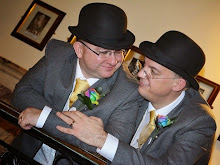
Wednesday, November 23, 2016
Doctor Who 52: 01 – Ten Reasons to Watch Robot (SE)
It’s Doctor Who’s fifty-third anniversary today. To celebrate, here are ten reasons to watch an important first for the series – not the very first story, but the first starring Tom Baker! …And the first I ever saw.
Introducing Doctor Who – Robot…
A trail of mysterious break-ins and deaths. Only the footprints of a giant robot left behind. What could it be‽ Well, obviously, yes, but that’s not the only secret weapon, and there are fascists to fight too. Can the Doctor, Sarah Jane Smith, Harry and the Brigadier stop them? And how much fun will we have watching?
If all this seems eerily familiar, about this time last year I had the brilliant idea of choosing an exciting variety of Doctor Who stories in an idiosyncratic order to run through the year, one every week, inspired by the fifty-second anniversary. For all sorts of reasons, this year has been a terrible one, both for me and for my worldview, and that all fell down. This, then, is a repeat – I’m sorry, I’ll read that again – the Special Edition.
I’m not promising to get through the whole list this time, or even get to the second one, but for today at least I want to celebrate by sharing my love for the single most important piece of television in my life. Robot launched the 1975* season of Doctor Who, the series’ Twelfth, and is available on DVD and through BBC Store. Read on, or just press Play…

Ten Reasons To Watch Robot (warning: spoilers lower down the list)
1 – Tom Baker is the Doctor.
“You may be a doctor, but I am the Doctor. The definite article, you might say.”Tom grabs the role with astonishing energy, bewildering his friends and simply sweeping his foes before him, not just physically but with a firecracker intelligence, both mind and body in constant motion. No-one has any idea how to deal with him – except Sarah Jane – but he gets away with it all with simply blazing charisma. And he’s already wearing that scarf and that grin. Nothing will ever be the same again.
2 – The Time Tunnel.
The most iconic of all Doctors gets the most iconic of all title sequences, perfected by Bernard Lodge into the TARDIS rushing through a fabulous swirl that’s been the inspiration for most of the post-2005 titles. It’s paired with, for me, still the best version of the Doctor Who Theme, a ’70s remix of Delia Derbyshire’s original, now with looping echoes into the episode and cliffhanger scream out of it.

3 – The final scene brings our heroes together and invites us all on more adventures.
“There’s no point in being grown up if you can’t be childish sometimes.”The coda is gorgeous, the Doctor and Sarah Jane (Elisabeth Sladen) making up with each other after the climax, Harry (Ian Marter) endearingly trying to make sense of it all, and finally Brigadier Lethbridge-Stewart (Nicholas Courtney) accepting the inevitable. It’s hard to think of two of the Doctor’s friends more iconic than journalist Sarah Jane Smith, who came back so many years later and starred in her own show, or the Brigadier, who the Doctor had worked with advising UNIT throughout his time exiled to Earth (and whose daughter Kate is a mainstay of the series today) but who the now liberated Doctor will leave behind. And it’s hard to think of a team that makes me smile so delightedly as the Doctor, Sarah Jane and Harry. Here those three come together as a proper TARDIS crew, with new recruit (though not militarily; a Surgeon-Lieutenant from UNIT and the Navy) Harry Sullivan taken for a ride, the fourth Doctor offering his first jelly baby, and Sarah Jane standing up to the Doctor when he’s gone too far but then, the grown-up of the three, making a deliberate choice to be child-like and fly off into time and space to have what you know are going to be the scariest, and most fun, and most marvellous adventures anyone could ever imagine. I’ve previously written about it as one of my favourite ever scenes in more detail. It’s adorable.
4 – The trouble with computers…
“The trouble with computers, of course, is that they’re very sophisticated idiots. They do exactly what you tell them at amazing speed, even if you order them to kill you. So if you do happen to change your mind, it’s very difficult to stop them obeying the original order! But… not impossible.”Before my failing health stopped me working, I spent some years as an IT tutor. Hardly a day went by without my at some stage reassuring a student with a version of that line. Usually alluding more to saving before you close than impending Armageddon, though.
5 – Fantastic thematic consistency.
No, no, wake up at the back! Season Twelve of Doctor Who introduced not just Tom Baker, the time tunnel and Harry Sullivan, but awesome new Script Editor (a similar role to today’s “showrunner”) Robert Holmes and Producer Philip Hinchcliffe. So some people write this story off as the last produced by Barry Letts, and authored by just-going Script Editor Terrance Dicks. But Holmes clearly had a hand in it too, as Robot introduces the fascinating themes that will dominate the season: scientific survival and rebirth by fascistic elites; shattered worlds (before, during and after); alien / machine logic and intelligence against human instinct, free will and compassion… Which isn’t necessarily found among the humans-by-birth. And spot-your-own 1930s horror film motifs.
6 – The Robot.
The Robot itself looks fantastic (at least until Part Four). Probably still my favourite robot design in all of Doctor Who, a towering, powerful but still stylish creation accompanied by a low, grating ‘machine’ sound that makes you think the robot’s like a fork-lift truck. But its character is compelling, too – not just Michael Kilgarriff’s acting, but a creature that is often more human than its masters (the novelisation emphasises its tenderness in unexpected moments). I took that to heart at a very young age; it may even have started me off on empathising with the ‘other’, and is probably at the root of my always flinching at the Doctor being beastly in other stories to patently sentient AIs, especially when they’re having existential crises.

7 – Sarah Jane Smith is magnificent.
With a new Doctor, a new companion and so much else to compete with, this is still one of her strongest stories. She’s the intrepid reporter who tracks down the mystery; she’s brave and saves the world facing down the villain when even the Brigadier can’t; then her empathy and compassion even for the unforgivable shines through. And Elisabeth Sladen’s wonderful performance ties all of her character together. She’s a big influence on companions after 2005 in being the Doctor’s heart – but also in doing what has to be done, not ruthlessly, but showing determination when no-one else will.
8 – It warns about utopianism.
There’s a brilliant way round the Three Laws of Robotics. Brilliant, but fatal. Reminiscent of all so-called utopian societies, in which the individual is disposable for the greater good (even if that comes to mean most individuals in the world). Terrance Dicks wrote this ten years before Isaac Asimov introduced his ‘Zeroth Law’, and that’s not the end of the cleverness in his writing: watch carefully, and you’ll find that the Robot, Russian doll-like, is only the first of three nested ‘ultimate weapons’… Yes, this is ‘Doctor Who – Age of Ultron’.
9 – Like Doctor Who from the very first, it is utterly against fascism.
“The thought of Miss Winters in handcuffs gave Sarah considerable pleasure.”Fascist leader Hilda Winters (Patricia Maynard) is a great villain, calculating in private, demagogue in public, but this infamous sentence from Terrance Dicks’ novelisation underlines how easy it is to be authoritarian just so long as it’s what you’re sure is for everyone’s good… The Brigadier’s retort there to Sarah Jane’s wish to bang up all the baddies because we know they’re baddies is that Britain’s not a military dictatorship. Which on balance, the story suggests, is a good thing. Five weeks into Doctor Who’s first run in 1963, fascism became the series’ biggest evil. Starting with Robot, the 1975 stories make the same point again and again.
10 – It inspires Liberalism.
“I would wear what you thought was good for me. I see. And think what you thought was good for me, too?”It’s difficult to work out how much I was instinctively a Liberal and liked Doctor Who because it was the ‘odd one out’ show, and how much I liked Doctor Who and so took its lessons to heart. But though I think of certain other stories as more obvious influences on my politics, there are definite seeds here. Free will versus dictatorship; empathy with the different; Sarah’s first reaction to power being that it might be misused, her second to ask questions, her third compassion; green energy being a really good thing but enforcing it by authoritarianism and viewing people as disposable is a really bad thing. A green Liberal in the making, aged three, thanks to that most Doctor Who of simple homilies, that “the end never justifies the means.” Aged three? Well, yes. The moral here wasn’t the only influence this story had on me…
“It’d be for your own good.”

What Else Should I Tell You About Robot?
“Alexander the Great?”This isn’t just where Tom started. It’s where I started.
It changed my life and I love it with all my heart. Because it led to me loving Richard with all my heart.
Of course I can have two hearts.
Many more stories than you’d expect are someone’s favourite, but every story is someone’s first. This was designed to be a new start (and so was the next one), and when three-year-old me starting watching half-way through Robot, I was hooked.
Thinking critically – though it’s always enormous fun – this is a good story, but it’s not the very best. Its liberal heart is in the right place (opposing the far-right place) but its grasp of international politics is a bit shaky. And though as Robot comes into the final episode it builds several climaxes on top of each other, it’s also where a few things fall down a bit, not least the special effects. Gigantically. Even Sarah Jane has her ups and downs there.
So where many fans, if you asked them where to start on Doctor Who, would pick an action-packed, fun, familiar-but-different story set in more or less our modern world, one that gives a central role to the woman companion while introducing a new Doctor and a hugely successful era, and has the single-word title “Ro—”… It’s probably true that it wouldn’t be this one unless the fan is me (I love that other one too, by the way, but more on that story later).
But none of that matters to me. Because it was my first. And nearly forty-two years later, I’m still watching Doctor Who because of it. What better recommendation could there be?
*Technically this started in the last week of 1974. And actually 1975 was so wonderfully packed with Doctor Who that another season came along in the Autumn. But as Robot was launching a new season for the New Year and the first Saturday after Christmas was when they did that – and as I didn’t start watching until the second week of January – I always say it started Doctor Who for 1975. Because it belongs there. And, anyway, it’s from 1980.
And, if you need one, my score:
Usually this would be a simple mark out of ten, the crudest possible metric of how good I think a story is. Some weeks there will be exceptions.
8/10 says my head…
But 10/10 is not enough for Robot in my heart.

If You Like Robot, Why Not Try…
Everything! I did. But perhaps saying ‘now watch all two-hundred-and-sixty-odd stories before next week’ would be overdoing things.
Then try the whole of Tom Baker as the Doctor? I did. But it did take me the next six years, on many Saturdays, as they went out on BBC1.
So if you liked Robot, why not try The Ark In Space? Because it was Tom’s second story as the Doctor, and because The Ark In Space takes the new but already perfect team of the Doctor, Sarah Jane and Harry away from the comfort of Earth and throws them into stark outer space horror. It’s a brilliant story, it has another of Tom’s best performances and one of his most iconic speeches, it’s a bold statement of where new producer Philip Hinchcliffe and lead writer Robert Holmes were to take the series, and it became a huge influence – probably on the film Alien, certainly on Doctor Who’s return to TV forty years later, with both Russell T Davies and Steven Moffat claiming it as favourites.
But most of all, try The Ark In Space because one of the things I most love about Doctor Who is that, whatever you think of the story you’ve just watched, the next one will probably be completely different.

Next Time…
If I get to the next time: Always start at the beginning. I have. But Doctor Who has more beginnings than the Doctor has lives…
Labels: Doctor Who, Doctor Who 52, Liberalism, Personal, Repeats Er I Mean Special Editions, Robot, Sarah Jane Smith, Tom Baker


Saturday, November 21, 2015
Doctor Who 52: 01 – Ten Reasons to Watch Robot
Introducing Doctor Who – Robot…
The first story in my idiosyncratic fifty-two-week Doctor Who selection… And what a mighty first this story brings! Launching the 1975* season, this stars Tom Baker as the Doctor (and he’s not the only first).
There’s a trail of mysterious break-ins and deaths and only the footprints of a giant robot left behind – what could it be? Well, obviously, yes, but there are more secret weapons and a fascist coup to deal with too. Can the Doctor, Sarah Jane Smith, Harry and the Brigadier stop them? And how much fun will we have watching?
This Monday, November 23rd, will be Doctor Who’s fifty-second anniversary. My celebration is a story every week. You can read what this Doctor Who 52 is all about here. But I’d just read on, then press Play on the DVD.
Ten Reasons To Watch Robot (warning: spoilers lower down the list)
1 – Tom Baker is the Doctor.
“You may be a doctor, but I am the Doctor. The definite article, you might say.”He grabs the role with astonishing energy, bewildering his friends and simply sweeping his foes before him, not just physically but with a firecracker intelligence, both mind and body in constant motion. No-one has any idea how to deal with him – except Sarah Jane – but he gets away with it all with simply blazing charisma. And he’s already wearing that scarf and that grin. Nothing will ever be the same again.
2 – The Time Tunnel. The most iconic of all Doctors gets the most iconic of all title sequences, perfected by Bernard Lodge into the TARDIS rushing through a fabulous swirl that’s been the inspiration for most of the post-2005 titles. It’s paired with, for me, still the best version of the Doctor Who Theme, now with looping echoes into the episode and cliffhanger scream out of it.
3 –
“There’s no point in being grown up if you can’t be childish sometimes.”The coda is gorgeous, the Doctor and Sarah Jane (Elisabeth Sladen) making up with each other after the climax, Harry (Ian Marter) endearingly trying to make sense of it all, and finally Brigadier Lethbridge-Stewart (Nicholas Courtney) accepting the inevitable. It’s hard to think of two of the Doctor’s friends more iconic than journalist Sarah Jane Smith, who came back so many years later and starred in her own show, or the Brigadier, who the now liberated Doctor had worked with advising UNIT throughout his time exiled to Earth and whose daughter Kate is a mainstay of the series today. And it’s hard to think of a team that makes me smile so delightedly as the Doctor, Sarah Jane and Harry. Here those three come together as a proper TARDIS crew, with new recruit (though not militarily; a Surgeon-Lieutenant from UNIT and the Navy) Harry Sullivan taken for a ride, the fourth Doctor offering his first jelly baby, and Sarah Jane standing up to the Doctor when he’s gone too far but then, the grown-up of the three, making a deliberate choice to be child-like and fly off into time and space to have what you know are going to be the scariest, and most fun, and most marvellous adventures anyone could ever imagine. I’ve previously written about it as one of my favourite ever scenes in more detail. It’s adorable.
4 –
“The trouble with computers, of course, is that they’re very sophisticated idiots. They do exactly what you tell them at amazing speed, even if you order them to kill you. So if you do happen to change your mind, it’s very difficult to stop them obeying the original order! But… not impossible.”Before my failing health stopped me working, I spent some years as an IT tutor. Hardly a day went by without my at some stage reassuring a student with a version of that line. Usually alluding more to saving before you close than impending Armageddon, though.
5 – Surprising thematic consistency. No, no, wake up at the back! Season Twelve of Doctor Who introduced not just Tom Baker, the time tunnel and Harry Sullivan, but awesome new Script Editor (a similar role to today’s lead writer) Robert Holmes and Producer Philip Hinchcliffe. So some people write this story off as the last produced by Barry Letts, and authored by just-going Script Editor Terrance Dicks. But Holmes clearly had a hand in it too, as Robot introduces the fascinating themes that will dominate the season: scientific survival and rebirth by fascistic elites; shattered worlds (before, during and after); alien / machine logic and intelligence against human instinct, free will and compassion… Which isn’t necessarily found among the humans-by-birth. And spot-your-own 1930s horror film motifs.
6 – The Robot. It looks fantastic (at least until Part Four). Probably still my favourite robot design in all of Doctor Who, a towering, powerful but still stylish creation accompanied by a low, grating ‘machine’ sound that makes you think the robot’s like a fork-lift truck. But its character is compelling, too – not just Michael Kilgarriff’s acting, but a creature that is often more human than its masters (the novelisation emphasises its tenderness in unexpected moments). I took that to heart at a very young age; it may even have started me off on empathising with the ‘other’, and is probably at the root of my always flinching at the Doctor being beastly in other stories to patently sentient AIs, especially when they’re having existential crises.
7 – Sarah Jane Smith is magnificent. With a new Doctor, a new companion and so much else to compete with, this is still one of her strongest stories. She’s the intrepid reporter who tracks down the mystery; she’s brave and saves the world facing down the villain when even the Brigadier can’t; then her empathy and compassion even for the unforgivable shines through. And Elisabeth Sladen’s wonderful performance ties all of her character together. She’s a big influence on companions after 2005 in being the Doctor’s heart – but also in doing what has to be done, not ruthlessly, but showing determination when no-one else will.
8 – There’s a brilliant way round the Three Laws of Robotics. Brilliant, but fatal. Reminiscent of all so-called utopian societies, in which the individual is disposable for the greater good (even if that comes to mean most individuals in the world). Terrance Dicks wrote this ten years before Isaac Asimov introduced his ‘Zeroth Law’, and that’s not the end of the cleverness in his writing: watch carefully, and you’ll find that the Robot, Russian doll-like, is only the first of three nested ‘ultimate weapons’… Yes, this is ‘Doctor Who – Age of Ultron’.
9 –
“The thought of Miss Winters in handcuffs gave Sarah considerable pleasure.”Fascist leader Hilda Winters (Patricia Maynard) is a great villain, calculating in private, demagogue in public, but this infamous sentence from Terrance Dicks’ novelisation underlines how easy it is to be authoritarian just so long as it’s what you’re sure is for everyone’s good… The Brigadier’s retort there to Sarah Jane’s wish to bang up all the baddies because we know they’re baddies is that Britain’s not a military dictatorship. Which on balance, the story suggests, is a good thing.
10 –
“I would wear what you thought was good for me. I see. And think what you thought was good for me, too?”It’s difficult to work out how much I was instinctively a Liberal and liked Doctor Who because it was the ‘odd one out’ show, and how much I liked Doctor Who and so took its lessons to heart. But though I think of certain other stories as more obvious influences on my politics, there are definite seeds here. Free will versus dictatorship; empathy with the different; Sarah Jane’s first reaction to power being that it might be misused, her second to ask questions, her third compassion; green energy being a really good thing but enforcing it by authoritarianism and viewing people as disposable is a really bad thing. A green Liberal in the making, aged three, thanks to that most Doctor Who of simple homilies, that “the end never justifies the means.” Aged three? Well, yes. The moral here wasn’t the only influence this story had on me…
“It’d be for your own good.”
What Else Should I Tell You About Robot?
“Alexander the Great?”This isn’t just where Tom started. It’s where I started.
It changed my life and I love it with all my heart. Because it led to me loving Richard with all my heart.
Of course I can have two hearts.
Many more stories than you’d expect are someone’s favourite, but every story is someone’s first. This was designed to be a new start (and so was the next one), and when three-year-old me starting watching half-way through Robot, I was hooked.
Thinking critically, it’s a good story, but it’s not the very best. Its liberal heart is in the right place (opposing the far-right place) but its grasp of international politics is a bit shaky. And though as Robot comes into the final episode it builds several climaxes on top of each other, it’s also where a few things fall down a bit, not least the special effects. Gigantically. Even Sarah Jane has her ups and downs there.
So where many fans, if you asked them where to start on Doctor Who, would pick an action-packed, fun, familiar-but-different story set in more or less our modern world, one that gives a central role to the woman companion while introducing a new Doctor and a hugely successful era, and has the single-word title “Ro—”… It’s probably true that it wouldn’t be this one unless the fan is me (I love that other one too, by the way, but more on that story later).
But none of that matters to me. Because it was my first. And forty years later, I’m still watching Doctor Who because of it. What better recommendation could there be?
*Technically this started in the last week of 1974, but as it was launching a new season for the New Year and the first Saturday after Christmas was when they did that – and as I didn’t start watching until the second week of January – I always say it’s 1975. Because it belongs there. And, anyway, it’s from 1980.
And, if you need one, my score:
Usually this will be a simple mark out of ten, the crudest possible metric of how good I think a story is. Some weeks there will be exceptions.
8/10 says my head…
But 10/10 is not enough for Robot in my heart.
If You Like Robot, Why Not Try…
Everything! I did. But perhaps saying ‘now watch all two-hundred-and-fifty-odd stories before next week’ would be overdoing things.
Then try the whole of Tom Baker as the Doctor? I did. But it did take me the next six years, as they went out on BBC1.
So if you liked Robot, why not try The Ark In Space? Because it was Tom’s second story as the Doctor, and because, though most weeks I’ll probably choose a story that’s quite like the one I’ve just watched, The Ark In Space takes the new but already perfect team of the Doctor, Sarah Jane and Harry away from the comfort of Earth and throws them into stark outer space horror. It’s a brilliant story, it has another of Tom’s best performances and one of his most iconic speeches, it’s a bold statement of where new producer Philip Hinchcliffe and lead writer Robert Holmes were to take the series, and it became a huge influence – probably on the film Alien, certainly on Doctor Who’s return to TV forty years later, with both Russell T Davies and Steven Moffat claiming it as favourites.
But most of all, try The Ark In Space because one of the things I most love about Doctor Who is that, whatever you think of the story you’ve just watched, the next one will probably be completely different.
Meanwhile, On the Other Side…
My beloved husband Richard is watching… Why, look! The Ark In Space.
Next Time…
Always start at the beginning. I have. But Doctor Who has more beginnings than the Doctor has lives…

Labels: Doctor Who, Doctor Who 52, Liberalism, Personal, Robot, Sarah Jane Smith, The Golden Dozen, Tom Baker
Friday, February 01, 2013
Doctor Who 50 Great Scenes – 45: Robot
Counting down towards the fiftieth birthday of Doctor Who with Fifty great scenes… Tonight’s celebrates the late, wonderful Elisabeth Sladen’s birthday by going back to a particularly fine moment for Sarah Jane Smith, joined by the Doctor and Harry to set out in their first trip in the TARDIS together. And mine. Beware spoilers for Robot, the story that first captivated three-year-old me and led to all this, as the coda still charms me every time…

This story changed my life – and not just by giving the best advice to any child (or worst for them, if you’re a parent). Can I imagine any of it without Doctor Who? Without reading, politics, Richard? I wouldn’t want to. So it’s hard to think of an adventure closer to my heart, nor a team that makes me smile so delightedly as the Doctor, Sarah and Harry. This is the scene where they come together as a proper TARDIS crew, with Harry taken for a ride, the fourth Doctor offering his first jelly baby, and Sarah Jane – ah, Sarah Jane. With Sarah Jane grounding the Doctor and standing up to him when he’s gone too far – but then, the grown-up of the three, making a deliberate choice to be child-like and, in doing so, giving the Doctor consent to fly again. With my Fifty restricted to the Doctor Who TV series, there are sadly no selections from The Sarah Jane Adventures – but there is, there has to be, Sarah Jane Smith.

The new Doctor (Tom Baker) has been amazingly physical and inventive in his first story, body and mind in constant motion as he seizes the series. And arrayed against him, fascists, nuclear Armageddon, and an impressive, intelligent Robot, to whom only Sarah Jane Smith (Elisabeth Sladen) ever shows kindness and whose mind is eventually broken by manipulation, loss and despair. Sarah Jane has been almost as much the star of this show as the new Doctor – the first to discover what’s going on, on her own initiative; brave; clever; inquisitive; ruthless with a gun in facing down the villain; but also compassionate. When the Robot takes on the whole world, the Doctor is worried for the world… But Sarah Jane is, very Doctorishly, also concerned for the Robot, an immensely powerful, suffering child. Her sympathy for the Robot was my first lesson in moral sense from Doctor Who: empathy for the ‘other’, and ever since wondering if every artificial intelligence has an existential crisis of its own (and knowing instinctively what an ‘existential crisis’ was long before I had the words for it).
The Doctor saves the world, and he’s newly alive, and loving it, and he’s very, very clever, and for all those reasons, he deserves to look pleased with himself. But in doing all of that, he’s killed someone – someone that Sarah Jane cared about – and that makes his triumph feel almost as wrong as it’s right. That’s why it’s so right that the story doesn’t let him off with it. I’ve often pointed out the plot elements that Russell T Davies’ stories take from this season of Doctor Who: perhaps he took some of its heart, too, because just as he showed that sometimes the Doctor needs a strong woman friend to tell him he’s gone too far, the camera cuts from the Robot crumbling to dust to the effect that it – and the Doctor – has had on the Doctor’s best friend…
In the aftermath, Sarah Jane sits forlornly in the old Doctor’s lair, the UNIT laboratory. The new Doctor enters, this regeneration not haughty but naughty, and before leaving that lab for the last time at the end of the scene, at the start of the scene there’s what turns out to be an iconic moment when Tom takes his first bag of jelly babies from his pocket and, desperate to make her happy again, says, for the very first time:
She doesn’t respond; so he moves from being the little boy offering a present so he doesn’t have to apologise to trying to engage her in argument. He had to do it… And she knows, it did terrible things, “but at first, it was so human.” And he admits that it was: “capable of great good, and great evil,” and in doing so, that he too has the knowledge of good and evil that she demands of him. Then, having given a little to his friend, the only worry that was keeping him there, he’s off. Even though – especially though – the Brigadier wants him to address the Cabinet, the PM and the Queen and write a mass of reports. And that’s exactly the point at which Sarah Jane, already established as the grown-up in this relationship, puts her finger on what his tantrum’s all about.
And in the most important moment in the whole scene, where she could tell him to face up to his responsibilities, or refuse to forgive him and stay, unhappy… She stands, firmly shoots out her arm, and naughtily snatches a jelly baby. She’s not given in to him, but made her own choice, and she wants to be a child, too.
Which is when poor Harry enters. A marvellous portrayal of an upper-class not-quite-twit, Ian Marter makes the character work by being so utterly endearing and eager to please. He’s mostly been the comic relief this time; in the next story, he provides more comedy to leaven the horror, then gets serious for the next two stories before briefly slipping back into comic relief and then, startlingly, becoming part of the horror… But first, he has to step into the TARDIS. He’s new to UNIT; he’s new to the series; and he doesn’t know what’s coming. I didn’t, then, either, and I was just as wide-eyed as Harry. But you know, don’t you, reader? So when the Doctor tells Harry he’s going on a little trip and, a similarly generous offer, gives him a jelly baby, Harry’s the only one who doesn’t understand the subtext.

Sarah Jane giggles. The Doctor, hurt, takes back the jelly baby. And Harry, who’s the most boyish of them all, tries to be adult and tells the Doctor that they’re both reasonable men. Which is his third mistake just since walking through the door. And that they both know that police boxes don't go careering around all over the place. Which is his fourth. And then he listens to the Doctor, who’s acting innocent. And that’s his biggest mistake of the lot.
There’s even a lovely little coda to that coda. Just as the TARDIS fades away, the Brigadier (Nicholas Courtney) comes into the lab and clocks it. It’s not really the TARDIS that’s fading away before that unbeatable time tunnel titles whoosh in here, but UNIT from Doctor Who – we go with the TARDIS, not stay behind on Earth. But I still love the Brigadier with all my heart, as much as I still love the Doctor, Sarah Jane and Harry. So though we didn’t know at the time that the first journey of one era meant it had to be the last words of another, it’s lovely that he has the beautifully underplayed last words:
Only Number 45? I love this scene so much that it feels like it should be higher. But there are so many more great scenes to come!

It’s part of another great start, and another one close to my heart for all sorts of reasons. Another new Doctor who gives the series a fantastic lift-off; another ordinary, extraordinary woman companion who’ll stand up the Doctor; another man companion who’s a bit of a fifth wheel. The Doctor (Christopher Eccleston) has taken Rose (Billie Piper) off into space and time for excitement, and adventure, and really wild things. Sounds awful, her mum Jackie (Camille Coduri) thinks, and that’s even after she gets over the shock of Rose going missing for a year and assuming her dead. So the Doctor’s not having a great time – he gets a slap. And neither is Rose – she gets an earful. And she doesn’t even have the pleasure of knowing she’s the only person on Earth to have seen alien spaceships: as already featured in my Eleven More Great Scenes, it’s at that precise moment that one crashes into Big Ben and the headlines.
Everyone gathers at Jackie’s flat to welcome Rose back and watch spaceships on the telly; Matt Baker’s even making one out of cake – with more jelly babies – on Blue Peter. [EXCLUSIVE SCANDAL: I met him once, and he admitted he didn’t make it. What an outrage!] But in a closed-off city hospital, there’s an ‘alien’ somebody made earlier out of bits they had at home. Oh, and with my Fifty restricted to TV Doctor Who, there’s no Torchwood – but there is Tosh. It’s a third of the episode in and it looks like only a few people having a jolly time in Downing Street know what’s going on, so as they laugh, the Doctor gets itchy feet and leaves the flat for the “BAD WOLF”-scrawled TARDIS. But as he steps onto the balcony…
But I love that line for another reason, too. It doesn’t just sum up the freshness of Rose back in 2005, but the sheer exhilaration of 30th July, 2004, looking up in wonder at a block of flats alive with massive lights in the dark night, watching Christopher Eccleston act a lot with his hands and one cool, clear line from Billie Piper to command our attention. As if she needed to. Because that had been the day that a friend of ours a few streets away had gone to see – no, really – the doctor, on the Brandon Estate. And found the local surgery mocked-up as a Chinese take-away, and a TARDIS round the corner. And knew he’d be coming back to see the Doctor, and gave us a call. That night of marvels, Richard and I saw Doctor Who being made, and held that line in our hearts for nine months until it was reborn.
Next Time… Where do you expect to find a ship? Not here.
‹Older
“Doctor, you – you’re being childish.”
“Well, of course I am. There’s no point in being grown up if you can’t be childish sometimes.”

This story changed my life – and not just by giving the best advice to any child (or worst for them, if you’re a parent). Can I imagine any of it without Doctor Who? Without reading, politics, Richard? I wouldn’t want to. So it’s hard to think of an adventure closer to my heart, nor a team that makes me smile so delightedly as the Doctor, Sarah and Harry. This is the scene where they come together as a proper TARDIS crew, with Harry taken for a ride, the fourth Doctor offering his first jelly baby, and Sarah Jane – ah, Sarah Jane. With Sarah Jane grounding the Doctor and standing up to him when he’s gone too far – but then, the grown-up of the three, making a deliberate choice to be child-like and, in doing so, giving the Doctor consent to fly again. With my Fifty restricted to the Doctor Who TV series, there are sadly no selections from The Sarah Jane Adventures – but there is, there has to be, Sarah Jane Smith.

My apologies at this point to regular readers for having been an irregular writer. I had intended to write this for Saturday 19th January, which would have been ideally placed between the 18th – on which Robot Part Four was originally transmitted in 1975 – and the 20th – which was Tom Baker’s 79th birthday. That would also have followed on naturally from my posts about My Doctor Who Thirty-Eighth Anniversary and my Favourite Season Countdown, going straight to Number Two on the list (and to Number Three, below). Happily, tonight would not only have been Elisabeth Sladen’s birthday, but is the anniversary of Part Two of The Ark In Space, her first full story that I saw, and which gave me the finest nightmares in all the world. So that’s almost worth the wait. As to what caused the wait… Not only have I been more ill than usual (as usual), but my mouse karked it, and I found myself completely unable to get to grips with the swish new RSI-beating joystick replacement I bought. So thank you, my lovely Richard, for so many things but on this particular occasion for buying for me (though it was your birthday and not mine) a less radical vertical mouse that I can more or less use, and that more or less diffuses the pain. I won’t make any rash commitments to catch up this time, but merely offer a few extra photos by way of making up for lost weeks, and a special preview of one of the few things I’ve been doing in the blizzardy weeks between (re-enacting not The Ark In Space, but a thematic successor to that story, first broadcast thirty-seven years ago yesterday evening).
The new Doctor (Tom Baker) has been amazingly physical and inventive in his first story, body and mind in constant motion as he seizes the series. And arrayed against him, fascists, nuclear Armageddon, and an impressive, intelligent Robot, to whom only Sarah Jane Smith (Elisabeth Sladen) ever shows kindness and whose mind is eventually broken by manipulation, loss and despair. Sarah Jane has been almost as much the star of this show as the new Doctor – the first to discover what’s going on, on her own initiative; brave; clever; inquisitive; ruthless with a gun in facing down the villain; but also compassionate. When the Robot takes on the whole world, the Doctor is worried for the world… But Sarah Jane is, very Doctorishly, also concerned for the Robot, an immensely powerful, suffering child. Her sympathy for the Robot was my first lesson in moral sense from Doctor Who: empathy for the ‘other’, and ever since wondering if every artificial intelligence has an existential crisis of its own (and knowing instinctively what an ‘existential crisis’ was long before I had the words for it).
The Doctor saves the world, and he’s newly alive, and loving it, and he’s very, very clever, and for all those reasons, he deserves to look pleased with himself. But in doing all of that, he’s killed someone – someone that Sarah Jane cared about – and that makes his triumph feel almost as wrong as it’s right. That’s why it’s so right that the story doesn’t let him off with it. I’ve often pointed out the plot elements that Russell T Davies’ stories take from this season of Doctor Who: perhaps he took some of its heart, too, because just as he showed that sometimes the Doctor needs a strong woman friend to tell him he’s gone too far, the camera cuts from the Robot crumbling to dust to the effect that it – and the Doctor – has had on the Doctor’s best friend…
In the aftermath, Sarah Jane sits forlornly in the old Doctor’s lair, the UNIT laboratory. The new Doctor enters, this regeneration not haughty but naughty, and before leaving that lab for the last time at the end of the scene, at the start of the scene there’s what turns out to be an iconic moment when Tom takes his first bag of jelly babies from his pocket and, desperate to make her happy again, says, for the very first time:
“Would you like a jelly baby?”

She doesn’t respond; so he moves from being the little boy offering a present so he doesn’t have to apologise to trying to engage her in argument. He had to do it… And she knows, it did terrible things, “but at first, it was so human.” And he admits that it was: “capable of great good, and great evil,” and in doing so, that he too has the knowledge of good and evil that she demands of him. Then, having given a little to his friend, the only worry that was keeping him there, he’s off. Even though – especially though – the Brigadier wants him to address the Cabinet, the PM and the Queen and write a mass of reports. And that’s exactly the point at which Sarah Jane, already established as the grown-up in this relationship, puts her finger on what his tantrum’s all about.
And in the most important moment in the whole scene, where she could tell him to face up to his responsibilities, or refuse to forgive him and stay, unhappy… She stands, firmly shoots out her arm, and naughtily snatches a jelly baby. She’s not given in to him, but made her own choice, and she wants to be a child, too.
Which is when poor Harry enters. A marvellous portrayal of an upper-class not-quite-twit, Ian Marter makes the character work by being so utterly endearing and eager to please. He’s mostly been the comic relief this time; in the next story, he provides more comedy to leaven the horror, then gets serious for the next two stories before briefly slipping back into comic relief and then, startlingly, becoming part of the horror… But first, he has to step into the TARDIS. He’s new to UNIT; he’s new to the series; and he doesn’t know what’s coming. I didn’t, then, either, and I was just as wide-eyed as Harry. But you know, don’t you, reader? So when the Doctor tells Harry he’s going on a little trip and, a similarly generous offer, gives him a jelly baby, Harry’s the only one who doesn’t understand the subtext.
“What, in that old police box?”

Sarah Jane giggles. The Doctor, hurt, takes back the jelly baby. And Harry, who’s the most boyish of them all, tries to be adult and tells the Doctor that they’re both reasonable men. Which is his third mistake just since walking through the door. And that they both know that police boxes don't go careering around all over the place. Which is his fourth. And then he listens to the Doctor, who’s acting innocent. And that’s his biggest mistake of the lot.
“You wouldn’t like to step inside a moment? Just to demonstrate that it is all an illusion?”Sarah Jane, ever kindly, sounds a warning note not to be mean to the new boy, but she can’t help pissing herself adorably when Harry goes into the TARDIS. And out again. And then they all pile back in, and off into time and space to have what you know is going to be the scariest, and most fun, and most marvellous adventures anyone could ever imagine.
“Well, if you think it’ll do any good.”
“Oh, yes, it’ll make me feel a lot better.”
There’s even a lovely little coda to that coda. Just as the TARDIS fades away, the Brigadier (Nicholas Courtney) comes into the lab and clocks it. It’s not really the TARDIS that’s fading away before that unbeatable time tunnel titles whoosh in here, but UNIT from Doctor Who – we go with the TARDIS, not stay behind on Earth. But I still love the Brigadier with all my heart, as much as I still love the Doctor, Sarah Jane and Harry. So though we didn’t know at the time that the first journey of one era meant it had to be the last words of another, it’s lovely that he has the beautifully underplayed last words:
“Doctor, about that dinner at the Palace: Her Majesty—
“Yes. Well, I’ll tell them you’ll be a little late.”
Only Number 45? I love this scene so much that it feels like it should be higher. But there are so many more great scenes to come!

Bonus Great Doctor Who Quotation – Aliens of London
It’s part of another great start, and another one close to my heart for all sorts of reasons. Another new Doctor who gives the series a fantastic lift-off; another ordinary, extraordinary woman companion who’ll stand up the Doctor; another man companion who’s a bit of a fifth wheel. The Doctor (Christopher Eccleston) has taken Rose (Billie Piper) off into space and time for excitement, and adventure, and really wild things. Sounds awful, her mum Jackie (Camille Coduri) thinks, and that’s even after she gets over the shock of Rose going missing for a year and assuming her dead. So the Doctor’s not having a great time – he gets a slap. And neither is Rose – she gets an earful. And she doesn’t even have the pleasure of knowing she’s the only person on Earth to have seen alien spaceships: as already featured in my Eleven More Great Scenes, it’s at that precise moment that one crashes into Big Ben and the headlines.
Everyone gathers at Jackie’s flat to welcome Rose back and watch spaceships on the telly; Matt Baker’s even making one out of cake – with more jelly babies – on Blue Peter. [EXCLUSIVE SCANDAL: I met him once, and he admitted he didn’t make it. What an outrage!] But in a closed-off city hospital, there’s an ‘alien’ somebody made earlier out of bits they had at home. Oh, and with my Fifty restricted to TV Doctor Who, there’s no Torchwood – but there is Tosh. It’s a third of the episode in and it looks like only a few people having a jolly time in Downing Street know what’s going on, so as they laugh, the Doctor gets itchy feet and leaves the flat for the “BAD WOLF”-scrawled TARDIS. But as he steps onto the balcony…
“And where d’you think you’re going?”Just as Tom’s Doctor offered Sarah Jane the trip of a lifetime in a jelly baby and she chose to accept it on her own terms, this Doctor asked “D’you wanna come with me?” in that trailer – and though Rose, too, chose to go with him, this question fired back at him is the natural sequel to his more famous line. I just love the cocky confidence of Rose, knowing exactly what the Doctor’ll be doing. He talks about history happening, and insults humans, and thinks maybe it’s first contact, and is excited for humans, and tells her to stay. And she does stay – on target, asking exactly the right questions to cut through all his bluster. So that before he heads off, she wins not just his respect, and his crabby face, when he turns to go, but – for the first time – her own TARDIS key.
But I love that line for another reason, too. It doesn’t just sum up the freshness of Rose back in 2005, but the sheer exhilaration of 30th July, 2004, looking up in wonder at a block of flats alive with massive lights in the dark night, watching Christopher Eccleston act a lot with his hands and one cool, clear line from Billie Piper to command our attention. As if she needed to. Because that had been the day that a friend of ours a few streets away had gone to see – no, really – the doctor, on the Brandon Estate. And found the local surgery mocked-up as a Chinese take-away, and a TARDIS round the corner. And knew he’d be coming back to see the Doctor, and gave us a call. That night of marvels, Richard and I saw Doctor Who being made, and held that line in our hearts for nine months until it was reborn.
Next Time… Where do you expect to find a ship? Not here.
Labels: Blue Peter, Christopher Eccleston, Doctor Who, Doctor Who 50, Personal, Pictures, Robot, Sarah Jane Smith, The Brigadier, Tom Baker