Sunday, October 30, 2016
Doctor Strange Thoughts
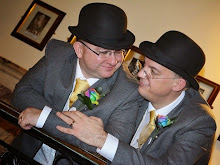
My beloved husband and I lurched to the cinema this afternoon to see Doctor Strange – a ‘put the clocks back day’ treat (all right, birthday, too). Always a risk. Happily, Marvel’s latest won us both over.
A few thoughts why…

Capes! Clocks! Consequences! Characters! Cumberbatch!
Most of all, I’ve always loved psychedelia. This gives you all the spectacle you could wish for, from Sixties trippery to far-out realms to folding cities. It is, very much, my bag. Though for ideal Blu-ray play we’re going to need a bigger telly. Or four. Or six. And a big room to experience them in as they line every side.

I never read a lot of superheroes when I was younger. But I did like weird s**t, and fantasy, and capes. And much as I’ve enjoyed many of the Marvel movies, a bit of me’s thought at times, ‘Meh – they keep holding back on the costumes because they’re too afraid people will point and laugh. Never mind leather muscles. I like big flowing capes. I’ll never take you seriously until you put on your cape.’
At last, the main hero has a cape, and not just any cape, but a massive flowing cloak that has its own credit. Just seeing that in the trailer had me sold. Richard had to give me one of those looks when I pointed and shouted joyously, “Cape!”

Mads Mikkelsen. Ten years after Bond, still an outstanding villain. Still with a reason. Still problems with his eyes.
Decisions have consequences. Even time catches up with you.
Chiwetel Ejiofor. Compelling. I’ve only read the graphic novel A Nameless Land, A Timeless Time, but fabulous as that was, I wasn’t expecting Mordo to have a character, too…
Everyone’s a b*****d. Everyone’s got a brain. Both of these surprise and delight me.
Tilda Swinton. Translucent. I don’t mean her character, and another superb performance, but: just to look at her you can believe she’s ancient and yet not aged.
“From a certain point of view” has always seemed like a reason to turn someone on the path to the dark side.

Benedict Cumberbatch. Now with American growl. I came out of the cinema with the thought that it’s his reaction to a future he once thought averted (if you remember a story from about six years ago), now inescapable…
[Cumberbatch growl]
‘I’ve seen many terrible futures.
I’ve avoided many of those roles.
But it always ends at this moment.
I am a Doctor.
I am a Lord of Time.
And I am on lunchboxes.’
[/Cumberbatch growl]
Massive dinner consumed (thank you, beloved husband). Before we can manage cake, time to watch yesterday’s Class. Woo! Psychedelic titles! I’m in.
Labels: Class, Comics, Doctor Strange, Film, Marvel


Tuesday, October 18, 2016
Brexit Inflation Soaring – Tory Government Solutions: MAYhem
The Pound collapsing. Marmite threatened. Inflation doubled. All that with years still to go before massive trade tariffs start really hurting ordinary people. The unelected new Prime Minister isn’t just throwing out Mr Cameron’s Conservatism – it’s a Great Repeal of every shred of Tory economic responsibility built from Mrs Thatcher’s Single Market and control of inflation.
What plans does Mrs May’s government have to make the Pound seem like it’s still worth anything? Now it’s already fallen to its lowest value since 1848 and with accelerating inflation about to slash all our cash?
Here are some EXCLUSIVE rival proposals.
- Unelected Prime Minister Theresa May wants to take Britain back to the 1950s. So rumours are she favours repealing decimalisation – because if the Pound has 240 pennies, that must mean it’ll have two and a half times the spending power, right?
- Unbelievable Foreign Secretary Boris Johnson is said to have a much more flamboyant idea. Issue new banknotes on REALLY BIG pieces of paper so everyone can see the Pound is still huge (it’s just the economy that got small). The 350 million Pound note will be the size of a bus – but unfortunately no-one will be able to spend it.
- Unshackled-by-reality Brexit Secretary David Davis is understood to favour adopting the leaf as legal tender, so we can all become immensely rich. This has two extra advantages: the Remoaner city dwellers will be immediately impoverished; and when the Pound and the economy have become so small they’re practically non-existent, Britain can proudly remember who won by calling our new currency The Leave.
- (As this is already the fiscal policy of Jeremy Corbyn’s Labour Party, there’s a terrifying prospect of a cross-party consensus between the Free Money and Unicorns Grow On Trees thinkers on both sides of the Commons.)
- Obviously there isn’t a proposal from Disgraced Defence Minister and Not Yet (‘97 days and counting’) Disgraced Minister* Without Any Actual Role Liam Fox, because he doesn’t have any actual role. But as in the absence of a proper job he spends all his time contradicting anything David Davis says, watch out for Dr Fox taking matches near any woods. Though obviously none of his government ‘colleagues’ allow him to play with matches anyway.
What isn’t funny is that these plans above are more coherent and detailed than anything the Tory Government’s bickering factions have shared with us. What’s even less funny is that while they fight among themselves without a plan, the Pound continues to fall and the really big inflation dangers get ever closer. Take a read of Nick Clegg’s analysis: Food, Drink and Brexit. The threat to all of us ordinary people from rising prices is scarier than anything for Halloween.
In other news, everyone remembers the one absolutely clear, no-ifs, no-buts, no arguing about exactly what it means commitment made by the Leave campaign – that there would absolutely definitely be £350 million extra for the NHS. Every week.
This week, unelected Prime Minister Theresa May said that that wouldn’t happen. In fact, the NHS must make £22 billion of cuts instead.
And then she said that any elected MPs who dare to ask for a vote on her proposals weren’t “respecting the will of the British people”. What about respecting the will of all the voters who voted to “Take Back Control” and Parliamentary Sovereignty? It’s a kick in the face to them now Parliament’s told instead that all decisions will be made by a tiny ruling elite that not one voter chose to run the country. What about respecting the will of all the voters who voted for £200 billion a year extra for the NHS? It’s a kick in the face to them now an unelected Prime Minister is cutting it by £22 billion instead. Call that “respect”?
So What Does Brexit Mean?
The unelected Prime Minister is committing us – against everything the voters were told in June – to a “Hard Brexit”. Throwing away Mrs Thatcher’s Single Market. Rising prices. Crashing the Pound. Trashing the economy. Call that “Conservative”?
Some commentators don’t want to use the word “Hard” because it sounds butch. Macho. Tough. Decisive. When it’s actually just painful. Panicky. Reckless. Damaging. Without a plan. Ideologically extreme. Not giving a toss about kicking ordinary people in the wallet. It’s as if the Tory Government is trying to cost us all as much as possible.
Some people call this “Chaotic Brexit”.
For some it’s “Expensive Brexit”.
What does Mrs May’s Brexit mean? For me, there’s only one word for our unelected Prime Minister’s ‘plan’.
MAYHEM.
*This joke via Millennium Dome, Elephant, in his own excellent analysis of the increasing threat to the British economy from Mrs May’s wreckers.
Labels: British Politics, Conservatives, Douglas Adams, Economy, European Politics, Stupid Ideas, Unelected Prime Minister Theresa May
Friday, June 17, 2016
Britain is Better Than This
Hate. Racism. Now murder.
This cannot stand. Whether you’re In or Out, there are values the great, decent majority of British people agree on.
We’ve all got to take responsibility now. Because Britain is better than this, and we can’t just leave it to somebody else.
Last night I was so appalled, so upset and so angry that I just recorded what I felt.
- What the campaign’s turned into – and why they’re not “all the same.”
- Racism and very different experiences I remember from growing up.
- How I contrast Nigel Farage with my Mum.
- How very British is immigration.
- Why it’s incredible that people pretend that Britain of all countries can’t cope with coming together with other nations.
- How disgusted I am by the bullies and cowards who are dragging Britain back to bigotry.
- And most of all, out of all the hate and dividing people and screams of “Traitors”, knowing that for decent people on both sides of the vote that this is not the Britain we want.
Britain is better than this.
Please listen to my appeal and those of so many other people. And let your voice be heard too. Because it’s gone way too far to sit back, shake your head, and just hope someone else does something.

Labels: Bigotry, British Politics, European Politics, Personal, Referendum, The Golden Dozen
Friday, February 26, 2016
A #LibDemValues Vs Other Parties Rorschach Test
A quick test. Read this paragraph – which other parties is it implicitly opposing?
Government should be about freedom from poverty. Governments shouldn’t protect the interests of the already powerful and wealthy, and sneer at, snatch from and push down people working to make a life for themselves, or those who aren’t able to support themselves. Government should be about freedom from ignorance. Governments shouldn’t assume it can do everything, control everyone, as long as you take what you’re given and don’t ask awkward questions when paternalist leaders claim they always know best and ignore the evidence. Government should be about freedom from conformity. Governments shouldn’t tell you that nation is the only thing that matters about you, exclude ‘outsiders’ and shout ‘traitor’ at anyone who doesn’t want their flag cut smaller, narrower and meaner.
How I Wrote For Agenda 2020
The Liberal Democrats are in the middle of an “Agenda 2020” consultation about the party’s values. As part of this, they ran an essay competition to sum up in one thousand words what it means to be a Liberal Democrat. I entered, as did my husband Richard, and we were both shortlisted from the sixty-odd entrants for the nine finalists put to public vote. Though the vote’s now closed, you can still read all the essays here. There’s another exciting consultation session coming up at the Conference in York in a fortnight.
Anyone familiar with my level of productivity – the length of time it takes me to get anything written, and also the length of text once I’m done – will be unsurprised to learn that I left writing my entry until quite late, then didn’t like what I’d written, then wrote it again from scratch a couple of days later, and then found myself with something I was happier with, but which was also a little over one thousand seven hundred words. On the afternoon of the deadline.
My final entry was in some ways an improvement on the larger draft – less repetitive, and more powerful in combining some ideas – but as I lopped more and more out of it in increasingly desperate haste, it did lose some elements altogether, which inevitably changed its tone and weakened the message. At some point I might write a version that brings some of those bits back in, but for now I’ve simply presented you with one previously deleted paragraph above. The only other person who read my long draft thought it was the best bit. So why did I cut it?
What I Aimed For (and why that paragraph didn’t fit)
I set myself several tasks in writing the essay beyond ‘What the Liberal Democrats should be if I were their god-emperor’. Not least because we don’t, as a rule, believe god-emperors are a good thing. So I wanted a statement of belief that not just fired me up but which I thought most other Liberal Democrats would agree with at least most of, too. And I wanted something that could clearly explain and inspire people outside the Lib Dems to try Liberalism. I’m sick of people saying, ‘Oh, you Liberals, you’re too reasonable, you don’t feel strongly about anything’, or ‘Oh, you’re just about feelings, you don’t live in the real world,’ both of which I will politely refute on the doorstep (rather than swearing at the f***wits in the towering rage they deserve), so I aimed to counter both of those loads of old b****cks, for example. And some of it was a reaction to things other Lib Dems had said we stood for, where I thought, ‘Not me, matey’. But amongst all the other things I wanted to do in a thousand words – possibly why it got to nearly twice that – I told myself, as I always do when I try to express what the Lib Dems stand for, that I had to be positive. We hardly ever get any time to say what Liberal Democrat values positively are, so why on Earth waste time just saying what’s wrong with the others instead?
And that’s why the paragraph above had to go. Although it was a sort of judo-statement, illustrating Lib Dem principles by overthrowing other parties in turn, and even though it didn’t name them, it still stood out as knocking copy in an essay that should have been positively Liberal Democrat.
[By this stage, readers who read all nine of the shortlisted essays will almost certainly be able to deduce which essay was mine, and also which essay I would have given ninth preference to. It’s a shame we didn’t get to vote for them all in order of preference, as there were none of them I was entirely happy with but eight I would be fairly happy with. I did consider fisking each of them, but I thought that might have come over as a ‘vote for me’, which we were asked not to do – though I’d also have fisked mine, having written it and knowing its flaws, and even Richard’s, which I found the most inspiring.]
Which leaves the one last question about that paragraph: which parties did you assume each line was overthrowing in turn? Because I reckon two are pretty unambiguous, but the other… I deliberately wrote it so you could infer more than one ‘enemy’, because it was an attack on a particular sort of philosophy, not on just one party that enslaves people to that philosophy. Even so, one party was flashing like a neon light in my head. But when the only other person who’s read it until now told me that was the best bit, he also named the kicking I gave to a different party as particularly satisfying. So, out of interest, who was it for you?
A Note On Health
Regular readers will have noticed that my blogging has been even worse than usual – especially and embarrassingly as I’d set myself explicit targets, so you can spot each one that goes by. It’s not just a lack of blogging mojo (though that always comes up). On top of all my usual long-term health problems which are permanent and quality-of-life-sapping fixtures, I’ve had a chest infection for two months now that just will not shift. I can cope with my usual asthma, but persistently finding it difficult to breathe makes all sorts of things rather difficult. And because when my physical ill health is especially low I easily pick up bonus problems, suffice to say I’ve been picking up several bonus problems. So at the moment I don’t know if I’ll be able to get to York, nor even if I do so (as with several previous conferences) whether I’ll spend most of it keeled over in our hotel room. But in the hope of minimum functionality, I hope to see some of you there.

Labels: Liberal Democrat Conferences, Liberal Democrats, Liberalism, The Golden Dozen, What the Lib Dems Stand For
Cameron’s Plan To Slash Democracy – MPs Down, Lords Up
A question to ask Mr Cameron today:
“How is your plan to cut 50 MPs but add 40 Lords a/ democratic or b/ money-saving?”Four years ago, Liberal Democrats, Labour and Conservatives all promised to make the House of Lords elected – but Labour and Tories teamed up to stop the changes. That’s why voters still can’t hold peers to account or throw them out. Today, the news breaks that the Prime Minister wants to stuff the Lords with forty new cronies at the same time as slashing the number of MPs (for whom we get to vote) by fifty.
The House of Lords already has hundreds more members than the House of Commons – and all Lords have seats for as long as they want them, usually for life. Personally, I’d give more power to the regions and only then cut MPs’ numbers once there’s less work for them to do, but anyone who thinks democracy matters at all can see Mr Cameron’s plan is the wrong way round.
There should be no cuts to the Commons until the Lords is cut to the same size, and no more unelected peers appointed at all if the Parliamentarians we can at least theoretically vote to get rid of are being removed.
The Tories claim they want to “cut the cost of politics,” but this isn’t about reducing the numbers of politicians – just swapping out fifty MPs for nearly as many new Lords instead. The difference is, even after the Tories do their best to choose which voters are put into which constituency boundaries to try and get as many Tories elected as they possibly can, they’re still scared to death that voters can still choose not to vote Tory after all. So now they plot to just stop us pesky voters from getting in their way. That’s why Mr Cameron plans to swap MPs who voters have power over for Tory crony nodding dogs in the Lords – who no voter has ever had a say on.
One to file under ‘You couldn’t make it up’ (but now the Tories have absolute power on a third of the vote they think they can get away with anything).
Sourced from today’s The Times Red Box bulletin:
“In for a peerage
“Yesterday we had news of David Cameron's plan to cut the number of MPs from 650 to 600 to help to ‘cut the cost of politics’.
“Today comes an extraordinary story in The Times [paywall] about how Downing Street is preparing to create up to 40 new peers after the EU referendum.
“Sam Coates reports that it means the PM will be able to reward supporters of the Remain campaign, while trying to prevent embarrassing defeats in the upper chamber.
“Legally all such stories must include this fact: The Lords is already the second biggest legislature in the world, after the Chinese politburo.
“And there was me thinking Cameron wanted to take back powers from an unelected, unaccountable elite who threaten the supremacy of British democracy.”
Labels: Conservatives, Lords, Newspapers
Saturday, January 23, 2016
Doctor Who 52: 07 – Ten Reasons to Watch The Rescue
Introducing Doctor Who – The Rescue…
A poor orphaned waif with a forbidding guardian, waiting to see if their ship will ever come in. The sinister figure that terrorises her while claiming to be her protector. This is Doctor Who at its most Dickensian – set on an alien world four hundred years in the future. Maureen O’Brien debuts as the series’ first ‘new companion’, to be comforted by William Hartnell’s Doctor at his most delightful and menaced by Sydney Wilson’s dastardly Koquillion (but it’s not him who callously kills her pet). A small but perfectly formed story from 1965…
I’m celebrating Doctor Who’s fifty-second anniversary with one story every week (though I’ve got some catching-up to do right now) for a year – and my husband Richard is joining in with his own eclectic choices if you want different recommendations. You can read more of what this Doctor Who 52 is all about here. But if I were you I’d just read on, then press Play on the DVD.
Seriously, just press Play, especially on this one. Usually the DVD menus have a mix of tantalising moments from the story, like an ambient trailer; that’s how the main menu works here, but the Special Features sub-menu is just one continuous clip of the climax. There are some preposterous decisions elsewhere in the range, but this probably wins the ‘What were they thinking‽’ award for most random and complete spoiler. So when I say there are spoilers lower down my list this time, I mean it…

Ten Reasons To Watch The Rescue (warning: spoilers lower down the list)
1 – It’s an ideal Doctor Who story for New Year (and yes, I have failed my resolution to write these on time each week). It’s a bit of a new start, but not too much. It’s small and manageable, not too complicated, but with a refreshing twist. And they get to sleep some of it off. While The Rescue didn’t start a new season, it was first broadcast on January 2nd, 1965, and it’s perfectly pitched for new viewers to jump on board with the new companion. We see the TARDIS materialise – literally a beacon of light throughout – before we see within, always crucial in making us appreciate that it’s bigger on the inside than the outside, and the small cast gives us much more time with all the characters. Most of all, we get to know newcomer Vicki, and we get to know the Doctor all over again. Written by original Doctor Who lead writer David Whitaker, this is quietly the series’ first relaunch. Of course, the honest New Year Doctor Who would be Resurrection of the Daleks (massive overindulgence followed by regret and resolutions that you’ll break immediately and double down instead) then The Twin Dilemma (the awful hangover)…
“We can travel anywhere and everywhere in that old box, as you call it. Regardless of space and time.”
“Then it is a time machine?”
“And if you like adventure, my dear, I can promise you an abundance of it.”
2 – Vicki is the first new companion. And the story goes as far as it can to make that easy on the viewers – or, rather, to make us go easy on her. When we first met the Doctor, it was through his granddaughter Susan, a mystery for her schoolteachers Ian and Barbara to follow. But Susan fell in love and out of the TARDIS in the previous story. How would the Doctor take to someone else? How would we get used to a new teenage face in the show? And what could bring her on board? She’s not another relative, and while the Doctor effectively kidnapped Ian and Barbara, that was bundled up with the role-reversal on teachers who know nothing, and not something a kinder, gentler Doctor could do to a teenage girl. The producers nearly brought on board a gutsy young freedom-fighter from the previous story, but instead chose to go quite the other way. They pull out all the stops to make us feel sorry for her and want her looked after.
Vicki seems, to begin with, much younger and less capable than Susan. Maureen O’Brien – here beginning an impressive career, though thanks to a forgotten early work of Andrew Davies’ I grew up thinking of her as an evil witch-nun – plays her with huge eyes, a waif-like form and outfit, and just enough pluck that she doesn’t make the audience wonder why on Dido she’d want an abundance of adventure after spending every scene cowering. Today Vicki is easy to read as abused or at least crushed by her multiple bereavements and oppressive semi-guardian – she’s young and full of hope that’s ever cowed, he’s dark and brooding and rains on every parade – and to see how after being adopted into a friendlier sort of family she’s going to gain the self-confidence of a cheeky teen anarchist (though inconsistent writing will give her wild mood swings between the two).
But for now, Vicki sets a template that will often be repeated for new companions, and which I once sarcastically labelled ‘Daddy was a lord, but he’s dead now’. Her mother has died, so her father takes her away to make a new home on a colony world. But their ship crashes on the inhospitable planet Dido, so they don’t get to their new home. And then her father dies too. Not just him, but a massive explosion that takes out every other person she knows, except one. And he doesn’t like her. So there is literally no-one on this planet who loves and will look after her. She is the most thoroughly orphaned person possible (until the show eventually takes this to extremes with Nyssa), and the Doctor and his friends spend most of the story getting to know and befriend her, so by the end of the story there can be no possible objection to her choosing – and she is very carefully given a choice and time to choose it – to leave on the TARDIS. Just to make sure we get the point that she is utterly and totally destined to be the new companion, she even introduces herself to Barbara twice. The second time spelling out her name, letter by letter.

3 – Even more effectively than it introduces Vicki, The Rescue reintroduces the Doctor in a subtly reworked role that retains all of William Hartnell’s intelligence and authority but allows him to be kindlier and funnier, giving us his ‘twinkle’. This is a great place to start for Mr Hartnell, showcasing just how versatile the Doctor could be and will be from now on – stern, affectionate, vulnerable, incisive, embarrassed, and often comic here, too. People often dismiss the youngest Doctor – the one looking like the oldest man – as a grumpy old thing, not least because when we first see him he’s terrific but not kind in running rings round his companions. He takes a while to warm or warm to, and longer to seem trustworthy. Yet I can’t think of another Doctor with more facets. This story doesn’t so much soften the Doctor’s character as give him a chance to shine in many different ways, not least as the only person who sees everything that’s going on in the story. I love Bill for his speeches and his passion, and there’s plenty of that here – at the climax of the story, he follows previous ‘courtroom’ triumphs with a stunning confrontation in a majestic Hall of Judgement. He charms budding companion Vicki with his understanding, then is chuffed to bits overhearing how much she already likes and trusts him. He promises her he’ll be diplomatic… Which last about ten seconds before – though he’s the last Doctor of whom you’d expect it – he picks up a girder to use as a battering ram and determines on breaking a door down.
William Hartnell turned a powerful acting presence learned as the stern sergeants and ruthless crooks of his film career into the perversely authoritative anti-establishment Doctor… But he also had great comic timing, and his vulnerability in a character role inspired producer Verity Lambert to make him the Doctor. Both are on full display here. The show needs us to move on from Susan, but the Doctor can’t forget his granddaughter just yet; rarely do we see the Doctor so quietly hurt as when he starts to ask her to open the doors here, and falters, Barbara gently offering help instead. Before long he’s showing he’s sharp as ever to Ian, then wondering if he can get away with pretending he landed on Dido deliberately before remembering that he did it in his sleep, playfully undercutting the danger of his becoming a know-it-all. On the surface, The Rescue may be designed to repair the ensemble cast by introducing a replacement fourth member, but compare it with a year earlier and it’s not just the teenager who’s changed, nor even the Doctor’s character that’s evolved – it’s not an ensemble any more. He’s the Doctor. The ‘new companion’ makes it clear that the others are just that: his companions. If there was ever a doubt who was the star, there isn’t now.

4 – Alien Design. This is a small, cheap story, but designer Raymond Cusick – who created the series’ first alien world – carefully chooses where to put detail that fills in a civilisation. Though his big alien beastie here isn’t a patch on his Daleks, the various stylised representations of it are fabulous. Massive carvings draw your attention from bare rock walls; pillars give shape and purpose to the Hall of Judgement, transforming it from a big empty space to the eerie, majestic heart of the story, aided by smoke and (reused but atmospheric) musique concrète. And the alien figure of Koquillion, all leering tarantula-faced bristles and tusks with the manner and mendacity of a wicked Dickensian stepfather, is decidedly creepy every time he comes to call and tell Vicki not to go far from the crashed ship, or he might not be able to protect her from his people…
5 – The Doctor’s sympathy versus Barbara’s exasperation. One of the biggest changes in the Doctor since the series started a year before is that he’s now much more concerned for and tactile with his companions, no longer just with his departed granddaughter. In their first scene together here, the two teachers are worried; she’s noticed that the vibration of flight has ceased, meaning that for the first time, the Doctor’s slept through a landing. They rouse him and he comes to, embarrassed but charmingly tactile with his friends, pretty much giving each of them a hug, so when Barbara breaks his flow to try and tell him what’s happened, he jumps wonderfully to the wrong conclusion and clasps her hand to his breast in concern and delight. Then he’s more embarrassed when he realises what she actually meant…
“Oh, but Doctor, the trembling’s stopped.”
“Oh, my dear! I’m so glad you’re feeling better. Hmm!”
“No, not me – the Ship!”
“Oh, the— Oh, my dear, I’m so sorry.”

6 – The Doctor’s knowledge versus Ian’s exasperation. Ian and Barbara have developed since the of the series, too – this time, they go off exploring, while the Doctor dozes in the Ship. But when they’re menaced by Koquillion, Barbara’s toppled from a cliff and Ian caught in a rock fall, the Doctor springs out to help… Only to wind Ian up by knowing considerably more than he does, despite as far as Ian is concerned having only been outside for a moment while he was out risking his neck exploring.
“Oh, there was this – thing, this repulsive thing with a – hideous face.”The Doctor gives him a quick glance up and down and tells him no bones broken, but somehow Ian doesn’t seem to mean it on thanking him for “The most thoroughgoing medical I’ve ever had.”
“With hands and feet like claws?”
“Yes, that’s it. How do you know?”
“Well, this is the planet Dido. I’ve been here before. I know them very well.”
“What?”
“They’re very friendly people.”
“Friendly?”
“Yes.”
“Oh! It wasn’t friendly to us.”
“…This thing. Was it armed?”
“No, no, it wasn’t. Wait a minute… It was carrying – some sort of – jewelled club. About so long.”
“With a big head? Resembling a spanner?”
“I don’t know why you bother to ask.”
Though the Doctor gets an exasperated moment of his own later, as the two of them clamber across a narrow rock face in the dark and then, as if that wasn’t enough to put up with, hear a roar from ahead of them. Ian sticks the torch right in the Doctor’s face.
“What was that?”
“Well, it’s not me, is it? Shine the torch down there!”
7 – Making you think about time travel (and tact) for yourself. Charmed by the Doctor, Vicki has started to bond with Ian and Barbara, so they start to exchange confidences: Vicki about her loneliness, and the two teachers about their travels. Ian tells Vicki that their spaceship travels through time as well. Barbara tells her that they left in 1963, instantly regretting it.
“1963! But that means you’re about – five hundred and fifty years old!”The camera lingers first on Vicki calculating, then Barbara trying not to look monstrously offended – in the fragile moment of still feeling very in the wrong just after Vicki’s forgiven her – while Ian covers his mouth and chokes with laughter in the background. And all neatly reintroducing the series’ concepts, and letting the viewer go, ‘Hang on – no – that’s not right – let me work it out…’ while Babs is writhing in embarrassment and elbowing her long-term companion in the ribs, before Vicki drops another clanger on the audience, too:
“Well, yes, I – I suppose I am. Yes, it’s a way of looking at it, but I’ll try not to look at it too often.”
“They didn’t have time machines in 1963. They didn’t know anything then.”The same conversation gets one of my favourite moments in the book, similarly making us think:
“‘Oh, come on, you’re imagining things, Barbara Wright,’ Ian laughed. ‘You’re as bad as that awful little Tracey Pollock in 3B!’
‘Tracey Pollock . . .’ Barbara murmured. Coal Hill School suddenly seemed a million miles away. In fact it was a great deal further and long since buried beneath the Metropolitan Disposal Plant.”
8 – The double (or single) entendre. Ian Chesterton at one point calls the villain “Cocky-lickin’”. I suspect it’s only that William Russell seems so sober and respectable and that Ian is written as the most reassuringly ‘straight’ of all the Doctor’s companions that he ever got away with it. It’s almost as bare-faced as one of the stories in the first ever Dr Who Annual, published the same year, being titled The Fishmen of Kandalinga. In later years, The Rescue was described by one infamous guidebook as being set on the planet “Dildo”, which I knew people were finding funny some time before I understood why. But it’s Ian Marter’s novelisation that’s mostly likely to make you blink. It was the book he was writing just before his untimely death, and I can’t help but wonder if he inserted some passages as a gag, expecting his editor to take them out, and then the editor didn’t want to change any of his last book. Right on the first page, a character sniggers at the script’s time-reading of “sixty-nine” flying hours until they reach Dido, which was so blatant that I spotted it even as a surprisingly innocent teenager, while in Chapter 5 there’s so much manipulating of oily, lubed rings that when I re-read the novel later in life I read it back again to be sure those were really the words.
9 – A very Doctor Who moral: don’t judge by appearances. The Doctor and Ian struggle to avoid a howling Sand Beast at the cliffhanger (both episodes end with pretty much literal cliffhangers). We see a Sand Beast staring at Vicki with its big shining eyes on stalks as she innocently goes about finding shrubs to eat, then lumbering forward. And Barbara sees that too. So she seizes the crashed ship’s flare gun and runs out of the wreck to blast it in the head (which Ian Marter’s novelisation describes tastefully as a “smouldering toffee-like blob”, after cheating rather in the build-up). Its keening death wail is rather distressing for the viewer, but worse for Vicki: “Sandy” was herbivorous and her only comfort as a pet, and now this becardiganed murderer has killed him! Alien-looking doesn’t mean nasty, human-looking doesn’t mean nice, Barbara and Vicki between them have to learn both lessons, then poor Vicki is slowly brought to understand and forgive her by the Doctor listening to and trusting the orphan.
10 – The two-faced guardian. And finally, the big twist. The Rescue is sometimes described as a whodunit, but of course the point is that it only becomes that once you know who’s done it. You don’t even think of it like that when you can see the monster Koquillion played, as always, by a man in a monster suit all the way through. The glowering Victorian authority figure, the only other survivor after the wicked alien natives killed all the crew at a feast of welcome – but somehow managed to kill all their own people in the explosion too – had murdered a crew member on the voyage and everything else was his attempt to rescue himself. Vicki was ill in her cabin and didn’t know, so he dressed in Didoi robes made from local animal skulls to menace her as Koquillion, personification and maligner of the beastly natives, setting her up as witness to Dido’s cruel, murderous and conveniently unable to answer back inhabitants for when a ship arrives from Earth to rescue them both. It’s an entertaining dual performance from Ray Barrett – double-credited behind a portmanteau pseudonym of Sydney Newman and Donald Wilson, two of Doctor Who’s co-creators – though outshone by William Hartnell. The Doctor’s been enchanting right through the story – but now he sits like a marble statue in the Hall of Judgment of a slaughtered people to wait for the killer. And while the murderer made me think of Dickens throughout, the Doctor’s intellect and the plot he unmasks reminds me of Conan Doyle’s The Norwood Builder.
There are few scenes in Doctor Who that make me sit up and pay attention so keenly as when the Doctor, eyes racing but not turning as Koquillion enters the Hall, calls for him to come in. The atmosphere’s already electric, and then – casually, conversationally, because both of them know, so there’s no need to announce it, and because that way the audience is all the more likely to go ‘What? What did he say?’ – the Doctor informs him by his real name that such robes are only for absolutely ceremonial occasions. And from then on everything about the scene is relentless.
The Doctor doesn’t shrink from the ‘alien’, but he backs away as something far more sinister – an evil man – closes in on him. A betrayer, a cruel tormenter, a genocidal mass murderer, a rotten heart of darkness. Though ironically the man in a monster suit looks far more effective than the monster of the week, fans have often speculated why, in a later story, the Doctor’s visions of past monsters as part of his inner fears should include an image of Koquillion, because he wasn’t even a monster. I wonder if they’ve ever watched it.

What Else Should I Tell You About The Rescue?
I’ve always thought The Rescue a lovely little story, not one I’d put in my ‘best of’ countdowns but played, written and directed so neatly that I can’t help enjoying myself. It was only the second William Hartnell story I ever saw – brought along by an older friend to a bootleg showing by some university club in Manchester – and it opened my eyes to how endearing a character he was. I still remember falling in love with his comedy scenes at the start, and his shy delight on overhearing Vicki talking about him. There are a couple of moments that don’t work – a monster that tries to break up the human form and really doesn’t succeed, and the Didoi being defined as another ‘Planet of the Hats’ people who all think the same way – but it’s a neatly-formed story, well-told, and gently relaunches the Doctor and the series while handling its first big change, all at the length of a modern Doctor Who episode, a rarity in the Sixties. You can buy it in a double-DVD set with the more comedy-toned The Romans which I’ve heard called, but which you sadly won’t find labelled as, ‘Veni, Vidi, Vicki’.
Ian Marter’s novelisation has a very different flavour to the TV version – where 1965’s The Rescue is a small-scale story with an innocence that’s marred by one terrible betrayal, 1987’s reworking takes place in a much more cynical universe and expands the action considerably. The rescue ship is very of its time, going from an occasional voice on the radio to scenes on an explicitly American spacecraft – a “heap of Reaganium” – whose crew are shaken by the TARDIS and snap, “Don’t press my button!” It all makes the subtext of the damage done by ‘settlers’ to Native Americans much more the text, linking it to gung-ho ’80s US military clichés and, with the author seizing on the original serial’s New Year broadcast dates, giving a bitter festive commentary on the show’s hopeful ending. Not all the humour is so black – the Tracey Pollock moment always makes me smile, and the Doctor gets several new entertaining lines, particularly an incisively bitchy comment on the villain’s story and at the TARDIS’ next destination – while Dido is given a feel of ruined grandeur and horror at the end of a civilisation well beyond the TV’s budget. The science is rather dodgy, but the main flaw for me is that the structure falls down badly in the second half; as with the innuendos, I suspect Target Books’ editor didn’t want to alter the text of Ian Marter’s final book, but when the story comes to a head and the climax is then deferred for forty pages of sub-sub-Tolkien ruins and giant beasties, it could have done with another draft. You can buy it on audiobook, read by Maureen O’Brien in a warm, intimate style, with a vulnerable Vicki and an endearingly querulous Doctor.
And, if you need one, my score:
7/10
If You Like The Rescue, Why Not Try…
The Evil of the Daleks, utterly marvellous, another script from David Whitaker, introducing the exemplar of the companion as Victorian orphan innocent of her sinister sort-of-guardian (though sadly mostly burned by the BBC). Voyage of the Damned, another Christmas hangover with an ill-fated ship and a blatant companion audition piece, with a twist. The Ambassadors of Death, another tale of aliens who aren’t really hostile being used as cover by scheming humans. Dragonfire, a refreshing change to the timid Victorian orphan companion trope and another fearsome monster concealing something unexpected. But I’m in the mood for another short one…
The Sontaran Experiment. Another brisk two-part story set on a rocky wasteland of a world where the population’s extinct – or is it? – and we meet the survivors of a destroyed spaceship, one of whom is not what they seem, all of which is later greatly extended by an Ian Marter novelisation.
Meanwhile, On the Other Side…
Richard is watching… Black Orchid. A carefree social whirl until the murders start popping out of the woodwork. Then it’s all secrets and masks and betraying guardians.
Next Time…
Through illness and other impediments I’ve fallen so far behind now that it depends on which angle I next attempt to climb the mountain. But next time in the original plan, whenever in the future this particular story might emerge, features another new companion who is caught up in a whodunit that’s not really a whodunit and finds both that humans can be more alienating than the aliens and that stepping on board the TARDIS and leaving it all behind was only the start of her problems.
Labels: Doctor Who, Doctor Who 52, The Rescue, William Hartnell
Wednesday, December 30, 2015
Five Reasons to Listen To Home Truths – Doctor Who 52 Extra: E
Introducing Doctor Who – Home Truths…
A ghost story for Christmas featuring one of Doctor Who’s shortest-lived companions as the heartbeat of one of its most intimate and personal tales. Jean Marsh recreates Sara Kingdom for this creepy Big Finish audio two-hander (3.05 in their Companion Chronicles series) where she poses a challenge to church, state and listener simply by being there. For all that she and the visiting Night Constable scoff at fairy tales, she embodies perhaps the oldest fairytale lesson of all…
“There’s a house across the waters at Ely where an old woman tells a strange story.”

Five Reasons To Listen To Home Truths (warning: spoilers lower down the list)
1 – Sara Kingdom. Back in 1965-66, Jean Marsh – possibly the Doctor Who star with the most glittering career – played Sara Kingdom. A Space Security Agent from the year 4000, Sara reluctantly teamed up with William Hartnell’s Doctor and his friend Steven Taylor, after first being sent to kill them – and in a sort of shocking sort of The Apprentice twist, killing another of the Doctor’s companions to get there, who haunts her still. In many ways she seems a New Adventures companion long before her time: hard as nails; personal tragedy and betrayal; always the shadow of the Daleks and death hanging over her; but some part of her always remains, because she travelled with the Doctor. Sara died an old woman, but there’s still no time after her travels for the Doctor for more adventures. So the most obvious way to bring her back is to give her an exciting Space Security Agent adventure before she ever met the Doctor (see “Lost Story” The Destroyers, also from Big Finish). Home Truths is not the obvious way to bring Sara back…

2 – Is she or isn’t she?
“Hear the old woman’s story. Then decide her fate.”Fans argue. And one of the oldest fan debates in Doctor Who is whether or not Sara Kingdom counts as a ‘real’ companion. She travelled in the TARDIS. But only for one story. But it was a very long one. But not even for all of that. But she deserves it. And so on. Or in later years, are the Doctor Who stories that begin as books or, here, CDs ‘real’ stories? To ask the question is to miss something about stories, for me, and while I make lists and write about esoteric story points too, those two questions aren’t ones that engage me, so perhaps I’m predisposed to take one side within this story. Because Home Truths itself takes such questions and ambiguities and weaves a story out of the very criticisms that people are bound to come up with before they’ve even heard it.
So the story starts with Robert the Night Constable, the sceptical listener. Home Truths has much in common with Ghost Light, though with a very different feel in its sparse settings, adrift from any one time: the stories are confined within a house; there’s a hint of M R James, with a religious scientist investigating the unknown; and like the ultimate villain in Ghost Light and like the fans this story is challenging, Robert has a list of categories that count and, because she doesn’t fit into them, he can’t accept her. It’s not real if you can’t see it. Can he, and the sort of fans who police the list, give her a chance by listening? And so their frame story, and the mystery found by the Doctor, Steven and Sara, and the meta-story of the listeners interweave as he questions what to him are her unreliable narrative devices, and says that he won’t allow the bits that contradict his continuity of facts, without being aware of the gaps in any of his own assumptions, the ghosts of his own superstitions. He’s putting her on trial as a danger to church and state while not really believing in the church side of his role and believing his known science as dogma of its own, so her real threat is more to his own worldview than to his world.
“Well? What’s it going to be?”
3 – Asking questions about human nature. The discussion between Miss Kingdom and Robert isn’t just about the people in the stories she’s telling, but about how we’re all wired – and tangentially between the two of them, both night constables of a sort, the conflict between orders and individuality, duty and empathy, and how all choices have consequences for which we must take responsibility. You have to ask questions, even if it’s hard: Sara’s original sin and Robert’s choice can’t be passed off as just obeying orders, and perfection doesn’t suit humanity. These are ideas that go to my wider political fear that utopias never have room for people who complicate things and that if you don’t count, you can’t exist, just as the story within the story speaks to inner fears of thoughtlessness (or of thoughts). And, ultimately, throughout this poignant tale, Miss Kingdom has reason to empathise with murderers who don’t really wish to be murderers, and in reaching out to them, might save herself.
4 – Opening up more stories. Sara Kingdom’s original story, The Daleks’ Master Plan, was Doctor Who’s longest TV adventure (subject, naturally, to debate). So it’s a cheeky ambition for Home Truths to put another story into the middle of it and open it out to be even longer, with a promise of more in there still. Author Simon Guerrier’s Doctor Who writing keeps coming back to William Hartnell’s Doctor, captured here in many facets – loving to explore, treating his companions as children but like a mischievous child himself, irritable when made to look foolish but almost serene at the end – and for Big Finish he’s created several rather marvellous adventures for the Doctor and neglected companions Sara and Steven (Peter Purves). Home Truths itself has two sequels (though not necessarily in that order), The Drowned World and The Guardian of the Solar System.
While the events of Home Truths are resolved as far as the Doctor, Steven and Sara’s travels go, not only is the story of Sara and Robert left unresolved, but the hints of the world they inhabit fire the imagination. It’s far in the future, but after war, flood and disasters we can only guess at. What might have caused the downfall of the civilisation after next? And how did another rise, seeing A Canticle for Leibowitz through a crooked glass, in the stern dogma of strictly defined church and science, though tantalisingly neither defined for the listener? Is this strangely past-future even Earth, or have names been carried over the stars like Robert across the fens? And why is he a Night Constable? Does this world ever see the light? Miss Kingdom herself tells Robert that she has a hundred stories to tell about the people who have stayed with her – though he’s deliberately asked to hear one he doesn’t believe. It’s no wonder that her conversation with him has more than a hint of Scheherazade, and that the whole thing feels like The Twilight Zone (a series in which Jean Marsh herself starred in another lonely two-handed psychological horror story / psychological character study).
5 – This creeps me out more personally than any other Doctor Who story.
“The corridor in which the woman lay led to a wide staircase, littered with flowers and paper-wrapped gifts. The Doctor examined the labels: they were wedding presents for Richard and Alex.”Home Truths author Simon Guerrier is a friend of ours and gave us a wedding present. Nothing of Home Truths, though, which is perhaps for the best (his lines that we weaved into our wedding reading weren’t from here, either). My husband is a careful driver, and the only time I can remember him swerving the car in shock was on a dark and stormy night coming up to Christmas 2008 and driving up to see our parents. The story is quite creepy enough, with the mysteriously, suddenly dead bodies of two newlyweds in their dream home. We were already feeling for them, and then Sara Kingdom told us their names in track seven. Thanks, Simon. Of course, they’re not a perfect match: Simon’s been to our place and knows it is not in all honesty uncannily pristine; Alex has been gender-swapped (though imagine the fuss if he’d killed the gays. And thinking about it, the story could have a trans character, from a certain point of view).

What Else Should I Tell You About Home Truths?
You can buy it on CD or download from Big Finish Productions here.
This is where I often mention things other fans don’t like about a story, but I’m not as familiar with reviews for extra-televisual Doctor Who. So my contrary view on Home Truths is that the opening mystery and the aftermath are both brilliant, but some of what would ordinarily be the climax (to the ‘old’ story, at least) doesn’t engage me as much, though it captures the Doctor well and I can see how it’s a necessary bridge. Perhaps it’s just because in some ways it’s an extended ‘action’ sequence, which despite being a harrowing moment for Sara, those are always less effective on the radio, and though she has to ‘earn’ the resolution, I can see it coming and am impatient to get there once I think I know the answer (one of them, anyway).
Simon Guerrier was also the author this year (with Dr Marek Kukula) of The Scientific Secrets of Doctor Who, and so was a guest on Radio 4’s The Infinite Monkey Cage Christmas Special last week. Whatever you think of their scientific views, at least they don’t wield them with the authority to unperson you if you disagree.
And, if you need one, my score:
8/10
If You Like Home Truths, Why Not Try…
More Sara Kingdom: naturally, The Daleks’ Master Plan, a fantastic epic from 1965-66, including in the middle Doctor Who’s first ever Christmas special episode (which isn’t very M R James at all). The BBC burnt most of it, of course, but you can buy the whole soundtrack on CD, and see the three complete surviving episodes on the Lost In Time DVD set. And I’d recommend Simon Guerrier’s sequels to Home Truths, too. For more Jean Marsh, there’s the 1965 historical adventure The Crusade (for which most of the same limitations apply), and 1989’s Battlefield (all of which, thankfully, you can see on DVD). Jean Marsh plays different characters in all three stories, though all three have complicated relationships with their brothers – see especially her soliloquy at the end of Battlefield, her coldness in the middle of The Daleks’ Master Plan and a terrific The Crusade scene in which she tears strips off Julian Glover.
Labels: Big Finish, Doctor Who, Doctor Who 52, Fandom, Home Truths, Personal, William Hartnell
Monday, December 28, 2015
Doctor Who 52: 04 – Ten Reasons to Watch Ghost Light
Introducing Doctor Who – Ghost Light…
The Doctor takes Ace to her worst nightmare: a Victorian ghost story for Christmas. Lush BBC costume drama is only the start of one of the most bizarre, macabre and intelligently designed pieces of television you’ll ever see. At a stage in Doctor Who’s life-cycle when the series looked to be facing extinction, it evolves by taking risks and challenging the audience rather than ever playing it safe – though it’s got the vicar from Downton Abbey, here he’s at a much more satisfying posh dinner party, where everyone’s shockingly talking science and religion.
I’m celebrating Doctor Who’s fifty-second anniversary with one story every week (so my catalogue says) for a year – and my husband Richard is joining in with his own eclectic choices if you want different recommendations. You can read more of what this Doctor Who 52 is all about here. But if I were you I’d just read on, then press Play on the DVD.
It’s hard to think of another Doctor Who story so exuberantly packed with brilliant ideas and witty lines, so I was tempted to suggest as one of my ten reasons to watch (like using your last wish to wish for more wishes) that you should explore it to discover how many more reasons than ten there really are.

Ten Reasons To Watch Ghost Light (warning: spoilers lower down the list)
1 – The Doctor and Ace. By Ghost Light, the Doctor (Sylvester McCoy) and his friend Ace (Sophie Aldred) have been together for quite a while. Under lead writer Andrew Cartmel they’ve both become more complex than in the previous season, him less judgmental, her less the troubled teenager, but both still seem to delight in blowing things up – here the Doctor even worries that he’s lit the blue touch paper and left nowhere to retire to, but it’s really Ace’s fuse that he’s playing with.
I love Sylvester’s Doctor in this story, as much an initiative test for the viewer as it is for Ace. He’s powerful, inquisitive, caring, cruel, funny, melancholy and more, but he always leaves me with more questions than answers here: how much does he know what’s going on, and why does he come to Gabriel Chase in the first place? His thinking aloud that even he can’t play this many games at once and the not-a-reassurance that he always leaves things to the last minute suggest he may have seen all sorts of fascinating threads along the way and couldn’t help tugging at them, but that this is really all about his getting Ace to confront her demons before the house’s angels, and that saving Earth is just a by-product.
Is the Doctor Professor Higgins, forcing Ace / Eliza to evolve into his own idea of a Lady (Pygmalion)? Is he Merlin, pushing Ace / Wart through one form after another to learn from the inside out (The Sword In the Stone)? Or is he just prodding her to find out what she’ll turn into for herself? At least, whatever he’s doing to his companion without asking permission, he’s out to expand her mind rather than wiping it. Whether he learns a lesson in the end from seeing other people being treated as he treats Ace and just how badly that works out is open to question, but at least it’s not just Ace who adapts herself to what’s happening in the house; the Doctor has always been able to rise to whatever situation he finds himself in. When Victorian vicar Reverend Matthews takes him for their host, the Doctor fits himself into the niche and responds to the immediate stimuli of “condescend” by how he acts up to him. Or he may just be having enormous fun. It takes Ace rather longer to enjoy it.
The climax of Part One – though Part Two has the more thrilling cliffhanger – comes in possibly their best scene together, when Ace realises that the Doctor’s taken her to her worst nightmare and demands he face her. Sophie Aldred is terrific confronting her mentor / tormentor, looking suddenly grown up in a dinner suit, grasping the trophy room table like a lectern to rain brimstone on the Doctor as he comes in behind her, dark, quiet, stealthy, prodding.
“Don’t you have things you hate?”And her terms aren’t to do with what the Doctor prompts her to realise about what terrified her five years earlier for her, a century in the house’s future, much closer to home. When she starts to open up about the greatest horror in her past, the haunted house just a symptom, Doctor’s quietly supportive, it puts the hairs up on my neck. And you realise that this isn’t about strange upper-class manners in 1883 London at all, and that Doctor Who is now confronting other demons.
“I can’t stand burnt toast. I loathe bus stations. Terrible places, full of lost luggage and lost souls.”
“I told you I never wanted to come back here again.”
“Then there’s unrequited love, and tyranny, and cruelty.”
“Too right.”
“We all have a universe of our own terrors to face.”
“I face mine on my own terms!”

2 – That’s the Way to the Zoo. Mark Ayres’ score is lush, sinister, sometimes intimate and probably his best for the show. He does wonders to produce an orchestral feel without an orchestra. I often listen to the soundtrack (itself released in three different versions). The captivating chords building as Ace confronts the Doctor and her past, the swirling frenzy as they break apart and the African pipes as Redvers stalks them through his own private world make an enormous contribution to Part One. But even here, he’s upstaged by the genuine and disturbingly appropriate Victorian parlour song he found for Katharine Schlesinger’s Gwendoline to sing.
For the climax of the first episode, the music has been rising and getting more claustrophobic as things come to a head; there’s a magnificent flurry as Ace runs up the stairs; it spellbindingly underscores Ace’s harrowing revelations; it spirals dizzyingly as she flees into the red darkness deep below. But hurled through the middle of Mark Ayres’ own magnificent compositions is a novelty song about zoos, monkeys and nuts that the daughter of the house sings with deranged fervour, counterpointing the terrible memories upstairs and the terrible deeds in the drawing room while foreshadowing worse to come, the camera swooping round the piano and Gwendoline’s unnaturally bright eyes with unforgettable passion. Sorry, Mark. She’s the bit that everyone remembers.
The story only gives one verse, but I’ve just discovered a more complete version by fan podcasters The Splendid Chaps, who tracked down the original music for their hellish cabaret. Click here: That’s the Way To the Zoo.

3 – Bringing the Haunted House story to life. The whole story takes place within Gabriel Chase, a spooky old Victorian house. Except… It’s not haunted yet. It’s much weirder than that. It’s not an old house in 1883. And it’s teeming with life, more and more vividly as the story forges on. But terrible things have been happening, as a study of life corrupts into death after death, and the Doctor’s brought Ace here to find out what haunts her from a hundred years later – and it’s not just the house. While all the people caught inside try to work out how to cope with their environment – more an experience than a plot, and for some people life is more difficult to handle than what’s written in stone – the story’s major haunting is by the future, as Ace’s past comes to life around her as if the house knows what she’s going to do. And once the life of the house goes out, it remembers and broods for a hundred years…

4 – Sylvia Syms’ Mrs Pritchard. Ghost Light has a terrific cast all round. Michael Cochrane steals a dozen scenes in an endearingly bewildered role far from the vicar at Downton Abbey; I remembered John Hallam as a hard soldier in Dragonslayer, and of course he drove his car over a cliff into a quarry (twice in one night? That is suspicious), but here his dangerously fey force of nature foreshadows Peter Capaldi’s Angel Islington in both performance and heralding that angels down below are rarely a good sign; John Nettleton is marvellous and seemed the biggest name to me because he’d been at the top of the tree in Yes Minister; Frank Windsor was far enough from Z Cars now that he could play another policeman; and Sharon Duce was a big deal too.
But out of all the bestiary, one actor always grabs your attention – because you don’t dare to look away from her. One of Britain’s major movie stars from the ’50s, playing demure but determined women in films such as Ice Cold In Alex and Victim, here Sylvia Syms plays terrifying housekeeper Mrs Pritchard in spidery black lace that goes beyond Queen Victoria and into half-Skeksis and with a face as hard as her tongue. Her scenes with awkward house guest Reverend Matthews are scarier than any of the aliens: she feels like a stalking cobra as she glides across the floor towards him, and she clearly struck author Marc Platt with the same force, if you read that passage in his novelisation. Who’s been shedding their skin? And her harsh reprimands to young Gwendoline are savage, horribly telling and hilarious all in one (I can never help joining in the whiplash of “Sitting there dressed like a music hall trollop!”). She seems to be a perfect fit for the household. But there’s other significance to dressing in Victoria’s widow’s weeds, and Utopia’s not the only time a real self is hidden within a locket (the novel fills another character’s head with the sound of drums), and her final moment will freeze your heart…
5 – How Not to Bribe the Doctor. Marc Platt’s fantastic script is packed to the brim with brilliant lines, many of them his own. You can’t count all the puns on light and change that reinforce the themes – from “Thank you, Nimrod. We would be delighted” to the butler right through to weaponised puns at the climax – and it completely changes your reaction to the word “Java” from something to wake you up. There’s a lot of it I join in on, appropriately for a gorgeously designed affair that at times looks just like Rocky Horror. But today, my favourite exchange is when self-made man – and if he isn’t, who made him? – Josiah Samuel Smith appraises the Doctor’s abilities if not his origins or morals and tries to employ him for a murder. “I’m afflicted with an enemy,” he claims, in a lovely turn of phrase evoking the man of property’s fear of the underclass despite them being the same underneath (depraved or deprived?), still satirically topical in 1989, and proffers a handful of such massive banknotes that the Doctor whistles.
“I’m not interested in money. How much?”The novelisation adds an extra punchline from the Doctor:
“Five thousand pounds to rid me of the evil brute.”
“Now that’s what I call Victorian value. But I’m still not interested in money.”
“Five thousand pounds! he thought. A gentleman only ever pays in guineas!”
6 – The Victorian Age. Ghost Light is the most deeply Victorian Doctor Who story of all. It doesn’t just glory in the literature and the stereotypes, but embodies the society, family, science, religion and philosophy too, and everything that comes crawling out when you scratch the veneer, everything the ’80s veneration of “Victorian Values” pretended to ignore. And the heart of what makes Ghost Light so much fun and so disturbing is that it revels in doing to the Victorians what they did to everyone else.
“You have no shred of decency.”To the otherworldly survey agent, the house is unexplored and primitive territory, so naturally it’s his to claim and he sticks a flag in it as his property, whatever that does to the natives. And he doesn’t quite understand the customs, applying his perfectly sensible theory in entirely the wrong context… So if you think Josiah’s plan doesn’t make sense, this proto-Thatcherite assuming Darwinism and Social Darwinism are just the same as each other might just be the point. The religious and scientific establishment’s sermons are satirised over dinner, in the horrible comeuppance of Homo Victorianus Ineptus, and eventually on a grand scale when we find out just how appalling it would be if God were a proper Victorian deity. Josiah, the coming man, has become both the Victorian Age’s biggest fan and its harshest critic (so often the way). Just as Thatcherites in 1989 complained that there’s no discipline these days and call for a return to the standards of a century earlier, he condemns the Empire as a mess with no discipline or direction. Every layer of the character is more complex: even as Josiah appears to have evolved into the ruthless, self-centred Victorian capitalist, the same survey observations that identified Victorian Man as the pinnacle of nature makes him a naturalist with a realisation that there’s no such thing, in an unconventional challenge to every established hierarchy. Where Josiah seems to wind up appalled fundamentalist Reverend Matthews even more than in his theories on evolution is in the application he gives them, criticising industrial pollution and arguing that Man is merely another part of nature and just as in danger of becoming extinct.
The opposite inversion to Josiah is Redvers Fenn-Cooper, the finest explorer in the Empire but who’s lost himself. The explorer brings the madness back with him in some of the most heart-poundingly weird scenes for the Doctor, Ace and the viewer (making it a much cleverer take on Kinda, and with far greater semiotic thickness to it to boot). Seemingly the biggest threat at first, he should be the most objectionable character in the whole thing – but his ‘heroic’ Victorian stereotype turns inside-out instead. Rather than espousing the Inspector’s casual racism he sees London and its inhabitants as no different to the jungle, from the strange totems of Gabriel Chase – brilliantly captured in the novelisation as he escapes among them by some unimaginable feat of cunning – to his determination to hunt the crowned Saxe-Coburg. For me, Redvers is the most endearing character in the whole story, marvellously played by Michael Cochrane and adorable even if he raves, screams and introduces himself by wresting a Zulu assegai from where it hung on a tree beside a barometer…
“Burning bright in the heart of the Interior. It burnt through my eyes, into my mind. It had blazing – radiant – wings!”

7 – The Video Age. Talking about video now seems almost Victorian too, but since the moment it was broadcast, people have talked about this as a story for the videotape era – meaning just that you have to record it and watch it several times to pick up how all the details work and understand it. And enjoying it and unlocking its puzzles in all those ways is a good part of what makes Ghost Light marvellous. But you can take videotape as metaphor, too. The story’s Recording Angel is a video archivist, who thinks the point is to log all the master tapes and never watch them. Or, like the BBC, burn them to prevent anyone watching them – play the tapes, and things happen, time moves forward… Evolution. Like a videotape, you can play it backwards, but just as that used to knacker your tapes, keeping evolution on pause or winding it back are bad news in this story. Ace regresses to her thirteen-year-old traumas, Matthews to an ape, Josiah back under control, and others in their own terrible ways. Going forwards, change, is life, and the only way to see your story unfold.
8 – The Scientific Method.
“My theories appal you, my heresies outrage you, I never answer letters and you don’t like my tie.”And of course this story is all about evolution, not just the science but the catastrophic shock it posed to an entire worldview. The story boasts a menagerie of scientists, naturalists and explorers, and only the open-minded can cope. And for all that it challenges fixed religious orthodoxy, there is a creator here, and he’s not happy. It’s not your ordinary Frankenstein pastiche, either. Here the ‘mad scientist’ and creature are one, as well as two, and he’s actually published his papers for scrutiny, with his workings-out left on show in the cellar and a proper control (and if she’s not proper to start with, she evolves). Not that the peer review is favourable, but for the viewer just as for Ace, finding your own truth here is more rewarding than being told all the answers.
Science and religion are threaded through each other in Ghost Light – it’s not as simple as saying that one should defeat the other. For several of the characters, the two are the same, and an absolute, fixed canon of either or of anything is going to end up breaking under the strain. The story is on the side of irrepressible, unpredictable life and – very Doctor Who – against domination, control and telling people where they fit. Do you label the two most intertwined characters the Control and the Survey in an experiment started by the ultimate naturalist, telling the scientific method by metaphor? Or as Innocence and Experience, presided over by a Blakean angel? So when Light finally emerges, it doesn’t matter what you call him. Except to him, which is the essence of the problem. Obsessive cataloguer or oppressive deity, if it’s not written in the book, it’s got no right to be real! But that’s life. And even travelling at the speed of thought isn’t much use if you lack an imagination.

9 – Soup of the Evening, Beautiful Soup!
“You got stuffed and it wasn’t even Christmas.”In a house so teeming with life, there’s a lot of catering. The day staff and the Night Maid are kept busy – there’s a dinner party on both evenings, Ace eats a hearty breakfast (perhaps brupper) but still wants a curry, even the Doctor talks about hamburgers, and Control has a crunchy nibble, though it’s Inspector Mackenzie who provides the most work for the kitchens. Well, he did sleep through a meal or two. The dinner in Part One is satisfying, serving up witty lines and gathering tension, but it pales beside the feast the following night which forms the climax to Part Three and the story. Although it’s probably not Christmas, the banquet begins with appropriately seasonal elements: estranged siblings seething at each other; mother running out in distress; squabbling over whether to cut off the Queen’s speech. And it all ends up with a couple of big fights breaking out, the Doctor’s idiosyncratic version of grace and a bomb surprise for afters.
I think this is the only time the Doctor defeats both major and minor villains over dinner. Polishing off Josiah is the hors d’oeuvre for him, but the richest confection for the viewer, with everyone bringing something to the table. Josiah objects to Redvers’ dinner guest so it’s hardly surprisingly when she makes his plans go up in smoke, but it’s not all jollity round the fire – Ace has a last revelation about the police. And after the mounting sense that he’s bitten off more than he can chew, the Doctor’s after-dinner speech is an utter triumph. In between, the guest of honour finally turns up to tell everyone the party’s over. Light has already shown himself a dab hand at carving, but is at his finger-licking worst leering over the soup tureen. Ace realises why the Doctor told her not to touch it; the Doctor confirms it; Josiah revels in it. And that wasn’t the last revelation about the police after all.
“There’s only one solution to Earth. I was going to reduce it to this…”Terrance Dicks’ characters often experienced “a thrill of horror” in the Target books. This was the first time I was consciously aware of one. The horribly macabre joke still does it for me.
[Light raises a ladle full of soup, the medallion of a Victorian police inspector dangling from it.]
“Oh, no…”
“So you started with Inspector Mackenzie.”
“The cream of Scotland Yard.”
10 – The Stone Spaceshippers. The story ends – no, the story continues – with power used not for domination or destruction but to evolve into Doctor Who, showing show the series can still rush off into the sheer joy of new adventures. The pioneer-not-user gang that goes off to explore strange new worlds and be new life have been inspired by the Doctor and Ace, and I’m always surprised that with all the books and CDs since no-one’s ever brought them back to see their continuing travels, or even a spin-off. Someone should remind Steven Moffat of an idea he might like to pick up. Here’s the gang: in control, the Victorian ladylike who’s actually been around for millions of years. Her other half. Plus the dim but enthusiastic militarist and the one who looks a bit strange but gets away with it in his butler’s outfit. And a bit of sex. If you were to make them all a regular team, of course, you’d probably cut costs by amalgamating the last two into one comic relief character, then bring them back to Earth to explore the curious world of Victorian London through their outsiders’ eyes. Sounds like they could be popular!

What Else Should I Tell You About Ghost Light?
If you watch Ghost Light on DVD, it’s especially rewarding to look at the extended and deleted scenes for this one. There are a lot of them, and several of those add quite a bit (I particularly like the escape from Newgate). The off-cuts are unfortunately imprinted with time-codes and so couldn’t be assembled into a Special Edition, but Marc Platt’s rather marvellous novelisation is able to reintegrate them seamlessly. It also has possibly Alister Pearson’s most striking cover.
Ghost Light is at the heart of one of Doctor Who’s most mesmerising years, 1989’s Season Twenty-six, and you can see in it many of the season’s running themes, from confronting gods and strange magic to survival of the fittest not meaning what the ’80s took it to mean. In a year that centres on Ace, many of the themes are hers in particular: fire; female empowerment; lesbian subtexts; living your life in the wrong order; and the moral that you should always remember to send a Mother’s Day card, because you have no idea how much your life might get out of hand if you lose track of your Mum. This was the final story actually made for the original series. The last one shown was Survival, Ghost Light’s mirror-twin, which is also set around Ace’s old home of Perivale to show her facing her past, present and future, and this all-studio story even shares a location shoot with it (but it’s not Perivale). But more on those stories later.
I loved Ghost Light from its first night. My husband Richard loves it too, and the first thing I saw in his flat on my first visit, twenty-one years ago, was a print of Alister Pearson painting for the book cover hanging opposite the door. It’s still hanging in our flat today. Although many other fans agree that this is one of the very best Doctor Who stories – and one of the few at the time to get enthusiastic press reviews – many others don’t. Some seem to have their masculinity threatened by Light being played by a usually very butch actor here wearing a pre-Raphaelite frock and a fey voice (though rarely seem to complain about the women wrestling in tuxedos). Others complain that the multi-layered script is incomprehensible to them. I don’t find myself threatened by a lack of macho, by making my brain work, or by daring to be different. But if you can’t quite see the scientific method in the madness together here, the Doctor and Ace sum up how it’s supposed to work a couple of minutes into Part Three.
Richard got our current car three years ago. With the number plate beginning “RV”, we inevitably named it for the stylish, slightly old-fashioned but inspiring explorer from one of our favourite stories. I met Michael Cochrane a few months later and, while he signed our Ghost Light DVD, I confided that we’d named our car after his character. “Oh, really? …What sort of car is it?” he asked, evidently fearing an old banger. “It’s a Jaguar.” “That’ll do!” he exclaimed delightedly.
And, if you need one, my score:
9/10

If You Like Ghost Light, Why Not Try…
Well, goodness. This isn’t just probably the Doctor Who story with the most ideas packed into it, but the greatest density of references too. So what isn’t there to try? Obviously it goes down the rabbit hole into so much Victorian literature that it makes Dickensian look like a lightweight, so I’ll pick just out a favourite Victorian short story which supplies a detail turned inside-out and into both a gag and a plot thread and recommend you read The Adventure of the Musgrave Ritual. It references the two other outstandingly brilliant Doctor Who stories set in the Victorian era, The Talons of Weng-Chiang (explicitly) and The Evil of the Daleks (esoterically). The Night Maid always make me think of an evil Bagpuss, the end makes me want to listen to Talking Heads, and I rarely need an excuse to revisit The Hitchhiker’s Guide to the Galaxy, another cautionary tale of religion and evolution (with a moment in the TV version of the Earth made anew which never fails to make me tear up).
But back to Doctor Who. Marc Platt has written many other (Merry Otherstide!) fabulous stories through novels and audio dramas, and as Ghost Light helped inspire so much of the New Adventures, from Ace to owls, today I might recommend you pick up some of the best of those with a yuletide flavour – Paul Cornell’s Timewyrm: Revelation, Mark Gatiss’ Nightshade, Lawrence Miles’ Christmas on a Rational Planet – or of course Marc’s own Lungbarrow, the Seventh Doctor’s finale and itself a multiple reflection of Ghost Light (complete with its own Victorian evolution debate in-joke, with Omphalos metamorphosed into a mystery about the Doctor’s creation or, for his family, a rude nick-name). To continue the festive theme, Big Finish published several Christmas collections in their Short Trips anthologies. I’d particularly recommend The History of Christmas (edited by Simon Guerrier, of whom more later) and A Christmas Treasury (edited by Paul Cornell, similarly), which brims with stocking-filler games and recipes, where Terrance Dicks offers us a grumpy Doctor and shows you can’t trust a beard, even at Christmas, and Marc himself gives us a Christmas Special with Eric and Ernie and a scary ’80s monster. Or, on DVD…
Ghost Light is the first Doctor Who from a brilliant new author working with one of the show’s most brilliant script editors, shown in one of its most brilliant seasons, and excoriates ossified religion while doing remarkable things with evolution. The same is true for both of these.
The Face of Evil. The Doctor (Tom Baker) finds himself in a strange if not entirely convincing jungle and finds that the locals’ myths have an uncomfortable amount of truth to them amid the superstitions. And are they locals after all? He leaves with a new companion, a free-thinker who’s challenged all the local orthodoxies. The Doctor doesn’t really want her on board at first, but she becomes a great favourite with the viewers.
The Face of Evil is the only story from my favourite season of Doctor Who which isn’t shown on the Horror Channel. Boo. But it’s being repeated on BBC4 this very evening and tomorrow night. Hurrah! Watch it and revel in the festive knowledge that it was nearly called The Day God Went Mad (but the producer decided Mary Whitehouse was up to quota on pronouncing fatwas already).Full Circle. The Doctor (Tom Baker) finds himself in a strange and vividly convincing jungle and finds that the locals’ myths have an uncomfortable amount of truth to them amid the superstitions. And are they locals after all? He leaves with a new companion, a free-thinker who’s challenged all the local orthodoxies. The Doctor doesn’t really want him on board at first, but he becomes… Well, some people liked him.
Meanwhile, On the Other Side…
Richard is watching… Blink. A creepy old house, a life in the wrong order, and angels still as statues.
Next Time…
“Oh dear! Oh dear! I shall be late!”The next tale I have planned is a heart-warming nativity story… Though as I’m rather behind, to do the next few may involve some travelling back in time. And there’s still no such thing as a final evolutionary form, but who’s going to tell them that?
Labels: Doctor Who, Doctor Who 52, Ghost Light, New Adventures, Sylvester McCoy