Friday, December 23, 2016
Five Reasons to Read Doctor Who and the Auton Invasion – Doctor Who 52 Extra: D (SE)
Introducing Doctor Who and the Auton Invasion…
Shop window dummies that come to life, the Doctor given a new ‘family’ on Earth and a touch of bitchy soap opera… No wonder this was such an influence on Russell T Davies that he wrote the introduction for the new edition. Terrance Dicks’ first book novelises the thrilling TV story Spearhead From Space, making it more thrilling still from the title on through – one of the best Doctor Who novels ever written, and creating an irresistible monster that never quite made it to TV: “something between spider, crab and octopus…”
Robert Holmes’ 1970 adventure Spearhead From Space is one of the best-known Doctor Who stories – it introduced Jon Pertwee’s Doctor, the Autons and even colour to the series, was among the first to be released in video, DVD and book form, and with its mixture of action, horror, comedy and really aggressive department store sales windows, inspired 2005’s even more radical relaunch, Rose. It was first broadcast before I was born, so I grew up loving the Third Doctor’s adventures in their Target Books adaptations, and only caught up with the TV versions on VHS about two decades after transmission. The Pertwee books are arguably Target’s golden age; the TV originals rarely matched the pictures the novels had conjured in my head. I still think of this as the ‘Pertwee gap’ where this Doctor’s novelisations far outstripped his TV stories, and Spearhead From Space, too, gains a great deal by becoming The Auton Invasion… But in this case, it doesn’t mean that Spearhead From Space is a disappointment. It’s one of my favourite TV Doctor Who stories. The first two books Target commissioned were for me the two best Third Doctor stories, and they made them better still. The Pertwee gap here means that The Auton Invasion is simply fantastic.
These days you might call The Auton Invasion and some of those other remarkable Target novels as Special Editions… And as this is another of those pieces I first wrote last year and, after admittedly not quite as dramatic a health crisis as the Doctor has here, they then trailed off a few down the line, you might think of this a Special Edition of sorts, too. Just not quite as Special as Terrance’s.

Five Reasons To Read – or Listen To – Doctor Who and the Auton Invasion (warning: spoilers lower down the list)
1 – The Nightmarish Nestene.
If you see this story on TV, you remember the Autons. If you read the book, you imagine the Nestene. You might say this is a spoiler to start with, save for it being on the cover and difficult to miss (and not just on Chris Achilleos’ original 1974 cover, either)…
“Standing towering over them was the most nightmarish creature Liz had ever seen. A huge, many-tentacled monster something between spider, crab and octopus. The nutrient fluids from the tank were still streaming down its sides. At the front of its glistening body a single huge eye glared at them, blazing with alien intelligence and hatred.”Much of Terrance Dicks’ book description simplifies: the not-meteorite energy units are green spheres rather than complex polyhedrons; the factory receptionist expressionlessly doll-like; the walking dummy Autons much more blank. It’s effective. The repeated emphasis on Autons looking like half-finished waxworks, or having an enormous but peculiarly horrible hand – “It was completely smooth and white, and there were no fingernails” – that drops away to fire sizzling bolts of energy from the empty wrist instantly conjure mental images without complicated detail. The exception is deep within the factory that builds the Autons, where a body is growing to house the controlling majority of the Nestene Consciousness, the group mind animating all the living plastic for the invasion. The book teases this repeatedly to build anticipation, most effectively at the close of Chapter 6, where the Autons become more threatening yet and a series of short, understated sentences at the end give closure to an earlier attack. The audiobook version has much less in the way of music and sound effects than later Target CDs, but both steady narration by Caroline John (fabulous scientist Dr Liz Shaw on TV) and a strange alien glugging sound build up particularly eerily there too.
The book climaxes with the Doctor and Liz Shaw reaching the heart of the factory, where something enormous heaves, seethes and bubbles in a great tank (which the fascinated Doctor walks round “as if contemplating a swim in it”). On TV, a few limp tentacles emerge – then, in the sequel a year later, just a fuzzy video effect – without being entirely convincing. In the book, there’s no disappointment when the whole side of the tank shatters open and the “huge, many-tentacled monster something between spider, crab and octopus” rears unforgettably into our imaginations.
Where the cover paintings of most Doctor Who novelisations take pictures from the TV show as their model, Terrance Dicks’ Nestene created not just a nightmare but a challenge impossible for many artists to resist. Chris Achilleos paints one lurking on the cover, then gives it much more detail in a starring eruption as the finale to his internal illustrations, followed by other artists competing with further editions. The first sequel, Terror of the Autons, took similarly vivid descriptions from Terrance and let Peter Brookes’ imagination soar into a comic-book Cthulhoid horror that wraps its way around the front of the book, with Alan Willow having a go of his own inside the pages – then the second edition boasted Alun Hood’s horribly photo-realistic glaring eye, writhing tentacle and ickily teeth-like suckers. Even the back cover excitedly talks up
“a malignant, squid-like monster of cosmic proportions and indescribably hideous appearance.”And yet Terrance’s description provides what’s still the most unforgettable mental image of all the Target books, inspiring artist after artist and proving that however powerful the design in front of your eyes, the most memorable horrors remain the ones you imagine.

2 – All Doctors Are Gits.
The Doctor and the Autons both look human, but the book goes to even greater lengths than the TV version to emphasise that neither really is – from the very first, poacher Sam Seeley sees both the ‘meteorites’ and the Doctor landing, and it’s the Doctor that frightens him more. But that’s not my favourite parallel for the Doctor here. The comatose Doctor is brought in to the local cottage hospital, and suddenly the story has a sort of fun that’s rarely found in Twentieth-Century Who. It’s no surprise to have tea and bullying bosses as signatures of normality, but when there’s so much more than those on top you begin to remember that Terrance had written soap opera, too. The original script had plenty of hospital scenes, but the book expands them with full-on soap gossip, rivalries, and everybody on the make (just like Sam, a doomed businessman and even an army corporal later in the book).
A nurse gets the worst of it to start with, trembling at Dr Henderson’s sharp tongue when he shrieks with anger over the two hearts on the Doctor’s X-ray, then when Henderson’s “old enemy” Dr Lomax in Pathology rings to complain too, she “almost dropped the ’phone from pure terror”. In just a few pages, Terrance sketches in a history of bullying medical horrors, with Caroline John’s reading on CD making it all even more entertaining. But that’s nothing to when the hospital’s senior Surgical Consultant Mr Beavis shows up with his “high-handed, lordly manner” that terrifies even the doctors – not least our own favourite one, when he overhears that Beavis regards him as “some kind of interesting freak. Probably plans to open him up and sort out his innards for him.” Which rather reminds me of some of the more careless consultants not just when I was hospitalised this very month but also and still more disturbingly hack-happily in 2014, so it serves him right when the Doctor nicks his car to get away. If it came to it, I might have legged it too.
I always wonder, though – are we being lulled into liking the new Doctor because every other doctor in this is a total git or a complete monster? Or are we being warned by implication that this Doctor’s imprinted on them just after rebirth and thinks doctors ought to be arrogant workplace bullies?

3 – Terrance Dicks.
One of Doctor Who’s most significant writers, Terrance Dicks wrote several TV stories and was the show’s script editor (similar to today’s lead writer) for five years, but it’s with Doctor Who and the Auton Invasion that his even greater role began: he went on to write nearly half the Target novelisations – and hundreds of books altogether.
Terrance’s first novel is still for me his best. He puts in enormous creativity, and you can see immediately that he’s a natural prose as well as script writer – people often talk about his ‘deceptively easy’ style, but I’ve read an awful lot of Doctor Who authors and few of the others manage Terrance’s ‘effortless’ flow even when trying for all they’re worth. His style’s all the more effective for having plenty of action and humour, but understating both. Crisp, dry and with deft touches of horror and sketched-in one-line character backgrounds to help us empathise (often immediately before they’re blasted down), he’s aware that he’s writing in part for children but is never patronising, though occasionally simplifying, such as calling the more advanced doppelgänger Autons “Replicas” rather than “facsimiles” (it would be another decade before the term facsimile would be in common use, but even then associated with sinisterly smooth businessmen who want to take over the world). He’s responsible for generations finding how exciting reading can be.
One of Terrance’s best-known devices is his use of simple, memorable descriptions – and reusing them. Chapter 6 contrasts a comedy car sequence with a very different action-based one, and here we get the first but not the last outing in one of Terrance’s books of a soldier emptying a full clip of bullets into a monster, plainly seeing a line of holes appearing across its chest – but there’s no blood, and the thing just keeps on coming (Terrance considerately also has the man recognise that it’s not human, to reassure us that the army don’t just fill you full of lead when spooked). The Doctor’s driving, by contrast, is already ridiculously accomplished and appalling for the passengers. But it’s not just set pieces like those that recur, but phrases: fanatical alien villains are already “exultant”; doomed characters already stare “in horrified fascination” or react “with unbelieving horror”; multiple ‘Doctor who?’ puns even come with in-character laugh-tracks. All these will become very familiar, though he’s not yet settled into a pattern of short, punchy chapters each ending in their own mini-cliffhanger: compared to the rest, the final chapter is enormous and would make at least three in one of his later books. But his most famous description is here, when the TARDIS materialises right back in Chapter 1:
“…a strange wheezing and groaning filled the air.”

4 – The Auton Invasion.
You can probably tell from the title where the book’s heading, and it’s a stunning tour-de-force. Like the similarly outstanding Remembrance of the Daleks novelisation, it makes even the series’ most thrilling action sequences seem broader, bigger-budget, and more compelling. Auton dummies coming to life behind high street windows is such a vivid image that it relaunched Doctor Who twice on TV – as well as being remade in multiple pop videos and even Pringles ads – but for me the one that still most enthralls me is on the page.
The Doctor and Liz have worked through the night on a device that could disrupt the Nestenes, but in the London dawn the city is coming to life in more than the ordinary way:
“Soon a normal, bustling London day would be in full swing. But this day, in London, and in cities all over the country, was to be like no other. This was the morning of the Auton invasion.One street and one copper draw us in, but the action telescopes swiftly out to the whole country. Autons blast people down in the streets of every major city; the police are overwhelmed by thousands of calls; it’s so serious that Terrance even mentions ITV as well as the BBC issuing urgent warnings to stay inside and barricade your home, before Autons destroy transmitters along with phone exchanges and fire stations. But the really effective part is when he widens the scope to full-on fifth columnist paranoia, with every response going wrong as ministers and senior officers give confusing or deliberately damaging orders – before their hands drop away to reveal Auton guns. It’s leavened by a few scattered examples of ‘hope in the ordinary people’s pluck and bravery’, but for the most part the invasion is pages of grim despair:
“In the shop windows and in the department stores the mannequins stood waiting. A policeman patrolling along Oxford Street cast a casual eye at the window display in one of the big stores. A group of window dummies, dressed in bright, casual sports clothes, sat under a beach umbrella in a cheerful seaside setting. The policeman thought longingly of his own holidays. Only another two weeks… As he passed on his way the mannequins posing round the table stirred and came to life. Jerkily at first, they rose from their beach chairs and rugs. The tallest raised its hand in a pointing gesture. The hand dropped away on its hinge to reveal a gun nozzle.”
“Chaos… panic… confusion… Then, one by one, the outside ’phones went dead.”

5 – Where Do Autons Come From? …Actually, I wish you’d not told me.
“And Channing smiled a terrible smile.”The book’s main villain is “Channing”, the new partner at a plastics factory. On TV the guest star makes him eerie and detached, perfectly alien. Here he’s an unnaturally smooth businessman, immaculately dressed, with regular, handsome features, utterly bland until he looks at you with those blazing eyes – as if he’s empty but for an animating will inside him. Like a waxwork come to life, the book suggests, or like Tony Blair with Margaret Thatcher’s eyes. He spends the novel dominating factory manager Hibbert with his alien will and revering the thing in the tank that is to come after him. And however terrific the Auton Invasion itself, for me the most gripping moment in the book is the revelation when Hibbert finally manages to free his mind enough to ask him a question…
“‘But what’s going to happen to us—to Man?’ The full horror of it suddenly came over Hibbert. ‘You’ll destroy us.’That always gave me a thrill of horror when I was a boy – and others, too. Russell T Davies’ lovely Introduction to the 2011 edition not only talks about meeting his first fan through Target books (though his “doomed to never marry” shows how far we’ve come already since), confesses to childhood theft and praises Sir Terrance, as he should be, but picks that same line as the one that gave him chills and thrills. Can you spot the lines in Rose that came directly from this book, rather than the TV version? A young Alan Moore uses the same terror at the heart of his Auton tale Business As Usual (pairing him with Alan Davis before V For Vendetta). And the Terrance turns of phrase that I’m willing to bet stuck in a young JK Rowling’s head aren’t just stock descriptions like Professor Flitwick’s Pertwee-like “shock of white hair”; at the climax of Harry Potter and the Goblet of Fire, Voldemort, too, smiles a terrible smile…
“Channing’s voice was soothing. ‘Not you, Hibbert. You are our ally. You have helped us.’
Hibbert said dully: ‘And you… you’re not human.’
“‘I am part of the whole, Hibbert. Nestenes have no individual existence. This body is merely a container, Hibbert. You should know that. You made me.’
“And Channing smiled a terrible smile.”

What Else Should I Tell You About Doctor Who and the Auton Invasion?
You can probably tell that I’d put this in my two or three favourite Target novels, and often still simply my favourite of the lot. But it isn’t entirely perfect. This was the book that introduced me to Dr Liz Shaw. When I was a boy, I loved the way she, the Brigadier and the Doctor worked together. Like Polly, Ben and Jamie and Barbara, Ian and Susan, they’re a team from stories that were broadcast before I was born but sang off the page in the novelisations, each group a mix of men and women, but especially each with one woman who shows she’s got a brain and some gumption, who can stand up to the Doctor. They felt so utterly right and I’ve adored them ever since. And yet now I know the TV version too so well, the book is at just a slight disadvantage for each of them. The obvious is that it can’t help missing something that the actors gave it on TV. Liz still comes out of it well – well, after all that, I would say that, wouldn’t I? Lacking Caroline John’s sarky brilliance, but neatly emphasising her scientific ability and curiosity as the outsider finding her way into this weird set-up, the proof of the pudding is that I went to primary school with two Elizabeth Shaws, but I still thought this one was fantastic. Brigadier Lethbridge-Stewart’s characterisation, though, is more confused.
On TV, this is possibly Nicholas Courtney’s best performance and probably his best part as Alistair Gordon Lethbridge-Stewart, the leader of the army UNIT tasked with investigating uncanny happenings. For the first half of the story, he’s the lead, and he’s an intelligent young officer, an urbane, incisive, highly efficient professional, briskly in charge and pedeconferencing decades before it was fashionable. Terrance Dicks wrote this four years later, by which time the Brig was more a comforting fixture and never threatening to steal the show from a domineering Doctor who’d often treat him as the comic relief (though with Nick always retaining some dignity). And in the novel the Brigadier keeps switching between these two poles. He’s never quite a buffoon, but we get internal monologues about what a cushy job he’d been expecting, or his moustache bristling with military fervour when he thinks he’ll get the chance to bomb something, and he loses his own sardonic jokes as he becomes the butt of the narrator’s instead. Crucially, you can see why ambitious, modern TV Brigadier would pick Liz as a scientific adviser, but not how fuddy-duddy stereotype book Brigadier would. But then his best television scene, surrounded by journalists, comes off nearly as well with a very different treatment here, while he has stone-cold serious moments silently spotting the villain or even calmly awaiting death after running out of the machine-gun bullets he’s been blazing away with to cut Autons in two. And for a character that Terrance instinctively thinks of as cosy, it’s noticeable that four chapters out of ten begin with him tearing a strip off his captain (no wonder that one doesn’t come back). The book has a similarly contradictory attitude to the army in general, even more than the script does: on the one hand they turn out to be the Doctor’s friends and shoot up Johnny Alien; on the other, a tired, jumpy sentry shoots up Doctor Alien, too, and they’re not just problematic by human frailty – an Auton Replica hijacking the chain of command implicitly suggests soldiers are brave but too easily misused by abrogating moral responsibility to the group.
Even the most establishment Doctor here gets several anti-establishment moments, starting with a Mr Benn joke, so despite Terrance Dicks overseeing most of the Doctor’s time as UNIT’s scientific adviser, you can credit him with still pointing out that it should never be an easy fit.
And, if you need one, my score:
10/10.

If You Like Doctor Who and the Auton Invasion, Why Not Try…
More Terrance Dicks, obviously. He’s gone down an astonishing long path with Doctor Who, with scripts from 1969’s The War Games to 1994’s Shakedown – Return of the Sontarans, probably the most successful of the straight-to-video while-it’s-off-the-air spin-offs. Mainly, though, it’s other books, his own ‘original’ novels – which usually have fun with elements from his own TV scripts, though World Game playfully rewrites the Prologue of The Auton Invasion – and the legion of Target adaptations. So I’m going to pick…
Doctor Who and the Terror of the Autons. Terrance’s 1975 Auton sequel novelisation established them as Big Monsters for a generation of readers who, like me, hadn’t been born when they were on TV. This too is from a script by Robert Holmes, who Terrance has often said inspired his best books because he was simply Doctor Who’s best writer, and has nastier jokes, the Master and a much greater improvement on the TV version. I’ve previously written about it in considerable detail (and with a picture of me as a little boy, as it was something like the second book I ever bought).
Doctor Who – Made of Steel. This one’s from 2007, with David Tennant’s Doctor and the Cybermen. It’s one of Terrance’s most recent books, and the best of his original novels in about the last twenty years. Short and crisp, this “Quick Read” is hugely entertaining: Terrance does a brilliant job writing a punchy new series adventure, with a London landmark in trouble, absolutely nailing Mr Tennant’s speech and persona, borrowing its opening from the first Doctor Who story I ever saw – by Terrance – and, if you read with the right eye, giving simple but elegant put-downs along the way to both Primeval and Torchwood.
Though also see if you can find Alan Moore and David Lloyd’s Business As Usual, a 1980 Doctor Who Weekly comic strip of the nastily ironic final ‘The End, dot dot dot question mark’ kind (think Saki, or Tharg’s Future Shocks), that does a very similar little Auton plot as some kind of macabre joke.
Labels: Books, Chris Achilleos, Comics, Doctor Who, Doctor Who 52, Doctor Who and the Auton Invasion, Harry Potter, Health, Jon Pertwee, Personal, Pictures, Repeats Er I Mean Special Editions, Terrance Dicks


Thursday, December 22, 2016
Doctor Who 52: 03 – Ten Reasons to Watch Rose (SE)
Introducing Doctor Who – Rose…
The first new Doctor Who story starts with an ordinary person who follows someone extraordinary to a blue box that’s larger on the inside than the outside and travels in time and space. Again.
Fast, funny and fantastic, Billie Piper and Christopher Eccleston burst onto our screens and deadly dummies burst through shop windows in the perfect Doctor Who relaunch, choosing strangeness over ‘normality’, running towards adventure and reinventing British television. And it all looks glorious. It’s nearly Christmas, but it was at Easter 2005 that Doctor Who – Rose.
“Right. Where d’you wanna start?”The biggest question for me: how do I choose only ten reasons to watch this?
This blog post is also a sort of reprint or Special Edition, once again from a celebratory series I began last year. That was largely brought to a halt by my terrible health, and then since restarting I’ve fallen further behind after being hospitalised. This year my health’s been the worst it’s ever been even by my standards, and it’s so much harder than ever to be enthused, or to find inspiration or even the energy to move. I’m not sure right now whether the next one of these I attempt might skip to the Christmas one and run the risk of never getting back to those I’ve planned in between, or whether I should carry on in my own idiosyncratic order with the added downer that it could be always Winter and never Christmas. But you know, rewriting Rose today may not have given me the physical energy I need, but it has refired just a start of my enthusiasm and more determination. Because if there’s one thing 2016 proves we all desperately need and Rose long since proved just might happen beyond all hope, it’s that a comeback might just come if you keep at it hard and long enough…

Ten Reasons To Watch Rose (warning: spoilers lower down the list)
1 – Rose.
This episode is built on Rose Tyler, and Billie Piper is perfect. It’s Rose’s story, the story of a young woman who doesn’t know she’s looking for something better in her life until it runs into her – and who then goes after it. She’s completely normal – and smart, fresh and funny. She works in a shop. She knows nothing about the Doctor or walking dummies or miraculous travels. With the new audience, she comes in half-way through the story, tries to make sense of it all, and won’t let go when it’s horrifying, intriguing or joyous. The Doctor’s in a story of living plastic “Autons” animated by the alien Nestene Consciousness, but that’s just window-dressing. The story we’re watching follows Rose as she almost-unwillingly picks at the weird thread of the Doctor’s world intruding into hers, rather than us or her being given the whole lot in one big splat of culture shock or backstory. And she makes it an achievement – increasingly determined first to find out what’s going on and then to do something about it, even when her family tell her she shouldn’t bother and the Doctor won’t answer her questions. Her ‘hero moment’ comes when she swings in to save the Doctor with a great piss-take of a motivational speech:
“I’ve got no A-Levels. No job. No future. But I tell you what I have got – Jericho Street Junior School under-sevens gymnastics team. I got the bronze!”But for me I was really sold on Rose, and Billie, in two moments where she shows she’s not just a foil to the Doctor but brings something more: when it seems her boyfriend Mickey is dead, Rose’s first thought is that she’ll have to tell his mother, grounding the series in consequences from the start; and her brilliant comic timing with just a nod and an eyebrow when she’s being smarter than the Doctor.
Above all, Rose is the symbol of the new audience who didn’t know they were looking for Doctor Who until they started watching, embodying the message that the series is for everybody – not least young women – so why don’t you demand something more interesting from your television set?

2 – The Doctor.
Christopher Eccleston is, like William Hartnell before him, at first a mystery to the ordinary person who doesn’t know what to make of him, but also fantastic from his first moment. When Rose and we first meet him, he’s a baffling mixture of reassuring and alarming as only
“Nice to meet you Rose. Run for your life!”while waving a bomb could be. Of course he has to be the Doctor when he starts with “Run!” Speaking to Rose, he’s upbeat and engaging, but when he turns away that all switches off – and when he talks to someone who knows of his world, he can’t hide his pain. And at the same time he can be as innocent as a new-born about our world, from his appealing faith in a not-totally-a-disguise to having to be reminded that death might upset people, that there are details as well as the big picture. Rose keeps trying to make the Doctor pay attention to what she thinks is serious, and when she tracks down someone else who’s been trying to find out about the Doctor he’s even more so, telling her that “The Doctor is a legend woven throughout history”… When back at her flat, the legend had been worrying about his ears, losing control of a card trick and dismissing the celebrity gossip with a glance:
“Hmm. That won’t last; he’s gay, and she’s an alien.”But then, he doesn’t seem quite human, dismissing the whole of humanity as “boneheads” and “stupid apes” to our faces… Only to stick up for us as “capable of so much more”. Christopher Eccleston is brilliant casting to relaunch the Doctor, a very serious actor who you wouldn’t expect in the role but who’s utterly right for it, bringing dramatic credibility and all the range of the Ninth Doctor: lonely, angry, hurt, wrapped up in survivor’s guilt… Yet surprised and delighted by Rose – and very funny.

3 – That introduction to the TARDIS.
“Right. Where d’you wanna start?”This is the heart of Rose – when she walks into the Doctor’s world, coming up to two-thirds of the way into the episode. It’s one of the most wonderful moments – or series of moments – in all of Doctor Who, and I could easily find ten reasons to watch this sequence alone. But I’ve not put it first, because there’s a reason the story doesn’t start here. You have to earn it, to discover the wonder and terror and sheer fun for yourself alongside Rose. And though it runs across several different settings, it’s also a big, long talky scene. In disguise.
“Um – the inside’s bigger than the outside?”
“Yes.”
“It’s – it’s alien.”
“Yep.”
“Are you alien?”
“Yes. That all right?”
“Yeah.”
Before Rose aired, I’d admitted to three big fears – beyond the unsayable, existential one that Doctor Who would come back, only to go away again. I’d worried that pop star Billie Piper wouldn’t be able to act. I’d worried that the Doctor wouldn’t be likeable, as I’d seen Christopher Eccleston in many things and he’d been many things – intense, mostly – but not fun. And I’d worried that they’d mess up the TARDIS and not introduce it properly (like the 1996 TV Movie that came and went, starting off inside it rather than letting us find out). This was the point where I knew without a doubt that I’d been deliriously wrong on all three.
Rose keeps teasing the TARDIS before revealing it as the Doctor’s impossible time and space machine: a blue hut glimpsed in the shadows as Rose runs from her exploding workplace; the Doctor striding off towards what looks like another wooden booth with a light on top on another street in the light of day, a wheezing, groaning sound, Rose turns, and it’s gone – a scene with a special magic for Richard and me; the same blue box standing by the bins behind the restaurant in which a plastic facsimile of her boyfriend is going berserk.
And then a place of safety can be weirder than the threat.

Rose has seen Auton Mickey smashing everything in sight. Obviously she wants the Doctor to undo the padlocked restaurant back gates. So why is he strolling to a wooden box that can’t possibly protect them? He walks in. She follows… She has to come straight out again. She walks all the way round. Then she takes the plunge. A gloriously huge space, with a turquoise undersea glimmer, great coral arches and a control console and the Doctor at the centre, both packed with weirdness. It’s the best introduction to the TARDIS since An Unearthly Child, and even as the Doctor gently takes her through his and its strange origins, there’s a hint of more strangeness to come that he doesn’t even explain right now:
“The assembled hordes of Genghis Khan couldn’t get through that door. And believe me, they’ve tried.”But it’s not just a surprise for Rose. The Doctor’s brought her world into his, too – not just in carrying an alien replica of her boyfriend’s head that he’s trying to trace a signal from. No, something much more alarming. He asks about her culture shock and gets instant culture shock whiplash back from her asking if this means her boyfriend’s dead. And he’s panicking and petulant at losing the signal, too, so he goes back outside. Where, obviously, it isn’t safe. Then Rose looks through the door. And they’re on the Thames Embankment without having moved.

The Doctor’s explanations are unspeakably joyous to watch. Sulky:
“We’ve moved. Does it fly?”Angry:
“Disappears there and reappears here. You wouldn’t understand.”
“I’ll have to tell his mother. Oh… Mickey! I’ll have to tell his mother he’s dead, and you just went and forgot him, again! You were right – you are alien.”Hilarious pouty non-answer:
“Look, if I did forget some kid called Mickey—”
“Yeah, he’s not a kid—”
“It’s because I’m busy trying to save the life of every stupid ape blundering about on top of this planet! All right?”
“If you are an alien, how comes you sound like you’re from the North?”And, best of all, so proud of his toy, so wide-eyed and so endearingly clueless:
“Lots of planets have a north.”
“What’s a police public call box?”I can’t imagine more perfect dialogue and actors. Rose has stepped into the Doctor’s world and out the other side; now he’s telling her more about it, but in the way he does so telling her and us much more about himself, while Rose brings her ordinary life with her by being the adult, constantly taking a deep breath and moving on rather than reacting with a ‘What?’ or a ‘You’re joking’ or a ‘You unspeakable git’ to the countless ways in which he’s completely self-unaware.
“It’s a telephone box. From the 1950s. It’s a disguise.”
And there’s one more thing, after the Doctor’s mini-1970s-Who-style lecture on ecology: the transmitter he’s come to track down. Something the alien Consciousness needs to boost its signal to control every single piece of plastic. How can you hide something that big? Which is where Rose shows just how useful she can be to the Doctor, and Billie Piper completely steals the show without saying a word. The Doctor’s on the Embankment, his head framed like a halo by the lights of the London Eye on the opposite bank, wittering on all night about how it must be round, and massive, like a dish, like a wheel, radial – “Must be completely invisible.” All the while, Rose is looking straight at him, and it, and raising her eyebrow, and giving little nods to point past him. And I was nearly crying with laughter. A perfect five minutes.
The TARDIS. Always the bridge between different worlds.

4 – The opening.
A thrilling version of the Doctor Who Theme – electronic and orchestral, with new bits to surprise even old viewers and to entrance the new audience. A blue box slipping through a scintillating time tunnel from blue to red (and still to find out the reimagined significance of both).
A zoom-in from a view of the Earth in space right to Rose’s estate, Rose’s bedroom, Rose waking up, montage of her Mum who’s settled for nothing much, the bus, the big shop where she works and which she can’t wait to escape, modern London whizzing around her, her boyfriend making her laugh, all in a couple of minutes of energy energy energy and fast music that keeps skipping playfully in and out of diegetic (with fabulously massive bass in the new Blu-ray mix), establishing her life in two minutes flat. And, for long-term viewers, a visual nod to the openings of Spearhead From Space and The Ark In Space – both stories major influences at the start of Russell T Davies’ Doctor Who – for Rose On Earth.
Then the end of the working day and the end of Rose’s old life: she goes down to the basement to collect the lottery money but finds creepy walking dummies and a man telling her to run instead. And to cap it all, he blows up the store. All told, seven minutes to grab your attention at breakneck pace and with a more complete mini-adventure than a James Bond pre-credits or The Avengers – The Town of No Return. Though with its mix of drama, comedy, British iconography colliding with strangeness and a man who does this for a life a woman who does this for fun, the closest thing TV’s come to The Avengers for a while, too.
5 – A man gives the first big scream.
A subtle reinforcement of ‘this is not the sneering stereotype people put the show down with’: the first person we see letting out a real cry of fear is a terrified man, who clutches the woman he’s with and screams his head off – just after fake Mickey’s head comes off. The real Mickey has been almost as useless a boyfriend, even before dissolving from laddish swagger into scared, helpless victim. Rose, meanwhile, hits the fire alarm to get everyone out to safety – and then saves the Doctor at the climax.
6 – Choosing strangeness over ‘normality’.
Those fantastic trailers spoke the truth. The Doctor told us “It won’t be quiet, it won’t be safe, and it won’t be calm”; Rose told us, “I’ve got a choice” between home, Mum, boyfriend, job – or chucking it all for danger, monsters, life or death. “What do you think?” And that’s what Rose is all about – taking the risk. Because choosing safety and ‘normality’ is the obvious choice, and this wants to show you the other side. The side of ‘strange’ and ‘change’. And danger.
It’s not that normality doesn’t have its appeal. It’s comfortable. You don’t need to think. And it’s safe. That’s the word that keeps pounding at us, from Rose’s Mum, from Rose herself, and the Doctor simply says, no, it won’t be. This first episode of the new series is not quite yet, as Russell T Davies described the Doctor’s constant companion, “Death,” and Doctor Who, “steeped in death” – even as killer shop window dummies break through their shop windows and start shooting, we don’t yet see the impacts and the bodies, but we know they’re there, and if he’s a little hesitant to start with on the danger (even the Autons breaking windows lack punch), the director excels in showing us weirdness colliding with modern soap-style life.
TV, chips, department stores, beans on toast, Mum and boyfriend. Russell T Davies’ Doctor Who was grounded in ordinary life as never before, and many fan critics complained that it was “soap opera”. The point was that the mass audience saw what was different instead. That it showed both sides, or there wouldn’t be a choice – but that it made the choice to go with ‘different’. Rose cares about her ordinary life. We all care about ours. She reacts as a real person when her boyfriend or her Mum are in danger. But that doesn’t mean she has to be forced to settle for them as the only thing in life. Both are in their own ways the anti-Doctor: her Mum Jackie tells her not to better herself, not to get airs and graces (she thinks even the upmarket store her daughter worked in was too good for her), not to stand up or stand out, to be safe, even that “There’s no point in getting up, sweetheart”; her boyfriend Mickey is an easy relationship to pass the time, but he cares more about the pub than her and they don’t have anything to say to each other and no longer even listen to each other, absurdly highlighted when she doesn’t even notice he’s been replaced by a plastic impostor.
The point of Rose, of Doctor Who, is that there’s more to life than being the same. You can choose freedom from conformity instead. Not everyone will make Rose’s choice, but this programme always will. You can just eat, sleep, work, never looking for anything different, never mixing with anyone different. From the start, Doctor Who was about opening your mind and life to the strange, the different, the alien. In 1963, that meant a mind-expanding TARDIS and allegories of fascism; by 1988 it was confronting racism head-on; in 2005, no-one mentions the new central character has a black boyfriend, but life’s got to reach higher than just the new normal. Mickey’s the one who bundles all the weirdness together, the good and the bad, when the Doctor asks Rose to come with him:
“Don’t. He’s an alien. He’s – he’s a thing.”The show rejects xenophobia instead: not just about its alien hero, but even in his first reaction to the would-be invader:
“I’m not here to kill it. I’ve got to give it a chance.”Rose could settle. But she makes the choice. Be outward-looking, go beyond the obvious, find out what her true potential might be – part of Russell’s optimistic, outgoing vision of humanity for the series. It’s completely at odds with so much of modern life and almost all of modern TV, but both Rose and Rose know the risks and take them anyway.
I first wrote this piece last year, and I still agree with every word. But what I wrote then in hope and optimism now seems like angry determination. Xenophobia has won this year. Hatred and fear have won this year. Racism has taken Britain so far back in time I can barely believe it, let alone stomach it. And the voice of Jackie Tyler, sitting where she is, never wanting to move or change or listen to anything else, seeing it as a personal affront that her daughter should do anything more interesting or ambitious, anything that’s not being exactly the same as her, and ordering her not to bother? That’s been the voice of 2016, small-mindedly, mean-spiritedly, self-and-other-harmingly trying to take back control over everyone else’s lives because she doesn’t have enough in her own and won’t let anyone else be better.
But you know what? Time travel goes forward as well as back. Be outward-looking. Go beyond the obvious. Realise your true potential. Love the alien. Free yourself – and others – from conformity. The worldsview of Rose is still the better choice. And once she’d seen a bit more of the world, even Jackie got off her bum to make it too. Time to change the channel.

7 – Choosing strange TV over normal TV, and reinventing British television.
2005 doesn’t seem like that long in the past, but they did things differently there. Russell T Davies and the BBC took a massive risk. There was nothing like Doctor Who on then. Well, there isn’t anything else like Doctor Who, but the BBC and ITV had been stuck for many years making virtually nothing but conveyor-belt banality. Reality shows, cop shows or medical shows or medical-cop shows, and that was it until a very different doc show threw a bomb into British TV. If you wanted anything remotely different then you had to pick up a vintage TV DVD or a vintage TV channel. No Merlin, Primeval or Robin Hood. No The Sarah Jane Adventures, Wizards Vs Aliens or Wolfblood. No Hyde – not even Jekyll. No Life On Mars, Torchwood, Jonathan Strange & Mr Norrell or Being Human. No Class. Nothing interesting made for the TV wasteland in years, and everyone told by a complacent media that anything different would be crap even if anyone dared show it, so no-one should even try. No wonder every industry expert said Doctor Who would be a flop. But because it was so brilliantly conceived and made, it became one of the biggest hits on television, all over again, and suddenly people started making shows that might be interesting again. Thank goodness.
Can you imagine how soul-destroyingly boring all of British TV would still be without it?
8 – Looking back…
Since Doctor Who finished its original TV run in 1989, stories had flourished in novels, CDs and other media, but the only attempt to bring it back to TV had flopped. The 1996 TV Movie gave the impression you had to know everything before you even started, and was crammed with indigestible torrents of backstory. Rose wasn’t. It introduced the viewers to the bare basics of the series and only slowly filled in more, taking Rose and the audience with it. But at the same time the series was marketed as new for a new audience, it was clearly carrying on from all that had come before if you looked and listened carefully. Russell T Davies’ instinct for appealing to the widest possible audience was underpinned by a deep and abiding love of a show that was worth getting people to love all over again.
So notice how even the opening moments echo two influential stories from the 1970s, one suggesting a more Earthbound Doctor and the other an alien Doctor who both admires and is frustrated by humanity, and see how both run through Rose and the 2005 series, with the walking dummies once again an ideal way to introduce new viewers to a weird-but-not-too-weird alien attacker. See how by starting with an ordinary person becoming intrigued by the steadily more extraordinary and discovering the Doctor for herself echoes the pattern of the very first story, An Unearthly Child, even down to the title having a similar focus with an inverted meaning (and a nod to the day before it was first shown)… Right through to the cat-flap mystery on a council estate evoking Survival, the very last TV story until all the rest. And that’s before it becomes clear how much the underlying story owes to the novels from the years in between…
9 – Looking forward…
You expect a new TV series to start with a bang. Whether it’s the most explosive spaceship battle or the most explicit sex scene, producers show us the biggest money shot they can afford up front to get people watching, get people talking and get people to come back – even though what follows will never deliver quite as much again. This might be their only chance with the viewers, and they’re desperate not to blow it. Russell T Davies knew all that: it’s how he’d launched Queer As Folk. But his renewed Doctor Who held back instead. Doctor Who isn’t like any other show. It can go anywhere in time and space, and in almost any style. How do you show that all at once? You don’t. Doctor Who is too broad and too deep for any one piece of television. You have to get people to tune in again and again. You could call it caution – starting slow, letting an audience fed on years of banality discover the Doctor’s world with Rose one step at a time rather than frightening them off with every weird thing all at once. You could call it confidence – that the show would be so appealing that people would want more, and it would deliver much more. I call it amazingly good judgement.
Like Robert Holmes – the most celebrated writer for Twentieth Century Doctor Who, name-checked in the credits here – Russell drops in hints of history way beyond the plot’s requirements. I love a writer who leaves tantalising threads of backstory dangling, ones which may or may not ever be picked up (and am always put off by those which, like the endless post-Frank Herberts of Dune, or Revenge of the Sith, beat the life out of these intriguing hints by telling us exactly and only what we already know in the most banally obvious way and with no dangling creativity whatever).
Rose looks like a simple alien invasion story, but is packed with other layers, promising more to come. What’s startlingly new about the way Russell does it is that he begins with the characters: much of what we see of the Doctor here only makes sense in a context we don’t know yet, but we can already see what he’s feeling. We don’t get introduced to the Last Great Time War with a space battle or a portentous voiceover hitting us in the face in the opening scene: instead, that’s all about Rose, sketching in a life we recognise. It takes us longer to recognise that the jolly terrorist Doctor we first meet rattling off words as top-speed gags puts his survivor-guilt death wish right in the middle of them (and blowing up a London landmark won’t be a one-off, either). How do we know the War mattered, was so great and so terrible? The pain cracking the Doctor’s voice as he desperately pleads,
“I was there. I fought in the War. It wasn’t my fault. I couldn’t save your world – I couldn’t save any of them!”This isn’t a history book. It’s still-raw personal anguish. And long before – or long after, according to taste – The Night of the Doctor, the Nestene Consciousness doesn’t recount but reacts to that backstory, too: it starts the invasion in panic, because it recognises a TARDIS. As my husband Richard puts it, “Terror of the Autons”, indeed. What did the Doctor, his people and their War do? Rose asks if the Doctor’s on his own; we don’t grasp the full implications of that yet, but the way the Doctor’s expressive face shuts down cold as he turns away from her tells us more. We get to feel it all before the second week gives us more of the story of just how he’s “a long way from home” – and a special effects extravaganza. In retrospect, reminders of weddings terrifying Jackie take on extra meaning, while even a shuffling wheelie bin looks like it’s foreshadowing a kid pretending to be a Dalek.
And there’s one more thing Rose promises us, right at the end, if it’s still not grabbed you…
10 – Running towards…
“By the way, did I mention – it also travels in time?”The whole story runs towards the moment of choice. For Rose, and the viewer. It’s shown you so much already – and here’s the promise of more. “Is it always this dangerous?” asks Rose as her boyfriend literally holds her back. “Yeah,” says the Doctor, and suddenly she has too many everyday things to do, and he steps into the TARDIS, and we see the light flash, a wind rise, and it fades away.
And then Doctor Who comes back.
Rose has made the Doctor’s world so utterly compelling that it fills sixteen seconds away with the yearning of sixteen years, for Rose and for the audience together, old and new. Then we all feel the joy of an endless wait fulfilled when the TARDIS rematerialises and the Doctor steps back into our lives again. It travels in time? We’ve all just felt forever in sixteen seconds. The loss had already told Rose she’d made the wrong decision, and now there’s more even than she’d thought there would be. And when the first thing the Doctor said to her was “Run!” it wasn’t just a warning, but a promise of danger.
Rose runs towards the open door of the TARDIS with a massive smile on her face, slow motion prolonging the moment so we can delight in the sheer joy of it as the thrillingly deep musical sting of the Doctor Who Theme crashes in.
Of course we all want to go with her.

What Else Should I Tell You About Rose?
After all the wait, Rose was fantastic.
After all nearly twelve years, Rose is still fantastic. And the mixture of fear, hope and enthusiasm I had back then is now simply enthusiasm and the most abiding love. A few weeks ago, BBC Store offered Doctor Who’s 1989 adventures, Season Twenty-Six, as a bundle for half price. The last of the original series is still one of its very best, and I bought it (in the umpteenth format) while in hospital and in dire need of cheering up. Today I finished watching it with the no longer final story, Survival, then went immediately on with Rose. I’d not watched these two back-to-back before, and perhaps because I’m still more fragile than usual or perhaps because both stories are simply wonderful, the combination took my breath away.
Watching the final few minutes of 1989’s Doctor Who, I find myself standing, fists clenched at my sides, a sad, defiant thrill coursing through me at “I thought I could run forever” and “gone, but it lives on inside you. It always will”, even twenty-seven years on. My mouth twists in a bittersweet smile, my face tightens, my eyes moisten. Then, as the swirling starscape fades away, I press play again, the TARDIS hurtles into a blaze of blue, and I’m not even half-way into the titles when there’s a tear and a smile of fierce joy. I remember what my husband told me on one bloody terrible day in June when everything worthwhile seemed lost.
“Do you know what you get if you add Rose to Survival? A Revival.”I’m never going to be objective about this one.
What am I saying? I’m never going to be objective about any of them.
I wasn’t the only one. It got ten million viewers – still one of the highest ratings for the Doctor in the Twenty-First Century. Within days, the BBC confirmed there would be another series, and a Christmas special. In retrospect, it looks like an inevitable rise. But at the time, when news also leaked that Christopher Eccleston was to leave the show after the trip of a surprisingly short time, it all felt terribly fragile. I was wrong there too. Just as I was about Jackie and Mickey only being comic relief characters, or the plots being perfunctory (Rose walks in half-way through the story of the Autons, but this is her story, not theirs, and you can tell that because her name’s the title and theirs are only in the credits), or the tone not being sinister, or the music not being grand or scary yet. All these things would develop. You can’t do all of Doctor Who in one episode. And this is still the best of all the season-openers this century.
One more thing about why Rose is special to me. Richard and I had friends near what on TV was about to become Rose’s estate. One day in July 2004, one of them went to the doctor – and saw the TARDIS. He rang us, and so that evening we saw Rose turn back and look into the sudden wind at something that wasn’t there, then run back, longing for it. We knew. We knew.
[I’ve still got that ancient phone because I can’t get the pictures off it.]
And, if you need one, my score:
Usually this is a simple mark out of ten, the crudest possible metric of how good I think it is. Some weeks there will be exceptions.
9/10 says my head
But the joy it always sparks in my heart is 10/10.
If You Like Rose, Why Not Try…
The 2005 season re-establishes where the series can go so perfectly that the same sort of pattern’s been followed almost annually to introduce new viewers, taking us to past, present and future in the first three stories. So it’s pretty much a perfect start to follow Rose with The End of the World and The Unquiet Dead. Or, for me, the whole Christopher Eccleston season, which whether you call it Series One or Season Twenty-seven is one of the few Doctor Who years where I can cheerfully enthuse about every single story without looking shifty. Or there’s the earlier season that most resembles this one, Tom Baker’s first, Season Twelve, from 1975 – or for a single story, Spearhead From Space introduces both Jon Pertwee’s Doctor and the Autons.
Not the Autons, but with a terrific monster that looks very like a modern take on an old-school Nestene, there’s Invasion of the Bane, another terrific launch episode in which Russell T Davies and Elisabeth Sladen spearhead Doctor Who spin-off series The Sarah Jane Adventures. Or from just the year after Rose, director Graeme Harper’s Rise of the Cybermen shows us an even more smashing entrance for a monster as the Cybermen break windows with stunning pace and energy.
But in particular I’m going to recommend The Christmas Invasion, seasonal and the final Doctor Who story of that fantastic year of 2005. The series had returned and become a massive hit – but could it continue without its first Doctor? Once again, Rose is the crucial character in discovering and accepting not the Doctor’s world, but the new Doctor. It’s a terrific alien invasion story in its own right, but Rose carries it all the way until David Tennant’s ready to step up. And it may not be the Nestene Consciousness behind it this time, but there’s still something ordinary turning deadly to keep you on the edge of your seat – are you going to get killed by a Christmas Tree?
Next Time…
From beginnings to an ending of sorts, a final evolutionary form…? Except, of course, there’s no such thing.
Labels: Bigotry, Brexit, Chris Achilleos, Christopher Eccleston, Doctor Who, Doctor Who 52, Fascism, Liberalism, Repeats Er I Mean Special Editions, Revival, Rose
Tuesday, December 20, 2016
Five Reasons to Watch The Trip of a Lifetime Trailer – Doctor Who 52 Extra: C (SE)
Introducing The Trip of a Lifetime Trailer…
“Do you wanna come with me?”The Doctor calls us all to begin Doctor Who all over again. With a bang.
Last time in my Ten Reasons To Watch… was the very first Doctor Who story and the second ‘beginning’ I’m recommending. There are more to come. This fantastic trailer heralded the advent of another – Doctor Who’s biggest rebirth. Past. Present. Future. Ghosts. Aliens. Explosions.
I love a well-made trailer. This 2005 one is the best I’ve ever seen. It aired running up to the stories starring Christopher Eccleston and Billie Piper – Series One of the rebirth and Season Twenty-Seven of the whole series triumphantly returning. Whatever you call it, this was fantastic. It still grabs my attention like no other.

Five Reasons To Watch The Trip of a Lifetime Trailer
1 – “Do you wanna come with me?” Yes!
“Do you wanna come with me?It’s the Doctor! Speaking straight to us! What more invitation do you need?
“’Cause if you do, then I should warn you – you’re gonna see all sorts of things. Ghosts from the past. Aliens from the future. The day the Earth died in a ball of flame…
“It won’t be quiet, it won’t be safe, and it won’t be calm.
“But I’ll tell you what it will be – the trip of a lifetime!”
2 – A great big explosion.
And, again, the promise of the Earth in a bigger one.
With a lot of running.
3 – The Doctor Who Theme.
A big squelchy electronic mix on the new music that makes it sound even more awesome than the version used through the credits.
4 – A new Doctor and a new TARDIS.
Both look and sound fantastic, thrilling, and dangerous and different. As the Doctor marches determinedly around the dizzyingly fascinating controls of his time-ship, you want to see more of both. It’s all a definitive statement: this show will be fast, direct, and not what you expect.
5 – You have the time.
Let’s face it, this is bound to be the shortest thing in all my 52 and any extras I might choose, so there’s no excuse not to watch it, is there? Even the longest version isn’t quite 52 seconds! And if you slip and fall into watching the whole of Series One… Well, that’s what it was intended to make you do. The series that everyone had written off before it restarted became the biggest smash on TV. Thank you, Russell T Davies, storyboard artist Jonathan Marris and this trailer.

What Else Should I Tell You About The Trip of a Lifetime Trailer?
The best place to find it is in the Special Features of the Doctor Who – The Complete Series One DVD and Blu-ray box sets.
There are several different variants of The Trip of a Lifetime Trailer. My favourite’s the full-length, 50-second trailer, though there are also cuts to 40 and 30 seconds. Rather crummy copies of the 30-second version have usually been the one that most often crops up online (though ironically the shortest version’s not on the DVDs).
Happily, these days the BBC’s official YouTube Doctor Who channel has the full version free to watch and in decent quality, too. So what are you waiting for?

There’s also a short companion trailer in which Billie Piper bursts with star quality as Rose, straight to camera:
“I’ve got a choice.The main Series trailer was so memorable that it even had its own spoof trailer airing as a trailer for another programme a few weeks later: the Dead Ringers variant was for their 2005 Election Special (now when I watch that I mourn that one of them’s not still around – and groan that another still is).
“Stay at home with my Mum, my boyfriend, my job…
“Or chuck it all in for danger, and monsters, and life or death.
“What do you think?”
And, if you need one, my score:
10.
For Nine.

If You Like The Trip of a Lifetime Trailer, Why Not Try…
Doctor Who’s 2005 season, of course. That’s what this is there for. That’s Series One or Season Twenty-Seven, depending on how you count them.
The Series Two trailer, which tried so hard to be the same; the Series Four trailer, which did something different and stylish; the Series Five Trailer, which did it in 3D… But of all the other Doctor Who trailers that stick in my mind, and many are fantastic, and many fan-made ones that beat many of the official ones, the trailer that most comes to mind is the one that only aired once, thirty seconds before the Series One finale episode The Parting of the Ways: compiling shorter trailers that aired through the previous week, it’s a 30-second countdown to what you were about to see, and it’s thrilling.
…Time’s up!
Labels: Christopher Eccleston, Doctor Who, Doctor Who 52, Repeats Er I Mean Special Editions, The Trip of a Lifetime, Trailers
Monday, December 19, 2016
Five Reasons to Read Doctor Who In An Exciting Adventure With the Daleks – Doctor Who 52 Extra: B (SE)
Introducing Doctor Who In An Exciting Adventure With the Daleks…
…as it was named when first published. Remarkably, the title’s still true. Even more remarkably, it’s now back in print in two different editions, one of them under the original title and the other simply as Doctor Who and the Daleks.
David Whitaker’s 1964 novelisation of the Doctor’s original encounter with the Daleks on their dead planet Skaro was the first ever Doctor Who novel. But on the page here William Hartnell’s original Doctor is less the lead character than one of many threats faced by first-person narrator-hero Ian Chesterton – a stylistic choice which both adds depth and feeling and gives the book an unusually ‘rugged adventure’ flavour.
Fifty-three years ago this Wednesday, the TARDIS first landed on Skaro and the Doctor and the viewers thrilled to explore the Dalek City with no idea what they would find there. This book came a year later, at the height of Dalekmania, and while by then everyone knew what a Dalek was, the book is its own way another go at starting the series rather than a straightforward adaptation – though it was another decade before the novel series really took off, spearheaded again by Doctor Who and the Daleks.
This blog post is also a sort of reprint or Special Edition, once again from a celebratory series I began last year. That was largely brought to a halt by my terrible health. Now it came to a standstill again a few weeks ago when I was hospitalised, and I’ve fallen behind, and my mojo’s fallen further. But I blench at the thought of starting it all a third time next year, so I’m making an effort to catch up. I hope…

Five Reasons To Read Doctor Who In An Exciting Adventure With the Daleks (warning: spoilers lower down the list)
1 – The first person.
“I began to feel better. The Doctor had told me the wisest thing to do would be to open my mind and accept what had happened.Reviewers tend to talk about how influential the first ever Doctor Who novel was. By definition, of course – it started the lot, twice. Its Target Books 1973 reprint spearheaded a massively successful series of novelisations over the next two decades. But the moment you start reading, one thing jumps out that sets it apart from almost all the others – the first-person narration by Ian Chesterton gives it much more of a different feel to the TV version even than the many changes of story detail. It was more than twenty years and nearly a hundred more novelisations until Target published another first-person narrative, and though Donald Cotton’s three books (The Myth Makers, The Gunfighters and The Romans) also featured William Hartnell’s Doctor they’re played for comedy, and that’s nothing like the tone here.
“I did.”
This novel starts starkly: Ian is in a savage mood after a terrible day, and it’s about to get worse than he can possibly imagine. Where on TV Ian was paired with fellow teacher Barbara and they discovered the mystery behind their pupil Susan together, here he begins utterly alone, trusting nothing and nobody he encounters, with even Barbara a stranger to him. All of this makes the book far more about Ian and his feelings, perceptions and prejudices than any other, seeing the Doctor in particular as incredibly alienating and even malevolent, in contrast to the TV’s more impish mischief (down both to Mr Whitaker rewriting the Doctor’s lines and actions and losing Mr Hartnell’s irrepressible fun in the role even when he’s playing Doctor Git). It’s a great relief when he eventually starts to relax a bit.
2 – The first person being read by the first person.
Back in 2005, this was also the first Doctor Who novel released (in various formats) in what’s become a continuing audiobook series. Perfectly, the reader is William Russell, who played Ian on TV and many years later inhabits the role again vividly. He still has a marvellous voice and sounds like they’re his thoughts, rather than just reading them, and it’s still one of the best, despite its music and sound design being much more minimalist electronica than later releases.
3 – Author David Whitaker was Doctor Who’s original lead writer.
David Whitaker was one of the main creative forces at the very start of Doctor Who, its first Story Editor, and this novel breathes with his understanding of ideas for the series. One of his fascinations was the TARDIS itself. For TV he wrote scenes of its fabulous food machine; given a novel to play with, he adds more of it – plus similar details for the Thal people, who serve hot Ratanda because every civilised race must have something like tea – along with a little buzzing barber robot and the TARDIS home appliance I most wanted, the oil and water shower that cleans and tones you and exercises your muscles without your having to do anything. It’s this more than anything else that seems at last to start rubbing Ian up the right way, so to speak.
4 – The pictures.
Published all over the world and with many different covers, the most memorable and the one on the current paperback edition is Chris Achilleos’ striking image used to launch the Target Books range. It isn’t technically a great likeness of William Hartnell, with fabulous comic strip-influenced Daleks and a stylised TARDIS… But for all that, it’s one of the most iconic covers in the series, thrillingly composed with flaming Dalek gunfire and a Doctor that contains all the swirling galaxies, making him mysterious, dangerous and unforgettable.
The early novelisations also had internal illustrations, and this is the only one to have had two contrasting sets. Arnold Schwartzman’s are detailed sketches based on BBC photos and have lasted from the first edition through to the current ones – but for me the unique 1965 Armada paperback wins with its odd pictures out, Peter Archer’s less ‘correct’ but more excited drawings inspired by the book rather than based on the TV. He gives us a very buff Temmosus dying in a blaze of Dalek fire – the first – for example, and a memorable glass Dalek…
5 – The glass Dalek.
Terry Nation’s TV script was given massive boosts by the actors, by Brian Hodgson and Tristram Cary’s eerie soundscapes and, above all, by Ray Cusick’s fantastic designs both for the petrified jungle and metal city that make up the world of Skaro and for creating the Daleks themselves. David Whitaker is stripped of all these advantages and just left with the script. So, like the writers of several Doctor Who adaptations after him (perhaps most notably Malcolm Hulke), he makes sweeping changes, not just obviously cutting scenes where Ian’s not present – losing much of both the Doctor’s and the Daleks’ roles – but changing story and characters to fit his own.
The most famous change is the book’s opening. The Daleks had been Doctor Who’s second story on TV, but with novelisation (let alone video release) in prospect of the first, An Unearthly Child, Mr Whitaker offers an alternative beginning, starting with a meeting in the fog on Barnes Common, dangerous from the first in a very earthbound death followed by an unearthly twist. It offers none of the plot of An Unearthly Child but a similarly abrupt coming together of Ian, Barbara, Susan and the Doctor (with several of the same lines, suggesting dialogue Mr Whitaker had added to the initial scripts).
The most pervasive changes are in the characters, with the relationship between Ian and Barbara here developing from resentment to romance (‘Women are strange!’) and in the Thals, the other race on Skaro, who here are much more physically ‘perfect’ for Boys’ Own adventures like climbing the impossible cliff, with Kristas promoted from ‘Thal at the back with a few lines’ on TV to a giant with the most magnificent musculature and so the most lines to go with it (‘Men have admirable bodies!’). Mr Whitaker also has a very different conception of their pacifism than Mr Nation: in this version, Ian arranges a boxing match to teach them to be suitably manly which then goes hilariously wrong, and there’s none of the TV story’s ‘dirty coward who must redeem himself by dying like a Man should’.
But the most memorable change is in the Daleks. The book’s erratic descriptions of their machines and their voices pale next to the TV, but Mr Whitaker revels in more ghastly descriptions, none more effective than their leader in a glass casing, jumping up and down in constant fury before being smashed in the book’s own far more effective climax. One of the most strikingly influences Doctor Who In An Exciting Adventure With the Daleks had was in inspiring a glass Dalek design that finally appeared on TV more than two decades later, though it had a little earlier success in influencing other novelisations: the chapter title Escape Into Danger becomes iconic and much-repeated (for some reason The Last Despairing Try didn’t catch on).

What Else Should I Tell You About Doctor Who In An Exciting Adventure With the Daleks?
From the 1964 edition first published by Frederick Muller, through launching the Target Books range in 1973 that carried on for another hundred and fifty novelisations and many New Adventures beyond, to the 2011 BBC Books ‘special edition’ with background notes and an introduction by Neil Gaiman, Doctor Who In An Exciting Adventure With the Daleks has been republished more often than any other Doctor Who book. Just last month, the latest reissue went right back to the beginning with a hardback facsimile of the original Frederick Muller. And no wonder. It’s still a cracking adventure story, and it was based on one of the most important Doctor Who stories: The Daleks (sometimes called The Dead Planet or, by pedants, “The Mutants”), the Doctor’s second ever adventure with the first monsters, the reason why the series is still going strong today. You can buy the TV version as part of the Doctor Who – The Beginning DVD Box Set and in several other releases.
The book’s downside is that its attitudes sometimes show its age, magnified by giving us Ian’s inner thoughts and making it all that heroically physical Boys’ Own adventure. Women are stranger creatures than the Daleks at times, and while Ian is attracted to Barbara he finds heavily muscled Thal men far easier to bond with (Thal women getting about a paragraph and likened to precious jewels). On the bright side, just because Ian doesn’t understand Barbara doesn’t mean she doesn’t have a personality, even if we have to infer the bits Ian misses and she’s a long way short of Jacqueline Hill’s terrific character on screen. I’m still taken aback every time he meets an injured “girl” in the fog and it’s not teenage Susan but grown woman Barbara, though. Even to set up threats with petrol and introduce the Doctor’s “everlasting matches,” Ian’s cigarettes are briefly startling and won’t be found anywhere else (just as the Doctor only ever smokes a pipe in An Unearthly Child, which in this case I’ll call the television alternative first story). Perhaps the element of the adaptation that works least well is in Mr Whitaker’s enthusiastically hideous descriptions of what lives inside a Dalek casing, and the reactions he has the Doctor and Ian give to it. There’s always been a tension between Doctor Who’s wonder in the alien and ‘green scaly rubber people are people too’ ethos and its presenting ugly monsters to scare us, and rarely is that more blatant than in The Daleks, the first time viewers were given that contradiction. On screen, the Doctor says it doesn’t matter what form an intelligence takes and the Daleks are evil because they dislike the unlike – but they’re also physically repugnant, while the Thals are presented as attractively Aryan. In the novel the awkward subtext becomes the text, as on seeing the slimy, hideous thing inside the Dalek machine, the Doctor confirms that if he’d not made up his mind about them, one look at it tells him it’s evil! So that rather undermines the moral.
And, if you need one, my score:
9/10.
If You Like Doctor Who In An Exciting Adventure With the Daleks, Why Not Try…
Practically any Doctor Who novel owes a debt to this in one way or another, most immediately the other two 1960s novelisations, Doctor Who and the Zarbi and David Whitaker’s own Doctor Who and the Crusaders (each now also back in print both in paperback ‘special editions’ and in hardback nostalgics). And of course the original TV version, the feature film adaptation and even the colouring book adaptation of the film version. The 1985 TV story Revelation of the Daleks finally brings a glass Dalek to the screen, and is brilliant. They should have built another one to be the Dalek Prime Minister in 2012’s Every Dalek Ever Except the Ones That Aren’t story…
But I’m going to point out Mark Gatiss’ docudrama about the early years of Doctor Who, An Adventure in Space and Time, starring David Bradley as William Hartnell, for its opening on a police box in the fog on Barnes Common.
Labels: Books, Chris Achilleos, Daleks, Doctor Who, Doctor Who 52, Doctor Who In An Exciting Adventure With the Daleks, Pictures, Repeats Er I Mean Special Editions, The Daleks, William Hartnell
Sunday, December 18, 2016
Another Health Bulletin
2016’s been a bloody awful year for anyone apart from fascists, and I’m not trying to say I’ve had anywhere near the worst of it. I’m just aware some people have been worried about me in the last few weeks, because my health’s been extremely worse than usual. So the main thing I should say is: as when I was hospitalised with the same thing two and half years ago, while it was intensely awful, it wasn’t life-threatening. Just, like all my other miserable chronic conditions, stopping any sort of quality of life. I was in hospital again, I’m out again, and I’m told it’ll take at least a month for the bonus pain and other suffering to settle down until my health is back to Alex-normal. Which is pretty crappy but which I can cope with some of the time.
After my worst ever year for health and – not unconnectedly – for writing, I made a determined effort in November and published a few blog posts. Even if they were mostly
The Gory So Far
When I ended up spending an entire holiday in hospital in mid-2014, I wrote about it a month later when I was starting to recover. Reading it back, it was a pretty good piece, though obviously deflecting all sorts of awkward questions and dark places with humour. I’m not at the stage where I can write anything like that yet, so if you want some of my better work, read it again. This is going to be more of a bulletin from the pit and less diverting.
Here are a sanitised few of the main details, then. I have several chronic health conditions which are there all the time. The biggies have been going for about two decades. Most years I seem to get a bonus one or two, which if I’m lucky will be temporary, but rather in the health equivalent of standing on a narrow plinth being given another cabbage, I’ve collected quite a few more permanent ones over the years and as a result had to stop doing most of life. Sometimes I can cope, most days I can’t do anything more than just about cope, and rather than rattle off the list (I keep four pages of prescriptions on my phone to show at all my hospital appointments) I have long-term things wrong with me literally from my head to my toes.
So when some other health problem hits me, it tends to hit me very hard and it takes me a long time to recover. 2016’s been my most incapacitated year of my adult life. It started with my being clobbered by various viruses in concert for rather more than the first three months of the year, so I went from the usual ‘didn’t get out much’ to ‘barely got out at all’ and haven’t really clambered steadily as far as Alex-normal for more than a week or so at any time since. None of this helps any of my usual conditions, none of which take a holiday, and while the rest of my psyche can’t find eagerness for any part of life my depression feeds eagerly on every physical downturn. Several other extras hit me in between, knocking me out completely for several shorter patches, one infection starting in June lingered about three months and half a dozen prescriptions, then came back again, but hasn’t been especially extra-painful most of the time, so, hey… And then came the hilarity of November.
Among the few things I’m grateful my body holds up on are that I don’t routinely get high blood pressure, and that while plenty of the prescriptions I’m on have several awkward side effects, I’m not actually allergic to any medications. Until last month, when I suddenly had a massive allergic reaction to an antibiotic I’d had several times, and when the tests I’m always having started to show my blood pressure soaring. The doctor was concerned enough that this was becoming a thing that I was booked on December Seventh to have a device fitted to monitor me for twenty-four hours. Of course, I’m now waiting for that to be re-booked, because it turned out I couldn’t make it to the surgery that day while interned in the Royal London Hospital.
“From what I can see of the people like me
We get ‘better’
But we never get ‘well’”
Paul Simon – Allergies
A&E
After a few ominous days of trying to ignore the signs, I woke at three in the morning on Thursday December First with a great deal of pain and dauntingly familiar symptoms. By five, after several different painkillers and failure to get back to sleep, I woke my long-suffering husband on his busiest day of the month and asked him to drive me to Accident and Emergency a few miles away in Whitechapel (in part as, though I thought I knew what it was and that was bad enough, I’d also been told before that the same symptoms could mean something very much worse). At least this time I decided to act much earlier in the condition and went armed with a clinical record I carry on my phone and can recite with the speed and accuracy of a soldier collapsing prone to attention with name, rank and number, which I suspect helped the whole thing to be pretty bloody awful but not reach quite the appalling crisis of last time.
One plus, at least: it turns out Thursday at 5am isn’t one of the busier times for A&E, so it wasn’t long before I was in a gown and a cannula and being SirDigbyChickenCaesared around on a trolley. No, there was another bonus, too: the cheery doctor who was the most reassuring part of the whole experience (after my beloved Richard). So he told me I was very ill, and was absolutely right to come to A&E, and that though he was giving me some antibiotics now and sending me home after five hours, it was quite likely things would get worse instead and that, if they did, I should come right back to A&E as first point of contact rather than trying to wait anywhere else in the system. But he was cheery while recognising my pain and fear, and he actually listened to me, and he paid attention to my clinical record, and he kept me informed, and he told me what I needed to do. I won’t go into later experiences in detail, but let’s just say each one of these attributes is a rare and precious jewel, so I wish I’d caught his name to thank him.
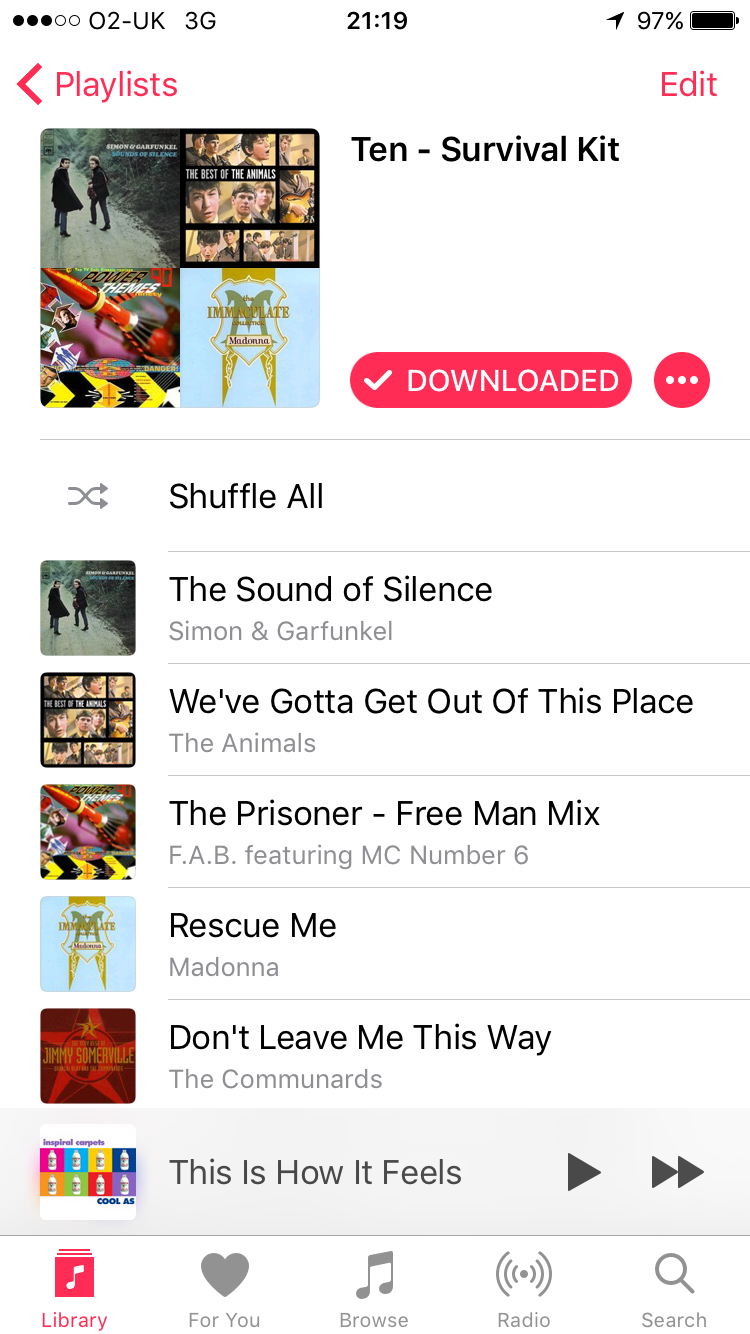
Diversion: Putting the F in TFL
At this point I would like to thank Transport For London for their imaginative rebuilding of Whitechapel Station. Since the Royal London itself was rebuilt, there is only one lane leading towards the nested north entrance of the hospital, but at least it was planned to face the entrance of the Tube Station across the road, so on my frequent visits for tests for all my Alex-normal chronic conditions all I and other patients had to do was go up two flights of stairs and through to the hospital in a direct line.
This year TFL has had the genius idea to move the station entrance to such a remarkable extent that, although the train I get out of still emerges directly below the pavement facing the hospital, anyone entering or leaving – a sick person, for example, one who might be in considerable pain or have difficulty walking – now has to go up several extra flights of stairs, walk the whole length of the station west and some way more, then leave at a point way back from the road, then walk to the road and round the corner and up the road before being able to cross the road into the narrow cleft to the hospital entrance. This adds a minimum of five minutes – as timed when late for an appointment and running – but more usually an extra ten minutes’ walk or much more for the more significantly invalided. Good show, TFL! Perhaps you could ask your staff to look out for anyone clutching a hospital letter and give us a good kick down all the additional stairs as a bonus.
Hospital Again
After two days of drugs, pain and exhausted attempts to sleep, obviously I had to face up to both feeling and very visibly being very much worse. I strongly suspected I would not just be sent away with stronger drugs this time, so packed such essentials as my tower of prescriptions and several books, as well as loading my phone with more books, Doctor Who stories, an extended playlist I’d prepared after the last time, and of course that still extraordinarily accurate and topical documentary Carry On Doctor. Plus recharger and plugs. As it turned out, I mostly read JP Martin’s Uncle tales, which I’d recently found as eBooks many years after consuming them at my school library.
On the Saturday afternoon Richard drove me back to A&E. I was there five hours, and I was not happy. This was a busier time and the cheery doctor only passed me in a corridor. There are few things so alienating and afraid as hours alone in a hospital room: my condition may not have been as bad as in 2014, but the communication was far worse. No phone signal in the deep places, either. When they eventually decanted me into a chair and wheeled me round and round and up and up to be admitted into a proper ward, somehow I wasn’t grateful for the excessive speed after the long wait – being dragged and bumped behind an orderly so that I received the maximum excessively painful jolts and couldn’t even see where I was going. I just managed to read the ward number as I whizzed past, but wasn’t helped by the sign headed “Visiting Hours” without any times marked on it.
And so I ended up laid out in a small ward so deep inside the hospital that not only did it not have any windows but that the nearest windows were along enough tangled corridors that I didn’t see natural light again until the following Thursday. This did not have a cheering effect. The evening wasn’t helped by having had literally no food all day and told that I’d missed the evening meal so all they could give me was a packet of biscuits, nor by it taking several requests and an hour to find out when visiting time was. I was finally able to send my distress call to Richard after it had officially finished, but he stayed until they threw him out, for which I was even more grateful than the half-hour in the middle where he legged it out to the nearest supermarket for their saggy surviving sandwiches. Which at that point were awesome (and my husband far more so).
I don’t really want to talk about the next four days. Richard came every minute allowed – and considerably more – that he wasn’t at work. He is the most wonderful man. Be nice to him. He’s frazzled and he needs it.
Thank you, too, for all the people who sent good wishes via his FaceBook, to several people who sent very kind messages (and I’m sorry I replied to so few), and to a friend who came to visit and was extremely nice even when I was at one of my worst points and was shakily and soggily poor company (not least for asking if I could cope with a visitor and then asking if it was time for him to go so I could be alone with Richard). Thanks also particularly to Nurse Tracy, who ran the ward at night over the weekend and was really good at it – the medical side, the reassurance side, and even the little things like bringing replacement gowns and wash-kits before you think to ask for them. If they don’t do that, ask for them. Which brings me to…

Things To Do In Hospital
If you ever end up in the same sort of situation, the most important thing is to fight to stay informed and to ask questions. Particularly if you have a medical history that you know and that they’ve not read (I’m still impressed that, along with two antibiotics that I’m still taking and still being knocked out by, one of the painkillers I was discharged with explicitly warns against taking if you have not one but two of my chronic conditions and, when a doctor suggested I risk it if I really needed it – obviously I really needed it – had as bad an effect as you might imagine).
If a doctor seems to contradict another doctor, ask and give evidence-based back-up to your questions. They probably won’t listen to you, but there’s a chance the next one will when they contradict again. I’m glad that they hit on the right treatments eventually, as a week after discharge I’m showing slow but noticeable signs of improvement, but when you have a different medical opinion and complete reversals every day you must pay attention, because there’s a strong chance you’re the only one who is. My particular winner was the specialist who came up with the best antibiotic but at the same time seemed fanatically in favour of a medical procedure that I’d previously been and was subsequently told would be a disaster. He was also the doctor who told me with utter certainty what had caused my condition and simply repeated himself in the most dismissive way possible when I asked how his off-the-peg assumptions squared with actual individual medical facts and clinical records that not just contradicted him but proved what he was saying was impossible, including those from two and a half years of follow-up tests and operations by his own department. I am not a trained doctor, but I am at least able to grasp that an operation in January 2015 and the continuing complications from it may indeed be among of the banes of my life, but they did not cause the condition that first hospitalised me in July 2014 and to which they were themselves all consequences. Perhaps I shouldn’t have been surprised by a doctor whose firm and unalterable convictions were based on time travel, but I wasn’t reassured by him.
If you’re at your lowest and weakest and most in pain, if two other patients strike up a loud and extended vitriolically homophobic conversation (one led it, but the other went along), you should probably do something. But I’m f**ked if I know how to summon up the spirit to do it rather than just both feeling more vulnerable and isolated than ever and feeling grateful you’re isolated in a corner constantly inside curtains and can try to pretend you’re not in the same room.
Cannulas are the work of the devil (they’re a sort of tap fitted into you so they don’t need to find your veins with fresh needles every few hours). I find they bruise hideously in the hand and much less so in the arm, but both will be painful all the time and far more so when they snag on your gown or as you turn in fitful sleep. When your blood pressure is measured every four hours of day or night, learn not to be too disturbed because there’s nothing you can do when each new nurse says, alarmed, “Did you know your blood pressure is very high?” and when it starts flashing and saying “Emergency” on the readout be patient when they switch to the other arm in the hope that reading will be a crucial few points lower and they don’t have to call a doctor. But especially, if your cannula is in the crook of your elbow, tell the nurse loudly every time and when they don’t listen, push the blood pressure armband further up your biceps before the pressure closes on the needle in your arm and risks breaking it.
If you’re cold, and in an air-conditioned ward with only a thin gown and a thin sheet you probably will be, ask for a blanket and keep asking when the nurse’s face suggests you have asked for a statue of yourself in an ermine wrap. If you are still cold, ask for another one. If you are to be trundled on your bed to another floor for tests, ask for blankets in advance. Assume that you might, for example, be about to be left in a much colder corridor for an hour and a half while waiting for the scanner. Whatever you are in for will not be improved by catching a chill. This might mean, for example, that you are shuddering uncontrollably while the doctor who’s just peeled back your gown and gasped, “Oh! That looks very painful” is trying to keep a steady hand, and that, for example, your temperature and pulse might rocket that night and the nurses have to give you extra medication while you ache appallingly and sweat your entire bodyweight.
Most importantly of all, fight your British instinct to answer ‘Are you feeling all right / better / comfortable?’ with ‘OK / fine / not too bad / embarrassed shrug’. You must gaze steadily at the medical professional and say the words ‘Very bad. I need some morphine.’ Or you will remain in an even greater level of pain than you will be when stuffed with painkillers.
Also get up the bottle – especially if the doctors have ticked you off for not drinking enough fluid after no amount you drink can make up for your massive dehydration after another night pouring sweat on a plastic mattress – to ask for more water and keep asking in the three hours after breakfast in which the jugs have been taken for cleaning and the nurses believe they will return instantly by house-elf while patients discover replacements will only arrive at the next meal. Unless you doggedly keep asking.
Doggedly keep asking.
And that’s it for what I’ll say. I’m out. I’m hoping not to go in again. I’ve had two short walks since I was released and both were so painful and exhausting I was knocked out for a couple of days afterward. I am still in a great deal of pain, somnolent from all the pills, and in either a foul or just a hopeless mood, and very grateful that my husband somehow puts up with me. My health has now been increasingly poor for twenty years and after this year I am very much more fed up with it than ever.
Here’s hoping that my personal 2016 goes into the bin and takes with it all the bonus health disasters so that by a few weeks into the New Year I can enjoy the giddily flourishing vigour of Alex-normal.
“All component parts are functioning normally, master.”
“I don’t believe it. I don’t believe it! All component parts functioning normally – ha! Puh. You mean to tell me that after all we’ve been through, the systems are functioning perfectly?”
“No – not ‘perfectly’, master. Adverb attributed was ‘normally’.”
K9 reporting on the Doctor’s broken-down TARDIS, Doctor Who – Full Circle
Labels: Carry On, Doctor Who, Health, London, Music, NHS, Personal, Pictures, Richard, Tube, Uncle