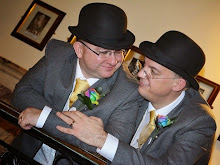
Sunday, February 03, 2019
Doctor Who – The Armageddon Factor: Where Have All the Zeons Gone?
Forty years ago today, the Doctor was facing The Armageddon Factor – the climax of his quest for the Key To Time. It’s one of my favourite and most fun years of Doctor Who, yet this finale tells a grimmer story. A world inexplicably breaks off trade with its closest neighbour, goes to war instead and ends up nearing utter destruction, while its leader* spouts self-deluded nationalist propaganda with Churchillian rhetoric but Hitlerian meaning, promising
“Victory – or death!”But the Doctor’s trip to neighbouring planet Zeos poses a question that’s never been answered until now: where have all the Zeons gone?
*Meanwhile, the powerless figurehead constitutional monarch offers subtly coded resistance in her speeches.

Enjoying The Key To Time
The Doctor is on a mission from God. Surprisingly, that’s where the fun starts.
Doctor Who – The Key To Time Coming Soon Trailer
I was six when Season Sixteen of Doctor Who began in Autumn 1978, and I adored it. I still adore it now, for all the old reasons and quite a few more besides. For the first time, the whole season has a declared mission statement and story arc: the Doctor must search for the six segments of the Key To Time, to prevent the Universe from being plunged into eternal chaos. Marvellously, the series reacts against this grimdark threat by revelling in being fairy-tale, fluffy and fun. Tom Baker’s enjoying himself as the Doctor, Mary Tamm’s Romana is icily fabulous, and this is the year when K9 really works. The sheer entertainment of the actors and the style is built on some of the best authors ever to write for the Doctor, who include Douglas Adams, Robert Holmes and David Fisher (the most underrated, but who for my money gets the best balance of character and wit here, and is rather grown-up about sex).

Striking out into science fantasy with citadels, evil queens and the Doctor as a wizard on a quest, the most consistent theme underlying the magical journey is that gods aren’t to be trusted. From the very beginning, the Doctor chafes against being told what to do, and through a succession of witty adventures with larger-than-life opponents, despite the warning of impending doom, he and the stories are far more about having fun than following the holy writ. In the first story of the season, The Ribos Operation, the Doctor gets involved in a small-time scam and does his best to ignore the ‘important people’, while the most moving and heroic figure is an alien world’s equivalent of Galileo. The Pirate Planet fizzes with ideas, builds a very serious story seamlessly out of a very silly one, pits the Doctor’s fury against a cyborg Pirate Captain and features the Daily Mail’s worst nightmare – young people today who are gay hoodies. The Stones of Blood follows that with a fabulous lesbian goddess, female Gothic and sausage sandwiches. The Androids of Tara – my favourite in one of my favourite seasons – is almost a summer holiday in gorgeous countryside, playing at swordfighting with a dastardly double-dealing moustache-twirling villain. The Power of Kroll is a bit flatter than the rest, but does have a very big god indeed and a performance by Philip Madoc of a man who knows he could do a better job than his rubbish boss that becomes immeasurably more entertaining if you know the behind-the-scenes casting details. And then there’s The Armageddon Factor.
The Armageddon Factor
“We have the power to do anything we like…”The Armageddon Factor is a story that almost no-one has a good word for. After six months of the search for the Key To Time, I’ve seen quite a few reviews complain that it’s not a sufficiently epic finale – the money’s clearly run out, the macho space battles are dismissed as a very bad idea, and the conclusion of the whole quest is an anti-climax because it resolutely rejects the self-importantly deterministic apotheosis that messianic sci-fi often marched towards. But those reviews tend to see the whole season as incorrigibly frivolous already. Many fans who enjoyed the rest of it, though, are disappointed by this story because after so much jolly colour in both style and tone, the finale is dark and drab. Writer Gareth Roberts praises Season Sixteen as Doctor Who’s best, but still thinks it tails off: his novel The Well-Mannered War attempts a grand finale for the era, most blatantly going for The Armageddon Factor II, with a ton of reworked plot riffs (even his own version of ‘Where have all the Zeons gone?’) though with characteristically misanthropic overtones.
For me there’s a lot to the story, not least the ending that winds so many people up: I don’t want the Doctor to create Universal order. I can’t think of a more Doctorish answer to absolute power than that no-one should be trusted with god-like supremacy… Not even God. Along the way, John Woodvine’s Marshal is a toweringly watchable dictator, the eerie skull on a stick both fascinated and disturbed me, and its critique of war offers some very black humour. I do have some problems with the plot structure – the ‘comic relief’ comes in too late, when it’s starving for some drama towards the end (but even then, that inspires John Dorney’s brilliant The Trouble With Drax, possibly the most enjoyable of all Big Finish’s modern Tom Baker adventures) while the middle sags a bit and could have done with something more diverting than too many corridors. But it’s in those corridors that you find a question that’s been nagging away at me for years…
Having landed in the midst of an interplanetary war between Atrios and Zeos, the Doctor spends roughly a third of the story each on Atrios, then on Zeos, then in the sinister base of the sinister third force behind the whole sinister plan. The trouble is, there isn’t much there on Zeos: a few beige corridors; a bit of dust; an over-intelligent Weapon of Mass Destruction that K9 exchanges sexts with; and, er, that’s it. This makes a problem for the viewer, as Zeos being so unexciting sometimes gives the impression that the war is less between two planets than between two leisure centres in need of refurbishment. But it also makes a problem for the script: where have all the Zeons gone?
The Missing Planet Vs the Missing People
“The fleet is still trying to locate the target, sir.”The story’s initial mystery is not the Zeons, but their entire planet: earlier in the story, what remains of the Atrian fleet is unable to find their target, then engaged and hopelessly outfought by the Zeon ships. The Doctor works out the answer to the ‘missing’ planet, which though a bit iffy in terms of spatial understanding gives the clue that there is something else, and someone else, out there; the inhumanly efficient Zeon attacks in turn are a clue as to the nature of the Zeon ‘commander’, not a person but an alien-built super-computer, Mentalis. That revelation is part of the intriguing mirror to that opening question: once you’ve found Zeos, why does it appear deserted?
“The target, Major Shapp, is Zeos! The planet. Isn’t that big enough?”
Whoever wrote the Radio Times teasers for this story certainly considered this a crucial question. For Part Two, it intrigued readers with:
“The Atrian defences are finally exhausted and the Marshal enlists the Doctor’s help in fighting off the Zeon attack. But who are the Zeons? Why has no one ever seen one?”Which we later find out isn’t strictly true, but pales next to Part Three:
“The Doctor discovers the bizarre truth about the Zeons.”About Zeos, perhaps – but when Part Three was broadcast on 3rd February 1979, the Doctor’s visit to Zeos asks the question but only gets answers to a different one. The sleight of hand is such, though, that I didn’t notice until long after 1979. It took until The Key To Time was released in a DVD box set for Richard and I to watch The Armageddon Factor together and, chatting after each episode as we often do, discover that we both had diametrically opposed assumptions. I’d always had in the back of my mind that the Zeons had all emigrated to some other system or something of the sort; Richard had always assumed they’re all dead.
Which of those you think is true graphically changes the tone of the story.
Now, there are a lot of clues in the story before we get to Zeos. The Doctor’s bluffing suggestion of a cheap and energy-saving psychological barrier, inducing “Atrophobia”, to keep the Zeon fleet away is really a stab at being able to talk to a Zeon prisoner and get a wider picture of what’s going on – but there are no prisoners. At first, this seems of a piece with the way that the Atrians can’t find Zeos – but if it isn’t there, where are the attacks coming from? The Doctor notes that of course it’s there, but hidden, which suggests some sort of outside interference with Zeos (a much bigger part of the plot in the original storyline). Then the Zeon fleet’s suddenly gone, like ghosts, and the Marshal declaims, “Deliver us from the terrors of war and the evils of pestilence…” Are we supposed to wonder if the Zeons have all been killed by disease? Are people dissolved by disease on Zeos (the Doctor pointedly tells one character that people aren’t dissolved by radiation)? After the Doctor has the idea of going to Zeos to investigate, his odd nagging question en route is why the Marshal, leader of the world at war with Zeos, should have the equivalent of a secret passage straight there – but it’s odder still in retrospect to look at the exchange between the Marshal and the Doctor that leads to the trip:
“There are no Zeons!”When the Doctor arrives on Zeos, he’s been clobbered by the sinister Shadow’s henchbeings: of course, we assume that the blokes apparently from and on Zeos in black robes and skull masks are Zeons. That mirrors the implications for the first couple of episodes that Zeos is some sort of ghost planet, a planet of the dead (a frequent state in Doctor Who – one that writers Bob Baker and Dave Martin had tried to get in before – and another of many elements that this story would have in common with the following one). Atrios’ Princess Astra calls the war futile and begs for peace, warning, “We shall all be wiped out if we go on, Zeons and Atrians alike.” Is that perhaps another clue that they may all be dead already? And then, of course, what appears to be the clincher, as the Doctor concludes:
“There are on Zeos.”
“What exactly are you proposing?”
“There are no Zeons on Zeos…”I’m not sure there’s such a thing as a fan consensus, except not to ask the question: The Discontinuity Guide buries a questionable ‘fact’ in its summary that “Atrios and Zeos have been waging nuclear war on each other, despite the fact that for the last five years Zeos has been uninhabited and that its warfare has been prosecuted by Mentalis, a computerised commandant… The Zeons were human, but were possibly wiped out by the Atrions’ attacks” but makes no attempt to think past that ambiguity, while About Time IV states baldly that “they’re all dead now”, and even assumes it’s been for the last five years, since Mentalis was built. So what killed them at the very beginning of the war, or earlier, then?

The Missing Plot
The roots of the problem surely lie in what happened when the Doctor arrived on Zeos in the script as originally planned. This outline, Armageddon, had much the same structure, but once it’s been established that the now near-uninhabitable Atrios is too weak to win, we were to be surprised to meet plenty of Zeons – who are all in much the same radiation-sick, bombed-out state as the Atrians. Thanks to the DVD text notes (or, if you have them, In-Vision and Doctor Who – The Complete and Utter History), you can read quite a bit about the original storyline and the Zeon people – but, by the time the story made it to screen, script editor Anthony Read had decided that the Zeos episodes essentially repeated what the Doctor had already encountered on Atrios and, with the budget already at breaking point, were a prime target for a cut. He deleted the Zeons and added Mentalis the sexy WMD, a “totally invincible” commander whose robot fighters now have the edge against untrained young Atrian pilots after too many casualties. Though fewer speaking parts in the middle episodes are a problem for audience engagement, the change at least comes up with something different – as well as taking the script in a different direction to what seemed at times Bob Baker and Dave Martin’s cover version of the earlier story Genesis of the Daleks (war, radiation, mutants, a dictator in a bunker making familiar speeches and even another Brothers Karamazov moral dilemma; peculiarly, the new additions are in part a satire on Game Theory, something that also crops up in the next story along, Destiny of the Daleks, which is in itself a direct sequel to Genesis of the Daleks). So, in one fell swoop, that’s the behind-the-scenes reason why we don’t meet any Zeons. But that still leaves an unanswered on-screen question – what happened to them? Are they all dead? And if so, how?
In The Armageddon Factor as broadcast, despite the revelation of Mentalis fighting a zombie Zeon war, all the other hints about the dead planet suddenly hit a beige wall. We’ve been given a mystery – but there’s no pay-off. When the Doctor arrives on Zeos, it’s just a load of dusty corridors, and the more weirdly fairground-ride planet of the dead is somewhere else entirely. The revelation that “There are no Zeons on Zeos” should be a shattering twist, like it turning out there are no Russians in Russia for a World War III thriller, but the line’s tossed away and no-one shows any interest in it, as if suddenly none of it matters. We’re left wondering if someone’s going to finish off telling us the plot eventually, but they never do. Mentalis resembles a high-tech version of a dead man’s switch, but we never see the dead men.
I suspect that my understanding that the Zeons had just ‘gone away’ came from the novelisation Doctor Who and the Armageddon Factor. In it, Terrance Dicks does what he often did, zeroing in on a plot hole he’s spotted and explaining it away with the option that will be less disturbing for kids. So, on page 69 of the book, the Doctor finds Mentalis and concludes that “The whole planet is automated. There are no Zeons on this part of Zeos.” Atrian Major Shapp then asks where the Zeons are, prompting the Doctor to guess, “On the other side of the planet, I imagine, somewhere in hiding. But before they went, they set this up.” It’s a stab at an explanation, but on closer examination, surely it doesn’t hold up (planets turn, after all. Emigration might have made sense – but with nothing anywhere to support that theory, you’d just have to make it up). Yet the TV version suddenly falters at the obvious counter-conclusion.
The more disturbing option, the one that seems much more heavily implied by all the signifiers before we actually reach Zeos, is that all the Zeons are dead, but that the Shadow has had Mentalis set up to fight for them from beyond the grave, or that they built Mentalis to ‘win the war’ and as a result didn’t put enough effort into Atrios-like bunkers so were all killed by the radiation or, as Shapp asks, “Could be the result of… biological warfare?” Though it’s worth noting that, as well as being atrociously acted, Major Shapp is atrociously written; he doesn’t seem sure whether Atrios used or even possess biological weapons, despite being second in command of all Atrian forces.
The trouble with this reading is that, while the war’s a little protracted, it can’t be a millennium-long one like Genesis of the Daleks’ Thal-Kaled war that might explain how bodies could have crumbled to dust over centuries while the machinery just continues remorselessly – the only skeletons we see are perambulatory and not local (the Shadow’s robed, skeletal servants, the “Mutes”, are literally represented by the costume designer as having no mouths – the most ‘extra’ of all extras, with even their costumes saying, ‘There’s no way on Earth you’re getting a line’ – but are apparently a leftover from the Zeons being mutated after all the nuclear war, again much like the “Mutos” of Genesis of the Daleks. Yet though the idea of them began as Zeons, on screen they are explicitly not). Bob and Dave pull off ‘walking on crumbled corpses’ very effectively in The Hand of Fear, but those took millions of years to collapse into sand; here, Shapp’s only in early middle age, but he clearly remembers trading with Zeons before the war, and that they looked just like the (humanoid) Atrians, while we hear later from Drax that the war started only just over five years ago.
The clues are all set up, then, for all the Zeons to be dead, until we actually reach Zeos. At that point, not only is there is no real moment of resolution, but every clue suddenly backs away from the grisly ‘truth’: K9 makes no warnings (unlike on Atrios) of high levels of radiation; there appears to be almost no damage; the Doctor even makes a point of pointing out to Shapp, “There’s no sign of your attacks getting through though, is there?” The revelation of Mentalis itself raises another question: its Dr Strangelove parallel is explicit when Marshal Jack D Ripper launches his own mad mission in person and Mentalis is programmed to respond with its ‘If you bomb us we will blow up the entire solar system… Maybe we should have told you this in advance’ Non-Deterring Deterrent Doomsday Device (that apparent oversight in itself a clue to what’s really going on). Yet if all the Zeons are already dead, how did whatever killed them not already trigger such Mutual Assured Destruction? Early in Part Four, Romana notes:
“Well, since there don’t seem to be any Zeons on Zeos, if you know what I mean…”As established, I’m not sure we do, but the script seems to keep worrying at it like a missing tooth or a distracting thought they can’t quite place. To confuse matters further, as late as Part Five (once the plot’s already left Zeos, and after you’d think all the facts were established) Romana observes that there are only four seconds left in their makeshift time-loop designed to delay the system’s total destruction, and that if it should snap, “millions of people on Zeos and Atrios will die”. So, did she see quite a lot of people on Zeos that we didn’t see, or was she just left reading an earlier version of the script? And, as the black-hearted plan behind the war is to foment chaos and suffering and trap the Doctor in a moral dilemma with millions of lives at stake, why would the Shadow cut short the chaos and suffering for one world, or wipe out half his ‘hostages’?
The mystery of the missing Zeons hurts The Armageddon Factor not just by making it less coherent, but by drawing back from the mood of death and destruction with which the story starts, making it one of the elements that fight against the drama by actively reducing tension as the story goes on. With a heavily rewritten script at the end of a full season’s overarching story, it seems that this was a detail that just fell through the cracks. It may well be that the script hinted at a dead planet, then bottled out of the idea as too frightening when it got there, and there just wasn’t the time to change all the promising details even when they were no longer going to deliver. The Armageddon Factor had two credited writers; many changes were made to it by the outgoing script editor (the equivalent of today’s lead writer); incoming script editor Douglas Adams and producer Graham Williams were concentrating on making the ending to the whole six-month story arc work, rather than the details of the six-episode story. It’s not hard to see how the Zeons got lost down the back of the sofa between drafts.
The Watsonian conclusion that most fits the tone of the story is that all the Zeons are dead, and simply try to ignore everything that pulls against that – or, at the risk of making it even closer to Genesis of the Daleks, to fill in the gap with the sole suspect to hand: single-mindedly programmed to win the war, Mentalis did it, clinically deciding that the Zeon people were a waste of scarce wartime resources. It’s almost a relief that none of the many writers made such an obvious sci-fi cliché explicit, merely leaving it a lurking possibility. But the real, unsatisfyingly Doylist answer lies in the decision to take them out of the script, but leave their planet as their meaningless ghost in the middle of it: by the time The Armageddon Factor went into production, the truth is that the Zeons aren’t all dead – they were never alive.

As well as today being the fortieth anniversary of the Doctor’s trip to Zeos, it was thirteen years ago today that I began this blog. While Love and Liberty was never exactly prolific, I’ve found it incredibly difficult to write as my health has nosedived faster than ever over the past few years. But this has been rattling around my head and various drafts for ages, so today seemed a good day to buckle down to it at last, and rather to my surprise, I have. Will there be more? Who knows.

Labels: Brexit, Doctor Who, The Armageddon Factor, The Golden Dozen, The Key To Time, Tom Baker


Monday, May 26, 2014
Doctor Who 50 Great Scenes – 33: City of Death
Tonight I bring cheer with, unusually, a great Doctor Who scene that isn’t all death and disaster – counting down more of my Fifty with a dash of romance. And what better time for it? Today is exactly five months until Richard and I marry (and since I posted number 34, Britain’s first same-sex weddings have been celebrated and we’ve received our first invite to another couple’s. Hurrah!). Not only that, but yesterday’s Towel Day commemorated Douglas Adams, while Saturday would have been the birthday of Graham Williams, the two principal writers of this glamorous and many-authored Tom Baker story… If you thought Number 34 was a bit Douglas Adams-y, today’s is properly so, and it’s much happier than the end of the world. More the other end.
“It has a bouquet…”

City of Death is a mostly remarkable Doctor Who story. It’s regularly voted among the best in all the series’ fifty years; it got the series’ highest ever ratings (though, to be fair, with no Internet and, thanks to a lengthy ITV strike, only BBC2 and the radio for competition); even more remarkably, it manages to unite many fans who scorn 1979’s other Doctor Who stories in agreement that this is ‘the good one’ (personally, I love some of the others too). But perhaps the most remarkable thing about it is how it was made at all – a glimpse of alchemy. Brilliant writer David Fisher wrote the first draft, then couldn’t do the rewrites… So the series’ Lead Writer Douglas Adams (yes, that Douglas Adams) and Producer Graham Williams rewrote it from top to bottom in a weekend and a few flashes of genius, before actors like Tom Baker, Lalla Ward and the fabulous Julian Glover rewrote more of it as they went along. Though it’s only Mr Adams, Mr Williams and Mr Fisher who are usually understood to form the BBC compound entity “David Agnew” credited on screen. And part of the new script was to swap the original 1920s setting for – mostly – 1979, which sounds less interesting, but not when Production Manager John Nathan-Turner had worked out in another flash of genius, this time with the accounts, that they could shoot it in contemporary proper Paris as cheaply as in a studio’s fake Monte Carlo of fifty years earlier. It was the first time the series had ever filmed outside the UK. And then there’s an intricate story that would today be called “timey-wimey,” but thankfully wasn’t in 1979, some outstandingly witty scenes and cameos from the likes of Eleanor Bron and John Cleese.
So I’m mildly unusual in finding it a bit of a mixed bag in parts, but thinking the bit that’s absolutely, blissfully perfect is the first five minutes. Because that’s the part before the important bits like the plot and the monster and most of the funny lines get going, and which quite a few fans who otherwise love the story say should have been cut because it’s just aimless faffing about*. Personally, I’m very drawn to aimless faffing about.
The thrilling blue swirl of the time tunnel – still the greatest title sequence ever made – parts on an eerie, barren landscape that looks thoroughly alien, as does the spider-like spacecraft squatting over the rocks. It’s an impressive piece of modelwork, aided by echoing music from regular composer Dudley Simpson and a sweeping camera pan across the plain to make it look enormous. And the alien voices within the ship are arguing with each other – the pilot protesting as the crew insist he take off on warp thrust, despite the dangers. Marvellously, it references Star Wars in their telling him “You are our only hope,” as he’s closer to a frog than a beautiful princess. To thunderous chords, the ship lifts slowly into an appropriately Turner-ish red and black-clouded sky… Only to crumple in on itself, shimmer and explode, the crew’s pleas echoing in desperation. You’d think that in today’s Doctor Who this would be made as a pre-titles sequence, but it’s all the better not for being so because of the fascinating non-sequitur that follows instead. The falling sparks of the explosion fade into blossoms, and again the camera moves left to right, echoing the extended pan and giving the world that came first an equivalence with modern Paris as the Eiffel Tower comes into view behind the flowers, the panning shot across the rock to the latticework gantry spaceship the natural precursor to that across the blossom to the latticework gantry tower. It’s a brilliant directorial choice, not least because, like the script and the French filming, it was something that wasn’t the original plan and was an inspired late improvisation: the director went for the blossoms instead when the special lens brought to zoom out from the top of the Tower didn’t fit the cameras. What director Michael Hayes came up with on the fly is the perfect bridge between two very different visual and storytelling styles, and the perfect opening to one of Doctor Who’s most cinematic sequences.
So, leaving you in anticipation for what happened to the alien pilot (and indeed plot), the story proper instead opens with the Doctor (Tom Baker) and his companion Romana (Lalla Ward) swanning about at the top of la Tour Eiffel being frightfully laid back and witty as they just enjoy themselves.
“It’s the only place in the Universe where one can relax entirely.”Tom is charming and worldly, Lalla superior but utterly charming with it, and eager to see the wonders of Earth. The two actors have marvellous chemistry in this story above all stories, and it’s no surprise that off-screen they were soon to marry and almost sooner to divorce. While in some of their stories they can barely bring themselves to look at each other, here they’re evidently having a wonderful time on every level, diegetic, extra-diegetic and extra-curricular. How natural they look is another part of the serendipity that makes so much of City of Death come together so well.
“Mmmm. That bouquet.”
“What Paris has… It has a – an ethos… A life. It has—”
“A bouquet?”
“…A spirit all of its own. Like a wine, it has—”
“A bouquet.”
“…It has a bouquet, yes. Like a good wine – you have to choose one of the vintage years, of course.”
“What year is this?”
“Ah well, yeah. Well, it’s 1979, actually. More of a table wine, shall we say. Ha!”
There’s a building fanfare of music, and then they’re off! The thrilling, intimate cinematography of the side of the train rushing towards us on the platform, then the Doctor and Romana simply joyous beaming at each other and the Paris Metro, planning dinner, dashing across the road by Notre-Dame hand in hand, all to what could be a career-best score for Dudley Simpson, a gorgeous, playful theme that chimes perfectly with the bouquet. It’s sheer happiness, the closest the series comes to a musical, and I’m always astounded when other fans say it’s padding and want to get on with the plot instead. It’s art.
Then there are two last pieces of serendipity, of alchemy, as they run past a poster for an exhibition on “3 Millions d’Années d’Aventure Humaine”, and the camera at last springs away from them to the threatening wooden carving of a gorgon-like snakes-headed grotesque… But that would be the plot, so it’s time to stop.
*Lawrence Miles and Tat Wood’s impressive and opinionated About Time 4, for example, starts an otherwise complementary review by complaining “the first episode features five whole minutes of the Doctor and Romana jogging through Parisian streets… Often regarded as the only major flaws in this story, and certainly the only bits that video viewers regularly fast-forward through…” Whereas I frequently put the first five minutes on to cheer myself up, and leave it at that. Maybe they’re just not music lovers, for all that they claim to sing along “Running through Paris” to the tune.
Bonus Great Doctor Who Quotations – The Androids of Tara
Tripping back a year to 1978, another gorgeous holiday of a story from a complete David Fisher script, this time on the Ruritanian planet of Tara and in the middle of the quest for The Key To Time. It’s enormous fun, especially where the dashingly dastardly Count Grendel of Gracht (Peter Jeffrey) is involved. It is, though, something of a cautionary tale about marriage, as the Doctor’s companion Romana (in her first body, Mary Tamm) discovers in Part Two when the Count shows her his dungeon – in it, her exact double…
“Is it an android?”In Part Three, Romana is confronted with another double (she’s missed one more in between). This one’s technically less royal and more, well, technical. To the Count’s moustache-twirling satisfaction, she’s been built to assassinate the Doctor (Tom Baker)…
“Good heavens, no, my dear. That’s the Princess Strella. First Lady of Tara, a descendant of the Royal House, Mistress of the domains of Thorvald, Mortgarde and Freya. In fact, Tara’s most eligible spinster! Shortly to become – in rapid succession – my fiancée, my bride, and then… Deceased. Yes – it will be a tragic accident. A flower blighted in its prime. And naturally, as her husband, I shall claim her estates and her position as second in line to the throne, as provided for under Taran law.”
“I see. But since you’ve already got a Princess, what do you need me for?”
“Well, the Princess does not entirely agree with my plan.”
“I can’t say I’m wildly surprised.”
“You see before you the complete killing machine – as beautiful as you, and as deadly as the plague. If only she were real, I’d marry her.”And in Part Four, the still-scheming Count, that well-known champion of widows and orphans, welcomes the Head of the Church of Tara to the charms of Castle Gracht for two weddings and a funeral…
“You deserve each other.”
“Ah, Archimandrite! Welcome.”
“What is so urgent that I must leave my duties and hurry here like this?”
“I am sorry, Archimandrite, but there is a ceremony you must perform.”
“Here? What ceremony?”
“A marriage.”
“Your own chaplain could have done that.”
“Not this marriage.”
“Why? Who is to be married? And to whom?”
“The King – to the Princess Strella.”
“The King? Here?”
“He has placed himself under my protection, your Eminence. Sadly, I have to tell you – he is sick. In fact, he is very near to death.”
“Oh, dear, dear, dear. He did not look well at the coronation. Not himself at all.”
“No… No, I did note that, Archimandrite.”
“But near to death, you say?”
“Indeed he is. It would be as well if you stayed here. I fear he will be in need of the funeral rites very soon after the wedding.”
“Oh, how sad.”
“Mmm, yes. And after the funeral rites, there will be a second wedding for you to perform.”
“A second wedding? May I ask whose that will be?”
“My own. I shall be marrying the poor King’s widow.”
Bonus Great Doctor Who Quotation – The Curse of Fenric
If that’s not warning enough about the dangers of dalliance, let’s turn to what’s possibly my beloved’s favourite story, and one of mine, too. It was 1989 for most of us, 1943 in the story, and half-way into Part Two (or 40 minutes into the story, if you’re watching the movie-length DVD Special Edition). While the Doctor (Sylvester McCoy) investigates vampires rising from the waters off the North-Eastern coast, stony pillar of the church Miss Hardaker has other reasons for taking against the local beauty spot. She doesn’t mince her words when she finds her two teenage East End evacuee lodgers have been swimming at Maidens’ Point…
“Nothing for you but pitiless damnation for the rest of your lives! Think on it!”Romantic.

Miss Hardaker was played by the marvellous Janet Henfrey, who returns to Doctor Who later this year. Richard and I met her in 2009 and, rather than the usual ‘Best wishes’ signed by an actor, we persuaded her to give us a different benediction on our The Curse of Fenric DVD.
Thanks to the Internet (though I’ve lost track of where, so contact me if it was you and you’d like it removed), I was also able to proffer this motivational poster to lovely The Curse of Fenric author Ian Briggs after he talked about some of the underlying themes in his story and the inspiration of Alan Turing. He laughed.

Bonus Not Necessarily Great Doctor Who Quotation – The Armageddon Factor
It’s another Doctor Who story from 1979, and another opening scene from Part One. This one’s not quite so celebrated as City of Death, and you’ll have to watch it to put it into context (though I’d watch the other five stories of The Key To Time series first), but I couldn’t resist. Miss Hardaker would be appalled.
“Men out there – young men – are dying for it!”
Bonus Great Doctor Who Quotation – Rose
And finally… From one of the most uplifting of all Doctor Who stories, the great return nine years ago, not the opening moments but the close. Rose has saved the Doctor (Christopher Eccleston) and the world from the Nestene Consciousness, and he in turn has rescued her from its exploding lair. After that brief trip in the TARDIS, the Doctor and Russell T Davies offer her and us more – to come with him, anywhere in the Universe. That’s one option: reckless, hopeful, open-minded. The narrow, sour, closed-minded alternative is put by her unhelpful boyfriend Mickey, who despite also having been rescued by the Doctor gives him a mouthful of xenophobic abuse as “an alien – a thing.” It’s a clear choice… And for a moment, Rose hesitates. Mickey pulls her to him, holding her back, taking her for granted, and she says no. The TARDIS dematerialises.
Rose, left on the street, just stares into the suddenly empty night as the wind of the TARDIS’ passing whips her hair. If she could have that choice again… And, suddenly, the TARDIS blazes back into reality, the Doctor stepping out to deliver the best pick-up line in history:
“By the way, did I mention – it also travels in time?”Choose your own life, and run into the future.
Next Time… The scariest place for anyone
Labels: Christopher Eccleston, City of Death, Doctor Who, Doctor Who 50, Douglas Adams, Julian Glover, Marriage, Music, Personal, Richard, Sylvester McCoy, The Key To Time, Tom Baker
Sunday, August 18, 2013
Doctor Who 50 Great Scenes – 35: Full Circle
Counting down towards the fiftieth birthday of Doctor Who with Fifty great scenes… This one’s from 1980, towards the end of three years starring Tom Baker, K9 and Romana. It’s a brilliantly designed, directed and scripted story, a fiercely intelligent evolutionary fable. The allegory of ‘revealed truth’ versus awkward questions and the morality of siding with the underdog are close to my heart. But for all the great dialogue, thought-provoking revelations and the Doctor’s moral passion, deep down the moment that most gets me is still the thrilling monster reveal. When Mistfall comes, the giants leave the swamp…
“Master. Alert.”

Doctor Who’s Eighteenth Season, broadcast from 1980 to 1981, has long been one of my favourites for its ideas and scientific fairy tales (in this case, great work from writer Andrew Smith and lead writer Christopher H Bidmead), as well as for suddenly stunning visuals and music. In the run-up to my Fifty, I selected Eleven Great Cliffhangers and wrote that this season has arguably Doctor Who’s most sustained run of terrific episode endings, with two stories in particular having outstanding cliffhangers every time. This is the other story for which that’s true: the climaxes to Parts Two and Three are brilliant as well, but you can’t beat a great monster moment.
Strange creatures rising from beneath the water are among Doctor Who’s most striking repeated cliffhanger images. First and perhaps most iconically, a Dalek emerging from the Thames in The Dalek Invasion of Earth; the Silurians’ amphibious cousins in The Sea Devils were excitingly captured for me in prose and photos on the page long before I saw their story; the Haemovores in the terrific The Curse of Fenric; if you’re unlucky, River Song. The Marshmen revealing themselves as they leave the water at the end of Full Circle Part One are for me the most memorable of the lot – perhaps because of the atmospheric direction, perhaps because of their monstrous design, perhaps because of the eerie spiralling music that accompanies them. Or perhaps simply because I was at the right age for this to be the first such scene I was able to see on TV.
For once, the sun came out for the location shoot, making the planet Alzarius seem much more alien – to British viewers – and the production much more lush. The Doctor’s vivid red outfit stands out so gorgeously against the vivid green that Richard Briers took this vibrantly exotic image for expensive tropical filming; the sudden murk of Mistfall becomes that much more of a contrast.
The citizens of the Starliner are used to gathering in food from around the great lake, but it’s the food itself that provides the first portent: strange tiny life growing within the marshfruit. Soon the lake itself is bubbling and something beneath the water is grabbing at the skinnydippers. Bearded patriarch Decider Draith announces the coming of Mistfall, the semicentennial Judgment Day during which his people are commanded to huddle within their centuries-broken spaceship, waiting for the deadly mists outside to pass over. Not all of these truths are true… And not everyone is following the commandments. Inquisitive strangers have arrived in a blue box from far further than the Starliner came before its crash on Alzarius, while teenage rebels define themselves by refusing shelter – “Outlers” – one of them even an Elite who ‘should’ be destined to be a Decider, Adric. Draith pursues his protégé, but rather than successfully bringing him back to the fold, the Decider is knocked into the lake and dragged under the water. Adric flees, taking with him Draith’s last warning, and collapses on running into the TARDIS. The Doctor (Tom Baker) and robot dog K9 (John Leeson) go out to the lake to investigate the legends…
The first major clue to the theme of the story – aside from Draith telling his head scientist that he has all the answers the other man seeks, but it would be blasphemy to divulge their ancestors’ secrets to him – is that after all we’ve heard about Mistfall, K9’s analysis instantly debunks it: the billowing fifty-year-recurring fog is non-toxic. So is this just propaganda to remind citizens never to stray from the Starliner? Or is there something else out there they shouldn’t mix with – and is it a physical, a moral or an existential threat?
As the Doctor kneels with K9 to study the marsh, the mist thickens and the lake heaves… K9 alerts the Doctor to potential danger, and the people of the marsh break the surface of the water, approaching the land. The slightly Creature From the Black Lagoon-ish Marshmen designs were one of the best-realised ‘monsters’ the series had created for some years, and Peter Grimwade’s direction gives them a magnificent introduction, swaying and dripping in slow motion in a great return to Doctor Who for scaring the kiddies.
The other contribution that really makes it for me is composer Paddy Kingsland, whose first full score for the series is a triumph, especially here when a spine-chilling motif builds the tension by circling higher and higher until the titles crash in to end the episode. The cliffhanger is cut at just the right moment to leave you wanting more, and if you follow through into the next episode, it offers more: rather than the howl of the Doctor Who Theme’s cliffhanger sting, as the Marshmen fully emerge from the swamp and stride onto land to open Part Two the eerie chiming music evolves into harsh electric guitar power chords for the developing peril.
As I’ve sometimes written, I enjoy film and TV scores but have no musical training and little musical vocabulary, which is why I think in metaphors such as “spiralling”; a person who does know a bit is John Toon, whose blog Doctor Who Electronica – 50 Scores in 50 Weeks for the 50th Anniversary is keeping up much better with its intentions than my own Fifty. He has this to say on that cliffhanger moment:
“A repeated seven note phrase plays over scenes that relate to Mistfall or that feature revelations about the Alzarian life cycle. The end of Part One, as the Marshmen emerge from the water, is a notable example. The notes rise and fall cyclically within the phrase, and the phrase itself rises across repetitions, as if emphasising the upward climb of Alzarius' super-evolving lifeforms. ‘The Ascent of Marshman’, we might call it.”
Bonus Great Doctor Who Quotation – The Power of Kroll
I wrote last time about the brilliance of Robert Holmes’ writing for Doctor Who. His last story in his ten years as a regular scriptwriter featured the same team of the Doctor, Romana and K9 – though a different Romana to the regenerated Time Lord seen in the other two stories I feature today. 1978’s The Power of Kroll doesn’t entirely play to Mr Holmes’ strengths: told to take out the jokes and put in a giant monster, he gives us an alien world whose green-skinned people show more buttocks than Torchwood and whose history of exploitation is a mash-up of Native Americans, Irish nationalism and, as you’re about to discover, the subtle tribal characterisation of King Kong. At least when Kroll the massive tentacled beastie does eventually rise from the depths he’s rather impressive (and has a well-conceived life cycle). Before he does, we’re given what looks like a traditional ‘monster reveal’ cliffhanger at the end of Part One, but is actually something stranger, cleverer, and at first glance a little disappointing: while several of Bob’s cliffhangers are stunning moments let down by lacklustre resolutions the following week, for this one time only it’s the reverse of instant gratification. As Romana (Mary Tamm) struggles on the Stone of Blood and the Doctor (Tom Baker) paddles through the swamp to find her, there’s memorable dialogue from the Tribe. This time with the actions. It’s no double act, and it may be memorable for all the wrong reasons, but I still can never help but sing along to The Kroll Song as the Tribe do aerobics with spears, stamping and thrusting and giving it some welly to summon their god. It’s a sort of ritual chant:
“Kroll!”Repeat twenty-five times, or until cliffhanger.
[Five drumbeats]
“Kroll!”
[Five drumbeats]
“Kroll!”
[Five drumbeats]
“Kroll!”
[Five drumbeats]
“Kroll!”
[Five drumbeats]
Extra Bonus Great Doctor Who Quotation – City of Death
Today’s other bonus was first broadcast back in 1979, in between the other two choices, and though technically it’s not a monster rising from the depths, here we have a villain from the depths of time, traced back to the ocean floor before it was ocean, and who looks very tentacular when not looking like the fabulous Julian Glover. So it counts. And while this story is another to feature marvellous images and marvellous music, this time I’ve picked a line of drawing-room comedy dialogue. The script is credited to “David Agnew” – in truth, a mixture of Graham Williams, David Fisher, the actors and perhaps most prominently Douglas Adams – and towards the end of Part Three, Romana (Lalla Ward) has escaped from the villainous Count Scarlioni – in truth, ancient alien Scaroth, last of the Jagaroth – but returns to his château to find out what he’s up to. She breaks in with the aid of an out-of-his-depth private detective, but they don’t break in terribly successfully. They’re dragged in at gunpoint by a sneering henchman, where Scaroth (Julian Glover) tosses an aside to them with a beautifully underplayed little laugh:
“As soon as the alarm sounded, Excellency – he was halfway through the window, and she was outside. I thought you might wish to speak to them, so I called off the dogs. They cannot be professionals.”She’s so utterly impractical, he’s so urbanely villainous, and it always cracks me up.
“My dear, it was not necessary for you to enter my house by – ah, we could hardly call it stealth – you had only to knock on the door…”
Next Time… The scariest place for anyone
Labels: Comedy, Doctor Who, Doctor Who 50, Douglas Adams, Full Circle, Julian Glover, Music, Obscure Doctor Who Jokes, The Key To Time, Tom Baker
Friday, May 20, 2011
DVD Taster: Doctor Who – Myths and Legends
Saturday’s Doctor Who – The Doctor’s Wife showed the TARDIS with a life of its own and TARDISes inside TARDISes; so did The Time Monster, broadcast 39 years ago today. Available with Underworld and The Horns of Nimon in the Myths and Legends DVD boxed set, starring Jon Pertwee and Tom Baker, K9 and the Master, these three stories offer a distinctively ’70s interpretation of the Greek Myths. So do they build on those myths to make Doctor Who a still more legendary epic? No. All Doctor Who is, of course, brilliant, but some of it’s more brilliant than others. None of these stories are the worst least brilliant Doctor Who ever made… But all three are in the running! And yet even here, there are marvellous things to treasure.
While this ‘taster’ may not be short, incidentally, my policy in these is not to be too spoilery. So read on without fear of finding out the key twists.
I’d certainly rate The Doctor’s Wife very much more highly than The Time Monster, though the 1972 story’s take on the fall of Atlantis was at least more interesting than BBC1’s dreary docu-drama Atlantis a couple of Sundays ago (terrible dialogue, but prettier – both the special effects and the Atlantean male lead). That aside, few fans have a good word to say for these three tales. Some Doctor Who DVD boxed sets just offer stories sequentially; others have stories from different years based around some more or less distinct ‘theme’. Those themed are usually a mix – Beneath the Surface, the other ‘trilogy’ boxed set with Pertwee and another Doctor, runs from absolutely brilliant, to exciting but flawed, to pretty shonky – but this box is all of pretty much the same unfortunate quality. Officially called “Myths and Legends,” it’s been given a lot of other names from fans. As I try to be positive, I can’t repeat any of them. However, back in September 2009, Doctor Who Magazine 413 published “The Mighty 200” – 6,700 fans’ votes on all 200 TV Doctor Who stories to that point (I made it 204). So what did the mass of fandom make of these stories? Not a lot. Out of 200, The Time Monster flaps in at 187, and I can’t argue with that; Underworld is at 197 and The Horns of Nimon 189, and though I might put each of those perhaps 10 or 20 places higher on a good day, that still leaves them deep in the lower reaches.
Between them, the Myths and Legends borrow from the Titans and the fall of Atlantis, the Argonauts, the Minotaur (twice) and several other elements from Greek legend, but you’ll probably have gathered that none of them quite hit the spot. The Time Monster has a more ‘magic’ take on it – or, at least, New Age hippiedom – while the other two both sci-fi it up and largely miss the point. The Time Monster and The Horns of Nimon are the minotaur stories, the latter more thoroughly (try to ignore it not being real in 1968’s The Mind Robber, and note that – in DVD order – The Creature from the Pit was one month later, which almost makes sense of the Doctor mentioning the labyrinth); the Nimon isn’t the series’ most successful monster, but it beats the others here – a flappy thing, men with tin tea-cosies on and the most disappointing “dragon” ever conceived. Underworld and The Horns of Nimon both play with asteroids / clashing rocks, gravity / whirlpools, lost ships and fallen empires, the former merely tedious (though I loved it when I was six) and the latter teetering into ‘so bad it’s good’ – though less so, for either category, than many reviews would have you believe. Ironically, The Key To Time saga was first broadcast between those two and does a far better job of being legendary, despite only a sideswipe at Greek myth. So, really, if you’re short of Doctor Who boxed sets, you should buy that first (and if you want a thrilling volcanic historical tragedy from Doctor Who, why not try The Fires of Pompeii?). But, anyway, the prologue…
This one’s the full house for your Greek Myths: Doctor Who does both Atlantis and the Minotaur three times, and The Time Monster hits the jackpot as the only story to feature both, showing exactly how much this jackpot’s worth. Ingrid Pitt steals the show, though it takes a while for her to turn up; Darth Vader’s involved, too – but don’t get your hopes up; and who could the mysterious “Professor Thascalos” be? Oh… You guessed (and even he overacts mightily here). Like Planet of the Spiders, this is co-written by Barry Letts and Roger Sloman: that one, apparently, the most ‘Barry’ of their scripts together, this the most ‘Slo’; though they do have much in common (changes of scene half-way through, the Doctor’s guru and ‘magic crystals’), this one has the more achingly trendy hippy ending. And there are six interminable episodes to crawl through before you get to it.
Purists may well say that this premonition doesn’t have much of a logical connection to the plot of Episode One – well, there isn’t much of a logical basis to what passes for the plot of Episode One, anyway. It’s disappointing that when we reach the inevitable destruction of Atlantis at the end of the story, it doesn’t look anywhere near as good as this, but by then we’ll have had nearly six episodes to get used to this particular story not looking anywhere near as good as it should. The first signal of this is when the Doctor wakes to find Jo Grant wearing one of her most early ’70s and most hideous outfits (brown and yellow!), with lines that send up how badly she’s usually written (“Look, I know I’m exceedingly dim, but would you mind explaining?”). Before long, though, one of his companions gets revenge on the patronising Pertwee – the Doctor demands agents be alerted world-wide because he’s just seen the Master, only for the Brigadier to deliver the perfect put-down when his advisor lets slip the source of this ‘intelligence’:
The Time Monster is from dead in the middle of Jon Pertwee’s five-year run as the Doctor, while he’s still exiled to Earth and working with UNIT, and it finishes the series’ ninth season with one of its very few deliberately epic season finales – but, though it tries so hard, it’s probably the second-biggest flop the series has ever had at achieving any such thing. As I’ve intimated above, it doesn’t really get going until about two-thirds of the way in before petering out again at the climax (as I said the other week, exactly the reverse of Planet of the Spiders), and very little of it makes much sense. It’s impossible to believe that the Brigadier and Sergeant Benton wouldn’t recognise the Master, particularly when he shouts his head off for no reason other than his Time Lord powers sensing an approaching cliffhanger – and what are they doing attending a research project in Cambridge, anyway? Why does UNIT, rather than just the ministry, send an observer? Why are this UN team suddenly part of the UK government? Why doesn’t their scientific advisor go along, just the military side, who know naff all about science? Why does Dudley Simpson compose that hideously ‘jaunty’ theme for the Doctor’s car Bessie? Why is Dr Ingram astonished at the crystal being “the actual crystal” from Atlantis, when she could never have heard of Kronos or its bling, so she should be shocked that it’s ‘the actual Atlantis’? Why are modern troops and Roundheads perfectly matched in battle, with the New Model Army never having to reload and, equally magically, no-one dying? How come the TARDIS can suddenly move about as much as it likes, as if they can’t be arsed remembering the Doctor was supposed to be ‘grounded’? Where did it get its ‘Get out of cliffhanger free’ lever? And what on Earth were they thinking when they spent ten minutes of gibberish with the Doctor saying, ‘No, wait, wait, this is really cool, I used to do a lot of it when I was a student,’ involving an empty wine bottle…? No, actually, I think that one may have answered itself.
This story may also win a special prize for Doctor Who sexism. The series in the ’60s was mostly moderately ahead of its time in giving good parts to the women leads, not least because the very nature of the series made it impossible for them to just stay at home; Pertwee’s first, best season had Dr Liz Shaw, cool, brainy and more than able to hold her own against the Doctor. She was then succeeded by Jojo Grant (as she’s dubbed here), the series’ first companion deliberately designed to be nowhere near as good as her predecessor, so the Doctor could ‘take her under his wing’. Much of the time, Katy Manning is so sparky in the role that she saves the character – but 1971’s hugely sexist shift back was a terrible idea, and by 1972 producer (and co-writer here) Barry Letts was thinking that maybe he’d better ‘do feminism’. Unfortunately, rather than ’60s Who’s attitude of simply having intelligent, competent women who were rarely put down or indeed commented on for being women, Barry’s brilliant plan was to have a career woman whose standing up for herself is followed by exclaiming “Men!” and then threatening to cry. Last time we watched this story together, my reaction to the line “May God bless the good ship Women’s Lib and all who sail in her” was apparently so volcanic that Richard laughed like a hyena (not at the line itself, you understand). Despite this, there are two saving graces: patronise her he may, but the Master still trusts Dr Ingram to do important work for him, which is more than the überpatronising Doctor ever does with Jo; and in the novel by Terrance Dicks – not himself the series’ leading feminist standard-bearer – he nails that the Master “didn’t assume that he was superior just to women. He was superior to everybody.”
Bizarrely, Queen Galleia of Atlantis comes across far better than the attempt to write a ‘modern’ woman, though to be fair to the authors each is given a callow male counterpart who’s not nearly as good at what they do as the women (Stuart a less impressive scientist; Hippias a far less charismatic tarty piece – the other week’s Atlantis docudrama was dreary, but at least their equivalent eye candy was prettier). And with Ingrid Pitt’s fabulous Galleia comes sex, in a way that hadn’t really before in Doctor Who – while the Doctor wasn’t allowed snoggage until 2005, here the Master seduces the Queen. It’s something of a relief, actually, as from Nick Courtney’s relish in exclaiming “Tom-TIT!”, the shape of the time sensor and Jo wearing a floppy belt instead of a skirt, until this point in the story you get a sense that someone on the production team wasn’t getting any. Or, as we always remark on hearing “You dare mock the High Priest?” Oooh, TOMTITter ye not!
So, yes, there are some things here worth watching after all. The glamorous, strong Queen and the wise, surprisingly bitchy King of Atlantis are the two best things in it, and worth waiting for. The King, in particular, gets some tantalising scenes on film before the action’s fully shifted to Atlantis, setting up the mystery of his age and his Age, and some very funny put-downs of the Master, followed by a subtle test disguised as gallantry to Jo. The Master is often very entertaining railing against his rubbish henchmen, even if “I’ve never seen a more inept performance” may be giving a hostage to fortune, and charismatic when he chats up the Queen, though in between Delgado is by far at his hammiest. And when Sergeant Benton and his ‘crack team’ of severe Dr Ruth and florid-shirted slacker Stuart are running about, all they’re missing is a big dumb talking dog (actually – that’s Benton). It’s a shame they waste the story’s initial idea of excitingly anachronistic attacks on making them merely a device to slow down the plot in the middle, but from the same part of the story, if you’ve bought Spearhead From Space (re-released just last week) you might forgive a comedy yokel: you’ll recognise he was a UNIT soldier in the earlier story, so clearly he’s lost his mind and been farmed off to the country. The story’s high point for many fans is a ‘charming’ Buddhist parable in a dungeon; unfortunately, having seen it cross-cut with a Monty Python sketch to Dance of the Sugar Plum Fairy, I find it very difficult to sit through – as would Jo, if she wasn’t chained down.
On top of some pretty remarkable picture restoration, the DVD has a middling set of extras – a considerably more experimental commentary than usual (swapping between several different teams of people to get different perspectives for each episode), text notes, photo gallery and so on, with the highlight a ‘Making of’ that majors on the science, with Professor Jim Al-Khalili (in truth, the MASTER! Not really) bravely trying to make sense of it all. And, utterly absurdly, the story’s soon to have its own range of action toys. But the real ‘extras’ for The Time Monster are to be found in other stories – one in particular that it rips off and several that, incredibly, it inspired…
‘Jason and the Astronauts’. The magic silhouettes of the bloke in the scarf, the woman in the leather bikini and the tin dog are the old series’ most iconic line-up, and you get all three – Tom Baker, Leela and K9 – in this story. It’s from Season 15, a troubled time for the series: Mary Whitehouse had seen off a brilliant producer; the brilliant script editor had just left; and their replacements, while promising, were dropped in it at the last minute at exactly the moment all the BBC’s money ran out (it’s also a season where most stories end in great big explosions: ‘Boom and Bust’, you might call it). So this isn’t the most polished story ever made, and they’ve not yet come up with the wit in their scripts that replaces the horror the old regime was told off for. The result is a story that lacks verve, lacks skilled hands knowing what’ll work and what won’t, and perhaps more famously than any other Doctor Who adventure lacks a budget. And whereas most Who stories that look a bit threadbare have a strong script and lively actors to fall back on, here both underperform. This is perhaps the only Tom Baker story that’s just plain dull.
Though Terrance Dicks’ novelisation mostly tells the story more briskly, it opens with a five-page Prologue setting out how the Time Lords were welcomed as “gods” by the Minyan people, who picked up technology too fast, kicked out their “gods” and then destroyed themselves – giving one of my favourite offhand lines: “A hundred thousand years went by.” And that’s where we are in Part One: the doomed Minyans sent off a ship to settle a new world… Which was never seen again, and the crew of the ancient ship the Doctor finds have been looking for it ever since. Not unreasonably, they’ve got very weary along the way, not least because it’s been the same people throughout: they don’t have the Time Lords’ natural ability to shake themselves up and gain a new self when they die, but borrowed from them a machine-driven, mercilessly efficient form of regeneration that simply makes your old body young again, not a rebirth but merely an endless repeat.
After Part One, there’s a very distinctive look to Underworld – or rather, a very indistinct one. Without the cash to build the ‘underworld’ itself, for the first time all the actors are shot against bluescreen for most of the ‘action’, with cave images added behind them. And what dull caves they are, too (similarly inlaid backgrounds for some scenes just three stories earlier had shown how interesting the results could be, or at least different, for The Invisible Enemy). With a design sense that passes understanding, people in brown and grey outfits are pasted onto a brown and grey background, and then it all goes a bit fuzzy to make absolutely sure it all looks like a dull smear. Perhaps it’s a visual metaphor for taking a legend and sucking all the excitement out of it. The similarly indistinct plot of the next three episodes largely consists of remarkably incompetent ‘action’ sequences: half the cast forgotten behind one door (which opens instantly after the cliffhanger), with the Doctor unable to work another then staggering around in the fog making the first Williams-era blow job gag until the editor takes pity on him and runs the end titles; a wobbly energy blast that gets kids’ hopes up by being called a “dragon” (and, on screen, makes even less sense than the script); shoot-outs with energy beams so lethargic that you could yawn and step out of their way. On the bright side, the “shield guns” that fire those beams were very cool when I was six, and I still think they’re the best-realised idea in it.
Tedious as the fight scenes are, the best character for the story is a fighter: Herrick, played by Diana Dors’ husband Alan Lake, is the only person here who gives it some welly. In Part One he’s almost insanely hostile to the Doctor, the Minyans being rather split in opinion over their former colonial masters and responsibility for their civil war – when one crewmember wonderingly recognises the TARDIS’ wheezing, groaning sound as “the time-ships of the gods,” Herrick is furious that they’ve turned up again and gives a glimmer of how it would feel to be caught in a Greek legend: “They use us for their sport!” Later, he almost single-handedly makes a fight sequence come to life, holding off the bad guys while seeming invulnerable, yet his bravado misses the point – surely the reason he should be a carefree berserker is if his mates are ready to drag him off to regenerate, not if they’ve all run away! Yet while one warrior enlivens the story, another drags it down. It’s no fault of the marvellous Louise Jameson, but no companion of the Doctor’s has ever had such potential wasted as Leela. Born into a warrior tribe, she was the heretic who asked the awkward questions – highly intelligent, just untutored. Unfortunately, once her creators left the building, later writers saw no further than her leather bikini and made Leela a stupid, infantile savage. Did they ever watch the show, or just Louise Jameson’s cleavage? And this story is perhaps her nadir, especially when zapped by the ‘cannabis ray’. No, it’s nowhere near as exciting as it sounds, and for once – incredibly – the series seems to approve of mind control (in just the previous story, the Doctor thought a similar pacification programme an abomination).
The Tom Baker Show offers us the Doctor in a painter’s smock and lots of scarf-wafting (and it’s a particularly impressive version of the scarf, worn almost as a toga), but he rarely seems engaged; he’s unusually happy for both Leela and K9 to shoot things, and the writers similarly miss the point at what should be his sparkiest moment: “Who are you to question me?” roars the megalomaniac villain. “Who do I have to be?” he retorts, just as you would to, say, Tony Blair outraged at some little person daring to ask impertinent questions… But then the script goes and spoils it by the Doctor pulling rank (back in the days when that was out of character), as if the writers didn’t realise they’d written a good line. They don’t even make it hurtful – if he’s going to tell the villain he’s a Time Lord, in this story that should really have made it lose control: ‘I’m one of the Minyans’ real fake gods, as opposed to only the fake fake god they made in our image’. At least the principal villain has an impressive voice (and groovy disco lighting), as opposed to the dispirited delivery and design disasters of everyone else. Hurrah that, unusually, Tom does the DVD commentary with Louise Jameson, who he’d usually avoided – though don’t get your hopes up for one with ex-wife Lalla Ward on the final DVD in the set (of all his stories, this is the one I’ve heard K9 voice John Leeson slag off most unmercifully, so he’s unsurprisingly missing from the line-up). Of the other extras, the ‘Making of’ is rather well done, evoking sympathy for the poor director (“And then he had rather a lot of scotch”), though most terrifying is the 17 minutes of extra studio footage – if you ever wished for more of Underworld, and more blurrily…
Fond as I am of several of their scripts, the blame for much of what went wrong here has to rest with Bob Baker and Dave Martin, who reach their low-point here, and not merely because as the budget collapses, their ambition expands (I won’t even start on their ‘science’). As well as fatally misunderstanding Leela, they treat the TARDIS as just a spaceship, not a “timeship”, and having created K9, they make him an amazing cure-all here, jump-leaded into the Minyans’ ship to run all their drives and power it all – DIY Earth kit being so much better than Time Lord-derived technology. They make a serious mess of the series’ morals, too; not just the Doctor’s sudden self-aggrandizement, but that the Minyan questors’ cold determination to survive at any cost while rejecting their less silvery relatives reminds me of the Cybermen, except we’re meant to sympathise with them. You wonder what will happen on Minyos II after 100,370 years’ obsessive questing (will they have died out? Had another civil war? Or will Jackson just shoot them all for not being true Minyans?), and after all, in Bob and Dave’s The Hand of Fear – ironically achieving a far more successfully ‘mythic’ feel with an ancient tale that’s all their own – the “race bank” was the empty obsession of a fascist.
But it’s the way they’ve borrowed this story from three main sources – Greek myths, Doctor Who: The Face of Evil, and Star Trek – and managed to make it far less interesting than any of them that really lets it down. It makes Greek legends dull and prosaic, taking the shape of them but emptying them of meaning. The ‘underworld’ is not death but just under the ground; ‘dragons’ just an electrified door; the ‘golden fleece’ a test tube (or a couple of dildos). Why is an ordinary sword, rather than something technological that’s been used as a sword, significant? And it entirely misses the point of the Sword of Damocles (I seem to be using that phrase so often that I may as well have headed this review ‘Mything the Point’). Of all their wordplay – the lost starship “P7E” the best, and Quest starship “R1C” the most forced – why name a hero “Jackson”? It’s even less ‘spacey’ than “Jason”. I learnt to swim (through water, not zero-gravity air) down the Jackson’s Lane Baths, and there were no space aliens there. You’d have noticed in the changing rooms. The idea of the Time Lords’ most tragic mistake has potential (and, shh, don’t notice that it’s nicked from Marvel Comics), but the crew seem bored by it and it’s just forgotten after Part One. They’ve clearly remembered bits of the far superior Season 14 and wanted to do the ancient history of the Time Lords from The Deadly Assassin, as well as the whole thing basically being a remake of The Face of Evil with its brain scooped out (making it all the more aggravating that Leela doesn’t get the concept of great-great-great-great grandfathers)… And, astonishingly, what isn’t taken from legend or Doctor Who is from Star Trek – a touch of The Cloud Minders (is it just me who’s always thought that has to be a typo, as like this story it’s about troglodyte miners?), and a whole lot of For the World is Hollow and I Have Touched the Sky. When Doctor Who steals from Star Trek and one of the Treks is better, you really have to wonder why they bothered. And yet, when I was a boy – or when I’d not seen it for a long time, but remembered the basic ideas – Underworld still caught my imagination. You can see what they were trying to do, but you can’t help wishing they’d done it so much better…
This part’s mostly written, but I’m in a lot of pain right now and it’s The Time Monster’s birthday, so I’m posting most of it this evening – it’s all taken so long to write; who would have thought a Chronovore would eat my time? – and hope to have the Nimon’s Great Journey of Life arrive tomorrow. So, if you’re reading this tonight, don’t forget to return later… As The Horns of Nimon is the one I like best of these three, it may even be worth coming back for!
The day after tomorrow (near enough, eh?): “Lord Nimon! Lord Nimon! It is I, Sandy!”
The last story of Myths and Legends was once widely regarded as the worst Doctor Who story ever, and both its detractors and defenders still often describe it as “pantomime” – either as an insult, or claiming that it went out over Christmas and was intended as a load of silly fun. They’re both wrong. I’ve been to pantos and it’s nothing like one, though with its marvellously stormy Wagnerian skies and some of the flamboyant costumes it might resemble an opera. I’m enormously fond of The Horns of Nimon (not least the book), though it’s often not funny enough to be comedy nor serious enough to be drama (even in the book) and very few of the ‘bad’ bits are deliberately so, even if several of them are entertaining. On the other hand, for some years it was the only Doctor Who Richard wouldn’t have in the flat, and when once I asked him for a reason why (as with all Who) it was brilliant, his stony reply was that “After a hundred minutes, it ends.” Though even he’ll occasionally admit to the cleverness of the deadly hustle involved, despite not being able to bear watching what they make of it.
Oh, and if you’ve not seen this before, don’t watch the DVD menu [“Or, indeed, the DVD,” growls Richard] – just stick it straight in and press “Play”. In fact, I’d make that general advice. Quite a few Doctor Who DVDs carelessly toss away twists in the menu clips; this is one of them.
The last story of the ’70s, it’s easy to see that the money’s run out – though the story is, itself, about what happens when the glory runs out and you won’t take it lying down. Something about fallen empires has always fascinated me, so the empire of Skonnos and their desperation to rise again is a gripping backstory. A Second Empire, for only the price of a tribute to the great Nimon… And while opinions are decidedly mixed about the Nimon, too, it’s still an exciting monster to me – at least from its bullish front. Former script editor Anthony Read, who’d previously crafted the superb Key To Time season, provides a decent script, this time edited by Douglas Adams; on screen, it’s brought to life on the cheap with moments of horror and minutes of ham, some of which works surprisingly well and some of which doesn’t work at all. And a lot of that’s down to the Doctor – both Tom Baker, nominally, and the actor who takes on the role for much of the story…
Though much of the design is very cheap, it makes up for it with an astute colour sense of blacks and greys with vivid red and yellow highlights, and thanks to brilliant costume designer June Hudson nothing stands out more strikingly than Lalla’s hunting pink, a splash of red that’s surely her best outfit (though, strangely, the straight guys seem to prefer her ‘school uniform’). Her part and her performance have just the same impact. When the Doctor’s around, she comes up with the ideas, quotes Oscar Wilde and has a better sonic than he does; without him, she asks all the pertinent questions – such as “Have you seen it?” and “How many?” – and brings back the crucial information in Part Four; she’s both calming and ironic with the hostages in Part Two, giving a brilliant assessment of where the Nimon lives; she leads them into the Labyrinth and makes a gruesome discovery; and most memorably, she confronts wannabe-Emperor Soldeed first in his pomp, then again as his power drains away.
Perhaps surprisingly, Graham Crowden was considered for the Doctor when Tom Baker got the part in 1974; perhaps even more surprisingly, I think he’d have been perfect casting, but not then. He was an actor who, for me, hit a certain age – old age – and, from having been perfectly good, suddenly became a towering talent. Twenty-five years ago this week, Graham Crowden ran away with the dark comedy-drama A Very Peculiar Practice with his doom-laden, half-demented authority as Dr McCannon; a few years later, he brought a childlike delight in life to Tom Ballard in sit-com Waiting for God. And while Lalla Ward plays an outstanding one-off Doctor in this story, if I’d been casting for a new Doctor Who series in the 1990s, I couldn’t think of any better choice than Graham Crowden to combine the elements of those two great roles into the Doctor.
So what about Tom Baker? Well, this was the last story shown in his penultimate season, a time when he was widely regarded as doing pretty much what he wanted, and here he gets to sit back and watch Lalla do all the work for a treat. No, that’s not entirely fair; in the first episode, he calms some of the frightened juveniles with a jelly baby (his last on screen), saves a ship with some tinkering and gets some very Doctorish moments:
Most of the script is pretty good – and tells the cautionary tale at a much faster pace than a very similar one for the Centauri in Babylon 5 – but it isn’t just the production that’s a bit ropy. A story that’s solidly plotted for three episodes, and even introduces some impressive twists and a guiltily sympathetic new character in Part Four, significantly lets itself down with a clever plan that turns dumb at the end: on the large scale there’s an extremely unwise “final contingency plan” that’s also the first resort; on the small scale, that’s when the Nimon gets to say, “Kill him – but not yet.” Never a good sign. Yet on top of more Underworld-style wordplay, there are some clever reverses to the myth, and Teka’s a commentary on how myths start (but more on her later). And I still love the Nimon, mainly for Clifford Norgate’s vocal acting and the deep, surging rumble all the way through its speech – while almost everybody’s voices in Underworld were dreary and dull, that’s not a fault you can find here – it’s also impressively tall, and I enjoy the bull face and horns. So why do so many people hate it? Well, I think a lot of that’s to do with something in a draft of the script that never quite made it to screen: that the bull-head was artificial, with another creature within. Perhaps too expensive (or too daft) an idea to be realised, apparently the designer tried to make it look artificial to prepare for this – and, yes, it does. Particularly from the back. So whether it’s meant to be a creature, a cyborg or a mask, try not to see the join. Still, it’s better than the Minotaur in The Time Monster. Some might say that this deft treatment of the legend from an uncommonly more-or-less safe-for-work Oglaf is better than either…
People often called old Doctor Who stories “cheap”; well, on this one it’s deserved. With 1979’s Season 17 as a whole reduced to just 60% the real budget of Season 14 thanks to inflation forcing BBC cuts, this was planned to be the cheapest of the year. And yet it sometimes does remarkably well for it. Like Underworld, it has a memorable gun design, this time with twin barrels (I was eight, and a boy. I remembered the guns). The story starts with a pretty poor spaceship model; it ends with a pretty impressive explosion. There’s rather a good ‘extruding defence shield’ special effect, homaged in last year’s The Time of Angels, and a form of space travel that’s both clever and rather effectively realised; there’s an unimpressive flashing light for a “furnace”, and an overacting man meeting his doom with split pants. A spaceship set is built to judder about in a meteorite-hit gravity whirlpool; bless them, it’s deliberate, but it unfairly looks just like a wobbly set. Things are better on Skonnos, under operatic skies (and operatic hats), with great big yellow arches like an evil McDonalds. Well, more evil. I’ve praised Lalla’s outfit; Soldeed’s is fabulous, looking even better in the Photo Gallery where you can make out the brocade; one character in the final episode looks fascinatingly like a Skeksis; and the Anethans are in pyjamas, which sums up how exciting they are. So if you want to say it looks good, or terrible, all you need do is pause your DVD at the appropriate point to ‘prove’ either case.
The actors are mixed in a different way. The Skonnons, survivors of an empire fallen in civil war, divide between weary old soldiers and a fanatical younger generation brought up on stories of greatness without having seeing how it all turned out; it’s a great backstory [Richard thinks I infer much of it from the book, and suggests replacing “weary” and “fanatical” with “bored” and “nuts”], and though even the shoutier Skonnon actors aren’t that memorable – save, obviously, Soldeed – you almost side with the nasty bunch of fascists over their next-door neighbours, the “Weakling scum!” from Aneth (intended to make you think of ‘Athens’, when unfortunately the actors prompt ‘Anaesthetic’). This insipid bunch who are being used unwittingly to enable an invasion of their own planet – hmm, sounds a clever plan – do so little that you’re left to find something else to say about the actors: doesn’t that one with the perm look like Dominic Monaghan? As on DVD you can see a bit of chest hair, is it quite right to call Seth “chicken”? Teka is played by future Blue Peter legend Janet Ellis, which is the most noteworthy thing about her – you barely notice when at one stage she’s captured and put into cold storage, poor frozen Teka.
Janet Ellis is one of the stars of this disc’s lead extra feature. Who Peter – Partners In Time takes us through Blue Peter’s work with Doctor Who across the ’60s, ’70s and ’80s with sex symbols from three generations, silver fox Peter Purves (delightfully described as having played “Outer Space bloke Steven Taylor”), naughty Janet Ellis and sex-on-a-stick Gethin Jones (she genuinely shocks him at one point with a revelation of her wiles and a Blue Peter badge). Legendary producer Biddy Baxter is both praised for saving so many Doctor Who clips and terrifyingly Stasi-like in her tracking down the secret files on Sophie Aldred. Rather than a ‘Making Of’, there’s an interesting but rather too short piece on writer Anthony Read – the same is true of Peter Howell’s Music Demos. There’s quite a good commentary with Janet and the two stars (I don’t mean Tom, obviously), and some OK text notes – shame they keep hinting at interesting little nuggets, then not giving them any detail (such as Douglas Adams’ theory of time travel for the series, apparently worked out with Graham Williams, which would have been nice to read rather than just have mentioned).
So of all the ‘minor’ Target novelisations, The Horns of Nimon is the one I’d love to have Tom or Lalla read aloud on CD. I doubt it’ll happen, because I’m very unusual in being just fond of the story. The chances are that those choosing which books should be released are fans who either hate or love the story for what it was – or when it was – on screen, and the book fits neither worldview. More than any other story, this still splits fandom today, and much less because of the story itself than as a symbol, a frontier in time…
‹Older
While this ‘taster’ may not be short, incidentally, my policy in these is not to be too spoilery. So read on without fear of finding out the key twists.
I’d certainly rate The Doctor’s Wife very much more highly than The Time Monster, though the 1972 story’s take on the fall of Atlantis was at least more interesting than BBC1’s dreary docu-drama Atlantis a couple of Sundays ago (terrible dialogue, but prettier – both the special effects and the Atlantean male lead). That aside, few fans have a good word to say for these three tales. Some Doctor Who DVD boxed sets just offer stories sequentially; others have stories from different years based around some more or less distinct ‘theme’. Those themed are usually a mix – Beneath the Surface, the other ‘trilogy’ boxed set with Pertwee and another Doctor, runs from absolutely brilliant, to exciting but flawed, to pretty shonky – but this box is all of pretty much the same unfortunate quality. Officially called “Myths and Legends,” it’s been given a lot of other names from fans. As I try to be positive, I can’t repeat any of them. However, back in September 2009, Doctor Who Magazine 413 published “The Mighty 200” – 6,700 fans’ votes on all 200 TV Doctor Who stories to that point (I made it 204). So what did the mass of fandom make of these stories? Not a lot. Out of 200, The Time Monster flaps in at 187, and I can’t argue with that; Underworld is at 197 and The Horns of Nimon 189, and though I might put each of those perhaps 10 or 20 places higher on a good day, that still leaves them deep in the lower reaches.
Between them, the Myths and Legends borrow from the Titans and the fall of Atlantis, the Argonauts, the Minotaur (twice) and several other elements from Greek legend, but you’ll probably have gathered that none of them quite hit the spot. The Time Monster has a more ‘magic’ take on it – or, at least, New Age hippiedom – while the other two both sci-fi it up and largely miss the point. The Time Monster and The Horns of Nimon are the minotaur stories, the latter more thoroughly (try to ignore it not being real in 1968’s The Mind Robber, and note that – in DVD order – The Creature from the Pit was one month later, which almost makes sense of the Doctor mentioning the labyrinth); the Nimon isn’t the series’ most successful monster, but it beats the others here – a flappy thing, men with tin tea-cosies on and the most disappointing “dragon” ever conceived. Underworld and The Horns of Nimon both play with asteroids / clashing rocks, gravity / whirlpools, lost ships and fallen empires, the former merely tedious (though I loved it when I was six) and the latter teetering into ‘so bad it’s good’ – though less so, for either category, than many reviews would have you believe. Ironically, The Key To Time saga was first broadcast between those two and does a far better job of being legendary, despite only a sideswipe at Greek myth. So, really, if you’re short of Doctor Who boxed sets, you should buy that first (and if you want a thrilling volcanic historical tragedy from Doctor Who, why not try The Fires of Pompeii?). But, anyway, the prologue…
Doctor Who – The Time Monster
This one’s the full house for your Greek Myths: Doctor Who does both Atlantis and the Minotaur three times, and The Time Monster hits the jackpot as the only story to feature both, showing exactly how much this jackpot’s worth. Ingrid Pitt steals the show, though it takes a while for her to turn up; Darth Vader’s involved, too – but don’t get your hopes up; and who could the mysterious “Professor Thascalos” be? Oh… You guessed (and even he overacts mightily here). Like Planet of the Spiders, this is co-written by Barry Letts and Roger Sloman: that one, apparently, the most ‘Barry’ of their scripts together, this the most ‘Slo’; though they do have much in common (changes of scene half-way through, the Doctor’s guru and ‘magic crystals’), this one has the more achingly trendy hippy ending. And there are six interminable episodes to crawl through before you get to it.
That Golden Moment
“Welcome! Welcome to your new Master!”It would be very unfair to pick the opening scene of Episode One as my golden moment, and say that the story largely goes downhill from there. But that’s not going to stop me. For various reasons, the most entertaining stretch of the story is undoubtedly Episode Five, and this is essentially a trailer for that part of the story: the whole thing opens with the Doctor having a terrible dream of the Master, and unlike most of The Time Monster this is “terrible” in its more impressive meaning. Roger Delgado steals the scene unmercifully as a giant, laughing Master, surrounded by lightning and labyris, while volcanoes erupt all around. It looks tremendous, and gets your attention. It even subliminally calls to mind without aping two of Pertwee’s far better early stories, Inferno explaining why the Doctor would have nightmares of the world’s fiery end and The Mind of Evil why the Master would be so keen to be a tower of terror in the Doctor’s dreams.
Purists may well say that this premonition doesn’t have much of a logical connection to the plot of Episode One – well, there isn’t much of a logical basis to what passes for the plot of Episode One, anyway. It’s disappointing that when we reach the inevitable destruction of Atlantis at the end of the story, it doesn’t look anywhere near as good as this, but by then we’ll have had nearly six episodes to get used to this particular story not looking anywhere near as good as it should. The first signal of this is when the Doctor wakes to find Jo Grant wearing one of her most early ’70s and most hideous outfits (brown and yellow!), with lines that send up how badly she’s usually written (“Look, I know I’m exceedingly dim, but would you mind explaining?”). Before long, though, one of his companions gets revenge on the patronising Pertwee – the Doctor demands agents be alerted world-wide because he’s just seen the Master, only for the Brigadier to deliver the perfect put-down when his advisor lets slip the source of this ‘intelligence’:
“A dream. Really, Doctor, you’ll be consulting the entrails of a sheep next!”
Something Else To Look Out For
The Time Monster is from dead in the middle of Jon Pertwee’s five-year run as the Doctor, while he’s still exiled to Earth and working with UNIT, and it finishes the series’ ninth season with one of its very few deliberately epic season finales – but, though it tries so hard, it’s probably the second-biggest flop the series has ever had at achieving any such thing. As I’ve intimated above, it doesn’t really get going until about two-thirds of the way in before petering out again at the climax (as I said the other week, exactly the reverse of Planet of the Spiders), and very little of it makes much sense. It’s impossible to believe that the Brigadier and Sergeant Benton wouldn’t recognise the Master, particularly when he shouts his head off for no reason other than his Time Lord powers sensing an approaching cliffhanger – and what are they doing attending a research project in Cambridge, anyway? Why does UNIT, rather than just the ministry, send an observer? Why are this UN team suddenly part of the UK government? Why doesn’t their scientific advisor go along, just the military side, who know naff all about science? Why does Dudley Simpson compose that hideously ‘jaunty’ theme for the Doctor’s car Bessie? Why is Dr Ingram astonished at the crystal being “the actual crystal” from Atlantis, when she could never have heard of Kronos or its bling, so she should be shocked that it’s ‘the actual Atlantis’? Why are modern troops and Roundheads perfectly matched in battle, with the New Model Army never having to reload and, equally magically, no-one dying? How come the TARDIS can suddenly move about as much as it likes, as if they can’t be arsed remembering the Doctor was supposed to be ‘grounded’? Where did it get its ‘Get out of cliffhanger free’ lever? And what on Earth were they thinking when they spent ten minutes of gibberish with the Doctor saying, ‘No, wait, wait, this is really cool, I used to do a lot of it when I was a student,’ involving an empty wine bottle…? No, actually, I think that one may have answered itself.
This story may also win a special prize for Doctor Who sexism. The series in the ’60s was mostly moderately ahead of its time in giving good parts to the women leads, not least because the very nature of the series made it impossible for them to just stay at home; Pertwee’s first, best season had Dr Liz Shaw, cool, brainy and more than able to hold her own against the Doctor. She was then succeeded by Jojo Grant (as she’s dubbed here), the series’ first companion deliberately designed to be nowhere near as good as her predecessor, so the Doctor could ‘take her under his wing’. Much of the time, Katy Manning is so sparky in the role that she saves the character – but 1971’s hugely sexist shift back was a terrible idea, and by 1972 producer (and co-writer here) Barry Letts was thinking that maybe he’d better ‘do feminism’. Unfortunately, rather than ’60s Who’s attitude of simply having intelligent, competent women who were rarely put down or indeed commented on for being women, Barry’s brilliant plan was to have a career woman whose standing up for herself is followed by exclaiming “Men!” and then threatening to cry. Last time we watched this story together, my reaction to the line “May God bless the good ship Women’s Lib and all who sail in her” was apparently so volcanic that Richard laughed like a hyena (not at the line itself, you understand). Despite this, there are two saving graces: patronise her he may, but the Master still trusts Dr Ingram to do important work for him, which is more than the überpatronising Doctor ever does with Jo; and in the novel by Terrance Dicks – not himself the series’ leading feminist standard-bearer – he nails that the Master “didn’t assume that he was superior just to women. He was superior to everybody.”
Bizarrely, Queen Galleia of Atlantis comes across far better than the attempt to write a ‘modern’ woman, though to be fair to the authors each is given a callow male counterpart who’s not nearly as good at what they do as the women (Stuart a less impressive scientist; Hippias a far less charismatic tarty piece – the other week’s Atlantis docudrama was dreary, but at least their equivalent eye candy was prettier). And with Ingrid Pitt’s fabulous Galleia comes sex, in a way that hadn’t really before in Doctor Who – while the Doctor wasn’t allowed snoggage until 2005, here the Master seduces the Queen. It’s something of a relief, actually, as from Nick Courtney’s relish in exclaiming “Tom-TIT!”, the shape of the time sensor and Jo wearing a floppy belt instead of a skirt, until this point in the story you get a sense that someone on the production team wasn’t getting any. Or, as we always remark on hearing “You dare mock the High Priest?” Oooh, TOMTITter ye not!
So, yes, there are some things here worth watching after all. The glamorous, strong Queen and the wise, surprisingly bitchy King of Atlantis are the two best things in it, and worth waiting for. The King, in particular, gets some tantalising scenes on film before the action’s fully shifted to Atlantis, setting up the mystery of his age and his Age, and some very funny put-downs of the Master, followed by a subtle test disguised as gallantry to Jo. The Master is often very entertaining railing against his rubbish henchmen, even if “I’ve never seen a more inept performance” may be giving a hostage to fortune, and charismatic when he chats up the Queen, though in between Delgado is by far at his hammiest. And when Sergeant Benton and his ‘crack team’ of severe Dr Ruth and florid-shirted slacker Stuart are running about, all they’re missing is a big dumb talking dog (actually – that’s Benton). It’s a shame they waste the story’s initial idea of excitingly anachronistic attacks on making them merely a device to slow down the plot in the middle, but from the same part of the story, if you’ve bought Spearhead From Space (re-released just last week) you might forgive a comedy yokel: you’ll recognise he was a UNIT soldier in the earlier story, so clearly he’s lost his mind and been farmed off to the country. The story’s high point for many fans is a ‘charming’ Buddhist parable in a dungeon; unfortunately, having seen it cross-cut with a Monty Python sketch to Dance of the Sugar Plum Fairy, I find it very difficult to sit through – as would Jo, if she wasn’t chained down.
On top of some pretty remarkable picture restoration, the DVD has a middling set of extras – a considerably more experimental commentary than usual (swapping between several different teams of people to get different perspectives for each episode), text notes, photo gallery and so on, with the highlight a ‘Making of’ that majors on the science, with Professor Jim Al-Khalili (in truth, the MASTER! Not really) bravely trying to make sense of it all. And, utterly absurdly, the story’s soon to have its own range of action toys. But the real ‘extras’ for The Time Monster are to be found in other stories – one in particular that it rips off and several that, incredibly, it inspired…
Doctor Who – Underworld
‘Jason and the Astronauts’. The magic silhouettes of the bloke in the scarf, the woman in the leather bikini and the tin dog are the old series’ most iconic line-up, and you get all three – Tom Baker, Leela and K9 – in this story. It’s from Season 15, a troubled time for the series: Mary Whitehouse had seen off a brilliant producer; the brilliant script editor had just left; and their replacements, while promising, were dropped in it at the last minute at exactly the moment all the BBC’s money ran out (it’s also a season where most stories end in great big explosions: ‘Boom and Bust’, you might call it). So this isn’t the most polished story ever made, and they’ve not yet come up with the wit in their scripts that replaces the horror the old regime was told off for. The result is a story that lacks verve, lacks skilled hands knowing what’ll work and what won’t, and perhaps more famously than any other Doctor Who adventure lacks a budget. And whereas most Who stories that look a bit threadbare have a strong script and lively actors to fall back on, here both underperform. This is perhaps the only Tom Baker story that’s just plain dull.
That Golden Moment
“None of us likes it. But the Quest is the Quest.”Part One is the most coherent, the most straightforward, and possibly the least interesting part of Underworld; in effect, it’s a prologue to the main story, a vignette in the never-ending lives of a crew that have been travelling so long they’re fatigued beyond endurance. In its favour, this is where all the money went, on a large starship bridge set and some quite decent special effects (I rather like the whirlpool nebula), and while actors playing been exhausted and bored stiff after a hundred thousand years makes for every bit as dynamic drama as you’d imagine, there’s one idea in it that’s hauntingly effective.
Though Terrance Dicks’ novelisation mostly tells the story more briskly, it opens with a five-page Prologue setting out how the Time Lords were welcomed as “gods” by the Minyan people, who picked up technology too fast, kicked out their “gods” and then destroyed themselves – giving one of my favourite offhand lines: “A hundred thousand years went by.” And that’s where we are in Part One: the doomed Minyans sent off a ship to settle a new world… Which was never seen again, and the crew of the ancient ship the Doctor finds have been looking for it ever since. Not unreasonably, they’ve got very weary along the way, not least because it’s been the same people throughout: they don’t have the Time Lords’ natural ability to shake themselves up and gain a new self when they die, but borrowed from them a machine-driven, mercilessly efficient form of regeneration that simply makes your old body young again, not a rebirth but merely an endless repeat.
“Each one of us has regenerated a thousand times… And now we’re like the ship, regenerating faster than we can regenerate ourselves. Not the body, not the mind – but the spirit. A ship of ghosts, Doctor.”Just as the Doctor comes on board, one of the tiny crew – Tala – collapses through extreme old age, and is taken off the flight deck to be force-regenerated for the thousandth-plus time (she’s the one being carried on the DVD cover picture, so they thought this was a key scene, too). And the chilling moment is that she wanted to die: “She’s gone past her regeneration point, deliberately – just like all the others.” As she’s taken to the sleeping bays to be rejuvenated, we see why the crew’s so small after all this time – it’s a huge, vaulted chamber with dozens of pallets stretching away… All empty. It’s understated, but most of the crew have already despaired of the Quest and committed suicide. Not that ‘you’ve made something marvellous merely prosaic and bored yourself to death’ carries any warning for the viewer. The novel lacks the telling shot of the empty couches, but has Tala wake in that despair, rather than the TV version’s suddenly improbably perky newly-young-again woman:
“As she looked at her smooth unwrinkled skin and dark, shining hair, her face filled with despair. ‘Again!’ she whispered softly.
Once again, she had been sentenced to life.”
Something Else To Look Out For
After Part One, there’s a very distinctive look to Underworld – or rather, a very indistinct one. Without the cash to build the ‘underworld’ itself, for the first time all the actors are shot against bluescreen for most of the ‘action’, with cave images added behind them. And what dull caves they are, too (similarly inlaid backgrounds for some scenes just three stories earlier had shown how interesting the results could be, or at least different, for The Invisible Enemy). With a design sense that passes understanding, people in brown and grey outfits are pasted onto a brown and grey background, and then it all goes a bit fuzzy to make absolutely sure it all looks like a dull smear. Perhaps it’s a visual metaphor for taking a legend and sucking all the excitement out of it. The similarly indistinct plot of the next three episodes largely consists of remarkably incompetent ‘action’ sequences: half the cast forgotten behind one door (which opens instantly after the cliffhanger), with the Doctor unable to work another then staggering around in the fog making the first Williams-era blow job gag until the editor takes pity on him and runs the end titles; a wobbly energy blast that gets kids’ hopes up by being called a “dragon” (and, on screen, makes even less sense than the script); shoot-outs with energy beams so lethargic that you could yawn and step out of their way. On the bright side, the “shield guns” that fire those beams were very cool when I was six, and I still think they’re the best-realised idea in it.
Tedious as the fight scenes are, the best character for the story is a fighter: Herrick, played by Diana Dors’ husband Alan Lake, is the only person here who gives it some welly. In Part One he’s almost insanely hostile to the Doctor, the Minyans being rather split in opinion over their former colonial masters and responsibility for their civil war – when one crewmember wonderingly recognises the TARDIS’ wheezing, groaning sound as “the time-ships of the gods,” Herrick is furious that they’ve turned up again and gives a glimmer of how it would feel to be caught in a Greek legend: “They use us for their sport!” Later, he almost single-handedly makes a fight sequence come to life, holding off the bad guys while seeming invulnerable, yet his bravado misses the point – surely the reason he should be a carefree berserker is if his mates are ready to drag him off to regenerate, not if they’ve all run away! Yet while one warrior enlivens the story, another drags it down. It’s no fault of the marvellous Louise Jameson, but no companion of the Doctor’s has ever had such potential wasted as Leela. Born into a warrior tribe, she was the heretic who asked the awkward questions – highly intelligent, just untutored. Unfortunately, once her creators left the building, later writers saw no further than her leather bikini and made Leela a stupid, infantile savage. Did they ever watch the show, or just Louise Jameson’s cleavage? And this story is perhaps her nadir, especially when zapped by the ‘cannabis ray’. No, it’s nowhere near as exciting as it sounds, and for once – incredibly – the series seems to approve of mind control (in just the previous story, the Doctor thought a similar pacification programme an abomination).
The Tom Baker Show offers us the Doctor in a painter’s smock and lots of scarf-wafting (and it’s a particularly impressive version of the scarf, worn almost as a toga), but he rarely seems engaged; he’s unusually happy for both Leela and K9 to shoot things, and the writers similarly miss the point at what should be his sparkiest moment: “Who are you to question me?” roars the megalomaniac villain. “Who do I have to be?” he retorts, just as you would to, say, Tony Blair outraged at some little person daring to ask impertinent questions… But then the script goes and spoils it by the Doctor pulling rank (back in the days when that was out of character), as if the writers didn’t realise they’d written a good line. They don’t even make it hurtful – if he’s going to tell the villain he’s a Time Lord, in this story that should really have made it lose control: ‘I’m one of the Minyans’ real fake gods, as opposed to only the fake fake god they made in our image’. At least the principal villain has an impressive voice (and groovy disco lighting), as opposed to the dispirited delivery and design disasters of everyone else. Hurrah that, unusually, Tom does the DVD commentary with Louise Jameson, who he’d usually avoided – though don’t get your hopes up for one with ex-wife Lalla Ward on the final DVD in the set (of all his stories, this is the one I’ve heard K9 voice John Leeson slag off most unmercifully, so he’s unsurprisingly missing from the line-up). Of the other extras, the ‘Making of’ is rather well done, evoking sympathy for the poor director (“And then he had rather a lot of scotch”), though most terrifying is the 17 minutes of extra studio footage – if you ever wished for more of Underworld, and more blurrily…
Fond as I am of several of their scripts, the blame for much of what went wrong here has to rest with Bob Baker and Dave Martin, who reach their low-point here, and not merely because as the budget collapses, their ambition expands (I won’t even start on their ‘science’). As well as fatally misunderstanding Leela, they treat the TARDIS as just a spaceship, not a “timeship”, and having created K9, they make him an amazing cure-all here, jump-leaded into the Minyans’ ship to run all their drives and power it all – DIY Earth kit being so much better than Time Lord-derived technology. They make a serious mess of the series’ morals, too; not just the Doctor’s sudden self-aggrandizement, but that the Minyan questors’ cold determination to survive at any cost while rejecting their less silvery relatives reminds me of the Cybermen, except we’re meant to sympathise with them. You wonder what will happen on Minyos II after 100,370 years’ obsessive questing (will they have died out? Had another civil war? Or will Jackson just shoot them all for not being true Minyans?), and after all, in Bob and Dave’s The Hand of Fear – ironically achieving a far more successfully ‘mythic’ feel with an ancient tale that’s all their own – the “race bank” was the empty obsession of a fascist.
But it’s the way they’ve borrowed this story from three main sources – Greek myths, Doctor Who: The Face of Evil, and Star Trek – and managed to make it far less interesting than any of them that really lets it down. It makes Greek legends dull and prosaic, taking the shape of them but emptying them of meaning. The ‘underworld’ is not death but just under the ground; ‘dragons’ just an electrified door; the ‘golden fleece’ a test tube (or a couple of dildos). Why is an ordinary sword, rather than something technological that’s been used as a sword, significant? And it entirely misses the point of the Sword of Damocles (I seem to be using that phrase so often that I may as well have headed this review ‘Mything the Point’). Of all their wordplay – the lost starship “P7E” the best, and Quest starship “R1C” the most forced – why name a hero “Jackson”? It’s even less ‘spacey’ than “Jason”. I learnt to swim (through water, not zero-gravity air) down the Jackson’s Lane Baths, and there were no space aliens there. You’d have noticed in the changing rooms. The idea of the Time Lords’ most tragic mistake has potential (and, shh, don’t notice that it’s nicked from Marvel Comics), but the crew seem bored by it and it’s just forgotten after Part One. They’ve clearly remembered bits of the far superior Season 14 and wanted to do the ancient history of the Time Lords from The Deadly Assassin, as well as the whole thing basically being a remake of The Face of Evil with its brain scooped out (making it all the more aggravating that Leela doesn’t get the concept of great-great-great-great grandfathers)… And, astonishingly, what isn’t taken from legend or Doctor Who is from Star Trek – a touch of The Cloud Minders (is it just me who’s always thought that has to be a typo, as like this story it’s about troglodyte miners?), and a whole lot of For the World is Hollow and I Have Touched the Sky. When Doctor Who steals from Star Trek and one of the Treks is better, you really have to wonder why they bothered. And yet, when I was a boy – or when I’d not seen it for a long time, but remembered the basic ideas – Underworld still caught my imagination. You can see what they were trying to do, but you can’t help wishing they’d done it so much better…
Doctor Who – The Horns of Nimon
This part’s mostly written, but I’m in a lot of pain right now and it’s The Time Monster’s birthday, so I’m posting most of it this evening – it’s all taken so long to write; who would have thought a Chronovore would eat my time? – and hope to have the Nimon’s Great Journey of Life arrive tomorrow. So, if you’re reading this tonight, don’t forget to return later… As The Horns of Nimon is the one I like best of these three, it may even be worth coming back for!
The day after tomorrow (near enough, eh?): “Lord Nimon! Lord Nimon! It is I, Sandy!”
The last story of Myths and Legends was once widely regarded as the worst Doctor Who story ever, and both its detractors and defenders still often describe it as “pantomime” – either as an insult, or claiming that it went out over Christmas and was intended as a load of silly fun. They’re both wrong. I’ve been to pantos and it’s nothing like one, though with its marvellously stormy Wagnerian skies and some of the flamboyant costumes it might resemble an opera. I’m enormously fond of The Horns of Nimon (not least the book), though it’s often not funny enough to be comedy nor serious enough to be drama (even in the book) and very few of the ‘bad’ bits are deliberately so, even if several of them are entertaining. On the other hand, for some years it was the only Doctor Who Richard wouldn’t have in the flat, and when once I asked him for a reason why (as with all Who) it was brilliant, his stony reply was that “After a hundred minutes, it ends.” Though even he’ll occasionally admit to the cleverness of the deadly hustle involved, despite not being able to bear watching what they make of it.
Oh, and if you’ve not seen this before, don’t watch the DVD menu [“Or, indeed, the DVD,” growls Richard] – just stick it straight in and press “Play”. In fact, I’d make that general advice. Quite a few Doctor Who DVDs carelessly toss away twists in the menu clips; this is one of them.
The last story of the ’70s, it’s easy to see that the money’s run out – though the story is, itself, about what happens when the glory runs out and you won’t take it lying down. Something about fallen empires has always fascinated me, so the empire of Skonnos and their desperation to rise again is a gripping backstory. A Second Empire, for only the price of a tribute to the great Nimon… And while opinions are decidedly mixed about the Nimon, too, it’s still an exciting monster to me – at least from its bullish front. Former script editor Anthony Read, who’d previously crafted the superb Key To Time season, provides a decent script, this time edited by Douglas Adams; on screen, it’s brought to life on the cheap with moments of horror and minutes of ham, some of which works surprisingly well and some of which doesn’t work at all. And a lot of that’s down to the Doctor – both Tom Baker, nominally, and the actor who takes on the role for much of the story…
That Golden Moment
“Despicable worm!”…thunders Romana as she storms onto a spaceship bridge at the end of Part One like a force of nature, confronting the cowardly, ungrateful and hammy Co-Pilot because he’s just abandoned the Doctor. And yet for much of this story the script, and Tom Baker, do exactly the same – and it’s the making of it. Lalla Ward, usually pretty good as the Doctor’s Time Lady companion, is suddenly awesome when for large parts of The Horns of Nimon she’s called upon in effect to play the Doctor (strikingly, both when he’s stranded for much of the second episode, and when she is in the last). Though Tom Baker is still around, in Tat Wood’s memorable phrase able “to prat about like he always wanted to and find out how unsatisfying it is,” this would feel like a modern ‘Doctor-lite’ story were it not for Lalla stepping into the void and stealing the show with every bit the authority of a Time Lord.
Though much of the design is very cheap, it makes up for it with an astute colour sense of blacks and greys with vivid red and yellow highlights, and thanks to brilliant costume designer June Hudson nothing stands out more strikingly than Lalla’s hunting pink, a splash of red that’s surely her best outfit (though, strangely, the straight guys seem to prefer her ‘school uniform’). Her part and her performance have just the same impact. When the Doctor’s around, she comes up with the ideas, quotes Oscar Wilde and has a better sonic than he does; without him, she asks all the pertinent questions – such as “Have you seen it?” and “How many?” – and brings back the crucial information in Part Four; she’s both calming and ironic with the hostages in Part Two, giving a brilliant assessment of where the Nimon lives; she leads them into the Labyrinth and makes a gruesome discovery; and most memorably, she confronts wannabe-Emperor Soldeed first in his pomp, then again as his power drains away.
“You – you meddlesome hussy!”Romana’s real finest moment, though as it’s part of the climax it would give away too much to describe it in detail, is in her ferocious final face-off with Soldeed, one which sums up the story. It’s not just a clash of two personalities, but almost of two different productions: where Lalla is fantastic taking it absolutely seriously, Graham Crowden as Soldeed is gleefully hamming it up like mad. Both dreadful and dreadfully entertaining here, he’s the other leading performance, playing a self-styled genius who’s out of his depth and desperate for power in one of the most over-the-top acting turns ever seen in Doctor Who, where even those who hate him and the story can’t resist joining in with a chorus of “It is I, Soldeed…”
Perhaps surprisingly, Graham Crowden was considered for the Doctor when Tom Baker got the part in 1974; perhaps even more surprisingly, I think he’d have been perfect casting, but not then. He was an actor who, for me, hit a certain age – old age – and, from having been perfectly good, suddenly became a towering talent. Twenty-five years ago this week, Graham Crowden ran away with the dark comedy-drama A Very Peculiar Practice with his doom-laden, half-demented authority as Dr McCannon; a few years later, he brought a childlike delight in life to Tom Ballard in sit-com Waiting for God. And while Lalla Ward plays an outstanding one-off Doctor in this story, if I’d been casting for a new Doctor Who series in the 1990s, I couldn’t think of any better choice than Graham Crowden to combine the elements of those two great roles into the Doctor.
Something Else To Look Out For
So what about Tom Baker? Well, this was the last story shown in his penultimate season, a time when he was widely regarded as doing pretty much what he wanted, and here he gets to sit back and watch Lalla do all the work for a treat. No, that’s not entirely fair; in the first episode, he calms some of the frightened juveniles with a jelly baby (his last on screen), saves a ship with some tinkering and gets some very Doctorish moments:
“Have you noticed that people’s intellectual curiosity declines sharply when they start waving guns about?”But for much of the story, he’s Tomming it up with K9 (I’d say the dog plays his straight man, but it’s difficult to do that from under a cloud of multi-coloured computer printout), dismantling the TARDIS for fun, putting two fingers up to Lalla (watch for it)… And yet it’s only in the final scene when he really gets my back up, not as Tom Baker but as the Doctor, casually dismissing races of people and satisfied about genocide: that’s not the fault of the actor, but of the usually very talented writers. And it’s Mr Read and Mr Adams who are most to blame for the final episode falling to bits, too.
Most of the script is pretty good – and tells the cautionary tale at a much faster pace than a very similar one for the Centauri in Babylon 5 – but it isn’t just the production that’s a bit ropy. A story that’s solidly plotted for three episodes, and even introduces some impressive twists and a guiltily sympathetic new character in Part Four, significantly lets itself down with a clever plan that turns dumb at the end: on the large scale there’s an extremely unwise “final contingency plan” that’s also the first resort; on the small scale, that’s when the Nimon gets to say, “Kill him – but not yet.” Never a good sign. Yet on top of more Underworld-style wordplay, there are some clever reverses to the myth, and Teka’s a commentary on how myths start (but more on her later). And I still love the Nimon, mainly for Clifford Norgate’s vocal acting and the deep, surging rumble all the way through its speech – while almost everybody’s voices in Underworld were dreary and dull, that’s not a fault you can find here – it’s also impressively tall, and I enjoy the bull face and horns. So why do so many people hate it? Well, I think a lot of that’s to do with something in a draft of the script that never quite made it to screen: that the bull-head was artificial, with another creature within. Perhaps too expensive (or too daft) an idea to be realised, apparently the designer tried to make it look artificial to prepare for this – and, yes, it does. Particularly from the back. So whether it’s meant to be a creature, a cyborg or a mask, try not to see the join. Still, it’s better than the Minotaur in The Time Monster. Some might say that this deft treatment of the legend from an uncommonly more-or-less safe-for-work Oglaf is better than either…
People often called old Doctor Who stories “cheap”; well, on this one it’s deserved. With 1979’s Season 17 as a whole reduced to just 60% the real budget of Season 14 thanks to inflation forcing BBC cuts, this was planned to be the cheapest of the year. And yet it sometimes does remarkably well for it. Like Underworld, it has a memorable gun design, this time with twin barrels (I was eight, and a boy. I remembered the guns). The story starts with a pretty poor spaceship model; it ends with a pretty impressive explosion. There’s rather a good ‘extruding defence shield’ special effect, homaged in last year’s The Time of Angels, and a form of space travel that’s both clever and rather effectively realised; there’s an unimpressive flashing light for a “furnace”, and an overacting man meeting his doom with split pants. A spaceship set is built to judder about in a meteorite-hit gravity whirlpool; bless them, it’s deliberate, but it unfairly looks just like a wobbly set. Things are better on Skonnos, under operatic skies (and operatic hats), with great big yellow arches like an evil McDonalds. Well, more evil. I’ve praised Lalla’s outfit; Soldeed’s is fabulous, looking even better in the Photo Gallery where you can make out the brocade; one character in the final episode looks fascinatingly like a Skeksis; and the Anethans are in pyjamas, which sums up how exciting they are. So if you want to say it looks good, or terrible, all you need do is pause your DVD at the appropriate point to ‘prove’ either case.
The actors are mixed in a different way. The Skonnons, survivors of an empire fallen in civil war, divide between weary old soldiers and a fanatical younger generation brought up on stories of greatness without having seeing how it all turned out; it’s a great backstory [Richard thinks I infer much of it from the book, and suggests replacing “weary” and “fanatical” with “bored” and “nuts”], and though even the shoutier Skonnon actors aren’t that memorable – save, obviously, Soldeed – you almost side with the nasty bunch of fascists over their next-door neighbours, the “Weakling scum!” from Aneth (intended to make you think of ‘Athens’, when unfortunately the actors prompt ‘Anaesthetic’). This insipid bunch who are being used unwittingly to enable an invasion of their own planet – hmm, sounds a clever plan – do so little that you’re left to find something else to say about the actors: doesn’t that one with the perm look like Dominic Monaghan? As on DVD you can see a bit of chest hair, is it quite right to call Seth “chicken”? Teka is played by future Blue Peter legend Janet Ellis, which is the most noteworthy thing about her – you barely notice when at one stage she’s captured and put into cold storage, poor frozen Teka.
Janet Ellis is one of the stars of this disc’s lead extra feature. Who Peter – Partners In Time takes us through Blue Peter’s work with Doctor Who across the ’60s, ’70s and ’80s with sex symbols from three generations, silver fox Peter Purves (delightfully described as having played “Outer Space bloke Steven Taylor”), naughty Janet Ellis and sex-on-a-stick Gethin Jones (she genuinely shocks him at one point with a revelation of her wiles and a Blue Peter badge). Legendary producer Biddy Baxter is both praised for saving so many Doctor Who clips and terrifyingly Stasi-like in her tracking down the secret files on Sophie Aldred. Rather than a ‘Making Of’, there’s an interesting but rather too short piece on writer Anthony Read – the same is true of Peter Howell’s Music Demos. There’s quite a good commentary with Janet and the two stars (I don’t mean Tom, obviously), and some OK text notes – shame they keep hinting at interesting little nuggets, then not giving them any detail (such as Douglas Adams’ theory of time travel for the series, apparently worked out with Graham Williams, which would have been nice to read rather than just have mentioned).
“Next to the crumbling Palace of the Emperor, on the edge of the sprawling ruins that were the capital of Skonnos, there rose the Power Complex.”It’s notable that none of the novelisations of these three Myths and Legends stories have yet been made as part of the expanding range of talking books from BBC Audiobooks – and The Horns of Nimon is the shortest and most typo-spattered of the three, so I suspect it’s the least likely of them for an audio adaptation. That’s a shame, as it’s probably the reason why, back when I was eight, this was – yes – my favourite story of the season. Steve Kyte’s cover picture was vibrant and exciting (far more so than the more ‘accurate’ but dreary VHS composition). The decaying empire had a grandeur on the page, and there’s another Prologue from Terrance Dicks to fill in some of the history and emphasise that Soldeed is rubbish, and knows it. The Pilot and Co-Pilot are far more memorable simply for being named Sekkoth and Sardor (and for being better actors when you read them). It’s not a great book – Romana is far less striking without Lalla being determined to seize the story, the plot problems with Part Four are if anything more noticeable without her and Graham Crowden to distract you, and even the back cover blurb uses the word “enslave” when it really means “consume” – but it’s very enjoyable, a good story told engagingly. Childhood visits to London made the book still more fondly remembered; I spent my 85p on it in the book arcade that used to be in the front corner of Barkers, the day I mortified my Mum by deciding I had to have the Dalek advertising standee from next to the Target display. Pestered to distraction, she asked, expecting a “No”, then had to walk along Kensington High Street with a four-foot cardboard Dalek under her arm as well as a small boy grasped in each hand… And a year later, the rumbling voice of the Nimon in its lair welcomed me to a Doctor Who Exhibition at Madame Tussauds, which was terrifically exciting.
So of all the ‘minor’ Target novelisations, The Horns of Nimon is the one I’d love to have Tom or Lalla read aloud on CD. I doubt it’ll happen, because I’m very unusual in being just fond of the story. The chances are that those choosing which books should be released are fans who either hate or love the story for what it was – or when it was – on screen, and the book fits neither worldview. More than any other story, this still splits fandom today, and much less because of the story itself than as a symbol, a frontier in time…
Labels: A Very Peculiar Practice, Doctor Who, Douglas Adams, DVD, DVD Tasters, Fantasy, Jon Pertwee, Personal, Reviews, Star Trek, The Brigadier, The Key To Time, The Master, Tom Baker