Monday, October 13, 2014
Those Five Reasons Why Mr Farage Wants A July 2015 Referendum In Full
One:
So he can disenfranchise all the people on holiday in [shudder] EuropeTwo:
So he can cut off any campaigning period in which people might ask questions and get themselves informed rather than just voting with years of newspaper prejudicesThree:
So he can promise to prop up a Tory Government of the far right… Then drop it after two months and run away laughing while Mr Cameron implodesFour:
So he can exploit what he assumes’ll be the public mood at the highest high water-mark of his populist Party’s popularity before the inevitable consequences of failure to deliver or (worse) compromise with another party or (worse) with reality by having to make a single difficult decision prove he’s just the same as all the other politiciansFive:
…Er, that’s it.

Labels: Coalition, Conservatives, Referendum, The Golden Dozen, UKIP


Wednesday, October 08, 2014
Lib Dem Conference On TV: Watching Where the Money Goes
I’m usually busy at Liberal Democrat Conferences. Writing speeches – sometimes even getting called to make them. Writing chunks of policy – sometimes even proposing them. Not writing a blog looking at the telly, while policies I’ve had nothing to do with are debated without my vote or voice. One I’m in two minds over. One I’m proud of. One taking baby steps but going nowhere near far enough. One that’s OK but should’ve been inspiring. One that’s unjust, unaffordable and unworkable. And the big picture: the very few places where my party puts any money where its mouth is.
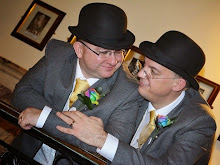
As my health has gone further downhill, in conference after conference I’ve made fewer speeches and attended fewer debates than I did five years ago, or ten, or twenty. It’s just a bit of a shock to go from steadily decreasing participation and days when I often have to stay in a hotel room rather than in the conference hall to zilch. Hopefully Richard and I will be back next year, more engaged once we’re married (though it’ll be much more expensive for me just as my low income’s been eradicated, thanks to government policies I can’t say I support).
But there is one advantage to watching this Glasgow Conference on TV. I would be sitting in the hall fired up and wondering if I’ll be called to make my speech, listening to dreary meandering mumbles with nothing to say even if they could deliver it, where the only message is ‘My view on this crucial national issue is incoherent but involves a mind-bogglingly dull special plea for my own little local area’ – and it’s not just the MPs, some of the ordinary members are just as bad. I would be thinking hard at the sodding chair of the session, ‘It’s one thing not to call me to make the brilliant speech I’ve crafted so carefully, but calling these ones instead is just insulting.’
At home, I don’t feel the urge to write a speech, I don’t have to worry if I can make it to the hall, and above all, I can record the debates and watch most of them with my finger on the fast-forward button!
In my breaks from Lib Dem Conference, I’ve also been watching Doctor Who – The Pirate Planet, starring Tom Baker and written by Douglas Adams. This brilliant story, is I have to admit, better viewing than pretty much any Agenda item bar the Presentation On Same-Sex Marriage, and its second episode was first broadcast on this night back in 1978. At the time, part of it was a satire about the idea of an “economic miracle” for which no-one has to pay. It also turns out (spoilers) that behind the exponentially increasing devouring of the resources of whole worlds is someone very old to whom no demand is ever enough.
So what’s been happening back at the Conference? You can read all the papers here, and catch many of the debates via the BBC. But here’s why some debates particularly caught my attention…
“One Member, One Vote”
I’m torn on this one. If party membership hadn’t been hollowed out, I’d be wary that these proposals sound like they’re about equality but actually even more heavily in favour of time-rich, money-rich people who happen to live close to the seaside (or, in this case, to Glasgow). The equivalent of electoral reform for the UK being to propose one person, one vote – as long as you can all pay a large registration fee to crowd into the same one polling station. In Glasgow. Or, discarding the party’s current constituency-based representative democracy model, like reforming the House of Commons by saying any UK citizen can turn up and vote there, as long as they can afford to pay to register and pay to stay in London. And I wasn’t totally convinced by the argument that our shrunken membership makes it less likely people will turn up to swing the votes, which seems like an argument that we should completely change the structures just to get no more people turn up anyway. That the proposals themselves were a badly-drafted mess from a Federal Executive that has been record-breakingly navel-gazing and incompetent in its faits accompli this year didn’t help.
And yet… I’ve had times when I’ve been to conference without being an elected conference representative with a vote too, and it’s even more frustrating than being a conference representative who’s not at conference as I am today. The amendments stopped the constitution being turned into incoherence. And the arguments on the OMOV side were simply far better, with too many of those against resorting to pathetic ad hominem attacks.
Watching from home, though, if every member is to get a vote not just if they attend conference but for the major party committees, the small changes in making conference easier to follow over the past few years need to accelerate mightily. During conferences, the party website must have a one-click ‘What is happening right now’ solution rather than a many-click ‘Somewhere here you can work it out’ puzzle box. The back-projections and the chairs of sessions need to give the site address several times during each debate and explain what’s going on in each vote, not just to make it clear to conference-goers rushing about, but to those more members we’re told will be freshly engaged and watching after OMOV. Announcing at the end what the votes have actually decided, rather than just reading out a list of numbers and letters, would help the TV watchers too.
In a spirit of helpfulness, here’s one I prepared earlier: Making It Easier To Follow Liberal Democrat Conference.
Towards Safer Sex Work
Twenty years ago, I was newly elected to the Liberal Democrat Federal Policy Committee – the body that decides on the major policy proposals that go to Conference. I was the youngest person on it by more than ten years, the only out LGBT person on it (putting into perspective today’s debates over reducing ‘diversity’ to only one tick-box quota), and – the unique thing about me that most mattered to me and which made the difference on the Committee – by the reckoning both of those meaning it approvingly and those meaning it critically the most unfilteredly ideologically Liberal. One of the first policy papers that that year’s FPC discussed had something done to it that I can’t remember any other paper save election manifestos. Election manifestos come back several times for FPC debate because there’s so much in them and we need to get them right. This paper was sent away for redrafting not once but twice because it was simply too Liberal for the FPC. I can’t remember any other than wasn’t just redrafted a bit in committee, as was the norm, but rejected in total and sent away to be rewritten from top to bottom (possibly not the best words), then once we saw it again, told it was still too interesting and needed to be completely redrafted yet again.
The neutered and regulation-heavy paper that was eventually permitted to creep into Conference was titled “Confronting Prostitution”. I bear some responsibility for that overly confrontational language: I was the one who pointed out to the FPC that the title “Tackling Prostitution” might be open to ribald remarks and we should get our tackle out.
It wasn’t a bad paper. It advanced us well ahead of the other parties. But I always looked at it with disappointment, because the policy working group had followed its remit, followed the evidence, and followed Liberalism in drafting a civil liberties paper that the FPC gutted stage by stage until it was about ‘getting them off the streets’. When the first draft came to FPC, it was the only policy paper that was ever so unpopular that just one solitary FPC member supported it as it stood. You will not be surprised to read that it was not the only time in which I was in a minority of one, but it was the most significant.
So I was very proud to watch all of Saturday afternoon’s debate, to see how far we’ve come. I particularly recommend you read Sarah Brown’s speech, but I was really pleased at how sensible and Liberal the overwhelming majority of the speakers – and the votes – were, including protecting sex workers both from exploitation and from the state, rejecting the idea of reintroducing ID Cards but just for sex workers, and setting out the principle that informed, consenting sex should simply be legal and is nobody else’s business (even if it’s a business). Well done, Conference! I just hope now that the next FPC will not be as timid about the forthcoming policy paper as its predecessor two decades ago. So if you have a vote, vote for the candidates with some Liberal ideas rather than just a CV on their manifesto.
Doing What Works To Cut Crime
I liked this policy paper – it sets out a practical, evidence-based approach to cutting crime. But its piecemeal nature means it looks more like a compilation than a coherent whole. So I welcome the commitment to crime prevention. And civil liberties. And evidence-based baby-step liberalisation of our useless, gangster-boosting drug laws. And to the interests of victims.
But a bigger question that the paper doesn’t ask is that if we want fewer victims, what about the victimless? What about ‘crimes’ that are not about protecting any victim but only about the state victimising people that aren’t hurting anyone else? Because it’s not only criminals who attack you that can be bullies. The state can, too. And if you want to prevent crime, expand freedom, cut the ground from under gangsters and have fewer victims, then setting out the principle that ‘victimless crimes’ should simply not be crimes at all is something I’d like to see as the keystone of our next crime paper when it looks at evidence for how to implement that.
The Liberal Democrat 2014 Pre-Manifesto – A Stronger Economy and A Fairer Society
I wrote a little about this yesterday, looking at the Introduction and how that’s changed and improved on previous attempts – though it lacks a short, stirring rallying call of What the Liberal Democrats Stand For.
The whole thing’s pretty good. And I particularly liked Duncan Brack’s closing peroration in the debate (Duncan, if you’re reading, please send me your speech and I’ll print some of it in a Liberal Monday). I have to admit, though, save the much-purloined policy to further raise the personal allowance for the lower-paid, I’m a bit hard-pressed to remember a ‘wow’ policy. That suggests that its narrative isn’t all that thrilling. And then at the last minute, someone came along and diluted the best bit.
I might have been tempted to vote against it for the drafting amendment announced this morning: the problem with an amendment that’s accepted into the text at the last minute is that no-one gets to debate it or speak against it. Several years ago, there was a crappy Guardianista fad for “wellbeing”, a meaningless top-down political concept like a New Labour zombie. The Lib Dems made the great mistake of deciding it was the biggest of big ideas, with almost zero enthusiasm, and since then have sheepishly never mentioned it again because it’s a load of rubbish. Until this policy motion, when some utter fool wanted to add it and the bigger fools on the FPC let them. Worse, it means that the motion as passed says that the one big thing we’re really about is “above all to empower every person to realise their potential” – oh, and also “wellbeing”! Which is crud. It’s not one task. It’s two. It means the inspiring, Liberal, bottom-up idea that we are about enabling everyone to decide their own life is now knitting together with top-down Blairite mulch about how we should decide what’s good for people. As no-one mentioned it in the debate, proving yet again how pathetically uninspiring the idea is, my advice is just to pretend it isn’t there.
But at least the Pre-Manifesto remembered to talk quite a bit about the deficit, and didn’t pretend you can fix it while bringing in no new tax revenue at all and giving massive handouts to the wealthiest.
Did We Forget About the Deficit After All? The Big Four Spending Commitments
The Pre-Manifesto was very tough on the deficit this morning. Then there was a huge splurge this afternoon.
I’m not against huge splurges (no, titter ye not). But the Liberal Democrats have carefully costed our Manifestos for more than two decades to only promise what we can afford, even in the good times when the money was rolling in (though less than the Labour Government pretended). Now the money’s not just tight but gone, it’s all the more obvious where the few extra bits are going – while everything else gets slashed.
- The Liberal Democrats are committed to protecting and expanding spending for schools and early years education – we always have. It’s probably our single most consistent commitment.
- We’re committed to increasing pensions through the so-called ‘triple lock’ (heads, tails or side, pensioners always win big).
- We’re committed to raising the income tax allowance to the level of the current minimum wage – but that isn’t ‘locked’, so it can be eaten away by inflation.
- And we’re now also committed to above-inflation increases in the NHS budget. All the previous three follow on from the big promises the Liberal Democrats made in the 2010 election, all three of which were delivered in the LiberaTory Coalition. This one is different: it also happened for every year of the Coalition, but at the last election it wasn’t promised by either the Liberal Democrats or Labour. This part of the Coalition’s record now taken up by every party was only a Tory commitment. We forced them to agree to the others – they forced us to agree to this one.
These four spending commitments are massive. And everything else will have to suffer.
I remember in 2001 – in what Labour told us were the boom years – I put out a really good leaflet across the constituency for which I was standing for election. ‘Follow the money’, I thought, and so this was all about the two biggest spending commitments in our 2001 Manifesto. On one side, a picture of me with local kids, with details of our proposals for children and education and how we’d pay for them. On the other, a picture of me with local pensioners, with details of our proposals for old people and pensions and how we’d pay for them.
I thought this was a great idea until a working person without kids told me angrily, “So you’re offering me nothing, then. I just have to pay for it all.” That should have occurred to me: I was a working person without kids. But though we’d said in our 1997 Manifesto that we’d raise the personal allowance for the low-paid, by 2001 we’d dropped that from our priorities to give a massive bung to pensioners. And back then that didn’t even include the earnings link and ‘triple lock’.
Today we have even less money. We’ve restored the policy of cutting taxes for low-earners – and made it a reality for millions despite the Tories wanting a tax cut for dead millionaires instead and Labour opposing it because they want government hand-outs only to the people they say deserve it rather than letting all the low-paid keep their own money. But that wasn’t a choice between generations. Something for children; something for working people; something for pensioners; now something for the NHS for everyone.
I just don’t think this can hold – because four massive commitments of extra cash is too many without squeezing everything else until it pops. And one of those four is not like the others. Only one has had no hard choices at all – just constant rises.
Age Ready Britain
Back when I was healthy enough to stand for elections, I went through an assessment to see if I was politically fit to be a Liberal Democrat Parliamentary candidate. I passed with flying colours, and can still remember my going all Churchill to the assessor role-playing an anti-asylum-seeker voter on the doorstep (as well as remembering that I’d only use the word “refugee”). One of the parts of the approval process of which I most approved in turn was the point where you had to prove you had a Liberal brain by identifying a party policy that you disagreed with and explaining why. I think at the time it was something about well-meaningly bossing young people about – a “wellbeing” policy, if you will – and, if I thought today about which I considered our most wrong policy, I would quite happily blast that Blairite twaddle of a “wellbeing” paper out of existence. But as it’s already been wiped from everyone’s memory through its very blandness, I would answer that the policy I most disagree with is one that has been made even more disagreeable today.
Our policy on pensions is generous, warm-hearted, well-meaning and attractive.
It’s a shame that it’s completely out of touch with reality.
This morning, the Liberal Democrats voted for a Pre-Manifesto that constantly repeats that it is all about “the next generation” and uses that as a primary argument for reducing the massive deficit between what the government spends and the money it has – that we must spend less now rather than saddle ever-increasing debts onto the next generation.
This afternoon, the Liberal Democrats voted for our biggest spending commitment not only to remain humungous increases for pensioners when every single other group in society is suffering cuts, but to put that vast and ever-increasing cost into law so that it can never be changed.
Completely unworkable.
The first time I ever spoke on what might be called the party ‘establishment’ side, after many years of being the radical outsider, was sometime roughly around the year 2000. It was in a debate on pensions that saw the unlikely bedfellows of young people, the party Leadership and elderly members of the House of Lords on one side, with middle-aged Parliamentary candidates on the other. The Parliamentary candidates wanted to restore the link between earnings and pensions because it was very popular. The rest of us said that it was a mistake to make that a principle because we could afford it today – as we then thought, not realising that even in the boom years the Labour Government was already running an unaffordable budget deficit – because there would come the twin pressures of an ageing population and a less rosy economy, and then we’d be stuck with a policy that wasn’t affordable. I can’t remember precisely my age, but I can remember my speech’s opening line that got people’s attention (and got a few boos):
“Conference, I’m twenty-eight. And I want a pensions policy that doesn’t make me pay through the nose and then go bankrupt before I get anywhere near claiming it.”Back then, sense won the day. Somehow, between then and now, as the nation has got older and the economy has gone down the toilet, as the side that won back then have been proved right, we’ve gone ahead and gone for the unreal option anyway.
A ‘triple lock’ on pensions ratchets up without end, so that whatever happens to wages, or inflation, or the nation’s finances, however children or working people or people on benefits or services or anything else under the sun suffer, one group alone will forever get more and more money even as that group gets bigger and bigger.
We promised it at the last Election. We were wrong.
We’ve delivered it in government. We were wrong.
Today, we’ve proposed locking it into legislation so that every other group, every other service, every other dire need must always by law be subordinate to pensioners not just not contributing much to the cuts, not just staying still, but getting more, more, more while everyone and everything else gets less, less, less. We are stupidly, impossibly wrong.
With today’s pressure on the public finances, this is not merely utterly unworkable but utterly unjust.
I argued for pensions increases and other spending to help pensioners back in 2001. I meant it. It was the right thing to do when we could (seemingly) afford it. I didn’t argue for massive age discrimination and a huge and ever-increasing transfer of wealth from the current generation and the next generation to pensioners who will never be all in this together even when we can afford none of it. Because I’m an idealist, not a complete fantasist.
The Party Leadership and speakers in the debate today told the brave souls who stood up against this dangerous absurdity that they were wrong to say that ever-increasing numbers of pensioners getting a never-ending increase above the country’s wealth was unaffordable, because we just don’t understand the numbers. They didn’t say what the numbers were. Because… Because… Because… It’s magic! Government spending is still way above the money it takes. Everything and everyone else is struggling to keep their heads above water. The benefits bill is being slashed and people having their benefits cut or cruelly taken away altogether – the one exception being the vast majority of the benefits bill, the vast majority of benefits claimants, all of whom get much more than any other benefits recipients. They are the pensioners. But pouring extra cash into by far the biggest chunk of the benefits budget is “affordable”, we were told, and we just don’t understand if we say the emperor has no money to get clothes.
How stupid do they think we are?
One MP replied to criticism – from the unlikely bedfellows of Liberal Reform and a leading member of the Social Liberal Forum – by saying that we shouldn’t turn this into a fight between the generations. Well, that’s exactly what you do say when you’re the victor enjoying all the spoils, but not when you’re the side left bleeding and looted. Behind the scenes, they spin something else: not that it’s right, but that “pensioners vote”, so we need to throw money at them even if we have to mortgage the next generation’s future by borrowing half of it and mug the current working generation for the rest.
Ever wondered why the Tories so readily went along with a massive bung to pensioners – and took the credit? Maybe some of it was that when they got into power Mr Cameron still wanted to detoxify them and saw pensions as a totem that they were now the Nice Party to one group, at least. Before they rediscovered their taste for celebrating kicking the poor in the nuts. But why, do you think, were the Tories so happy to increase pensions while they slash and bash every other benefits claimant? It’s not rocket science, is it? Yes, “pensioners vote”. Pensioners vote Tory. Our most unrealistically expensive policy has been to make everyone else suffer, infamously cutting at our own core voters, to give a massive advantage to the Conservative core vote. For which the Conservatives get all the credit and we see our vote, as it always is, weaker the older the voting demographic gets.
We.
Can’t.
Afford.
This.
There are several good ideas in the Age Ready Britain Paper. There’s also the biggest infection of any policy paper this Conference of, yes, more twaddle about patronising “wellbeing” again, which is just a neon light for me to say that if I had been at Conference I would have urged the other Liberal Democrats to hurl it out and shred it, and start considering fiscal reality, fairness and the next generation’s future.
Labels: Coalition, Conservatives, Douglas Adams, Education, FPC, Labour, Liberal Democrat Conferences, Liberal Democrats, Manifesto, Pensions, Sex, Stupid Ideas, Tax, The Golden Dozen
Tuesday, September 10, 2013
What the Lib Dems Stand For 2013.5 – Why I Am A Liberal Democrat #LibDemValues
Another Liberal Democrat Conference starts this weekend, and once again I’m looking at What the Lib Dems Stand For. Before this Spring’s Conference, I published a series of articles challenging us to combine our principles, our priorities in government, and our Leadership’s message to tell other people we’re about and inspire ourselves to be enthusiastic about it. Tomorrow I’ll be publishing some more ideas of what we stand for written by other Lib Dems. Today, it’s something more personal: how did I get here? Why did I become a Lib Dem in the first place? And why do I stay?
If you scroll down below, you’ll find my short rallying cry designed for anyone to use – please borrow mine and use it yourself. Or, ideally if you’re quick, you can send me your own version. But as I’ve prepared to print the next round-up of other contributors’ ideas, I’ve noticed how much more personal many of theirs are, and I’ve been reminded what I said the last time I published that sort of compilation: that one day I’d have to challenge myself to be less on-message and consensual, and say what my Liberalism is by instinct, speaking straight from my head, my heart and my life.
There are lots of passions that make me tick, and lots of experiences that have formed my life and my Liberalism. Sometimes I’d think more of the quirkier elements (not least, Doctor Who), sometimes more of my family or friends. Today’s personal testament looks for the explicitly Liberal line through my life.
My Political Story – Why I Am A Liberal Democrat
My first political memories are of shouting at bullies. I didn’t think of this as political until a long time later, but that’s what it was [1]. With the fearlessness of the very young, I saw much bigger boys being mean and thought it wasn’t fair, and told them so. I didn’t do it often, but it stuck in my head because it seemed to be the right thing to do, standing up for the underdog. Luckily, a small boy shouting at them seemed to shame them rather than get my head kicked in.
I was less brave when I got into my teens and was bullied myself. It’s a quirk of my personality that finding the drive to stand up for someone else has always been far easier than defending myself alone: under personal attack, I tend to crumble into depression and want to hide. What forced me to be braver and brought back that burning desire to stop unfairness was realising I was gay. It was the 1980s, and I didn’t know anyone that was gay – or so I thought at the time. All I knew is that everything about society told me I was wrong and seemed to hate me for something that was simply me. Pretty soon I decided there was nothing wrong with me at all, and that it was the world that had to change, so I came out early and uncompromisingly. I wanted it to get better, for everyone I knew to know at least one gay person, for me never to hide – and I never have for nearly a quarter of a century, from workplace to election, from embrace to rejection. I might have got involved in politics anyway, but that decision made it essential.
At the same time, politics in the 1980s just seemed nasty. Labour had wrecked the economy; the Tories were building back bits of it so it was all right for some, but left a lot of other people on the scrapheap of massive unemployment. And it wasn’t just that both sides seemed like they were only interested in ‘their’ people – they always seemed to me that they just hated the other side, too, and class hate sickened me as much as racism or what I didn’t know yet was called homophobia. It probably helped that I had an American Catholic Mum and a Scottish Baptist Dad, so I’d always understood that people with different beliefs, different ‘tribes’, even different countries, not only could get on but really had to.
Those two feelings came together in a firm belief that with all the division in society, a political party should be for everyone, not hating half the people all the time – or even hating other countries – and that with what I was experiencing personally, everyone should have the freedom to live their own life, too. And that naturally led me to the Liberal Democrats, who were not just appealingly internationalist but, to their core, the only party saying that society should be for everyone, and that every individual should be free [2].
I didn’t have a political background, I didn’t have money, I didn’t have anyone pushing me to get involved. I just felt that I wanted to change the world, and that if everyone just sat around and waited for someone else to do it, it would never get done. So I joined the Lib Dems, and I did everything I could from delivering leaflets to eventually standing for Parliament. And even though when I first threw myself into campaigning for the Lib Dems we were on 4% in the opinion polls, I knew this was the only party that was offering real change, however long it took – why join another party to campaign for things to stay the same? And I kept campaigning for things to change within the Lib Dems, too. It was often an uphill struggle to get heard, and I made plenty of mistakes, but determination and ideas won me influence. Where I often felt I was having the most impact was when I was elected over many years to the party’s Policy Committee. In part, that was writing individual policies that formed part of several election Manifestos, and knowing in particular that I’d contributed to pushing equal treatment, respect and opportunity for lesbian, gay, bisexual and transgender people a bit further every time. But, for me, it wasn’t just the issues that really grabbed me, but the ideas.
I learned how to put my gut instincts into philosophy, and realised I’d been a Liberal all along. That Liberalism meant that if you start with every individual, you can’t put any person on the scrapheap or hate them for who they are. That the founding principles of Liberalism over the centuries of individual freedom, equality before the law and controlling arbitrary power were living, breathing, vital ideas that I’d discovered for myself in the desire to choose my own life, my belief that everyone should be treated the same, even as a little boy knowing that you had to stand up to bullies. It was Conrad Russell (a Liberal Democrat I got to know through the Policy Committee who became a friend and even a mentor) who said the point of Liberalism was to stand up for everyone against bullies, and that just lit up a lightbulb over my head. Suddenly, I could see that Liberal line through my life. It’s not just that a party owned by one group of special interests can never be fair – that it inevitably discriminates against the rest and divides society. It’s that part of not favouring any one ‘side’ is realising that anyone can be a bully, or can be bullied – or, in philosophical terms, any sort of power can threaten liberty, but any sort of power can protect it, too. Whether it’s the state, or big business or big unions, or just other people, any of them can boss you around and anyone can help stop you being bossed around. So you can’t do away with any of them – and you can’t say any of them are right all the time, or be in their pockets. Which means aiming to create The Perfect Society will always be a disaster, but working at making a better society means there’s always more real life to be listened to and more work to be done.
That’s why for me saying what we stand for is more important than any single policy. It’s important because unless we keep sight of why we bother, there’s nothing to inspire us. And it’s important to remember that we’re for everyone, that everyone should be free to live their own lives, and so we’re here to bring everyone together, as far as we can, and to stop people being pushed around, as far as we can.
So when, sometimes, being in government is frustrating or disappointing, and it is, because there’s not enough money to do what we want to do or because the Tories we’re in government with have different priorities, I can see that Liberal line of what we’re getting right, and why we’re doing it. No Lib Dem joins just to get into power. We do it to make a difference. It took perseverance for me inside the Lib Dems, but it took the whole party a whole lot more hard work and struggle to go from 4% in the polls to more than double our number of MPs and win a place in government – not the easy way, and not to do the easy things. No wonder Liberal Democrats take a long term approach on the importance of education to unlock people’s potential, and the environment to lock in fairness for the future – we had to work at it for a long time, so we’ve never gone for quick fixes. I’m deeply proud that this government’s the one that legislated for mostly equal marriage at last, but it’s the bigger ideas that matter still more. Worse than the 1980s, Labour had wrecked the economy again. But despite the damage being deeper and longer than it was when I was growing up, while unemployment is still too high it’s much, much lower than in the 1980s, now that Liberal Democrats are in government and not just the Tories. From apprenticeships to green jobs to tackling the banks, it’s not just rebuilding the economy as ‘all right for some’, but putting it back together differently. You need economic responsibility to make things work – but without fairness, too, society falls apart.
I think the government would be better if it was all Lib Dem and we could do more of what we wanted to do. Well, I would say that. But it’s also good to prove that people with different beliefs, different ‘tribes’, can make it work together as well. I look at the difference we’ve made, not just since the government was elected but compared to the 1980s when I grew up, and I’m proud of how we’ve changed things for the better: unemployment that much lower than the Tories ever cared about before the Lib Dems entered government, taxes for ordinary people that much lower with the Lib Dems while the wealthiest pay more than they did under Labour, green growth and protecting education so that the economy and opportunities will last into the future. I’m proud – but I’m not satisfied. I still want to change the world. But I can see how Liberal Democrats are doing just that, more slowly than I’d like and with a few wrong turns, but we’re still the only party that says society should be for everyone, and that every individual should be free.
The way the party sums that up now is that the Liberal Democrats are building a stronger economy in a fairer society, enabling every person to get on in life. Freedom. Fairness. Being for everyone. I find myself nodding, because the Liberal Democrats are still saying what made me join all those years ago, only now they’re putting a bit – a fair bit – of it into practice.
[1] I had a long conversation about my politics with my Grandma when I was in my twenties. She nodded, and said she could see I’d be political when – and this is one I’d not remembered – I was aged four and strutting about naked on a beach and told a big boy off for kicking down another boy’s sandcastle. I said she was probably right (though I bottled out of adding, ‘And obviously that’s why I’m a naturist now, too’).
[2] If you’ve ever wondered where my blog title “Love and Liberty” comes from, it’s my original two gut instincts distilled into three words. You can read the annotated version of most of my 1999 booklet “Love and Liberty” online too, where my concept of Liberalism is re-expanded into many, many more words.
The Liberal Democrat What Do We Stand For Challenge (so far)
If you’re quick, you can send me your own idea by tomorrow. Or just feel free to borrow mine and use it yourself (I’d prefer it if you let me know, but it’s not compulsory. Think of it as open-source Liberalism). The idea’s an ongoing investigation, collaboration and rallying cry about what the Liberal Democrats stand for, to challenge myself, first, then other Lib Dems to get across what we stand for in something more meaningful than a soundbite but still short enough to be no more than a minute’s speech or a box on a Focus leaflet. And to make things harder, I aimed for broad consensus by synthesising the Preamble to the Lib Dem Constitution, the party’s priorities in government and the party leadership’s latest messaging. Did it work? Here’s my go at that:
The Liberal Democrats stand for freedom for every individual – freedom from poverty, ignorance and conformity.
To make that freedom real needs both fairness and economic responsibility: an economy that works, that encourages enterprise, and where everyone pays their fair share.
So freedom from poverty requires responsible spending, not debt, built on fairer taxes where lower earners pay less tax and the wealthiest pay more, and building green jobs for the future.
Freedom from ignorance needs better education and training, so people have the opportunity to realise their potential.
And freedom from conformity, supported by freedom from poverty and ignorance, means everyone should have the liberty to live their lives as they choose – without harming others; with equality before the law; with a better say, because no government always knows best.
That’s why Liberal Democrats are working for a stronger, greener economy in a fairer society, enabling every person to get on in life.
Happy 25th Birthday, Liberal Democrats – and What the Lib Dems Stand For 2013.1
Why we should sum up What the Lib Dems Stand For, and how it’s developed over the years.
What the Lib Dems Stand For 2013.2 – a Challenge and a Meme #LibDemValues
Setting out my ‘What the Lib Dems Stand For’ based on the Preamble, practice and core messaging, and challenging other Lib Dems to come up with their own.
The Liberal Democrat What Do We Stand For Challenge 2013.3 – Eight Answers (so far) #LibDemValues
After receiving the first set of responses, rounding up eight different Liberal Democrats’ versions of what we stand for – so far…
The Liberal Democrat What Do We Stand For Challenge 2013.4 – What It’s All About #LibDemValues
Inviting people to use my short declaration of ‘What the Lib Dems Stand For’ and explaining what each bit of it means.
Then there’s today’s, and with a bit of luck there’ll be more tomorrow.
Labels: Blogs, British Politics, Coalition, Gay, Ideas, Liberal Democrat Conferences, Liberal Democrats, Liberalism, Memes, Personal, What the Lib Dems Stand For
Wednesday, August 21, 2013
Lessons From Coalition – The Two Biggest Problems: Betrayal and Betrayal
This article comes in two versions: in depth here, and the supercompressed version published as part of Lib Dem Voice’s Lessons From Coalition series.
All governments depend on events – some, like the LiberaTory Coalition, coming in when events were especially bleak. No lesson can predict all political outcomes. But whatever the economic and political weather, some lessons are plain.
The two biggest problems for any future coalition will be the breakdown of trust between the voters and the coalition parties, and the breakdown of trust between the coalition parties themselves. The Liberal Democrats have learned that all too well.
We know what the flashpoint issues for each during the current Coalition that still say ‘bitterness’ and ‘betrayal’ to many, too: tuition fees and Lords reform. On both, ugly reality got in the way of how coalitions ought to work. The challenge is to learn from them in order to foresee and avoid similar events – if we don’t find solutions to both problems, any future coalition will suffer the same poison.
If It Won’t Work, Walk; But If It Will Work, Walk In
We should aim to achieve things in government – that’s what a political party’s there for.
The theory of forming a Coalition is sound. If we don’t win a majority and no-one else does either, the Liberal Democrats must negotiate with other parties – ideally playing them off against each other to get more of what we want, if the votes tumble evenly enough to give us that chance. It’s the worst option apart from all the others. We should always oppose a ‘confidence and supply’ arrangement, which means nearly all the blame for none of the power to do anything. That leaves two options: a coalition, yes or no. For a political party rather than a debating society, the choice is straightforward. We should drive as hard a bargain as we can. If it’s impossible to reach agreement on enough of our priorities, we must be prepared to say no. But the corollary of that is that we must be prepared to say yes, too, if we can form a stable government with another party that delivers enough of our aims. When I spoke in favour of endorsing the LiberaTory Coalition, I was under no illusions, and neither was anyone else in the hall:
“Maybe it is the worst possible time to take power. But I don’t want us to wait until I’m wheeled into Conference aged 78, in another 40 years, to say, ‘Well, the economy’s crashed again and at last we’ve got another hung Parliament. Maybe we should try it this time’.”From the platform, Vince Cable made a similarly practical point:
“It’s going to be bloody awful. But it’ll be less awful because we’re there.”It’s never going to be easy, but it’s in the national interest – and it’s simply what a political party is for.
The Lib Dem Voice regular polling question ‘Would you rather form a coalition with Labour or Conservative?’ is based on a completely mistaken assumption. I’d rather we form a government on our own. If the voters don’t give us that, I’m still a Liberal Democrat, and I don’t follow the media narrative that I must be ‘really’ Tory or Labour, push comes to shove. I dislike both of them. My answer is not that I want to be a bit Labour or a bit Tory, but that I’d go with the one that’s prepared to be the most Lib Dem. Whichever way round they go, we should partner the party that compromises and not the one that’s arrogant enough to just demand we join them. That’s the principle; the simple common sense reason is that to prefer one side in advance is essentially an endorsement, one that sends voters streaming away to whichever side we’ve given the nod to before the election and loses all bargaining leverage afterwards.
2010 is the only case study we have. I’ll never like the Tories either, but the tiny band who pretend we should have formed a coalition with Labour (and Uncle Tom SNP and all, and still not got a majority) after the last election were out of touch with reality then and have rewritten history since. Both the number of seats that the voters gave to each party and the Labour Party’s own ‘negotiations’ made a coalition with Labour impossible – but I also remember what the Labour Party did with thirteen years of absolute power and saw them as no better than the Conservatives. I didn’t forget the war-mongering, evidence-sexing, amnesia-promising, freedom-crushing, LGBT-hypocrisising, rich-brownnosing, poor-taxing, crony-bribe-swallowing shameless Labour Government overnight in favour of a starry-eyed childish fantasy image of the ‘nice’ Labour Party that bears no resemblance to their continuing record. And I remember what they offered as the price of coalition: bugger all.
Next time will be different in ways we can’t know. The Tories may well prove ungovernable; Labour may realise that they can’t demand absolute power when more than seven out of ten voters oppose them. But there’s a simple lesson from 2010 about how to negotiate. Labour did not offer a Coalition. It demanded a mass defection. Despite the Lib Dems getting our second-biggest vote since 1928 and Labour their second-worst vote since 1918, Labour’s sense of entitlement pretended that they had the right to keep everything they wanted and Lib Dem voters should get nothing. Despite Labour winning eight and a half million votes to the Lib Dems’ seven million, they expected all Lib Dems to suddenly join the Labour Government to vote for everything we’d previously opposed, because our voters being 83% as numerous as theirs didn’t count. Well, that was a ‘privilege’ it was easy to turn down. There is no point whatsoever in joining a government only to do exactly what the other party would do anyway – otherwise, we’d all have taken the easy road and just joined one of the others years ago. One lesson for Labour from the LiberaTory Coalition is that the Lib Dems are not their battered spouse. As Andrew Hickey said most pithily, we are not Labour’s back-up plan.
The Tories had a larger vote still – ten and a half million – but they weren’t so tribal as to insist only their votes counted… Not when they didn’t have a majority, anyway. Of the four main priorities on the front cover of the Lib Dem 2010 Manifesto, the Tories agreed to three and a half of them (though the ‘half’ has since crumbled further), and Labour none of them. The main advantage of talking to Labour turned out to be that even the Tories couldn’t believe how arrogant Labour would be and assumed that they, too, must be bargaining in good faith, giving a boost to the Lib Dem-Conservative negotiations. I vividly remember self-important Tory grandee Sir Malcolm Rifkind complaining all over the TV that the Lib Dems were “harlots” for talking to Labour as well, a Tory predictably failing to comprehend so-called Tory principle of free-market competition to get the best deal.
So the theoretical lesson is that, short of a Lib Dem majority, the best outcome for the Lib Dems at the next election would be genuinely holding the balance of power (as we didn’t quite last time), with both other parties so hungry for power that they offer big compromises – like the Tories in 2010, only more so. That would give us the most power to bargain, and to choose the partner that would enable the greatest share of our Manifesto. The worst would be for the voters again to give us only one realistic choice, and for both others to behave like Labour in 2010 and offer nothing. Then I hope we’d have the guts to walk away.
Unfortunately, reaching even a good deal on paper is where the problems really start.
Compromise or Betrayal?
Voters don’t trust parties to do what they promise. Most of all, they don’t trust us.
The Coalition Agreement was a decent programme for government. The Liberal Democrats didn’t win the election. Fortunately, neither did anyone else. That gave us a chance at last to put some of our Manifesto into action after nearly a century of none of it. The LiberaTory Coalition promised government by principles of freedom, fairness and responsibility, all sounds Liberal ideals. We’d constantly made clear what our priorities were before the election, and three and a half of those four main priorities written on the front of the Liberal Democrat Manifesto were being delivered. Even in Coalition Government, even after Labour blowing the economy to bits and leaving an incredible debt to repay, and even having to compromise with the Tories over what they want to do, the Liberal Democrats have still put our own distinctive stamp on good things from government, not just lessening the bad. Raising the income tax threshold and cutting taxes for 23 million ordinary working people. The Pupil Premium to help out poorer schoolkids. Not just a stronger but a fairer economy, tackling the banks, record numbers of apprenticeships, green jobs and the new Green Investment Bank open for business. And tiny baby steps that soon tripped up on more open politics. Win-win-win-OK, lose a bit on the last one, surely?
Well, we all know what happened next. Somehow the narrative is almost entirely that to get nothing, zip, zero, nada done and help no-one at all would have been principled, while getting stuck in and delivering quite a lot of what we wanted to do is a betrayal. No-one’s interested in looking at policies as a whole: that’s too much effort. No-one complains when we moderate what the Tories want to do (despite the best efforts of baying Tory MPs who actually see what’s going on). But for the Lib Dems to make compromises in some areas to achieve wins in others is an unforgiveable sell-out. The irony, of course, being that this is the corrosive attack by Tory and Labour Parties who have identical policies on tuition fees, the Lib Dem effect on which was to make them far fairer to poorer students (and poorer graduates).
Without a way to challenge the idea that any compromise is betrayal, it’s hard to see how any future coalition can work, either.
In retrospect, David Cameron’s cleverest move in the Coalition negotiations was to have the nous to put his foot down and say the new government would have to keep his expensive but explicit promises, like protecting handouts to millionaire pensioners, even when they weren’t key commitments of the Tory Party itself. And Nick Clegg’s was to be willing to bargain away expensive personal promises because they weren’t at the top of the Lib Dem Manifesto. We all know by now how devastating the effect of Nick breaking his tuition fee promise has been, however improved the real as opposed to the political outcome.
The problem even for negotiations is that voters regard Labour and Tory as opposites and Lib Dems as somewhere in the middle – according to taste, a moderating or a blandifying influence. This is something Nick Clegg has done his best to amplify. It’s not enough on its own. It gives only weakly negative reasons to vote for us, when even Nick in the early days of the LiberaTory Coalition knew that it wasn’t enough to hold each other back, but to achieve big positive things, too. And it’s actively dangerous to future negotiations. It does nothing to explain our poor bargaining hand on the many, many issues where the other parties are identical and we oppose both: most famously, raising tuition fees, but also wasting billions on Trident and, increasingly for the Tories as they move back towards Labour’s far right position, attacking civil liberties.
The best case that can be made with this message is that the Liberal Democrats are in Coalition with the relatively moderate side of the Tory Party and pulling them to greater moderation in the process. While shrieking ‘Traitor!’ for the Lib Dems being an independent party and not their possession, Labour see no contradiction in voting again and again and again with the far right of the Tory Party to make politics more rabidly authoritarian. Which wouldn’t be so bad if it wasn’t that no-one else sees the contradiction in that, either, because it simply doesn’t fit the narrative that Labour’s illiberal gut instincts are just as extreme as the Tories’.
Agreements Are the Start, Not the End
Parties don’t trust each other to keep to their agreements. Most of all, we don’t trust either of the other two.
If Labour were the more unbearable immediately after the election, a large proportion of the Tories have been making up for lost time in the Coalition itself as their own sense of entitlement grows. And not just the far right MPs who are irreconcilable to any compromise with the Coalition, with their own Leader, or with reality, but – more subtly though in many ways more damagingly – many of the Tory Ministers who in theory are loyal to the Coalition. So what would be the point of making another Coalition Agreement with Mr Cameron if we know from experience that his Leadership is too weak to deliver on his fine words?
Both the letter and the spirit of the Coalition Agreement have slowly withered. A lesson from the LiberaTory Coalition is that agreement on policy at the start is not enough. For two inevitable reasons, any unequal coalition government will get more like the larger party as it goes along: the initial agreement will run out of steam as (and if) it gets delivered; the larger party having the mass of ministers will be able to respond day-to-day to events to its own tune. And those inevitables aren’t all. Large swathes of written promises and more of the principles on which the Coalition was proclaimed have simply not been delivered.
The LiberaTory Coalition has tested if the Lib Dems really meant our Opposition rhetoric about co-operation; through gritted teeth and pain, it turns out we do. It’s also tested if the Tories really meant their Opposition rhetoric – and their signed-up Coalition Agreement’s explicit promises – about the environment, freedom and decentralisation. It turns out they don’t. George Osborne consistently undermining a greener government, Theresa May’s indistinguishable-from-the-Labour-Party authoritarianism and Eric Pickles micro-managing every local council to his own bizarre prejudices only the biggest examples of Tory Ministers simply chucking the LiberaTory Coalition’s founding principles in the bin.
More openly, there’s been a repeated pattern of Lib Dem MPs faithfully voting through some horrible compromise closer to what the Tories wanted, then Tory MPs voting against the more Lib Dem-agreed proposals or Tory Ministers simply dropping them. Part of this is because the Lib Dems agreed to the Coalition en masse, while only the Tory high command ever gave their word. Part of it is simply that it’s in the Lib Dems’ long-term interest to show that Coalition can work, and in the Tories’ long-term interest (if not in David Cameron’s, who can’t afford to lead a failed government) to show that Coalitions fail. Polling may show that more voters believe the Tories haven’t kept to the deal, but I suspect they also don’t care. The “Betrayal” label still belongs to the Lib Dems.
This doesn’t mean that Labour have been blameless in Opposition. More headless. Labour’s years of shrieking fury against the Lib Dems for having the temerity to be a separate party, where they flung shamelessly homophobic abuse at the Coalition and voted against everything they claimed to support simply out of mouth-foaming hatred and a desire to see the Coalition fail, have made them – as under George W Bush – soulmates of the US Republican Party in its obsession with wrecking anything to do with President Obama, even if that means wrecking America.
It all throws into sharp relief the problem with Coalition Agreements. What happens if the other party simply breaks the agreement? Like tuition fees for the voters’ sense of betrayal, one totemic issue was the breaking point. David Cameron agreed to Lords reform, but a large pack of his MPs are feral animals who will vote against him, let alone against us. The Labour Party has pretended to support Lords reform for a hundred years, but on the one single occasion that an elected Lords was on the verge of being delivered in that time, not just a feral faction of them but the entire Labour Party collectively voted to defeat its own principles because, like spoilt teenage bullies, they couldn’t bear anyone else to get the credit. As on so many issues that they claimed to support in principle, in practice they treated Lords reform as a political football, with them as Lucy van Pelt. I don’t know which is worse, but I do know that that day made it seem impossible for the Lib Dems to trust either party in 2015.
Is There Any Hope For A Future Coalition?
The Lib Dems can’t just sit back and hope that press, public or other parties will all suddenly decide to treat us fairly.
That isn’t to say that others may not change their minds in a more helpful direction. To be fair to our opponents / dubiously potential partners, there are straws in the wind that each other party may be stepping back from the abyss, if not quite becoming creatures of reason and principle. To Ed Miliband’s credit, in recent months he’s finally been grown up and passed up opportunities to cut off his nose to spite his face (on, for example, Europe and mostly-equal marriage). It’s too early to say if this means the end of Labour’s all-consuming hatred, but it’s a start. And to David Cameron’s credit, he appears to be realising that he’d have to get his party to commit themselves in another hung Parliament as the Lib Dems did, rather than leave himself exposed when he leads and they choose later not to follow. But faced with two such major problems looming for any future coalition, we need to find our own solutions too.
The Lib Dem Leadership’s ‘we are the middle’ answer appears to be to abandon the big ambitions of either Lib Dem policies in general or even of the early days of the LiberaTory Coalition. It’s at best a sort of judo, to let the other two parties stand for something and then try to turn standing for anything against them by saying ‘Well, we don’t know what we want to do, but we’ll stop them getting that.’ To me, a Manifesto that doesn’t promise anything much that distinguishes us from the other two may guard against betrayal, but it doesn’t give people much of a reason to vote for us in the first place. It also seems to be tacitly accepting in advance that neither of the others can be trusted to vote for any of our own programme, and that all we can hope for is for them to get their own, just not as much as they’d like of it.
I don’t have all the answers, but here are three proposals for a start:
- To help define ourselves and our bottom lines, pick an enemy. Announce firmly and repeatedly that we would not enter any coalition of which UKIP is a part, and mean it. It’s not likely they’ll get enough seats for that to be a runner anyway, but they have a distinct image that both Tories and Labour are afraid of confronting. UKIP are our opposite: openness vs insularity; diversity vs bigotry; looking to the future vs complaining their way back to an imaginary 1950s. By defining them as extreme and standing against them, we get the rare bonus of making ‘moderate’ also ‘principled’ – as well as making it clear that there are some places we won’t go, and that we won’t just sell ourselves to anyone.
- We never know how much money any government will be able to spend – but it’s a safe bet that in 2015 the answer will still be ‘probably not much’. That means we should only make a small number of tightly focused, red-line expensive promises. But there are things we can shout about that don’t cost money – or even that save it. Make freedom more central to our commitments. That way we make money-saving more positive by not wasting money on more security-state bullying, and can show a powerful extra reason to oppose the others’ authoritarian splurges when cash is so tight.
- Any new Coalition Agreement should have explicit sanctions if a party doesn’t stick to it. As the institutional power of Ministers is at least as big a drag away from any agreement as an open rebellion, how about for every Parliamentary vote lost due to one side’s MPs, that side loses a Minister to the injured party? Even if that would be too frightening for them to sign up to, it might concentrate their minds on a better deal in the first place.
Labels: Blogs, British Politics, Coalition, Conservatives, Labour, Liberal Democrats, Liberalism, Nick Clegg, UKIP, What the Lib Dems Stand For
Sunday, June 30, 2013
Set A Pirate Capitalist to Catch A Pirate Capitalist – Running Down the Tax-Dodgers
Most inspired political-economic idea of the week: Irish blogger Jason O’Mahony proposes updating a centuries-old idea to capture taxes from offshore corporate tax-dodgers. Governments should privatise the hard-to-land tax liabilities at auction and let the hungriest privateer capitalists harry the behemoths. Memo to Danny Alexander: it may sound like a joke, but how better to harness innovation?
“Back in the day, governments used to issue letters of marque to ships, permitting them to engage in legal piracy against the vessels of other specified countries. Privatising sea war. Hence the phrase ‘Privateers’.Some privatisations make sense. Some don’t. I quoted Conrad Russell a couple of months ago on how Liberals need to think more carefully about them than Tories or socialists do: what will work? What’s the empirical case economically? Socially? Will it reduce or boost monopolies? I read about two privatisation ideas this week that reminded me of such tests and prompted more: is it politically bat-shit-crazy? And can it do something the state can’t?
“Hoist the Jolly Roger, and set sail for Starbucks!”
Tuition Fees Again? Danny, Please, No
First, and with no pleasure at all, as part of the Coalition Government’s latest spending review, Danny Alexander announced this week that they’re privatising the Student Loan Book. It’s a tiny change to promote off-the-book borrowing that makes little economic and no social sense, and will probably have adverse consequences for students and ex-students. For those reasons alone, Danny shouldn’t have touched it with a barge pole. But in his role not as Chief Secretary to the Treasury but as a senior Lib Dem MP and, having known him for twenty years, a person with a sharp brain, there’s a much more political reason why rather than agreeing to it Danny should have retorted, ‘Are you fucking kidding me?’
I disagree with plenty of Simon Titley’s you-have-to-have-been-on-my-side-in-Liberal-Party-infighting-in-1982-for-your-views-to-count school of Lib Dem commentary, but there’s no doubt he got it bang on the money here:
“What political genius thought of this? Yes, let’s pick at some old scabs, shall we?The tuition fees fiasco was by common understanding the most politically disastrous single action for the Liberal Democrats since the party was formed (and arguably the most damaging to the British Liberal family since the First World War and Lloyd George’s egomania). The economic effects of this new change are minimal, giving the Tories very little leverage to insist on it as part of the wider plan, but the political effects are pure poison. Why on Earth are our ministers reminding everyone of this Lib Dem suicide pill?
“…reopening the issue of student loans makes no political sense either. That issue has become a byword for mistrust of the Liberal Democrats. So why revive the controversy?”
However, while student loans are a very straightforward and easy form of debt for the government to recover – another reason, of simple inertia, not to sell them off – there are other liabilities that it’s a lot harder for governments to recover, and for those, having established the principle that you can sell off government debts just as you split off banks’ ‘toxic assets’, there’s a brilliant case for privatisation…
Labour Government By Debt and Tax-Dodging
Another piece of my reading in the last week – which deserves my coming back to on its own, but just in case, here it is as an aside – is Nick Thornsby’s table of “UK tax revenue and public spending 1997-2012”. Sounds boring, doesn’t it? But – shockingly – in the last 15 years, UK governments have only balanced the annual budget once, relying on massive borrowing in every other year while lying about “prudence”, and dating from a full decade before Labour could blame the international crisis. The thirteen-year-Labour Government’s sole credit year: +£16bn. Biggest debt year: -£186bn. No wonder the deficit’s taking a while to fix.
Labour simply decided that it was better to make people happy with a public and private credit boom, spending oodles of money that they didn’t have long before the financial crisis – in their ten years of power before the storm hit, nine of them were already on tick. That’s the problem with Keynesianism: the broad idea makes simple economic sense, but no-one ever practises it because of the politics. Borrow in a downturn? Absolutely. Run a surplus of taxes when the economy’s doing well? Nah, we’d rather not. And part of Labour’s long-running credit-fuelled feel-good factor was that they laudably wanted to pull in jobs from multinational corporations, so they let them get away with dodging taxes by the supertanker-load.
It’s only since the Coalition came to power that the UK Government’s focused on tax-dodging – partly because the Lib Dems insisted it be a priority, partly because the Tories realised that (for all they wanted to) they couldn’t get away with sucking up to big business like Labour did, and partly because, as even Labour admitted (though not of course that it’s their fault),
“there is no money”and the Coalition Government now has little choice but to chase the money that Labour nodded and winked at companies to say they needn’t bother with and that’s harder to get even now the Government is actually trying.
But some of the tax that’s been dodged is very hard to get hold of indeed.
From Privatisation To Privateers
As an innovative way of prying taxes out of the biggest avoiders, it’s time to look again at the empirical case for privatisation. Will it work? Does it make economic sense? And can it do something the state can’t? The oft-quoted reason for many Thatcherite privatisations, even those that set up new private monopolies that logic suggested would be worse than public ones, was that even when there was no boost to competition, privatisation would automatically lead to ‘innovation’ and so ‘efficiency’. Sometimes this was true, sometimes not. One where it sounds more than worth a try is a case of very ostentatious state failure – the power of massive multinational corporations to avoid paying taxes. And so I come to my second and far more exciting piece of privatisation reading this week (though it was actually published the previous week, before you correct me).
Jason O’Mahony is a former Progressive Democrat and, if he counts himself as any sort of cousin to the Liberal family, is definitely at several removes from me (let alone Simon Titley). But, cover me in advertising and call me a Thatcherite, I think his “here’s a mad thought” blog post “Want to tax multinationals? How about privatising their tax liabilities?” is a brilliant notion.
“One of the challenges of taxing large multinationals is the fact that corporate taxation is like a war at sea. The fronts keeping changing, and you’re fighting on many different fronts at once. On top of that, the fact is that multinationals, because of the huge sums involved, pay huge money to their tax advisors, and so tend to attract the best. Tax authorities, on the other hand, get quietly competent but under resourced people…And he’s quite right about the counter-argument – people would scream that we’re “losing some of that tax revenue” to “mercenary taxmen”. That’s the tax revenue that we’re not getting. Half of something still being better than all of nothing. Because that’s the beauty of the idea – you only auction off the tax liabilities that you’ve already failed miserably to get hold of. And this way, you don’t have to pay all the lawyers to do battle in court and board the boardrooms. The auction-winners do that. You don’t need to sell off the lot – perhaps just some of the worst, pour encourager les autres – and you can set a ‘reserve price’ at the auction to prevent too big a disparity between liability and profit, or bar the dodgers from bidding on their own debts, or whatever… But it can’t be beyond the wit of government to set rules that are both lucrative for the public purse and exciting for innovators.
“Auction off their tax liabilities to the highest bidder, as a legally recoverable asset, in the same way banks are selling off distressed, toxic assets. If company X owes state Y a nominal €100 million, auction it off. The state gets a chunk of money with ease, and the asset, the tax debt, becomes a private liability.
“Sure that’s mad, says you. Sure, who’d buy that debt? Some entrepreneur would, at a knock down price, and would pay hotshot young lawyers out of the finest universities in the world big fat bonuses for figuring out ways of recovering the debt. In short, we’d fight rogue tax dodging capitalists with the most innovative, hungry force on Earth: other capitalists.”
If it doesn’t bring in much money for the privateers, governments will already have had their cash up front by privatising the risk, and few will cry about it. If it brings in a lot of money for the privateers, the multinationals might be forced to settle with governments instead and agree to a binding international system of tax in future. And if the privateers’ lawyers hit on innovative arguments that spike the dodgers’ guns and set legal precedents, then government lawyers can move in and capitalise on those to rake in all the other liabilities.
So how about it, Danny? It would certainly bring in vastly more cash – and do far less political damage – than making more students walk the plank and keelhauling the Lib Dem vote.
Labels: Big Business, British Politics, Coalition, Ideas, Labour, Liberal Democrats, Pirates, Tax, The Golden Dozen
Monday, April 29, 2013
Liberal Mondays 2: Conrad Russell – The Liberal Cause #LibDemValues
For my second Liberal Mondays selection I’m looking to my old friend and mentor, Conrad Russell, who was through the 1990s the Liberal Democrats’ intellectual guru. I miss him terribly. He had a huge impact on my life and Liberalism, and no doubt I’ll come back to him again: this time I present a selection of quotes from the first booklet of his I ever read, The Liberal Cause. I bought it at my first Lib Dem Conference because I wanted as many Liberal texts as my tiny teenage budget would allow, and this one was marked down to 10p.
Conrad and Me and Name-Dropping
You can skip this bit if you like, but to introduce The Liberal Cause, I didn’t know Conrad when I first read this, nor I think even know of him. In many – but not enough – years later, we got to know each other very well through being on the Liberal Democrat Federal Policy Committee together, with such adventures to follow as drawing him into involvement with the Liberal Democrat Youth and Students (I was, he wasn’t), working at by-elections or in doomed Leadership elections together, and of course always plotting to get a more Liberal line through the FPC. I loved him dearly, and of all the many influences on my philosophy, no other person had such a striking impact in directly shaping my Liberalism as Liberalism. Re-reading it last week, I can see that The Liberal Cause is far from his best work, but elements of it have still stayed with me ever since.
I’ve been suffering crippling headaches for weeks and not been reading or writing much, but thought I’d better attempt another Liberal Monday, with elections on. Conrad was the obvious choice, so I went back to the start with him where I was concerned, and decided to spare myself a bit of both staring at a glaring screen and knackering my hands typing by having another go with the infuriating voice command software that I lose patience with every time I attempt dictation. This time I didn’t even try to train it to understand me, but just went back and corrected the mistakes after reading it all out, which was at least marginally faster than typing the whole thing. Most of the misunderstandings were simply gibberish, but presenting the Whigs as “the whinge party” was mildly amusing, as was making “What has endured in party tradition…” into “What has endured in hottie tradition…” Though the one which most struck me was “Liberals, as has all male and beverage…” See if you can spot what this apparent reference to the Liberator Collective was meant to be when I said it aloud.
I kept on reading aloud to the one-paragraph biography of Conrad at the end, which is how the software came happily to inform me “He is descended from William Hartnell”. In so many ways, so true. That one may give away a bit of which words are stored in my custom dictionary. It’s actually a reference to “William Lord Russell, who was accounted worthy of three ‘w’s in John Locke’s list of the first Whigs,” which will become clear shortly. It also reminded me of one of Conrad’s more endearing stories from one of his more endearing habits: he was an inveterate name-dropper. Unlike most people’s, these were entirely natural lines about his family, just as he might mention something I’d said, or whoever we’d just been arguing with in the Policy Committee, in which he prefaced so many of his observations with a reference along the lines of ‘When this issue was first debated in 1647…’ Here are three that have always stuck in my head from variously private conversation on anti-discrimination laws (referring to Lord John Russell), a speech explaining his attitude to authority (William, Lord Russell) and, most fabulously, a mighty speech to Lib Dem Conference in which he illustrated a point with the best name-drop I’ve ever heard to a Conference hall (Bertrand Russell):
“My great-grandfather succeeded on his third attempt on passing religious toleration through Parliament, though he had to become Prime Minister to do it.” (It sounded a great inconvenience)
“My father took me to see his portrait. On seeing this grand long-haired man staring down at me, I asked my father if he had been a good man. ‘Oh yes,’ he said. ‘A very good man. The King cut his head off.’”
“The point at which my father finally parted company with Lenin…”
Unservile State Papers 35 – The Liberal Cause: The Three-Century-Long Tradition of the Liberal Democrats
I’m presenting a series of extracts from The Liberal Cause, though at just 16 albeit close-typed A5 pages one day I might see who has the copyright and put the whole thing online if they agree. The booklet was produced under the aegis of the Unservile State Group, a sponsor of Liberal philosophy from the 1950s until, as far as I can tell, the early 1990s; this was published in 1990, and was probably among their last. Conrad had recently become the last Liberal and first Liberal Democrat peer introduced to the House of Lords (due to the different stages of assuming a peerage) as the Earl Russell, and was just embarking on his marvellous late flowering as an incisive Lords spokesperson and intellectual powerhouse of Liberalism. His finest work in that regard is his 1999 An Intelligent Person’s Guide to Liberalism, which I would always recommend; The Liberal Cause is a very much shorter and lesser work, but it’s still worth looking out if you happen across a copy.
The point of The Liberal Cause is self-evident from its full title: the Liberals had just merged with the Social Democrats to form what after much internal strife became called the Liberal Democrats, and unlike now, everyone was rather wary of calling the new party either “Liberal” or “Social Democratic” for fear of unpicking the merger and having to go through the whole damn thing all over again. And a lot of Liberals were, less unlike now, very unhappy. Whether it was Conrad’s idea or that of the Unservile State Group, this booklet looked across three centuries to find continuities in our political tradition, see how political issues of the day measured up to our philosophy – primarily, Conrad looks at privatisation from the tail-end of its heyday, and green politics from the early end of its wide acceptance – and implicitly say, ‘The party’s changed its name and taken great evolutionary leaps many times before, so don’t worry about this one’. It’s not as well-structured as some of his work, and less politically punchy, with Conrad still learning late in life how to evolve himself from a great historian into a great politician.
“The Liberal Democrats are the heirs of a continuous institutional tradition over three hundred years old. Liberals and their Social Democrat allies have inherited the machinery, the membership and the goodwill of the Liberal Party as clearly as the Liberal Party inherited the membership, the machinery and the goodwill of the Whigs. The Whig party from which we descend can trace a continuous institutional history back to 1679, and the ‘First Whigs’ were the party for whom John Locke acted as an auxiliary Whip, listing members with ‘v’ for ‘vile’ or ‘w’ for ‘worthy’, graduating to ‘vv’ and ‘ww’ and, in extreme cases, to ‘vvv’ and ‘www’.”Conrad and I never sat at dinner after an FPC meeting annotating members of the Committee and guests by Locke’s listings. Well, hardly ever.
Having established the Liberal Democrats’ three-century organisational continuity (and, implicitly, his own love of gossip) in the first paragraph, the first page continues by explaining how the party naturally evolved a passion against discrimination despite its biggest initial rally-point being a call to discriminate against a Catholic King. The Whigs’ initial anti-Catholicism is long past but since then, says Conrad:
“What was enduring in party tradition was the chosen means: the commitment to controlling the power of an overweening executive, and the choice of the rule of law as the means by which it should be done. The championship of liberty, and the identification of liberty with the rule of law, would entitle Liberal Democrats today to at least two of John Locke’s ‘w’s.Conrad goes on to assess the Whigs’, Liberals’ and Liberal Democrats’ instinctive understanding of the United Kingdom as a supra-national institution, and how that has meant a commitment both to devolution and to the EEC and the UN, rather than the Tories’ stubborn one-level nation-statism – and how that links to an instinct to check arbitrary power. He carries on to discuss different parties’ class-based economic ideas – critiquing a pre-Blairite Labour Party that still called itself socialist, a strange historical note after two decades of Labour sucking up to the super-rich more than the Tories do – and offer a word of warning about different spheres of freedom: quoting John Stuart Mill, he argues that free trade and freedom itself may well often go together, but they are not the same thing, nor contingent on each other.
“During the Eighteenth Century the Whigs increasingly became identified as the party opposed to the monopoly of the Church of England in public life, and that identification also has marked the Liberal tradition in ways that have become indelible. That never meant that Whigs were opposed to the Church of England: it is to the eternal credit of England, the Church of England and the Whigs that a high proportion of their membership always consisted of devout members of the Anglican Church. What distinguished the Whigs was their belief that the Church of England did not enjoy a monopoly of truth, and that those outside it enjoyed an equal claim to citizenship. The Whigs enjoyed an unusual ability to concede equal status to the Church of England and the Church of Scotland. The party rapidly became committed to a degree of religious pluralism unusual by the standards of the day; and from that commitment grew an increasing readiness to divide the spheres of church and state and a steadily deepening commitment to freedom of thought.
“From the battles over the Occasional Conformity Act at the beginning of the Eighteenth Century down to the Race Relations Act in the middle of the Twentieth, the party has felt a steadily deepening dislike of discrimination. As one would expect from the party of Locke and Mill, it has made the intellectual leap from opposing discrimination because it happened not to favour the chosen interest group, whether it was at Nonconformists, blacks or women, to opposing the discrimination because it was discrimination. The four-year-old who denounced the owners of a swimming pool because they did not accept Jews, and who asked, several minutes later, ‘By the way, what is a Jew?’, was showing a Liberal sense of priorities.”
“Liberals may, when they think the occasion suitable, defend state intervention in economic questions without any threat to their liberal principles. Economic acts are not, within Mill’s definition, self-regarding. In tackling these questions, we benefit from notions of liberty somewhat enlarged over those of the Nineteenth Century. Liberty does not simply consist in the absence of external impediment: it involves the existence of opportunity, and the freedom to take it. Freedom is not only freedom from outside interference: it is also freedom to attempt to do things we wish to do. It is this second freedom which may be promoted and not hindered by the action of the State.”I’d say – and I believe Conrad tended to, as well, when writing later and at more length – that the State can be a danger or a boost to both sorts, if more often a threat to the first and a protector of the second, but I think he was simplifying so as to be able to more easily make one a point against the Tories and the other against Labour. You’ll be able to spot my summary of this argument about the relationship between liberty and different sources of power in one of the lines I contributed to Mark Pack’s recent “What the Liberal Democrats Believe” Infographic.
“Liberals, as heirs of Mill and Beveridge, are aware of two sorts of liberty. One is the absence of external restraint, the individual liberty of which freedom of thought and freedom of speech are quintessential expressions. That liberty is hindered by state action, and its defence must often take the form of restraining the power of the state. Yet we are also aware that, as Mill put it, ‘liberty consists in doing what one desires’; and here state action, by creating opportunity, may create a liberty where, before, it effectively did not exist. Education, for example, is a field in which any viable policy must draw equally on both ideals.Before most British politicians, Conrad takes as a key example here the way ‘freedom of choice’ alone can destroy itself in traffic jams, and the need for the State to intervene for long-term environmental goals.
“Neither of these ideals of liberty is peculiar to Liberals: what is peculiar to us is our equal attachment to them both. On the whole Conservatives are attached to the first, and Labour to the second. It is only Conservatives who are capable of assuming axiomatically that rolling back the frontiers of the state makes any positive contribution to liberty ipso facto. The rest of us may want to wait and see what opportunities, and what freedoms, are lost by the absence of the State as their guarantor or even their creator. …A Thatcherite rhetoric of creating choice contradicts itself if it simultaneously destroys opportunity.”
“Yet as Conservatives tend to ignore the second kind of liberty, Labour tends to ignore the first. They do not see diversity as good in itself, and they therefore do not see the risk that state intervention, by creating uniformity, may destroy opportunity as well as creating it.”The third sentence in this next passage is one of those that struck a very deep chord with me – and not just on economic distinctions, though those were the most ‘live’ ones when Conrad wrote The Liberal Cause. It turns up right near the top in my latest longer version of “What the Liberal Democrats Stand For”.
“Just as we cannot regard ‘rolling back the frontiers of the state’ as a good in itself, so we cannot regard extending the frontiers of the state as that. In the area where Labour and Conservatives fight we are, of our very nature, an empirical party. Hearing, for example, a Socialist arguing for the public ownership of banking and insurance, we do not regard it as good because it pushes back the frontiers of capital: that is a battle in which we are neutral. We want to know what concrete harm it will prevent and what concrete good it will do. Out of a natural suspicion of monopoly, Liberals would be inclined to investigate the argument that this might be an area in which competition is a positive good.
“We are also the heirs of a Gladstonian tradition of frugality with public money. This is not a fetish, and we are well aware of the concept of false economy. Yet, just as we reject the Conservative myth of the inexhaustible private purse, so do we reject the Labour myth of the inexhaustible public purse. Public money, before it can be raised through taxation and spent, has to be earned.”
“It is of our essence, then, in economic and industrial matters to be an empirical party. We are not in favour of capital and not in favour of labour, nor are we against either. Liberals think it dangerous to have a government which is committed to being ‘against’ any substantial body of its citizens, and would apply that conviction equally to Conservative views on trade unions and to Labour views on the City. We are not in favour of public ownership, as such, or against it. We want to know which view fits the facts of the case…Conrad closes this booklet with an uncompromising defence of the Rule of Law which would have him scorning Theresa May and applauding Nick Clegg this week over her ludicrous proposal to withdraw from the European Convention on Human Rights for just long enough to break it:
“The empirical approach is hard work. Liberal Democrats can never come to a privatisation issue knowing what is the ‘left’ or the ‘right’ thing to think: we have to do our homework before making up our minds. Granted that, it is startling how consistently we make them up on any particular issue. More often than one might think it is clear which way an empirical approach points on a particular issue. It is no objection to our approach to say it is hard work: that is what the real world is like. It is a big objection to the approach of the other two parties to say it is not hard work: they tend to know the answers before they know the questions.”
“Thus far the Liberal Democrats have absorbed new ideas from the new problems of the Twentieth Century, while building them on top of principles inherited from previous ages. Where we have absolutely rejected the ideas of the early Twentieth Century is the basing of political allegiance on class. That is a negation of everything the Liberals and Social Democrats have stood for. It is a negation of the autonomy of the human mind, a negation of the independence of belief which is what our creed is all about. It is a reductionism to define a human being in terms of one only among the many attributes which make him up.”
“Ideals of liberty have always been closely identified with law, and it is not for us to dismiss the law simply because it does not at the moment happen to favour us. Where the law does not, we may, if it seems just had to do so, campaign to change it. We do not choose to ignore it or to flout it. …Law is an instrument for the preservation of liberty: no doubt, an imperfect instrument, but it is the best we have. Without it, there can only be ‘such a war, as of every man against every man’.”Richard suggested to me last night that Tory-supporting burglars might put the defence that they entirely supported the English Law and always stayed within it, but had merely decided to abrogate from it for five minutes while they smashed that window. That’s what happens when you decide the Rule of Law is only there when it’s convenient – someone else will always find a point where it’s similarly inconvenient to them and your only protection.
Intriguingly, it wasn’t the Tories back then that Conrad distrusted because he thought they played fast and loose with the Rule of Law, but Labour – and subsequent history showed that the point at which Labour most flagrantly ignored the Rule of Law was, of course, the point when they were most indistinguishable from Conservatives. I can’t help but notice how since they stopped being socialists around the time Conrad wrote this booklet that the only thing dividing Labour from the right wing of the Tory Party is their increasingly shrill shouting of party labels (‘Vote Labour because the Tories are evil!’ ‘One Ed good, Two Eds bad!’ and so on).
Conrad had in previous decades spent some time considering his allegiance between the Liberals and Labour; the last few lines of The Liberal Cause presciently reject Labour because their willingness to throw liberty out of the window means they can’t be regarded as “the appropriate vehicle for opposition to the Conservative Party,” though even Conrad didn’t realise the extent to which, having necessarily jettisoned all their socialist baggage, Labour would see becoming Tories as the only alternative. For all that the LiberaTory Coalition has Liberal Democrats working alongside Conservatives, and that you might be tempted to score some Lib Dem MPs ‘vvv’ rather than ‘www’, it’s still easier to spot philosophical differences between the bulk of the Conservative Party and Lib Dems than between the Tories and Labour, for exactly the reason that Labour has spent twenty years throwing liberty out of the window and still to this day knee-jerkingly marches to the far right of the Coalition on freedom. By the end of the 1990s, the Labour Party had jettisoned so much of what it believed in and borrowed so much of the Liberal Democrat alternative to the Conservatives that the Lib Dems and Labour were at the closest they’d ever been. By then, Conrad was one of the Lib Dems most deeply sceptical of the Labour Party, and his terrific book at the other bookend of that decade ended not by reasserting opposition to Toryism but predicting the need to oppose Labour.
The Liberal Cause isn’t merely to choose an ‘enemy’ out of the other two, nor merely to gain power – it’s to promote liberty. And while either of the other two parties might at some point be an ally for freedom, like any other type of power, they need watching as a potential threat. If you look to liberty over the centuries, it’s not just the cause but because of Liberals.
Labels: Books, Coalition, Conrad Russell, Conservatives, FPC, History, Ideas, John Stuart Mill, Labour, Liberal Democrats, Liberal Mondays, Liberalism, Personal, Richard, The Golden Dozen, What the Lib Dems Stand For
Tuesday, March 19, 2013
The Liberal Democrat What Do We Stand For Challenge 2013.4 – What It’s All About #LibDemValues
In government, in elections, in just wondering why we bother, Liberal Democrats must be inspired by what we stand for. So today I’m writing about just two things. First, what my short declaration of ‘What the Lib Dems Stand For’ means, how it explains our beliefs, our priorities in government and our message, as set out by Nick Clegg:
“The Liberal Democrats are building a stronger economy in a fairer society, enabling every person to get on in life.”And second, Mark Pack’s new Infographic poster version of what Lib Dems believe. You’re still invited to write your own, too! Thank you to everyone who has. When enough of you have come up with your own ideas on ‘What the Lib Dems Stand For’, and I’ve already seen a few since the last time I republished several contributions, I will do another round-up to boost the debate and meme.
I hope some of you will find my own version of ‘What the Lib Dems Stand For’ useful. My aim is to bring together our philosophy, our heart and soul, with what we’ve brought to the Coalition and with what the party leadership’s now encouraging everyone to get across as our key message.
If you want to use my declaration in any way – leaflet, speech, newsletter, website – please do. If you drop me a mail to say so (email link on the sidebar), I’d be interested, and if you give me a credit, I’d be delighted. But it’s free for you to use whether you give me any mention at all – the reason I wrote it is to help get the Lib Dem message out, and the more it spreads, the happier I’ll be.
I deliberately made it short, but not just a soundbite, so it can be used simply, snappily and comprehensibly in all sorts of places. But several contributors to my first appeal to join in the meme not only set out their own declarations but explained how they came to them, so I thought I would, too. Below, I’ve published not just each line of my short version, but explained just what each bit of it means. If you use it, I hope that’ll help you with the context if anyone asks you any questions. Even if you don’t use it, I hope it answers any questions of your own about it!
What My ‘What the Lib Dems Stand For’ Means
The Liberal Democrats stand for freedom for every individual – freedom from poverty, ignorance and conformity.
I put freedom first, and freedom in two very definite contexts that make clear what’s different about the Liberal Democrats. We start with the individual, which is crucial: it means we’re not a class-based or nationalist party. It means we’re for everybody, not a divided society. Any party that puts a particular group first obviously discriminates against anyone who’s not in that group, which is for me an entirely wrong approach to politics. More subtly, that also limits even people in the ‘favoured’ group, because the party sees them as ‘one of them’ first and foremost, whatever that person thinks is most important about themselves, their relationships, their hopes and choices. Start with the individual, and you understand that people combine in many ways and have many different identities – perhaps part of a class or nation, yes, but also a family, a local community, a workplace, an ethnicity, a sexuality, a fandom, a religion… And it’s up to them which is the most important for them to define themselves, not for a political party to instruct them in what’s the point of their lives. The other crucial context for freedom is that Liberal Democrats see some problems not just as probably bad things that are box-ticking targets to reduce, but as evils because they’re barriers to people having freedom over their own lives. That’s why standing for freedom from poverty, ignorance and conformity makes us different: they’re bad because they hurt and hold back individual people.
To make that freedom real needs both fairness and economic responsibility: an economy that works, that encourages enterprise, and where everyone pays their fair share.
Expanding on what freedom means, obviously it needs fairness to underpin it – not everyone has the same chances to start with, so not everyone has the same freedom, and it’s the job of a Liberal party to help raise people up. That goes hand in hand with a successful economy – fairness isn’t much of a virtue if it just means pushing everyone down equally, or if it’s an excuse to stifle people being creative and generating financial success, because government’s too often tempted to see itself as the owner and source of all money. So economies are at their best when they’re sustainable, when there’s plenty of opportunity to innovate, and when some of that success is shared.
So freedom from poverty requires responsible spending, not debt, built on fairer taxes where lower earners pay less tax and the wealthiest pay more, and building green jobs for the future.
If you’re in desperate need for the basics of life, it’s very difficult to exercise any other freedoms, even if you’ve got them in theory. As Winston Churchill – not often seen as on the red-hot lefty side of Liberalism – said:
“To have a little freedom, you must have a little money.”So ensuring everyone has a material baseline is crucial to Liberal Democrats, but it’s only the start of freedom. It’s all the more reason to make sure, too, that the whole economy works, not just to pay for supporting those in need but so as many people as possible can make a success of themselves, as well. Just pretending government can always be a source of goodies and that all money comes from and belongs to it sounds lovely to some people, but turns into a disaster. Labour irresponsibly borrowed much more money on top of what the real economy was bringing in even at the height of a boom – meaning that, when the terrible crash came, the national debts were already piling up again and the Labour Government was already committed to so much spending it couldn’t afford that the deficit between spending and income was so much worse than any reaction to the crisis alone.
You don’t look after our children by giving more money to international bankers in debt interest than we spend on education and then stiffing those kids with the ever-growing bill for this generation’s financial failures when they grow up. It’s not fair to make them pay for our environmental failures, either, so as the economy is rebuilt it has to be with green growth, not just repeating old mistakes. That’s why each government should be paying its own bills, but shared fairly by changing the balance of taxes, as the Lib Dems have done in government by massively reducing the tax bill for ordinary people, lifting the lowest-paid out of Income Tax altogether after Labour doubled their tax, and at the other end, making the wealthiest pay much more than they did under Labour (not least by raising Capital Gains Tax on the wealthy after Labour cut it), and holding back the Tories’ desire to give extra to the rich (not least by keeping a top rate of Income Tax that’s still higher than Labour had for 155 months of their 156 in power).
Freedom from ignorance needs better education and training, so people have the opportunity to realise their potential.
Education and training have for a long time been at the heart of Liberal Democrat policy priorities. All forms of learning give people the skills and opportunities to widen their chances in life, and the knowledge and freedom to make their own choices. From the 1990s, Paddy Ashdown championed extra investment in education as the single most important way to get the economy working, by helping unlock every individual’s potential. From the 2000s, perhaps the issue Nick Clegg has been most passionate about is investment in early years education to help increase social mobility and help prevent people being held back by inequality from an early age. In government, the Liberal Democrats have made these passions into realities, especially through the Pupil Premium that targets more schools money to pupils from deprived backgrounds, and through a huge increase in apprenticeships to open up real training and work opportunities.
And freedom from conformity, supported by freedom from poverty and ignorance, means everyone should have the liberty to live their lives as they choose – without harming others; with equality before the law; with a better say, because no government always knows best.
Freedom from conformity is the most distinctively Liberal of all freedoms. It’s important to have the material basics and not be held back by poverty – but it’s not enough. It’s important to have the opportunities and skills and the ability to make your own informed choices that free you from ignorance – but it’s not enough. It’s crucial that you have the freedom to live your own life as you see fit, not as others tell you to, not as the government orders you to, nor even as well-meaningly bossy people want you to ‘for your own good’. No-one else knows best for you, because everyone’s best is different.
Liberal Democrats believe you’ll be able to contribute best if you’re free to be creative, be individual, and make your own life. It’s not government’s job to order you about. Instead, government should be making sure you’re not pushing other people about, and making sure everyone gets the same playing field in society, with the law not tilted to rich or poor, big or small, or against any particular sex, race, sexuality, religion or other part of who you are. And the best way to hold government to all that is to make it much more accountable, letting you see more of what’s going on, making democracy more representative, breaking up big government, spreading power to different levels so more people can get involved and stop absolute power making absolutely wrong decisions.
That’s why Liberal Democrats are working for a greener, stronger economy in a fairer society, enabling every person to get on in life.
So that brings everything down to the core of the Liberal Democrat message. For everyone to do well, rich or poor, entrepreneur or ordinary worker, and not least those who need help to get by, the economy needs to get stronger and more sustainable, built to last with green growth and paying its way. For everyone to do well, society has to be for everyone, with everyone getting better chances and not being held back by poverty and ignorance, and everyone paying their fair share. And perhaps most importantly, everyone should be able to do well in their own way, not just conform to how government or any other bully thinks they ought to, because you’ll not just be happier and more fulfilled, but you’ll always work harder and do better and be more successful – and more able to share that success, too – the more you get the opportunity to live your life in your own way.
What Do the Lib Dems Believe? A New Poster!
I wrote last month that I’d helped Mark Pack with a new Infographic he’s designed with Kath Harding. It sums up his idea of “What Liberal Democrats Believe,” too, and he’s published it today in an exciting new form that you can print out as a poster.
Mark’s aim, like my ‘What the Lib Dems Stand For’, is to come up with something that’s a consensus across the party on our beliefs, but it’s more than that. It’s a mixture of history, philosophy, controversy and current priorities, the story of the Party and its soul, if you like, for information and for inspiration. I think it does pretty well, and I’ll be proud to have it on my wall. Mark’s done a brilliant job of bringing together an awful lot into something simple and striking, and putting up with several competing ideas from several competing people, and perhaps most of all with very many nagging emails from me. I think where I made the biggest difference is in building on others’ ideas on the differences between Liberals by then saying what brings all Liberals back together again, as for me it’s important not to lose sight of how all Liberals agree as well as how, being Liberals, we naturally think for ourselves and argue, too.
You can find the Infographic in both small and poster-or-publication-printable versions here, along with Mark’s own setting it in context.
The Complete ‘What the Lib Dems Stand For’ Challenge
- 2013.2 – My Version, and making the Challenge. Now it’s your turn!
- 2013.3 – The first Eight Answers to the Challenge. What’s yours?
Labels: Blogs, British Politics, Coalition, Education, Environment, Ideas, Liberal Democrats, Liberalism, Memes, Nick Clegg, Tax, The Golden Dozen, Top Tips, What the Lib Dems Stand For, Winston Churchill