Wednesday, May 06, 2015
Why Vote Liberal Democrat?
My answer to that and three questions behind it – what have we done so far? What do we want to do next? And, most importantly for me, what values inspire us to do it?
Freedom and Opportunity for Everyone
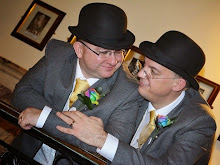
This is the sort of thing I do if it’s the day before an election, I’m on my way home, my head is buzzing with politics and I come upon an unsuspecting park.
I may be making it up on the spot this time, but you know it’s in my heart too (and a quickie because I’m too knackered to write what I’d like to).
Vote Liberal Democrat!
If you’d like more reasons, then there’s also…
- Liberal Democrats Believe – fifty statements of Liberal faith and counting
- The six Lib Dem ‘red line’ priorities that I tried to remember as I went along
- The full Liberal Democrat Manifesto – Stronger Economy. Fairer Society. Opportunity for Everyone.
- Mark Pack’s infographics on what the Liberal Democrats believe and what the Liberal Democrats have achieved in government
- And one negative: Things To Remember About Labour
Labels: Economy, Education, Environment, Liberal Democrats, Liberalism, Marriage, Personal, Tax, Video, What the Lib Dems Stand For


Wednesday, October 08, 2014
Lib Dem Conference On TV: Watching Where the Money Goes
I’m usually busy at Liberal Democrat Conferences. Writing speeches – sometimes even getting called to make them. Writing chunks of policy – sometimes even proposing them. Not writing a blog looking at the telly, while policies I’ve had nothing to do with are debated without my vote or voice. One I’m in two minds over. One I’m proud of. One taking baby steps but going nowhere near far enough. One that’s OK but should’ve been inspiring. One that’s unjust, unaffordable and unworkable. And the big picture: the very few places where my party puts any money where its mouth is.
As my health has gone further downhill, in conference after conference I’ve made fewer speeches and attended fewer debates than I did five years ago, or ten, or twenty. It’s just a bit of a shock to go from steadily decreasing participation and days when I often have to stay in a hotel room rather than in the conference hall to zilch. Hopefully Richard and I will be back next year, more engaged once we’re married (though it’ll be much more expensive for me just as my low income’s been eradicated, thanks to government policies I can’t say I support).
But there is one advantage to watching this Glasgow Conference on TV. I would be sitting in the hall fired up and wondering if I’ll be called to make my speech, listening to dreary meandering mumbles with nothing to say even if they could deliver it, where the only message is ‘My view on this crucial national issue is incoherent but involves a mind-bogglingly dull special plea for my own little local area’ – and it’s not just the MPs, some of the ordinary members are just as bad. I would be thinking hard at the sodding chair of the session, ‘It’s one thing not to call me to make the brilliant speech I’ve crafted so carefully, but calling these ones instead is just insulting.’
At home, I don’t feel the urge to write a speech, I don’t have to worry if I can make it to the hall, and above all, I can record the debates and watch most of them with my finger on the fast-forward button!
In my breaks from Lib Dem Conference, I’ve also been watching Doctor Who – The Pirate Planet, starring Tom Baker and written by Douglas Adams. This brilliant story, is I have to admit, better viewing than pretty much any Agenda item bar the Presentation On Same-Sex Marriage, and its second episode was first broadcast on this night back in 1978. At the time, part of it was a satire about the idea of an “economic miracle” for which no-one has to pay. It also turns out (spoilers) that behind the exponentially increasing devouring of the resources of whole worlds is someone very old to whom no demand is ever enough.
So what’s been happening back at the Conference? You can read all the papers here, and catch many of the debates via the BBC. But here’s why some debates particularly caught my attention…
“One Member, One Vote”
I’m torn on this one. If party membership hadn’t been hollowed out, I’d be wary that these proposals sound like they’re about equality but actually even more heavily in favour of time-rich, money-rich people who happen to live close to the seaside (or, in this case, to Glasgow). The equivalent of electoral reform for the UK being to propose one person, one vote – as long as you can all pay a large registration fee to crowd into the same one polling station. In Glasgow. Or, discarding the party’s current constituency-based representative democracy model, like reforming the House of Commons by saying any UK citizen can turn up and vote there, as long as they can afford to pay to register and pay to stay in London. And I wasn’t totally convinced by the argument that our shrunken membership makes it less likely people will turn up to swing the votes, which seems like an argument that we should completely change the structures just to get no more people turn up anyway. That the proposals themselves were a badly-drafted mess from a Federal Executive that has been record-breakingly navel-gazing and incompetent in its faits accompli this year didn’t help.
And yet… I’ve had times when I’ve been to conference without being an elected conference representative with a vote too, and it’s even more frustrating than being a conference representative who’s not at conference as I am today. The amendments stopped the constitution being turned into incoherence. And the arguments on the OMOV side were simply far better, with too many of those against resorting to pathetic ad hominem attacks.
Watching from home, though, if every member is to get a vote not just if they attend conference but for the major party committees, the small changes in making conference easier to follow over the past few years need to accelerate mightily. During conferences, the party website must have a one-click ‘What is happening right now’ solution rather than a many-click ‘Somewhere here you can work it out’ puzzle box. The back-projections and the chairs of sessions need to give the site address several times during each debate and explain what’s going on in each vote, not just to make it clear to conference-goers rushing about, but to those more members we’re told will be freshly engaged and watching after OMOV. Announcing at the end what the votes have actually decided, rather than just reading out a list of numbers and letters, would help the TV watchers too.
In a spirit of helpfulness, here’s one I prepared earlier: Making It Easier To Follow Liberal Democrat Conference.
Towards Safer Sex Work
Twenty years ago, I was newly elected to the Liberal Democrat Federal Policy Committee – the body that decides on the major policy proposals that go to Conference. I was the youngest person on it by more than ten years, the only out LGBT person on it (putting into perspective today’s debates over reducing ‘diversity’ to only one tick-box quota), and – the unique thing about me that most mattered to me and which made the difference on the Committee – by the reckoning both of those meaning it approvingly and those meaning it critically the most unfilteredly ideologically Liberal. One of the first policy papers that that year’s FPC discussed had something done to it that I can’t remember any other paper save election manifestos. Election manifestos come back several times for FPC debate because there’s so much in them and we need to get them right. This paper was sent away for redrafting not once but twice because it was simply too Liberal for the FPC. I can’t remember any other than wasn’t just redrafted a bit in committee, as was the norm, but rejected in total and sent away to be rewritten from top to bottom (possibly not the best words), then once we saw it again, told it was still too interesting and needed to be completely redrafted yet again.
The neutered and regulation-heavy paper that was eventually permitted to creep into Conference was titled “Confronting Prostitution”. I bear some responsibility for that overly confrontational language: I was the one who pointed out to the FPC that the title “Tackling Prostitution” might be open to ribald remarks and we should get our tackle out.
It wasn’t a bad paper. It advanced us well ahead of the other parties. But I always looked at it with disappointment, because the policy working group had followed its remit, followed the evidence, and followed Liberalism in drafting a civil liberties paper that the FPC gutted stage by stage until it was about ‘getting them off the streets’. When the first draft came to FPC, it was the only policy paper that was ever so unpopular that just one solitary FPC member supported it as it stood. You will not be surprised to read that it was not the only time in which I was in a minority of one, but it was the most significant.
So I was very proud to watch all of Saturday afternoon’s debate, to see how far we’ve come. I particularly recommend you read Sarah Brown’s speech, but I was really pleased at how sensible and Liberal the overwhelming majority of the speakers – and the votes – were, including protecting sex workers both from exploitation and from the state, rejecting the idea of reintroducing ID Cards but just for sex workers, and setting out the principle that informed, consenting sex should simply be legal and is nobody else’s business (even if it’s a business). Well done, Conference! I just hope now that the next FPC will not be as timid about the forthcoming policy paper as its predecessor two decades ago. So if you have a vote, vote for the candidates with some Liberal ideas rather than just a CV on their manifesto.
Doing What Works To Cut Crime
I liked this policy paper – it sets out a practical, evidence-based approach to cutting crime. But its piecemeal nature means it looks more like a compilation than a coherent whole. So I welcome the commitment to crime prevention. And civil liberties. And evidence-based baby-step liberalisation of our useless, gangster-boosting drug laws. And to the interests of victims.
But a bigger question that the paper doesn’t ask is that if we want fewer victims, what about the victimless? What about ‘crimes’ that are not about protecting any victim but only about the state victimising people that aren’t hurting anyone else? Because it’s not only criminals who attack you that can be bullies. The state can, too. And if you want to prevent crime, expand freedom, cut the ground from under gangsters and have fewer victims, then setting out the principle that ‘victimless crimes’ should simply not be crimes at all is something I’d like to see as the keystone of our next crime paper when it looks at evidence for how to implement that.
The Liberal Democrat 2014 Pre-Manifesto – A Stronger Economy and A Fairer Society
I wrote a little about this yesterday, looking at the Introduction and how that’s changed and improved on previous attempts – though it lacks a short, stirring rallying call of What the Liberal Democrats Stand For.
The whole thing’s pretty good. And I particularly liked Duncan Brack’s closing peroration in the debate (Duncan, if you’re reading, please send me your speech and I’ll print some of it in a Liberal Monday). I have to admit, though, save the much-purloined policy to further raise the personal allowance for the lower-paid, I’m a bit hard-pressed to remember a ‘wow’ policy. That suggests that its narrative isn’t all that thrilling. And then at the last minute, someone came along and diluted the best bit.
I might have been tempted to vote against it for the drafting amendment announced this morning: the problem with an amendment that’s accepted into the text at the last minute is that no-one gets to debate it or speak against it. Several years ago, there was a crappy Guardianista fad for “wellbeing”, a meaningless top-down political concept like a New Labour zombie. The Lib Dems made the great mistake of deciding it was the biggest of big ideas, with almost zero enthusiasm, and since then have sheepishly never mentioned it again because it’s a load of rubbish. Until this policy motion, when some utter fool wanted to add it and the bigger fools on the FPC let them. Worse, it means that the motion as passed says that the one big thing we’re really about is “above all to empower every person to realise their potential” – oh, and also “wellbeing”! Which is crud. It’s not one task. It’s two. It means the inspiring, Liberal, bottom-up idea that we are about enabling everyone to decide their own life is now knitting together with top-down Blairite mulch about how we should decide what’s good for people. As no-one mentioned it in the debate, proving yet again how pathetically uninspiring the idea is, my advice is just to pretend it isn’t there.
But at least the Pre-Manifesto remembered to talk quite a bit about the deficit, and didn’t pretend you can fix it while bringing in no new tax revenue at all and giving massive handouts to the wealthiest.
Did We Forget About the Deficit After All? The Big Four Spending Commitments
The Pre-Manifesto was very tough on the deficit this morning. Then there was a huge splurge this afternoon.
I’m not against huge splurges (no, titter ye not). But the Liberal Democrats have carefully costed our Manifestos for more than two decades to only promise what we can afford, even in the good times when the money was rolling in (though less than the Labour Government pretended). Now the money’s not just tight but gone, it’s all the more obvious where the few extra bits are going – while everything else gets slashed.
- The Liberal Democrats are committed to protecting and expanding spending for schools and early years education – we always have. It’s probably our single most consistent commitment.
- We’re committed to increasing pensions through the so-called ‘triple lock’ (heads, tails or side, pensioners always win big).
- We’re committed to raising the income tax allowance to the level of the current minimum wage – but that isn’t ‘locked’, so it can be eaten away by inflation.
- And we’re now also committed to above-inflation increases in the NHS budget. All the previous three follow on from the big promises the Liberal Democrats made in the 2010 election, all three of which were delivered in the LiberaTory Coalition. This one is different: it also happened for every year of the Coalition, but at the last election it wasn’t promised by either the Liberal Democrats or Labour. This part of the Coalition’s record now taken up by every party was only a Tory commitment. We forced them to agree to the others – they forced us to agree to this one.
These four spending commitments are massive. And everything else will have to suffer.
I remember in 2001 – in what Labour told us were the boom years – I put out a really good leaflet across the constituency for which I was standing for election. ‘Follow the money’, I thought, and so this was all about the two biggest spending commitments in our 2001 Manifesto. On one side, a picture of me with local kids, with details of our proposals for children and education and how we’d pay for them. On the other, a picture of me with local pensioners, with details of our proposals for old people and pensions and how we’d pay for them.
I thought this was a great idea until a working person without kids told me angrily, “So you’re offering me nothing, then. I just have to pay for it all.” That should have occurred to me: I was a working person without kids. But though we’d said in our 1997 Manifesto that we’d raise the personal allowance for the low-paid, by 2001 we’d dropped that from our priorities to give a massive bung to pensioners. And back then that didn’t even include the earnings link and ‘triple lock’.
Today we have even less money. We’ve restored the policy of cutting taxes for low-earners – and made it a reality for millions despite the Tories wanting a tax cut for dead millionaires instead and Labour opposing it because they want government hand-outs only to the people they say deserve it rather than letting all the low-paid keep their own money. But that wasn’t a choice between generations. Something for children; something for working people; something for pensioners; now something for the NHS for everyone.
I just don’t think this can hold – because four massive commitments of extra cash is too many without squeezing everything else until it pops. And one of those four is not like the others. Only one has had no hard choices at all – just constant rises.
Age Ready Britain
Back when I was healthy enough to stand for elections, I went through an assessment to see if I was politically fit to be a Liberal Democrat Parliamentary candidate. I passed with flying colours, and can still remember my going all Churchill to the assessor role-playing an anti-asylum-seeker voter on the doorstep (as well as remembering that I’d only use the word “refugee”). One of the parts of the approval process of which I most approved in turn was the point where you had to prove you had a Liberal brain by identifying a party policy that you disagreed with and explaining why. I think at the time it was something about well-meaningly bossing young people about – a “wellbeing” policy, if you will – and, if I thought today about which I considered our most wrong policy, I would quite happily blast that Blairite twaddle of a “wellbeing” paper out of existence. But as it’s already been wiped from everyone’s memory through its very blandness, I would answer that the policy I most disagree with is one that has been made even more disagreeable today.
Our policy on pensions is generous, warm-hearted, well-meaning and attractive.
It’s a shame that it’s completely out of touch with reality.
This morning, the Liberal Democrats voted for a Pre-Manifesto that constantly repeats that it is all about “the next generation” and uses that as a primary argument for reducing the massive deficit between what the government spends and the money it has – that we must spend less now rather than saddle ever-increasing debts onto the next generation.
This afternoon, the Liberal Democrats voted for our biggest spending commitment not only to remain humungous increases for pensioners when every single other group in society is suffering cuts, but to put that vast and ever-increasing cost into law so that it can never be changed.
Completely unworkable.
The first time I ever spoke on what might be called the party ‘establishment’ side, after many years of being the radical outsider, was sometime roughly around the year 2000. It was in a debate on pensions that saw the unlikely bedfellows of young people, the party Leadership and elderly members of the House of Lords on one side, with middle-aged Parliamentary candidates on the other. The Parliamentary candidates wanted to restore the link between earnings and pensions because it was very popular. The rest of us said that it was a mistake to make that a principle because we could afford it today – as we then thought, not realising that even in the boom years the Labour Government was already running an unaffordable budget deficit – because there would come the twin pressures of an ageing population and a less rosy economy, and then we’d be stuck with a policy that wasn’t affordable. I can’t remember precisely my age, but I can remember my speech’s opening line that got people’s attention (and got a few boos):
“Conference, I’m twenty-eight. And I want a pensions policy that doesn’t make me pay through the nose and then go bankrupt before I get anywhere near claiming it.”Back then, sense won the day. Somehow, between then and now, as the nation has got older and the economy has gone down the toilet, as the side that won back then have been proved right, we’ve gone ahead and gone for the unreal option anyway.
A ‘triple lock’ on pensions ratchets up without end, so that whatever happens to wages, or inflation, or the nation’s finances, however children or working people or people on benefits or services or anything else under the sun suffer, one group alone will forever get more and more money even as that group gets bigger and bigger.
We promised it at the last Election. We were wrong.
We’ve delivered it in government. We were wrong.
Today, we’ve proposed locking it into legislation so that every other group, every other service, every other dire need must always by law be subordinate to pensioners not just not contributing much to the cuts, not just staying still, but getting more, more, more while everyone and everything else gets less, less, less. We are stupidly, impossibly wrong.
With today’s pressure on the public finances, this is not merely utterly unworkable but utterly unjust.
I argued for pensions increases and other spending to help pensioners back in 2001. I meant it. It was the right thing to do when we could (seemingly) afford it. I didn’t argue for massive age discrimination and a huge and ever-increasing transfer of wealth from the current generation and the next generation to pensioners who will never be all in this together even when we can afford none of it. Because I’m an idealist, not a complete fantasist.
The Party Leadership and speakers in the debate today told the brave souls who stood up against this dangerous absurdity that they were wrong to say that ever-increasing numbers of pensioners getting a never-ending increase above the country’s wealth was unaffordable, because we just don’t understand the numbers. They didn’t say what the numbers were. Because… Because… Because… It’s magic! Government spending is still way above the money it takes. Everything and everyone else is struggling to keep their heads above water. The benefits bill is being slashed and people having their benefits cut or cruelly taken away altogether – the one exception being the vast majority of the benefits bill, the vast majority of benefits claimants, all of whom get much more than any other benefits recipients. They are the pensioners. But pouring extra cash into by far the biggest chunk of the benefits budget is “affordable”, we were told, and we just don’t understand if we say the emperor has no money to get clothes.
How stupid do they think we are?
One MP replied to criticism – from the unlikely bedfellows of Liberal Reform and a leading member of the Social Liberal Forum – by saying that we shouldn’t turn this into a fight between the generations. Well, that’s exactly what you do say when you’re the victor enjoying all the spoils, but not when you’re the side left bleeding and looted. Behind the scenes, they spin something else: not that it’s right, but that “pensioners vote”, so we need to throw money at them even if we have to mortgage the next generation’s future by borrowing half of it and mug the current working generation for the rest.
Ever wondered why the Tories so readily went along with a massive bung to pensioners – and took the credit? Maybe some of it was that when they got into power Mr Cameron still wanted to detoxify them and saw pensions as a totem that they were now the Nice Party to one group, at least. Before they rediscovered their taste for celebrating kicking the poor in the nuts. But why, do you think, were the Tories so happy to increase pensions while they slash and bash every other benefits claimant? It’s not rocket science, is it? Yes, “pensioners vote”. Pensioners vote Tory. Our most unrealistically expensive policy has been to make everyone else suffer, infamously cutting at our own core voters, to give a massive advantage to the Conservative core vote. For which the Conservatives get all the credit and we see our vote, as it always is, weaker the older the voting demographic gets.
We.
Can’t.
Afford.
This.
There are several good ideas in the Age Ready Britain Paper. There’s also the biggest infection of any policy paper this Conference of, yes, more twaddle about patronising “wellbeing” again, which is just a neon light for me to say that if I had been at Conference I would have urged the other Liberal Democrats to hurl it out and shred it, and start considering fiscal reality, fairness and the next generation’s future.

Labels: Coalition, Conservatives, Douglas Adams, Education, FPC, Labour, Liberal Democrat Conferences, Liberal Democrats, Manifesto, Pensions, Sex, Stupid Ideas, Tax, The Golden Dozen
Monday, October 06, 2014
Liberal Mondays 9: Nick Clegg on Today (Today) #LibDemValues
I’m not at Liberal Democrat Autumn Conference in Glasgow this week. It’s the first I’ve missed in about twenty years, and I am missing it – Richard and I would love to be there, but we’re getting married in twenty days’ time and just don’t have the time or the money. Following it on TV, one person who you can’t miss in Glasgow is Nick Clegg. This morning he was interrupted – I can’t say interviewed – on the Today Programme, so his latest answer on what the Lib Dems stand for is the latest of my Liberal Mondays quotations…
The Limits of the “Centre” and the Bigger Limitations of the “Interviewer”
Some of the random shouting by the random talentless hack from their researchers’ random shouting points and the Labour Party’s random propaganda points on Today this morning involved sneering at “Stronger Economy, Fairer Society” and shouting at Nick Clegg,
“Where is your core identity? What is it that the Lib Dems stand for?”Obviously, none of the random shouting involved listening or engaging with the answer – yawn, he’s answering the question, bored now, time to hear my own voice again – but I’ve managed to piece together what Nick was allowed to get a word in edgeways with in his latest short summary of what the Liberal Democrats stand for.
Earlier in the interview, Nick summed us up in part with a line that doesn’t appeal to me at all, but here goes:
“The Liberal centre ground is where we’ve always been anchored, and where we’ve sought to anchor the government.”I love the word “Liberal” – but I suspect those who aren’t tribal Liberals, which would be probably in excess of 99% of the population, don’t really respond to a tribal label. Only a minority, too, might respond to a concept, like “Freedom”, but it’ll be a lot more than those that identify with the label. Instead, the concept is “Centre” – which is meant to sound like ‘at the centre of things’ (if only one centre among, er, several in the same place?), but just sounds to me (and I suspect to almost everyone) like a statement that we don’t stand for anything of our own, splitting the difference between the others, neither one thing nor the other but somewhere… Quite a long way behind these days.
To be fair, there are advantages to the “centre” message. It lets you say your opponents are extreme and that only you are reasonable (isn’t really true but which might persuade) or that only you can rein them in (which is really true but which no-one believes). Nick came through with this strongly when contrasting the LiberaTory Coalition with what the Tories are gagging to do if they get “in power on their own” without us to tell them “No”: he focused on last week’s Tory Conference ‘Osborne bombshell’, where the Chancellor wants to abandon taxing the rich more (such as by the Liberal Democrats getting Capital Gains Tax raised above the previous Labour Government’s rich-bribing low level) and through eye-watering cuts alone
“only ask the working age poor to pick up the tab for the mistakes made by the bankers and the black hole in the public finances”.What you might call the Tories’ “No-tax bombshell”.
The weakness in the “centre” came when Nick tried to attack Labour in the same way, claiming that “Labour move rapidly to the Left”. I don’t think they’re moving anywhere. They’re just a frightened vacuum. And though Nick drew attention to Mr Miliband’s cowardly and incompetent inability even to mention the massive deficit left by Labour, that cowardice and incompetence isn’t red-blooded Leftism. It’s the biggest symptom of an inability to make up their minds about anything at all in the face of a terrifying reality that would tear them apart. But that doesn’t fit with us being ‘somewhere in between’. Nick wanted people to give us credit for “holding firm”, I suppose in a rebuttal of “the centre cannot hold” – but that only opened him up to the interviewer’s sole moment of demonstration that she wasn’t merely a non-Turing-compliant iDevice programmed to shout a limited number of dumb phrases on repeat:
“Holding firm is not an ideology.”Though I wait for any Today presenter ever to ask what either of the other two stand for and cut them off when their only answer is ‘Labour would tax you more and be nice to poor people and immigrants’ (the latter two points of which, unfortunately, aren’t even true) or ‘We’re shit, and we know we are, but oooooh! The Tories! Scary!’ (which is all true, but still gives me no reason to touch them with a barge pole and has nearly killed Labour in Scotland).
Nick Clegg’s Answer To “Where is your core identity? What is it that the Lib Dems stand for?”
“I’ll tell you exactly where we stand, and I feel this has always been the case.
“On the Left you’ve got socialism, the Labour Party, which is all about the state telling people what’s good for them; you’ve got the Right, the Conservative Party, that basically wants to keep the pecking order as it is.
“What has always distinguished British Liberalism, and I feel this very strongly, is an absolute, a huge emphasis on opportunity – that what everybody in politics should be about is trying to spread opportunity, such that everyone can get ahead in life, can live out their dreams, can use their talents to the greatest possible extent.
“And that’s why if you look at the signature tune things that we’ve done – I mean, don’t listen to the words, what we’ve done, our actions, judge us by our actions – whether it’s the massive expansion in apprenticeships, the huge transformation of the tax system so people on low pay keep more money as they work, or the very heavy emphasis on early years education, childcare, putting money into schools that cater for disadvantaged children.
“All of that is about opportunity.”
That is much better, and I’m glad Nick got to say most of it.
It feels recognisably Liberal in spirit as well as in label.
It’s something that Nick clearly believes, and is right at his heart, and that always helps when a politician says what they believe.
Though he didn’t say “Stronger Economy, Fairer Society” after the sneering, it chimes right in with that while sounding much more positive and definite than “Centre”.
And it links all that to our priorities in government.
It’s in many ways the same sort of thing I’ve been trying to do with my What the Liberal Democrats Stand For series, unifying ideology with our record in practice (latest version here; version with explanations here).
Any Liberal Democrat could say it themselves or stick it on a leaflet and not feel, ‘Oh, well, if I really have to.’
It isn’t perfect. In my own What the Liberal Democrats Stand For series, I’ve made a point of saying what we stand for – and Nick had already done his knocking copy, and been told not to talk about the others, but us. So starting with another attack on them was a mistake. It was a mistake because it made the statement about them.
Nick, next time you do this, if you must waste positive time being negative, take a tip from the “yeah, yeah, yeah, yeahhhh!” pre-chorus that propelled She Loves You irresistibly to Number One. If you stick otherwise to exactly the same words, then at least let your opening be “The Liberal Democrats are about opportunity for everyone.” People listen to your first line. Make it the most important and the most appealing.
And though your actual one-line sum-ups of the Labour and Conservative Parties were both fine, your first words about them were Centre-propagandist dumb:
“On the Left you’ve got socialism, the Labour Party…”No, Nick. You haven’t. Leave the word behind. Labour left it behind more than twenty years ago. People so terrified that Ed Miliband is a revolutionary socialist coming to chop their heads down to size will not be voting for us anyway. The vast majority simply will not recognise that as reality, just as Mr Miliband is too frightened to recognise reality. He is not a socialist. He is not anything. He is a pitiful vacuum.
I nod to “trying to spread opportunity, such that everyone can get ahead in life, can live out their dreams, can use their talents to the greatest possible extent.” That’s my inspiration too. I recognise the issue that’s been closest to your heart since before you became Leader in talking with such passion about opportunity and about early years education. I just wish that for all the investment, the passion and the genuine commitment, you could say the word “education” without having cut the ground out under you biggest priority by everyone else hearing “tuition fees”. And you were cut off, so I’ll give you the benefit of the doubt and assume you would have got round to mentioning the environment after criticising Mr Cameron for not talking about it any more.
And it’s a shame that the “interviewer” gave one of her many parroted lines from the Labour Party press office in ruling out any examples of what we’ve done in office connecting to what we believe by saying as ‘fact’ that it’s just a Conservative Government with our support. Too many people believe that. The BBC presenting a stupid Labour lie as a fact doesn’t help. But though you won’t convince everyone – or, I fear, anything like enough people – by saying ‘here are our values, and here’s how we’ve put them into practice in government’, you need to keep at it. Because only saying either without the other will give far fewer people even than that a reason to vote for us.
Possibly wise to find a better phrase than “don’t listen to the words,” though.
How Nick Today Was Better Than Nick On Other Days
It’s not what I would have said. But it’s in tune with what I would have said, and recognisably from the same sort of ideological place. And while it has its own weaknesses, it’s much better than some of Nick’s (and others’) previous statements of what we stand for. I’ll be kind and not repeat what he said in his second debate against Nigel Farage – focus-grouped to death, palpably making him uncomfortable, and the least Liberal ‘statement of principles’ I’ve ever seen from a British Liberal Leader – but it compares very well with the messaged-to-death message at the last General Election, for example. That brought everything down to one word: “Fairness”.
Now, I’d say that Fairness is certainly among Liberalism’s crucial concepts, but on its own it’s just not the one thing we’re about. Fairness should be in the service of something else. Nick says “Opportunity”. I can go with that. I’d say “Freedom” – and it’s always depressing and also a bit bizarre when I’m the only Liberal who seems to be saying that. But it wasn’t just that “Fairness” was only our number one in 2010 because it was what the focus groups said: it was, like several other things in that Election, a hostage to fortune that sounded good during the election but killed us afterwards. It’s absolutely true that throughout the LiberaTory Coalition Government the Liberal Democrats have made the cuts and hard choices fairer than the Tories wanted. But without a Tory Government to measure that against, nobody sees it. It’s absolutely true that the gap between rich and poor – which the previous Labour Government made wider and wider with their doubling tax on the poor and bungs to the rich – has fallen under the LiberaTory Coalition Government, fallen sharply, for the first time since I was at primary school. But when that proof of fairness comes not in the happy way – by lifting everyone up, but those at the bottom most – but in the painful way, by everyone suffering but taking most from the rich and protecting the poor, then nobody feels that it’s “fair”. Because no-one who suffers ever thinks it is fair for them to suffer. It’s a risk to say the one thing you stand for is Fairness even if you’re awash with money, because no effing voter is ever grateful. But to say the one thing you stand for is Fairness when you know that the most you can do is make everybody hurt in the fairest way is pretty close to suicidal.
Where you’ll find the closest relative of Nick’s Today statement today is, unsurprisingly, in the Liberal Democrats’ new Pre-Manifesto, and in Nick’s Introduction to it. As is usually the case, the section on what we stand for is relegated to a ‘personal view’ by the Leader, as if presenting it as actual philosophy or, worse, ideology for a party would send readers screaming to the hills. As is always the case, this is written in part by Nick, in part literally by a committee (the Liberal Democrat Federal Policy Committee, if you want to tell them what you think of it), partly by staff and partly by another committee whose names you’ll find at the back of the booklet. But of course it’s Nick’s every word, officially. Comparing what Nick says in the booklet in these three pages with what he said on the radio in three paragraphs gives you an idea of what’s really closest to his heart.
For me, the Introduction to the 2014 Pre-Manifesto is one of the best that the party has produced. I think – after usually complaining that they’re far too short – that it should really have a short version, probably on the front or back cover. Here’s one I prepared earlier. But it’s persuasive, it’s distinctively Liberal, and the middle one of the three pages gives our policy priorities for the future in a way that fits seamlessly into what we’re about. But without a summary or a short version, it’s not quite clear that there’s one word that motivates it – which is probably quite right, as complex politics don’t usually reduce to just one word. Mine is “Freedom” and, hurrah! for the first time in ages, that appears there quite a lot. Nick’s is “Opportunity”. So does that. Yet though Freedom would be my one word, I’ve more often summed us up with three: “Freedom, Fairness, Future”. Between those, I can pull out most of our policies, as well as thinking they work as a buzzword condensed Liberalism (and, yes, I’m a sucker for alliteration too). So it’s notable that “Future” starts out as the main buzzword in this Introduction, repeated three times in the first line alone. Then, on the middle page, it becomes “the next generation”, repeated in six of the seven priorities and, though in different words, what the seventh is all about – as were most of Nick’s examples in his interview. Then “free”, “Liberal” and “opportunity” all stand out several times, the latter prominent but noticeably less than in Nick’s speeches, but the meaning of all three driving the first and third pages just as the next generation drives the priorities. By contrast, Fairness doesn’t actually appear on its own as a positive noun, instead standing at the back as a few slightly embarrassed adjectives. I hope to get time to write about the Pre-Manifesto in more detail, but if I can’t, it’s interesting that I’ve gone from unusually critical of the centrality of Fairness to the Liberal Democrat message to making it unusually prominent, just by staying still. I suspect Nick is more comfortable using the word closest to his heart this time round.
Today Is So Yesterday
It’ll still be on the iPlayer for a bit, but I wouldn’t bother listening to the whole ‘interview’. And not because of Nick.
Some journalists – by which I mean presenters, not journalists, as they neither write anything nor ever find anything out – want nothing other than to be the next Jeremy Paxman. This is a crapulent ambition, as the old Jeremy Paxman had been an unwatchable panto caricature for decades before he retired to spend time with his many-times-larger-than-any-politician-public-salary millions. Unfortunately, one of the worst examples of this disease is the Today Programme, once a flagship for holding politicians to account and now an unlistenable presenters’ masturbation demonstration with no interest in presenting or prying out information. The ‘big beast’ interviewers, or interrupters, have spent decades now doing nothing but making up their minds about some tiny fiddling point and then constantly repeating it until either the interviewee ‘admits’ to it – which lets them crow – or gets fed up and asks why they’re obsessed with some tiny fiddling point that no listener gives a toss about – which lets them say no-one answers their questions. Or they just talk over people so they never get a chance to answer a question because, oh, anyone else but their own voice is so boring, right?
Evan Davis had been a breath of fresh air: a journalist who knew what he was talking about and who used that to listen to answers and engage intelligently with them, which made him able to genuinely interrogate his subjects and inform his listeners. He’s been recruited to replace Mr Paxman, which suggests Newsnight is acting on a long-buried desire to become a critical news programme again instead of a long-running ‘argument’ sketch that shows why Monty Python were so wise to do a limited run. I’d like to hope that Mr Davis becomes a great success and a household name, making other presenters wish to be the next Evan Davis instead. It’s not a very confident hope, though, because to know what you’re talking about requires both talent and a lot of hard work. It’s far easier to just shout random things your researchers have told you and not let people finish the answers that you’re too stupid to understand anyway. Who does that inform, exactly?
This morning some talentless hack ‘interviewed’ Nick Clegg. I can’t remember her name. I doubt anyone else can. She may as well have come from the same mould as so many ambitious but lazy men and women who want to be Jeremy Paxman. Her equally lazy researchers had given her several stupidly untrue statements to shout and then shout again when Nick contradicted her with something boring like facts. And she got bored when he started answering her questions and decided it was time we heard her voice again. It’s all part of the Today Programme’s inevitable transmogrification into Thought For the Day, the part of the programme I always turn the volume off for and put on a music track instead. Before long they’ll decide that politicians, alternative views and tedious facts only get in the way of not just three minutes of semi-religious inanity but the far more important three hours of presenters’ egos. Someone with very ill-thought-out opinions says something bland and obvious in a monologue for which no-one can hold them to account: bishops today, Today presenters tomorrow. A radio shouting in a human ear, forever.
Labels: Conservatives, Education, FPC, Labour, Liberal Democrat Conferences, Liberal Democrats, Liberal Mondays, Liberalism, Manifesto, Nick Clegg, Tax, The Today Programme, What the Lib Dems Stand For
Tuesday, March 25, 2014
Putting #WhyIAmIN Into What the Lib Dems Stand For 2014.07 #LibDemValues
Tomorrow, Liberal Democrat Leader Nick Clegg puts the positive case for being in the European Union, in the first of two debates with UKIP Leader Nigel Farage putting the negative case for Little-Englanderism (the other two ‘Leaders’ can’t decide, so they’ve bottled it). That makes two headlines for What the Lib Dems Stand For: “Stronger Economy, Fairer Society” and “IN Europe, IN Work”. So how do those two fit together? Here’s my go at something slightly more than a slogan, but still punchy. If you like it, please borrow it to stick on a leaflet or add to a speech. If you don’t, please send me something better!
- The Liberal Democrats stand for freedom for every individual – freedom from poverty, ignorance and conformity.
- To make that freedom real needs both fairness and economic responsibility: an economy that works, that encourages enterprise, and where everyone pays their fair share.
- So freedom from poverty requires responsible spending, not debt, built on fairer taxes where lower earners pay less tax and the wealthiest pay more; being in Europe to be in work, to fight crime and tackle climate change; and building green jobs for the future.
- Freedom from ignorance needs better education and training, so people have the opportunity to realise their potential.
- And freedom from conformity, supported by freedom from poverty and ignorance, means everyone should have the liberty to live their lives as they choose – without harming others; with equality before the law; with a better say, because no government always knows best.
- These values are why Liberal Democrats are working for a greener, stronger economy in a fairer society, enabling every person to get on in life.
Last year I wrote a series of articles on What the Lib Dems Stand For, looking for something to fit in a box on a leaflet or in a minute’s speech – something to enthuse and inspire Lib Dem believers, something to attract and persuade potential supporters, something that’s more than a slogan or a soundbite but short enough to get in one go.
I opened it up into a meme, and many other Lib Dems took part as well – you can find the links to where I’ve published theirs, too, below. That’s still open: if you can do better, whether saying ‘Change this little bit because…’ or suggesting your own from scratch, I want to hear from you, too (my email link’s on the sidebar. I’d like to hear if you make use of mine, too).
Especially now we’re sharing power, it’s important to assert our values. I wanted to answer: What makes us different, and makes us stay? How is that reflected in our priorities in Coalition Government? How does that pick out the central message of the Preamble to our Constitution? How does that expand on the party’s ‘core message’ slogan of “Stronger Economy, Fairer Society”? And how can we best express it in language that feels natural to us and anyone listening to us? All the while making a positive case for us, not just ‘…But the others are worse’? I’ve tried to do all that together. Does it work for you?
Adding ‘IN’
Last year I tried to combine everything at once, with the added challenge to make it short and to make it make sense, rather than just being a storm of buzzword-salad. It works pretty well for me telling the story of how the three big freedoms of our Preamble fit together with fairness, but even then I knew it had to leave some things out, and the biggest one I couldn’t seem to fit in was internationalism. And what’s our big theme for this year’s European Elections? Who could have guessed?
My main change today is… Adding more words. Compared to last year’s, below, it’s up 16, taking it further from my target of 150 to fit in a medium-sized box on a leaflet or just one minute in a speech. What do you think of “being in Europe to be in work, to fight crime and tackle climate change”? Does it work? Does it fit? Is it too specific compared to the more values-based rest of the text? I based it on our three main campaigning messages about Europe, because I couldn’t find a way of getting the ‘drawbridge down’ sort of values behind them to work in just a few words. Can you?
And yes, now it makes the “Freedom from ignorance” bit look a bit short, but I’m not adding even more. Though if you don’t like semi-colons and want to break it up a bit more to make it easier to read, the pedant in me doesn’t like it, but you can use full stops instead to make the “Freedom from poverty” and “Freedom from conformity” bullets punchier.
The ‘What the Liberal Democrats Stand For Challenge’ So Far
This aims to be something short and simple that Lib Dems members can look at and think, ‘Yes, that’s some of why we bother’, and that other people can look at and think, ‘Oh, that’s what the Lib Dems are for, and I like it’. Feel free to borrow it for a box on your Focus leaflets, to be part of your speeches, for your members’ newsletters, your Pizza’N’Politics evenings – wherever it’ll do some good. And here’s what I’ve done with it so far, including many other Lib Dems’ own versions…
Happy 25th Birthday, Liberal Democrats – and What the Lib Dems Stand For 2013.1
Why we should sum up What the Lib Dems Stand For, and how it’s developed over the years.
What the Lib Dems Stand For 2013.2 – a Challenge and a Meme #LibDemValues
Setting out my ‘What the Lib Dems Stand For’ based on the Preamble, practice and core messaging, and challenging other Lib Dems to come up with their own.
The Liberal Democrat What Do We Stand For Challenge 2013.3 – Eight Answers (so far) #LibDemValues
After receiving the first set of responses, rounding up eight different Liberal Democrats’ versions of what we stand for – so far…
The Liberal Democrat What Do We Stand For Challenge 2013.4 – What It’s All About #LibDemValues
Inviting people to use my short declaration of ‘What the Lib Dems Stand For’ and explaining what each bit of it means.
What the Lib Dems Stand For 2013.5 – Why I Am A Liberal Democrat #LibDemValues
This one’s very different – longer and more personal: how did I get here? Why did I become a Lib Dem in the first place? And why do I stay?
The Liberal Democrat What Do We Stand For Challenge 2013.6 – Another Eight Answers #LibDemValues
Another eight different Liberal Democrats’ versions of what we stand for in the second set of responses people sent in.
Last year’s slightly shorter version:
The Liberal Democrats stand for freedom for every individual – freedom from poverty, ignorance and conformity.
To make that freedom real needs both fairness and economic responsibility: an economy that works, that encourages enterprise, and where everyone pays their fair share.
So freedom from poverty requires responsible spending, not debt, built on fairer taxes where lower earners pay less tax and the wealthiest pay more, and building green jobs for the future.
Freedom from ignorance needs better education and training, so people have the opportunity to realise their potential.
And freedom from conformity, supported by freedom from poverty and ignorance, means everyone should have the liberty to live their lives as they choose – without harming others; with equality before the law; with a better say, because no government always knows best.
That’s why Liberal Democrats are working for a stronger, greener economy in a fairer society, enabling every person to get on in life.
Once again, there will be more.
Labels: Blogs, Education, Environment, European Politics, Ideas, Liberal Democrats, Liberalism, Memes, Nick Clegg, Tax, The Golden Dozen, Top Tips, UKIP, What the Lib Dems Stand For
Sunday, June 30, 2013
Set A Pirate Capitalist to Catch A Pirate Capitalist – Running Down the Tax-Dodgers
Most inspired political-economic idea of the week: Irish blogger Jason O’Mahony proposes updating a centuries-old idea to capture taxes from offshore corporate tax-dodgers. Governments should privatise the hard-to-land tax liabilities at auction and let the hungriest privateer capitalists harry the behemoths. Memo to Danny Alexander: it may sound like a joke, but how better to harness innovation?
“Back in the day, governments used to issue letters of marque to ships, permitting them to engage in legal piracy against the vessels of other specified countries. Privatising sea war. Hence the phrase ‘Privateers’.Some privatisations make sense. Some don’t. I quoted Conrad Russell a couple of months ago on how Liberals need to think more carefully about them than Tories or socialists do: what will work? What’s the empirical case economically? Socially? Will it reduce or boost monopolies? I read about two privatisation ideas this week that reminded me of such tests and prompted more: is it politically bat-shit-crazy? And can it do something the state can’t?
“Hoist the Jolly Roger, and set sail for Starbucks!”
Tuition Fees Again? Danny, Please, No
First, and with no pleasure at all, as part of the Coalition Government’s latest spending review, Danny Alexander announced this week that they’re privatising the Student Loan Book. It’s a tiny change to promote off-the-book borrowing that makes little economic and no social sense, and will probably have adverse consequences for students and ex-students. For those reasons alone, Danny shouldn’t have touched it with a barge pole. But in his role not as Chief Secretary to the Treasury but as a senior Lib Dem MP and, having known him for twenty years, a person with a sharp brain, there’s a much more political reason why rather than agreeing to it Danny should have retorted, ‘Are you fucking kidding me?’
I disagree with plenty of Simon Titley’s you-have-to-have-been-on-my-side-in-Liberal-Party-infighting-in-1982-for-your-views-to-count school of Lib Dem commentary, but there’s no doubt he got it bang on the money here:
“What political genius thought of this? Yes, let’s pick at some old scabs, shall we?The tuition fees fiasco was by common understanding the most politically disastrous single action for the Liberal Democrats since the party was formed (and arguably the most damaging to the British Liberal family since the First World War and Lloyd George’s egomania). The economic effects of this new change are minimal, giving the Tories very little leverage to insist on it as part of the wider plan, but the political effects are pure poison. Why on Earth are our ministers reminding everyone of this Lib Dem suicide pill?
“…reopening the issue of student loans makes no political sense either. That issue has become a byword for mistrust of the Liberal Democrats. So why revive the controversy?”
However, while student loans are a very straightforward and easy form of debt for the government to recover – another reason, of simple inertia, not to sell them off – there are other liabilities that it’s a lot harder for governments to recover, and for those, having established the principle that you can sell off government debts just as you split off banks’ ‘toxic assets’, there’s a brilliant case for privatisation…
Labour Government By Debt and Tax-Dodging
Another piece of my reading in the last week – which deserves my coming back to on its own, but just in case, here it is as an aside – is Nick Thornsby’s table of “UK tax revenue and public spending 1997-2012”. Sounds boring, doesn’t it? But – shockingly – in the last 15 years, UK governments have only balanced the annual budget once, relying on massive borrowing in every other year while lying about “prudence”, and dating from a full decade before Labour could blame the international crisis. The thirteen-year-Labour Government’s sole credit year: +£16bn. Biggest debt year: -£186bn. No wonder the deficit’s taking a while to fix.
Labour simply decided that it was better to make people happy with a public and private credit boom, spending oodles of money that they didn’t have long before the financial crisis – in their ten years of power before the storm hit, nine of them were already on tick. That’s the problem with Keynesianism: the broad idea makes simple economic sense, but no-one ever practises it because of the politics. Borrow in a downturn? Absolutely. Run a surplus of taxes when the economy’s doing well? Nah, we’d rather not. And part of Labour’s long-running credit-fuelled feel-good factor was that they laudably wanted to pull in jobs from multinational corporations, so they let them get away with dodging taxes by the supertanker-load.
It’s only since the Coalition came to power that the UK Government’s focused on tax-dodging – partly because the Lib Dems insisted it be a priority, partly because the Tories realised that (for all they wanted to) they couldn’t get away with sucking up to big business like Labour did, and partly because, as even Labour admitted (though not of course that it’s their fault),
“there is no money”and the Coalition Government now has little choice but to chase the money that Labour nodded and winked at companies to say they needn’t bother with and that’s harder to get even now the Government is actually trying.
But some of the tax that’s been dodged is very hard to get hold of indeed.
From Privatisation To Privateers
As an innovative way of prying taxes out of the biggest avoiders, it’s time to look again at the empirical case for privatisation. Will it work? Does it make economic sense? And can it do something the state can’t? The oft-quoted reason for many Thatcherite privatisations, even those that set up new private monopolies that logic suggested would be worse than public ones, was that even when there was no boost to competition, privatisation would automatically lead to ‘innovation’ and so ‘efficiency’. Sometimes this was true, sometimes not. One where it sounds more than worth a try is a case of very ostentatious state failure – the power of massive multinational corporations to avoid paying taxes. And so I come to my second and far more exciting piece of privatisation reading this week (though it was actually published the previous week, before you correct me).
Jason O’Mahony is a former Progressive Democrat and, if he counts himself as any sort of cousin to the Liberal family, is definitely at several removes from me (let alone Simon Titley). But, cover me in advertising and call me a Thatcherite, I think his “here’s a mad thought” blog post “Want to tax multinationals? How about privatising their tax liabilities?” is a brilliant notion.
“One of the challenges of taxing large multinationals is the fact that corporate taxation is like a war at sea. The fronts keeping changing, and you’re fighting on many different fronts at once. On top of that, the fact is that multinationals, because of the huge sums involved, pay huge money to their tax advisors, and so tend to attract the best. Tax authorities, on the other hand, get quietly competent but under resourced people…And he’s quite right about the counter-argument – people would scream that we’re “losing some of that tax revenue” to “mercenary taxmen”. That’s the tax revenue that we’re not getting. Half of something still being better than all of nothing. Because that’s the beauty of the idea – you only auction off the tax liabilities that you’ve already failed miserably to get hold of. And this way, you don’t have to pay all the lawyers to do battle in court and board the boardrooms. The auction-winners do that. You don’t need to sell off the lot – perhaps just some of the worst, pour encourager les autres – and you can set a ‘reserve price’ at the auction to prevent too big a disparity between liability and profit, or bar the dodgers from bidding on their own debts, or whatever… But it can’t be beyond the wit of government to set rules that are both lucrative for the public purse and exciting for innovators.
“Auction off their tax liabilities to the highest bidder, as a legally recoverable asset, in the same way banks are selling off distressed, toxic assets. If company X owes state Y a nominal €100 million, auction it off. The state gets a chunk of money with ease, and the asset, the tax debt, becomes a private liability.
“Sure that’s mad, says you. Sure, who’d buy that debt? Some entrepreneur would, at a knock down price, and would pay hotshot young lawyers out of the finest universities in the world big fat bonuses for figuring out ways of recovering the debt. In short, we’d fight rogue tax dodging capitalists with the most innovative, hungry force on Earth: other capitalists.”
If it doesn’t bring in much money for the privateers, governments will already have had their cash up front by privatising the risk, and few will cry about it. If it brings in a lot of money for the privateers, the multinationals might be forced to settle with governments instead and agree to a binding international system of tax in future. And if the privateers’ lawyers hit on innovative arguments that spike the dodgers’ guns and set legal precedents, then government lawyers can move in and capitalise on those to rake in all the other liabilities.
So how about it, Danny? It would certainly bring in vastly more cash – and do far less political damage – than making more students walk the plank and keelhauling the Lib Dem vote.
Labels: Big Business, British Politics, Coalition, Ideas, Labour, Liberal Democrats, Pirates, Tax, The Golden Dozen
Tuesday, March 19, 2013
The Liberal Democrat What Do We Stand For Challenge 2013.4 – What It’s All About #LibDemValues
In government, in elections, in just wondering why we bother, Liberal Democrats must be inspired by what we stand for. So today I’m writing about just two things. First, what my short declaration of ‘What the Lib Dems Stand For’ means, how it explains our beliefs, our priorities in government and our message, as set out by Nick Clegg:
“The Liberal Democrats are building a stronger economy in a fairer society, enabling every person to get on in life.”And second, Mark Pack’s new Infographic poster version of what Lib Dems believe. You’re still invited to write your own, too! Thank you to everyone who has. When enough of you have come up with your own ideas on ‘What the Lib Dems Stand For’, and I’ve already seen a few since the last time I republished several contributions, I will do another round-up to boost the debate and meme.
I hope some of you will find my own version of ‘What the Lib Dems Stand For’ useful. My aim is to bring together our philosophy, our heart and soul, with what we’ve brought to the Coalition and with what the party leadership’s now encouraging everyone to get across as our key message.
If you want to use my declaration in any way – leaflet, speech, newsletter, website – please do. If you drop me a mail to say so (email link on the sidebar), I’d be interested, and if you give me a credit, I’d be delighted. But it’s free for you to use whether you give me any mention at all – the reason I wrote it is to help get the Lib Dem message out, and the more it spreads, the happier I’ll be.
I deliberately made it short, but not just a soundbite, so it can be used simply, snappily and comprehensibly in all sorts of places. But several contributors to my first appeal to join in the meme not only set out their own declarations but explained how they came to them, so I thought I would, too. Below, I’ve published not just each line of my short version, but explained just what each bit of it means. If you use it, I hope that’ll help you with the context if anyone asks you any questions. Even if you don’t use it, I hope it answers any questions of your own about it!
What My ‘What the Lib Dems Stand For’ Means
The Liberal Democrats stand for freedom for every individual – freedom from poverty, ignorance and conformity.
I put freedom first, and freedom in two very definite contexts that make clear what’s different about the Liberal Democrats. We start with the individual, which is crucial: it means we’re not a class-based or nationalist party. It means we’re for everybody, not a divided society. Any party that puts a particular group first obviously discriminates against anyone who’s not in that group, which is for me an entirely wrong approach to politics. More subtly, that also limits even people in the ‘favoured’ group, because the party sees them as ‘one of them’ first and foremost, whatever that person thinks is most important about themselves, their relationships, their hopes and choices. Start with the individual, and you understand that people combine in many ways and have many different identities – perhaps part of a class or nation, yes, but also a family, a local community, a workplace, an ethnicity, a sexuality, a fandom, a religion… And it’s up to them which is the most important for them to define themselves, not for a political party to instruct them in what’s the point of their lives. The other crucial context for freedom is that Liberal Democrats see some problems not just as probably bad things that are box-ticking targets to reduce, but as evils because they’re barriers to people having freedom over their own lives. That’s why standing for freedom from poverty, ignorance and conformity makes us different: they’re bad because they hurt and hold back individual people.
To make that freedom real needs both fairness and economic responsibility: an economy that works, that encourages enterprise, and where everyone pays their fair share.
Expanding on what freedom means, obviously it needs fairness to underpin it – not everyone has the same chances to start with, so not everyone has the same freedom, and it’s the job of a Liberal party to help raise people up. That goes hand in hand with a successful economy – fairness isn’t much of a virtue if it just means pushing everyone down equally, or if it’s an excuse to stifle people being creative and generating financial success, because government’s too often tempted to see itself as the owner and source of all money. So economies are at their best when they’re sustainable, when there’s plenty of opportunity to innovate, and when some of that success is shared.
So freedom from poverty requires responsible spending, not debt, built on fairer taxes where lower earners pay less tax and the wealthiest pay more, and building green jobs for the future.
If you’re in desperate need for the basics of life, it’s very difficult to exercise any other freedoms, even if you’ve got them in theory. As Winston Churchill – not often seen as on the red-hot lefty side of Liberalism – said:
“To have a little freedom, you must have a little money.”So ensuring everyone has a material baseline is crucial to Liberal Democrats, but it’s only the start of freedom. It’s all the more reason to make sure, too, that the whole economy works, not just to pay for supporting those in need but so as many people as possible can make a success of themselves, as well. Just pretending government can always be a source of goodies and that all money comes from and belongs to it sounds lovely to some people, but turns into a disaster. Labour irresponsibly borrowed much more money on top of what the real economy was bringing in even at the height of a boom – meaning that, when the terrible crash came, the national debts were already piling up again and the Labour Government was already committed to so much spending it couldn’t afford that the deficit between spending and income was so much worse than any reaction to the crisis alone.
You don’t look after our children by giving more money to international bankers in debt interest than we spend on education and then stiffing those kids with the ever-growing bill for this generation’s financial failures when they grow up. It’s not fair to make them pay for our environmental failures, either, so as the economy is rebuilt it has to be with green growth, not just repeating old mistakes. That’s why each government should be paying its own bills, but shared fairly by changing the balance of taxes, as the Lib Dems have done in government by massively reducing the tax bill for ordinary people, lifting the lowest-paid out of Income Tax altogether after Labour doubled their tax, and at the other end, making the wealthiest pay much more than they did under Labour (not least by raising Capital Gains Tax on the wealthy after Labour cut it), and holding back the Tories’ desire to give extra to the rich (not least by keeping a top rate of Income Tax that’s still higher than Labour had for 155 months of their 156 in power).
Freedom from ignorance needs better education and training, so people have the opportunity to realise their potential.
Education and training have for a long time been at the heart of Liberal Democrat policy priorities. All forms of learning give people the skills and opportunities to widen their chances in life, and the knowledge and freedom to make their own choices. From the 1990s, Paddy Ashdown championed extra investment in education as the single most important way to get the economy working, by helping unlock every individual’s potential. From the 2000s, perhaps the issue Nick Clegg has been most passionate about is investment in early years education to help increase social mobility and help prevent people being held back by inequality from an early age. In government, the Liberal Democrats have made these passions into realities, especially through the Pupil Premium that targets more schools money to pupils from deprived backgrounds, and through a huge increase in apprenticeships to open up real training and work opportunities.
And freedom from conformity, supported by freedom from poverty and ignorance, means everyone should have the liberty to live their lives as they choose – without harming others; with equality before the law; with a better say, because no government always knows best.
Freedom from conformity is the most distinctively Liberal of all freedoms. It’s important to have the material basics and not be held back by poverty – but it’s not enough. It’s important to have the opportunities and skills and the ability to make your own informed choices that free you from ignorance – but it’s not enough. It’s crucial that you have the freedom to live your own life as you see fit, not as others tell you to, not as the government orders you to, nor even as well-meaningly bossy people want you to ‘for your own good’. No-one else knows best for you, because everyone’s best is different.
Liberal Democrats believe you’ll be able to contribute best if you’re free to be creative, be individual, and make your own life. It’s not government’s job to order you about. Instead, government should be making sure you’re not pushing other people about, and making sure everyone gets the same playing field in society, with the law not tilted to rich or poor, big or small, or against any particular sex, race, sexuality, religion or other part of who you are. And the best way to hold government to all that is to make it much more accountable, letting you see more of what’s going on, making democracy more representative, breaking up big government, spreading power to different levels so more people can get involved and stop absolute power making absolutely wrong decisions.
That’s why Liberal Democrats are working for a greener, stronger economy in a fairer society, enabling every person to get on in life.
So that brings everything down to the core of the Liberal Democrat message. For everyone to do well, rich or poor, entrepreneur or ordinary worker, and not least those who need help to get by, the economy needs to get stronger and more sustainable, built to last with green growth and paying its way. For everyone to do well, society has to be for everyone, with everyone getting better chances and not being held back by poverty and ignorance, and everyone paying their fair share. And perhaps most importantly, everyone should be able to do well in their own way, not just conform to how government or any other bully thinks they ought to, because you’ll not just be happier and more fulfilled, but you’ll always work harder and do better and be more successful – and more able to share that success, too – the more you get the opportunity to live your life in your own way.
What Do the Lib Dems Believe? A New Poster!
I wrote last month that I’d helped Mark Pack with a new Infographic he’s designed with Kath Harding. It sums up his idea of “What Liberal Democrats Believe,” too, and he’s published it today in an exciting new form that you can print out as a poster.
Mark’s aim, like my ‘What the Lib Dems Stand For’, is to come up with something that’s a consensus across the party on our beliefs, but it’s more than that. It’s a mixture of history, philosophy, controversy and current priorities, the story of the Party and its soul, if you like, for information and for inspiration. I think it does pretty well, and I’ll be proud to have it on my wall. Mark’s done a brilliant job of bringing together an awful lot into something simple and striking, and putting up with several competing ideas from several competing people, and perhaps most of all with very many nagging emails from me. I think where I made the biggest difference is in building on others’ ideas on the differences between Liberals by then saying what brings all Liberals back together again, as for me it’s important not to lose sight of how all Liberals agree as well as how, being Liberals, we naturally think for ourselves and argue, too.
You can find the Infographic in both small and poster-or-publication-printable versions here, along with Mark’s own setting it in context.
The Complete ‘What the Lib Dems Stand For’ Challenge
- 2013.2 – My Version, and making the Challenge. Now it’s your turn!
- 2013.3 – The first Eight Answers to the Challenge. What’s yours?
Labels: Blogs, British Politics, Coalition, Education, Environment, Ideas, Liberal Democrats, Liberalism, Memes, Nick Clegg, Tax, The Golden Dozen, Top Tips, What the Lib Dems Stand For, Winston Churchill
Monday, February 25, 2013
Eastleigh Memories – Time To Go There and Make New Ones!
The 2013 Choices
This time round, the Liberal Democrats have an excellent local councillor as candidate, from an excellent Lib Dem local council. Mike Thornton is the candidate with the best local record – as well as fighting on national issues, field-testing the new Lib Dem slogan “Stronger Economy, Fairer Society” and committed to being the 401st MP to support equal marriage. Whereas the bigots are spoilt for choice, with not just mouth-foaming minor candidates but the Tory (who disagrees on every single issue with her Prime Minister, except that they both know both their political futures depend on her winning) and, obviously, the bigot UKIP candidate threatening her are both making homophobic and xenophobic bigotry their top campaign priorities.
It’s a remarkable by-election, in that the Lib Dems have a strong local candidate, strong local issues, strong national issues (we believe in fairer taxes – the Tories don’t), and a bloody awful week of national publicity. The Tories and Labour, on the other hand, are simultaneously competing for the title of ‘Worst mainstream party candidate in a by-election since 1996’ (Jeanette Davy, South-East Staffs. She was a Lib Dem, so it’s about time one of the others won the wooden ballot paper). The Tory is an appalling snob who brays that no local school can possibly be good enough for her child, then demonstrates that no local voter is good enough for her to talk to by refusing to bother showing up for the BBC hustings. The Labour candidate is a minor comedian who says Labour supporters should “Go for it” and vote tactically for Lib Dems in seats like this – except, er, if he’s standing – and embodies the Labour Party’s Two-Minute (Thirty-Year) Hate by wishing Margaret Thatcher had been killed by terrorists.
At least George Galloway isn’t standing, having already won one by-election this Parliament and so not due to flip over to his 56th different constituency until 2015. That vile, bullying racist apologist for rapists and dictators is living proof that you can fool a lot of the people some of the time… But, after they get to know him, never more than once. UKIP with a beard and a red carpetbag.
So if you can get to Eastleigh and help (or make phone calls from your area), or donate if you can’t do either, do it today. I’m twice the age and weight I was in 1994, and have been particularly ill in the last week – but if I’m up to going out the door tomorrow or Wednesday, I aim to make it. You can read Lib Dem Voice’s or Mark Pack’s continuing reports from the campaign, and I personally recommend Liberal Youth’s “Today I Made A Difference” EastLY campaign to inspire you!
Eastleigh Memories of 1994
The 1992-97 Parliament was the period when I was young and healthy enough to spend more time helping out at Parliamentary by-elections than in the rest of my life put together – sixteen out of the eighteen that were held, in the days before parties took to tapping their older MPs to retire out of fear of lost seats. It was also the time when the largest number of policy motions I’d written got through Conference, for those foolish Lib Dems who believe campaigners and policy wonks can never mix (and are one Focus short of a delivery route). For some of the crucial ones, I spent weeks sleeping on people’s floors, or freezing to death hitch-hiking, or not being highly regarded by university tutors whose courses I was unaccountably absent from. Eastleigh was one of the friendliest, happiest, and didn’t have much rain. For all those reasons, I recommend going there yourself. And there was one more big attraction…
The bakery in town is my most indelible memory, which is odd, because though the smell of a bakery is one of the most wonderful in the world, I like pies and cream cakes, but have never cared for doughnuts. And yet, one morning I strode in and uttered the unusual but satisfying line, “Could I have two hundred doughnuts, please?” They offered ridiculous discounts for multiple buys, so that, say, one doughnut might be 85p, but you’d get three for £2, or ten for £5, with escalating discounts the more you bought. These were for the cheery campaign HQ and all the hundreds of volunteers rather than personal consumption, but the huge stack of boxes had the advantage of obscuring the rosette that might have put off an opinion pollster on the street. “Oh no,” I remember saying, “I wouldn’t like that Tony Blair as Labour Leader. Margaret Beckett’s the one you want, she’ll be very popular, and John Prescott, he’s a sensible man.” Since then, I’ve always taken opinion polls with just a pinch of icing sugar. Can any 2013 volunteers enlighten me as to if that baker is still there?
Eastleigh was also an excellent town for outspoken residents – much more exciting for a canvasser than shrinking violets. Last week, Boris Johnson failed to find a single Tory voter when knocking up the most Tory street in the constituency. I did rather better with Lib Dems last time I was there, but here are three canvassing experiences that stayed with me:
- The man who growled at the Lib Dems and refused to let me talk to his wife when I politely enquired, because she voted the way she was told. Canvassers, never treat a house as monolithic (even if there’s an opposition poster there – a Labour poster-bearer at a different by-election told me quietly that he was a member and had to, but was voting tactically). The second he slammed the door, the upper window sprang open, and she quickly confided: “I always tell him that for a quiet life. But I always vote for you lot.”
- The Labour voter on the next doorstep along from me who thought government should tell the workers what was good for them and hand out what they decreed when Tony Blair got in, because Labour and the unions knew best. And the Lib Dem canvasser I was tag-teaming with stoutly telling him that, no, workers should be involved in management rather than everything being from the top down, and the Labour man’s incredulous cry of “You can’t let workers make their own decisions!”
- The man one sunny day in a suburban crescent who got more and more heated about immigration while the other two canvassers did the whole rest of the street and all the neighbours stayed out one by one to listen. Never have I delivered so many calm “That isn’t true, sirs” or “I must disagree with you, sirs” at such increasing volume as the voter went from slightly racist to shouting conspiracy theories. After my final “I don’t believe we’re going to agree, sir, so I shall say good day,” he opened his gate and lumbered after me to the corner, screaming “Chidgey’s not an English name!!”
Chris Huhne
And finally, one word of memorial to Chris Huhne. He’s probably not a good man, and may not be a nice one. But I’m grateful to him for two things that he was good at. He was a bloody good minister – as I’ve written before, even his Tory enemies found him (far too) effective, and we should all be grateful for the hard work he did for the country and the planet as Secretary of State For Energy and Climate Change. And before then, within the Liberal Democrats, he did more than any other individual to make raising allowances and taking the lowest-paid out of tax altogether into what became our biggest priority in the last election, our biggest priority in government, and now our biggest priority in the by-election. It was briefly a Lib Dem policy in the 1990s, swiftly dropped because it cost too much. For much of the early 2000s, I was literally the lone voice on the Federal Committee calling for it – as the bit in italics in this piece forlornly demonstrates. It took a far more powerful policy wonk than me to get it on the Lib Dem agenda, and as the bits not in italics demonstrates, that was Chris. Lib Dems with gritted teeth and freezing delivery rounds will feel they have little to thank Chris for this by-election. Millions of the lowest-paid who now pay no income tax won’t know it, but they have quite a bit to thank Chris for, actually.
Labels: Bigotry, British Politics, By-elections, Conservatives, Gay, History, Labour, Liberal Democrats, Liberal Youth, Personal, Polls, Tax
Wednesday, August 29, 2012
Dallas – Jumping the Shower
Dallas’ most famous moment? The end-of-season cliffhanger: who shot J.R.?
Dallas’ most infamous moment? The end-of-season cliffhanger: how showers Bobby?
Famously, Patrick Duffy having decided to leave the series and insisting on Bobby Ewing being killed off in front of so many witnesses that he couldn’t possibly be brought back, ratings dived for the following season… So they brought him back. In that most disappointing of all narrative devices, ‘It was all a dream’ (don’t tell Mr Moffat). So it’s generally said that the series has a problem with its ‘Dream Season’, which everyone now has to ignore. The problem for me is that the season that never was was rather more fun than those either side… And that it’s really all three of those seasons that look shaky as a result. Never mind Bobby; two years earlier, his mother Miss Ellie went on honeymoon with Clayton at the end of the season, and came back a new woman. For the dream season, the gaping void of a screen presence that was Donna Reed vanished with as little explanation as she came, with Barbara Bel Geddes returning to the role that rarely gave her any decent lines or character beyond looking a bit forlorn, but that at least she managed to give a bit of oomph to. So was that all a dream, too?
With CBS Drama currently about half-way through the series’ tenth season, the one that started with the morning after, it’s clear that you can’t just go right back and pretend a season never happened. You’d have to assume viewers remember where every plot had got to and then make each of them go in a different direction so as still to be a surprise, and to undo a year of characterisation, in itself more jarring to many viewers than the plotting. So what we get is an uneasy mix that picks up some strands, drops others and generally ties itself in knots.
A Dream To Some…
The 1986-7 season’s first episode a couple of weeks ago had a big job to do, and was in its way one of the funniest pieces of television of the ’80s, as everyone but Bobby (who wasn’t in it) and Pam (who, waking to find her year-dead lover in the shower, dreamt it all) struggled not to mention anything about the previous year, while the writers threw in masses of exposition and randomly chose which plotlines to carry on with or go back to. So, to match his brother Bobby in the shower, we first see J.R. naked in bed with Mandy explaining at length how Sue Ellen is back to being a hostile drunk he wants rid of and not the love of his life she was last time anyone tuned in, as you know, mistress of mine; cousin Jack and J.R. share exposition about how Jack owns 10% of Ewing Oil and he’s not evolved into being a part of the family that J.R.’s gone through hell and several assassination attempts with, just a con-man; but Bobby’s ex Jenna, having slowly deteriorated over a full year from capable, independent woman into helpless hysteric, now manages to take exactly the same fall in approximately three minutes to get her to where audiences expect her to be. Pam, on the other hand, was a bit stronger than usual the previous year, but has now instantly turned into blancmange who can only say “Oh, Bobby!” in tearful soft focus (that’s nothing to how ‘Pam’ will be at the beginning of the next season, in the series’ most breathtakingly out-of-character plotline). Other cousin Jamie, on the other hand, is back to being the one despicable turd Cliff only married for two-thirds of Ewing Oil and now finds is the only Ewing without any of it, so he’s putting her down at every opportunity. More of that story later.
Three lines stood out for me.
While Pam is gushing and crying about her horrible nightmare in the first scene (“And there was so much more! It seemed so real!”), wet Bobby – who may be just out of the shower, but is far, far less wet than his fully-clothed fiancée – holds her at manly arms’-length, looks compellingly into her eyes (which is the only reason he’s not holding the camera at manly arms’-length and looking compellingly into our eyes, possibly with a wink), and says, with the heaviest emphasis on every word of a sentence ever uttered by an actor:
“None of that happened.”J.R., having been told by Bobby that he’s remarrying Pam:
“You are the dumbest brother any man could ever have.”And Pam, in her own little palace, having been railroaded by Bobby telling everyone she’ll live at Southfork, and even her ugly little son
[Pause, considers]
“Aside from Gary and Ray, of course.”
“Yes,” she says. “It has everything.”
The Biggest Losers (apart from the viewers)
The biggest immediate change for me was in the feel of the characters and their relationships; while the writers did their best to have Jenna disintegrate on cue, they don’t seem to have thought so clearly about everyone else. With most couples by the end of the previous season having grown together as characters as far as soap couples ever do, all they could do was mark a right turn on each of them by everyone instead getting nasty with each other.
The second-biggest loser, character-wise, is Pam, who it’s difficult to take seriously when one potential husband had improbably returned from the dead only for her to wake up and find it was the other one who’d done it. This leaves the dangling plot of two years’ earlier – that terminally ill fiancé Mark Graison might not in fact have killed himself in an air crash in massively ambiguous and bodiless circumstances, particularly with mysterious people obstructing Pam’s search for him in sinister-but-compassionate ways – forever dangling, and only minutes of screen time after they had for once ponied up for a Southfork wedding rather than it happening, as was the usual custom, between ad breaks, with the minister blessing the happy couple, ‘I now pronounce you moustache, and beard’.
The biggest loser as a character is J.R., who in his brother and rival’s absence had had to become a more rounded individual than the clichéd pantomime villain, however enjoyable; his meanness and petulance in the first episode post-Dream came across as a real let-down after he’d really stretched his impressive acting chops in depth the previous year, despite Larry Hagman as a person being far happier with his friend to spark off against than in carrying the series on his own. One scene since, at least, has stayed with me as evidence other than merely Larry Hagman’s charisma vs Ken Kercheval’s weaseldom that J.R. is a better man (rather than just a better operator) than Cliff Barnes; in one of last week’s episodes, two scenes following close on each other showed both Cliff and J.R. being whining sexists to their estranged wives. Except that when Jamie was clearly proved right, Cliff doubled down as an objectionable jerk. But when Sue Ellen revealed that she was in fact a devious Machiavellian and business genius rolled into one, the person behind a long-laid plot that both despatched J.R.’s mistress (and Mandy being by far the most memorable of those, to boot) to Singapore and made a ton of money… For a few seconds, Hagman looked mean, and sullen, and angry. Then he gave a slight smile and, for the first time all season, quietly congratulated her as being quite brilliant. Then absolutely beamed, simply appreciating her achievement. He’s had too few moments like that since his brother and rival got better from death. Linda Gray really shone, too.
In the meantime, I became suddenly very aware of this season’s main plot arcs and coming mad guest star with bomb – I’m only surprised they didn’t get Barbara Carrera back to play the psychotic mercenary. Or have her as Jock, and Steve Forrest’s
J.R. stands at the back and says what a stupid idea it is, but only because it’s come from Cliff, before finding someone competent to run it instead (and, coincidentally, to get them out of his hair). Shame. I’d have liked him to say some of the above, because he’s meant to be the bright one. But no, it was merely because a/ it was Cliff's (nicked), and b/ do you think he might have some slightly more direct action in mind that could go disastrously wrong?
Back From the Dead – Haven’t We Already Done This (in two ways)?
And the final arc plot to be crippled by the missing season involved… A much-loved member of the Ewing family returning from the dead. I wonder why they eventually decided people might not swallow it? You get the feeling they only decided to bring Bobby back at the very last minute, as only in the last couple of episodes of the Dream Season were we introduced to rugged old oil-and-cattleman Ben Stivers, played by grey-white-haired Steve Forrest, who everyone is strangely drawn to but who hides an enigmatic secret (or does he?). Pam may be wetter than a very wet thing, but she has at least gained psychic powers: for into this completely different and not-dreamed season comes rugged old oil-and-cattleman Wes Parmalee, played by grey-brown-haired Steve Forrest (no relation), who everyone is strangely drawn to but who hides an enigmatic secret (or does he?). Well, if you’ve been watching, you’ll have found out that he doesn’t, but several of the conflicting reports of what the writers had been planning suggest he really was going to turn out to be the long-lost and heavily plastic-surgeried Ewing patriarch who was not in fact killed in an air crash in massively ambiguous and bodiless circumstances some years earlier. His storyline has been chuntering along for a dozen episodes or more, making it increasingly likely that he was Jock (and with Forrest’s gravelly timbre and manner at times capturing something eerie of Jim Davis, even if his slighter frame never did)… And then, suddenly, it stopped, with a tedious three episodes of exposition afterwards proving that, in fact, the only thing less credible than having someone suddenly return from the dead with minimal explanation is having him suddenly turn out not to have done. Every awkward exposition piled on makes it seem increasingly and incredibly unlikely that he’d ever have been able to pull it off in the first place (he just happened to be there and taking notes while Jock told him his life story in a fever! And so on through all the uncanny physical similarities) and more unlikely still that he’d have thrown it all away.
I suppose we were at least spared Donna Reid crying out in torment to Steve Forrest, ‘But you don’t look like Jock!’
Sue Ellen Predicts New Dallas
One other scene stays with me eerily from early on in this season. With Pam and Bobby remarried and Christopher back at Southfork too, naturally by this week’s episodes J.R.’s son John Ross was beating up the smaller kid. While viewers across the land reeled at how such ugly children could ever grow up to be such buff adults (they crashed into Desperate Housewives and had plastic surgery), Pam became massively overprotective and accused John Ross of becoming just like his father. Later, Christopher asks Bobby if he can teach him how to use a gun. Now, that’s more like J.R. (are we quite sure the abandoned plotline in which Christopher was J.R.’s son as well – no, I won’t go into it, things are complicated enough – truly expired?). But Bambi-eyed Pam’s bouncing from insane optimism to molly-coddling could never compare to Sue Ellen, whose own psychic powers came to the fore a fortnight earlier. That scene had Sue Ellen pouring cold vodka on Pam’s plan to remarry in lines that should surely make the trailers for the new series:
“You’re even moving back to Southfork!”
“Christopher can hardly wait. You know, he and John Ross are going to be great friends.”
“Another generation of Ewing boys. What a picture. Maybe the oil industry will be just a memory by the time they grow up – there won’t be any competition. Miss? Would you bring me another, please?”
Labels: Dallas, Reviews, Soaps, Tax