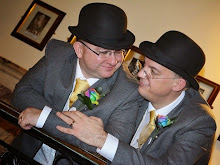
Thursday, May 14, 2015
Post-Election: Thanks, Tears, and What Year Are the Lib Dems In Now (A Clue: 2015)?
Only the Liberal Democrats, hardened by a hundred years of losing and buoyed by an inextinguishable hope in Liberalism, could follow an ‘extinction event’ election by gaining more than eleven thousand new members in less than a week. Welcome, all of you! You might like to look at Liberal Democrat Voice’s New Members Day (new voices, recommended reading and party essentials). You help remind us all that for all the talk of historical precedents, the year we’re in is 2015. But tonight I’m still looking back with a sense of history and with thanks to so many Lib Dem MPs.
I’ve been writing my post-election thoughts throughout this week. Regular readers will be unsurprised to know that the article’s been getting longer and longer – and may well split into a series of about half a dozen. But in case I don’t have the energy to write them all, there’s something I want to make sure I say.
I’ve read a ton of historical comparisons over the last few days – some glib, some persuasive. But while there’s much to learn from history, we do need to remember that this is 2015, not any other year, and that the way back to wilderness or revival is not predestined. On the face of it, this seems most like 1970 in our share of seats and votes – 7.5%, down to 6 MPs, a surprise Tory victory – which would ‘put us back’ to before I was born. Those losses were followed by new ideas and something of a comeback at the next general election; I hope for new ideas, too, and though ‘Let’s dig out our answers from 1970!’ doubtless has some merit, I hope most of our answers this time are going to be a bit fresher.
Right now, I’ve been distracted from writing about what we might learn simply by how terrible it feels. I know and admire quite a few Lib Dems who’ve suddenly lost their seats. I can’t help wondering if, whatever year is the more precise statistical match, this feels more like the 1920s – when a much larger group of Liberal MPs with great records in government were suddenly hewn down. I remember when the Coalition was formed five years ago, one of our Peers telling me that at his first Liberal Assembly, in Llandudno in about 1956, he’d been introduced to an elderly man with an ear trumpet who had been a Liberal Minister in our government of what is now a century ago – and that he still couldn’t quite believe that now, though it had only come when he’d got that old himself, he was walking around Liberal Democrat Conference seeing new Liberal Democrat Ministers again… Even if it had to be another coalition with the Tories, which hadn’t ended so well in the 1920s. On the bright side, we come out of this one battered but surprisingly united, rather than with two rival Leaders waging war on each other. And those were the two pretty good rival Leaders. I joined the Liberal Democrats when we were founded in 1988, just after we’d had two pretty bad rival Leaders waging war on each other, and in elections the following year we crashed to 4% and won no seats at all.
If you want two hopeful signs for the future, signs that we are now in neither the 1920s nor the 1980s, not only is our membership rocketing rather than falling through the floor after this year’s defeat, but we are also not split down the middle, which helps. The Conservatives’ mean authoritarianism will not have an easy ride.
Around 80% of the new members in the last week are people who’ve never been Liberal Democrats before, according to the party’s membership department. On a more anecdotal level, a great many of our new Liberal Democrats I’ve seen online have been inspired more than anything else by Nick Clegg’s resignation speech last Friday. I’ve been a Liberal Democrat for a long time, and it inspired and moved me, too. I’d watched through the night in a sort of grim blankness, and wondered what it would take to break that numb feeling. Within a few seconds of Nick starting to speak, I was in floods of tears. Here are some of the words that meant the most to me:
“It’s been a privilege, a huge privilege, an unlimited honour, to lead a party of the most resilient, courageous, and remarkable people. The Liberal Democrats are a family and I will always be extremely proud of the warmth, good grace, and good humour which our political family has shown through the ups and downs of recent years. I want to thank every member, ever campaigner, every councillor, and every parliamentarian for the commitment you have shown to our country and to our party.
“It is simply heartbreaking to see so many friends and colleagues who have served their constituents so diligently over so many years abruptly lose their seats because of forces entirely beyond their control.
“In 2007 after a night of disappointing election results for our party in Edinburgh, Alex Cole Hamilton said this: if his defeat was part-payment for the ending of child detention, then he accepted it with all his heart.
“Those words revealed a selfless dignity which is very rare in politics but common amongst Liberal Democrats. If our losses today are part payment for every family that is more secure because of a job we helped to create, every person with depression who is treated with a compassion they deserve, every child who does a little better in school, every apprentice with a long and rewarding career to look forward to, every gay couple who know that their love is worth no less than anyone else’s and every pensioner with a little more freedom and dignity in retirement then I hope at least our losses can be endured with a little selfless dignity too.
“We will never know how many lives we changed for the better because we had the courage to step up at a time of crisis. But we have done something that cannot be undone because there can be no doubt that we leave government with Britain a far stronger, fairer, greener, and more liberal country than it was five years ago.
“Fear and grievance have won, Liberalism has lost. But it is more precious than ever and we must keep fighting for it. That is both the great challenge and the great cause that my successor will have to face. I will always give my unstinting support for all those who continue to keep the flame of British Liberalism alive.
“Our party will come back, our party will win again, it will take patience, resilience and grit. That is what has built our party before and will rebuild it again. Thank you.”
Thank you, Nick. And never-ending gratitude to Lynne, too, in particular. Many people in our party and beyond made a difference, but the unstinting efforts of Nick and Lynne above all made it possible for Richard and me to marry, after twenty years of waiting through Tory and Labour Governments that made us second-class citizens. We will never forget and never regret that. And I will miss other former MPs I admire for their Liberalism, for their achievements, and in several cases for their friendship. I will keenly miss Stephen, and Stephen, and Danny, and Simon, and Julian, and too many others.
I believe both Norman and Tim have much to recommend them as potential Leaders, but I hope it’s not too discourteous to say that one of the results that left me most distraught would have been my first choice for Leader, Jo Swinson. She so terribly nearly held on (with the lowest fall in her vote of any Lib Dem in the country, an example of the difference between someone who’s always worked hard and the bewildered ‘ultra-safe’ Labour MPs all around her who’d never had to do a day’s work for their seats and were buried under sudden avalanches). I hope she’ll be back, and that open-hearted Liberalism will rise over narrow-minded nationalism.
Among the most damaging mass results of last Thursday – along with our extermination across the South-West – is that all our surviving MPs are now white, cis, straight men. Do not blame any of them for this. They’ll have enough to cope with. And there’s no simple answer. We had women MPs; we selected women in most of our seats where the sitting MP was standing down. We didn’t hold any of them. The Labour Party in particular will be as ruthless in attacking us for the voters’ choices as they were in pouring in resources to defeat Lynne Featherstone – choosing to let marginal Tory MPs off the hook to make sure that they cynically brought down Lib Dem women.
I will offer ideas of what might help for the future. But for today, I simply ask you to be kind to Lib Dem MPs (and staff) who’ve lost their seats if you meet them, and to be even more kind to the eight Liberal Democrats who won. Because all of them suddenly have so much more work to do.
Labels: General Election, History, Liberal Democrats, Liberalism, Marriage, Nick Clegg, Personal


Wednesday, August 28, 2013
Liberal Wednesday 6: Martin Luther King’s “I Have A Dream” #LibDemValues
This week’s Liberal Monday is on a Wednesday: the fiftieth anniversary of one of the most celebrated speeches of the Twentieth Century. Dr Martin Luther King Jnr’s speech to the March on Washington for Jobs and Freedom still has tremendous power both for in itself and for its place in history – the right person, at the right time and place, with more than the right moral clarion call in its inspired oratory. The BBC marked the occasion with a tribute on Radio 4 at 9am, plus a documentary to come on BBC2 at 9 tonight.
“I have a dream that one day this nation will rise up and live out the true meaning of its creed: ‘We hold these truths to be self-evident, that all men are created equal.’What is there to be said of this great appeal for equality, justice and fellowship that hasn’t already been said? Well, there’s this morning’s tribute, for a start. I was a little sceptical of Radio 4’s I Have a Dream this morning – reminiscent of the BBC’s 1997 recording of Perfect Day, the main part of the programme was a ‘cover version’ of the speech performed by a wide array of different people from different countries. It seemed like a bit of a gimmick. But on listening to the collage, ranging from John Lewis and Joan Baez, who were both part of the 1963 March for Jobs and Freedom that day, to the Dalai Lama, to Malala Yousafzai, the Pakistani student shot by the Taliban for being a girl who went to school, I found it incredibly moving. With a full speech, the reading doesn’t just switch reader on every line, instead segueing between Dr King and impassioned stretches by so many other people it had touched with enough time for each different person to get a sense of how much it means to each of them. And unlike the original line-up of speakers after the 1963 March, this version of the rally’s showstopping final number has women in it, without which it would seem odd today but shows that not only racial attitudes have changed in the last half-century. It’s repeated on the World Service at 3.30 this afternoon and on Radio 4 this Sunday at 1.30pm.
“I have a dream that one day on the red hills of Georgia, the sons of former slaves and the sons of former slave owners will be able to sit down together at the table of brotherhood.
“I have a dream that one day even the state of Mississippi, a state sweltering with the heat of injustice, sweltering with the heat of oppression, will be transformed into an oasis of freedom and justice.
“I have a dream that my four little children will one day live in a nation where they will not be judged by the color of their skin but by the content of their character.
“I have a dream today!”
You can also listen to the programme for the next week on BBC iPlayer here; you can read about it and the many contributors here; you can read the text of the speech here; and, above all of those, you can watch Martin Luther King delivering the original speech here.
I’d heard the whole speech before, though much more often excerpts from it – most of all, the extraordinary “I have a dream” peroration of the second half that echoes down the decades. But listening to it fresh this morning, without the thrilling cadences of Dr King whose voice gave perhaps the greatest speech I’ve ever heard, though the multiple performance had much less power than the original, it made me concentrate more on the words.
The speech itself is fascinatingly constructed, an appeal to America’s history and heartstrings with astonishing moral force. I think of the passion, the imagery, the repeated refrains, but it’s far more than that. The speech comes to us now with the power of fifty years of Dr King being proven right and becoming a lasting symbol on its side, but in itself it cascades back through history.
Dr King stood at the Lincoln Memorial and made his own and the marchers’ demand for the fulfilment of Lincoln’s promise an integral part of President Lincoln’s own history; I remember going to Washington in my twenties and wanting to visit that Memorial as soon as I could, looking up at the great graven face of Lincoln but seeing and hearing King in my head. And his speech grounds itself firmly on Lincoln’s own promise, deliberately opening between the hundredth anniversary of the Emancipation Proclamation and the hundredth anniversary of the Gettysburg Address with a championing of one and the echo of the other: “Five score years ago…” Dr King samples Shakespeare, economics, current affairs and a host of other touchstones, but in speaking for a new America rising irresistibly on the deepest feelings of the old, there’s no mistaking the other great stream pouring through the speech – religion. It’s not just in the words, testifying to the equality of all God’s children, but coming through his own preacher’s experience and oratorical style. The American Dream is only real for any American if it’s shared by all Americans, and that’s because God created all equal. And in that shared language, he was speaking to many who wouldn’t otherwise want to hear him.
For me the most fascinating thing about the speech from my own experience of watching and making a great many different speeches is how it’s essentially two speeches, Dr King’s extraordinary gift making them appear seamless. I know that my own best speeches have been ones delivered without a prepared text, but my worst ones, too: it’s a risk to try to fly. What he does here is start in the safer, meticulously prepared style as a run-up, then suddenly lifts off. There’s the carefully crafted written word fixed in American history, a reasoned argument. And then, apparently spurred by Mahalia Jackson’s cry of “Tell them about the dream, Martin!” he switches from his written text into the part that everyone remembers: the repeated rhetoric beamed straight into the heart through Biblical words and a million-watt charisma, every phrase resonating with the American Dream and with the Gospel call. And that, clearly, is the powerful spiritual appeal of the preacher.
That’s not to say that the “I have a dream / Let freedom ring” extended climax was entirely off-the-cuff. Dr King had had three years of honing that exact metaphor, from his 1960 speech “The Negro and the American Dream” onwards, but clearly it was on the day that it was most needed that suddenly the theme came together and, inspired and inspiring, helped transform America.
There’s much more to the speech – embracing both the more timorous and the more militant sides of the Civil Rights movement, the uncompromising demand to make brotherhood a reality, passing sometimes shocking judgement on the segregationists and the shameful, but then not just rising but soaring above them, preaching against hate, the realisation on his part and on “our white brothers’” part that “their freedom is inextricably bound to our freedom”. But I still get teary-eyed reading or watching it for myself, so watching or reading it for yourself is going to have much more of an impact than reading about it.
It’s a sign of how far things have come that under the institutional bigotry of the times, in 1963 twenty-one US States prohibited mixed-race marriage. That’s almost impossible to believe, fifty years later, when Martin Luther King’s speech has become one of America’s great moral foundations. Today, thirty-seven US States prohibit same-sex marriage. I wonder whose soaring rhetoric will transform the next fifty years?

Labels: American Politics, Bigotry, History, Liberal Mondays, Liberalism, Martin Luther King, Religion, Speeches, The Golden Dozen
Tuesday, May 21, 2013
Doctor Who – The Evil of the Daleks (Campbell & Hadley’s Recorder Uncut)
Patrick Troughton’s Doctor – Victoriana – dark fairy tales – rewriting the whole of time and space… No, it’s not the latest Doctor Who from Steven Moffat, but a fabulous story first broadcast forty-six years ago yesterday and, appropriately for John Stuart Mill’s birthday, one of the most blazingly Liberal of all Doctor Who stories: a Dalek Faust. Last Christmas, I wrote two guest pieces about it for my friend Nick Campbell’s blog: here’s the full version of what I sent him, not one of my usual style of reviews but a series of questions and answers – and spoilers.
“Somewhere in the Dalek race, there are three Daleks with the Human Factor. Gradually, they will come to question. They will persuade other Daleks to question. You will have a rebellion on your planet!”

Episode 1 of Doctor Who – The Evil of the Daleks was first broadcast on 20th May, 1967, and though it was repeated the following year, the BBC later junked all but one of its seven episodes. That means I’ve never seen six-sevenths of it, and only came to it on audio cassette at the age of twenty, a quarter of a century later. And yet ever since then it’s been one of my favourite stories across the whole fifty years – reliably at my number 2 spot – with terrific performances all round, the Daleks as you’ve never heard them before but influencing many Doctor Who adventures since, and above all a compelling script from David Whitaker, the series’ finest writer of the 1960s. So when it approached time for my friend Nick and his friend Sarah to cover it on their blog Campbell & Hadley’s Recorder, I asked if I might take him up on one of the ‘guest pieces’ he’s occasionally prodded me to write.
To make it more manageable to interweave three people’s thoughts on a seven-part story, Nick set a tighter word count than I’d usually keep to and split the story into two. His first blog post covers Episodes 1-4; his second covers Episodes 5-7. I’ve published everything I sent him below, and you’ll spot two significant changes of style between the two, one from Nick, the other coming out of my reaction to that. I’ve been thinking of an appropriate time to follow Nick’s Christmas excitements with my ‘uncut’ version ever since, and this week seems ideal – when I noticed yesterday was the birthday of both John Stuart Mill (at which I wrote my own piece about him and Harriet Taylor) and of this most Liberal Doctor Who tale, I pulled out my notes in the afternoon and got to work. Again, I should warn that this is quite different to my usual reviews: it doesn’t just feature spoilers, but reads best if you know a little about the story (though the more structured second part is easier to follow anyway). So here’s something of an introduction to start you off…
The Doctor (Patrick Troughton) and his friend Jamie (Frazer Hines) have seen off the threat of the Faceless Ones to Gatwick Airport in Swinging 1966, but their usual departure for another time and place is prevented when the TARDIS is stolen and driven off in a lorry. Using the Doctor’s own cleverness against him, a trail of clues and crooks lead them to an antique shop with a secret and back into Victorian times… Who is behind it all? Timid but driven scientist Edward Waterfield? His big-guest-star-in-a-bigger-beard colleague Theodore Maxtible (Marius Goring), financier, scientific and alchemical dilettante and steampunk Goldfinger? Their peculiar house guests, or bewildered daughters? All right, so you’ll have guessed it’s mostly the Daleks, who’ve taken advantage of Waterfield and Maxtible’s captivatingly insane Nineteenth Century time experiments to capture the Doctor and his friend for experiments of their own… But as the climax approaches on the Dalek planet of Skaro and the Doctor faces up to the Emperor Dalek at last, who is really trying to deceive who? [A clue: almost everybody.] Mashing up Victoriana and modern science fiction decades before it was fashionable, this is utterly compelling – a marvellous morality tale in sci-fi trappings from its inspired fantasy science through a country house mystery to a civil war and a powerfully Liberal moral that champions questioning individuals over rigid authority and the impulse to destroy.
The Evil of the Daleks Episodes 1-4: To Set A Trap…

After thanking Nick and Sarah for letting me join in on one of my very favourite stories, I began by observing that the start has something in common with the previous story…
The opening has an intriguing mystery to it – the spy, the clue, the transmitter as hearing aid and someone listening in… Is it ‘Revenge of the Chameleons’? Fortunately not. Mr Waterfield almost has too much personality, not too little, ostentatiously Victorian, moral, full of self-loathing and unnerving all at the same time. Unusually for Doctor Who, there’s a sharply observed class divide here too: Hall’s a small-time working class crook who, even given extra money, still has his principles; posh, ambitious businessman Perry protests that he won’t do anything “dicey” only after Waterfield’s prevented the greedy weasel from stealing his suppliers (and he creeps in later to pinch a customer). So who’s the more crooked one…?
The Doctor’s very modelled on Sherlock Holmes to start with: mistrusting the easy clue; analysing the cigarettes; spotting the matchbook; the too-short study… All used to trap him, of course, but I wonder where it comes from – Whitaker’s character notes for Troughton’s Doctor, or making us have the Victorian period in mind from the start?
The Daleks getting an evil throbbing version of the Who Theme – like a sinister machine – pre-empts The Sound of Drums by forty years almost to the week…
I really must get round to getting the new Loose Cannon Recon, but I’d been saving it for a treat. As well as the pictures, the animation and the moving Daleks to entice me, there’s one scene with three different soundtracks due to rights problems: on the original ’90s cassette release, a coffee bar scene’s simply cut; on the CD, sound restoration engineer Mark Ayres has remarkably grafted in Hold Tight; it’s only on bootlegs that you get to hear the Beatles’ Paperback Writer as Jamie picks his way round the “lassies” (it sounds from the muffled reverb like the mono mix, fact fans). And that’s the first scene where the Doctor and Jamie are really together as a pair with great comedy timing, too: “Aye, well, maybe I’m used to you.”
Troughton has a brilliant flash of indignation as he tells thieving Perry “…and because it happens to be my property!” It’s an early hint of how he’ll react when faced with the Daleks and losing control:
“What have you done with your infernal meddling?”That’s a sign, too, like them being labelled “Devils”, that this is a going to be a very different sort of Dalek story. In theory in Doctor Who, Mr Maxtible should be right when he tries to regard them as “different people. Alien,” but here more than any other time they’re less physical monsters than a force of spiritual evil, fading from their first scene like Victorian ghosts.
Maxtible is utterly magnetic as he spins his stories like a great and terrible fairy tale, an inspired scientific fantasy, all of a piece with his later alchemical lust. There’s so much foreshadowing of what the story will be about, too: going through the looking glass, “They forced me into the horror of time travel” transforms even the heart of the series into horror, prefiguring that anything can become Dalek; the Daleks and Doctor almost instantly present the Dalek Factor and its eventual downfall (“You will obey!” “Do not question!” “I will not be your slave!”); even the ‘be careful what you wish for’ of greed for transformation in the promise
“The Daleks know many secrets. You will learn the most important…”It’s a brilliant mystery – funny, intricate, and deadly underneath, from Molly the maid assuming our heroes are plastered to the Daleks’ aggressive Weight-watchers. One bit of writing doesn’t convince, though: Chekhov’s Portrait is a clumsier bit of exposition than most, particularly when we’re told about it twice. And I know we’re meant to feel for Ruth, caught between her obsessive father and her schizophrenic fiancé, but I just find Brigit Forsyth very cold. Possibly because when, way back in my teens, I worked in a restaurant, she was the most horrible customer we ever had and made the waitresses cry.
Was it Maxtible who thought up “Leatherman”? I ask because much of the early part of Episode 3 is him getting his “man” from London to flex his muscles while he and a Dalek eye him up. But Episode 3 and, slightly less so, 4 would have been very visual, with much less pace or meat (other than Kemel) to them than the terrific openers. Part of the problem is that Pat is so blatantly on holiday, with only a few little scenes of the Doctor giving a DVD commentary on the plot, which are rather ahead of their time (the Doctor and a Dalek! Watching humans! On television! How postmodern). Toby’s plot, particularly, could easily be discarded, with the whole ‘the violent one looks to do some burglary but is exterminated’ end already used for Kennedy.
Jamie in a temper is quite raw – it’s not just that the Doctor’s talking about him behind his back, but has gone off with two new gentleman boyfriends. With his heavy emphasis on “There’s no-one I’d rather have with me” when he finds his own rebound guy, it comes across very much as hurt that the Doctor’s dumped him just as he thought they were finally an item. And yet he’s learnt from the Doctor and applied it, too: in The Macra Terror, the Doctor laid the groundwork for so much of this story, telling people not to do as they’re told. Jamie believed that, and now his loyalty to the Doctor’s ideals makes him refuse to do what the Doctor himself says.
All right, so the story sags a bit in the middle. But what’s coming more than makes up for that…
The Evil of the Daleks Episodes 5-7: Shut Your Trap [‘Exterminate’ Font]I-only-arsked[/’Exterminate’ Font]

Three people’s random thoughts, even more or less to Nick’s suggested word limit, meant he had quite a task to puzzle over it and fit them all together – so for the second week, he suggested some prompts to get us at least talking about the same sort of things. The good news is that I answered the questions. The bad news is that we sometimes gave much the same answers. The worse news for Nick was that he could have the word limit or the answers, but not both…
Subject: Evil Questions
No, not questions that are evil – well, I hope not, anyway.
I've just relistened to those last three episodes for the first time in years (only the second time ever, too). I'd completely forgotten that episode six twist (that the Doctor had been tricked). That's probably my favourite moment – how about you?“Do not question!”So, not evil by my standards, but…
The Episode 6 cliffhanger of the Doctor confronting the Emperor is probably my favourite, too! For a lot of reasons – the bluff and counter-bluff of it all, the Doctor being intelligent, afraid, ruthless, but above all defiant against the biggest bully and the Universe, the fantastic sight of that bully itself… With even a bonus innuendo. Crucially, though, it gets to the heart of me because the Doctor expounding on the Human Factor versus the Dalek Factor is so absolutely Liberal, freedom against conformity and hate, all leading into how just asking questions brings down the Daleks in the final episode. So I will tell you that (spoilers!) it’s coming up sometime in my year-long countdown of Doctor Who – 50 Great Scenes. You’ll have to wait to find out what chart position it’s reached.Here we are back on Skaro, blowing it up. Is this an affectionate goodbye to the Hartnell era, do you think, or a slightly aggressive wipe of the blackboard (better metaphors are welcome).
The reason I asked if I might join in with you on The Evil of the Daleks is that it is simply one of my absolute favourites. Sarah talked about the cassettes last week; well, I listened to this one most of all, and of that curious but brilliant all-Troughton early ’90s selection, I loved them all to start with, yet two have since dipped a little for me while two continue to soar – perhaps it’s because this and The Macra Terror seem such close thematic bedfellows. And in seven episodes, there are many more than one great scenes. Two other crucial ones that come to mind are, appropriately, mirrors: the Doctor and the nice old man both being scary; the Daleks being friendly. There’s a great moment where the Doctor’s satisfied at the close of the experiment and Waterfield, sick with horror, tries to kill him – and the Doctor gives a hint of just what an appalling thing he’s planning. Later, perhaps only Pat’s Doctor could get away with gently telling Victoria he’d let them all die. So it’s no wonder Jamie’s the voice of the viewer in saying the Doctor’s turned wrong. Contrast that, then, with the endearing ‘child’ Daleks playing, particularly Omega with his incredibly deep voice (and note that the ruthless Doctor sends his innocent children off to war).
Of all Doctor Who stories, this has a fair claim to being the ‘ultimate’ one, and it was clearly designed that way – not just that it’s so well-done, full of atmosphere, characters and ideas, but that you could imagine it working as a Doctor Who film. Because it’s about adventures throughout time and space, almost all single Who stories would be lacking something in a standalone film – but this is structured almost uniquely through present, past and future / an alien world overlapping. The only thing that’s weird about this perfection is that the adventure is following the TARDIS, rather than aboard it.
I think it’s really striking out in a different direction to William Hartnell’s Dalek stories, which intriguingly raised the stakes and broadened the canvas with each return – and adds a dash of TV21’s Dalek strips (in the form of a rebellion among the Daleks, and ‘nicer’ Daleks) long before Russell T Davies did them in Bad Wolf. David Whitaker has a subtly different conception of the Daleks to Terry Nation; in some ways Nation’s is more powerful, with the starkness of space Nazis, but Whitaker makes them more insidious, corrupters, our bad angels – most of all here, as I’ve said, a force of spiritual evil for Doctor Who’s Faust. Though it does have curious (or not so curious, given that Whitaker was script editor behind both) parallels with both The Daleks and The Dalek Invasion of Earth – it’s the final end of the Daleks, in their city, again, and makes explicit the mash-up of different time periods that was a subtext in the invasion (technically the future / feels like the 1960s the viewers knew, smashed / but essentially the iconography of ‘what if the Nazis had won in the 1940s?’). I don’t think it’s really about the Hartnell era, for all that – Troughton is very distinct and his own Doctor here, and Whitaker is pitting the Doctor and the Daleks against each other in their essences rather than physically.A lot of good work seems to be done with playing with Dalek voices, even having an untreated one in the form of Maxtible. Do you think this story would succeed with different audio, or cheaper visuals…?
It’s a brilliant script, but obviously that almost everything seems to work helps – I can think of other terrific scripts hated by fans largely because they’re not delivered nearly so well (Paradise Towers, for example). Here, the actors and the atmosphere are top-notch, and imagining it with, say, the Day of the Daleks Dalek voices doesn’t bear thinking about. Despite not being able to see most of it, knowing that some of it was filmed Grim’s Dyke has always been a bit of a thrill, as my Nana and Grandad lived near Old Redding when I was a boy, so I’d play just across the road from Maxtible’s house when visiting.Do you or have you ever found the Daleks scary, and why? Do you like the Daleks? And if you do or don't particularly, do you think it affects your enjoyment of this story?
I’ve always found the Daleks powerful – in design and concept, as space Nazis in individual tanks, the embodiment of war and hate. Certainly the best Who monster… Though, unlike some, I think they were more tense or thrilling than nightmarish. Some monsters literally did give me nightmares as a boy, but, oddly, the scene from Genesis of the Daleks that did wasn’t one with Daleks in it. They have a fantastic vocal and insidious presence here, only really becoming a physical threat (despite the odd extermination!) at the close of Episode 6. It’s odd – I can never make up my mind whether effectively making them malevolent spirits displays them at their essence or very out of character. Either way, for me this is their best story.

Do you think Terry Nation could have written this story (I did wonder if the inclusion of a countdown was deliberate homage by Whitaker)? Do you think it was inevitable that this story – the final destruction of the Daleks – would be written?
I don’t think Terry Nation could possibly have written this story, but then I don’t think he wanted to. He banned Emperors, didn’t he, and he hated Daleks being ‘sent up’ (except when he did it, and far more dumbly than “Dizzy Daleks”). His writing Death To the Daleks as a riposte to Mr Whitaker’s The Power of the Daleks fell flat; arguably, he might have written Genesis of the Daleks as a comeback to this story, far more successfully, and Whitaker couldn’t have written that. I’m happy for different writers to be different.Would you rather have Victoria, Kemel or her father surviving to go off with the Doctor and Jamie at the end?
As for “The final end,” well, Nation did that in his first story, didn’t he? So Skaro’s blown up already, with more to come (it’s worse than Atlantis). It was inevitable once Nation said he was taking them away that the BBC would do something big, but that’s not the only reason – it’s happened again and again. Russell did the final destruction of the Daleks four times, didn’t he?
Well, it would have to be Victoria Waterfield, of that lot, designed as she is from the archetypal companion template (slightly plucky but screaming, plus ‘my daddy was quite posh but he’s dead now, so the Doctor can be a substitute while a/nobody misses me and b/ until I grow up / fall in love / have a nervous breakdown and find a second set of surrogate parents’). Edward Waterfield being such a timid old stick wouldn’t fit the format, and Kemel not speaking would make him unable to say ‘But what is it, Doctor?’ or scream. Though I think there was a Kemel in-joke in Vastra Investigates on the Red Button tonight, about Strax: “Funny-looking fellow. Turkish, is he?”Would you swap episode 2 of this story for another surviving Evil episode?
[On watching it, it has rather a lot of Troughton references, notably the Yeti stories and The Box of Delights, so this was almost certainly deliberate.]
I’m strangely tempted to have Maxtible join the crew, though – he could wander round being charmingly patrician and exploring, then trying to nick everything, while everyone admires his enormous bouffant. It would be like Pertwee in the TARDIS a few years early. Or Beta the friendly Dalek – yes, Beta would be a good companion.
‘I like gliding about in circles and giggling tinnily! Why does everyone run away when I come out of the TARDIS?’
Well, I’d like to see them all – Jamie awkward amid Paperback Writer and the “lassies”, even the slightly sagging middle ones for their visual impact, but any of Episodes 5, 6 or 7, especially, which are all spellbinding. Perhaps 6, counter-intuitively; we’ve got some of the footage of “The final end,” and while it’s better than it has any right to be, perhaps I’d rather see the Daleks’ strange playfulness amid the Victoriana and the Doctor’s big confrontation with the Emperor. I suppose the real answer has to be no, because I wouldn’t want to lose those marvellous scenes of the Doctor and Jamie creeping about and working it out, or the first sight of Maxtible’s magnificent beard, or most of all the whole gripping, dreamlike then nightmarish scene in the laboratory.Last week I wondered whether Whitaker's Daleks are a nightmare of nuclear fallout. This week's episodes made me question that slightly. But what do you think this story is about?
The Evil of the Daleks is about as clear thematically as you get in Doctor Who – of course, it’s David Whitaker’s Faust. And whether he intended it with this story deliberately, or it arose naturally from his or the series’ views, it’s also as unambiguously Liberal as the show gets, as I’ve written on in my How Doctor Who Made Me A Liberal.In what ways has Doctor Who changed by the end of this story?
This story raises the Daleks from a physical to a metaphysical threat – malevolent spirits that plot to seed all humanity with “The Dalek Factor”, taking even the Doctor for a ride. We see many transformations, with the ultimate conflict of our hero and the greatest villains each attempting to ‘turn’ the other, with alchemist Maxtible making this explicit as the Faust figure, though there’s temptation all the way through (and, as Dalek, he makes the devil as antichrist metaphor blatant, too, telling the Doctor to “Rise up and follow me”). Like Kennedy and Toby before him, Maxtible is overtaken by his greed – it’s almost ‘The Seven Deadly Sins of the Daleks: Avarice’, isn’t it? Mind you, both the Doctor and the Emperor are over-proud, Jamie is full of wrath (and fancies Victoria), Perry was envious and Terrall accused the Doctor of gluttony… You’d think in the seven episodes they’d have found time for Sloth. Or could they not be bothered?
It’s difficult to think of a more strikingly Liberal allegory than defining what makes humans Human as asking awkward questions and making your own decisions, with the Doctor contrastingly identifying the core of “the Dalek Factor” as “to obey,” even before “to exterminate”. While from the first and in many subsequent stories the Daleks have been metaphors for the Nazis, here they are broadened to encompass all enemies of free thought who simply do as they’re told. And where the anti-racism of the first Dalek story was a bit let down by the ‘normal people = good, ugly monsters = bad,’ here the human Daleks aren’t monsters, but Maxtible is, and his becoming a Dalek just hammers the point home.
I’m not certain what you were after with “has Doctor Who changed by the end of this story?” The series, the character, and just within this story or since 1963? It’s certainly become more complex since then, with the Doctor here more palpably alien than he’s ever been (after developing that way in The Daleks’ Master Plan and The Tenth Planet), and more proactive (even starting as reactive in this story, he turns it around in a major way). For all that it introduces Victoria, it’s only in her fourth episode that she interacts with anyone or displays any character beyond ‘Wailing’ and ‘McGuffin’ – this is about Jamie, cementing him as this Doctor’s other half, not least when they fall out, and in the bigger picture, it introduces the idea of staging a story through different time periods as a thematic structure rather than random travelogue, arguably paving the way for but not a direct influence on the likes of Carnival of Monsters and City of Death (and certainly The War Games, much the same story if with a far bleaker view of human nature). At the time, it was establishing a more ruthless Doctor (a deliberate plan, rather than pretend bumbling) and clearing the decks of the Daleks, ready for new monsters, as well as, with The Macra Terror, pairing the peak of the series’ Liberal philosophy with mass destruction – well, freedom’s dangerous. This was the first purpose-built ‘season finale’, too, of which many more later – the first two seasons had ended with a triumphal scene, but here it’s the whole adventure. And, of course, if you’re asking about changes, much of this story’s about transformation, and yet it says that the Doctor is a transforming agent himself, a catalyst, and so can’t himself be changed. Which is lucky.If you could change one thing about the story, what would it be?
Will the QI hooters go off if I say ‘The BBC to have kept all of it’? It’s tempting to truncate Episodes 3 and 4 into each other, but I don’t really want less of it, so coming in at Episode 5, that one’s gripping and fabulous but a couple of its ideas don’t quite deliver. Whitaker has a rare clumsy bit of writing in blowing Maxtible’s mesmerism within seconds of it being hinted at, which could do with a polish, but I think were I to change one thing it would be Arthur Terrall. His schizophrenic outbursts and, here, strange physical properties have been building to something, and then rather fizzle out. There are two possibilities that seem hinted at – that he’s an early attempt at the Dalek Factor, a failed experiment, which is why they have to call the Doctor in; or, more gruesomely (but what I was expecting the first time I heard it, when I was twenty and very much into existential crises), that he’s a Dalek android who doesn’t realise it, with his ‘real’ body that Ruth had fallen in love with long-dead. The control device and ‘get him away’ really aren’t good enough – his mystery deserves better, particularly after that terrific scene where the Doctor is flighty, enquiring, commanding, and generally winding Terrall up, with Troughton’s marvellous, mellifluously delivered line about his interest in all forms of life (contrasting directly with “There is only one form of life that matters – Dalek life”).
[It occurs to me after I’ve sent this that on top of doing Power with their tricksiness and “I am your soldier,” Mark Gatiss must have thought the same thing about Terrall – that’s where he got his boffin with the heart of Dalekanium from, isn’t it?]
Now, if this was one of my proper reviews, it would end in some kind of conclusion, but Nick didn’t ask me for one, and I can only obey. No… That’s not right! Then I’ll just finish with three other temptations, if the Faustian appeal of all of the above didn’t quite persuade you, which inevitably conclude with a final response – not an answer – to the story’s crucial question. The Daleks waking dizzily as humans and realizing they now have a sense of fun are so weirdly endearing that I put them on my first answerphone message; if you pay attention to the two key technologies they use at either end of the plot, you’ll realise that the Dalek plan is literally smoke and mirrors; and nothing can quite prepare you – or him – for the Black Dalek’s appalled, hysterical, ooh-I’ve-never-been-so reaction to the simple act of a Dalek asking a question:
“Who spoke? Who questioned a Dalek command?!”
Labels: Blogs, Daleks, Doctor Who, History, John Stuart Mill, Liberalism, Patrick Troughton, Pictures, Reviews, The Evil of the Daleks, Why Is Doctor Who Brilliant?
Monday, April 29, 2013
Liberal Mondays 2: Conrad Russell – The Liberal Cause #LibDemValues
For my second Liberal Mondays selection I’m looking to my old friend and mentor, Conrad Russell, who was through the 1990s the Liberal Democrats’ intellectual guru. I miss him terribly. He had a huge impact on my life and Liberalism, and no doubt I’ll come back to him again: this time I present a selection of quotes from the first booklet of his I ever read, The Liberal Cause. I bought it at my first Lib Dem Conference because I wanted as many Liberal texts as my tiny teenage budget would allow, and this one was marked down to 10p.
Conrad and Me and Name-Dropping
You can skip this bit if you like, but to introduce The Liberal Cause, I didn’t know Conrad when I first read this, nor I think even know of him. In many – but not enough – years later, we got to know each other very well through being on the Liberal Democrat Federal Policy Committee together, with such adventures to follow as drawing him into involvement with the Liberal Democrat Youth and Students (I was, he wasn’t), working at by-elections or in doomed Leadership elections together, and of course always plotting to get a more Liberal line through the FPC. I loved him dearly, and of all the many influences on my philosophy, no other person had such a striking impact in directly shaping my Liberalism as Liberalism. Re-reading it last week, I can see that The Liberal Cause is far from his best work, but elements of it have still stayed with me ever since.
I’ve been suffering crippling headaches for weeks and not been reading or writing much, but thought I’d better attempt another Liberal Monday, with elections on. Conrad was the obvious choice, so I went back to the start with him where I was concerned, and decided to spare myself a bit of both staring at a glaring screen and knackering my hands typing by having another go with the infuriating voice command software that I lose patience with every time I attempt dictation. This time I didn’t even try to train it to understand me, but just went back and corrected the mistakes after reading it all out, which was at least marginally faster than typing the whole thing. Most of the misunderstandings were simply gibberish, but presenting the Whigs as “the whinge party” was mildly amusing, as was making “What has endured in party tradition…” into “What has endured in hottie tradition…” Though the one which most struck me was “Liberals, as has all male and beverage…” See if you can spot what this apparent reference to the Liberator Collective was meant to be when I said it aloud.
I kept on reading aloud to the one-paragraph biography of Conrad at the end, which is how the software came happily to inform me “He is descended from William Hartnell”. In so many ways, so true. That one may give away a bit of which words are stored in my custom dictionary. It’s actually a reference to “William Lord Russell, who was accounted worthy of three ‘w’s in John Locke’s list of the first Whigs,” which will become clear shortly. It also reminded me of one of Conrad’s more endearing stories from one of his more endearing habits: he was an inveterate name-dropper. Unlike most people’s, these were entirely natural lines about his family, just as he might mention something I’d said, or whoever we’d just been arguing with in the Policy Committee, in which he prefaced so many of his observations with a reference along the lines of ‘When this issue was first debated in 1647…’ Here are three that have always stuck in my head from variously private conversation on anti-discrimination laws (referring to Lord John Russell), a speech explaining his attitude to authority (William, Lord Russell) and, most fabulously, a mighty speech to Lib Dem Conference in which he illustrated a point with the best name-drop I’ve ever heard to a Conference hall (Bertrand Russell):
“My great-grandfather succeeded on his third attempt on passing religious toleration through Parliament, though he had to become Prime Minister to do it.” (It sounded a great inconvenience)
“My father took me to see his portrait. On seeing this grand long-haired man staring down at me, I asked my father if he had been a good man. ‘Oh yes,’ he said. ‘A very good man. The King cut his head off.’”
“The point at which my father finally parted company with Lenin…”
Unservile State Papers 35 – The Liberal Cause: The Three-Century-Long Tradition of the Liberal Democrats
I’m presenting a series of extracts from The Liberal Cause, though at just 16 albeit close-typed A5 pages one day I might see who has the copyright and put the whole thing online if they agree. The booklet was produced under the aegis of the Unservile State Group, a sponsor of Liberal philosophy from the 1950s until, as far as I can tell, the early 1990s; this was published in 1990, and was probably among their last. Conrad had recently become the last Liberal and first Liberal Democrat peer introduced to the House of Lords (due to the different stages of assuming a peerage) as the Earl Russell, and was just embarking on his marvellous late flowering as an incisive Lords spokesperson and intellectual powerhouse of Liberalism. His finest work in that regard is his 1999 An Intelligent Person’s Guide to Liberalism, which I would always recommend; The Liberal Cause is a very much shorter and lesser work, but it’s still worth looking out if you happen across a copy.
The point of The Liberal Cause is self-evident from its full title: the Liberals had just merged with the Social Democrats to form what after much internal strife became called the Liberal Democrats, and unlike now, everyone was rather wary of calling the new party either “Liberal” or “Social Democratic” for fear of unpicking the merger and having to go through the whole damn thing all over again. And a lot of Liberals were, less unlike now, very unhappy. Whether it was Conrad’s idea or that of the Unservile State Group, this booklet looked across three centuries to find continuities in our political tradition, see how political issues of the day measured up to our philosophy – primarily, Conrad looks at privatisation from the tail-end of its heyday, and green politics from the early end of its wide acceptance – and implicitly say, ‘The party’s changed its name and taken great evolutionary leaps many times before, so don’t worry about this one’. It’s not as well-structured as some of his work, and less politically punchy, with Conrad still learning late in life how to evolve himself from a great historian into a great politician.
“The Liberal Democrats are the heirs of a continuous institutional tradition over three hundred years old. Liberals and their Social Democrat allies have inherited the machinery, the membership and the goodwill of the Liberal Party as clearly as the Liberal Party inherited the membership, the machinery and the goodwill of the Whigs. The Whig party from which we descend can trace a continuous institutional history back to 1679, and the ‘First Whigs’ were the party for whom John Locke acted as an auxiliary Whip, listing members with ‘v’ for ‘vile’ or ‘w’ for ‘worthy’, graduating to ‘vv’ and ‘ww’ and, in extreme cases, to ‘vvv’ and ‘www’.”Conrad and I never sat at dinner after an FPC meeting annotating members of the Committee and guests by Locke’s listings. Well, hardly ever.
Having established the Liberal Democrats’ three-century organisational continuity (and, implicitly, his own love of gossip) in the first paragraph, the first page continues by explaining how the party naturally evolved a passion against discrimination despite its biggest initial rally-point being a call to discriminate against a Catholic King. The Whigs’ initial anti-Catholicism is long past but since then, says Conrad:
“What was enduring in party tradition was the chosen means: the commitment to controlling the power of an overweening executive, and the choice of the rule of law as the means by which it should be done. The championship of liberty, and the identification of liberty with the rule of law, would entitle Liberal Democrats today to at least two of John Locke’s ‘w’s.Conrad goes on to assess the Whigs’, Liberals’ and Liberal Democrats’ instinctive understanding of the United Kingdom as a supra-national institution, and how that has meant a commitment both to devolution and to the EEC and the UN, rather than the Tories’ stubborn one-level nation-statism – and how that links to an instinct to check arbitrary power. He carries on to discuss different parties’ class-based economic ideas – critiquing a pre-Blairite Labour Party that still called itself socialist, a strange historical note after two decades of Labour sucking up to the super-rich more than the Tories do – and offer a word of warning about different spheres of freedom: quoting John Stuart Mill, he argues that free trade and freedom itself may well often go together, but they are not the same thing, nor contingent on each other.
“During the Eighteenth Century the Whigs increasingly became identified as the party opposed to the monopoly of the Church of England in public life, and that identification also has marked the Liberal tradition in ways that have become indelible. That never meant that Whigs were opposed to the Church of England: it is to the eternal credit of England, the Church of England and the Whigs that a high proportion of their membership always consisted of devout members of the Anglican Church. What distinguished the Whigs was their belief that the Church of England did not enjoy a monopoly of truth, and that those outside it enjoyed an equal claim to citizenship. The Whigs enjoyed an unusual ability to concede equal status to the Church of England and the Church of Scotland. The party rapidly became committed to a degree of religious pluralism unusual by the standards of the day; and from that commitment grew an increasing readiness to divide the spheres of church and state and a steadily deepening commitment to freedom of thought.
“From the battles over the Occasional Conformity Act at the beginning of the Eighteenth Century down to the Race Relations Act in the middle of the Twentieth, the party has felt a steadily deepening dislike of discrimination. As one would expect from the party of Locke and Mill, it has made the intellectual leap from opposing discrimination because it happened not to favour the chosen interest group, whether it was at Nonconformists, blacks or women, to opposing the discrimination because it was discrimination. The four-year-old who denounced the owners of a swimming pool because they did not accept Jews, and who asked, several minutes later, ‘By the way, what is a Jew?’, was showing a Liberal sense of priorities.”
“Liberals may, when they think the occasion suitable, defend state intervention in economic questions without any threat to their liberal principles. Economic acts are not, within Mill’s definition, self-regarding. In tackling these questions, we benefit from notions of liberty somewhat enlarged over those of the Nineteenth Century. Liberty does not simply consist in the absence of external impediment: it involves the existence of opportunity, and the freedom to take it. Freedom is not only freedom from outside interference: it is also freedom to attempt to do things we wish to do. It is this second freedom which may be promoted and not hindered by the action of the State.”I’d say – and I believe Conrad tended to, as well, when writing later and at more length – that the State can be a danger or a boost to both sorts, if more often a threat to the first and a protector of the second, but I think he was simplifying so as to be able to more easily make one a point against the Tories and the other against Labour. You’ll be able to spot my summary of this argument about the relationship between liberty and different sources of power in one of the lines I contributed to Mark Pack’s recent “What the Liberal Democrats Believe” Infographic.
“Liberals, as heirs of Mill and Beveridge, are aware of two sorts of liberty. One is the absence of external restraint, the individual liberty of which freedom of thought and freedom of speech are quintessential expressions. That liberty is hindered by state action, and its defence must often take the form of restraining the power of the state. Yet we are also aware that, as Mill put it, ‘liberty consists in doing what one desires’; and here state action, by creating opportunity, may create a liberty where, before, it effectively did not exist. Education, for example, is a field in which any viable policy must draw equally on both ideals.Before most British politicians, Conrad takes as a key example here the way ‘freedom of choice’ alone can destroy itself in traffic jams, and the need for the State to intervene for long-term environmental goals.
“Neither of these ideals of liberty is peculiar to Liberals: what is peculiar to us is our equal attachment to them both. On the whole Conservatives are attached to the first, and Labour to the second. It is only Conservatives who are capable of assuming axiomatically that rolling back the frontiers of the state makes any positive contribution to liberty ipso facto. The rest of us may want to wait and see what opportunities, and what freedoms, are lost by the absence of the State as their guarantor or even their creator. …A Thatcherite rhetoric of creating choice contradicts itself if it simultaneously destroys opportunity.”
“Yet as Conservatives tend to ignore the second kind of liberty, Labour tends to ignore the first. They do not see diversity as good in itself, and they therefore do not see the risk that state intervention, by creating uniformity, may destroy opportunity as well as creating it.”The third sentence in this next passage is one of those that struck a very deep chord with me – and not just on economic distinctions, though those were the most ‘live’ ones when Conrad wrote The Liberal Cause. It turns up right near the top in my latest longer version of “What the Liberal Democrats Stand For”.
“Just as we cannot regard ‘rolling back the frontiers of the state’ as a good in itself, so we cannot regard extending the frontiers of the state as that. In the area where Labour and Conservatives fight we are, of our very nature, an empirical party. Hearing, for example, a Socialist arguing for the public ownership of banking and insurance, we do not regard it as good because it pushes back the frontiers of capital: that is a battle in which we are neutral. We want to know what concrete harm it will prevent and what concrete good it will do. Out of a natural suspicion of monopoly, Liberals would be inclined to investigate the argument that this might be an area in which competition is a positive good.
“We are also the heirs of a Gladstonian tradition of frugality with public money. This is not a fetish, and we are well aware of the concept of false economy. Yet, just as we reject the Conservative myth of the inexhaustible private purse, so do we reject the Labour myth of the inexhaustible public purse. Public money, before it can be raised through taxation and spent, has to be earned.”
“It is of our essence, then, in economic and industrial matters to be an empirical party. We are not in favour of capital and not in favour of labour, nor are we against either. Liberals think it dangerous to have a government which is committed to being ‘against’ any substantial body of its citizens, and would apply that conviction equally to Conservative views on trade unions and to Labour views on the City. We are not in favour of public ownership, as such, or against it. We want to know which view fits the facts of the case…Conrad closes this booklet with an uncompromising defence of the Rule of Law which would have him scorning Theresa May and applauding Nick Clegg this week over her ludicrous proposal to withdraw from the European Convention on Human Rights for just long enough to break it:
“The empirical approach is hard work. Liberal Democrats can never come to a privatisation issue knowing what is the ‘left’ or the ‘right’ thing to think: we have to do our homework before making up our minds. Granted that, it is startling how consistently we make them up on any particular issue. More often than one might think it is clear which way an empirical approach points on a particular issue. It is no objection to our approach to say it is hard work: that is what the real world is like. It is a big objection to the approach of the other two parties to say it is not hard work: they tend to know the answers before they know the questions.”
“Thus far the Liberal Democrats have absorbed new ideas from the new problems of the Twentieth Century, while building them on top of principles inherited from previous ages. Where we have absolutely rejected the ideas of the early Twentieth Century is the basing of political allegiance on class. That is a negation of everything the Liberals and Social Democrats have stood for. It is a negation of the autonomy of the human mind, a negation of the independence of belief which is what our creed is all about. It is a reductionism to define a human being in terms of one only among the many attributes which make him up.”
“Ideals of liberty have always been closely identified with law, and it is not for us to dismiss the law simply because it does not at the moment happen to favour us. Where the law does not, we may, if it seems just had to do so, campaign to change it. We do not choose to ignore it or to flout it. …Law is an instrument for the preservation of liberty: no doubt, an imperfect instrument, but it is the best we have. Without it, there can only be ‘such a war, as of every man against every man’.”Richard suggested to me last night that Tory-supporting burglars might put the defence that they entirely supported the English Law and always stayed within it, but had merely decided to abrogate from it for five minutes while they smashed that window. That’s what happens when you decide the Rule of Law is only there when it’s convenient – someone else will always find a point where it’s similarly inconvenient to them and your only protection.
Intriguingly, it wasn’t the Tories back then that Conrad distrusted because he thought they played fast and loose with the Rule of Law, but Labour – and subsequent history showed that the point at which Labour most flagrantly ignored the Rule of Law was, of course, the point when they were most indistinguishable from Conservatives. I can’t help but notice how since they stopped being socialists around the time Conrad wrote this booklet that the only thing dividing Labour from the right wing of the Tory Party is their increasingly shrill shouting of party labels (‘Vote Labour because the Tories are evil!’ ‘One Ed good, Two Eds bad!’ and so on).
Conrad had in previous decades spent some time considering his allegiance between the Liberals and Labour; the last few lines of The Liberal Cause presciently reject Labour because their willingness to throw liberty out of the window means they can’t be regarded as “the appropriate vehicle for opposition to the Conservative Party,” though even Conrad didn’t realise the extent to which, having necessarily jettisoned all their socialist baggage, Labour would see becoming Tories as the only alternative. For all that the LiberaTory Coalition has Liberal Democrats working alongside Conservatives, and that you might be tempted to score some Lib Dem MPs ‘vvv’ rather than ‘www’, it’s still easier to spot philosophical differences between the bulk of the Conservative Party and Lib Dems than between the Tories and Labour, for exactly the reason that Labour has spent twenty years throwing liberty out of the window and still to this day knee-jerkingly marches to the far right of the Coalition on freedom. By the end of the 1990s, the Labour Party had jettisoned so much of what it believed in and borrowed so much of the Liberal Democrat alternative to the Conservatives that the Lib Dems and Labour were at the closest they’d ever been. By then, Conrad was one of the Lib Dems most deeply sceptical of the Labour Party, and his terrific book at the other bookend of that decade ended not by reasserting opposition to Toryism but predicting the need to oppose Labour.
The Liberal Cause isn’t merely to choose an ‘enemy’ out of the other two, nor merely to gain power – it’s to promote liberty. And while either of the other two parties might at some point be an ally for freedom, like any other type of power, they need watching as a potential threat. If you look to liberty over the centuries, it’s not just the cause but because of Liberals.
Labels: Books, Coalition, Conrad Russell, Conservatives, FPC, History, Ideas, John Stuart Mill, Labour, Liberal Democrats, Liberal Mondays, Liberalism, Personal, Richard, The Golden Dozen, What the Lib Dems Stand For
Monday, April 22, 2013
Liberal Mondays 1: Alfred Russel Wallace #LibDemValues
If you saw Bill Bailey’s Jungle Hero on BBC2 last night, you’ll suddenly know quite a bit about Victorian naturalist and natural selection theorist Alfred Russel Wallace. You may not know that he was a prominent Liberal, contributing to Andrew Reid’s 1885 Why I Am A Liberal. I’ve just re-read Duncan Brack’s 1996 follow-up collection Why I Am A Liberal Democrat, which includes extracts from the earlier book. So, followed by my reaction to that edition, here’s Mr Wallace’s Liberal creed – with ideals familiar to modern Lib Dems, even down to complaining the party doesn’t live up to them…
“Although very slow to act upon its convictions, the Liberal Party recognises fundamental principles as a basis of reform, and aims at unbought justice and equal freedom for all as the ultimate goal of political progress.”I’ve always loved the Why I Am A Liberal Democrat selection, and, Duncan, if you’re reading – or Mark Pack, perhaps – isn’t it about time there was a new edition? Regular readers will know that I’ve been asking a related question of today’s Liberal Democrats, and will I hope soon be publishing more of them: both the Nineteenth and the Twentieth Century versions of the book carried a lot of crossover between the personal testaments and the statements of what the party stands for.
Although Alfred Russel Wallace’s line is probably just an excerpt, as I don’t have Mr Reid’s book and Duncan’s is clearly selective in his reprints of earlier contributors and their contributions, I was inspired by the coincidence of having come across him on the page mere hours before the documentary about him on the telly (the second half next Sunday). So this may be the first in a series of Liberal quotations… Or it may not, as I’ve been worse than usual recently, horribly ill and knocked out and not written anything at all for three weeks.
Andrew Reid’s Why I Am A Liberal Vs Duncan Brack’s Why I Am A Liberal Democrat
I won’t review Why I Am A Liberal Democrat – there are 155 entries, and I’d feel like commenting on all of them – but, though it and the Victorian original are long out of print, it’s worth searching for and, again, could really do with a new edition. I did notice a few interesting things about each, though.
Both books had several Liberal ideas in common for many of those writing, over a century apart – an emphasis on freedom, first, on equality, and on not being in the pay of classes or other groups. Both were internationalist, though it was the 1885 version that was strikingly more in tune with the passionate anti-aggression of Liberal Democrats from just a few years after 1996, in the wake of Labour’s illegal invasion of Iraq. But there were differences, too.
Andrew Reid’s Why I Am A Liberal is rather grandly subtitled Being Definitions and Personal Confessions of Faith by the Best Minds in the Liberal Party, and from that you can deduce that it has a far higher religious content than that from more secular Britain a century later, with many of the writers seeing their faith as the wellspring of their politics. As I’ve said, for the Imperial power of the time there was great scepticism of using that power in military adventures, and – rooted in the history of the time – a clear opposition both to Tories (I have to admit to a double-take on seeing an entry from the MP George Osborne… [next line] …Morgan) and to revolutions. The plain Why I Am A Liberal Democrat saw a much greater passion for Europe and proportional representation, each of which I suspect might be lower down in the mix were a new edition to be gathered today. But for me the most interesting difference was in the favourite ideological line of the time; quite a few contributors saw the purpose of politics as:
“The greatest happiness of the greatest number.”By contrast, the most-quoted line of 1996 Liberal Democrats was my own favourite (with Duncan’s afterword, like my What the Lib Dems Stand For, written largely around the three words):
“No-one shall be enslaved by poverty, ignorance or conformity.”In this change of repeated rallying-cry, you can see a change of generations of favoured Liberal philosophers. In part literally, from James Mill’s utilitarianism to his son John Stuart Mill’s Liberalism. I have to admit I have my own problems with the superficially attractive summary of utilitarianism: its implicit ‘the ends justify the means’ puts a chill up my spine. To me attempts to quantify happiness to ‘give’ to a majority sound at best more like New Labour – targets for what can be measured rather than what actually matters to people, and dumping people who don’t fit – than Liberal. It’s clear that the party has gone through a similar evolution to that of John Stuart Mill, who while not openly abandoning the word and his dad kept trying to make it mean something very different. When he stopped listening to Jeremy Bentham (not that one) and started writing with Harriet Taylor, modern Liberalism was born. From Mill and Taylor we get freedom rooted in knocking down conformity; rather more from the New Liberals of the early Twentieth Century we get the cry against poverty; and from both, opposition to ignorance. Between them, that universal appeal to freedom is social Liberalism, and it’s no surprise that still, today, it’s at the heart of the Liberal Democrats.
Labels: Alfred Russel Wallace, Books, Harriet Taylor, History, Iraq, John Stuart Mill, Liberal Mondays, Liberalism, The Golden Dozen, Utilitarianism, What the Lib Dems Stand For
Wednesday, March 20, 2013
Doctor Who 50 Great Scenes – 40: The Rebel Flesh / The Almost People
Counting down towards the fiftieth birthday of Doctor Who with Fifty great scenes… This one’s from 2011 and the Twenty-Second Century, and it’s one of my favourite moments for Matt Smith’s Doctor – an almost perfectly formed cliffhanger. So expect rather large spoilers, deep themes, and the enemy within…?
“This is insane. We’re fighting ourselves.”
“Yes, it’s insane, and it’s about to get even more insanerer. Is that a word? Show yourself, right now!”
“Doctor, we are trapped in here and Rory’s out there with them. Hello? We can’t get to the TARDIS and we can’t even leave the island!”
“Correct in every respect, Pond. It’s frightening, unexpected, frankly a total, utter splattering mess on the carpet, but I am certain, one hundred per cent certain, that we can work this out. Trust me. I’m the Doctor.”

It’s the answer to accidents at work. Working in a dangerous environment? Worried you might fall into a pool of seething acid and bubble to a hideous dissolution? Robots too expensive and covered by pesky artificial intelligence regulations? Then meet the Flesh: reformable, reusable, disposable, and you. Just sit back in comfort and control your Flesh “Ganger” self through all the sticky bits, and if you’re a bit more careless than you would be with your usual body and it happens to die in screaming agony, just withdraw your consciousness from it and form another from the vat of gloop. It’s not as if anyone’s hurt, right? And if you get it wrong, you can just be born again. Again.
The Rebel Flesh / The Almost People is the 2011 Doctor Who story that felt most traditional to me – that is, of all the many, many thematic traditions of Doctor Who, this chimed with those that most deeply speak to me. Traditional, then, though not at all reassuring. The Flesh vat from which life can rise at will – eventually, its own, after a spark from the heavens – is only the font of the religious imagery, housed, of course, in the old Chapel. Free will and the created rebelling against the creator? Frankenstein is positively a modern influence in that context, here given a kick by a solar storm as its lightning. There are existential crises, cruelty begetting cruelty, conflicts between people who are basically (and never more so here) the same, all shot in dark, shadowy corridors. And with Matt Smith’s Doctor arriving to investigate and the actor’s love for Patrick Troughton’s time in the role, it’s not inappropriate that the story evolves into one of base under siege.
The cliffhanger brings all of this to a head in a way that’s predictable if you’ve been watching, yet deeply satisfying, a terrific ‘What’s going to happen next?’ moment of horror, revelation and just a little of challenging the viewer. On arrival, the Doctor (Matt Smith) scans the Flesh pool and finds himself disconcerted – as if it’s scanning him in return. It pulls his hand down to touch it, and they share a moment of understanding when
“I felt it in my mind. I reached out to it, and it to me.”There’s no such awe for the creators. They simply don’t care. They pile their personalities and lives directly into it, yet they don’t expect it to be alive. Naturally, the Doctor’s feelings are with the exploited Flesh, urging one of the team whose face suddenly slides into incoherence – revealed as Ganger – to trust him, appealing to bridge the gap between natural and new human as the differences between the bodies and personalities of each become ever more indistinct, only for the ever-careless human team leader to do what she’s always done and ‘dispose’ of Gangers in her way… Prompting the Gangers to decide on the same strategy of “us or them”. Where once they touched, now he’s guilty by association of betrayal and death, how can even the Doctor become an intercessor between creators and created? Though, racing about the place as he does, he did pop back into the Chapel alone to scan – or prompt – the pool of Flesh once more, the vat forming lips in reaction, and practicing the words: “Trust me.”
Events approach crisis. The humans see the Gangers as nothing. The Flesh rebel. The TARDIS sinks beneath an acid mulch. The greatest solar storm of all is building to baptise all with fire. There’s a thrilling, throbbing, backwards pulse of music as people run down dark stone passageways. And a figure staggers from the vat, muttering “Trust me…” as its clammy hand holds itself up against the wall…
The TARDIS crew splits apart as Rory rushes out in concern for the team member-Ganger-person he’s been talking to – perhaps showing himself (while everyone here clearly passes the Turing Test) the only ‘human’ of either creation capable of passing a Voight-Kampff Test – while Amy’s left behind, fearing the unlike and the too-alike, shocked that Rory is with another woman. And the Doctor can’t hold her together now, because he’s heard a voice from the shadows of the Chapel, asking “Why?” “Show yourself!” the Doctor commands, but whose self is it (and hasn’t a son of the Doctor asked “Why?” before)? His face the bloated Flesh of a not-quite-controlled Ganger, the Doctor (Matt Smith) steps forward to reassure Amy just as he always does, characteristically straightening his bow tie and giving that crooked smile. Trust him. He’s the Doctor.
Bonus Great Doctor Who Quotation – Amy’s Choice
I did warn you there were spoilers, didn’t I?

In this especially fine sci-fi short story of a Doctor Who episode, the Doctor (Toby Jones) is much less friendly an other Doctor than the Doctor (Matt Smith) above is going to be to the Doctor (Matt Smith). Introducing himself as “the Dream Lord”, he flits between the Doctor, Amy and Rory’s confusing, conflicting realities of the happy, domestic life that Rory’s always wanted, settled as a doctor, or of the scary, exciting life in the TARDIS, settled with the Doctor. He tells them to pick the real one, or die. But which is Amy’s dream outcome? And what a sly other self the Doctor has – where Rory dreams of at last drawing equal as a proper doctor, this one promotes himself to Consultant to put him down again:
“Now then, the prognosis is this: if you die in the dream, you wake up in reality. Healthy recovery in next to no time. Ask me what happens if you die in reality.”Toby Jones is deliciously bitchy as he sneers that he could always see through the Doctor; Matt Smith matches him secret smile for secret smile, knowing only one person could hate him that much. But is he a person in his own right, like both Doctors above? I think Richard’s talked me round, in his review for Millennium’s Fluffy Diary. And what about the next one…?
“What happens?”
“You die, stupid. That’s why it’s called reality.”
Extra Bonus Great Not Doctor Who Quotation – Human Nature / The Family of Blood
This is arguably the best Doctor Who story since it returned to TV in 2005, but not for John Smith (David Tennant). He spends the first half of it happy with his life as a teacher, his burgeoning relationship with Joan the Matron, and his exciting dreams of adventure, though his faithful maid Martha seems to be getting a little strange. But in his Journal of Impossible Things we see for the first time all his past selves, and everything turns inside-out when he finds those dreams are real and his life’s become a nightmare. The local dance ends in death. People he thought he knew become an uncanny Family led by a pupil with wild eyes now styling himself Son of Mine, and they want something from him he doesn’t know he has. Martha’s become an unsettling mixture of protector and threat, and she, too, wants something from him he doesn’t know he has. To him, he’s an ordinary man, with unreliable memories but real feelings. To both pursuers and protector, he’s a walking placeholder, not the Doctor but just an inferior mind and body walking around in exactly the form and place the Doctor would usually occupy, all of them for different reasons looking forward to his erasure. He despairs that even the woman he hoped to marry thinks he’s not enough – though she’s the only person who sees him for who he feels he is. At the story’s half-way point, as people suddenly demand the Doctor of him, there’s a “Next Time…” trailer in which he declares “I am not the Doctor.” It’s a sign of how little control he has of his life that he doesn’t get to say that in the second episode – even his denial just gets written out. And yet his plight prefigures not only the sinister echoes of his role (and Martha’s) in the three-part season finale, but the existential crises and self-loathing of the other Doctors above.

John Smith runs from the Family, but they call him back, holding the TARDIS the Doctor loves as hostage. Martha loves the Doctor and tries to wake him into his dream to save them – and doom him. Joan loves John Smith and tries to reassure – but can’t lie to him. And poor John breaks under the responsibility all of them put on his human shoulders.
“You recognise it, don’t you?”
“Come out, Doctor! Come to us!”
“I’ve never seen it in my life.”
“Do you remember its name?”
“I’m sorry, John, but you wrote about it. The blue box. You dreamt of a blue box.”
“I’m not – I’m John Smith. That’s all I want to be. John Smith. With his life – and his job – and his love. Why can’t I be John Smith? Isn’t he a good man?”
“Yes. Yes, he is.”
“Why can’t I stay?”
“But we need the Doctor!”
“So what am I then? Nothing. I’m just a story.”
And there might just be more dodgy Doctors to come (though another, much as I enjoy this scene half-way down, doesn’t quite make the Fifty). The next scene up’s not just a but the man who is not the Doctor, though…
Next Time… Hiding behind… Oh, no, hiding from…
Labels: David Tennant, Doctor Who, Doctor Who 50, History, Matt Smith, New Adventures, Religion, The Almost People, The Rebel Flesh
Thursday, March 07, 2013
Doctor Who 50 Great Scenes – 41: The Fires of Pompeii
Counting down towards the fiftieth birthday of Doctor Who with Fifty great scenes… This one’s from 2008 and 79AD, one of Doctor Who’s most visually stunning stories, set around a terrible disaster and a terrible choice. My favourite part has Phil Davis (back when he was merely serving the gods of the Underworld rather than the Devil himself) duelling with words and prophecies against a rival Soothsayer across a fantastic few minutes that transform from sit-com to mystery to impossible revelations, all directed like a breathless action scene.
“This is the gift of Pompeii: every single oracle tells the truth.”

The Fires of Pompeii bowled me over when I first saw it, and for me it’s still one of the very best stories since the series returned to TV – and among the best across all fifty years. The most gripping scene has a lot in common with my favourite from Day of the Daleks: it’s built on stunning dialogue and revelations about time – though, here, it’s the beginning of the mystery and not the solution to it, so it’s not the Doctor working it all out but being caught out. And while in Day of the Daleks it was a relief that the drama was so intense because the big action scene following was such a let-down, here the whole episode looks bloody awesome, from shooting on borrowed Roman sets, to Vesuvius erupting, to flaming great monsters. Yet despite all that, the episode’s most brilliant scene is all dialogue, in one beautifully designed set that’s still just one room, and could have been just as spellbinding for any Doctor from William Hartnell (especially William Hartnell) on.
The Doctor (David Tennant) takes newly enthused friend Donna (Catherine Tate) to Rome for her first trip back in human history. She’s delighted – until she spots the volcano. It’s not Rome but Pompeii, the 23rd of August, 79AD – just one day to go – and the TARDIS has gone missing. If that’s not enough trouble for the Doctor, Donna knows he saves people, and faces him down on why he can’t save the people of Pompeii. But first, they’ve got to track down the TARDIS, which has been sold as “Modern art” to marble merchant Caecilius (Peter Capaldi)…
It’s ten minutes in when the Doctor and Donna bluff their way in to meet Caecilius and his family, introducing themselves as Spartacus. And Spartacus (they’re not married). And the six minutes that follow in the atrium of Caecilius’ house are really three scenes in one, all moving so fast and so packed with ideas that I watched it over and over for weeks, thrilled every time. At first, it’s a funny sit-com of social climbers. Caecilius mines, polishes and designs marble and, though they’re pretty well-off to start with, he’s anxious to make it big; his beautiful wife Metella (Tracey Childs) is getting everything ready for their important guest… But, oh no! Little earthquakes keep knocking over the showpieces, their very pretty son Quintus is lolling about drinking and bored, and now in come the marble inspectors at just the wrong time! What larks (served with larks’ tongues)! And of course we know the latter are really there to con them out of their expensive new piece of modern art. Or, at least, the Doctor is – it’s comedian Catherine Tate whose character suddenly brings the scene crashing out of comedy by urging them to leave the city, only to be hauled off by the Doctor for a quiet, fierce argument about the ethics of interference when people are about to be burned to death.
It seems to swing back to sit-com as a stately fanfare – grand, Roman, and (like shooting on someone else’s much more expensive set) with just a touch of Carry On Cleo – announces Lucius Petrus Dextrus, Chief Augur of the City Government (Phil Davis), his right arm swathed in his cloak. Caecilius and Metella turn from the inconvenient interlopers to turn the social climbing up to XI, fawning over their distinguished visitor’s banal obscurancies as we laugh, knowing it’s all superstitious nonsense:
“The birds are flying north, and the wind is in the west.”
“Quite. Absolutely. …That’s good, is it?”
“Only the grain of wheat knows where it will grow.”
“There now, Metella. Have you ever heard such wisdom?”
“Never. It’s an honour.”

The Doctor can’t resist interrupting with some clever wordplay of his own, but he can’t stand around embarrassing the Caeciliusus all day, not when there’s a perfect distraction to let him and a protesting Donna slope off to the TARDIS. And so they do… But the Doctor takes just one look back, and sees what Lucius has come for: Caecilius has sculpted a giant circuit to the Augur’s design. Made of stone. How did he dream that up two thousand years early? And as he explains the job of official superstition to Donna, talking quickly to cover his mind racing at what’s going on, Caecilius’ daughter Evelina (Francesca Fowler) enters and makes the situation stranger still.
Pale, sweating, her right arm swathed in bandages, Evelina too looks pretty but ill – no, even before she totters towards them sneering and insulting people like a malicious drunk, she looks like she’s on something. And she is. Her ambitious mother’s had her consuming the vapours from underground, stimulating visions to win her a place in the Sibylline Sisterhood. And now the focus suddenly shifts from the clever Doctor running rings round Caecilius or showing off with Lucius, and to a gripping face-off between Francesca Fowler and Phil Davis, the Doctor only important as something new they can strip impossible truths from.
The duelling Soothsayers start low, as does the quietly ominous music as Evelina exposes the Doctor’s offhand mockery, which might just be a drunken daughter putting her foot in it – prompting another side to Quintus, distressed at her apparent illness, and to Lucius, sneering at a rival, and only a woman at that: “Only the menfolk have the capacity for true perception.” Donna lashes out at the sexism; the Doctor questions the “strength” the vapours have given Evelina. Evelina doesn’t appreciate it.
“Is that your opinion – as a doctor?”
“I beg your pardon?”
“Doctor. That’s your name.”

How did she know that? Or that Donna is “Noble”? Or that they both come from so far away…? The music starts to swirl, stranger, stronger, underscored by the mountain’s rumbles, and the camera slowly to close in at twisted angles, all making this now a very different sort of scene. Lucius sneers again at women’s vagaries, and the Doctor enjoys putting him down for it. Unwisely. For it goads him to spit harsher and more unsettling secrets at the Doctor and Donna, the camera closing in on them claustrophobically as the strings rise to a climax and Evelina steps in again at last to top him, the effort making her sway and fall…
“Oh, not this time, Lucius. No, I reckon you’ve been out-soothsayed.”Everything comes together to make this long, talky scene utterly electrifying – and though I love Phil Davis really giving it some welly (and as the episode continues, he’s awesome as he dials it up his villainy with ‘I am in an old-fashioned Doctor Who and I will do some old-fashioned Doctor Who shouty acting!’), Francesca Fowler more than holds her own against him, both of them aided by Murray Gold’s score and Colin Teague’s direction. The Doctor sometimes deserves to be given a shock for showing off, and the escalating revelations slashing in at him from either side clearly leave him off balance. This early in the season, too, the prophecies for each of them still have a thrilling promise to them (Metebelis spider! Oh. Plastic beetle) that even now makes the hairs stand up on the back of my neck. Though there’s also one last comedy moment as Lucius puzzles out an unfamiliar prophetic word “Daughter of… London” in the thickest London accent of the season.
“Is that so – man from Gallifrey?
“What?”
“The strangest of images… Your home is lost in fire, is it not?”
“Doctor, what are they doing?”
“And you, daughter of… London.”
“How does he know that?”
“This is the gift of Pompeii: every single oracle tells the truth.”
“That’s impossible.”
“Doctor – she is returning.”
“Who is? Who’s she?”
“And you, daughter of London. There is something on your back.”
“What’s that mean?”
“Even the word ‘Doctor’ is false. Your real name is hidden. It burns in the stars – in the Cascade of Medusa herself. You are a Lord, sir. A Lord of Time.”
But those are only competing prophecies in the same marketplace, selling the same future – Donna’s about to make a prophecy that’s a real challenge, and that’s when things get really dangerous… Though its most brilliant piece of messing about in history only comes in retrospect, when Donna – the Doctor’s last full-time companion before Amy – is dragged away by a sinister squad of Soothsayers led by one Karen Gillan. She really wants that job.
Bonus Great Doctor Who Quotation – The Masque of Mandragora
The Doctor usually scoffs at soothsaying on principle, because it’s a con-job on the credulous. If it starts to come true, he only gets more cross – regarding it as some sort of con-job on time. Towards the end of Part One of The Masque of Mandragora there’s a great example of the former, before he notices that the latter’s creeping up on him, too. The Doctor (Tom Baker) has accidentally brought part of an intelligent alien energy force, the Mandragora Helix, to Earth, and in attempting to deal with it tries to warn Count Federico and his toadying court of the danger. On trying to express the concepts in Fifteenth-Century language, Federico takes him for an astrologer and summons his own, Hieronymous to test him. It’s a great, snappy exchange with all three impatient and none bothering to see the others’ points of view: Federico thinks the Doctor’s trying to con him (and he’s wrong); Hieronymous thinks the Doctor’s offending his beliefs (and he’s right, but only as an aside); the Doctor’s exasperated at wasting his time having to jump through hoops (and so recklessly intellectual and contemptuous of this nonsense that he forgets to persuade, and gets cut off).
“Now, answer me this: what does it signify when Venus is in opposition to Saturn, and a great shadow passes over the Moon?”
“This is all a great waste of time.”
“Answer him.”
“Well, it depends, doesn't it?”
“On what?”
“On whether the Moon is made of cheese, on whether the cock crows three times before dawn, and twelve hens lay addled eggs.”
“What school of philosophy is that?”
“I can easily teach him. All it requires is a colourful imagination and a glib tongue.”
“And you, Doctor, have a mocking tongue. Prepare the execution.”
Extra Bonus Great Doctor Who Quotation – The Caves of Androzani
“I am telling the truth. I keep telling the truth. Why is it no one believes me?”Doctor Who features two famous Cassandras – one who says “Woe,” but is too late to say “Whoa,” the other of whom sees her own future without realising it – but Peter Davison’s often painfully honest Doctor clearly sees himself in the role, too. It’s a line that could be this Doctor’s epitaph. It comes half-way into Part Three of his final story, and while physically he’s chained up and restricted to a fuzzy hologram, his voice cuts through with such frustrated force that you can tell that nice Doctor Peter is finally on the verge of erupting: ‘I’m as mad as hell and I’m going to turn into Colin Baker!’
Next Time… “I’m the Doctor.”
Which, as it turns out later, Caecilius could say…
Labels: David Tennant, Doctor Who, Doctor Who 50, History, Peter Capaldi, Peter Davison, The Fires of Pompeii, Tom Baker