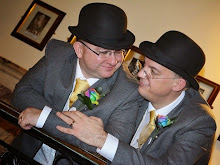
Monday, September 27, 2021
Labour’s Ten Holy Rules of Political Parties
The Tory Government is in a catastrophic mess, their incompetence, callousness and obsessive Brexit all responsible for such food and fuel shortages that they’re temporarily retreating even on their one core ‘hating foreigners’ policy.
Instead of Labour calling for practical solutions – rejoin the Single Market – the Labour Conference turns its fire on itself to fight its next Leadership election, while Labour MPs boast of the “hard truth” that they were happiest when losing their worst election since 1935.
Well, of course. Labour is never happier than when the Tories are in power: Labour need make no decisions, take no responsibility and have no message beyond ‘We’re s—t, and we know we are, but oooohh! The Tories! Scary!’ so they can get on with fighting any party but the Tories in the name of purity.
In May I wrote a Twitter thread on Labour’s attitude to political parties. Back then, I was inspired by Labour’s actions after losing votes and seats in elections. Labour in London – where Tories, Greens and Lib Dems on the London Assembly proposed sharing chairs between all four parties; Labour demanded all or nothing, then walked out, so the others shared them out. Labour, having gone off in a strop, spins this as a “coalition” despite Labour’s Mayor having the administration and the Assembly chairs being there only to hold the Mayor to account. Meanwhile, Labour in Stockport – where they lost a seat in this year’s local elections, so the Lib Dems are now the largest party on the Council? Stockport Labour and the Conservatives did an actual deal together to keep Labour in power-sharing with Tories. So…
For anyone confused about Labour’s attitude to any political party, remember Labour’s 10 Holy Rules:
1) The Tories are the ultimate evil, nothing could possibly be worse, any voters voting for them or parties talking to them are forever damned, we don’t want your votes!
2) We can’t understand why you don’t vote for us! Why don’t you just vote Tory! That’ll scare you off voting Tory.
3) The Labour Party is always right, the fountain of all holy goodness.
4) Not that bit of the Labour Party, they’re worse than Tories.
5) No, you can’t tell which bit of the Labour Party is holy by checking who’s racist / sexist / homophobic / transphobic. Holiness is found not in deeds but revealed truth.
6) Only we can reveal the truth (but don’t ask us to explain, or we might call you a Tory)!
7) Election day: Lib Dems / Greens are just Tories, their votes are Tory, vote for them and you’re a Tory, don’t vote Tory, any party but Labour is a Tory!
8) Day after election: Labour technically won because Lib Dems / Greens are really Labour votes and they count for us.
9) Labour should go into coalition with the Tories (e.g. Stockport Council) to keep out Lib Dems or Greens.
10) Only by embracing Tory Brexit, agreeing with all Tory policies and wiping out all parties that are not Tory can Labour overcome the Tories. Disagree? You’re a Tory!
Bonus Labour fact: on this day in 1999, the Labour Government was defeated in the courts after fighting for two and a half years to keep the ban on bi and gay people serving in the armed forces. Having spent millions of pounds defending discrimination, Labour spin then claimed the credit for dropping the ban only after being forced to stop it by the courts. To this day they pretend they were against inequality when the reality is they fought to protect it. Shameless!
Extra Bonus Labour fact: later in the afternoon actually today! Labour Conference rejects proportional representation. As always, Labour will go to any length to protect the Tories having absolute power (but with the chance of Labour getting absolute power once every thirty years) if the alternative is Labour sharing any power with any party that isn’t Labour-Tory.
Labels: Conservatives, Labour


Saturday, September 15, 2018
Time For Hard-Headed Realism On Immigration
Liberal Democrat members have attacked the proposed Migration paper A Fair Deal for Everyone for reasons ranging from fairness, to morality, to family, to economics. But for a political party, it has another fatal flaw. Its well-meaning, wishful-thinking naivety is just terrible politics. It’s time to get politically streetwise with a bit of hard-headed realism. Let’s ask the tough questions, get back to evidence-based policy and demand better.
Meaning Well and Wishing Are Not Enough
I’m sure the people who wrote the proposed paper for debate at Lib Dem Conference and its defenders mean well. I know and respect quite a few of them. And I can see how they got themselves into this mess. Two of the deepest Lib Dem instincts might be put simply as ‘Stand up to bullies’ and ‘Why can’t everyone get along?’ And most of the time those go hand in hand. But at times like these, when the country’s split, hate’s on the rise and things seem to be going horribly wrong, cracks can appear between the two. The proposed Migration paper feels upset at how nasty things have got – and I feel the hurt of that too – and wishes, really hard, that everyone would be nice to each other again. ‘Why can’t everyone get along?’ And so it compromises: a bit for immigrants; a bit for people who hate them and want them all gone. But in the real world, wishing doesn’t cut it, and there comes a time when you have to choose standing up to bullies instead of hoping they’ll turn nice if you only half-encourage them.
In thirty years of the Liberal Democrats, there can’t have been many more wince-inducing juxtapositions than one month ago. On August 14th, Lib Dem Leader Vince Cable said unequivocally that, hard as it might be, there was no room for racism in the Lib Dems. On August 15th, Lord William Wallace – a peer I have a lot of time for and usually agree with – gave an apologetic defence of the proposed Migration paper by saying that we have to pander a bit to racists otherwise they won’t vote for us (I paraphrase, but not unfairly).
The proposed Migration paper has the point of view that policy and the British polity should be kinder and gentler, wishing that people were nice, assuming everyone means well deep down and really agrees with us, and if they don’t yet then compromises in good faith will help them agree with us, and if nothing else maybe they’d vote for us after we tell them we agree with them, really, just a bit, and please, please, don’t hurt us. I can empathise. The problem is that the evidence supports none of it. I believe the Lib Dems backing these proposals mean well. But I’m realistic enough to know that not everyone else means well, and that wishing won’t make it so. The fight to make Britain better can be won. But it will take a fight, and if Liberals don’t put up a fight, who will? It won’t be won by acting as if we’re non-combatants who won’t take our own side in a quarrel, saying, ‘If you don’t want immigrants then you have a point’.
I don’t want to take this unduly personally, but when the proposed Migration paper puts forward a well-meaning compromise and I realise, ‘I’m the son of an immigrant and had this proposed Lib Dem policy been around when my parents met I’d never have been born’, it loses its appeal. That’s the trouble with compromising between haters and the people they hate; it always makes things worse for the ones who are already getting all the flak, but never goes far enough to satisfy those who want them gone. The proposed Migration paper proposes as a moderate compromise that I shouldn’t exist. What would I have left to give on the next compromise?
Stop wishing. Look at the evidence. Ask the difficult questions.
Look back ten, twenty, thirty years: the attitudes and policies and hostile environment against immigrants that are now ‘mainstream’ were confined to a few vicious hatemongers like the British National Party and then UKIP. How did we get here?
Has compromising bit by bit to defuse racists worked? Has mainstream politicians talking about ‘valid concerns’ increased harmony? Has fanning flames extinguished them? Has encouraging xenophobia quietened it? Has being too scared to confront lies made the truth more widely known?
I don’t blame people for thinking, once – maybe if we give a little we can avoid something worse. I do blame people who still stick to that hope when it has been tried over and over again and every time, the bigots have grown and strengthened as a result. Hostile immigration policy – hate crimes – Brexit – all these were unimaginable ten, twenty, thirty years ago. Compromising a little at a time has never stopped at a little. It didn’t work. That is the evidence. That is the unhappy fact. As the saying goes, one definition of insanity is doing the same thing over and over again, but expecting different results. The ‘wishing’ approach of the proposed Migration paper has been tested to destruction.
Pandering to racists only increases racism. Saying ‘I share your valid concerns’ doesn’t win hearts and minds – it just makes people in the middle say, ‘Well, if even the Liberals say immigrants are bad…’ while hardcore racists think we’re just mealy-mouthed politicians out to con them. And saying out loud – the shocking naivety! – that we have to pander to racists not because we actually agree with them but just to make them vote for us, so we’ll campaign on a promise that although we want to make things nicer for immigrants, because we recognise their ‘valid concerns’, we wouldn’t make things as nice as all that? That’s just treating voters as idiots.
Since the Brexit Referendum there’s been more hard polling evidence than ever before in British history on how social attitudes break around votes for parties. About 90% of the Lib Dem vote comes from people who also voted Remain. Voters who hate immigrants as their top issue? That’s UKIP’s big thing. That’s Theresa May’s big thing. That’s even Jeremy Corbyn’s big thing. Why on Earth would Lib Dems propose a Migration paper in the hope of appeasing appealing to such a crowded marketplace as what will only ever be the fourth choice of authoritarian racists? Let’s make an evidence-based call here: stop asking, ‘How do we get racists to vote for us?’ Because they won’t anyway.
Look at Labour’s record. Gordon Brown in 2010 trying to recover from “I agree with Nick” in the first debate by monstering him over immigration in the second and third (the third Leaders’ Debate was the one in which an audience member said “We’re not allowed to talk about immigration,” despite it being the only issue bar the economy featured in every debate, because hardcore racists are impossible to satisfy or to shake from their lies). Yvette Cooper attacked the Coalition from the right for not being tough enough on immigrants. Ed Miliband put immigrant-bashing on a mug. Brexit-backer Jeremy Corbyn tells lies about foreign workers stealing British jobs. Do Labour get ‘credit’ for being tough on immigration? No. Racist voters still think they’re too soft. Because there are always other parties that will go harder right to compete.
When I campaign, I try for every vote. If someone disagrees with us on immigration, they might still respect us locally for getting their potholes fixed. But if the economic and moral and principled case for a powerfully Liberal migration policy doesn’t persuade you, here’s the naked political calculation. We’re on 11% in the polls (at best). We’re not chasing an immediate 500-seat landslide. So to build up our vote, does it make more sense to make policy that’s weaselly and indistinct in the vain hope that’ll attract the people who are least likely to vote for us, when they can get red meat from several other parties? Or should we put our effort into attracting people who already agree with our values into voting for us?
It’s worth reading Andrew Hickey’s The Howard Rule – in which he proposes testing Lib Dem policy against Michael Howard’s once-infamous authoritarianism as Home Secretary – not just as a statement of principle, but as a reminder of just how far right all political parties have shifted in the last quarter-century. In the 1990s, he was appalling. Present his immigration regime today and it would scare the horses with its liberal openness.
Taking A Stand
We must do better than the proposed Migration paper. We can do better by demanding better of ourselves again.
One of my defining early political experiences was Paddy Ashdown leading the newly formed Liberal Democrats alone in standing up for the rights of Hong Kong British citizens. You might think struggling on a good day to hit 11% in the polls puts our party in the doldrums now, but back in 1989 a good day was hitting half that and the sheer relief of getting beyond the margin of error of nothing in the opinion polls. Standing up for a liberal immigration policy then let us hold our heads up. Margaret Thatcher’s Government steered the familiar Tory course of nationalism tempered by greed: standing by Britain’s promises to only the richest, offering citizenship by bribery. Norman Tebbit led a Tory rebellion against Mrs Thatcher to stop anyone with the wrong colour skin entering Britain, and the Labour Party piously opposed the idea of citizenship for the rich – then voted with Mr Tebbit’s Tory far right to stop anyone being let in at all. Mr Corbyn takes the same faux-ethical stance of economic populism as cover for immigrant-bashing today.
In April 2000, during a hard-fought by-election campaign where the Liberal Democrats were striving to take ultra-Tory Romsey, Charles Kennedy took on the immigrant-bashing Conservative campaign head-on. The Lib Dem campaign could have played down our Liberalism, played it safe, stuck to ‘popular’ issues and only challenged the Tories where they were perceived as electorally ‘weak’. Instead, the Lib Dem Leader took the huge risk of facing down the Conservatives’ asylum policy, in a speech in Romsey, where conventional wisdom was that saying the right thing would lose us the seat. We didn’t cower. We won. Charles said afterwards:
“The voters of Romsey were not beguiled by William Hague’s personal brand of politics – those based on fear and division… By concentrating on the negative, and pandering to the small-minded, he insulted the electorate.”Standing up for our principles heartens, rallies and recruits the people that none of the anti-immigrant parties can reach. And making the case instead of letting it go by default changes minds. We can persuade by telling it as it is – not by pretending and pre-compromising. How do we make racism less bad? Not by saying it’s right. Why can’t we all get along? Because some people don’t want to. Someone has to confront hate, say why it’s wrong, and don’t say they have a point when they don’t. But it’s not just about standing up to hate: it’s appealing to the better instincts of people for whom it’s complicated. Whose fears have been stoked by the Daily Hate, but who like their neighbours and were appalled by Theresa May over Windrush.
Liberal Democrats must make the case for immigration and for immigrants – because it’s right, because it’s the only way to turn back the poison, and because no-one else will. Immigration is good for the economy. But it’s not all about the money. Immigrants are the lifeblood of the NHS. But it’s not all about the work we get from them. Families should be able to be together because love is more important than money. Tabloids screaming lies about “open door” immigration, when it’s way tougher than anyone believes, has led to families being torn apart, but still most people think if you marry an immigrant they can stay. That would be a Liberal immigration policy. That’s the sort of appeal Lib Dems should make – not the proposed Migration paper keeping a price on family life.
Demand Better
Remember – these are only proposals to be debated and decided at Conference. It is not A Fair Deal. For Liberal Democrats, it is not a done deal.
Be politically streetwise. Look at the evidence. Tell the truth. Don’t pander to racism and don’t settle for wishful thinking that has been proven year after year only makes things worse. Vote to send the proposed Migration paper back so the Liberal Democrats can offer – can demand – something better.
This is a slightly longer version of my article published on Liberal Democrat Voice earlier today. I recommend going there to read Caron Lindsay’s The paper on migration, even amended, is not good enough. Her piece is brilliant, speaks from the heart on how to persuade people, and scathingly dissects the paper in detail.
Labels: Bigotry, Brexit, Charles Kennedy, Conservatives, Immigration, Labour, Liberal Democrat Conferences, Liberal Democrats, Paddy Ashdown, Vince Cable
Wednesday, April 19, 2017
Another Vote – Another Disappointment?
Time for another video…
Here’s what I say in it:

So there’s going to be another General Election. Maybe you’re not that excited. Maybe you’re still disappointed by the last one.
In a democracy, you get choices. So you expect the people who made a different choice to be disappointed.
But the great about democracy is that if you wanted something different, you can always keep putting another point of view, and there will always be another vote.
Wanting to silence dissent or saying one vote counts for ever is sticking a knife in democracy.
We’ve had two really big votes in two years, the General Election, then the referendum. Now we’re to have another one, think about something that’s strange about them.
It’s not just the losers who’ve been disappointed. Even the winners aren’t happy. What happened?

The Conservative Party
At least usually if you voted for the winning party, you’re satisfied for a bit. And the winning party’s quite happy for a bit.
Well, it didn’t happen this time.
Even though most people voted against them, two years ago the Conservatives won by that much. But they’ve been behaving as if they rule the world ever since.
That’s disappointed a lot of people who voted for them last time.
Because a lot of people said they liked David Cameron. He seemed like a moderate and not the nasty, arrogant sort of Tory.
And the Conservative Party promised that voting Tory meant two things above all: stable government and economic success.
That’s all gone, never to return.
Literally the day after the last election, they shut down support from disabled people getting into work. Just because they could. Nasty.
All the way up to today, with the Tories hell-bent on inflicting the most damaging hard Brexit they can. Arrogant.
In between, they’ve messed around with our schools. They put the NHS in crisis. Because their far right hate the environment, they’ve cut green energy so the Tories went from hugging a husky to tilting at windmills.
But above all, this Tory Government has meant utter political chaos and instability, and economic disaster.
The worst of it’s in one word: Brexit.
First the Prime Minister went.
Then none of them had a clue what happened next.
But they’re still behaving as if they rule little England.
Now inflation’s rising, jobs are falling, companies are moving out of Britain, they’re throwing away the biggest Single Market in the history of the world. And Britain is getting smaller, meaner and nastier. A terrible disappointment to everyone who believes in British values.
And still no-one has a clue what happens next.
I bet one person does. Because in Britain we have General Elections every five years. The only reason not to is if a weak Prime Minister is in a total panic and does a massive U-turn. Theresa May has called an election before it’s even half-way time. It must be because she’s panicking. She’s seen some secret figures of how bad it’s going to be and is making a run for it before total disaster.
The most unstable government in decades. The economy thrown in the bin. Now there’s only chaos. Mayhem.
What can the Tories say to the voters they’ve let down? All the Tories stand for now is hating foreigners and bossing people about.
And it’s not just Tory voters who are disappointed.
Tory MPs have actually resigned from Parliament and left politics because they’re so fed up.
Even David Cameron did it! How much of a disappointment do you have to be for the guy who’s just been Prime Minister to say, that’s it, I’m sodding off?
And since the local elections a year ago, in the by-elections every week where people vote for new councillors – the Tories have lost 21. They must be disappointed with that.

The Labour Party
Now, I’ve never been a Labour supporter either. But even I can see that you need a strong opposition to hold the Government to account when they’re in such a mess. Well, there’s no such luck. If you voted Labour last time, well, you’d have been very disappointed they didn’t get in. But they failed by a mile. And since then, they’ve just got worse.
The one reason the Tories look like grown-ups after all their Mayhem is – the Labour Party.
Corbyn and Labour MPs and members who are even more at war with each other than the Tories are. When the country really needs someone to force the Tories to account, all you’re getting is the worst opposition in living memory, who are only interested in fighting themselves.
But the thing that’s really disappointed people is the one you’d never expect.
The most far left Labour leader ever votes with the Tories on everything – he’s given the Tories a blank cheque to do whatever they want on Brexit in every single vote in Parliament. And Labour are boasting they want a harder Brexit than the Tories. A harder Brexit than UKIP!
So there are Labour MPs who’ve resigned from Parliament too, and left politics too, because they’re so disappointed.
And since the local elections a year ago, in the by-elections every week where people vote for new councillors – Labour have lost 13. What a disappointment for what a let-down of an opposition.
UKIP
Then there’s UKIP. At the last election they got one MP. Just one MP.
Guess what happened?
He’s left the party because they all spent so much time fighting him.
Since they got their dream result in the referendum they’ve gone through four leaders. One of them twice. All they ever had was hate, and now they’ve got no-one else to hate but each other. They’re just falling apart.
No MPs. Very few councillors. And you can guess what’s been happening since the local elections a year ago, in the by-elections every week where people vote for new councillors – they’ve lost another 7, probably all they were defending. They must be disappointed with that. But nobody’s even paying any attention any more.

The Liberal Democrats
And then there’s the Liberal Democrats.
Everybody knows at the last General Election we had a terrible result. The worst since I’ve been alive. We all worked hard, we were all disappointed, and our voters were disappointed.
But that’s not where it finishes.
Two years ago we had over forty thousand people still working hard as Lib Dem members. And we didn’t give up.
We went up.
Within a week of the last election, we had more than fifty thousand members.
And still more people joined.
And when the referendum went Leave by that much, more people joined.
By a couple of weeks ago we’d doubled our membership to eighty-five thousand.
On the day Theresa May panicked and ran for an election, Lib Dems surged to more than ninety thousand members.
We’re still growing every day.
Because Britain is better than this, and there is only one party that is fighting against the disappointment.
Because standing up for a better future inspires people. Being a proper opposition. Standing up for working together. For trade and peace and prosperity and the environment and education and our NHS.
And our MPs have actually gone up instead of quitting. One of those brand-new Lib Dem members was determined to make a difference, and she did. She won voters over and overturned a huge Tory majority when she was elected MP for Richmond Park in December.
And since the local elections a year ago, in the by-elections every week where people vote for new councillors – Tories down 21, Labour down 13, UKIP down 7.
People have voted in 33 new Lib Dem councillors.
You don’t have to give up.
You do have a choice. You can change direction. You don’t have to live with disappointment.
There is always a new day.
We’re in league with the future. Join us.
If you want the choice to stop Brexit, if you want Britain to be the open, tolerant, outward-looking country we can be proud of again, if you believe in freedom, fairness and a better future, join the Liberal Democrats.
Theresa May has called a panic election at a time she thinks is best for her to fix the result. But we have a choice.
Mrs Mayhem – prepare to be disappointed.
*Local by-elections results May 2016 to April 2017 from Political Betting, April 8th 2017
Labels: Brexit, British Politics, Conservatives, General Election, Labour, Liberal Democrats, UKIP, Video
Monday, August 24, 2015
Douglas Adams Vs Corbynomics
The story so far.
In the beginning, the Labour leadership election was created.
This has made a lot of people very angry, and been widely regarded as a bad move.
Since the Labour B-Ark crashed completely, its principal survivors have emerged as the very talented and useful Blair-Tone Sanitiser (Third Class) Kendall, Security Guard Number 2 Cooper, Make-up Assistant (Trainee) Burnham and Hairdressers’ Fire Development Sub-committee Chair Corbyn.
There are many important and unpopular questions which must be asked about the crash of the Labour B-Ark and the new landscape in which they now find themselves. The four very talented and useful candidates even hope that there might even be one ultimate question that will unravel the answer to Life, the Universe and Everything. They can all be relied upon not to ask it.
They have instead started work on several typically Labour B-Ark projects: arguing about what colour it should be; having a quick bath; declaring war on the next continent. Most importantly of all, after 573 meetings, the Chair of the Hairdressers’ Fire Development Sub-committee has discovered a brilliant new fiscal policy…
“How can you have money if none of you actually produces anything? It doesn’t grow on trees, you know!”
“Ah! But since we decided a few weeks ago to adopt the leaf as legal tender, we have all of course become immensely rich. But we have run into a small inflation problem, owing to the high level of, ah, leaf availability. Which means that I gather the current going rate is something like: three major deciduous forests buy one ship’s peanut.
“So in order to obviate this problem and effectively revalue the leaf, we’ve decided on an extensive campaign of defoliation and, er, burn down all the forests.
“I think that’s a sensible move, don’t you?”
This quotation summarising ‘People’s QE Corbynomics’ is taken directly from The Hitchhiker’s Guide To the Galaxy, Television Phase, Episode Six, by Douglas Adams. As it’s one of the most remarkable TV series ever made, I recommend watching all six episodes*. But if you merely want to see the economic analysis, it’s about 27 minutes into the final episode (above), immediately after Ed Miliband contributes to the debate with the typically incisive observation, “One’s never alone with a rubber duck. Whee!”
*Six episodes may seem like a lot, but that’s just peanuts to the Labour B-Ark leadership election. For though it has many omissions, and contains much that is apocryphal, or at least wildly inaccurate, The Hitchhiker’s Guide To the Galaxy Television Phase scores over the more pedestrian audience experience in two important respects. First, it is very much shorter (taking only three hours, not three months, and after watching it you are far less likely to say ‘Well, that’s a part of my life I’ll never get back’), and secondly, it has the words: “DON’T PANIC” inscribed in large, friendly letters on the cover. Which by this stage in the Labour B-Ark leadership election pretty much everyone concerned agrees they could have done with, too.

Labels: Douglas Adams, Economy, Labour, The Golden Dozen, The Hitchhikers Guide To the Galaxy
Tuesday, April 28, 2015
Two Married Men Say Thank You to the Liberal Democrats
On Sunday, Richard and I celebrated six months of marriage.

And two-hundred-and-forty-six months since we’ve been together.

We had to wait twenty years. We had to wait until the Liberal Democrats were in government.

So here’s a video we recorded on Sunday to say thank you to the only party that’s always been there for us, and always been there for lesbian, gay, bisexual and transgender people.
What We Said
We got married.
It was a fantastic day.
So many wonderful people celebrating with us.
And so much food.
We’ve been together a long time, and we’ve been to a lot of weddings, and there’s never enough food.
Trust us on this. If you ever get married –
– which is fantastic, by the way –
– then feed people and they’ll be happy enough that they listen to your speeches.
But the thing about us getting married is, we had to wait a long time.
A very long time.
Twenty years.
To the day.
It wasn’t that we had very strict parents.
Well, not much.
You see, I met Alex
And I met Richard
And we fell in love.
And we got together twenty years and six months ago today.
So we got married six months ago today.
Because we’re gay.
So it was a long wait.
In fact, we had to wait
Until the Liberal Democrats were in government.
In the ’70s, when we were born, only one party said as a matter of principle that they backed gay rights.
That was the Liberals.
In the ’80s, when we were at school, one party brought in Section 28, to put bashing the gays into law.
That was the Tories.
Only one party opposed Section 28 from the first.
That was the Liberal Democrats.
Labour were in favour of it.
Until they weren’t.
But they didn’t do anything about it when they had the power to in the ’90s.
Not for ages.
In fact the bit of Britain that first got rid of it was Scotland, in the early 2000s.
When the Liberal Democrats were in coalition there.
Labour had absolute power in Westminster back then.
But they didn’t bother changing the law for the rest of us until much later.
I remember the 1992 election, when one of the three big extreme things Jeremy Paxman sneered at a party leader for was supporting gay rights.
That was Paddy Ashdown and the Liberal Democrats, and he stuck to his guns.
Actually, Paddy doesn’t need guns, he’s dangerous enough with his bare hands.
That was Paddy Ashdown.
I remember the 1997 election, when one of the three big things the Daily Telegraph said a party’s manifesto was dangerously extreme for was supporting lesbian and gay rights.
That was the Liberal Democrats.
And eventually, in 2001, one party came up with the first ever Manifesto for Lesbian, Gay, Bisexual and Transgender People.
That was the Liberal Democrats.
And all the promises in there were in their main manifesto too.
That was the Liberal Democrats.
And they did the same thing again at the next election.
That was the Liberal Democrats.
And meanwhile the other parties either kept on hating the gays
That was the Tories.
Or just didn’t have the balls to do anything in case it put people off.
That was Labour.
Liberal Democrats proposed civil partnerships.
Labour and the Tories voted them down. They were both against it before they were for it.
And even then the Liberal Democrats wanted civil partnerships as a choice for both same-sex and mixed-sex couples.
But both Labour and the Tories have always said those can only be a second-class option for the gays.
The government spent thousands and thousands of pounds of taxpayers’ money in court opposing an equal age of consent.
That was the Labour Government.
They lost. And the government spent thousands and thousands of pounds of taxpayers’ money in court defending the ban on gays in the military.
That was the Labour Government.
They lost that too.
So when the Labour Party boasts that it equalised the age of consent
Remember that they only did it because they lost in court and the court made them do it.
So when the Labour Party boasts that it scrapped the ban on gays in the military
Remember that they only did it because they lost in court and the court made them do it.
The Labour Party’s boasts are like a burglar caught red-handed and then found guilty who then tries to claim credit for giving all your stolen stuff back.
When you know they’re the ones who nicked it in the first place and only the court made them do it.
And then when the Coalition was formed in 2010
Only one party leader had said he was in favour of equal marriage.
That was Nick Clegg for the Liberal Democrats.
And that year the first British party ever voted to back equal marriage.
That was the Liberal Democrats.
And eventually the Lib Dems persuaded the leader of another party.
That was David Cameron for the Tories.
And later than that, another party said there was no need to have equal marriage – but in the end came in third to back it once it was already happening.
That was the Labour Party. They were against that before they were for it, too.
And one party was badly split about it.
That was the Tories.
And a lot of their MPs said they backed equal marriage because it was a “gesture” to “detoxify their brand”.
That was the Tories.
So as it was only a gesture, we can think of a few gestures to make in return.
But this isn’t tagged as an explicit video.
And another party didn’t care, and hadn’t bothered doing it when they had absolute power for thirteen whole years, but they jumped on the bandwagon last and then tried to claim all the credit.
That was the Labour Party.
But at least this time they didn’t oppose it tooth and nail until the courts made them do it.
No. So that’s something, I suppose.
But when one party said that to make it all properly equal, let’s make the law equal marriage for trans people too, and open up civil partnerships to mixed-sex couples so everyone has more choices
That was the Liberal Democrats.
The other parties said
It’s complicated.
No thanks, you’ve had your gesture, that’s your lot.
That was Labour and the Tories.
So next time any important issue of lesbian, gay, bisexual and transgender rights comes up in Parliament…
You know what’ll happen.
Two parties will swing with the wind and just vote whichever way’s fashionable.
That will be Labour and the Tories.
Because they always have. So you’d better hope lesbian, gay, bisexual and transgender people happen to be popular that year.
Good luck with that.
And one party will vote for equality for everyone.
That’ll be the Liberal Democrats.
Because we always have.
Always will.
Because Liberal Democrats believe in freedom and opportunity for everyone.
Freedom for every individual
For everyone to have the liberty to live their lives as they choose
For fairness and equality before the law
I’m Alex
I’m Richard
Thank you, the Liberal Democrats, for changing the law so we could get married.
We had to wait twenty years
Some of them Tory years
Some of them Labour years
Without the Liberal Democrats in Government, we’d still be waiting.
For more about why we believe in the Liberal Democrats, take a look at Liberal Democrats Believe – a Liberal quote for every day of the election (and more)!
Labels: Conservatives, Gay, Labour, Lib Dems Pointing, Liberal Democrats, Marriage, Nick Clegg, Paddy Ashdown, Personal, Richard, Things To Remember About Labour
Sunday, March 29, 2015
The People’s Flag? Mugs.
The People’s Flag is purple nowIt’s to Farage that they kowtowNow Labour’s values are unknownExcept the mugs with ‘Send them home’
The People’s Flag has changed its spotsFor fear of UKIP’s ballot boxThose mugs keep lowering the toneTheir banner reading ‘Send them home’

I like to think that I’d instinctively be a Liberal and not a racist opportunist even if I wasn’t the son of an immigrant. After all, Ed Miliband’s the son of an immigrant too, so there doesn’t seem to be any correlation.
Thanks to Nick Barlow for eternal vigilance and #whynotjointhelabourparty, and to Richard Flowers for everything, always, but this time in particular for kicking off the lyrics. And a damned good kicking is in order (even from Labour MPs).
Labels: Bigotry, Labour, Music, UKIP
Wednesday, October 08, 2014
Lib Dem Conference On TV: Watching Where the Money Goes
I’m usually busy at Liberal Democrat Conferences. Writing speeches – sometimes even getting called to make them. Writing chunks of policy – sometimes even proposing them. Not writing a blog looking at the telly, while policies I’ve had nothing to do with are debated without my vote or voice. One I’m in two minds over. One I’m proud of. One taking baby steps but going nowhere near far enough. One that’s OK but should’ve been inspiring. One that’s unjust, unaffordable and unworkable. And the big picture: the very few places where my party puts any money where its mouth is.
As my health has gone further downhill, in conference after conference I’ve made fewer speeches and attended fewer debates than I did five years ago, or ten, or twenty. It’s just a bit of a shock to go from steadily decreasing participation and days when I often have to stay in a hotel room rather than in the conference hall to zilch. Hopefully Richard and I will be back next year, more engaged once we’re married (though it’ll be much more expensive for me just as my low income’s been eradicated, thanks to government policies I can’t say I support).
But there is one advantage to watching this Glasgow Conference on TV. I would be sitting in the hall fired up and wondering if I’ll be called to make my speech, listening to dreary meandering mumbles with nothing to say even if they could deliver it, where the only message is ‘My view on this crucial national issue is incoherent but involves a mind-bogglingly dull special plea for my own little local area’ – and it’s not just the MPs, some of the ordinary members are just as bad. I would be thinking hard at the sodding chair of the session, ‘It’s one thing not to call me to make the brilliant speech I’ve crafted so carefully, but calling these ones instead is just insulting.’
At home, I don’t feel the urge to write a speech, I don’t have to worry if I can make it to the hall, and above all, I can record the debates and watch most of them with my finger on the fast-forward button!
In my breaks from Lib Dem Conference, I’ve also been watching Doctor Who – The Pirate Planet, starring Tom Baker and written by Douglas Adams. This brilliant story, is I have to admit, better viewing than pretty much any Agenda item bar the Presentation On Same-Sex Marriage, and its second episode was first broadcast on this night back in 1978. At the time, part of it was a satire about the idea of an “economic miracle” for which no-one has to pay. It also turns out (spoilers) that behind the exponentially increasing devouring of the resources of whole worlds is someone very old to whom no demand is ever enough.
So what’s been happening back at the Conference? You can read all the papers here, and catch many of the debates via the BBC. But here’s why some debates particularly caught my attention…
“One Member, One Vote”
I’m torn on this one. If party membership hadn’t been hollowed out, I’d be wary that these proposals sound like they’re about equality but actually even more heavily in favour of time-rich, money-rich people who happen to live close to the seaside (or, in this case, to Glasgow). The equivalent of electoral reform for the UK being to propose one person, one vote – as long as you can all pay a large registration fee to crowd into the same one polling station. In Glasgow. Or, discarding the party’s current constituency-based representative democracy model, like reforming the House of Commons by saying any UK citizen can turn up and vote there, as long as they can afford to pay to register and pay to stay in London. And I wasn’t totally convinced by the argument that our shrunken membership makes it less likely people will turn up to swing the votes, which seems like an argument that we should completely change the structures just to get no more people turn up anyway. That the proposals themselves were a badly-drafted mess from a Federal Executive that has been record-breakingly navel-gazing and incompetent in its faits accompli this year didn’t help.
And yet… I’ve had times when I’ve been to conference without being an elected conference representative with a vote too, and it’s even more frustrating than being a conference representative who’s not at conference as I am today. The amendments stopped the constitution being turned into incoherence. And the arguments on the OMOV side were simply far better, with too many of those against resorting to pathetic ad hominem attacks.
Watching from home, though, if every member is to get a vote not just if they attend conference but for the major party committees, the small changes in making conference easier to follow over the past few years need to accelerate mightily. During conferences, the party website must have a one-click ‘What is happening right now’ solution rather than a many-click ‘Somewhere here you can work it out’ puzzle box. The back-projections and the chairs of sessions need to give the site address several times during each debate and explain what’s going on in each vote, not just to make it clear to conference-goers rushing about, but to those more members we’re told will be freshly engaged and watching after OMOV. Announcing at the end what the votes have actually decided, rather than just reading out a list of numbers and letters, would help the TV watchers too.
In a spirit of helpfulness, here’s one I prepared earlier: Making It Easier To Follow Liberal Democrat Conference.
Towards Safer Sex Work
Twenty years ago, I was newly elected to the Liberal Democrat Federal Policy Committee – the body that decides on the major policy proposals that go to Conference. I was the youngest person on it by more than ten years, the only out LGBT person on it (putting into perspective today’s debates over reducing ‘diversity’ to only one tick-box quota), and – the unique thing about me that most mattered to me and which made the difference on the Committee – by the reckoning both of those meaning it approvingly and those meaning it critically the most unfilteredly ideologically Liberal. One of the first policy papers that that year’s FPC discussed had something done to it that I can’t remember any other paper save election manifestos. Election manifestos come back several times for FPC debate because there’s so much in them and we need to get them right. This paper was sent away for redrafting not once but twice because it was simply too Liberal for the FPC. I can’t remember any other than wasn’t just redrafted a bit in committee, as was the norm, but rejected in total and sent away to be rewritten from top to bottom (possibly not the best words), then once we saw it again, told it was still too interesting and needed to be completely redrafted yet again.
The neutered and regulation-heavy paper that was eventually permitted to creep into Conference was titled “Confronting Prostitution”. I bear some responsibility for that overly confrontational language: I was the one who pointed out to the FPC that the title “Tackling Prostitution” might be open to ribald remarks and we should get our tackle out.
It wasn’t a bad paper. It advanced us well ahead of the other parties. But I always looked at it with disappointment, because the policy working group had followed its remit, followed the evidence, and followed Liberalism in drafting a civil liberties paper that the FPC gutted stage by stage until it was about ‘getting them off the streets’. When the first draft came to FPC, it was the only policy paper that was ever so unpopular that just one solitary FPC member supported it as it stood. You will not be surprised to read that it was not the only time in which I was in a minority of one, but it was the most significant.
So I was very proud to watch all of Saturday afternoon’s debate, to see how far we’ve come. I particularly recommend you read Sarah Brown’s speech, but I was really pleased at how sensible and Liberal the overwhelming majority of the speakers – and the votes – were, including protecting sex workers both from exploitation and from the state, rejecting the idea of reintroducing ID Cards but just for sex workers, and setting out the principle that informed, consenting sex should simply be legal and is nobody else’s business (even if it’s a business). Well done, Conference! I just hope now that the next FPC will not be as timid about the forthcoming policy paper as its predecessor two decades ago. So if you have a vote, vote for the candidates with some Liberal ideas rather than just a CV on their manifesto.
Doing What Works To Cut Crime
I liked this policy paper – it sets out a practical, evidence-based approach to cutting crime. But its piecemeal nature means it looks more like a compilation than a coherent whole. So I welcome the commitment to crime prevention. And civil liberties. And evidence-based baby-step liberalisation of our useless, gangster-boosting drug laws. And to the interests of victims.
But a bigger question that the paper doesn’t ask is that if we want fewer victims, what about the victimless? What about ‘crimes’ that are not about protecting any victim but only about the state victimising people that aren’t hurting anyone else? Because it’s not only criminals who attack you that can be bullies. The state can, too. And if you want to prevent crime, expand freedom, cut the ground from under gangsters and have fewer victims, then setting out the principle that ‘victimless crimes’ should simply not be crimes at all is something I’d like to see as the keystone of our next crime paper when it looks at evidence for how to implement that.
The Liberal Democrat 2014 Pre-Manifesto – A Stronger Economy and A Fairer Society
I wrote a little about this yesterday, looking at the Introduction and how that’s changed and improved on previous attempts – though it lacks a short, stirring rallying call of What the Liberal Democrats Stand For.
The whole thing’s pretty good. And I particularly liked Duncan Brack’s closing peroration in the debate (Duncan, if you’re reading, please send me your speech and I’ll print some of it in a Liberal Monday). I have to admit, though, save the much-purloined policy to further raise the personal allowance for the lower-paid, I’m a bit hard-pressed to remember a ‘wow’ policy. That suggests that its narrative isn’t all that thrilling. And then at the last minute, someone came along and diluted the best bit.
I might have been tempted to vote against it for the drafting amendment announced this morning: the problem with an amendment that’s accepted into the text at the last minute is that no-one gets to debate it or speak against it. Several years ago, there was a crappy Guardianista fad for “wellbeing”, a meaningless top-down political concept like a New Labour zombie. The Lib Dems made the great mistake of deciding it was the biggest of big ideas, with almost zero enthusiasm, and since then have sheepishly never mentioned it again because it’s a load of rubbish. Until this policy motion, when some utter fool wanted to add it and the bigger fools on the FPC let them. Worse, it means that the motion as passed says that the one big thing we’re really about is “above all to empower every person to realise their potential” – oh, and also “wellbeing”! Which is crud. It’s not one task. It’s two. It means the inspiring, Liberal, bottom-up idea that we are about enabling everyone to decide their own life is now knitting together with top-down Blairite mulch about how we should decide what’s good for people. As no-one mentioned it in the debate, proving yet again how pathetically uninspiring the idea is, my advice is just to pretend it isn’t there.
But at least the Pre-Manifesto remembered to talk quite a bit about the deficit, and didn’t pretend you can fix it while bringing in no new tax revenue at all and giving massive handouts to the wealthiest.
Did We Forget About the Deficit After All? The Big Four Spending Commitments
The Pre-Manifesto was very tough on the deficit this morning. Then there was a huge splurge this afternoon.
I’m not against huge splurges (no, titter ye not). But the Liberal Democrats have carefully costed our Manifestos for more than two decades to only promise what we can afford, even in the good times when the money was rolling in (though less than the Labour Government pretended). Now the money’s not just tight but gone, it’s all the more obvious where the few extra bits are going – while everything else gets slashed.
- The Liberal Democrats are committed to protecting and expanding spending for schools and early years education – we always have. It’s probably our single most consistent commitment.
- We’re committed to increasing pensions through the so-called ‘triple lock’ (heads, tails or side, pensioners always win big).
- We’re committed to raising the income tax allowance to the level of the current minimum wage – but that isn’t ‘locked’, so it can be eaten away by inflation.
- And we’re now also committed to above-inflation increases in the NHS budget. All the previous three follow on from the big promises the Liberal Democrats made in the 2010 election, all three of which were delivered in the LiberaTory Coalition. This one is different: it also happened for every year of the Coalition, but at the last election it wasn’t promised by either the Liberal Democrats or Labour. This part of the Coalition’s record now taken up by every party was only a Tory commitment. We forced them to agree to the others – they forced us to agree to this one.
These four spending commitments are massive. And everything else will have to suffer.
I remember in 2001 – in what Labour told us were the boom years – I put out a really good leaflet across the constituency for which I was standing for election. ‘Follow the money’, I thought, and so this was all about the two biggest spending commitments in our 2001 Manifesto. On one side, a picture of me with local kids, with details of our proposals for children and education and how we’d pay for them. On the other, a picture of me with local pensioners, with details of our proposals for old people and pensions and how we’d pay for them.
I thought this was a great idea until a working person without kids told me angrily, “So you’re offering me nothing, then. I just have to pay for it all.” That should have occurred to me: I was a working person without kids. But though we’d said in our 1997 Manifesto that we’d raise the personal allowance for the low-paid, by 2001 we’d dropped that from our priorities to give a massive bung to pensioners. And back then that didn’t even include the earnings link and ‘triple lock’.
Today we have even less money. We’ve restored the policy of cutting taxes for low-earners – and made it a reality for millions despite the Tories wanting a tax cut for dead millionaires instead and Labour opposing it because they want government hand-outs only to the people they say deserve it rather than letting all the low-paid keep their own money. But that wasn’t a choice between generations. Something for children; something for working people; something for pensioners; now something for the NHS for everyone.
I just don’t think this can hold – because four massive commitments of extra cash is too many without squeezing everything else until it pops. And one of those four is not like the others. Only one has had no hard choices at all – just constant rises.
Age Ready Britain
Back when I was healthy enough to stand for elections, I went through an assessment to see if I was politically fit to be a Liberal Democrat Parliamentary candidate. I passed with flying colours, and can still remember my going all Churchill to the assessor role-playing an anti-asylum-seeker voter on the doorstep (as well as remembering that I’d only use the word “refugee”). One of the parts of the approval process of which I most approved in turn was the point where you had to prove you had a Liberal brain by identifying a party policy that you disagreed with and explaining why. I think at the time it was something about well-meaningly bossing young people about – a “wellbeing” policy, if you will – and, if I thought today about which I considered our most wrong policy, I would quite happily blast that Blairite twaddle of a “wellbeing” paper out of existence. But as it’s already been wiped from everyone’s memory through its very blandness, I would answer that the policy I most disagree with is one that has been made even more disagreeable today.
Our policy on pensions is generous, warm-hearted, well-meaning and attractive.
It’s a shame that it’s completely out of touch with reality.
This morning, the Liberal Democrats voted for a Pre-Manifesto that constantly repeats that it is all about “the next generation” and uses that as a primary argument for reducing the massive deficit between what the government spends and the money it has – that we must spend less now rather than saddle ever-increasing debts onto the next generation.
This afternoon, the Liberal Democrats voted for our biggest spending commitment not only to remain humungous increases for pensioners when every single other group in society is suffering cuts, but to put that vast and ever-increasing cost into law so that it can never be changed.
Completely unworkable.
The first time I ever spoke on what might be called the party ‘establishment’ side, after many years of being the radical outsider, was sometime roughly around the year 2000. It was in a debate on pensions that saw the unlikely bedfellows of young people, the party Leadership and elderly members of the House of Lords on one side, with middle-aged Parliamentary candidates on the other. The Parliamentary candidates wanted to restore the link between earnings and pensions because it was very popular. The rest of us said that it was a mistake to make that a principle because we could afford it today – as we then thought, not realising that even in the boom years the Labour Government was already running an unaffordable budget deficit – because there would come the twin pressures of an ageing population and a less rosy economy, and then we’d be stuck with a policy that wasn’t affordable. I can’t remember precisely my age, but I can remember my speech’s opening line that got people’s attention (and got a few boos):
“Conference, I’m twenty-eight. And I want a pensions policy that doesn’t make me pay through the nose and then go bankrupt before I get anywhere near claiming it.”Back then, sense won the day. Somehow, between then and now, as the nation has got older and the economy has gone down the toilet, as the side that won back then have been proved right, we’ve gone ahead and gone for the unreal option anyway.
A ‘triple lock’ on pensions ratchets up without end, so that whatever happens to wages, or inflation, or the nation’s finances, however children or working people or people on benefits or services or anything else under the sun suffer, one group alone will forever get more and more money even as that group gets bigger and bigger.
We promised it at the last Election. We were wrong.
We’ve delivered it in government. We were wrong.
Today, we’ve proposed locking it into legislation so that every other group, every other service, every other dire need must always by law be subordinate to pensioners not just not contributing much to the cuts, not just staying still, but getting more, more, more while everyone and everything else gets less, less, less. We are stupidly, impossibly wrong.
With today’s pressure on the public finances, this is not merely utterly unworkable but utterly unjust.
I argued for pensions increases and other spending to help pensioners back in 2001. I meant it. It was the right thing to do when we could (seemingly) afford it. I didn’t argue for massive age discrimination and a huge and ever-increasing transfer of wealth from the current generation and the next generation to pensioners who will never be all in this together even when we can afford none of it. Because I’m an idealist, not a complete fantasist.
The Party Leadership and speakers in the debate today told the brave souls who stood up against this dangerous absurdity that they were wrong to say that ever-increasing numbers of pensioners getting a never-ending increase above the country’s wealth was unaffordable, because we just don’t understand the numbers. They didn’t say what the numbers were. Because… Because… Because… It’s magic! Government spending is still way above the money it takes. Everything and everyone else is struggling to keep their heads above water. The benefits bill is being slashed and people having their benefits cut or cruelly taken away altogether – the one exception being the vast majority of the benefits bill, the vast majority of benefits claimants, all of whom get much more than any other benefits recipients. They are the pensioners. But pouring extra cash into by far the biggest chunk of the benefits budget is “affordable”, we were told, and we just don’t understand if we say the emperor has no money to get clothes.
How stupid do they think we are?
One MP replied to criticism – from the unlikely bedfellows of Liberal Reform and a leading member of the Social Liberal Forum – by saying that we shouldn’t turn this into a fight between the generations. Well, that’s exactly what you do say when you’re the victor enjoying all the spoils, but not when you’re the side left bleeding and looted. Behind the scenes, they spin something else: not that it’s right, but that “pensioners vote”, so we need to throw money at them even if we have to mortgage the next generation’s future by borrowing half of it and mug the current working generation for the rest.
Ever wondered why the Tories so readily went along with a massive bung to pensioners – and took the credit? Maybe some of it was that when they got into power Mr Cameron still wanted to detoxify them and saw pensions as a totem that they were now the Nice Party to one group, at least. Before they rediscovered their taste for celebrating kicking the poor in the nuts. But why, do you think, were the Tories so happy to increase pensions while they slash and bash every other benefits claimant? It’s not rocket science, is it? Yes, “pensioners vote”. Pensioners vote Tory. Our most unrealistically expensive policy has been to make everyone else suffer, infamously cutting at our own core voters, to give a massive advantage to the Conservative core vote. For which the Conservatives get all the credit and we see our vote, as it always is, weaker the older the voting demographic gets.
We.
Can’t.
Afford.
This.
There are several good ideas in the Age Ready Britain Paper. There’s also the biggest infection of any policy paper this Conference of, yes, more twaddle about patronising “wellbeing” again, which is just a neon light for me to say that if I had been at Conference I would have urged the other Liberal Democrats to hurl it out and shred it, and start considering fiscal reality, fairness and the next generation’s future.
Labels: Coalition, Conservatives, Douglas Adams, Education, FPC, Labour, Liberal Democrat Conferences, Liberal Democrats, Manifesto, Pensions, Sex, Stupid Ideas, Tax, The Golden Dozen
Monday, October 06, 2014
Liberal Mondays 9: Nick Clegg on Today (Today) #LibDemValues
I’m not at Liberal Democrat Autumn Conference in Glasgow this week. It’s the first I’ve missed in about twenty years, and I am missing it – Richard and I would love to be there, but we’re getting married in twenty days’ time and just don’t have the time or the money. Following it on TV, one person who you can’t miss in Glasgow is Nick Clegg. This morning he was interrupted – I can’t say interviewed – on the Today Programme, so his latest answer on what the Lib Dems stand for is the latest of my Liberal Mondays quotations…
The Limits of the “Centre” and the Bigger Limitations of the “Interviewer”
Some of the random shouting by the random talentless hack from their researchers’ random shouting points and the Labour Party’s random propaganda points on Today this morning involved sneering at “Stronger Economy, Fairer Society” and shouting at Nick Clegg,
“Where is your core identity? What is it that the Lib Dems stand for?”Obviously, none of the random shouting involved listening or engaging with the answer – yawn, he’s answering the question, bored now, time to hear my own voice again – but I’ve managed to piece together what Nick was allowed to get a word in edgeways with in his latest short summary of what the Liberal Democrats stand for.
Earlier in the interview, Nick summed us up in part with a line that doesn’t appeal to me at all, but here goes:
“The Liberal centre ground is where we’ve always been anchored, and where we’ve sought to anchor the government.”I love the word “Liberal” – but I suspect those who aren’t tribal Liberals, which would be probably in excess of 99% of the population, don’t really respond to a tribal label. Only a minority, too, might respond to a concept, like “Freedom”, but it’ll be a lot more than those that identify with the label. Instead, the concept is “Centre” – which is meant to sound like ‘at the centre of things’ (if only one centre among, er, several in the same place?), but just sounds to me (and I suspect to almost everyone) like a statement that we don’t stand for anything of our own, splitting the difference between the others, neither one thing nor the other but somewhere… Quite a long way behind these days.
To be fair, there are advantages to the “centre” message. It lets you say your opponents are extreme and that only you are reasonable (isn’t really true but which might persuade) or that only you can rein them in (which is really true but which no-one believes). Nick came through with this strongly when contrasting the LiberaTory Coalition with what the Tories are gagging to do if they get “in power on their own” without us to tell them “No”: he focused on last week’s Tory Conference ‘Osborne bombshell’, where the Chancellor wants to abandon taxing the rich more (such as by the Liberal Democrats getting Capital Gains Tax raised above the previous Labour Government’s rich-bribing low level) and through eye-watering cuts alone
“only ask the working age poor to pick up the tab for the mistakes made by the bankers and the black hole in the public finances”.What you might call the Tories’ “No-tax bombshell”.
The weakness in the “centre” came when Nick tried to attack Labour in the same way, claiming that “Labour move rapidly to the Left”. I don’t think they’re moving anywhere. They’re just a frightened vacuum. And though Nick drew attention to Mr Miliband’s cowardly and incompetent inability even to mention the massive deficit left by Labour, that cowardice and incompetence isn’t red-blooded Leftism. It’s the biggest symptom of an inability to make up their minds about anything at all in the face of a terrifying reality that would tear them apart. But that doesn’t fit with us being ‘somewhere in between’. Nick wanted people to give us credit for “holding firm”, I suppose in a rebuttal of “the centre cannot hold” – but that only opened him up to the interviewer’s sole moment of demonstration that she wasn’t merely a non-Turing-compliant iDevice programmed to shout a limited number of dumb phrases on repeat:
“Holding firm is not an ideology.”Though I wait for any Today presenter ever to ask what either of the other two stand for and cut them off when their only answer is ‘Labour would tax you more and be nice to poor people and immigrants’ (the latter two points of which, unfortunately, aren’t even true) or ‘We’re shit, and we know we are, but oooooh! The Tories! Scary!’ (which is all true, but still gives me no reason to touch them with a barge pole and has nearly killed Labour in Scotland).
Nick Clegg’s Answer To “Where is your core identity? What is it that the Lib Dems stand for?”
“I’ll tell you exactly where we stand, and I feel this has always been the case.
“On the Left you’ve got socialism, the Labour Party, which is all about the state telling people what’s good for them; you’ve got the Right, the Conservative Party, that basically wants to keep the pecking order as it is.
“What has always distinguished British Liberalism, and I feel this very strongly, is an absolute, a huge emphasis on opportunity – that what everybody in politics should be about is trying to spread opportunity, such that everyone can get ahead in life, can live out their dreams, can use their talents to the greatest possible extent.
“And that’s why if you look at the signature tune things that we’ve done – I mean, don’t listen to the words, what we’ve done, our actions, judge us by our actions – whether it’s the massive expansion in apprenticeships, the huge transformation of the tax system so people on low pay keep more money as they work, or the very heavy emphasis on early years education, childcare, putting money into schools that cater for disadvantaged children.
“All of that is about opportunity.”
That is much better, and I’m glad Nick got to say most of it.
It feels recognisably Liberal in spirit as well as in label.
It’s something that Nick clearly believes, and is right at his heart, and that always helps when a politician says what they believe.
Though he didn’t say “Stronger Economy, Fairer Society” after the sneering, it chimes right in with that while sounding much more positive and definite than “Centre”.
And it links all that to our priorities in government.
It’s in many ways the same sort of thing I’ve been trying to do with my What the Liberal Democrats Stand For series, unifying ideology with our record in practice (latest version here; version with explanations here).
Any Liberal Democrat could say it themselves or stick it on a leaflet and not feel, ‘Oh, well, if I really have to.’
It isn’t perfect. In my own What the Liberal Democrats Stand For series, I’ve made a point of saying what we stand for – and Nick had already done his knocking copy, and been told not to talk about the others, but us. So starting with another attack on them was a mistake. It was a mistake because it made the statement about them.
Nick, next time you do this, if you must waste positive time being negative, take a tip from the “yeah, yeah, yeah, yeahhhh!” pre-chorus that propelled She Loves You irresistibly to Number One. If you stick otherwise to exactly the same words, then at least let your opening be “The Liberal Democrats are about opportunity for everyone.” People listen to your first line. Make it the most important and the most appealing.
And though your actual one-line sum-ups of the Labour and Conservative Parties were both fine, your first words about them were Centre-propagandist dumb:
“On the Left you’ve got socialism, the Labour Party…”No, Nick. You haven’t. Leave the word behind. Labour left it behind more than twenty years ago. People so terrified that Ed Miliband is a revolutionary socialist coming to chop their heads down to size will not be voting for us anyway. The vast majority simply will not recognise that as reality, just as Mr Miliband is too frightened to recognise reality. He is not a socialist. He is not anything. He is a pitiful vacuum.
I nod to “trying to spread opportunity, such that everyone can get ahead in life, can live out their dreams, can use their talents to the greatest possible extent.” That’s my inspiration too. I recognise the issue that’s been closest to your heart since before you became Leader in talking with such passion about opportunity and about early years education. I just wish that for all the investment, the passion and the genuine commitment, you could say the word “education” without having cut the ground out under you biggest priority by everyone else hearing “tuition fees”. And you were cut off, so I’ll give you the benefit of the doubt and assume you would have got round to mentioning the environment after criticising Mr Cameron for not talking about it any more.
And it’s a shame that the “interviewer” gave one of her many parroted lines from the Labour Party press office in ruling out any examples of what we’ve done in office connecting to what we believe by saying as ‘fact’ that it’s just a Conservative Government with our support. Too many people believe that. The BBC presenting a stupid Labour lie as a fact doesn’t help. But though you won’t convince everyone – or, I fear, anything like enough people – by saying ‘here are our values, and here’s how we’ve put them into practice in government’, you need to keep at it. Because only saying either without the other will give far fewer people even than that a reason to vote for us.
Possibly wise to find a better phrase than “don’t listen to the words,” though.
How Nick Today Was Better Than Nick On Other Days
It’s not what I would have said. But it’s in tune with what I would have said, and recognisably from the same sort of ideological place. And while it has its own weaknesses, it’s much better than some of Nick’s (and others’) previous statements of what we stand for. I’ll be kind and not repeat what he said in his second debate against Nigel Farage – focus-grouped to death, palpably making him uncomfortable, and the least Liberal ‘statement of principles’ I’ve ever seen from a British Liberal Leader – but it compares very well with the messaged-to-death message at the last General Election, for example. That brought everything down to one word: “Fairness”.
Now, I’d say that Fairness is certainly among Liberalism’s crucial concepts, but on its own it’s just not the one thing we’re about. Fairness should be in the service of something else. Nick says “Opportunity”. I can go with that. I’d say “Freedom” – and it’s always depressing and also a bit bizarre when I’m the only Liberal who seems to be saying that. But it wasn’t just that “Fairness” was only our number one in 2010 because it was what the focus groups said: it was, like several other things in that Election, a hostage to fortune that sounded good during the election but killed us afterwards. It’s absolutely true that throughout the LiberaTory Coalition Government the Liberal Democrats have made the cuts and hard choices fairer than the Tories wanted. But without a Tory Government to measure that against, nobody sees it. It’s absolutely true that the gap between rich and poor – which the previous Labour Government made wider and wider with their doubling tax on the poor and bungs to the rich – has fallen under the LiberaTory Coalition Government, fallen sharply, for the first time since I was at primary school. But when that proof of fairness comes not in the happy way – by lifting everyone up, but those at the bottom most – but in the painful way, by everyone suffering but taking most from the rich and protecting the poor, then nobody feels that it’s “fair”. Because no-one who suffers ever thinks it is fair for them to suffer. It’s a risk to say the one thing you stand for is Fairness even if you’re awash with money, because no effing voter is ever grateful. But to say the one thing you stand for is Fairness when you know that the most you can do is make everybody hurt in the fairest way is pretty close to suicidal.
Where you’ll find the closest relative of Nick’s Today statement today is, unsurprisingly, in the Liberal Democrats’ new Pre-Manifesto, and in Nick’s Introduction to it. As is usually the case, the section on what we stand for is relegated to a ‘personal view’ by the Leader, as if presenting it as actual philosophy or, worse, ideology for a party would send readers screaming to the hills. As is always the case, this is written in part by Nick, in part literally by a committee (the Liberal Democrat Federal Policy Committee, if you want to tell them what you think of it), partly by staff and partly by another committee whose names you’ll find at the back of the booklet. But of course it’s Nick’s every word, officially. Comparing what Nick says in the booklet in these three pages with what he said on the radio in three paragraphs gives you an idea of what’s really closest to his heart.
For me, the Introduction to the 2014 Pre-Manifesto is one of the best that the party has produced. I think – after usually complaining that they’re far too short – that it should really have a short version, probably on the front or back cover. Here’s one I prepared earlier. But it’s persuasive, it’s distinctively Liberal, and the middle one of the three pages gives our policy priorities for the future in a way that fits seamlessly into what we’re about. But without a summary or a short version, it’s not quite clear that there’s one word that motivates it – which is probably quite right, as complex politics don’t usually reduce to just one word. Mine is “Freedom” and, hurrah! for the first time in ages, that appears there quite a lot. Nick’s is “Opportunity”. So does that. Yet though Freedom would be my one word, I’ve more often summed us up with three: “Freedom, Fairness, Future”. Between those, I can pull out most of our policies, as well as thinking they work as a buzzword condensed Liberalism (and, yes, I’m a sucker for alliteration too). So it’s notable that “Future” starts out as the main buzzword in this Introduction, repeated three times in the first line alone. Then, on the middle page, it becomes “the next generation”, repeated in six of the seven priorities and, though in different words, what the seventh is all about – as were most of Nick’s examples in his interview. Then “free”, “Liberal” and “opportunity” all stand out several times, the latter prominent but noticeably less than in Nick’s speeches, but the meaning of all three driving the first and third pages just as the next generation drives the priorities. By contrast, Fairness doesn’t actually appear on its own as a positive noun, instead standing at the back as a few slightly embarrassed adjectives. I hope to get time to write about the Pre-Manifesto in more detail, but if I can’t, it’s interesting that I’ve gone from unusually critical of the centrality of Fairness to the Liberal Democrat message to making it unusually prominent, just by staying still. I suspect Nick is more comfortable using the word closest to his heart this time round.
Today Is So Yesterday
It’ll still be on the iPlayer for a bit, but I wouldn’t bother listening to the whole ‘interview’. And not because of Nick.
Some journalists – by which I mean presenters, not journalists, as they neither write anything nor ever find anything out – want nothing other than to be the next Jeremy Paxman. This is a crapulent ambition, as the old Jeremy Paxman had been an unwatchable panto caricature for decades before he retired to spend time with his many-times-larger-than-any-politician-public-salary millions. Unfortunately, one of the worst examples of this disease is the Today Programme, once a flagship for holding politicians to account and now an unlistenable presenters’ masturbation demonstration with no interest in presenting or prying out information. The ‘big beast’ interviewers, or interrupters, have spent decades now doing nothing but making up their minds about some tiny fiddling point and then constantly repeating it until either the interviewee ‘admits’ to it – which lets them crow – or gets fed up and asks why they’re obsessed with some tiny fiddling point that no listener gives a toss about – which lets them say no-one answers their questions. Or they just talk over people so they never get a chance to answer a question because, oh, anyone else but their own voice is so boring, right?
Evan Davis had been a breath of fresh air: a journalist who knew what he was talking about and who used that to listen to answers and engage intelligently with them, which made him able to genuinely interrogate his subjects and inform his listeners. He’s been recruited to replace Mr Paxman, which suggests Newsnight is acting on a long-buried desire to become a critical news programme again instead of a long-running ‘argument’ sketch that shows why Monty Python were so wise to do a limited run. I’d like to hope that Mr Davis becomes a great success and a household name, making other presenters wish to be the next Evan Davis instead. It’s not a very confident hope, though, because to know what you’re talking about requires both talent and a lot of hard work. It’s far easier to just shout random things your researchers have told you and not let people finish the answers that you’re too stupid to understand anyway. Who does that inform, exactly?
This morning some talentless hack ‘interviewed’ Nick Clegg. I can’t remember her name. I doubt anyone else can. She may as well have come from the same mould as so many ambitious but lazy men and women who want to be Jeremy Paxman. Her equally lazy researchers had given her several stupidly untrue statements to shout and then shout again when Nick contradicted her with something boring like facts. And she got bored when he started answering her questions and decided it was time we heard her voice again. It’s all part of the Today Programme’s inevitable transmogrification into Thought For the Day, the part of the programme I always turn the volume off for and put on a music track instead. Before long they’ll decide that politicians, alternative views and tedious facts only get in the way of not just three minutes of semi-religious inanity but the far more important three hours of presenters’ egos. Someone with very ill-thought-out opinions says something bland and obvious in a monologue for which no-one can hold them to account: bishops today, Today presenters tomorrow. A radio shouting in a human ear, forever.
Labels: Conservatives, Education, FPC, Labour, Liberal Democrat Conferences, Liberal Democrats, Liberal Mondays, Liberalism, Manifesto, Nick Clegg, Tax, The Today Programme, What the Lib Dems Stand For
Sunday, June 01, 2014
The Best of My Election Tweets
A micro-guide to the parties! What UKIP and Lib Dems do when they lose! When Lib Dems can expect to get over 50% in the Euros! What I thought of the BBC election coverage! And a cheery song! All this and more in short form from before, after and during the May elections. Most of us had a pretty rough time; everyone has their own worst story to tell, but I’d rather not think about my being ill, with Richard away, Elections of Doom looming, and bereavement. Instead, some of my coping mechanism: posting on Twitter like there’s no tomorrow.
- Parties in full: UKIP hate everyone; Con fear everyone; #LibDems love everyone; Labour too scared you’ll hate them to say (but hate Con!)
- Positive reasons to vote #LibDems: my own personal story of Why I’m a Lib Dem http://bit.ly/LDValues5 #LibDemValues
- Best of luck to all #LibDems standing tomorrow. Even if polls right & we’re ****ed, better to go down standing up for beliefs than Lab’s "__"
- An MEP says what she’s actually done in EU! It’ll never catch on. @catherinemep Vote #LibDems to keep up action pic.twitter.com/mkAydrpQNM
- Hate Europe, immigrants, gays? UKIP. Pro-modern UK & EU? Vote #LibDems. Want UKIP-lite? Tory. Can’t decide if racism’s good or bad? Labour.
- A “No” to Labour, then RT @ThePoke Unintentionally brilliant Polling Station of the day #Elections2014 pic.twitter.com/texs1cn1Hv

- Vote #LibDems to be IN Europe for a stronger economy and fairer society. UKIP would knacker economy & want an unfair fantasy 1950s.
- UKIP in their own words http://bit.ly/1mY9qpB For a party that likes 21stC Britain as it actually is & isn’t afraid of others vote #LibDems
- Farage backs Putin over Royals. He’s not really got the hang of this ‘nationalism’ stuff, has he? Just a bully and suckup to bigger bully.
- BTW, my choice between Putin, Farage, Prince Charles? None of the above, thanks, I’m a Liberal Democrat & they’re all neither.
- Rarely say this, but well done @ITV for showing #HotFuzz, a topical cautionary tale of what happens when UKIP comes to power in your town!
- One hour left to vote. Use it. Mine’s for #LibDems both for practical action pic.twitter.com/mkAydrpQNM & for principle http://bit.ly/LDValues4
- Yay! Richard’s home. This means 1/Kissing 2/ Voting 3/ Eating. Go and 2 before 10pm! You have all night to 1 and 3.
- It’s just not proper BBC election night any more without starting with the theme from Hordes of the Things. #EP2014 #Vote2014
- Jeremy Vine says voting system too complex to explain. Is BBC lobotomised? Sack this moron and do your job, BBC. #EP2014 #Vote2014
- BBC news coverage sunk to ‘We pretend everything’s too difficult then say, oh, goodness, why are people disengaged?’ Do your job, BBC!
- Arrogant Tory Phil Hammond: ‘People just lend their votes to UKIP.’ People only EVER lend their votes to ANY party! They’re never ‘yours’!
- Hopeful news! #LibDems almost certain to make MEP gains in 2019! #100YearsOfLosingAndLiberalsStillNeverSayDie
- The first Euro-elections the #LibDems stood in, we got just 4% of the vote. At this rate, we’ll be over 50% by 2389! A triumph ;)
- If UKIP loses: execute traitor voters! http://bit.ly/1pfKYBy (genuine!) #LibDems lose: oh well, we’ll give you another leaflet next month.
- Labour post-election: ‘Oh no! UKIP!’ Labour pre-election: scared to debate UKIP / says UKIP not racist / panders to anti-immigration
- Cllrs elected last week: #LibDems 427, UKIP only 163. UKIP now 162, as had to expel one in under a week. Below 100 Kippers by next election?
- I’ve been singing a song this afternoon with a discreetly modified chorus. http://bit.ly/FuckUKIP
Labels: Best of Love and Liberty, British Politics, Conservatives, European Politics, Labour, Liberal Democrats, Nationalism, Twitter, UKIP
Thursday, March 27, 2014
Nick V Nigel V Batman… V Photoshop?
How are you with Photoshop, flags and Batman?
Last night’s LBC debate between Nick Clegg and Nigel Farage saw one of the most telling clashes about crime. Nick said we were better off IN to fight crime and get better justice. Nigel said he was so hell-bent against any form of European co-operation that he’d rather see cross-border criminals go free on killing sprees and British tourists locked up without help.
So where is the Photoshopped poster of Nick Clegg as Batman (in half-EU stars, half-Union Jack Batsuit) vs Nigel Farage, the Joker, saying ‘Together, We Fight Crime’? Your turn! Can you take this opportunity to turn them into a colourful graphic before next week’s rematch?
The Lib Dems have turned part of Nick’s attack into a poster, but a ridiculous picture is worth a thousand words. And I should know – I like a thousand words.

Here’s the Cast of Characters I’m Looking For
Nick Clegg IS Batman
In half-EU stars, half-Union Jack Batsuit, with ears (armoured nipples optional), and dynamic pro-European Arrest Warrant slogan, ‘Together, We Fight Crime!’
He won’t thank you, but I will.
Nigel Farage IS the Joker
UKIP’s colours already run to the purple suit, so that’s most of the work done already. Just change the sickly green highlights to sickly yellow, and you’re away. With an exaggerated downturned grimace of hatred for immigrants instead of a grin!
Yes, I know that the real Mr Farage’s face goes frothing-mad beetroot rather than deathly pale, but no fictional character could be as ludicrous as the real thing.
And if you’re up to a few minor supporting characters, even though they were too scared to appear in the story and bottled it…
David Cameron IS Two-Face
Hinting at ‘OUT’ to his Conservative Party members, reassuring he’s ‘IN’ to the public at large!
Ed Miliband IS the Riddler
What will his policy be? Search for Labour’s deviously concealed and indecipherable off-the-record briefing clues to see if you can work it out!
Riddle me this: is Mr Miliband already regretting running away from the debate and leaving the leadership of the whole progressive side of British politics to Nick Clegg because Ed was terrified of losing the racist vote? This morning’s off-the-record Riddler clue says that next year, anyway, he’d be happy to debate Nigel Farage as well as Nick Clegg, and accuses Two-Face of being cowardly. Which makes cowardly Mr Miliband pretty two-faced himself.
But riddle me that: if all the other three Leaders are willing to debate each other before the 2015 General Election, and Mr Cameron tries to run away, will that any longer be enough to stop the debates happening? As of this week, the broadcasters – LBC, Sky and BBC all helping stage the two European debates – have accepted the precedent that if a Party Leader, even the Prime Minister, is invited to a debate but too frit to show up, they can go ahead anyway and just leave him looking like the cowardly bottler he is.
So if Mr Cameron thinks he’s got a veto on the Leaders’ Debates… Toss a coin. (Two-)Heads, it’s an empty chair for the frit PM.
Labels: Batman, British Politics, Conservatives, European Politics, Labour, Leaders' Debate, Liberal Democrats, Nick Clegg, Pictures, UKIP