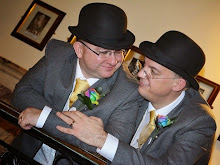
Wednesday, November 23, 2016
Doctor Who 52: 01 – Ten Reasons to Watch Robot (SE)
It’s Doctor Who’s fifty-third anniversary today. To celebrate, here are ten reasons to watch an important first for the series – not the very first story, but the first starring Tom Baker! …And the first I ever saw.
Introducing Doctor Who – Robot…
A trail of mysterious break-ins and deaths. Only the footprints of a giant robot left behind. What could it be‽ Well, obviously, yes, but that’s not the only secret weapon, and there are fascists to fight too. Can the Doctor, Sarah Jane Smith, Harry and the Brigadier stop them? And how much fun will we have watching?
If all this seems eerily familiar, about this time last year I had the brilliant idea of choosing an exciting variety of Doctor Who stories in an idiosyncratic order to run through the year, one every week, inspired by the fifty-second anniversary. For all sorts of reasons, this year has been a terrible one, both for me and for my worldview, and that all fell down. This, then, is a repeat – I’m sorry, I’ll read that again – the Special Edition.
I’m not promising to get through the whole list this time, or even get to the second one, but for today at least I want to celebrate by sharing my love for the single most important piece of television in my life. Robot launched the 1975* season of Doctor Who, the series’ Twelfth, and is available on DVD and through BBC Store. Read on, or just press Play…

Ten Reasons To Watch Robot (warning: spoilers lower down the list)
1 – Tom Baker is the Doctor.
“You may be a doctor, but I am the Doctor. The definite article, you might say.”Tom grabs the role with astonishing energy, bewildering his friends and simply sweeping his foes before him, not just physically but with a firecracker intelligence, both mind and body in constant motion. No-one has any idea how to deal with him – except Sarah Jane – but he gets away with it all with simply blazing charisma. And he’s already wearing that scarf and that grin. Nothing will ever be the same again.
2 – The Time Tunnel.
The most iconic of all Doctors gets the most iconic of all title sequences, perfected by Bernard Lodge into the TARDIS rushing through a fabulous swirl that’s been the inspiration for most of the post-2005 titles. It’s paired with, for me, still the best version of the Doctor Who Theme, a ’70s remix of Delia Derbyshire’s original, now with looping echoes into the episode and cliffhanger scream out of it.

3 – The final scene brings our heroes together and invites us all on more adventures.
“There’s no point in being grown up if you can’t be childish sometimes.”The coda is gorgeous, the Doctor and Sarah Jane (Elisabeth Sladen) making up with each other after the climax, Harry (Ian Marter) endearingly trying to make sense of it all, and finally Brigadier Lethbridge-Stewart (Nicholas Courtney) accepting the inevitable. It’s hard to think of two of the Doctor’s friends more iconic than journalist Sarah Jane Smith, who came back so many years later and starred in her own show, or the Brigadier, who the Doctor had worked with advising UNIT throughout his time exiled to Earth (and whose daughter Kate is a mainstay of the series today) but who the now liberated Doctor will leave behind. And it’s hard to think of a team that makes me smile so delightedly as the Doctor, Sarah Jane and Harry. Here those three come together as a proper TARDIS crew, with new recruit (though not militarily; a Surgeon-Lieutenant from UNIT and the Navy) Harry Sullivan taken for a ride, the fourth Doctor offering his first jelly baby, and Sarah Jane standing up to the Doctor when he’s gone too far but then, the grown-up of the three, making a deliberate choice to be child-like and fly off into time and space to have what you know are going to be the scariest, and most fun, and most marvellous adventures anyone could ever imagine. I’ve previously written about it as one of my favourite ever scenes in more detail. It’s adorable.
4 – The trouble with computers…
“The trouble with computers, of course, is that they’re very sophisticated idiots. They do exactly what you tell them at amazing speed, even if you order them to kill you. So if you do happen to change your mind, it’s very difficult to stop them obeying the original order! But… not impossible.”Before my failing health stopped me working, I spent some years as an IT tutor. Hardly a day went by without my at some stage reassuring a student with a version of that line. Usually alluding more to saving before you close than impending Armageddon, though.
5 – Fantastic thematic consistency.
No, no, wake up at the back! Season Twelve of Doctor Who introduced not just Tom Baker, the time tunnel and Harry Sullivan, but awesome new Script Editor (a similar role to today’s “showrunner”) Robert Holmes and Producer Philip Hinchcliffe. So some people write this story off as the last produced by Barry Letts, and authored by just-going Script Editor Terrance Dicks. But Holmes clearly had a hand in it too, as Robot introduces the fascinating themes that will dominate the season: scientific survival and rebirth by fascistic elites; shattered worlds (before, during and after); alien / machine logic and intelligence against human instinct, free will and compassion… Which isn’t necessarily found among the humans-by-birth. And spot-your-own 1930s horror film motifs.
6 – The Robot.
The Robot itself looks fantastic (at least until Part Four). Probably still my favourite robot design in all of Doctor Who, a towering, powerful but still stylish creation accompanied by a low, grating ‘machine’ sound that makes you think the robot’s like a fork-lift truck. But its character is compelling, too – not just Michael Kilgarriff’s acting, but a creature that is often more human than its masters (the novelisation emphasises its tenderness in unexpected moments). I took that to heart at a very young age; it may even have started me off on empathising with the ‘other’, and is probably at the root of my always flinching at the Doctor being beastly in other stories to patently sentient AIs, especially when they’re having existential crises.

7 – Sarah Jane Smith is magnificent.
With a new Doctor, a new companion and so much else to compete with, this is still one of her strongest stories. She’s the intrepid reporter who tracks down the mystery; she’s brave and saves the world facing down the villain when even the Brigadier can’t; then her empathy and compassion even for the unforgivable shines through. And Elisabeth Sladen’s wonderful performance ties all of her character together. She’s a big influence on companions after 2005 in being the Doctor’s heart – but also in doing what has to be done, not ruthlessly, but showing determination when no-one else will.
8 – It warns about utopianism.
There’s a brilliant way round the Three Laws of Robotics. Brilliant, but fatal. Reminiscent of all so-called utopian societies, in which the individual is disposable for the greater good (even if that comes to mean most individuals in the world). Terrance Dicks wrote this ten years before Isaac Asimov introduced his ‘Zeroth Law’, and that’s not the end of the cleverness in his writing: watch carefully, and you’ll find that the Robot, Russian doll-like, is only the first of three nested ‘ultimate weapons’… Yes, this is ‘Doctor Who – Age of Ultron’.
9 – Like Doctor Who from the very first, it is utterly against fascism.
“The thought of Miss Winters in handcuffs gave Sarah considerable pleasure.”Fascist leader Hilda Winters (Patricia Maynard) is a great villain, calculating in private, demagogue in public, but this infamous sentence from Terrance Dicks’ novelisation underlines how easy it is to be authoritarian just so long as it’s what you’re sure is for everyone’s good… The Brigadier’s retort there to Sarah Jane’s wish to bang up all the baddies because we know they’re baddies is that Britain’s not a military dictatorship. Which on balance, the story suggests, is a good thing. Five weeks into Doctor Who’s first run in 1963, fascism became the series’ biggest evil. Starting with Robot, the 1975 stories make the same point again and again.
10 – It inspires Liberalism.
“I would wear what you thought was good for me. I see. And think what you thought was good for me, too?”It’s difficult to work out how much I was instinctively a Liberal and liked Doctor Who because it was the ‘odd one out’ show, and how much I liked Doctor Who and so took its lessons to heart. But though I think of certain other stories as more obvious influences on my politics, there are definite seeds here. Free will versus dictatorship; empathy with the different; Sarah’s first reaction to power being that it might be misused, her second to ask questions, her third compassion; green energy being a really good thing but enforcing it by authoritarianism and viewing people as disposable is a really bad thing. A green Liberal in the making, aged three, thanks to that most Doctor Who of simple homilies, that “the end never justifies the means.” Aged three? Well, yes. The moral here wasn’t the only influence this story had on me…
“It’d be for your own good.”

What Else Should I Tell You About Robot?
“Alexander the Great?”This isn’t just where Tom started. It’s where I started.
It changed my life and I love it with all my heart. Because it led to me loving Richard with all my heart.
Of course I can have two hearts.
Many more stories than you’d expect are someone’s favourite, but every story is someone’s first. This was designed to be a new start (and so was the next one), and when three-year-old me starting watching half-way through Robot, I was hooked.
Thinking critically – though it’s always enormous fun – this is a good story, but it’s not the very best. Its liberal heart is in the right place (opposing the far-right place) but its grasp of international politics is a bit shaky. And though as Robot comes into the final episode it builds several climaxes on top of each other, it’s also where a few things fall down a bit, not least the special effects. Gigantically. Even Sarah Jane has her ups and downs there.
So where many fans, if you asked them where to start on Doctor Who, would pick an action-packed, fun, familiar-but-different story set in more or less our modern world, one that gives a central role to the woman companion while introducing a new Doctor and a hugely successful era, and has the single-word title “Ro—”… It’s probably true that it wouldn’t be this one unless the fan is me (I love that other one too, by the way, but more on that story later).
But none of that matters to me. Because it was my first. And nearly forty-two years later, I’m still watching Doctor Who because of it. What better recommendation could there be?
*Technically this started in the last week of 1974. And actually 1975 was so wonderfully packed with Doctor Who that another season came along in the Autumn. But as Robot was launching a new season for the New Year and the first Saturday after Christmas was when they did that – and as I didn’t start watching until the second week of January – I always say it started Doctor Who for 1975. Because it belongs there. And, anyway, it’s from 1980.
And, if you need one, my score:
Usually this would be a simple mark out of ten, the crudest possible metric of how good I think a story is. Some weeks there will be exceptions.
8/10 says my head…
But 10/10 is not enough for Robot in my heart.

If You Like Robot, Why Not Try…
Everything! I did. But perhaps saying ‘now watch all two-hundred-and-sixty-odd stories before next week’ would be overdoing things.
Then try the whole of Tom Baker as the Doctor? I did. But it did take me the next six years, on many Saturdays, as they went out on BBC1.
So if you liked Robot, why not try The Ark In Space? Because it was Tom’s second story as the Doctor, and because The Ark In Space takes the new but already perfect team of the Doctor, Sarah Jane and Harry away from the comfort of Earth and throws them into stark outer space horror. It’s a brilliant story, it has another of Tom’s best performances and one of his most iconic speeches, it’s a bold statement of where new producer Philip Hinchcliffe and lead writer Robert Holmes were to take the series, and it became a huge influence – probably on the film Alien, certainly on Doctor Who’s return to TV forty years later, with both Russell T Davies and Steven Moffat claiming it as favourites.
But most of all, try The Ark In Space because one of the things I most love about Doctor Who is that, whatever you think of the story you’ve just watched, the next one will probably be completely different.

Next Time…
If I get to the next time: Always start at the beginning. I have. But Doctor Who has more beginnings than the Doctor has lives…
Labels: Doctor Who, Doctor Who 52, Liberalism, Personal, Repeats Er I Mean Special Editions, Robot, Sarah Jane Smith, Tom Baker


Saturday, November 21, 2015
Doctor Who 52: 01 – Ten Reasons to Watch Robot
Introducing Doctor Who – Robot…
The first story in my idiosyncratic fifty-two-week Doctor Who selection… And what a mighty first this story brings! Launching the 1975* season, this stars Tom Baker as the Doctor (and he’s not the only first).
There’s a trail of mysterious break-ins and deaths and only the footprints of a giant robot left behind – what could it be? Well, obviously, yes, but there are more secret weapons and a fascist coup to deal with too. Can the Doctor, Sarah Jane Smith, Harry and the Brigadier stop them? And how much fun will we have watching?
This Monday, November 23rd, will be Doctor Who’s fifty-second anniversary. My celebration is a story every week. You can read what this Doctor Who 52 is all about here. But I’d just read on, then press Play on the DVD.
Ten Reasons To Watch Robot (warning: spoilers lower down the list)
1 – Tom Baker is the Doctor.
“You may be a doctor, but I am the Doctor. The definite article, you might say.”He grabs the role with astonishing energy, bewildering his friends and simply sweeping his foes before him, not just physically but with a firecracker intelligence, both mind and body in constant motion. No-one has any idea how to deal with him – except Sarah Jane – but he gets away with it all with simply blazing charisma. And he’s already wearing that scarf and that grin. Nothing will ever be the same again.
2 – The Time Tunnel. The most iconic of all Doctors gets the most iconic of all title sequences, perfected by Bernard Lodge into the TARDIS rushing through a fabulous swirl that’s been the inspiration for most of the post-2005 titles. It’s paired with, for me, still the best version of the Doctor Who Theme, now with looping echoes into the episode and cliffhanger scream out of it.
3 –
“There’s no point in being grown up if you can’t be childish sometimes.”The coda is gorgeous, the Doctor and Sarah Jane (Elisabeth Sladen) making up with each other after the climax, Harry (Ian Marter) endearingly trying to make sense of it all, and finally Brigadier Lethbridge-Stewart (Nicholas Courtney) accepting the inevitable. It’s hard to think of two of the Doctor’s friends more iconic than journalist Sarah Jane Smith, who came back so many years later and starred in her own show, or the Brigadier, who the now liberated Doctor had worked with advising UNIT throughout his time exiled to Earth and whose daughter Kate is a mainstay of the series today. And it’s hard to think of a team that makes me smile so delightedly as the Doctor, Sarah Jane and Harry. Here those three come together as a proper TARDIS crew, with new recruit (though not militarily; a Surgeon-Lieutenant from UNIT and the Navy) Harry Sullivan taken for a ride, the fourth Doctor offering his first jelly baby, and Sarah Jane standing up to the Doctor when he’s gone too far but then, the grown-up of the three, making a deliberate choice to be child-like and fly off into time and space to have what you know are going to be the scariest, and most fun, and most marvellous adventures anyone could ever imagine. I’ve previously written about it as one of my favourite ever scenes in more detail. It’s adorable.
4 –
“The trouble with computers, of course, is that they’re very sophisticated idiots. They do exactly what you tell them at amazing speed, even if you order them to kill you. So if you do happen to change your mind, it’s very difficult to stop them obeying the original order! But… not impossible.”Before my failing health stopped me working, I spent some years as an IT tutor. Hardly a day went by without my at some stage reassuring a student with a version of that line. Usually alluding more to saving before you close than impending Armageddon, though.
5 – Surprising thematic consistency. No, no, wake up at the back! Season Twelve of Doctor Who introduced not just Tom Baker, the time tunnel and Harry Sullivan, but awesome new Script Editor (a similar role to today’s lead writer) Robert Holmes and Producer Philip Hinchcliffe. So some people write this story off as the last produced by Barry Letts, and authored by just-going Script Editor Terrance Dicks. But Holmes clearly had a hand in it too, as Robot introduces the fascinating themes that will dominate the season: scientific survival and rebirth by fascistic elites; shattered worlds (before, during and after); alien / machine logic and intelligence against human instinct, free will and compassion… Which isn’t necessarily found among the humans-by-birth. And spot-your-own 1930s horror film motifs.
6 – The Robot. It looks fantastic (at least until Part Four). Probably still my favourite robot design in all of Doctor Who, a towering, powerful but still stylish creation accompanied by a low, grating ‘machine’ sound that makes you think the robot’s like a fork-lift truck. But its character is compelling, too – not just Michael Kilgarriff’s acting, but a creature that is often more human than its masters (the novelisation emphasises its tenderness in unexpected moments). I took that to heart at a very young age; it may even have started me off on empathising with the ‘other’, and is probably at the root of my always flinching at the Doctor being beastly in other stories to patently sentient AIs, especially when they’re having existential crises.
7 – Sarah Jane Smith is magnificent. With a new Doctor, a new companion and so much else to compete with, this is still one of her strongest stories. She’s the intrepid reporter who tracks down the mystery; she’s brave and saves the world facing down the villain when even the Brigadier can’t; then her empathy and compassion even for the unforgivable shines through. And Elisabeth Sladen’s wonderful performance ties all of her character together. She’s a big influence on companions after 2005 in being the Doctor’s heart – but also in doing what has to be done, not ruthlessly, but showing determination when no-one else will.
8 – There’s a brilliant way round the Three Laws of Robotics. Brilliant, but fatal. Reminiscent of all so-called utopian societies, in which the individual is disposable for the greater good (even if that comes to mean most individuals in the world). Terrance Dicks wrote this ten years before Isaac Asimov introduced his ‘Zeroth Law’, and that’s not the end of the cleverness in his writing: watch carefully, and you’ll find that the Robot, Russian doll-like, is only the first of three nested ‘ultimate weapons’… Yes, this is ‘Doctor Who – Age of Ultron’.
9 –
“The thought of Miss Winters in handcuffs gave Sarah considerable pleasure.”Fascist leader Hilda Winters (Patricia Maynard) is a great villain, calculating in private, demagogue in public, but this infamous sentence from Terrance Dicks’ novelisation underlines how easy it is to be authoritarian just so long as it’s what you’re sure is for everyone’s good… The Brigadier’s retort there to Sarah Jane’s wish to bang up all the baddies because we know they’re baddies is that Britain’s not a military dictatorship. Which on balance, the story suggests, is a good thing.
10 –
“I would wear what you thought was good for me. I see. And think what you thought was good for me, too?”It’s difficult to work out how much I was instinctively a Liberal and liked Doctor Who because it was the ‘odd one out’ show, and how much I liked Doctor Who and so took its lessons to heart. But though I think of certain other stories as more obvious influences on my politics, there are definite seeds here. Free will versus dictatorship; empathy with the different; Sarah Jane’s first reaction to power being that it might be misused, her second to ask questions, her third compassion; green energy being a really good thing but enforcing it by authoritarianism and viewing people as disposable is a really bad thing. A green Liberal in the making, aged three, thanks to that most Doctor Who of simple homilies, that “the end never justifies the means.” Aged three? Well, yes. The moral here wasn’t the only influence this story had on me…
“It’d be for your own good.”
What Else Should I Tell You About Robot?
“Alexander the Great?”This isn’t just where Tom started. It’s where I started.
It changed my life and I love it with all my heart. Because it led to me loving Richard with all my heart.
Of course I can have two hearts.
Many more stories than you’d expect are someone’s favourite, but every story is someone’s first. This was designed to be a new start (and so was the next one), and when three-year-old me starting watching half-way through Robot, I was hooked.
Thinking critically, it’s a good story, but it’s not the very best. Its liberal heart is in the right place (opposing the far-right place) but its grasp of international politics is a bit shaky. And though as Robot comes into the final episode it builds several climaxes on top of each other, it’s also where a few things fall down a bit, not least the special effects. Gigantically. Even Sarah Jane has her ups and downs there.
So where many fans, if you asked them where to start on Doctor Who, would pick an action-packed, fun, familiar-but-different story set in more or less our modern world, one that gives a central role to the woman companion while introducing a new Doctor and a hugely successful era, and has the single-word title “Ro—”… It’s probably true that it wouldn’t be this one unless the fan is me (I love that other one too, by the way, but more on that story later).
But none of that matters to me. Because it was my first. And forty years later, I’m still watching Doctor Who because of it. What better recommendation could there be?
*Technically this started in the last week of 1974, but as it was launching a new season for the New Year and the first Saturday after Christmas was when they did that – and as I didn’t start watching until the second week of January – I always say it’s 1975. Because it belongs there. And, anyway, it’s from 1980.
And, if you need one, my score:
Usually this will be a simple mark out of ten, the crudest possible metric of how good I think a story is. Some weeks there will be exceptions.
8/10 says my head…
But 10/10 is not enough for Robot in my heart.
If You Like Robot, Why Not Try…
Everything! I did. But perhaps saying ‘now watch all two-hundred-and-fifty-odd stories before next week’ would be overdoing things.
Then try the whole of Tom Baker as the Doctor? I did. But it did take me the next six years, as they went out on BBC1.
So if you liked Robot, why not try The Ark In Space? Because it was Tom’s second story as the Doctor, and because, though most weeks I’ll probably choose a story that’s quite like the one I’ve just watched, The Ark In Space takes the new but already perfect team of the Doctor, Sarah Jane and Harry away from the comfort of Earth and throws them into stark outer space horror. It’s a brilliant story, it has another of Tom’s best performances and one of his most iconic speeches, it’s a bold statement of where new producer Philip Hinchcliffe and lead writer Robert Holmes were to take the series, and it became a huge influence – probably on the film Alien, certainly on Doctor Who’s return to TV forty years later, with both Russell T Davies and Steven Moffat claiming it as favourites.
But most of all, try The Ark In Space because one of the things I most love about Doctor Who is that, whatever you think of the story you’ve just watched, the next one will probably be completely different.
Meanwhile, On the Other Side…
My beloved husband Richard is watching… Why, look! The Ark In Space.
Next Time…
Always start at the beginning. I have. But Doctor Who has more beginnings than the Doctor has lives…

Labels: Doctor Who, Doctor Who 52, Liberalism, Personal, Robot, Sarah Jane Smith, The Golden Dozen, Tom Baker
Wednesday, August 07, 2013
Doctor Who 50 Great Scenes – 36: The Krotons. Featuring Patrick Troughton, Robert Holmes and the Double Act
Counting down towards the fiftieth birthday of Doctor Who with Fifty great scenes… Now we have a new Doctor and look forward to a new direction for the series, today it’s a celebration of two people who did those things brilliantly: second Doctor Patrick Troughton and lead writer Robert Holmes, both still regarded as patron saints by Doctor Who actors and writers today. Paired together here from 1969, this scene (and more) offers the sort of double act both men were famous for, a warning about computer games, and proof that nobody’s perfect:
“Oh, Doctor! You’ve got it all wrong!”

By the time The Krotons was first broadcast at the tail end of the ’60s, Patrick Troughton was approaching the tail end of his time as the Doctor, while Robert Holmes was just starting out on his career in the series – one which would see him write for five Doctors over nearly twenty years, become the series’ most prolific writer during the Twentieth Century with scripts that ran from comedy to horror and nicking from everything in sight, and establish himself as Doctor Who’s greatest ever script editor (the equivalent of today’s showrunners like Russell T Davies and Steven Moffat, without the money), defined by great dialogue and great wickedness. The Krotons is a bit smaller than all that and not the greatest story in which either Mr Troughton or Mr Holmes would be involved, but right from the first Bob writes perfectly for the Doctor and Pat runs with it superbly. You can see why so many actors who’ve played the Doctor since cite him as their favourite, from Peter Davison on BBC1’s So You Think It’s Capaldi… It Is Now! programme last Sunday night to still-current incumbent Matt Smith: not only is Patrick Troughton pretty much unbeatable when he’s giving his best, but he’s obviously the patron saint of ‘the impossible job of following the big success and making it work’. And one of the things both Pat and Bob made their own in their different ways can be checked by asking long-term Who fans, ‘Which Doctor / which writer was brilliant for comedy double acts…?’
Half-way into Episode Two, the Doctor (Patrick Troughton) and his friends Jamie (Frazer Hines) and Zoe (Wendy Padbury) are trying to work out the secret of the Krotons, legendary beings long-unseen and perhaps best left that way* who rule from their great crystal machine over the locals, known as the Gonds. The Krotons have for centuries demanded tribute of the Gonds’ best and brightest delivered to them, and in a neat critique of instant gratification, by the time our heroes arrive the Gonds are predictably no longer best or bright. As the Krotons need mental energy to revive themselves, their own not exactly high-brain short-termism means perpetual slumber for them and perpetual slavery for the Gonds. Unless someone very bright indeed turns up and puts their foot in it, of course…
Zoe is a brilliant teenage computer programmer from the Twenty-first Century who, when the Doctor bumbles off to look elsewhere, is drawn to the Krotons’ teaching machines and all the games installed on them. Stop me if you can see where this is going. She’d have been a demon with ‘Tomb Raider of the Cybermen’, and even though ‘Selris’ only involves a completely inanimate block that has to be winched into place, she’s soon more than doubling the previous high score and flooded with endorphins. The Doctor wrenches off her headphones, but the Gonds’ dreary leader has already spotted the score. The Doctor’s not impressed:
“Yes, well, Zoe is something of a genius. Of course, it can be very irritating at times.”That’s nothing to his reaction when a gong sounds from the great crystal machine and a message from the sleeping Krotons demands that Zoe join them as a special extra companion. As Zoe and the Doctor have both already witnessed that round the back of the great crystal machine there’s an exit where the ‘honoured’ companions are unceremoniously ejected and disintegrated after having their brains sucked out, the usually mildest of Doctors snaps to his friend in sudden fury and fear:
“Now do you see what you’ve done? Fooling around with this stupid machine!”He stomps off to take the test himself, unwilling either to let the Kroton machine massacre the Gonds for disobedience or let Zoe go into danger alone. And that’s what I really love about this scene, because the Doctor’s palpable concern, and Zoe wanting to make up for her getting them into trouble, and looming certain death, all obviously create a situation which is both tense and terrifically funny.
“But I’m not a Gond!”
“But the machine doesn’t know that!”
The Doctor sits down at the teaching machine and their positions are suddenly reversed: he’s the one with the headset on and Zoe’s the responsible one telling him what to do. And on top of both wanting him to succeed, they’re absurdly competitive about it. She tells him to press the button to start, then tells him again, because he can’t hear with his phones on; he answers back too loudly, and with a storm of testy words that get her going, and coming, and them both rushing about:
“All right, there’s no need to shout! Now go away and don’t fuss me – no, come back, what’s this? – It’s all right, I know – right, fire away. I’m ready.”At which an exasperated Zoe now mimes that he has to press the button to set it going. Not much of The Krotons looks good, but there’s some fabulous design here for the circling computer symbols (absolutely not CGI) assembling, breaking and reforming, all to great sound design, too, an ominous low chattering hum. Brian Hodgson’s soundtrack – a radiophonic mixture of electronic effects, textures and near-music – is now available to buy, and so fascinating that Richard has instructed me never again to play it in his presence (look, it’s shorter than The Sea Devils…).
So does the brilliant Doctor at once beat Zoe’s high score? No. He makes a clever person’s error and, rather than reading the instructions properly, works it out on the wrong basis and scores zero. The Gond leader worries to Zoe:
“This is the most advanced machine. Perhaps he can’t answer the questions.”So the Doctor gets it all wrong again, as Zoe jumps in frustration. That is, until he gets into the swing of it and, at last, the score battering over the upper limit, he turns very smug and she turns very cold:
“Of course he can. The Doctor’s almost as clever as I am.”
“I think I’ve scored more than you have, Zoe.”Before long, the “dinner gong” sounds again for them to enter the great machine, and even as the danger reaches its pitch, the Doctor’s deadpan polite thanks when Selris the Gond leader dolefully tells him his people will remember him is a scream…
“You answered more questions!”
*On another not entirely stunning visualisation, Alan and Fiona have recently covered The Krotons on Kaldor City and I laughed at their all-too appropriate “The Gond village looks like someone has dropped a packet of chips and a Scotch egg on a gravelled drive” – this is not among Doctor Who’s more lavish productions.
Bonus Great Patrick Troughton and Robert Holmes Doctor Who Quotation – The Space Pirates
If The Krotons is not the most fêted of Doctor Who stories, Bob Holmes’ second script, The Space Pirates, can be a bit of a slog. Of all the stories I’ve watched when prospecting for the Fifty, this was the hardest work to pry anything precious from: for me, it’s easily Bob’s weakest script, badly structured, thinly plotted, and with most of it junked by the BBC so only the soundtrack is left, not even visually diverting. With Bob’s entertaining but unexpectedly queasy final treatment of Patrick Troughton’s Doctor not until a 1985 guest reunion, though, this is the only other time they paired up. But the great thing about Doctor Who – and about Pat and Bob – is that even in the most exhausted parts you really can still find something marvellous. And here it’s not in the endless, plotless space chases but in the second half of the story, where the Doctor (Patrick Troughton) and his longtime partner in the double act Jamie (Frazer Hines) finally get to meet people from across the plot and to do plenty of their perfectly timed schtick. A terrible gag with drawing pins that’s terribly funny; the Doctor’s favourite marble; and the bit that I’m afraid always makes me laugh – trying to break out of a cell with an audio lock, the Doctor gets out a tuning fork and, endlessly, twangs it. Jamie:
“Which end did he land on when you fell down that shaft?”Confronted with a three-inch-steel door later:
[After driving them all nuts…]
“Oh, look, Doctor, will you stop it?”
“You want to get out of here, don’t you?”
“Oh, that’s not going to get us out…”
“Yes, Jamie, it is! An audio lock is a simple solenoid switch which is only activated by a particular sound. It’s just a question of finding it, that’s all.”
“Oh, look – I can’t stand any more!”
[He grabs the fork off him… Chucks it against the wall… And as the Doctor wails, the cell door opens.]
“Jamie! Jamie! …Jamie, you found the right note!”
“It’s not an audio lock, is it?”And there you go – sifting out the good bits of The Space Pirates.
“No, Jamie, it isn’t.”
“Ah, that’s a relief.”
“Jamie, I think you don’t appreciate all I do for you.”
Admittedly I do find one line from the old comedy character without much comedy to him very appealing, too – here’s Milo Clancey up against the New Labour space police:
“You know it’s an offence to operate without a feedback to CFI?”
“An offence?”
“Right.”
“I didn’t realise that, sonny, no. Oh dear, oh dear, oh dear. There are so many offences these days.”
Bonus Great Patrick Troughton Doctor Who Quotation – The Moonbase
The Doctor had begun as a figure who intended only to observe and who learned only gradually the moral instinct to interfere: moral outrage had long topped non-intervention by the time of his first regeneration, but it’s when the new Doctor (Patrick Troughton) faced the early return of the Cybermen that he gave the clearest declaration that he fights monsters now, and fighting monsters is cool. It’s part-way into Episode 2, with the Doctor and his friends having a bit of a time of it up on a Moonbase about a century after the story’s 1967 broadcast. The base commander is fed up with the Doctor’s antics and wants him gone; the Doctor’s friends are mostly fed up with being injured and threatened and might just do that; but the Cybermen appear to be on the prowl, and the playful Doctor suddenly puts his foot down with sober gravitas and issues his manifesto. This is the moment where this Doctor finds himself. Later Doctors found a more nuanced moral compass, but this one took two very firm and uncompromising if not completely complementary stances: anarchic freethinking meddling; and destroy all monsters…
“There are some corners of the Universe which have bred the most – terrible things. Things which act against everything that we believe in. They must be fought.”
Bonus Great Robert Holmes Doctor Who Quotation – The Time Warrior
One of Robert Holmes more influential scripts, The Time Warrior introduced Sarah Jane Smith (Elisabeth Sladen): in Episode Four, broadcast early in 1974, Sarah Jane has snuck into a medieval castle to knock out a nasty robber baron and his entire garrison while the Doctor deals with the alien in the cellar. It’s a scene that shows how very resourceful she is, how very feminist she is, and how very funny she can be. Caught in the kitchens by Meg the fearsome – well, I suppose in a posher castle she’d be called the châtelaine, but here ‘lead serving wench that bullies the other serving wenches into getting the job done’ – Sarah Jane first bluffs that she’s a lady and will have her flogged, then, that failing, turns on a groat to wheedling pauper needing food and is put to preparing some, after which if she’s lucky she might get some bread, cheese or oatmeal – meat only being for the men. Exasperated at the downtrodden kitchen women, Sarah Jane confronts them about their situation and gets carried away…
“You should set yourselves free.”Next along, half of what will much later become a famous double act with Sarah Jane…
“Oh? And how should we do that?”
“Don’t you want to be free?”
“Women will never be free while there are men in the world, girl. We have our place.”
“What subservient poppycock. You’re still living in the Middle Ages!”
Extra Bonus Great Robert Holmes Doctor Who Quotation – The Sun Makers
After three sublime years of scaring the kiddies (I was that kiddie) in the mid-’70s, the BBC itself took fright of Doctor Who (and of far right anti-TV ideologues), sacked the producer and demanded a change of tone. And lead writer Robert Holmes, who’d been half of the brilliant creative team behind all the horror, stayed on long enough to come up with the next new wave, too – to use Tom Baker’s enormous charisma as a springboard to a much funnier style. 1977’s The Sun Makers has the iconic line-up: the man in the incredibly long scarf (Tom Baker); the woman in the leather bikini (Louse Jameson); the tin dog (John Leeson). While the TARDIS is still in flight, we join the travellers playing chess. There are other great Doctor-machine chess games to come, from the Doctor’s return match with K9 a year later in which he cheats again but steals from the wrong game, to his playing chess against himself within the Cyberiad just this year, and facing Fenric along the way, but this is the first and, in its own way, as much a statement as the Doctor’s famous line on The Moonbase. The Doctor (Tom Baker) will now be funny and outrageous and often get caught out; K9 will be not just a blaster-cum-database on wheels, but bitchy and pedantic and with a touch of robotic venom when his “master” tries it on. And Leela, moving the pieces for K9, will be the straight man.
“Even simple one-dimensional chess exposes the limitations of the machine mind.”
[The Doctor laughs]
“Bishop to queen six. Mistress.”
“There?”
“Affirmative. Check, master.”
“What?”
“Machine mind computes mate in six moves.”
“Rubbish!”
“…Your move, master.”
“I know it’s my move. Don’t flash your eyes at me.”
“Wrong square.”
“What?”
“Your king, master. Wrong square.”
“Really? Are you sure?”
“Affirmative.”
Doctor Who and the Double Act
I don’t know which Doctor Who critic first wrote about the “Holmesian Double Act,” but they nailed one of the most striking things about the series’ arguably greatest writer, and everyone familiar with Robert Holmes’ scripts suddenly knew exactly what they meant. Yet these took a little while to appear; you don’t really get double acts in Bob’s two earliest scripts – there are functional teams (the plotters in The Krotons, the police in The Space Pirates), but they’re not amusing and they’re not memorable. The exception is, of course, the Doctor and Jamie (or the Doctor and Zoe), who’d perfected a brilliant relationship over the years.
So, while Bob was finding his voice, I wonder how much he looked at the team he was writing for in 1969 and was influenced by them – with Pat and Frazer’s fantastic on-screen chemistry displaying a great way to bring out character. The Doctor, highly intelligent, easily flustered, always getting his friend into trouble; the young Scot from 1745, uneducated but canny enough to always watch out for the Doctor getting it wrong; both devoted to each other (and with Zoe coming in to be exasperated and constantly one-upping on both).
The way Robert Holmes writes his own double acts is never the same each time, but still distinctive: two people who are clearly meant to be together but through some imbalance of age, position or outlook constantly snipe at each other, which moves the plot along, informs and entertains us and comments on the story. The earliest version is in 1970’s Spearhead From Space with, archetypally, a husband and wife – and once he’d written the Seeleys always trying to get one over on each other, the key to all the rest is that they’re husband and wife / odd couple sketches transposed into a serious setting. And while Sam Seeley was just a bit shifty, a great many of them raise the stakes by being explicitly villains.
The partners in a Holmesian Double Act can be anywhere along the dial from out-and-out comedy characters to comedy-drama to downright dangerous and very blackly comic indeed, from supporting to central characters in the plot, and from ‘loveable rogue’ with ‘disapproving wife’ all the way up to ‘mad scientist’ paired with both ‘war criminal’ and ‘brutish servant’, which makes the insults all the grander and crueller (“You chicken-brained biological disaster!”) and at their darkest where each might grow to regard the other as disposable. Some double acts are only temporary, just for a scene or two within a story, some an inseparable chorus, but many are deeply celebrated partnerships – to the extent that many other Doctor Who authors consciously emulate the idea, with one writer’s best story features not just Bob Holmes Tribute Band double acts of his own, but even lampshades the term (as does later still writer Paul Cornell. In iambic pentameter).
In 1971’s Terror of the Autons, the Master and Rex Farrel (Michael Wisher) get to play master and servant so archly that it’s amazing so few people spot the husband-wife origins, but the point at which Bob really finds his voice and the double act springs fully formed for every critic to identify is 1973’s Carnival of Monsters, in which we don’t just get gossipy alien fascists Kalik (Michael Wisher) and Orum as the villains but dodgy travellers Vorg and Shirna to mirror the Doctor and his companion. As the series gets scarier, the pairs get more serious – Nyder and Davros (Michael Wisher… Look, he’s awfully good, and very versatile, and they did employ other people in the ’70s, honestly) – but there are vestigial double acts even in comedy exchanges that are going to turn murderous like Warlock and Namin in Pyramids of Mars or Federico and Hieronymous in The Masque of Mandragora, soaring to the nastiest but almost the funniest of the lot in The Brain of Morbius, with unhinged Dr Solon sparking off both his brutish servant and his obsessed master. There’s a spin on the buddy movie not with butch young things but cynical old codgers in The Deadly Assassin (plus The Clue of the Murdered Double-Act that we don’t even get to meet), and in later, less serious times double acts with outrageously evil capitalists before Bob launches another fabulous the Doctor and companion double act, this time an impossibly arch fellow Time Lord. And that’s not the half of them.
Still to come in the Fifty: from Bob Holmes’ big comeback, one of several especially nastily dysfunctional double acts – but will it be the disturbed homoerotic one, the other disturbed homoerotic one, the in-your-face twisted and murderous one, or the only one that’s clearly productive until…? Plus Bob’s deconstruction of his own trope and, shockingly, of his own inspiration – and, of course, the most beloved and famous double act of them all, who each try out various partners before finding each other.
Extra Bonus Great Robert Holmes Doctor Who Double Act Quotation – The Ribos Operation
On, for an irresistible last bonus, to one of Robert Holmes’ most celebrated double acts, broadcast in 1978. I know I quoted The Ribos Operation just last time, but full of such marvellous characters and dialogue that I can’t help coming back to it (and beside, Bob Holmes probably didn’t write that bit, but he definitely wrote this one). It’s half-way into Part Four, and scurrilous con-men Garron (Iain Cuthbertson) and Unstoffe (Nigel Plaskitt) are stuck in a labyrinth. Garron has three aims: avoid the big bad soldiers; avoid the Doctor and Romana; get out with the loot. The more innocent young Unstoffe is shocked by the second aim, and to find that his grizzled old partner has none of the ‘It’s not all about the money’ code of Hustle: having teamed up with Romana in order for each of them to find their friends, Garron’s nicked her vital detector and left her stranded…
“Money isn’t everything, Garron.”
“Well, who wants everything? I’ll settle for 90%.”
“…You cavilling old hypocrite. How could you?”
“Well, I admit I had a great trouble with me conscience. Fortunately, I won.”
Next Time… Monsters from the deep. But which?
Labels: Comedy, Doctor Who, Doctor Who 50, Jon Pertwee, Matt Smith, Patrick Troughton, Sarah Jane Smith, The Krotons, Tom Baker
Friday, February 01, 2013
Doctor Who 50 Great Scenes – 45: Robot
Counting down towards the fiftieth birthday of Doctor Who with Fifty great scenes… Tonight’s celebrates the late, wonderful Elisabeth Sladen’s birthday by going back to a particularly fine moment for Sarah Jane Smith, joined by the Doctor and Harry to set out in their first trip in the TARDIS together. And mine. Beware spoilers for Robot, the story that first captivated three-year-old me and led to all this, as the coda still charms me every time…

This story changed my life – and not just by giving the best advice to any child (or worst for them, if you’re a parent). Can I imagine any of it without Doctor Who? Without reading, politics, Richard? I wouldn’t want to. So it’s hard to think of an adventure closer to my heart, nor a team that makes me smile so delightedly as the Doctor, Sarah and Harry. This is the scene where they come together as a proper TARDIS crew, with Harry taken for a ride, the fourth Doctor offering his first jelly baby, and Sarah Jane – ah, Sarah Jane. With Sarah Jane grounding the Doctor and standing up to him when he’s gone too far – but then, the grown-up of the three, making a deliberate choice to be child-like and, in doing so, giving the Doctor consent to fly again. With my Fifty restricted to the Doctor Who TV series, there are sadly no selections from The Sarah Jane Adventures – but there is, there has to be, Sarah Jane Smith.

The new Doctor (Tom Baker) has been amazingly physical and inventive in his first story, body and mind in constant motion as he seizes the series. And arrayed against him, fascists, nuclear Armageddon, and an impressive, intelligent Robot, to whom only Sarah Jane Smith (Elisabeth Sladen) ever shows kindness and whose mind is eventually broken by manipulation, loss and despair. Sarah Jane has been almost as much the star of this show as the new Doctor – the first to discover what’s going on, on her own initiative; brave; clever; inquisitive; ruthless with a gun in facing down the villain; but also compassionate. When the Robot takes on the whole world, the Doctor is worried for the world… But Sarah Jane is, very Doctorishly, also concerned for the Robot, an immensely powerful, suffering child. Her sympathy for the Robot was my first lesson in moral sense from Doctor Who: empathy for the ‘other’, and ever since wondering if every artificial intelligence has an existential crisis of its own (and knowing instinctively what an ‘existential crisis’ was long before I had the words for it).
The Doctor saves the world, and he’s newly alive, and loving it, and he’s very, very clever, and for all those reasons, he deserves to look pleased with himself. But in doing all of that, he’s killed someone – someone that Sarah Jane cared about – and that makes his triumph feel almost as wrong as it’s right. That’s why it’s so right that the story doesn’t let him off with it. I’ve often pointed out the plot elements that Russell T Davies’ stories take from this season of Doctor Who: perhaps he took some of its heart, too, because just as he showed that sometimes the Doctor needs a strong woman friend to tell him he’s gone too far, the camera cuts from the Robot crumbling to dust to the effect that it – and the Doctor – has had on the Doctor’s best friend…
In the aftermath, Sarah Jane sits forlornly in the old Doctor’s lair, the UNIT laboratory. The new Doctor enters, this regeneration not haughty but naughty, and before leaving that lab for the last time at the end of the scene, at the start of the scene there’s what turns out to be an iconic moment when Tom takes his first bag of jelly babies from his pocket and, desperate to make her happy again, says, for the very first time:
She doesn’t respond; so he moves from being the little boy offering a present so he doesn’t have to apologise to trying to engage her in argument. He had to do it… And she knows, it did terrible things, “but at first, it was so human.” And he admits that it was: “capable of great good, and great evil,” and in doing so, that he too has the knowledge of good and evil that she demands of him. Then, having given a little to his friend, the only worry that was keeping him there, he’s off. Even though – especially though – the Brigadier wants him to address the Cabinet, the PM and the Queen and write a mass of reports. And that’s exactly the point at which Sarah Jane, already established as the grown-up in this relationship, puts her finger on what his tantrum’s all about.
And in the most important moment in the whole scene, where she could tell him to face up to his responsibilities, or refuse to forgive him and stay, unhappy… She stands, firmly shoots out her arm, and naughtily snatches a jelly baby. She’s not given in to him, but made her own choice, and she wants to be a child, too.
Which is when poor Harry enters. A marvellous portrayal of an upper-class not-quite-twit, Ian Marter makes the character work by being so utterly endearing and eager to please. He’s mostly been the comic relief this time; in the next story, he provides more comedy to leaven the horror, then gets serious for the next two stories before briefly slipping back into comic relief and then, startlingly, becoming part of the horror… But first, he has to step into the TARDIS. He’s new to UNIT; he’s new to the series; and he doesn’t know what’s coming. I didn’t, then, either, and I was just as wide-eyed as Harry. But you know, don’t you, reader? So when the Doctor tells Harry he’s going on a little trip and, a similarly generous offer, gives him a jelly baby, Harry’s the only one who doesn’t understand the subtext.

Sarah Jane giggles. The Doctor, hurt, takes back the jelly baby. And Harry, who’s the most boyish of them all, tries to be adult and tells the Doctor that they’re both reasonable men. Which is his third mistake just since walking through the door. And that they both know that police boxes don't go careering around all over the place. Which is his fourth. And then he listens to the Doctor, who’s acting innocent. And that’s his biggest mistake of the lot.
There’s even a lovely little coda to that coda. Just as the TARDIS fades away, the Brigadier (Nicholas Courtney) comes into the lab and clocks it. It’s not really the TARDIS that’s fading away before that unbeatable time tunnel titles whoosh in here, but UNIT from Doctor Who – we go with the TARDIS, not stay behind on Earth. But I still love the Brigadier with all my heart, as much as I still love the Doctor, Sarah Jane and Harry. So though we didn’t know at the time that the first journey of one era meant it had to be the last words of another, it’s lovely that he has the beautifully underplayed last words:
Only Number 45? I love this scene so much that it feels like it should be higher. But there are so many more great scenes to come!

It’s part of another great start, and another one close to my heart for all sorts of reasons. Another new Doctor who gives the series a fantastic lift-off; another ordinary, extraordinary woman companion who’ll stand up the Doctor; another man companion who’s a bit of a fifth wheel. The Doctor (Christopher Eccleston) has taken Rose (Billie Piper) off into space and time for excitement, and adventure, and really wild things. Sounds awful, her mum Jackie (Camille Coduri) thinks, and that’s even after she gets over the shock of Rose going missing for a year and assuming her dead. So the Doctor’s not having a great time – he gets a slap. And neither is Rose – she gets an earful. And she doesn’t even have the pleasure of knowing she’s the only person on Earth to have seen alien spaceships: as already featured in my Eleven More Great Scenes, it’s at that precise moment that one crashes into Big Ben and the headlines.
Everyone gathers at Jackie’s flat to welcome Rose back and watch spaceships on the telly; Matt Baker’s even making one out of cake – with more jelly babies – on Blue Peter. [EXCLUSIVE SCANDAL: I met him once, and he admitted he didn’t make it. What an outrage!] But in a closed-off city hospital, there’s an ‘alien’ somebody made earlier out of bits they had at home. Oh, and with my Fifty restricted to TV Doctor Who, there’s no Torchwood – but there is Tosh. It’s a third of the episode in and it looks like only a few people having a jolly time in Downing Street know what’s going on, so as they laugh, the Doctor gets itchy feet and leaves the flat for the “BAD WOLF”-scrawled TARDIS. But as he steps onto the balcony…
But I love that line for another reason, too. It doesn’t just sum up the freshness of Rose back in 2005, but the sheer exhilaration of 30th July, 2004, looking up in wonder at a block of flats alive with massive lights in the dark night, watching Christopher Eccleston act a lot with his hands and one cool, clear line from Billie Piper to command our attention. As if she needed to. Because that had been the day that a friend of ours a few streets away had gone to see – no, really – the doctor, on the Brandon Estate. And found the local surgery mocked-up as a Chinese take-away, and a TARDIS round the corner. And knew he’d be coming back to see the Doctor, and gave us a call. That night of marvels, Richard and I saw Doctor Who being made, and held that line in our hearts for nine months until it was reborn.
Next Time… Where do you expect to find a ship? Not here.
“Doctor, you – you’re being childish.”
“Well, of course I am. There’s no point in being grown up if you can’t be childish sometimes.”

This story changed my life – and not just by giving the best advice to any child (or worst for them, if you’re a parent). Can I imagine any of it without Doctor Who? Without reading, politics, Richard? I wouldn’t want to. So it’s hard to think of an adventure closer to my heart, nor a team that makes me smile so delightedly as the Doctor, Sarah and Harry. This is the scene where they come together as a proper TARDIS crew, with Harry taken for a ride, the fourth Doctor offering his first jelly baby, and Sarah Jane – ah, Sarah Jane. With Sarah Jane grounding the Doctor and standing up to him when he’s gone too far – but then, the grown-up of the three, making a deliberate choice to be child-like and, in doing so, giving the Doctor consent to fly again. With my Fifty restricted to the Doctor Who TV series, there are sadly no selections from The Sarah Jane Adventures – but there is, there has to be, Sarah Jane Smith.

My apologies at this point to regular readers for having been an irregular writer. I had intended to write this for Saturday 19th January, which would have been ideally placed between the 18th – on which Robot Part Four was originally transmitted in 1975 – and the 20th – which was Tom Baker’s 79th birthday. That would also have followed on naturally from my posts about My Doctor Who Thirty-Eighth Anniversary and my Favourite Season Countdown, going straight to Number Two on the list (and to Number Three, below). Happily, tonight would not only have been Elisabeth Sladen’s birthday, but is the anniversary of Part Two of The Ark In Space, her first full story that I saw, and which gave me the finest nightmares in all the world. So that’s almost worth the wait. As to what caused the wait… Not only have I been more ill than usual (as usual), but my mouse karked it, and I found myself completely unable to get to grips with the swish new RSI-beating joystick replacement I bought. So thank you, my lovely Richard, for so many things but on this particular occasion for buying for me (though it was your birthday and not mine) a less radical vertical mouse that I can more or less use, and that more or less diffuses the pain. I won’t make any rash commitments to catch up this time, but merely offer a few extra photos by way of making up for lost weeks, and a special preview of one of the few things I’ve been doing in the blizzardy weeks between (re-enacting not The Ark In Space, but a thematic successor to that story, first broadcast thirty-seven years ago yesterday evening).
The new Doctor (Tom Baker) has been amazingly physical and inventive in his first story, body and mind in constant motion as he seizes the series. And arrayed against him, fascists, nuclear Armageddon, and an impressive, intelligent Robot, to whom only Sarah Jane Smith (Elisabeth Sladen) ever shows kindness and whose mind is eventually broken by manipulation, loss and despair. Sarah Jane has been almost as much the star of this show as the new Doctor – the first to discover what’s going on, on her own initiative; brave; clever; inquisitive; ruthless with a gun in facing down the villain; but also compassionate. When the Robot takes on the whole world, the Doctor is worried for the world… But Sarah Jane is, very Doctorishly, also concerned for the Robot, an immensely powerful, suffering child. Her sympathy for the Robot was my first lesson in moral sense from Doctor Who: empathy for the ‘other’, and ever since wondering if every artificial intelligence has an existential crisis of its own (and knowing instinctively what an ‘existential crisis’ was long before I had the words for it).
The Doctor saves the world, and he’s newly alive, and loving it, and he’s very, very clever, and for all those reasons, he deserves to look pleased with himself. But in doing all of that, he’s killed someone – someone that Sarah Jane cared about – and that makes his triumph feel almost as wrong as it’s right. That’s why it’s so right that the story doesn’t let him off with it. I’ve often pointed out the plot elements that Russell T Davies’ stories take from this season of Doctor Who: perhaps he took some of its heart, too, because just as he showed that sometimes the Doctor needs a strong woman friend to tell him he’s gone too far, the camera cuts from the Robot crumbling to dust to the effect that it – and the Doctor – has had on the Doctor’s best friend…
In the aftermath, Sarah Jane sits forlornly in the old Doctor’s lair, the UNIT laboratory. The new Doctor enters, this regeneration not haughty but naughty, and before leaving that lab for the last time at the end of the scene, at the start of the scene there’s what turns out to be an iconic moment when Tom takes his first bag of jelly babies from his pocket and, desperate to make her happy again, says, for the very first time:
“Would you like a jelly baby?”

She doesn’t respond; so he moves from being the little boy offering a present so he doesn’t have to apologise to trying to engage her in argument. He had to do it… And she knows, it did terrible things, “but at first, it was so human.” And he admits that it was: “capable of great good, and great evil,” and in doing so, that he too has the knowledge of good and evil that she demands of him. Then, having given a little to his friend, the only worry that was keeping him there, he’s off. Even though – especially though – the Brigadier wants him to address the Cabinet, the PM and the Queen and write a mass of reports. And that’s exactly the point at which Sarah Jane, already established as the grown-up in this relationship, puts her finger on what his tantrum’s all about.
And in the most important moment in the whole scene, where she could tell him to face up to his responsibilities, or refuse to forgive him and stay, unhappy… She stands, firmly shoots out her arm, and naughtily snatches a jelly baby. She’s not given in to him, but made her own choice, and she wants to be a child, too.
Which is when poor Harry enters. A marvellous portrayal of an upper-class not-quite-twit, Ian Marter makes the character work by being so utterly endearing and eager to please. He’s mostly been the comic relief this time; in the next story, he provides more comedy to leaven the horror, then gets serious for the next two stories before briefly slipping back into comic relief and then, startlingly, becoming part of the horror… But first, he has to step into the TARDIS. He’s new to UNIT; he’s new to the series; and he doesn’t know what’s coming. I didn’t, then, either, and I was just as wide-eyed as Harry. But you know, don’t you, reader? So when the Doctor tells Harry he’s going on a little trip and, a similarly generous offer, gives him a jelly baby, Harry’s the only one who doesn’t understand the subtext.
“What, in that old police box?”

Sarah Jane giggles. The Doctor, hurt, takes back the jelly baby. And Harry, who’s the most boyish of them all, tries to be adult and tells the Doctor that they’re both reasonable men. Which is his third mistake just since walking through the door. And that they both know that police boxes don't go careering around all over the place. Which is his fourth. And then he listens to the Doctor, who’s acting innocent. And that’s his biggest mistake of the lot.
“You wouldn’t like to step inside a moment? Just to demonstrate that it is all an illusion?”Sarah Jane, ever kindly, sounds a warning note not to be mean to the new boy, but she can’t help pissing herself adorably when Harry goes into the TARDIS. And out again. And then they all pile back in, and off into time and space to have what you know is going to be the scariest, and most fun, and most marvellous adventures anyone could ever imagine.
“Well, if you think it’ll do any good.”
“Oh, yes, it’ll make me feel a lot better.”
There’s even a lovely little coda to that coda. Just as the TARDIS fades away, the Brigadier (Nicholas Courtney) comes into the lab and clocks it. It’s not really the TARDIS that’s fading away before that unbeatable time tunnel titles whoosh in here, but UNIT from Doctor Who – we go with the TARDIS, not stay behind on Earth. But I still love the Brigadier with all my heart, as much as I still love the Doctor, Sarah Jane and Harry. So though we didn’t know at the time that the first journey of one era meant it had to be the last words of another, it’s lovely that he has the beautifully underplayed last words:
“Doctor, about that dinner at the Palace: Her Majesty—
“Yes. Well, I’ll tell them you’ll be a little late.”
Only Number 45? I love this scene so much that it feels like it should be higher. But there are so many more great scenes to come!

Bonus Great Doctor Who Quotation – Aliens of London
It’s part of another great start, and another one close to my heart for all sorts of reasons. Another new Doctor who gives the series a fantastic lift-off; another ordinary, extraordinary woman companion who’ll stand up the Doctor; another man companion who’s a bit of a fifth wheel. The Doctor (Christopher Eccleston) has taken Rose (Billie Piper) off into space and time for excitement, and adventure, and really wild things. Sounds awful, her mum Jackie (Camille Coduri) thinks, and that’s even after she gets over the shock of Rose going missing for a year and assuming her dead. So the Doctor’s not having a great time – he gets a slap. And neither is Rose – she gets an earful. And she doesn’t even have the pleasure of knowing she’s the only person on Earth to have seen alien spaceships: as already featured in my Eleven More Great Scenes, it’s at that precise moment that one crashes into Big Ben and the headlines.
Everyone gathers at Jackie’s flat to welcome Rose back and watch spaceships on the telly; Matt Baker’s even making one out of cake – with more jelly babies – on Blue Peter. [EXCLUSIVE SCANDAL: I met him once, and he admitted he didn’t make it. What an outrage!] But in a closed-off city hospital, there’s an ‘alien’ somebody made earlier out of bits they had at home. Oh, and with my Fifty restricted to TV Doctor Who, there’s no Torchwood – but there is Tosh. It’s a third of the episode in and it looks like only a few people having a jolly time in Downing Street know what’s going on, so as they laugh, the Doctor gets itchy feet and leaves the flat for the “BAD WOLF”-scrawled TARDIS. But as he steps onto the balcony…
“And where d’you think you’re going?”Just as Tom’s Doctor offered Sarah Jane the trip of a lifetime in a jelly baby and she chose to accept it on her own terms, this Doctor asked “D’you wanna come with me?” in that trailer – and though Rose, too, chose to go with him, this question fired back at him is the natural sequel to his more famous line. I just love the cocky confidence of Rose, knowing exactly what the Doctor’ll be doing. He talks about history happening, and insults humans, and thinks maybe it’s first contact, and is excited for humans, and tells her to stay. And she does stay – on target, asking exactly the right questions to cut through all his bluster. So that before he heads off, she wins not just his respect, and his crabby face, when he turns to go, but – for the first time – her own TARDIS key.
But I love that line for another reason, too. It doesn’t just sum up the freshness of Rose back in 2005, but the sheer exhilaration of 30th July, 2004, looking up in wonder at a block of flats alive with massive lights in the dark night, watching Christopher Eccleston act a lot with his hands and one cool, clear line from Billie Piper to command our attention. As if she needed to. Because that had been the day that a friend of ours a few streets away had gone to see – no, really – the doctor, on the Brandon Estate. And found the local surgery mocked-up as a Chinese take-away, and a TARDIS round the corner. And knew he’d be coming back to see the Doctor, and gave us a call. That night of marvels, Richard and I saw Doctor Who being made, and held that line in our hearts for nine months until it was reborn.
Next Time… Where do you expect to find a ship? Not here.
Labels: Blue Peter, Christopher Eccleston, Doctor Who, Doctor Who 50, Personal, Pictures, Robot, Sarah Jane Smith, The Brigadier, Tom Baker
Thursday, January 17, 2013
One-Day Doctor Who Fandom Challenge: Favourite Season Countdown
To start their celebrations of Doctor Who’s fiftieth anniversary year, Jennie and Caron have embarked on a thirty-day “Fandom Challenge”, daily choosing their favourite and least favourite aspects of the series. I’ve not. Aside from my inability to get my finger out (and Richard and my both being rather ill at the moment), I don’t really like answering ‘least favourites’… So, to make up for that, here are my top ten favourite seasons (if you want me to answer another question from the meme, suggest it and I’ll think about it). And this isn’t a countdown of my favourite Doctors… Not least because Matt Smith, Patrick Troughton and Colin Baker might all be nipping at the heels of my favourite, and none of them get a look in. While the Doctors may have a quite a bit to do with it, this is much more about the stories, with of course quite a bit about me, too (my top two will be predictable as ever). And although it was reading about Jennie’s favourite season and Caron’s favourite season that inspired me to think about this, I completely disagree with both of them. Hurrah!
Possibly Doctor Who’s most consistently strong season, where I could stick every single story in front of you and say, ‘There, that’s really good, that is.’ The Doctor has suffered the egregious fate of being exiled to Earth as Jon Pertwee, and ends up semi-working for the United Nations Intelligence Taskforce. This means we get the awesome Brigadier Lethbridge-Stewart (Nicholas Courtney), at pretty much his most awesome and, to start with, very much the lead, and Dr Elizabeth Shaw (Caroline John), the companion so brilliant and capable that she could only last one year. On the downside, it can be rather too consistent: in theory, it’s virtually all on Earth in the same period (the 1980s, probably. What? What?). I say ‘in theory’, because perhaps surprisingly, what you might think of as the UNIT paradigm of day-after-tomorrow Earth (probably being invaded) lasts precisely one story before they start undermining it. Still, with the Doctor all mouth and no TARDIS and with not much sense of playfulness, there’s something vital missing. Still, if you like your Who with a bit of a Quatermass flavour and a strong moral centre yet also lots of shooting, this is a bold, terrific relaunch for the series.
Great stories: Doctor Who and the Silurians, Spearhead From Space, The Ambassadors – SPROING! – of Death…
One of the two Twenty-First Century seasons that really stand out so far, this captivates me with a powerful through-theme about what it means to be human, running alongside the Doctor’s story as ‘last of the Time Lords’. In both themes, after a fun but less focused season in between, this is from lead writer Russell T Davies’ natural, more reflective, more pessimistic successor to 2005’s return. From the mirroring of the last of Boekind and the last of the Daleks, then the last of humanity, to the ‘A Deal With God’ mirroring of the Doctor’s watch against the Master’s, the themes are carefully intertwined. This season’s favourite horror trope is more thematically consistent again, too: where Season 2005 was all walking dead but 2006 packed in a wide variety of horror / fairy-tale tropes, this time there’s a strongly vampiric feel, with repeated transformation and consumption of humans – starting with the Empress of the Racnoss, who feasts on us, transforms Donna and has a history much like that of the Great Vampires and the Yssgaroth, and carrying on through the plasmavore, the Carrionites, the various Dalek-human hybrids, Professor Lazarus transforming to give himself more life then sucking the life from his victims, the crew sucking the life out of a sun and possessed by it in vengeful turn, the Family wanting to consume the Doctor’s long life, the Weeping Angels leeching life and time from their victims, the cannibal Futurekind and the “Toclafane” prolonging their lives but losing their humanity, to ultimately – and most disturbingly – the Buffy vampires-as-demons-entering-a-human-body-and-giving-it-superpowers-while-overwhelming-the-personality idea inherent in the way that both John Smith and Professor Yana meet their ends… With the bonus of David Tennant finding his feet as the Doctor in suffering (and possibly through Freema Agyeman’s Martha Jones giving him a kick in the arse).
Great stories: Human Nature / The Family of Blood, Utopia / The Sound of Drums / Last of the Time Lords, Gridlock…
Tom Baker’s second season as the Doctor, and his second in one year – and what a year! – sees more horror, but of a very different kind to Season Twelve. The Doctor himself is at his most grim and brooding; Elisabeth Sladen’s Sarah Jane Smith really comes into her own; and where the previous season had strong underlying themes emphasised by its own largely monochrome colour palette, here it’s as if the colour leads the stories – but what colour! The most visually startling of any Twentieth Century season, it explodes into rich, visceral, organic colours for stories which are, appropriately, the series’ most consistently horrific, with a recurring motif of body horror and possession and scientists changing from the previous season’s fascists to dangerous meddlers who disturb something horrible. Science was the sterile future; now it awakens the dark past and the all-too-fertile body. This time, there are very few references to Doctor Who, but an awful lot to famous horror stories: Frankenstein, the Wolf Man / Jekyll and Hyde, Mummies, Triffids, zombie android body-snatching pod-people… Plus starting with the Zygons, the series’ best one-off monsters between the Quarks and the Reapers. While in theory the season returns surprisingly often to UNIT, paradoxically it’s only to emphasise how far away the series has moved, and the defining stories are the ones with the fabulous historical setting, dark god and glorious score, the stunning alien world and nightmarish sci-fi burial alive, and the series’ own myths and black humour that herald what’s to come. This season establishes what feels like the most settled old Who pattern – five four-episode stories followed by a big six-parter that takes what’s gone before to its natural conclusion – but its vivid, thrilling tone has its own weaknesses: everything tends to get blown up at the end, there are very few women, and there’s little playfulness to leaven the mood. For all those reasons, it’s a terrific though flawed season, and perhaps the very best ever to show to small boys.
Great stories: Pyramids of Mars, The Brain of Morbius, Planet of Evil…
Doctor Who’s last TV season of the Twentieth Century draws elements from many earlier ones – echoes of the very first story in its earthly child, of Season Seven’s almost entirely Earthbound setting and a world destroyed in the finale, of early Tom’s horror stories – but has an assured, mature confidence of its own. And though the BBC brought Doctor Who on screen to an abrupt pause, Season Twenty-Six looks forward, too, inspiring one of the greatest eras of Doctor Who, though sadly most of the New Adventures weren’t on the telly. That’s a fitting legacy for one of the most intelligent, innovative and impressive years in the history of the series. Sylvester McCoy had already become a darker Doctor; here, he and lead writer Andrew Cartmel add more subtle shades, with a more complex character and morality than the judgemental destroyer of the previous year. This gives his companion Ace (Sophie Aldred) more focus, with female empowerment another running theme (as the current DWM explores), and she brings the recognisable world in whatever strange setting she finds herself. There’s still often a dark feel, with a hint of magic – every story has something unearthly and unexplained, and each of them is packed with ideas and, looking forward to post-2005 Doctor Who, passion too.
Great stories: The Curse of Fenric, Ghost Light, Survival…
If Season Twenty-Six has a hint of magic, this marvellous season revels in it, the series at its most fairy-tale, fluffy and fun. Tom Baker’s enjoying himself as the Doctor, Mary Tamm’s Romana is icily fabulous, and this is easily the best season for K9 (John Leeson), all now collected together in a DVD box set for the show’s first serious ‘story arc’. Which, despite impending doom for the entire Universe, is rarely serious at all. The sheer entertainment of the actors and the style is massively boosted by some of the best writers ever to work on the Doctor, who include Douglas Adams, Robert Holmes and David Fisher (the most underrated, but who for my money gets the best balance of character and wit here, and is rather grown-up about sex). A compelling Doctor and companion having masses of fun, witty scripts, love, magic, a story arc, vivid women characters and even filming in Wales… It could almost be the series in the Twenty-First Century, if you stepped up the pace and budget and added all the old enemies. While the sparkly magical themes of quests, citadels and evil queens appear very cohesive on the surface, the battles between or rejection of gods underneath keep pointing in different directions – perhaps because producer and writers had different ideas about all-powerful superiors. And the stories themselves feature the Doctor sent on a mission from God, at which point he gets involved in a small-time scam and ignores the ‘important people’; the Daily Mail’s worst nightmare – young people today who are gay hoodies; a fabulous killer lesbian and sausage sandwiches; a summer holiday running around the countryside, playing at swordfighting with a moustache-twirling villain; more buttocks and tentacles on show than Torchwood; a skull on a stick, and the most Doctorish possible answer to absolute power…
Great stories: The Androids of Tara, The Ribos Operation, The Pirate Planet…
Tom Baker’s final season is something wonderful and strange, not the dry science it’s often dismissed as but a much older sort of story underneath: I may be the only person who loves both this and Season Sixteen to bits equally, and sees that amid their very different tones, both are making, in their own way, sci-fi fairy tales (just as Mr Moffat says he’s making today, and just as distinct from each other as they are from his). The ultimate in Who ‘concept albums’ from lead writer Christopher H Bidmead, this is one of those seasons that work best when you watch all the way through. Events cast shadows before them, and with Season Eighteen the long shadow of Tom’s departure, no wonder it’s so often hymned as “Change and Decay”. But it’s really the other way round – just as it’s wrong to see regeneration as a funeral, in a season of Decay and Change, every story features things set in their ways before collapsing, then ends in rebirth, whether people, societies or ultimately our heroes. By the season’s end, everything has changed, but with an irresistible sense of hope. Sombre yet still wittily quotable, beautiful but scary again, with gorgeous music and every penny seeming well-spent on great design thanks to new producer John Nathan-Turner, five stories out of seven brilliant and only one a bit saggy, I’d call it a triumph were it not for the sober tone. It makes for two striking bookends, as well: though all of Tom’s seasons have an unusual degree of thematic unity, this one closes his reign more coherently than any other since his first; and, the first season broadcast in the ’80s, it’s way ahead of any other season of the decade until the final one.
Great stories: The Keeper of Traken, Logopolis, Full Circle (Warriors’ Gate, The Leisure Hive)…
Several brilliant people invent the best idea ever invented in the history of the world and Verity Lambert and David Whitaker put it on TV with the impossibly brilliant William Hartnell as the Doctor to take us on adventures in time and space. And it’s not just a cracking concept, but a cracking start, nailed from the very beginning with perhaps the greatest single piece of television ever made, and the pieces rapidly come together with that theme, with the TARDIS, then with the Daleks and their world. The sound and visual design is inspired, and unlike anything else: weird and disorientating; dark and atmospheric; busy and terrifying; gleaming white and mind-expanding. The stories find their way into shaping the Doctor and the series in a diverse but strangely discrete assortment – for the only time, strictly split into either Earth and history or sci-fi and otherworldly – that set an amazing standard with five of the first six adventures simply superb. The great line-up of companions, especially teacher and goddess Barbara Wright (Jacqueline Hill), do as much as the Daleks to prompt the Doctor into becoming the hero. And everyone involved creates what, fifty years later, is still an astonishing launch for a series that’s still being carried forward today on the ever-expanding edge of that first explosion of imagination.
Great stories: The Aztecs, An Unearthly Child, The Daleks…
At last, Doctor Who was back on television, and more fantastic than I’d dared to hope. This is still the most coherent of the Twenty-First Century series so far, just beating 2007, with its strong running story of Christopher Eccleston’s war survivor and Billie Piper’s shop assistant journeying together and bringing out the best in each other. Yet though the key themes are of the Doctor’s journey from suicidal survivor guilt to new life and love and Rose’s from shopworker just going with the flow to deciding the fate of all time and space, with underneath it all the looming and receding shadows of the Bad Wolf and the Time War, there are two other underlying ideas with very different tones to them. On the one hand, keeping all the stories within our solar system, from human history to the end of the Earth, makes the series not just down-to-earth but about the wonder of humanity… On the other, there’s a recurring motif of the walking dead. The Autons are plastic zombies; the Doctor and Cassandra, last survivors who ought to be dead; the Gelth zombies; aliens walking round inside dead humans; the Dalek is another last survivor who should be dead; zombies staff the Satellite 5 control room; Pete, dead but walking; gas-masked zombies; Blon Fel-Fotch Passameer-Day Slitheen as Margaret Blaine, another sole survivor, again walking around in a dead person; and a Dalek army made entirely from the dead. A bright and optimistic series, then, but – as Russell T Davies said – steeped in death. The first three episodes together (or simply that trailer) are just about a perfect introduction to Doctor Who, and it’s notable how many seasons since have started off with the same present-past-future template all covered within three weeks – and it’s not just those: there’s not a single weak story in all ten. While the music and visual design (barring the TARDIS) is no longer alien and bizarre, it still looks different to anything else on TV: matching the thematic consistency, this season simply glows, beautifully. Oh, and it’s all eerily (and, given Russell’s love of it, surely deliberately) reminiscent of Season Twelve, too, in both the structure and content of the stories…
Great stories: Father’s Day, Boom Town, Rose…
This was the first Doctor Who season I ever saw, and I’ve always loved it. Yet if anything I’ve only grown to appreciate it more over the years. Striking out in a bold new direction, in come Tom Baker as the Doctor, Robert Holmes as lead writer, Philip Hinchcliffe as producer and the greatest titles ever. Here are companions intelligent, capable Sarah Jane Smith (Elisabeth Sladen) and adorable, pretty Harry Sullivan (Ian Marter). And it’s one of the most thematically unified seasons in the show’s history, on top of obvious links to get you from one story to the next. On screen, it’s the cold, monochromatic style that hits you – the vibrant new Doctor in red and a swirl of scarf often the only dab of colour – but the design theme reflects the scripted themes of fascistic elites placing survival at all costs over what makes us human, a mixture of sterility and rebirth. These cold abusers of science include: the nuclear blackmailers out to ‘reform’ society on scientific lines; the chosen survivors set to resettle a world; the alien mechanically testing humanity to destruction; thrilling new villain Davros devising the ultimate form of scientific ‘progress’ overwhelming individual feeling and decision; and the battle between humanity and its half-machine ‘descendants’ (though the last story falls to bits on delivery, hey, not even everything Holmes and Hinchcliffe touched could turn to gold). With other recurring motifs such as compelling speeches, disturbing torture, and even great big phallic missiles, this is an amazingly coherent season. I was coming up to three and a half when I started watching this, and I’ve got no idea what my life would have been like if I hadn’t. Tom Baker’s first three seasons are written through me like a stick of rock, and the Doctor, Harry and Sarah Jane seem as natural a team as I could imagine. I love this period. It scared me as a kid, inspired me growing up, and I still find new ideas in it today. What more does a television series need?
Great stories: Genesis of the Daleks, The Ark In Space, Robot…
Tom Baker, Philip Hinchcliffe and Robert Holmes – and Doctor Who – reach their height in a season with a sense of history that both builds on and goes way past what’s gone before, in style and substance, theme and design. Motifs of survival, vengeance and possession continue; colour palettes of sterile monochrome and visceral colour give way to darkness; rebirth and scaring small boys evolve into growing up; and science as fascism and science as dangerous meddling give way to science as sheer intelligence, for good or evil, pitting rationalism against dogma. You can still see them borrowing from horror, but there’s also much invention and experimentation, with a greater variety of settings and styles than in any season since the ’60s now the Doctor’s at last fully a wanderer again. Most of this season features rich, dark design aiding literate scripts in building believable societies, with the Doctor a Renaissance man in a dark Universe of ancient secrets and fallen glories, the stories often taking place at the fringes of or as codas to great events. The horror is both more full-blooded than before and leavened by vivid characters, much black humour, more satisfying conclusions than just a big bang and the Doctor finally coming out of a year-long sulk. I was five for this season, and during it Doctor Who was making my mind pop with ideas and inspiring me to start reading: I think it was Isaac Asimov who said the stories you loved the best are those you come to when you’re fourteen. Well, I wasn’t, but Doctor Who was, and made me feel like it (and did an Asimovian murder mystery here into the bargain).
The season’s key themes are laid out in The Masque of Mandragora like a manifesto. Enlightenment-set, it puts the importance of intellect and making up your own mind centre stage, pitching it against intrigue and dogma – so from here, the season unfolds into three main underlying ideas. The mind is this year’s battlefield, whether championing intelligence and rationalism or delving into the darker themes of mental domination and madness, with not just the human mind at stake but computer, robot, pig and even electronic group minds. That’s complemented by the running theme of growing up, from Marco trying to outgrow both superstition and his uncle, to the Doctor returning home before finding himself another world’s absentee dad (then saddled with heretic ‘granddaughter’ Leela). And on a personal note, I had a very religious upbringing, so I felt this was speaking my language: it’s impossible to miss the religious elements throughout the season, usually in opposition to intelligence and individuality (imagine!). Everyone’s in a cowl, even the TARDIS looks like a chapel, and if you split the season into two halves (as they did, on first broadcast; how modern), both have the same structure: a Catholicism-inspired society where an evil god sets religion against science and it’s the Doctor’s fault, taking the role of Adam or Prometheus; then the Doctor faces a self-styled scientific messiah; then a masked, post-death villain from another time mixes technology with religious trappings. This has been my favourite season since it first aired, and I’ve got more out of it as I’ve got older, as good as Doctor Who ever gets – so far… And to complete this Fandom Challenge, watch a fan-made Season Fourteen trailer here.
Great stories: All of them. Obviously. But in particular, three that stand out as among the best the series has ever produced: the Art Deco character study in psychological horror and extraordinary worldbuilding; Doctor Who in the inner city, with gangs, guns, stabbings, drugs and prostitution – which, ridiculously, turns out to be one of the most quotable and sheerly enjoyable works of television ever made; and the greatest Doctor Who story ever told, not least because it tells so many stories and fires off so many ideas in so much style – so that, to take just one thing about it, after Part One you’d pin it as ‘just’ a brilliant comedy horror driven by satirical dialogue, but it then overturns expectations into first nightmarish surrealism and then an action epic where hardly a word is uttered. Isn’t that the very definition of Doctor Who, that nobody should know what’s coming next?
And if you don’t know the stories that were coming last, they were, of course, this time in ascending order, The Robots of Death, The Talons of Weng-Chiang and – if you watch only one from this page – The Deadly Assassin.
‹Older
10: Season Seven – Exiled to Earth (1970)
Possibly Doctor Who’s most consistently strong season, where I could stick every single story in front of you and say, ‘There, that’s really good, that is.’ The Doctor has suffered the egregious fate of being exiled to Earth as Jon Pertwee, and ends up semi-working for the United Nations Intelligence Taskforce. This means we get the awesome Brigadier Lethbridge-Stewart (Nicholas Courtney), at pretty much his most awesome and, to start with, very much the lead, and Dr Elizabeth Shaw (Caroline John), the companion so brilliant and capable that she could only last one year. On the downside, it can be rather too consistent: in theory, it’s virtually all on Earth in the same period (the 1980s, probably. What? What?). I say ‘in theory’, because perhaps surprisingly, what you might think of as the UNIT paradigm of day-after-tomorrow Earth (probably being invaded) lasts precisely one story before they start undermining it. Still, with the Doctor all mouth and no TARDIS and with not much sense of playfulness, there’s something vital missing. Still, if you like your Who with a bit of a Quatermass flavour and a strong moral centre yet also lots of shooting, this is a bold, terrific relaunch for the series.
Great stories: Doctor Who and the Silurians, Spearhead From Space, The Ambassadors – SPROING! – of Death…
9: Season Twenty-Nine / Season 2007 / Series Three – You Are Not Alone (2007)
One of the two Twenty-First Century seasons that really stand out so far, this captivates me with a powerful through-theme about what it means to be human, running alongside the Doctor’s story as ‘last of the Time Lords’. In both themes, after a fun but less focused season in between, this is from lead writer Russell T Davies’ natural, more reflective, more pessimistic successor to 2005’s return. From the mirroring of the last of Boekind and the last of the Daleks, then the last of humanity, to the ‘A Deal With God’ mirroring of the Doctor’s watch against the Master’s, the themes are carefully intertwined. This season’s favourite horror trope is more thematically consistent again, too: where Season 2005 was all walking dead but 2006 packed in a wide variety of horror / fairy-tale tropes, this time there’s a strongly vampiric feel, with repeated transformation and consumption of humans – starting with the Empress of the Racnoss, who feasts on us, transforms Donna and has a history much like that of the Great Vampires and the Yssgaroth, and carrying on through the plasmavore, the Carrionites, the various Dalek-human hybrids, Professor Lazarus transforming to give himself more life then sucking the life from his victims, the crew sucking the life out of a sun and possessed by it in vengeful turn, the Family wanting to consume the Doctor’s long life, the Weeping Angels leeching life and time from their victims, the cannibal Futurekind and the “Toclafane” prolonging their lives but losing their humanity, to ultimately – and most disturbingly – the Buffy vampires-as-demons-entering-a-human-body-and-giving-it-superpowers-while-overwhelming-the-personality idea inherent in the way that both John Smith and Professor Yana meet their ends… With the bonus of David Tennant finding his feet as the Doctor in suffering (and possibly through Freema Agyeman’s Martha Jones giving him a kick in the arse).
Great stories: Human Nature / The Family of Blood, Utopia / The Sound of Drums / Last of the Time Lords, Gridlock…
8: Season Thirteen – Body Horror (1975-6)
Tom Baker’s second season as the Doctor, and his second in one year – and what a year! – sees more horror, but of a very different kind to Season Twelve. The Doctor himself is at his most grim and brooding; Elisabeth Sladen’s Sarah Jane Smith really comes into her own; and where the previous season had strong underlying themes emphasised by its own largely monochrome colour palette, here it’s as if the colour leads the stories – but what colour! The most visually startling of any Twentieth Century season, it explodes into rich, visceral, organic colours for stories which are, appropriately, the series’ most consistently horrific, with a recurring motif of body horror and possession and scientists changing from the previous season’s fascists to dangerous meddlers who disturb something horrible. Science was the sterile future; now it awakens the dark past and the all-too-fertile body. This time, there are very few references to Doctor Who, but an awful lot to famous horror stories: Frankenstein, the Wolf Man / Jekyll and Hyde, Mummies, Triffids, zombie android body-snatching pod-people… Plus starting with the Zygons, the series’ best one-off monsters between the Quarks and the Reapers. While in theory the season returns surprisingly often to UNIT, paradoxically it’s only to emphasise how far away the series has moved, and the defining stories are the ones with the fabulous historical setting, dark god and glorious score, the stunning alien world and nightmarish sci-fi burial alive, and the series’ own myths and black humour that herald what’s to come. This season establishes what feels like the most settled old Who pattern – five four-episode stories followed by a big six-parter that takes what’s gone before to its natural conclusion – but its vivid, thrilling tone has its own weaknesses: everything tends to get blown up at the end, there are very few women, and there’s little playfulness to leaven the mood. For all those reasons, it’s a terrific though flawed season, and perhaps the very best ever to show to small boys.
Great stories: Pyramids of Mars, The Brain of Morbius, Planet of Evil…
7: Season Twenty-Six – New Games (1989)
Doctor Who’s last TV season of the Twentieth Century draws elements from many earlier ones – echoes of the very first story in its earthly child, of Season Seven’s almost entirely Earthbound setting and a world destroyed in the finale, of early Tom’s horror stories – but has an assured, mature confidence of its own. And though the BBC brought Doctor Who on screen to an abrupt pause, Season Twenty-Six looks forward, too, inspiring one of the greatest eras of Doctor Who, though sadly most of the New Adventures weren’t on the telly. That’s a fitting legacy for one of the most intelligent, innovative and impressive years in the history of the series. Sylvester McCoy had already become a darker Doctor; here, he and lead writer Andrew Cartmel add more subtle shades, with a more complex character and morality than the judgemental destroyer of the previous year. This gives his companion Ace (Sophie Aldred) more focus, with female empowerment another running theme (as the current DWM explores), and she brings the recognisable world in whatever strange setting she finds herself. There’s still often a dark feel, with a hint of magic – every story has something unearthly and unexplained, and each of them is packed with ideas and, looking forward to post-2005 Doctor Who, passion too.
Great stories: The Curse of Fenric, Ghost Light, Survival…
6: Season Sixteen – The Key To Time (1978-9)
If Season Twenty-Six has a hint of magic, this marvellous season revels in it, the series at its most fairy-tale, fluffy and fun. Tom Baker’s enjoying himself as the Doctor, Mary Tamm’s Romana is icily fabulous, and this is easily the best season for K9 (John Leeson), all now collected together in a DVD box set for the show’s first serious ‘story arc’. Which, despite impending doom for the entire Universe, is rarely serious at all. The sheer entertainment of the actors and the style is massively boosted by some of the best writers ever to work on the Doctor, who include Douglas Adams, Robert Holmes and David Fisher (the most underrated, but who for my money gets the best balance of character and wit here, and is rather grown-up about sex). A compelling Doctor and companion having masses of fun, witty scripts, love, magic, a story arc, vivid women characters and even filming in Wales… It could almost be the series in the Twenty-First Century, if you stepped up the pace and budget and added all the old enemies. While the sparkly magical themes of quests, citadels and evil queens appear very cohesive on the surface, the battles between or rejection of gods underneath keep pointing in different directions – perhaps because producer and writers had different ideas about all-powerful superiors. And the stories themselves feature the Doctor sent on a mission from God, at which point he gets involved in a small-time scam and ignores the ‘important people’; the Daily Mail’s worst nightmare – young people today who are gay hoodies; a fabulous killer lesbian and sausage sandwiches; a summer holiday running around the countryside, playing at swordfighting with a moustache-twirling villain; more buttocks and tentacles on show than Torchwood; a skull on a stick, and the most Doctorish possible answer to absolute power…
Great stories: The Androids of Tara, The Ribos Operation, The Pirate Planet…
5: Season Eighteen – Decay and Change (1980-1)
Tom Baker’s final season is something wonderful and strange, not the dry science it’s often dismissed as but a much older sort of story underneath: I may be the only person who loves both this and Season Sixteen to bits equally, and sees that amid their very different tones, both are making, in their own way, sci-fi fairy tales (just as Mr Moffat says he’s making today, and just as distinct from each other as they are from his). The ultimate in Who ‘concept albums’ from lead writer Christopher H Bidmead, this is one of those seasons that work best when you watch all the way through. Events cast shadows before them, and with Season Eighteen the long shadow of Tom’s departure, no wonder it’s so often hymned as “Change and Decay”. But it’s really the other way round – just as it’s wrong to see regeneration as a funeral, in a season of Decay and Change, every story features things set in their ways before collapsing, then ends in rebirth, whether people, societies or ultimately our heroes. By the season’s end, everything has changed, but with an irresistible sense of hope. Sombre yet still wittily quotable, beautiful but scary again, with gorgeous music and every penny seeming well-spent on great design thanks to new producer John Nathan-Turner, five stories out of seven brilliant and only one a bit saggy, I’d call it a triumph were it not for the sober tone. It makes for two striking bookends, as well: though all of Tom’s seasons have an unusual degree of thematic unity, this one closes his reign more coherently than any other since his first; and, the first season broadcast in the ’80s, it’s way ahead of any other season of the decade until the final one.
Great stories: The Keeper of Traken, Logopolis, Full Circle (Warriors’ Gate, The Leisure Hive)…
4: Season One – Wanderers in the Fourth Dimension (1963-4)
Several brilliant people invent the best idea ever invented in the history of the world and Verity Lambert and David Whitaker put it on TV with the impossibly brilliant William Hartnell as the Doctor to take us on adventures in time and space. And it’s not just a cracking concept, but a cracking start, nailed from the very beginning with perhaps the greatest single piece of television ever made, and the pieces rapidly come together with that theme, with the TARDIS, then with the Daleks and their world. The sound and visual design is inspired, and unlike anything else: weird and disorientating; dark and atmospheric; busy and terrifying; gleaming white and mind-expanding. The stories find their way into shaping the Doctor and the series in a diverse but strangely discrete assortment – for the only time, strictly split into either Earth and history or sci-fi and otherworldly – that set an amazing standard with five of the first six adventures simply superb. The great line-up of companions, especially teacher and goddess Barbara Wright (Jacqueline Hill), do as much as the Daleks to prompt the Doctor into becoming the hero. And everyone involved creates what, fifty years later, is still an astonishing launch for a series that’s still being carried forward today on the ever-expanding edge of that first explosion of imagination.
Great stories: The Aztecs, An Unearthly Child, The Daleks…
3: Season Twenty-Seven / Season 2005 / Series One – The Trip of a Lifetime (2005)
At last, Doctor Who was back on television, and more fantastic than I’d dared to hope. This is still the most coherent of the Twenty-First Century series so far, just beating 2007, with its strong running story of Christopher Eccleston’s war survivor and Billie Piper’s shop assistant journeying together and bringing out the best in each other. Yet though the key themes are of the Doctor’s journey from suicidal survivor guilt to new life and love and Rose’s from shopworker just going with the flow to deciding the fate of all time and space, with underneath it all the looming and receding shadows of the Bad Wolf and the Time War, there are two other underlying ideas with very different tones to them. On the one hand, keeping all the stories within our solar system, from human history to the end of the Earth, makes the series not just down-to-earth but about the wonder of humanity… On the other, there’s a recurring motif of the walking dead. The Autons are plastic zombies; the Doctor and Cassandra, last survivors who ought to be dead; the Gelth zombies; aliens walking round inside dead humans; the Dalek is another last survivor who should be dead; zombies staff the Satellite 5 control room; Pete, dead but walking; gas-masked zombies; Blon Fel-Fotch Passameer-Day Slitheen as Margaret Blaine, another sole survivor, again walking around in a dead person; and a Dalek army made entirely from the dead. A bright and optimistic series, then, but – as Russell T Davies said – steeped in death. The first three episodes together (or simply that trailer) are just about a perfect introduction to Doctor Who, and it’s notable how many seasons since have started off with the same present-past-future template all covered within three weeks – and it’s not just those: there’s not a single weak story in all ten. While the music and visual design (barring the TARDIS) is no longer alien and bizarre, it still looks different to anything else on TV: matching the thematic consistency, this season simply glows, beautifully. Oh, and it’s all eerily (and, given Russell’s love of it, surely deliberately) reminiscent of Season Twelve, too, in both the structure and content of the stories…
Great stories: Father’s Day, Boom Town, Rose…
2: Season Twelve – New Birth and Cold Science (1975)
This was the first Doctor Who season I ever saw, and I’ve always loved it. Yet if anything I’ve only grown to appreciate it more over the years. Striking out in a bold new direction, in come Tom Baker as the Doctor, Robert Holmes as lead writer, Philip Hinchcliffe as producer and the greatest titles ever. Here are companions intelligent, capable Sarah Jane Smith (Elisabeth Sladen) and adorable, pretty Harry Sullivan (Ian Marter). And it’s one of the most thematically unified seasons in the show’s history, on top of obvious links to get you from one story to the next. On screen, it’s the cold, monochromatic style that hits you – the vibrant new Doctor in red and a swirl of scarf often the only dab of colour – but the design theme reflects the scripted themes of fascistic elites placing survival at all costs over what makes us human, a mixture of sterility and rebirth. These cold abusers of science include: the nuclear blackmailers out to ‘reform’ society on scientific lines; the chosen survivors set to resettle a world; the alien mechanically testing humanity to destruction; thrilling new villain Davros devising the ultimate form of scientific ‘progress’ overwhelming individual feeling and decision; and the battle between humanity and its half-machine ‘descendants’ (though the last story falls to bits on delivery, hey, not even everything Holmes and Hinchcliffe touched could turn to gold). With other recurring motifs such as compelling speeches, disturbing torture, and even great big phallic missiles, this is an amazingly coherent season. I was coming up to three and a half when I started watching this, and I’ve got no idea what my life would have been like if I hadn’t. Tom Baker’s first three seasons are written through me like a stick of rock, and the Doctor, Harry and Sarah Jane seem as natural a team as I could imagine. I love this period. It scared me as a kid, inspired me growing up, and I still find new ideas in it today. What more does a television series need?
Great stories: Genesis of the Daleks, The Ark In Space, Robot…
1: Season Fourteen – Dark Religion (1976-7)
Tom Baker, Philip Hinchcliffe and Robert Holmes – and Doctor Who – reach their height in a season with a sense of history that both builds on and goes way past what’s gone before, in style and substance, theme and design. Motifs of survival, vengeance and possession continue; colour palettes of sterile monochrome and visceral colour give way to darkness; rebirth and scaring small boys evolve into growing up; and science as fascism and science as dangerous meddling give way to science as sheer intelligence, for good or evil, pitting rationalism against dogma. You can still see them borrowing from horror, but there’s also much invention and experimentation, with a greater variety of settings and styles than in any season since the ’60s now the Doctor’s at last fully a wanderer again. Most of this season features rich, dark design aiding literate scripts in building believable societies, with the Doctor a Renaissance man in a dark Universe of ancient secrets and fallen glories, the stories often taking place at the fringes of or as codas to great events. The horror is both more full-blooded than before and leavened by vivid characters, much black humour, more satisfying conclusions than just a big bang and the Doctor finally coming out of a year-long sulk. I was five for this season, and during it Doctor Who was making my mind pop with ideas and inspiring me to start reading: I think it was Isaac Asimov who said the stories you loved the best are those you come to when you’re fourteen. Well, I wasn’t, but Doctor Who was, and made me feel like it (and did an Asimovian murder mystery here into the bargain).
The season’s key themes are laid out in The Masque of Mandragora like a manifesto. Enlightenment-set, it puts the importance of intellect and making up your own mind centre stage, pitching it against intrigue and dogma – so from here, the season unfolds into three main underlying ideas. The mind is this year’s battlefield, whether championing intelligence and rationalism or delving into the darker themes of mental domination and madness, with not just the human mind at stake but computer, robot, pig and even electronic group minds. That’s complemented by the running theme of growing up, from Marco trying to outgrow both superstition and his uncle, to the Doctor returning home before finding himself another world’s absentee dad (then saddled with heretic ‘granddaughter’ Leela). And on a personal note, I had a very religious upbringing, so I felt this was speaking my language: it’s impossible to miss the religious elements throughout the season, usually in opposition to intelligence and individuality (imagine!). Everyone’s in a cowl, even the TARDIS looks like a chapel, and if you split the season into two halves (as they did, on first broadcast; how modern), both have the same structure: a Catholicism-inspired society where an evil god sets religion against science and it’s the Doctor’s fault, taking the role of Adam or Prometheus; then the Doctor faces a self-styled scientific messiah; then a masked, post-death villain from another time mixes technology with religious trappings. This has been my favourite season since it first aired, and I’ve got more out of it as I’ve got older, as good as Doctor Who ever gets – so far… And to complete this Fandom Challenge, watch a fan-made Season Fourteen trailer here.
Great stories: All of them. Obviously. But in particular, three that stand out as among the best the series has ever produced: the Art Deco character study in psychological horror and extraordinary worldbuilding; Doctor Who in the inner city, with gangs, guns, stabbings, drugs and prostitution – which, ridiculously, turns out to be one of the most quotable and sheerly enjoyable works of television ever made; and the greatest Doctor Who story ever told, not least because it tells so many stories and fires off so many ideas in so much style – so that, to take just one thing about it, after Part One you’d pin it as ‘just’ a brilliant comedy horror driven by satirical dialogue, but it then overturns expectations into first nightmarish surrealism and then an action epic where hardly a word is uttered. Isn’t that the very definition of Doctor Who, that nobody should know what’s coming next?
And if you don’t know the stories that were coming last, they were, of course, this time in ascending order, The Robots of Death, The Talons of Weng-Chiang and – if you watch only one from this page – The Deadly Assassin.
Labels: Christopher Eccleston, David Tennant, Doctor Who, Doctor Who 50, Douglas Adams, Jon Pertwee, Memes, Religion, Sarah Jane Smith, Sylvester McCoy, The Brigadier, Tom Baker, William Hartnell