Friday, October 26, 2007
2007’s Doctor Who DVDs To Buy (or: Get The Key To Time!)
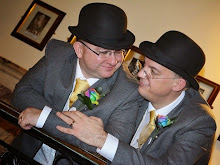
On Richard and my thirteenth anniversary, I feel like writing something fun – nothing serious, nothing political (though Lib Dems may need cheering up anyway), so I’m looking at 2007’s surge of Doctor Who DVDs. Released last month, the highpoint is The Key To Time box set, an extra-packed complete season of Tom Baker that’s the largest and probably the most thoroughly enjoyable Doctor Who package so far. The box doesn’t even boast ‘written by Douglas Adams’ or ‘starring K9,’ but it’s still already sold out in most places, so order it online or grab it if you see it!
I suppose I shouldn’t have been surprised that The Key To Time has been selling so fast, though even people working for the BBC’s commercial arm have admitted they underestimated the demand. The release rate of DVDs from the old series has shot up this year from about seven or eight stories to seventeen, several of them bundled together; partly because they’ve decided they’d like to get them all out ready for repackaging in the 50th anniversary of the show (2013), and partly because they’ve been selling so much better since the new series has been on TV and a big hit. Oh, and there are plenty of new series releases out this year, too, but I can’t review everything at once. And then there are a pile of repackaged and reissued stories as well, which’ll have to wait for another post, if at all! The biggest change this year, though, has been in the number of stories you can buy for Tom Baker, the longest-running Doctor with over forty adventures broadcast. In seven years of Who DVD releases to the end of last year, ten of his stories had become available – by the end of this year, there’ll be twenty-one of them on the shelves (possibly with a gap of six where The Key To Time’s out of stock). Having rather scarily not written a Doctor Who piece on here for half the year, I thought it was more than time that I caught up…
So, by way of updating my last year’s ‘Choosing Doctor Who DVDs Made Easy’, here are all the Doctor Who DVD releases of 2007 – in a very vague order of merit:
A compelling Doctor and companion having masses of fun, witty scripts, emotion, magic, a ‘story arc’ (in those days less portentously called an ‘umbrella theme’), vivid women characters and even filming in Wales… This 1978-9 set of six stories making up the show’s Sixteenth Season could almost be the new series – well, all right, without the pace, budget or all the old enemies. How much you enjoy this may depend on how much you like The Tom Baker Show, but if you see a sparkly pinky-blue box on sale, I’d recommend it. Tom is accompanied by Mary Tamm’s Romana (surely his most beautiful companion) and the tin dog… And I’d say this is the one year where K9 really worked, so you’ll see him at his best. It’s surprisingly short of monsters, and towards the end noticeably short of cash, but it has wit, character and imagination in abundance, as well as a fabulous set of villains. Striking out into science fantasy with castles and royals and the Doctor as a wizard on a quest, this is the series at its most fairy-tale, but with a darker undertone that gods aren’t to be trusted. The stories are by some of the best writers ever to work on Doctor Who: famous Douglas Adams; Robert Holmes, who Russell T Davies says wrote “the best dialogue ever written”; David Fisher, who for my money gets the best balance of character and wit, and quite grown-up about sex; and Bob Baker and Dave Martin, never as highly rated, but then, Bob’s the only Who writer with an Oscar, so don’t knock him…
I was aged six and seven when this lot was first broadcast – when it took six months to watch, rather than eleven hours (excluding the commentaries, text notes, documentaries, deleted scenes…) – so perhaps it’s unsurprising that I love it so. It was the first Doctor Who season I saw in colour; my Mum tells me that I’d pleaded for us to get a colour TV on the grounds that “having to watch the Multi-coloured Swap Shop in black and white is the mark of a deprived childhood.” So rather than just gush, I’ve written a paragraph on what’s to like in each of the six stories. Before then, on the first disc you’ll find an in-depth documentary covering the 1977-1980 years of Doctor Who produced by Graham Williams, when the series moved from horror and movies towards wit and books – it’s the heart of the extras, and has some great contributions, including actors, writers, directors, new series writer Gareth Roberts and archive footage of the late Graham Williams and Douglas Adams. Even three decades later, it’s still a period that divides fans: for those who didn’t like it, this does a good job of explaining the curses it was under… Such as Mary Whitehouse, runaway inflation destroying the budget, and Tom Baker eating directors for breakfast. My only complaints are that it gives away one of the best gags in The Power of Kroll, and that for fear of shocking parents it doesn’t include the most famous out-take of the time, when Tom Baker snaps at K9 that
The Ribos Operation
The Doctor is rather unwillingly sent on a mission to find the scattered parts of the all-powerful ‘Key to Time’, by someone who may or may not be God but is pretty scary either way… So off he goes to a brilliantly conceived world in its medieval times, surrounded by such vivid characters as a conman, a brutal old general and a psychotic deposed prince, though for many the story’s stolen by this world’s version of Gallileo, tortured for saying the stars are suns and not ice crystals in the sky. It’s funny, intelligent, has impressive music and a lovely Russian-esque design – though new viewers might find it lacks action and that the monster’s a bit rubbish, the season starts with a winner, and the commentary by Tom Baker and Mary Tamm is delightfully bitchy. I’ve written an in-depth review of this one, by the way, but as it refers to the final story, too, you might not want to read it until you’ve watched the lot; the same applies for Millennium’s contrary and rather brilliant theory of who Tom Baker thinks is god.
The Pirate Planet
Douglas Adams’ first TV script, and K9 as a hero… What could possibly go wrong? Well, surprisingly little. This is a brilliantly structured story, with a great mystery that moves gradually and seamlessly from being very silly to being very serious, and Tom Baker is terrific. On the downside, it starts a little slowly, and it’s evident that the budget’s not been spent on the crowd scenes or the video effects. There are two commentaries here, one rather dry one a few years old from the US release (which had little restoration work and very few extras, while this one is packed with them from deleted scenes, to a charming ‘making of’, to a rather overlong and unwise comedy feature that really can’t compete with Mr Adams) and a new commentary in which Tom Baker tests the limits of what he can say for a PG-rated release. Of all these stories, this is the one where the old film and video stock has been polished up most impressively, though some fans are up in arms about an effect that’s been microscopically changed (actually, I spotted a more blatant one that’s been replaced altogether, wrongly, but I’d better not mention it for fear of starting another flame war). The cyborg Pirate Captain looks terrific, too; the local population are quite happy with their murderous dictator because he makes them rich; despite looking very ‘sci-fi,’ it’s still at heart a fairy tale with a wicked old witch and a giant in a castle. And you might notice that the mysterious Mentiads are all male, appear to live in a rave club, and a suburban conservative says he’s glad his son was shot rather than become “one of those – those…” Yes, they’re the Daily Mail’s worst nightmare: young people today who are gay hoodies.
The Stones of Blood
There’s rather a good little documentary about Hammer movies as an influence on Doctor Who here, appropriately enough when this is the story that combines Celtic mythology with two direct steals from Hammer (watch closely: they’re The Mummy and The Hound of the Baskervilles). It’s even got that very horror film but very rare for Doctor Who ‘have sex and die’ attitude, in the scene Russell T Davies thinks is the scariest ever. So, is this a return to the Doctor Who horror movie? Well… No. It starts off that way, but twists around into something quite different, and both approaches partly work. Rather than just gothic horror, this is definitely female gothic, with very strong parts for women and (after the gay Mentiads) blatant lesbians. What’s brilliant about it is its wit and cleverness, its actors, and that it beats off several other stories this season to be the campest Doctor Who of the lot. What’s less brilliant is that the first half is plagued by erratic and obviously fake ‘night’ shots that suggest the sun’s bungee-jumping, while the second half is less inconsistent in look but lets itself down with some terribly inconsistent trial ‘rules’. Still, it has some occasionally scary living rocks, a deleted scene that inspired a League of Gentlemen sketch, and proof in another extra that Blue Peter was telling untruths to the nation’s youth as long ago as 1978…
The Androids of Tara
My favourite story of the season is wonderfully light and engaging, like a summer holiday week off from more serious things, running around the countryside, and having the most extraordinary fun for a show that’s never short of fun in the first place. Peter Jeffrey makes a fantastic moustache-twirling villain for an adventure that has a lot in common with The Prisoner of Zenda, but (for people who can only make lists of similarities rather than pay attention to the characters) has almost none of the same themes. Many fans hate this because it’s just light-hearted swashbuckling fluff, while I love it for much the same reason. Oh, and there’s a rubbish monster, but that’s polished off in five minutes for a joke. Among the extras, the ‘making of’ feature is stolen by one very animated, funny actor and another who’s a stylish old gentleman sort, and there’s a rather basic but jolly feature on doubles in Who that’s like an incomplete list illustrated by clips – probably to appeal to younger viewers. But the whole thing’s great fun. Sit back, enjoy K9 playing chess, Romana being disdainful, and a wicked Count exclaiming “Next time, I shall not be so lenient!” on his inevitable defeat. And there’s swordfighting with electric swords, too. Cool (says the seven-year-old me).
The Power of Kroll
New series viewers who were disappointed when the BBC refused to show Captain Jack’s buttocks may be surprised just how much rear flesh is on display here – albeit covered in green paint, and really not very attractive. On a water world, the oppressed ‘Swampies’ are fighting some human exploiters, while their giant squid god that occasionally looks rather exciting and occasionally rather absurd takes them in turns to eat. There’s a lot of King Kong here, and we can never resist singing along to ‘The Kroll Song’ (there aren’t many words), but though there’s some good location filming and some amusing moments in the script, the plot, sets and many of the actors are a bit flat. The most enjoyable person to watch if you know the gossip is Philip Madoc (who gets a little documentary to himself), who was originally offered the main villain part, couldn’t do it, suddenly became free, took the job… And found out too late that part had been cast, so he was now just the sidekick. His character’s visible winces at much of the villain’s acting give a perfect performance of a man who knows he can do a better job than his rubbish boss because he knows he could give a better performance as the boss.
The Armageddon Factor
This double-disc release includes the longer final story and a host of extras, of which the most intriguing are a set of short horror stories read by Tom Baker (one of them, Saki’s Sredni Vashtar, which was never broadcast… Because of a strike, rather than because it was too terrifying. As far as I know). There’s also a pdf of The Dr Who Annual 1979, which has some rather striking pictures of Tom Baker but obviously didn’t have any pictures of ‘Leela’, and is a bit thin; still, I remember finding The Planet of Dust and Terror on Tantalogus suitably eerie. Anyway, there’s a lot that’s brilliant in The Armageddon Factor, with a planet grimly at war, a superbly played character who echoes Churchill and Hitler at the same time, and another who eerily anticipates Princess Diana. Even K9 is great, by turns bitchy, sinister or disturbingly chummy with a talking WMD. Unfortunately, there’s a lot that’s far from brilliant, too; one of the actors is so unconvincing he could be a Tory MP, and the plot structure’s a mess, starting well and recovering by the end but meandering tediously in some beige corridors for a fortnight in the middle. It doesn’t help that all the serious bits are at the start, after which it gets less rather than more doom-laden, and that the ‘comic relief’ appears too late, not in the middle episodes that desperately needed a diversion but towards the end when it’s starving for some drama. But the Doctor does make entirely the Doctorish decision at the very end, and that’s what matters…
If you think you could do better, of course, you can assemble your very own Key to Time here.
Way back at the beginning of the year, a boxed set of three stories re-introduced the Master, saw out Tom Baker and introduced Peter Davison, all in considerable style. This is another terrific release – with The Key To Time and last year’s The Beginning Box Set, the boxed sets have been strong contenders for the best in the range. Again, there are some superb documentaries, some lovely music that you can play separately, and you also get a pdf of The Doctor Who Annual 1982, which was clearly done in a hurry and without a lot of Peter Davison photos… Most of it’s not up to much, but the poorly-drawn comic strip satirising the publishers is quite amusing, as is the speculative feature inviting you to “Imagine… some hundred years from now” that everyone in the world might have their own private computer and something like GPS. Shame the giant hovercraft didn’t come about, though. I always rather liked hovercraft.
The Keeper of Traken
A marvellous rationalist fairy story in Shakespearean dress and Art Nouveau sets, with a creepy walking statue. It’s a spellbinding tale of evil in Eden, with a sense of impending doom that’s only let down by the actress at the heart of the tragic love story being hammier than you can possibly believe. I wrote an extended review of it earlier in the year, so I’ll skip to the extras: several rather intriguing documentaries, with evil Geoffrey Beevers very watchable; a lumbering trailer from the time; the writer trying to remember which bits he wrote and which he didn’t on the commentary…
Logopolis
Tom Baker’s final story is thoroughly laden with doom and captivating – I wrote most of an in-depth review earlier in the year, but became slightly terrified when the writer found and commented on it! A threat to the Doctor unfolds into a threat to the Universe in a story informed by these new-fangled computers that manages to do three very unlikely things: make the TARDIS scary; make the Master scary; and make Maths interesting. It’s slow, packed with ideas and compelling. There’s another great documentary, particularly with Tom admitting what a monster he was, and the commentary is striking – with Tom Baker, Janet Fielding (Tegan) and writer Jesus H Bidmead, Richard exclaimed “When Egos Collide!” as they introduced themselves. And they’re all pretty… forthright (though Mr Bidmead has a tendency to say ‘That bit’s very clever. But that bit’s rubbish, and it was someone else’s fault’). The best extra for me, surprisingly, is the score: you can press a button to play just the music, and it’s gorgeous.
Castrovalva
I should say up front that the music for this is extraordinarily lovely too, so have a listen; there are even some deleted scenes to watch, too. With this one, I was feeling slightly intimidated and never quite got round to the in-depth review, as it’s a beautiful and character-driven tale with an air of wonder that reflects both the innocence and the darkness of a fairy story, but it’s not quite up to the standard of the other two. There are interesting games with gender and with identity, with one ‘he must be the villain’ character seeming harsh and sinister but turning out to be the crucial ‘inside man’ (these days we’d call him ‘Snape’). Peter Davison is at his best here, giving us a Doctor that turns from reverie to sudden fierceness – he’s very revealing on the commentary, seeming both proud and embarrassed.
This earlier, much scarier Tom Baker story came out just last week – it’s from 1975 and the show’s Thirteenth Season, so it would be an ideal thirteenth anniversary present… Except that I think it’s great, and Richard doesn’t. Oh well. Anyway, it’s another science-as-fairy-tale story, borrowing from Shakespeare, Jekyll and Hyde, Forbidden Planet and werewolf legends, though it was so terrifying to kids at the time – I was one of them, and I still remember the ‘sci-fi burial alive’ nightmares – that viewers of the new series may find it eerily familiar, having evidently inspired the writers of The Impossible Planet and 42. Sarah Jane Smith’s in it, too. What most people talk about, though, is the alien jungle, and it looks absolutely awesome… Except in the scenes recorded on video rather than film, which look surprisingly flat. Not looking good at any point are the guest actors’ costumes; people say this season’s all Hammer films, but the only time we get people with seriously plunging necklines, they’re all men. And they’re really not worth it, either. Extras include behind-the-scenes footage, an impressive line-up on the commentary, a ‘making of’ and a slightly odd feature on the actors… If you want to see more, there’s a brilliant (if sometimes amusing for its over-the-topness) trailer on The Key to Time DVDs.
Tom Baker’s first story, and the first I ever saw; a middle-range story, but well worth seeing (and not unlike a sort of ‘Junior Avengers’ story). Sarah Jane Smith and the Brigadier are lovely, and fascist villain Miss Winters is fabulous, but this has two stars: Tom Baker, instantly seizing the show with hugely energetic performance; and the robot, which is huge and still looks terrific today. Until the last episode, that is, when several things go a little bit wrong (the script fizzles a bit, the characters get dafter, the special effects… Well, let’s say it’s unwise to move from Frankenstein to King Kong, and that we can sing along the ad jingle of a well-known toy of the time that’s used in a model shot). But on the whole, I’m very fond of it: it’s got such heart, humour and energy, it got me hooked, and it’s cleverer than Isaac Asimov, complete with a critique of utopianism. Again, Tom gives a good DVD commentary, there’s an informative mini-documentary on the definitive Doctor Who title sequence and a great one on the making of the story and how Tom started off as the Doctor.
From a first to the last; this double-disc release contains the final story of the original series, starring Sylvester McCoy as the Doctor in 1989. It’s good, solid, average Who: story-driven, with something familiar, a few surprises, mostly rather well done drama and the odd let-down. Londoners are being abducted by giant cat people on horseback, a strikingly effective sight, and carried off to their stormy home world… Where the Master waits. The modern setting prefigures the new series, though the council estate is rather less well done – and the little cat ‘familiars’ badly betray the budget (it’s easier to suspend your disbelief with an alien cat-person than with a stuffed moggie that everyone can look at and know doesn’t look right). The alien world casts a strange spell in this allegorical tale which shows no love for machismo and ’80s values… It’s difficult to tell if the score is mocking or overdoing screaming ’80s guitars, too. The Master is underplayed and threatening, though, and one of the extras features him being really rather good for a computer game, as well as cut scenes from this story. As for the other extras… Well, there are a lot of them, and the making of and story of what might have happened next if the series hadn’t been cancelled are interesting (though the ‘fan commentary’ is a disappointment), but – despite the presence of Lisa Bowerman, Professor Bernice Summerfield herself – it leaves a sour taste that there’s nothing about the New Adventures, the magnificent book series that carried Doctor Who on through the ’90s. So, in the end, the DVD is a disappointment, though the story ends with a beautiful, elegiac speech from the Doctor that still echoes today…
Jon Pertwee stars in the story that introduces both Sarah Jane Smith and moderately well-known monsters the Sontarans – both new arrivals are great from the start, and Pertwee’s not bad either (terribly sexist at times, but also occasionally charming). Like Survival, this is a ‘kidnap’ story, though here the alien is dragging people into the past rather than to another planet, and it’s a lot funnier. There’s even a gag about the Doctor finding “a young girl” (the first time someone says what everyone thinks about him) and a marvellous line from Sarah about the Middle Ages. Oh, and it’s got Dot Cotton and Boba Fett in it! On the downside, and despite some rather fab location shooting at a real castle (well, a real folly), the direction is very flat and dull, and it’s very poorly edited, so the story doesn’t always flow too well. You won’t be impressed by the robot knight, either. As well as a commentary, interesting but badly proofread text notes and another so-so Annual, the extras include rather a fine ‘making of’ – despite producer Barry Letts getting some ratings facts entirely wrong – and new CGI effects, which are all good bar, unfortunately, the climax in which a dragon apparently sneezes through some slightly singed gates. I suspect The Invasion of Time may get a DVD release next year, so that they can flog it in a ‘Sontaran box set’ with this, The Sontaran Experiment, The Two Doctors and Horror of Fang Rock (featuring their arch-enemies)…
Due out a month from today, the last of this year’s old series releases stars Tom Baker in the sequel to the smashing Genesis of the Daleks, and it doesn’t compare all that well. It follows directly from The Key To Time, and like The Armageddon Factor is a mixture of great bits and rather feeble bits. Romana regenerates into a new body (rather unsteadily), and she and the Doctor have amusing dialogue and instant chemistry; there’s some superb hand-held camerawork and an intriguing ‘planet of the dead’ feel that doesn’t quite come off. More original but more flawed is the logical impasse of the latter half of the story, which is a good idea but requires the Daleks and their beautiful disco opponents to be a bit thick. And Davros… Well, the actor, the script and the mask all suffer by comparison to his first story: he’s a ranting maniac rather than a brilliantly persuasive fascist. I’m looking forward to the commentary (not reuniting Tom Baker and his ex-wife for a chat, sadly), the documentary about dependable Dalek writer Terry Nation and, of course, the thrilling new CGI effects. Still, I like it in the right mood, and if you watch the Coming Soon Trailer for it on the Planet of Evil DVD (and not yet added to YouTube, apparently), it looks fantastic.
There are still the two poorest releases to do, and the exciting new series, but it's late, I'm feeling very ill, and my lovely Richard wants to look after me!
…And at long last I’ve come back to it, after a month of illness, procrastination, doing other things, more illness and more procrastination. Why wasn’t I filled with enthusiasm for the next two releases? Read on.
Ah well. The straight run of really impressive stories making up the boxed set releases had to end somewhere, and it ended with a small box of two adjoining stories starring Peter Davison as the Doctor and Janet Fielding as Tegan (and Sarah Sutton as Nyssa, but she’s less gobby). There’s quite a nice picture of Tegan on the front, but the covers for the individual stories inside are far poorer designs than usual. And the stories?
Time-Flight
Written by an impressive director, directed by a… less impressive one, you really want to know what it looked like in the writer’s head, with an intriguingly weird Arabian Nights-flavoured fantasy. The dialogue and ‘climax’ by lots of made-up technical gubbins would still be terrible, though. It’s another kidnap through time story, and this time the Master (cementing his image as ‘the camp one’ and with a truly barking plan) is taking Concordes to prehistory to try and rip off an alien ‘super-race’. The Doctor behaves like a credulous idiot, too, and sides with one half of the self-styled super-race to crush individuality and freedom of choice for the other half. Uh huh? Even the music’s terrible (though it’s still a shame it’s not included as a separate track). The commentary is mean-spirited in the extreme, too, though there are some deleted scenes to let you know how much more it could have gone on. Um… The aircraft crew actors are quite jolly, as is some of the Concordepromo filming, but this is the one that even Peter Davison has described (protesting misquotes, but I’ve watched him say it) as “crap”.
Arc of Infinity
This story follows straight on, and while it’s not very good, it is at least a lot better, though the director makes no better use of Amsterdam than he did Concorde. It’s got an impressive set of extras, led by glowy new CGI, two excellent documentaries – I particularly like the one on Omega, linking to the Big Finish audio play – and boasts an amusing commentary by two Doctors, as this is the Peter Davison story with a bit part made ever so much larger by Colin Baker (plus, though the music’s not great, at least you can listen to it separately on this one). In its favour, the villain’s got a great gravelly voice and is nicely designed, though most of the other design is a bit naff: a monster like a man-sized chicken; Time Lords with little horns; Gallifrey not as the stately citadel glimpsed in the new series but more of a bland wine bar. Meanwhile, the similarity of some of it to a porn flick is emphasised by the typo-packed text notes quoting extensively from Freudian slip-packed original script. And you can be inappropriately amused by the ‘murder mystery’ with a High Councillor creeping about in a huge ceremonial collar, which is rather like a Peer of the Realm committing a stealthy murder while wearing a coronet and a long robe trimmed with real cat with a signed donation to the Labour Party pinned to the back of it.
As you know, I love Doctor Who. All Doctor Who. And I would of course encourage you to purchase every Doctor Who DVD release, as we do. It’s just that there are some I might encourage you to buy… Once you’ve already bought all the others. Well, you might consider getting 180 or so other stories before you pick up this one but, oh, I’m beyond redemption and can still find things to enjoy about it. Colin Baker is always entertaining, though this is one of his least sympathetic scripts as the Doctor, with rather too much squabbling; Paul Darrow, Avon from Blake’s 7, gives one of the most over-the-top performances ever allowed to be broadcast; and both are fun on the commentary and ‘making of’ (few extras, and again the music is omitted), one trying to look on the bright side, the other mercilessly up-front about how bad it was. The budget is non-existent, the alien Bandrils are hilarious Grant Shapps-like creations and the script is packed with characters telling each other things they must know in such a clumsy way that only the most wooden of actors could deliver them. And they do. Featuring a young HG Wells, these days it would be called a ‘celebrity historical’, but makes a shocking mess of it: not only is he depicted as a prat; not only is it ludicrous to claim his great stories were inspired by this; but the writer of Timelash makes the Calvinist / atheist Mr Wells into a Catholic spiritualist. The only explanation for which is that he mixed HG Wells up with Arthur Conan Doyle. Sigh. Our lovely friend Simon has a moderately more generous review here.
I suppose I shouldn’t have been surprised that The Key To Time has been selling so fast, though even people working for the BBC’s commercial arm have admitted they underestimated the demand. The release rate of DVDs from the old series has shot up this year from about seven or eight stories to seventeen, several of them bundled together; partly because they’ve decided they’d like to get them all out ready for repackaging in the 50th anniversary of the show (2013), and partly because they’ve been selling so much better since the new series has been on TV and a big hit. Oh, and there are plenty of new series releases out this year, too, but I can’t review everything at once. And then there are a pile of repackaged and reissued stories as well, which’ll have to wait for another post, if at all! The biggest change this year, though, has been in the number of stories you can buy for Tom Baker, the longest-running Doctor with over forty adventures broadcast. In seven years of Who DVD releases to the end of last year, ten of his stories had become available – by the end of this year, there’ll be twenty-one of them on the shelves (possibly with a gap of six where The Key To Time’s out of stock). Having rather scarily not written a Doctor Who piece on here for half the year, I thought it was more than time that I caught up…
So, by way of updating my last year’s ‘Choosing Doctor Who DVDs Made Easy’, here are all the Doctor Who DVD releases of 2007 – in a very vague order of merit:
The Key to Time Boxed Set
A compelling Doctor and companion having masses of fun, witty scripts, emotion, magic, a ‘story arc’ (in those days less portentously called an ‘umbrella theme’), vivid women characters and even filming in Wales… This 1978-9 set of six stories making up the show’s Sixteenth Season could almost be the new series – well, all right, without the pace, budget or all the old enemies. How much you enjoy this may depend on how much you like The Tom Baker Show, but if you see a sparkly pinky-blue box on sale, I’d recommend it. Tom is accompanied by Mary Tamm’s Romana (surely his most beautiful companion) and the tin dog… And I’d say this is the one year where K9 really worked, so you’ll see him at his best. It’s surprisingly short of monsters, and towards the end noticeably short of cash, but it has wit, character and imagination in abundance, as well as a fabulous set of villains. Striking out into science fantasy with castles and royals and the Doctor as a wizard on a quest, this is the series at its most fairy-tale, but with a darker undertone that gods aren’t to be trusted. The stories are by some of the best writers ever to work on Doctor Who: famous Douglas Adams; Robert Holmes, who Russell T Davies says wrote “the best dialogue ever written”; David Fisher, who for my money gets the best balance of character and wit, and quite grown-up about sex; and Bob Baker and Dave Martin, never as highly rated, but then, Bob’s the only Who writer with an Oscar, so don’t knock him…
I was aged six and seven when this lot was first broadcast – when it took six months to watch, rather than eleven hours (excluding the commentaries, text notes, documentaries, deleted scenes…) – so perhaps it’s unsurprising that I love it so. It was the first Doctor Who season I saw in colour; my Mum tells me that I’d pleaded for us to get a colour TV on the grounds that “having to watch the Multi-coloured Swap Shop in black and white is the mark of a deprived childhood.” So rather than just gush, I’ve written a paragraph on what’s to like in each of the six stories. Before then, on the first disc you’ll find an in-depth documentary covering the 1977-1980 years of Doctor Who produced by Graham Williams, when the series moved from horror and movies towards wit and books – it’s the heart of the extras, and has some great contributions, including actors, writers, directors, new series writer Gareth Roberts and archive footage of the late Graham Williams and Douglas Adams. Even three decades later, it’s still a period that divides fans: for those who didn’t like it, this does a good job of explaining the curses it was under… Such as Mary Whitehouse, runaway inflation destroying the budget, and Tom Baker eating directors for breakfast. My only complaints are that it gives away one of the best gags in The Power of Kroll, and that for fear of shocking parents it doesn’t include the most famous out-take of the time, when Tom Baker snaps at K9 that
“Yeah, you never fucking know the answer when it’s important.”If that hasn’t convinced you to read on, try this smashing trailer for the DVD, which sums up all the stories and even includes an explosion that BBC health and safety said was too dangerous for the studio – so they filmed it in a nuclear power station instead. Halcyon days!
The Ribos Operation
The Doctor is rather unwillingly sent on a mission to find the scattered parts of the all-powerful ‘Key to Time’, by someone who may or may not be God but is pretty scary either way… So off he goes to a brilliantly conceived world in its medieval times, surrounded by such vivid characters as a conman, a brutal old general and a psychotic deposed prince, though for many the story’s stolen by this world’s version of Gallileo, tortured for saying the stars are suns and not ice crystals in the sky. It’s funny, intelligent, has impressive music and a lovely Russian-esque design – though new viewers might find it lacks action and that the monster’s a bit rubbish, the season starts with a winner, and the commentary by Tom Baker and Mary Tamm is delightfully bitchy. I’ve written an in-depth review of this one, by the way, but as it refers to the final story, too, you might not want to read it until you’ve watched the lot; the same applies for Millennium’s contrary and rather brilliant theory of who Tom Baker thinks is god.
The Pirate Planet
Douglas Adams’ first TV script, and K9 as a hero… What could possibly go wrong? Well, surprisingly little. This is a brilliantly structured story, with a great mystery that moves gradually and seamlessly from being very silly to being very serious, and Tom Baker is terrific. On the downside, it starts a little slowly, and it’s evident that the budget’s not been spent on the crowd scenes or the video effects. There are two commentaries here, one rather dry one a few years old from the US release (which had little restoration work and very few extras, while this one is packed with them from deleted scenes, to a charming ‘making of’, to a rather overlong and unwise comedy feature that really can’t compete with Mr Adams) and a new commentary in which Tom Baker tests the limits of what he can say for a PG-rated release. Of all these stories, this is the one where the old film and video stock has been polished up most impressively, though some fans are up in arms about an effect that’s been microscopically changed (actually, I spotted a more blatant one that’s been replaced altogether, wrongly, but I’d better not mention it for fear of starting another flame war). The cyborg Pirate Captain looks terrific, too; the local population are quite happy with their murderous dictator because he makes them rich; despite looking very ‘sci-fi,’ it’s still at heart a fairy tale with a wicked old witch and a giant in a castle. And you might notice that the mysterious Mentiads are all male, appear to live in a rave club, and a suburban conservative says he’s glad his son was shot rather than become “one of those – those…” Yes, they’re the Daily Mail’s worst nightmare: young people today who are gay hoodies.
The Stones of Blood
There’s rather a good little documentary about Hammer movies as an influence on Doctor Who here, appropriately enough when this is the story that combines Celtic mythology with two direct steals from Hammer (watch closely: they’re The Mummy and The Hound of the Baskervilles). It’s even got that very horror film but very rare for Doctor Who ‘have sex and die’ attitude, in the scene Russell T Davies thinks is the scariest ever. So, is this a return to the Doctor Who horror movie? Well… No. It starts off that way, but twists around into something quite different, and both approaches partly work. Rather than just gothic horror, this is definitely female gothic, with very strong parts for women and (after the gay Mentiads) blatant lesbians. What’s brilliant about it is its wit and cleverness, its actors, and that it beats off several other stories this season to be the campest Doctor Who of the lot. What’s less brilliant is that the first half is plagued by erratic and obviously fake ‘night’ shots that suggest the sun’s bungee-jumping, while the second half is less inconsistent in look but lets itself down with some terribly inconsistent trial ‘rules’. Still, it has some occasionally scary living rocks, a deleted scene that inspired a League of Gentlemen sketch, and proof in another extra that Blue Peter was telling untruths to the nation’s youth as long ago as 1978…
The Androids of Tara
My favourite story of the season is wonderfully light and engaging, like a summer holiday week off from more serious things, running around the countryside, and having the most extraordinary fun for a show that’s never short of fun in the first place. Peter Jeffrey makes a fantastic moustache-twirling villain for an adventure that has a lot in common with The Prisoner of Zenda, but (for people who can only make lists of similarities rather than pay attention to the characters) has almost none of the same themes. Many fans hate this because it’s just light-hearted swashbuckling fluff, while I love it for much the same reason. Oh, and there’s a rubbish monster, but that’s polished off in five minutes for a joke. Among the extras, the ‘making of’ feature is stolen by one very animated, funny actor and another who’s a stylish old gentleman sort, and there’s a rather basic but jolly feature on doubles in Who that’s like an incomplete list illustrated by clips – probably to appeal to younger viewers. But the whole thing’s great fun. Sit back, enjoy K9 playing chess, Romana being disdainful, and a wicked Count exclaiming “Next time, I shall not be so lenient!” on his inevitable defeat. And there’s swordfighting with electric swords, too. Cool (says the seven-year-old me).
The Power of Kroll
New series viewers who were disappointed when the BBC refused to show Captain Jack’s buttocks may be surprised just how much rear flesh is on display here – albeit covered in green paint, and really not very attractive. On a water world, the oppressed ‘Swampies’ are fighting some human exploiters, while their giant squid god that occasionally looks rather exciting and occasionally rather absurd takes them in turns to eat. There’s a lot of King Kong here, and we can never resist singing along to ‘The Kroll Song’ (there aren’t many words), but though there’s some good location filming and some amusing moments in the script, the plot, sets and many of the actors are a bit flat. The most enjoyable person to watch if you know the gossip is Philip Madoc (who gets a little documentary to himself), who was originally offered the main villain part, couldn’t do it, suddenly became free, took the job… And found out too late that part had been cast, so he was now just the sidekick. His character’s visible winces at much of the villain’s acting give a perfect performance of a man who knows he can do a better job than his rubbish boss because he knows he could give a better performance as the boss.
The Armageddon Factor
This double-disc release includes the longer final story and a host of extras, of which the most intriguing are a set of short horror stories read by Tom Baker (one of them, Saki’s Sredni Vashtar, which was never broadcast… Because of a strike, rather than because it was too terrifying. As far as I know). There’s also a pdf of The Dr Who Annual 1979, which has some rather striking pictures of Tom Baker but obviously didn’t have any pictures of ‘Leela’, and is a bit thin; still, I remember finding The Planet of Dust and Terror on Tantalogus suitably eerie. Anyway, there’s a lot that’s brilliant in The Armageddon Factor, with a planet grimly at war, a superbly played character who echoes Churchill and Hitler at the same time, and another who eerily anticipates Princess Diana. Even K9 is great, by turns bitchy, sinister or disturbingly chummy with a talking WMD. Unfortunately, there’s a lot that’s far from brilliant, too; one of the actors is so unconvincing he could be a Tory MP, and the plot structure’s a mess, starting well and recovering by the end but meandering tediously in some beige corridors for a fortnight in the middle. It doesn’t help that all the serious bits are at the start, after which it gets less rather than more doom-laden, and that the ‘comic relief’ appears too late, not in the middle episodes that desperately needed a diversion but towards the end when it’s starving for some drama. But the Doctor does make entirely the Doctorish decision at the very end, and that’s what matters…
If you think you could do better, of course, you can assemble your very own Key to Time here.
New Beginnings Boxed Set
Way back at the beginning of the year, a boxed set of three stories re-introduced the Master, saw out Tom Baker and introduced Peter Davison, all in considerable style. This is another terrific release – with The Key To Time and last year’s The Beginning Box Set, the boxed sets have been strong contenders for the best in the range. Again, there are some superb documentaries, some lovely music that you can play separately, and you also get a pdf of The Doctor Who Annual 1982, which was clearly done in a hurry and without a lot of Peter Davison photos… Most of it’s not up to much, but the poorly-drawn comic strip satirising the publishers is quite amusing, as is the speculative feature inviting you to “Imagine… some hundred years from now” that everyone in the world might have their own private computer and something like GPS. Shame the giant hovercraft didn’t come about, though. I always rather liked hovercraft.
The Keeper of Traken
A marvellous rationalist fairy story in Shakespearean dress and Art Nouveau sets, with a creepy walking statue. It’s a spellbinding tale of evil in Eden, with a sense of impending doom that’s only let down by the actress at the heart of the tragic love story being hammier than you can possibly believe. I wrote an extended review of it earlier in the year, so I’ll skip to the extras: several rather intriguing documentaries, with evil Geoffrey Beevers very watchable; a lumbering trailer from the time; the writer trying to remember which bits he wrote and which he didn’t on the commentary…
Logopolis
Tom Baker’s final story is thoroughly laden with doom and captivating – I wrote most of an in-depth review earlier in the year, but became slightly terrified when the writer found and commented on it! A threat to the Doctor unfolds into a threat to the Universe in a story informed by these new-fangled computers that manages to do three very unlikely things: make the TARDIS scary; make the Master scary; and make Maths interesting. It’s slow, packed with ideas and compelling. There’s another great documentary, particularly with Tom admitting what a monster he was, and the commentary is striking – with Tom Baker, Janet Fielding (Tegan) and writer Jesus H Bidmead, Richard exclaimed “When Egos Collide!” as they introduced themselves. And they’re all pretty… forthright (though Mr Bidmead has a tendency to say ‘That bit’s very clever. But that bit’s rubbish, and it was someone else’s fault’). The best extra for me, surprisingly, is the score: you can press a button to play just the music, and it’s gorgeous.
Castrovalva
I should say up front that the music for this is extraordinarily lovely too, so have a listen; there are even some deleted scenes to watch, too. With this one, I was feeling slightly intimidated and never quite got round to the in-depth review, as it’s a beautiful and character-driven tale with an air of wonder that reflects both the innocence and the darkness of a fairy story, but it’s not quite up to the standard of the other two. There are interesting games with gender and with identity, with one ‘he must be the villain’ character seeming harsh and sinister but turning out to be the crucial ‘inside man’ (these days we’d call him ‘Snape’). Peter Davison is at his best here, giving us a Doctor that turns from reverie to sudden fierceness – he’s very revealing on the commentary, seeming both proud and embarrassed.
Planet of Evil
This earlier, much scarier Tom Baker story came out just last week – it’s from 1975 and the show’s Thirteenth Season, so it would be an ideal thirteenth anniversary present… Except that I think it’s great, and Richard doesn’t. Oh well. Anyway, it’s another science-as-fairy-tale story, borrowing from Shakespeare, Jekyll and Hyde, Forbidden Planet and werewolf legends, though it was so terrifying to kids at the time – I was one of them, and I still remember the ‘sci-fi burial alive’ nightmares – that viewers of the new series may find it eerily familiar, having evidently inspired the writers of The Impossible Planet and 42. Sarah Jane Smith’s in it, too. What most people talk about, though, is the alien jungle, and it looks absolutely awesome… Except in the scenes recorded on video rather than film, which look surprisingly flat. Not looking good at any point are the guest actors’ costumes; people say this season’s all Hammer films, but the only time we get people with seriously plunging necklines, they’re all men. And they’re really not worth it, either. Extras include behind-the-scenes footage, an impressive line-up on the commentary, a ‘making of’ and a slightly odd feature on the actors… If you want to see more, there’s a brilliant (if sometimes amusing for its over-the-topness) trailer on The Key to Time DVDs.
Robot
Tom Baker’s first story, and the first I ever saw; a middle-range story, but well worth seeing (and not unlike a sort of ‘Junior Avengers’ story). Sarah Jane Smith and the Brigadier are lovely, and fascist villain Miss Winters is fabulous, but this has two stars: Tom Baker, instantly seizing the show with hugely energetic performance; and the robot, which is huge and still looks terrific today. Until the last episode, that is, when several things go a little bit wrong (the script fizzles a bit, the characters get dafter, the special effects… Well, let’s say it’s unwise to move from Frankenstein to King Kong, and that we can sing along the ad jingle of a well-known toy of the time that’s used in a model shot). But on the whole, I’m very fond of it: it’s got such heart, humour and energy, it got me hooked, and it’s cleverer than Isaac Asimov, complete with a critique of utopianism. Again, Tom gives a good DVD commentary, there’s an informative mini-documentary on the definitive Doctor Who title sequence and a great one on the making of the story and how Tom started off as the Doctor.
Survival
From a first to the last; this double-disc release contains the final story of the original series, starring Sylvester McCoy as the Doctor in 1989. It’s good, solid, average Who: story-driven, with something familiar, a few surprises, mostly rather well done drama and the odd let-down. Londoners are being abducted by giant cat people on horseback, a strikingly effective sight, and carried off to their stormy home world… Where the Master waits. The modern setting prefigures the new series, though the council estate is rather less well done – and the little cat ‘familiars’ badly betray the budget (it’s easier to suspend your disbelief with an alien cat-person than with a stuffed moggie that everyone can look at and know doesn’t look right). The alien world casts a strange spell in this allegorical tale which shows no love for machismo and ’80s values… It’s difficult to tell if the score is mocking or overdoing screaming ’80s guitars, too. The Master is underplayed and threatening, though, and one of the extras features him being really rather good for a computer game, as well as cut scenes from this story. As for the other extras… Well, there are a lot of them, and the making of and story of what might have happened next if the series hadn’t been cancelled are interesting (though the ‘fan commentary’ is a disappointment), but – despite the presence of Lisa Bowerman, Professor Bernice Summerfield herself – it leaves a sour taste that there’s nothing about the New Adventures, the magnificent book series that carried Doctor Who on through the ’90s. So, in the end, the DVD is a disappointment, though the story ends with a beautiful, elegiac speech from the Doctor that still echoes today…
The Time Warrior
Jon Pertwee stars in the story that introduces both Sarah Jane Smith and moderately well-known monsters the Sontarans – both new arrivals are great from the start, and Pertwee’s not bad either (terribly sexist at times, but also occasionally charming). Like Survival, this is a ‘kidnap’ story, though here the alien is dragging people into the past rather than to another planet, and it’s a lot funnier. There’s even a gag about the Doctor finding “a young girl” (the first time someone says what everyone thinks about him) and a marvellous line from Sarah about the Middle Ages. Oh, and it’s got Dot Cotton and Boba Fett in it! On the downside, and despite some rather fab location shooting at a real castle (well, a real folly), the direction is very flat and dull, and it’s very poorly edited, so the story doesn’t always flow too well. You won’t be impressed by the robot knight, either. As well as a commentary, interesting but badly proofread text notes and another so-so Annual, the extras include rather a fine ‘making of’ – despite producer Barry Letts getting some ratings facts entirely wrong – and new CGI effects, which are all good bar, unfortunately, the climax in which a dragon apparently sneezes through some slightly singed gates. I suspect The Invasion of Time may get a DVD release next year, so that they can flog it in a ‘Sontaran box set’ with this, The Sontaran Experiment, The Two Doctors and Horror of Fang Rock (featuring their arch-enemies)…
Destiny of the Daleks
Due out a month from today, the last of this year’s old series releases stars Tom Baker in the sequel to the smashing Genesis of the Daleks, and it doesn’t compare all that well. It follows directly from The Key To Time, and like The Armageddon Factor is a mixture of great bits and rather feeble bits. Romana regenerates into a new body (rather unsteadily), and she and the Doctor have amusing dialogue and instant chemistry; there’s some superb hand-held camerawork and an intriguing ‘planet of the dead’ feel that doesn’t quite come off. More original but more flawed is the logical impasse of the latter half of the story, which is a good idea but requires the Daleks and their beautiful disco opponents to be a bit thick. And Davros… Well, the actor, the script and the mask all suffer by comparison to his first story: he’s a ranting maniac rather than a brilliantly persuasive fascist. I’m looking forward to the commentary (not reuniting Tom Baker and his ex-wife for a chat, sadly), the documentary about dependable Dalek writer Terry Nation and, of course, the thrilling new CGI effects. Still, I like it in the right mood, and if you watch the Coming Soon Trailer for it on the Planet of Evil DVD (and not yet added to YouTube, apparently), it looks fantastic.
There are still the two poorest releases to do, and the exciting new series, but it's late, I'm feeling very ill, and my lovely Richard wants to look after me!
…And at long last I’ve come back to it, after a month of illness, procrastination, doing other things, more illness and more procrastination. Why wasn’t I filled with enthusiasm for the next two releases? Read on.
Time-Flight and Arc of Infinity Box
Ah well. The straight run of really impressive stories making up the boxed set releases had to end somewhere, and it ended with a small box of two adjoining stories starring Peter Davison as the Doctor and Janet Fielding as Tegan (and Sarah Sutton as Nyssa, but she’s less gobby). There’s quite a nice picture of Tegan on the front, but the covers for the individual stories inside are far poorer designs than usual. And the stories?
Time-Flight
Written by an impressive director, directed by a… less impressive one, you really want to know what it looked like in the writer’s head, with an intriguingly weird Arabian Nights-flavoured fantasy. The dialogue and ‘climax’ by lots of made-up technical gubbins would still be terrible, though. It’s another kidnap through time story, and this time the Master (cementing his image as ‘the camp one’ and with a truly barking plan) is taking Concordes to prehistory to try and rip off an alien ‘super-race’. The Doctor behaves like a credulous idiot, too, and sides with one half of the self-styled super-race to crush individuality and freedom of choice for the other half. Uh huh? Even the music’s terrible (though it’s still a shame it’s not included as a separate track). The commentary is mean-spirited in the extreme, too, though there are some deleted scenes to let you know how much more it could have gone on. Um… The aircraft crew actors are quite jolly, as is some of the Concorde
Arc of Infinity
This story follows straight on, and while it’s not very good, it is at least a lot better, though the director makes no better use of Amsterdam than he did Concorde. It’s got an impressive set of extras, led by glowy new CGI, two excellent documentaries – I particularly like the one on Omega, linking to the Big Finish audio play – and boasts an amusing commentary by two Doctors, as this is the Peter Davison story with a bit part made ever so much larger by Colin Baker (plus, though the music’s not great, at least you can listen to it separately on this one). In its favour, the villain’s got a great gravelly voice and is nicely designed, though most of the other design is a bit naff: a monster like a man-sized chicken; Time Lords with little horns; Gallifrey not as the stately citadel glimpsed in the new series but more of a bland wine bar. Meanwhile, the similarity of some of it to a porn flick is emphasised by the typo-packed text notes quoting extensively from Freudian slip-packed original script. And you can be inappropriately amused by the ‘murder mystery’ with a High Councillor creeping about in a huge ceremonial collar, which is rather like a Peer of the Realm committing a stealthy murder while wearing a coronet and a long robe trimmed with real cat with a signed donation to the Labour Party pinned to the back of it.
Timelash
As you know, I love Doctor Who. All Doctor Who. And I would of course encourage you to purchase every Doctor Who DVD release, as we do. It’s just that there are some I might encourage you to buy… Once you’ve already bought all the others. Well, you might consider getting 180 or so other stories before you pick up this one but, oh, I’m beyond redemption and can still find things to enjoy about it. Colin Baker is always entertaining, though this is one of his least sympathetic scripts as the Doctor, with rather too much squabbling; Paul Darrow, Avon from Blake’s 7, gives one of the most over-the-top performances ever allowed to be broadcast; and both are fun on the commentary and ‘making of’ (few extras, and again the music is omitted), one trying to look on the bright side, the other mercilessly up-front about how bad it was. The budget is non-existent, the alien Bandrils are hilarious Grant Shapps-like creations and the script is packed with characters telling each other things they must know in such a clumsy way that only the most wooden of actors could deliver them. And they do. Featuring a young HG Wells, these days it would be called a ‘celebrity historical’, but makes a shocking mess of it: not only is he depicted as a prat; not only is it ludicrous to claim his great stories were inspired by this; but the writer of Timelash makes the Calvinist / atheist Mr Wells into a Catholic spiritualist. The only explanation for which is that he mixed HG Wells up with Arthur Conan Doyle. Sigh. Our lovely friend Simon has a moderately more generous review here.
Labels: Colin Baker, Doctor Who, DVD, Jon Pertwee, New Beginnings, Peter Davison, Peter Jeffrey, Philip Madoc, Professor Bernice Summerfield, Reviews, Richard, Sylvester McCoy, The Key To Time, Tom Baker


Go Nuclear and the Lights Go Out
Apologists for the cosseted, public-subsidy-pampered nuclear industry usually just have to explain why a form of power that’s the top terrorist target, where accidents have the worst effect, where waste is more dangerous and longer-lasting than for any other supply, which relies entirely on foreign supply and which is ludicrously expensive to the taxpayer is the best. The usual answer is that it’s ‘more reliable than renewables’. How unfortunate, then, that on Tuesday – as the Government squirmed down its renewable ‘commitments’ from 20% to 10% – half of Britain’s nuclear power stations had to be, er, out of service.
The Today Programme on Tuesday morning managed a particularly woeful coverage of the expensive and unreliable nuclear programme: look, ‘Today’, just because you’re both called ‘programme’, it doesn’t been you have to be so obviously on nuclear’s side. After a short, pre-recorded anti-nuclear phone call from Michael Meacher (a man with moderately good green credentials, but with no position and no support in a Labour Party that’s turning into nuclear’s biggest cheerleader, so who exactly was he speaking for? If you want a party that stands for something, ask a Liberal Democrat), their prime 8.10am slot staged a nuclear ‘debate’ between… A scientist committed to the nuclear industry, and an employee of the nuclear lobby. Astoundingly, neither of them felt that nuclear power might not be the answer, and the interviewer make the extraordinary naïve mistake of trying to balance between the two pro-nuclear lobbyists rather than press them on why a terrorist-friendly, incredibly dangerous, waste-spewing, import-dependent power source that we all pay through the nose for is so erratic that seven out of sixteen reactors weren’t even working.
The nuclear industry receives public subsidy on a scale unthinkable to almost any other ‘private enterprise’ – not least the multi-billion costs of decommissioning, which are entirely funded by the taxpayer and make a nonsense of the industry’s free-market claims to cost-effectiveness. None of this or nuclear power’s many other drawbacks was raised by or with the two pro-nuclear spokespeople on Today; gee, wonder why? Imagine if renewable technology had had a fraction of the investment that nuclear fission reactors have over the years; Britain could be a world leader in world-saving, job-creating, self-sufficient energy. We’re not, and the Labour Government appears determined to carry on with the same old Tory-Labour consensus of failure – pulling back from renewables, and throwing good money after bad by favouring yet more unsafe, unreliable and unrealistically expensive nuclear power.
Top marks to Lib Dem acting Leader Vince Cable for raising the Labour Government’s climate change-contributing climbdown on its renewable targets at Prime Minister’s Question Time this week – and a weary sigh to Gordon Brown for his well-worn reply of ‘Look! The Tories! Wooh, scary!’ No, Mr Brown, Halloween is next week; you should be ashamed of selling out the long-term future of the planet, not reducing everything in the world to short-term political playfighting.
Careful readers will have noticed I’ve not been blogging much in recent weeks… Well, since Lib Dem Conference last month my health has been especially bad, and for the last couple of weeks, worse still. Gah. On the bright side, I’m feeling very cheered this morning. What could it be? The death of King Alfred the Great? No… The Gunfight at the OK Corral? No… Hillary Clinton’s birthday? No… Some sort of anniversary, I’m sure. I’ll ask Richard when he gets up.
The Today Programme on Tuesday morning managed a particularly woeful coverage of the expensive and unreliable nuclear programme: look, ‘Today’, just because you’re both called ‘programme’, it doesn’t been you have to be so obviously on nuclear’s side. After a short, pre-recorded anti-nuclear phone call from Michael Meacher (a man with moderately good green credentials, but with no position and no support in a Labour Party that’s turning into nuclear’s biggest cheerleader, so who exactly was he speaking for? If you want a party that stands for something, ask a Liberal Democrat), their prime 8.10am slot staged a nuclear ‘debate’ between… A scientist committed to the nuclear industry, and an employee of the nuclear lobby. Astoundingly, neither of them felt that nuclear power might not be the answer, and the interviewer make the extraordinary naïve mistake of trying to balance between the two pro-nuclear lobbyists rather than press them on why a terrorist-friendly, incredibly dangerous, waste-spewing, import-dependent power source that we all pay through the nose for is so erratic that seven out of sixteen reactors weren’t even working.
The nuclear industry receives public subsidy on a scale unthinkable to almost any other ‘private enterprise’ – not least the multi-billion costs of decommissioning, which are entirely funded by the taxpayer and make a nonsense of the industry’s free-market claims to cost-effectiveness. None of this or nuclear power’s many other drawbacks was raised by or with the two pro-nuclear spokespeople on Today; gee, wonder why? Imagine if renewable technology had had a fraction of the investment that nuclear fission reactors have over the years; Britain could be a world leader in world-saving, job-creating, self-sufficient energy. We’re not, and the Labour Government appears determined to carry on with the same old Tory-Labour consensus of failure – pulling back from renewables, and throwing good money after bad by favouring yet more unsafe, unreliable and unrealistically expensive nuclear power.
Top marks to Lib Dem acting Leader Vince Cable for raising the Labour Government’s climate change-contributing climbdown on its renewable targets at Prime Minister’s Question Time this week – and a weary sigh to Gordon Brown for his well-worn reply of ‘Look! The Tories! Wooh, scary!’ No, Mr Brown, Halloween is next week; you should be ashamed of selling out the long-term future of the planet, not reducing everything in the world to short-term political playfighting.
Careful readers will have noticed I’ve not been blogging much in recent weeks… Well, since Lib Dem Conference last month my health has been especially bad, and for the last couple of weeks, worse still. Gah. On the bright side, I’m feeling very cheered this morning. What could it be? The death of King Alfred the Great? No… The Gunfight at the OK Corral? No… Hillary Clinton’s birthday? No… Some sort of anniversary, I’m sure. I’ll ask Richard when he gets up.
Labels: British Politics, Environment, Labour, Richard
Wednesday, October 10, 2007
Jack Straw Is My Darling
In all the fuss over the Comprehensive Spending Review, in which Alistair Darling surprised pundits expecting his speech to be written by Gordon Brown by having large chunks written by opposition parties too, it’s easy to miss that the infamous Minister of Justice has done exactly the same thing. While announcements on air charges, inheritance tax and scrapping capital gains tax relief seem spookily familiar to followers of Liberal Democrat policies, and while Mr Osborne squeaks ‘You’ve stolen the policies I stole from the Lib Dems! But that’s – that’s stealing!’ Jack Straw is also stealing a Lib Dem policy.
Through the last three General Elections, the Liberal Democrats have argued that incitement to hatred on the grounds of sexual orientation should be a crime, in the same way that incitement to racial hatred is illegal. I have a particular interest here: I proposed our policy on hate crime on one of its numerous times coming before Liberal Democrat Conference; and I was the member of the Federal Policy Committee who ensured that the policy on incitement to hatred appeared in our 1997 and 2001 Manifestos. Well, Jack Straw has now caught up with the Liberal Democrats, a mere decade later, and has announced ‘Plans to outlaw inciting gay hate’. Good for him, I say through gritted teeth: Jack has form on hypocritical Lib Dem-smearing, but, after all, I wouldn’t want to have him arrested for peddling hatred on grounds of belief. But I have to admit, because of my own background on this policy (though I wasn’t its initial author, and lots of other people have worked on it along the way), my instinctive reaction is ‘That’s my policy you’re nicking, you git!’
As with the shamelessly snatched tax policies, and as ever when Labour does the right thing for the wrong reasons, we’re caught between selflessly rejoicing that they’re implementing changes that’ll be for the good of the country and feeling rather cheesed off that they’re taking the credit for something we did all the work on – and, of course, took all the flak for at election times (including, repeatedly, from the Labour Party). And, just as lifting half our tax package will mean more hard work in identifying more cuts to make to Mr Brown’s bloated bureaucracy so it’s not so complex that only the very wealthy can afford the advisers to use it to their best advantage, we’ll have to work to think up new policies to appeal to the gay community.
The Liberal Democrats have by a very long way the best record on supporting lesbian, gay, bisexual and transgender equality – including sticking our necks out back when doing so was a major political risk. The 1992 General Election was the first in which I was old enough to vote, the first in which I was politically active and the first during which I was an out gay man. The Tories shamelessly used homophobia to drum up support; Labour kept as quiet as they thought they could get away with; and the Liberal Democrats were such staunch advocates for equal rights that we came under heavy fire for it.
When Paddy Ashdown was cross-examined by Jeremy Paxman for his most aggressive interview of the 1992 Election, gay equality was one of the three ‘ludicrous, extreme and unpopular’ policies on which the sneering Mr Paxman hammered Paddy and on which Paddy stood firm (I’ve forgotten one of them, but the other was green taxes – again, long before anyone else supported them). Just about the only positive press coverage on the issue was in a London-based free gay paper of the time. Capital Gay’s front page after the release of the three parties’ manifestos was one of my defining political memories, and one of the very few times in life when the number of inches really did matter. The front page consisted of three columns, printing what each party had committed to on gay rights: the Tory column was empty; the Labour one had a small, embarrassed sentence; the Liberal Democrat one was full, with the largest commitment any party had ever made at a General Election.
By the 1997 General Election, I was both a member of the Liberal Democrat Federal Policy Committee and a Parliamentary candidate. The Manifesto draft presented to the FPC included similar words to those of 1992; I was determined to set the bar higher, and proposed additions that meant we stood on a platform of twice as many commitments. Labour fell silent; the Tories stayed that way. The Daily Telegraph spoke up, and picked out our gay policies in their Leader Column the day after our Manifesto was launched as the vilest things in there to fulminate against (you have no idea just how proud that made me). And I was one of only two out gay candidates the gay press could find from my party: yes, you’re right. I was gobby, and they weren’t looking very hard.
Despite their having no balls at all in the run-up to the election or during the election itself, it was generally expected that Labour would act on gay rights once they got into office.
(sound of tumbleweeds going past)
Funnily enough, I said at the time that they’d be just like the Tories, but most people expected better: virtually all the gay people I spoke to; certainly all the gay press; even quite a few Liberal Democrats. Michael Howard had been famous as a bullying, authoritarian, minority-scapegoating Home Secretary for the Conservatives, with the joke at the time that there was only one person in the country more illiberal than he was, and that was Jack Straw, his Labour shadow (in so many senses of the word). Everything Mr Howard said, Mr Straw shrilled that it was too soft and called for something worse. Not to worry, most people thought; it’s just an electoral pose, so we’ll hold our noses and he’ll be better in office. Well, in office he earned the soubriquet of Jack ‘Boot’ Straw, and was infamously rebuked for his ‘child curfews’ by John Redwood, who announced “Even I’m not that right-wing”. Mr Straw and the newly elected Labour Government were quick to boss people around, and slow to tackle discrimination. Mr Straw, then, was scary at the time – but looking back, it’s scarier still to realise that he was the high water mark of New Labour ‘liberalism’. He took Mr Howard’s title as the most bullying, authoritarian, minority-scapegoating Home Secretary in living memory, but he was only the nastiest Home Secretary ever until the next one, and the one after that, and the one after that.
Still, the Liberal Democrats thought they might be pushing at an open door on gay rights, at least: in Parliament over the next few years, Lib Dem MPs and Peers proposed an end to discrimination in the armed forces, in work, in housing, in sexual offences law, in the age of consent, through abolishing Section 28… And what did Labour actually do? Well, you’re expecting me to say zilch, nada, not a sausage, but that isn’t quite true.
Under Home Secretary Jack Straw and his successors, the Labour Government not only voted down every Liberal Democrat proposal to end homophobic discrimination, but – when victims of discrimination challenged it in the courts – the Labour Government fought them.
I’ll say that again.
When homophobic legislation and practice was fought in the courts, Jack Straw and his buddies in the Labour Government actually spent millions of pounds of taxpayers’ money (not just heterosexual taxpayers, by the way) defending homophobic legislation at every step of the way. Is it a surprise that I don’t entirely trust Mr Straw’s motives now he’s introducing one of the many proposals he fought tooth and nail to reject?
Meanwhile, Liberal Democrats didn’t just talk about freedom and equal rights at election time. In Parliament, we consistently fought for equal treatment, and in government in Scotland, we ensured the abolition of Section 2A (the Scottish Section 28) and recognised same-sex partners in the Incapacity Bill. At Westminster, Labour could have delivered, but couldn’t be bothered. Labour ran away from the bigots, trying to face both ways with weasel words to the gay press while pandering to homophobia.
Not surprisingly, the 2001 General Election saw a huge surge in gay support for the Liberal Democrats. All the polls among lesbian, gay and bisexual voters suggested that our vote had more than doubled to between forty and fifty per cent, while Labour’s once commanding lead had disintegrated when faced with the reality of their record in Government. Our Manifesto ‘Freedom, Justice, Honesty’ presented an even more comprehensive package of commitments than our 1997 Manifesto; I was then Vice-Chair of the FPC, and even more able to feed in proposals at every stage. It was the most committed programme of equality before the law that any party had ever put forward in an election.
In 2001, we even produced our first ever Liberal Democrat Lesbian, Gay, Bisexual and Transgender Manifesto, ‘Freedom to be Yourself’. Commissioned and published by the main party like all the other mini-manifestos, it was launched in a London gay bar by a team of out lesbian and gay Parliamentary candidates (yes, me again, but this time we had photo-opportunities with Charles Kennedy and two dozen of us), and – to demonstrate that equal rights were not an add-on extra – every single commitment in ‘Freedom to be Yourself’ was taken directly from ‘Freedom, Justice, Honesty’. The rest of the mind-manifesto was made up of background, philosophy, argument, rhetoric… Well, you can guess the sort of thing, because I wrote it, and against the backdrop of Labour’s utter failure, it was an incredibly easy task, with Labour’s apologits reduced to shrilling ‘But the Tories are worse!’
By the 2005 General Election, writing the Liberal Democrat Lesbian, Gay, Bisexual and Transgender Manifesto was a much harder task for Jonathan Wallace (and not, as you may have been told, for some self-aggrandising Tory). The Liberal Democrats remained consistent in our principles and had been staunch throughout that Parliament, but the main Manifesto contained quite a bit less in 2005. In part, that was because the decision had been taken to reduce the word count drastically: compare the 2001 and 2005 tabloid-form programmes and you can see at a glance which is easier to read, so there was a lot less of everything in 2005. In part, though, it was because a lot of the law had changed.
To give the Labour Government credit where it was due, they did finally decide to bring in civil partnerships after years of voting against Lib Dem proposals for them, and that’s probably the greatest single step forward in my lifetime. Being Labour, though, they also shamelessly claim credit where they deserve none at all. The equal age of consent? Equality in the armed forces? Employment discrimination? Transgender rights? Ask a Labour spokesperson today, and you’ll be told they chose to do all of it. The reality is quite different: it was the Liberal Democrats who were at the forefront of all these campaigns before they were fashionable, and on every one of them Labour – far from choosing to act – changed the law only when they were forced to do so by European Court judgements or EU initiatives, and on several they wasted not just Parliamentary time but millions of pounds opposing equality in court. While the Labour Government posed for the Daily Mail, thousands of lives were ruined by their inaction.
So, in the last decade, things have got much better for Britain’s lesbian, gay, bisexual and transgender citizens – but Labour deserves very little of the thanks for it. At every stage, they have been cowering behind popular opinion, while the Liberal Democrats have been leading it. Mr Straw said this week that
I’m all for rejoicing over a sinner that repenteth, but I only hope that shiny new Minister of Justice Jack Straw will gain a better record of delivery than former Home Secretary Jack Straw, who fought every inch of the way against the very same proposal every time it was ever put to him and showered such hatred and invective against the people who proposed it in the past.

Through the last three General Elections, the Liberal Democrats have argued that incitement to hatred on the grounds of sexual orientation should be a crime, in the same way that incitement to racial hatred is illegal. I have a particular interest here: I proposed our policy on hate crime on one of its numerous times coming before Liberal Democrat Conference; and I was the member of the Federal Policy Committee who ensured that the policy on incitement to hatred appeared in our 1997 and 2001 Manifestos. Well, Jack Straw has now caught up with the Liberal Democrats, a mere decade later, and has announced ‘Plans to outlaw inciting gay hate’. Good for him, I say through gritted teeth: Jack has form on hypocritical Lib Dem-smearing, but, after all, I wouldn’t want to have him arrested for peddling hatred on grounds of belief. But I have to admit, because of my own background on this policy (though I wasn’t its initial author, and lots of other people have worked on it along the way), my instinctive reaction is ‘That’s my policy you’re nicking, you git!’
As with the shamelessly snatched tax policies, and as ever when Labour does the right thing for the wrong reasons, we’re caught between selflessly rejoicing that they’re implementing changes that’ll be for the good of the country and feeling rather cheesed off that they’re taking the credit for something we did all the work on – and, of course, took all the flak for at election times (including, repeatedly, from the Labour Party). And, just as lifting half our tax package will mean more hard work in identifying more cuts to make to Mr Brown’s bloated bureaucracy so it’s not so complex that only the very wealthy can afford the advisers to use it to their best advantage, we’ll have to work to think up new policies to appeal to the gay community.
The Liberal Democrat Record on Freedom and Equality
The Liberal Democrats have by a very long way the best record on supporting lesbian, gay, bisexual and transgender equality – including sticking our necks out back when doing so was a major political risk. The 1992 General Election was the first in which I was old enough to vote, the first in which I was politically active and the first during which I was an out gay man. The Tories shamelessly used homophobia to drum up support; Labour kept as quiet as they thought they could get away with; and the Liberal Democrats were such staunch advocates for equal rights that we came under heavy fire for it.
When Paddy Ashdown was cross-examined by Jeremy Paxman for his most aggressive interview of the 1992 Election, gay equality was one of the three ‘ludicrous, extreme and unpopular’ policies on which the sneering Mr Paxman hammered Paddy and on which Paddy stood firm (I’ve forgotten one of them, but the other was green taxes – again, long before anyone else supported them). Just about the only positive press coverage on the issue was in a London-based free gay paper of the time. Capital Gay’s front page after the release of the three parties’ manifestos was one of my defining political memories, and one of the very few times in life when the number of inches really did matter. The front page consisted of three columns, printing what each party had committed to on gay rights: the Tory column was empty; the Labour one had a small, embarrassed sentence; the Liberal Democrat one was full, with the largest commitment any party had ever made at a General Election.
By the 1997 General Election, I was both a member of the Liberal Democrat Federal Policy Committee and a Parliamentary candidate. The Manifesto draft presented to the FPC included similar words to those of 1992; I was determined to set the bar higher, and proposed additions that meant we stood on a platform of twice as many commitments. Labour fell silent; the Tories stayed that way. The Daily Telegraph spoke up, and picked out our gay policies in their Leader Column the day after our Manifesto was launched as the vilest things in there to fulminate against (you have no idea just how proud that made me). And I was one of only two out gay candidates the gay press could find from my party: yes, you’re right. I was gobby, and they weren’t looking very hard.
The Labour Government Inaction
Despite their having no balls at all in the run-up to the election or during the election itself, it was generally expected that Labour would act on gay rights once they got into office.
(sound of tumbleweeds going past)
Funnily enough, I said at the time that they’d be just like the Tories, but most people expected better: virtually all the gay people I spoke to; certainly all the gay press; even quite a few Liberal Democrats. Michael Howard had been famous as a bullying, authoritarian, minority-scapegoating Home Secretary for the Conservatives, with the joke at the time that there was only one person in the country more illiberal than he was, and that was Jack Straw, his Labour shadow (in so many senses of the word). Everything Mr Howard said, Mr Straw shrilled that it was too soft and called for something worse. Not to worry, most people thought; it’s just an electoral pose, so we’ll hold our noses and he’ll be better in office. Well, in office he earned the soubriquet of Jack ‘Boot’ Straw, and was infamously rebuked for his ‘child curfews’ by John Redwood, who announced “Even I’m not that right-wing”. Mr Straw and the newly elected Labour Government were quick to boss people around, and slow to tackle discrimination. Mr Straw, then, was scary at the time – but looking back, it’s scarier still to realise that he was the high water mark of New Labour ‘liberalism’. He took Mr Howard’s title as the most bullying, authoritarian, minority-scapegoating Home Secretary in living memory, but he was only the nastiest Home Secretary ever until the next one, and the one after that, and the one after that.
Still, the Liberal Democrats thought they might be pushing at an open door on gay rights, at least: in Parliament over the next few years, Lib Dem MPs and Peers proposed an end to discrimination in the armed forces, in work, in housing, in sexual offences law, in the age of consent, through abolishing Section 28… And what did Labour actually do? Well, you’re expecting me to say zilch, nada, not a sausage, but that isn’t quite true.
Under Home Secretary Jack Straw and his successors, the Labour Government not only voted down every Liberal Democrat proposal to end homophobic discrimination, but – when victims of discrimination challenged it in the courts – the Labour Government fought them.
I’ll say that again.
When homophobic legislation and practice was fought in the courts, Jack Straw and his buddies in the Labour Government actually spent millions of pounds of taxpayers’ money (not just heterosexual taxpayers, by the way) defending homophobic legislation at every step of the way. Is it a surprise that I don’t entirely trust Mr Straw’s motives now he’s introducing one of the many proposals he fought tooth and nail to reject?
Meanwhile, Liberal Democrats didn’t just talk about freedom and equal rights at election time. In Parliament, we consistently fought for equal treatment, and in government in Scotland, we ensured the abolition of Section 2A (the Scottish Section 28) and recognised same-sex partners in the Incapacity Bill. At Westminster, Labour could have delivered, but couldn’t be bothered. Labour ran away from the bigots, trying to face both ways with weasel words to the gay press while pandering to homophobia.
Lib Dem Support for Gay Rights; Gay Support for the Lib Dems
Not surprisingly, the 2001 General Election saw a huge surge in gay support for the Liberal Democrats. All the polls among lesbian, gay and bisexual voters suggested that our vote had more than doubled to between forty and fifty per cent, while Labour’s once commanding lead had disintegrated when faced with the reality of their record in Government. Our Manifesto ‘Freedom, Justice, Honesty’ presented an even more comprehensive package of commitments than our 1997 Manifesto; I was then Vice-Chair of the FPC, and even more able to feed in proposals at every stage. It was the most committed programme of equality before the law that any party had ever put forward in an election.
In 2001, we even produced our first ever Liberal Democrat Lesbian, Gay, Bisexual and Transgender Manifesto, ‘Freedom to be Yourself’. Commissioned and published by the main party like all the other mini-manifestos, it was launched in a London gay bar by a team of out lesbian and gay Parliamentary candidates (yes, me again, but this time we had photo-opportunities with Charles Kennedy and two dozen of us), and – to demonstrate that equal rights were not an add-on extra – every single commitment in ‘Freedom to be Yourself’ was taken directly from ‘Freedom, Justice, Honesty’. The rest of the mind-manifesto was made up of background, philosophy, argument, rhetoric… Well, you can guess the sort of thing, because I wrote it, and against the backdrop of Labour’s utter failure, it was an incredibly easy task, with Labour’s apologits reduced to shrilling ‘But the Tories are worse!’
By the 2005 General Election, writing the Liberal Democrat Lesbian, Gay, Bisexual and Transgender Manifesto was a much harder task for Jonathan Wallace (and not, as you may have been told, for some self-aggrandising Tory). The Liberal Democrats remained consistent in our principles and had been staunch throughout that Parliament, but the main Manifesto contained quite a bit less in 2005. In part, that was because the decision had been taken to reduce the word count drastically: compare the 2001 and 2005 tabloid-form programmes and you can see at a glance which is easier to read, so there was a lot less of everything in 2005. In part, though, it was because a lot of the law had changed.
To give the Labour Government credit where it was due, they did finally decide to bring in civil partnerships after years of voting against Lib Dem proposals for them, and that’s probably the greatest single step forward in my lifetime. Being Labour, though, they also shamelessly claim credit where they deserve none at all. The equal age of consent? Equality in the armed forces? Employment discrimination? Transgender rights? Ask a Labour spokesperson today, and you’ll be told they chose to do all of it. The reality is quite different: it was the Liberal Democrats who were at the forefront of all these campaigns before they were fashionable, and on every one of them Labour – far from choosing to act – changed the law only when they were forced to do so by European Court judgements or EU initiatives, and on several they wasted not just Parliamentary time but millions of pounds opposing equality in court. While the Labour Government posed for the Daily Mail, thousands of lives were ruined by their inaction.
Good For Jack Straw. But Why Didn’t He Take Action In 1997?
So, in the last decade, things have got much better for Britain’s lesbian, gay, bisexual and transgender citizens – but Labour deserves very little of the thanks for it. At every stage, they have been cowering behind popular opinion, while the Liberal Democrats have been leading it. Mr Straw said this week that
“It is a measure of how far we have come as a society in the last 10 years that we are now appalled by hatred and invective directed at people on the basis of their sexuality.No, Mr Straw. It is long since past time, but it’s mysteriously just the time that you might be worried that Labour needs to do something to win back the gay vote that rightly deserted you.
“It is time for the law to recognise this.”
I’m all for rejoicing over a sinner that repenteth, but I only hope that shiny new Minister of Justice Jack Straw will gain a better record of delivery than former Home Secretary Jack Straw, who fought every inch of the way against the very same proposal every time it was ever put to him and showered such hatred and invective against the people who proposed it in the past.
Labels: Bigotry, British Politics, FPC, Gay, Labour, Liberal Democrats, The Golden Dozen
Monday, October 01, 2007
Oh, I Give In: Election Fever!
After long being convinced there’d be no snap Autumn election, I have to admit that I’ve changed my mind this weekend: perhaps it’s simply that the momentum seems to have picked up to such an extent that Gordon Brown would look dithery if he didn’t go for it; perhaps it’s that the opinion polls are just what I’d want in Mr Brown’s place; perhaps it’s that I finally caught the bug at Saturday’s emergency Federal Policy Committee meeting to decide the Manifesto. Maybe only a successful and united Tory Conference could derail an election now – and how likely’s that?
While the Tories of course have the slight problem that as yet they have no set policies, and that the tons of reports they’ve produced over the Summer to choose from all contradict each other, the Liberal Democrats’ policy programme is ready. As announced to Lib Dem members from Chris Rennard’s ‘war room’ yesterday, this weekend saw a packed meeting of the Federal Policy Committee to decide the text of our General Election Manifesto in the event of Mr Brown going to the country in the next few weeks. Obviously I can’t tell you what will be in the Manifesto – though, as usual, if you’ve been following our policies, you’ll have a pretty shrewd idea. Nor can I tell you what sort of things were said at Saturday’s meeting. Perhaps after the election’s out of the way (perhaps in two years’ time!), I’ll write my memoirs of it on here, of what the three biggest arguments were, of the policy that was cut out by mistake, or of just how I used the medium of M&Ms to heckle a fellow FPC member.
What I can tell you is that this was my fourth Manifesto – crikey! – and that, having had far less time for consultation and preparation, it was rather less smooth and consensual a final meeting than those of 2001 and 2005, but still less gruelling than 1997. You’ll probably not be surprised to read, either, that I read the whole thing through in advance and drew up my personal ‘red lines’, carefully preparing forms of words to alter or add to what was there, often drawing on what was in a previous Manifesto (and often something I’d put in back then, too). So I talked quite a bit on Saturday, and if I might introduce the least important reason in favour of an early election, I’m quite keen to find out which of my insertions really has made it to the final cut… But will this draft of the Manifesto ever be presented to the British people, or will Mr Brown pull back and make us rewrite it in six months’, a year’s, or two years’ time?
With all the spin that Gordon Brown is right now making up his mind on whether to call an election, two past Prime Ministers are hanging over him. If you saw the news coverage of Mr Brown’s nakedly Tory election pitch in his Leader’s speech a week ago, you’ll have seen the portrait of George Canning appear again and again on your screen – the shortest-term Prime Minister in British history, who died after just 119 days in office. With all this election fever in the air, went Nick Robinson, surely the only thing that could hold Mr Brown back was the spectre of losing the job after just as short a time. What surprised me was that the alternative short-lived premiership of Jim Callaghan wasn’t presented as the Scylla to George Canning’s Charybdis: the man who teased people about an early election he might have won, then doomed Labour to two decades in the wilderness instead. At the time of Mr Brown’s speech last week, the appearance was of going for a Canning, but I still felt it was more of a Callaghan. Certainly, his and other Labour ministers’ speeches sounded like the opening of an election campaign – terrifyingly authoritarian and shamelessly Tory in tone and, unlike the current crop of Tories, Mr Brown is no lightweight, so you feel he means it. He wrapped himself in the flag, literally coloured his platform blue, and set his stall as socially conservative, inward-looking, foreigner-bashing and based on the past. I still didn’t believe it. I thought he’d fired the starting pistol only so the sound of it would make the Tories panic – but though that still might be the case, election fever seems to have got out of control.
Last week, the talk was mostly of an October 25th polling day. No wonder George Canning was such an irresistible parallel: that might give Gordon just 120 days to George’s 119. Now the gossip seems more around the 1st of November. With dark nights and old electoral registers, both would suggest low turnouts, which are probably bad for Labour as well as (it’s an old-fashioned consideration, I know) for democracy. An October election would clash with half-term and see some people away; a November one would be after the clocks go back and make people even less willing to go out in the evening. I suppose November 1st does have the advantage for electors that they could demand candidates dress up in Halloween outfits (election law forbids treating, but tricking is a grey area), and they could burn unsuccessful candidates as Guys the week after. Neither date appeals, personally; between the 25th and the 1st lie both our anniversary and my birthday, and I’d rather enjoy them in a less fraught way. If it’s October 25th, that’d mean we’d wake the next morning on our thirteenth anniversary – a Friday, no less – to hear election results, and those are never quite what a Lib Dem hopes for, are they? And until Saturday, I’d assumed neither date would appeal to Mr Brown, either. A low turnout might help the Tories; Labour is still on the verge of bankruptcy after finishing their 2005 election campaign £20 million in the red; and after all his sensible rhetoric of “I’m getting on with the job,” after he’s waited a dozen seething, bitter years to get his hands on it, would this notoriously cautious man risk throwing it all away?
Perhaps the biggest counter-argument to that is not fear, but hope. ‘Cautious’ Mr Brown has been much less cautious since he became Prime Minister, and it’s hard to escape the conclusion that he feels liberated since Mr Blair vanished in a puff of sulphur. I suspect a large proportion of the population feel the same sense of relief that he’s gone – so why not capitalise on that feeling while it lasts? And that sense that hope may not last brings us back to Jim Callaghan. He played about with the idea of an Autumn election that the press and his party thought was almost inevitable, half-singing with delight at the idea of standing them up: “There was I, waiting at the church.” Winding people up when you’re about to call on them to support you isn’t the wisest of political moves, and of course Mr Callaghan’s cautious retreat from an Autumn election with a chance was followed by the worst political Winter suffered by any Prime Minister in my lifetime. ‘The Winter of Discontent’ has become such a lazy cliché since then to describe every slight problem, rather in the way that pop groups for the last third of the Twentieth Century were called ‘the new Beatles’ before being forgotten, but it became a cliché because it was so absolutely dreadful. And it was Mr Callaghan’s own fault, for destroying hopes of union reform while a senior member of the government. Mr Brown’s previous government record is the economy: if that comes off the rails before he calls an election, that too would seem like poetic justice. Is it best to gamble on a run for it while the good times last?
Above all, he now has the sense of momentum – it isn’t just that people increasingly expect there to be an election and might feel let down if he doesn’t go for it, but that people expect Mr Brown to win. The Tories are fighting each other because they expect to lose; Labour are in good spirits, despite their terrifyingly right-wing, authoritarian Conference platform, because they think they’re going to win; and, very simply, a lot of voters like to be on the winning side and hitch their support to the person that looks like a winner. At the moment, that’s Gordon Brown.
OK, then – I suppose I should move on from gut feelings to ‘evidence’. I don’t think much of opinion polls – particularly individual ones. A long, consistent trend, maybe, but delirium over this morning’s meaningless margin of error, no. So though the ‘Brown Bounce’ over the Summer looks good for Labour’s chances, when election fever went wild last week over the YouGov poll for Channel 4, I thought Mr Brown would be wise to ignore it. In part, it’s because it looked then like a one-off. In part, it’s because it was from the famously unreliable YouGov, and showed a Lib Dem figure that only the most eye-rolling, foam-mouthed Tory on Political Betting would put any weight on. But mostly, in Mr Brown’s place I wouldn’t have trusted it because I know how polls change during elections. The Labour lead apparently doubled to 11%, but look at where it came from: Labour 44 (+5); Tory 33 (no change); Lib Dem 13 (-3). The thing is, what’s happened during almost every election campaign is that opinion polls suggest that during the election period the Tories stay roughly stable or up a bit but Labour falls significantly while the Lib Dems rise. So, though of course history is never a perfect predictor, if I were Mr Brown I wouldn’t trust a lead supplied by soft Lib Dem votes that are likely to move right back where they came from once their party’s on the telly more often. If Gordon Brown is to win, he needs to pull votes from the Tories. Just look at his speech a week ago: it was aimed full-square at shifting Tory voters.
If last week’s YouGov poll failed to give me the election fever erupting across most of the media, though, the rush of polls since have been much more plausible. The latest YouGov in the Torygraph is pretty grim reading for the Tories, and still great for Labour despite their slipping slightly: with Labour 43 (-1), Tory 32 (-1) and Lib Dem 15 (+2), it maintains that striking 11% Labour lead over the Tories while including a less unbelievable Lib Dem figure. The latest Mori poll in the Observer has a slightly narrower lead, but still a relatively similar pattern of Labour 41, Tory 34, Lib Dem 16 (with us up a little again, though a flurry of Mori polls make direct comparisons difficult). The latest ICM in the Sunday Mirror, too, had a narrower Labour lead, with Labour 39 (-1), Tory 33 (+1) and Lib Dem 19 (-1); a tiny crumb of comfort for the Tories only through being less disastrous for them, and a suggestion that ICM’s previous 20% for the Lib Dems was an outlying rogue, much as the lower YouGov was.
The one that I’d be really keen on if I were Mr Brown is the latest Populus poll in the Times: it doesn’t give the highest Labour share, but it has a Labour lead of 10% and exactly the direction of change I’d want – Labour 41 (+4), Tory 31 (-5), Lib Dem 17 (-1). With a strong lead at the expense of the Tories and a Lib Dem figure that’s not so improbable as to be rejected out of hand, that’s pretty much the ideal poll for Mr Brown, I’d have thought. But is it true or not? Cut open a goat and make a wish.
Whatever the polls say, and whether an early election is or isn’t good for Labour, it’s probably not good for either of the main opposition parties. Of course, both the Tories and the Liberal Democrats called for an early election to give Gordon Brown a mandate, so we can’t complain! Lynne Featherstone wins points not just for backing the wiser and more principled Lib Dem policy of fixed term elections – the whole idea of Mr Brown being able to choose the election to gerrymander it to his best advantage is a perversion of democracy – but for making the point in two of the best headlines seen this year. As far as the Liberal Democrats go, I imagine that (as the poorest party) it may be tricky to build up a ‘war chest’, like everyone else we don’t have all our candidates in place yet (yes, I’ve been asked too, but my health’s still too wobbly), but in particular a short election campaign is worse for us, and an Autumn campaign will be a short one: we do better the longer we have to stick out leaflets and the longer we get airtime, and Mr Brown will want to limit both.
The Tories, however, are in a far worse state. They may be flush with cash, but they have no policy programme and little unity. Worse, having built up a Tory narrative over the past couple of years of a relatively liberal, green, safe, changed party, David Cameron hit the rocks over the Summer and has lurched to the right – but having ditched all his green credentials and stopped sounding like Mr Nice, Mr Cameron has not yet established an alternative persona (and I reckon it was a terrible mistake for him to trim at all; he was far more dangerous sounding not like a Tory). So perhaps the strongest reason for Mr Brown to go to the polls is that the Tories hate each other right now, and that’s a lucky time for Labour. Will their Conference be bloody? If the election is called this week, could the Tories be hit by John Bercow’s defection to Labour one day and by Zac Goldsmith’s defection to the Liberal Democrats the day after (finally burying Mr Cameron’s tattered green pretensions)? I doubt it, myself, but then who could have predicted that Norman Tebbit and Margaret Thatcher would effectively give their blessings to Gordon Brown over David Cameron, bitter old hatemongers that they are? In Mr Cameron’s place, I’d be petrified that I was about to get three weeks’ notice on my job, and after him, who do the Conservatives have?
There may be one Tory even more worried about an election than David Cameron… But I’ll give the answer to him in my next post.
Update: Congratulations to Richard Allan for having beaten me to a post this morning on the same subject, with better gossip and with almost the same title! And, slightly later, FPC Vice-Chair Jeremy Hargreaves has written a post about the Manifesto which, while less tongue-in-cheek than my account above, is spot-on.
That Manifesto in Full
While the Tories of course have the slight problem that as yet they have no set policies, and that the tons of reports they’ve produced over the Summer to choose from all contradict each other, the Liberal Democrats’ policy programme is ready. As announced to Lib Dem members from Chris Rennard’s ‘war room’ yesterday, this weekend saw a packed meeting of the Federal Policy Committee to decide the text of our General Election Manifesto in the event of Mr Brown going to the country in the next few weeks. Obviously I can’t tell you what will be in the Manifesto – though, as usual, if you’ve been following our policies, you’ll have a pretty shrewd idea. Nor can I tell you what sort of things were said at Saturday’s meeting. Perhaps after the election’s out of the way (perhaps in two years’ time!), I’ll write my memoirs of it on here, of what the three biggest arguments were, of the policy that was cut out by mistake, or of just how I used the medium of M&Ms to heckle a fellow FPC member.
What I can tell you is that this was my fourth Manifesto – crikey! – and that, having had far less time for consultation and preparation, it was rather less smooth and consensual a final meeting than those of 2001 and 2005, but still less gruelling than 1997. You’ll probably not be surprised to read, either, that I read the whole thing through in advance and drew up my personal ‘red lines’, carefully preparing forms of words to alter or add to what was there, often drawing on what was in a previous Manifesto (and often something I’d put in back then, too). So I talked quite a bit on Saturday, and if I might introduce the least important reason in favour of an early election, I’m quite keen to find out which of my insertions really has made it to the final cut… But will this draft of the Manifesto ever be presented to the British people, or will Mr Brown pull back and make us rewrite it in six months’, a year’s, or two years’ time?
Canning or Callaghan?
With all the spin that Gordon Brown is right now making up his mind on whether to call an election, two past Prime Ministers are hanging over him. If you saw the news coverage of Mr Brown’s nakedly Tory election pitch in his Leader’s speech a week ago, you’ll have seen the portrait of George Canning appear again and again on your screen – the shortest-term Prime Minister in British history, who died after just 119 days in office. With all this election fever in the air, went Nick Robinson, surely the only thing that could hold Mr Brown back was the spectre of losing the job after just as short a time. What surprised me was that the alternative short-lived premiership of Jim Callaghan wasn’t presented as the Scylla to George Canning’s Charybdis: the man who teased people about an early election he might have won, then doomed Labour to two decades in the wilderness instead. At the time of Mr Brown’s speech last week, the appearance was of going for a Canning, but I still felt it was more of a Callaghan. Certainly, his and other Labour ministers’ speeches sounded like the opening of an election campaign – terrifyingly authoritarian and shamelessly Tory in tone and, unlike the current crop of Tories, Mr Brown is no lightweight, so you feel he means it. He wrapped himself in the flag, literally coloured his platform blue, and set his stall as socially conservative, inward-looking, foreigner-bashing and based on the past. I still didn’t believe it. I thought he’d fired the starting pistol only so the sound of it would make the Tories panic – but though that still might be the case, election fever seems to have got out of control.
Last week, the talk was mostly of an October 25th polling day. No wonder George Canning was such an irresistible parallel: that might give Gordon just 120 days to George’s 119. Now the gossip seems more around the 1st of November. With dark nights and old electoral registers, both would suggest low turnouts, which are probably bad for Labour as well as (it’s an old-fashioned consideration, I know) for democracy. An October election would clash with half-term and see some people away; a November one would be after the clocks go back and make people even less willing to go out in the evening. I suppose November 1st does have the advantage for electors that they could demand candidates dress up in Halloween outfits (election law forbids treating, but tricking is a grey area), and they could burn unsuccessful candidates as Guys the week after. Neither date appeals, personally; between the 25th and the 1st lie both our anniversary and my birthday, and I’d rather enjoy them in a less fraught way. If it’s October 25th, that’d mean we’d wake the next morning on our thirteenth anniversary – a Friday, no less – to hear election results, and those are never quite what a Lib Dem hopes for, are they? And until Saturday, I’d assumed neither date would appeal to Mr Brown, either. A low turnout might help the Tories; Labour is still on the verge of bankruptcy after finishing their 2005 election campaign £20 million in the red; and after all his sensible rhetoric of “I’m getting on with the job,” after he’s waited a dozen seething, bitter years to get his hands on it, would this notoriously cautious man risk throwing it all away?
Perhaps the biggest counter-argument to that is not fear, but hope. ‘Cautious’ Mr Brown has been much less cautious since he became Prime Minister, and it’s hard to escape the conclusion that he feels liberated since Mr Blair vanished in a puff of sulphur. I suspect a large proportion of the population feel the same sense of relief that he’s gone – so why not capitalise on that feeling while it lasts? And that sense that hope may not last brings us back to Jim Callaghan. He played about with the idea of an Autumn election that the press and his party thought was almost inevitable, half-singing with delight at the idea of standing them up: “There was I, waiting at the church.” Winding people up when you’re about to call on them to support you isn’t the wisest of political moves, and of course Mr Callaghan’s cautious retreat from an Autumn election with a chance was followed by the worst political Winter suffered by any Prime Minister in my lifetime. ‘The Winter of Discontent’ has become such a lazy cliché since then to describe every slight problem, rather in the way that pop groups for the last third of the Twentieth Century were called ‘the new Beatles’ before being forgotten, but it became a cliché because it was so absolutely dreadful. And it was Mr Callaghan’s own fault, for destroying hopes of union reform while a senior member of the government. Mr Brown’s previous government record is the economy: if that comes off the rails before he calls an election, that too would seem like poetic justice. Is it best to gamble on a run for it while the good times last?
Above all, he now has the sense of momentum – it isn’t just that people increasingly expect there to be an election and might feel let down if he doesn’t go for it, but that people expect Mr Brown to win. The Tories are fighting each other because they expect to lose; Labour are in good spirits, despite their terrifyingly right-wing, authoritarian Conference platform, because they think they’re going to win; and, very simply, a lot of voters like to be on the winning side and hitch their support to the person that looks like a winner. At the moment, that’s Gordon Brown.
If I’m Going to Go Goggle-Eyed for an Election, I Might As Well Include Opinion Polls (and tea leaves, star signs and the entrails of goats)…
OK, then – I suppose I should move on from gut feelings to ‘evidence’. I don’t think much of opinion polls – particularly individual ones. A long, consistent trend, maybe, but delirium over this morning’s meaningless margin of error, no. So though the ‘Brown Bounce’ over the Summer looks good for Labour’s chances, when election fever went wild last week over the YouGov poll for Channel 4, I thought Mr Brown would be wise to ignore it. In part, it’s because it looked then like a one-off. In part, it’s because it was from the famously unreliable YouGov, and showed a Lib Dem figure that only the most eye-rolling, foam-mouthed Tory on Political Betting would put any weight on. But mostly, in Mr Brown’s place I wouldn’t have trusted it because I know how polls change during elections. The Labour lead apparently doubled to 11%, but look at where it came from: Labour 44 (+5); Tory 33 (no change); Lib Dem 13 (-3). The thing is, what’s happened during almost every election campaign is that opinion polls suggest that during the election period the Tories stay roughly stable or up a bit but Labour falls significantly while the Lib Dems rise. So, though of course history is never a perfect predictor, if I were Mr Brown I wouldn’t trust a lead supplied by soft Lib Dem votes that are likely to move right back where they came from once their party’s on the telly more often. If Gordon Brown is to win, he needs to pull votes from the Tories. Just look at his speech a week ago: it was aimed full-square at shifting Tory voters.
If last week’s YouGov poll failed to give me the election fever erupting across most of the media, though, the rush of polls since have been much more plausible. The latest YouGov in the Torygraph is pretty grim reading for the Tories, and still great for Labour despite their slipping slightly: with Labour 43 (-1), Tory 32 (-1) and Lib Dem 15 (+2), it maintains that striking 11% Labour lead over the Tories while including a less unbelievable Lib Dem figure. The latest Mori poll in the Observer has a slightly narrower lead, but still a relatively similar pattern of Labour 41, Tory 34, Lib Dem 16 (with us up a little again, though a flurry of Mori polls make direct comparisons difficult). The latest ICM in the Sunday Mirror, too, had a narrower Labour lead, with Labour 39 (-1), Tory 33 (+1) and Lib Dem 19 (-1); a tiny crumb of comfort for the Tories only through being less disastrous for them, and a suggestion that ICM’s previous 20% for the Lib Dems was an outlying rogue, much as the lower YouGov was.
The one that I’d be really keen on if I were Mr Brown is the latest Populus poll in the Times: it doesn’t give the highest Labour share, but it has a Labour lead of 10% and exactly the direction of change I’d want – Labour 41 (+4), Tory 31 (-5), Lib Dem 17 (-1). With a strong lead at the expense of the Tories and a Lib Dem figure that’s not so improbable as to be rejected out of hand, that’s pretty much the ideal poll for Mr Brown, I’d have thought. But is it true or not? Cut open a goat and make a wish.
Taking Advantage of the Opposition
Whatever the polls say, and whether an early election is or isn’t good for Labour, it’s probably not good for either of the main opposition parties. Of course, both the Tories and the Liberal Democrats called for an early election to give Gordon Brown a mandate, so we can’t complain! Lynne Featherstone wins points not just for backing the wiser and more principled Lib Dem policy of fixed term elections – the whole idea of Mr Brown being able to choose the election to gerrymander it to his best advantage is a perversion of democracy – but for making the point in two of the best headlines seen this year. As far as the Liberal Democrats go, I imagine that (as the poorest party) it may be tricky to build up a ‘war chest’, like everyone else we don’t have all our candidates in place yet (yes, I’ve been asked too, but my health’s still too wobbly), but in particular a short election campaign is worse for us, and an Autumn campaign will be a short one: we do better the longer we have to stick out leaflets and the longer we get airtime, and Mr Brown will want to limit both.
The Tories, however, are in a far worse state. They may be flush with cash, but they have no policy programme and little unity. Worse, having built up a Tory narrative over the past couple of years of a relatively liberal, green, safe, changed party, David Cameron hit the rocks over the Summer and has lurched to the right – but having ditched all his green credentials and stopped sounding like Mr Nice, Mr Cameron has not yet established an alternative persona (and I reckon it was a terrible mistake for him to trim at all; he was far more dangerous sounding not like a Tory). So perhaps the strongest reason for Mr Brown to go to the polls is that the Tories hate each other right now, and that’s a lucky time for Labour. Will their Conference be bloody? If the election is called this week, could the Tories be hit by John Bercow’s defection to Labour one day and by Zac Goldsmith’s defection to the Liberal Democrats the day after (finally burying Mr Cameron’s tattered green pretensions)? I doubt it, myself, but then who could have predicted that Norman Tebbit and Margaret Thatcher would effectively give their blessings to Gordon Brown over David Cameron, bitter old hatemongers that they are? In Mr Cameron’s place, I’d be petrified that I was about to get three weeks’ notice on my job, and after him, who do the Conservatives have?
There may be one Tory even more worried about an election than David Cameron… But I’ll give the answer to him in my next post.
Update: Congratulations to Richard Allan for having beaten me to a post this morning on the same subject, with better gossip and with almost the same title! And, slightly later, FPC Vice-Chair Jeremy Hargreaves has written a post about the Manifesto which, while less tongue-in-cheek than my account above, is spot-on.
Labels: British Politics, Conservatives, FPC, Labour, Liberal Democrats, Polls, The Golden Dozen
Friday, September 14, 2007
Studio 60 on the Sunset Strip
Eight episodes in, Richard last night suggested we stop bothering to watch Aaron Sorkin’s much-hyped, soon-cancelled follow-up new show (and we gave Robin Hood the full series). The first two years of The West Wing – those on which Mr Sorkin had the most control – are among the best television anyone has ever produced; this has the same writer, the same producer and many of the same faces. Yet it comes across as a bunch of not very funny people who are terminally up themselves about their own genius, with an underlying suggestion of ‘TV series as multi-million-dollar therapy’.
This may sound strange, but Richard and I don’t watch all that much TV. That is, we don’t follow much of it as it’s broadcast, generally watching a fifty-year stretch of favourites on DVD instead. Over the last couple of months we’ve tended to tune in for Studio 60 and Heroes, while in the last few weeks I’ve often caught Hollyoaks (at which Richard rolls his eyes on the occasions when he gets home early enough). Which one ought to be the high-concept, high-budget, highbrow show, and which the clichéd pile of old tat that panders to bigotry? I ask the question only so that, in the style of Studio 60 on the Sunset Strip, the revelation at the end is pre-telegraphed in letters sixty feet tall.
The format is that we see the making of a show (also called Studio 60 on the Sunset Strip) within a show, with some of the ‘hilarious’ sketches that might bear some resemblance to Saturday Night Live if any of them managed actually to be hilarious. The episodes in part tend to revolve around new President of Studio 60’s home station NBS, high-achieving party-girl-but-not-so-much-as-her-slimeball-ex-husband’s-tabloid-friendly-memoirs-make-out Jordan, who despite her role on paper is perhaps the nearest thing the show has to a rounded character, and the big three actors in the show. These are Tom Jeter, token looks-gay-but-isn’t-so-don’t-drop-our-show-please, Harriet Hayes, token Southern Christian, and Simon Stiles, token black guy (again, usually rising above the material). I sometimes want John Simm to pop by and congratulate them on ticking every demographic box, then tell them to run for their lives. Or just telling them to run for their lives and having people shooting at them would do at a pinch.
The two members of the cast that really matter, though, are ‘the one from Friends’ Matthew Perry as writer Matt (who’s on-off involved with Harriet) and ‘the one from The West Wing’ Bradley Whitford as producer Danny Tripp (who’s in trouble for having had trips with cocaine). I rather like both performances, actually, and for me they carry the show, but of course any resemblance to writer Aaron Sorkin and producer Thomas Schlamme is completely coincidental. I mean, look! It was Mr Sorkin, not the producer, who was busted from The West Wing for cocaine! And the show is, essentially, about how unbelievably brilliant these two guys are. If you think this sounds self-congratulatory… That’s one of its typically subtle and hard-to-spot messages. This is laid on particularly thickly in the first couple of episodes, the linked Pilot and The Cold Open, in which once-fired golden boys Matt and Danny are brought back because only they have the quality and genius to save the show, television, and perhaps the United States of America. Danny, like Mr Sorkin, has had a cocaine habit. Matt and Danny, like Mr Sorkin, worked on a brilliant funny-but-political show which, after they were fired, went slowly downhill (“it took four years, but the show collapsed without them” – uncannily, just about the length of time it took The West Wing to be cancelled). By the time beautiful young women are throwing themselves breathily at our heroes with cries of ‘Only your adorable genius offers hope for quality TV! Forgive our foolish ways, and please come and save us, Aaron! Er, Danny and Matt!’ it’s become clear that what the series wants to be is not a showcase for funny sketches and fully-formed characters, but the most expensive therapy session in the history of the world.
The pilot episode opens wanting desperately to be (and referencing) the film Network, with the producer bawling out the viewers after deciding the show-within-a-show has stopped being cutting-edge political and social satire and started pandering to cheap laughs and the middle ground, because, you know, TV is really bad, yeah. And so after that smack in the chops, we’re ready to get a reinvigorated show-within-a-show with brilliantly funny humour and cutting-edge political and social satire once the bright new station president brings back the genius writer and producer that can deliver all this. This may happen fictionally, but to those of us watching the whole show at home, it’s the same problem identified in Cornelltoppingday’s review of The Armageddon Factor (they think it’s a bit Shapps) in their influential Doctor Who – The Discontinuity Guide:
To discover just how badly wrong the first ‘ordinary’ episode went, read its surgical evisceration by James Graham. The Wrap Party was the ludicrous episode a fortnight ago in which young actor Tom thinks inviting his stereotypically redneck parents to an after-show party will change their minds about Hollywood (well, it changed mine; I was amazed at the lack of sex and drugs) and a dazed old man wanders about the studio, wanting a photo from the 1950s in which, as every viewer guesses at least forty minutes before the cast do, he inevitably features. To be fair, Eli Wallach is so good as the old blacklistee that he almost, almost beats the treacly script and even more treacly strings that smother the climactic scene. It’s also the episode in which The Middle-Class White Liberals Confront The Black Issue, which turns out in every way as you’d expect. James’ review was great fun to read and pretty much said all that was wrong with the episode, though on the other hand, James had slightly more patience than I did – yes, that’s one of those sentences at which you have to look twice – with one aspect of the show:
What tipped us both over the edge, though, was the latest two-parter just shown on More 4, Nevada Day Parts I and II. Having wrapped up everything anyone could possibly want to say about black people, a climate of fear and family tensions in the previous episode – and still had time for the much more important fall-out from a nearly-kiss – Nevada Day was the show’s time to deal with rising capitalism in the China, Christianity, women, gay people, drug laws and small-town America. First, the good bit. Getting out of the studio worked, as did the fish-out-of-water West Wing staple where powerful people are stranded somewhere that ignores their power, this time starting with Tom under arrest, dressed as Jesus, with a spliff in his pocket and in Pahrump, Nevada. John Goodman was funny as the absurdly over-the-top redneck judge; Richard was appalled at his flagrant abuse of all due process, but I suspect by that stage I’d long since stopped hoping for any realism from the show and was relieved to get some broad comedy. Of course, he makes fourth wall remarks about them expecting him to be a redneck, then goes all redneck anyway, the resolution to the storyline is a heartwarmingly predictable homily to America and our boys, and I was only laughing at an offensive small-town America stereotype, but when the laughs are as thin on the ground as they are in this show I take my fun where I can find it. Still more amazingly, the bits we saw of Tom in rehearsal as Jesus placed in charge of TV regulation had the makings of the show-within-a-show’s first funny sketch, even though ‘people who claim to be Christians always focus on telling people off for little things and not on loving their neighbour’ is such an old joke even I’ve made it.
The point where I started growling, however, was when, after the leading lady tells an interviewer that homosexuality is a sin but she’s courageously not really made her mind up about it, Matt exasperatedly tells Harriet there are “any number of gay people working here”. Any number? Would you like to pick one out of the air, based on every single Studio 60 character we’ve met so far? Yes, the number is zero. Even with the stereotypical-gay-character-shaped void that is Tom, who is a bit camp and shy and has issues with his right-wing parents who don’t like or understand his theatrical lifestyle but who, PLEASE LISTEN, SPONSORS, is very definitely dating a LADY.
It’s not that the story didn’t have a little potential, despite its unlikely premise. Rough, tough gays on the streets in conflict with the straight man that ‘looks gay’ – a point nobody made, though in between chiding Harriet for her homophobia, obviously the rest of the cast take time to ridicule the idea of aggressive gay men because they’re all so wimpy and limp-wristed, and men overdo being wound up when asked to rate the appearance of other men. The main problem with that side of it was simply that Harriet sits on the fence, and so does the show. When she says in effect ‘I abdicate my critical faculties to a higher authority’ she’s posing as a dumb blonde, but we’re supposed (in less sexist moments) to find her intelligent and sympathetic. She comes across as cowardly, dim, and a bigot who doesn’t want to admit it. Riled about ‘Hollywood morality’, she instantly names three ‘scandals’, the clichéd bigot-propagandist association of one consentingly gay adult proposition with two underage mixed-sex cases. But no-one points out that leaping straight to the ‘gay = paedophile’ line is like her citing a Jewish ‘scandal’ alongside usuring baby-eaters. Yes, Matt answers her back on why civil unions aren’t good enough; they’re saying that “homosexual love isn’t as good as heterosexual love”. But he can’t answer back often enough or persuasively enough, because that might lose ratings in the real world. And he has no effective answer when her character’s given one of the most ludicrous lines to say, when (as bigots usually do) she claims you can’t compare gay people with black people. Why? Because your lot used to hang black guys from a li’l ol’ tree, but used to burn gay gays at the stake? But no, she argues. It’s because people have had four hundred years to get used to black people, but gay people have only been around openly for thirty. So of course Matt can’t say what he’d really think of Harriet for that, because it would make the idea of their will-they, won’t-they relationship untenable. Black people were only invented when they came to America? Uh-huh. Gay people were only invented when they started coming out? Uh-huh. We were never, you know, called ‘faggots’ because the religious right had hundreds of years to light fires under us? Uh-huh. Because we were driven into invisibility, though everyone knew about the idea, we should wait another 370 years for the people who forced us to be invisible to get used to the idea? Uh-huh. But, instead, so as to remain the charming female lead, all this is presented as her not having made up her mind.
Richard was particularly incensed by Harriet’s complaining that the interview had only quoted her in saying that the Bible says we’re sinful, but not that she had added “Judge not lest ye should also be judged,” and that this meant she left the decision to ‘wiser people’. Actually, he argued, this makes it worse. Either you stand up and be counted for gay rights or you don’t, Richard pointed out. Harry doesn’t. She puts forward the ‘Bible view’ and (never mind her hand-waving qualification) by default she agrees with it. She just doesn’t want to take the blame for that.
Then another woman character performed a clever feint because, ah-hah, I thought her overdone ‘English accent’ was going to be the most irritating thing about her, but no, it’s that she (being a weak and feeble woman who really has no place as a writer) dissolves into floods of tears which only Matt’s manly arms and Danny’s manly orders can dry. Pinch yourself again, and remember which century this is. ‘Tonight, from the 1950s… Studio 60 on the Sunset Strip!’ Like the ‘Operation’ sketch the poor weak girly proposed, you can see how all the parts of this show are assembled, but they don’t add up to convincing human beings. Studio 60 didn’t handle racism well. It handled homophobia very badly. And it seems to have no conception of just how sexist it is. If the show hadn’t been cancelled already, I’d suggest they find other subjects to ‘do’ than ‘diversity’ stories, and not just because they always come down to two self-satisfied straight white guys wisecracking about their ‘chicks’. Which is a shame, because the two lead actors are much better than that (and I never even liked Friends).
Meanwhile, the occasionally-cameoing head of NBS’ parent company does another little turn in the style of the original concept of President Bartlet as an infrequent but powerful presence (Mr Sorkin kept that idea on file, then), though Ed Asner’s not a patch on Martin Sheen; his henchman evil station chairman Jack has some effective moments; and, unusually seeing a cliché and swerving away from it, they didn’t do the ‘hard-faced Chinese man secretly understood every word they were saying all along’ revelation. So that’s one up on Eli Wallach.
Aaron Sorkin. Bona fide record of TV genius behind him. Now churning out self-obsessed, patronising, mediocre pap. It isn’t meaningful, and it isn’t funny, so why bother? Embarrassingly, the show I’m much more embarrassed to admit I’ve dropped in on since a friend told me about a gay storyline a couple of months ago is far more stylish, inventive and raw. Hollyoaks is a cheap teen soap I’d only previously noticed to make fun of. Yet, despite such staples as the hilariously bad soap gangster, it’s mostly well-acted, significantly better-written, and each episode opens with a wordless montage that often dispenses with realism and convention in favour of sheer creativity (though it’s sometimes worth turning off once you’ve seen the first minute or so). It also has actual gay characters, rather than taking the 1950s option of a straight one who’s a bit camp. Heroes, too, soars above Studio 60 for writing and creativity (and hasn’t Steven Carrington aged very well). You know that guy in Heroes who’s an inspired artist and can actually paint the future – but only when he’s off his face on heroin? Maybe Mr Sorkin should never have given up the coke.
26th October Update: Oh dear… So much for the saving grace. You remember I said they swerved away from a cliché by not doing the ‘hard-faced Chinese man secretly understood every word they were saying all along’ revelation? Well, against my better judgement I was watching last night’s feeble episode (The Harriet Dinner, Part II), in which Zhang Tao returns to the show and reveals… Sigh.
This may sound strange, but Richard and I don’t watch all that much TV. That is, we don’t follow much of it as it’s broadcast, generally watching a fifty-year stretch of favourites on DVD instead. Over the last couple of months we’ve tended to tune in for Studio 60 and Heroes, while in the last few weeks I’ve often caught Hollyoaks (at which Richard rolls his eyes on the occasions when he gets home early enough). Which one ought to be the high-concept, high-budget, highbrow show, and which the clichéd pile of old tat that panders to bigotry? I ask the question only so that, in the style of Studio 60 on the Sunset Strip, the revelation at the end is pre-telegraphed in letters sixty feet tall.
A Show Within a Show
The format is that we see the making of a show (also called Studio 60 on the Sunset Strip) within a show, with some of the ‘hilarious’ sketches that might bear some resemblance to Saturday Night Live if any of them managed actually to be hilarious. The episodes in part tend to revolve around new President of Studio 60’s home station NBS, high-achieving party-girl-but-not-so-much-as-her-slimeball-ex-husband’s-tabloid-friendly-memoirs-make-out Jordan, who despite her role on paper is perhaps the nearest thing the show has to a rounded character, and the big three actors in the show. These are Tom Jeter, token looks-gay-but-isn’t-so-don’t-drop-our-show-please, Harriet Hayes, token Southern Christian, and Simon Stiles, token black guy (again, usually rising above the material). I sometimes want John Simm to pop by and congratulate them on ticking every demographic box, then tell them to run for their lives. Or just telling them to run for their lives and having people shooting at them would do at a pinch.
The two members of the cast that really matter, though, are ‘the one from Friends’ Matthew Perry as writer Matt (who’s on-off involved with Harriet) and ‘the one from The West Wing’ Bradley Whitford as producer Danny Tripp (who’s in trouble for having had trips with cocaine). I rather like both performances, actually, and for me they carry the show, but of course any resemblance to writer Aaron Sorkin and producer Thomas Schlamme is completely coincidental. I mean, look! It was Mr Sorkin, not the producer, who was busted from The West Wing for cocaine! And the show is, essentially, about how unbelievably brilliant these two guys are. If you think this sounds self-congratulatory… That’s one of its typically subtle and hard-to-spot messages. This is laid on particularly thickly in the first couple of episodes, the linked Pilot and The Cold Open, in which once-fired golden boys Matt and Danny are brought back because only they have the quality and genius to save the show, television, and perhaps the United States of America. Danny, like Mr Sorkin, has had a cocaine habit. Matt and Danny, like Mr Sorkin, worked on a brilliant funny-but-political show which, after they were fired, went slowly downhill (“it took four years, but the show collapsed without them” – uncannily, just about the length of time it took The West Wing to be cancelled). By the time beautiful young women are throwing themselves breathily at our heroes with cries of ‘Only your adorable genius offers hope for quality TV! Forgive our foolish ways, and please come and save us, Aaron! Er, Danny and Matt!’ it’s become clear that what the series wants to be is not a showcase for funny sketches and fully-formed characters, but the most expensive therapy session in the history of the world.
The Opening Episodes
The pilot episode opens wanting desperately to be (and referencing) the film Network, with the producer bawling out the viewers after deciding the show-within-a-show has stopped being cutting-edge political and social satire and started pandering to cheap laughs and the middle ground, because, you know, TV is really bad, yeah. And so after that smack in the chops, we’re ready to get a reinvigorated show-within-a-show with brilliantly funny humour and cutting-edge political and social satire once the bright new station president brings back the genius writer and producer that can deliver all this. This may happen fictionally, but to those of us watching the whole show at home, it’s the same problem identified in Cornelltoppingday’s review of The Armageddon Factor (they think it’s a bit Shapps) in their influential Doctor Who – The Discontinuity Guide:
“There’s a parody of bad television and propaganda in the first scene, complete with hackneyed dialogue… However, this would only work if the rest of The Armageddon Factor were lavish and believable and populated by actors working at the height of their powers.”Most of the actors here are pretty good, but you can tell just how far the fictional talent in Studio 60 lies from what we’re actually given to watch when their first relaunched show is a much-lauded smash hit. In their very first show, they come up with a brilliant and innovative new opening sketch to get people punching the air in delight: do some Gilbert and Sullivan shtick. I stared in horrified disbelief. What really irritated me was Mr Sorkin repeating his trick of ‘two-episode build-up with no delivery’ from the opening two-parter of The West Wing’s third season; in that, we kept hearing about President Bartlet’s brilliant upcoming speech, and the second episode cut off just as he took to the stage. In exactly the same way, the first two episodes build around a controversial but astoundingly funny sketch called ‘Crazy Christians’, which is just about to begin as the episode goes off the air. Grr. Anyway, the next few weeks bumbled along in similar we’re-new-but-brilliant-and-wrestling-with-our-brilliance fashion, until a fortnight ago, when we had the first ‘ordinary’ episode, where it felt like the show had stopped being ‘new’ and settled down. Was this one a success?
To discover just how badly wrong the first ‘ordinary’ episode went, read its surgical evisceration by James Graham. The Wrap Party was the ludicrous episode a fortnight ago in which young actor Tom thinks inviting his stereotypically redneck parents to an after-show party will change their minds about Hollywood (well, it changed mine; I was amazed at the lack of sex and drugs) and a dazed old man wanders about the studio, wanting a photo from the 1950s in which, as every viewer guesses at least forty minutes before the cast do, he inevitably features. To be fair, Eli Wallach is so good as the old blacklistee that he almost, almost beats the treacly script and even more treacly strings that smother the climactic scene. It’s also the episode in which The Middle-Class White Liberals Confront The Black Issue, which turns out in every way as you’d expect. James’ review was great fun to read and pretty much said all that was wrong with the episode, though on the other hand, James had slightly more patience than I did – yes, that’s one of those sentences at which you have to look twice – with one aspect of the show:
“The fact that it tackles the subject of live TV comedy with the same reverence as the top tier of US politics is simultaneously ridiculous and sublime.”I tend more to the view that it just shows them to be up themselves beyond belief. When people took things extraordinarily seriously in The West Wing, they were debating issues of global importance, and that they could sometimes behave in over-the-top and childish ways became realistic and sometimes amusing character flaws. When they do the same in Studio 60, the bathos is overwhelming. It comes to something when, having spent my whole life bristling at the words ‘It’s only a TV show,’ I have to bite back the urge to bellow them at the cast every time they furrow their brow to a full orchestra at the thought that one of their affiliate stations may be down a point in the ratings that week. I know people in showbiz indulge in queeny strops; this is not lifting a lid on some great revelation, just Mr Sorkin revering his own work again. I. Don’t. Care.
How Not To Deal With ‘Issues’
What tipped us both over the edge, though, was the latest two-parter just shown on More 4, Nevada Day Parts I and II. Having wrapped up everything anyone could possibly want to say about black people, a climate of fear and family tensions in the previous episode – and still had time for the much more important fall-out from a nearly-kiss – Nevada Day was the show’s time to deal with rising capitalism in the China, Christianity, women, gay people, drug laws and small-town America. First, the good bit. Getting out of the studio worked, as did the fish-out-of-water West Wing staple where powerful people are stranded somewhere that ignores their power, this time starting with Tom under arrest, dressed as Jesus, with a spliff in his pocket and in Pahrump, Nevada. John Goodman was funny as the absurdly over-the-top redneck judge; Richard was appalled at his flagrant abuse of all due process, but I suspect by that stage I’d long since stopped hoping for any realism from the show and was relieved to get some broad comedy. Of course, he makes fourth wall remarks about them expecting him to be a redneck, then goes all redneck anyway, the resolution to the storyline is a heartwarmingly predictable homily to America and our boys, and I was only laughing at an offensive small-town America stereotype, but when the laughs are as thin on the ground as they are in this show I take my fun where I can find it. Still more amazingly, the bits we saw of Tom in rehearsal as Jesus placed in charge of TV regulation had the makings of the show-within-a-show’s first funny sketch, even though ‘people who claim to be Christians always focus on telling people off for little things and not on loving their neighbour’ is such an old joke even I’ve made it.
The point where I started growling, however, was when, after the leading lady tells an interviewer that homosexuality is a sin but she’s courageously not really made her mind up about it, Matt exasperatedly tells Harriet there are “any number of gay people working here”. Any number? Would you like to pick one out of the air, based on every single Studio 60 character we’ve met so far? Yes, the number is zero. Even with the stereotypical-gay-character-shaped void that is Tom, who is a bit camp and shy and has issues with his right-wing parents who don’t like or understand his theatrical lifestyle but who, PLEASE LISTEN, SPONSORS, is very definitely dating a LADY.
It’s not that the story didn’t have a little potential, despite its unlikely premise. Rough, tough gays on the streets in conflict with the straight man that ‘looks gay’ – a point nobody made, though in between chiding Harriet for her homophobia, obviously the rest of the cast take time to ridicule the idea of aggressive gay men because they’re all so wimpy and limp-wristed, and men overdo being wound up when asked to rate the appearance of other men. The main problem with that side of it was simply that Harriet sits on the fence, and so does the show. When she says in effect ‘I abdicate my critical faculties to a higher authority’ she’s posing as a dumb blonde, but we’re supposed (in less sexist moments) to find her intelligent and sympathetic. She comes across as cowardly, dim, and a bigot who doesn’t want to admit it. Riled about ‘Hollywood morality’, she instantly names three ‘scandals’, the clichéd bigot-propagandist association of one consentingly gay adult proposition with two underage mixed-sex cases. But no-one points out that leaping straight to the ‘gay = paedophile’ line is like her citing a Jewish ‘scandal’ alongside usuring baby-eaters. Yes, Matt answers her back on why civil unions aren’t good enough; they’re saying that “homosexual love isn’t as good as heterosexual love”. But he can’t answer back often enough or persuasively enough, because that might lose ratings in the real world. And he has no effective answer when her character’s given one of the most ludicrous lines to say, when (as bigots usually do) she claims you can’t compare gay people with black people. Why? Because your lot used to hang black guys from a li’l ol’ tree, but used to burn gay gays at the stake? But no, she argues. It’s because people have had four hundred years to get used to black people, but gay people have only been around openly for thirty. So of course Matt can’t say what he’d really think of Harriet for that, because it would make the idea of their will-they, won’t-they relationship untenable. Black people were only invented when they came to America? Uh-huh. Gay people were only invented when they started coming out? Uh-huh. We were never, you know, called ‘faggots’ because the religious right had hundreds of years to light fires under us? Uh-huh. Because we were driven into invisibility, though everyone knew about the idea, we should wait another 370 years for the people who forced us to be invisible to get used to the idea? Uh-huh. But, instead, so as to remain the charming female lead, all this is presented as her not having made up her mind.
Richard was particularly incensed by Harriet’s complaining that the interview had only quoted her in saying that the Bible says we’re sinful, but not that she had added “Judge not lest ye should also be judged,” and that this meant she left the decision to ‘wiser people’. Actually, he argued, this makes it worse. Either you stand up and be counted for gay rights or you don’t, Richard pointed out. Harry doesn’t. She puts forward the ‘Bible view’ and (never mind her hand-waving qualification) by default she agrees with it. She just doesn’t want to take the blame for that.
Then another woman character performed a clever feint because, ah-hah, I thought her overdone ‘English accent’ was going to be the most irritating thing about her, but no, it’s that she (being a weak and feeble woman who really has no place as a writer) dissolves into floods of tears which only Matt’s manly arms and Danny’s manly orders can dry. Pinch yourself again, and remember which century this is. ‘Tonight, from the 1950s… Studio 60 on the Sunset Strip!’ Like the ‘Operation’ sketch the poor weak girly proposed, you can see how all the parts of this show are assembled, but they don’t add up to convincing human beings. Studio 60 didn’t handle racism well. It handled homophobia very badly. And it seems to have no conception of just how sexist it is. If the show hadn’t been cancelled already, I’d suggest they find other subjects to ‘do’ than ‘diversity’ stories, and not just because they always come down to two self-satisfied straight white guys wisecracking about their ‘chicks’. Which is a shame, because the two lead actors are much better than that (and I never even liked Friends).
Meanwhile, the occasionally-cameoing head of NBS’ parent company does another little turn in the style of the original concept of President Bartlet as an infrequent but powerful presence (Mr Sorkin kept that idea on file, then), though Ed Asner’s not a patch on Martin Sheen; his henchman evil station chairman Jack has some effective moments; and, unusually seeing a cliché and swerving away from it, they didn’t do the ‘hard-faced Chinese man secretly understood every word they were saying all along’ revelation. So that’s one up on Eli Wallach.
Aaron Sorkin. Bona fide record of TV genius behind him. Now churning out self-obsessed, patronising, mediocre pap. It isn’t meaningful, and it isn’t funny, so why bother? Embarrassingly, the show I’m much more embarrassed to admit I’ve dropped in on since a friend told me about a gay storyline a couple of months ago is far more stylish, inventive and raw. Hollyoaks is a cheap teen soap I’d only previously noticed to make fun of. Yet, despite such staples as the hilariously bad soap gangster, it’s mostly well-acted, significantly better-written, and each episode opens with a wordless montage that often dispenses with realism and convention in favour of sheer creativity (though it’s sometimes worth turning off once you’ve seen the first minute or so). It also has actual gay characters, rather than taking the 1950s option of a straight one who’s a bit camp. Heroes, too, soars above Studio 60 for writing and creativity (and hasn’t Steven Carrington aged very well). You know that guy in Heroes who’s an inspired artist and can actually paint the future – but only when he’s off his face on heroin? Maybe Mr Sorkin should never have given up the coke.
26th October Update: Oh dear… So much for the saving grace. You remember I said they swerved away from a cliché by not doing the ‘hard-faced Chinese man secretly understood every word they were saying all along’ revelation? Well, against my better judgement I was watching last night’s feeble episode (The Harriet Dinner, Part II), in which Zhang Tao returns to the show and reveals… Sigh.
Labels: American Politics, Bigotry, Gay, Reviews, The West Wing
Thursday, September 13, 2007
“Shaaaappps!” (Thunk)
…And it was all going so well. Ming had us applauding about climate change and Iraq yesterday, and then he had to go and say exactly the wrong thing about a referendum. I was going to tot up just how many Lib Dem bloggers disagree with him, but James Graham got there first with a brilliant post (which also includes Daffy Duck). Will we all be grumpy at Conference now? How can I cheer us up? It’s as easy as 1234! This summer saw the emergence of Grant Shapps as a great new comic character: here come his greatest hits, and what they have to do with Doctor Who…
Just a few short months ago, no-one had heard of Tory MP Grant Shapps. Even Mrs Shapps was in the dark. Then along came the Ealing Southall by-election, and excited claims (mysteriously not heard since) that he was the Tories’ Chris Rennard. As Mark Pack’s serialisations of Mr Shapps’ hilarious misadventures since have failed to be shortlisted among the Best Lib Dem Blog Posts of the Year – along with Jonathan Wallace’s exposé of Labour’s less amusing election tactics – I thought it was time to remind you of a selection, so if you ever meet Mr Shapps you’ll be able to call out with his other fans ‘Tell us the one about the password again!’ and show him he’s still a beloved entertainer.
Liberal Democrats will mostly first have heard of him when he tried to stymie the Lib Dem Ealing by-election campaign by accusing us of dirty tricks (in an unnamed previous by-election) before it properly got going. Now, this should have been a clever thing to make up, because it sounds plausible: everyone knows the Liberal Democrats are good at improving their vote in by-elections and the Tories are rubbish at it (Mrs Thatcher used to be brilliant at winning by-elections when she was in Opposition – but then, of course, she was leading a party that was genuinely on the up). Naturally, say Labour and the Tories, this must be down to ‘dirty tricks’ like working harder and people liking Lib Dem policies when they actually get the chance to hear about them. So that’s a charge that’s made so often it often sticks.
Unfortunately, Mr Shapps made one fatal mistake… What was the kind of dirty trick he alleged? Well, he’s a Conservative, and though they have very few ideas, they have masses of dosh, so at election time their solution is always ‘throw lots of money around’. So he accused the Liberal Democrats of doing the same. To persuade people to put up posters, he claimed, a lottery was run with which to bribe them. Disaster! Oh, Mr Shapps – everyone knows Lib Dems don’t have all that money to throw around, so of course no-one was foolish enough to take you seriously except your absurdly credulous official spokesperson! Well, I said “one fatal mistake”. It also was a bit of a mistake to make an open challenge to the Lib Dems not to do it (‘Will you stop beating your wife?’), get an answer, then, er, not provide evidence for a single one of the open challenges you got back asking for evidence. A lottery ticket? No. A witness? No. Even the name of the by-election where you thought this occurred? No. In fact, no evidence, at any time, of any kind. It’s almost as if Mr Shapps made the whole thing up.
It was at that point that people first realised the subtle genius of Grant Shapps’ comic monologues, and started to snigger. Mr Shapps, though, wouldn’t let a promising comic career stop at just one shaggy poster story. His justifiably most famous gag was yet to come.
Still copied by tribute acts in comedy clubs and internet cafés up and down the land, the ‘Grant Shapps password joke’ has already passed into political legend. Recounted in comprehensive detail by a helplessly laughing Tim Ireland (who courteously provided the reproduction of one of Mr Shapps’ touring billboards shown above*), this particular act was first discovered by the man who would become Mr Shapps’ principal publicity agent, Mark Pack at Lib Dem Voice. Mr Shapps had already been recognised by David Cameron with the comedy title of Vice Chairman of the Conservative Party with responsibility for campaigning, and he’d been using that gig to rehearse an admittedly lively but still derivative form of the old Tory favourite, ‘No, no, missus, we really are going to win this one’. Then came his masterstroke, combining the hilarious ‘campaigning’ responsibility with the fresh satirical wickedness of styling himself an ‘Internet expert’.
Mr Shapps catapulted the Tories’ comedy routine into true genius with the innovation of combining the old standby of a ventriloquist act with a truly online gag (they’ve become experts at those; did you know that, only last week, they were the first party to use the Internet ever?). His sock-puppet friend aristoteliananselm was all set up to declaim a comic monologue via YouTube in the character of a ‘disillusioned Liberal Democrat activist’. Mr Shapps had practised and practised in the mirror to make sure the little friend on his hand looked like a completely realistic sock, when he was suddenly hit by a brainwave. Like all great ventriloquist acts, Mr Shapps realised that the secret is that the audience has to be in on the joke that, although there may appear to be two speakers, both of them have his voice. So after all that practice, Mr Shapps finally delivered the main part of his gag with his own naked hand:
There was a pause for breathless applause. You know – that moment when you’re not quite sure whether a new joke has worked. And then Mark Pack started laughing.
The punchline? Mr Shapps adding that his YouTube account must have been hacked by his opponents because they’d been able to guess his password. Which was “1234”. Bloggers round the land were in stitches, and, not to be der-blog-a-Tory, of course no-one was foolish enough to take him seriously except his absurdly credulous official spokesperson!
Now, I know what you’re thinking. It seems such a tired old gag – but it was the way he delivered it. You’ll know that I’m used to being fairly opinionated on the Internet, and always under my own name. Well, just a couple of weeks ago I thought I’d try my hand at a very minor piece of rubbish faux-anonymity – I even accidentally signed my own name, like Mr Shapps – but I shouldn’t have given in to temptation, so I’ll leave it to the master. It just didn’t suit me, and I’m just not as funny. But when Mr Shapps told it – everybody laughed!
And from that day to this, Mr Shapps’ patron Mark Pack has helpfully been plugging his act, making Mr Shapps the Lib Dem Voice equivalent of, say, that famously flattering photo of great lover Mr Andrew Neil which has been seen again and again. Who can forget:
As part of this tribute article I can EXCLUSIVELY – as Mr Shapps’ absurdly credulous official spokesperson would say – reveal that Mr Shapps’ bumbling aide-de-camp act is inspired by a character called Shapp played by Davyd Harries in the 1979 Doctor Who story The Armageddon Factor, soon to be released alongside five others on DVD (best to shop around, though. And do you notice that, like the way Mr Shapps is rarely photographed these days with his sock puppet, the remote-controlled co-star of these DVDs, K-9, is hardly to be seen?).
Mr “Shapps” even takes his stage name from the character of “Major Shapp,” long recognised as a great comic creation and famous piece of rhyming slang among Doctor Who fans for his unusual level of quality. Some people have claimed that this buffoonish performance is a smidgeon over the top. Others, that it doesn’t entirely fit in with a grim story of self-sacrifice and ultimate temptation among the pitiful survivors of a nuclear war. Still more suggest that the moment when he pratfalls onto his back, wailing
So, when The Armageddon Factor comes out on DVD in a week and a half’s time as part of The Key to Time boxed set – even if Mr Harries’ performance isn’t quite to your taste, the stories in this box and the wealth of extras add up to the most fantastic release this year – be sure to rush out and buy your copy. Through a tragic oversight, no money from sales goes into Tory coffers.
Mr Shapps seems to have gone a little silent in recent weeks, so let me speak for his legion of fans and say to Mr Cameron, bring him back! Save him for the nation! He deserves to be remembered in rhyming slang of his own: Grant Shapps is a real talent. Not a campaigning talent, admittedly, but anyone who can inspire such gales of innocent laughter is worth his weight in lost deposits.
*Currently having image-pasting problems: Mr Shapps’ touring billboard with aristoteliananselm can be seen here.
**Joke provided by my beloved.
Just a few short months ago, no-one had heard of Tory MP Grant Shapps. Even Mrs Shapps was in the dark. Then along came the Ealing Southall by-election, and excited claims (mysteriously not heard since) that he was the Tories’ Chris Rennard. As Mark Pack’s serialisations of Mr Shapps’ hilarious misadventures since have failed to be shortlisted among the Best Lib Dem Blog Posts of the Year – along with Jonathan Wallace’s exposé of Labour’s less amusing election tactics – I thought it was time to remind you of a selection, so if you ever meet Mr Shapps you’ll be able to call out with his other fans ‘Tell us the one about the password again!’ and show him he’s still a beloved entertainer.
“Where Should I Stick This Stake Poster, Missus?”
Liberal Democrats will mostly first have heard of him when he tried to stymie the Lib Dem Ealing by-election campaign by accusing us of dirty tricks (in an unnamed previous by-election) before it properly got going. Now, this should have been a clever thing to make up, because it sounds plausible: everyone knows the Liberal Democrats are good at improving their vote in by-elections and the Tories are rubbish at it (Mrs Thatcher used to be brilliant at winning by-elections when she was in Opposition – but then, of course, she was leading a party that was genuinely on the up). Naturally, say Labour and the Tories, this must be down to ‘dirty tricks’ like working harder and people liking Lib Dem policies when they actually get the chance to hear about them. So that’s a charge that’s made so often it often sticks.
Unfortunately, Mr Shapps made one fatal mistake… What was the kind of dirty trick he alleged? Well, he’s a Conservative, and though they have very few ideas, they have masses of dosh, so at election time their solution is always ‘throw lots of money around’. So he accused the Liberal Democrats of doing the same. To persuade people to put up posters, he claimed, a lottery was run with which to bribe them. Disaster! Oh, Mr Shapps – everyone knows Lib Dems don’t have all that money to throw around, so of course no-one was foolish enough to take you seriously except your absurdly credulous official spokesperson! Well, I said “one fatal mistake”. It also was a bit of a mistake to make an open challenge to the Lib Dems not to do it (‘Will you stop beating your wife?’), get an answer, then, er, not provide evidence for a single one of the open challenges you got back asking for evidence. A lottery ticket? No. A witness? No. Even the name of the by-election where you thought this occurred? No. In fact, no evidence, at any time, of any kind. It’s almost as if Mr Shapps made the whole thing up.
It was at that point that people first realised the subtle genius of Grant Shapps’ comic monologues, and started to snigger. Mr Shapps, though, wouldn’t let a promising comic career stop at just one shaggy poster story. His justifiably most famous gag was yet to come.
As Easy As “1234”
Still copied by tribute acts in comedy clubs and internet cafés up and down the land, the ‘Grant Shapps password joke’ has already passed into political legend. Recounted in comprehensive detail by a helplessly laughing Tim Ireland (who courteously provided the reproduction of one of Mr Shapps’ touring billboards shown above*), this particular act was first discovered by the man who would become Mr Shapps’ principal publicity agent, Mark Pack at Lib Dem Voice. Mr Shapps had already been recognised by David Cameron with the comedy title of Vice Chairman of the Conservative Party with responsibility for campaigning, and he’d been using that gig to rehearse an admittedly lively but still derivative form of the old Tory favourite, ‘No, no, missus, we really are going to win this one’. Then came his masterstroke, combining the hilarious ‘campaigning’ responsibility with the fresh satirical wickedness of styling himself an ‘Internet expert’.
Mr Shapps catapulted the Tories’ comedy routine into true genius with the innovation of combining the old standby of a ventriloquist act with a truly online gag (they’ve become experts at those; did you know that, only last week, they were the first party to use the Internet ever?). His sock-puppet friend aristoteliananselm was all set up to declaim a comic monologue via YouTube in the character of a ‘disillusioned Liberal Democrat activist’. Mr Shapps had practised and practised in the mirror to make sure the little friend on his hand looked like a completely realistic sock, when he was suddenly hit by a brainwave. Like all great ventriloquist acts, Mr Shapps realised that the secret is that the audience has to be in on the joke that, although there may appear to be two speakers, both of them have his voice. So after all that practice, Mr Shapps finally delivered the main part of his gag with his own naked hand:
“Okay, realistically we’re not going to win though. Especially since the Tories have just received 5 defecting Councillors from Labour. Don’t quite know how they’ve done it, but the Tories have stolen a march on us this time.”Genius! Imagine – not just to be able to style your own sock for a comic routine, but then daringly to pull it off your fingers and deliver the joke under the naked name of “GrantShapps” on YouTube.
There was a pause for breathless applause. You know – that moment when you’re not quite sure whether a new joke has worked. And then Mark Pack started laughing.
The punchline? Mr Shapps adding that his YouTube account must have been hacked by his opponents because they’d been able to guess his password. Which was “1234”. Bloggers round the land were in stitches, and, not to be der-blog-a-Tory, of course no-one was foolish enough to take him seriously except his absurdly credulous official spokesperson!
Now, I know what you’re thinking. It seems such a tired old gag – but it was the way he delivered it. You’ll know that I’m used to being fairly opinionated on the Internet, and always under my own name. Well, just a couple of weeks ago I thought I’d try my hand at a very minor piece of rubbish faux-anonymity – I even accidentally signed my own name, like Mr Shapps – but I shouldn’t have given in to temptation, so I’ll leave it to the master. It just didn’t suit me, and I’m just not as funny. But when Mr Shapps told it – everybody laughed!
Mr Shapps Does Stand-Up (but not to examination**)
And from that day to this, Mr Shapps’ patron Mark Pack has helpfully been plugging his act, making Mr Shapps the Lib Dem Voice equivalent of, say, that famously flattering photo of great lover Mr Andrew Neil which has been seen again and again. Who can forget:
- A Labour woman accused of dirty tricks in pretending to be an ordinary member of the public, by… Grant Shapps!
- Mr Shapps’ brilliant gag, when the by-election he was in charge of pratfalled, that by-elections always see the third party squeezed – except for the fourteen in the last ten years where the third party vote went up, and the other one that very night when the Lib Dems leapt from third to second
- A variation on that gag, when he told a good one that the Tory vote hasn’t gone up for many years… Not since, oh, as far back as 2006 and 2005 before it!
- That Grant Shapps poster story re-released to cash in on the “1234” hilarity
- An anonymous (as we genuinely don’t know who it was, quite possibly not Mr Shapps) Tory source for a story apparently breaking electoral law – though not, hilariously, if it was all entirely made up!
- A tragic day for fans: when jealous Tory ‘star’ prima donna David Cameron realised the more popular Mr Shapps was getting more laughs than when Mr Cameron’s name appeared on the bill, dropped him from performances and tried to make people forget about the act
- A spoof Norman Lamb Facebook site is set up apparently by eight different people… In a variation of the Grant Shapps gag, all of them the same!
- And, of course, a deserving mention in the Blogs of the Year. Sort of.
Mr Shapps’ Doctor Who Inspiration
As part of this tribute article I can EXCLUSIVELY – as Mr Shapps’ absurdly credulous official spokesperson would say – reveal that Mr Shapps’ bumbling aide-de-camp act is inspired by a character called Shapp played by Davyd Harries in the 1979 Doctor Who story The Armageddon Factor, soon to be released alongside five others on DVD (best to shop around, though. And do you notice that, like the way Mr Shapps is rarely photographed these days with his sock puppet, the remote-controlled co-star of these DVDs, K-9, is hardly to be seen?).
Mr “Shapps” even takes his stage name from the character of “Major Shapp,” long recognised as a great comic creation and famous piece of rhyming slang among Doctor Who fans for his unusual level of quality. Some people have claimed that this buffoonish performance is a smidgeon over the top. Others, that it doesn’t entirely fit in with a grim story of self-sacrifice and ultimate temptation among the pitiful survivors of a nuclear war. Still more suggest that the moment when he pratfalls onto his back, wailing
“Merrraaaakk!”for help to his associate Surgeon Merak, then lies, legs splayed, gun sticking up in a vaguely phallic bit of physical comedy, might just be the worst bit of acting ever seen in Doctor Who. Not a bit of it! This inspired slapstick is only let down by the way that the story fails to fit in with him, just as the by-election didn’t quite work to Mr Shapps’ script – and remember, Mr Shapps went one better. He refined the act so that, after loudly bellowing not someone else’s but his own name of “Shaaaappps,” he fell flat on his face.
So, when The Armageddon Factor comes out on DVD in a week and a half’s time as part of The Key to Time boxed set – even if Mr Harries’ performance isn’t quite to your taste, the stories in this box and the wealth of extras add up to the most fantastic release this year – be sure to rush out and buy your copy. Through a tragic oversight, no money from sales goes into Tory coffers.
Mr Shapps seems to have gone a little silent in recent weeks, so let me speak for his legion of fans and say to Mr Cameron, bring him back! Save him for the nation! He deserves to be remembered in rhyming slang of his own: Grant Shapps is a real talent. Not a campaigning talent, admittedly, but anyone who can inspire such gales of innocent laughter is worth his weight in lost deposits.
*Currently having image-pasting problems: Mr Shapps’ touring billboard with aristoteliananselm can be seen here.
**Joke provided by my beloved.
Labels: Blogs, British Politics, Comedy, Conservatives, Reviews, The Golden Dozen, The Key To Time
Wednesday, September 12, 2007
What I Think of Jim Davidson’s Whingeing ‘Victim’ Act (go on, guess)
Paul Walter yesterday stirred a hornets’ nest with a Liberal Burbling on the self-destruction of Jim Davidson, who has bleated:
His ‘humour’ has always been based on a vision of “white, straight, Anglo-Saxon male” supremacy and putting down everyone who doesn’t meet all of those requirements. Now it’s the 21st Century and a lot of us (white or not, straight or not, Anglo-Saxon or not, male or not) are answering back, like every bully he whinges, pretends to be the victim, and then claims he didn’t mean it. What he’s complaining about is not that anyone wants to do down “white, straight, Anglo-Saxon males.” He’s no victim. He’s just outraged and terrified now no-one gives the time of day to his belief that those qualities alone entitle him to treat everyone else like dirt and have us all thank him for it. He demands special rights. He demands special treatment. And he screams especially loudly when he doesn’t get them any more. The only reason that Mr Davidson might feel he has to “go” anywhere is because he’s not willing to share space with everyone else here; and that, Mr Davidson, makes you a frustrated bully, not any kind of victim. It’s a tough life, Mr Davidson, but if you can’t take it, you shouldn’t dish it out.
The craven coward Mr Davidson and his whining apologists blame this on some alien “political correctness”. Rubbish. It’s a from a much older and very British set of values that are now receiving a much wider airing: tolerance; fair play; standing up for the underdog; simple good manners. I was a boy back in the 1970s, before ‘alternative comedy’ started the backlash against the nasty, mean-spirited ‘comedy’ of the likes of Mr Davidson, and long before the term “political correctness” was ever coined. When I was a boy, I’m quite sure that if my Mum and Dad had heard me taunting someone for being different, on whatever grounds, I’d have been told off in no uncertain terms. That’s bullying. That’s rude. That’s just plain nasty. And while in days gone by some nasty, rude bullies were celebrated, standing up to them has also always been a British value, and one to be proud of.
As I’m American as well as British – yes, my Mum’s an immigrant – no doubt this is the point at which Mr Davidson would tell me to get back to where I came from. Like most of the people he’d say that to, I was of course born here. Like most people in the current century, it would never occur to me to tell anyone I disagree with they have to “go” anywhere. We expect people to be able to disagree and still live together. Besides, for Mr Davidson to ‘go back to where he came from’ wouldn’t need a boat; it would need a time machine.
Newer› ‹Older
“What about white, straight, Anglo-Saxon males like me? Who cares about us? Where do we go?”I didn’t see any of Hell’s Kitchen, but I’ve found this man a loathsome, repellent bigot for about as long as I can remember; from my teens, I remember people being bullied with his ‘jokes’ (possibly including me, but the details go hazy at my age), and in his latest outbursts demanding pity and blaming political correctness he has, as ever, missed the point. “What about white, straight, Anglo-Saxon males like me? Who cares about us? Where do we go?” What a tosser. Just like everyone else, you should be judged not on what you are, but on what you say and do. That means that just like anyone else, if you’re worth caring about, people will care about you. Just like anyone else, you belong here. But just like everyone else, if you act like a git or judge people entirely on their skin, sex or sexuality, you can no longer expect not to be called on it. An awful lot more white, straight, Anglo-Saxon males than he imagines would treat his tick-box co-option into “us” with revulsion. I’ve never heard anyone say they dislike him because he’s a white, straight, Anglo-Saxon male; but I know plenty of white, straight, Anglo-Saxon males who dislike him because he’s Jim Davidson.
His ‘humour’ has always been based on a vision of “white, straight, Anglo-Saxon male” supremacy and putting down everyone who doesn’t meet all of those requirements. Now it’s the 21st Century and a lot of us (white or not, straight or not, Anglo-Saxon or not, male or not) are answering back, like every bully he whinges, pretends to be the victim, and then claims he didn’t mean it. What he’s complaining about is not that anyone wants to do down “white, straight, Anglo-Saxon males.” He’s no victim. He’s just outraged and terrified now no-one gives the time of day to his belief that those qualities alone entitle him to treat everyone else like dirt and have us all thank him for it. He demands special rights. He demands special treatment. And he screams especially loudly when he doesn’t get them any more. The only reason that Mr Davidson might feel he has to “go” anywhere is because he’s not willing to share space with everyone else here; and that, Mr Davidson, makes you a frustrated bully, not any kind of victim. It’s a tough life, Mr Davidson, but if you can’t take it, you shouldn’t dish it out.
The craven coward Mr Davidson and his whining apologists blame this on some alien “political correctness”. Rubbish. It’s a from a much older and very British set of values that are now receiving a much wider airing: tolerance; fair play; standing up for the underdog; simple good manners. I was a boy back in the 1970s, before ‘alternative comedy’ started the backlash against the nasty, mean-spirited ‘comedy’ of the likes of Mr Davidson, and long before the term “political correctness” was ever coined. When I was a boy, I’m quite sure that if my Mum and Dad had heard me taunting someone for being different, on whatever grounds, I’d have been told off in no uncertain terms. That’s bullying. That’s rude. That’s just plain nasty. And while in days gone by some nasty, rude bullies were celebrated, standing up to them has also always been a British value, and one to be proud of.
As I’m American as well as British – yes, my Mum’s an immigrant – no doubt this is the point at which Mr Davidson would tell me to get back to where I came from. Like most of the people he’d say that to, I was of course born here. Like most people in the current century, it would never occur to me to tell anyone I disagree with they have to “go” anywhere. We expect people to be able to disagree and still live together. Besides, for Mr Davidson to ‘go back to where he came from’ wouldn’t need a boat; it would need a time machine.
Labels: Bigotry, Blogs, British Politics, Gay