Tuesday, September 14, 2021
My Impassioned Speech on Equal Marriage (and more)
LGBT+ rights are deeply personal to me and at the heart of Liberal Democrat values – but sometimes we have to stand up for them even in the Lib Dems. With another Lib Dem Conference looming, my Equal Marriage speech two years ago today was one of the most nerve-wracking I’ve ever delivered – though also one of my best. I had to stand up to a then-MP and a former Leader, because many people knew someone had to but no-one else was doing it (I’ve even drawn out lessons from two former Leaders at the end. Don’t have nightmares).

My Speech on Equal Marriage, Liberal Democrat Conference, Bournemouth, 14th September 2019
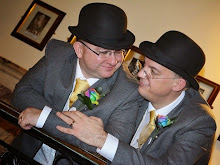
Next month is my fifth wedding anniversary.
But my husband Richard and I have been together twenty-five years.
The wait wasn’t because we’re really traditional and wanted a really long engagement.
We had to wait for the Liberal Democrats in Government to change the law before we could get married on our twentieth anniversary.
Thank you.
Liberal Democrats have always had the best policy of any party on LGBT+ issues.
But it’s not just the policies and campaigning issues.
For me it’s personal.
We got married – but many people still can’t.
We got married – that’s why I can’t stand by and say, ‘I’m all right, Jac, never mind the rest of you.’
I must stand up. We must stand up.
Jo Swinson talked about love in her victory speech as Leader.
This is a simple choice: love or hate.
Liberal Democrats are about love and liberty.
Now, I take it personally when people tell me I shouldn’t have the same rights – my marriage matters!
Is it a matter of conscience? Yes! For the people getting married!
But if you want to bully people, to enforce your prejudices on people, to stop people making their own decisions…?
That’s not conscience – it’s control!
Everything in this motion comes back to the same founding principle: people’s right to control their own lives.
But it’s not just about policy. It’s about the face that the party shows.
I welcome people joining us from other parties. Some will be fully-formed Liberals, and some you might have to give more Leeway to.
Like children raised by wolves, you might not expect them to have perfect table manners, but we should expect all our MPs to say without qualification, ‘Biting people to death is wrong’, and if you’re in doubt, ask someone with scars, don’t say, ‘No-one’s ever tried to bite my leg off, so it’s just a point of view if they bite you.’
We should expect all our MPs to be whipped to stand up and not make excuses for homophobia.
Phillip Lee: I know you’re married. I hope you’re both very happy. Was it a long engagement?
We wrecked our last General Election campaign because we compromised – one person compromised – on homophobia.
Listen, all our MPs: if you don’t want to wreck the next one, it’s not just about the policy.
To put it in language at least two of our MPs will need to understand:
You may try to get into Parliament with good policies, but without faith you are nothing.
Surprisingly Good Reviews
Many Lib Dems agreed with this speech – many laughed, many clapped, Caron Lindsay was particularly kind on Twitter – which helped balance the usual line of the great and good saying How Very Dare You. But just this once, I did get some very good reviews from the New Statesman. Stephen Bush cited me in his write-up of the debate:
“In a speech that received loud applause from the floor, Alex Wilcock, a Liberal Democrat activist, spoke about the 20 years he had to wait to marry his partner, and asked Lee if his marriage had a similarly “long engagement”. It was Wilcock’s speech that also got to the heart of the Liberal Democrats’ unease over Lee’s admission: the party’s defence and toleration of their then-leader, Tim Farron, and his record on equal rights, and the price it paid for that at the 2017 election.”
But my cockles were most warmed by him and Alibhe Rea on The New Statesman Podcast – Lib Syncing, 19th September 2019.
Stephen Bush:
“For me the best speech, actually, of the Conference, and I also think probably one of the best speeches I have seen in party conferences all told, was from a man called Alex Wilcock, who spoke about his own marriage, the very long engagement and the fact that same-sex marriage was illegal for so long, and basically challenged both Phillip Lee and the party for kind of turning a blind eye to some of the aspects of his voting record.”
Alibhe Rea:
“Yeah, it was pretty powerful, that they had been engaged for twenty years and unable to marry, and then the concluding line of his speech was something like, you know, ‘Phillip Lee, I gather you’re married, I hope you’re happy – was it a long engagement?’ It was really quite stirring in the context, and he was just a very good speaker. He’d sort of circled around and alluded to it for quite a while, and then arrived at that conclusion.”
Which is probably the best review I’ve ever had in the press (at least since the Daily Mail’s double-page-spread hit-job back in 1994, which was flattering in quite a different way).

Why I Made This Speech
I wasn’t going to make that speech. I wasn’t going to speak at all. If you want to make a speech in a physical Lib Dem Conference debate – it’s even less flexible in the current online Conferences – you need to put a card in saying roughly what you mean to say well in advance of a popular debate, usually at least the day before. I hadn’t, and had no intention to. But there had been so many hurt people around – not least friends who’d resigned from the party over its welcoming in an MP who saw us as Hell-spawned inferior life forms and wanting to tear out our hard-won rights. I’d prefer a sinner to repent, I’d like everyone to get along, but confronted with the choice between an unrepentant bully and people whose values actually belonged in the Liberal Democrats, there was no way not to pick a side. I woke at 4am that Saturday, stressed and depressed, massively wound up, and could not get back to sleep. So I did the obvious thing: I started thinking of a speech. Amazingly, I was in the Conference hall by 9.30am and put in a card (after Tweeting an obscure declaration of intent which nobody else would get but to stiffen my sinews). More amazingly still, I was called to speak.
I’d been scribbling thoughts, desperate to sort out what I thought at all, how much of it I should say, what tone I should take, and how on earth I might fit any of it into three minutes, which is a very short time indeed once you’re up on stage and gives no room for waffle (in the end, I was so focused on getting to the point that I ran under time). I still have the several sheets of paper where I can see my thoughts take shape – and how much was still unformed by the time the debate began. Unusually, I hadn’t decided how to end it even as I walked onto the platform and opened my mouth. But before I wrote anything else, I had circled to one side at the top, next to where I had to put the opening lines: “Serious and funny!”
A debate speech should have a point – you want to swing people’s votes with you. Sometimes I’ll wing it as I go along, but there are always two parts I need to prepare: the opening, because that gets people listening to you; the closing, because that gets people applauding. The finest arguments have been lost when people are still nattering from the last one because they don’t notice you’ve started or when stopped in mid-flow as your time runs out and the mike’s cut off. I realised both very early, but over the years I’ve set a second aim for the opening line that’s more difficult: it’s also to get people on your side. Whether it’s a joke, a self-deprecating moment or just saying hello, an effective speech begins by getting people to like you. The previous year, I’d made a blistering speech against a policy paper that hand-wringingly appeased bigots over immigration. It was one of my best speeches, focused, incisive, impassioned, but it had an opening like chucking a brick through a window, and while that got people’s attention, I don’t think it got anyone on my side. This time I might have to be even more combative – not attacking a paper, but possibly attacking MPs in person. Fortunately, this speech was personal and a personal opening came naturally, even with a funny bit and an opportunity (heartfelt as it was) to butter Conference up.
The Equal Marriage motion not only celebrated the Liberal Democrats’ achievement of making marriage legal at last for same-sex couples, but recognised that equal marriage is still some way off and set out how to get there – in Northern Ireland, for humanists, removing the hugely unfair spousal veto for trans people – and with speeches overwhelmingly in favour was passed, too, by an overwhelming vote in favour as Lib Dem policy.
Several excellent speeches before mine dealt with those issues for marriage directly, with the rise in homophobic attacks, with Labour MPs wanting a new Section 28, with daily virulent press transphobia – I was crossing off bullet points I’d scribbled haphazardly across my notes, helpful in terms of keeping better to time by not repeating what everyone else was saying, but with stress rising as I listened out for what everyone else was leaving unsaid. MPs and former MPs I admire paid loving praise to people who’d left the party because of— What? Our party was the best on LGBT+ values, and was getting better in this very debate, and yet for some reason that dared not speak its name people were loudly hoping that one day leading LGBT+ activists might somehow find their way back. Many in the hall must have wondered, had they accidentally slipped through into some parallel dimension and were merely lost, because surely nothing about our party was explaining it? I very much did not want to give the speech I could see in a choose-your-own-adventure set of variably hard-hitting ideas scribbled in question marks, but by the time I was called to speak (and for the rest of the debate) no-one else had said a word, and someone had to.
For that Conference, the number of Lib Dem MPs suddenly almost doubled: some defectors I was enthusiastic about; some seemed OK; and then there was one. In June 2019 I had written not a blog post but a Twitter thread as speculation about defectors rose: my instinct was to welcome everyone who chose to side with us. I was thinking aloud on Twitter, but I still – mostly – agree with myself. Yet there are always caveats… But it was by being welcoming, bold and Liberal that we attracted so many people who used to vote for other parties. Being open doesn’t mean watering down what we stand for – if we don’t stand for anything, no-one would make the leap anyway. Though I can’t help thinking that, as one of the Leadership’s more appealing themes at the time was that we were leading a wider Liberal movement, it might have saved a lot of heartache if we’d persuaded a defector standing with us on the big issue but clearly a git on others to caucus with the Liberal Democrats in Parliament as part of a wider Liberal movement and not actually join a party whose values he does not share (that nobody thought of it after years of the party faffing about with supporters’ schemes…). I didn’t actually say that because there wasn’t room for procedural rumination, but despite appearances I have never given a speech in which I was more thinking aloud.
Today I sum up Lib Dem values in three words: Freedom, Fairness, Future. I’ve been writing and speaking about the first two, intertwined, since the early ’90s: that was when I identified them as “Love and Liberty” in a long philosophical pamphlet, and carried that on to this blog. But “Love” isn’t a word politicians are often bold enough to claim, so I was delighted when Jo Swinson did that Summer, and I seized on it. Not just because I agreed with her and applauded her speech, but because if you’re about to go in with both barrels it always helps to call the Leader on your side. But that and my funny opening had a point: this is not ‘a point of view’. This is not just a debate. This is something that is crucial to real people’s lives, and no Liberal should be hoarding rights that they deny to others.
There was a moment where I nearly lost it. As I declaimed, “That’s not conscience – it’s control!” the last word surged up in a growl that almost frightened me: I’d never heard that tone from myself in a speech before and I realised with a shock that I was seconds from just shouting in righteous anger. It doesn’t seem as visible as it felt, but I pushed myself down hard inside, because I knew that I was at the pivot to the dangerous bit of the speech and, suddenly, I could so easily lose control. I forced myself to sound more at ease, to slip in a cutting pun, a stealth Doctor Who reference and a breezily insulting put-down. But as there’s a storm of applause, I wince now seeing the curt gesture to cut it, harsher than I’ve ever been in a speech, as I’m fighting not to snap. And then I say the line that I remember most vividly: “Was it a long engagement?” And it’s only three seconds before I dive on, but after the laughs and applause the deathly shocked silence at that picking up Chekhov’s punchline from earlier and making it a punch in the face felt like an eternity, and inside I was panicking that I’d blown it.
So as I went into the close, knowing I was going to finish with a mangled flourish from my religious upbringing – that you may try to get into heaven with good works, but without faith you are nothing – wielding it as a righteous flaming sword against two theocratic bigots, but not knowing how I was supposed to get there, with several partial versions scribbled in front of me and none I was happy with, and at the last moment somehow navigated between the cop-out of sticking only to Phillip Lee and full-on naming and shaming Tim Farron. I glanced at the scrawl of lines hoping we would pass the policy then warning that most people would never hear about it, while many voters would hear if so-called Liberal MPs lust to control others and claim their religion says my twenty-five years is too short a wait; or reminding the lucky few Lib Dem MPs elected in that disastrous General Election of the cost of weakly suggesting homophobia is just a point of view. But I swerved away from going full Old Testament thunder because I might never stop, or explode in sheer incandescent rage. I feared I’d already lost the hall but I was committed to saying something – in the end, my more tightly controlled ferocity still got the point across and the thunder was left to the applause.
Where Nick Clegg Went Wrong
I thought hard about whether to say any of this, after leaving it unsaid in 2019 – both in a speech that in the end confronted what everyone knew in the least confrontational way I could bring myself to, and after holding back from saying it at far greater length earlier that year. It isn’t uplifting, so you may wish just to stop here. But I’ve made myself look in order to learn.
During the 2019 Liberal Democrat Leadership election I wrote – most of – an article assessing the three immediately previous Leaders, and lessons to be learned. Though I wrote at length about the positives for each before blasting their big disasters, I never published it. What I had to say about Nick felt too much like old wounds, what I had to say about Tim Farron was still too raw and hurt and blisteringly angry, and I never quite finished writing about Vince, as just too meh (though in a late surprise entry since he’s now topped the ‘Most Problematic Former Lib Dem Leader’ chart. I wish he hadn’t). I’m not going to publish all that now. But it’s worth summarising the crucial lessons: not just when two Leaders f—ed up, which everyone knows, but why those particular f—k ups were so deadly. I’m not going to assess the whole Coalition – though Richard and I did say thank you for our marriage on our (twenty-years-and-) six-month anniversary, without which we’d still be waiting.
Here goes, though. “Tuition fees” was engraved on every Lib Dem heart and every anti-Lib Dem attack leaflet. The biggest, most catastrophic, monumental political misjudgement of the Lib Dems in Coalition. Yes, we all know this. But steel yourself and look at just why this was so destructive. First and foremost, for the Lib Dems (and for Nick Clegg personally), education is an absolute, passionate priority. It’s at the centre of enabling everyone to have the opportunity to realise their potential, not just a policy but at the heart of our philosophy. And in Coalition government, we championed education; we protected the schools budget from cuts and introduced the pupil premium, so schools got more money to help teach poorer kids. But every single time any Lib Dem mentions it to this day, what does every voter think? ‘But tuition fees.’ F—k. Breaking the promise was bad, but breaking the heart of our values was catastrophic. And from naked political nous, university towns and higher-educated voters had become the hard-earned most likely to vote Lib Dem, and the tuition fees betrayal kicked them in the face. It’s hard to think of a more laser-guided missile to the Lib Dem vote.
Some More of Tim Farron’s Greatest Mistakes
Which brings me to Tim Farron. The 2015 Leadership election was blighted in two ways: not only did we have practically no MPs left to choose from, but in hindsight the two contenders were summed up by Yes Minister:
“If Eric gets it, we’ll have a split in the Party in three months. If it’s Duncan – we’ll have one in three weeks.”
Eurosceptic Norman Lamb would have been an utterly catastrophic Lib Dem Leader for Brexit. Tim Farron made the critical choice that we would stay fighting as the party of Remain, a brave, principled decision trying to save Britain’s future that also enabled the Lib Dems to survive the near-extinction event preceding Farron’s Leadership and then the near-extinction event precipitated by Farron’s Leadership. But then, obviously, he went and proved that while it’s hard to think of a more laser-guided missile to the Lib Dem vote than tuition fees, it could still be done. I’m trying to strike an ironic tone, but I’ve cut my next four paragraphs from 2019 because they’re unlikely to do anyone much good, and certainly I felt the fury, misery and betrayal rising just re-reading them. Plus there aren’t enough em dashes to cover all the swearing. Every single day of that blighted election I defended him because I thought I knew him, as furious and hurt and betrayed LGBT+ people said, ‘How can you do this to us?’ But Farron didn’t just destroy the LGBT vote for the Lib Dems, much as Nick didn’t just hammer the student vote. This was about the sort of party we are and the sort of people who might vote for us. Think about the sort of voters who are likely to listen to the Lib Dems. Even if they don’t mention it on the doorstep, how are they going to react to the only thing they hear from the Lib Dems, day in, day out, being that their Leader doesn’t like the gays? A more perfectly targeted voter-seeking missile even than tuition fees – not even the excuse that the money was too tight, not even the excuse that we couldn’t get another party to accept it, but simply because the Leader we chose had chosen to be a bigot. Name me anything a Liberal Leader could possibly do more effectively to alienate Liberal-minded voters. They recoiled en masse. In the year of the universally hopeless leaders, to be more of a voter turn-off than disintegrating robot Theresa May and a UKIP nonentity? The 2017 Lib Dem Leader was sheer electoral poison – delivering an even lower vote than 2015’s collapse, the worst share of the vote for British Liberalism since the 1950s – and, as votes had to go somewhere, if you wonder how on Earth people once saw any hope in Brexit’s Best Mate Jeremy Corbyn, Tim Farron was his biggest asset.
I had known and liked both Nick Clegg and Tim Farron since long before they became Leader. I felt for both of them… But I admit one I find easier to forgive for their worst calls when leading the Liberal Democrats. It’s an appallingly hard job and I wouldn’t wish it on anyone, but it’s also hard not to want to tell anyone doing it: if you must f—k up, can you at least think about what’s deepest in our values and what’s most important to our voters, and try to f—k up at the furthest-away political point from both?
Labels: Gay, LGBT, Lib Dems Believe, Liberal Democrat Conferences, Liberal Democrat Leadership, Liberal Democrats, Richard, Speeches


Thursday, March 26, 2020
Loving Doctor Who – Rose #TripOfALifetime
This is a very lovely moment for what’s written most deeply on my hearts.
My beloved and I have been together for twenty-five years and five months – today!
So he’s working from home and I’m out on the balcony.
Don’t worry – I’m only one metre outside our flat and there’s no-one else about. The party boats have stopped running, and even if they did want to do The Masque of the Red Death on Thames, we were already distancing because the river charts have dangers marked on them like wrecks, whirlpools, Ben Aaronovitch’s goddesses and steer away from the naked gays.
But today it’s another anniversary that’s almost as wonderful, and that’s exactly fifteen years since Doctor Who came back with Rose.
The very first Doctor Who story I ever saw was a fantastic new beginning that started with “Ro”, and I still love Robot and Rose so much that when last week I published a binge-watch Doctor Who playlist, those two were right up at the beginning, because I can’t imagine better introductions to the show.
A few years ago I wrote Ten Reasons To Watch Rose to share my enthusiasm and encourage you to see it.
I mean, I even wrote my Reasons To Watch The Trip of a Lifetime Trailer for it, partly because it’s the most thrilling trailer ever made and partly because I thought it was funny to have an article that took longer to read than the things it was recommending.
Today is a fantastic day to watch Rose again and realise just how outstanding it really is, or to watch it for the first time and see what all the fuss is about for Doctor Who. Thousands of people will be watching all over the world and will welcome you in.
Because that’s something I adore about Rose.
In my reasons to watch it, well, it was more simply reasons I love it, and I went from the most obvious things like Rose, and the Doctor, and introducing the TARDIS, and if you don’t know what they are just watch the story, to getting passionate and political and just a bit angry and how Rose is not just welcoming but defiant in championing a life of change and strangeness and danger, but the tenth and last reason I want to share with you, even though it’s a bit of a spoiler.
With anything you love you can get jealous and possessive instead of saying, Wow, how awesome, and being delighted when someone else sees this the way you do.
And fifteen years ago it was tempting to say, but what about me?! Never mind ten million new viewers, I was here first! And to remember not fifteen years but sixteen years, sixteen long years where there was no spring of a new Doctor Who series on TV.
But Rose is open and welcoming and isn’t just a brilliant introduction but has one inspired moment, right at the end, where it answers that question and makes it absolutely clear that Doctor Who can be for you. We’ve seen a new world open up through Rose’s eyes and fallen in love with the idea, and then at the end – Doctor Who goes away again.
And Rose has made the Doctor’s world so utterly compelling that the endless wait of the next sixteen seconds feels like the yearning of sixteen years.
And then everyone shares the joy – when Doctor Who comes back.
I bloody love Rose, and I’m watching it tonight.
I thought of this all in one go this afternoon.
I got out of the bath and wrote it down.
I realised it would be better to camera.
I realised I couldn’t print it or learn it.
I did one take.
I was lucky not to trip over and make it the #TripOfALifetime…
Labels: Christopher Eccleston, Doctor Who, Richard, Rose, Why Is Doctor Who Brilliant?
Tuesday, January 16, 2018
Blake’s 7 – Cygnus Alpha
Forty years ago tonight, the third episode of dystopian BBC sci-fi Blake’s 7 was broadcast. For me, Cygnus Alpha is both where Blake’s 7 becomes Blake’s 7 and where it definitively spoke to me.
This article is a mix of review of that episode and personal perspective on Blake’s 7. A tale of religion, freedom and BRIAN BLESSED. Of how human nature has to embrace a lot of contradictions while totalitarian systems have to deny them. And of Richard and me, and Stockport and London.
Blake’s 7 is remembered after all these years because it opened more bleakly than any other TV sci-fi and finished more bleakly still. But along the way, it’s somehow still immensely enjoyable. If you’re not familiar with the series, here’s the story so far:
The Way Back opens on a future Earth under a drably authoritarian Administration like 1984 slogging on to centuries later. Roj Blake is an apparently ordinary person who finds his life is a lie, his memory is a lie and the whole system is a lie, which then lies about him in the most horrible way to destroy his credibility as a political threat. From suddenly awakened political activist to convicted criminal, he’s transported to prison world Cygnus Alpha with, well, a bunch of criminals. In Space Fall, their prison freighter London encounters en route a mysterious abandoned spacecraft and prisoners Blake, Jenna and Avon board and take it, but this crew won’t be a clean-cut bunch in starched uniforms. No, the people in uniforms are the ruthless galactic Federation Blake’s fighting, while his allies are thieves and murderers who don’t necessarily share his revolutionary ideals. Cygnus Alpha sees him get used to his spectacular ship the Liberator – while Avon and Jenna have to decide whether it’s going to be his ship. And taking the Liberator to future-Botany Bay Cygnus Alpha itself in search of new recruits to his crusade, Blake finds from the start that even the most desperate won’t necessarily flock to his cause…
Cygnus Alpha and Omega

“Come. Follow us. God has prepared a place for you.”
There are at least a dozen episodes – as early as The Way Back, as late as Blake – that you could point to and say, ‘There. That’s it. That’s what makes Blake’s 7 really Blake’s 7’. Of all of them, while it may not be the most dazzling, the most deep or the most distinctive, the most practical single point at which Blake’s 7 comes together as a series is Cygnus Alpha.
Cygnus Alpha is where it all came together for me, too, and not just for the obvious functional reasons that by the end of the story Blake has in place a dysfunctional crew, a super-functional ship and a messianic mission statement, ready to start.
I had started watching Doctor Who aged three, at the beginning of 1975 and the beginning of Tom Baker (with 1963 and 2005, one of the three perfect moments so far to join the series). It captivated me instantly and has shaped an enormous amount of my life, from learning to read, to my politics, to introducing me to the man I love. So when three years later another BBC science fiction series came along, a little bit later in the evening, a little bit more grown-up, I was determined to see it. Wasn’t I twice as grown up now, and allowed to stay up a little bit later too?
I can still see in my mind’s eye – perhaps wholly hallucinatory, after four decades of unreliable memory – the grubby, grim Radio Times picture of Gareth Thomas and Robert Beatty on a tower block roof or car park to promote the series’ first episode, and remember wondering what it would all be about. My other most vivid memory of The Way Back was also one that involved Robert Beatty’s character, but with absolute certainty: a brutal massacre that both thrilled and shocked me, and provided at the time the most compelling answer to what Blake’s 7 would be all about. That, and the nature of the charges framing Blake, tell me in hindsight that my Dad watched the opening episode with my brother and me while my Mum was listening to the radio in the kitchen. Had she come into the living room for either detail, there would have been the inevitable cry of “The things you let them watch!” (my Mum’s superpower in my childhood being to sense the most ‘unsuitable’ moment of anything on the TV to make her entrance) and that would have been the end of it. Though, despite her disdain for all science fiction, I do remember Mum positively choosing to come through for a couple of minutes each week after that to see what frivolities Jenna was wearing.

Aside: I wrote the passage above about the Radio Times picture back in 2014. Since then, I’ve at last seen again what was almost certainly the original entry that my memory mangled over the years. It’s actually of Gareth Thomas and Michael Keating, which makes more sense, but I can understand how I’d have watched the first episode, been enthralled, and put the two most important characters in it together, even if one of them was quite unlikely to be a continuing cast member by that point.
The photo isn’t even in a particularly identifiable setting, but I was born in 1970s Stockport with plenty of concrete and car parks around and clearly read ‘vaguely urban and like the places I know’ into the shot. After many years away, since I wrote the original version of this article I’ve also been living back in Stockport again – though the way back was less hard work than Blake’s. I moved back there with my husband Richard, who (unknown to each other at the time) was also watching Blake’s 7 all those years ago, and not that far away…
One of the absurd moments in Cygnus Alpha comes when, faced with the alien technological marvel of matter transmission, Blake and Avon immediately grasp it because – by an unbelievable coincidence – they had both worked on the same failed Federation “Aquatar” teleport project. “Small world.” They didn’t meet each other then. “Large project.” Not until the start of this series, with both of them on the prison ship London. I remember scoffing at two people with such different skillsets and backstories both having worked on the same useless project, never meeting, just so that years later the concept could come in so expositionarily useful in understanding technology that no-one on any world they knew had ever mastered. Absurd! A decade and a half after we each watched Blake’s 7 as boys, Richard and I found each other through our fluency in that series, Doctor Who and other tongues while I happened to be staying for a few weeks (or so I thought) in the East End. Our ‘Aquatar moment’ came not on the Liberator but on the almost as shiny and exciting Docklands Light Railway. What an absurd coincidence it would be for us to have both grown up in the same town but only to find each other in… London.
The Radio Times picture was posted by the quite extraordinary Twitter account @MakingBlakes7, which is the most brilliant continuing documentary project I’ve ever seen on Twitter. You can see that Radio Times Tweet by clicking here.
“Prisoners? New souls for the Faith.”
For this episode, it helps that it all looks rather stylish. I’ll admit that I often find something of the ‘that’ll do’ about Vere Lorrimer’s direction in his later work for the series, but here the night filming is striking and the projected backgrounds (yellow moon, forbidding citadel) as fantastic an effect as the series ever delivers. But it’s my Mum and Dad’s influence that really primed me to love Cygnus Alpha, though they’d roll their eyes at quite why. They’re both deeply religious, and I grew up going to two churches every Sunday, Catholic and Baptist. Add two competing versions of the same faith and a bright boy who read a lot, and I became steeped in religion, but at the same time asking a lot of questions and curiously open-minded about different flavours that all claimed to be the one true faith. Perhaps that’s why I was just as happy with two ‘rival’ sci-fi shows.
Doctor Who had gone through a year of dark religion that’s still to this day my favourite just before Blake’s 7 came along, and Cygnus Alpha spoke to me in just the same way. This was my world! Religion in all its scary but fascinating glory! My strange personal mix of free-thinking and immersion in dogma meant I was always more compelled by terror in the pews than Yeti in the loos. So, as much as day-after-1984 dystopia had grabbed my attention, it was Cygnus Alpha that was speaking my language and told me this was absolutely my sort of series.
“My word is law. My followers obey without question.”
For all that the Federation, like communist regimes of the time, has banned religion, Cygnus Alpha’s theocratic society is the Federation in miniature (though distinguished by a greedily ambitious figurehead rather than a faceless bureaucracy, Vargas prefiguring über-villain-to-be Servalan). The script is full of parallels between them, from the cruder version of Blake’s show-trial in this world’s “SO PERISH UNBELIEVERS” to the subtler point that, for all his cowardice, it’s Vila who’s still by nature the most wary of going along with authority, whatever form it takes – or clever juxtapositions like “the place of rebirth” and “Berthing sequence automatic”.
Perhaps the unambiguous connection of this theocracy with that already established totalitarianism is what gives the attack on religion such force. Even by the standards of science fiction using other worlds to get away with social critiques that would provoke too many complaints in a modern-day setting, this one pulls no punches (though the institutional child abuse was the Federation rather than the Faith). It’s not a case of using religious trappings to save on money or world-building, using historical window-dressing to tell a different story. One of the reasons this so appealed to little religious me was, ironically, what I’d expect to offend other believers most. It was about the ideas, not just the imagery. Underneath all the monk-like robes, the blasphemous crucifixion, the cruel crusader bust, the Inquisition torture imagery and echoing chants familiar from Gothic horror films, the script really is making a bitter attack on the very concept of organised religion.
“So you and those before you built your power on fear and ruled them with it.”

We saw back on Earth that the Administration maintain their power by surveillance and brute force, fear and drugs, suppression of ideas and the Big Lie. That mirrored totalitarian regimes of the time; now this mirror of the Federation in turn mirrors religious power. If there’s ever a daytime on this world, we don’t see it. Cygnus Alpha is symbolically in the Dark Ages, and for generations its people have been kept in the dark of ignorance. Just like Earth under the Federation, on Cygnus Alpha under the Faith you are always watched. Literally by guards in both, but where the Administration uses cameras everywhere, the Faith uses its God, explicitly invented as a tool of social control.
My husband Richard points out that the constellation of Cygnus is also known as the Northern Cross: both a religious allusion in itself and a reflection of the Southern Cross which is the symbol of Australia, a striking setting for a theocratic space-Botany Bay.
This mini-Australian mini-Federation doesn’t just swipe at religion in general but, true to its Gothic trappings, is as specifically anti-Catholic as any fevered Gothic text. It’s not just taking the fear of an invented death for the fear of an invented hell and proclaiming that the Faith is your only salvation. The Saruman-like hand is one of the production’s few symbols that isn’t obviously Christian, perhaps deliberately to make you focus on a fictional symbol and not on the words and their meaning: “Only from this hand comes life” coupled with a priest handing you a small, round, white thing to swallow that claims to be salvation but is in fact nothing at all? Could it get any more blatant? To look at the “life” held out and see a Trebor mint is to miss the point, but perhaps the very cheapness and obvious solution helps distract and avert complaints. Later dystopia V For Vendetta offered one poisonously satirical communion wafer, but this is a gob-smacking polemic against the whole idea of transubstantiation.
And the Curse of Cygnus (a near-homophone for ‘sickness’) catechised as divine punishment on every wretched inhabitant of Cygnus Alpha – all deserving it as either criminals in their previous life or descended from offenders by birth – from which they can only be saved through the Faith? That’s Original.
After this story’s impact, there’s no real follow-up to the theme; Blake’s 7 is never this savagely critical of religion again. It’s background colour in a few more stories, but they don’t have anything that feels so real. Cygnus Alpha does act as a prototype for more generic Blake’s 7 stories, such as generally the Liberator turning up at a planet of the week and bringing down the regime (or, in this case, leaving it in chaos and having to run away) or more particularly the primitive planet with a primitive people and a twist about something more advanced, usually involving a quarry and a more interesting B-plot in which the crew bitch at each other. Modern BBC sci-fi watchers might call that the ‘Utopia style’, though Russell T Davies’ Blake’s 7 homage brought an altogether rougher beast for its second coming. Perhaps the real thematic legacy of this episode isn’t equating the fierce religion of Cygnus Alpha with the totalitarianism of the Federation, though. Fittingly for my own complicated view of religion as both good and bad, there’s a parable here that’s closer to home.
“The architectural style is early maniac.”
These days I wonder if the whole thing’s not a great big warning about Blake.

If aged six, getting into the series, Cygnus Alpha confirmed that it was my sort of show, I was delighted by how it grew when watching the whole TV series right through again in 2014, aged forty-two. It wasn’t an episode I often chose to watch when I felt like a bit of Blake’s 7 (though I always loved it more than I expected when I did), but I’d thought it was one of the ones I had the clearest picture of in my head: the end of the beginning, fabulous Pamela Salem and Brian Blessed, evil religion plot with a different tone to the rest of the show, entertaining but a bit cheesy. It may well be all those things, but with a more critical brain and knowing the show well enough to put the whole thing in context, I suddenly felt there was a lot more to it.
Blake’s the hero and Vargas is the villain, so they must be opposites, right? Except that it doesn’t play that way at all. If the society of Cygnus Alpha is a mirror of the Federation, the extent to which its leader was not a contrast to but an explicit counterpart to Blake seems so striking that it’s hard not to see it as deliberate (with all the implicit consequences should Blake ever get into power that that entails). Blake getting a messiah complex in Series Two? This story more than any other reads like he’s been off on one since the beginning. Vargas and Blake face off, Brian Blessed and Gareth Thomas with similar intensity, their demands incompatible because the two of them both want the same thing: souls as currency to spread their belief, the power of their word, across the galaxy. Blake takes up his special handgun for the first time; the first to use it? Vargas. Avon’s warning to Jenna about Blake? “He’s a crusader.” Vargas rules by the Big Lie and forced ‘conversion’; Blake tells his followers they have a free choice, but keeps the truth from his first, sceptical disciples (“Did you see anything while you were down there?” “Not much”) and like Vargas gives the next batch of converts the choice of his way or death:
“Only from this hand comes life.”Three different characters this week all state that the prisoners have no choice, and in the end they don’t – whoever they follow, they’re still going to be followers.
Back on the London, Blake was willing to sacrifice himself so that his followers might live. Now we see the flip-side of that: if you’re not with him, you’re against him. He’s come to find new converts, but when they deny him in fear of the rival Faith, he rages at them instead: “You’re pathetic! …slaves! …I’m better off without you.” For all his rhetoric of freedom, Blake demands a positive choice to follow him – a leap of faith. Offering salvation to his own followers is one thing, but rather than sacrifice his messianic ideals he’ll let everyone else die. Vargas and Kara had watched the Liberator in the sky – a light in the darkness. They called it a sign, and it’s a guiding star heralding the new messiah, but we all know who that is, and it’s not the Blessed One whose hard certainty will be driving death after death in this series.
“A little more practice, we should be able to put you down with precision.”

In the context of the whole series, Avon’s appeal to Jenna that Blake would only use all the ship’s treasures to fight the Federation – though it turns out that Blake is never bright enough to realise how effective wealth would be as a weapon, and Avon is bright enough never to tell him – seems like foreshadowing.
“And he can’t win. You know he can’t win. What do you want to be – rich, or dead?”From almost the very beginning, you can see in hindsight warnings, prefigurings, fetches of much later events in the series, and perhaps it’s appropriate that this religious episode seems the most prophetic. Avon even aims his gun at Blake first chance he gets (though it’s only once he’s become a believer that he’ll fire). But Avon needn’t have been foresighted enough to see Blake coming down the road. I realise this time that he could just have watched where Blake’s been, already fighting to the last drop of their blood. Consider…
- Blake’s first rebellion, the series’ backstory: everyone else gets killed and he has his brain knackered.
- Blake’s second rebellion, the series’ opening: he only has to turn up out of vague interest and everyone else is massacred (while several children have their brains knackered).
- Blake’s third rebellion, last week: everyone’s rounded up and several of them get shot though, remarkably, most of them live. In chains.
- This week, Blake’s fourth rebellion: they’re only up against knives and knuckles on Cygnus Alpha, but he still manages to be one of only three survivors who leg it.
- Never mind the “Curse of Cygnus”; Blake is such a jinx that he only has to express a passing interest in a particular rebellion and 99% of them will die. On which subject, tune in next week…
“It didn’t answer any of your questions. More than that – it deliberately ignored them.”
There may be a certain irony in my having gradually given up belief in religion but gained a passion for politics in my teens, but I remain a free-thinker and just as ready to question my leaders as I was scriptures, and unlike Blake I’m more than wary of imposing my beliefs on others. For me, there was nothing like seeing how two competing church hierarchies that theoretically professed the same beliefs were both much more obsessed with control of individuals than individual belief to tip my own beliefs towards Liberal individualism, if not a hint of anarchism in observing that the best way to kill a belief is to set up a rigid structure to enforce it.
Though I wrestled with the theology for years afterwards, it was perhaps inevitably a confrontation with church authority which precipitated my eventual teenage crisis with religion. The surprise might be that it turned out to be with the smaller ‘free’ church rather than the more top-down hierarchy; the ‘Cygnus Alpha’ Baptists rather than the ‘Federation’ of Catholicism. Aged eighteen, I was teaching Sunday School for the kids; one Sunday I came in with a noticeable bruise and, asked what had happened by one boy, replied with the truth: I’d been walking down the road with my boyfriend and someone had hit us. The next week I found I wasn’t teaching Sunday School any more and that a tight-lipped “You know why” was the only explanation. My own moment of liberation came in realising not my fear, but theirs in their own repression; that they couldn’t bring themselves to talk to me, nor even do what a decent human being would do and ask if I was all right after I’d been attacked. The truth shall set you free, indeed, but not in the way they or I had expected it. That was the moment I lost all respect for that particular church because, after all, what was there to respect? And, fortunately, it wasn’t such a long walk back.
“That would have been very disarming if I didn’t know that you meant it.”

Zen and Jenna offer an intriguing alternative here, both a different angle on (explicitly non-Christian) religion and on what the series might have been had each of them kept such significant roles. How much does each affect the other when enigmatic ship’s computer Zen gets into its new pilot’s head? Jenna’s “to be completely known. It’s like – innocence” is more like a revealed religious experience than anything else in the episode, and without it, would she have hesitated to head off with Avon? Zen is characterised as a superior and evasive oracle with less obvious reactions – except one – but, taking its name and the ship’s from Jenna’s thoughts, does it make itself in her image?
“Wisdom must be gathered; it cannot be given.”Zen is a very different religious text to the certainties of Vargas and Blake, but how much of Zen’s resistance to direct is inspired by its pilot’s resistance to being dominated, as “the Liberator” it plucks from her desires suggests?
The best piece of bitching among the crew is an understated one from Zen, as it says in turn to the three of them:
“Welcome, Jenna Stannis.”It’s a masterclass in how to be an oracle while making it absolutely bleedin’ obvious what you think; Avon only gets a neutral reply when he prompts it. Clearly, it’s read his mind last week and Jenna’s here and decided it’s not going to like him well before he starts saying it’s “just a machine”. It’s a shame that Zen’s telepathy is lost to another crewmember long before it loses prime spot as ‘bitchy super-computer’. The series also swiftly drops this week’s attempts to pretend they know what they’re talking about on scientific ideas – Aquatar, negative hyperspace, the anti-matter interface – which is no great loss. It feels much more Blake’s 7 when the crew don’t know what they’re talking about, like Blake stumbling on using the teleport because he’s not used to it.
“Welcome, Roj Blake.”
That is all.
I do feel a little wistful about some of the other interpersonal dynamics that the story appears to set up: judging by Cygnus Alpha, there are now going to be three charismatic leads setting the direction, Jenna being the swing vote, with willingly violent killer Gan and his little friend Vila as wild cards, but it doesn’t work out that way… You can see here that Jenna has so much potential. Blake’s 7 began broadcast just as Star Wars first opened in Britain, so it’ll take a while for the film to start having any impact on the series, but compare and contrast even from the first the clean versus the dirty-handed rebels. One of this series’ great lost opportunities is still that its ‘Han Solo’ is a woman – which may be why she gets elbowed out of the way. But, still to come, Blake’s 7’s ‘Tarkin’ figure will be a woman too – and once she appears, their ‘Darth Vader’-equivalent won’t stand a chance.
“You’re a free man.”
In 2014 I watched Blake’s 7 right through with my beloved Richard. But much as we enjoyed the series all over again, we’ll always remember 2014 for something much more significant to our lives together. We went back, not to the Dome – there’s one just across the river from our flat in London – but to Stockport. On our twentieth anniversary together, we got married at Stockport Town Hall.
I’d say that this was my personal triumph of freedom over dark religion, but freedom won for me so long ago that religion was barely a footnote. Though I still find stories powerful when they make strong use of religion, for good or ill, it’s only as I write this that I realise Stockport Baptist Church is a couple of minutes’ walk from the Town Hall. It’s not something that crossed my mind on the day (though I probably quoted Blake’s 7 at some point). When we made the most important decision of our lives, we were surrounded by believers in several kinds of politics and faiths and in none, including my very proud and happy Mum and Dad, but we chose each other and we chose all the people we invited for love and belief in ourselves.
The Apocrypha: Trevor Hoyle’s Blake’s 7
“Hands reached up and pushed back the cowl to reveal Kara’s evil, haunting beauty – a face that was disfigured by a kind of lustful greed… a smile that was rapturous and yet somehow obscene…”

There’s another alternative world of Blake’s 7, and of Cygnus Alpha. I was already a voracious reader when Blake’s 7 turned up, but though my memories of Cygnus Alpha are thoroughly entangled in Trevor Hoyle’s first Blake’s 7 novelisation (like the first VHS release, compressing the first four episodes), I didn’t return to it as nearly often as Target’s Doctor Who range. Wondering why, I accompanied my 2014 rewatch by buying the audiobook versions, with this part now read by Paul Darrow… And, yes, I can understand why; Hoyle’s writing style tries to be hard-boiled and usually just about hits pedestrian. The CD readers liven him up, but the main interest is the differences from the TV versions – it seems that the first book is from early drafts of the scripts, and without having seen most of the actors, while the Liberator is described backwards. My guess is that these are unadulterated script writer Terry Nation, before script editor Chris Boucher came along; there are notably fewer sharp one-liners and a much smaller part for Avon. The biggest point of interest, unexpectedly, may be his take on Time Squad, for a very different backstory to both Gan and the assassins (though Zen is far less intriguing); the biggest wasted opportunity that Hoyle seems to stick too rigidly to the scripts rather than, say, establishing Arco and Selman with roles in the London rebellion now the actors don’t need paying for an extra episode.
The very ’70s stylistic tic that most sticks out today, though, is that suddenly we’re plunged into an alternate version of Blake’s 7 where (speaking of adultery) every woman is there to be leered at. Men get sexually neutral or ugly descriptions – let’s hope he’d not seen poor Michael Keating when Vila’s a “gargoyle” – but every woman is objectified at length and, if they’re baaad girls, all the more titillating! I suspect this may have put me off when I was a boy, but hearing Gareth Thomas and Paul Darrow having to read all this first made me wince, then laugh. Though I’ll give Hoyle the benefit of the doubt that there’s an earlier Gareth Thomas series in-joke in there, I did actually laugh aloud as Paul Darrow purred:
“Avon casually looked round and then sat up straight, his eyes popping out of his head. His first thought was to wonder how a beautiful and sexy star maiden had managed to get aboard the Liberator and it took all of ten seconds to realise that it was Jenna, attired in the most magnificent – and rather revealing – space-age costume.”Or, ‘Why, Miss Jenna, you’re beautiful!’
Avon follows this by swallowing in “goggling admiration” and “real appreciation”, her with “impish seductiveness” as she’s “coyly” “posing for him”. Later, Cally will be a “young”, “stunning-attractive girl”, “incredibly beautiful”, “athletically supple”, and Blake will be unable to fathom why a “beautiful girl” should be wearing combat gear. Dear [ Blessed ]GOD![ /Blessed ] She will also have amazing eyes the like of which Blake has never seen but which the author won’t describe, so they might boggle out on springs for all we know. At least Blake won’t actually ask her what she’s doing in a place like this.
But where Hoyle really gets excited is the female villains, who are beautiful – but evil, but sexy – but evil! What a mix. And a minx.
“His companion turned towards him… and in the flickering firelight it was a face of evil, the lips twisted in a rapacious snarl, yet even so with a fascinating, hypnotic beauty.Oh, put it away. The strangest thing is that the Terry Nation draft of the script forgets about her at – forgive me – the climax, and so bizarrely does Mr Hoyle. You’d think he’d have been faster to write her an unconvincing last moment than the one Chris Boucher seems to have stuck in. ‘Only the love of a good violent criminal she’s kissed once could free her from being the Sexy Nun of Evil…’
“‘New souls for the Faith,’ said Kara in a throaty whisper, her eyes alight with sly rapture.”
Paul Darrow clearly enjoys all this schlock too, as well as capturing Gareth Thomas’ intensity rather well for Blake and compensating for half Avon’s part not having been written yet with a compelling emphasis on his own character’s lines that makes his every. Word. Twice. As. Avonnn. The whole thing is hammy as hell but very entertaining, and far more so than the prose deserves.
So it’s a good job that the TV version was so absolutely perfect – not perhaps entirely perfect as a piece of television, but perfect to broadcast directly into my six-year-old world and open up a new one.
“Let’s all go! Er… No, on the other hand, let’s all stay.”

Last year I found that I couldn’t bear blogging any more. I wish I could say that, with the pressure off, I’ve been able to write plenty of articles for my own pleasure and that this is the herald of more to come. I’m sorry. I haven’t. It isn’t. So this is perhaps a coda – something I’ve not previously published, but which isn’t technically new.
Cygnus Alpha and Omega was first published in 2015 in the book Blake’s Heaven, a collection of personal perspectives on every episode of Blake’s 7. I was delighted to be a part of it and surprised I managed to write something, though that delight has since been marred by the horrible circumstances in which the book has been withdrawn and which I don’t want to think about. But with the fortieth anniversary of the series this year, I re-read my contribution and decided it was worthwhile enough not to go to waste. It’s more personal than most of my writing, and I found as I was putting it together the first time that how resonant the themes – and some of the coincidences – were to my life. Well, bits of it.
I’ve spent a ridiculous amount of time re-reading, re-watching and re-writing in tiny perfectionist polishes preparing for tonight, some of it no doubt procrastinating to avoid having to make the decision whether or not to put something else on my blog. I have. I hope you enjoy it.
I am, at least, enjoying Blake’s 7 all over again. For what it’s worth, though Cygnus Alpha has its own special place for me, my particular highlights of the series are:
- Rumours of Death
- Star One
- Sand
- The Way Back
- Terminal
- Orbit
I’m sorry this isn’t my way back to blogging. For something cheerier, you might look up another great piece of BBC sci-fi; first broadcast on TV thirty-seven years ago this week – though, like this article, it had already done the rounds in other media – I find myself thinking of The HitchHiker’s Guide to the Galaxy Episode 3. Magrathea doesn’t properly revive from its long slumber, merely turning in its sleep to put a new spin on a previous work, but that too is about religion and, for all that I know how badly everything turned out, that it’s a cosmic joke and that the new beginning isn’t going anywhere, there is a moment at the end of that episode that still moves me more than almost any other piece of television. This piece of writing is nothing like that. But I am quite fond of the crinkly bits round the edges.
Labels: Bigotry, Blake’s 7, Books, Brian Blessed, Gay, Personal, Religion, Richard, Star Wars, The Hitchhikers Guide To the Galaxy
Sunday, December 18, 2016
Another Health Bulletin
2016’s been a bloody awful year for anyone apart from fascists, and I’m not trying to say I’ve had anywhere near the worst of it. I’m just aware some people have been worried about me in the last few weeks, because my health’s been extremely worse than usual. So the main thing I should say is: as when I was hospitalised with the same thing two and half years ago, while it was intensely awful, it wasn’t life-threatening. Just, like all my other miserable chronic conditions, stopping any sort of quality of life. I was in hospital again, I’m out again, and I’m told it’ll take at least a month for the bonus pain and other suffering to settle down until my health is back to Alex-normal. Which is pretty crappy but which I can cope with some of the time.
After my worst ever year for health and – not unconnectedly – for writing, I made a determined effort in November and published a few blog posts. Even if they were mostly
The Gory So Far
When I ended up spending an entire holiday in hospital in mid-2014, I wrote about it a month later when I was starting to recover. Reading it back, it was a pretty good piece, though obviously deflecting all sorts of awkward questions and dark places with humour. I’m not at the stage where I can write anything like that yet, so if you want some of my better work, read it again. This is going to be more of a bulletin from the pit and less diverting.
Here are a sanitised few of the main details, then. I have several chronic health conditions which are there all the time. The biggies have been going for about two decades. Most years I seem to get a bonus one or two, which if I’m lucky will be temporary, but rather in the health equivalent of standing on a narrow plinth being given another cabbage, I’ve collected quite a few more permanent ones over the years and as a result had to stop doing most of life. Sometimes I can cope, most days I can’t do anything more than just about cope, and rather than rattle off the list (I keep four pages of prescriptions on my phone to show at all my hospital appointments) I have long-term things wrong with me literally from my head to my toes.
So when some other health problem hits me, it tends to hit me very hard and it takes me a long time to recover. 2016’s been my most incapacitated year of my adult life. It started with my being clobbered by various viruses in concert for rather more than the first three months of the year, so I went from the usual ‘didn’t get out much’ to ‘barely got out at all’ and haven’t really clambered steadily as far as Alex-normal for more than a week or so at any time since. None of this helps any of my usual conditions, none of which take a holiday, and while the rest of my psyche can’t find eagerness for any part of life my depression feeds eagerly on every physical downturn. Several other extras hit me in between, knocking me out completely for several shorter patches, one infection starting in June lingered about three months and half a dozen prescriptions, then came back again, but hasn’t been especially extra-painful most of the time, so, hey… And then came the hilarity of November.
Among the few things I’m grateful my body holds up on are that I don’t routinely get high blood pressure, and that while plenty of the prescriptions I’m on have several awkward side effects, I’m not actually allergic to any medications. Until last month, when I suddenly had a massive allergic reaction to an antibiotic I’d had several times, and when the tests I’m always having started to show my blood pressure soaring. The doctor was concerned enough that this was becoming a thing that I was booked on December Seventh to have a device fitted to monitor me for twenty-four hours. Of course, I’m now waiting for that to be re-booked, because it turned out I couldn’t make it to the surgery that day while interned in the Royal London Hospital.
“From what I can see of the people like me
We get ‘better’
But we never get ‘well’”
Paul Simon – Allergies
A&E
After a few ominous days of trying to ignore the signs, I woke at three in the morning on Thursday December First with a great deal of pain and dauntingly familiar symptoms. By five, after several different painkillers and failure to get back to sleep, I woke my long-suffering husband on his busiest day of the month and asked him to drive me to Accident and Emergency a few miles away in Whitechapel (in part as, though I thought I knew what it was and that was bad enough, I’d also been told before that the same symptoms could mean something very much worse). At least this time I decided to act much earlier in the condition and went armed with a clinical record I carry on my phone and can recite with the speed and accuracy of a soldier collapsing prone to attention with name, rank and number, which I suspect helped the whole thing to be pretty bloody awful but not reach quite the appalling crisis of last time.
One plus, at least: it turns out Thursday at 5am isn’t one of the busier times for A&E, so it wasn’t long before I was in a gown and a cannula and being SirDigbyChickenCaesared around on a trolley. No, there was another bonus, too: the cheery doctor who was the most reassuring part of the whole experience (after my beloved Richard). So he told me I was very ill, and was absolutely right to come to A&E, and that though he was giving me some antibiotics now and sending me home after five hours, it was quite likely things would get worse instead and that, if they did, I should come right back to A&E as first point of contact rather than trying to wait anywhere else in the system. But he was cheery while recognising my pain and fear, and he actually listened to me, and he paid attention to my clinical record, and he kept me informed, and he told me what I needed to do. I won’t go into later experiences in detail, but let’s just say each one of these attributes is a rare and precious jewel, so I wish I’d caught his name to thank him.
Diversion: Putting the F in TFL
At this point I would like to thank Transport For London for their imaginative rebuilding of Whitechapel Station. Since the Royal London itself was rebuilt, there is only one lane leading towards the nested north entrance of the hospital, but at least it was planned to face the entrance of the Tube Station across the road, so on my frequent visits for tests for all my Alex-normal chronic conditions all I and other patients had to do was go up two flights of stairs and through to the hospital in a direct line.
This year TFL has had the genius idea to move the station entrance to such a remarkable extent that, although the train I get out of still emerges directly below the pavement facing the hospital, anyone entering or leaving – a sick person, for example, one who might be in considerable pain or have difficulty walking – now has to go up several extra flights of stairs, walk the whole length of the station west and some way more, then leave at a point way back from the road, then walk to the road and round the corner and up the road before being able to cross the road into the narrow cleft to the hospital entrance. This adds a minimum of five minutes – as timed when late for an appointment and running – but more usually an extra ten minutes’ walk or much more for the more significantly invalided. Good show, TFL! Perhaps you could ask your staff to look out for anyone clutching a hospital letter and give us a good kick down all the additional stairs as a bonus.
Hospital Again
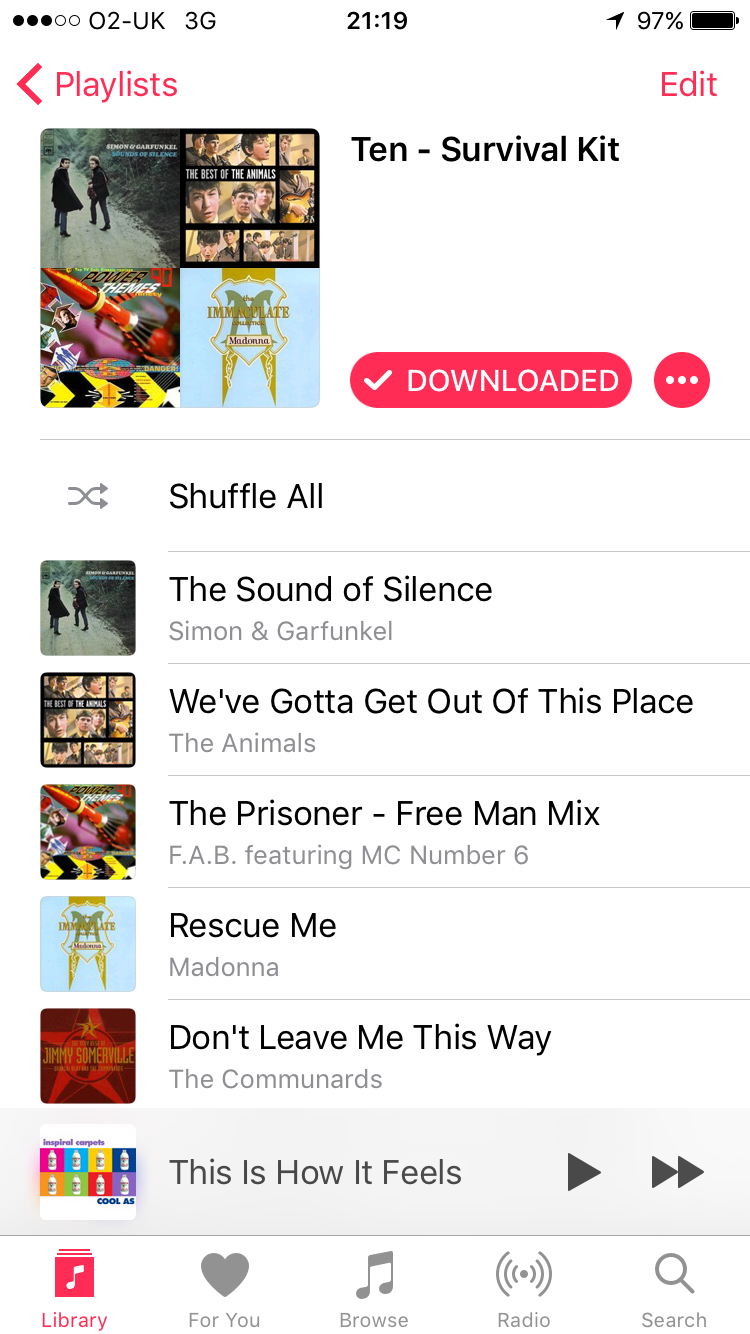
After two days of drugs, pain and exhausted attempts to sleep, obviously I had to face up to both feeling and very visibly being very much worse. I strongly suspected I would not just be sent away with stronger drugs this time, so packed such essentials as my tower of prescriptions and several books, as well as loading my phone with more books, Doctor Who stories, an extended playlist I’d prepared after the last time, and of course that still extraordinarily accurate and topical documentary Carry On Doctor. Plus recharger and plugs. As it turned out, I mostly read JP Martin’s Uncle tales, which I’d recently found as eBooks many years after consuming them at my school library.
On the Saturday afternoon Richard drove me back to A&E. I was there five hours, and I was not happy. This was a busier time and the cheery doctor only passed me in a corridor. There are few things so alienating and afraid as hours alone in a hospital room: my condition may not have been as bad as in 2014, but the communication was far worse. No phone signal in the deep places, either. When they eventually decanted me into a chair and wheeled me round and round and up and up to be admitted into a proper ward, somehow I wasn’t grateful for the excessive speed after the long wait – being dragged and bumped behind an orderly so that I received the maximum excessively painful jolts and couldn’t even see where I was going. I just managed to read the ward number as I whizzed past, but wasn’t helped by the sign headed “Visiting Hours” without any times marked on it.
And so I ended up laid out in a small ward so deep inside the hospital that not only did it not have any windows but that the nearest windows were along enough tangled corridors that I didn’t see natural light again until the following Thursday. This did not have a cheering effect. The evening wasn’t helped by having had literally no food all day and told that I’d missed the evening meal so all they could give me was a packet of biscuits, nor by it taking several requests and an hour to find out when visiting time was. I was finally able to send my distress call to Richard after it had officially finished, but he stayed until they threw him out, for which I was even more grateful than the half-hour in the middle where he legged it out to the nearest supermarket for their saggy surviving sandwiches. Which at that point were awesome (and my husband far more so).
I don’t really want to talk about the next four days. Richard came every minute allowed – and considerably more – that he wasn’t at work. He is the most wonderful man. Be nice to him. He’s frazzled and he needs it.
Thank you, too, for all the people who sent good wishes via his FaceBook, to several people who sent very kind messages (and I’m sorry I replied to so few), and to a friend who came to visit and was extremely nice even when I was at one of my worst points and was shakily and soggily poor company (not least for asking if I could cope with a visitor and then asking if it was time for him to go so I could be alone with Richard). Thanks also particularly to Nurse Tracy, who ran the ward at night over the weekend and was really good at it – the medical side, the reassurance side, and even the little things like bringing replacement gowns and wash-kits before you think to ask for them. If they don’t do that, ask for them. Which brings me to…

Things To Do In Hospital
If you ever end up in the same sort of situation, the most important thing is to fight to stay informed and to ask questions. Particularly if you have a medical history that you know and that they’ve not read (I’m still impressed that, along with two antibiotics that I’m still taking and still being knocked out by, one of the painkillers I was discharged with explicitly warns against taking if you have not one but two of my chronic conditions and, when a doctor suggested I risk it if I really needed it – obviously I really needed it – had as bad an effect as you might imagine).
If a doctor seems to contradict another doctor, ask and give evidence-based back-up to your questions. They probably won’t listen to you, but there’s a chance the next one will when they contradict again. I’m glad that they hit on the right treatments eventually, as a week after discharge I’m showing slow but noticeable signs of improvement, but when you have a different medical opinion and complete reversals every day you must pay attention, because there’s a strong chance you’re the only one who is. My particular winner was the specialist who came up with the best antibiotic but at the same time seemed fanatically in favour of a medical procedure that I’d previously been and was subsequently told would be a disaster. He was also the doctor who told me with utter certainty what had caused my condition and simply repeated himself in the most dismissive way possible when I asked how his off-the-peg assumptions squared with actual individual medical facts and clinical records that not just contradicted him but proved what he was saying was impossible, including those from two and a half years of follow-up tests and operations by his own department. I am not a trained doctor, but I am at least able to grasp that an operation in January 2015 and the continuing complications from it may indeed be among of the banes of my life, but they did not cause the condition that first hospitalised me in July 2014 and to which they were themselves all consequences. Perhaps I shouldn’t have been surprised by a doctor whose firm and unalterable convictions were based on time travel, but I wasn’t reassured by him.
If you’re at your lowest and weakest and most in pain, if two other patients strike up a loud and extended vitriolically homophobic conversation (one led it, but the other went along), you should probably do something. But I’m f**ked if I know how to summon up the spirit to do it rather than just both feeling more vulnerable and isolated than ever and feeling grateful you’re isolated in a corner constantly inside curtains and can try to pretend you’re not in the same room.
Cannulas are the work of the devil (they’re a sort of tap fitted into you so they don’t need to find your veins with fresh needles every few hours). I find they bruise hideously in the hand and much less so in the arm, but both will be painful all the time and far more so when they snag on your gown or as you turn in fitful sleep. When your blood pressure is measured every four hours of day or night, learn not to be too disturbed because there’s nothing you can do when each new nurse says, alarmed, “Did you know your blood pressure is very high?” and when it starts flashing and saying “Emergency” on the readout be patient when they switch to the other arm in the hope that reading will be a crucial few points lower and they don’t have to call a doctor. But especially, if your cannula is in the crook of your elbow, tell the nurse loudly every time and when they don’t listen, push the blood pressure armband further up your biceps before the pressure closes on the needle in your arm and risks breaking it.
If you’re cold, and in an air-conditioned ward with only a thin gown and a thin sheet you probably will be, ask for a blanket and keep asking when the nurse’s face suggests you have asked for a statue of yourself in an ermine wrap. If you are still cold, ask for another one. If you are to be trundled on your bed to another floor for tests, ask for blankets in advance. Assume that you might, for example, be about to be left in a much colder corridor for an hour and a half while waiting for the scanner. Whatever you are in for will not be improved by catching a chill. This might mean, for example, that you are shuddering uncontrollably while the doctor who’s just peeled back your gown and gasped, “Oh! That looks very painful” is trying to keep a steady hand, and that, for example, your temperature and pulse might rocket that night and the nurses have to give you extra medication while you ache appallingly and sweat your entire bodyweight.
Most importantly of all, fight your British instinct to answer ‘Are you feeling all right / better / comfortable?’ with ‘OK / fine / not too bad / embarrassed shrug’. You must gaze steadily at the medical professional and say the words ‘Very bad. I need some morphine.’ Or you will remain in an even greater level of pain than you will be when stuffed with painkillers.
Also get up the bottle – especially if the doctors have ticked you off for not drinking enough fluid after no amount you drink can make up for your massive dehydration after another night pouring sweat on a plastic mattress – to ask for more water and keep asking in the three hours after breakfast in which the jugs have been taken for cleaning and the nurses believe they will return instantly by house-elf while patients discover replacements will only arrive at the next meal. Unless you doggedly keep asking.
Doggedly keep asking.
And that’s it for what I’ll say. I’m out. I’m hoping not to go in again. I’ve had two short walks since I was released and both were so painful and exhausting I was knocked out for a couple of days afterward. I am still in a great deal of pain, somnolent from all the pills, and in either a foul or just a hopeless mood, and very grateful that my husband somehow puts up with me. My health has now been increasingly poor for twenty years and after this year I am very much more fed up with it than ever.
Here’s hoping that my personal 2016 goes into the bin and takes with it all the bonus health disasters so that by a few weeks into the New Year I can enjoy the giddily flourishing vigour of Alex-normal.
“All component parts are functioning normally, master.”
“I don’t believe it. I don’t believe it! All component parts functioning normally – ha! Puh. You mean to tell me that after all we’ve been through, the systems are functioning perfectly?”
“No – not ‘perfectly’, master. Adverb attributed was ‘normally’.”
K9 reporting on the Doctor’s broken-down TARDIS, Doctor Who – Full Circle
Labels: Carry On, Doctor Who, Health, London, Music, NHS, Personal, Pictures, Richard, Tube, Uncle
Tuesday, April 28, 2015
Two Married Men Say Thank You to the Liberal Democrats
On Sunday, Richard and I celebrated six months of marriage.

And two-hundred-and-forty-six months since we’ve been together.

We had to wait twenty years. We had to wait until the Liberal Democrats were in government.

So here’s a video we recorded on Sunday to say thank you to the only party that’s always been there for us, and always been there for lesbian, gay, bisexual and transgender people.
What We Said
We got married.
It was a fantastic day.
So many wonderful people celebrating with us.
And so much food.
We’ve been together a long time, and we’ve been to a lot of weddings, and there’s never enough food.
Trust us on this. If you ever get married –
– which is fantastic, by the way –
– then feed people and they’ll be happy enough that they listen to your speeches.
But the thing about us getting married is, we had to wait a long time.
A very long time.
Twenty years.
To the day.
It wasn’t that we had very strict parents.
Well, not much.
You see, I met Alex
And I met Richard
And we fell in love.
And we got together twenty years and six months ago today.
So we got married six months ago today.
Because we’re gay.
So it was a long wait.
In fact, we had to wait
Until the Liberal Democrats were in government.
In the ’70s, when we were born, only one party said as a matter of principle that they backed gay rights.
That was the Liberals.
In the ’80s, when we were at school, one party brought in Section 28, to put bashing the gays into law.
That was the Tories.
Only one party opposed Section 28 from the first.
That was the Liberal Democrats.
Labour were in favour of it.
Until they weren’t.
But they didn’t do anything about it when they had the power to in the ’90s.
Not for ages.
In fact the bit of Britain that first got rid of it was Scotland, in the early 2000s.
When the Liberal Democrats were in coalition there.
Labour had absolute power in Westminster back then.
But they didn’t bother changing the law for the rest of us until much later.
I remember the 1992 election, when one of the three big extreme things Jeremy Paxman sneered at a party leader for was supporting gay rights.
That was Paddy Ashdown and the Liberal Democrats, and he stuck to his guns.
Actually, Paddy doesn’t need guns, he’s dangerous enough with his bare hands.
That was Paddy Ashdown.
I remember the 1997 election, when one of the three big things the Daily Telegraph said a party’s manifesto was dangerously extreme for was supporting lesbian and gay rights.
That was the Liberal Democrats.
And eventually, in 2001, one party came up with the first ever Manifesto for Lesbian, Gay, Bisexual and Transgender People.
That was the Liberal Democrats.
And all the promises in there were in their main manifesto too.
That was the Liberal Democrats.
And they did the same thing again at the next election.
That was the Liberal Democrats.
And meanwhile the other parties either kept on hating the gays
That was the Tories.
Or just didn’t have the balls to do anything in case it put people off.
That was Labour.
Liberal Democrats proposed civil partnerships.
Labour and the Tories voted them down. They were both against it before they were for it.
And even then the Liberal Democrats wanted civil partnerships as a choice for both same-sex and mixed-sex couples.
But both Labour and the Tories have always said those can only be a second-class option for the gays.
The government spent thousands and thousands of pounds of taxpayers’ money in court opposing an equal age of consent.
That was the Labour Government.
They lost. And the government spent thousands and thousands of pounds of taxpayers’ money in court defending the ban on gays in the military.
That was the Labour Government.
They lost that too.
So when the Labour Party boasts that it equalised the age of consent
Remember that they only did it because they lost in court and the court made them do it.
So when the Labour Party boasts that it scrapped the ban on gays in the military
Remember that they only did it because they lost in court and the court made them do it.
The Labour Party’s boasts are like a burglar caught red-handed and then found guilty who then tries to claim credit for giving all your stolen stuff back.
When you know they’re the ones who nicked it in the first place and only the court made them do it.
And then when the Coalition was formed in 2010
Only one party leader had said he was in favour of equal marriage.
That was Nick Clegg for the Liberal Democrats.
And that year the first British party ever voted to back equal marriage.
That was the Liberal Democrats.
And eventually the Lib Dems persuaded the leader of another party.
That was David Cameron for the Tories.
And later than that, another party said there was no need to have equal marriage – but in the end came in third to back it once it was already happening.
That was the Labour Party. They were against that before they were for it, too.
And one party was badly split about it.
That was the Tories.
And a lot of their MPs said they backed equal marriage because it was a “gesture” to “detoxify their brand”.
That was the Tories.
So as it was only a gesture, we can think of a few gestures to make in return.
But this isn’t tagged as an explicit video.
And another party didn’t care, and hadn’t bothered doing it when they had absolute power for thirteen whole years, but they jumped on the bandwagon last and then tried to claim all the credit.
That was the Labour Party.
But at least this time they didn’t oppose it tooth and nail until the courts made them do it.
No. So that’s something, I suppose.
But when one party said that to make it all properly equal, let’s make the law equal marriage for trans people too, and open up civil partnerships to mixed-sex couples so everyone has more choices
That was the Liberal Democrats.
The other parties said
It’s complicated.
No thanks, you’ve had your gesture, that’s your lot.
That was Labour and the Tories.
So next time any important issue of lesbian, gay, bisexual and transgender rights comes up in Parliament…
You know what’ll happen.
Two parties will swing with the wind and just vote whichever way’s fashionable.
That will be Labour and the Tories.
Because they always have. So you’d better hope lesbian, gay, bisexual and transgender people happen to be popular that year.
Good luck with that.
And one party will vote for equality for everyone.
That’ll be the Liberal Democrats.
Because we always have.
Always will.
Because Liberal Democrats believe in freedom and opportunity for everyone.
Freedom for every individual
For everyone to have the liberty to live their lives as they choose
For fairness and equality before the law
I’m Alex
I’m Richard
Thank you, the Liberal Democrats, for changing the law so we could get married.
We had to wait twenty years
Some of them Tory years
Some of them Labour years
Without the Liberal Democrats in Government, we’d still be waiting.
For more about why we believe in the Liberal Democrats, take a look at Liberal Democrats Believe – a Liberal quote for every day of the election (and more)!
Labels: Conservatives, Gay, Labour, Lib Dems Pointing, Liberal Democrats, Marriage, Nick Clegg, Paddy Ashdown, Personal, Richard, Things To Remember About Labour