Thursday, February 25, 2010
EXCLUSIVE: BBC Denies Another Question Time Panel ‘Unbalanced’
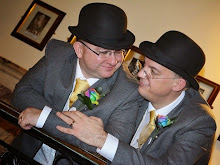
‘With Peter Hain, Liam Fox, Elfyn Llwyd, Nigel Farage and Janet Street Porter [see our EXCLUSIVE advance photograph] representing, er, Liberal Democrat-run Cardiff, the audience can be assured a full range of political colours.’


‘As you can see, this is a completely different panel to any previous one this month that omitted any Liberal Democrats (or that other one, too).’

DISCLAIMER: The Daleks wish it to be known that they dissociate themselves from the far-right authoritarianism of Peter Hain and the inarticulate screaming hatred of Nigel Farage.
*All right, you’ve caught me. The BBC responded “today”? I’ve obviously made that up – they only responded to my last complaint a few days ago, and that with a bland mass e-mail that failed to answer any of my questions. Good job they’re not responsible to the public, right?
For viewers who aren’t Daleks, you can complain directly to the BBC about their consistent and outrageous political bias. As they’re frightened of their viewers being able to get in touch, you can’t do so by e-mail – though if anyone wishes to supply me with the personal e-mails of, say, the director and producer of Question Time, the head of BBC1, the Director-General or the BBC Trust, I will very happily republish them here – and must instead jump through five pages of hoops on their website. Even to ‘reply’ to their insultingly vacuous excuses for responses (they e-mail you, but won’t let you e-mail back).
So, to repeat, you can complain to the BBC here. You can also read what Welsh Liberal Democrat bloggers think about the BBC ignoring the voters of Cardiff who elected a Liberal Democrat council, a Liberal Democrat AM and a Liberal Democrat MP.
It is a fact that, although the Liberal Democrats average over 20% of the vote across all elections, they’ve been represented on only one of the last four editions of Question Time – and only one of the last three editions of its radio sister programme Any Questions.
By contrast, Labour and the Conservatives have each been represented on every single edition of Question Time – even the broadcast from Northern Ireland included a Labour Minister and a Unionist peer who takes the Tory whip, yet omitted the liberal Alliance Party – often by two or even three supporters on one panel. Even BBC maths must be able to work out that, if their method for calculating Liberal Democrat representation is “fair,” by the same standard Labour and the Conservatives must each average well over 100% of the votes across all elections. Newsflash: this is not, in fact, true.
Even the Liberal Democrat blogosphere’s most ardent devotee of Question Time, the unluckily named Mark Thompson, is so disgusted by this bias that instead of staying in to watch the programme and host his usual live webchat he’s gone to the trouble of being candidate in a local by-election and will be out for the count. I hope you’re satisfied, BBC (and good luck, Mark)!
Come on, BBC, sort it out! Or I’m going to have to buy more Daleks.
Labels: BBC, British Politics, Daleks, Pictures, Questionable Time, Stupid Ideas


Tuesday, February 23, 2010
So, You Want To Repeat Doctor Who…
The Eleven Faces of Doctor Who
Well, this would be the obvious one – a story from every Doctor so far, rather than just the last four and a bit seasons. And, yes, as yet you might think we only have a minute’s forthcoming season’s trailer boggling into 3D for Matt Smith, but remember how they showed a story for Peter Davison in 1981’s warm-up repeat season The Five Faces of Doctor Who? So it can be done.
The trouble is, there are so many stories to choose from – even if you kept it down to those running about an hour and a half so they could all fit in the same sort of slot – that I can easily think of, ooh, at least two for poor old Pat whose episodes were largely tossed away by the BBC (imagine if they still did such things today), three for Colin, four or five for Billy, Jon, Peter and Sylv, and fifteen for Tom that I’d want to show. So you get your thinking caps on for a set of eleven, and I’ll get mine. In the meantime, there are other options…
Update: rather belatedly, I did devise my own set for The Eleven Faces of Doctor Who. Almost at The Eleventh Hour, you might say (groan).
Tomtastic!
Who was the most famous, longest-lasting, most iconic of all the Twentieth Century Doctors? Who does everyone still recognise? Who isn’t quite my favourite, but has my favourite set of stories? If I were a BBC channel controller – look, even BBC Parliament, it needs the ratings somehow, but these would probably be BBC2 or BBC4, wouldn’t they – I’d be sorely tempted just to start with Robot, and show the whole of Tom Baker’s Doctor. In order.
It’s not just my personal bias – from a practical point of view, every episode of Tom’s still exists, in its original format, in colour, while the first three Doctors all have bits missing or knackered (thanks, BBC). And I do love Tom’s first season. And Genesis of the Daleks seems like it’s hardly been repeated at all after Chris and David’s daily outings…
But, if I really were a BBC channel controller, I know which repeats would be my secret desire, and they wouldn’t exactly be repeats at all. And I’d probably have to be a channel controller to order them, because unlike ordinary repeats, they’d take quite an allocation of budget.
Doctor Who and the Daleks
Imagine, if you will, the determination, the commitment, and most of all the money to show a good long run of Doctor Who repeats. Surely, you want two things to get attention and pull in your viewers: Daleks, and a unique selling point.
You may be aware that the BBC carelessly tossed many of the 1960s Doctor Who stories into skips and burnt them. Fortunately, people were audio-recording them from the first, so all the soundtracks survive, and are available on BBC CDs. Now, some of them are terrific, but the pictures would be better, wouldn’t they (and some of those narrations are very intrusive)?
So here’s what I’d do. I’d commission animation to replace the missing stories, starting with the twenty-six episodes of Daleks that need doing (twenty-two missing ones, and four that still exist without the episodes on either side of them and wouldn’t match the new versions. You can release them as extras on the DVDs, just as they are now on the Lost In Time box set). The BBC did the same for the two missing parts of Patrick Troughton’s The Invasion on DVD, and it became one of their biggest sellers – but the cost of animation still means only a channel can really afford to stump up the cash.
My perfect Doctor Who repeat season, then, would set out its stall with the newly re-animated The Power of the Daleks, The Evil of the Daleks, Mission To the Unknown and The Daleks’ Master Plan. Each is a terrific story, not a single dud amongst them, each starring a terrific Doctor, Patrick Troughton and William Hartnell – or in one case, starring no Doctor at all, which is why I’d start with the one that introduces a new Doctor rather than confusingly omitting him – and each would look fantastic with all the Daleks you can eat and fabulous new designs and special effects.
How about trailing them heavily immediately after each BBC3 repeat, saying, ‘turn over now to BBC2 / BBC4 for more exciting Doctor Who you’ve not seen before’? Show two episodes back-to-back every night, and you can have a regular two-hour multi-channel Doctor Who slot.
And, when those have been an enormous success, you can commission another set, Doctor Who and the Monsters – I for one would love to see The Macra Terror – and keep on until all 108 ‘missing’ episodes had been renewed, along with new versions of the ‘orphaned’ episodes that would stick out too much in a story mostly made up of animation.
Then, once the whole series is complete again… It’s simple.
Just start your repeat season starring William Hartnell as the Doctor in An Unearthly Child, and show the whole lot. Just in time for the Twelfth Doctor.
And, yes, I know this is a strange flibbertigibbet sort of post to break my block of the last few weeks, but anything to get me back on the treadmill, eh? I’m sure I can get into even more outrageous wish-fulfilment once I start writing about the General Election.
Labels: BBC, Daleks, Doctor Who, Matt Smith, Patrick Troughton, Recons, Tom Baker, William Hartnell
Thursday, February 04, 2010
EXCLUSIVE: BBC Denies ‘Unbalanced’ Question Time Panel
‘With Lord Falconer, Theresa May, Clare Short, George Galloway and Melanie Phillips on tonight’s panel [see our EXCLUSIVE advance photograph], the audience can be assured a full range of political colours.
‘We reject accusations that two embittered, self-aggrandising ex-Labour MPs with minuscule public support are in some way likely to agree. Everyone knows they consider each other “splitters”.
‘In fact, Clare Short will tonight join Theresa May in representing the Conservative Party, as a cheerleader for the war who voted it through and then, when it all went pear-shaped afterwards, angrily said that it wasn’t her fault, she’d been deceived, and how could she possibly have been expected to exercise any individual judgment (something that’s a lot easier to say in the absence of any awkward Liberal Democrats).’
DISCLAIMER: The Daleks wish it to be known that they dissociate themselves from the far-right authoritarianism of Melanie Phillips and the support for genocidal maniacs offered by George Galloway.
Update: and again…
Labels: BBC, British Politics, Conservatives, Daleks, Iraq, Labour, Pictures, Questionable Time, Stupid Ideas
Wednesday, February 03, 2010
Love and Liberty VI – Equal Voices, Different Choices (#LibDemHeart #LibDemValues 1.6)
Liberty: Equal Voices, Different Choices
Liberals put freedom first. To make freedom real for everyone, it can’t be separated from love for every individual. That’s why the Preamble to the Liberal Democrat Constitution seems such a wise balance. In practice, liberty is dependent on a measure of equality and community. To guarantee universal liberty requires a degree of universal restraint, one of many paradoxes that Liberalism embraces. Otherwise, liberty can’t be widespread or secure; unbridled individualism results in too many individuals being crushed, but even the rich and powerful would be forced to guard against the fear of constant attack. To guarantee liberty, you need certain level playing fields – in particular, equality of opportunity and equality before the law. To exercise freedom and create equality, communities must be formed, then carefully watched to ensure they themselves do not arbitrarily remove liberties.Liberalism and the State
Liberals don’t see the state as a bad thing in itself. Neither increasing nor reducing state power or ownership can be viewed as an absolute good, for every circumstance; it depends what it’s there to do, and whether (and how) it works in doing it. Conrad Russell described Liberalism as not about minimum government, but minimum oppression. In more vivid words, he said Liberalism is around to stop bullying. That is the key reason why Liberals need the state, however drawn we might be in theory to the raw liberty of anarchism. There are too many bullies which are too powerful for individuals to fight on their own; in any case, the state can’t duck out and leave everyone to oppress each other. This issue of power is a central one for Liberals, going to the heart of the protecting and enlarging of liberty.
Liberty must be protected by and from the state. The state must have the power to create opportunity, and prevent bullying. Poverty and unemployment, for example, are barriers to liberty that the state can help break down by offering opportunities. Law can restrain bullies from thieves to bad employers, and defence exists to protect a state’s citizens being bullied by aggressors they have given no consent to – while governments must band together to stand up to giant, transnational, corporate bullies. However, Liberals are not starry-eyed supporters of state power. The state itself can threaten freedom of speech or action, make unfair or simply over-prescriptive laws, or bully people out of choices through offering too conditional opportunities. An over-strong state has always been the biggest bully for British Liberals, and Liberals from the proto-Liberal philosopher Locke onwards have sought ways to restrain its power.Since 1689, Liberalism Has Been Making the Philosophical Case To Check State Power
John Locke’s first way to limit the state’s power to bully was the ascending theory of power; power comes from the individuals governed. This rises naturally from the Liberal view of the importance of every individual, and explains why Liberalism is so closely connected with democracy, and with limits to what even a democracy should be allowed to do. The radical Liberal idea of the 1960s, community politics, is still all about working with people to take power and use it. It means actions should be taken at the lowest level they can be decided, with a pluralism of power structures – the best way to stop one centre of power bossing everyone around is to set up another centre of power so that no one level can greedily exercise total authority. Liberals are dead-set against monopolies of power, monopolies of ideas and economic monopolies – all are at best unhealthy and often a positive danger.
Liberal internationalism has understood for a long time that if power starts with the individual, it can be shared at any level without threatening identity. For many actions, the lowest appropriate level will remain the individual. It’s simply not the state’s business to stop people choosing their lives for themselves where possible; as people are so much more likely than a remote government to know their own neighbourhoods, work and private lives, the state would only cock them up anyway.
Locke’s other key notion was that power must be bound by rules. That is why the Rule of Law is so important for Liberalism, hanging vitally not on subjection to the law, but equality before the law to prevent arbitrary force – applying the same rules to strong as to weak, majorities as to minorities and governments as to citizens, and not applying any rules specifically to penalise a particular group. If the law singles out one set of people to pick on unfairly, what reason do they have to obey it? Every individual must be treated on an equal basis, as an individual, by the law for a Liberal society to win respect for law and society, not compel it. Laws made in secret or for partisan advantage, or which are enforced selectively, are fundamentally ilLiberal, and increase people’s insecurity – as Shirley Williams said:“The rule of law becomes hypocrisy if it means the ruler’s law.”Breaking the Chains
Liberals are more than sceptical of revolutions unless there is absolutely no other way to change things; too many people get trampled along the way, and there’s no guarantee things will come out better the other side. I once wrote that Liberalism was an ideology of permanent revolution. I was wrong. It must be, however, an ideology of permanent evolution, always adjusting to new circumstances, but rarely at such a breakneck speed that people lose their security. Liberals see their work will never be finished – opposed to utopianism right from the proposition that “the price of liberty is eternal vigilance”. Rather than only looking as far as knocking things down, Liberals are builders and refashioners, looking for a better way and willing to listen to all ideas for one, aiming for structures that are open and adaptable enough to change, not have to be broken. The purpose of those structures, though, should be to break the chains on individuals.
In a Liberal society, each person must have the information to make their own choices. Everyone must be equipped with skills, involved in decisions, encouraged and enabled to be an active, questioning individual. For people to make confident choices about their lives, they will be interdependent as well as independent; active government and thriving communities must provide the security, and often the resources, to take up opportunities. But merely providing is never enough. To have the chance to fulfil their lives, people must be guaranteed the power of self-reliance and taking action responsibly on their own behalf, without being told what they can or can’t do when it doesn’t harm other people. For that reason, when the Preamble to the Liberal Democrat Constitution talks of balancing liberty, equality and community, it sets out guidelines on how to achieve this: it says that“no-one shall be enslaved by poverty, ignorance or conformity.”Liberalism’s approach is made clear from this great line; these three evils are evil not just in abstraction, but still more so because they block freedom.
Even eleven years later, I recognise a lot of today’s piece as incredibly familiar – I suspect it flew straight out of what I’d always been saying the Liberal Democrats stood for, and I know that it owes an enormous debt to Conrad Russell, reading his work, listening to him and sometimes arguing with him. My friend, my Liberal guru and an outstanding historian of the Seventeenth Century, few FPC meetings a decade ago would go by without his finding a parallel to some Seventeenth Century political event and opening a contribution with something along the lines of, “In 1647…”
I’ve also often written on the Rule of Law. Neither Labour nor the other Tories believe in it, because they’ve never believed in any limits to their own power – for them it’s ‘do as I say, not do as I do’. Labour thinks laws are only part of their ‘cause’, to order society as they want it, and they ignore laws that get in the way of their higher purpose; for the Tories, laws have always applied only to the ‘little people’. You might be interested in a new study about just how power corrupts and powerful people make excuses for why they can get away with things, but others can’t which I read about the other day via Paul Simpson.
You can find the evolving links to the whole of Love and Liberty with an introduction here. Over the following days, I’ll be expanding on the liberty at the heart of my Liberalism – check back to that contents list and watch for those links to spring into life. Oh, and don’t forget to give your opinion on whether #LibDemHeart or #LibDemValues makes the better tag!
Back to V
Forward to VII
Labels: Conrad Russell, History, Ideas, Liberal Democrats, Liberalism, Meddling In Things That Are Nobody's Business But Your Own, Personal, What the Lib Dems Stand For
Tuesday, February 02, 2010
Pretty Pictures – and Pretty Intelligent
February By Night
Jodrell Bank’s monthly astronomy update for what to look out for in the night sky. February’s particularly good for Mars and Italian scooters, apparently. Just such a shame President Obama’s decided we’re only going to look at it all from down here. Meanwhile, Douglas Adams famously imagined a Hitchhiker’s Guide to the Galaxy while lying back in a field in Innsbruck and looking at the stars…
The Hitchhiker’s Guide to the Daleks
The absurdly gifted Andrew Orton used to have a website full of ‘movie posters’ for Doctor Who stories, some of them very eye-catching and several still saved on my hard drive long after he abandoned them. These days, rather than manipulating simple images in Photoshop (or whatever), he builds CGI Doctor Who and other models to do marvellous things with them. I particularly enjoyed his pastiche of The Hitchhiker’s Guide to the Galaxy, mixed in with the first Doctor Who story on which Douglas Adams was credited as script editor. My suspicion is that, unlike the ‘real’ computer graphics of the fabulous 1981 TV series, Andrew has used real computer graphics.
Jesus and Mo
And now onto the pictures that don’t move about a lot, but which might bear some relation to Oolon Coluphid. There were these two blokes down the pub… And they probably shouldn’t be viewed by those of a religiously sensitive disposition. I’m with the barmaid (hi, Jennie!).
Unspeakable Vault (Of Doom)
More blasphemy. Tut. And more on the Unspeakable Pope later (who’s not a pretty picture). A century ago, writer HP Lovecraft decided that horror had become too familiar and, thus, not frightening. He created an unnameable, unspeakable, sometimes unreadable new universe of cosmic horror, stories where the scary things were only glimpsed, weren’t explained, and crushed the investigator like a bug to finish – in the more reassuring tales. Today, what’s new has become old, and many-tentacled, unpronounceable Lovecraftian abominations have become as much a cliché as Dracula was to him. The cuddly cartoon mass-mutilation of the Unspeakable Vault (Of Doom) would, then, have been a pain in the neck to Mr Lovecraft, as the more recognisably “Lovecraftian” something is, the less it is like anything Mr Lovecraft was trying to do. It does, however, make me laugh very improperly.
Adam and Andy
Adam and Andy are a middle-aged gay couple who’ve been together for ever, where one works terribly hard and the other’s lazy, and where neither is as svelte as they used to be. It’s just like another sci-fi link, as obviously they’re in a completely different world to my life. They have a dog, not an elephant! Thanks to the very gorgeous Alex Foster for putting me on to their strip some time ago, too.
Oglaf.com
This one does what it says on the disclaimer page. Yes, the artist of these cartoons started off wanting to make fantasy porn, but found it all too funny. As a result, she goes where the mood takes her and some of the strips, regretfully, are safe for work. Don’t worry – there’ll be more cock jokes along very soon. A tip: if, like me, you start reading and then want to read the whole thing, while each of the strips is funny on its own, many of them build up to punchlines – one might call them climaxes – over several instalments. If you like the first few you read and want to carry on, you really are best off clicking on the “START” page and going on from there, as reading a joke backwards is noticeably less funny.
The Internet is for Porn (and I’m for Colby Keller)
This one also started off as porn and is often funny, but it’s not a cartoon, it’s a porn star’s very engaging blog about his life in the recession. His headline pic on his Big Shoe Diaries is naked, partially obscured by a “Will Fuck For Food” sign; the background to his Twitter account, on which at present he’s fully clothed, is him surrounded by his books. Come on, you like him already, don’t you? Some pages are indeed safe for work, but you’re probably safer assuming they’re not: though he frequently discusses his visits to art galleries and museums, ‘I went there for the art’ may not stand up to close examination when it doesn’t go down well with your system administrator. Look out, too, for mentions of his friend Conner Habib, who is funny, an academic and another very hot films chap. Do you get many of those? Anyway, Colby was recommended to me by a friend in one of those late-night wide-ranging Doctor Who, food and porn online discussions one has, as someone who’s funny, intelligent, and also very sexy, not plucked to within an inch of his life, and looking like he’s enjoying himself. And after a few days of looking at the pictures, you might start reading what he has to say, too.
This particular recommendation is dedicated to Tower Hamlets Council.
In much less wholesome porn news, the Australian legislature are officially a bunch of wankers. They’ve based a new law on mainstream pornography’s somewhat inflated view of breasts, and decided that all pictures of women with relatively small breasts are akin to child pornography. Were all their campaigns funded by the cosmetic surgery industry? ‘Women – buy those implants now or you aren’t a real woman’ isn’t the sort of message you expect an actual law to be sneering, is it? Strangely, they don’t appear to have banned pictures of men with small penises. That sort of porn’s absolutely fine, too, but presumably the Australian Parliament were too busy watching the big boobs to keep their minds on lower matters… Oh, but I’m wrong! It seems female ejaculation is “abhorrent”, too. That’s a law that sounds like it was made by HP Lovecraft, and about as in touch with the real world.
Pay For Pope? Nope
By now, you’ve probably heard about Pope Rottweiler’s latest medieval threats. So I’ll just comment through the medium of Twitter…
I tweeted last night:
Ex-Nazi to visit UK, demand special rights, charge taxpayers £20m for privilege & make gays 2nd class. It’s political incorrectness gone mad!
Then added my simple Liberal message, with a link to the National Secular Society’s petition against paying for him – he’s not in any sense a pretty picture, but he does make a good poster when you click to see all the signatories:
Don’t ban Pope but don’t keep quiet & don’t pay for his tour of hate (sign here)
I joined Twitter less than a week ago, and an evil old bigot telling us how to live our lives and demanding money and laws in his favour has had by far the biggest Twitterbag amongst the people I’m following. Who knew?
- The talented Paul Cornell is religious
- The lovely Owen Blacker is sweary
- The cheery James Moran works for the tourist board
- The handsome David Ames is subtle
- And the gorgeous Will Howells was where I spotted the news and still spot-on.
Update: Gosh. Thanks, Colby!
Labels: Bigotry, Blogs, Comedy, Comics, Cthulhu, Daleks, Doctor Who, Douglas Adams, Gay, Jodrell Bank, Meddling In Things That Are Nobody's Business But Your Own, Pictures, Religion, Sex, Twitter
Sunday, January 31, 2010
Love and Liberty V – Green Liberalism (#LibDemHeart #LibDemValues 1.5)
Love: Green Liberalism
For a good forty years now, Liberals have increasingly become environmentalists, too. Like so many parts of Liberalism, this is for a mix of reasons and has a mix of implications; some of our ecological concern arises straight out of our Liberalism, while some of it makes sense to make it work – not everything in a philosophy comes from exactly the same stream. It poses some of the same problems as Liberal internationalism, requiring action locally, nationally and across consenting international institutions, and raising a quite different problem of consent – bonds of human duty should also apply to the opportunities of future generations, even though they can’t ask for it. We can’t know exactly what future generations will want; they can have no duties towards us; yet they’re not here to defend their own interests. Using up every resource that exists for humanity is recklessly irresponsible; Liberals should believe that future generations must have the same, or better, choices and chances as we do. So we work to put our ideals into practice across the world, and protect the environment to hold that world in trust for our children and theirs.
Once again, there are immediate pragmatic as well as long-term and principled reasons for tackling the crisis of pollution and resource depletion – not just for future generations, or those alive today who would grow up in a screwed-up world, but for people’s lives now. That environmental problems cross-national boundaries is a pragmatic reason for internationalism. The destruction of areas such as rainforests for short-term gain doesn’t just increase the danger of unpredictable global climate change or desertification for the future, but hurts all the members of the human family living there now.
In Britain, rising car emissions don’t just add to the global warming endangering years to come. The crisis in asthma and other respiratory diseases resulting from pollution is a threat to health, a cause of misery and expense right now that pure market calculations don’t reckon on. The arbitrary and increasingly danger of floods is already a devastating reality to many areas. And if you can’t move for hours in a traffic jam in the middle of a city, the car is plainly not always a contributor to freedom of movement. According to the CBI, hardly radical anti-capitalists, traffic congestion costs business over £20 billion a year, which the market will only make worse unless the state intervenes to point some of its signals in a more practical direction. That same congestion means that buildings are gradually eaten away by the toxic waste in the air – just look at old statues losing their details in our cities. Liberals believe in pragmatic state intervention; if it works and won’t make things worse, as we don’t have a bugbear about private or public action, we’ll try it. Government action on a collective good like public transport actually increases freedom overall – it boosts free movement by reducing congestion, improves health, and does less long-term damage to the environment.Drawing Liberalism and Ecology Together
A sense of the importance of ecology comes naturally to today’s Liberals, both through care for the future of the human family and through simple pragmatic observation of current problems. Certainly, earlier Liberals were often short-sighted when it comes to the environment, right from Locke, who – far from advocating responsible stewardship – wrote that nature was worthless unless worked on by labour. This wasn’t a drawback for every classical Liberal thinker, however; Mill, for example, though he may not have been the most enlightened internationalist, was rather better at seeing the danger of attempting permanent ‘growth’ with no thought for the cost.
Basing a green Liberalism on the needs of humanity today and on our duties to the future members of the human family arises perfectly consistently from the underpinning concept of love for every individual. Many green Liberals would wish to stretch the definition to include care for other species, or valuing all life. Logically, that can be balanced with the rest of Liberalism, requiring still more restrictions on people for a much wider common good; but it’s a compromise that needs some finding your way around, as once you start down that road, it lays open a whole field of new issues regarding the extent to which humans are special, or simply a part of nature, or how animals or plants might be considered to have rights when (without taking an extremely long-term view of potential evolution) they will not at any stage have a concept of duties, as we would hope for from future generations of people. My own view is that we should have concern for the welfare of animals, and for biodiversity in all its forms, but that’s another sort of philosophy that may run in tandem with Liberalism rather than arising naturally from it, and it’s not on the same level as ties of love for humanity. Liberalism starts with individuals, not the planet. Though not all good things are the same things, it’s tempting to try and cram absolutely every ‘good thing’ into the same message, but Liberals can be relaxed – we’re pluralists, so taking on relatively complimentary views from very different starting points shouldn’t bring us out in a cold sweat. Again, Liberalism doesn’t rely on one sacred text that can never bear additions.Love Needs Liberty
What does define Liberalism is the idea of liberty. Love on its own is not enough, though it is a necessary prerequisite to social Liberalism; many religions or well-meaning but paternalist philosophies could share such views with Liberalism, without being known for their commitment to freedom. Liberalism sees humanity as all one family, but families can be oppressive, too. Liberals believe if all individuals are equal, so is their right to make up their own mind; each is the best judge of their own lives, so freedom follows on. In a ‘benevolent’ dictatorship, people might have perfect material satisfaction at the expense of freedom, but it would be a bad bargain. Free choice can lead to failure and tragedy, but it is also the source of every advance, and of real satisfaction that doesn’t come from spoon-feeding. Even freedom from war and freedom from want – each of which Liberals struggle for with passion – must not, as the Doctor once said, be bought at the cost of “Freedom from freedom”.
While love is the moral foundation of Liberalism, liberty is its aim and purpose. They’re not the same thing, but they are related. Liberalism’s view of the universal duty between humans and the importance of every single person links each individual to the international, making real the slogan 'think globally, act locally', but that vital link is not just so everyone is ‘equal’ in well-looked-after servitude. It is to ensure that everyone has the freedom to live their own life.
Like yesterday’s post on Liberal Internationalism, what I was in part struggling towards there was why sometimes there’s a clash of views, and trying to be even-handed about them while still making clear my own; again, it’s something I thought about a bit more coherently for my thoughtful and understated later article, “When Liberals Attack!”
You can find the evolving links to the whole of Love and Liberty with an introduction here. Over the following days, I’ll be expanding on the liberty at the heart of my Liberalism – check back to that contents list and watch for those links to spring into life. Oh, and don’t forget to give your opinion on whether #LibDemHeart or #LibDemValues makes the better tag!
Back to IV
Forward to VI
Labels: Environment, Ideas, Liberal Democrats, Liberalism, Personal, What the Lib Dems Stand For
Saturday, January 30, 2010
Love and Liberty IV – Liberal Internationalism (#LibDemHeart #LibDemValues 1.4)
Love: Liberal Internationalism
I once read a line from David Lloyd George, where he exclaimed that he hated fences and wanted to kick down any he came across. He may well have been thinking of Welsh landowners, but that quotation always pops into my head as part of that instinctive Liberal internationalism. Liberals don’t like neat little boxes and borders that individuals can’t cross. I want to kick down fences, too, and I don’t see how the concerns of Liberalism can be confined to one country. We've always been the most internationalist of creeds, and also the most individualist. That flows perfectly logically from the borderless connections individuals make in their own ‘living circles’, though perhaps, with my dual nationality, it was never going to seem like a contradiction to me. That's another difference between nationalists and us: we include everyone, rejecting the idea that we shouldn't bother with rights for people beyond the border - our principles don't stop on the shoreline. As the Preamble to the Liberal Democrat Constitution puts it,“our responsibility for justice and liberty cannot be confined by national boundaries; we are committed to fight poverty, oppression, hunger, ignorance, disease and aggression wherever they occur.”There are many pragmatic reasons for internationalism, too; Paddy Ashdown outlined the two main Liberal opportunities at the turn of the millennium as the globalisation of power and information, and the growth of individual autonomy and choice. Standing up against multinationals is no longer possible for many countries in isolation, recessions cross-national boundaries, and one country can’t save the world’s environment on its own. Common peace and security, economies and the Internet are all parts of the movement into internationalism which should hold no terror for Liberals, whose outlook was never confined to the short-term interests of one country.
Other parties have more difficulty; even Labour’s hopeless dithering is preferable to the Conservatives’ approach to Europe. In government, the Tories were like a drunk at a party – not listening to anyone else, standing propped up in a corner, ranting away at the other guests, making our friends move away in embarrassment and those who didn’t want us invited in the first place say ‘See! We told you they couldn’t behave!’ Now they just want to sit at home and complain about the noise next door.
Nationalism, of course, contains a greater danger than mere isolationism. While there is a difference between those for whom nationalism is the end and those for who self-determination is the means, the nationalist assertion that ‘we’re good’ easily leads to ‘they’re bad,’ which too easily becomes ‘we hate them’ and unleashes racism or fascism, particularly to distract attention from failure – for some people, it’s so much easier to put up with if you can blame ‘them’. If you can’t live with differences in people, you start by stopping people living their own lives, and finish by stopping them living. Those who believe Liberalism’s values (rather than some of its methods) have changed so much in the last century should compare Mr Gladstone’s concentration on Bulgaria with Mr Ashdown’s on Bosnia.Liberal Intervention?
A Liberal response to issues in other countries is a key area where Liberal values clash – often setting diversity and democracy against duty. Liberal internationalism is a tradition that’s long been kept alive in Liberal hearts, but we try not to talk about the movements also once active in the old Liberal Party for pacifist isolationism or imperialism. If we recognise no borders to our love of humanity, what about freedom for ‘a people’? What about self-determination? What happens to persons, when it has to apply on levels other than the personal? Liberalism’s search for ‘truth’ means Liberals should accept practical, pragmatic experience solutions, but not believe in any ‘perfection for all time’.
One lesson of the 20th Century is the growth of cultural and colonial independence – but another is that ‘muscular’ Liberalism must sometimes intervene to prevent hideous crimes, even at the expense of pluralism. If we regard individuals as different from societies, then causing harm to ‘our own’ is still ‘harm’. A majority can’t consent to harm a minority, but it can be a difficult circle to square with not forcing your own idea of ‘best’ on others – particularly if ethnic cleansing starts in a ‘democratic’ country. Where is the balance to be found between protecting cultural diversity by not stomping over a country from outside, against protecting cultural diversity by stopping the leaders of a country eliminating internal pluralism? While I’ve always tended towards pacifism towards attacks on me, I’ve always favoured weighing in to defend someone else, and I have a similar view about intervening to protect the oppressed in other countries. Even so, who appoints you a policeman? Who holds you accountable? What if you’re wrong; if reason fails, can you only say that might happens to be right, so it’s OK? As with ‘internal’ guarantees of liberty, Liberals believe the long-term answer will be to set rules, and look at each case on its own merits. Instinctively keen to look beyond national boundaries and pool sovereignty, Liberals’ solution is a framework of ‘international law’ and agreements, not merely to rely on US unilateral action. It is difficult to reconcile the appalling actions of the Taliban towards women, for example, with the still-revolutionary Universal Declaration of Human Rights. Problems on a global scale or made plain through global communications, whether war crimes or multinational company power, are problems for consenting international institutions.
Tempting as it is to re-write the whole of Love and Liberty, I’ve only been polishing the odd particularly clumsy line here and there, or just changing it to my ‘house style’ (double quote marks for direct quotations, single for anything paraphrased, unattributable or just made up for a laugh, and so on). I frowned on re-reading today’s piece, though; the earlier part of it has several lines which I – can I be charitable to myself? – which I’m sure I borrowed, but the second part just isn’t really up to scratch.
I still agree with myself as far as I went (and haven’t changed a word of that part), but I knew what I wrote about Liberal intervention was a bit threadbare at the time, and it looks much more so post-Iraq. It’s partly because there’s a definite clash of different Liberal values here, and I don’t have an easy answer to it. It certainly needs more work from me.
Fortunately, I did do a bit more work on it, so here’s one I prepared later, which does at least weight matters post-Iraq, if far from definitive. In 2006, commenting on the Liberal Democrat policy paper on Britain’s Global Responsibilities: the International Rule of Law I wrote an article for Lib Dem Voice which outlined three areas where Liberals tend to have arguments – as I said yesterday, while all parties have ideologies, they don’t all focus on the same things – and focused in on one in particular. My theory is, you see, that we all generally tend to agree that informed consent is the touchstone for what people should and shouldn’t do, and it’s usually a pretty coherent model. What happens, though, in situations where informed consent can’t apply? I wrote,
“It seems to me there are three big issues on which Liberals lack an instinctive compass, and they’re all situations where it’s impossible for all those concerned to give informed consent: animals, children and international law. I remember coming up with these in discussion during the writing process on the party’s philosophy paper It’s About Freedom. Its chair, Alan Beith, agreed that these were issues on which Liberals might well not have easy answers, and while I thought that was a good reason to raise them, he – perhaps wisely – thought the opposite was true!”So, if you want to read what I thought further (if still not far enough) on the international rule of law, it’s here in my thoughtful and understated article, “When Liberals Attack!”
You can find the evolving links to the whole of Love and Liberty with an introduction here. Over the following days, I’ll be expanding on the consequences of putting love and then liberty at the heart of my Liberalism – check back to that contents list and watch for those links to spring into life. Oh, and don’t forget to give your opinion on whether #LibDemHeart or #LibDemValues makes the better tag!
Back to III
Forward to V
Labels: Conservatives, European Politics, History, Ideas, Iraq, Liberal Democrats, Liberalism, Paddy Ashdown, Personal, What the Lib Dems Stand For
Friday, January 29, 2010
New Labour’s 4,289 New Laws – Yet Blair Walks Free
This is not the trial of Tony Blair, sadly. The Inquiry has no power to lock the bastard up. They don’t even have the power to summon up all the evidence – lots of Mr Blair’s dodgy correspondence promising war in advance has been blocked from view, despite Nick Clegg demanding that the Inquiry must be given all the facts. Still, from the Labour Government that abolished the right to silence, we all know what to infer from that. But I suspect that even Mr Blair’s extraordinary gifts with language will not entirely spare him from wriggling in discomfort under some harder questions than his native chat show sofa puts to him. However deflective or punctured his composure in today’s hearing goes, though, I won’t be the only one to feel a sense of betrayal that, at the end of his testimony, he’ll stroll back to making more extreme wealth from his Premiership rather than be escorted back to the cell he deserves.
Blunkett: Iraq Debates Spoiled My Posh Dinner Parties, So Pity Me
Disgraced former Labour hatchet man, failed Home Secretary, serial waster of police time through making up hundreds of daft new laws and unbelievable media favourite David Blunkett complained on the Today Programme this morning that some newspapers have “never forgiven” Mr Blair for the Iraq War, which is so terribly unfair to a “great” man. Well, fair’s fair: none of you war criminals have ever said sorry or admitted there’s anything to forgive. The flippant answer to such whining pleas usually involves asking Mrs Lincoln how, apart from that, her night at the theatre went, but I just find it difficult to sneer away hundreds of thousands of deaths on Mr Blair’s (and Mr Brown’s, and Mr Straw’s, and Mr Blunkett’s) orders. Or the lies that they used to justify them. Or ignoring all the people who marched and protested, and all the Liberal Democrats’ questions about how it could all go so horribly wrong, and evading responsibility when it all did. Or ignoring all the government lawyers who told them, as the Liberal Democrats did, that their war would be illegal and smash international law into piece – Mr Straw’s response to them, as we heard this week after his leadership-hungry posturing last week as a tortured man of principle, was in fact to boast that he was always being told what he was planning was illegal, and always went ahead and did it anyway. So much for the Rule of Law.
What else did Mr Blunkett plead pity for when he was interviewed this morning? What was his response to being pressed about the repeated outright lie about weapons of mass destruction being ready to launch at Britain within 45 minutes, a three-part claim in which all three parts were untrue and at least two were known to be untrue by the Labour government who sexed them up before misleading the House of Commons and spreading their terrifying lie through their chosen attack-dog newspapers, screaming that everyone who questioned them was a traitor? About the fact that Mr Blair and the rest of the Labour Government claimed that Iraq’s “weapons of mass destruction” were “active, detailed and growing” and “beyond doubt” when the evidence before they sexed it up read instead “sporadic and patchy”?
Mr Blunkett’s response was that he wants to be loved, and it was all very hurtful, and that – you may have to stop reading, gentle viewer, lest you burst into tears – he even had to ask people to stop arguing about Iraq over the table because it was upsetting his dinner parties. Oh, the horror. So never let it be said that Labour ministers didn’t suffer just as wretchedly as the people being bombed to blazes.
An Overdose of New Laws? It’s Enough To Drive You To Drink
Something else you may have heard on this morning’s Today Programme is the Labour Government’s latest example of legislative diarrhoea. Today’s new law – well, one of them – is to prohibit “persistent possession of alcohol in a public place” – well, they’ve not banned alliteration, at least. Richard groaned and exclaimed, “Why not just say, ‘You’re under arrest for hanging about’?” Welcome, then, to the Labour Government’s 4,290th law – or 4,291st, or 4,292nd, or have we passed 4,300 yet? And are they in a headlong rush to top 5,000 pointless prohibitions before they’re forced from office?
Just last week, Liberal Democrat Shadow Home Secretary Chris Huhne revealed that Labour’s record, while being shamefully poor at achieving anything in the real world, is a sparkling success in the Labour MPs’ imaginations that have cobbled together new legislation in ever-greater torrents. A couple of years ago, Labour had only inflicted 3,000 new laws on an unenthusiastic public; but by last week, Chris revealed, the total had rocketed to 4,289. If only manufacturing industry had grown like the manufacturing of legislation, Britain would be a world leader. If only saying the magic words really made it so, Britain would be a shining fairyland. But, instead, Chris pleaded that, if only Labour would stop, think and start repealing some of their ridiculous 4,289 new laws, the rest of us might find it easier to get on with our lives.
Yes, with 4,289 new laws under New Labour as of last week, and still growing rapidly as we heard this morning, Britain may be an international disgrace for joining George Bush’s illegal war, and Britain may be the last major economy to emerge from recession – and even that by the most Brown-trouseredly microscopic measurement – but Britain is, proudly, a world leader in law-making.
But what’s it for?
Though the Labour Government has produced more new laws than any other government in British history, are we in some way more riotous than ever before? Hardly. Are the police short of powers? Not a bit of it. Can any of us even keep up with this mountain of legislation, and find out exactly what we’re newly outlawed from doing day by day? Not even if it’s our full-time job, I imagine, though if there’s one sort of job that’s been growing as unemployment spirals under Labour, it’s the jobsworth. They ban things that shouldn’t be banned, they poke about in our private lives and micro-manage our public spaces, and all they achieve is labelling ordinary law-abiding people ‘criminals’.
This is a waste of all of our time. It’s waste of the government’s time. It’s even, and in some ways most counter-productively, a criminal waste of police time. What on Earth is the point of getting every police officer in the country to stay in and memorise a new law every day, when the problem is that they’re not getting out and enforcing the laws we’ve already got?
Labour’s Waste of Time; Tories Support Them; Lib Dems Have A Better Answer
Labour’s laws are not for the benefit of the police, or of society – just for the benefit of Labour. These are laws as substitutes for action – laws showered out instead of press releases, to get a winning headline for a day, then someone else can clear up the mess later. Don’t ask the Conservatives to do it, though; you may not realise it from the way they attack Labour in the TV studios, but in Parliament, just as the Tories were even more eager than Labour to wave their pom-poms in support of the Iraq War, the fact is that right now the Conservative “Opposition” are voting in agreement with the Labour Government more times than any “Opposition” since the Second World War. Some change.
It doesn’t have to be like this. Even a lot of people whose knee-jerk response was that if it moves, ban it, can see that this tidal wave of time-wasting actually gets in the way of the practical function it’s supposed to achieve. And for those of us Liberals who don’t like banning things anyway, who’ve been questioning what the point is every step of the way and opposing so many of these crazy new laws on principle, it’s small comfort – to us, to the police officers who don’t have time to do their jobs, and to all the many, many people brought before the courts on stupid little charges that should never have been made up – to say ‘we told you so’.
The centrepiece of the Liberal Democrats’ legislative programme in our General Election Manifesto will be a Freedom Bill, which rather than adding to the pile will start repealing vast swathes of Labour’s bossy, bullying, blatantly unnecessary laws. It can’t come soon enough.
Labour Bans Locally As Well As Nationally (and I have blogging trouble)
This morning’s indignant piece is for the moment rather linkless, as blogging and Twittering have hit something of a hitch at home: on getting in from a rather impressive few Richard’s birthday burgers together at the Gourmet Burger Bar, where I’d recommend the lamb (if slightly smothered) and the wild boar, and the really serious garlic mayo if you really like garlic (the only garlic dressing I’ve ever had in a restaurant as ferocious as my home-made garlic bread), our evening was slightly put out of kilter by finding our Internet connection had gone down. Actually, I probably shouldn’t write “gone down,” as it’ll add fuel to the censor’s fire, of which there’ll be more in a moment. Anyway, I spent quite some time on the phone last night to Waitrose broadband customer support, and rather more this morning, and there’s good news and bad news. Good news: they made a note on our account last night, so I didn’t have to go through every test all over again. Bad news: this morning’s tests and changes didn’t fix the problem either, or even identify it (sample quote – “Oh, that’s strange” / put on hold with ’80s stadium rock). Good news: they’re sending a new router. Bad news: we’re waiting for a new router…
So I’m out at my local library, which has a tight time limit on how long you can use their computers for (as I discovered when our street had its power cut for a day a fortnight ago – not good if you have no gas, your phones need power and the water in your flat runs from electric pumps – and my library e-mails to EDF Energy were abruptly cut off), in a bit of a rush, even with one I prepared earlier on a memory stick.
And just as I was getting into the swing of publishing Love and Liberty posts at noon daily. Bah. I’ve just done today’s, but can’t actually check what it or any of my other posts look like, as the local library’s over-enthusiastic content protection blocks anyone from viewing my blog – bloody Labour council! And that’s despite several times e-mailing them with examples of just which political websites they’ve auto-banned (including most Lib Dem blogs), and how ludicrous it is for a library to be so dead-set against reading. Richard has suggested that, as this is a Labour council, the word “Liberal” has been put on their anti-terror watch list.
Once we’ve got our connection back, I’d better look up some really interesting porn links to post and give them something worthwhile to ban me for, then…
Labels: British Politics, Conservatives, Food, Iraq, Labour, Liberal Democrats, Meddling In Things That Are Nobody's Business But Your Own, Personal, The Today Programme
Love and Liberty III – Liberal Individualism (#LibDemHeart #LibDemValues 1.3)
Love: Liberal Individualism
Talking about the human family isn’t just a truism. Liberalism starts with the individual, and that approach has two vital consequences: a politics in which every individual is important; and a politics in which no exclusive, artificial group should be put up above all the others. Not all politics works like that. All parties have philosophies, acknowledged or implicit, but they don’t necessarily all have them about the same things, or see the same issues as matters of principle. Some Liberal Democrats would say We should be practical and pragmatic, basing our decisions on common sense, not ideology’. That puts us in danger of becoming New Labour. You need to let people have an idea of what you stand for, because most of politics is reacting to events, not predicting them in a manifesto, or the different ways in which the same basic policy, adopted for different reasons, can be implemented (a distinction always missed by those who, in the mid-’90s, claimed ‘Labour are now the same as the Lib Dems’).
There’s a useful Yes, Minister-style irregular verb – ‘I have a philosophy, you have an ideology, she is dogmatic’. Though Liberalism has an ideology, it doesn’t have a dogma; if it’s an open ideology that concentrates on the message more than the mechanism, then it can be pragmatic without being rudderless. We don’t have to live by one holy text for ever and defy reality when it doesn’t have the answers, whether it’s the Bible, Das Kapital or the Financial Times stock pages. Because people change, so do Liberal solutions – it’s how we’re still going after all this time. Pragmatism about your methods and mechanisms is only sensible; claiming pragmatism about your ‘principles’ means no-one can know what you stand for. There’s often a confusion between ‘interests’ and ‘ideologies’: for socialists and conservatives, their interest group is bound up with their ideology, so everyone knows what they stand for – they don’t stand for everyone.Who’s Afraid of the Big Bad Market?
Liberalism is the opposite of authoritarianism; socialism and Thatcherite ‘free-marketeers’ are mirror images of each other, reversed economic views that still appear frighteningly similar. We know economics is important, but it’s just one sort of power, not everything. For Thatcherites their notion of the market is the most important thing. Everyone can understand – but you don’t have to live by – the appeal of class and clan, to feel good about achieving things for ‘your own’, I’ve never understood why self-styled ‘neo-liberals’ get so excited by the market. You can’t see the smile on the face of a market when you’ve put all your energies into helping it out. You can’t see the children of a market playing happily in the street. You can’t be photographed with a market, a market can’t cheer you on and cheer you up, and to be very brutal about it, a market can’t even vote for you – and when it fails, it doesn’t thank you for nursing it (and neither does anyone else).
Lady Thatcher’s acolytes claim to think the free market and the absence of the state is Liberalism; Mill wouldn’t agree. Any Liberalism worth the name must be a social Liberalism – equating Thatcherism with ‘neo-liberalism’ is rather like equating King Herod with ‘neo-childcare’. By raising the market alone as their totem of freedom, they threw the baby out with the bathwater. Fortunately, most conservatives have gone back to using “Liberal” as a swear-word and stopped trying to appropriate it. There are some things where free-market ‘efficiency’ isn’t appropriate, like running schools or hospitals for profit. Did Mrs Thatcher support private armies and police too, or was she just confused? Perhaps Jackie Ballard summed up this double-think best in a Liberal Democrat Conference speech on how people propose vouchers for education, but not for defence; she said she wouldn’t mind vouchers for two soldiers and a sailor! Liberals see no problem with a role for the state intervening to make the market work and to do the things the market can’t, just as we guard against the state when it tries to take on everything itself and run things it can’t or shouldn’t.
Liberals are not scared of the big bad market, either. The market’s a useful tool (if a great big clumsy one), not a master, and most jobs should be done with several different tools. Even the 19th Century Liberals that many accuse of being starry-eyed free-market ideologues brought in Factory Acts rather than just leaving the market to run its course, and often supported the free market and free trade in the first place because it was the best way to help the poor and break down privilege. Talk of distorting the market, though, is ludicrous for two socking great reasons. First, unless you’re one of its worshippers, you needn’t fear upsetting it. Second, because markets are always distorted. Free markets are distorted by anyone’s decision, by people not just buying what’s cheap, by people who buy with ‘non-market considerations’ such as the environment, by people who know what they’re doing…! The market is distorted by huge companies, distorted by big speculators, distorted by low pay, distorted by advertising, distorted by unions, distorted by government – but they’re flexible enough to adjust, and no other way of distributing resources as effectively as often has been found. If one came along, Liberals would go for it where it worked, too – even John Stuart Mill enthused about markets on entirely pragmatic grounds, not on principle. Markets have no interest in social justice, or even long-term practicality; left alone, they consume themselves by leading to monopoly and leaving talented but poor people destitute and homeless, and always create huge costs to business or taxpayer, not least through congestion and pollution.
Socialists once defined themselves as against markets, and instead for ‘their’ class, which could be helped out by changing the way economics worked. Both socialists and free market conservatives put money and economics first. Both served vested interests, big business and the big unions, and didn’t really see ‘people’ at all – just parts of groups, or economic units. The further each went to their extremes, the more it became clear that both believed in a material utopia, either of the ‘pure’ market or a publicly owned paradise which would set all injustices right. No wonder that socialism’s dead today; the wonder is that the market-worshippers are still going.Utopia and Dystopia Are the Same Thing
Liberalism sees material well-being – freedom from poverty – as part of dignity for all, but as a base to build on, not an end in itself. Liberals never saw all privatisations as good, or all nationalisations as the answer, but judged each on how well it would work. Materialism-based, economically determinist political philosophies of ‘left’ and ‘right’ can set an end point based on people’s economic position, a final, perfect, utopian society. Because Liberalism believes people count, and are not just to be counted as economic units, it rejects seeing material advantage as the only thing that matters, and does not believe in utopia. Those who want to impose their views on everyone else – convinced they know the ‘right’ way to live in absolute certainty – are terribly dangerous. A ‘perfect’ society has no room for individual imperfections, or personal development, or challenging ideas, and generates that terrible creed, “the end justifies the means” – in Liberalism, working for a dynamic, open society that develops constantly in response to the individuals who form it and their changing ideas and actions, the road to ‘utopia’ is the road to hell. The ends cannot justify the means, not only because every individual is too precious to sacrifice, but also because for a Liberalism of real people developing in real life, the ends are the means. Isaiah Berlin said he liked unpredictability and the occasional miracle. That is much more likely to happen if you view the human race as a fabulous collection of six billion miracles than if you see people as just part of a process, a means to an end. Liberals are struggling for liberated individuals today, not crushing them for an impersonal aim tomorrow.Labour and the Tories: Both Up a Cul-de-Sac
A formerly socialist, once utopian organisation, Labour now appear to want to boss families around because they’ve given up on economics and surrendered to the Tories’ vision of the unfettered free market, only ever able to see socialism or its polar opposite; in Jonathan Calder’s words, “from the Red Flag to the white flag,” and to paraphrase others’, Labour’s view of the state has shrunk down until it fits into your home. Mr Blair’s big idea is to force everyone to be ‘well-behaved’, as he sees it; Mr Brown’s is that everyone should be ‘hard-working’. Between them, there’s not a lot of room left for free will.
In a key way, however, even Mr Blair has not changed anything. Labour are majoritarian. They are only interested in being in power and exercising it, so they aim to look after ‘their people’ and not really care about anyone outside that (and if they can’t look after their own, they can try to please them by bashing others). They used to see ‘their people’ as the working class, and tried to get a majority of people that way; today, they’re trying to appeal to many different groups, some established, some changing, some only existing in Labour’s focus-grouped imagination, but their aim is still to build a majority and establish majority rule – and anyone outside their majority can get trampled down (in fact, they may consider it their ‘moral duty’ to do the trampling). This should not be mistaken for a new pluralism just because one of the groups Mr Blair is attempting to assimilate is the Liberal Democrats. Majoritarianism is an easy basis for authoritarianism, and one Labour is making clear use of. Liberals believe all people are important, whether the Daily Mail likes them or not. We could never attack everyone in ‘the poor’, ‘the young’, ‘the anti-social’, ‘the squeegee merchants’ or even ‘the rich’, because our politics has never been based on hating ‘other people’; everyone is one of ‘our own’, and should be taken on their own terms.
The Tories, defined in opposition to Labour socialism as free market apostles, are now in a dreadful mess. Now that Labour no longer exists, they’re turning inwards to nationalism. For nationalists, the nation or the ‘race’ is the group which is ‘their people’, and the Tories are terribly confused between the market and nationalism; the first is blowing holes in the credibility of the second. They try to defend ‘national sovereignty’ as speculators mock it; Lady Thatcher is still trying to get over having signed the Single European Act to further the market, our largest ever single act of ‘pooling’ sovereignty (a concept no nationalist can get their head around).Living Circles
Any party which starts off with groups will always see membership of the ‘key’ group as the most important thing about any individual who ‘qualifies’, and will never treat people who are ‘outside’ equally. They also allow acts to be done from above in the name of a collective ‘The People’ – not to arise from below, from real people. Liberals aren’t just for one group, or even one coalition of groups – yet two-dimensional socialists, for example, don’t aim to liberate the rich, only able to see them as ‘rich’ and nothing else. Liberals do, and have no interest in attacking them, ‘to put the boot on the other foot’; Conrad Russell has scathingly pointed out that Liberals hate jackboots, whoever’s wearing them. Equal love across the human family rules out politics based on a group’s self-interest. We start with individuals, who make and define their own groups, but treat every individual as important rather than the groups they’re in.
If you start with the individual, you can stretch out to anywhere, any way that individuals combine. If you start out with ‘the nation’, or class, or social group, you both sacrifice individuals for the group ‘good’ and set borders where you don’t care about those outside. Rigidly class-based or nationalist definitions of individuals go against the autonomy of the human mind, against independence of belief. It’s wrong to define a human being in terms of only one among the many attributes which make them up… We don’t make borders. We don’t try to force square pegs into round holes, our stereotype of what ‘a group should believe’ – a Liberal would never talk about a ‘class traitor’. Liberals, based on love for all individuals, are not ‘against’ particular groups; the most disturbing aspect of many parties is that they seek power to control everyone, yet they are formed to oppose certain people, only most blatantly in fascists like the British National Party. I could never support a party based on hating other people, or telling me what to think; one way in which my old “Love” speech did actually work was in contrast to the hate-filled rhetoric of the Trotskyites who were our main opponents in university politics. Liberalism works better when you’re willing to be nice to people!
Being against exclusive, unitary definitions by social group does not mean that Liberals see no identities bar the individual and the whole of humanity; Liberals see that an almost infinite number of identities can co-exist. A vivid exposition of pluralism of identities was given by Paddy Ashdown in perhaps his best Leader’s Speech to a Liberal Democrat Federal Conference, at Nottingham in Spring 1996.“There are some who believe that ‘we’ is a singular concept, that it can refer only to one group, define only one identity, fix only one position”was the proposition he knocked down – because everyone uses ‘we’ in a myriad different contexts. “We’re having Christmas at home,” “We’re getting up a petition,” “We’ve got a new export order” and “We’re playing away this Saturday” all, Paddy pointed out, illustrate different groups and communities that we belong to and identify with, easily and naturally, all at the same time. As a result, identifying with just one label fails to sum people up. To say, ‘I am British,’ or ‘You are gay,’ and only that, diminishes an individual’s identity and limits the space people want to call their own.
When I was LDYS Chair a few years ago, I worked with several other European parties’ youth wings, whether explicitly Liberal or with strong social Liberal currents. One of the latter at the time was the Flemish Volksunie Jongeren, and I got to know one of their leaders, Sigurd Vangermeersch, who had a persuasive insight into the way people’s groups combine and co-exist. Sigurd described this pluralism of identities as “living circles”; people overlap into many different groups that are important to them, not just class or nation. Rather than the ‘closed circles’ of one defining group, living circles are built up by individuals in all directions – I can see myself as part of my relationship, family, workplace, party, Doctor Who fan, friends, Manchester, North-West England, London, America, neighbourhood, gay community, Britain, Europe, humanity – with different circles having been more or less important at different times. One of the few occasions in politics when I lost my temper through feeling personally affronted was with someone persistently labelling me with their version of what my most important identity was. Liberalism must be opposed to those philosophies which tell people which groups they belong in and which one matters – because nobody has just the one.
You can find the evolving links to the whole of Love and Liberty with an introduction here. Over the following days, I’ll be expanding on the consequences of putting love at the heart of my Liberalism – check back to that contents list and watch for those links to spring into life, though there may be a bit of a delay while our home internet connection’s knackered. Oh, and don’t forget to give your opinion on whether #LibDemHeart or #LibDemValues makes the better tag!
Back to II
Forward to IV
Labels: British Politics, Conrad Russell, Conservatives, Ideas, Labour, Liberal Democrats, Liberalism, Meddling In Things That Are Nobody's Business But Your Own, Paddy Ashdown, What the Lib Dems Stand For
Thursday, January 28, 2010
Love and Liberty II – One Person, One Value (#LibDemHeart #LibDemValues 1.2)
Love: One Person, One Value
The first speech I ever gave on political philosophy started off by asking whether my audience of fellow students wanted to hear standard “Liberal Democrat rhetoric” or “hippy shit”. They opted for the latter; the speech was not an unqualified success. Since then, I’ve steered clear of using the word “love” in a political context, though I’ve always been keen on thinking about, writing about and talking about Liberal philosophy. Instead, terms like ‘equal dignity’, ‘equal respect’ or the terminally uninspiring ‘equal treatment’ tend to be thrown around, bound together by ties of ‘duty’. This time, I’m not going to be shy.
Love is better than ‘equal dignity’, because it means more; it sounds less mechanical. It goes straight to many people’s basic beliefs in a way that the often colder, more technocratic language of politics doesn’t. Perhaps people would feel less dismissive of politics if it sounded more often that it came from the heart, from what really matters to them – and love chimes with many humanist and many religious perspectives in seeing each person as of unique worth. It implies ties of duty and mutual respect through common humanity. Every single individual has their own intrinsic value. It doesn’t have to imply liking: when I was younger, I sat through a great many sermons and very few lingered, yet I still vividly remember hearing a sermon on love where it was defined as still being there even when you’re feeling “Right now I can’t stand this bloody person, I’m really pissed off with them, but I still love them.” It’s about commitment. Treat people on that basis, as part of a family, and you can never dismiss or dehumanise them. It’s probably easier for Liberals to see everyone on these terms, as we tend to be less hung up on exclusive definitions of what a family entails.
This notion was brought forcefully home to me while in the United States last Autumn – particularly as I was there in a group of “young political leaders” from all parties in the UK and Ireland, aimed at making a small contribution to the peace process. Within the space of a few days, I was moved by the national Holocaust Museum, inspired by catching an interview with the American liberal Mario Cuomo, saying “Treat each other as brother and sister, even if you don’t like each other, to make it work,” and horrified by the death of Matthew Shepard… a 21-year-old gay man battered and left to die because of others’ hatred of his sexuality. It felt like a political wake-up call, and it’s that feeling that gave me the heart of this essay.Liberal Family Values Are Wider
The most appalling actions are only possible for most people by stunting their own thoughts and perceptions, a practice Liberals are uniquely placed to overcome. Quakers did not fight slavery only to free slaves, but also to fight its effect on slavers and ‘owners’. Hatred in politics and society and everything along the road to Auschwitz are made possible by dehumanising individuals into faceless members of an alien ‘group’. Liberalism, based on individuals rather than groups, cannot afford hatred. Instead, it should be underpinned by love for every member of the human family.
So why love and liberty? Because Liberalism is about freedom – but it’s built on certain assumptions. They’re not the same as freedom, but they’re necessary to make it work. Liberalism is a living, practical philosophy, so it isn’t just about an abstract concept of liberty in isolation from people’s lives. Surely the only Liberalism that works is social Liberalism, a human Liberalism that relies on love for every unique, precious individual to make liberty real. Love implies duties which we all share; not in the fashionable, crass understanding that every right should be tied to a specific responsibility (you don’t have to sign up to something for not having homophobic attacks made on you in the street) – we all need rights to make our own decisions about our own lives, but we have a duty to ensure those same rights are there for everyone else. We can't be out just for ourselves and let the rest go hang, whether in this country, across the world or for future generations. To do so would deny our humanity.
You can find the evolving links to the whole of Love and Liberty with an introduction here. Over the following days, I’ll be expanding on the consequences of putting love at the heart of my Liberalism – check back to that contents list and watch for those links to spring into life. Oh, and don’t forget to give your opinion on whether #LibDemHeart or #LibDemValues makes the better tag!
Back to I
Forward to III
Labels: American Politics, Blogs, Books, Gay, Ideas, Liberal Democrats, Liberalism, Personal, What the Lib Dems Stand For
Wednesday, January 27, 2010
#LibDemHeart or #LibDemValues?
Obviously, I’ve gone through an immensely thrilling process of brainstorming, throwing out the longer words that might have worked, throwing out the ones that sounded too airily philosophical in favour of those with some purpose, and throwing out the ones with negative connotations or that were simply too send-uppable. Then I asked a handful of people’s opinions on the remaining tags I posted to them, and the result was clear: it was between just two Twittery tags. Nearly, but not entirely, with me voting for one and everyone else for the other.
Why #LibDemHeart?
- It makes you think of something at the centre of our being
- It makes you think of the power that makes everything else go round
- It makes you think of passion, belief, ‘…and soul’
- It’s different enough to the usual politics-speak to be memorable
- And, of course, it cheerily implies ‘I Heart Lib Dems’.
- (Oh, and it’s one letter shorter – result!)
Why #LibDemValues?
- It’s colder, more theoretical, more prosaic, but it gets the job done and everyone knows what you mean by it. Sigh.
So, having offered you a scrupulously even-handed and non-judgmental summing-up of the two options, which might you see yourself / other Lib Dems using in the continuing debate over what the Liberal Democrats stand for?
Labels: Blogs, Twitter, What the Lib Dems Stand For
Love and Liberty I – Introduction (#LibDemHeart #LibDemValues 1.1)
Actually, when I had a good think about it eleven years ago, I started with two. You know what they are.
Back in the early ’90s, when I was heavily involved with the Liberal Democrat Youth and Students, I wrote a lot of letters. Other Lib Dems often used their own particular sign-offs, “Yours liberally” being an obvious favourite. One day, I decided to adopt my own, and – being a huggy sort of chap and a definite Liberal – “Love and liberty” were the two words that instantly sprang to mind. One of the people I wrote to most often was LDYS’ first Chair, Kiron Reid. For trivia buffs, he was also (separately) the Young Liberal Democrats’ last Chair; these days they’re called Liberal Youth, and I understand there’s a vacancy. If Kiron can sign himself up as a mature student, do you think he fancies the triple? Anyway, a few years later, the two of us having long become friends, activists, LDYS ex-Chairs and enraptured by Liberalism, he asked me to expand that instinctive tag into a philosophy.
From 1998 onwards, Kiron Reid and Bill le Breton edited a series of booklets from Liberator Publications, each usually consisting of two essays (the first of which was Kiron’s own highly recommended Rough Guide to Liberalism). The series was called Passports To Liberty, and in March 1999 I stayed up a few nights to write my contribution, then dashed up to Liverpool so that Kiron and I could format and print it just in time to flog at that weekend’s Liberal Democrat Spring Conference. The A-essay in Passports To Liberty 3 was Jackie Ballard’s The Politics of Community, so it’s worth hunting down a copy for that. You can read my B-essay here over the next few days, split into more digestible parts by its original sub-headings.
The Best Book On Liberalism Ever Written (Before Moving On To The One For Which I Hold The Copyright)
So, if there’s one short book or long essay you should read about Liberalism, it’s without a doubt – well, there are two. John Stuart Mill and Harriet Taylor’s On Liberty, which you can find free online, and Conrad Russell’s An Intelligent Person’s Guide To Liberalism, which was published like mine in 1999, to rather greater fanfare and not run off on an illicit photocopier in the dead of night. If you can find a copy, grab it, particularly as it’s criminally out of print and going for £50 second-hand. I can find things to disagree with in both, but they’re still brilliant.
I wouldn’t put my Love and Liberty in a top fifty, but it is the one that I can republish as much as I like. Besides, I intend this to be the first in a series of articles looking at my and many other people’s ideas of ‘What the Liberal Democrats stand for’, and as I’m not going to agree with all of them it’s only fair that I stick my own beliefs on the block first. Bring your own tomatoes.
Modestly subtitled “Alex Wilcock on Social Liberalism,” I’m not sure that my definition of Social Liberalism was one with which Mr Hobhouse would entirely agree, but it tied in with what Conrad called a “rhetorical flourish” (I wonder if I still have the very kind review he wrote – was it in Liberator, or in Liberal Democrat News? I had some unkind reviews, too, but you can look for those yourself). As you might guess, I argued that for Liberalism to work it needed to stand for both love and liberty – each having limitations on their own. How well did I knit them together?
Love and Liberty
Alex Wilcock on Social Liberalism
“Whereas recognition of the inherent dignity and of the equal and inalienable rights of all members of the human family is the foundation of freedom, justice and peace in the world… All human beings are born free and equal in dignity and rights. They are endowed with reason and conscience and should act towards one another in a spirit of brotherhood.”Preamble to the Universal Declaration of Human Rights, 10.12.1948
Part One: Love
One Person, One Value
Liberal Individualism
Liberal Internationalism
Green Liberalism
Part Two: Liberty
Equal Voices, Different Choices
Freedom from Poverty
Freedom from Ignorance
Freedom from Conformity
Conclusion: Love and Liberty
Click on the as-yet-unfinished links to read each section in turn, and follow me on my journey through a definitive essay I wrote eleven years ago to discover with me whether I still agree with it, just how dated my knocking copy on the other parties is from a day when New Labour was new, and Iraq was as yet uninvaded (will I be as eerily prescient as the conclusion to Conrad’s book?), and how desperately I tried to shoehorn in lines I thought really ought to be in there somewhere but couldn’t really find a place for. The last is my main memory of what was dodgy about it at the time, but no doubt today I’ll find much more.
I’ve been thinking about this series on what the Liberal Democrats are about (“This is what KLF is about!” has just belted out behind me) for a couple of months, seeing quite a few other people write about the same sort of thing along the way. So this introduction seemed an appropriate way to celebrate my 500th blog post on Love and Liberty. Thanks for reading so far, if you have!
It’s with rather more trepidation that I’ve also celebrated by joining Twitter. You might very well think that starting to micro-blog just as I set out on a series of maxi-blogs is an incongruous move, but… My shivering hand was held by Her Highness of Hashtags herself, Helen Duffett, so thank you, Helen, for the starting advice, and the nonsense I tweet is entirely my own.
Obviously, I need to amend my links to add my Twitter account, but as the whole sidebar’s not been updated for about a year, it’s almost as terrifying to contemplate redoing the whole thing as it is to think about tidying the spare room…
Forward to II
Labels: Blogs, Books, Conrad Russell, Ideas, Liberal Democrats, Liberal Youth, Liberalism, Personal, Twitter, What the Lib Dems Stand For