Wednesday, October 08, 2014
Lib Dem Conference On TV: Watching Where the Money Goes
I’m usually busy at Liberal Democrat Conferences. Writing speeches – sometimes even getting called to make them. Writing chunks of policy – sometimes even proposing them. Not writing a blog looking at the telly, while policies I’ve had nothing to do with are debated without my vote or voice. One I’m in two minds over. One I’m proud of. One taking baby steps but going nowhere near far enough. One that’s OK but should’ve been inspiring. One that’s unjust, unaffordable and unworkable. And the big picture: the very few places where my party puts any money where its mouth is.
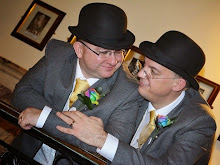
As my health has gone further downhill, in conference after conference I’ve made fewer speeches and attended fewer debates than I did five years ago, or ten, or twenty. It’s just a bit of a shock to go from steadily decreasing participation and days when I often have to stay in a hotel room rather than in the conference hall to zilch. Hopefully Richard and I will be back next year, more engaged once we’re married (though it’ll be much more expensive for me just as my low income’s been eradicated, thanks to government policies I can’t say I support).
But there is one advantage to watching this Glasgow Conference on TV. I would be sitting in the hall fired up and wondering if I’ll be called to make my speech, listening to dreary meandering mumbles with nothing to say even if they could deliver it, where the only message is ‘My view on this crucial national issue is incoherent but involves a mind-bogglingly dull special plea for my own little local area’ – and it’s not just the MPs, some of the ordinary members are just as bad. I would be thinking hard at the sodding chair of the session, ‘It’s one thing not to call me to make the brilliant speech I’ve crafted so carefully, but calling these ones instead is just insulting.’
At home, I don’t feel the urge to write a speech, I don’t have to worry if I can make it to the hall, and above all, I can record the debates and watch most of them with my finger on the fast-forward button!
In my breaks from Lib Dem Conference, I’ve also been watching Doctor Who – The Pirate Planet, starring Tom Baker and written by Douglas Adams. This brilliant story, is I have to admit, better viewing than pretty much any Agenda item bar the Presentation On Same-Sex Marriage, and its second episode was first broadcast on this night back in 1978. At the time, part of it was a satire about the idea of an “economic miracle” for which no-one has to pay. It also turns out (spoilers) that behind the exponentially increasing devouring of the resources of whole worlds is someone very old to whom no demand is ever enough.
So what’s been happening back at the Conference? You can read all the papers here, and catch many of the debates via the BBC. But here’s why some debates particularly caught my attention…
“One Member, One Vote”
I’m torn on this one. If party membership hadn’t been hollowed out, I’d be wary that these proposals sound like they’re about equality but actually even more heavily in favour of time-rich, money-rich people who happen to live close to the seaside (or, in this case, to Glasgow). The equivalent of electoral reform for the UK being to propose one person, one vote – as long as you can all pay a large registration fee to crowd into the same one polling station. In Glasgow. Or, discarding the party’s current constituency-based representative democracy model, like reforming the House of Commons by saying any UK citizen can turn up and vote there, as long as they can afford to pay to register and pay to stay in London. And I wasn’t totally convinced by the argument that our shrunken membership makes it less likely people will turn up to swing the votes, which seems like an argument that we should completely change the structures just to get no more people turn up anyway. That the proposals themselves were a badly-drafted mess from a Federal Executive that has been record-breakingly navel-gazing and incompetent in its faits accompli this year didn’t help.
And yet… I’ve had times when I’ve been to conference without being an elected conference representative with a vote too, and it’s even more frustrating than being a conference representative who’s not at conference as I am today. The amendments stopped the constitution being turned into incoherence. And the arguments on the OMOV side were simply far better, with too many of those against resorting to pathetic ad hominem attacks.
Watching from home, though, if every member is to get a vote not just if they attend conference but for the major party committees, the small changes in making conference easier to follow over the past few years need to accelerate mightily. During conferences, the party website must have a one-click ‘What is happening right now’ solution rather than a many-click ‘Somewhere here you can work it out’ puzzle box. The back-projections and the chairs of sessions need to give the site address several times during each debate and explain what’s going on in each vote, not just to make it clear to conference-goers rushing about, but to those more members we’re told will be freshly engaged and watching after OMOV. Announcing at the end what the votes have actually decided, rather than just reading out a list of numbers and letters, would help the TV watchers too.
In a spirit of helpfulness, here’s one I prepared earlier: Making It Easier To Follow Liberal Democrat Conference.
Towards Safer Sex Work
Twenty years ago, I was newly elected to the Liberal Democrat Federal Policy Committee – the body that decides on the major policy proposals that go to Conference. I was the youngest person on it by more than ten years, the only out LGBT person on it (putting into perspective today’s debates over reducing ‘diversity’ to only one tick-box quota), and – the unique thing about me that most mattered to me and which made the difference on the Committee – by the reckoning both of those meaning it approvingly and those meaning it critically the most unfilteredly ideologically Liberal. One of the first policy papers that that year’s FPC discussed had something done to it that I can’t remember any other paper save election manifestos. Election manifestos come back several times for FPC debate because there’s so much in them and we need to get them right. This paper was sent away for redrafting not once but twice because it was simply too Liberal for the FPC. I can’t remember any other than wasn’t just redrafted a bit in committee, as was the norm, but rejected in total and sent away to be rewritten from top to bottom (possibly not the best words), then once we saw it again, told it was still too interesting and needed to be completely redrafted yet again.
The neutered and regulation-heavy paper that was eventually permitted to creep into Conference was titled “Confronting Prostitution”. I bear some responsibility for that overly confrontational language: I was the one who pointed out to the FPC that the title “Tackling Prostitution” might be open to ribald remarks and we should get our tackle out.
It wasn’t a bad paper. It advanced us well ahead of the other parties. But I always looked at it with disappointment, because the policy working group had followed its remit, followed the evidence, and followed Liberalism in drafting a civil liberties paper that the FPC gutted stage by stage until it was about ‘getting them off the streets’. When the first draft came to FPC, it was the only policy paper that was ever so unpopular that just one solitary FPC member supported it as it stood. You will not be surprised to read that it was not the only time in which I was in a minority of one, but it was the most significant.
So I was very proud to watch all of Saturday afternoon’s debate, to see how far we’ve come. I particularly recommend you read Sarah Brown’s speech, but I was really pleased at how sensible and Liberal the overwhelming majority of the speakers – and the votes – were, including protecting sex workers both from exploitation and from the state, rejecting the idea of reintroducing ID Cards but just for sex workers, and setting out the principle that informed, consenting sex should simply be legal and is nobody else’s business (even if it’s a business). Well done, Conference! I just hope now that the next FPC will not be as timid about the forthcoming policy paper as its predecessor two decades ago. So if you have a vote, vote for the candidates with some Liberal ideas rather than just a CV on their manifesto.
Doing What Works To Cut Crime
I liked this policy paper – it sets out a practical, evidence-based approach to cutting crime. But its piecemeal nature means it looks more like a compilation than a coherent whole. So I welcome the commitment to crime prevention. And civil liberties. And evidence-based baby-step liberalisation of our useless, gangster-boosting drug laws. And to the interests of victims.
But a bigger question that the paper doesn’t ask is that if we want fewer victims, what about the victimless? What about ‘crimes’ that are not about protecting any victim but only about the state victimising people that aren’t hurting anyone else? Because it’s not only criminals who attack you that can be bullies. The state can, too. And if you want to prevent crime, expand freedom, cut the ground from under gangsters and have fewer victims, then setting out the principle that ‘victimless crimes’ should simply not be crimes at all is something I’d like to see as the keystone of our next crime paper when it looks at evidence for how to implement that.
The Liberal Democrat 2014 Pre-Manifesto – A Stronger Economy and A Fairer Society
I wrote a little about this yesterday, looking at the Introduction and how that’s changed and improved on previous attempts – though it lacks a short, stirring rallying call of What the Liberal Democrats Stand For.
The whole thing’s pretty good. And I particularly liked Duncan Brack’s closing peroration in the debate (Duncan, if you’re reading, please send me your speech and I’ll print some of it in a Liberal Monday). I have to admit, though, save the much-purloined policy to further raise the personal allowance for the lower-paid, I’m a bit hard-pressed to remember a ‘wow’ policy. That suggests that its narrative isn’t all that thrilling. And then at the last minute, someone came along and diluted the best bit.
I might have been tempted to vote against it for the drafting amendment announced this morning: the problem with an amendment that’s accepted into the text at the last minute is that no-one gets to debate it or speak against it. Several years ago, there was a crappy Guardianista fad for “wellbeing”, a meaningless top-down political concept like a New Labour zombie. The Lib Dems made the great mistake of deciding it was the biggest of big ideas, with almost zero enthusiasm, and since then have sheepishly never mentioned it again because it’s a load of rubbish. Until this policy motion, when some utter fool wanted to add it and the bigger fools on the FPC let them. Worse, it means that the motion as passed says that the one big thing we’re really about is “above all to empower every person to realise their potential” – oh, and also “wellbeing”! Which is crud. It’s not one task. It’s two. It means the inspiring, Liberal, bottom-up idea that we are about enabling everyone to decide their own life is now knitting together with top-down Blairite mulch about how we should decide what’s good for people. As no-one mentioned it in the debate, proving yet again how pathetically uninspiring the idea is, my advice is just to pretend it isn’t there.
But at least the Pre-Manifesto remembered to talk quite a bit about the deficit, and didn’t pretend you can fix it while bringing in no new tax revenue at all and giving massive handouts to the wealthiest.
Did We Forget About the Deficit After All? The Big Four Spending Commitments
The Pre-Manifesto was very tough on the deficit this morning. Then there was a huge splurge this afternoon.
I’m not against huge splurges (no, titter ye not). But the Liberal Democrats have carefully costed our Manifestos for more than two decades to only promise what we can afford, even in the good times when the money was rolling in (though less than the Labour Government pretended). Now the money’s not just tight but gone, it’s all the more obvious where the few extra bits are going – while everything else gets slashed.
- The Liberal Democrats are committed to protecting and expanding spending for schools and early years education – we always have. It’s probably our single most consistent commitment.
- We’re committed to increasing pensions through the so-called ‘triple lock’ (heads, tails or side, pensioners always win big).
- We’re committed to raising the income tax allowance to the level of the current minimum wage – but that isn’t ‘locked’, so it can be eaten away by inflation.
- And we’re now also committed to above-inflation increases in the NHS budget. All the previous three follow on from the big promises the Liberal Democrats made in the 2010 election, all three of which were delivered in the LiberaTory Coalition. This one is different: it also happened for every year of the Coalition, but at the last election it wasn’t promised by either the Liberal Democrats or Labour. This part of the Coalition’s record now taken up by every party was only a Tory commitment. We forced them to agree to the others – they forced us to agree to this one.
These four spending commitments are massive. And everything else will have to suffer.
I remember in 2001 – in what Labour told us were the boom years – I put out a really good leaflet across the constituency for which I was standing for election. ‘Follow the money’, I thought, and so this was all about the two biggest spending commitments in our 2001 Manifesto. On one side, a picture of me with local kids, with details of our proposals for children and education and how we’d pay for them. On the other, a picture of me with local pensioners, with details of our proposals for old people and pensions and how we’d pay for them.
I thought this was a great idea until a working person without kids told me angrily, “So you’re offering me nothing, then. I just have to pay for it all.” That should have occurred to me: I was a working person without kids. But though we’d said in our 1997 Manifesto that we’d raise the personal allowance for the low-paid, by 2001 we’d dropped that from our priorities to give a massive bung to pensioners. And back then that didn’t even include the earnings link and ‘triple lock’.
Today we have even less money. We’ve restored the policy of cutting taxes for low-earners – and made it a reality for millions despite the Tories wanting a tax cut for dead millionaires instead and Labour opposing it because they want government hand-outs only to the people they say deserve it rather than letting all the low-paid keep their own money. But that wasn’t a choice between generations. Something for children; something for working people; something for pensioners; now something for the NHS for everyone.
I just don’t think this can hold – because four massive commitments of extra cash is too many without squeezing everything else until it pops. And one of those four is not like the others. Only one has had no hard choices at all – just constant rises.
Age Ready Britain
Back when I was healthy enough to stand for elections, I went through an assessment to see if I was politically fit to be a Liberal Democrat Parliamentary candidate. I passed with flying colours, and can still remember my going all Churchill to the assessor role-playing an anti-asylum-seeker voter on the doorstep (as well as remembering that I’d only use the word “refugee”). One of the parts of the approval process of which I most approved in turn was the point where you had to prove you had a Liberal brain by identifying a party policy that you disagreed with and explaining why. I think at the time it was something about well-meaningly bossing young people about – a “wellbeing” policy, if you will – and, if I thought today about which I considered our most wrong policy, I would quite happily blast that Blairite twaddle of a “wellbeing” paper out of existence. But as it’s already been wiped from everyone’s memory through its very blandness, I would answer that the policy I most disagree with is one that has been made even more disagreeable today.
Our policy on pensions is generous, warm-hearted, well-meaning and attractive.
It’s a shame that it’s completely out of touch with reality.
This morning, the Liberal Democrats voted for a Pre-Manifesto that constantly repeats that it is all about “the next generation” and uses that as a primary argument for reducing the massive deficit between what the government spends and the money it has – that we must spend less now rather than saddle ever-increasing debts onto the next generation.
This afternoon, the Liberal Democrats voted for our biggest spending commitment not only to remain humungous increases for pensioners when every single other group in society is suffering cuts, but to put that vast and ever-increasing cost into law so that it can never be changed.
Completely unworkable.
The first time I ever spoke on what might be called the party ‘establishment’ side, after many years of being the radical outsider, was sometime roughly around the year 2000. It was in a debate on pensions that saw the unlikely bedfellows of young people, the party Leadership and elderly members of the House of Lords on one side, with middle-aged Parliamentary candidates on the other. The Parliamentary candidates wanted to restore the link between earnings and pensions because it was very popular. The rest of us said that it was a mistake to make that a principle because we could afford it today – as we then thought, not realising that even in the boom years the Labour Government was already running an unaffordable budget deficit – because there would come the twin pressures of an ageing population and a less rosy economy, and then we’d be stuck with a policy that wasn’t affordable. I can’t remember precisely my age, but I can remember my speech’s opening line that got people’s attention (and got a few boos):
“Conference, I’m twenty-eight. And I want a pensions policy that doesn’t make me pay through the nose and then go bankrupt before I get anywhere near claiming it.”Back then, sense won the day. Somehow, between then and now, as the nation has got older and the economy has gone down the toilet, as the side that won back then have been proved right, we’ve gone ahead and gone for the unreal option anyway.
A ‘triple lock’ on pensions ratchets up without end, so that whatever happens to wages, or inflation, or the nation’s finances, however children or working people or people on benefits or services or anything else under the sun suffer, one group alone will forever get more and more money even as that group gets bigger and bigger.
We promised it at the last Election. We were wrong.
We’ve delivered it in government. We were wrong.
Today, we’ve proposed locking it into legislation so that every other group, every other service, every other dire need must always by law be subordinate to pensioners not just not contributing much to the cuts, not just staying still, but getting more, more, more while everyone and everything else gets less, less, less. We are stupidly, impossibly wrong.
With today’s pressure on the public finances, this is not merely utterly unworkable but utterly unjust.
I argued for pensions increases and other spending to help pensioners back in 2001. I meant it. It was the right thing to do when we could (seemingly) afford it. I didn’t argue for massive age discrimination and a huge and ever-increasing transfer of wealth from the current generation and the next generation to pensioners who will never be all in this together even when we can afford none of it. Because I’m an idealist, not a complete fantasist.
The Party Leadership and speakers in the debate today told the brave souls who stood up against this dangerous absurdity that they were wrong to say that ever-increasing numbers of pensioners getting a never-ending increase above the country’s wealth was unaffordable, because we just don’t understand the numbers. They didn’t say what the numbers were. Because… Because… Because… It’s magic! Government spending is still way above the money it takes. Everything and everyone else is struggling to keep their heads above water. The benefits bill is being slashed and people having their benefits cut or cruelly taken away altogether – the one exception being the vast majority of the benefits bill, the vast majority of benefits claimants, all of whom get much more than any other benefits recipients. They are the pensioners. But pouring extra cash into by far the biggest chunk of the benefits budget is “affordable”, we were told, and we just don’t understand if we say the emperor has no money to get clothes.
How stupid do they think we are?
One MP replied to criticism – from the unlikely bedfellows of Liberal Reform and a leading member of the Social Liberal Forum – by saying that we shouldn’t turn this into a fight between the generations. Well, that’s exactly what you do say when you’re the victor enjoying all the spoils, but not when you’re the side left bleeding and looted. Behind the scenes, they spin something else: not that it’s right, but that “pensioners vote”, so we need to throw money at them even if we have to mortgage the next generation’s future by borrowing half of it and mug the current working generation for the rest.
Ever wondered why the Tories so readily went along with a massive bung to pensioners – and took the credit? Maybe some of it was that when they got into power Mr Cameron still wanted to detoxify them and saw pensions as a totem that they were now the Nice Party to one group, at least. Before they rediscovered their taste for celebrating kicking the poor in the nuts. But why, do you think, were the Tories so happy to increase pensions while they slash and bash every other benefits claimant? It’s not rocket science, is it? Yes, “pensioners vote”. Pensioners vote Tory. Our most unrealistically expensive policy has been to make everyone else suffer, infamously cutting at our own core voters, to give a massive advantage to the Conservative core vote. For which the Conservatives get all the credit and we see our vote, as it always is, weaker the older the voting demographic gets.
We.
Can’t.
Afford.
This.
There are several good ideas in the Age Ready Britain Paper. There’s also the biggest infection of any policy paper this Conference of, yes, more twaddle about patronising “wellbeing” again, which is just a neon light for me to say that if I had been at Conference I would have urged the other Liberal Democrats to hurl it out and shred it, and start considering fiscal reality, fairness and the next generation’s future.

Labels: Coalition, Conservatives, Douglas Adams, Education, FPC, Labour, Liberal Democrat Conferences, Liberal Democrats, Manifesto, Pensions, Sex, Stupid Ideas, Tax, The Golden Dozen


Saturday, June 28, 2014
Which Website Is Attracting 86.3% of Parliament’s Bandwidth? Or – Showbusiness for Clickbaitors
The air of Westminster is today seething with wi-fi so overheated that some researchers have actually* been microwaved (*not actually. Actually that goes for much of this article). Personality politics is often dismissed as just a beauty contest; now, at last, politicians have a genuine* beauty contest about themselves (*no, seriously, against all reason this bit is completely true). Among usvsth3m’s array of “Fights”, you can now vote for “Which gentleman MP is the sexiest?” Other votes pit songs, films, cities and scary clowns against each other, but I know this one floats your boat (and the Doctor Who choices). Warning: this is a post-watershed blog post. …
The usvsth3m set-up is familiar from the well-known exercise, ‘Which of X and Y is best? There’s only one answer – FIGHT!’ and here people create lists of anything that takes their fancy, from which two items are pitted against each other at random each time you click. This sorts the list by what or who’s won the most head-to-head battles. Simple as that.
Two Lovely Pairs of usvsth3m Votes – and a Poll Where Lib Dems Do Best!
Of the many available, four have caught my eye and my mouse clicks: inevitably, two for politics and two for Doctor Who. The pairs curiously mirror each other. “Which gentleman MP is the sexiest?” offers a choice of 504 men combining in random pairs (if that sort of thing turns you on), so I doubt I’ve chosen between more than a tiny fraction of them, while “Which government minister do you loathe the most?” gives you a choice of 21 Cabinet Ministers, so it’s much easier to ‘collect the set’. Similarly, “What is the best Doctor Who story EVER?” suggests not only that television is the basis of all reality but also that the world will end before August Bank Holiday, but even so provides an eye-blearying array of 241 stories, while “Who’s the best Doctor Who?” offers only 14 versions of the Doctor to choose from, and not even (spoiler) Michael Jayston.
The most confusing to pick from if you have several tabs open and are on a hypnotised clicking spree between multiple pages – I know nothing of this – is the “Which government minister do you loathe the most?” which, as you can spot, is the only one of these four where you want your favoured candidate to score not towards 100% but towards 0%, like an especially pointless round of Pointless. This means it’s very easy to mix up who should be up and who should go down. At the time of writing, Iain Duncan Smith and George Osborne are hitting it out as the most unloved (not my picks, but high profile) at around 80% apiece, while Alistair Carmichael rejoices in being the only member of the Cabinet to score under 20%. Hearteningly, every Liberal Democrat scores below 50%, with the winner-by-which-I-mean-loser inevitably Nick Clegg, though still hated in only 45% of battles. So here at last is a poll in which the Lib Dems are doing comparatively well.
The main other conclusion I’ve drawn from this is that Iain Duncan Smith is a low-grade copy of William Hague, but lacking the looks, charm and redeeming social concern, and that Chris Grayling is a low-grade copy of Iain Duncan Smith, but lacking the looks, charm and redeeming social concern.
Favourite Doctors and My 85% Difference From the Average Fan
As for the Doctor Who choices… Well, at the moment I’m quite cheered by the results for favourite Doctor, which are significantly out of line with most polls and rather closer to my own views, though it’s possible this may change when more people vote on it. Not wishing to dwell on the unloved here, I’m delighted to see William Hartnell and Matt Smith currently in second and third place, and Colin and Sylv not inappropriately at numbers six and seven. The best story poll is the one in which I’ve voted least, counter-intuitively, as it’s the only one I could see myself going, ‘No, that’s wrong!’ and getting lost in it for days trying to affect the outcome of something completely meaningless (and even here the pictures matter: screengrabs, book covers, posters, many make the stories involved look much more or less appealing than they ought to be. I don’t think much of The Monster of Peladon, for example, but I have a Pavlovian response to Alpha Centauri, and as for The Smugglers…). At least, right now, my favourite story is doing about 25% better than in last month’s rather wider and more settled Doctor Who Magazine poll, so that’s something. But if I click 120 times, statistically it’s very likely to turn up in there for me to vote for it… No. No.
What I should do, I suppose, is post some of the more entertaining differences between what I think of various Doctor Who stories and how the average fan’s votes turned up in Doctor Who Magazine 474, just now disappearing from the shelves (but I’m sure you can find one, or buy the download). Should I? For the moment I’ll tease by saying that, out of 241 televised stories so far, my biggest differences either way with average fan opinion were one that I would have put 170 places higher – and another that I would have put 205 places lower! And both by the same author. Any guesses?
And Now the Main Attraction – Hot MP Totty
So, “Which gentleman MP is the sexiest?”… A serious project to bring sexual objectification to the attention of our lawmakers? A Parliamentary researcher with particularly varied tastes, or some other steamy clickbaitor? Or just taking the piss?
My own pet theory is that the poll has been created by the Labour Party in order to find an opinion poll that they can win: analysing the vital statistical correlation between the current top entries, the most plausible hypothesis is that all Labour researchers are under orders to vote and vote again for every member of the Shadow Cabinet. The null hypothesis would be that Labour’s Shadow Cabinet genuinely is a beauty contest, but while my tastes tend significantly away from society’s ideals of beauty, I don’t think I can be that out.
I found myself clicking on this quite a bit, though often with the ‘pass’ option, it being weirdly compelling more for my interests in politics than in men. Never have I been invited to pass sexual judgement on people with such a bizarre variety of internal reactions. All right, so some male MPs do indeed look attractive; others I recoiled from on looks alone. But for most of them, things were more complicated (or it would be their politics rather than their looks that made my flesh creep). For a start, I’d often vote for some of those with the most unflattering photos: I tend to look terrible in photos too, but it’d be interesting if someone did a (subjective) statistical analysis to see which MPs had had ‘good’ photos chosen for the site and which were clearly designed to put people off. Or which ones were just a little apart from the norm of Commons, conference or canvassing shots. What to make of the one covered in teddy bears? Did the person who compiled the list and pictures for the site have a particular thing for the sole MP pictured with his top off (and wood in each hand)? What have you got on your head, sir? Does anyone really think that being plastered from head to toe in Labour Party stickers is becoming? And how about the Tory posing by bales of hay, all the better to roll in it?
The disturbing thing about click, click, click is that very soon I stopped thinking about it. From being disturbed at being asked to sexually objectify people I may know, I quickly drifted into particular patterns to click through more quickly. Tending to vote the party line on Liberal Democrat MPs – tending to, with more than a few exceptions for more than a few reasons. Lib Dem readers, you may like to know that at the time of writing Duncan Hames is our highest-placed hottie, so congratulations, Duncan. The MP I’d have had top was disappointingly low (though while you’re down there…).
Or there were the wider political reactions. MPs of other parties that I’d met or heard speak usually got me clicking against them, because they’d moved from potentially off-putting to not on your nelly (with a few exceptions, like the backbencher I remembered as a nice old buffer who liked Doctor Who and might be surprised to get ‘sexy’ clicks as a result). Or the ones I’d never heard of but assumed if they were in the DUP they’d be downright unspeakable. Or the ones that are disgustingly homophobic – should I vote for them and send them a message to say so, in the hope that it would hurt them more than it would me? And of course that select bunch who, whatever their looks, I thought ‘unspeakable fascist’ and would vote against with anyone at all – though special points to the poll’s devisor, who managed to find a picture of Liam Byrne that seems to have captured his inner soul (an impressive feat in itself to find it).
Or there were the ones who were quite attractive and I didn’t know anything especially against them; or the ones who weren’t conventionally attractive but looked like they might be goers – several gentlemen’s eyebrows looked intriguing (as opposed to thinking of some, ‘He’s had lots of affairs – so he’s probably good at it’ or ‘He’s had lots of affairs – but I still wouldn’t touch him with yours’); or, I’m afraid, as my brain stopped processing images at all and I clicked ever more robotically, the names. I am of course in the top 0.1% of the population for being mocked about my name and should know better, but as words swam up before pictures I started thinking of Mr Crabb or Mr Clappison, not in my bed, or Mr Pincher, and with the court case so close, or wondering what filthy practice ‘Prisking’ is, or Mr Woodcock – does he have one? I’m sure the poor MP for Ogmore heard even more ‘jokes’ in the playground than I did. And looking at one of the currently highest-placed Tories, who by the vagaries of the algorithm popped up as a choice several times, I wonder if other people voted as I did for Mr Drax because he sounded like a Bond villain? And is it just me, or does Hugo Swire have the most Tory-MP-sounding name of any Tory MP? But when you start misreading names as ‘Tom Greatsex’ or ‘Michael Lubricant’ it’s just too close to Dilbert’s “You’ve ruined sex for everyone” and time to stop.
On the bright side, this is surely the most memorable tool yet for educating us on what the largely anonymous mass of Parliamentary Members look like – and encouraging us to be kinder to some – so I can recommend it as a valuable service to the public.
Labels: British Politics, Doctor Who, Doctor Who Magazine, Fandom, Polls, Sex
Friday, December 28, 2012
Doctor Who and the Gays (and an interview with me)
Do you think Doctor Who is the gay man’s delight it once was? And do you have your own theory on why it was in the first place?
I’m not sure I have anything profoundly different to say about why Doctor Who was the gay man’s delight; I think it was because it was the gay boy’s delight, with its consistent appeal to the outsider and its being all about standing up to bullies of every kind. I’m sure ‘How Doctor Who appealed to me even before I knew I was gay’ has a lot in common with How Doctor Who Made Me A Liberal: the series hates prejudice and oppression, celebrates free will and non-conformity. It’s also frequently incredibly camp.
But I have a suspicion that beyond the individualist theme and intermittently camp veneer, it may just be that the Doctor has friends who are women and men, but ostentatiously doesn’t notice them sexually, let alone doesn’t shag them – not reading as ‘gay’ but being almost unique as a main character in hardly ever reading as ‘straight’. Both in being an individual rather than a ‘uniform’ and in being, seemingly, the only hero who doesn’t have a girl in every port, he was the opposite of Captain Kirk. Not that I didn’t enjoy Kirk sometimes growing up, but I never identified with him. The Doctor was someone you could identify with whoever you were, but most of all if you didn’t fit in, because he didn’t have any of the characteristics every other hero did that pushed you away if you weren’t like everyone else.
As for if it still is, you’d probably have to ask gay boys much younger than me now. I hope it still is, but both gay culture and the way the series approaches relationships has changed so much that I don’t know: it must still be as hard coming out for many, but much more mainstream for many others; there’s a lot more gayery, and positively, than there ever was; and under Russell Doctor Who suddenly was suddenly open to gay and bi characters on screen… But at the same time the Doctor was suddenly very heterosexual. Since Mr Moffat took over, we’ve become almost completely invisible again and the Ponds, while lovely, inevitably made the TARDIS crew its most thoroughly heterosexual ever. Though at the same time, the Doctor became strange and ‘other’ again, and not interested in that sort of thing (except when the lovely TARDIS came along, inevitably). So it’s a maelstrom. You need to do a survey of the under-20s!
Obviously, the contentious last paragraph – which the lovely Nick omitted – may seem a little unfair now after the return of Mr Moffat’s most popular characters, the kick-ass married lesbians (even if in the same story where the Doctor’s been described as going back to fancying a “hot chick”). But then I remember another dear friend of mine on top of Nick, Mikey Russell (you can get his very different books here and here), grappling with a Russell T Davies-era Steven Moffat story he found otherwise superb and in which Mr Moffat thought it an incredible step forward in screenwriting to come up with the groundbreaking idea of, as he himself put it, “Doctor Who Discovers Girls”:
“One of the reasons Doctor Who meant so much to me as a scared gayboy growing up in fundamentalist-choked Arkansas was that he could be a hero without showing the slightest interest in girls; in all other shows I saw back then, the male lead had to prove his worthiness to be a hero by chasing women around. So I’m glad they didn’t do this in the old series because that would have been one more slap in the face, one more statement from the world that I shouldn’t exist.”This is something that, really, I should write a long and properly referenced article about, with qualifiers and fairness all round and studiously seeing the other point of view… But I thought instead I’d publish my instinctive answer when suddenly put on the spot, as otherwise I’d probably never get back to it. Because ever since I can remember, the Doctor’s not been like all the other men, and ever since the New Adventures, which Richard, Nick, Simon and I all separately remembered drinking in like a first snog, it had seemed that we might be starting to put flesh on our selves at last. Yet ever since The Eleventh Hour, it’s seemed increasingly that Doctor Who has the viewpoint of one straight man, and that’s that.
How is it for you?
Labels: Blogs, Doctor Who, Gay, Matt Smith, New Adventures, Personal, Sex, Star Trek
Wednesday, August 29, 2012
Running Up That Hill (A Deal With God)
All right, so she’s now running down the charts again this week, but it still seems miraculous that a twenty-seven-year-old song from Kate should suddenly be a smash all over again. And, this time, making a point of subtitling it “A Deal With God,” the original title refused by the record company for fear of airplay-death back in the ’80s, when it was the lead single from what turned out to be Kate’s most critically and commercially successful album, Hounds of Love.
Hounds of Love
Now, I have to admit that Hounds of Love isn’t quite my favourite Kate Bush album – I’d put The Sensual World ahead of it – and nor is Running Up That Hill (A Deal With God) my favourite single from that album – I’d put Hounds of Love itself above it. All right, so Hounds of Love is a less complex, less ambiguous track, but its melodrama always thrills me, and between Kate’s famous two ’80s Doctor Who TV scripts and all her New Adventures it has more than a little Doctor Who feel, too – quoting from an old horror film, not entirely convincing monsters out to get you and an awful lot of running. Listening to her more recent work, I do wonder if Kate’s a particular Troughton fan, doing the Yeti with King of the Mountain and Wild Man, and on her Fish People label, to boot. But that’s another story. And Running Up That Hill is still a terrific, and a very powerful song.
Another minor miracle is that Kate’s new vocal on her remixed Running Up That Hill is a change from but if anything more gripping than the original; I’ve been a bit disappointed with most of her recent Director’s Cut revisitings of old songs, feeling they lack the power and excitement of the previous versions – and, heretically, I’d have said that the harsh, bombastic, very ’80s production on the Hounds of Love might have stood more revisiting than the more inviting sound of The Sensual World (though I don’t know how she’d unpick any of her Arthurian odyssey The Ninth Wave, a continuous piece making up the whole second half and a tour-de-force, much like her later Aerial’s A Sky of Honey).
Ironically, Running Up That Hill (A Deal With God) may have had so many requests from people who weren’t born when it first charted and become a hit all over again because its powerful beat and chorus sounds like it symbolises the Olympics. I say ironically, because such a prosaic explanation runs against arguably Kate’s most layered and ambiguous lyrics for one of her hits.
Deeper Understanding… Yeah, Right
On the surface, it might sound like it’s about athletics – and it might be, of a sort – but Kate’s previously said when pressed for an explanation that it’s about a wish for a woman and a man in a relationship to reach greater understanding by literally changing places, and that she went for a deal with God rather than the traditional deal with the Devil because, obviously, that would be more powerful. So the meaning presented at the time, to ward off music-burners outraged at the mention of God, was a tender prayer for a more perfect union between a man and a woman. What could possibly be more praiseworthy for lovers of traditional values?
And yet… Some of the words may say that, but the music doesn’t. I’ve read people saying it’s an even more tender wish for a partner, that the “bullet” is about taking on his pain, a song of self-sacrifice. But it doesn’t sound like, say, Deeper Understanding or This Woman’s Work. This isn’t Kate in her tender, frail achingly beautiful mood; this is Kate sounding raw and powerful, and all the more so for not being as fabulously bonkers as she often seems in that style (though bonking may come into it). No – this isn’t a love song, but a march. Listen to those drums, banging away; watch the video, where Kate and a male dancer writhe hip to hip while miming shooting a bow and arrow. If the meaning’s what Kate said it is, then read between the lines and listen to the music: it’s Kate saying ‘How would it feel for me to fuck you for a change?’
“Come on, angel, come on, come on, darling,That’s the less ambitious version. But with Kate being so insistent that she wanted it called A Deal With God, and the ambiguity of some of the lyrics, on top of the pounding music…? This is about power. And it’s not just saying, ‘If I were a man, I’d make so much more use of that power than he would,’ though the physicality of the lyrics might well stand in for other goals. No, to me some of it suggests that Kate merely wanting to take a man’s place would be a chronic lack of ambition. You can read the chorus more than one way – is the “our” referring to an ‘us’ of Kate and her partner, or just Kate and the Almighty? It’s always sounded to me that Kate’s fed up with the lack of ambition on a cosmic scale, and if she only could, would swap places with God.
“Let’s exchange the experience, oh…”
“And if I only could,But it’s probably about shagging.
“I’d make a deal with God,
“And I’d get him to swap our places…”
Labels: Doctor Who, Kate Bush, Music, Obscure Doctor Who Jokes, Olympics, Patrick Troughton, Religion, Reviews, Running Up That Hill, Sex
Friday, June 29, 2012
Government Porn Filter Collapses In Security Nightmare
This bloody stupid idea, cooked up like so many others ‘For the sake of the children’ by bullying social conservatives – it’s like the Labour Party were still in Government – is to automatically block porn through everyone’s ISPs and treat every adult as if they were a child, including the two-thirds of households that don’t have children in them.
What do they think the Internet is for, anyway?
I can’t help thinking that this is a sop from Mr Cameron to his raving right-wing backbenchers who weren’t happy with the last consultation, on same-sex marriage. ‘No, we’re still frothing conservatives who like sticking our grubby fingers into people’s bedrooms, honestly!’ is the message. ‘Let’s turn the PC clocks back to when everyone just had floppies!’ Never mind personal responsibility for parents; never mind that we’re having to put up with a lot of horrible things the Tories are doing because there’s much, much less than no money and we have to live with some cuts; there’s just no excuse for this. It’s illiberal, it’s bureaucratic, and it costs a lot more money. And, today, when the Government wants to get its jollies by costing a lot more money, it had better have a bloody good excuse.
Instead, this proposal is a proven car-crash less than a day into the consultation period – long before any law might come into force. Yes, shockingly, they launched the consultation just yesterday. And now they’ve had to suspend it because the online questionnaire has blown open the Data Protection Act by publishing people’s names, contact details and replies.
Why A Porn Filter Would Harm People (Kids Included)
Yes, astonishingly, this cock-up has already proved why having a Government register of porn users is a terrible idea (even if you’re stupid enough not to read that sentence and work it out from first principles). There are already so many, many reasons why getting ISPs to hold everyone’s “Porn filter” records on their databases is wrong, whether it’s forcing every Internet user – or, rather, bill-payer – in the land to opt in in order to view porn. Such filters are a grotesque state-run invasion of privacy, when whether you look at consenting adults’ porn or not is nobody else’s business. Such filters are well-known for blocking medical sites, or helplines – so, far from child protection, they do genuine and provable harm. And just imagine going into your local mobile phone emporium to sign a new contract:
‘Jan-ice! Pass me the porn register! This one looks like he’s not getting any…’But, as today’s security disaster has proven beyond doubt before the filter databases themselves are created, they are insecure. I can’t even say ‘An accident waiting to happen’ because, well, it’s just happened. They present a danger to people. A danger of being embarrassed for no good reason. A danger of being excluded from, say, your religious membership if they preach against pornography and – heavens! – your name is found to be on the list. A danger of being bombarded with unwanted ‘offers’ from the sex industry. Even the real physical danger of being targeted by extremist religious or other groups. These lists are by nature insecure and dangerous, whether the danger is simply of being forced into social conformity when in your own home for fear that your name will ‘get out’, or that people who want to market to you or do you harm will pay good money to get hold of such records.
At this very moment forty-three years ago, the Stonewall riots – that’s proper Stonewall, not the Labour-licking corporate lobbyists – were into their second day. They were the start of modern lesbian, gay, bisexual and transgender radicalism, and I’ve been listening to the Tom Robinson Band’s excellent Long Hot Summer in celebration. I don’t think there’ll be riots if the Government starts fiddling with people’s porn, though I’d be tempted, but it would certainly harm LGBT people, from LGBT kids unable to look up helpful sites to leaked information being of help to queerbashers. These proposals are simply wrong.
Government – Get Your Hands Off Our… Hands!
I have previously suggested as our core message: “Liberal Democrats – The Party That Thinks Sex Is All Right”. We should very much leave micro-management of people’s lives to the Tories (who want to boss you about because you’re bad) and Labour (who want to boss you about because it’s good for you). And Lib Dem Ministers, you should tell the Tories how daft they’re being.
I have a simple, cost-saving alternative.
If the government wants a list of masturbators in the UK, one already exists: the census. It’s guaranteed to be a far more accurate list than any wildly expensive new self-‘incriminating’ infrastructure would be.
Whereas if they want a list of wankers, just look at the register of MPs supporting this new censorship idea.
*Except for every single time any UK Government ever puts confidential information into a new IT system. You’d think they’d have learned by now.
Labels: Coalition, Conservatives, Gay, Meddling In Things That Are Nobody's Business But Your Own, Sex, Stupid Ideas, Technology, What the Lib Dems Stand For
Tuesday, February 02, 2010
Pretty Pictures – and Pretty Intelligent
February By Night
Jodrell Bank’s monthly astronomy update for what to look out for in the night sky. February’s particularly good for Mars and Italian scooters, apparently. Just such a shame President Obama’s decided we’re only going to look at it all from down here. Meanwhile, Douglas Adams famously imagined a Hitchhiker’s Guide to the Galaxy while lying back in a field in Innsbruck and looking at the stars…
The Hitchhiker’s Guide to the Daleks
The absurdly gifted Andrew Orton used to have a website full of ‘movie posters’ for Doctor Who stories, some of them very eye-catching and several still saved on my hard drive long after he abandoned them. These days, rather than manipulating simple images in Photoshop (or whatever), he builds CGI Doctor Who and other models to do marvellous things with them. I particularly enjoyed his pastiche of The Hitchhiker’s Guide to the Galaxy, mixed in with the first Doctor Who story on which Douglas Adams was credited as script editor. My suspicion is that, unlike the ‘real’ computer graphics of the fabulous 1981 TV series, Andrew has used real computer graphics.
Jesus and Mo
And now onto the pictures that don’t move about a lot, but which might bear some relation to Oolon Coluphid. There were these two blokes down the pub… And they probably shouldn’t be viewed by those of a religiously sensitive disposition. I’m with the barmaid (hi, Jennie!).
Unspeakable Vault (Of Doom)
More blasphemy. Tut. And more on the Unspeakable Pope later (who’s not a pretty picture). A century ago, writer HP Lovecraft decided that horror had become too familiar and, thus, not frightening. He created an unnameable, unspeakable, sometimes unreadable new universe of cosmic horror, stories where the scary things were only glimpsed, weren’t explained, and crushed the investigator like a bug to finish – in the more reassuring tales. Today, what’s new has become old, and many-tentacled, unpronounceable Lovecraftian abominations have become as much a cliché as Dracula was to him. The cuddly cartoon mass-mutilation of the Unspeakable Vault (Of Doom) would, then, have been a pain in the neck to Mr Lovecraft, as the more recognisably “Lovecraftian” something is, the less it is like anything Mr Lovecraft was trying to do. It does, however, make me laugh very improperly.
Adam and Andy
Adam and Andy are a middle-aged gay couple who’ve been together for ever, where one works terribly hard and the other’s lazy, and where neither is as svelte as they used to be. It’s just like another sci-fi link, as obviously they’re in a completely different world to my life. They have a dog, not an elephant! Thanks to the very gorgeous Alex Foster for putting me on to their strip some time ago, too.
Oglaf.com
This one does what it says on the disclaimer page. Yes, the artist of these cartoons started off wanting to make fantasy porn, but found it all too funny. As a result, she goes where the mood takes her and some of the strips, regretfully, are safe for work. Don’t worry – there’ll be more cock jokes along very soon. A tip: if, like me, you start reading and then want to read the whole thing, while each of the strips is funny on its own, many of them build up to punchlines – one might call them climaxes – over several instalments. If you like the first few you read and want to carry on, you really are best off clicking on the “START” page and going on from there, as reading a joke backwards is noticeably less funny.
The Internet is for Porn (and I’m for Colby Keller)
This one also started off as porn and is often funny, but it’s not a cartoon, it’s a porn star’s very engaging blog about his life in the recession. His headline pic on his Big Shoe Diaries is naked, partially obscured by a “Will Fuck For Food” sign; the background to his Twitter account, on which at present he’s fully clothed, is him surrounded by his books. Come on, you like him already, don’t you? Some pages are indeed safe for work, but you’re probably safer assuming they’re not: though he frequently discusses his visits to art galleries and museums, ‘I went there for the art’ may not stand up to close examination when it doesn’t go down well with your system administrator. Look out, too, for mentions of his friend Conner Habib, who is funny, an academic and another very hot films chap. Do you get many of those? Anyway, Colby was recommended to me by a friend in one of those late-night wide-ranging Doctor Who, food and porn online discussions one has, as someone who’s funny, intelligent, and also very sexy, not plucked to within an inch of his life, and looking like he’s enjoying himself. And after a few days of looking at the pictures, you might start reading what he has to say, too.
This particular recommendation is dedicated to Tower Hamlets Council.
In much less wholesome porn news, the Australian legislature are officially a bunch of wankers. They’ve based a new law on mainstream pornography’s somewhat inflated view of breasts, and decided that all pictures of women with relatively small breasts are akin to child pornography. Were all their campaigns funded by the cosmetic surgery industry? ‘Women – buy those implants now or you aren’t a real woman’ isn’t the sort of message you expect an actual law to be sneering, is it? Strangely, they don’t appear to have banned pictures of men with small penises. That sort of porn’s absolutely fine, too, but presumably the Australian Parliament were too busy watching the big boobs to keep their minds on lower matters… Oh, but I’m wrong! It seems female ejaculation is “abhorrent”, too. That’s a law that sounds like it was made by HP Lovecraft, and about as in touch with the real world.
Pay For Pope? Nope
By now, you’ve probably heard about Pope Rottweiler’s latest medieval threats. So I’ll just comment through the medium of Twitter…
I tweeted last night:
Ex-Nazi to visit UK, demand special rights, charge taxpayers £20m for privilege & make gays 2nd class. It’s political incorrectness gone mad!
Then added my simple Liberal message, with a link to the National Secular Society’s petition against paying for him – he’s not in any sense a pretty picture, but he does make a good poster when you click to see all the signatories:
Don’t ban Pope but don’t keep quiet & don’t pay for his tour of hate (sign here)
I joined Twitter less than a week ago, and an evil old bigot telling us how to live our lives and demanding money and laws in his favour has had by far the biggest Twitterbag amongst the people I’m following. Who knew?
- The talented Paul Cornell is religious
- The lovely Owen Blacker is sweary
- The cheery James Moran works for the tourist board
- The handsome David Ames is subtle
- And the gorgeous Will Howells was where I spotted the news and still spot-on.
Update: Gosh. Thanks, Colby!
Labels: Bigotry, Blogs, Comedy, Comics, Cthulhu, Daleks, Doctor Who, Douglas Adams, Gay, Jodrell Bank, Meddling In Things That Are Nobody's Business But Your Own, Pictures, Religion, Sex, Twitter
Wednesday, October 28, 2009
Ex-Liberal Democrats in the News (including two you may not have spotted)
Martin Lewis
I’ve just heard a heated exchange on the Today Programme’s truncated Yesterday in Parliament early slot where consumer champion Martin Lewis gave evidence to a Select Committee yesterday about lenders’ virulently anti-competitive practices, while bankers and credit agencies offered weasel words and refused to give any figures. Who’d have thought? Yes, when in these credit crunch days it’s even more vital than ever to shop around and compare prices, the money-saving expert (TM) reveals that banks and other lenders are brilliantly penalising anyone who does that when it comes to getting a loan – meaning that, under the guise of ‘protecting’ themselves, people blindly have to take the first rate offered to them, or they’ll be punished for looking around by being forced to take one that’s even higher. Hmm, protectionism giving consumers a raw deal… Again, who’d have thought?
The first time I met Martin Lewis, though, he wasn’t a well-known financial expert; in 1993 or so, he was a bright and rather well-turned-out students’ union president, at a Student Liberal Democrat Conference or an NUS Conference (he may even have attended both). I was the much less well-turned-out students’ union president for Essex University, and although I was a far more active Liberal Democrat, when I few years later I spotted that good-looking young chap on the telly I instantly remembered when he was involved. So, well done him.
Elizabeth Truss
In other news this week, though, you may have read about Elizabeth Truss, a newly selected Conservative candidate who’s been picked for a safe seat and is now ‘in trouble’ with her local party after she was done over by a scabrous rag for – shock horror – having had sex some years ago. Something a scabrous rag had already criticised her for years ago. Now, my views on this sort of ludicrous attack are firmly on record: I’ve suggested the slogan, ‘Liberal Democrats – the Party That Says Sex Is All Right’, and not only is it no-one else’s business who you have sex with or don’t, but it’s a bloody stupid reason not to vote for someone. Of course, it’s a century and a half since John Stuart Mill observed that the Conservatives are the stupid party, and that’s not changed since, but – durrhh, when something’s already been in the public domain for several years, it’s really stupid to say ‘but we didn’t know’. If you vote for a candidate without having done a thirty-second Google check on them, you can’t very well complain that you don’t know everything about their lives: it’s your fault, not theirs, if you believe in prying through your net curtains but don’t bother looking!
If, on the other hand, any dyed-in-the-wool traditional Conservatives would think any worse of Liz Truss if they knew that, again in around 1993, she was a self-styled radical Liberal Democrat who kept attacking me when I was Chair of the Liberal Democrat Youth and Students because I wasn’t left-wing enough, and whom I once held a meeting with to try and get her to work with anyone else in the organisation because she was a complete and utter egomaniac pain in the backside incapable of working in a team, that would be entirely a matter for them. I hope she’s as well-loved and effective a teambuilder for the Tories as she was in the Liberal Democrats.
Labels: Blogs, British Politics, Conservatives, History, Liberal Democrats, Meddling In Things That Are Nobody's Business But Your Own, Newspapers, Sex, The Golden Dozen, The Today Programme
Monday, December 08, 2008
Cheers!
If you saunter over to Mr Quist’s Himmelgarten Café this morning for a tipple, then, you’ll find something rather hard to swallow: Costigan thoroughly fisks a report for the Department for Children, Schools and Families (shortly to be renamed the Department for All-Purpose Reasons to Boss You About) that takes a pathological approach to any drinking at all, attacking any views other than their own in increasingly hysterical terms.
Labour – The Party That Likes To Say ‘Don’t Do That’
New Labour was born with a streak of bossiness. I remember back in 1995 calling Mr Blair a “Social and Christian Democrat” and predicting that, as they’d given up on socialist pretensions to muck about with the economy, their controlling instincts would now turn to bossing people about in their personal lives. For several years, this tendency fought with what, in retrospect, now look like a few more liberal instincts – though the moralising forbidders were almost always on top. These days, as they’re trying to rediscover the joy of ordering the economy about (but not actually sure what to do with it), most of the Labour Government’s day-to-day initiatives remain an ever-increasingly shrill and ambitious wish-list of control over people’s everyday lives and choices, even when everyone involved is consenting, simply because they think a couple of people in government know better than 60-odd million other people I could mention if I tripped over another discarded Labour Government data stick in the street.
The Labour Government often tries to hide its bossiness, whether as a health measure or a ‘crackdown’ (because those are always bound to be good), and while I used to think they were just pathetically desperate to cuddle the Daily Mail (a ‘disgust reaction’ is of course a very bad reason to oppose anything in politics but, well, Eeewww), after more than a decade it’s quite obvious that they mean it. Mr Brown sincerely believes that anyone not in (Labour Government-approved) work is a moral degenerate and so naturally punishes the old, the sick, the parents or the increasing army of those who can’t find jobs after he’s trashed the economy; many of his underlings betray similarly fanatical zealotry against many ways in which people consentingly enjoy themselves, but try to bring in harshly bossy legislation in stages and recruit armies of form-fillers and curtain-twitchers, so they don’t have to defend their outright prohibitionist instincts.
We won’t actually completely ban smoking, say the Labour Government… But we know it’ll be good for you if we stop you doing it in as many particular places as we can think of, even if everyone there consents. We won’t actually completely ban prostitution, say the Labour Government… But we know it’ll be good for you if we conflate utterly different statistics to justify making it virtually illegal for any man to pay for sex with a woman (because all prostitutes are women and all clients are men, at least in Labour Government Ministers’ reality-detached minds)… We won’t actually completely ban alcohol, say the Labour Government… But we know it’ll be good for you if we found ways to manage it slice by salami slice. And so on.
Liberals Say “Fuck Off To the Daily Mail”
The fact that many of the newly invented ‘crimes’ that Labour use the law to crusade against as gross moral turpitude are introduced in an incremental fashion so that each stage can be spun as reasonable, or that many of them are only indulged in by a minority – or that only a minority will admit to them – and that they can whip up tabloid hysteria against Nasty Things (Except On Our Pages) means that Liberal politicians are too hesitant to oppose them with the resounding “Fuck right off!” that they deserve. It’s sadly true that the Liberal Democrats have a sizeable minority of ‘ban nasty things for people’s own good’ mentality, but certainly much more unfortunately true that a large body of Liberal Democrats have no interest in banning things, say live and let live, but aren’t willing to stick their necks out for something that isn’t very important, doesn’t affect many people, and is very unpopular anyway.
I’ve said for a long time now, and feel much more free to say out now I’m no longer on the Federal Policy Committee, that the Liberal Democrats should announce a presumption against any new bans on anything, and make a much bigger noise each time the Labour Government gets bossy. I know we do it on occasion, and sometimes very well, including making a start on what nonsenses we’d repeal in a Freedom Law, but it’s far from an across-the-board line. It’s certainly never a campaigning issue, except on rare occasions where we can say it’s about money – such as ID cards – or doing something nasty to ‘nice’ people – such as holding the DNA of innocent people and kids because, hell, they’re bound to be guilty eventually. People ought to know, instinctively, that the Liberal Democrats are against people being bossed about, and for people being able to do what they want as long as they don’t harm others, whether people are nice or nasty. At the moment, I doubt a lot of even our elected representatives know that, and I’d be hard-put to point out solid policies to make it clear (when we were all writing the 2001 Manifesto, for example, it was fairly straightforward to come up with a ‘Green Action’ point on every page, but there were big arguments on coming up with even the most anodyne points to fill equivalent freedom boxes – partly because our policies were so threadbare on freedom directly, and partly because people disagreed with delivering it).
One example of the party’s occasionally mind-boggling timidity that remains close to my heart was when, some years ago, I wrote a letter to a newspaper expressing my frustration and disbelief at the media hagiography of Tony Martin. I pointed out that calling him a “hero” for shooting an unarmed man who was running away in the back was not a definition of “hero” I would be comfortable ever teaching a child, and that just because he was found sufficiently mentally disturbed that he wasn’t legally a murderer wouldn’t have stopped what he did being a murder if he’d been in full possession of his faculties. I signed myself as Vice-Chair of the Liberal Democrat Federal Policy Committee, which indeed I was. I was called into Cowley Street and read the riot act, and told in no uncertain times that I was not to mention I was Vice-Chair of the Policy Committee if I wanted to say anything so wildly contentious, and that people had been ringing up and threatening to resign their memberships because of me (and to think a decade earlier that was only happening because I wanted to legalise drugs and abolish the Queen, rather than say something really radical like ‘murder is bad’). I know, I know, I’m against bans and all that, but – on the one hand this, on the other hand that – I do draw the line at murder, which I know makes me a dangerous Liberal to many insane frothing right-wing bigots, as long as it’s the wrong kind of murder. As I’ve said so often before, the law should focus on whether actions are right or wrong and what harm is done by them, not on making moral judgments about whether people are nice people or nasty people.
Liberals must stand up against the Labour Government / Daily Mail axis of bossiness. The Liberal Democrats should shout that we will stop government meddling in things that are nobody’s business but your own. That it’s government’s place to stop bullying, not to be the biggest bully of the lot. That the government and that hysterical, reactionary rags do not know best for you; that you know what’s best for you, because everyone’s best is different. We should state as a policy principle that people can do whatever they like, as long as they don’t hurt others, and as long as they give their informed consent. So, naturally, all sorts of things should have to wait until you’re an adult and can make an informed decision – but it’s not the job of one set of adults with power to order all the adults in the country to conform to their whims. The very idea of ‘victimless crime’ should be an abhorrence: if there’s no victim, there shouldn’t be a sodding crime. And rather than running piecemeal to paper over each of the Labour Government’s insane bits of bossiness, depending on what time of day it is and what our own spokesperson’s whim is, we should leave people in no doubt what our presumption is.
Years ago, I suggested the slogan “Liberal Democrats: the party that says sex is all right”; I came up with it again last week during a lively debate on expressing what the Liberal Democrats stand for in a sentence. I then suggested, again slightly tongue-in-cheek but still getting the point over better than most of the others, “Liberal Democrats. For people and things the Daily Mail doesn’t like” or “For government by the Daily Mail, vote for the other two. To tell the Daily Mail to f*** off, vote Lib Dem.” It may not cover everything but, perhaps tellingly, people seemed much more energised by that than by my (completely ignored) attempt to put ‘freedom to live your own life’ into on-the-doorstep language.
Because Prohibition Went So Well Last Time
Of course, politicians who claim to be progressives but who are in fact deeply socially conservative have been here before, always under the rallying cry of ‘We will improve you, because we know best for you’. Most infamously, a huge coalition of ‘progressives’ and social conservatives, with plenty of religion – though, as ever, they arranged both for people they didn’t like to be victimised and for the law to have a socking great get-out for religion itself, just like modern churches’ vicious bigotry and discrimination while wailing that anyone who hurts their feet when they kick them is persecuting them – and ‘we know what’s best for working people’ stirred in for good measure, managed to get prohibition of alcohol into the Eighteenth Amendment to the United States Constitution.
It was a disaster of epic proportions.
Last Friday, then, was the seventy-fifth anniversary of the repeal of prohibition through yet another amendment to the US Constitution, after all the people who charged into it were forced shame-facedly to admit that it had been utterly counter-productive. Those amendments are incredibly hard to deliver, but the fact that prohibition incredibly made it to the heart of US federal law tells you a lot about how bans can work. The letter of them passes because, although a large minority of people may be criminalised, and the majority may well not give a damn, moralising political and media hysteria can bully so many people into silence that opposition is too intimidated to stop it. But then the ban is a disaster in practice, because otherwise law-abiding people find ways round it – which means a jackpot for gangsters, no quality control, and that such a patently absurd law brings the whole of the Rule of Law into disrepute. Just because you can browbeat people into acquiescence, that’s not a good basis for law (and note that I’m not even going into one about how the law shouldn’t be used by genuine majorities to bash minorities, or I’d be here all day).
Prohibition is the criminals’ best friend. And the more popular the thing that’s prohibited is, the better. Governments can get away with banning small, little-practiced activities that they have no business banning; but if they ban something that a large section of the population does, prohibition is shown up as the massive absurdity that it is. Let me count just a few of the ways. From the government side, they have to expend massive extra law enforcement resources, at exactly the same time as people lose faith in a crazy law and the government loses its tax revenues, too. If the argument for banning something was that it’s associated with health problems, then that’s a disaster, too. Doing something illegal means people are far less likely to seek medical advice. Doing something illegal that most people know to be relatively harmless means that they’re much less likely to take seriously government warnings about something that may be much more harmful. And, while legal substances or activities can be subject to government quality control and health and safety inspection, the more illegal it is, the more slipshod and dangerous it can be with impunity. And, best of all, prohibition takes something that would be practised with a degree of openness and safety and gives every penny of the money to crooks who have it in their interests to keep it hidden and have very little interest in safety. Prohibition gets ordinary, law-abiding people into contact with crooks, undermines respect for the law, stops them being safe, and lets international and local gangsters all laugh all the way to the bank. It’s the biggest boost for crime on the entire planet.
Still, it’s a good job that we all learnt our lessons from the United States seventy-five years ago and that, say, no drugs less harmful and addictive than alcohol are massive money-spinners now for international crime.
Oh.
In Which Alex Meanders Down Memory Lane, Surprisingly Without the Aid of Getting Off His Face
And, at last, back to the drinks table where I started. Though I’ll drink a lot more of the non-alcoholic stuff to fuel a colossal series of raids on the buffet, I’m happy to have a glass of champagne at a wedding, wine at a do, or embarrass friends hideously by asking for a chocolate liqueur instead of something butch in a bar… But, those aside, I rarely drink. I never have, despite worrying my parents as a child when a report came back to them from a Sunday School class in which all the kids were asked what their favourite food and drink were: I answered “wine and cheese,” despite not particularly liking cheese and not being in any position to tell whether I liked wine. The odd thing is, when the other kids were saying things like chocolate, chips, burgers or beans on toast (all of which I still prefer to wine or cheese to this day, admittedly), I was the only one who was impeccably Biblical – King David had cheese, you know, and he never did anything dodgy, did he (not that was mentioned in Sunday School, anyway), and the Bible’s tanked up with wine from end to end. But, no, I was the one who got it in the neck. I suspect it wasn’t about the cheese. Thank goodness they were strict Baptists rather than Methodists, or they’d have chucked me out many years earlier than they actually did. So why this particular eccentricity? Well, because I was reading Doctor Who and the Day of the Daleks, in which the Doctor binges on both at taxpayers’ expense and hypocritically has a go at a leading diplomat for keeping a well-stocked larder, as he empties it. So, with the Doctor a more vivid role model to me even than that bloke who arranged to have the husband of the woman he fancied cut to pieces or that bloke who turns non-alcoholic party beverages into highly intoxicating ones, each of whom Sunday School tried to persuade me was better, it was only natural that I should testify out of allegiance rather than taste. If I’d been five or so years older and seen the story on TV, of course, I might have seen the two lead characters and been put off by their whine and cheesiness.
I suspect I never got into the habit of drinking much in part because I once helped ‘serve’ drinks at my Dad’s office party, sometime before the age of ten, was fascinated by all the buttons to push, pushed them (being an experimentative child) and made myself very ill. It’ll also be because I didn’t like the taste of much of it when all my friends were throwing surreptitious parties in their parents’ absence, and was sufficiently non-conformist that I didn’t see the point in either pretending to enjoy it or in ‘acquiring’ the taste. Oh, and because I was gay and – difficult as it is to believe now – was wary enough of betraying that secret that I didn’t want to lose control. If they’d done alcopops back then and I’d had a boyfriend (sniff), maybe I’d have done more than experimented with getting drunk a couple of times and not thinking much of it.
Hmm, something I’ve not thought about for about eighteen years: when I was at Sixth Form, I’m sure I went away for the weekend with some sort of temperance society. I don’t remember much of it, except that it was pretty countryside, and I viewed it very much as weekend away with a friend of mine, with all the temperance propaganda washing straight over me. It certainly didn’t turn my friend Tom into a raging campaigner: I’m fairly sure he only got the non-alcoholic freebie because it came through the religious studies people, and he was their mate. It absolutely wasn’t because he was a total abstainer. He picked me to come along partly as a mate and partly because I tended not to drink and could therefore attend the freebie with a straighter face than he could, and possibly act as cover if he sidled off to the pub. I often found myself in that position: because I couldn’t be arsed about drinking, friends would get me to go down the offy and buy them whatever they wanted. It wasn’t that I looked older, particularly, but that I didn’t care, so I didn’t give off those waves of teenage desperation. Well, not about booze, anyway.
I did once land a friend in trouble when being the presentable, non-drinking one; he’d been knocking it back at a church youth social (yes, all right, two different churches every Sunday and Catholic comps meant masses of religion in my misspent youth), so I was prodded forward in the early hours as a demonstration of sobriety to impress the ferocious aunt he was staying with while he lurked biliously behind me. “Hello!” I cried cheerily. “This is your early warning make-up call.” And just because I tripped over my words ever so slightly, she wouldn’t believe I was sober. Life can be so unfair to teenagers. On the other hand, she looked terribly disappointed when she cruelly cooked a massive fry-up for us in the morning, and I brightly asked for seconds. I like fry-ups. Her nephew couldn’t manage his, for some reason…
At this stage, it would of course undermine Mr Quist’s case as a moderate drinker were I to mention I was at his stag do, so I’ll stop there.
Labels: British Politics, Drugs, FPC, History, Jon Pertwee, Labour, Liberal Democrats, Liberalism, Meddling In Things That Are Nobody's Business But Your Own, Personal, Religion, Sex, Stupid Ideas, Utopia
Monday, November 24, 2008
“Your Mail.” “Yes, I Am, And I Can Prove It, D’You Hear! Prooove It!”
But wait! Setting it on my two other blogs – both dormant for eighteen months; I will reanimate them, but not today – I find something very different. My detailed Doctor Who analysis blog ‘proves’ me to be 94% male, with “strong indicators” that it’s written by a man… But my LiveJournal featuring enthusiasm about people I’ve met and complaints about toothache guesses that I’m 58% male, and “quite gender neutral”. Perhaps some of us are more versatile? I notice that Costigan, for one, isn’t afraid to be in touch with his feminine side.
I predict that, later today, Jennie will reveal her Butchometer score of 112% and threaten anyone who challenges her to a monster truck duel.
*Like the headline, this is a reference to Carry On Matron (yes, I can spell “your / you’re” and “mail / male”, but I’m pedantic about punning quotations).
Labels: Blogs, Carry On, Memes, Sex
Tuesday, April 10, 2007
A Person’s Right To Choose
This case seems a tragic moral dilemma, but despite having followed several stages of it – even having an impassioned argument with my Mum last year on the failure of Ms Evans’ previous appeal – it’s always seemed to me that reproduction by demand would completely destroy the rights based on consent that have built up in this country. Ms Evans has said she’s “distraught” after the ultimate and overwhelming European Court ruling against her demands, while Mr Johnston said “common sense had prevailed.” Both of these statements are true. This poor woman desperately wants a child, and took precautions before ovarian cancer and its treatment left her infertile. My heart went out to her, seeing her on TV, but I’m also deeply disturbed at the way it’s all been reported. Modern news reports grab viewers by going for the ‘human interest’ story, and what story could be more sympathetic? Add to that that she’s so plainly distraught and sincere, while her ex-partner Howard Johnston comes across as less emotional on TV. No wonder I’ve heard him called ‘heartless’ – the narrative of television and the tabloids requires a villain, and a ‘cold, nasty man’ refusing the wishes of a ‘tragic, weeping woman’ fits the bill. But this is a tragedy for both of them, and that stereotype does her as few favours as it does him. She’s going to have to cope with this result, and every media outlet telling her ‘You must be right because you looked more upset’ will not help. Neither, I hope, will it change the law. Government by the Jeremy Kyle Show and who can produce the most visible emotion terrifies me. The law at the moment is firm, but it must be to keep a balance when two people’s rights are in conflict. Almost every legal argument about sex boils down to one person having desires and the other not wanting to fulfil them. It would be horrific if the law were suddenly to side with the person making the biggest noise and leave no freedom of choice.
The couple’s embryos were frozen in 2001; the couple split up in 2002; since 2003, Ms Evans has been fighting in the courts to use them by removing Mr Johnston’s consent. Her lawyers’ argument that he’d consented to the creation, storage and use of the embryos and shouldn’t be allowed to change his mind sounds reasonable for a moment, but hang on. Imagine that man with testicular cancer had fertilised embryos with his partner, and – because she’d previously agreed – demanded that she be implanted with their embryo and carry it to full term. No, not embryo; embryos, surely, if that imaginary couple, too, had agreed to fertilise six. Imagine him weeping, her stony-faced. I’d find it hard not to sympathise with him. But I’d never for a moment believe he should have the ‘right’ to take away her choice, and I can’t for a moment believe he’d get through the first stage of the courts, let alone end up in a higher level of European Court than I’d even heard of until today.
The law requires both partners to give consent and allows either of them – as it was made clear to both of them at the time – to withdraw consent up to the point at which an embryo is implanted for just the same reason, surely, that it makes the identical requirements for non-IVF-aided pregnancies: sex and reproduction should never be forced on an unwilling partner. When Ms Evans said:
“I am distraught at the Court’s decision. It is very hard for me to accept the embryos will be destroyed,”she tugged at our heartstrings, but her wishes are her own, and a child takes two. She’s in a tragic situation, but even the greatest feeling can’t enforce your feelings on someone else. Mr Johnston was completely right to say:
“I feel common sense has prevailed. Of course I am sympathetic, but I wanted to choose when, if and with whom I would have a child.”If two people married, say, with one promising the other that they would have children, but changed their mind after the marriage, could the deprived partner sue to demand unprotected sex? If this court case had gone through, I can’t see an argument against it. The BBC website quotes Anna Smajdor, a so-called ‘Researcher in medical ethics, Imperial College, London’ as saying:
“There is something deeply amiss here. Ms Evans is not allowed to have her embryos implanted without her ex’s consent, yet he – effectively – is allowed to have them destroyed them without hers.”I feel the need for a lot more research into Ms Smajdor’s ethics before I know just how to refute her grandiose assertions. Perhaps she is against abortion in all cases? Or is she against abortion except with the express legal consent of the father? Or is she supporting an ethical double standard where only women have any reproductive rights at all? Something is amiss with the BBC not to have checked whether she’s a religious fundamentalist, a supporter of a huge extension of fathers’ rights, or a supporter of removing fathers’ rights in their entirety. Because from her statement, she could be any one of the three. There have been many arguments against abortion over the years, or in favour of restricting abortion to the consent of ‘the husband’ (it’s rarely a call from groups that would approve of a woman becoming pregnant outside marriage). If a woman decides to have an abortion when her partner desperately wants a child, that, too, is a tragedy. But, in the end, it’s the woman that has to carry the baby, and while of course it’s better if they can agree, not all of life can be happy for everyone and the final choice has to put people’s right to say no above the right of others to force a ‘yes’. Just as you can agree to have sex, but change your mind when it comes down to it, you must have the right to say no until the last possible moment about undertaking the huge emotional (and legal, and financial) responsibility of having a child. Usually biology dictates that the last moment for a man is considerably before that for a woman. When the biological processes are on hold, the decision has to be as well; biology is what gives women the veto, not moral superiority.
The law has made huge strides in the last half-century in taking control of women’s lives and bodies from church, state or husband and setting it firmly with women themselves. In particular, abortion is legal and everyone now accepts rape can occur within marriage as in any other relationship. It is staggering to suggest that these hard-won reproductive rights for women should have no equivalence for men, or that overturning them can be done without harmful consequences. A woman can choose to end her pregnancy, whatever her partner might want, because ultimately it is a choice over her body, not his. The only point at which a man has a choice is before a woman becomes pregnant. That choice should never, ever be taken away from women or from men. A woman is no longer taken to have given irrevocable consent, through marriage, to every sexual demand. Rolling that back so that, once a sexual relationship has been agreed, one partner can take advantage of the other whatever their objections seems horrific to me, whatever the circumstances and however deep the passion.
Labels: Meddling In Things That Are Nobody's Business But Your Own, Sex