Tuesday, July 21, 2020
James Bond Favourites #Bond25 #Fragments
Some days I’m just in the mood for James Bond. A couple of weeks ago, I marked the Double Seven (7th July) with a More! More! Moore! The Spy Who Loved Me – For Your Eyes Only double bill review. But back in April, I Tweeted along with the 007 25-Day Challenge in the absence of the delayed #Bond25, picking my favourite of many different aspects of the Bond films. Today I’m writing an article that’s not going to be a cheering read. So for this morning’s displacement activity, I’ve re-edited all 25 Bond Favourites into one punchy collection. And they won’t all be Goldfinger…

Day 1 – Favourite Bond
If I’m watching him in the right film (or making the right innuendo), it’s Connery, Moore or Craig at the time.
Brain and lower brain say Craig, but ingrained instinct remains Sean Connery.
Day 2 – Favourite Bond Film
Goldfinger
Refines and perfects, fabulously quotable, looks and sounds fantastic.
Bond himself is more cool than effective, but so what?
I wanted to pick something less obvious, but my runners-up would be Casino Royale and You Only Live Twice…
I bloody love Octopussy, too, though.
Day 3 – Favourite Bond Woman (they’re not girls)
Pussy Galore
These won’t all be Goldfinger, but the magnificent Honor Blackman played still the greatest ever Bond woman (incredibly effective, but even more cool).
She was the only person in history able to say
“My name is Pussy Galore”with a straight face.
Day 4 – Favourite Villain
This might be the hardest: I love villains.
Anti-Bonds Grant, Trevelyan, Silva are great, but it’s got to be a diabolical mastermind for me.
A Blofeld? Drax, Orlov, Klebb? No?
These won’t all be Goldfinger, but I enjoy him so much.
“So did I.”It’s Gert Fröbe as Auric Goldfinger.
Day 5 – Favourite ‘Henchman’ (not all Henches are men)
Hmm.
Oddjob or Onatopp? Volpe or Jaws? Even Mr Wint & Mr Kidd, though they’re very, very wrong.
Baron Samedi would be in the running, but he’s a loa just henching for a laugh (but what a laugh).
Top hench for physicality, agency and sheer presence:
Grace Jones’ May Day.
Day 6 – Favourite Blofeld
Donald Pleasence
So memorable, so imitable, so quotable.
“You only live twice, Mr Bond.”I enjoy the voice / hand / cat / table presence; Charles Gray is a great Bond villain (rather than Blofeld); but no-one else glares or enunciates “annihilate” like Pleasence.

Day 7 – Favourite M
Judi Dench.
Bernard Lee’s instantly perfect. No-one could beat him until, wow. She arrives.
Then extra depth and even more acid with Craig.
“In the old days, if an agent did something that embarrassing he’d have the good sense to defect! Christ, I miss the Cold War.”
Day 8 – Favourite Q
Desmond Llewelyn.
I like Ben Whishaw just fine, but… Pay attention.
Day 9 – Favourite Moneypenny
Lois Maxwell.
Perfect chemistry first time, then keeps sight of the character through more inconsistencies and indignities than anyone else in Bond.
Though favourite actor who happens to have played the role is Pamela Salem, because Pamela Salem.
Day 10 – Favourite Felix Leiter
Jeffrey Wright.
He’s just got what Sir Humphrey would call ‘bottom’.
(Though I do have a soft spot for David Hedison’s snark.)

Day 11 – Favourite Bond Ally
Too hard!
Oh… Octopussy (Maud Adams) .
Tempted by Sir Hilary Bray (George Baker – James Bond) and Sir Godfrey Tibbett (Patrick Macnee – of course), Lucia Sciarra (Monica Bellucci – she should have taken the whole film) and Valentin Dmitrovich Zhukovsky (Robbie Coltrane – the psychotic Muppet laugh). And…
Day 12 – Favourite Bond Car or Vehicle
That car in Skyfall!
…M’s racing green Jaguar XF, of course.
Oh, spaceships, Oh, that interesting car of yours, the toys.
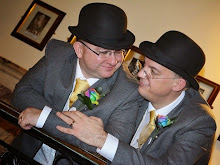
But we saw Skyfall on opening night, our anniversary, and were the only people in the cinema who cheered when M’s car appeared – just for us.
One week earlier, Richard had picked up Redvers, his new racing green Jaguar XF.
My favourite.
Day 13 – Favourite Q-Branch Gadget
Fake third* nipple.
*Technically it could take you up to whichever number is individually appropriate, but numbered as issued because Q is very serious about these things being properly catalogued.
Day 14 – Favourite Pre-titles sequence
Goldfinger.
Shocking not to.
So many fantastic runners-up, though. Goldeneye, You Only Live Twice, Octopussy, The Spy Who Loved Me, Live and Let Die, the original headf— of From Russia With Love, The World Is Not Enough (despite warping our local geography)…
Day 15 – Favourite Opening Titles Sequence
How could it be anything but the ur-titles, Goldfinger…?
…But it isn’t.
Casino Royale’s title sequence blew me away.
It’s incredibly stylish and thrilling – Bond’s “007 status confirmed” still makes the hairs on my neck stand up.
Then Bond basically materialises as a Shayde!
Day 16 – Favourite Bond Theme
Goldfinger!
No bluff this time. As The Spy Who Loved Me Bond composer Marvin Hamlisch put it,
“If you’re dead, you wake up for that.”I love so many terrific Bond themes to bits, but I can’t pick a ‘runner-up’ when they’re all too far behind Dame Shirley to see in the DB5 rear view.
Day 17 – Favourite Piece of Soundtrack
Blunt Instrument (David Arnold, Casino Royale)
The films have many of my most-loved scores (not least a John Barry ‘What a magnificent vista’), but when 007’s arrival in Nassau accelerates from tense swagger to driving brass, it’s concentrated essence of Bond.
Day 19 – Favourite Action Sequence
Too many to consider, so closed my eyes, and:
The twins chase 009 (Octopussy)
Gripping tension, superb action, fabulous score. Like The Avengers doing John le Carré, but so Bond.
007 disarming the bomb later in the same film, too.

Day 19 – Favourite Piece of Set Design
The volcano! (KEN ADAM, You Only Live Twice)
Size isn’t everything. But…
Runners-up: Goldfinger’s viewing room and General Orlov’s Kremlin viewing table.
I love the subtext that even the cinema you’re in is more thrilling in Bond’s world!
Day 20 – Favourite Piece of Costume Design
Daniel Craig’s blue trunks (Casino Royale)
The easy choice, because there are too many fabulously villainous Nehru jackets in too many films to sort through and pick just one of them. Unlike the trunks, I’d wear it, though.
Day 21 – Favourite Location
Isle of Dogs, London (The World Is Not Enough)
…Despite scrambling our neighbourhood, it’s ours.
Or, for perhaps most magnificent of all the John Barry ‘What a magnificent vistas’:
The Swiss Alps (On Her Majesty’s Secret Service)
Day 22 – Favourite Bond Kill
Baron Samedi (Live and Let Die)
Because he keeps coming back!
Runners-up Alec Trevelyan, for the ludicrous overkill, and Elliot Carver, partly for the quip but mainly for M’s smirk as she writes the cover story.
Day 23 – Favourite Bond Quip
“Just keeping the British end up, sir.”Connery positively mastered the “Shocking” death-quip, but Moore is more is most for the innuendo.
And the death-quip.
“Desolated, Mr Bond.”
“Heartbroken, Mr Drax.”
“Forgive me father, for I have sinned.”Makes me laugh most, but he loses that quip.
“That’s putting it mildly, 007…”
And this, obviously:
“No, Mr Bond! I expect you to die.”
“No more foreplay.”
“What makes you think this is my first time?”
“I think he’s attempting re-entry.”
“Just a slight stiffness coming on… in the shoulder.”
“—Bezants.”
Day 24 – Favourite Novel or Non-Fiction Book
Confession: I read them all in my teens, but recoiled from the second and stopped when I tried a re-read after Casino Royale in 2006. So I’m not sure which Ian Fleming novel I’d go for (just which I wouldn’t)…
Problematic as hell, too, but I loved the thrilling ride of John Gardner’s For Special Services. I should write about that one sometime.
Day 25 – Kindest Member(s) of the Fanbase That You Follow
You know his name: Dome, @MillenniumDome
Plus the lovely @BrandyBongos, and @The_Cybermatt for bringing this 25 to my attention.
Is it over already? That sped by!
#Bond25

This is the fifth of what might be a series of Fragments – not-quite-finished, not-quite-polished, from ideas I’ve written up over time and maybe I’ll share some of them anyway. If you’d like more, please let me know, and if you’d like to help, please ask me, ‘Have you at some point written something intriguing about Story / Series X, and could you find it, consider it and post it?’ You might suggest one that I can (TS;RM [Too Short; Read More]? Here). This one’s for Millennium.
Labels: Casino Royale, Daniel Craig, Fragments, Goldfinger, Honor Blackman, James Bond, Octopussy, Roger Moore, Sean Connery, You Only Live Twice


Tuesday, July 07, 2020
More! More! Moore! The Spy Who Loved Me – For Your Eyes Only OO7 Double Bill #Fragments
7/7/77 – who could resist launching a James Bond film on double double sevens? The Spy Who Loved Me opened 43 years ago tonight. Though it’s the first Bond I remember seeing advertised – kids at school had the car-submarine toy! – I was much too young to see it on the big screen. We finally did three years ago, in a UNICEF Benefit double bill with For Your Eyes Only (the first Bond I did see at the cinema) celebrating the life of Roger Moore. They made an unexpectedly successful pairing. When we got in from our night at the Greenwich Odeon, I typed up what I thought about each, and both, and the bits that each film might do better swapping between them…
Now, I know what you’re thinking: that’s a strange choice. Why not The Spy Who Loved Me and Moonraker? Because that would be like having a massive chocolate gateau followed by an even more massive chocolate gateau. No, scratch that – it is, apparently, World Chocolate Day and that’s making me hungry. I’ll start again. Because that would be like watching the same film You Only Live Twice in a row. Tonally, these do interestingly different things (though I reckon one’s more successful in what it sets out to do). Neither is my favourite Roger Moore Bond film, but they’re the massive success on its own terms, and the critical success that shows his range. And there’s something else: at our showing, the trailers before the double bill were all late middle-aged dreary, and we weren’t interested in any of them. Then, I remember… The very last one starts. Rey’s hand on a rock. John Williams’ music. Into my head comes the thought, ‘Every member of the audience is sighing, “Finally!”’ just as I, too, breathe out with relief. And at that exact moment, Luke Skywalker says, “Breathe.” But the even better trailer came at the end of The Spy Who Loved Me: “James Bond Will Return in For Your Eyes Only”. And for that one night only, he did.
Spoilers follow.
To Begin With…
The Spy Who Loved Me stars Roger Moore as James Bond. Barbara Bach is the Bond woman, KGB Major Anya Amasova, Bond’s competitor and one of the few who’s a proper opposite number. Curd Jürgens is the megalomaniac villain, Karl Stromberg, lurking in his (usually) underwater base, Atlantis. And Richard Kiel is Jaws, the giant hench with the steel teeth. With bonus Lotus submersible car, previous James Bond (voice) George Baker and Doctor Who’s Space James Bond star Edward de Souza. Russian and British nuclear subs have vanished, swallowed by Stromberg’s supertanker with the even bigger jaws in a plan to start World War III… The poster’s justified in saying this is the big one – everything you expect from a Bond film and Moore, with a massive world-spanning plot, sets so huge they had to build the world’s biggest stage, and the biggest, most outrageous ski jump in cinema history, they threw everything into Bond to see if it could still be a blockbuster: they doubled the previous film’s box office.
For Your Eyes Only stars Roger Moore as James Bond. Carole Bouquet is the Bond woman, crossbow-wielding Melina Havelock out to avenge her murdered parents. But which gangster is the villain? Could it be, as first appears, cheery Columbo (Topol)? Or will it be, in a twist, Kristatos (Villainous Julian Glover)? It’s definitely not Ernst Stavro Blofeld, whatever the pre-titles sequence might suggest. With a more interesting role than usual for Walter Gotell’s KGB General Gogol and an early one for Charles Dance. On the surface it’s a Cold War plot chasing a sunken British nuclear submarine ATAC targeting device, but deeper down it’s about the local catspaws, the people who get caught in the crossfire and who’s out for revenge on who. This one gets the critical praise for being the sober, serious Bond film. In theory…

The Spy Who Loved Me
“Just keeping the British end up, sir.”The pre-credits adventure grabs your attention as we’re introduced to new Bond regular General Gogol, the KGB chief who brings charisma and ambiguity to the series as the Cold War comes back (though more often than not with Britain and the USSR in uneasy alliance). Points for the film’s first twist: Gogol calls in his top agent – not Michael Billington’s sexily hairy sub-Bond, who turns out merely to be Major Amasova’s lover. Add sexual innuendo (“something came up”), corniness (“But James, I need you!” “So does England”), a ski chase to great music and an incredible jump off a cliff with a Union Flag parachute, and the movie’s off to an unbeatable start even before the song cuts in.
When you think of James Bond, perhaps it’s the action, the quips, the women, the cars, the villains? For me – well, yes, it’s the villains – a major part what I think of any Bond film is in the music. Give me a bold belter of a theme song with an acid edge, then a brassy, gorgeous score that says ‘What a fantastic vista’, ideally by John Barry. But the music takes a definite swerve for both of these films. Now, you might think, ‘Hit song, but no John Barry, and that’s your problem’. Well… Not quite. The strange thing about The Spy Who Loved Me is that Carly Simon’s Nobody Does It Better is a massive hit, while Marvin Hamlisch is more disco than the strident, insistent traditional Bond score, but I prefer the score to the song. The pulsing disco of Bond ’77 races along with some serious energy, the eerie, bubbling approach to Atlantis is a great new direction, and this is a composer who gets it – as you might guess from the Bond music documentary in which he was the one who said of Goldfinger’s “Wah wahhh-wah!” opening, “If you’re dead, you wake up for that.” Whereas Nobody Does It Better is a statement of intent with great knowing confidence, but it doesn’t have the bite for me and only lets rip towards the end. The title sequence that goes with it is the first to feature Bond himself, again the statement of intent, though the Maurice Binder naked goose-stepping Russian ‘girlies’ and guns are even more sexist than it sounds.
Odd things I’d never noticed until seeing the film on the big screen: a young, slim Kevin R McNally rushing about on a sub; Stromberg’s underwater-and-sometimes-looming-over-the-water base Atlantis initially being a disappointment, as it should be city-sized but the bigger the picture, the smaller it seems when we first see it rising from the depths. But later, when we get snap-round camera moves and forced perspectives, I believed.
The movie’s other massive special effect – Jaws – is hugely effective. And pretty huge. And though inspired by the book that they weren’t allowed to use (and not allowed to use SPECTRE either, a film that’s so very definitely present but built on absences), he’s part of the pop-culture riffing that’s especially there for the first half (and the Bond film riffing for the whole thing). We see a shark – reference to hit movie Jaws – and a horrible kill. Then we get not the shark but the man named – Jaws. Then he goes up against the shark. And wins! This is Bond saying ‘We are the blockbusters.’ Though even this film’s box office success was nowhere near Jaws’, it’s got the same chutzpah as Nobody Does It Better: enormous confidence in itself after following fashion for two movies, yet never tipping into arrogance, and utterly winning. While after Christopher Lee last time, here we’re really doing a vampire bite. And a massive figure, haunting the pyramids in a big horror movie sequence. He’s Jaws-Frankenstein-Mummy-Dracula!
Disconcertingly, one of the attractions has a voiceover from Charles Gray, as if the film’s haunted by the spectre of SPECTRE – exorcised from it by legal action. “I’m not interested in extortion”; context makes Stromberg’s line funnier. On top of being You Only Live Twice and its threat to the whole world (though closer in plan to Doctor Who’s Warriors of the Deep – which must have been thinking of this, later), I’m getting Goldfinger, too, in the Bond’s Greatest Hits: the amusing car, the obscenely wealthy villain, the memorable hench, the woman who’s impressive in her own right… It really does succeed in what it aims to do, doesn’t it? Because after Goldfinger, this pretty much is the car, the hench and at least one of the best roles for a woman, though not one of the most charismatic actors (Caroline Munro steals it by still flirting as she tries to gun Bond down from a helicopter, and he gives her the feminist compliment of actually killing her as he would any other hench). And a lot of films have tried.
The plot has a deliberate feel of the Sean Connery movies, and firmly underlines Moore as the same Commander Bond after Live and Let Die in particular introduced a different man. For all that, this is also the definitive tongue-in-cheek Roger Moore. It couldn’t be anyone else. It’s all done with great verve, with amazingly huge sets from genius designer Ken Adam, a villain with glowering presence who wants to destroy humanity for nihilism (rather than the ’60s exploiting the Cold War for profit), and while it’s not the most creative Bond, much of it’s great fun, much of it’s a bit crass, and it is indeed “Bond – and Beyond!” I enjoyed it immensely, and though my head says to give it 007 out of 10, the whole experience swept me up to an 8.

For Your Eyes Only
“Bless me, father, for I have sinned.”This was the first Bond film my parents let me see at the cinema, and I have to separate a lot of baggage from it. The longest-carried is that I had dearly wanted to see Moonraker, for lasers! But was judged too young (though we’d been allowed to watch Bond films on TV). Four decades later, I probably prefer this to Moonraker, but when I was nine the lack of lasers was a cruel disappointment. But that’s only the start. What I expected, what it isn’t, what it does with the lead villain, and right from the beginning, the pre-titles sequence and, oh, dear, the music…
“That’s putting it mildly, 007.”
Where The Spy Who Loved Me wanted to be a big hit and aimed – and squarely hit – You Only Live Twice with a splash of Goldfinger, For Your Eyes Only always feels to me like it really wants to be the taut Cold-War-to-one-side-seen-through-third-country-rivals thriller From Russia With Love, but without the thrasos, as Columbo would say, while it somehow can’t stop casting its eyes to On Her Majesty’s Secret Service. The pre-titles sums this up and sums up the film’s tonal dissonance. Roger Moore is terrific throughout the movie, less commanding than in his imperial The Spy Who Loved Me but stretched beyond the innuendo and charm to disturbingly psychopathic flashes of chilling coldness and, opening, quietly underplayed grief. He visits Tracy Bond’s grave in one of the most solemnly introspective moments in all of Bond, then is kidnapped by a remote-controlled helicopter which he in turn hijacks in order to drop contractually not-Blofeld, babbling about delicatessens, down a factory chimney. Even when I was nine and tonal dissonance was not the foremost term in my critical vocabulary, that felt like whiplash. Reading the endless backstory of court cases, it feels like a massive ‘Up yours’. Quite literally. Someone’s suing you to make a rival Bond film with Blofeld and defector-Connery? Erase Connery’s last movie and go back to the Telly Savalas incarnation (ish) so they can chuck him in the bin after, and there is no subtle way to put this, using the landing prop of the helicopter to f—k him in the arse first. This does not set the tone most of the film is aiming for.
If you’re having a really frustrating time in court, wouldn’t therapy be cheaper?
Sheena Easton’s For Your Eyes Only was another big hit song, and though it’s terribly unfair, again it’s one that I only quite like, and this time with the double let-down of not just what it is but what it isn’t: it isn’t Blondie. It’s not bad, and it opens with a certain mysterious longing tone, but it’s a little bland and sugary next to the best Bond themes. Bill Conti first approached Blondie, who turned them down when it turned out he only wanted Deborah Harry, not the musicians, and she wasn’t going to be allowed to write the song, just pout for him. Worse news for Sheena Easton: Blondie wrote and recorded their own song on their album The Hunter, and the film’s theme is no match for the punchy challenge sung from a female Bond counterpart with, in Debbie Harry, the most icy-cool voice in pop. But that’s only the second most famous factoid about the title song. The most famous is that, for the first time, the singer appeared in the main titles, Maurice Binder having taken a fancy to Sheena Easton. But, as her lips were to be in a fifty-foot close-up on cinema screens, the famous tacky titles obsessive made one small demand. She could only do it if he could fix her entire head in giant clamps to stop her moving a millimetre. And she did! She looks terrific in the clamps, but I’m afraid I still find myself thinking ‘But she hasn’t got Deborah Harry’s cheekbones. Or voice. Or song.’
Does the rest of Bill Conti’s score make up for losing Blondie? It does not. Far, far too many early ’80s porno funk guitars (though the Bond Theme survives one arrangement here, another makes even that cheesily near-unlistenable) and piping little ‘pah pahs’ instead of proper brass. Of all of the films, the music for this one has dated horribly. Close your eyes and just listen to the score, and you imagine people dancing on ice in neon-toned legwarmers. Open them, and discover to your horror that it’s not far from the truth. All right, there are some swirling strings when Melina shoots someone with her crossbow and more nice strings with a sinister bubbling fade after the ‘Countess’ dies. But, on the whole, I’d’ve preferred the film entirely re-scored by John Barry, and I’d love to have heard what he might have added to the Blondie song, too. Of all my For Your Eyes Only baggage, the heaviest may be that, while the music boosts several of the weaker Bonds, it drags this one down.
That’s a shame, as much of this is rather good in a low-key way, but even the subdued elements aren’t always well-judged. There’s a feint between two potential villains that partially works, but Topol’s exuberant character comes over rather more strongly than the usually magnificent but necessarily underplayed Julian Glover. Famously, Julian Glover was cast as the villain after producer Cubby Broccoli saw him as Count Scarlioni in Doctor Who – City of Death. That is a fantastic performance. Urbane (“My dear, it was not necessary to enter my house by – well, you can hardly call it stealth – you had only to knock on the door”), deadly on an extinction-level scale, gorgeously dressed with a splash of green. if ever there were an audition for the perfect Bond villain, that was it. Julian Glover might just be my favourite actor. He’s one of very few for whom, on meeting him at a convention, my mask of confidence collapsed into an incoherent babble of it’s Julian Glover!! Doctor Who, Star Wars, Blake’s 7, Quatermass, Indiana Jones, Game of Thrones, four-times-over guest star Villainous Julian Glover in The Avengers – an extraordinary career of all your favourite things. I should be so pleased to see him in this as Kristatos. And I am. Ish. I’m ashamed to say it, but he is a brilliant actor giving a mostly subtle, double-edged performance that isn’t called on to give the rip-roaring, showboating, flamboyant, let’s face it, what I miss is massive ham villain that would probably have been much less interesting to play but, I confess, this feels a bit of a waste. It’s like a reverse Diamonds Are Forever: where Charles Gray gave his usual villain performance, which is an ideal Bond villain but not remotely Blofeld, Glover is given a subdued character part with an accent so, while naturally superb here because he’s a brilliant actor with range, if anyone had charismatic posh perfect ur-Bond villain potential, it was Villainous Julian Glover. Yes, I know: now I’m criticising this film for not being crass enough. I can do tonal dissonance too.
Even the villainous twist they go with lacks oomph. While Julian Glover’s been understated as the fake Bond ally setting up Topol as the bad gangster who Bond must eliminate, there’s not quite been anything bar a bit of music on the beach to suggest wrongness in that, and then – Topol just spills the whole truth, and after a moment of doubt, he shows thrasos and Bond believes him, so rushes in shooting on his behalf. Well, I can believe Bond taking a leap of faith after sizing a man up, but it kills the spy thriller ambiguity stone dead. It’s never ambiguity – just a switch from one state to another. So Kristatos gets one scene where he gets to laugh like a Bond villain, the keelhauling, which is fine, but that’s next to nothing. I enjoy his slipping around the blond idiot hench to grab the goods and make his exit at the end, but that’s a bit of business, not a proper climax. I want the two old smuggler rivals fighting – there’s only a smidgeon of that, and not much drama. I suppose they don’t want to take the attention from Bond, but it means the thing lacks a heart save Melina, and she’s not driven it as much as those two.
The two best lines are both Bond found with priests: the opening, sober, “Some sort of emergency” / “It usually is” followed by the eerie blessing at the graveside and then, as established, ‘with hilarious results’, and the not at all sober but very entertaining reversal of “Bless me, father…” later. As if seeking absolution for the opening chimney dropping on Tracy’s headstone, traces of On Her Majesty’s Secret Service keep glimmering. The exciting ski-and-bobsled-and-extra-bike-chase is more original and more in your face than I’d remembered (marred by truly ghastly music), while Columbo comes across as another take on chummy gangster Draco (and to be fair, Topol is way better in the role), and there’s even a ‘down to earth’ version of the swanky Piz Gloria turned much less glam old abbey for the mountain climax. Bond’s climb is new to the series and very tense – even pulling himself up by his own bootstraps.
One effect of the largely subdued tone is that the film runs short on memorable set-pieces. The climb near the end is gripping, but at the beginning they throw away the terrific ‘hi-tech boat’ lost scene that’s more ‘real’ and even more tense than Spy’s, and the murder of the Havelocks, which they should have got over their urge to stick it to Kevin McClory’s lawsuit and positioned as the pre-credits sequence (it doesn’t help that the script jarringly makes James Villiers, probably the poshest actor in any Bond movie and a nob who’d know, call Sir Timothy “Sir Havelock”). I rather like the aftermath to their murder that sees Gonzales going into his own pool with a bolt in his back, then Loque not only taking the briefcase payment back, its owner no longer able to spend it, but that his henchman meanly snatches back the bundle of notes tossed to one of the women! Unfortunately, that’s followed by the exploding car. It was, I imagine, intended to be symbolic of not relying on gadgets. So it’s ironic that the ‘We’re realistic!’ statement is one of the silliest in all the movies: a car ‘security device’ that blows it up when anyone so much as touches it.
Daniel Craig is, like Timothy Dalton, often seen as a backlash against the ‘silly’ Bond before him (now I’ve got Graham Chapman in my head as M saying, “Stop that, it’s silly,” with Terry Jones as Moneypenny. You couldn’t have John Cleese as Q, though. That would never work). Watching For Your Eyes Only, it’s clear that so is Roger Moore a backlash against the ‘excesses’ of Roger Moore: not only in his underplaying but that his use here of anything to hand to wallop people prefigures Craig’s Bond. The Bond women and his relationships with them are interestingly characterised this time, too: he turns down too-young Bibi; he’s got proper chemistry with Melina, as she genuinely laughs at one of his one-liners and there are a few ‘touristy’ scenes where, unusually, they seem to enjoy each other’s company; and the Countess, closer to his own age, is rather lovely, as both relax and let each other know they’re play-acting. Like – again – OHMSS, but played at high speed, they go from a brutal fight on a beach to tragedy, which in turn leads to Moore’s coldest yet most feeling kill, Loque’s “no head for heights”. Though the Countess’ death creates a jarring note with Topol’s Columbo, charming and scene-stealing as he is, because he’s so jolly that he doesn’t seem to give a toss about his lover. Merely one line where he’s marginally less expansive, quickly over.
Roger Moore is the best thing in this, and holds the film together even when he is unexpectedly being the serious, dangerous part and all around him panics at the thought of getting too heavy. That’s what I have to make of the way that For Your Eyes Only is a meditation on destructive vengeance that before saying “First dig two graves” opens on Tracy’s grave just to set up the Blofeld-McClory revenge gag, or that despite Bond’s impressively ruthless moments and the thoughtful spy thriller elements, it’s hamstrung by a lack of verve and of nerve, edging away from its darker places with crudely ill-judged mickey-taking instead. The exploding car might just be a statement that went wrong, but the film closes on more panicky slapstick that simply undermines the mood. Geoffrey Keen’s grumbling minister gets on my wick in each of his Bond films, but especially this one, where he appears to have defected to Mrs Thatcher’s government. Yes, Mrs Thatcher. The film’s last scene features a parrot saying rude things to a Margaret Thatcher impersonator, and it’s shoddy beyond belief. Finishing on an innuendo makes me smile, but somehow that ending has always put me off the film.
The James Bond Double Bill
Watched in one night as a follow-up to The Spy Who Loved Me, I don’t think I’d ever appreciated For Your Eyes Only more. The two films have a lot in common, but a very different feel, so they made remarkably good companions. Though, first, an aside on the bearers of the bad news: I love Graham Crowden. Another of my favourite ever actors, amazingly tall, especially on a cinema screen, and his gravitas on “Not deep enough, I’m afraid” is so perfect on so very little (no, it’s not a critique of what the film is attempting). But just this once, in the second underwater Bond of the evening, I look to Noel Johnson next to him and my Doctor Who brain exclaims, ‘F—k me! It’s the King of Atlantis!’ [Graham Crowden starred in a differently fabulous Doctor Who take on Greek Myths.]
I’m sure the double bill was chosen for how well both films showcase Roger Moore, but they do have themes that interestingly intertwine. Ski chases to pepper largely secrets underwater affairs and a McGuffin machine that compromises nuclear subs? Check! But it’s that McGuffin that compromises nuclear subs in both films which is the crucial element for me. For Your Eyes Only’s best bit of music comes approaching the St George wreck underwater. But here’s where we get one of the biggest plot holes, too. Kristatos has more resources and has had more time. Why hasn’t he got to the wreck already? There’s a line afterwards about Bond saving them the trouble of disarming it, but it seems like that was handy, not a plan, and a hell of a risk. Because why didn’t Bond destroy the ATAC underwater? There’s no reason at all in the plot. And that would have been that. Between us, walking home after the cinema, Richard and I came up with a simple fix: the British government want the data from the spy-ship’s mission. That’s why it was there. So Bond has been ordered to destroy it only as a last resort. That would only take a line. Or here’s another: the diving-suited killer attacks. Bond and Melina use the self-destruct bomb to kill him (in a Battlefield moment, when the suit blows he visibly starts to say “Shit!”). Just switch that around very slightly: they’ve armed the self-destruct; he attacks; they’re about to die; the only weapon they have is the bomb, so they have to make the choice, tear it free and use it to save themselves, but now need to take the ATAC and find another way of destroying it properly.
Why Bond doesn’t destroy the ATAC earlier in the film is a problem for For Your Eyes Only in isolation. And yet watching the two films back-to-back, the two devices prompted inspiration. Each would be more effective with a little swapped between them. In The Spy Who Loved Me, it’s hugely important that there’s now a device that can track nuclear submarines, but only for the first half of the movie. Then everyone forgets about it. But it should still be a critical Cold War game-changer, and for all that Q is blasé about the theory, should have been definitely finished off with Stromberg. The McGuffin seems more ‘real’ in For Your Eyes Only: an updated Enigma machine, or – one of my From Russia With Love echoes – a reverse-Lektor that the Russians want to get their hands on to compromise the British this time. And yet… Despite this ‘realism’, and being carried all the way through to the end of the plot as Spy failed to, its role in the climax would have made more sense if this machine was instead the machine they had last time. Spy’s device was something new that neither had and could tilt the balance: Bond destroying it would absolutely make his “Détente” line true. Except it isn’t. In this film, it’s not an irreplaceable third-party development but a British device the Russians want. The British keeping it from the Russians is… Actually a British victory and the whole point of the entire movie. Though Moore’s defiant charisma and the ambiguous smile from General Gogol still makes the (anti-)climax rather interesting, that’s the actors, not the script.
I enjoyed For Your Eyes Only on the big screen far more in May 2017 than little me did in 1981. But I still can’t help wanting to fix it. The Spy Who Loved Me thrilled me by succeeding in exactly what it wanted to do, while the second film just doesn’t have the confidence to follow through on its own instincts. I would love this to be the movie it so nearly is and give it 007 out of 10, but I can only say 6.
James Bond Will Return In Octopussy
Just to be contrary, my favourite Roger Moore Bond film is the next along – Octopussy. The title song is adequate but bottles out of using the title-word (“All Time High” swapping one hostage-to-fortune title for another, I fear). With a competing ‘Bond film’ that year, though, John Barry is back to do the score, and it’s terrific. Particularly the forbidding strings for the sinister twin assassins near the Berlin Wall, the rousing mix of Bondian and exotic for the balloon-led attack near the end, and most strikingly the bomb, where a deep, sinister circling beat builds from deceptively soft to powerful strings – all the more effective for saying ‘something big is in reserve’ while Bond is trying to disarm a live nuke. The other main element I love it for is the villain, or rather the villains – three key antagonists, each memorable and with their own agendas, though loosely allied. Octopussy herself is one of the most intriguing and powerful Bond women (with, unsurprisingly, hints of Pussy Galore, greatest of them all), deposed prince Kamal Khan is urbane-but-deadly, looking for money, power and the main chance and tossing out bon mots (“You have a nasty habit of surviving”), yet it’s still stolen by Steven Berkoff’s scenery-chewing Cold War hawk General Orlov (when I’m rushing for a train that I’m just too late for, I always have him shouting, “I must get to that train!” in my head).
The most electrifying sequence does not involve any of the principal villains, but a pair of henches as the titles fade: it’s East Germany, and a clown – in truth, 009 – is running through the woods, only to run into knife-throwing twin assassins, to fantastic music. Mortally wounded, he staggers through the window of the British Ambassador, his outstretched hand (still with a balloon hovering above it) releasing a Fabergé Egg that rolls towards His horrified Excellency. The scene always makes the hairs rise at the back of my neck, and it’s like an Avengers episode wandering into John le Carré. 007, too, will dress as a clown for one of the most tense, gripping pieces of acting Moore ever does. This is not a critically acclaimed film, but like the circus that provides much of the backdrop, if you don’t like one act, another will be along in a minute to make you wide-eyed, and it never fails to entertain me.
This is the fourth of what might be a series of Fragments – not-quite-finished, not-quite-polished, from ideas I’ve written up over time and maybe I’ll share some of them anyway. If you’d like more, please let me know, and if you’d like to help, please ask me, ‘Have you at some point written something intriguing about Story / Series X, and could you find it, consider it and post it?’ You might suggest one that I can (TS;RM [Too Short; Read More]? Here). This one’s for Millennium.
Labels: Blondie, Debbie Harry, Film, For Your Eyes Only, Fragments, James Bond, Julian Glover, Music, Roger Moore, Star Wars, The Spy Who Loved Me
Wednesday, August 24, 2011
Rogue Male and Michael Jayston
Radio 4 Extra is now rebroadcasting Michael Jayston’s superb reading of Geoffrey Household’s pre-World War II thriller Rogue Male (playing every weekday in half-hour slots, each episode four times daily and on iPlayer, so it’s easy to catch). The anti-hero spends the book on the run from sinister agents of a great power, each examining the moral questions of the ‘sporting’ event that opens the story… Stripped of all ambiguity, you might call the inciting incident ‘Let’s Kill Hitler’. Michael Jayston’s acting career includes, of course, Doctor Who’s Valeyard – there are spoilers, if you don’t know who he is…
Geoffrey Household’s original book was written in 1939, on the eve of the Second World War, and neither the British antihero nor the European dictator he takes a fancy to stalking like big game are named; the only significant character with a name is Major Quive-Smith, and while that’s certainly a name, it’s certainly not his. Michael Jayston’s unabridged reading was made for BBC7 (as was) in 2004, and was instantly so acclaimed that it’s been a feature of the station’s programming every year or two since (I praised it last four years ago).
Rogue Male is a compelling thriller, its first-person narrative ideal for a talking book, but it’s Mr Jayston that makes it. I’ve always thought he was a terrific actor, and his reading is brilliantly sardonic – the perfect note for a central character’s voice that we can’t hate, or the story wouldn’t work, but that it’s impossible to like. He’s been perfectly cast as both heroes and villains; this anti-hero’s pretty much dead-centre in between. One of his most memorable roles for me was A Bit of A Do’s Neville Badger, almost the archetypal Mr Nice Guy; the Rogue Male is about as far from a nice guy as you can get, and yet his pursuers are very much nastier. In reading the character as slightly distanced from the action, he almost seems to be taking you into his confidence, and succeeds in getting you on his side – no mean feat for a “gentleman” both of and very much outside the establishment who’s best-known as a big game hunter, and whose ambition for the ultimate game seems to have precipitated a reversal in which the hunter becomes the hunted. Though, of course, it may not be as straightforward as that…
I still hold with what I said in 2007, that I generally prefer my old-fashioned heroic adventures more tongue-in-cheek than this gritty ‘test of manhood’, and yet the way the story turns from rugged pursuit to philosophical introspection to near-feral survival instinct – and above all the layers of moral question and the layers the central character does or doesn’t reveal about himself – utterly draw me in. Decades ahead of its time, there are points when it anticipates The Day of the Jackal, with just as much tension but in many more shades of grey. So give it a go.
Incidentally, if you happen to know what the keening, mournful music is that sets the scene for each episode, could you let me know?
Due to multitudes of ill health that it’s far too tedious to go into here, last weekend was the first time I managed to get to a Doctor Who convention for a full year. Two of them, in fact, and knackeringly (by the very reasonable Fantom Films people). The reason I swerve into this is that the biggest draw for me was special guest Michael Jayston, the weekend’s main Doctor. I jabbered excitedly about several of his roles as I got him to sign a bundle of DVD inserts, and regretted that there’s no CD of Rogue Male I could bring along to add to the pile. “Well, they’re always repeating it,” he suggested, with just a touch less enthusiasm than I might have expected, before moving on to ask if I’d heard the sequel, Rogue Justice; “I don’t think it’s nearly as good,” he commented. A bit of a relief, as I’m wary of telling people at signings which bits of their work aren’t so great, and though his performance was nearly as good when BBC7 got him in to record Rogue Justice in 2009, the novel really isn’t. A sequel written more than forty years later, abandoning the tension and claustrophobia of the original to leapfrog across different countries and this time blatantly pitting the main character against the Nazis, I told him I agreed: “It doesn’t have anything like the same intensity or ambiguity.” He nodded at that. But why the lack of enthusiasm for the original reading, when everyone I’ve talked to or read about it had loved it too?
Up on stage after he’d finished signing autographs, I had my answer. In a wide-ranging interview that only started at Doctor Who, Mr Jayston caught my eye in the audience and raised Rogue Male. At the time, he’d just spent two or three months doing audiobooks and was, as he said, “match fit”; they booked him for six days to record Rogue Male, and he did it in three, flying through that sort of work after a couple of months’ limbering up. So when it began broadcasting and friends in the business – directors, other actors – starting ringing him up to say how brilliant it was, he thought they were taking the piss. To him, it was just a job he’d galloped through with ease in three days, but because people rate it so highly and it’s frequently repeated, he feels mildly embarrassed at the attention it gets. The same is true of his Only Fools and Horses, again only a few days’ work, and the one drunks always recognise him for – he’ll go through most of his career, than say “I was the one who found the watch” last, and it’s always that.
Michael Jayston was the first actor to play James Bond on the radio in Britain, and (along with Patrick Mower and Anthony Hopkins) nearly got the big job in the ’70s; he’s the only actor to be both a partly apocryphal James Bond and a partly apocryphal Doctor. In 1986’s Doctor Who – The Trial of a Time Lord, he was the Valeyard, prosecuting counsel in the Doctor’s trial, and a title that’s said to mean ‘Doctor of Law’. In fact, it’s a wholly made-up word with a bogus definition as a hint: he’s really the Doctor’s future self, and has it in for himself in a big way, at least according to the orthodox interpretation – Millennium’s made a convincing case that he’s really the goodie. And asked if he’d like to return as the Valeyard – or simply Doctor – Mr Jayston was quite certain: yes.
And did you know that he’s been a friend of Tom Baker’s since 1969, often exchanging unprintable emails with him and describing Tom as “as mad as ever”? Though it wasn’t Mr Jayston (Tsar Nicholas) who got Tom his major role in 1971’s film of Nicholas and Alexandra: Peter O’Toole (ironically also the lead in the film version of Rogue Male that no-one’s ever seen) was cast as Rasputin, but it took a while for them to put the film together – so his contract ran out and he put up two fingers to the producer. Laurence Olivier suggested out of work actor Tom Baker, because he was very talented. And they could get him for a pittance, which they did.
Meanwhile, as I type, I’m half-watching and laughing at another episode of mostly fabulous sketch show Sorry, I’ve Got No Head on BBC1. Now in its third season, if you’ve ignored it because it debuted on CBBC or because it goes out on weekday afternoons, don’t; like every sketch show, some bits are better than others, but the better bits are great. If you’ve seen it this before, there are twists in how the complete git parents have developed, or Marcus Brigstocke’s overgrown French exchange student who’s been there twenty years; David Armand’s Witchfinder General still has anyone who winds him up even slightly, usually in a queue, carried off as a witch (a curious mixture of evil witch-hunt and, er, consumer champion); and while I don’t think much of the new ‘mousetrap’ sketches, Mel Giedroyc looking for her big dog makes me laugh (and beat Wilfred to it), you can’t fail to be moved by a deadly serious study of the misery of addiction (involving a clown’s reaction to custard pies), and they’ve dropped the tedious computer game characters. The snowman’s still a frighteningly Daily Mail sort of sketch, though. If you’ve got something against kids’ shows, bear in mind that the cast’s pretty much the same as for, say, The Armstrong and Miller Show and That Mitchell and Webb Look, and some of James Bachman’s characters tend to bleed into Harry Biscuit, which is a bonus (cakes. Why did it have to be cakes?).
As far as I’m concerned, though, nothing can beat the increasingly postmodern and multi-layered (and that’s just their blouses) Jasmine and Prudith. Look, if you can’t work your home recording device of choice (maybe my bees can help?), it’s on iPlayer, too, and that costs nothing more than your internet connection.
Oh, here we go. Money. Filthy lucre. Nothing’s free these days! Internet connections – with the telephone wires on top, and fibre-optics paid by the strand. The sound doesn’t come cheap, either. Extra for each pixel, too, I shouldn’t wonder. And a special supplement on the TV licence for using your is when you play them. When all’s said and done, I shouldn’t think you’d get much change out of a thousand pounds!
What?
Oh, I should say about a thousand pounds. It’s what these things cost these days.
No, no, it doesn’t cost –
A thousand pounds! It’s too much, a thousand pounds!
Geoffrey Household’s original book was written in 1939, on the eve of the Second World War, and neither the British antihero nor the European dictator he takes a fancy to stalking like big game are named; the only significant character with a name is Major Quive-Smith, and while that’s certainly a name, it’s certainly not his. Michael Jayston’s unabridged reading was made for BBC7 (as was) in 2004, and was instantly so acclaimed that it’s been a feature of the station’s programming every year or two since (I praised it last four years ago).
Rogue Male is a compelling thriller, its first-person narrative ideal for a talking book, but it’s Mr Jayston that makes it. I’ve always thought he was a terrific actor, and his reading is brilliantly sardonic – the perfect note for a central character’s voice that we can’t hate, or the story wouldn’t work, but that it’s impossible to like. He’s been perfectly cast as both heroes and villains; this anti-hero’s pretty much dead-centre in between. One of his most memorable roles for me was A Bit of A Do’s Neville Badger, almost the archetypal Mr Nice Guy; the Rogue Male is about as far from a nice guy as you can get, and yet his pursuers are very much nastier. In reading the character as slightly distanced from the action, he almost seems to be taking you into his confidence, and succeeds in getting you on his side – no mean feat for a “gentleman” both of and very much outside the establishment who’s best-known as a big game hunter, and whose ambition for the ultimate game seems to have precipitated a reversal in which the hunter becomes the hunted. Though, of course, it may not be as straightforward as that…
I still hold with what I said in 2007, that I generally prefer my old-fashioned heroic adventures more tongue-in-cheek than this gritty ‘test of manhood’, and yet the way the story turns from rugged pursuit to philosophical introspection to near-feral survival instinct – and above all the layers of moral question and the layers the central character does or doesn’t reveal about himself – utterly draw me in. Decades ahead of its time, there are points when it anticipates The Day of the Jackal, with just as much tension but in many more shades of grey. So give it a go.
Incidentally, if you happen to know what the keening, mournful music is that sets the scene for each episode, could you let me know?
Michael Jayston and Rogue Male
Due to multitudes of ill health that it’s far too tedious to go into here, last weekend was the first time I managed to get to a Doctor Who convention for a full year. Two of them, in fact, and knackeringly (by the very reasonable Fantom Films people). The reason I swerve into this is that the biggest draw for me was special guest Michael Jayston, the weekend’s main Doctor. I jabbered excitedly about several of his roles as I got him to sign a bundle of DVD inserts, and regretted that there’s no CD of Rogue Male I could bring along to add to the pile. “Well, they’re always repeating it,” he suggested, with just a touch less enthusiasm than I might have expected, before moving on to ask if I’d heard the sequel, Rogue Justice; “I don’t think it’s nearly as good,” he commented. A bit of a relief, as I’m wary of telling people at signings which bits of their work aren’t so great, and though his performance was nearly as good when BBC7 got him in to record Rogue Justice in 2009, the novel really isn’t. A sequel written more than forty years later, abandoning the tension and claustrophobia of the original to leapfrog across different countries and this time blatantly pitting the main character against the Nazis, I told him I agreed: “It doesn’t have anything like the same intensity or ambiguity.” He nodded at that. But why the lack of enthusiasm for the original reading, when everyone I’ve talked to or read about it had loved it too?
Up on stage after he’d finished signing autographs, I had my answer. In a wide-ranging interview that only started at Doctor Who, Mr Jayston caught my eye in the audience and raised Rogue Male. At the time, he’d just spent two or three months doing audiobooks and was, as he said, “match fit”; they booked him for six days to record Rogue Male, and he did it in three, flying through that sort of work after a couple of months’ limbering up. So when it began broadcasting and friends in the business – directors, other actors – starting ringing him up to say how brilliant it was, he thought they were taking the piss. To him, it was just a job he’d galloped through with ease in three days, but because people rate it so highly and it’s frequently repeated, he feels mildly embarrassed at the attention it gets. The same is true of his Only Fools and Horses, again only a few days’ work, and the one drunks always recognise him for – he’ll go through most of his career, than say “I was the one who found the watch” last, and it’s always that.
Doctor Who and The Valeyard
Michael Jayston was the first actor to play James Bond on the radio in Britain, and (along with Patrick Mower and Anthony Hopkins) nearly got the big job in the ’70s; he’s the only actor to be both a partly apocryphal James Bond and a partly apocryphal Doctor. In 1986’s Doctor Who – The Trial of a Time Lord, he was the Valeyard, prosecuting counsel in the Doctor’s trial, and a title that’s said to mean ‘Doctor of Law’. In fact, it’s a wholly made-up word with a bogus definition as a hint: he’s really the Doctor’s future self, and has it in for himself in a big way, at least according to the orthodox interpretation – Millennium’s made a convincing case that he’s really the goodie. And asked if he’d like to return as the Valeyard – or simply Doctor – Mr Jayston was quite certain: yes.
“There’s no doubt about it – I am one of the Doctors.”That was when he played a figure not entirely unlike the Doctor or John Steed in UneXpected, one of the stranger episodes of Steven Moffat’s first TV series, Press Gang – and viewers of The Trial of a Time Lord might find the Doctor’s evil other self or a story inspired by A Christmas Carol not entirely un-Moffated in Amy’s Choice or, indeed, A Christmas Carol. But let’s hope he comes round to re-using Michael Jayston, too. I have to admit, seeing the Valeyard himself act out the final scene of Terror of the Vervoids live on stage on Sunday was a particular highlight…
“I keep sending messages to Steven Moffat… He was a very young writer when I worked for him and I thought, he’s good, he’s going places.”
And did you know that he’s been a friend of Tom Baker’s since 1969, often exchanging unprintable emails with him and describing Tom as “as mad as ever”? Though it wasn’t Mr Jayston (Tsar Nicholas) who got Tom his major role in 1971’s film of Nicholas and Alexandra: Peter O’Toole (ironically also the lead in the film version of Rogue Male that no-one’s ever seen) was cast as Rasputin, but it took a while for them to put the film together – so his contract ran out and he put up two fingers to the producer. Laurence Olivier suggested out of work actor Tom Baker, because he was very talented. And they could get him for a pittance, which they did.
“‘He’s working on a building site,’ said Sir Larry. ‘I admire his dedication – it’s marvellous for building up the muscle tone for parts.’ ‘Bugger muscle tone,’ said Tom. ‘I need the fucking money.’”
Sorry, I’ve Got No Head
Meanwhile, as I type, I’m half-watching and laughing at another episode of mostly fabulous sketch show Sorry, I’ve Got No Head on BBC1. Now in its third season, if you’ve ignored it because it debuted on CBBC or because it goes out on weekday afternoons, don’t; like every sketch show, some bits are better than others, but the better bits are great. If you’ve seen it this before, there are twists in how the complete git parents have developed, or Marcus Brigstocke’s overgrown French exchange student who’s been there twenty years; David Armand’s Witchfinder General still has anyone who winds him up even slightly, usually in a queue, carried off as a witch (a curious mixture of evil witch-hunt and, er, consumer champion); and while I don’t think much of the new ‘mousetrap’ sketches, Mel Giedroyc looking for her big dog makes me laugh (and beat Wilfred to it), you can’t fail to be moved by a deadly serious study of the misery of addiction (involving a clown’s reaction to custard pies), and they’ve dropped the tedious computer game characters. The snowman’s still a frighteningly Daily Mail sort of sketch, though. If you’ve got something against kids’ shows, bear in mind that the cast’s pretty much the same as for, say, The Armstrong and Miller Show and That Mitchell and Webb Look, and some of James Bachman’s characters tend to bleed into Harry Biscuit, which is a bonus (cakes. Why did it have to be cakes?).
As far as I’m concerned, though, nothing can beat the increasingly postmodern and multi-layered (and that’s just their blouses) Jasmine and Prudith. Look, if you can’t work your home recording device of choice (maybe my bees can help?), it’s on iPlayer, too, and that costs nothing more than your internet connection.
Oh, here we go. Money. Filthy lucre. Nothing’s free these days! Internet connections – with the telephone wires on top, and fibre-optics paid by the strand. The sound doesn’t come cheap, either. Extra for each pixel, too, I shouldn’t wonder. And a special supplement on the TV licence for using your is when you play them. When all’s said and done, I shouldn’t think you’d get much change out of a thousand pounds!
What?
Oh, I should say about a thousand pounds. It’s what these things cost these days.
No, no, it doesn’t cost –
A thousand pounds! It’s too much, a thousand pounds!
Labels: Books, Colin Baker, Comedy, Doctor Who, Fandom, James Bond, Matt Smith, Michael Jayston, Radio, Reviews, Tom Baker
Friday, April 02, 2010
Flash! Douglas Adams Meets Professor Quatermass
It’s an exciting day for sci-fi; you know’ll that Doctor Who returns tomorrow evening, and that tonight the final series of Ashes To Ashes begins. But there are also several other goodies on today which have had less of an advertising blitz. The three closest to my heart are on Radio 4 at 11 this morning – The Doctor and Douglas, celebrating Douglas Adams’ work on Doctor Who – and then competing for your attention at 1.30am on BBC2 and ITV1, the movies The Quatermass Experiment (five years to the day since BBC4’s later remake) and the fabulous Flash Gordon.
Just as The Hitchhiker’s Guide To the Galaxy kicked off on radio in 1978, Douglas Adams finally had a Doctor Who script accepted for Tom Baker’s Doctor – The Pirate Planet, one of the finest stories in one of Doctor Who’s finest series, 1978-79’s The Key To Time. So impressive were his ideas, and so far undiscovered were Douglas’ unhappy relationships with deadlines, that he was offered the job of script editor on the show – a slightly less powerful and certainly less prestigious but in most ways identical job to the modern Russell T Davies and Steven Moffat ‘lead writer’ / Executive Producer. His year as script editor, Season 17, still splits Doctor Who fans to this day; cheap and silly, or witty and brilliant? It’s certainly cheap – late ’70s inflation had just inflicted the series’ biggest ever budget cuts – but I love it to bits (and I’m one of the very few fans who seems to love the 1980-81 right after Douglas left, in many ways a reaction against the season before, every bit as much. They tend to be a bit polarising).
When another of Doctor Who’s most wonderfully playful authors, David Fisher, wasn’t able to do the rewrites on one of his two scripts for Douglas’ time as script editor, Douglas and producer Graham Williams took over the redrafting, lending the resultant story a unique collaborative quality. Tom Baker and Lalla Ward are both effortlessly wonderful in it (or at least they seem to be; by all accounts they put the effort into rewriting large chunks of it in rehearsals, too), Julian Glover is a superb villain, the musical score is gorgeous, much of it is filmed in Paris – in Paris! – and it’s the only story of the year that looks like it’s had much money spent on it. Thanks to an ITV strike meaning it was on against nothing but BBC2 and the test card, it won the highest viewing figures in Doctor Who’s history. It’s called City of Death, and it’s still today one of the most highly-regarded of all Doctor Who stories (but can I be heretical and say that Douglas’ The Pirate Planet is even better?).
The Pirate Planet is available on DVD as part of the marvellous The Key To Time box set – recently reissued, so if you hadn’t got it already, you can now – and City of Death, too, is out on DVD (complete with opinion from Steven Moffat, who likes City of Death but thinks Douglas wasn’t a good script editor. In another strike of heresy, I disagree with the Grand Moff, but I don’t have time to go into why here, except to say, watch his stories and aren’t the scripts great?). Of the other stories Douglas script-edited, Destiny of the Daleks is already available on DVD, the extras including grand tales of Douglas’ drinking tours, while another was released just this very week in a box with two other stories. The latest Doctor Who DVD boxed set is titled Myths and Legends, and includes three stories which have in common that each was inspired by Greek myths and each isa bit rubbish not completely at the top end of my favourite Doctor Whos. It’s all a cunning plan to get you to watch them first, and so lower your impossibly high expectations of the new series, you see. The Horns of Nimon, however, is by far the most entertaining of the three for me, and while the budget may be showing and a few of the performances are a little de trop, it’s worth it for Lalla Ward’s blistering Romana, one of the few times the Doctor’s companion is essentially playing the Doctor (while he dosses about), and – as you might expect from rather good former script editor Anthony Read writing the script and Douglas Adams overseeing it – a strong underlying story and some very sharp lines.
Next month, The Creature From the Pit is to be released on DVD, possibly the most hated of all the stories Douglas had a hand in, regarded as terrible science fiction with an embarrassingly badly designed monster. While the eponymous ‘creature’ is indeed hilarious, he’s terribly well-characterised, while the Doctor, the principal villains and Geoffrey Bayldon’s supporting character are superb. It’s a terrific script from David Fisher, too, an intelligent fable about free trade – and you don’t get many of them to the pound – that deconstructs the ‘monster’ story. In short, buy it and make up your own mind, and I’m confident that you’ll find every other fan on Earth is wrong and I am right that is in fact brilliant. Yes, I’m coming out heretic all over today (and speaking of heretics, look out for one of Oolon Colluphid’s books turning up in one of Douglas’ stories, and find out for yourself how important Douglas turned out to be to Richard Dawkins). That just leaves the as-yet-unreleased Nightmare of Eden, which again doesn’t look terribly impressive but is rather a good story, and Shada.
Shada… Shada… Shada… That one went a bit wrong. Douglas’ six-part finale was only half-shot before a BBC strike called it off for ever. Ish. I have to say, it’s far from Douglas’ best script, but it has its moments, so there are two versions worth looking out for. BBC Video released the half of it that had been completed along with some linking narration from Tom Baker a couple of decades ago, and hopefully that, too, will one day emerge on DVD. Alternatively, the lovely people at Big Finish produced an audio adaptation a few years ago starring Paul McGann instead of Tom, and while it’s not nearly as much fun as the ‘original’, it’s not at all bad, and has the undeniable virtue of being finished. Best of all, you can watch their Shada for free on the BBC website, with some flash animation making it a jerky sort-of cartoon and a fabulous song from Lalla Vs Kylie (click “Full screen” if it doesn’t work immediately; if anyone can save it onto a DVD for me, I’d be terribly grateful)!
Douglas never novelised his Doctor Who scripts – in part because he was rather busy avoiding other publishers’ deadlines, in larger part because Target Books couldn’t quite come to terms with a multi-million-selling author’s advance – but, though you can’t technically read them, you can in some practical ways manage it. Douglas, an early practitioner of recycling, put large amounts of City of Death and much larger ones of Shada into some of his books, notably Dirk Gently, while a rejected Doctor Who script forms the basis of Life, the Universe and Everything (as I wrote yesterday). You can also read ebooks of his three Doctor Who stories and the only other two Twentieth-Century Who TV stories that were never released by Target, available as labours of love from New Zealand fan site TSV. They’re not a patch on Douglas’ writing, but some of them are by professional authors themselves, and they’re not bad (though steer clear of another fan adaptation of City of Death produced by Zerinza magazine; I read it once, and it was ghastly).
Anyway, 11 o’clock’s caught up with me, so turn on Radio 4 and you’ll hear Jon Culshaw probably going through all the same sort of things.
There’s newer Doctor Who on BBC3 tonight, of course – a double bill of David Tennant’s grand finale, The End of Time, to get us all ready for Matt Smith tomorrow – but if you want to go back to the week when David got the job, how about The Quatermass Experiment – and if you want to see Timothy Dalton being another aristocratic bastard, how about Flash Gordon…?
The first ever BBC TV science fiction – in fact, the BBC’s first ever specially commissioned original drama serial – was written by another of the Twentieth Century’s most inspired authors, Nigel Kneale, back in 1953. Like Shada, though for different reasons, you can only see parts of the original, and yet there are remakes of this, too. The original series in fact went out live, television being in its infancy, and they only recorded the first third of it as it was broadcast (you can still see that much on the terrific DVD The Quatermass Collection, along with a pdf of the script).
If you’ve seen The Quatermass Experiment today, the chances are it was one of the two remakes: one a movie made in the mid-’50s by Hammer Films; the other a live broadcast that took place on BBC4 on 2nd April 2005. That was just days after news broke that Christopher Eccleston was to leave Doctor Who almost as soon as he’d started, and rumours abounded that David was to get the job. So, when his Dr Briscoe walks on to tend to a patient with a strange, alien infection in BBC4’s The Quatermass Experiment, Jason Flemyng’s Professor Quatermass very deliberately greets him not with the scripted “Hello, Gordon,” but with “Hello, Doctor.”
By one of those lovely quirks of TV scheduling, Hammer’s The Quatermass Xperiment is on tonight at 1.35am on BBC2. You can celebrate today’s Quatermass anniversary by making a double bill of them to see how they compare: the 2005 version is available to watch for free on MSN.
I’ve written about all four of the Quatermass serials before, and while the existing Quatermass II and Quatermass and the Pit are still among some of the best TV ever produced, I can’t help wondering what the rest of The Quatermass Experiment would have been like: the first episode is rather staid; the second suddenly leaps forward in pace and quality; what might the other four have done? But, instead, there are two complete (though both hugely abridged from the original) versions to judge. The film is often well-shot and atmospheric; it’s a thriller with a superbly played hunted man. But the star casting of Quatermass himself is a terrible mistake (Nigel Kneale’s views about actor Brian Donlevy were, on a good day, only just printable), while too much of the script becomes generic B-movie – not least the ending, which while exciting, entirely misses the point. The BBC4 version, on the other hand, is occasionally a little slow and worthy and, being a live production, it’s a little too obvious that most of it’s taking place in the same warehouse. It does, however, have an excellent cast – Jason Flemyng, David Tennant and Indira Varma, as well as a notably fine performance from Mark Gatiss – and the last ten minutes or so are absolutely gripping, remaining entirely true to the human spirit of the original script.
One day, I might watch the surviving two episodes of the 1953 serial, then the middle of the Hammer movie, then the climax of the BBC4 remake and see if that adds up to the best approximation of the story as written…
Hmm, well, this hasn’t gone in a flash, has it? I was dashing to write a few paragraphs before 11, and now I’ve listened to that Douglas programme – listen again on the BBC iPlayer if you missed it – which was just as I thought it would be, with a particularly fine set of interviewees and several opinions I disagreed with, while this article has grown from something crawling along my arm to the size of Westminster Abbey (if not the Tate Modern). But there was one more thing I was going to talk about for tonight. ITV1 is showing the 1980 Flash Gordon movie at 1.30am. I love Buster Crabbe and Charles Middleton; I sigh with disdain at macho later remakes; but this brightly coloured camp extravaganza is one of the most entertaining films ever made.
Peter Wyngarde steals it from behind a mask as the evil Klytus; Max von Sydow has the time of his life as the louchest emperor in the galaxy; the gorgeous red and gold design and Queen and Howard Blake’s score makes it sumptuous sensory treat. There are some lines you must know from the Queen title song that you can’t resist saying along, I know – put your hands on your hips to do the fabulous Kala:
But best of all are three screen legends giving enormous and each differently entertaining performances: Topol’s Dr Zarkov, a performance more like Tom Baker’s Doctor than any other I can think of on the big screen; future Bond Timothy Dalton, who on being cast in the campest film of the year as a character in green tights, under the mistaken impression this would be something as gritty as the same director’s Get Carter, tries single-handedly to make the movie macho and serious, shouting random swear-words – in fact, all the film’s swear-words – such as “Freeeeeze! …You bloody bastards!” and as a result becomes more hilariously camp than the ones camping it up; and, of course, in the role he was born for, Brian Blessed. Oh, Brian Blessed. All together now:
Super fact: both Flash Gordon and The Horns of Nimon feature soon-to-be-Blue-Peter-presenters in scenes of deadly peril! Only one of them survives…
Oh, and tune in to BBC7 of an evening for more Doctor Who on the wireless, too. On Sunday at 6pm and 12am there’s the second part of former Doctor Who producer and writer Barry Letts’ memoir, Who and Me; on weeknights at 6.30pm and 12.30am Tom Baker reads Terrance Dicks’ novelisation of Tom’s first (and my first) story, Doctor Who and the Giant Robot.
Douglas Adams and Doctor Who
Just as The Hitchhiker’s Guide To the Galaxy kicked off on radio in 1978, Douglas Adams finally had a Doctor Who script accepted for Tom Baker’s Doctor – The Pirate Planet, one of the finest stories in one of Doctor Who’s finest series, 1978-79’s The Key To Time. So impressive were his ideas, and so far undiscovered were Douglas’ unhappy relationships with deadlines, that he was offered the job of script editor on the show – a slightly less powerful and certainly less prestigious but in most ways identical job to the modern Russell T Davies and Steven Moffat ‘lead writer’ / Executive Producer. His year as script editor, Season 17, still splits Doctor Who fans to this day; cheap and silly, or witty and brilliant? It’s certainly cheap – late ’70s inflation had just inflicted the series’ biggest ever budget cuts – but I love it to bits (and I’m one of the very few fans who seems to love the 1980-81 right after Douglas left, in many ways a reaction against the season before, every bit as much. They tend to be a bit polarising).
When another of Doctor Who’s most wonderfully playful authors, David Fisher, wasn’t able to do the rewrites on one of his two scripts for Douglas’ time as script editor, Douglas and producer Graham Williams took over the redrafting, lending the resultant story a unique collaborative quality. Tom Baker and Lalla Ward are both effortlessly wonderful in it (or at least they seem to be; by all accounts they put the effort into rewriting large chunks of it in rehearsals, too), Julian Glover is a superb villain, the musical score is gorgeous, much of it is filmed in Paris – in Paris! – and it’s the only story of the year that looks like it’s had much money spent on it. Thanks to an ITV strike meaning it was on against nothing but BBC2 and the test card, it won the highest viewing figures in Doctor Who’s history. It’s called City of Death, and it’s still today one of the most highly-regarded of all Doctor Who stories (but can I be heretical and say that Douglas’ The Pirate Planet is even better?).
The Pirate Planet is available on DVD as part of the marvellous The Key To Time box set – recently reissued, so if you hadn’t got it already, you can now – and City of Death, too, is out on DVD (complete with opinion from Steven Moffat, who likes City of Death but thinks Douglas wasn’t a good script editor. In another strike of heresy, I disagree with the Grand Moff, but I don’t have time to go into why here, except to say, watch his stories and aren’t the scripts great?). Of the other stories Douglas script-edited, Destiny of the Daleks is already available on DVD, the extras including grand tales of Douglas’ drinking tours, while another was released just this very week in a box with two other stories. The latest Doctor Who DVD boxed set is titled Myths and Legends, and includes three stories which have in common that each was inspired by Greek myths and each is
Next month, The Creature From the Pit is to be released on DVD, possibly the most hated of all the stories Douglas had a hand in, regarded as terrible science fiction with an embarrassingly badly designed monster. While the eponymous ‘creature’ is indeed hilarious, he’s terribly well-characterised, while the Doctor, the principal villains and Geoffrey Bayldon’s supporting character are superb. It’s a terrific script from David Fisher, too, an intelligent fable about free trade – and you don’t get many of them to the pound – that deconstructs the ‘monster’ story. In short, buy it and make up your own mind, and I’m confident that you’ll find every other fan on Earth is wrong and I am right that is in fact brilliant. Yes, I’m coming out heretic all over today (and speaking of heretics, look out for one of Oolon Colluphid’s books turning up in one of Douglas’ stories, and find out for yourself how important Douglas turned out to be to Richard Dawkins). That just leaves the as-yet-unreleased Nightmare of Eden, which again doesn’t look terribly impressive but is rather a good story, and Shada.
You Can Look at the Lost Bits For Free…
Shada… Shada… Shada… That one went a bit wrong. Douglas’ six-part finale was only half-shot before a BBC strike called it off for ever. Ish. I have to say, it’s far from Douglas’ best script, but it has its moments, so there are two versions worth looking out for. BBC Video released the half of it that had been completed along with some linking narration from Tom Baker a couple of decades ago, and hopefully that, too, will one day emerge on DVD. Alternatively, the lovely people at Big Finish produced an audio adaptation a few years ago starring Paul McGann instead of Tom, and while it’s not nearly as much fun as the ‘original’, it’s not at all bad, and has the undeniable virtue of being finished. Best of all, you can watch their Shada for free on the BBC website, with some flash animation making it a jerky sort-of cartoon and a fabulous song from Lalla Vs Kylie (click “Full screen” if it doesn’t work immediately; if anyone can save it onto a DVD for me, I’d be terribly grateful)!
Douglas never novelised his Doctor Who scripts – in part because he was rather busy avoiding other publishers’ deadlines, in larger part because Target Books couldn’t quite come to terms with a multi-million-selling author’s advance – but, though you can’t technically read them, you can in some practical ways manage it. Douglas, an early practitioner of recycling, put large amounts of City of Death and much larger ones of Shada into some of his books, notably Dirk Gently, while a rejected Doctor Who script forms the basis of Life, the Universe and Everything (as I wrote yesterday). You can also read ebooks of his three Doctor Who stories and the only other two Twentieth-Century Who TV stories that were never released by Target, available as labours of love from New Zealand fan site TSV. They’re not a patch on Douglas’ writing, but some of them are by professional authors themselves, and they’re not bad (though steer clear of another fan adaptation of City of Death produced by Zerinza magazine; I read it once, and it was ghastly).
Anyway, 11 o’clock’s caught up with me, so turn on Radio 4 and you’ll hear Jon Culshaw probably going through all the same sort of things.
There’s newer Doctor Who on BBC3 tonight, of course – a double bill of David Tennant’s grand finale, The End of Time, to get us all ready for Matt Smith tomorrow – but if you want to go back to the week when David got the job, how about The Quatermass Experiment – and if you want to see Timothy Dalton being another aristocratic bastard, how about Flash Gordon…?
The Quatermass Experiment
The first ever BBC TV science fiction – in fact, the BBC’s first ever specially commissioned original drama serial – was written by another of the Twentieth Century’s most inspired authors, Nigel Kneale, back in 1953. Like Shada, though for different reasons, you can only see parts of the original, and yet there are remakes of this, too. The original series in fact went out live, television being in its infancy, and they only recorded the first third of it as it was broadcast (you can still see that much on the terrific DVD The Quatermass Collection, along with a pdf of the script).
If you’ve seen The Quatermass Experiment today, the chances are it was one of the two remakes: one a movie made in the mid-’50s by Hammer Films; the other a live broadcast that took place on BBC4 on 2nd April 2005. That was just days after news broke that Christopher Eccleston was to leave Doctor Who almost as soon as he’d started, and rumours abounded that David was to get the job. So, when his Dr Briscoe walks on to tend to a patient with a strange, alien infection in BBC4’s The Quatermass Experiment, Jason Flemyng’s Professor Quatermass very deliberately greets him not with the scripted “Hello, Gordon,” but with “Hello, Doctor.”
By one of those lovely quirks of TV scheduling, Hammer’s The Quatermass Xperiment is on tonight at 1.35am on BBC2. You can celebrate today’s Quatermass anniversary by making a double bill of them to see how they compare: the 2005 version is available to watch for free on MSN.
I’ve written about all four of the Quatermass serials before, and while the existing Quatermass II and Quatermass and the Pit are still among some of the best TV ever produced, I can’t help wondering what the rest of The Quatermass Experiment would have been like: the first episode is rather staid; the second suddenly leaps forward in pace and quality; what might the other four have done? But, instead, there are two complete (though both hugely abridged from the original) versions to judge. The film is often well-shot and atmospheric; it’s a thriller with a superbly played hunted man. But the star casting of Quatermass himself is a terrible mistake (Nigel Kneale’s views about actor Brian Donlevy were, on a good day, only just printable), while too much of the script becomes generic B-movie – not least the ending, which while exciting, entirely misses the point. The BBC4 version, on the other hand, is occasionally a little slow and worthy and, being a live production, it’s a little too obvious that most of it’s taking place in the same warehouse. It does, however, have an excellent cast – Jason Flemyng, David Tennant and Indira Varma, as well as a notably fine performance from Mark Gatiss – and the last ten minutes or so are absolutely gripping, remaining entirely true to the human spirit of the original script.
One day, I might watch the surviving two episodes of the 1953 serial, then the middle of the Hammer movie, then the climax of the BBC4 remake and see if that adds up to the best approximation of the story as written…
Flash Gordon
Hmm, well, this hasn’t gone in a flash, has it? I was dashing to write a few paragraphs before 11, and now I’ve listened to that Douglas programme – listen again on the BBC iPlayer if you missed it – which was just as I thought it would be, with a particularly fine set of interviewees and several opinions I disagreed with, while this article has grown from something crawling along my arm to the size of Westminster Abbey (if not the Tate Modern). But there was one more thing I was going to talk about for tonight. ITV1 is showing the 1980 Flash Gordon movie at 1.30am. I love Buster Crabbe and Charles Middleton; I sigh with disdain at macho later remakes; but this brightly coloured camp extravaganza is one of the most entertaining films ever made.
Peter Wyngarde steals it from behind a mask as the evil Klytus; Max von Sydow has the time of his life as the louchest emperor in the galaxy; the gorgeous red and gold design and Queen and Howard Blake’s score makes it sumptuous sensory treat. There are some lines you must know from the Queen title song that you can’t resist saying along, I know – put your hands on your hips to do the fabulous Kala:
“What do you mean, Flash Gordon approaching?”And surely most people watching will fancy either Ornella Muti or Sam J Jones? Flash flashing those tiny leather shorts and that hairy chest. Mmmmm. Er… Where was I? While Star Wars was surely a better film, and a great modern legend, this film realised that it could do one thing better: never mind the purity of the Force, Flash Gordon positively drips with pervy sex, and yet never quite enough that could be complained about, so I could still be taken to the cinema to see it aged 8. Fabulous.
But best of all are three screen legends giving enormous and each differently entertaining performances: Topol’s Dr Zarkov, a performance more like Tom Baker’s Doctor than any other I can think of on the big screen; future Bond Timothy Dalton, who on being cast in the campest film of the year as a character in green tights, under the mistaken impression this would be something as gritty as the same director’s Get Carter, tries single-handedly to make the movie macho and serious, shouting random swear-words – in fact, all the film’s swear-words – such as “Freeeeeze! …You bloody bastards!” and as a result becomes more hilariously camp than the ones camping it up; and, of course, in the role he was born for, Brian Blessed. Oh, Brian Blessed. All together now:
“GORDON’S ALIVE?!?!”
Super fact: both Flash Gordon and The Horns of Nimon feature soon-to-be-Blue-Peter-presenters in scenes of deadly peril! Only one of them survives…
Doctor Who on BBC7
Oh, and tune in to BBC7 of an evening for more Doctor Who on the wireless, too. On Sunday at 6pm and 12am there’s the second part of former Doctor Who producer and writer Barry Letts’ memoir, Who and Me; on weeknights at 6.30pm and 12.30am Tom Baker reads Terrance Dicks’ novelisation of Tom’s first (and my first) story, Doctor Who and the Giant Robot.
Labels: Big Finish, Books, David Tennant, Doctor Who, Douglas Adams, James Bond, Julian Glover, Matt Smith, Quatermass, Radio, The Key To Time, Tom Baker
Saturday, October 25, 2008
Our Anniversary, US Elections Fun and the World’s Worst Anti-Drugs Campaign
It’s an exciting weekend, isn’t it? Go on, isn’t it? Not just because it’s only ten days to go until the US elections (of which more below); not just because it’s only six days to go until Quantum of Solace opens; not just because tomorrow’s the feast day of Saints Fulk and Quadragesimus… But because tomorrow is our fourteenth anniversary. Richard and I started our celebrations this morning by having an electrician round to replace our bathroom light fitting – ooh, the glamour – and tonight we’re off to see Rory Bremner and the Two Johns. What could be finer? Well, my toothache could go away, but… BBC7’s even scheduled some Doctor Who tomorrow that’s never before been broadcast, which may be in the style of Top Gear but is still quite funny – Graeme Garden guest-stars, and the villain’s exactly who you want it to be.

There’s been a fluorescent tube in our bathroom since long before it became our bathroom, and following its breaking down (after ringing one electrician who laughed and told us it was a deathtrap and what grade of completely different replacement fitting to get, but who after various fiascos never got back to us), we’d recommend Garry Vinning, who was a nice chap, on time, reasonable and admired our view. As a bonus, we survived a fortnight of a lamp on an extension cable and lots of trailing wires from the knackered old fitting without electrocution, though I now no longer have an excuse for shaving the right side of my face so badly.
We had a lovely visitor who didn’t handle our fittings earlier in the week, too – our friend Mr Quist came to stay the night, with much good conversation and exposing each other to things we don’t usually see. For him, for example, there was the extraordinary spectacle of Hugh Grant acting and some 1978 Doctor Who on the big telly; for us, he went on the Internet and showed us some pictures of Beavers. So a good time was had by all.
Did you hear The News Quiz earlier? It featured one of their greatest ever news story clippings. I missed which paper it had been sent in from, but I found it in the New York Times, and it’s superb. A school has just suspended the least plausible anti-drugs message since Ebeneezer Goode:
Or perhaps a pencil that says “Do Chocolate”. Preferably one with a filling. I’m easy. Hmm, wonder what could have happened to my teeth?
Let’s hope tonight’s Bremner, Bird and Fortune is as funny, and that we manage to get there. Not only do I have notorious problems leaving the flat, but we laughed this morning as we opened the front door for Mr Vinning and our ticket blew out of the window. Fortunately it was an e-ticket, and our cranky old printer was in a good enough mood to let us print another (so we’ll be setting up for Merlin, which really should have some other name as it bears no resemblance whatsoever to the best-known of British legends, but which must be single-handedly doing more for slash fiction than any other series I can think of)!
Every day, I mean to write something new about the US election. I’ve become addicted to parsing opinion polls, and to reading Daily Kos and The Daily Dish. But it all moves so quickly and, really, what can you say about Sarah Palin? Well, Betty White said it all, really; we’ve been missing her since she stopped being an occasional character in the fabulous Boston Legal. If I wrote a serious article right now, I’d probably just explode at the sheer loathsomeness of the Republicans’ new low in cynical race-baiting lies, so instead here are some things that have been cheering me up as the volume of messages increases from friends in the States typing with whitened knuckles as they hope another election won’t be stolen.
So, for your delight and delectation:
Just 006 Days ’Til Quantum of Solace (minor spoiler)…
We’re terribly excited, and our Elephant is quite beside himself. And after the last movie, we’ve got a pretty shrewd ghost of an idea what the villains behind the whole thing might involve. With it even being released on Halloween, you don’t have to look in the TAROT cards to anticipate some sort of Shade, or Phantom, or Ectoplasm, or Chimera, or Trace, or Revenant, or… or… (reaches for thesaurus) Eidolon… Hang on. I’ve just read what it says on the card. Quasi-Autonomous… That can’t be right, surely?
But to keep you from exploding with excitement, and to keep me from gritting my inflamed molars because the film opens the day after my birthday, you can listen to the proper title theme and watch a rather striking Bond-related musical interlude that, strangely, makes me look much more warmly on both a Bond theme and a decidedly non-Bond movie, neither of which were quite as good as I expected…

There’s been a fluorescent tube in our bathroom since long before it became our bathroom, and following its breaking down (after ringing one electrician who laughed and told us it was a deathtrap and what grade of completely different replacement fitting to get, but who after various fiascos never got back to us), we’d recommend Garry Vinning, who was a nice chap, on time, reasonable and admired our view. As a bonus, we survived a fortnight of a lamp on an extension cable and lots of trailing wires from the knackered old fitting without electrocution, though I now no longer have an excuse for shaving the right side of my face so badly.
We had a lovely visitor who didn’t handle our fittings earlier in the week, too – our friend Mr Quist came to stay the night, with much good conversation and exposing each other to things we don’t usually see. For him, for example, there was the extraordinary spectacle of Hugh Grant acting and some 1978 Doctor Who on the big telly; for us, he went on the Internet and showed us some pictures of Beavers. So a good time was had by all.
How Not To Do Not Doing Drugs
Did you hear The News Quiz earlier? It featured one of their greatest ever news story clippings. I missed which paper it had been sent in from, but I found it in the New York Times, and it’s superb. A school has just suspended the least plausible anti-drugs message since Ebeneezer Goode:
“A company has recalled a batch of pencils after a fourth-grade student pointed out an embarrassing message that appeared after he sharpened his pencil.I want one.
“The pencils carry the slogan ‘Too Cool to Do Drugs’. But the student noticed that when the pencils are sharpened and get shorter, the message becomes ‘Cool to Do Drugs’, then simply ‘Do Drugs’.”
Or perhaps a pencil that says “Do Chocolate”. Preferably one with a filling. I’m easy. Hmm, wonder what could have happened to my teeth?
Let’s hope tonight’s Bremner, Bird and Fortune is as funny, and that we manage to get there. Not only do I have notorious problems leaving the flat, but we laughed this morning as we opened the front door for Mr Vinning and our ticket blew out of the window. Fortunately it was an e-ticket, and our cranky old printer was in a good enough mood to let us print another (so we’ll be setting up for Merlin, which really should have some other name as it bears no resemblance whatsoever to the best-known of British legends, but which must be single-handedly doing more for slash fiction than any other series I can think of)!
Vote McCain / Palin? You Must Be On Drugs
Every day, I mean to write something new about the US election. I’ve become addicted to parsing opinion polls, and to reading Daily Kos and The Daily Dish. But it all moves so quickly and, really, what can you say about Sarah Palin? Well, Betty White said it all, really; we’ve been missing her since she stopped being an occasional character in the fabulous Boston Legal. If I wrote a serious article right now, I’d probably just explode at the sheer loathsomeness of the Republicans’ new low in cynical race-baiting lies, so instead here are some things that have been cheering me up as the volume of messages increases from friends in the States typing with whitened knuckles as they hope another election won’t be stolen.
So, for your delight and delectation:
- A cautionary tale for your parents (and, bonus, no pencils are involved)
- And simply the best summing-up of Senator McCain’s campaign of lies, venom and negativity you could hope to see.
Just 006 Days ’Til Quantum of Solace (minor spoiler)…
I Should Have Posted This Yesterday, Shouldn’t I?
We’re terribly excited, and our Elephant is quite beside himself. And after the last movie, we’ve got a pretty shrewd ghost of an idea what the villains behind the whole thing might involve. With it even being released on Halloween, you don’t have to look in the TAROT cards to anticipate some sort of Shade, or Phantom, or Ectoplasm, or Chimera, or Trace, or Revenant, or… or… (reaches for thesaurus) Eidolon… Hang on. I’ve just read what it says on the card. Quasi-Autonomous… That can’t be right, surely?
But to keep you from exploding with excitement, and to keep me from gritting my inflamed molars because the film opens the day after my birthday, you can listen to the proper title theme and watch a rather striking Bond-related musical interlude that, strangely, makes me look much more warmly on both a Bond theme and a decidedly non-Bond movie, neither of which were quite as good as I expected…
Labels: American Politics, Blogs, Drugs, James Bond, Personal, Richard, Top Tips
Wednesday, February 07, 2007
The Second 007 of ’007
It’s the 007th of the month again, and time for the next 007 James Bond films: this time, those of Roger Moore. In the last month Richard, Millennium and I have watched the DVD Special Editions of Dr. No and From Russia With Love… I’m relieved that I still agree with myself, and they look great, but the new Bond DVD menus aren’t a patch on the old ones. However, I’ve done no cheating; don’t worry, I still know nothing about music, so my reviews of the James Bond films and their songs will be just as ill-informed as before.
To remind you, as the James Bond series has an instantly recognisable musical style, I’m reviewing the music as much as the movies, with occasional glances at Channel 4’s recent countdown of the Bond songs, James Bond’s Greatest Hits, to see how much I think they got it wrong. Having done the first seven films last month, as far as Diamonds Are Forever, this time I’m looking at the middle seven of the fourteen ‘official’ movies so far, which happen to comprise all those featuring Roger Moore. The music takes a definite swerve here; the films have often got the same sort of panache, but instead of those strident, insistent John Barry scores, some of them are by other composers. Did they work? Well…
First, a little side-step. Who is the man in these movies anyway? Is he the same one as in (most of) the previous ones? Well, the first answer is ‘obviously not – he’s Roger Moore, and he looks quite different to Sean Connery. He also plays the role with a lightness of touch, an archness, that makes his character seem noticeably different’. The second answer is ‘obviously he is – he’s called James Bond, and he does pretty much the same thing for the same people. Suspend your disbelief a bit: it’s acting, so don’t expect him to be ‘real’, and don’t worry when they change the actor’. My answer is slightly different, and it’s something that Richard convinced me of years ago. The films make more sense – not ‘sense’, mind you, but more sense – if you assume that ‘James Bond’ is an adopted call signature, just like the licence number ‘Double-Oh-Seven’, a cover story to suggest there is one immortal, indestructible top agent. And some of the films seem to go out of their way to agree with that idea, while more of them try hard to say it’s always the same man (who must be in his seventies by now). And On Her Majesty’s Secret Service can’t make its mind up. That film also causes the biggest problems if you assume he’s the same character. The other Bonds just don’t seem like they’d ever want to settle down and marry; if you assume that Connery’s Bond has ‘retired’ and a new 007 been appointed, it also makes sense of Blofeld not recognising him. With that film ending with Bond broken and grief-stricken over the death of his wife, but Diamonds Are Forever seeing Bond not distressed but merely brutal, it looks to me like the second ‘Bond’ had a breakdown so the old one was brought back to brutally terminate the guy who put a ‘Bond’ out of commission.
The first Roger Moore film is Live and Let Die, and of all of them, that’s the one that most squarely suggests its makers thought ‘This is a different man taking over the job of James Bond’ (by The Spy Who Loved Me, they’ve changed their minds and are back-pedalling furiously, putting in lots of references to the ‘old’ him and dressing Roger up in naval uniform, but they start out differently). In this film, ‘Bond’ is noticeably different to the previous ‘Bond’ in many ways other than his face. He orders different drinks; has a different dress style; different mannerisms; different gun; and it appears to show Roger Moore being promoted to ‘James Bond’ at the start. No, no, hear me out. Instead of calling him into the office as on every other occasion, M simply turns up at an agent’s door with the words, “Good morning, OO7.” “Good –” – Moore does an obvious double-take – “Good morning, sir.” Richard believes he’s startled because this is the old bastard’s way of springing promotion on the man. Well, what else could it be? He’s not startled by M’s appearance (he’s noticed him as he opens the door), but by something he says. And we can take it as read that it’s morning… A couple of minutes later, M announces “By the way, congratulations seem to be in order. The Italians were most impressed by the way you handled the Rome affair.” Obviously it’s a prelude to enquiring after the missing Italian agent, but it could also be read as the success that earns his number. Notably, the Italian agent in bed with ‘James’ at no point calls him by name, and it’s only at the end of the scene that M and Moneypenny address him as “Bond” and “James”. Unlike all her appearances with Sean, Moneypenny doesn’t flirt with him, either – she’s more of a protective ‘older sister’ that’s more confident than he is (suggesting, again, that she’s been in the job a long time and he hasn’t). If you’ve seen Casino Royale, that’s Bond’s first mission, happening ‘now’ – so he can’t be the same man – but it manages to make it more complicated still. But that’s a story for next month…
One of the best-known and most-covered Bond themes, this is the only one where the title song’s by a star big enough to bring in his own composer for the main score of the film – as opposed to the other way round. Blazing skulls make the titles more memorable than usual as Paul McCartney and Wings give us a thrilling mix of rock and reggae in a discordant swirl of strings. The score is fine, too; not by John Barry, but in many ways a similarly punchy orchestral style, my only complaint is that sometimes the film could do with more of it, with several scenes suffering from little or no music. There’s a lovely bit of music that always sticks in my head from this film, a march heard as Bond meets Solitaire (and at other points) that’s part the James Bond Theme, part Live and Let Die and part a lush swagger that’s George Martin’s own.
Channel 4’s chart position was 3, and that’s pretty fair (I’d probably say 4).
The Film: Rather a good one, from the Bondless pre-titles adventure that sets up multiple murders. Roger Moore makes a different sort of Bond, with more obvious charm but also a more manipulative, cold side, and he’s nowhere near as arch as he’ll become. It’s the first film that makes a big thing of Bond’s preposterous visibility, but rather than everyone knowing who ‘James Bond’ is in the later, fourth wall-ish way, here it’s a sinister moment and racially underscored, as everyone we see in Harlem appears to be reporting to Mr Big that there’s a white secret agent going in. It’s a huge improvement on the book, too; I recently re-read it, and though I rattled through Casino Royale in a day or so, this took me a couple of months to wade through (with many other books in between). Ian Fleming’s sexism runs through the books, but the determined racism was really unpleasant, despite Mr Big being quite an interesting character and first of the huge, compelling Bond villains familiar from the movies. The film takes an entirely different approach, embracing the Blaxploitation style of the time as well as confidently mixing in other genres; Solitaire and Baron Samedi (shootings, coffin full of snakes and all) are simply magic, straight from a horror film. The villain’s impressive and, like Bond, wears an urbane mask – there are boats, alligators, heroin and real tension. The Bond women, however, are either treacherous or shyly passive. 8/10
This song from Lulu has more unsubtle innuendo than any other (beginning with “He has a powerful weapon…”) and, though it’s trashy, I have to admit it’s fun. Like many of the best songs, it’s got a nasty edge and is about the villain, too. Ask Alice Cooper, however, and you won’t hear anything good about it; he wrote his own song for the film, and one day I’ll get round to tracking it down. In the meantime, my favourite version of the song is actually an instrumental take in the style of a Western saloon that turns up a couple of times in the film. It just tickles me. The rest of the score isn’t John Barry’s best, however, with the other memorable bit the dramatic theme that sounds unfortunately like It’s Not Unusual…
Channel 4’s chart position was 14, and again that’s about right (maybe 15).
The Film: After a fresh, hard-edged debut, this is a bit of a mess for Mr Moore, and instead of a confident assimilation of genres it seems so worried by the then-fashionable Kung-Fu ‘competition’ that it simply stops in the middle to do a tie-in at a karate school (the first Bond scene to cameo in a Doctor Who book, but with little else to recommend it). There’s an opening kill reminiscent of From Russia With Love, an entertaining villain and a lovely travelogue moment as Bond’s plane glides in to his island, but as for the rest… Bond’s a git in an indescribably hideous jacket – all right, I could describe it, but I’d have to look at it again – and Mary Goodnight is perhaps the most appallingly useless Bond woman of the lot. Christopher Lee is entertaining, but his ‘evil Bond’ assassin with the extra nipple appears to have no reason for doing anything he does. Why does he build a great big laser gun? What’s it for? Other than to prompt the gleefully delivered and trailer-perfect line “This is the part I really like” (as with the villain in The Ruby in the Smoke muttering, “Have I got your attention now?” some lines are just made to be used in publicity). His little French assistant Nick-Nack constantly bringing in assassins to keep him on his toes is all too like Clouseau and Kato, too. It starts the habit of Roger Moore’s quips being more memorable than his action sequences: “She’s just coming, sir” is the one everyone’ll know from this one. You may scoff, but it’s better than the film’s advertising tag, ‘The girls are willing – the pace is killing!’ 5 and a half out of 10.
Carly Simon’s Nobody Does It Better has a knowing confidence, though it doesn’t have quite the bite of a Barry song. It’s best as it lets rip towards the end (much like the slightly anaemic recent Scissor Sisters single with a much more Bondian film to its video – credits projected onto attractive male and female thighs – than its song). It’s a memorable title sequence, too, with Bond himself finally appearing in them along with naked goosestepping Russian ‘girlies’ and lots of guns. This is the Maurice Binder look (and even more sexist than it sounds. As he always was). The film’s score is a very different direction, but often rather impressive: the best bit’s the funky disco racing along with a bit of the James Bond Theme, and there’s strident music for tanker-swallowing, though without quite the majesty of Barry. Points for the bubbly, mysterious water music, too, though some of the musical puns on other famous film scores are a bit trite.
Channel 4’s chart position was 6, but it should have been about 14.
The Film: This was the first Bond film I vaguely remember seeing clips and toys for at the time; it’s that submersible car. It’s the first of them that comes across as a ‘Greatest Hits’ assortment, with a definite feel of the Sean Connery movies – it’s virtually a remake of You Only Live Twice – but also marking out the definitive tongue-in-cheek Roger Moore style. The pre-credits adventure grabs your attention as we’re introduced to new Bond regular General Gogol, the KGB chief who brings charisma and ambiguity to the series as the Cold War comes back, but more often than not with Britain and the USSR in uneasy alliance. With a nuclear submarine stolen, he calls in his top agent – who turns out not to be the sexy sub-Bond with the hairy chest, but his lover Anya Amasova, one of the strongest of all the Bond women (at least until she needs rescuing). And there’s still sexual innuendo (“something came up”), corniness (“But James, I need you!” “So does England”), a ski chase to great music and an incredible jump off a cliff with a Union Flag parachute even before the song cuts in. It’s all done with great verve, with amazingly huge sets from mad genius Ken Adam, a villain who wants to destroy humanity for nihilism (rather than the ’60s war for money) and the first appearance of metal-toothed henchman Jaws. Much of it’s great fun, and much of it’s a bit crass, but it is indeed ‘Bond – and Beyond!’ in which Moore is “Keeping the British end up”… If not keeping the creative juices flowing as fast. 7/10
Ah well, even Shirley Bassey can’t make this pleasant but rather treacly ballad memorable, and nor can the closing disco remix. The titles have fun with women bouncing a lot, though I’m not personally convinced they’re trying very hard. I might almost say the same about John Barry’s score for once, though he makes a few interesting choices and the music as they go into space is rather impressive…
Channel 4’s chart position was 20, and sadly that’s about right – perhaps as low as 22.
The Film: The last one was bigger than ever and outrageously successful; this one made even more money by getting even bigger – with exactly the same plot, which you may remember was originally from You Only Live Twice. The previous film having swapped ‘death in space’ for ‘death in the ocean’, this cleverly changes the scene to… Space! Hmm. It’s strangely dull (and occasionally nasty, especially when they kill off Bond’s early shag, who’s also probably the most appallingly sexist part in any Bond film), but the lasers were exciting when I was 8 and not allowed to see it. Yes, this is sub-standard James Bond by numbers, with added Star Wars. There’s no room for the novel’s plot (see Die Another Day for that), but we do get Jaws again, stupendously rubbish this time even on a cable car fight, a CIA woman who’d be rather forgettable if she wasn’t called Holly Goodhead, and a villain who’s essentially a tubby French Hitler. Still, while many of the people making the film seem bored and slapdash (not the ones putting up the huge 7 Up product placement boards, though, who really earn their money), the villain is amusingly languid in the style of Fleming’s accidie and naturally has all the best lines, my favourite of which remains his wish to put Bond “out of my misery.” It’s certainly better than the famous closing innuendo by bolas-purveyor Q: “I think he’s attempting re-entry.” 4/10
I was disappointed that James Bond’s Greatest Hits didn’t mention the most famous factoid about Sheena Easton’s song. It involves clamps, and it’ll be along in a minute. First, though, the song itself, and the song that isn’t. It’s not bad, and it opens with a certain mysterious longing tone, but it’s a little bland and sugary next to the best Bond themes. It could have been a song with a harder edge: they first approached Blondie, who turned them down when it turned out Bill Conti only wanted Deborah Harry, not the musicians, and she wasn’t going to be allowed to write the song, just pout for him. So they did their own, on album The Hunter, and it’s much better: a punchy challenge sung from a female Bond counterpart with, in Ms Harry, the most icy-cool voice in pop. Does the rest of the score make up for losing this? No. Far, far too many early ’80s porno funk guitars (though the Bond Theme survives one arrangement here, another makes even that sound cheesily unlistenable) and piping little ‘pah pahs’ instead of proper brass. Of all of the films, the music for this one has dated horribly. Close your eyes and just listen to the score, and you imagine people dancing on ice in neon-toned legwarmers. Open them, and discover to your horror that it’s not far from the truth. All right, there are some swirling strings when Melina shoots someone with her crossbow and more nice strings with a sinister bubbling fade after the ‘Countess’ dies. But, on the whole, I’d prefer the film entirely re-scored by John Barry, and I’d love to hear what he could add to the Blondie song, too. Oh, and the clamps? For the first time, the singer appeared in the main titles, Maurice Binder having taken a fancy to Sheena Easton. But, as her lips were to be in a fifty-foot close-up on cinema screens, the famous tacky titles obsessive made one small demand. She could only do it if he could fix her entire head in giant clamps to stop her moving a millimetre. And she did! She looks terrific in the clamps, but I’m afraid I still find myself thinking “But she hasn’t got Deborah Harry’s beautiful cheekbones. Or voice. Or song.”
Channel 4’s chart position was 5, but I’d push it down to about 19. It’s still all right…
The Film: I can’t help thinking that, while the music saves many of the weaker Bonds, here it may drag this one down. So does my first impression of it. This was the first Bond I was allowed to see at the cinema, and while now I appreciate the decision to pull back from the excesses of Moonraker, when I was 10 the lack of lasers was a cruel disappointment. That’s a shame, as much of it is rather good in a low-key way and Roger Moore is much better understated than flash. They don’t seem to trust the serious tone to bring in the money, though, so they push in bits of slapstick that simply don’t work with the rest of the film. With Bond’s impressively ruthless moments and the thoughtful spy thriller elements, I suspect it really wants to be From Russia With Love, but it’s hamstrung by a lack of verve and of nerve, edging away from its darker places with silly moments instead. There’s a feint between two potential villains that partially works; Topol’s exuberant character comes over rather better than the usually magnificent but necessarily underplayed Julian Glover, while the end, as Bond is met with a smile from General Gogol, is rather interesting. Along the way there are three unusual Bond women (a slightly older but well-characterised one, one too young for Bond and the independent but slightly off-key Melina), only two really memorable sequences and, in place of M, James Villiers’ sound Chief of Staff and the same irritating minister as in the last couple of movies – who appears to have defected to Mrs Thatcher’s government. Oh, dear, Mrs Thatcher. The film’s last scene features a parrot saying rude things to a Margaret Thatcher impersonator, and it’s shoddy beyond belief. Then there are those memorable sequences, but not memorable in a good way: a ludicrous ‘comedy’ car ‘security device’ that blows it up when anyone touches it, and the only pre-titles sequence that simply makes me cringe. A sober, introspective moment at Bond’s wife’s grave is thrown away in a remote-controlled helicopter stunt, at the end of which Blofeld – lost in a legal battle with Kevin McClory – offers Bond a delicatessen “in stainless steel” and is dropped down a chimney. Hilariously. No, I’m wrong! So, the biggest problem for a relatively thoughtful film remains that most of the bits that take the mickey are so crassly ill-judged they jar horribly. “Bless me, father, for I have sinned.” “That’s putting it mildly, 007,” still makes me smile, though. 6/10, grudgingly.
Rita Coolidge sings Tim Rice’s All Time High, having been let off having to work the word ‘Octopussy’ into a song (but just swapping one hostage-to-fortune title for another, I fear). It lacks the venom of a great Bond tune, but she’s got a good strong voice and the strings are rather pretty, while the title sequence has fun with laser projections of a Bond silhouette turning into 007 then an octopus, inevitably crawling across semi-clad women (plus an amusing Bond held by multiple arms and some lacklustre dancing). As for the rest of the score, though… With a competing ‘Bond film’ that year, John Barry is back to do the score, and it’s terrific. Particularly the forbidding strings for the sinister twin assassins near the Berlin Wall, the rousing mix of Bondian and exotic for the balloon-led attack near the end, and of course the bomb. There’s a lot of deep percussion here… Swirling with percussive beats, and a deep, sinister circling beat underneath, repeating in steadily higher pitches. It starts off deceptively softly, but hinting at powerful strings (which do come in) – all the more effective for saying ‘something big is in reserve’ while Bond is trying to disarm a live nuke.
Channel 4’s chart position was 22, which is roughly right; it’s not bad, but I doubt I’d put it higher than 20.
The Film: Most reviews I’ve seen slate this movie, so I’ll come straight out and say that it’s my favourite of Roger Moore’s, and you’ll not be surprised that I think that magnificent score has a fair bit to do with it. The other main argument in its favour is the villain, or rather the villains – there are three key antagonists here, each memorable and with their own agendas, though loosely allied. Octopussy herself and her circus of beautiful, martial arts-expert women (naturally – I always think of their attack at the end in a friend’s words as ‘Revenge of the Bond Girls’) are smugglers and intriguingly amoral; when she’s eventually persuaded to switch sides, it’s convincing, and down to quite a lot more than the redemptive power of a Bond shag (being left sitting on a nuclear bomb rather puts her off her allies, as it would). Deposed prince Kamal Khan, played by ultra-smooth Louis Jourdan, is more a standard urbane-but-deadly Bond villain but very nicely played, looking for money, power and the main chance and tossing out bon mots to Bond: “You have a nasty habit of surviving.” Despite their charms, the best of the leading villains is Steven Berkoff’s General Orlov, a Cold War hawk fed up at the Kremlin’s moves towards détente who devises a dastardly plan to lay the West open to invasion, all the while chewing the scenery as only a Bond film could allow. He twitches and rants his way through the film in supremely watchable fashion, and when I’m (frequently) rushing for a train that I’m just too late for, I always have General Orlov shouting in my head, “I must get to that train!” as he does before being gunned down in front of General Gogol. Our familiar KGB (or is he GRU?) man gets his finest moments here, investigating Orlov’s theft of Imperial goodies then arriving by helicopter to sneer authoritatively at his dying opponent – though Orlov’s fanatical last line still steals the scene. It’s a good movie for henchpeople, too: I’ve mentioned Octopussy’s high-kicking circus, while Khan has strong-arm man Gobinda, not perhaps the most memorable of Bond heavies but with a great moment of disbelief when told to fight Bond outside a plane in flight. My favourites, however, are introduced in a thrilling sequence just as the titles fade: it’s East Germany, and a clown – in truth, 009 – is running through the woods, only to run into knife-throwing twin assassins, to fantastic music. Mortally wounded, he staggers through the window of the British Ambassador, his outstretched hand (still with a balloon hovering above it) releasing a Fabergé Egg that rolls towards His horrified Excellency. The scene always makes the hairs rise at the back of my neck, and it’s like an Avengers episode wandering into John le Carré.
In all my gushing about the good bits, I realise I’ve not yet mentioned James Bond himself. Well, as it happens, Roger Moore’s pretty good here too – most of the time. Ironically, one of the most tense, gripping pieces of acting he ever does is dressed as a clown, as he tries to disarm the bomb at the heart of the plot. On the other hand, he has a dreadful scene smarming over new MI6 secretary Miss ‘Smallbone’ and putting down a frumpy Moneypenny; it’s not a good movie for the MI6 lot, with Robert Brown making rather a forgettable M, and that tedious but mysteriously defecting minister back again. At least Q gets to fly a ludicrously entertaining Union Flag balloon, and he’s far from the silliest thing in it, as anyone who’s seen the ‘crocodile’ will testify. I’ve not even mentioned the pre-titles adventure involving a false moustache, a big explosion and a death-defying stunt in a mini-jet inCuba an unnamed Latin American dictatorship, which is great fun but has nothing to do with the rest of the plot. Like the circus that provides much of the backdrop, if you don’t like one act, another will be along in a minute to make you wide-eyed. London! India! Berlin! The Kremlin! Elephants! Nuclear bombs! Hideously rubbish ‘comedy’ bits! Yet it all looks and sounds so good that it all comes together through sheer verve, rather than trying for a serious tone that’s undermined by intermittent jarring slapstick (the previous movie). In the week after the first official Bond premiere in China, I’m sure I’ve read that this one did particularly well in Russia: was it because it suggested Mr Brezhnev was an authoritative figure who was firmly in command and committed to peace, rather than a plodding old dictator who’d only stopped warmongering because he was being trundled to state events in his chiller-coffin by then? 8/10, astoundingly.
‘Never Say Never Again’
To kick off this ‘unofficial’ Bond movie, the song rushes over the opening sequence, as if trying to save money by combining the mini-adventure and the titles. I don’t mind the melody for the verses, as it carries a certain urgency that seems to be building up to something, but unfortunately there’s no pay-off; the chorus just subsides into the limpest, least exciting disco you can imagine. Channel 4’s chart position was 19, but it’s just so feeble that I’d suggest 24. The film itself necessarily lacks the vital ingredient that is the James Bond Theme (used to terrific effect in the competing Octopussy), and is far too fond of using ‘comedy music’ in the score, which I never find endearing, and the whole thing is – not bad, exactly, but curiously lacklustre. Produced by Kevin McClory, temporary victor of the legal wrangles over Thunderball, this has another go at that story and still doesn’t entirely make it work. Sean Connery isn’t bad (with the side-effect of making Roj look youthful) and has some good exchanges with his MI6 chums – told he’s eating too much red meat, white bread and dry Martinis, he offers to cut down on the white bread – but Kim Basinger isn’t nearly as exciting as she’ll become later in her career, Rowan Atkinson’s comedy bumbler is distracting rather than entertaining and Max Von Sydow’s Blofeld just looks bored. On the bright side, Barbara Carrera’s outrageous Fatima Blush is like Shirley Bassey as a villain, and it gets her a year’s gig on Dallas. Apparently it made rather less money than Octopussy, and I’m not surprised; I don’t know how much it cost, but it looks much cheaper. Perhaps most of the cash went on lawyers. Poor Mr Connery – he didn’t learn his lesson on not bowing out after You Only Live Twice. With Diamonds Are Forever already resembling a TV movie, if you polled most people on the street with ‘Did Sean Connery do a James Bond TV movie in the ’80s?’ the vast majority would say ‘Oh yeah, that Never Again thing,’ rather than remembering that in fact it limped onto cinema screens. 5 and a half out of 10, if it’s lucky.
Duran Duran work with John Barry on the big hit title song, and the co-operation aids both. It’s great fun, and provides a strong melodic hook that recurs throughout the film score, even turning into rather a beautiful love theme. It’s another good score throughout, right from the opening ski chase music, with rolling strings, Bondian brass and a hint of electric guitar (though you could give the California Girls moment a miss). There’s a gorgeous sweeping theme for Zorin’s airship, too – not only are airships cool, but you can’t beat Barry for music that says ‘what a magnificent vista’. The visuals don’t entirely measure up, though; before I get onto the movie, the title sequence features hilariously bad neon makeup and lasers, while the Duran Duran video famously has the Eiffel Tower, animated cameras and hamming from the band. I have a video for it cut together from Doctor Who clips that a chap did some years ago, and it’s much more fun…
Channel 4’s chart position was 10, and that’s about right – maybe 11.
The Film: Roger Moore’s last James Bond film, and it’s one too many, I’m afraid. It’s nowhere near as strong a story or as stylish a production as the last one, and Roger Moore at last looks simply too old for the part he’s playing. Dashing up the Eiffel Tower, mainly played by a stunt man, Mr Moore is clearly out of breath after taking just a few steps and turning in close-up. Still, Grace Jones looks terrific diving off the Tower and generally doing an impressive acting job as a psychotic, though Christopher Walken’s Max Zorin is curiously subdued (at least by his standards). It’s not that they don’t try with his villainous background: he’s a ‘mad Nazi superman’ working for the Communist Bloc turned arch-yuppie free-marketeer, so they covered all their bases. His plot’s essentially a trashy Goldfinger update in Silicon Valley, though, and you have to wince at his mentor, the bumbling comedy Nazi geneticist. No, no, no. On the bright side, Bond spends much of the movie bantering with accompanying expert Tibbett, played by The Avengers’ Patrick Macnee (with his having done The Return of the Man From U.N.C.L.E. at about the same time, he’d finally managed to collect the set of the most famous spy series in the world). His death is quite affecting, which is unusual in a movie that also features a comedy Frenchman called ‘Aubergine’ and, in ‘Stacey’, arguably the wettest Bond woman in the series. Well, aside from Mary Goodnight. Then there’s a Russian agent called Pola Ivanova – which for a while in my teens seemed like what they were all called – an iceberg submarine with a Union Flag hatch, and such contrived gadgets as a terribly convenient cheque-detector and a cheeky little robot to peek at the ‘sexy’ closing scene. Not Roger Moore’s finest moment… 5/10
‹Older
To remind you, as the James Bond series has an instantly recognisable musical style, I’m reviewing the music as much as the movies, with occasional glances at Channel 4’s recent countdown of the Bond songs, James Bond’s Greatest Hits, to see how much I think they got it wrong. Having done the first seven films last month, as far as Diamonds Are Forever, this time I’m looking at the middle seven of the fourteen ‘official’ movies so far, which happen to comprise all those featuring Roger Moore. The music takes a definite swerve here; the films have often got the same sort of panache, but instead of those strident, insistent John Barry scores, some of them are by other composers. Did they work? Well…
First, a little side-step. Who is the man in these movies anyway? Is he the same one as in (most of) the previous ones? Well, the first answer is ‘obviously not – he’s Roger Moore, and he looks quite different to Sean Connery. He also plays the role with a lightness of touch, an archness, that makes his character seem noticeably different’. The second answer is ‘obviously he is – he’s called James Bond, and he does pretty much the same thing for the same people. Suspend your disbelief a bit: it’s acting, so don’t expect him to be ‘real’, and don’t worry when they change the actor’. My answer is slightly different, and it’s something that Richard convinced me of years ago. The films make more sense – not ‘sense’, mind you, but more sense – if you assume that ‘James Bond’ is an adopted call signature, just like the licence number ‘Double-Oh-Seven’, a cover story to suggest there is one immortal, indestructible top agent. And some of the films seem to go out of their way to agree with that idea, while more of them try hard to say it’s always the same man (who must be in his seventies by now). And On Her Majesty’s Secret Service can’t make its mind up. That film also causes the biggest problems if you assume he’s the same character. The other Bonds just don’t seem like they’d ever want to settle down and marry; if you assume that Connery’s Bond has ‘retired’ and a new 007 been appointed, it also makes sense of Blofeld not recognising him. With that film ending with Bond broken and grief-stricken over the death of his wife, but Diamonds Are Forever seeing Bond not distressed but merely brutal, it looks to me like the second ‘Bond’ had a breakdown so the old one was brought back to brutally terminate the guy who put a ‘Bond’ out of commission.
The first Roger Moore film is Live and Let Die, and of all of them, that’s the one that most squarely suggests its makers thought ‘This is a different man taking over the job of James Bond’ (by The Spy Who Loved Me, they’ve changed their minds and are back-pedalling furiously, putting in lots of references to the ‘old’ him and dressing Roger up in naval uniform, but they start out differently). In this film, ‘Bond’ is noticeably different to the previous ‘Bond’ in many ways other than his face. He orders different drinks; has a different dress style; different mannerisms; different gun; and it appears to show Roger Moore being promoted to ‘James Bond’ at the start. No, no, hear me out. Instead of calling him into the office as on every other occasion, M simply turns up at an agent’s door with the words, “Good morning, OO7.” “Good –” – Moore does an obvious double-take – “Good morning, sir.” Richard believes he’s startled because this is the old bastard’s way of springing promotion on the man. Well, what else could it be? He’s not startled by M’s appearance (he’s noticed him as he opens the door), but by something he says. And we can take it as read that it’s morning… A couple of minutes later, M announces “By the way, congratulations seem to be in order. The Italians were most impressed by the way you handled the Rome affair.” Obviously it’s a prelude to enquiring after the missing Italian agent, but it could also be read as the success that earns his number. Notably, the Italian agent in bed with ‘James’ at no point calls him by name, and it’s only at the end of the scene that M and Moneypenny address him as “Bond” and “James”. Unlike all her appearances with Sean, Moneypenny doesn’t flirt with him, either – she’s more of a protective ‘older sister’ that’s more confident than he is (suggesting, again, that she’s been in the job a long time and he hasn’t). If you’ve seen Casino Royale, that’s Bond’s first mission, happening ‘now’ – so he can’t be the same man – but it manages to make it more complicated still. But that’s a story for next month…
Live and Let Die
One of the best-known and most-covered Bond themes, this is the only one where the title song’s by a star big enough to bring in his own composer for the main score of the film – as opposed to the other way round. Blazing skulls make the titles more memorable than usual as Paul McCartney and Wings give us a thrilling mix of rock and reggae in a discordant swirl of strings. The score is fine, too; not by John Barry, but in many ways a similarly punchy orchestral style, my only complaint is that sometimes the film could do with more of it, with several scenes suffering from little or no music. There’s a lovely bit of music that always sticks in my head from this film, a march heard as Bond meets Solitaire (and at other points) that’s part the James Bond Theme, part Live and Let Die and part a lush swagger that’s George Martin’s own.
Channel 4’s chart position was 3, and that’s pretty fair (I’d probably say 4).
The Film: Rather a good one, from the Bondless pre-titles adventure that sets up multiple murders. Roger Moore makes a different sort of Bond, with more obvious charm but also a more manipulative, cold side, and he’s nowhere near as arch as he’ll become. It’s the first film that makes a big thing of Bond’s preposterous visibility, but rather than everyone knowing who ‘James Bond’ is in the later, fourth wall-ish way, here it’s a sinister moment and racially underscored, as everyone we see in Harlem appears to be reporting to Mr Big that there’s a white secret agent going in. It’s a huge improvement on the book, too; I recently re-read it, and though I rattled through Casino Royale in a day or so, this took me a couple of months to wade through (with many other books in between). Ian Fleming’s sexism runs through the books, but the determined racism was really unpleasant, despite Mr Big being quite an interesting character and first of the huge, compelling Bond villains familiar from the movies. The film takes an entirely different approach, embracing the Blaxploitation style of the time as well as confidently mixing in other genres; Solitaire and Baron Samedi (shootings, coffin full of snakes and all) are simply magic, straight from a horror film. The villain’s impressive and, like Bond, wears an urbane mask – there are boats, alligators, heroin and real tension. The Bond women, however, are either treacherous or shyly passive. 8/10
The Man With the Golden Gun
This song from Lulu has more unsubtle innuendo than any other (beginning with “He has a powerful weapon…”) and, though it’s trashy, I have to admit it’s fun. Like many of the best songs, it’s got a nasty edge and is about the villain, too. Ask Alice Cooper, however, and you won’t hear anything good about it; he wrote his own song for the film, and one day I’ll get round to tracking it down. In the meantime, my favourite version of the song is actually an instrumental take in the style of a Western saloon that turns up a couple of times in the film. It just tickles me. The rest of the score isn’t John Barry’s best, however, with the other memorable bit the dramatic theme that sounds unfortunately like It’s Not Unusual…
Channel 4’s chart position was 14, and again that’s about right (maybe 15).
The Film: After a fresh, hard-edged debut, this is a bit of a mess for Mr Moore, and instead of a confident assimilation of genres it seems so worried by the then-fashionable Kung-Fu ‘competition’ that it simply stops in the middle to do a tie-in at a karate school (the first Bond scene to cameo in a Doctor Who book, but with little else to recommend it). There’s an opening kill reminiscent of From Russia With Love, an entertaining villain and a lovely travelogue moment as Bond’s plane glides in to his island, but as for the rest… Bond’s a git in an indescribably hideous jacket – all right, I could describe it, but I’d have to look at it again – and Mary Goodnight is perhaps the most appallingly useless Bond woman of the lot. Christopher Lee is entertaining, but his ‘evil Bond’ assassin with the extra nipple appears to have no reason for doing anything he does. Why does he build a great big laser gun? What’s it for? Other than to prompt the gleefully delivered and trailer-perfect line “This is the part I really like” (as with the villain in The Ruby in the Smoke muttering, “Have I got your attention now?” some lines are just made to be used in publicity). His little French assistant Nick-Nack constantly bringing in assassins to keep him on his toes is all too like Clouseau and Kato, too. It starts the habit of Roger Moore’s quips being more memorable than his action sequences: “She’s just coming, sir” is the one everyone’ll know from this one. You may scoff, but it’s better than the film’s advertising tag, ‘The girls are willing – the pace is killing!’ 5 and a half out of 10.
The Spy Who Loved Me
Carly Simon’s Nobody Does It Better has a knowing confidence, though it doesn’t have quite the bite of a Barry song. It’s best as it lets rip towards the end (much like the slightly anaemic recent Scissor Sisters single with a much more Bondian film to its video – credits projected onto attractive male and female thighs – than its song). It’s a memorable title sequence, too, with Bond himself finally appearing in them along with naked goosestepping Russian ‘girlies’ and lots of guns. This is the Maurice Binder look (and even more sexist than it sounds. As he always was). The film’s score is a very different direction, but often rather impressive: the best bit’s the funky disco racing along with a bit of the James Bond Theme, and there’s strident music for tanker-swallowing, though without quite the majesty of Barry. Points for the bubbly, mysterious water music, too, though some of the musical puns on other famous film scores are a bit trite.
Channel 4’s chart position was 6, but it should have been about 14.
The Film: This was the first Bond film I vaguely remember seeing clips and toys for at the time; it’s that submersible car. It’s the first of them that comes across as a ‘Greatest Hits’ assortment, with a definite feel of the Sean Connery movies – it’s virtually a remake of You Only Live Twice – but also marking out the definitive tongue-in-cheek Roger Moore style. The pre-credits adventure grabs your attention as we’re introduced to new Bond regular General Gogol, the KGB chief who brings charisma and ambiguity to the series as the Cold War comes back, but more often than not with Britain and the USSR in uneasy alliance. With a nuclear submarine stolen, he calls in his top agent – who turns out not to be the sexy sub-Bond with the hairy chest, but his lover Anya Amasova, one of the strongest of all the Bond women (at least until she needs rescuing). And there’s still sexual innuendo (“something came up”), corniness (“But James, I need you!” “So does England”), a ski chase to great music and an incredible jump off a cliff with a Union Flag parachute even before the song cuts in. It’s all done with great verve, with amazingly huge sets from mad genius Ken Adam, a villain who wants to destroy humanity for nihilism (rather than the ’60s war for money) and the first appearance of metal-toothed henchman Jaws. Much of it’s great fun, and much of it’s a bit crass, but it is indeed ‘Bond – and Beyond!’ in which Moore is “Keeping the British end up”… If not keeping the creative juices flowing as fast. 7/10
Moonraker
Ah well, even Shirley Bassey can’t make this pleasant but rather treacly ballad memorable, and nor can the closing disco remix. The titles have fun with women bouncing a lot, though I’m not personally convinced they’re trying very hard. I might almost say the same about John Barry’s score for once, though he makes a few interesting choices and the music as they go into space is rather impressive…
Channel 4’s chart position was 20, and sadly that’s about right – perhaps as low as 22.
The Film: The last one was bigger than ever and outrageously successful; this one made even more money by getting even bigger – with exactly the same plot, which you may remember was originally from You Only Live Twice. The previous film having swapped ‘death in space’ for ‘death in the ocean’, this cleverly changes the scene to… Space! Hmm. It’s strangely dull (and occasionally nasty, especially when they kill off Bond’s early shag, who’s also probably the most appallingly sexist part in any Bond film), but the lasers were exciting when I was 8 and not allowed to see it. Yes, this is sub-standard James Bond by numbers, with added Star Wars. There’s no room for the novel’s plot (see Die Another Day for that), but we do get Jaws again, stupendously rubbish this time even on a cable car fight, a CIA woman who’d be rather forgettable if she wasn’t called Holly Goodhead, and a villain who’s essentially a tubby French Hitler. Still, while many of the people making the film seem bored and slapdash (not the ones putting up the huge 7 Up product placement boards, though, who really earn their money), the villain is amusingly languid in the style of Fleming’s accidie and naturally has all the best lines, my favourite of which remains his wish to put Bond “out of my misery.” It’s certainly better than the famous closing innuendo by bolas-purveyor Q: “I think he’s attempting re-entry.” 4/10
For Your Eyes Only
I was disappointed that James Bond’s Greatest Hits didn’t mention the most famous factoid about Sheena Easton’s song. It involves clamps, and it’ll be along in a minute. First, though, the song itself, and the song that isn’t. It’s not bad, and it opens with a certain mysterious longing tone, but it’s a little bland and sugary next to the best Bond themes. It could have been a song with a harder edge: they first approached Blondie, who turned them down when it turned out Bill Conti only wanted Deborah Harry, not the musicians, and she wasn’t going to be allowed to write the song, just pout for him. So they did their own, on album The Hunter, and it’s much better: a punchy challenge sung from a female Bond counterpart with, in Ms Harry, the most icy-cool voice in pop. Does the rest of the score make up for losing this? No. Far, far too many early ’80s porno funk guitars (though the Bond Theme survives one arrangement here, another makes even that sound cheesily unlistenable) and piping little ‘pah pahs’ instead of proper brass. Of all of the films, the music for this one has dated horribly. Close your eyes and just listen to the score, and you imagine people dancing on ice in neon-toned legwarmers. Open them, and discover to your horror that it’s not far from the truth. All right, there are some swirling strings when Melina shoots someone with her crossbow and more nice strings with a sinister bubbling fade after the ‘Countess’ dies. But, on the whole, I’d prefer the film entirely re-scored by John Barry, and I’d love to hear what he could add to the Blondie song, too. Oh, and the clamps? For the first time, the singer appeared in the main titles, Maurice Binder having taken a fancy to Sheena Easton. But, as her lips were to be in a fifty-foot close-up on cinema screens, the famous tacky titles obsessive made one small demand. She could only do it if he could fix her entire head in giant clamps to stop her moving a millimetre. And she did! She looks terrific in the clamps, but I’m afraid I still find myself thinking “But she hasn’t got Deborah Harry’s beautiful cheekbones. Or voice. Or song.”
Channel 4’s chart position was 5, but I’d push it down to about 19. It’s still all right…
The Film: I can’t help thinking that, while the music saves many of the weaker Bonds, here it may drag this one down. So does my first impression of it. This was the first Bond I was allowed to see at the cinema, and while now I appreciate the decision to pull back from the excesses of Moonraker, when I was 10 the lack of lasers was a cruel disappointment. That’s a shame, as much of it is rather good in a low-key way and Roger Moore is much better understated than flash. They don’t seem to trust the serious tone to bring in the money, though, so they push in bits of slapstick that simply don’t work with the rest of the film. With Bond’s impressively ruthless moments and the thoughtful spy thriller elements, I suspect it really wants to be From Russia With Love, but it’s hamstrung by a lack of verve and of nerve, edging away from its darker places with silly moments instead. There’s a feint between two potential villains that partially works; Topol’s exuberant character comes over rather better than the usually magnificent but necessarily underplayed Julian Glover, while the end, as Bond is met with a smile from General Gogol, is rather interesting. Along the way there are three unusual Bond women (a slightly older but well-characterised one, one too young for Bond and the independent but slightly off-key Melina), only two really memorable sequences and, in place of M, James Villiers’ sound Chief of Staff and the same irritating minister as in the last couple of movies – who appears to have defected to Mrs Thatcher’s government. Oh, dear, Mrs Thatcher. The film’s last scene features a parrot saying rude things to a Margaret Thatcher impersonator, and it’s shoddy beyond belief. Then there are those memorable sequences, but not memorable in a good way: a ludicrous ‘comedy’ car ‘security device’ that blows it up when anyone touches it, and the only pre-titles sequence that simply makes me cringe. A sober, introspective moment at Bond’s wife’s grave is thrown away in a remote-controlled helicopter stunt, at the end of which Blofeld – lost in a legal battle with Kevin McClory – offers Bond a delicatessen “in stainless steel” and is dropped down a chimney. Hilariously. No, I’m wrong! So, the biggest problem for a relatively thoughtful film remains that most of the bits that take the mickey are so crassly ill-judged they jar horribly. “Bless me, father, for I have sinned.” “That’s putting it mildly, 007,” still makes me smile, though. 6/10, grudgingly.
Octopussy
Rita Coolidge sings Tim Rice’s All Time High, having been let off having to work the word ‘Octopussy’ into a song (but just swapping one hostage-to-fortune title for another, I fear). It lacks the venom of a great Bond tune, but she’s got a good strong voice and the strings are rather pretty, while the title sequence has fun with laser projections of a Bond silhouette turning into 007 then an octopus, inevitably crawling across semi-clad women (plus an amusing Bond held by multiple arms and some lacklustre dancing). As for the rest of the score, though… With a competing ‘Bond film’ that year, John Barry is back to do the score, and it’s terrific. Particularly the forbidding strings for the sinister twin assassins near the Berlin Wall, the rousing mix of Bondian and exotic for the balloon-led attack near the end, and of course the bomb. There’s a lot of deep percussion here… Swirling with percussive beats, and a deep, sinister circling beat underneath, repeating in steadily higher pitches. It starts off deceptively softly, but hinting at powerful strings (which do come in) – all the more effective for saying ‘something big is in reserve’ while Bond is trying to disarm a live nuke.
Channel 4’s chart position was 22, which is roughly right; it’s not bad, but I doubt I’d put it higher than 20.
The Film: Most reviews I’ve seen slate this movie, so I’ll come straight out and say that it’s my favourite of Roger Moore’s, and you’ll not be surprised that I think that magnificent score has a fair bit to do with it. The other main argument in its favour is the villain, or rather the villains – there are three key antagonists here, each memorable and with their own agendas, though loosely allied. Octopussy herself and her circus of beautiful, martial arts-expert women (naturally – I always think of their attack at the end in a friend’s words as ‘Revenge of the Bond Girls’) are smugglers and intriguingly amoral; when she’s eventually persuaded to switch sides, it’s convincing, and down to quite a lot more than the redemptive power of a Bond shag (being left sitting on a nuclear bomb rather puts her off her allies, as it would). Deposed prince Kamal Khan, played by ultra-smooth Louis Jourdan, is more a standard urbane-but-deadly Bond villain but very nicely played, looking for money, power and the main chance and tossing out bon mots to Bond: “You have a nasty habit of surviving.” Despite their charms, the best of the leading villains is Steven Berkoff’s General Orlov, a Cold War hawk fed up at the Kremlin’s moves towards détente who devises a dastardly plan to lay the West open to invasion, all the while chewing the scenery as only a Bond film could allow. He twitches and rants his way through the film in supremely watchable fashion, and when I’m (frequently) rushing for a train that I’m just too late for, I always have General Orlov shouting in my head, “I must get to that train!” as he does before being gunned down in front of General Gogol. Our familiar KGB (or is he GRU?) man gets his finest moments here, investigating Orlov’s theft of Imperial goodies then arriving by helicopter to sneer authoritatively at his dying opponent – though Orlov’s fanatical last line still steals the scene. It’s a good movie for henchpeople, too: I’ve mentioned Octopussy’s high-kicking circus, while Khan has strong-arm man Gobinda, not perhaps the most memorable of Bond heavies but with a great moment of disbelief when told to fight Bond outside a plane in flight. My favourites, however, are introduced in a thrilling sequence just as the titles fade: it’s East Germany, and a clown – in truth, 009 – is running through the woods, only to run into knife-throwing twin assassins, to fantastic music. Mortally wounded, he staggers through the window of the British Ambassador, his outstretched hand (still with a balloon hovering above it) releasing a Fabergé Egg that rolls towards His horrified Excellency. The scene always makes the hairs rise at the back of my neck, and it’s like an Avengers episode wandering into John le Carré.
In all my gushing about the good bits, I realise I’ve not yet mentioned James Bond himself. Well, as it happens, Roger Moore’s pretty good here too – most of the time. Ironically, one of the most tense, gripping pieces of acting he ever does is dressed as a clown, as he tries to disarm the bomb at the heart of the plot. On the other hand, he has a dreadful scene smarming over new MI6 secretary Miss ‘Smallbone’ and putting down a frumpy Moneypenny; it’s not a good movie for the MI6 lot, with Robert Brown making rather a forgettable M, and that tedious but mysteriously defecting minister back again. At least Q gets to fly a ludicrously entertaining Union Flag balloon, and he’s far from the silliest thing in it, as anyone who’s seen the ‘crocodile’ will testify. I’ve not even mentioned the pre-titles adventure involving a false moustache, a big explosion and a death-defying stunt in a mini-jet in
‘Never Say Never Again’
To kick off this ‘unofficial’ Bond movie, the song rushes over the opening sequence, as if trying to save money by combining the mini-adventure and the titles. I don’t mind the melody for the verses, as it carries a certain urgency that seems to be building up to something, but unfortunately there’s no pay-off; the chorus just subsides into the limpest, least exciting disco you can imagine. Channel 4’s chart position was 19, but it’s just so feeble that I’d suggest 24. The film itself necessarily lacks the vital ingredient that is the James Bond Theme (used to terrific effect in the competing Octopussy), and is far too fond of using ‘comedy music’ in the score, which I never find endearing, and the whole thing is – not bad, exactly, but curiously lacklustre. Produced by Kevin McClory, temporary victor of the legal wrangles over Thunderball, this has another go at that story and still doesn’t entirely make it work. Sean Connery isn’t bad (with the side-effect of making Roj look youthful) and has some good exchanges with his MI6 chums – told he’s eating too much red meat, white bread and dry Martinis, he offers to cut down on the white bread – but Kim Basinger isn’t nearly as exciting as she’ll become later in her career, Rowan Atkinson’s comedy bumbler is distracting rather than entertaining and Max Von Sydow’s Blofeld just looks bored. On the bright side, Barbara Carrera’s outrageous Fatima Blush is like Shirley Bassey as a villain, and it gets her a year’s gig on Dallas. Apparently it made rather less money than Octopussy, and I’m not surprised; I don’t know how much it cost, but it looks much cheaper. Perhaps most of the cash went on lawyers. Poor Mr Connery – he didn’t learn his lesson on not bowing out after You Only Live Twice. With Diamonds Are Forever already resembling a TV movie, if you polled most people on the street with ‘Did Sean Connery do a James Bond TV movie in the ’80s?’ the vast majority would say ‘Oh yeah, that Never Again thing,’ rather than remembering that in fact it limped onto cinema screens. 5 and a half out of 10, if it’s lucky.
A View to a Kill
Duran Duran work with John Barry on the big hit title song, and the co-operation aids both. It’s great fun, and provides a strong melodic hook that recurs throughout the film score, even turning into rather a beautiful love theme. It’s another good score throughout, right from the opening ski chase music, with rolling strings, Bondian brass and a hint of electric guitar (though you could give the California Girls moment a miss). There’s a gorgeous sweeping theme for Zorin’s airship, too – not only are airships cool, but you can’t beat Barry for music that says ‘what a magnificent vista’. The visuals don’t entirely measure up, though; before I get onto the movie, the title sequence features hilariously bad neon makeup and lasers, while the Duran Duran video famously has the Eiffel Tower, animated cameras and hamming from the band. I have a video for it cut together from Doctor Who clips that a chap did some years ago, and it’s much more fun…
Channel 4’s chart position was 10, and that’s about right – maybe 11.
The Film: Roger Moore’s last James Bond film, and it’s one too many, I’m afraid. It’s nowhere near as strong a story or as stylish a production as the last one, and Roger Moore at last looks simply too old for the part he’s playing. Dashing up the Eiffel Tower, mainly played by a stunt man, Mr Moore is clearly out of breath after taking just a few steps and turning in close-up. Still, Grace Jones looks terrific diving off the Tower and generally doing an impressive acting job as a psychotic, though Christopher Walken’s Max Zorin is curiously subdued (at least by his standards). It’s not that they don’t try with his villainous background: he’s a ‘mad Nazi superman’ working for the Communist Bloc turned arch-yuppie free-marketeer, so they covered all their bases. His plot’s essentially a trashy Goldfinger update in Silicon Valley, though, and you have to wince at his mentor, the bumbling comedy Nazi geneticist. No, no, no. On the bright side, Bond spends much of the movie bantering with accompanying expert Tibbett, played by The Avengers’ Patrick Macnee (with his having done The Return of the Man From U.N.C.L.E. at about the same time, he’d finally managed to collect the set of the most famous spy series in the world). His death is quite affecting, which is unusual in a movie that also features a comedy Frenchman called ‘Aubergine’ and, in ‘Stacey’, arguably the wettest Bond woman in the series. Well, aside from Mary Goodnight. Then there’s a Russian agent called Pola Ivanova – which for a while in my teens seemed like what they were all called – an iceberg submarine with a Union Flag hatch, and such contrived gadgets as a terribly convenient cheque-detector and a cheeky little robot to peek at the ‘sexy’ closing scene. Not Roger Moore’s finest moment… 5/10
Labels: DVD, Film, James Bond, Music, Reviews, The Avengers