Thursday, October 23, 2014
Liberal Mondays 10c: Sal Brinton’s What the Liberal Democrats Stand For #LibDemValues
A fortnight ago I emailed all of the then declared contenders to be the next Liberal Democrat President with questions (below) about their personal political philosophy and our shared Lib Dem values, to be published here. I received Sal Brinton’s answers last night, and here they are now.
What I believe and why I can only be a Lib Dem:
Fairness and equality are at the heart of everything I believe in. Every child should have the best start in life, the opportunity to do what they want, even if it isn’t what everyone else wants, with the best skills they can learn. I want people to have the freedom to say and do what they want – but not to harm others. We need a successful economy, but not just for the few rich, for as many as possible, with a safety net for those that struggle. This isn’t just about holding back the worst excesses of the Tories, or preventing Labour controlling everything, it’s a philosophy, a way of life.
2. What Lib Dems stand for, and how we’ve shown that in coalition over the last four years:
Liberal Democrats believe that the best people to decide their future are individuals themselves. We believe that people should have the freedom to do what they want – as long as it doesn’t affect others negatively – and we want to make sure that they are given the best chance to do it. We also think that the state should provide the best support possible for everyone, but with the lightest touch that it can, and the state should protect people from those more powerful controlling them. Access to health, education, justice should be universal (you can’t reduce inequality without this), and we want decisions to be made as locally as possible. A vote for us is a vote for you achieving the best you can and want.
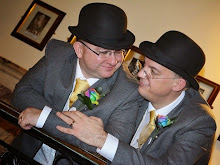
As liberals, we are often very hard on ourselves. Compromise in coalition has been tough, and we’ve made mistakes, but we need to remember what we’ve achieved. In coalition we’ve succeeded in making tax fairer by raising the personal allowance rate: giving every tax payer £700 per annum. We have started to reduce education inequalities through providing extra money for the most disadvantaged pupils and students, and the results are beginning to show it works. In the worst recession for decades, we’ve protected the NHS budget and insisted on proper funding for mental health services. We’ve given you, Alex, the freedom to marry Richard this weekend: achieving same sex marriage is core to our belief in freedom and equality, and we persuaded the Tories to support it too. We’ve protected girls from FGM, and provided 0.7% of GDP for international development, guaranteeing help for the most vulnerable people in the world.
Liz Lynne’s answers can be found here.
Daisy Cooper’s answers can be found here.
NB On Monday, the three contenders on the ballot paper were announced as Liz Lynne, Daisy Cooper and Sal Brinton. Linda Jack was unable to find enough people within the Liberal Democrats to support her nomination.
My Questions As Sent
I have two related questions for you. Both are more concerned with politics than process. One is after a short two-pronged answer from the heart – had I been able to come to Conference, I would have preferred to put you on the spot with it in person to hear what you instinctively believe. The other question is asking you to come up with a longer, more thoughtful answer on our values that you’d be happy having the whole party say (as if anyone could ever persuade us to stick to one hymn-sheet).
Question One: What You Believe
People say all politicians are the same. It’s hardest for us in Coalition, but there’s some truth in it when every party promises to give money to the low-paid and the NHS, or when every local candidate for every party talks about experience, hard work and listening to local people. So what really motivates you? What for you makes the Lib Dems different from any other party?
If someone asked you on the doorstep, the hustings or on TV to sum up in one or two sentences what the Lib Dems, uniquely, stand for – and then why anyone should vote for us – what are your answers?
Past answerers include Presidential contenders and London Mayoral candidates.
Question Two: What the Lib Dems Stand For
Looking for something that’s more than a slogan or a soundbite but short enough to get in one go, imagine this answer as about one minute of a speech, or a box on a leaflet (perhaps 150-200 words, but that’s up to you). As you will be the voice of the Party if elected, can come up with something you think every party member could be happy saying or printing to explain What the Lib Dems Stand For? Something to enthuse and inspire Lib Dem believers and at the same time to attract and persuade potential supporters?
How would you link what makes us different, our philosophy, to what we’ve achieved in government, and what we want to do next? However you want to put that together, as specific or as thematic as you like.
I start this as a meme that many other Lib Dems have answered over the past couple of years (if I ever get a wide enough selection in, I might publish a book of them!). If you want to see more about what that’s involved, here’s my own latest version, including links to where I’ve printed other Lib Dems’ ideas.
Best of luck to each of you.
I had also spent some time trying to think of a ‘nasty’ question individually tailored to each of you – which I did for the last set of Presidential candidates and, going back further, for Nick and Chris in 2007. You may be relieved to read that I’ve decided not to ask those this time as I was unable to construct nasty questions of equal balance: the best I could think of for one of you was much too gentle, and for another of you, too bare-knuckle brutal. So that’s your lot from me!
Labels: Liberal Democrats, Liberal Mondays, Liberalism, Memes, Sal Brinton, What the Lib Dems Stand For


Wednesday, October 22, 2014
Liberal Mondays 10b: Daisy Cooper’s What the Liberal Democrats Stand For #LibDemValues
Twelve days ago I emailed all of the then declared contenders to be the next Liberal Democrat President with questions (below) about their personal political philosophy and our shared Lib Dem values, to be published here. I received Daisy Cooper’s answers this morning, and here they are now.
Pithy -
We believe and trust in the power and potential of every individual to be whoever or whatever they want to be. We want to tear down the barriers in your way and we want to give you the tools and knowledge you need. It’s about freedom and we believe that to be truly free every person must be free from the shackles of poverty, ignorance and conformity.
What the LibDems stand for and how it relates to what we’ve done in government:
We believe and trust in the power and potential of every individual to be whoever and whatever they want to be. We want to tear down the barriers in your way and we want to give you the tools and knowledge you need. It’s about freedom and we believe that to be truly free every person must be free from the shackles of poverty, ignorance and conformity.
Individuals and communities must also be free from the crushing concentration of power in any institution wherever it exists – in the state, the media, in corporations or elsewhere; individuals should have the power to take the decisions that affect their lives.
Our vision of society is built on a ‘holy trinity’ of individual freedom, social justice and repatriating powers back to people and communities.
Labour believe in the power of the state, the Tories believe in the power of the markets, we believe and trust in the power of every individual to know what’s best – every individual like you.
In government, Liberal Democrats have given individuals the freedom to decide how to spend more of their money by increasing the point at which low and middle earners start paying tax.
By giving schools a pupil premium to help kids from the lowest income families, we’ve pulled down some of the barriers to children getting a good education.
And in all our efforts in government to break up the banks, reform the House of Lords and curtail the monopoly of the big energy companies, we seek to wrestle power out of the hands of the few for the benefit and use of all.
Liberal Democrats are committed to breaking up the fortresses of the rich, the powerful and the privileged and to fighting for a society in which individuals can take that power back and use it.
Liz Lynne’s answers can be found here.
NB On Monday, the three contenders on the ballot paper were announced as Liz Lynne, Daisy Cooper and Sal Brinton. Linda Jack was unable to find enough people within the Liberal Democrats to support her nomination.
My Questions As Sent
I have two related questions for you. Both are more concerned with politics than process. One is after a short two-pronged answer from the heart – had I been able to come to Conference, I would have preferred to put you on the spot with it in person to hear what you instinctively believe. The other question is asking you to come up with a longer, more thoughtful answer on our values that you’d be happy having the whole party say (as if anyone could ever persuade us to stick to one hymn-sheet).
Question One: What You Believe
People say all politicians are the same. It’s hardest for us in Coalition, but there’s some truth in it when every party promises to give money to the low-paid and the NHS, or when every local candidate for every party talks about experience, hard work and listening to local people. So what really motivates you? What for you makes the Lib Dems different from any other party?
If someone asked you on the doorstep, the hustings or on TV to sum up in one or two sentences what the Lib Dems, uniquely, stand for – and then why anyone should vote for us – what are your answers?
Past answerers include Presidential contenders and London Mayoral candidates.
Question Two: What the Lib Dems Stand For
Looking for something that’s more than a slogan or a soundbite but short enough to get in one go, imagine this answer as about one minute of a speech, or a box on a leaflet (perhaps 150-200 words, but that’s up to you). As you will be the voice of the Party if elected, can come up with something you think every party member could be happy saying or printing to explain What the Lib Dems Stand For? Something to enthuse and inspire Lib Dem believers and at the same time to attract and persuade potential supporters?
How would you link what makes us different, our philosophy, to what we’ve achieved in government, and what we want to do next? However you want to put that together, as specific or as thematic as you like.
I start this as a meme that many other Lib Dems have answered over the past couple of years (if I ever get a wide enough selection in, I might publish a book of them!). If you want to see more about what that’s involved, here’s my own latest version, including links to where I’ve printed other Lib Dems’ ideas.
Best of luck to each of you.
I had also spent some time trying to think of a ‘nasty’ question individually tailored to each of you – which I did for the last set of Presidential candidates and, going back further, for Nick and Chris in 2007. You may be relieved to read that I’ve decided not to ask those this time as I was unable to construct nasty questions of equal balance: the best I could think of for one of you was much too gentle, and for another of you, too bare-knuckle brutal. So that’s your lot from me!
Labels: Daisy Cooper, Liberal Democrats, Liberal Mondays, Liberalism, Memes, What the Lib Dems Stand For
Monday, October 20, 2014
Liberal Mondays 10a: Liz Lynne’s What the Liberal Democrats Stand For #LibDemValues
Ten days ago I emailed all four of the declared contenders to be the next Liberal Democrat President with questions (below) about their personal political philosophy and our shared Lib Dem values, to be published today. I received Liz Lynne’s answers last week, and here they are now.
The Liberal Democrats exist to build a society where everyone has equality of opportunity, regardless of their background, gender, age, disability, race, sexual orientation, religion or belief.
We believe everyone has the right to be themselves and we work to make sure that no one is enslaved by poverty, ignorance or conformity.
I believe passionately that we are the only party who genuinely want to stand up for people who can't stand up for themselves. People who don't have a voice. That is why I became a Liberal and then a Liberal Democrat to change the lives of people, to work to make sure they have somewhere to live, ability to work, a decent healthcare system, a good education for all regardless of background and a fair social security system so that if they are unable to work they are not pushed into poverty. Everyone should have the right to be who they are without anyone trying to change them. Genuine tolerance of all who do not have the same beliefs as ours.
That is why I am proud of what we have achieved in Government. Turning the economy around, taking people out of tax at the bottom, raising pensions by at least 2.5% and putting the triple lock in, the pupil premium, a massive increase in apprenticeships, equal marriage, protecting peoples civil liberties. We have achieved a great deal but we could have achieved a great deal more if we had been governing by ourselves. We still have a long way to go before we have created a fair society and a stronger economy but by voting for us you will ensure that you will have people who are working towards that goal.
My Questions As Sent
I have two related questions for you. Both are more concerned with politics than process. One is after a short two-pronged answer from the heart – had I been able to come to Conference, I would have preferred to put you on the spot with it in person to hear what you instinctively believe. The other question is asking you to come up with a longer, more thoughtful answer on our values that you’d be happy having the whole party say (as if anyone could ever persuade us to stick to one hymn-sheet).
Question One: What You Believe
People say all politicians are the same. It’s hardest for us in Coalition, but there’s some truth in it when every party promises to give money to the low-paid and the NHS, or when every local candidate for every party talks about experience, hard work and listening to local people. So what really motivates you? What for you makes the Lib Dems different from any other party?
If someone asked you on the doorstep, the hustings or on TV to sum up in one or two sentences what the Lib Dems, uniquely, stand for – and then why anyone should vote for us – what are your answers?
Past answerers include Presidential contenders and London Mayoral candidates.
Question Two: What the Lib Dems Stand For
Looking for something that’s more than a slogan or a soundbite but short enough to get in one go, imagine this answer as about one minute of a speech, or a box on a leaflet (perhaps 150-200 words, but that’s up to you). As you will be the voice of the Party if elected, can come up with something you think every party member could be happy saying or printing to explain What the Lib Dems Stand For? Something to enthuse and inspire Lib Dem believers and at the same time to attract and persuade potential supporters?
How would you link what makes us different, our philosophy, to what we’ve achieved in government, and what we want to do next? However you want to put that together, as specific or as thematic as you like.
I start this as a meme that many other Lib Dems have answered over the past couple of years (if I ever get a wide enough selection in, I might publish a book of them!). If you want to see more about what that’s involved, here’s my own latest version, including links to where I’ve printed other Lib Dems’ ideas.
Best of luck to each of you.
I had also spent some time trying to think of a ‘nasty’ question individually tailored to each of you – which I did for the last set of Presidential candidates and, going back further, for Nick and Chris in 2007. You may be relieved to read that I’ve decided not to ask those this time as I was unable to construct nasty questions of equal balance: the best I could think of for one of you was much too gentle, and for another of you, too bare-knuckle brutal. So that’s your lot from me!
Labels: Liberal Democrats, Liberal Mondays, Liberalism, Liz Lynne, Memes, What the Lib Dems Stand For
Monday, October 06, 2014
Liberal Mondays 9: Nick Clegg on Today (Today) #LibDemValues
I’m not at Liberal Democrat Autumn Conference in Glasgow this week. It’s the first I’ve missed in about twenty years, and I am missing it – Richard and I would love to be there, but we’re getting married in twenty days’ time and just don’t have the time or the money. Following it on TV, one person who you can’t miss in Glasgow is Nick Clegg. This morning he was interrupted – I can’t say interviewed – on the Today Programme, so his latest answer on what the Lib Dems stand for is the latest of my Liberal Mondays quotations…
The Limits of the “Centre” and the Bigger Limitations of the “Interviewer”
Some of the random shouting by the random talentless hack from their researchers’ random shouting points and the Labour Party’s random propaganda points on Today this morning involved sneering at “Stronger Economy, Fairer Society” and shouting at Nick Clegg,
“Where is your core identity? What is it that the Lib Dems stand for?”Obviously, none of the random shouting involved listening or engaging with the answer – yawn, he’s answering the question, bored now, time to hear my own voice again – but I’ve managed to piece together what Nick was allowed to get a word in edgeways with in his latest short summary of what the Liberal Democrats stand for.
Earlier in the interview, Nick summed us up in part with a line that doesn’t appeal to me at all, but here goes:
“The Liberal centre ground is where we’ve always been anchored, and where we’ve sought to anchor the government.”I love the word “Liberal” – but I suspect those who aren’t tribal Liberals, which would be probably in excess of 99% of the population, don’t really respond to a tribal label. Only a minority, too, might respond to a concept, like “Freedom”, but it’ll be a lot more than those that identify with the label. Instead, the concept is “Centre” – which is meant to sound like ‘at the centre of things’ (if only one centre among, er, several in the same place?), but just sounds to me (and I suspect to almost everyone) like a statement that we don’t stand for anything of our own, splitting the difference between the others, neither one thing nor the other but somewhere… Quite a long way behind these days.
To be fair, there are advantages to the “centre” message. It lets you say your opponents are extreme and that only you are reasonable (isn’t really true but which might persuade) or that only you can rein them in (which is really true but which no-one believes). Nick came through with this strongly when contrasting the LiberaTory Coalition with what the Tories are gagging to do if they get “in power on their own” without us to tell them “No”: he focused on last week’s Tory Conference ‘Osborne bombshell’, where the Chancellor wants to abandon taxing the rich more (such as by the Liberal Democrats getting Capital Gains Tax raised above the previous Labour Government’s rich-bribing low level) and through eye-watering cuts alone
“only ask the working age poor to pick up the tab for the mistakes made by the bankers and the black hole in the public finances”.What you might call the Tories’ “No-tax bombshell”.
The weakness in the “centre” came when Nick tried to attack Labour in the same way, claiming that “Labour move rapidly to the Left”. I don’t think they’re moving anywhere. They’re just a frightened vacuum. And though Nick drew attention to Mr Miliband’s cowardly and incompetent inability even to mention the massive deficit left by Labour, that cowardice and incompetence isn’t red-blooded Leftism. It’s the biggest symptom of an inability to make up their minds about anything at all in the face of a terrifying reality that would tear them apart. But that doesn’t fit with us being ‘somewhere in between’. Nick wanted people to give us credit for “holding firm”, I suppose in a rebuttal of “the centre cannot hold” – but that only opened him up to the interviewer’s sole moment of demonstration that she wasn’t merely a non-Turing-compliant iDevice programmed to shout a limited number of dumb phrases on repeat:
“Holding firm is not an ideology.”Though I wait for any Today presenter ever to ask what either of the other two stand for and cut them off when their only answer is ‘Labour would tax you more and be nice to poor people and immigrants’ (the latter two points of which, unfortunately, aren’t even true) or ‘We’re shit, and we know we are, but oooooh! The Tories! Scary!’ (which is all true, but still gives me no reason to touch them with a barge pole and has nearly killed Labour in Scotland).
Nick Clegg’s Answer To “Where is your core identity? What is it that the Lib Dems stand for?”
“I’ll tell you exactly where we stand, and I feel this has always been the case.
“On the Left you’ve got socialism, the Labour Party, which is all about the state telling people what’s good for them; you’ve got the Right, the Conservative Party, that basically wants to keep the pecking order as it is.
“What has always distinguished British Liberalism, and I feel this very strongly, is an absolute, a huge emphasis on opportunity – that what everybody in politics should be about is trying to spread opportunity, such that everyone can get ahead in life, can live out their dreams, can use their talents to the greatest possible extent.
“And that’s why if you look at the signature tune things that we’ve done – I mean, don’t listen to the words, what we’ve done, our actions, judge us by our actions – whether it’s the massive expansion in apprenticeships, the huge transformation of the tax system so people on low pay keep more money as they work, or the very heavy emphasis on early years education, childcare, putting money into schools that cater for disadvantaged children.
“All of that is about opportunity.”
That is much better, and I’m glad Nick got to say most of it.
It feels recognisably Liberal in spirit as well as in label.
It’s something that Nick clearly believes, and is right at his heart, and that always helps when a politician says what they believe.
Though he didn’t say “Stronger Economy, Fairer Society” after the sneering, it chimes right in with that while sounding much more positive and definite than “Centre”.
And it links all that to our priorities in government.
It’s in many ways the same sort of thing I’ve been trying to do with my What the Liberal Democrats Stand For series, unifying ideology with our record in practice (latest version here; version with explanations here).
Any Liberal Democrat could say it themselves or stick it on a leaflet and not feel, ‘Oh, well, if I really have to.’
It isn’t perfect. In my own What the Liberal Democrats Stand For series, I’ve made a point of saying what we stand for – and Nick had already done his knocking copy, and been told not to talk about the others, but us. So starting with another attack on them was a mistake. It was a mistake because it made the statement about them.
Nick, next time you do this, if you must waste positive time being negative, take a tip from the “yeah, yeah, yeah, yeahhhh!” pre-chorus that propelled She Loves You irresistibly to Number One. If you stick otherwise to exactly the same words, then at least let your opening be “The Liberal Democrats are about opportunity for everyone.” People listen to your first line. Make it the most important and the most appealing.
And though your actual one-line sum-ups of the Labour and Conservative Parties were both fine, your first words about them were Centre-propagandist dumb:
“On the Left you’ve got socialism, the Labour Party…”No, Nick. You haven’t. Leave the word behind. Labour left it behind more than twenty years ago. People so terrified that Ed Miliband is a revolutionary socialist coming to chop their heads down to size will not be voting for us anyway. The vast majority simply will not recognise that as reality, just as Mr Miliband is too frightened to recognise reality. He is not a socialist. He is not anything. He is a pitiful vacuum.
I nod to “trying to spread opportunity, such that everyone can get ahead in life, can live out their dreams, can use their talents to the greatest possible extent.” That’s my inspiration too. I recognise the issue that’s been closest to your heart since before you became Leader in talking with such passion about opportunity and about early years education. I just wish that for all the investment, the passion and the genuine commitment, you could say the word “education” without having cut the ground out under you biggest priority by everyone else hearing “tuition fees”. And you were cut off, so I’ll give you the benefit of the doubt and assume you would have got round to mentioning the environment after criticising Mr Cameron for not talking about it any more.
And it’s a shame that the “interviewer” gave one of her many parroted lines from the Labour Party press office in ruling out any examples of what we’ve done in office connecting to what we believe by saying as ‘fact’ that it’s just a Conservative Government with our support. Too many people believe that. The BBC presenting a stupid Labour lie as a fact doesn’t help. But though you won’t convince everyone – or, I fear, anything like enough people – by saying ‘here are our values, and here’s how we’ve put them into practice in government’, you need to keep at it. Because only saying either without the other will give far fewer people even than that a reason to vote for us.
Possibly wise to find a better phrase than “don’t listen to the words,” though.
How Nick Today Was Better Than Nick On Other Days
It’s not what I would have said. But it’s in tune with what I would have said, and recognisably from the same sort of ideological place. And while it has its own weaknesses, it’s much better than some of Nick’s (and others’) previous statements of what we stand for. I’ll be kind and not repeat what he said in his second debate against Nigel Farage – focus-grouped to death, palpably making him uncomfortable, and the least Liberal ‘statement of principles’ I’ve ever seen from a British Liberal Leader – but it compares very well with the messaged-to-death message at the last General Election, for example. That brought everything down to one word: “Fairness”.
Now, I’d say that Fairness is certainly among Liberalism’s crucial concepts, but on its own it’s just not the one thing we’re about. Fairness should be in the service of something else. Nick says “Opportunity”. I can go with that. I’d say “Freedom” – and it’s always depressing and also a bit bizarre when I’m the only Liberal who seems to be saying that. But it wasn’t just that “Fairness” was only our number one in 2010 because it was what the focus groups said: it was, like several other things in that Election, a hostage to fortune that sounded good during the election but killed us afterwards. It’s absolutely true that throughout the LiberaTory Coalition Government the Liberal Democrats have made the cuts and hard choices fairer than the Tories wanted. But without a Tory Government to measure that against, nobody sees it. It’s absolutely true that the gap between rich and poor – which the previous Labour Government made wider and wider with their doubling tax on the poor and bungs to the rich – has fallen under the LiberaTory Coalition Government, fallen sharply, for the first time since I was at primary school. But when that proof of fairness comes not in the happy way – by lifting everyone up, but those at the bottom most – but in the painful way, by everyone suffering but taking most from the rich and protecting the poor, then nobody feels that it’s “fair”. Because no-one who suffers ever thinks it is fair for them to suffer. It’s a risk to say the one thing you stand for is Fairness even if you’re awash with money, because no effing voter is ever grateful. But to say the one thing you stand for is Fairness when you know that the most you can do is make everybody hurt in the fairest way is pretty close to suicidal.
Where you’ll find the closest relative of Nick’s Today statement today is, unsurprisingly, in the Liberal Democrats’ new Pre-Manifesto, and in Nick’s Introduction to it. As is usually the case, the section on what we stand for is relegated to a ‘personal view’ by the Leader, as if presenting it as actual philosophy or, worse, ideology for a party would send readers screaming to the hills. As is always the case, this is written in part by Nick, in part literally by a committee (the Liberal Democrat Federal Policy Committee, if you want to tell them what you think of it), partly by staff and partly by another committee whose names you’ll find at the back of the booklet. But of course it’s Nick’s every word, officially. Comparing what Nick says in the booklet in these three pages with what he said on the radio in three paragraphs gives you an idea of what’s really closest to his heart.
For me, the Introduction to the 2014 Pre-Manifesto is one of the best that the party has produced. I think – after usually complaining that they’re far too short – that it should really have a short version, probably on the front or back cover. Here’s one I prepared earlier. But it’s persuasive, it’s distinctively Liberal, and the middle one of the three pages gives our policy priorities for the future in a way that fits seamlessly into what we’re about. But without a summary or a short version, it’s not quite clear that there’s one word that motivates it – which is probably quite right, as complex politics don’t usually reduce to just one word. Mine is “Freedom” and, hurrah! for the first time in ages, that appears there quite a lot. Nick’s is “Opportunity”. So does that. Yet though Freedom would be my one word, I’ve more often summed us up with three: “Freedom, Fairness, Future”. Between those, I can pull out most of our policies, as well as thinking they work as a buzzword condensed Liberalism (and, yes, I’m a sucker for alliteration too). So it’s notable that “Future” starts out as the main buzzword in this Introduction, repeated three times in the first line alone. Then, on the middle page, it becomes “the next generation”, repeated in six of the seven priorities and, though in different words, what the seventh is all about – as were most of Nick’s examples in his interview. Then “free”, “Liberal” and “opportunity” all stand out several times, the latter prominent but noticeably less than in Nick’s speeches, but the meaning of all three driving the first and third pages just as the next generation drives the priorities. By contrast, Fairness doesn’t actually appear on its own as a positive noun, instead standing at the back as a few slightly embarrassed adjectives. I hope to get time to write about the Pre-Manifesto in more detail, but if I can’t, it’s interesting that I’ve gone from unusually critical of the centrality of Fairness to the Liberal Democrat message to making it unusually prominent, just by staying still. I suspect Nick is more comfortable using the word closest to his heart this time round.
Today Is So Yesterday
It’ll still be on the iPlayer for a bit, but I wouldn’t bother listening to the whole ‘interview’. And not because of Nick.
Some journalists – by which I mean presenters, not journalists, as they neither write anything nor ever find anything out – want nothing other than to be the next Jeremy Paxman. This is a crapulent ambition, as the old Jeremy Paxman had been an unwatchable panto caricature for decades before he retired to spend time with his many-times-larger-than-any-politician-public-salary millions. Unfortunately, one of the worst examples of this disease is the Today Programme, once a flagship for holding politicians to account and now an unlistenable presenters’ masturbation demonstration with no interest in presenting or prying out information. The ‘big beast’ interviewers, or interrupters, have spent decades now doing nothing but making up their minds about some tiny fiddling point and then constantly repeating it until either the interviewee ‘admits’ to it – which lets them crow – or gets fed up and asks why they’re obsessed with some tiny fiddling point that no listener gives a toss about – which lets them say no-one answers their questions. Or they just talk over people so they never get a chance to answer a question because, oh, anyone else but their own voice is so boring, right?
Evan Davis had been a breath of fresh air: a journalist who knew what he was talking about and who used that to listen to answers and engage intelligently with them, which made him able to genuinely interrogate his subjects and inform his listeners. He’s been recruited to replace Mr Paxman, which suggests Newsnight is acting on a long-buried desire to become a critical news programme again instead of a long-running ‘argument’ sketch that shows why Monty Python were so wise to do a limited run. I’d like to hope that Mr Davis becomes a great success and a household name, making other presenters wish to be the next Evan Davis instead. It’s not a very confident hope, though, because to know what you’re talking about requires both talent and a lot of hard work. It’s far easier to just shout random things your researchers have told you and not let people finish the answers that you’re too stupid to understand anyway. Who does that inform, exactly?
This morning some talentless hack ‘interviewed’ Nick Clegg. I can’t remember her name. I doubt anyone else can. She may as well have come from the same mould as so many ambitious but lazy men and women who want to be Jeremy Paxman. Her equally lazy researchers had given her several stupidly untrue statements to shout and then shout again when Nick contradicted her with something boring like facts. And she got bored when he started answering her questions and decided it was time we heard her voice again. It’s all part of the Today Programme’s inevitable transmogrification into Thought For the Day, the part of the programme I always turn the volume off for and put on a music track instead. Before long they’ll decide that politicians, alternative views and tedious facts only get in the way of not just three minutes of semi-religious inanity but the far more important three hours of presenters’ egos. Someone with very ill-thought-out opinions says something bland and obvious in a monologue for which no-one can hold them to account: bishops today, Today presenters tomorrow. A radio shouting in a human ear, forever.
Labels: Conservatives, Education, FPC, Labour, Liberal Democrat Conferences, Liberal Democrats, Liberal Mondays, Liberalism, Manifesto, Nick Clegg, Tax, The Today Programme, What the Lib Dems Stand For
Monday, June 16, 2014
Liberal Mondays 8: Doctor Who – The Green Death #LibDemValues
This week’s inspiring thought in my occasional series of Liberal moments is close to my heart: it is, of course, from Doctor Who. A confrontation between the Doctor and a much more dictatorial egomaniac, it’s taken from Episode Five of The Green Death, first broadcast forty-one years ago today. From the same story that featured Jeremy Thorpe as Prime Minister, this pits a monopolistic megacorporation, totalitarianism and pollution against the Doctor’s freedom, ecology and individualism. The argument crystallises in one especially memorable exchange that says benevolent authoritarianism is not enough if it means absolute ignorance and conformity. It’s about freedom:
“Doctor, believe me, we wish you no harm…”This 1973 story was co-written by Robert Sloman and then-producer Barry Letts, who it appears was rather pro-Liberal. The Doctor (Jon Pertwee) had spent a few years exiled to Earth in the near future, and was still popping back on occasion to help out his friends at UNIT; The Green Death has one of the slyer little suggestions about their stories being set a few years later than broadcast, as the phone is at one point handed to a Prime Minister called “Jeremy”. Unfortunately, the striking Liberal revival in the following year’s elections didn’t quite carry him that far, and the 1975-but-set-in-1980 story which suggested Mrs Thatcher as PM was altogether more on the button. Since then, actual Liberal politicians have mostly just had backward references, such as Mr Asquith springing one of the Doctor’s companions from Holloway or Mr Lloyd George drinking the Doctor under the table. A Liberal worldsview, on the other hand, has always been part of Doctor Who’s RNA. I argued that most comprehensively in my “How Doctor Who Made Me A Liberal”, but it’s summed up with particular clarity here.
“Ah, don’t worry, my dear feller. I’m having a whale of a time.”
“In the end, we all want the same thing; an ordered society, with everyone happy, well-fed…”
“Global Chemicals taking all the profits…”
“What’s best for Global Chemicals is best for the world – is best for you!”
“Such as a little touch of brain-washing.”
“Freedom from fear, freedom from pain…”
“Freedom from freedom!”
The Doctor’s been captured and is being interrogated by the managing director of Global Chemicals, himself only a cog in the company machine (and that taken to extremes). For greater efficiency, productivity and profit, the company’s BOSS has decided to take over the world. Just as its workforce are brainwashed into servitude, a signal will be transmitted from the sinister multinational’s subsidiaries all across the world to bring the entire human race under its control in a literal ‘command economy’. So far, so familiar. But as you’ll have seen from the key quotation above, this particular mind-control story has thought about its message and argues it in unambiguously Liberal terms.
All Power Is Dangerous – Especially If It’s ‘For Your Own Good’
My favourite contribution to Mark Pack’s “What do the Liberal Democrats Believe?” is on the basic conviction that unites social and economic Liberals:“All POWER (be it government, business or other people) can both PROTECT and THREATEN LIBERTY.The Green Death’s Liberal analysis is dead-on that same line. It chooses as its main target a monopolistic mega-corporation – but it’s just as applicable to totalitarian government that would exert the same degree of power over individuals. Indeed, part of its point is that any body that exerts total power can be exactly as dangerous and as illiberal as any other. When the Doctor carelessly resists the brainwashing, the political applicability comes as thick and fast as Global Chemicals’ poisonous pollution. First, the machine grumbles that:
“Economic and Social Liberals put different emphasis on the BEST DEFENCES and the BIGGEST BULLIES.”
“The subject is not responding to therapy.”“Therapy” is exactly the “pretty euphemism” for what political opponents in the Eastern Bloc of the time were often subjected to – and this story would have exactly the same philosophical underpinning were the villains, say, Evil Space Communists with the same plan. No doubt many of those who praise The Green Death for being ‘left-wing’ because it’s ‘anti-big business’ would have criticised it as ‘right-wing propaganda’ had the allegory apparently pointed against big government instead, but that’s missing the point: it’s not a left-wing or right-wing critique of the ‘wrong’ sort of big power, but a Liberal critique of any sort of Big Power.
The crux of the argument above isn’t simply that ‘turning the entire human race into zombies is bad’, though. I’ll admit that even most of my political opponents would agree that’s a bit much. It’s that what Global Chemicals wants to impose is in many ways tempting. It’s simply taking to a sci-fi extreme the ‘perfectly reasonable’ exercise of power to ‘help’, and that’s an argument that this scene ruthlessly exposes and explodes:
“You’re not trying to tell me this is all for my own good?”Which, of course, is exactly the point. Pay attention to the characters and their motivations, and no-one here is simply perfect or simply evil: the Doctor’s attitudes aren’t always appealing, with his own insufferable prejudices showing through, and the villains are at times endearing and well-meaning. From their point of view, it is all ‘for people’s own good’. Which is one of the political phrases that always sets alarm bells ringing for me, along with “we all want the same thing”. Who could object to an end to pain and hunger? To universal happiness? Well, what if my idea of happiness is different to yours? Liberals don’t say ‘We know best’, because everyone’s best is different.
This goes right back to my first Liberal Monday choice, when I observed how over the course of a century the most-quoted Liberal creed had thankfully moved from utilitarianism to Mill-and-Taylor-flavoured social Liberalism. I said there that utilitarianism and utopia had a superficial attraction, but gave me the creeps. Here’s the difference in a nutshell: today’s Liberals prize freedom from conformity for every individual to live their own life; Global Chemicals offers a perfect utilitarian future of absolute happiness, absolute equality and absolute mindlessness, forever. Even Liberals need to guard against the price some would too eagerly pay ‘for your own good’.
I was only a year old forty-one years ago, but as a boy the novelisation of this story was one of my favourites, and one of the books I credit with making me a green Liberal. And yet this most cuttingly Liberal of all scenes, as blatantly applicable to big states as big business, wasn’t even in the book. I didn’t see it until repeats nearly twenty years later, when it instantly struck an unforgettable chord with me. So why wasn’t it in the book? Well, the story was novelised by Malcolm Hulke, one of Target’s most talented writers, the one most likely to chop out scenes from the script and add his own that fleshed out the characters – so that’s probably it – but also the range’s card-carrying Communist Party member, so it’s just possible that like me he saw the Doctor objecting to an utopian regime promising freedom from material want at the price of “Freedom from freedom” for exactly what it was…
Or you may simply remember this as The One With The Maggots.

Labels: Books, Doctor Who, Environment, Ideas, Jon Pertwee, Liberal Mondays, Liberalism, The Golden Dozen, The Green Death, Utilitarianism, Utopia, What the Lib Dems Stand For, Why Is Doctor Who Brilliant?
Monday, March 31, 2014
Liberal Mondays 7: Roy Jenkins #LibDemValues
Scottish Liberal Andrew Page has doubly inspired me to return to my occasional series of Liberal Mondays quotations. Last week he wrote a post championing a very different political ideology* to my own Liberalism, but with a great line from Roy Jenkins, one of his political heroes, whose inspiring call for individual freedom is worth sharing:
“Let us be on the side of those who want people to be free to live their own lives, to make their own mistakes, and on the side of experiment and brightness... of fuller lives and greater freedom.”

Andrew also interviewed me amongst others at last year’s Liberal Democrat Conference in Glasgow. You can see here Andrew’s choice of Lib Dem “Conference People” and our array of thoughtful and positive (well, all but one of us, anyway) answers to his questions about the Lib Dems and the LiberaTory Coalition. I would have blogged about it before, but, er, it just so happens that he published his video the week after I stopped blogging for six months. None of our lines are as memorable as Roy’s, though.
*Andrew wrote that Roy “was not directly referring to the question of Scotland’s political future,” which did make me laugh. I suspect based on nothing but Roy’s entire political career that this is indeed not whistling Dixie, but what do I know? The nearest I ever got to meeting the Lord Jenkins was when he walked off the stage after my first ever Conference speech, so he may well not have agreed with me either.
Labels: Ideas, Liberal Mondays, Liberalism, Roy Jenkins
Tuesday, September 17, 2013
The Liberal Democrat What Do We Stand For Challenge 2013.6 – Another Eight Answers #LibDemValues
Half-way through Liberal Democrat Conference in Glasgow, I’m turning from the hotly argued policy votes to essential principles and eight Lib Dems’ own individual, diverse, but unifying rallying cries on What the Lib Dems Stand For. Some are shorter, some longer, some I’ll link to for more, but all are recognisably Liberal Democrat. Here’s what Sam Phripp, Prateek Buch, Andrew Tennant, Dave Page, Maelo Manning, Nick Barlow, Andrew Brown, Chris Richards – and me – have to say: which inspires you? Try some in your local party, or on the doorstep, or your leaflets and speeches… And share yours, too!
I last published a round-up of responses to my What the Lib Dems Stand For Challenge immediately before our last Conference in March. Most of the responses below were published not long after that, so a particular thank you to all contributors who got in fairly quickly, and apologies for taking so long to compiling them all. Once again, don’t wait to be asked – if you think you can do better, or more personally, or simply more to your own taste, please send me your own idea or publish it yourself (and ideally let me know, so I don’t miss it). I originally challenged other Lib Dems to come up with roughly 150 words – though that was just for ease of use, so whatever length they fancy, really – summing up what the Lib Dems stand for, after first coming up with my own for people to borrow or blame, a synthesis of the Preamble, the party’s achievements in government and the party leadership’s latest messaging. You’ll find mine below, again, and once again, feel free to borrow it wholesale for your own leaflets, speeches or pizza and politics nights, or to say where I’ve gone right or wrong (or say that about the others, but I’m more comfortable inviting potshots at me than at guests). So here are the next eight, a good mix from across the party, some from people I know well and others I don’t, some more to my own taste than others, but every one a rallying cry from the Lib Dem tradition…
Sam Phripp – “A Voice For the Voiceless”
So Sam said… is the most recent “Why I’m a Liberal Democrat” piece I’ve read – Sam prepared it to form part of his selection speech as Lib Dem Prospective Parliamentary Candidate for North East Somerset, but I read it, liked it, so introduced myself to him at Conference the other day and asked if I could reprint some of it. You can read the whole thing on Sam’s blog, but here’s a crucial part:
“The reason I’m a Liberal Democrat, is because I believe Liberal Democrats are a voice for the voiceless - and I know it because I’ve been there.
“When I was young, successive Conservative governments vilified single parent families to the point that mothers including my own were given enough money to feed their children but not themselves.
“When I was growing up and realising that I wasn’t like other boys, Labour legalised Civil Partnership but still didn’t believe that I should be able to marry – actually, properly, marry – the person I love…
“The only people who come to bat, every single time, for people like that, people like me, people who are marginalised are the Liberal Democrats…
“If we don’t do it, nobody else will do it for us. That’s why I’m a Liberal Democrat, and that’s why I’d like to be an MP, because people deserve a voice and people need to have someone on their side.”
Prateek Buch – “The Freedom and Means To Live Fulfilling Lives Free From Poverty, Ignorance and Conformity”
As part of a series of articles on “Putting social liberal values into action”, Prateek gives his own short statement of values as an opening contribution:
“We believe the political economy should empower all citizens with the capability to secure for themselves the freedom and means to live fulfilling lives free from poverty, ignorance and conformity – and that where it falls short, we should promote social justice and tackle barriers of inequality in wealth, voice and power.”
Andrew Tennant – “An Individual’s Right To Self-determination and Control Over Their Own Life”
Andrew Tennant tweeted a shorter version still:
“Believing in an individual’s right to self-determination and control over their own lives, as well as how governed.”
Dave Page – “Increasing People’s Freedom To Enjoy Their Own Potential”
The ever-so-lovely Dave expands on a previous post to hone his appeal both to Lib Dems and to other people of a liberal cast of mind (and potentially Liberal cast of vote). While I’d urge you to read what he has to say in full, here’s his key message:
“The Liberal Democrats stand for increasing people’s freedom to enjoy their own potential, helping everybody to get on in life. We believe in meaningful representative democracy to balance people’s conflicting priorities, and in ensuring protection for the individual from the State and other powerful organisations.Dave’s title for his piece, “This Is What the Lib Dems is About”, always puts this fab track into my head. ‘Moo moo! Moo moo! S-L-F!’ as Dave would no doubt sing. “All aboard, all aboard, woah-oh!”
“We believe that nobody should be constrained by lack of opportunity, particularly by the circumstances of their birth. We believe that Government should set the rules by which society operates, so people are rewarded for hard work and innovation, but not for exploitation or pollution. We believe that people should be respected as individuals regardless of their gender, colour, wealth, sexuality, or any other quality – not as homogeneous groups defined by those qualities.
“We believe in accountable, democratic institutions giving people more of a say in their immediate lives and local communities, as well as more of a say in the issues too big for one person, or one country. We believe in solutions which get to the root of the problem rather than just addressing the symptoms.”
Maelo Manning – “Fairness, Equality and Community”
I’ve pulled out of the “LibDem Child” blog some of her positive case for the party:
“I believe the party stands for: ‘fairness, equality and community’… For Fairness, I am extremely thrilled at the decisions taken like raising the tax threshold and a commitment to green issues… For Equality – Everybody is given a fair start and supported in the necessary way for them to be able to participate in society. For example, schools in poorer areas are given extra support and guidance to help the pupils have a fair start in life, and the equal marriage bill… For Community – demonstrated at local levels by our superb councillors who are in tune with the needs of their local communities; and party campaigners.”
Nick Barlow – “Maximise the Happiness and Potential of Every Individual”
I recommend reading Nick’s full exploration of the party’s key areas and overall themes, but here’s the coherent message he hones them into at the end:
“We believe in a society that works to maximise the happiness and potential of every individual, one that works to give everyone the opportunity to live their life as they want, providing they do not harm others. We seek to create an open, liberal and democratic world, where power is spread around, people have a real say in decisions that affect them and fair and impartial justice is available to all. A liberal society should protect the environment, promote education, create opportunity, reward enterprise and encourage innovation. Everyone should be free to participate in society and we seek to both tear down the barriers that restrict them and help people to overcome circumstances that limit them. In a liberal society everyone should be free to live their lives, free of restraint by poverty, ignorance or conformity.”
Andrew Brown – “Promoting the Freedom of the Individual Within A Society In Which All Can Achieve Their Potential”
Andrew on The Widow’s World offers his own Lib Dem statement of belief:
“Liberal Democrats exist to promote the freedom of the individual within a society in which all can achieve their potential.
“Liberal Democrats have a fundamental belief in the equality of all regardless of income, wealth, status, gender or gender identity, disability, personal capacity or sexual preferences – and that this should be enshrined and supported in law.
“Liberal Democrats believe the role of the State is to facilitate the ability of individuals to reach and exceed their potential and to provide an underpinning of support for those who fail to do so. They believe that spending to meet these aims is of benefit to all and that the burden of taxation should be progressive but not punitive.
“Liberal Democrats are pragmatic, concerned with outcomes not methodology and resisting traditional dogmas of left and right in favour of evidence-based policy which demonstrably support our aims.
“Liberal Democrats support these aims in the UK, in Europe and internationally.”
Chris Richards – “It’s About Freedom”
Chris Richards takes an interestingly different approach, not starting from scratch, from the Preamble to the Lib Dem Constitution or the other inspirations others have taken but looking to a favourite Lib Dem publication, the ‘Values Paper’ It’s About Freedom. I recommend it, too, with co-authors including such impressive names as a long-pre-Leadership Nick Clegg and, er, Alex Wilcock (best to ignore a couple of recent defectors in there, though).
Chris chooses the opening of the paper’s conclusion to champion what the party stands for and I print that first, but I recommend also reading his whole piece, where he chooses many of his favourite passages and highlights some of those he thinks are particularly relevant today. I’ve picked out a small selection of those, too:
“It’s about freedom. That one word is the call for all Liberal Democrats. Liberal Democrats believe that maximising personal freedom is fundamental to a liberal society. We believe that freedom means the opportunity to make the most of our lives, while recognising that our actions must not prevent others from sharing those opportunities and that we may need to take active steps to extend freedom to all.”
“The freedom of the individual is, however, limited or non-existent if he or she is prevented by economic deprivation, lack of education, disadvantage or discrimination from exercising choices about how to live or from participating in the democratic process… Institutions are required which keep markets free and prevent monopoly. Other mechanisms are needed to ensure that individuals have access to the things which markets are unable to provide.”
“We reject the use of the state or the law to enforce beliefs… Liberal Democrats do not have a blueprint of how life should be lived, but we do have a set of principles with which to approach problems and decisions.”
“Our first political duty – particularly if we are ourselves in power – is to ensure that mechanisms to protect freedom are in good order, and power is as widely shared as possible.”
Alex Wilcock – “Society Should Be For Everyone, and Every Individual Should Be Free”
I started this whole thing with my own short rallying call, carefully crafted for consensus from the Preamble, our priorities in government, the party’s key message and a bit of me. Very on message, in volume and over time, and so that’ll be up again in just a minute. But last week, I decided to do what several other people have done and write a longer, much more personal story, of how my life experience led me to being a Lib Dem and how the golden thread of Liberalism runs through my life. So I’ve now done what I’ve done to other people’s personal pieces, and filleted it to pull out some of the key ideas:
“My first political memories are of shouting at bullies… With all the division in society, a political party should be for everyone, not hating half the people all the time – or even hating other countries – and that with what I was experiencing personally, everyone should have the freedom to live their own life, too. And that naturally led me to the Liberal Democrats, who were not just appealingly internationalist but, to their core, the only party saying that society should be for everyone, and that every individual should be free…
“Liberalism means that if you start with every individual, you can’t put any person on the scrapheap or hate them for who they are. The founding principles of Liberalism over the centuries – of individual freedom, equality before the law and controlling arbitrary power – are living, breathing, vital ideas that I’d discovered for myself in the desire to choose my own life, my belief that everyone should be treated the same, even as a little boy knowing that you had to stand up to bullies… Part of not favouring any one ‘side’ is realising that anyone can be a bully, or can be bullied – or, in philosophical terms, any sort of power can threaten liberty, but any sort of power can protect it, too. Whether it’s the state, or big business or big unions, or just other people, any of them can boss you around and anyone can help stop you being bossed around. So you can’t do away with any of them – and you can’t say any of them are right all the time, or be in their pockets. Which means aiming to create The Perfect Society will always be a disaster, but working at making a better society means there’s always more real life to be listened to and more work to be done…
“That’s why for me saying what we stand for is more important than any single policy. It’s important because unless we keep sight of why we bother, there’s nothing to inspire us. And it’s important to remember that we’re for everyone, that everyone should be free to live their own lives, and so we’re here to bring everyone together, as far as we can, and to stop people being pushed around, as far as we can… We’re still the only party that says society should be for everyone, and that every individual should be free.”
The Liberal Democrat What Do We Stand For Challenge (so far)
A very big thank you from me to all those who’ve taken part so far – both in today’s contributions, and back in March. I hope you encourage and inspire many others not just to read but to think and come up with their own versions of What the Lib Dems Stand For in turn. If that’s you this time, dear reader, please do! And then I might publish a third collection.
Once again, feel free to borrow my own message – below – and use it yourself. It’s my contribution to open-source Liberalism – getting across what we stand for in something more meaningful than a soundbite but still short enough to be no more than a minute’s speech or a box on a Focus leaflet. If you do make use of it, I’d prefer it if you let me know, but that’s not compulsory (I imagine the other contributors above feel much the same, but it’s probably polite to ask them first). So, synthesising the Preamble to the Constitution, the party’s priorities in government and Nick Clegg’s repeated mantra, here’s my on-message message again:
“The Liberal Democrats stand for freedom for every individual – freedom from poverty, ignorance and conformity.
“To make that freedom real needs both fairness and economic responsibility: an economy that works, that encourages enterprise, and where everyone pays their fair share.
“So freedom from poverty requires responsible spending, not debt, built on fairer taxes where lower earners pay less tax and the wealthiest pay more, and building green jobs for the future.
“Freedom from ignorance needs better education and training, so people have the opportunity to realise their potential.
“And freedom from conformity, supported by freedom from poverty and ignorance, means everyone should have the liberty to live their lives as they choose – without harming others; with equality before the law; with a better say, because no government always knows best.
“That’s why Liberal Democrats are working for a greener, stronger economy in a fairer society, enabling every person to get on in life.”
Happy 25th Birthday, Liberal Democrats – and What the Lib Dems Stand For 2013.1
Why we should sum up What the Lib Dems Stand For, and how it’s developed over the years.
What the Lib Dems Stand For 2013.2 – a Challenge and a Meme #LibDemValues
Setting out my ‘What the Lib Dems Stand For’ based on the Preamble, practice and core messaging, and challenging other Lib Dems to come up with their own.
The Liberal Democrat What Do We Stand For Challenge 2013.3 – Eight Answers (so far) #LibDemValues
After receiving the first set of responses, rounding up eight different Liberal Democrats’ versions of what we stand for.
The Liberal Democrat What Do We Stand For Challenge 2013.4 – What It’s All About #LibDemValues
Inviting people to use my short declaration of ‘What the Lib Dems Stand For’ and explaining what each bit of it means.
What the Lib Dems Stand For 2013.5 – Why I Am A Liberal Democrat #LibDemValues
The long version of my personal philosophical story, as quoted in brief above.
Two last points that suit this sort of round-up. Simon Titley of Liberator has been one of the party’s more outspoken critics of “a stronger economy in a fairer society”, though not conspicuously proposing any alternative. However, on the cover of last month’s issue, Liberator offered “one simple amendment” to make it “Fairer Economy, Stronger Society”. I don’t have a problem with the first part of that, but the second sends shivers down my spine. Together, they sound more like the authoritarian left to me than any kind of Liberalism; on its own, the second half could be any communal bully from the state to a village to unbreakable ‘tradition’, reactionary, conservative and the enemy of the individual. Maybe “Stronger Society” just has a different ring to those of us a strong society has almost always wanted to push around than to those society’s always privileged, but I’d want no part of that oppressively authoritarian, illiberal combination.
I do, though, recommend Lib Dem Blogger of the Year 2013 David Boyle – congratulations, David – in his look back at Jo Grimond’s most famous speech on its fiftieth anniversary, and well done to Simon Titley, this time, for reminding David of the hero of the Liberator crew back when they were exciting Young Liberals. I’d had it in my diary to cover too, but as I’ve been knackered, and ill, and it’s Conference, and as most importantly David’s written a much better article than I would have anyway – look out for the less famous (merely infamous) words of a Labour councillor – I’m very glad that rather than writing it up for one of my own ‘Liberal Mondays’ I can simply point you to David’s excellent “The Sound of Gunfire revisited”.
Labels: Blogs, Gay, Ideas, Jo Grimond, Liberal Democrat Conferences, Liberal Democrats, Liberal Mondays, Liberalism, Liberator, Memes, Top Tips, What the Lib Dems Stand For
Wednesday, August 28, 2013
Liberal Wednesday 6: Martin Luther King’s “I Have A Dream” #LibDemValues
This week’s Liberal Monday is on a Wednesday: the fiftieth anniversary of one of the most celebrated speeches of the Twentieth Century. Dr Martin Luther King Jnr’s speech to the March on Washington for Jobs and Freedom still has tremendous power both for in itself and for its place in history – the right person, at the right time and place, with more than the right moral clarion call in its inspired oratory. The BBC marked the occasion with a tribute on Radio 4 at 9am, plus a documentary to come on BBC2 at 9 tonight.
“I have a dream that one day this nation will rise up and live out the true meaning of its creed: ‘We hold these truths to be self-evident, that all men are created equal.’What is there to be said of this great appeal for equality, justice and fellowship that hasn’t already been said? Well, there’s this morning’s tribute, for a start. I was a little sceptical of Radio 4’s I Have a Dream this morning – reminiscent of the BBC’s 1997 recording of Perfect Day, the main part of the programme was a ‘cover version’ of the speech performed by a wide array of different people from different countries. It seemed like a bit of a gimmick. But on listening to the collage, ranging from John Lewis and Joan Baez, who were both part of the 1963 March for Jobs and Freedom that day, to the Dalai Lama, to Malala Yousafzai, the Pakistani student shot by the Taliban for being a girl who went to school, I found it incredibly moving. With a full speech, the reading doesn’t just switch reader on every line, instead segueing between Dr King and impassioned stretches by so many other people it had touched with enough time for each different person to get a sense of how much it means to each of them. And unlike the original line-up of speakers after the 1963 March, this version of the rally’s showstopping final number has women in it, without which it would seem odd today but shows that not only racial attitudes have changed in the last half-century. It’s repeated on the World Service at 3.30 this afternoon and on Radio 4 this Sunday at 1.30pm.
“I have a dream that one day on the red hills of Georgia, the sons of former slaves and the sons of former slave owners will be able to sit down together at the table of brotherhood.
“I have a dream that one day even the state of Mississippi, a state sweltering with the heat of injustice, sweltering with the heat of oppression, will be transformed into an oasis of freedom and justice.
“I have a dream that my four little children will one day live in a nation where they will not be judged by the color of their skin but by the content of their character.
“I have a dream today!”
You can also listen to the programme for the next week on BBC iPlayer here; you can read about it and the many contributors here; you can read the text of the speech here; and, above all of those, you can watch Martin Luther King delivering the original speech here.
I’d heard the whole speech before, though much more often excerpts from it – most of all, the extraordinary “I have a dream” peroration of the second half that echoes down the decades. But listening to it fresh this morning, without the thrilling cadences of Dr King whose voice gave perhaps the greatest speech I’ve ever heard, though the multiple performance had much less power than the original, it made me concentrate more on the words.
The speech itself is fascinatingly constructed, an appeal to America’s history and heartstrings with astonishing moral force. I think of the passion, the imagery, the repeated refrains, but it’s far more than that. The speech comes to us now with the power of fifty years of Dr King being proven right and becoming a lasting symbol on its side, but in itself it cascades back through history.
Dr King stood at the Lincoln Memorial and made his own and the marchers’ demand for the fulfilment of Lincoln’s promise an integral part of President Lincoln’s own history; I remember going to Washington in my twenties and wanting to visit that Memorial as soon as I could, looking up at the great graven face of Lincoln but seeing and hearing King in my head. And his speech grounds itself firmly on Lincoln’s own promise, deliberately opening between the hundredth anniversary of the Emancipation Proclamation and the hundredth anniversary of the Gettysburg Address with a championing of one and the echo of the other: “Five score years ago…” Dr King samples Shakespeare, economics, current affairs and a host of other touchstones, but in speaking for a new America rising irresistibly on the deepest feelings of the old, there’s no mistaking the other great stream pouring through the speech – religion. It’s not just in the words, testifying to the equality of all God’s children, but coming through his own preacher’s experience and oratorical style. The American Dream is only real for any American if it’s shared by all Americans, and that’s because God created all equal. And in that shared language, he was speaking to many who wouldn’t otherwise want to hear him.
For me the most fascinating thing about the speech from my own experience of watching and making a great many different speeches is how it’s essentially two speeches, Dr King’s extraordinary gift making them appear seamless. I know that my own best speeches have been ones delivered without a prepared text, but my worst ones, too: it’s a risk to try to fly. What he does here is start in the safer, meticulously prepared style as a run-up, then suddenly lifts off. There’s the carefully crafted written word fixed in American history, a reasoned argument. And then, apparently spurred by Mahalia Jackson’s cry of “Tell them about the dream, Martin!” he switches from his written text into the part that everyone remembers: the repeated rhetoric beamed straight into the heart through Biblical words and a million-watt charisma, every phrase resonating with the American Dream and with the Gospel call. And that, clearly, is the powerful spiritual appeal of the preacher.
That’s not to say that the “I have a dream / Let freedom ring” extended climax was entirely off-the-cuff. Dr King had had three years of honing that exact metaphor, from his 1960 speech “The Negro and the American Dream” onwards, but clearly it was on the day that it was most needed that suddenly the theme came together and, inspired and inspiring, helped transform America.
There’s much more to the speech – embracing both the more timorous and the more militant sides of the Civil Rights movement, the uncompromising demand to make brotherhood a reality, passing sometimes shocking judgement on the segregationists and the shameful, but then not just rising but soaring above them, preaching against hate, the realisation on his part and on “our white brothers’” part that “their freedom is inextricably bound to our freedom”. But I still get teary-eyed reading or watching it for myself, so watching or reading it for yourself is going to have much more of an impact than reading about it.
It’s a sign of how far things have come that under the institutional bigotry of the times, in 1963 twenty-one US States prohibited mixed-race marriage. That’s almost impossible to believe, fifty years later, when Martin Luther King’s speech has become one of America’s great moral foundations. Today, thirty-seven US States prohibit same-sex marriage. I wonder whose soaring rhetoric will transform the next fifty years?
Labels: American Politics, Bigotry, History, Liberal Mondays, Liberalism, Martin Luther King, Religion, Speeches, The Golden Dozen
Thursday, August 22, 2013
My Best Posts 2012-2013
As my contribution to the Lib Dem Voice Awards, I’ve just put together a celebration of a great many posts from a great many other Lib Dem Blogs – so it seems an appropriate day to select my own latest ‘greatest hits’ package. Below you can find links and summaries for my best articles of the last year on politics, Doctor Who and one or two other subjects. Featuring What the Lib Dems Stand For, Liberal Quotations, Betrayal, Daleks and much more…! All showcasing posts written from the start of October last year to the end of August this year (a change from last year’s ‘Best of’ selection from September 2011 to September 2012). So, if I write any more this month, I may re-edit this to add something else which you can discover later…
My Best 2012-13: Politics
Nick Clegg’s Garden Cities – Thinking Big, But Are There Any Foundations?
Fisking a major speech from Nick – agreeing with him in principle, but doubting what would happen in practice. Two hard-headed tests for any major policy proposal: ‘Can we get it done?’ and ‘Will we get any credit?’
Eastleigh – Proof There’s No Such Thing As a Perfect Storm
Taking five lessons from the Eastleigh by-election, and asking two questions for the future.
Lessons From Coalition – The Two Biggest Problems: Betrayal and Betrayal
Available in two versions: for the in-depth article, click the named link above, while the supercompressed version was written for Lib Dem Voice.
Update: Syrian Intervention: Nick, Please Make the Hard Choice to Be Practical
Role-reversal where Nick Clegg’s party has to tell him we can’t have everything we want by wishing for it.
The Liberal Democrat What Do We Stand For Challenge
The best political pieces I’ve written in the last year are together ongoing investigation, collaboration and rallying cry about what the Liberal Democrats stand for. The basic idea is to challenge myself, first, then other Lib Dems to get across what we stand for in something more meaningful than a soundbite but still short enough to be no more than a minute’s speech or a box on a Focus leaflet. And to make things harder, I aimed for broad consensus by synthesising the Preamble to the Lib Dem Constitution, the party’s priorities in government and the party leadership’s latest messaging. Did it work? Here’s my go:
The Liberal Democrats stand for freedom for every individual – freedom from poverty, ignorance and conformity.
To make that freedom real needs both fairness and economic responsibility: an economy that works, that encourages enterprise, and where everyone pays their fair share.
So freedom from poverty requires responsible spending, not debt, built on fairer taxes where lower earners pay less tax and the wealthiest pay more, and building green jobs for the future.
Freedom from ignorance needs better education and training, so people have the opportunity to realise their potential.
And freedom from conformity, supported by freedom from poverty and ignorance, means everyone should have the liberty to live their lives as they choose – without harming others; with equality before the law; with a better say, because no government always knows best.
That’s why Liberal Democrats are working for a stronger, greener economy in a fairer society, enabling every person to get on in life.
Happy 25th Birthday, Liberal Democrats – and What the Lib Dems Stand For 2013.1
Why we should sum up What the Lib Dems Stand For, and how it’s developed over the years.
What the Lib Dems Stand For 2013.2 – a Challenge and a Meme #LibDemValues
Setting out my ‘What the Lib Dems Stand For’ based on the Preamble, practice and core messaging, and challenging other Lib Dems to come up with their own.
The Liberal Democrat What Do We Stand For Challenge 2013.3 – Eight Answers (so far) #LibDemValues
After receiving the first set of responses, rounding up eight different Liberal Democrats’ versions of what we stand for – so far…
The Liberal Democrat What Do We Stand For Challenge 2013.4 – What It’s All About #LibDemValues
Inviting people to use my short declaration of ‘What the Lib Dems Stand For’ and explaining what each bit of it means.
There’ll be more.
Last year’s theme for occasional Lib Dem blog posts was less positive – “Things To Remember About Labour”. I’ve written one more since:
Things To Remember About Labour #6 – Iraq
Liberal Mondays
I’ve been writing another occasional series, too. My aim with them was simply to pick an inspiring or intriguing Liberal quotation and publish it to start the week. Naturally, being me, with each of them so far I’ve instead used each line as springboards to talk around Liberal ideas they suggest to me.
Liberal Mondays 1: Alfred Russel Wallace #LibDemValues
Quoting the Victorian naturalist, natural selection theorist and Liberal, then going on to look at the 1996 collection Why I Am A Liberal Democrat. I notice that the party’s evolved from Jeremy Bentham to John Stuart Mill and Harriet Taylor and more – and a good thing, too.
Liberal Mondays 2: Conrad Russell – The Liberal Cause #LibDemValues
Examining in detail the first booklet I ever read by the Conrad, who became a friend and mentor. I’ll probably return to him in the future.
Liberal Mondays 3: John Stuart Mill and Harriet Taylor #LibDemValues
Probably my best of these so far: going to the Liberal text, On Liberty, to look afresh at its heart. In Lib Dem Focus leaflet style, Three Things To Remember; definitely not in Focus style, also one to think about.
Liberal Mondays 4: Ralf Dahrendorf Vs Utopia #LibDemValues
Looking at three separate quotes as a Liberal critique of Utopia.
Liberal Mondays 5: The World’s End Vs Utopia #LibDemValues
Where Ralf Dahrendorf left off, Simon Pegg and Edgar Wright pick up.
Update: Liberal Wednesday 6: Martin Luther King’s “I Have A Dream” #LibDemValues
On the fiftieth anniversary of one of the greatest speeches of the Twentieth Century, and how it echoes through history.
Three Problems With The Politician’s Husband
Bridging my politics and TV articles, I set out exactly why the BBC’s flagship new David Tennant drama was such a failure.
My Best 2012-13: Doctor Who
Doctor Who – The Evil of the Daleks (Campbell & Hadley’s Recorder Uncut)
I’ve written fewer Doctor Who reviews this year, but here’s one with a difference, answering questions from my friend Nick about one of my favourites. And what does it all have to do with John Stuart Mill?
Doctor Who 50 – Fifty Great Scenes
On top of two series of occasional blog posts on Liberal themes, I’ve been writing an occasional series to celebrate Doctor Who’s Fiftieth Anniversary. Taking Fifty Great Scenes, exploring what’s great about each of them in turn, and adding bonus quotations from other stories that seem to fit. Rather than list the lot, here are six of my favourites so far:
Doctor Who 50 Great Scenes – 50: The Eleventh Hour
Starting off the countdown with the two most important words in Doctor Who.
Doctor Who 50 Great Scenes – 47: The Rescue – The Powerful Enemy
Celebrating William Hartnell, the Doctor, and going all the way to Matt Smith
Doctor Who 50 Great Scenes – 45: Robot
The Doctor, Sarah Jane and Harry in the first story I ever saw, with a bonus that was another sort of first for me.
Doctor Who 50 Great Scenes – 44: Enlightenment
Ships where you don’t expect to find them and, as a bonus, one of my more creative moments: fashioning scenes from a favourite story into an epic poem and the cliffhanger that should have been.
The first (plastic) flowerings of each incarnation of the Master.
Doctor Who 50 Great Scenes – 36: The Krotons
Celebrating Patrick Troughton, Robert Holmes and the Double Act
I’ve also got back to my thoughts-from-the-beginning review blog Next Time, I Shall Not Be So Lenient! at last, so here are two from that:
William Hartnell and Patrick Troughton’s Doctor Who: Now You See It…
What happened to much of 1960s Doctor Who, and the different ways in which you can still experience it after all.
Doctor Who – Marco Polo Episode One: The Roof of the World
Beginning an episode-by-episode look at Doctor Who’s first ‘missing story’.
Broadchurch and How To Spot A TV Murderer
And finally, ITV’s goes-against-the-grain-to-say-it-but-far-more-successful flagship new David Tennant drama. Examining the surprisingly deep themes of murder drama Broadchurch – without spoiling whodunnit, but giving Richard’s and my Rules of Suspicion so you can spot the murderer for yourself in a host of different detective series.
Labels: Best of Love and Liberty, Blogs, David Tennant, Doctor Who, Doctor Who 50, Liberal Democrats, Liberal Mondays, Liberalism, Personal
Monday, August 19, 2013
Liberal Mondays 5: The World’s End Vs Utopia #LibDemValues
Sometimes you find a Liberal quotation in a book, a speech or a politician you know. Sometimes you find a Liberal quotation in a Dictionary of Liberal Quotations when your a-bit-too-occasional-lately series needs kick-starting. And sometimes you find a Liberal quotation in a cinema and scrabble for a bit of paper while trying not to grind too much popcorn into your pocket. That’s how to go from Lord Dahrendorf to Simon Pegg on a pub crawl, finding they’ve got more in common than you might think. Spoilers for the movie follow later…
“It is our basic human right to be fuck-ups!”My previous Liberal Monday put together three quotations from respected academic, politician and peer Ralf Dahrendorf into a critique of utopia, a theme close to my heart. On an in-between Friday, Richard and I went to see the new Simon Pegg-Edgar Wright comedy drama The World’s End. I’d loved most of their previous work; I grew up reading and still love the sort of John Wyndham / Nicholas Fisk / John Christopher-esque ‘cosy catastrophe’ that I’d heard the movie was to open up into. And, obviously, I love Cornettos. What I was less expecting was for The World’s End also to morph into ‘Ralf Dahrendorf: The Movie’ (spoiler: may not contain actual Dahrendorfs. Other movie spoilers will be less prominent than my latest move to spoil the concept of utopia).

The World’s End is a less approachable film than, say, Hot Fuzz, and will probably make less money: it might make the audience ask difficult questions of itself, the paradox shared by many ‘cosy catastrophe’ novels that, at heart, they make you uncomfortable. But as far as I’m concerned, that’s another excellent reason for you to go and see it anyway. It’s been called a film about growing up, but it’s less dreary and more complex than that – with themes about consequences, and choices, and that while it may be better for you to grow up and better yourself and that the opportunity to do so is important, when you have all that imposed on you it’s really not worth it. And by the end it’s as explicitly anti-utopian film as any. Which is exactly where it chimes with Liberalism, those Ralf Dahrendorf quotes, and my sudden need to dig out a piece of paper and a pen in front of the big screen.
I left sixth-form in 1990 to a similar soundtrack to the lead characters in the film’s opening flashback, which struck the first of several eerie notes with me (though the flashbacks on grainy film are the sort of flashbacks people having grown up to turn 16-18 at that time would imagine, if it was really a flashback to 1990 it’d be on cheap video. But I digress. The digression in this paragraph is merely a device to separate the spoiler at the end. Honest). Some of you may know that drinking isn’t one of my many vices, so my only pub crawl was a year or three later, in the unlikely circumstances of being stranded in London after a business meeting (due to IRA bombs shutting down London Transport). This involved a friend who I worked with at the time going round a long assortment of pubs he wanted to check out while wearing identical pink ties (Tony was the straight one, and camper), with him sinking pints and me on fruit juices and the occasional absurd liqueur (I’d have thought it rude only to ask for tap water). The point of this anecdote is partly to express the movie-appropriate nostalgia that I’d like to get in touch with him, and the also movie-appropriate worry that he’d give me Nick Frost-face these days. But the main point of the anecdote is that, after a business meeting in Kensington, our crawl wound round Chelsea and Fulham and, inevitably, centred on The World’s End.
Spoilers. Liberal Bits. Ready?

The big reveal towards the end of the film is that the reason our heroes’ home town has been repopulated with very slightly higher-achieving Stepford people is that benevolent but disapproving aliens have decided that Earth is the least civilised planet in the galaxy (with a disapproving Polly Toynbee-esque chart to prove it). They’ve come to give us the opportunity to stop being such a blight on local spiral arm property prices, and to serve Alien Spitting-image Behaviour Orders on us if we don’t co-operate with the opportunity.
Yes – it’s New Labour From Space.
“Face it! We are the human race and we don’t like being told what to do!”It turns out that we don’t like being forced to conform even if conformity can be shown to make things better against recognised galactic standards – with charts – though I suspect the percentage of those refusing to conform shows a slightly optimistic view of human nature. Less optimistically but chiming right in with my own prejudices, the attempt to impose a top-down utopia and sulky withdrawal causes massively more problems than the fuck-ups it was intended to ‘solve’.
The very end of the coda also displays in hearteningly simple form the difference between Liberals and UKIP: a fuck off to enforced utopia; but emphatically not a fuck off to aliens.
[Additional joke critique: Richard rightly points out that “Fuc-King Gary” would have been funnier, while I couldn’t believe that they didn’t knock over Chekhov’s roundabout sign.]
Labels: Books, Comedy, Film, Ideas, John Christopher, John Wyndham, Liberal Mondays, Liberalism, Nicholas Fisk, Personal, Reviews, Simon Pegg, The End of the World, The World's End, Utopia