Wednesday, February 06, 2008
Kevin Stoney, RIP


Doctor Who fans will always remember him as Mavic Chen in The Daleks’ Master Plan, the first human villain striking enough to steal a scene from a Dalek, then as Tobias Vaughn in The Invasion, a business tycoon of such Bond-villain cool that he very much made the Cybermen just secondary villains in their own story. In one of the first Who stories I ever saw, Revenge of the Cybermen, he returns to play an avuncular bearded alien – though unfortunately that’s not a story from which anyone emerges with much credit. You may also have seen him as the perpetually upbeat astrologer Thrasyllus in I, Claudius (I must get round to watching him play the same man in The Caesars), Tiberius’ sidekick in exile who has to laugh off the threat of being thrown down a mountain. He was just about the only thing worth watching in two of the weakest episodes of Blake’s 7, first as a scheming councillor and then as a blind archivist who knows too much. And you can see him as a doomed Treasury inspector and then a bitter old bird expert in The Avengers, a dodgy Colonel in The Prisoner, the Prime Minister in the final Quatermass and in dozens of roles in TV series from The Adventures of Robin Hood in the 1950s to Inspector Morse in the 1990s.
Mavic Chen (The Daleks’ Master Plan)
The Daleks’ Master Plan was the series’ early epic, a mixture of war story, political thriller, horror story and space opera, and perhaps because the Daleks are best when they have someone to play against, they’re accompanied throughout by Kevin Stoney’s Mavic Chen. Though the Daleks plot to take over Earth’s galaxy with the help of several ambitious leaders, it’s Mavic Chen, traitorous Guardian of the Solar System, who’s the real star. Named and made up to evoke a mix of as many human ethnicities as possible to accentuate his betrayal of the whole human race, he has something of the commanding camp of the Emperor Ming about him – but across twelve episodes, he has the time to develop as a character and in performance, with his overweening self-confidence (to the point of megalomania) making him increasingly blind to the Daleks’ real view of him and the fate he has coming. Competing for attention with another villain who has real charisma, the Daleks are at their height; for me, they were never better than pitched against the original Doctor, and in this story they get to be the devious galaxy-spanning conquerors of the TV21 comic strips. It’s enormous fun to see Mavic Chen winding them up to fury; because they need him – temporarily – he gets away with talking back to them and even swatting a Dalek’s eye-stalk with a long-fingernailed hand well past the point that they’d exterminate anyone else. And he still doesn’t see the danger when he’s told that
“One Dalek… is capable of exterminating all!”While they allow him to live, his theatrics are immensely entertaining, and he’s great teasing and outwitting other of the Daleks’ allies in the second episode, Mr Stoney making great use of bars to peer through, lit by flames. Unfortunately, only three episodes still survive from the story, but the whole thing’s available on BBC CD, complete with narration to make it easier to follow. Once you have the CD, you might also consider picking up the Reconstruction, as the part-stills, part-computer-animated version of this story is by far the best Recon I’ve seen. You get a charming interview with Mr Stoney on the Recons for both The Daleks’ Master Plan and for The Invasion, too. But perhaps the most accessible way to view the story – well, a quarter of it, anyway – is to pick up the Doctor Who DVD set Lost In Time, which collects together eighteen ‘orphaned’ episodes, and where the survivors of The Daleks’ Master Plan are among the undoubted highlights (along with The Crusade and The Evil of the Daleks).
Tobias Vaughn (The Invasion)
When I was just four, I saw a Doctor Who villain that petrified me so much I’ve loved him ever since. Gabriel Woolf’s Sutekh the Destroyer (from Pyramids of Mars) was a performance of such quietly terrifying evil that the same actor was brought in to supply the voice of the Beast in The Impossible Planet two years ago. I still enjoy a great villain today, and Doctor Who has seen a great many – but only one’s ever captivated me as much as Sutekh did, and I didn’t see that until I was 21 and The Invasion was released on video (though, for all sorts of reasons, you’re much better off now with the DVD). My other favourite is, of course, Kevin Stoney as Tobias Vaughn. Kevin Stoney’s second appearance in Doctor Who is frequently said to be a retread of his first: an extra-long story; elements of a spy thriller; an invasion of Earth by one of the most famous two Doctor Who monsters; a human using his power and prestige first to betray Earth to the monsters, then planning to double-cross them (and, naturally, being double-crossed first). Despite all that, the 1968 story has a very different feel to the 1965-66 epic – the Daleks leapt from planet to planet to attack a far-future Earth, while the Cybermen are in effect invading a Bond movie on a BBC budget, with Tobias Vaughn very much a Bond villain in a sharp suit rather than a grand piece of Flash Gordon camp. On the other hand, if you’ve seen 2006’s Rise of the Cybermen / The Age of Steel, you’ll recognise an awful lot of that double-length story lifted from The Invasion…
Tobias Vaughn is the head of International Electromatics, a global business empire that dominates the electronics market through its unique ‘micromonolithic circuit’ (yes, you may very well think this is where Intel started). And, unwilling to settle for mere market domination, he plots to take over the world. One of the reasons Vaughn is so striking is that he’s just like how we imagine heads of major corporations to be – after all, the James Bond films are documentaries, aren’t they? And this story has much of the style of the ’60s, with Vaughn’s dark suit and lovely high-collared shirt making him one of the best-dressed men in Doctor Who, but set just a little bit in the future, with videophones and private armies. And that look, the script and Kevin Stoney’s performance come together into the ideal villain for the story: he’s authoritative, he’s witty, he’s in control… At least until the Doctor gets in the way. In The Invasion, the Cybermen are at their most inhuman – faceless, mostly voiceless, wholly emotionless, and so Vaughn makes the perfect contrast. His journey from urbane sophistication through anger to broken depression isn’t just a demonstration of the kind of emotions that his allies can’t have, but a tour de force by a brilliant actor.
When we first encounter Vaughn, he’s not just calm but amused; when some of the Doctor’s friends wreck his irritating computer answering service – as many of us wish to on a daily basis – he thinks it’s very funny, and only his thuggish head of security wants to maltreat them. His urbanity persists while he’s still utterly in control, with orders and threats of “encouragement” for someone he wants to talk given as smiling asides that make them all the more effective. But his self-image as someone who’s both laid-back and in control is threatened when his ambition is threatened – he flares into temper for a moment when the Cybermen won’t share information, and again lets out a sudden whiplash of anger when his head of security warns him not to disobey the Cybermen:
“I don’t take orders, Packer, I give them!”Increasingly, the story becomes about Vaughn’s state of denial when he stops having it easy. There’s a priceless scene when the hapless Packer finds the Doctor and friend inexplicably missing from a lift, while Vaughn – face like thunder – has clearly spotted the open panel in the ceiling and is losing his patience with an underling too stupid to notice. He manages an icy impression of his previous calm when Packer promises to find them:
“Call me when you do, Packer. I’ll be in my office. And don’t fail this time, there’s a good fellow.”When Packer inevitably misses their exit by fire escape, Vaughn’s already strained quiet façade breaks into screaming fury. He’s one of those villains who purrs
“Much as I detest violence…”then clearly distracts himself from things going pear-shaped by bullying sadism. Desperate to find a weapon he can use against the Cybermen, clearly terrified he’s left it too late, he has one wired up to an emotion-inducing machine that drives it mad with artificial fear, but the scene cuts two ways. It’s disturbing, because we’ve never seen a villain so powerful he can make a monster suffer before, but Vaughn’s evident hunger to make a Cybermen feel fear is a reminder that their natural state is that he’s afraid of them, not the other way round. He torments an inoffensive little scientist into shooting him in a superbly played scene, just so he can show off that he has a partly-cybernetic body that’s impervious to bullets – but again, underlying that is his desperation not to be fully converted by the Cybermen, because he doesn’t want to lose his individual human mind. Perhaps it was a real gamble, assuming he’d be shot in the chest rather than the head, but his whole invasion plan has been a gamble, and the more he realises the odds are against him the more he refuses to cut his losses, insisting
“Nothing has been overlooked.”and
“I must go on, I must…”One of the most memorable aspects of Kevin Stoney’s acting here is the way he keeps his left eye lazily half-closed throughout most of the story, while Vaughn is in control, then – when everything finally, undeniably falls apart around him – suddenly switches to having his eyes race around as if looking for a way out while he virtually has a nervous breakdown, then sinks into despair. He only drags himself out of it, after a last burst of fiery energy as he tries to justify himself and his need for power, with a desire to revenge himself on the Cybermen who destroyed his dreams. It’s a compelling turnaround, and you can’t help noticing that he never goes back to that lazy half-closed lid – because on being forced to admit his real situation, he’s finally opened his eyes.
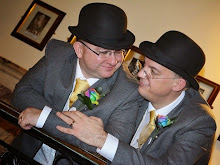
You can watch this extraordinary character study on a beautifully cleaned-up DVD, and I thoroughly recommend it (with lots of bangs and flashes as well as acting, if you like that sort of thing). Though this is another story for which the BBC carelessly destroyed some episodes, this one’s the reverse of The Daleks’ Master Plan – three-quarters of it are present, rather than missing, and, even better, it’s the only one so far where you can see the ‘missing’ episodes on DVD. The BBC stumped up the cash a couple of years ago to have two full episodes recreated through animation and paired to the soundtrack, so it now starts with a rather marvellous film noir cartoon that completes the story. It’s the best way to remember a magnificent actor bringing a character to life. I remember reading the novelisation of The Invasion in the mid-’80s, and being so thrilled by the story that I acted out scenes from it in Drama class at school. I didn’t play the Doctor; I played Vaughn. Quite often, my imagination would conjure up something more impressive from the book than what Doctor Who had actually produced on screen, and I’d find myself a little disappointed on eventually seeing the video. When, years later, I was able to watch Kevin Stoney’s Tobias Vaughn, I saw everything I’d imagined and much more besides. He was simply brilliant. Ten years ago, I was inspired to draw a set of ‘Doctor and Villain’ portraits, and – as I draw very much more slowly even than I write – I only managed to complete the one. The first I chose, though, was of course a picture featuring Kevin Stoney as Tobias Vaughn (with Patrick Troughton as the second Doctor). You can see it above.
My condolences to Mr Stoney’s friends and family, and he’ll be missed by many people who, like me, never met him but had their imaginations captured by his work.
Labels: Blake’s 7, Daleks, Doctor Who, DVD, In-Depth Doctor Who, Obituary, Patrick Troughton, Pictures, Quatermass, Recons, Reviews, Style, The Avengers, The Brigadier, William Hartnell


Crooked Coroners Corruption Latest: Legalise Bribery!
The position taken by the Liberal Democrats in Parliament – with a very strong view from the FPC passed on to them – is that they oppose the proposals on coroners in the ‘Counter-Terrorism Bill’ (though I may try pressing to make sure they’d oppose the whole Bill if this disgusting crooked coroners corruption stays in). There are already some terrorist and serious crime trials in which some evidence is given in camera for national security reasons, and the Lib Dem Parliamentary team will consider some carefully limited and particular circumstances in which the same might apply to coroners’ courts, but they believe there is no possible argument for trials or inquests being held totally in secret. So, the Liberal Democrats will oppose removal of juries, replacement of coroners, coroners’ courts doing their business in secret or any other measures that restrict public access to justice. But do please press any Lib Dem MPs or Peers you know to stiffen their resolve. If you have a Labour MP, you might also ask them just how ashamed they are.
Liberal Democrat Voice has also now taken up the crooked coroners corruption issue.
Labels: British Politics, Corruption, Crooked Coroners Corruption, FPC, Labour
Tuesday, February 05, 2008
My View On the US Elections…
Meanwhile, for other opinion on the US elections, why not try out the invective-laden Morons.org, the deeply cynical I Have Sexual Tourette’s (which makes the first site look positively restrained, and which is run by a dear friend of Richard and mine), or this fabulous
And, of course, Millennium has already been highly informative about Iowa, South Carolina and Florida.
Labels: American Politics, Blogs
Sunday, February 03, 2008
Mind-Boggling Labour Government Corruption: Unlimited Power To Make Cover-Ups and Fix Trials
It’s appallingly plain that that Labour’s arrogant, corrupt attitude that no law should apply to them has got, unbelievably, worse under Mr Brown than it was even under Mr Blair (when I wrote an article on their contempt for the Rule of Law that, for me, is probably the best article I’ve yet written on here). Two baronesses (both one-time Leaders of our party in the House of Lords) immediately spring to mind: Shirley Williams attacking biased legislation when “the Rule of Law becomes the Rulers’ Law” and Nancy Seear saying that
“If my party should abandon the independence of the judiciary, I would promptly abandon my party.”I trust the Liberal Democrats will hammer this shocking piece of totalitarian corruption.
What’s the plan? Simple. If this is passed, the Home Secretary can do away with juries and replace coroners with their own nominees at will, not just in “terrorism” cases – though they’ve sneaked it into a ‘Counter-Terrorism Bill’ because they think people will be afraid to vote against that. But no, this new law has nothing to do with terrorism. Government ministers will be able to do this on grounds of “national security” or “public interest”… Which are such wide categories that they can do whatever they like, whenever they like.
Just think about that for a second.
If ever there’s something the Labour Government considers awkward or embarrassing, either to themselves, their dodgy business associates, their fellow corrupt, undemocratic regimes, or of course all three, if ever a death is involved the Government can now both cover it up and make sure that the ‘right’ result comes out of the inquest. That’s what happens when there are no juries and you get to pick your own
The World This Weekend today reported that a long-running case in which the police shot a member of the public has hit the buffers because the coroner has ruled that no finding can be made, because the police and Government are withholding vital information. This is nothing to do with terrorism – it might be about drugs, it might not, the vital information has been censored, so who can tell – but does anyone think the Labour Government would let a jury and coroner embarrass them in this way if they could get rid of both of them with a flick of their fingers? Or stop a jury and independent coroner ruling on, say, the death of Jean Charles de Menezes? You can just hear the Home Secretary’s phone ringing with Ken Livingstone on the line calling for another cover-up to protect his crony Ian Blair, can’t you? Accountability? Transparency? Honesty? Bugger off.
If this gets through, how long can it be before the Labour Government proposes ‘a minor tidying-up extension to cover loopholes in the law’ by saying they should be able to get rid of juries and parachute in Labour-favouring judges to all criminal trials? Since the Bill of Rights in 1688, a judge can only be dismissed by an Address carried by a two-thirds majority in both Houses of Parliament, meaning no government is ever strong enough to do it by themselves, and even the Bill of Rights does not allow the government then to pick a tame replacement (thanks, as for so many things, to the late Conrad Russell and his An Intelligent Person’s Guide To Liberalism, from the chapter on the founding principle of Liberalism, ‘Controlling Executive Power’). But, because we have no written constitution, this Labour Government would only need a simple majority to dismiss that law, and after that a two-thirds majority would be replaced by… A Minister flicking a pen.
It would be impossible to trust the courts, if the Labour Government could choose every verdict, and cover it up. It would be impossible, impossible to stop the Labour Government doing whatever the hell they liked and break the law – as they have, again and again – literally with impunity, if the Labour Government could choose every verdict, and cover it up.
It would be impossible ever to rebuild public trust in the Rule of Law or the political system if this goes through and the Labour Government could choose, quite literally, to get away with murder.
Update: The BBC website now has a story summarising the report on The World At One, and James Graham has also now written about the issue.
Labels: British Politics, Corruption, Crooked Coroners Corruption, Labour, Stupid Ideas
Wednesday, January 30, 2008
What Do You Do When Someone Else Is Jobsworthed?
I’m sure everyone gets stuck behind someone else in a queue from time to time, and it’s easy to blame the person in front of you. I know I tend to, and if it’s me that’s taking the long time at the head of a queue with some unusually complex demands, I feel embarrassed at keeping all the people behind me. This afternoon was quite different. I could hear more than enough of the conversation to wonder just what the receptionist was playing at, and to feel increasingly embarrassed at the way the people in front of me were being treated.
In short, the couple at the desk were trying to register with the practice – which, incidentally, has “REGISTERING NOW! We are now registering new patients” at the head of its website at this very moment – and the receptionist was being as obstructive as she possibly could. It was very difficult to see any possible reason for this other than that the couple were evidently new to Britain. Their English was faultless, but their accents (possibly Italian?), the passports they were presenting and the content of their conversation made this very plain. As far as I could tell, they had every single thing that the receptionist was asking for. It’s just that the receptionist kept asking for things again that they’d already presented, making them answer the same questions again, and saying that they could only register, if you’ll believe this, on separate days. Their little boy, for example, couldn’t register just then, oh no; he’d have to be registered when his dad came in for a medical check-up. Then she offered an appointment for the father on the 8th of February, but couldn’t offer the little boy one straight afterwards, because he wasn’t registered. Perhaps she just didn’t think to tell them that, twice a day, you can ring and make a within-twenty-four-hours appointment on a first come, first served basis? Or perhaps she was trying to discourage them from registering? And, of course, it was only when the little boy came in for his appointment – whenever that might be – that they could present his immunisation details. But they had the papers with them, insisted his papers, waving them. No, sorry; they had to take them away, and bring them back. I could see the photocopier from where I was standing. Wouldn’t it have been simpler just to attach a copy to the father’s file?
The father was getting rather resigned, and the mother rather stressed, but both were reasonable and polite throughout. So when, after a lot of this, the mother asked why she should have to come in five times for the same thing, what do you think the response was? Not, ‘I’m sorry, it’s been a long day’; not ‘I’m sorry, I know it seems tiresome, but everyone has to go through this’; not even the standard jobsworth ‘I’m sorry, these are the rules’. Just “If you’re not happy with the service here” – wait for it – “then you can register with the Barkantine Practice. They’re taking on new patients at the moment.” Just like you proclaim to be. And when the receptionist started upbraiding them with “Why haven’t you registered with the NHS before?” I knew the answer as well as the couple in front of me did, and so, having listened to much more of the conversation than I had, must the receptionist. First, it’s none of her business, anyway. And second, there’s no possibility that she didn’t know the answer before she was told: “We’ve only just got here.” She could have said, ‘I’m sorry, but it’s more complicated when you haven’t registered before.’ She didn’t. She clearly meant, ‘Why don’t you just f*** off back where you came from?’
Now, the surgery wasn’t busy. While I was there, only one other young couple came in. They saw the little boy playing round the outer door as they did so, and immediately went to his parents and alerted them, in a friendly and concerned rather than an officious manner. And when the little boy – who’d stood patiently for the first few minutes, but had clearly got very bored – wandered over to some of the NHS pamphlets on display, found some cards about smoking, picked them up, shuffled them, then accidentally dropped half of them on the floor, naturally I helped pick them up. His dad turned round to help and, as he wasn’t in mid-conversation with the jobsworth for that lone moment, I felt compelled to apologise to him, and tell him they weren’t usually that rude. Meaning ‘the staff here,’ but thinking ‘British people’. I wished him good luck, and shook his little boy’s hand when he said thank you. But that felt rather inadequate.
I’ve been registered there for a dozen years. All the doctors I’ve seen have been polite and professional, and usually friendly (if not always able to treat my exciting problems), and the receptionists have always been polite to me. I’ve never seen them rude to anyone, in fact. So I hope today was a shocking aberration, and not a policy. But what can I do, other than just writing a stiff letter? And what should I do if I see something like that again?
Labels: Health, London, Meddling In Things That Are Nobody's Business But Your Own, Personal
Tuesday, January 29, 2008
Boris Pledges: I Will Have More Money Than Sense!
The Guardian’s report on Boris Johnson’s campaign focused on the conflict of interest in one of his big donors being a property developer planning big buildings in London; accepting that was stupid of Mr Johnson. But what it missed, and Mayorwatch was the only site clued-up about London politics to spot, is that Mr Johnson’s campaign has promised to spend £1.25 million against a spending limit of £420,000; missing that was very stupid of the Guardian. You might think £420,000 is quite a strict spending limit, considering there are eight million people living in London, and compared to – say – the limit per head for a Parliamentary by-election, or the £20+ million that Labour and the Tories throw around on their sizzling overdrafts every General Election. You might even say it’s a sign that the Labour Government doesn’t take London elections seriously. But the fact remains, that limit is the law.
And Boris Johnson’s campaign has boasted that he will break the law by spending three times as much as the legal limit.
Mayoral spending limits are fixed by law, and take effect from the 18th of March. Mayorwatch reasonably thought it unlikely that two-thirds of a Mayoral campaign budget would be spent in the next month and a half, leaving only a third as much to spend in the two months when everyone’s paying attention, and asked Mr Johnson’s campaign for clarification. Their reply showed that arrogance and stupidity aren’t restricted to the candidate himself:
“We disclose financial information about the campaign when the electoral commission requires us to – they ask for names and details of amounts given but do not ask for information on what we spend it on. I'm afraid i am unable to disclose how much is spent on each area of campaigning… Since the current Mayor is currently running his campaign from City Hall, perhaps you can ask him the same questions and enlighten us on when he intents to stop using city hall staff for election purposes?”Readers may well agree that Mr Livingstone is a bullying egomaniac with a careless disregard for financial propriety. By drawing attention to this, however, Mr Johnson’s spokesperson seeks to persuade people that the cure to Mr Livingstone’s dodgy ways is to elect an incompetent bullying egomaniac with a careless disregard for financial propriety. Mr Johnson’s pledge last week…
“Another day, another scandal at City Hall… Being the Mayor of London is a huge privilege and not one I will take lightly. From day one of my administration I will be accountable and open to scrutiny. The position will never be abused again.”…has lasted about three days. Whoops!
If Boris Johnson isn’t taking the rules about the Mayor of London lightly, he’s doing a very good impression of it. But has he ever taken the job seriously? Tories were complaining for months after he’d become their candidate that he was doing nothing to get the job; also last Autumn, during the run-up to The Election That Never Was (yes, he was the Tory I alluded to at the bottom and never got around to following up), Mr Johnson announced he’d be standing again as Conservative candidate for Henley. It’s one thing to tell the eight million people of London that none of them are talented enough to run their own city, and that we need a viceroy from Henley to ride in and keep us plebs in order. But he’d previously said that, if he became Mayor, he wouldn’t stand again as an MP. So announcing he would be a candidate in both elections at the same time… Arrogant, you might conclude. And stupid. But most of all, it shows that he’s not really interested in the London job.
I was reading a piece on Intelligence and Ignorance yesterday that had a fairly reasonable sketch on each of the three main candidates for Mayor. He felt, however, that Mr Johnson was likely to be such a disaster that he’d be forced to vote for the dodgy Mr Livingstone to keep him out, despite thinking Brian Paddick would do the best job. So, with all the troubles and scandals surrounding the incumbent Mayor, Mr Livingstone probably rejoices that fear of Mr Johnson is his biggest asset. Well, Labour’s election pitch against Liberal Democrats who’d do a better job so often boils down to ‘We’re s**t, and we know we are, but, oooooh! The Tories! Scary!’
In London, Labour’s ‘You have to vote for our bully, because the Tory would be a disaster’ line can be exploded. For all those people who know Brian Paddick would make the best Mayor for London, but are tempted to support Ken Livingstone to keep a hopeless Tory bungler out of the job, there’s a simple solution. It is impossible to ‘let Boris in’ by voting for Brian first. The voting system for London Mayor (unlike for your MP) gives you two choices. When the vote’s counted, if your top choice isn’t in the top two, they look at your second choice. If that one’s in the top two, your vote just gets added to their stack. So even if you’re tempted that way, there’s no reason to hold your nose and vote for Mr Livingstone; you can vote on hope first, and let your back-up vote be about fear.
And when Mr Livingstone takes only his own ego seriously and Mr Johnson takes nothing seriously, doesn’t London deserve someone who’ll take the job seriously?

Labels: Conservatives, Corruption, Labour, Liberal Democrats, London, The Golden Dozen
Thursday, January 24, 2008
History Repeats Itself: First As Farce, Then As, Er, More Farce
Just a few nights ago, Film Four repeated two of the greatest (and funniest) films ever made, back to back – Carry On… Up the Khyber, followed by Monty Python’s The Life of Brian. Disciples of the far left who’ve seen the latter spend much of their time claiming that they’re no longer anything like the People’s Front of Judea, and indeed that the filmmakers were nothing but stoodges of the capitalist system (which is why no international finance houses would touch it and it was paid for by famously conformist tool of the establishment, er, George Harrison).
Whoops.
With the tragic news also breaking today that Mr Peter Vain has had to resign from the Cabinet, merely because he broke the law that the Labour Government he’s part of introduced but didn’t think applied to them, and used money that the donors didn’t agree to, and laundered it through a thinktank that – as you would expect from Mr Hain – had no thoughts, just a name… It’s not tragic for British politics, of course, as people from across the political spectrum will find the downfall of this vacuous popinjay hilarious, but tragic for poor young Millennium. Who will he find to lavish his triple alliterations on now? Though perhaps it’ll be a relief, if the inventive young elephant no longer has to find so many synonyms for “orange”.
Perhaps Mr Hain might cheer himself up by joining Mr Galloway’s list? They deserve each other.
Labels: British Politics, Comedy, Defections, London
Tuesday, January 22, 2008
What Nick Should Have Said…
Now, I’m not convinced Liberal Democrat opposition to a referendum is right. My instinct is to have a referendum anyway, and the party’s never had a chance to vote on it; unless you count the clapometer on Ming’s speech in Brighton last year, or a Leadership vote between two candidates with the same position, the nearest we’ve had is the FPC’s arms being twisted by Ming for The Manifesto That Never Was. It’s not as clear a no-brainer as the huge constitutional changes in Maastricht – Lisbon is on nothing like the same scale, and it was the Tories who blocked a referendum then. It’s not as clear a no-brainer as the dead-in-the-water Constitution – Britain doesn’t have a written constitution, so any constitution, no matter what it said, would have been by definition a whacking great constitutional change. The Lisbon Treaty is mainly a tidying-up exercise and fiddling round the edges. Despite that, my presumption is in favour of asking the people. However, within the Liberal Democrats that ship appears to have sailed. What I can’t understand is why Nick, knowing this is a big issue, doesn’t have a better answer for his position.
So here’s a suggestion for our new Leader. Next time he’s asked, and pressed either to say he’s backing the Government or sound like he’s wriggling, taking several minutes even to clarify whether we’d abstain or not, try this:
“It’s very simple. There are two referendums we could have. A referendum on the Lisbon Treaty is a waste of time. The Treaty’s a pile of tedious bureaucracy – what’s the point of wasting the British people’s time with it? So we’d vote against that, but we are the only party that supports a referendum on the big issue: Europe, in or out. When you ask who we’re supporting, we’re supporting the Liberal Democrat position, which is to give the British people a say on the main issue. Labour doesn’t want to give anyone a say on anything; the Tories are afraid to give the British people a say on the big issue, and just want to waste time on Euro-nerd trivia. That’s the difference.”Update: Lib Dem Voice is kinder, and has links for you to listen and make up your own mind. Of course, it’s always possible that the Speaker may not allow us to have a vote on the big issue referendum. But the other night he wouldn’t even allow a referendum on the Euro-nerd trivia issue when they were debating the Euro-nerd Trivia Treaty. So that’s less of an embarrassment for the Liberal Democrats than it is for the House of Commons, who voted in a Speaker who’s more interested in fixing things to save the Labour Government’s arse than in any sort of Parliamentary democracy.
Labels: British Politics, European Politics, Liberal Democrats, Nick Clegg, Radio, The Golden Dozen, The Today Programme, Top Tips
Monday, January 14, 2008
Go Brian!
Despite all that, Neil Woollcott thinks Brian isn’t showing us all enough love. He even asks the mournful question, “Is Brian Paddick ashamed to be a Lib Dem?”
In a word, no.
In fact, I can’t think of any other candidate who’s been more eager to promote our policies in his TV appearances – and he’s also a very definite conviction Liberal. Since he started openly seeking our nomination last year, I’ve never heard a public pronouncement from him where the words “Liberal Democrat” don’t pass his lips.
The question is, though, who is his election campaign aimed at? It could talk just to the vaguely Lib Dem vote in London, and aim to get towards 20% on a good day (or closer to 10% on a bad one). Or it could try and go further. Brian’s definitely the “go further” candidate, and I’d much rather have Ken out of office and Brian as Mayor than make sure the website uses the right colours. More importantly, it leads with a man qualified to do the job, and other pages showcase what Liberal Democrats are doing all round the capital.
I know that in the ’90s politicians trying to separate themselves from their parties got out of hand – usually Tories preferring to appear as independents to a party label slightly less popular in the polls of the time than Ebola Virus – and you can still find plenty of Tory MPs whose websites make it immensely difficult to spot their affiliation. And I’m not a huge fan of presidential politics. But, really, this is a Mayoral contest, where one person is being picked to have practically all the authority over eight million people. If there’s one job in British politics that can’t possibly avoid being presidential… This is it ;-)
Oh, and glancing at the front page of Brian’s new site: no, it doesn’t have the party colours. But it has a brace of Lib Dem MPs pictured on it, five Lib Dem click-buttons at the bottom and a “Join the Lib Dems” right at the top, the statement “Brian Paddick is the Liberal Democrat candidate for Mayor of London,” oh, yes, and the words “Liberal Democrat” or “Lib Dem” seven times. All on the front page. He doesn’t look like he’s in the closet to me…
And I Can’t Resist… Serious About Peter Vain
It’s a measure of what a laughing stock the tangerine-toned declaration-dodger has become that I can’t tell you with absolute certainty that this is just a gag. Either way, it made me laugh.
Labels: British Politics, Liberal Democrats, London
Wednesday, January 09, 2008
Nasty ‘Nice’ Tories’ Latest: Back to the Workhouse
Twisted Tories
You can see how all this happened. Sitting back over their enormous meals in their enormous houses, Tory MPs watched the BBC’s new adaptation of Oliver Twist and empathised with the enormous workhouse patrons who were so
Of course, this chimes in terribly well with Mr Brown’s philosophy. Unlike the Conservatives, he doesn’t want to kick the poor, but he does want to boss them about. Labour’s whole approach is that they know what’s good for people much better than people themselves, and it’s not as if the Labour Government has a record of astounding cock-ups in their bossiness, is it? Oh. Since the Labour Government took office eleven years ago, Mr Brown’s iron hand – suffering badly from mettle fatigue since losing someone else to blame for his decisions – has enforced his dogmatic belief that everyone must be in any sort of work as a panacea to, well, everything. It doesn’t matter if some people or some families know something else would work better; Gordon Brown is better-informed about the lives of sixty-million-odd people than they are themselves. In this climate, it’s no great surprise that Labour’s response to the latest Tory wheeze is not ‘You’re a bossy, bloated throwback to the Nineteenth Century who’s in it to subsidise your mates in big business at taxpayers’ expense and to humiliate the poor while you’re at it,’ but a feeble ‘It would probably cost too much’. Well, the Labour Government should know about throwing wads of public money at private consultants and not getting much back for it, but I fear they’ve not learnt any lessons from it. So what they’re probably thinking is ‘Well, we didn’t think of it, so it must be wrong. But in a little while, when we do think of it, we’ll call everyone who then disagrees deliberately evil’. They’ve got form, and you only have to give them time before the cosy consensus between Labour and the Tories sees Labour adopting more Tory ideas, or vice versa.
Living on any sort of benefits isn’t luxury. It’s a crap life, and no Tory MP who claims claimants are on the life of Riley would consider that they or their families could get by on anything like it. Of course there are things that need to change in the benefits system: if you’re out of work for a long time, you feel hopeless, and there’s no-one giving you hope. There should be far better training to help you be, and feel, employable again. And the crazy poverty trap that I remember Liberal Democrats complaining about as far back as the 1980s must be changed – the trap where if you try to work you lose money through the Byzantine web of benefit bureaucracy. But that’s more difficult, and less headline-friendly, than just whipping up
Of course Tories like Mr Cameron who’ve always had more to live on in a year than benefit recipients have in a lifetime say this is an easy life. That’s what I believe Freudians call ‘projection’. And that part of their mind-set that isn’t a nasty instinct of class warfare is a hangover from the blind alley of Twentieth Century politics, the Marxism and anti-Marxism that insisted there were only two sides to politics, and that both were all about money. Only the most stubbornly Tory economic determinist would insist that all people on benefits contribute nothing to society, and so must be made to do ‘something’. Being on benefits does not mean you’re anti-social; being in work does not excuse you from being a git because you pay income tax (or have fancy advisors to help you dodge it). It is both criminally stupid and morally offensive to argue that the only way to contribute to society is through money, but it’s exactly what both Tories and Labour believe.
Then What’s It For?
But let’s say for the sake of argument that that was true, that there were no charity volunteers or extended families or artists or any other sort of contributors among the people not ‘working’. What good is saying that all people out of work are by definition feckless and lazy and must be ordered into what the big government thinks is good for them going to do? Raise their dignity? Hardly. Is ‘community work’ just some worthless activity to make people feel punished for being out of work? Then it’ll only make people feel worthless, and be no use in getting them into real jobs. Is it, instead, doing real work for the Government that genuinely needs doing? In which case, will benefit levels rise to the minimum wage? If they stay as slave rates – and it’s pretty much the definition of slavery that you either do the work you’re ordered to or starve in the gutter – for work that needs doing, then surely that will put out of work the people who’d be doing it otherwise? Which means that they can be forced into the effective slavery too, if all their jobs have been undercut by the wageless ones. Hurrah! And so we have a deflationary spiral in government costs, at just the tiny expense of a new slave class denied all choice over their lives, unless they ‘choose’ to be starving and homeless. Which I don’t think is a price most taxpayers, being human beings before being economic units, are prepared to pay.
The Labour Government is, of course, also trying to drive down public sector wages, though not – yet – in so drastic a way. I don’t know enough, economically, to make an informed argument about whether or not three-year pay deals for the public sector are on balance the right thing to press for, though Millennium Dome and Bernard Salmon have each suggested that that sort of Labour Government target may not be altogether effective. What I do know is that the weasel words heard yesterday from the Prime Minister and his Chancellor were self-serving spin. I’m happy to listen to the economic case about stewarding the nation’s finances – but saying that fixed pay would be good for public sector workers because it gives them stability is a lie. At least, I hope the country’s top politicians were lying to us; the alternative is that they know less about economics than I do. Fixed costs make it easier for the Labour Government to plan ahead, which may or may not be good for the economy as a whole. But for the public sector workers involved, they have unpredictable costs on a fixed income. Without their knowing what inflation is, they have less “long-term stability,” not more; rather than being better able to plan ahead, they must simply hope that the Labour Government has got it right and they won’t end up losing money over the next few years. Because when has Labour ever made a mistake?
Like ID cards, this public sector price-fixing is being sold as something that’ll make people’s lives easier, but in fact it’s just to make people easier for the government to organise.
Sick Plans
The last thing I want to write about – pun intended – is the Tory plan to victimise people who are sick or disabled. Labour, too, have been increasingly targeting their invective against recipients of incapacity benefit; because whether you hate the poor (Tory) or believe work is the source of all moral virtue (Labour), through not being in work, sick or disabled people are probably scroungers and evildoers and should be criticised whenever possible. And, yes, some people on long-term incapacity benefit have had their lives complicated by living in areas the Tories dive-bombed in the ’80s and having been put onto a different benefit than whatever-that-year’s-thing-you-get-that-counts-you-as-unemployed was in order to cover up the collateral damage. But how exactly does setting an arbitrary target for getting people off any sort of benefit help anyone, unless you’re a cynical politician who thinks plucking a number out of the air sounds ‘tough’?
And now for the bit that I don’t really want to write. I’m on incapacity benefit. In two years of blogging, I’ve never typed that before, though some of you may have read between the lines. I’ve not written it because, in the way this country looks at people like me, I feel ashamed. I feel ashamed for being on benefit, and I feel ashamed of why I have to be. I suffer from a number of thoroughly unglamorous, unpredictable and generally humiliating long-term health conditions. Many people are worse off than I am, and some days are better than others. Some days I can get out, or type an article; some days I can do very little other than be stuck on the loo all day, and that offers precious little dignity, still less the life of Riley. Last night I had to miss yet another Federal Policy Committee meeting because I wasn’t well enough to leave the flat; I was sacked from each of my last two jobs because eventually, not every day but most of them, I was too ill to work. And when on occasion I go through good ‘patches’, though they never last, I wonder how, if they do, an employer is going to employ someone who can be very talented at their job when they’re there, but on a lot of days won’t be able to be there at all, and won’t know until it hits. It’s not exactly brilliant for planning ahead. My self-worth is low enough, and I suspect the same of hundreds of thousands like me. The government standing over me with a stick is going to make no-one feel better – except the sort who like hitting weaker people with sticks.
At this moment, I have a 20-page form in front of me that I have to fill out, as I do each year, to say just what is wrong with me and how it affects me. And soon I’ll be seeing a government-enforcement-doctor, who’ll ask me questions that I’ve answered on the form because no-one actually reads the things, and who I’ll have to stop before they ask me follow-up questions because they won’t have heard all the thrilling different things wrong with me yet. And I’m worried right now, as I am each time, because if it’s a better day and I can make it to that appointment, I might not seem like there’s enough wrong with me. And if it’s a worse day and I can’t make it, I’ll be penalised for that, too.
Best bit of bureaucracy: being told I’ve been struck from hospital appointments for one condition last year because I had to cancel more than two of them – because of a different condition. ‘Come back when you’re cured’ is a pretty weird message for a hospital to give, unless I’m very old-fashioned.
Tory rhetoric is designed to make people feel afraid – afraid, for people in work, that someone else is doing unfeasibly well by taking them for a ride. And afraid, if they’re not in work, that if they dare to pipe up they’ll be told ‘You’re well enough to make a fuss – so we’ll stop your benefit, and anyway no-one should listen to you because you’re by definition scum’. And that cynical threat is what’s made me stick my head above the parapet, though I’m afraid, too. But if someone like me doesn’t say ‘Sod off, you vindictive bastards, and how would you like it?’ then who will?
Update: Two extra references. On the subject of the Tories and Labour choosing as their victims the people least able to hit back, I was unable to find an online copy of the old Not the Nine O’Clock News sketch of a Tory Budget – raising taxes on wheelchairs, white sticks and so on – so here’s one of Call-Me-Dave-Kids Cameron-style kindler, gentler, more understanding solutions to social problems. For a more up-to-date take on the
Further Update: Three more references! Gavin Whenman has drawn my attention to a brilliant Balloon cartoon.
Labels: British Politics, Charles Dickens, Conservatives, Health, Labour, Personal, The Golden Dozen
Wednesday, January 02, 2008
The Way Back
Most series start with a ‘pilot’ episode that sets up everything we might expect from the series. While The Way Back introduces the main character, very little else carried over; it’s more like a prologue than a conventional pilot episode. Set on Earth, with ordinary people slugging along under a drably authoritarian administration, the hero is initially very sniffy about getting heroic – and, in the rest of the series, this is the man who’ll turn out to be the only nice one. With only two of the other regular characters appearing (and even then only as cameos near the end), the focus is on how Blake becomes himself, and on the faceless banality of the system that forces him to react.
The most memorable characters of the series – anti-hero Avon, iconic villain Servalan – are yet to appear and give bastardism personality. Instead, we have a story that could almost be a Play For Today about a futuristic Soviet state, something which dates it almost as much as the constant presence of security cameras as a signifier of oppression; one strain of totalitarianism has since lost, the other won. The central character is an apparently ordinary person who finds his life is a lie, his memory is a lie and the whole system is a lie, which then lies about him in the most horrible way to destroy his credibility as a political threat. Very few later episodes deal with such edgy material; very few are anything like as brutal; and very few are anything like as impressive. Despite it being almost completely different from the rest, it remains hugely powerful, both as a piece of drama in its own right and as a statement of what our heroes are there to fight against through the rest of the series.
Labels: Blake’s 7, DVD, Reviews, Star Wars, Utopia
Thursday, December 20, 2007
The Bloggers and Nick: Decision, Diversity, Doughnuts
There was a slightly smaller bunch of us this time round, at shorter notice than before and slightly more nervous: we were, after all, seeing Nick just hours after he was elected our third Leader in two years or our third in eight, depending on whether you want to be a spin doctor and count from the last day of one Leader and the first day of the next or more honestly compare like with like instead and measure from day one to day one. Come on, come on – remember 1999, when Paddy Ashdown announced he would retire gracefully to hand directly over to the new Leader, without an ‘Acting Leader’ in between? Did we hear hysterical reports of ‘The Liberal Democrats’ second Leader in two minutes!’? And who knows? Our third Leader in forty-two years, if Nick’s a runaway success and stands down at last to tearful crowds thronging the streets at the age of eighty. No, don’t worry; I wish Nick and long and successful reign, but I don’t think he’s planning to pretend to drag himself from the throne in his dotage to wails and sobs. Tony Blair planned that, after all, and look what happened to him.
We arrived rather earlier than Nick did, unsurprisingly; this was a bit of a busy day, with us snatching twenty minutes between a Newsnight hard fight – Clegg over Paxman by three rounds to one, with no submission – and an ITN bout. Equally unsurprisingly, I was the last of the bloggers to reach Cowley Street. Uncannily, I’d been very early for the other interviews, but this time my timing was back to my usual form. In my defence, I’d made a doughnut-related detour…
The Deadly Doughnut
Now, once Nick arrived, there were two bits of business before getting down to the questions. First was the photo-op, with Alex Folkes on hand to snap a few shots of the six-ish of us with Nick and other shots of Nick with the lovely Brian Paddick, who I was delighted to see again. And then there were the doughnuts. Gordon Brown, incidentally, served mince pies at his press conference yesterday morning, and boasted that he paid for them from his own pocket. Well, I’m on about a twentieth of his salary and I bought the doughnuts on Tuesday because Richard was busy (much nicer than mince pies, too), while otherwise Richard gets them every time. Confectionery is for any day people fancy it, not just for Christmas, you grumpy old miser!
Where was I?
Oh yes. Well, Alix has already given a splendid account of Nick And The Doughnut, but to add my take, he asked “Is this a tradition?” – of course it is, but like all traditions it’s one that was invented at some point, and that point was more recent than some – and then first expressed delight at the succulent jamminess of his choice, then after a few bites found it a bit too much. And also started to worry that it was going to ooze all over his shirt and trousers, so apologetically disposed of the end of it. Pictures sailed through my mind of the ITN interviewer eyeing up a sticky Nick and asking, ‘So, Mr Clegg… Despite being the frontrunner, you were widely held to have fought the weaker campaign and just slipped in by a whisker. Aren’t you a jammy sod?’
Before you think this was some sort of devious trap to embarrass our glorious new Leader, you should be aware that most of the doughnuts did not contain jam, and Nick was given first pick (I held my breath in case he went for the most chocolatey one before I could pounce). It was even clear from the outside of the doughnut – to anyone with the merest acquaintance with doughnuts, at least – that this doughnut was going to have jam in it.
It did, though, mean, that throughout the rest of his answers I kept looking not into Nick’s eyes but at the icing sugar generously coating his lower lip. Sadly, being still in Central London when Nick got to his ITN interview (and presuming it was part of the 6.30 programme), I didn’t get to see if the icing sugar was still there for that. Did anyone notice?
How Quickly Do You Need To Act?
Our young elephant Millennium Dome, with a little assistance from Richard, was first in with a question. And has even made a major headline in the Guardian as a result. Sort of. Anyway, “People are talking about what you have to do in your first hundred days,” he lobbed – “Aren’t the next thousand days until the General Election more important?” Well, Nick didn’t fall for it, and was determined that his early momentum will be crucial (as everyone and Vince in particular has advised). While none of the press are on our side, there’s a narrow window of opportunity where he’ll be given both more attention and more of the benefit of the doubt – or at least not constant attack. He even said he was looking forward to Prime Minister’s Questions, as well as that he wants to “get beyond the infantile assumption” that all life is down to half an hour of playground pettiness in the House of Commons each week. He’ll make mistakes, he knew, but he’s in for the long haul, and that means there’ll be ups and downs.
Do You Like and Are You Like David Cameron?
Alix Mortimer asked about the accusations of a possible coalition with the Conservatives, and of Nick being just a “Cameron-lite” (imagine! He’d have to wear lead boots to stay on the ground). Could Nick supply three things to say to shoot those accusations down, she wondered? And before I give Nick’s answer, you really should read Alix’s account of this, because her comparison of Chris Huhne’s elbows to Ava Gardner’s legs made me hoot.
On Mr Cameron and his party, Nick bluntly argued that we shouldn’t take seriously this sudden “progressive consensus” line they’re peddling. It’s just a cynical manoeuvre – they’ve got no idea how to deliver any of it, whether it’s social justice or the environment, and on immigration Mr Cameron is just the same as the Tories have always been, just with nicer verbs. They claim to be internationalist now, but at the same time want to pull up the drawbridge over Europe. They talk about decentralisation, but still try to control all the money from the centre, making decentralisation meaningless. Most of all,
“The Conservative Party is not a progressive party.”Tip: if they’re still saying it in a month, I’ll be very surprised. The Tories will hate being called “progressive” so much that it’s got to be just a stunt to try and steal a headline from our new Leader, in much the same sort of childish spin that Tony Blair used to try. After all, no-one in the history of the world has ever joined a Conservative Party to be progressive; “conservative” is literally the direct opposite of “progressive,” so something’s a bit whiffy there, don’t you think?
On himself and Mr Cameron personally, Nick said that the differences were more instructive than the similarities: though the two of them were roughly the same age, growing up under Mrs Thatcher, Nick was propelled into politics to fight against the divisive, unpleasant politics of Thatcherism. Mr Cameron, on the other hand, chose to become one of Mrs Thatcher’s footsoldiers. So whatever their ages, their choices were completely different.
And on coalitions, Nick said again that he’s not in the business of leading an annex to the Conservatives or Labour. He’ll set out, instead, why we are the most in tune with the core liberal instincts of people, and on the side of them and not of Westminster politics. The Tories still support the system as it is – they don’t put their money where their mouth is on decentralisation.
Pressed by Alix on challenging Mr Cameron directly, Nick promised there’d be some core challenges on substance coming up to tackle Mr Cameron’s vagueness, whether that attack comes from him or from someone else. But not today – “it’s my day,” Nick pointed out, beaming.
Why Is Our Support Among Gay and Ethnic Minority Voters Slipping?
Just for once, I managed to mangle my own question (which led to a question back from Nick), so I’ll have to be more critical of me than my interviewee this time. Whoops. Anyway, the basis of my question was that at the previous two General Elections, we’d done particularly well among lesbian, gay and bisexual voters, and among ethnic minority voters. Now, with most (though not all) of the legal discrimination on sexual orientation changed, and with the effect of the Iraq War fading somewhat, there’s polling evidence that we’re slipping back. So how would he find a new appeal to those voters?
How I got tangled was in trying to relate the question to issues he’d raised. In his speech that afternoon he talked about “families,” which is sometimes a loaded term (though I was nervous about going too far down that road, as I’d been told James was considering a question on that topic but I didn’t know what it would be); and in his campaign he’d talked about having an “academy” to boost our women and ethnic minority candidates, and while I agreed with that, we’d previously not had good representation yet we attracted votes, so it’s a terrible mistake to think it’s all about who the people are rather than what they say.
What I was trying to get at was that we’d previously done very well with the right message even though we didn’t have the right messengers (we’ve never gone into a General Election with an out gay MP, though we finally gained one last time, and we went into the last General Election with just one visible ethnic minority MP, who sadly lost his seat). The party now keeps agonising about how to get wider representation, but though we should, that’s actually looking inwards at ourselves rather than reaching outward to communicate with other people. In making it all about seeing the right messengers, the Liberal Democrats have lost sight of what the message should be, and that for me is more important. But though I’m not quite sure what I said, it was definitely less clear than that!
Anyway, whatever my question was, Nick’s answer was that he doesn’t think particular groups vote for us just because of a particular issue, or campaign, or law, or even a particular military conflict, but because we represent their values.
“The core of my Liberalism,” he said, “is tolerance, pluralism, diversity.”And, most of all, he said that “I’m a man of my generation. It’s simply not an issue. And the effortless respect that I have, that we have, for difference will attract people across a range and feel rather than just issues would.” He also noted (my having failed to point it out) that at the last election we gained our first out gay MP, Stephen Williams, though interestingly he didn’t mention a fairly impressive “beacon”: the chap he was having his photo taken with when we came in.
People vote for us because they like the ethos of the Party: “contemporary, tolerance, lack of moral prescription about how they lead their lives.”
That, for me, was a good and a bad answer rolled into one. I agree that if the Liberal Democrats exemplify celebrating diversity, and if he exemplifies that for the lot of us, it’s a strong start. But I don’t think it’s anywhere near enough. I don’t think he’s really thought about it; what he said boils down to ‘We’re nice, and people will recognise it,’ and that’s pretty much been our selling point for the last half-century. It’s an approach that Nick displays impatience with on other issues, and I don’t think it’s up to scratch for these voters, either.
The votes that previously came to us, from groups that traditionally gave heavy support to the Labour Party, seem to me to have things in common. Both felt badly let down by the experience of Labour in power; and the Liberal Democrats really stuck our necks out on controversial issues on which each felt strongly. My worry is that the first reason is receding, and the second has largely stopped happening. On the other hand, James Graham makes an excellent point in his own write-up that “the fact that gay voters are becoming increasingly hard to pigeonhole is in many ways a positive sign,” and that “there is strength in mainstreaming this issue and moving beyond identity politics”. There’s certainly strength in moving society in a more Liberal direction, and making ‘minority issues’ less divisive. I’m as happy to see religious bigots shoved to the extremes where they belong as anyone, for example, but there are still plenty of issues on which we’re nowhere near that yet and bigotry is still pretty ‘mainstream’ (just look at the salience of immigration). Either way, we have a lot more work to do.
How Do We Increase Diversity In Our Representatives?
Linda Jack’s question was linked but with a very different emphasis, asking about increasing diversity in our MPs, and the planned Academy. Nick answered as he had before that our lack of diversity at a Parliamentary level is out of step with what we stand for, and that
“We have to make significant progress by the election after next or I will re-open the issue of short, sharp positive discrimination. The clock is ticking.”He accepts that he can’t do much for the next election, with most candidates already selected, but he can for the one after. He also plans to use such limited powers of appointment as he has to promote role models and “beacons,” as well as bringing in people “not familiarly associated with the Liberal Democrats”.
Where Do You Look For a Family?
James Graham built on similar themes, confirming just how hot diversity issues are in the party. Having listened to Nick’s acceptance speech a few hours earlier, James seized on the plan to build a network of families to advise him. How would Nick do this, wondered James, and how did he define a “family”?
Nick jumped to settle the definition issue first, pointing to his speech to the IPPR in November (I’ve not had a chance to listen to it yet, but you can download it and a question-and-answer session here), slightly apologetically – clearly not comfortable with ‘I refer the honourable gentleman to the answer I gave earlier’ – but summarising his view as “not a tight definition at all,” with families “of all shapes and sizes,” “elastic, married or not, extended…” He took a swipe at Mr Cameron’s “absurd £20 bribe to stay married,” continuing his theme that politicians have to talk to people where they are, and not where politicians would like them to be. It helps that we’re not prescriptive about how people live their lives, too.
Rather than explaining the mechanics of how he might assemble a network, then, Nick more interestingly went back to where the idea had come from. Not just in the Leadership campaign, but throughout his time racing around the place as a Liberal Democrat MEP and then MP, he’d always been meeting people with strong, fresh, radical views, and became determined to bring them into a politics that currently doesn’t connect with them at all. So just how it’ll work isn’t all fixed yet; he’s not started with the process, but with the aim, that he wants a way to find a number of families that he can keep in constant touch with to find out about what bugs them. It won’t be as easy to set up as a focus group managed by a PR agency, but that’s the point – these families will have a long, ongoing relationship with Nick, and that’ll be much more demanding but much more raw, rather than managed.
And at that point, having miraculously managed to answer all five of us and several subsidiary questions in under twenty minutes, Nick was whisked off to the ITN studios round the corner, to continue his hectic schedule of interviews. And none of us had asked him about his close result (brilliantly answered by Gavin Whenman yesterday), nor his lacklustre campaign, nor combined the two by asking if the traditional Lib Dem cry of ‘It’s too close to call’ might have been more successful in getting his vote out than ‘It’s fine, we’re miles ahead’… And that was, I think, because the campaign’s over now, and while we all wanted to ask probing questions, we wanted to ask ones that mattered – about how he would lead – and not just try and trip him up for the sake of it. And I think we’re looking forward to chasing all those issues up with him in a few months’ time, too, now that we’re all even more excited by just how well he’s hit the ground running. In the meantime: well done, Nick, and the very best of luck.
Labels: Blogs, Liberal Democrats, Nick Clegg
Wednesday, December 19, 2007
The N-Word Versus the F-Word
I don’t like the word “faggot,” and I sometimes mumble something when someone says it. But I’ve always thought Fairytale of New York was a catchy song, and I only wince a bit at that word (actually, it makes me wince much more coming from Kenneth Williams in Carry On Cleo, and I think that’s a fantastic film). Let’s face it, if I took major umbrage every time I heard a homophobic word, I’d never simmer down, and even complaining that you find something offensive – an exercise of your free speech – is a far cry from calling for it to be banned, which is a denial of someone else’s free speech. As long as the general direction of society’s getting more Liberal and less tolerant of homophobia, this sort of thing’s not worth a fuss, either. Add to that, even if I was one of those peculiarly intolerant people disposed towards censorship, the fact remains that gay people have always been much more likely to be on the receiving end of that, too. I’m even old enough to remember being at school and knowing how stupid the BBC looked for banning Frankie Goes To Hollywood’s Relax because it was about shagging (and that was before I knew I was gay, so I’m happy to say I had some youthful Liberal instincts, or at least anti-establishment ones). So I’m caught between rejoicing at censorship being shown up for being ridiculous, and sadness that yet another hate word’s been given an extra-special boost to use against gay kids in the playground.
But I’d never say or type the word “N*****,” because it’s become such an offensive term. And, I don’t particularly want traffic from the sort of loathsome gits who’d Google-search for the word. Why is it that a word that, looked at objectively, is so much less brutal than one that intrinsically means ‘You should be killed horribly’, is actually seen as so much worse? Well, in part it’s because you can’t look at hate objectively, and you can’t separate the N-Word from its uses and its history, too. Lynching isn’t implicit in the N-Word as burning is to the F-Word itself, but it’s part and parcel of the cultural use of it, which is why it’s so calculatedly shocking when it’s reclaimed by acts like NWA (which, again, of course I wouldn’t censor). But that still doesn’t explain why, rather than being seen as morally equivalent, the N-Word is social death and the F-Word is evidently to most commentators just an excuse to smile.
The answer, I think, is that it simply reflects where ‘opinion-formers’ have got to. And so racism is for most people and certainly for the media establishment – just look at even the Sun and the Daily Hate Mail shrieking at Jade Goody early this year – something that you can’t support in public. But homophobia… Well, we’re a few decades behind, so it’s all right for that still to be a bit of a laugh.
And, if you tune in to Doctor Who’s Voyage of the Damned on Christmas evening, by the way, you’ll find that the people behind it must be quite fond of Fairytale of New York, too. The new song in it, The Stowaway, is a dead ringer for that tune…
Embarrassed Update: my argument about taking offence being fine but censorship being not stands, but researches by the learned Jonathan Calder suggest that I’m wrong on the etymology of “faggot”. Oh well. If he’s right, quite a lot of people I know are wrong… But with Jonathan, you learn something new every day, and this one wasn’t even about Shropshire!
I’m still fairly sure, however, that the derivation of “bugger” is from “Bulgar,” as Bulgarians, heretics and gay people were suddenly the Church’s big new enemies in the Twelfth or Thirteenth Centuries. Yes, if you want traditional Christianity, they only invented homophobia two-thirds of the way into the Church’s history: new-fangled rubbish ;-)
Labels: Bigotry, Doctor Who, History, Meddling In Things That Are Nobody's Business But Your Own, Music, Radio, The Golden Dozen
Tuesday, December 18, 2007
Well Done, Nick!
Blimus, that was close. But didn’t he sound good?
First, a witty and insightful little speech from Vince, clearly enjoying his encore as Acting Leader; then, a gracious and generous little speech from Chris to congratulate Nick, predicting he’ll be a great Leader; and then in effect two speeches from Nick, one to the hall and one to the country, one self-effacing and light-hearted, immediately congratulating and, I hope, signalling a major role for his former rival (“As of now we are colleagues once again, and I am really looking forward to working with you for the sake of Liberalism in Britain”), then the main event powerful, passionately Liberal and showing him at his best.
“I’m a Liberal – by temperament, by instinct, by upbringing.” A great opening line for the ‘outward’ section of Nick’s speech. I wonder if he knows it’s almost word-for-word from John Steed? But he went on to personalise his beliefs, to tie them to his family, his party and his country, with a strong evocation of what Liberalism is and why it’s in tune with Britain:
“My own family was marked, scattered, reunited by the tragic conflicts of the last century. I was taught from an early age that Britain was a place of tolerance and pluralism, with a history steeped in democracy and the Rule of Law. I believe that Liberalism is the thread that holds together everything that this country stands for…Then, of course, the optimism was tempered by realism, facing up to the problem that this is still not the Liberal Britain we want it to be, with “our civil liberties casually cast aside,” “gigantic, faceless, and incompetent government bureaucracies” – never a truer word spoken – and families struggling to meet each month’s bills, to balance the demands of work and the time for a real family life. Politics, he said, was broken, out of touch with people and the modern world. His one simple ambition: “To change Britain. To make it the Liberal country I believe the British people want it to be.” Well, not that simple, Nick. Go on? That would be a country where people can take charge of their lives, where words on the environment turn into real action, “where no-one is condemned by the circumstances of their birth”.
“We’re a people with a strong sense of fair play and social justice. An instinct to protect the environment for future generations. We’re suspicious of arbitrary power, wary of government interference. We want to play an active, enlightened role in the wider world. And we have always put our faith in the ability of ordinary men and women to change things for the better.”
“Why have we stopped imagining a better society? Look at what we’ve got. Labour and the Conservatives have governed in exactly the same way – top-down, centralising. I simply refuse to believe that the only alternative to a clapped-out Labour Government is a Conservative Party that has no answers to the big issues. Environmentalism without substance. Social justice without money. Internationalism without Europe. So the challenge for my party is to define a Liberal alternative to the discredited politics of big government.”And that means opening up the Liberal Democrats, Westminster and politics – holding regular public meetings, give people who support the Lib Dems but aren’t members a say (sounds inviting, but what’s the meat? We didn’t see it in his campaign, and he doesn’t have a blank cheque) and spend one day a week campaigning outside Westminster, again and positively learning a trick from Paddy. He’ll also be setting up a network of families – however defined? – to tell him his priorities. Which should be interesting.
“If you once voted for us, but you think we’ve spent too much time focusing on ourselves…And, again, the party will need to change. “More professional, more united, more ambitious.” Good for you, sir, and the same to you.
“If you once voted for the Conservative Party, but have no idea what they stand for any more…
“If you once voted for the Labour Party, but feel let down by ten years of disappointment…
“If you’ve given up voting altogether, but still care about the world we live in…
“Then a newly united, energetic and optimistic Liberal Democrat party is the party for you.”
“Liberalism is the creed of our times. The politics of ‘left’ and ‘right’ has broken down. Labour and the Conservatives are mutating into each other, united in defence of a system that has let the people down. Instead, we must start where people are, not where we think they should be. In short, I want the Liberal Democrats to be the future of politics. Because Liberal Democrats have the courage to imagine a better society. To break the stifling grip of the two-party system for good, to bring in a new politics, of politicians who listen to people – not themselves – no more business as usual, no more government knows best. I want today to mark the beginning of a real change in Britain. The beginning of Britain’s Liberal future.”A solid, passionate, persuasive speech, then, and either daring or introspective to use the word “Liberal” so much. I hope he gets to reclaim it; more than that, I hope he gets it to resonate with people as he clearly hopes it does. That means I hope he’ll set out in people’s minds a much firmer sense of what being “Liberal” actually means so that people will really identify with the idea, and his speech today made a good start on that; Liberal, strongly delivered, outward-looking …Just a shame to have that line about “a people’s politics”. Dear, dear, that sounds like Tony Blair a decade ago or Eastern European states two or more decades ago. But when a Liberal Democrat Leader makes a speech that has a curmudgeon like me beaming for most of it and just giving one little wince, that’s a definite win!
Update: back from a quick but invigorating bloggers’ interview with Nick (of which more tomorrow, fingers crossed), and rather than just the bits I typed in you can now read his whole acceptance speech online. Which means I’ve spotted the “values” line I was sure I’d heard first time out but couldn’t find when scanning back through the speech to select bits in the following half-hour or so while typing those selections. Of course, it’s because I was looking in the second part of the speech, and it was the bit he started with. One of the things I like about Nick’s ideas is that he wants to communicate our values rather than just our policies, as he did in his evocation of Britain’s Liberalism above. Well, so even I can’t miss it, his promise to do that is up on the much-improved (for one day only, apparently) front of the official Lib Dem website:
“With renewed ambition, we will reach out to the millions of people who share our values but have not yet voted for us.”
Labels: British Politics, Leaders' Debate, Liberal Democrats, Liberalism, Nick Clegg, Speeches
Lost in the Post: Why Postal Services May Prove Fatal For Gordon Brown
Yet Another Fiasco From the Culture of Carelessness
If you’ve managed to look up from biting your nails over the forthcoming Lib Dem Leadership declaration, you’ll have noticed that yesterday the Labour Government got round to admitting a disastrous loss of personal data, again, some months after it was first discovered, again, with nobody having a clue, again. You might have missed it, because this careless was on a smaller scale than the last big one a month ago. This time it’s a mere one-twentieth of the population, rather than half of us. Doesn’t sound so much, does it? Yet three million lives and livelihoods at risk of identity theft is still, as Susan Kramer said, “mind-bending”. Unlike the Labour Minister, she had a practical answer, too:
“Perhaps the answer is we should be holding less data on people or it should automatically be destroyed.Don’t worry, though, fraudsters – those three million people are the pick of the bunch. People applying for driving licences, which if you can get hold of them instead are perfectly genuine fake ID! And mostly young adults, which might mean they don’t yet have credit cards, so you can take out their first for them! Well, it’s nice that under Gordon Brown it’s Christmas for someone. Just a pity it’s for the ID thieves. But, say Labour ministers, there’s no need to panic – these ones weren’t lost in the UK, but in America. And we can all be reassured that there’s no organised crime out there.
“This constant attempt to gather data, to get more data, to know more about you, to link it more together, all of that it seems to me is what comes into question.”
The newspapers, of course, can’t resist festooning their front pages today with L-plates for the Labour Government. It’s an almost irresistible gag, but it misses the point. This Government are not learners at all. They’ve not learnt anything at all in the decade they’ve had absolute control, in which case they’re never going to learn how to run the country competently. Worse, they’ve got complacent and careless and stopped looking where they’re going because they think they’ve got it sussed. They are not ‘learners’. This is not a new government. It’s one that needs a re-test.
This is a deeply rooted and repeated problem of a careless, arrogant Labour administration that believe they know everything and the public know nothing. They simply don’t care what happens to the public, as long as they can carry on in power. Again and again, they inflict pointless new laws on us that just waste police time, then break their own laws because – well, it can only be because they don’t think the rules apply to them. Laws are just to control the little people, not to constrain big bullies like the Labour Government and the rich friends who slip them dodgy cash. Again and again, they prove they don’t care about individual privacy; the Labour Government must know every detail of our lives, and if that means tossing half the population’s bank details out into the street, Labour thinks it’s a price worth paying. After all, they’re not paying it. But when it comes to their cock-ups, they do whatever they can to make sure we don’t find out. No wonder political culture has become so debased. When the Labour Government is so smug and so reckless at the same time with all of our most personal details, it gives everyone a reason to despise politicians. As Vince Cable said yesterday about enquiries into all these disasters:
“If data and valuable information is consistently lost or stolen or abused, the public completely lose confidence in government in general at all levels.”
The Worst Data Disaster in the History of the World
You’ll remember the appalling disaster that the Labour Government admitted to four weeks ago today – over a month after it happened, though less than a week after they bothered calling in the police and the banks to shut the stable door. It’s worth going over again, because the same Labour Government like to pretend that it was a one-off, that procedures shouldn’t have permitted, and that in any case new procedures make impossible. The trouble is, not only does every subsequent almighty cock-up prove that’s a lie, or at best self-delusional – but so do all the previous failures. The Liberal Democrats, experts, pressure groups and even Parliamentary reports have been warning for years that such disasters were coming, and yet the Labour Government still act as if no-one could possibly have foreseen them.
Could the Labour Government not have predicted that there might be another data disaster, after the confidential details of junior doctors were published on the Internet in April? No, the Labour Government claimed, because such a thing was a one-off and procedures were in place so that it could never happen again.
Could the Labour Government not have predicted that there might be another data disaster, after a CD containing the personal details of fifteen thousand Standard Life customers was lost by HM Revenue and Customs in September? No, the Labour Government claimed, because such a thing was a one-off and procedures were in place so that it could never happen again.
Could the Labour Government not have predicted that there might be another data disaster, after a laptop full of ISA account details was stolen from an HMRC car in October? No, the Labour Government claimed, because such a thing was a one-off and procedures were in place so that it could never happen again.
And the same went for the forty-one other HMRC laptops stolen in the previous twelve months, which you can if you like emphasise through your own cutting and pasting for dramatic effect.
So when, completely unpredicted by the Labour Government, they were responsible for the worst data disaster in the history of the world in losing the records of nearly half the UK population, and they claimed that such a thing was a one-off and procedures were in place so that it could never happen again, the excuse was wearing a little thin. After all the warnings, after all the evidence, and even after all their previous bungles, it happened again, and in the most disastrous way possible.
For twenty-five million people – including more than fifteen million children - their names, dates of birth, addresses and National Insurance Numbers are up for grabs. None of those details can be changed easily, and most not at all. Then there are all child benefit numbers, and even bank and building society details. A windfall to any crooks who get hold of them now, and the bonus that they can easily wait up to eighteen years to sting some of their potential victims. As Vince Cable pointed out, with a single set of such useful identity details going for £60 a piece, this has a street value of £1.5 billion – with its potential value for fraud massively more.
And all this was because a junior official at a regional office was careless. How many officials? How many offices? And how do we even know that other such packages haven’t previously been lost, or intercepted and passed on? The answer is that the system is wide open, and there is simply know way of knowing. Even the Government didn’t hear about this disaster for three weeks after it happened (and it took them another week to warn the banks and then the police), so what if something were to go missing from a less conscientious office than the one that admitted it? And the data wasn’t even encrypted.
Perhaps we should just remove the title “Secretary” from all Labour Ministers until they can be trusted with it.
I’d say ‘You can’t imagine them being that careless with twenty-five million pounds, rather than twenty-five million people,’ but that was the week when recklessness came in twenty-fives for the Labour Government – twenty-five million people’s data recklessly endangered, and twenty-five billion pounds poured into Northern Rock, with no guarantee of the taxpayer ever getting that back either (and, of course, it’s a lot more by now). It looks like the CDs stand far less chance of recovery even than those billions. But so what if they do turn up again? After two months out and about, it’s impossible to believe they’d not have been copied.
It’s a cliché to say that ‘everyone knows someone who’s been touched by this’ over some disaster, but when half the population is involved, that’s a simple fact. Our sisters, sister-in-law, nephews and nieces are all at risk. A Labour Government that’s spent a decade whipping up fear of what might happen to children has at one stroke endangered every single one of them. It’s the most appalling proof possible that their rhetoric about “Hard-working families” was simple, cynical spin when they’ve so carelessly put at risk the lives and livelihoods of so many families. People are already terrified for their children, and then this happened. It may turn out to be the moment when Labour lost the next General Election.
Charlotte Gore explained how the Labour Government was once again breaking their own law, the Data Protection Act. Liberal Democrat Voice and Andy Mayer pointed out that no-one can possibly now be hoodwinked by the Labour Government’s grandiose claims for ID cards. It was such a disaster that even David Cameron couldn’t help but get it right, saying that Mr Brown wants to control everything, but can’t run anything. And then there was Nich Starling, so horrified at what this may have done to his young son that he identified it as “A reason to never ever vote Labour”:
“Today's admission by the government that personal data for 25 million people (and 7.5 million families) has been lost is not just going to cause problem in the short term for millions of people. It potentially causes problems for a whole generation of people for the rest of their lives.And yet the Labour Government just don’t get it. They still claimed that such a thing was a one-off and procedures were in place so that it could never happen again. The tone was set that night (Tuesday 20th November) by Financial Secretary to the Treasury Jane Kennedy stepping out of her fantasy world to appear on Newsnight. “If HMRC had followed their own procedures and followed their own rules, we would not be having this debate this evening,” she smugged, completely failing to understand that putting all your money on perfection would be no reassurance for a government with a perfect record, and that claiming every bureaucrat will always follow the rules to the letter when even the Labour Government persistently breaks its own rules is likely to be met less with incredulity from families these days and more with their wish to do her lot actual harm.
“My details were on those disks. My national insurance number, my bank account, all my other personal details were there too. For me, it means that I am now very exposed to identity theft, card fraud, you name it, just about any sort of financial fraud is now, for me, a major problem… But what about my son. No, he is not safe too. His full name, his date of birth, both vital pieces of information, have also been given away. Who is to say that this information will not be of use too to a fraudster in 18 years time?
“The truth of it is that Labour have poisoned a generation of families and their children with the danger of ID fraud, and this will remain with us for the rest of out lives. This is something that Labour cannot and should not be forgiven for.”
The point is that no system can guarantee to follow all the rules, all the time. The answer is not more power and more rules, but to limit the power of government and open them to scrutiny by us, not let them scrutinise us as their whim demands. The evidence for that was vividly expounded that Newsnight by Professor Ross Anderson of the University of Cambridge, who recounted multiple and specific examples of how the Labour Government simply brushed aside multiple reports on the growing dangers in the Government’s data collection, from Cambridge, other experts and even from Parliament. “I don’t accept the charge that we brushed report after report aside at all,” said Jane Kennedy, brushing the lot aside without answering any of the points. The killer punch came in Professor Anderson’s reply to Jeremy Paxman’s final question:
“Is there anything that could be done to change the procedures that could make them safe?”
“No. Because the fundamental problem is this. If, for example, your medical records are available to the ten staff in your general practice, together with the reords of ten thousand other people, there might occasionally be a compromise, a careless receptionist, but it’s something that historically that has been manageable. However, if you take fifty million medical records and make them available to three hundred thousand people, there’s no way that you can create procedures that will protect that. There’s too valuable an asset, to which too many people have access.”
The Madness of Identity Cards
The moral of all this, then, is that when the Labour Government still claim that ID Cards and a National Identity Register are the answer to identity theft, the solution to immigration, the way to tackle terrorism and a foolproof cure for baldness, they’re not just lying but actively delusional. These will cost around twenty billion pounds, and around a hundred quid personally for each of us to possess the things under Labour’s orders, but the expense has never bothered them. They’ll allow the Labour Government and a million minions to poke and pry into every area of our lives at the touch of a button, but that’s always been the big appeal to them. But the other big appeal ID Cards and a National Identity Register have always had to the Labour Party is that all this made them sound ‘tough on crime’. As with any really big lie, it’s easy to buy into: something so expensive, so bossy, really must be useful (no wonder that opinion polls based on Labour rhetoric rather than experience used to show twice as many people supported them as opposed them). But now everyone knows what an astounding opportunity to fraudsters they are, with some opinion polls showing now that twice as many people oppose them as support them, and with the public finances going down the drain, why on Earth do Labour still stick to the idea? It’s proved not to be practical, with the evidence that it’s actively dangerous, and now that everyone knows that, it isn’t even populist any more. Now it can only be some weird psychological obsession by the Labour Government.
Just look at what happened with all those data disasters in HM Revenue and Customs, and the Department of Health, and now the Department of Transport. And they expect us to trust ID Cards and a National Identity Register to… The Home Office. The most accident-prone disaster zone of all government departments. What planet are they on?
When up to a million people will have access to this massive system, all it will take is one disgruntled, corrupt or simply incompetent employee to go one better than half the population and throw the whole nation’s identity details to the winds. The Labour Government are utterly reckless with all our private lives. They grab as much information as they can, and when they’re caught, start thinking half-heartedly about how to safeguard it. They tell us they have to have all our data to protect us against identity theft - and then do this!
The Labour Government pretend that ‘biometrics’ are a magic word to protect us, when in fact physical tests, too, can easily be faked. Even ministers admit computer face recognition software isn’t reliable, so we’ll all probably just be fingerprinted on a daily basis. As Dr Ben Goldacre testifies, in the same article where he tells you how to make a fake fingerprint as easily as a fruit chew: “every time you touch something, if your security systems rely on biometric ID, then you’re essentially leaving your pin number on a post-it note.” Or, of course, you could have a laser beam fired into your eye every time you want to go to the shops or the doctor’s. Just try selling that one as reassuring people, Mr Darling.
Still, if the Labour Government really do believe that the ID Card and National Identity Register system would be 100% perfect, why not put them to the test. Gordon Brown claims he has complete faith in the security of his expensive, intrusive, bullying data collection plans. So why not write and ask him to reassure you, by promising to resign if there’s ever a security cock-up with ID cards, the national identity register or central medical records, given that he claims another monumental failure is so impossible? After all, Mr Brown could hardly take his own livelihood less seriously than the tens of millions of people he’s recklessly endangered, could he? Or ask all those Labour MPs who vote through laws that fine us all thousands of pounds for not disclosing our personal details to the Labour Government. Fair enough, Ms or Mr Labour MP, you could tell them: that law stinging us for thousands of pounds’-worth of fines can stay, if you just balance it. If you’re so sure about the safety of the data we’ll be fined thousands for if we don’t give it to you, then let’s put it into law that each time the data’s lost or disclosed to someone it shouldn’t be, every MP who voted for the Labour Government’s data monstrosities should be personally fined the same thousands-of-pounds fee. Per individual affected. That might concentrate their minds, mightn’t it?
Or we could just save a lot of money and a lot more disasters by simply saying ‘No’ to ID Cards and the National Identity Register.
And What About the Election That Never Was?
One last thing. You might well be thinking, ‘With all these appalling cock-ups in the last couple of months, I bet Gordon Brown’s wishing he’d not chickened out of having the General Election, back when everything seemed to be going so well.’ Well, provided they could still have kept their data disasters under wraps as long as they did, he probably does wish that, yes. After all, talking up an impending election brilliantly managed to unite the Tories at just the moment they were falling apart, and then backing down from an election brilliantly managed to damage Mr Brown just as he was looking unbeatable. So the Labour Government’s stunning cock-ups clearly aren’t limited to data-handling, though I somehow feel less sorry for Mr Brown than for the twenty-five million people in fear of identity theft because of his government’s carelessness.
But why did Mr Brown call off that election, when everything was looking so good for him and the speculation had taken on such momentum that backing down was bound to hurt him? Well, in part he must simply have taken fright of gambling for political advantage with the power to call an election years before he should have done. But there’s another reason, and one that in all the words written to jeer at him, I’ve not seen anyone else mention. Back in October, when all this reached fever pitch, we were in the middle of a postal strike that looked set to be long and bitter – and went on in areas like my own for weeks after it was theoretically suspended. The Labour Government has put huge store by postal votes, and they would have been completely at the mercy of the post unions. And could anything be a worse backdrop to an election campaign than the Labour Government, now back to being as reliant as ever on money from the big trades unions, being helpless in the face of a strike that hits everyone in the country? What a glorious opportunity for the other Conservatives that would have been.
Poor Mr Brown, then. The disastrous blunder of his losing those vital discs in the post may have sealed his fate when he eventually does dare to call the General Election. But the Curse of the Post may have struck earlier and still more fatally when it made it impossible to call a General Election at the time he could have won.
Update: you know how the Labour Government had thrown £25 billion into propping up Northern Rock by this time last month – you know, about the same money we spend on defence and twice that we spend on primary schools – and all with no guarantee the taxpayer will get a penny of it back? Well, it’s grown a bit. By this evening, the Labour Government has now handed out £57 billion. Crikey. The BBC reports that’s £2,000 for every person in Britain, with – still – no guarantee of getting a penny of it back. How stupid is Gordon Brown? As Vince Cable points out:
“The government now seems to have got the worst of all possible worlds. It’s effectively nationalised the liabilities of the bank, while at the same time it doesn’t control it, it doesn’t own it, and if it is sold then all of the upside, all of the capital gains will accrue to speculative investors and not to the taxpayers.”
Labels: British Politics, Labour, Liberal Democrats, Meddling In Things That Are Nobody's Business But Your Own, Stupid Ideas, Tax