Monday, August 24, 2015
Douglas Adams Vs Corbynomics
The story so far.
In the beginning, the Labour leadership election was created.
This has made a lot of people very angry, and been widely regarded as a bad move.
Since the Labour B-Ark crashed completely, its principal survivors have emerged as the very talented and useful Blair-Tone Sanitiser (Third Class) Kendall, Security Guard Number 2 Cooper, Make-up Assistant (Trainee) Burnham and Hairdressers’ Fire Development Sub-committee Chair Corbyn.
There are many important and unpopular questions which must be asked about the crash of the Labour B-Ark and the new landscape in which they now find themselves. The four very talented and useful candidates even hope that there might even be one ultimate question that will unravel the answer to Life, the Universe and Everything. They can all be relied upon not to ask it.
They have instead started work on several typically Labour B-Ark projects: arguing about what colour it should be; having a quick bath; declaring war on the next continent. Most importantly of all, after 573 meetings, the Chair of the Hairdressers’ Fire Development Sub-committee has discovered a brilliant new fiscal policy…
“How can you have money if none of you actually produces anything? It doesn’t grow on trees, you know!”
“Ah! But since we decided a few weeks ago to adopt the leaf as legal tender, we have all of course become immensely rich. But we have run into a small inflation problem, owing to the high level of, ah, leaf availability. Which means that I gather the current going rate is something like: three major deciduous forests buy one ship’s peanut.
“So in order to obviate this problem and effectively revalue the leaf, we’ve decided on an extensive campaign of defoliation and, er, burn down all the forests.
“I think that’s a sensible move, don’t you?”
This quotation summarising ‘People’s QE Corbynomics’ is taken directly from The Hitchhiker’s Guide To the Galaxy, Television Phase, Episode Six, by Douglas Adams. As it’s one of the most remarkable TV series ever made, I recommend watching all six episodes*. But if you merely want to see the economic analysis, it’s about 27 minutes into the final episode (above), immediately after Ed Miliband contributes to the debate with the typically incisive observation, “One’s never alone with a rubber duck. Whee!”
*Six episodes may seem like a lot, but that’s just peanuts to the Labour B-Ark leadership election. For though it has many omissions, and contains much that is apocryphal, or at least wildly inaccurate, The Hitchhiker’s Guide To the Galaxy Television Phase scores over the more pedestrian audience experience in two important respects. First, it is very much shorter (taking only three hours, not three months, and after watching it you are far less likely to say ‘Well, that’s a part of my life I’ll never get back’), and secondly, it has the words: “DON’T PANIC” inscribed in large, friendly letters on the cover. Which by this stage in the Labour B-Ark leadership election pretty much everyone concerned agrees they could have done with, too.

Labels: Douglas Adams, Economy, Labour, The Golden Dozen, The Hitchhikers Guide To the Galaxy


Wednesday, June 03, 2015
My Embarrassing Charles Kennedy Fan Story
There’s one sort-of political anecdote that I’ve never written about until now. It involves a total cringe from my point of view, but it’s about someone who was an excited fan of Charles Kennedy, so this seems like the right time to tell it (if I ever should). I gave some of my own memories of Charles yesterday, and concluded by mentioning that he was a huge David Bowie fan… So I don’t know whether Charles would have appreciated this one. But here goes.
Back in the late ’80s, I was an awkward teenager coming out with the help of Gay Youth Manchester (as was), and some of the friends I made there are still close today. One of them had got in touch with me again in the early 2000s, and after he’d come round to our place to watch Doctor Who with a few mates, he invited us to a party at his and his partner’s place.
I don’t really do socialising, still less glamorous London night-life. But it seemed my friend had done quite well for himself, as his rather nice Brick Lane flat was buzzing with rather a lot of rather glamorous and fashionable people. And me.
So I did what I usually do if I awkwardly find myself pressed into a party: hover by the buffet inhaling all the food, and hold even more firmly to Richard than to the sausage rolls.
Eventually, though, someone else came up to the buffet, said “Excuse me” to the nervous man hogging it, and politely struck up a bit more of a conversation, and he was reassuringly dowdy, so I came out of my shell a bit. And as we chatted, the inevitable “And what do you do?” sort of question came up.
At the time – as usual – my health was a bit dodgy, in the early part of its long slide ever since, so I wasn’t working. But back then, I was still up to being more active in the Lib Dems, so I tentatively started off on some of my political involvement, and that I was on a party’s policy committee. With encouraging noises from the other guest, I expanded on that to say which party, and that I was then Vice-Chair of the Federal Policy Committee, where Charles was the Chair and I’d sometimes take over when he was at other meetings.
And this guy was impressed. Really impressed. It turned out he was a huge admirer of Charles Kennedy, and thrilled that I knew him, as he went on and on. Oh, just a bit, I said, self-deprecating in the way that only someone terribly flattered by reflected glory and unable to see the mortifying fall looming in front of him could be.
“And what do you do?”I asked, from my unexpected height of social superiority.
“Oh – I play bass in a band called Radiohead.”
Labels: Charles Kennedy, Music, Personal
Tuesday, June 02, 2015
Charles Kennedy
I heard at 7am the news that Charles Kennedy had died. It feels so terribly unfair. He had so many gifts and should have had so much more to give with them. And just as Liberal Democrats are starting to recover from the grief of the election, and find something to celebrate in such unlooked-for growth in our numbers (from 45,000 members to 60,000 since polling day), our family is plunged into the most appalling shared grief of all. My heart goes out to Charles’ immediate family too. I knew Charles as Leader, much less since, but I’ll miss him.
Like many Lib Dems, I started the day by pouring out some of my grief on Twitter and a comment on Lib Dem Voice – then a short piece on my Tumblr, which is where, essentially, I write and publish things quickly, before there’s time for insecurity to stop me writing. But I’ve decided that Charles deserves a proper thank you and memorial from me, too, which in my typical way means much the same I said earlier, but at significantly greater length.
A Great Communicator (but not in every way)
You’ll have read a great many tributes and obituaries. Like all Leaders, he had his good and his bad points – perhaps more of both than most. Charles’ greatest strength was that he came across as genuine, and decent, and more like an ordinary bloke than other politicians: today British politics has to make do with Nigel Farage, his anti-matter duplicate. Getting to know Charles over half a dozen years or so, as I’ll come to, he always struck me as the same in private as he was in public, and in private, too, he rarely let people see his bad days.
The one thing I’ll say that contradicts most of the pieces I’ve seen about Charles today is that I don’t think he was a great orator. He was a great communicator – probably the best the Liberal Democrats have had, though I reckon we’ve been blessed with three. But his greatest gift was in speaking directly, conversationally, not reading lines from a platform. I don’t mean he couldn’t deliver a speech – he could, and I saw many of them. Some stuck in my head for his principles as a call to action; some inspired me by turning those principles into a brave challenge. But platform oratory wasn’t his best platform, and if you want to read a review of one of his speeches with a favourable view of the content and a not entirely complimentary look at some of his vocal tics, I wrote one quite some years ago and still think I was right. That doesn’t matter.
I think it may well have been on introducing Charles for the first of the three speeches I mentioned above that a Lib Dem MP said something rather indiscreet that stuck in my head as much as the speech itself. Charles was relatively new in the job of Leader, and there was a wide assumption (not necessarily a fact) that he’d been more the choice of the armchair members than the activists – but also, by this stage, a widespread feeling of pleasant surprise that he’d made himself both a more explicitly Liberal leader and more distanced from the Labour Party than anyone had expected before his election (I remember one of his initial backers telling me sourly that I was probably more pleased with his victorious candidate than he was, and happily agreeing). So when Charles was introduced for his own Leader’s Speech with “I didn’t vote for him – but I’m ever so glad he won!” there was both a huge laugh and a sense from many, myself included, that we would have said the same if we’d been daring enough.
My Memories of Charles (and the Reverse Aesop)
I got to know Charles mainly on the Lib Dem Federal Policy Committee. I was an elected member throughout his Leadership, and for four years I was a Vice-Chair to Charles as Chair. He was the same in private party meetings as he was on the telly: a big change from Paddy Ashdown’s fight to the death on every issue – bringing people together, but passionate on the issues he really cared about. The converse was also true; the chance of my taking over the Chair for an hour when Charles suddenly discovered he had another urgent Commons appointment rose in direct proportion to the time FPC members spent droning on multiplied by the lack of interest he had in the subject. His slipping out rarely helped meetings to finish on time, as he was far more skilled in finding kindly ways to shut people up when they were blathering on than I ever was.
I used to joke at the time that in choosing Charles to succeed Paddy the party had done a reverse Aesop – calling for King Log after King Stork. That was a little unfair (to Charles, at least). He may not have wanted pitched battles on every line of policy, but I remember him usually making two different sorts of crucial contribution across the board. One was in spotting when policy was getting either too impenetrable or too up itself (not that he’d use those terms). In particular, he had a keen eye for the Lib Dem habit of setting up National Institutes for Well-Meaning Interference. Nobody else on the FPC was ever so good at puncturing pompous proposals, rolling his eyes at yet another new bureaucracy: “No more capital letters, please!” Part of that was what you might call Charles ‘remembering common sense’. But there was another element in there. Whether it was being a Highlander, an outsider, his temperament or his chosen ideology, he quietly disliked people pushing other people around.
Growing Into a Liberal Leader
I didn’t know Charles well enough to be able to say whether it was out of that instinct, or his political judgement as Leader, or it simply seeming the obvious thing to do, but his other ‘big picture’ contribution was more blatantly ideological – under Charles, the Liberal Democrats started using the words “Liberal” and “Liberalism” in the headlines, not just in the small print. The Liberal Democrats never lost our Liberalism; when during the election I was searching for inspiring Liberal quotes, short and long, for my Liberal Democrats Believe Tumblr (which, like so many things, I must get back to), one of the most inspiring speeches and probably the one I quoted at greatest length was one of Paddy’s Leader’s speeches, which is as brilliant an exploration of philosophical Liberalism as you could hope to find. But you’d rarely find the word on its own on a policy paper front page or in a shorthand description of the party.
I suspect that a lot of this comes down to simple history: Paddy had been a Liberal MP, and as the Liberal Democrats’ Leader for our first decade, he was careful not to ‘unpick the merger’. And so was everyone else who’d gone through that shambles of a time. Under Charles, the party was more at ease with itself, with the passage of time and the passage of members. Quietly, we had a Leader who would say of us, “We’re a Liberal party,” without anyone being under the impression he was expelling former Social Democrats; policy papers on what we stood for started proclaiming “It’s About Freedom” or “Freedom in a Liberal Society”, rather than the party’s early years of “Our Different Vision”, which I remember reading cover to cover and still being unable to say quite what it was.
I joined the new party immediately after the merger in 1988, because I’d been a teenage supporter but didn’t see why there were two separate parties and waited until it was official to sign up. For me and my generation of Lib Dem Youth and Students, it was natural to be Liberal Democrats, happy with a party born out of a merger, not wanting to go back to the structures and strifes of a party we’d never been members of, but of course we were ideologically Liberals too. Older members found it more difficult to separate the history and the philosophy, so it was something a lot of Lib Dems were very quiet about during the ’90s. It was obvious to me that Bob Maclennan – a former Leader of the SDP – was by far our most Liberal Home Affairs Spokesperson of the time, and similarly, when Bob was Party President in the mid-’90s he was the most senior figure to speak of our Liberalism, unabashed, one of many reasons I became an unlikely fan and friend. No-one could accuse him of digging up old rivalries or a Liberal Party takeover, and the same was true when Charles, another former Social Democrat, was elected Leader. He was able to talk about what we all stood for without it being divisive. Under Charles’ Leadership, the Lib Dems started to grow our own distinct philosophical rivalries, today spoken of more along Social Liberal and Economic Liberal lines, though neither (with a few exceptions!) as sharp as between our two predecessor parties. Most Lib Dems are both Social and Economic Liberals, and those who come down much more heavily on one side than the other are just as likely to have come from the old SDP as the old Liberal Party – but, like the vast majority of Liberal Democrat members, are most likely not to have been a member of either party that voted to merge into the Lib Dems nearly three decades ago.
So every time a ‘political correspondent’ talks about the ‘fault lines in the Lib Dems’ being based on the Liberal Party vs the SDP, they are almost without exception talking bollocks – just as it would have been absurd to characterise every internal debate of the pre-1988 Liberal Party in terms of Whigs, Radicals and Peelites who merged to create the Liberals in their turn. We are not our parents, and neither are parties. Charles, in his calm and consensual but crucial way, helped the Liberal Democrats to grow up.
Charles’ Principles and Passions
The much less quiet decision that Charles took, after much internal debate and soul-searching, and which came to define his Leadership, was to oppose the Iraq War. It’s often falsely remembered as a populist move. It was nothing of the kind. It was a terrifying plunge into doing the right thing when nobody else would, and we were vilified for it. In the run-up to the War, there were mass marches in opposition, but not largely by natural Lib Dems, and the massed fire of the media was all against us. When the invasion began, our opinion poll support took a dive. It was only much later, when it became clear to people not that the principle of invading another country against international law was wrong – people knew that, and were gung-ho anyway – but that the Labour Party and the Republican Party had created such an appalling, bloody mess, that support swung back our way. Remember that the Labour Party and their Tory and press cheerleaders called Charles and the Lib Dems “Traitors” and much worse for not going along with their illegal war of aggression.
If Iraq was Charles Kennedy’s defining issue by circumstance and brave decision in a hard place, perhaps his greatest passion was Europe. A committed and persuasive European, internationalist, democrat and reformer, while Liberal Democrats and many others who simply liked and agreed with him will miss Charles for too many reasons to count, over the next couple of years our loss will be a huge loss in the coming referendum. As well as the personal loss for his family and our wider Lib Dem family, both bereaved, it’s tragic to lose his voice when he’s so needed.
“I am a Highlander, a Scot, proudly British, and European. I’m proud of all four of these things, and I don’t see why I should have to choose between them or delete any of them.”You may well have seen today a letter from Charles replying to a voter with his judgement that, even though he’s blue, Gonzo’s a nice guy and his favourite Muppet. I can reveal that he rather liked Doctor Who, too, and that his favourite Doctor was always Patrick Troughton, so I’ve had the Mighty Trout’s most Liberal story on this afternoon. If you really want to celebrate one of Charles’ passions, though, put on some David Bowie to remember him by. There, he was a real fan.
Labels: Charles Kennedy, FPC, Iraq, Liberal Democrats, Liberalism, Obituary, Paddy Ashdown, Personal, Speeches, The Golden Dozen
Thursday, May 14, 2015
Post-Election: Thanks, Tears, and What Year Are the Lib Dems In Now (A Clue: 2015)?
Only the Liberal Democrats, hardened by a hundred years of losing and buoyed by an inextinguishable hope in Liberalism, could follow an ‘extinction event’ election by gaining more than eleven thousand new members in less than a week. Welcome, all of you! You might like to look at Liberal Democrat Voice’s New Members Day (new voices, recommended reading and party essentials). You help remind us all that for all the talk of historical precedents, the year we’re in is 2015. But tonight I’m still looking back with a sense of history and with thanks to so many Lib Dem MPs.
I’ve been writing my post-election thoughts throughout this week. Regular readers will be unsurprised to know that the article’s been getting longer and longer – and may well split into a series of about half a dozen. But in case I don’t have the energy to write them all, there’s something I want to make sure I say.
I’ve read a ton of historical comparisons over the last few days – some glib, some persuasive. But while there’s much to learn from history, we do need to remember that this is 2015, not any other year, and that the way back to wilderness or revival is not predestined. On the face of it, this seems most like 1970 in our share of seats and votes – 7.5%, down to 6 MPs, a surprise Tory victory – which would ‘put us back’ to before I was born. Those losses were followed by new ideas and something of a comeback at the next general election; I hope for new ideas, too, and though ‘Let’s dig out our answers from 1970!’ doubtless has some merit, I hope most of our answers this time are going to be a bit fresher.
Right now, I’ve been distracted from writing about what we might learn simply by how terrible it feels. I know and admire quite a few Lib Dems who’ve suddenly lost their seats. I can’t help wondering if, whatever year is the more precise statistical match, this feels more like the 1920s – when a much larger group of Liberal MPs with great records in government were suddenly hewn down. I remember when the Coalition was formed five years ago, one of our Peers telling me that at his first Liberal Assembly, in Llandudno in about 1956, he’d been introduced to an elderly man with an ear trumpet who had been a Liberal Minister in our government of what is now a century ago – and that he still couldn’t quite believe that now, though it had only come when he’d got that old himself, he was walking around Liberal Democrat Conference seeing new Liberal Democrat Ministers again… Even if it had to be another coalition with the Tories, which hadn’t ended so well in the 1920s. On the bright side, we come out of this one battered but surprisingly united, rather than with two rival Leaders waging war on each other. And those were the two pretty good rival Leaders. I joined the Liberal Democrats when we were founded in 1988, just after we’d had two pretty bad rival Leaders waging war on each other, and in elections the following year we crashed to 4% and won no seats at all.
If you want two hopeful signs for the future, signs that we are now in neither the 1920s nor the 1980s, not only is our membership rocketing rather than falling through the floor after this year’s defeat, but we are also not split down the middle, which helps. The Conservatives’ mean authoritarianism will not have an easy ride.
Around 80% of the new members in the last week are people who’ve never been Liberal Democrats before, according to the party’s membership department. On a more anecdotal level, a great many of our new Liberal Democrats I’ve seen online have been inspired more than anything else by Nick Clegg’s resignation speech last Friday. I’ve been a Liberal Democrat for a long time, and it inspired and moved me, too. I’d watched through the night in a sort of grim blankness, and wondered what it would take to break that numb feeling. Within a few seconds of Nick starting to speak, I was in floods of tears. Here are some of the words that meant the most to me:
“It’s been a privilege, a huge privilege, an unlimited honour, to lead a party of the most resilient, courageous, and remarkable people. The Liberal Democrats are a family and I will always be extremely proud of the warmth, good grace, and good humour which our political family has shown through the ups and downs of recent years. I want to thank every member, ever campaigner, every councillor, and every parliamentarian for the commitment you have shown to our country and to our party.
“It is simply heartbreaking to see so many friends and colleagues who have served their constituents so diligently over so many years abruptly lose their seats because of forces entirely beyond their control.
“In 2007 after a night of disappointing election results for our party in Edinburgh, Alex Cole Hamilton said this: if his defeat was part-payment for the ending of child detention, then he accepted it with all his heart.
“Those words revealed a selfless dignity which is very rare in politics but common amongst Liberal Democrats. If our losses today are part payment for every family that is more secure because of a job we helped to create, every person with depression who is treated with a compassion they deserve, every child who does a little better in school, every apprentice with a long and rewarding career to look forward to, every gay couple who know that their love is worth no less than anyone else’s and every pensioner with a little more freedom and dignity in retirement then I hope at least our losses can be endured with a little selfless dignity too.
“We will never know how many lives we changed for the better because we had the courage to step up at a time of crisis. But we have done something that cannot be undone because there can be no doubt that we leave government with Britain a far stronger, fairer, greener, and more liberal country than it was five years ago.
“Fear and grievance have won, Liberalism has lost. But it is more precious than ever and we must keep fighting for it. That is both the great challenge and the great cause that my successor will have to face. I will always give my unstinting support for all those who continue to keep the flame of British Liberalism alive.
“Our party will come back, our party will win again, it will take patience, resilience and grit. That is what has built our party before and will rebuild it again. Thank you.”
Thank you, Nick. And never-ending gratitude to Lynne, too, in particular. Many people in our party and beyond made a difference, but the unstinting efforts of Nick and Lynne above all made it possible for Richard and me to marry, after twenty years of waiting through Tory and Labour Governments that made us second-class citizens. We will never forget and never regret that. And I will miss other former MPs I admire for their Liberalism, for their achievements, and in several cases for their friendship. I will keenly miss Stephen, and Stephen, and Danny, and Simon, and Julian, and too many others.
I believe both Norman and Tim have much to recommend them as potential Leaders, but I hope it’s not too discourteous to say that one of the results that left me most distraught would have been my first choice for Leader, Jo Swinson. She so terribly nearly held on (with the lowest fall in her vote of any Lib Dem in the country, an example of the difference between someone who’s always worked hard and the bewildered ‘ultra-safe’ Labour MPs all around her who’d never had to do a day’s work for their seats and were buried under sudden avalanches). I hope she’ll be back, and that open-hearted Liberalism will rise over narrow-minded nationalism.
Among the most damaging mass results of last Thursday – along with our extermination across the South-West – is that all our surviving MPs are now white, cis, straight men. Do not blame any of them for this. They’ll have enough to cope with. And there’s no simple answer. We had women MPs; we selected women in most of our seats where the sitting MP was standing down. We didn’t hold any of them. The Labour Party in particular will be as ruthless in attacking us for the voters’ choices as they were in pouring in resources to defeat Lynne Featherstone – choosing to let marginal Tory MPs off the hook to make sure that they cynically brought down Lib Dem women.
I will offer ideas of what might help for the future. But for today, I simply ask you to be kind to Lib Dem MPs (and staff) who’ve lost their seats if you meet them, and to be even more kind to the eight Liberal Democrats who won. Because all of them suddenly have so much more work to do.
Labels: General Election, History, Liberal Democrats, Liberalism, Marriage, Nick Clegg, Personal
Sunday, May 10, 2015
Phoenix of Liberty
Does any Liberal Democrat with computer graphics skills fancy redrawing the Bird of Liberty for this week? I’ve got two ideas for you.
On Friday Sal Brinton, President (and acting Leader) of the Liberal Democrats, told members:
“Our symbol, the Bird of Liberty, is also our phoenix. Since midnight last night to teatime today more than 650 people have joined the party on our website. The phoenix is already rising from the ashes of last night’s elections.Since the General Election, over five thousand new members have joined the party, bringing us to more than 50,000 members. I’ll probably have quite a bit to say about our future over the next few days. You can join here – and see why I believe the Liberal Democrats are needed here.
“Together we can rebuild the party that we love. Now more than ever this country needs the Liberal Democrats.”

In the meantime, why not redraw the Bird of Liberty as our symbol of defiant renewal this week? Don’t its flowing wings just invite matching CGI flames in the same style? And our colours are black and gold anyway, which are perfect for a flaming symbol.
Either the Phoenix of Liberty bursting free from the flames…

Or, in the tradition of phoenix art, the Phoenix of Liberty (with slightly more upsoaring wings) surrounded by flame?

Come on, somebody, have a go.
In other news, Wil Wilshere of politicsandrants Tumblr and a few more in Liberal Youth have started a Thunderclap called #OperationPhoenix, set for next Friday. You can read more about it here.
Keep the flame alive.
Update: Or there are these, which are prettier.
Labels: Liberal Democrats
Wednesday, May 06, 2015
Why Vote Liberal Democrat?
My answer to that and three questions behind it – what have we done so far? What do we want to do next? And, most importantly for me, what values inspire us to do it?
Freedom and Opportunity for Everyone
This is the sort of thing I do if it’s the day before an election, I’m on my way home, my head is buzzing with politics and I come upon an unsuspecting park.
I may be making it up on the spot this time, but you know it’s in my heart too (and a quickie because I’m too knackered to write what I’d like to).
Vote Liberal Democrat!
If you’d like more reasons, then there’s also…
- Liberal Democrats Believe – fifty statements of Liberal faith and counting
- The six Lib Dem ‘red line’ priorities that I tried to remember as I went along
- The full Liberal Democrat Manifesto – Stronger Economy. Fairer Society. Opportunity for Everyone.
- Mark Pack’s infographics on what the Liberal Democrats believe and what the Liberal Democrats have achieved in government
- And one negative: Things To Remember About Labour
Labels: Economy, Education, Environment, Liberal Democrats, Liberalism, Marriage, Personal, Tax, Video, What the Lib Dems Stand For
Thursday, April 30, 2015
Doctor Who – Thirteen Reasons To Watch #WhoOnHorror
The Horror Channel goes back to the very beginning of Doctor Who today as it starts showing forty-seven stories across the following months, beginning with the very first. So here are my idiosyncratic picks for the thirteen best stories showing (or just watch the lot, obviously). Horror’s now on both Freesat and Freeview, so everyone can watch it.
Liberal Democrats: activate your TV recording devices of choice and bookmark this article as number 337 of things to catch up with post-election.
Active members of other parties: sit down, put your feet up, watch Doctor Who and argue with my tendentious choices online!

If you’ve never watched Doctor Who before – just pick one, and watch one. This selection suggests which ones I most enjoy watching, but if you need something to tell you who is this Doctor anyway, here’s one I prepared earlier.
The Horror Channel has been broadcasting Doctor Who since last Easter under the banner #WhoOnHorror – initially a selection of stories from the first seven Doctors, they’ve been a ratings hit and so bought the rights to show more. It’s on every weekday in a double bill at around 10am, 2.40pm and 7.50pm, in more or less the original story order, with random movie-format stories (that is, with the cliffhangers and credits taken out) at the weekend. This is the first time their whole cycle of Doctor Who stories has started up again since the Horror Channel arrived on Freeview, so why not begin at the beginning?

The Thirteen Best of #WhoOnHorror
These are my choices. No doubt every other fan will disagree, so why not champion your own? You can point out (and I usually do) that every story has its faults – but I’m looking at what excites me this time. And why choose thirteen? Well, it is the Horror Channel…
1 – The Deadly Assassin
Tom Baker versus the Master and all the Time Lords in the greatest Doctor Who story of them all. It’s got Gothic horror, political satire, film noir, a major reimagining of the Time Lords (and the Master)… And just when you think you know what’s going on, it changes completely into gritty surrealism.
Reasons to watch: the Part One cliffhanger (you keep being told it’s coming, but still the series’ best WTF moment); it enters the Matrix (20+ years before The Matrix); one of the most bitter face-offs between the Doctor and the Master; it’s constantly inventive; it looks amazing (even if Horror’s print is a bit grubby and cuts a bit. If you enjoy it, buy the DVD).
My (surprisingly short) review here.
A brilliant scene here for the Master.
2 – The Curse of Fenric
Sylvester McCoy versus Evil From the Dawn of Time and vampires from the future. A multi-layered story intermixes the World War Two, Norse mythology, Dracula and a touch of The Arabian Nights, and contrasts the 1940s and the 1980s.
Reasons to watch: a brilliant villain; what really repels vampires; the Part Three cliffhanger twist and many other twists and turns; another one fizzing with ideas.
A brilliant scene here under water.
A brilliant line and a bit of a subtext here.
A brilliant scene here where the Parsons’ in trouble.
Yes, it has quite a few brilliant scenes. And keep that last page open, as several more I’ve written about there are coming up…
3 – The Talons of Weng-Chiang
Tom Baker versus good taste. ‘Doctor Who in the inner city: gangs, guns, stabbings and drugs’. But all in the Victorian era, so there were fewer complaints despite even more to offend everyone. From murders in the fog to a night at the theatre, it revels in Victorian cliché – and is probably the most utterly entertaining Doctor Who story of all (Russell T Davies: “It’s the best dialogue ever written”).
Reasons to watch: it looks like perfect horror, but is horribly funny throughout; the Doctor does Sherlock; the Doctor’s friend Leela takes no s**t; a double-act so brilliant they now have their own long-running series, Jago and Litefoot; one whole episode a brilliant conjuring trick.
A brilliant scene here with a comedy of manners.
4 – An Unearthly Child
William Hartnell – the Doctor – versus stupid humans for the very first time. Two teachers investigate a strange old man’s granddaughter… Their lives, and ours, are never the same again, as they fall into the TARDIS and into history. A brilliant beginning that starts off the series’ anti-authoritarian bent by showing how little teachers know – but at least they know slightly more than Stone Age tribespeople…
Reasons to watch: the first episode might just be the greatest piece of television ever; a fantastic introduction to the TARDIS; the Doctor as an hilarious git with brilliant facets; “Have you ever thought what it’s like to be wanderers in the fourth dimension? Have you? To be exiles…?”
My review here (made of many one-liners).
A brilliant scene here where the Doctor invents Columbo.
And it’s on tonight!
5 – Genesis of the Daleks
Tom Baker versus Davros, the Daleks and history. A superbly filmed and scored war story. Perhaps the Doctor’s sharpest moral dilemma is whether to destroy the Daleks at their birth, but this is essentially the story of Davros, a fascist with depth and intelligence, who engineers his own destruction.
Reasons to watch: a completely compelling villain; the Daleks shot like tanks, as they should be; doubt as essential, and certainty essentially fascist; the big confrontation between the Doctor and Davros might be the most electric in the whole series.
My review here of the politics of the story (and of the CD).
My mini-review in the context of the stories it was first broadcast with and how they all fit together here.
A brilliant scene here where the Daleks exterminate for the first time.
6 – The Mind Robber
Patrick Troughton versus some very weird s**t indeed. Funny, silly, literary, intelligent… Our heroes find themselves first in a void where they get a massive shock, then marooned in a Land of Fiction.
Reasons to watch: the shocking Part One cliffhanger; the Doctor’s playfulness turning into steely determination; Jamie losing face; Zoe going all The Avengers (UK) against someone who might be from The Avengers (US).
7 – The Androids of Tara
Tom Baker versus the wicked Count Grendel. Imagine a Doctor Who summer holiday, with fabulous frocks, fishing and fencing with electric swords, where the big, serious quest is dealt with in a five-minute joke. Add Peter Jeffrey as a moustache-twirlingly wicked Count, a bargained-down bribe and a dash of sex, then sit back and enjoy.
Reasons to watch: it’s just about the least ‘horror’ Doctor Who gets; it’s sheer fun; it finishes with a proper duel. “Next time, I shall not be so lenient!”
A brilliantly ‘romantic’ scene or two here that should put you off weddings (we had it at ours).
8 – The Caves of Androzani
Peter Davison versus death (and versus big business, gun-runners, the army, poison, the phantom of the opera…). A cynical desert war, noirishly twisted love and revenge drama: an extraordinary mixture of the Fifth Doctor’s competing ‘arthouse’ and ‘macho’ styles, with a terrific script, dazzling direction, rattlesnake-eerie music and compelling actors.
Reasons to watch: pride comes before a fall in a fabulously nasty Part Three scene; brilliant debut for a director so good he did a lot of the 2000s stories too; an explosive regeneration before they were fashionable.
A brilliantly long-suffering moment here.
9 – Logopolis
Tom Baker versus the Master and the end of everything. A small-scale story of the TARDIS itself becoming perilous turns into portents of doom and the unravelling of the entire Universe – before the threat telescopes back in to the Doctor himself.
Reasons to watch: making the familiar sinister; a gorgeous, funeral music score; the Doctor’s most hearts-rending regeneration.
A brilliant scene here for the Master.
10 – The Dæmons
Jon Pertwee versus the Master, a great big Dæmon and the English village; science versus magic. If ever there was a Doctor Who story you’d expect to see on the Horror Channel, this is it. It’s not quite Dennis Wheatley or The Wicker Man, but it does have a Satanic vicar – in truth, the MASTER – and evil Morris dancing.
Reasons to watch: the victim of the Part Three cliffhanger; the perfect locations; the Brigadier and the rest of UNIT getting out and about; the pub. “Five rounds rapid!”
My in-depth review of the novelisation and how it compares here.
11 – The Ark in Space
Tom Baker versus Alien. This is much less comfy Doctor Who horror, out in pitiless space where the last humans are being devoured by giant insects – or possessed by them.
Reasons to watch: it was the first Doctor Who I saw all the way through, and it worked on me – it gave me nightmares; the Doctor’s friends Sarah Jane Smith and Harry Sullivan are wonderful; a huge influence on both Ridley Scott and Doctor Who’s 2005 relaunch.
My mini-review in the context of the stories it was first broadcast with and how they all fit together here.
A brilliant scene here after the end of the world.
12 – The Two Doctors
Colin Baker versus the Sontarans. And versus aliens who live to eat everyone in sight. With guest star Patrick Troughton being turned into one of them… Appallingly funny black humour. Like some of the other #WhoOnHorror, this was originally in forty-five-minute episodes, so Horror’s split it into their own twenty-five-minute episodes. Thrill at aliens attempting to order dinner before the music screams in!
Reasons to watch: the Sixth Doctor at his most charming and wistful; the Second Doctor at his most disturbing; Sontaran ships on the march to a great musical march.
A brilliant scene here in which the Doctor is interested in everything.
13 – Planet of Evil
Tom Baker versus a terrible scientific mistake at the edge of the Universe. More deep-space horror, more body horror and possession, a seriously convincing and icky alien world.
Reasons to watch: the series’ most alien planet; a Part Three cliffhanger that gave me the most recurring nightmares.
And here is what I think of that brilliant cliffhanger.

The Rest of #WhoOnHorror
As far as I’m concerned, they’ve made an excellent set of choices. The current forty-seven Horror Channel Doctor Who stories include twenty-three that I’d give nine or ten out of ten to – which is as dead-on half as makes no difference – and just six I’d score lower than five out of ten (which I suspect may have been chosen for their famous monsters rather than their quality). I won’t go into detail about the remaining thirty-four stories, but if you’re interested, here’s one line on each, from the completely brilliant to the, er, not completely brilliant, in roughly descending order of enthusiasm…
- Doctor Who and the Silurians – Jon Pertwee versus ignorance and racial hatred. The first appearance of Madame Vastra’s Earthlien race, an apocalyptic disease plot and a tragic ending. My review here, and in its message that green scaly rubber people are people too, one of the stories that made me a Liberal.
- The Keeper of Traken – Tom Baker versus an eerie walking statue. A fairy-tale love story turned Faustian pact, it’s like a film noir Shakespeare, with the underlying Liberal message of just how very wrong things go if you make everyone’s decisions for them. My review here, and a brilliant scene here for the villain (spoilers).
- The Daleks – William Hartnell versus the Daleks, for their very first time. The series’ first monsters, a dead planet after a war, and a wonderfully gittish Doctor starting to discover his morals. My review here (made of many one-liners), and, here, the most important cliffhanger the series has ever had.
- The Brain of Morbius – Tom Baker versus an obsessive scientist and a Time Lord war criminal. Another story perfect for Horror: it’s Doctor Who Does Frankenstein. A brilliant scene here (just how many Doctors are there?).
- Snakedance – Peter Davison versus a snake-demon from the Dark Places of the Inside, the rather better sequel. A busy world looks forward to its biggest festival, but some party poopers claim everyone’s forgotten its true meaning. It’s true, but no-one’s happy when they find out what it is. Snakemas treats include future sit-com stars, memorably scary images and the Demonic Antiques Roadshow.
- The Robots of Death – Tom Baker versus, well, mechanical people who are killing the non-mechanical people. But at whose behest? A futuristic murder mystery where robots are the weapon, not the real murderers, gorgeously designed and featuring a particularly memorable ‘explanation’ of the TARDIS for the Doctor’s sceptical, skin-clad companion Leela.
- Carnival of Monsters – Jon Pertwee versus great screaming dragons, UKIPpers, and television. The TARDIS lands on a cargo ship crossing the Indian Ocean in 1926… Or does it? My in-depth review here of the novelisation and how it compares, and though it’s mostly very funny, there’s also a brilliant cliffhanger with those alien dragons.
- The Ribos Operation – Tom Baker versus an ex-warrior-emperor who’s one very big jewel short of a crown. Hustle on a marvellously imagined world with its own Galileo. My review here, plus a brilliant scene here where the Doctor doesn’t like being sent on a mission from god, and another here with a brilliant con-artist double-act.
- The Pirate Planet – Tom Baker versus a cyborg pirate captain. Douglas Adams’ first script for the series, fizzing with ideas, as funny as you’d expect, but with brilliant and deadly serious twists. Follows on from The Ribos Operation and with even more blatantly gay characters (wait until you get to the third from this season…).
- Kinda – Peter Davison versus a snake-demon from the Dark Places of the Inside, the first time. Fantastic scenes inside the Doctor’s friend Tegan’s head. My review here.
- City of Death – Tom Baker versus Scaroth, last of the Jagaroth, who both as a tentacle-faced alien and as urbane but subtly green Julian Glover is a fabulous villain. Great filming in Paris, beautiful music, much of the script from Douglas Adams, the Mona Lisa and even a cameo from John Cleese. A brilliant opening scene here, plus another very witty moment here.
- The Three Doctors – Jon Pertwee versus Patrick Troughton, mainly, and against legendary Time Lord Omega. The series’ tenth anniversary special, with guest appearances from William Hartnell and a titanic but ultimately tragic villain.
- The Masque of Mandragora – Tom Baker versus the Mandragora Helix, and science versus magic in a very big way. Gothic horror in Renaissance Italy, dastardly villains and a terrible fate for one of them (or is it both?) in the Part Three cliffhanger. My full review here, and a brilliant scene here where the Doctor takes down astrology.
- Remembrance of the Daleks – Sylvester McCoy versus the Daleks. Revisiting 1963 with more politics and much, much bigger explosions (though I have problems with the ending on both counts). My short review here, and several brilliant scenes: a shock in one cliffhanger here, though less so today; a miscalculation in another here; and a thrilling battle here, but where you’re rooting for neither side.
- The Green Death – Jon Pertwee versus big maggots and big business. With a fabulously gay evil computer and a strong environmental message. And it builds on the Doctor’s friend Jo Grant’s story which began in…
- Terror of the Autons – Jon Pertwee versus the Master, for the very first time. And the Autons, for the second. Don’t even think of hiding behind the sofa, and never trust a daffodil! My in-depth review here of the novelisation and how it compares, and a brilliant scene here for the Master.
- Horror of Fang Rock – Tom Baker versus the tentacular Rutans. A claustrophobic thriller where an alien killer stalks victims in an Edwardian lighthouse. I don’t care that other fans seem to like him – the Tory MP deserves it, and I say why in my review here (as well as revealing a bit of sexual gossip about the characters).
- Inferno – Jon Pertwee versus fascists and the end of the world. With a thrilling diversion in which the Brigadier is more blinkered than ever before. At times almost unbearably tense, though it goes off the boil towards the end. My review here, and one for the book here.
- Frontios – Peter Davison versus gravity. Surviving humans are in trouble on a barren new world – but where’s the trouble really coming from? A brilliant scene from after the end of the Earth here.
- Planet of the Spiders – Jon Pertwee versus the final enemy. Great spiders, especially in the big confrontation, great moments for Sarah Jane Smith, a compellingly embittered minor villain, and try to ignore the villagers. My review here, and my favourite brilliant Third Doctor scene here.
- The Greatest Show in the Galaxy – Sylvester McCoy versus the Gods of Ragnarok (or the TV audience). If you don’t like clowns, look away now. Eerie, strange and often very bitchy. The greatest scene here.
- The Sontaran Experiment – Tom Baker versus the Sontarans. The shortest of Horror’s picks, this one’s just two twenty-five minute episodes. A brilliantly creepy first episode on a blasted Earth and a slightly rushed second one, though with a great villain, for my money still narrowly the best Sontaran. Best watched after The Ark In Space. My mini-review here in the context of the stories it was first broadcast with and how they all fit together, and a brilliant scene here from after the end of the world.
- The Time Warrior – Jon Pertwee versus the Sontarans. An influential adventure in history with aliens, taking the p**s out of Robin Hood, guest-starring Dot Cotton and introducing Sarah Jane Smith, who’s fab from the off. My review here, and a brilliant Sarah Jane moment here.
- The Stones of Blood – Tom Baker versus the Cailleach. An ancient Celtic goddess whose modern-day followers still sacrifice to her and her mobile menhirs? A Lesbian of Evil living quietly in a cottage with a scientific but slightly unaware Lesbian of Good (like the Guardians, but only Evil has a crow on her head)? Or an alien criminal with a massive passion for Clarins?
- The Sun Makers – Tom Baker versus big business and big government. Tax satire and revolution featuring Doctor Who’s most iconic silhouettes: the bloke in the scarf, the woman in the leather bikini, and the tin dog. A brilliant scene here.
- The Sea Devils – Jon Pertwee versus the Master and the Sea Devils. Thrilling sea-based adventure with the Navy, a prison that should’ve failed its inspections and a dumbed-down sequel to Doctor Who and the Silurians.
- Attack of the Cybermen – Colin Baker versus the Cybermen. The Sixth Doctor striding around London is a joy to watch. Horror’s home-made Part Three cliffhanger comes at the end of the three best scenes in it and is very nearly where I’d have put it. And it’s a sequel to…
- Resurrection of the Daleks – Peter Davison versus Davros and the Daleks. A grim tale of mercenaries, death and Docklands, much of this looks terrific and it has a great score. On the downside, after a gripping first episode the plot falls apart, and the Doctor is unable to answer Davros’ moral arguments. Horror’s exciting Part One cliffhanger is, again, just a few seconds later than I’d have put it, and has the Doctor rushing to give a Dalek a cuddle (but not in a Katy Manning way).
- The Android Invasion – Tom Baker versus the Kraals and their androids. Like The Sontaran Experiment, this has a title which rather gives it away. The Part Two cliffhanger is still awesome, and it’s lots of fun, despite making remarkably little sense. My loving but critical review here.
- The Mark of the Rani – Colin Baker versus the Rani, who’s Kate O’Mara and rather fabulous. And versus the Master, who isn’t, and isn’t. The Sixth Doctor is at ease and is constantly diverting, there’s lovely location filming in the Eighteenth Century, and dialogue that needs to be heard to be believed. No, actually, you still won’t believe it.
- The Seeds of Death – Patrick Troughton versus the Ice Warriors. A fabulous chase with a still more fabulous line at the end, a great if sadly prescient central idea about space travel, a great villain… But also a bit saggy, and I don’t just mean everyone in the future wearing their nappies outside their trousers.
- Silver Nemesis – Sylvester McCoy versus the Cybermen, the Nazis and a sorceress. The sorceress is fabulous, the Nazis are a bit of a mistake and the Cybermen surprisingly vulnerable. Best watch Remembrance of the Daleks, which is a) the same and b) very much better.
- Planet of the Daleks – Jon Pertwee versus the Daleks. Have you seen The Daleks? This is like that, and other ’60s Dalek stories, but in crayon. Bright, colourful, crude and sometimes quite exciting, but you probably don’t want to put it on display. The moment where the Daleks work out who the tall stranger who’s been causing trouble is and brick themselves is worth the money, though.
- Death to the Daleks – Jon Pertwee versus the Daleks. All Doctor Who is brilliant. But some of it’s more brilliant than other bits. Even the music here is unspeakable. And yet even this most tired of Dalek stories has much to enjoy in it: ancient alien cultures falling to dust; Sarah Jane Smith; and the religious maniacs determined to wipe out their non-conformist naturist cousins. So, yes, I still watch and love this one, too. I am doomed.

The Next of #WhoOnHorror?
First thirty stories… Then forty-seven… Which Doctor Who adventures will the Horror Channel choose next? In the sure and certain knowledge that they won’t read and follow my advice, I’m tempted to say – just buy the rest of the Tom Baker stories and show the lot in order, you’ve got half of them already! But in the spirit of diversity I used for my top picks, here are a further thirteen that I reckon the Horror Channel should consider next. Or that you should, if you’ve got hooked and are looking for a DVD.
- The Rescue – William Hartnell versus the hideous Koquillion. Because it’s very short (two episodes, about the length of one modern episode) but is still a cracking story and displays many more facets of the First Doctor than his first appearances do – stern, kindly, vulnerable, intelligent, embarrassed, and often funny here, too. A brilliant scene here.
- The War Games – Patrick Troughton versus war. Which, by contrast, is very long, but keeps building its revelations throughout. It plays around with history and introduces the Time Lords as the biggest villains of the lot, too. My short review here.
- The Mind of Evil – Jon Pertwee versus the Master, who’s at both his most Bond-villain and his most slashtastic here (just watch his deepest fear, and his open concern). Jo Grant gets to be kick-ass, there’s lots of UNIT army action, and as it’s recently been restored to full colour, isn’t it time someone got to show it on TV again?
- Robot – Tom Baker versus fascists and a Robot. This was the Fourth Doctor’s first story – and mine. Three-year-old me’s first episode was part-way into this, and if the whole of the last forty years are anything to go by, it worked. My mini-review here in the context of the stories it was first broadcast with and how they all fit together, and here, the brilliant scene it closes with.
- Image of the Fendahl – Tom Baker versus the Fendahl. An embodiment of death from his own mythology, this is a Time Lord ghost story and probably the story it’s most surprising Horror haven’t snapped up yet, as it’s really their sort of thing. Mine, too. My review / snarky answer to a much-asked question here, and a brilliantly scary first cliffhanger here.
- The Power of Kroll – Tom Baker versus a really, really giant squid (and big business again). Horror have shown the first four stories in The Key To Time (The Ribos Operation, The Pirate Planet, The Stones of Blood and The Androids of Tara), and though admittedly this is a bit of a dip after those, it’s still rather fun.
- The Armageddon Factor – Tom Baker versus war and the Black Guardian. And this story closes The Key To Time story arc, so come on, Horror, show us the ending. I rather like the actual ending to this, which is very Doctor-ish, and the sinister early parts, though the middle is rather saggy.
- Full Circle – Tom Baker versus… Well, we’re meant to think scary Marshmen and big spiders, but versus ignorance, really. A fiercely intelligent evolutionary fable where elders decide everything by revealed truth, only for the Doctor to ask all the awkward questions and take a moral stand, and it looks great, too. A brilliant scene here.
- State of Decay – Tom Baker versus vampires. Another one that seems like it should have ‘Deliver to Horror Channel’ marked all over it. This and the stories either side form a looser arc lost in E-Space, but as both Full Circle and Warriors’ Gate are brilliant, that shouldn’t discourage Horror from showing them.
- Warriors’ Gate – Tom Baker versus weird s**t and slavery. Brilliantly weird visuals, haunting music, a strong story of exploitation and cyclical history, a Part Three cliffhanger that’s one of the series’ very best what-we-call-now-timey-wimey-I’m-so-sorry moments… Go for it.
- Castrovalva – Peter Davison versus the Master. The Fifth Doctor versus the Master became almost as much A Thing as the Third, and this gorgeously designed and scored story even forms the end of a loose trilogy with The Keeper of Traken and Logopolis.
- Vengeance on Varos – Colin Baker versus the slimy Sil, television, the voters, and big business. With an outstanding villain, this is usually described as satirising reality TV like Big Brother years before it existed, but right now I’m thinking The Governor is a dead ringer for Nick Clegg: blamed for not doing the impossible. A brilliantly meta cliffhanger here.
- Ghost Light – Sylvester McCoy versus Victorian Values. Psychopathic would-be businessmen, science-hating zealots, destroying angels and all, but it’s the Doctor versus his friend Ace that causes him the most trouble. A brilliantly intricate script, a claustrophobic Victorian house, bats in the belfry and husks in the cellar. Horror with a heart, a brain and a bowl of soup.

There were six stories that I was so tempted by I would probably have picked most of them – The Aztecs, The Tomb of the Cybermen, Spearhead from Space, Pyramids of Mars, Earthshock and Revelation of the Daleks – but they’re occasionally shown on another channel, so I suspect the rights may not be available. Obviously, I thought of lots of others, too. The Time Meddler, a first-again outing for The Enemy of the World (though I bet the budget wouldn’t stretch to animating the one missing bit of The Web of Fear), Terror of the Zygons, The Hand of Fear, The Face of Evil – oh, just the whole of Tom, again – Survival, The Trial of a Time Lord… But that way madness lies. Particularly with the last one.
But the fresh thirteen above would be a good start, eh, Horror Channel? Go on.
Labels: Colin Baker, Doctor Who, Horror Channel, Jon Pertwee, Patrick Troughton, Peter Davison, Sylvester McCoy, Tom Baker, Top Tips, Why Is Doctor Who Brilliant?, William Hartnell
Tuesday, April 28, 2015
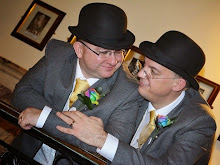
Two Married Men Say Thank You to the Liberal Democrats
On Sunday, Richard and I celebrated six months of marriage.

And two-hundred-and-forty-six months since we’ve been together.

We had to wait twenty years. We had to wait until the Liberal Democrats were in government.

So here’s a video we recorded on Sunday to say thank you to the only party that’s always been there for us, and always been there for lesbian, gay, bisexual and transgender people.
What We Said
We got married.
It was a fantastic day.
So many wonderful people celebrating with us.
And so much food.
We’ve been together a long time, and we’ve been to a lot of weddings, and there’s never enough food.
Trust us on this. If you ever get married –
– which is fantastic, by the way –
– then feed people and they’ll be happy enough that they listen to your speeches.
But the thing about us getting married is, we had to wait a long time.
A very long time.
Twenty years.
To the day.
It wasn’t that we had very strict parents.
Well, not much.
You see, I met Alex
And I met Richard
And we fell in love.
And we got together twenty years and six months ago today.
So we got married six months ago today.
Because we’re gay.
So it was a long wait.
In fact, we had to wait
Until the Liberal Democrats were in government.
In the ’70s, when we were born, only one party said as a matter of principle that they backed gay rights.
That was the Liberals.
In the ’80s, when we were at school, one party brought in Section 28, to put bashing the gays into law.
That was the Tories.
Only one party opposed Section 28 from the first.
That was the Liberal Democrats.
Labour were in favour of it.
Until they weren’t.
But they didn’t do anything about it when they had the power to in the ’90s.
Not for ages.
In fact the bit of Britain that first got rid of it was Scotland, in the early 2000s.
When the Liberal Democrats were in coalition there.
Labour had absolute power in Westminster back then.
But they didn’t bother changing the law for the rest of us until much later.
I remember the 1992 election, when one of the three big extreme things Jeremy Paxman sneered at a party leader for was supporting gay rights.
That was Paddy Ashdown and the Liberal Democrats, and he stuck to his guns.
Actually, Paddy doesn’t need guns, he’s dangerous enough with his bare hands.
That was Paddy Ashdown.
I remember the 1997 election, when one of the three big things the Daily Telegraph said a party’s manifesto was dangerously extreme for was supporting lesbian and gay rights.
That was the Liberal Democrats.
And eventually, in 2001, one party came up with the first ever Manifesto for Lesbian, Gay, Bisexual and Transgender People.
That was the Liberal Democrats.
And all the promises in there were in their main manifesto too.
That was the Liberal Democrats.
And they did the same thing again at the next election.
That was the Liberal Democrats.
And meanwhile the other parties either kept on hating the gays
That was the Tories.
Or just didn’t have the balls to do anything in case it put people off.
That was Labour.
Liberal Democrats proposed civil partnerships.
Labour and the Tories voted them down. They were both against it before they were for it.
And even then the Liberal Democrats wanted civil partnerships as a choice for both same-sex and mixed-sex couples.
But both Labour and the Tories have always said those can only be a second-class option for the gays.
The government spent thousands and thousands of pounds of taxpayers’ money in court opposing an equal age of consent.
That was the Labour Government.
They lost. And the government spent thousands and thousands of pounds of taxpayers’ money in court defending the ban on gays in the military.
That was the Labour Government.
They lost that too.
So when the Labour Party boasts that it equalised the age of consent
Remember that they only did it because they lost in court and the court made them do it.
So when the Labour Party boasts that it scrapped the ban on gays in the military
Remember that they only did it because they lost in court and the court made them do it.
The Labour Party’s boasts are like a burglar caught red-handed and then found guilty who then tries to claim credit for giving all your stolen stuff back.
When you know they’re the ones who nicked it in the first place and only the court made them do it.
And then when the Coalition was formed in 2010
Only one party leader had said he was in favour of equal marriage.
That was Nick Clegg for the Liberal Democrats.
And that year the first British party ever voted to back equal marriage.
That was the Liberal Democrats.
And eventually the Lib Dems persuaded the leader of another party.
That was David Cameron for the Tories.
And later than that, another party said there was no need to have equal marriage – but in the end came in third to back it once it was already happening.
That was the Labour Party. They were against that before they were for it, too.
And one party was badly split about it.
That was the Tories.
And a lot of their MPs said they backed equal marriage because it was a “gesture” to “detoxify their brand”.
That was the Tories.
So as it was only a gesture, we can think of a few gestures to make in return.
But this isn’t tagged as an explicit video.
And another party didn’t care, and hadn’t bothered doing it when they had absolute power for thirteen whole years, but they jumped on the bandwagon last and then tried to claim all the credit.
That was the Labour Party.
But at least this time they didn’t oppose it tooth and nail until the courts made them do it.
No. So that’s something, I suppose.
But when one party said that to make it all properly equal, let’s make the law equal marriage for trans people too, and open up civil partnerships to mixed-sex couples so everyone has more choices
That was the Liberal Democrats.
The other parties said
It’s complicated.
No thanks, you’ve had your gesture, that’s your lot.
That was Labour and the Tories.
So next time any important issue of lesbian, gay, bisexual and transgender rights comes up in Parliament…
You know what’ll happen.
Two parties will swing with the wind and just vote whichever way’s fashionable.
That will be Labour and the Tories.
Because they always have. So you’d better hope lesbian, gay, bisexual and transgender people happen to be popular that year.
Good luck with that.
And one party will vote for equality for everyone.
That’ll be the Liberal Democrats.
Because we always have.
Always will.
Because Liberal Democrats believe in freedom and opportunity for everyone.
Freedom for every individual
For everyone to have the liberty to live their lives as they choose
For fairness and equality before the law
I’m Alex
I’m Richard
Thank you, the Liberal Democrats, for changing the law so we could get married.
We had to wait twenty years
Some of them Tory years
Some of them Labour years
Without the Liberal Democrats in Government, we’d still be waiting.
For more about why we believe in the Liberal Democrats, take a look at Liberal Democrats Believe – a Liberal quote for every day of the election (and more)!
Labels: Conservatives, Gay, Labour, Lib Dems Pointing, Liberal Democrats, Marriage, Nick Clegg, Paddy Ashdown, Personal, Richard, Things To Remember About Labour
Tuesday, March 31, 2015
Doctor Who Anniversary Special – An Interview With Martha Jones
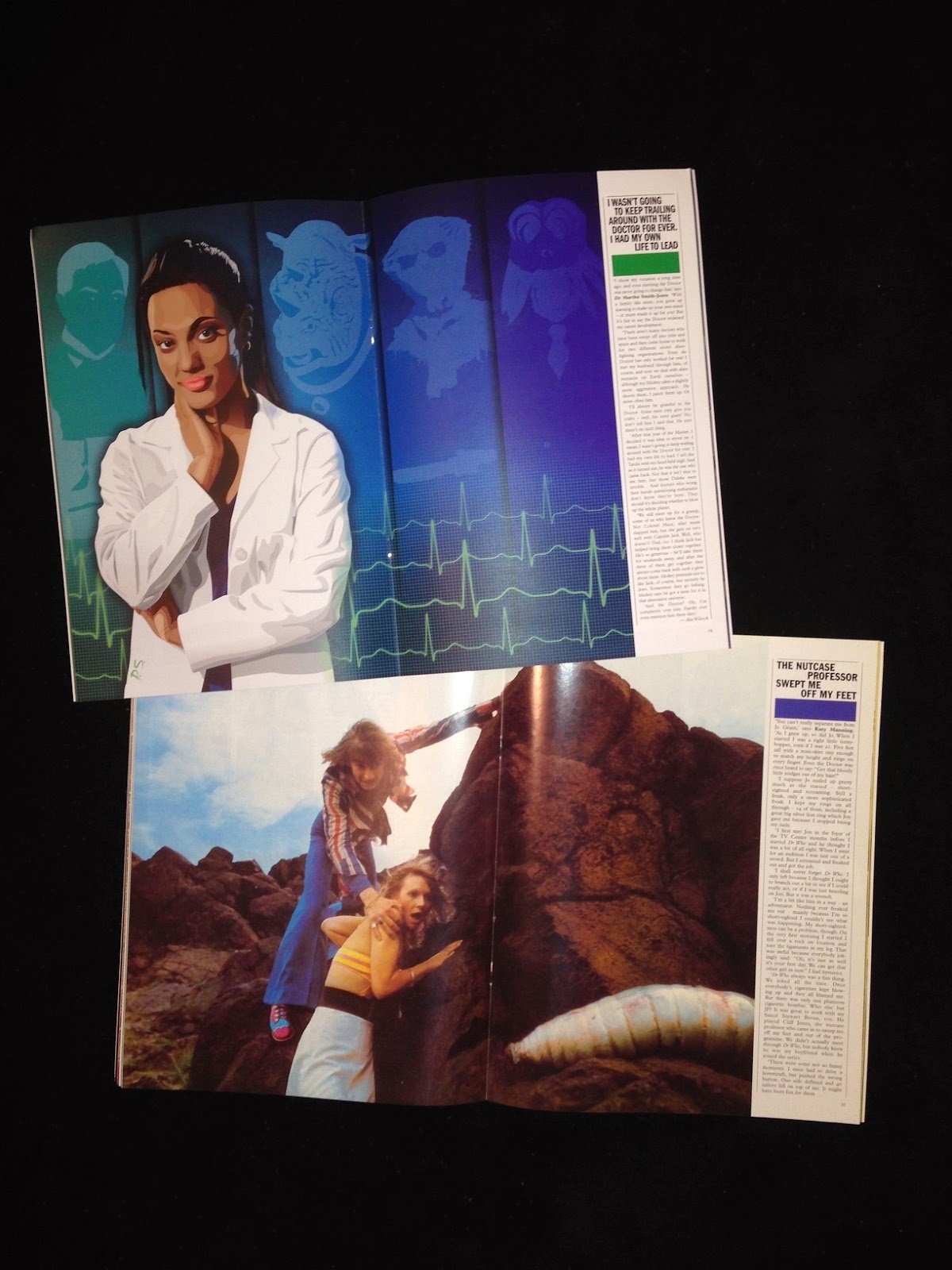
Originally published in Wonderful Books’ The Doctor Who 8th Anniversary Special… To celebrate the tenth anniversary of Doctor Who’s return to our screens, and today the eighth anniversary of her first appearance in Smith and Jones, here’s my interview with the Doctor’s friend Martha Jones:

“I LEFT THE TARDIS WITH MY HEAD HELD HIGH!”
“I chose my vocation a long time ago, and even meeting the Doctor was never going to change that,” says Dr Martha Smith-Jones. “With a family like mine, you grew up learning to make your own mind up – or Mum made it up for you! But the Doctor certainly widened my career development, it’s fair to say.
“There aren’t many doctors who’ve been swept off into time and space and then come home to work for two different secret alien-fighting organisations. Even the Doctor’s only worked for one! I met my husband through him, of course, and now we deal with them ourselves. Though my Mickey has a slightly more aggressive approach. He shoots, I patch them up. Or him, more often.
“I’ll always be grateful to the Doctor. Some men only give you crabs – well, his were giant! No, no, don’t tell him I said that. He says they’re no such thing.
“After that year of the Master I just decided it was time to move on. I mean, I wasn’t going to keep trailing around with the Doctor for ever. I had my own life to lead. I left the TARDIS with my head held high! Of course, he was the one who came back. Not that it’s not nice to see him, but those Daleks were terrible… And doctors who wring their hands questioning euthanasia don’t know they’re born. They should try deciding whether to blow up the whole planet.
“We still meet up for a gossip, some of us who knew the Doctor. Not Colonel Mace, after Mum slapped him, but she gets on very well with Jack. Well, who doesn’t? Dad, too. I think he’s helped bring them closer. He’s so generous – he’ll take them for weekends away, and after the three of them get together they always come back with such a glow. Mickey pretends not to like him, of course, but secretly he does. Sometimes they go fishing. Mickey says he got a taste for it in that alternative Universe.
“And the Doctor? Oh, I’m completely over him. Hardly ever even mention him these days.”

Wonderful Books
Paul Smith has produced a fabulous array of Doctor Who publications, which you can find out more about at Wonderful Books (there’s a new one out this week). All of them look gorgeous and are immensely readable, but only some are completely factual – and I have to admit, the ones that most appeal to me are those with the most unfactual ‘facts’, the ones that are both deeply loving and taking the piss outrageously.
My Wonderful Books favourite is the one he didn’t write all himself, though it’s not because I’m one of the contributors. I’ve rhapsodised before about the Radio Times Doctor Who Tenth Anniversary Special, a treasured and tattered possession passed on to me when I was a boy and still perhaps the most thrilling Doctor Who magazine ever published. Before websites or guidebooks, this was the unique source of thrilling photos and details of stories all from before I started watching (that is, prehistory). So I was utterly thrilled when Paul asked me out of the blue to write a piece for his version in the fiftieth anniversary year.
Paul’s concept was to give it a similar feel and length to the original Radio Times Doctor Who Tenth Anniversary Special by recreating it as if celebrating not the fiftieth but the eighth anniversary of a Doctor Who series that started for the first time in 2005. And to give it the range of voices of the original’s interviews, he approached other fans to provide some of the artwork and comment pieces.
In the 1973 Special, double-page spreads about past stories alternated with newly shot double-page photo spreads and interview columns for past companions with pull-out quote headlines like “THE NUTCASE PROFESSOR SWEPT ME OFF MY FEET”. For a column like that, I was given only 350 words to play with – imagine – and a couple of other rules which I contrived to bend subtly (such as the ban on alluding to pre-2005 Who). I was asked which companion I’d like to write about, and though several tempted me – Rose and Jack were terrific in 2005, and I loved Jackie and Wilf – I instantly thought of Martha Jones, or rather Martha Smith-Jones as she is now. Had I written Mickey and Martha as a pair, obviously, he’d have mentioned Rose in every paragraph before saying he was completely over her (and had I written for Rory, it would have been a one-joke piece where he dies at the end of each paragraph and then gets better).
From her first appearance in Smith and Jones, eight years ago today – making it the most appropriate day to publish my own piece from the 8th Anniversary Special – Martha was a breath of fresh air for me. It wasn’t just Freema Agyeman’s performance and giving as good as she got to the Doctor (and him not being interested), nor just that she was the Doctor’s first full-time TV companion who was black (after Sharon, Roz and others elsewhere), but that she wasn’t going off with the Doctor only because her life was a bit rubbish. Martha is the only TV companion since Sarah Jane Smith with a decent, fulfilling, even exciting career – and for all of us who are so utterly gripped by the Doctor and his adventures, that’s a more inspiring example than the implicit suggestion that travelling in the TARDIS is only slightly better than being in a dead-end job you’re bored by or hate, or than having your parents killed in front of you (and going off with the first available surrogate dad). If you’re an achiever with a lot to give up, but the TARDIS is still so exciting you’d go off in it without a second thought – well, you would, wouldn’t you? And, for me, she has by far the most satisfying (and self-chosen) exit from the new TARDIS, too, again after impressive achievements in her own right.
Other contributors took their own approaches, writing critical assessments or celebrations of their chosen characters, but with the Radio Times Special so deeply ingrained in me, I knew immediately that I wanted to write an ‘After the Doctor’ interview in that style, for the character rather than the actor, and that though I was going to be tongue-in-cheek in several ways (her earnestness, the Doctor) as well, I was going to set out first to say ‘She’s a strong, brilliant character’. And while it may have taken some time to think of all the other words, then edit them all back down again, my starting point leapt into my head fully-formed on reading Paul’s initial email to me:
“I LEFT THE TARDIS WITH MY HEAD HELD HIGH.”Though, as you can see from the interview as published, Paul picked a different pull-out quote, though with a very similar feel.

As it turned out, Paul’s wickedly pointed ‘story summaries’ didn’t mention Martha at all, so mine was the only piece that featured her in the whole magazine, and I’m very happy to have done her justice (if thankfully not in an entirely strait-laced way). Happy anniversary, new Who and Martha Jones!
Labels: David Tennant, Doctor Who, Doctor Who Magazine, Fandom, Martha Jones, Obscure Doctor Who Jokes, Personal, Smith and Jones
Monday, March 30, 2015
#LibDemsPointing Meets Doctor Who – Snakedance
It’s finally come: the official end of the 2010 Parliament, and the official start of the campaign (“Not ’til now?” said Tegan, dismayed). And though you might think Doctor Who is all about the Liberal philosophy and not pounding the streets with Focus leaflets, I’ve found evidence of one of the Doctor’s companions standing for election is just the way Lib Dems do.
By chance, the Doctor Who story starting today on the Horror Channel is Snakedance. And there’s a photo-op from that story that shows exactly what I’m talking about. The Doctor tends to be a bit rough and ready in sorting out the big problems and then leaving before he has to do the clearing-up, but Nyssa, one of his friends from the time, was raised in a tradition of public service and proper tidying up (Cleaning up the Mara’s Mess! After Cleaning up the Melkur’s Mess! A Record of Sweeping, A Promise of More!).
We don’t see the TARDIS leave at the end of Snakedance, but you can bet the Doctor goes and hides in it while Nyssa takes over doing her thing. Or, at least, campaigning to be put in charge in the proper #LibDemsPointing way.

RELEASE: IMMEDIATE
What Have the Federation Ever Done For Us?
Nyssa of Traken [pictured, pointing] is standing for Market Ward, Manussa, and campaigning for a new deal for the Scrampus System.
“The Federation have been in charge round here for five hundred years – today! And what have they done since ridding Manussa of the Mara? Nothing but lounged around fondling suggestive antiques on expenses. Market taxpayers have had enough.
“It’s time for a change. We can start by cleaning up this unsightly graffiti that’s all over Manussa’s ancient monuments.”
/ENDS
Labels: Doctor Who, General Election, Lib Dems Pointing, Obscure Doctor Who Jokes, Peter Davison, Snakedance