Saturday, October 25, 2008
Our Anniversary, US Elections Fun and the World’s Worst Anti-Drugs Campaign


There’s been a fluorescent tube in our bathroom since long before it became our bathroom, and following its breaking down (after ringing one electrician who laughed and told us it was a deathtrap and what grade of completely different replacement fitting to get, but who after various fiascos never got back to us), we’d recommend Garry Vinning, who was a nice chap, on time, reasonable and admired our view. As a bonus, we survived a fortnight of a lamp on an extension cable and lots of trailing wires from the knackered old fitting without electrocution, though I now no longer have an excuse for shaving the right side of my face so badly.
We had a lovely visitor who didn’t handle our fittings earlier in the week, too – our friend Mr Quist came to stay the night, with much good conversation and exposing each other to things we don’t usually see. For him, for example, there was the extraordinary spectacle of Hugh Grant acting and some 1978 Doctor Who on the big telly; for us, he went on the Internet and showed us some pictures of Beavers. So a good time was had by all.
How Not To Do Not Doing Drugs
Did you hear The News Quiz earlier? It featured one of their greatest ever news story clippings. I missed which paper it had been sent in from, but I found it in the New York Times, and it’s superb. A school has just suspended the least plausible anti-drugs message since Ebeneezer Goode:
“A company has recalled a batch of pencils after a fourth-grade student pointed out an embarrassing message that appeared after he sharpened his pencil.I want one.
“The pencils carry the slogan ‘Too Cool to Do Drugs’. But the student noticed that when the pencils are sharpened and get shorter, the message becomes ‘Cool to Do Drugs’, then simply ‘Do Drugs’.”
Or perhaps a pencil that says “Do Chocolate”. Preferably one with a filling. I’m easy. Hmm, wonder what could have happened to my teeth?
Let’s hope tonight’s Bremner, Bird and Fortune is as funny, and that we manage to get there. Not only do I have notorious problems leaving the flat, but we laughed this morning as we opened the front door for Mr Vinning and our ticket blew out of the window. Fortunately it was an e-ticket, and our cranky old printer was in a good enough mood to let us print another (so we’ll be setting up for Merlin, which really should have some other name as it bears no resemblance whatsoever to the best-known of British legends, but which must be single-handedly doing more for slash fiction than any other series I can think of)!
Vote McCain / Palin? You Must Be On Drugs
Every day, I mean to write something new about the US election. I’ve become addicted to parsing opinion polls, and to reading Daily Kos and The Daily Dish. But it all moves so quickly and, really, what can you say about Sarah Palin? Well, Betty White said it all, really; we’ve been missing her since she stopped being an occasional character in the fabulous Boston Legal. If I wrote a serious article right now, I’d probably just explode at the sheer loathsomeness of the Republicans’ new low in cynical race-baiting lies, so instead here are some things that have been cheering me up as the volume of messages increases from friends in the States typing with whitened knuckles as they hope another election won’t be stolen.
So, for your delight and delectation:
- A cautionary tale for your parents (and, bonus, no pencils are involved)
- And simply the best summing-up of Senator McCain’s campaign of lies, venom and negativity you could hope to see.
Just 006 Days ’Til Quantum of Solace (minor spoiler)…
I Should Have Posted This Yesterday, Shouldn’t I?
We’re terribly excited, and our Elephant is quite beside himself. And after the last movie, we’ve got a pretty shrewd ghost of an idea what the villains behind the whole thing might involve. With it even being released on Halloween, you don’t have to look in the TAROT cards to anticipate some sort of Shade, or Phantom, or Ectoplasm, or Chimera, or Trace, or Revenant, or… or… (reaches for thesaurus) Eidolon… Hang on. I’ve just read what it says on the card. Quasi-Autonomous… That can’t be right, surely?
But to keep you from exploding with excitement, and to keep me from gritting my inflamed molars because the film opens the day after my birthday, you can listen to the proper title theme and watch a rather striking Bond-related musical interlude that, strangely, makes me look much more warmly on both a Bond theme and a decidedly non-Bond movie, neither of which were quite as good as I expected…
Labels: American Politics, Blogs, Drugs, James Bond, Personal, Richard, Top Tips


Tuesday, October 14, 2008
Crooked Coroners Corruption Dropped… For Today
Thanks to Richard for ringing and telling me!
Update: And to Stuart Douglas, who’s posted a comment to my piece this morning to the same effect.
Meanwhile, I’ve been joining in with the latest debate on everyone’s favourite new spot for intemperate arguments on Liberalism, Irfan Ahmed’s blog.
Labels: British Politics, Crooked Coroners Corruption, Labour
Gavin Webb Latest – Democracy Wins!
I’ve known Gavin for a good many years and disagreed with him almost as often as I’ve agreed with him, but I’m quite certain that he’s both a nice bloke and a conviction Liberal. He’s at about the furthest libertarian edge of the Liberal Democrats, and has a tendency to shoot his mouth off; well, fair enough. I’ve been accused of being on the fringes and being gobby often enough that I’m a bit wary of either of those being used as sticks to beat someone with.
Dodgy Suspension Number One
Back in April, Stoke Liberal Democrats – Gavin and his fellow councillors there having fallen out fairly comprehensively – decided to suspend Gavin from the party pretty much on the grounds of being too racy in the run-up to an election, and to think about it later. So this had nothing to do with any misconduct, but for Gavin shooting his mouth off with views such as his support for legalising prostitution, all drugs, firearms, and drink-driving so long as no-one is injured, as well as that he was uncouth enough to call a BNP councillor a fascist; some of which are party policy, some of which I disagree with, some of which are highly impractical, some of which I suspect no readers of this blog would object to, but all of which everyone knew he’d been espousing for years anyway.
“I’m shocked – shocked – to find that gambling is going on in here!”Now, suspending for a moment your disbelief at a Liberal Democrat local party spending their time going witch-hunting a week before election day, you’ll be aware that, being a liberal and democratic party, there are rules that mean you can’t go chucking someone in an oubliette and that’s the end of them. There are rules about due process, getting a chance to answer your charges, and all within a decent span of time so they can’t just be deliberately ‘forgotten about’. To cut a long – three-and-a-half-month-long – story short, the party’s extremely keen and on the ball investigation started only the week before that fourteen-week time limit expired, Gavin was never offered proper charges to respond to nor a proper hearing, and so at the end of that colossal waste of time his membership was reinstated automatically, that rule being in place precisely to stop people doing that sort of cowardly, petty pissing about for eternity. Gavin having moved his membership to being part of a Liberal Democrat local party he got on with better rather than arguing for the sake of it, you might think that was the end of it.
Reinstated! Selected! Re-suspended! Um… Why?
Gavin, as a talented, hardworking and articulate party member with much to be articulate about, put himself forward to Liberal Democrat members in Burton for selection as their PPC. Before you can do that, incidentally, you have to go through a training and screening process to make sure you’re up to it and that you agree with the party’s core principles – which Gavin passed with flying colours, and which the Region had no problem with. Bear that in mind. So Gavin told me the story:
“At my hustings, at which the Region's Candidates Chair was in attendance, I was vigorously questioned by my Local Party which I answered openly and honestly – indeed, not every member agreed with everything I had to say but they by and large appreciated the message of individual rights, freedoms and responsibilities. In short, I made no bones about being a libertarian. I was selected overwhelmingly as the Liberal Democrat PPC for Burton.Gavin had to make repeated requests even to get the reasons for his suspension, a week and a half after it happened, and he couldn’t forward them to me because the letter from the Region was “Confidential”. Come on. This is the Liberal Democrats, not a national security trial where the evidence has to be heard in camera! As Paul Walter put it succinctly, this is No way to treat a member.
“However, the following day the West Midlands Regional Executive met, they considered the report from my meeting [in ‘week thirteen’] with the Chair and Local Parties Officers, and decided to suspend me from standing for the Party, internally and externally, for a period of three years.”
After six months of this vindictive nonsense, Gavin was impatient to get on with fighting Labour in a seat where the MP is standing down and the Tories are split over local council conflicts of interests, while too many in the West Midlands Regional Liberal Democrats seemed impatient only with a Liberal Democrat who didn’t strictly follow the party line. For those who think he just enjoys stirring it, you might like to know that, though he’s been keeping me and others informed of what’s going on – to the extent that anyone could be bothered telling him – he’s generally asked for it not to be publicised until the story’s already come out in other places. For example, I’d known of his ludicrous second suspension for some time without posting on it, Gavin having asked me not to… Until he told me at Conference, amid many hugs, that the Daily Telegraph had asked him to comment on a hostile briefing from within the party, at which point he defended himself. Yes, that’s right: some parts of the party are too busy to talk to people they accuse, but not to talk to the press about them.
I’ve heard from Gavin again this morning, and it won’t come as any surprise to you to read that this latest suspension, too, has collapsed without a proper hearing, because the regional party was pathologically unable to follow due process and have admitted they cocked up the original ‘investigation’. And so Liberal Democrat members in Burton have the PPC they chose, and he can get on with fighting people who aren’t Liberal Democrats at all.
Now, come on – what’s just about the original, central kernel at the heart of Liberalism? Control of arbitrary power. Standing up to bullies. So even if you disagree with a lot of what Gavin Webb has to say, who’s displayed the most fundamental lack of understanding of what it means to be a Liberal here? All those involved in these alleged (but not in public) suspensions should be ashamed of themselves, and take the logs out of their own eyes before they go squinting at the specks in anyone else’s.
This morning, I’ve been writing to OMD:
Gavin was almost that pretty before he grew that astounding beard, you know.
Update: I don’t think I was sufficiently blatant above in linking the way Liberals stand up against arbitrary power above to the defeat in the House of Lords yesterday of the Labour Government’s plans to grossly extend the period in which people can be imprisoned without charge to 42 days, and from that to the way a Liberal Democrat was suspended without charge for 98 days, and then for some more time on top of that. So let me be unsubtle in placing that thought in your head.
Jennie draws our attention to the 42 days issue not being the only shameful thing in that bill, though, and refers us all to Chicken Yoghurt. This is a Labour scandal I’ve genteelly referred to once or twice myself as Crooked Coroners Corruption. Keep on about it to any MPs you know.

And in at number 36 on The Golden Ton for 2008-9.
Labels: Crooked Coroners Corruption, Ideas, Liberal Democrats, Liberalism, Meddling In Things That Are Nobody's Business But Your Own, Music, Stupid Ideas, The Golden Dozen, The Golden Ton
Monday, October 13, 2008
Best of the Last Sixty Years – Any Ideas?
It’s quite rare that I can agree with all three panellists – quite often I don’t agree with one. And, yes, technically there were four on there, but the academic who answered last just agreed with the others and didn’t count. Shirley Williams, Harriet Harman and Oliver Letwin, however improbable, all came up with something memorable. They were actually asked for both the best and the worst things of the last sixty years; I can’t remember what each of them attacked, but what sprang to their minds as something good was has stuck in my memory.
The Day I Agreed With Shirley Williams, Harriet Harman and Oliver Letwin
Called first, and not sounding entirely happy to be, was Shirley Williams. Now, I’ve long had rather mixed feelings about Shirley – great speaker, many good things in her record, but plenty of things she says that get on my wick as well – but her answer was both unexpected and spot-on, impeccably Liberal and internationalist. She nominated the massive growth of internationalism and communication made possible by the Internet.
Harriet Harman – about whom I don’t have mixed feelings at all – went next and, to my surprise, I was happy with her choice, too: the NHS. Of course she said it shared a birthday with Any Questions (three months out, but at least she got the year right; the smarter among you will have noticed that puts it slightly more than sixty years ago, so technically she didn’t answer the question) but, yes, a great institution, and certainly one that’s made a huge difference to my life, if not as much as I’d like.
And Oliver Letwin rounded up with the fall of the Iron Curtain and the end of the Cold War. Again, something I’d wholeheartedly agree with as a good thing.
But though each panellists came up with a thoroughly good thing for their answer, it’s striking that each came up with an answer that also so strongly reflected their philosophy. Mr Letwin the Conservative said – we beat the communists! Ms Harman the Labour Minister said – celebrate a British state organ of doing good that we, the Labour Party, that’s the Labour Party, the nice Labour Party, voted through Parliament! And Shirley Williams gave that Liberal, decentralised answer: that people talking to each other all over the world and doing things for themselves is the best the world has to offer.
My Best Thing?
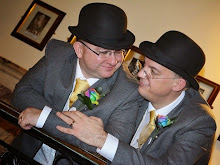
I found myself nodding with each answer, and though none of their three would have been what popped into my head first if I’d been put on the spot, I was glad to find something from each politician that I agreed with, and to find that Shirley was speaking from the same sort of core that I have. What would I have picked? Well, it’s more amorphous, but the first thing that came into my head is that in so many countries, including (mostly) both of mine, the last sixty years have seen such an incredible degree of socially liberal movement, that people are so much more free to choose their own lives – most obviously and particularly, but far from exclusively, if they’re not male, not white and not heterosexual. I wouldn’t change my life with Richard for any time in the past; let’s hope for just as much progress in the next sixty years.
Now I have a question for the panel. How has Any Questions lasted so long when the tedious and self-satisfied Jonathan Dimbleby has been droning on as chair for a third of that time?
The Sarah Jane Adventures: The Day of the Clown
Hmm, what’s the best thing about today? That I’ve just had an e-mail from Thornton’s announcing that it’s National Chocolate Week and offering me 15% off? No – it’s got to be that top Doctor Who spin-off The Sarah Jane Adventures is just about to come on. Obviously, Doctor Who was the other thing that sprang to mind as the best thing in the last sixty years…
We saw Part One of The Day of the Clown on the CBBC Channel last week, and it’s just about pop up on BBC1 in ‘proper’ transmission, with the conclusion later (which, incidentally, looks like it’ll have a prop that’s a visual reference to near-namesake Doctor Who story Day of the Daleks. Keep your eyes peeled). So far it’s been one of the best pieces of TV all year: stylishly frightening, and unsettling kids and parents enough with stolen children; just funny enough; taking a myth and twisting it; great performances from the regular cast and great new regulars; Bradley Walsh making an absolutely superb villain… And, yes, it’s at least the fourth ‘creepy clowns’ story that Doctor Who’s done, but when it’s shaping up to be the best of them, why complain? Delightfully, it’s directed by Michael Kerrigan. Not only is he only the second director who worked on Doctor Who last century to ‘come back’, but he was easily the weakest of those at the helm in 1989 with Battlefield. Now he’s deft, stylish and just right. Gosh. The Day of the Clown’s a great day to sample the series if you haven’t yet. Go on, then.
Update: I forgot to mention something else excitingly Whoish (though not quite as exciting as The Day of the Clown) from BBC1 earlier today. Daytime soap Doctors featured Sylvester McCoy playing… Well, an unsettlingly fourth-wall hybrid of Sylvester McCoy and Jon Pertwee, an ageing actor famous for the 26 (cough) episodes of children’s sci-fi show The Lollipop Man in the late ’80s and keen to fly to Australia to make new episodes. Sylv was superb, and his
Labels: British Politics, Conservatives, Labour, Liberal Democrats, Liberalism, Radio, Sarah Jane Smith, Sylvester McCoy
Wednesday, October 08, 2008
National Economic Council or L’État, C’est Moi?
Let’s see, now. “National” – well, that must be bringing the nation together, mustn’t it? Not just Labour Party politics, but finding all the best and brightest from across the divide that Britain has to offer, surely. “Economic” – well, obviously, they must be real economic whizzes; innovative businesspeople, perhaps, or Nobel-winning economists, or Vince Cable. And “Council” – well, that surely means some sort of democratic structure, so we can all see their wise debates in the open, hold them to account and vote them in or out based on the ideas they come up with.
Hang on… I’ve got a list of the membership here. “Secretary of State for…” “Minister of…” “Secretary of State for…” “Minister of…” “Secretary of State for…” “Minister of…” Here! This is just a list of Labour MPs who’ll meet behind close doors, check nobody’s listening, and cry “Oh, s**t! We’re doomed!” twice a week, isn’t it? And in what way will that make a change?
It’s one of Mr Brown’s more successful pieces of spin – for a day, at least, he was surrounded by journalists implicitly praising his sagacity – but this isn’t a “National Economic Council” or a cross-party crisis “National Government” (a terrible idea, but clearly what the name’s supposed to evoke) at all. It’s just a renamed Cabinet Committee, with nothing new about it at all, made up simply of all the Labour machine politicians who were there before, none of whom will suddenly have grown the economic nous to fix Mr Brown’s mess by dint of being given a new title. You’d think it was the first example of the dark arts of the return of
The main thing to learn from this ‘new’ body isn’t that Mr Brown takes his economic crisis seriously, nor that he’ll mutter incessantly and impotently about it twice a week to a picked bunch of his cronies – we knew all that anyway. It’s that Mr Brown sees himself and his party as the nation. The national interest is Labour’s interest; the best of the nation are by definition those place-people he’s already picked from the Labour benches; if Mr Brown needs a council of the nation and its unparalleled brilliance on the economy, he need only talk to a mirror. Scratch that 1960s corporatism – this Labour Prime Minister doesn’t even need to bring in trade union barons and captains of industry for beer and sandwiches, let alone anyone with a less establishment worldview. Mr Brown thinks there’s nothing about the economy that he, as father and embodiment of the nation, doesn’t already know. What could possibly go wrong? Actually, we all knew he thought that already, too.
Alternatively, you can’t help feeling that maybe Mr Brown just wanted one because his friend President Bush has one, too. And hasn’t that turned out well?
Labels: British Politics, Labour, Stupid Ideas
Friday, October 03, 2008
The Avengers, The Prince of Darkness, Two Uninspiring Veeps, David Cameron’s Missing Plan and a Dashing Secret Liberal
Peter Mandelson Rises From the Grave
Peter Mandelson’s an odd sort; the Prince of Darkness, and an unrivalled unprincipled backroom operator who’s done more than almost anyone else to make politics untrustworthy. The thing is, I thought he made a pretty good business minister and a pretty good trade commissioner. If only you could erase Mr Mandelson the master of spin and just keep the competent free-trader, he’d be one of Mr Brown’s best ministers. But you can’t. His background means no-one will trust him, and popping up in the Lords means no-one will hold him to account – presumably Mr Brown was driven to it by the man known in our flat as Sir Pigby Jones, who unexpectedly changed animals and disappeared with a squeak and a splash. And three goes at the Cabinet’s pushing it, rather… Still, I’d rather have him than Mr Blunkett, who trumps Mr Mandelson by being even more vile politically than he is personally.
Way to disprove Nick Clegg’s gag about your “zombie government,” Mr Brown. For goodness’ sake, you’ve still not even dumped Geoff Hoon.
A Tale of Two Veeps
I did watch the Vice-Presidential debate this morning while pottering about the flat and, goodness, at least Governor Palin’s improved a lot. Shame, really, as her eye-wateringly awful interviews at least made good car crash telly, while an hour and a half of relatively competent incessant perkiness was like overdosing on a bag of evil Skittles. Joe Biden, by contrast, was a bit less soporific than usual, and answered far better – particularly in the second half, when he came across like a human being and she started to forget her lines – but I can’t kick the feeling that the two Vice-Presidential nominees together are like tartrazine and Horlicks. Or a very, very boring man and a kick in the eye. A debate where you’re being constantly lulled to sleep and then jerked brutally awake is surely some form of cruel and unusual punishment. I’m glad Senator Biden did better, but I still wouldn’t have started from here.
It’s a good job I’m not a betting man about these two extraordinarily defensive choices: one Veep nominee’s the one I spent August wincing and hoping wouldn’t be chosen, the dull more-of-the-same Washington insider with a record of gaffes who I’ve disliked for years and who made the ideal person to blunt Senator Obama’s message of change and mumble the alternative message of ‘Mommy, I’m scared!’; the other’s one I’d read about a couple of months ago and confidently written off. Shows what I know! And that wasn’t even because I knew then what a disaster Governor Palin would be when not allowed an autocue, nor because she’s a swivel-eyed creationist to keep the fact-loathing Republican base on side, nor even because with her at his side, Senator McCain would suddenly look an idiot calling Senator Obama young, inexperienced and lacking in foreign policy knowledge. It was the corrupt and spiteful way she used her high office – look, Alaska’s high up the map, at least – to hound a police officer from his job, even causing her head of policing to resign in protest after being leant on, purely because, er, her sister’s just divorced from him and she wanted to take revenge. I hesitate to use this metaphor today, while the celebrations over Labour’s favourite tainted ‘public servant’ stooge being forced out of office still throng London’s streets, but it’s as if the Commissioner of the Metropolitan Police had resigned, loudly blaming the Mayor of London for ordering him to sack a police officer who was going through a messy divorce with one of the Mayor’s family. Yes, that’s right: Governor Palin makes Boris Johnson seem principled, competent and comprehensible.
If she gets in, the world’s doomed.
“A Man With A Plan (Actual Plan Not Included. Please Check Your Package For Testicles)”
In other news, the Tories had their conference this week, and I didn’t think much of it. Oh, wait; I said “news”. Well, Mark Valladares gives George Osborne’s pledge-without-actually-pledging-anything offer to freeze one of the few taxes over which, as Chancellor, he would have no control an even bigger kicking than I did, while Mr Cameron’s speech is effectively eviscerated by Andy Hinton, Mr Cameron’s own early draft and, of course, Millennium Dome, who asks the devastatingly pertinent question – if he’s “a man with a plan,” what on Earth is it? Was he really so dumb as to think just announcing he had a plan would convince people he had the answers? Apparently, yes, and you only have to look at Nick Mate-of-Dave Robinson’s predictably hagiographic coverage to see why, but the question remains. There’s no sign of this plan. I’ve looked under the bed, in the cupboard, and in the shoebox his chauffeur carries. Is it a secret plan to fight stagflation? Or… There is no plan, is there?
Secret Agent Quist and the Man They Couldn’t Ban
And finally, you may have noticed a new arrival to the Lib Dem blogosphere in the last few weeks – my good friend the impeccably Liberal, witty and occasionally smutty (all hurrah-words here) Costigan Quist. I have an inkling of his* secret identity under that distinctive cape, gimp mask and Pantone 1235 Pimpernel, but I’m sworn to secrecy: she’s** a Liberal agent under fire and constantly on the move, and to identify him*** would be to expose her****, Mrs Quist and all the little Quistlets – definitely not Quistlings, take note – to reprisals from the vicious team of Tories on their tail. The last message I had from him***** was beamed from a secret location aboard a ship somewhere in the ------- Sea, where the little Quistlets were complaining to her****** that their crate was smelling of fish when not taking it in turns to look out for the Tory bounty hunters (they’ve all been trained since birth to kill with one delivery of a sharpened FOCUS). In our younger days, he******* and I were once smuggled north in a lorry together, you know, but I’m more of an armchair agent these days. Still, I look forward to reading what she******** has to say with interest, and you might like to start with just how improbable it is that the Tories are now demanding unquestioning loyalty from the gay vote – I know they’re into asking for support based on a non-existent “plan”, but this is just plain insanity. We know that most of them still want to go back to banning us. Speaking of which, who was the BBC’s most-banned man, and just why was Deep In The Heart Of Texas so subversive?
* Or her
** Or he’s
*** Or her
**** Or… Oh, you get the idea
Labels: American Politics, Blogs, British Politics, Conservatives, Labour, The Avengers Season 4
Tuesday, September 30, 2008
When Does ‘Local’ Mean ‘National’?
How the Council Tax Started
I’m old enough to remember when the Tories devised the Council Tax; it felt like a hasty bodge-up then to get them to the next election, an unfair, unlovely hybrid staggered in whopping great bands based on decades-old valuations, and was clearly never meant to last – it’s just that, after the Tories’ brilliant idea of the Poll Tax, neither they nor Labour have dared touch local taxation (except to tell elected local councils what to do with it). There are only two reasons the Council Tax worked at all to begin with. First, it wasn’t the Poll Tax, so everyone was bound to breathe a sigh of relief. And second, it was subsidised by a massive injection of central government money to keep the bills artificially low, thanks to that great (if only by comparison to George Osborne) Conservative Chancellor Norman ‘Yoghurt Pot’ Lamont.
The immediately obvious problem with this at the time was that it was paid for by raising VAT – I remember it well, as the effect was to send the standard price of a video (locked for years at the psychologically important rate of £9.99) through the £10 barrier, after which prices pretty much kept going up. Gee, thanks, Norman. The problem with it that still bedevils local government nearly two decades later is that that meant a huge shift of the local government tax base from locally decided and raised money to centrally decided and raised money. Incredibly, only about a quarter of the money spent by local government across the UK is raised locally. That means that central government has huge power to decide which local councils get what money, with both Conservatives and Labour at Westminster funnelling cash to their own areas so that Labour and Tory councils respectively – and, of course, all those many areas that vote Liberal Democrat and get stiffed for the bill both ways – have to raise Council Tax disproportionately or cut services. And, of course, because the vast majority of what local authorities spend is dictated by central government grant, any extra spending by local councils decided by local people in local elections needs a heavily disproportionate tax increase to make much difference. So local decision-making has been made increasingly meaningless.
What Are the Different Parties’ Answers?
The Labour Government, of course, have capped the amount councils can raise taxes – while raising taxes uncountable times nationally, of course, but why behave yourself when you can boss someone else around to look prudent instead – and increasingly made the ‘local’ decisions nationally by dictating exactly what money must be spent where.
On the opposite end of the liberal-authoritarian scale, equally predictably, the Liberal Democrats have a better answer. We’ve long said that we would scrap the council tax in favour of a local income tax, based on ability to pay; return the setting of local business taxation to local councils from central government; and, in the long term, alter the balance further so that local government raises more of its own money and less comes at the whim of Westminster (but that bit’s a little scary, so we don’t talk about it much).
So, that’s the party you’d expect to boss everyone around and have every bit of power prised from their cold dead hands sorted, and the one that you’d expect to be in favour of decentralisation and of decisions actually (imagine!) being made by the people they affect.
The SNP Answer: Abolish Local Government
The other two parties with a significant say on local taxation are more interesting. No, that’s a bit of a euphemism; they’ve both been all over the place, but both – after using the rhetoric of decentralisation – have come down heavily in favour of even more central control than Labour. The SNP Government at Holyrood have a plan that, on the face of it, sounds like a good thing: scrapping the Council Tax in favour of a local income tax of 3p in the pound. Gosh, isn’t that what the Liberal Democrats have been saying? And, hurrah, the unfair Council Tax scrapped in favour of a local tax based on ability to pay (all sorts of odd people have seen the light on that one). But, hang on… There’s something a bit strange, there. How does the central Scottish government know what rate the local councils are going to choose?
Oh.
The SNP Government at Holyrood is going to decide the ‘local’ rate for the whole of Scotland. So they’re combating the Tories’ and Labour’s authoritarian, centralised, local government-neutering approach where local government decides a mere 25% or so of its own money by enforcing a system where local people vote to decide a much-improved 0%. Er, some mistake, surely?
“Sentence first – verdict afterwards.”With the SNP not having a majority in the Scottish Parliament, they’ve apparently been in negotiations with the Scottish Liberal Democrats for support over the policy. Unsurprisingly, we like the ‘ability to pay’ part, but aren’t too keen on the ‘local government losing its last measly remaining power to decide anything at all’ part. I’ve not heard how this is going for a wee while, but I hope it’s the SNP that are giving ground, and not us; if ever there was a better example of the truism that not everything that’s given the same name necessarily has the same effect, it’s when a “local” income tax is decided in its entirety by Alex Salmond’s central government.
Alex’s Adventures in Wonderland
“When I use a word,” Alex Numpty said in rather a scornful tone, “it means just what I choose it to mean – neither more nor less.”Come on, Tavish – don’t start your Leadership by laying a wreath of tax forms on Scottish local decision-making!
“The question is,” said Alice, “whether you CAN make words mean so many different things.”
“The question is,” said Alex Numpty, “which is to be master – that’s all.”
Alex Through the Looking Glass
The Tory Answer: Um… Er… Um… Do As I Say, Not As I Do
That leaves the Tories, who invented the Council Tax and were the most centralising government in living memory (until Labour came along), but who since they lost power at Westminster have taken to saying that the answer to the Labour Government’s removal of power from local government is greater decentralisation. At least, that was what they were saying until – as Joe points out – a week ago. Now, as they become increasingly smug at the idea of getting their hands on all that lovely power again, they strangely no longer feel like letting anyone else have a say. In the good news, they’re less extreme authoritarians than the SNP. In the bad news, George Osborne’s idea of fiscal probity by central government is to… Tell local government it needs to tighten its belt.
The job of Chancellor of the Exchequer is really quite a big and complicated one, but it has its limits. It’s in charge of the Treasury for the UK Government, and controls central government spending in particular across England, following devolution. You’d have thought that was quite enough to do, and Mr Osborne’s never come across as conspicuously competent to do it. Well, we’re all in the middle of a massive economic crisis, and he had to come up with something to establish himself as both daring and statesmanlike (blimey).
At the Liberal Democrat Conference a fortnight ago, the answer was that out of the six hundred billion pounds the Labour Government spends each year, at the very least a tiny fraction could be spent better, so central government should cut some of the spending it’s rubbish at and either spend it more wisely itself or give it back to ordinary people in tax cuts so they can spend it as they think wisely. Central government, then, shouldn’t tell anyone what to do with their money on top of what it’s already demanding, and should get its own house in order instead.
The Tories have a very different approach.
Conservative Shadow Chancellor George Osborne has looked at the six hundred billion pounds he’ll be personally responsible for… And can’t cope. It might not be enough, he says. He’s announced he won’t rule out tax rises by central government, because, you know, sums are hard and power is fun. So, crikey, what can he say to sound like he wants to keep taxes down (which he won’t guarantee) and sound like he’s being careful with our money (which he’s not very good at)? Ah – of course. Announce that he’s getting someone else to do it!
Yesterday, Mr Osborne didn’t think that central government, once he gets his sticky fingers on it, could be run any better than the Labour Government. He might run it worse, and have to put up taxes. But local government – pressured for efficiency targets for decades by Tory and Labour Governments that have never once applied such strictures to themselves – oh, that’s an easy bottomless target for savings, isn’t it? So, if local councils can keep their Council Tax increases to 2.5% - no easy job when inflation’s running to 5% - he’s said he’ll give a 2.5% subsidy from central government to freeze Council Tax at no rise at all.
Let’s see what’s wrong with this proposal. First of all, it’s that Mr Osborne wants one of the biggest, most difficult, most responsible jobs in British public service, but is afraid of it because it’s too big for him and wants to pass the difficult responsibilities onto someone else. If a Chancellor wanted to freeze taxes, they could say they’d freeze the central government’s tax take. But Mr Osborne thinks that would be much too hard and, besides, it would mean he couldn’t have the power to raise all that lovely money. So he tells someone else to do it instead. As Vince Cable said yesterday, this is just “passing the buck to local councils,” and it’ll mean the councils that can’t cut their budgets enough – either because they’ve already been very efficient, and now need to raise their spending with inflation, or because they’re in poorer areas where more of their spending is vital, or because they don’t get as much central government grant as other councils – will end up with continuing Council Tax rises, while other councils that need extra money less will be given, er, extra money… Which means that, for those councils, even less of the money they spend will be raised locally, leaving local people with even less meaningful decision-making and local government even more under the control of central government. Council Tax was a regressive tax that didn’t reflect your ability to pay when the Tories invented it; under Mr Osborne’s plans, the Tories want to keep it that way, but (just as they did when they invented it) they want to throw a fat subsidy at it for a couple of years to sweeten the pill and get local government further under their thumb.
And of course Mr Osborne’s headline-grabbing promise that “Tories pledge council tax freeze” is one that he can’t deliver on, but which he can blame someone else for not delivering – as opposed to making a promise from within the six hundred billion pounds (or more) that he wants to control and would be personally held to account on. Because making a promise about the job he wants to do, making himself fit the standards he wants to order everyone else to obey… That would just be too hard.
Here’s a thought, Mr Osborne – if being Chancellor seems like it’d be too hard for you, have you ever considered that you might not be up to the job?
Labels: British Politics, Conservatives, Labour, Liberal Democrats, Scotland, Stupid Ideas, Tax, The Golden Dozen
Friday, September 26, 2008
The Avengers – Too Many Christmas Trees
Steed hangs up his stocking – Emma asks for moreRichard’s inordinately fond of the BBC’s 2005 adaptation of Charles Dickens’ Bleak House, with Gillian Anderson riddled with accidie and pitted against Charles Dance’s extraordinarily monstrous Mr Tulkinghorn. We’ve just finished watching it again on DVD, and were so impressed that not only have I started reading the novel (three hundred pages in, only seven hundred to go, and a note to the editors: if you’re going to stick 46 footnotes in a 7-page chapter, how about sticking them at the foot of the page rather than a thousand pages to the back so your reader has to flick so often they go quite mad?), but we’ve made a start on the 1985 adaptation with, goodness me, Diana Rigg. So far it’s being stolen by Denholm Elliott as Mr Jarndyce, but however good Diana’s Lady Dedlock turns out, it’ll be very difficult for her to beat her outstanding turn in The Avengers’ exploration of Dickensiana. And it’s not just Diana Rigg’s Dickens role coming a couple of decades ahead that gives Too Many Christmas Trees that special boost: A Christmas Carol is, of course, one of many stories that get a sly reference in the script, but if you’ve seen the Alastair Sim film from a couple of decades earlier, why, there’s young Patrick Macnee, and also Mervyn Johns, who’s cast as this story’s version of the friendly, effusive typical Dickens benefactor…
Before the details and the spoilers, why’s Too Many Christmas Trees especially worth watching? Three things stand out for this eerie corrective to Christmas. The two leads are really on top form, with Diana Rigg fabulously determined as Mrs Peel carries much of the story while Steed is cracking up; Patrick Macnee ranges from light, to madly jolly, to positively haunted in a superb performance. It’s one of darkest, most atmospheric Avengers stories, tensely directed and – in the Hall of Great Expectations – giving one of the most sinister moments of the whole series. But though a ghostly midnight tale, it’s not a downbeat story; it’s also very funny, with the tension often arising from the humour and particularly thanks to Steed and Emma’s relationship here being at its wittiest, warmest and strongest. Oh, and right from the opening moments, it boasts some smashingly stylised hallucinations that you really shouldn’t show to anyone who still believes in Santa.
More to follow next week. Harrumble!
Labels: Charles Dickens, Reviews, Style, The Avengers, The Avengers Season 4
Thursday, September 18, 2008
Meltdown on Wall Street; Smackdown for the White House?
If you followed that brilliant but patchy series – two stunning years that were among the best TV ever made, descending into something slower and more banal before recovering for a tense final year and a half in a close race for the White House – you’ll remember just how those last few months went with an eerie feeling of déjà vu. The Democrats finishing a long and fractious primary contest by picking the youthful, gifted candidate with a message of change, the first non-white Presidential nominee in US history, teamed with a much older Washington insider as his running mate; the Republicans picking an older, veteran senator perceived as more moderate than most of his party, but teamed with a youthful, more exciting theocrat to keep the religious maniacs in his party on side… Well, now there seems to be more.
The other week, when President Bush announced the largest nationalisation in the history of the world - $75 trillion, and without even proper control to safeguard the huge cheques from taxpayers underwriting it – I wondered just what there was left for Republicans to vote for, other than hating the Democrats and hoping Sarah Palin will become President and announce the Rapture. After eight years of racking up a deficit so vast that it’s almost incomprehensible, George W Bush doubled it at a stroke to bail out the ‘free market’ (not that I think much of the Democrats’ current anti-free-trade platform either, but at least President Clinton paid off the national credit card). Last night Naomi Klein, a talking head on Newsnight, described the Bush economic approach as “Socialism for the rich”. So Republicans screaming shrilly about Barack Obama and “socialised medicine” somehow sound like very small change indeed. When the polls were turning in favour of John McCain, I wondered if President Bush had already decided the Democrat candidate was going to win and was finding the biggest conceivable way to trash the place and stiff President Obama for the bill.
So how does this relate to that West Wing ‘story’ (spoilers follow, though I don’t say who wins). Seeing Wall Street in meltdown this week, with one after another of the world’s biggest investment banks collapsing and the American economy imploding, I can’t help thinking that this is one of those defining moments in an election period – and that it can’t be good news for the Republican Party, both the party of big (or, in the case of America, even bigger) money and the party currently in the White House. In The West Wing, the Republican candidate had been pulling ahead in the polls until a nuclear power plant in his state, one he’d been tied to over many years, suddenly went into meltdown. Overnight, the Democrats’ Matt Santos came back into contention in an instantly neck-and-neck race. Once again, it looks like the story of real life’s running in tandem, as financial meltdown makes US voters sit back and wonder about the Republicans as a safe pair of hands.
Lib Dem Conference / West Wing – Studio 60 crossover / life imitating art moment: on Tuesday morning, Richard and I found ourselves pedeconferencing with Matt and Danny…
Labels: American Politics, The West Wing
Wednesday, September 17, 2008
Conference, Getting Home, Rubbish News and Great Sausages
While driving back to London, we caught up with one of Big Finish’s intriguing Sapphire & Steel series, Perfect Day. Not bad, though not the best of them, but worth it for the eerie sense of people away at the sea, caught in a time bubble of 14th September where every day’s the same. Anyone would think we’d been caught in some time bubble by the sea for the last few days that blurred into each other and probably involved the 14th of September…
We’ve watched the news coverage of Nick’s excellent speech, with a microscope, then turned to watch some of the exquisite misery of Bleak House instead. Despite getting improbably teary-eyed for the Dedlocks, it was cheerier than watching the BBC pretend we didn’t exist or – in the case of PM – giving us a fraction the coverage of the dodgy pips this morning. I might write more about the speech when I’m more awake but, in short, it was brilliantly delivered and clearly addressed more to the country than the audience. That means that while I enjoyed the Andrex Puppy, for any ordinary voters lucky enough to have channel-hopped onto Nick by accident, his passion about helping his and other children will probably have won them over. Daft idea to robo-call a quarter of a million voters tonight, though. Even if it’s a good idea, which I find unlikely, why announce it today and dilute your rare – very rare, looking at the smidgeon of coverage – bite of publicity? Why not announce it and do it tomorrow, and get an extra day’s worth (for what that’s worth) rather than overwrite your speech news with ‘Clegg’s cold call cock-up’? Sigh.
Meanwhile, as I type Robert Peston is saying it’s good news that two big banks are amalgamating into an even bigger one. Brilliant, BBC Economics guru; because big banks are completely safe and, should they go under, in no way imperil the economy or suck up squillions in public money to keep them upright, which is what’s known as the discipline of the free market. Well done, Mr Peston, for taking that infallible lesson from this week in particular and the last year in general. Pillock. It would be madness, of course, to suggest that the solution might lie in lots of little banks that help the consumer with competition and are much more difficult for big-money privateers to circle like sharks, rather than dumping competition laws and rigging the system to create more gigantic targets with ‘kick me’ on their share prices.
Random observations from the week include the excellent pair of bloggers whom I now can’t think of as anything other than Jay and Silent Bob, so many lovely people being cheery, upbeat and huggy, and that the plush Bournemouth Conference Hotel we were staying in looked terribly posh in some bits, but in the strange extension perched on top where we were found, the floors were uneven – not inspiring confidence, though suggesting several houses taken over, knocked together and an extra floor stuck across the roofs – and the narrow, snaking yellow-wallpapered corridor looked like a set from a 1970s sit-com. Specially fond memories: the facecloths that kept mysteriously vanishing from our room when the hotel pixie cleaned it; the pricey but very tasty dinner last night; the hotel internet connection hosted in Germany that gave us Blogger and Google in Deutsch and wouldn’t let us listen to BBC7 on the iPlayer; the fabulous breakfasts that saw me given no knife three days running, raising the worry that Mr Brown might have intervened to prevent a surge of cutlery crime among Lib Dems or that they’d been stolen by members of his own party and were to be found in Mr Brown’s back. Still, I had a knife this morning, and to celebrate piled my plate with Legotastic construction skill in order to make full use of it. The Blessed Leader greeted me over the breakfast selection with “Blimey, have you got enough there? I’ve never seen that much on a plate.” Sorry, Nick, but while I may be several years and about as many stone past being a Liberal youth, old buffet habits die hard.
Besides, they were really good sausages.
…Which goes to show that sausages are more popular than speeches, taxes and analysis. Or, alternatively, that this was one of the top five links that Lib Dem Blogs Aggregated got stuck on for a week ;-)
Labels: BBC, Charles Dickens, Food, Liberal Democrat Conferences, Nick Clegg, Sapphire and Steel, Speeches, The Golden Dozen
Monday, September 15, 2008
Is the Labour Government 100% Right? Only 97% Right? Or Maybe A Lot More Wrong? Want To Change It… Why Not Make It Happen?
I appear to have made sixteen pages of notes in my little notepad – though, as with MPs' interviews over the weekend, with the slight disadvantage that the more detailed my notes, the more my arm hurts and the more delayed my write-up's going to be. However, I wanted to dash in with some of the debate highlights (later: stuff that. Obviously, being me, I've done the whole thing)…
What Was the Debate About?
The first thing to note is that Make It Happen covers the full vision of our approach to politics: giving people more power, more fairness and more freedom across health, education, the economy, the environment and every other major area of life, all in more approachable language than we usually manage when talking to ourselves. The second is that the entire debate was about a small subset of our tax proposals, what many people arguing against them today called twenty words out of four thousand. The issue that caused the biggest row on the FPC (I was booed) got… Not a single word in the debate.
Some of you might think this was a little odd.
The reason it happened is fairly simple, though. Most of the policies in Make It Happen have been Lib Dem policies for a while: we've researched them; we've debated them; we've got comfortable with them. With all of those, this paper is about telling our story to other people reading it. But those twenty words are new. They've not been debated before, and they still have quite a lot of work to be done on them.
"If there's money to spare, we won't simply spend it. We're looking for ways to cut Britain's overall tax burden, so ordinary families have more of their money to help themselves. Our tax cuts will be fair. We'll change the tax and benefits system to make sure it helps ordinary people not the rich."Some of you may have noticed that, however you cut them, that's more than twenty words. But perish the thought that anyone wanted to take anything out of context to say it was being really right-wing and helping fat cats. The biggest problem with today's debate is that both sides argued the other was being disingenuous, and both were right. The proposal to lower the overall tax burden is new, a radical change to Lib Dem policy (of specific tax rises in the 1990s and strict fiscal neutrality in the 2000s)… And it was slipped into the final draft of Make It Happen, and only debated by the Federal Policy Committee because I raised it after doing that nerdy thing I do of actually reading different drafts and comparing them line by line. And what we discussed, what the paper says, what the newspapers say through various contradictory bits of spin, and what the motion says (about this? Not a sausage) are all very different things. So, for those critics using this line of attack, they were right.
The trouble is, their amendment was even more mealy-mouthed and opaque. Most of the amendment pulled out things that were already in the paper, creating a sugary mix of parenthood and apple pie in order than no-one could possibly vote against such nice things. Buried deep in its own verbiage were two key, and contentious, points: that tax cuts can't be any part of reducing inequality, which in a country where the top 20% of earners pay a smaller share of their earnings in tax than the lowest 20% of earners do is a lie, and a stupid one at that; and that of course we could still consider tax cuts, good heavens yes, but only after paying for many other commitments, with a large list prefaced by the words "including in particular". In other words, the list wasn't exclusive, but merely the tip of the iceberg of a much longer list of everything else in the world (quite literally, as it includes solving climate change) that should come before tax cuts. Despite weasel words to the contrary, it clearly meant that we would never get to tax cuts, though it was afraid that saying so honestly would lose them votes. When its proposers included not one but two former Liberal Democrat Directors of Policy, who literally used to do this sort of thing for a living, it's impossible not to believe that when they attacked the proposals in the paper for being "unspecified" while putting forward an amendment that was even more "unspecified," they knew exactly what they were doing. The charitable way of describing this way of doing politics might be 'a bit cheeky'.
So, those were the battle lines.
Here, For Me, Were the Highlights of the Battle:
Danny Alexander (motion, MP, Chair of Manifesto Working Group) saying that his granddad taught him to speak by repeating over his cradle, "I am a member of the Liberal Party," and took him delivering leaflets before he started school. Then pointing out that the reason for the policy change was, as some might have noticed, that the economy has changed rather a lot in the last year, so we should tackle inequality by giving additional tax cuts to those who need it most. A sober and fluent speech.
Paul Holmes (amendment, MP, former housing spokesperson) saying that he was a tax-cutter who agreed with 99% of the paper and thought Nick Clegg did great work… But that he'd be a "Tory Twin" in favour of slashing NHS funding, tuition fees and defence if we voted to support the Leader on this. But no pressure. A bit of a barn-stormer.
Richard Grayson (amendment, former Director of Policy) arguing that the amendment had been misrepresented, while he misrepresented the paper, so he'd read it out (which he didn't). A good speech, though, and one of the two that absolutely crystallised the debate: "We need to go much further than this," he said of current government spending, and so
"Money can be better spent in better ways than tax cuts,"he argued, making an impressive list of his own policy priorities:
"But think of what that money can be spent on."Graham Watson (motion, Leader of Liberal etc Group of MEPs in the European Parliament) made the other speech that, for me, crystallised the two sides. In reply to what I'd characterise as Richard Grayson's 'We could spend the money on all these wonderful things!' I'd characterise Graham as saying, 'But it's not our money!' The first really powerfully delivered speech on the motion side, Graham staked a claim for Liberals through the ages being prudent with money:
"Never have the British people paid so much in tax when they have so little to spare. They don't need politicians scrabbling around looking for new ways to spend their money."Special prize for Vince mentions by raising his transformation from mild-mannered economist to superhero, rescuing the economy from a blazing building.
The very lovely Roger Roberts (amendment, Lords) gave a barnstorming speech for social justice and against the need for anyone to lose face. I've known Roger for many years, and in spring this year discussed our first conferences; mine was here in Bournemouth, in 1991. His was in 1953, and at the 1954 Liberal Assembly in Llandudno he talked to an old gentleman in a wheelchair, through his ear trumpet, who'd been a minister in Asquith's Cabinet. So, two degrees of separation to a Liberal Government!
Tom McNally (motion, Lib Dem Leader in the Lords) put a case for tax and socially just tax cuts in a civil society, but finished on a slightly tortuous metaphor based around a joke about a farmer and his prize bullock, which he linked to not
"giving Vince a standing ovation before lunch and kicking away the plank under him afterwards". The intent was to make conference realise they couldn't have fun all the time; the effect was to suggest he was taking a lot of bull.
There will be more of this later, but I'm afraid I simply can't type any more just now. In the meantime, here's something I prepared earlier.
Lib Dem Tax Bingo: if in favour of the motion as it stood, from the very first speech (Danny Alexander), you should mention Vince Cable and say that every vote against meant a little part of Vince died; if in favour of the amendment, from the very first speech (Paul Holmes), you should mention schools, hospitals, body armour for our boys and that changing the Labour Government's spending – which they've doubled since they came to power – by 3% meant a return to tiny, tiny babies dying in Dickensian slums; in either camp, you should mention (in rising order of frequency) Gladstone, Asquith, Keynes and, today's runaway scorecard favourite for both sides, Lloyd George. Each of these housey-housey calls was more a call to the emotions than anything so paltry as logic.
16th September Update: My arm's rested and rubbed, I've done some of my thrilling physio exercises, and it's a bit less painful this morning… So where was I?
Elaine Bagshaw (motion, Chair of Liberal Youth) took conference aback by making the debate personal – she's 22 and, like many others in the generation Labour has betrayed, has £16,000 of student debts and
"can't even see the bottom rung of the housing ladder, let alone get a grip of it."This offers a different way of doing things, away from choosing between the "no choice at all between Labour and Tory," or thinking public spending can be a black hole and fix everything (I'm not sure if that metaphor was quite so mixed before I jotted it down). An impressive speech; I remember similarly making a conference sit up a few years ago when we debate a big shift in pensions policy and I asked for a less generous one that wouldn't have gone bankrupt by the time I came to need it.
I should have finished at this point last night, really, as – turning over a page – I see that next up when I stopped (Elaine) was the half-way set of interventions from the floor. With a hundred cards in from people hoping to speak but only time for sixteen speakers to be called (I read an excellent speech from a superb Cornish candidate who wasn't called, for example, and I understand several MPs were disappointed), while the chair of the debate tries hard to balance the content of speeches from the platform you can also take pot luck and queue to make an intervention from the floor – with a strict time limit of just one minute. This debate being as oversubscribed as it was, even the places in that queue were full before the debate started.
So who stood out there? Jeremy Hargreaves, quoting Keynes that when the facts change, he changes his mind, and what do you do; Arnie Gibbons passionately accusing one side of empty promises, probably the 'motion' side but rather more applicable to the mealy-mouthed amendment; Jo Swinson MP giving a typically to the point intervention about the rising cost of living hitting her constituents badly, and that we can't afford to write a blank cheque to solve everything first (one of the few people, I think, who grasped exactly how infinite-ended the amendment was); Meral Ece calling for a boost to social mobility through tax cuts for the poorest, demanding to know why the lowest wage earners pay tax at all (hear, hear); David Hall-Matthews making a good case for funding reskilling in a recession, but losing it when he viewed £20 billion of hard-to-find savings as just a pot for his own pet idea; Matthew Sowemimo pointedly asking why the paper didn't specify who the beneficiaries of the tax cuts would be, and so putting his finger on one of the key weaknesses of the 'motion' side (I've had that debate before, and will do again); and, unusually, a Pembrokeshire candidate whose name I didn't catch addressing not the tax bit of the paper – possibly the only one – but praising the proposal to cut the number of MPs by 150.
Back to the main speeches, and Duncan Brack (amendment, former Director of Policy) made a case against the tax cuts on grounds of "process, politics and principle". Duncan's a good speaker and lays out a good logical structure, which is always impressive; despite that, this speech was one of the most intellectually disingenuous of the debate. He criticised the way this crucial policy shift was done without detail and with the aid of spin, saying conference should take the decision and the leadership was playing fast and loose with it – all quite rightly.
"Whatever you think of the basic idea, this is not a sensible way of making policy,"and he laid into the new direction for being "unspecified". But, Duncan, your amendment is even more unclear and an even worse way of making policy, and its speeches – including your own – far more 'spun'. So how about checking the log in your own eye, eh? If both sides had been more open, I'd have been happier, but it really did take the cake that the proposers (and, I suspect, authors) of an amendment deliberately designed to mislead thought they could get away with posing as the honest brokers.
Vince Cable (motion, MP, Deputy Leader, Treasury Spokesperson, conference but thankfully not Alistair darling) went for the jugular; tax cuts are not at the expense of fighting inequality – because, despite all his tax rises, Brown hasn't managed it. He's created a machine that takes in money from the low-paid, then churns it back out again if you can get through the forms, the phonelines, the engaged signal, the helpline that can't help, the overpayments that you couldn't know about because it's all so complicated, and when the bailiffs are at the door, you don't thank the Labour Government for marginally reducing the coefficient of inequality, you just say
"Please, would you give us a bit more freedom to spend a bit more of the money that we've earned?"Spot on, Vince. The Kafaesque nightmare of tax credits so Gordon Brown can choose who's the 'deserving poor' is a scandal; a tax cut to the same people would be fairer, simpler and far less degrading. Answering Duncan, he said that not all the details were in place yet, because he was asking conference for a change in direction and the economy's changing daily – but once we know where it's going, he can produce detailed costings before the General Election. If Richard Grayson and Graham Watson presented the nub of the debate, Vince's speech was the point where it unexpectedly caught fire.
Richard Younger-Ross (amendment, MP) had the misfortune of following Vince, so started with a joke on Tory economic policy: what's the difference between that and a black hole? Scientists have found some evidence black holes exist. The rest of his speech, talking up gains in seats and reeling off extra priorities for spending, saying none of his constituents want tax cuts, was populist without being very popular.
Tim Farron (motion, MP) gave perhaps the best speech I've seen from him since Student Lib Dem conferences of many years ago, and matched Vince as a star of the debate.
"These proposals are about the redistribution of wealth from the super-rich to the less well off. It's an insult to the intelligence to say you can't cut tax and reduce inequality – the Tories want tax cuts to the rich, while ours are to lift people from poverty."Second-best line:
"We seek not just to fight poverty, but to win that fight!"Labour attacked our tax plans in the late '90s; then they raised the same money themselves. But then, Tim reminded us, they increased taxes 80 more times past what we'd planned, from £300 billion in 1997 to £600 billion today, spent not just on schools and hospitals but on PFIs, quangos, daft IT schemes… Is it really "more socially Liberal to fund a new cold war arms race?" Following Richard Younger-Ross, Tim raised him his black hole and looked into a time warp:
"Don't keep fighting the 1997 General Election, but start fighting the 2010 Election."Like Duncan, Tim made a naked appeal to conference's worries about being taken for granted in probably the best line of the day:
"I feel slightly awkward not being part of the awkward squad."Chris Huhne (motion, MP, Home Affairs Spokesperson) gave a forceful speech and the last of the main debate, pointing us back to the 2002 public services commission (chaired by a Mr Chris Huhne, no relation) in which the party decided on reform rather than just spending – yet there's still been massive growth in public spending in the six years since. In real terms, adjusting for inflation, it's up 46% since 1997; education's up 67%; health's up 89%. So with spending still not achieving everything we want despite the massive rises, and with record costs of living, isn't it socially just to help ends meet? Most effectively, he put us in the context of where we are. If he was a Swedish Liberal, he said, looking at huge state spending, he'd want to reduce it; an American Liberal would want to raise it. So British Liberals shouldn't stick to some imaginary totem of problems past, but face the evidence and apply our values to the world as we find it. It's not a shift to the right to cut tax for the lowest-paid and reject the Tory tax cut proposals for the top 6% richest people in the country.
Evan Harris (amendment, MP, Science Spokesperson) summed up for the amendment. Evan's bright, funny, and a good speaker, but if I was on his side, I'd want him to open up a debate rather than close it. His wit and passion's good to get people listening to his case at the start. Every time I've seen him summate, though, he's done his cause more harm than good. I've done a lot of summating speeches. They weren't as funny as Evan's (and sometimes I've had to reply to him), but I think I've got a better idea of what they should do than he has. I mention as many people as I can from the debate – refuting the arguments of people on the other side, and praising all the wonderful speeches on my own side to not just sway people from voting for the opposition, but feel good about voting for my own case. Evan didn't do either of those things, but took the piss, swinging between self-deprecation and bitter barbs because he'd lost. He started off with the already agreed tax cuts through the green tax switch:
"We already have fair tax plans. Isn't that enough?"Hmm. I'm not sure 'we've given you a bit already, you ungrateful sods!' is a great pitch to the middle.
"That was agreed last year, in my last defeat."So, Evan, you're still sore at losing last time, you tell conference off for that, and then you admit you've already lost this time. Great pitch. Still, he ploughed on, picking up Tom McNally's bullocks and joking about putting Nick Clegg out to stud – funny, but unwise at this point – and again attacking the other side for briefing the press and not trusting the party. Just as he was entirely straightforwardly saying he completely agreed with tax cuts, goodness me, yes ('Over my dead body. Bastards'). He mocked Vince's ballroom dancing. Conference pursed their lips. He argued to keep the message simple – his best point, and one he should have listened to. So did he finish on it? No. He sideswiped at Nick Clegg for not being consistent. There was a hiss. Top tip: summating for your side is about getting people on your side. Not self-indulgent preening martyrdom.
Simon Hughes (motion, MP, outgoing Party President) summed up the debate for the motion. I winced as he repeatedly instructed the conference that he was speaking in the name of the Federal Policy Committee; would he out-Evan Evan and snatch defeat from the jaws of victory? But no. Despite that wobble, Simon gave a good speech, and struck exactly the right tone for a summation – conciliatory, reaching out to doubters, putting across the principle and constantly referring to other speakers, giving (unlike Evan) the impression that he'd listened to the debate and wanted to address the concerns from it. His two key gambits were that
"The core purpose of our party is to create a fair society"with this helping us do it, and that this paper isn't the final word but – as Make It Happen itself explicitly says – a basis for further debate and for developing the Manifesto. Why is it so difficult to make ends meet, he asked? We'll cut taxes for ordinary people, but most people don't know yet that they'd be better off with us than under Labour or the Tories. So we need to repeat it, and to look for further savings, looking for £20 billion to redirect. This is not the Tory Twin, said Simon, zeroing in on possibly the biggest underlying fear of those leaning towards the amendment: 'We don't want to be the Tories'. It's very simple – the Tories want cuts in inheritance tax for the very richest. We want tax cuts for the poorest. Addressing Richard Grayson, he said bluntly that reducing taxes for those at the bottom is reducing inequality. Yes, people respected us when public services were starved of money for wanting increased spending then; but times have changed, and we must change with them – and this is just the direction of change, not making all our decisions today. We must tell the people we're on their side, finished Simon, again repeating that this isn't committing us now, but leaving us the room to discuss, to adapt, to be relevant. After St Augustine, the Reverend Hughes prayed with us, 'Make It Happen – but not just yet'.
It's difficult not to conclude that Simon regarded the vote as a fifty-fifty tie and muddied the waters a bit to try and bring over those last few waverers that might make all the difference; while Evan decided, 'Sod it, I've lost, I'm going to have a wank'. Which was the more successful tactic for persuading people to vote, do you think? Unsurprisingly, a completely packed Conference hall voted by something between two to one and three to one to reject the amendment and back the plans to look for spare money for potential tax cuts.
Did It Happen For Me? And What Happens Next?
The thing that irritated me with the clumsy moral blackmail tried by several of the speeches for the clumsy, contradictory amendment was that a lot of it was mutually contradictory. When it was suggested the redirected money from the Labour Government's current spending plans go to our different public spending priorities, that was claimed to be a huge and necessary victory for social justice (as it would be). But when it was suggested the same cuts to current spending might go to tax cuts… Well, then, that would be Tory slashing of our every vital public service. It didn't seem to occur to several of the speakers on the amendment's side that the evil right-wing tax cuts and the blissful panacea of new spending were each to be funded by the same cuts from what Labour's doing now when they argued that moving the money to one place would wreck public services, but moving it to the other would be the promised land.
I've got this question for you. Do you think the Labour Government is 100% right? Would even a Labour Minister dare to claim that much? Or only 97% right, perhaps? Or do they get a lot more wrong? As far as I'm concerned, the Labour Government's a lot more than just 3% wrong. Any Liberal Democrats who think it's slashing public services to the bone if we manage to spend 3p in every pound differently or 3p in every pound less are free to campaign on 'Let's change one-fiftieth or less of what the Labour Party does' – but, to me, that sounds a lot more like what David Cameron and the policy-free Tories are saying than anyone who actually wants to change anything.
Actually, I'd prefer us to find rather more than 3% to change, and find enough for really striking tax cuts not through lopping the headline rate of income tax but through raising thresholds, so the lowest earners pay no tax at all. What these tax cuts should be is of course the big argument still to be had in the Liberal Democrats. But that's for another article.
Labels: British Politics, Liberal Democrat Conferences, Liberal Democrats, Liberalism, Speeches, Tax
Friday, September 05, 2008
Why George Osborne Shouldn’t Be Chancellor, No 3,981
Alternatively, if you’re tired of wit and charm but not of rich, unpleasant people, at 11pm there’s George Osborne on Radio 4’s Great Lives. No, don’t worry; he’s not nominating himself, nor his mate Dave. In fact, he’s gone to great lengths to pick a choice – typically for the current Tory leadership – that can’t possibly offend any focus groups, lying as it does over five hundred years in the past. Imagine my satisfaction, then, when not only does his choice of a ‘Great Life’ give me yet another reason to dislike Mr Osborne but it cleverly makes him sound even less palatable as Chancellor of the Exchequer than you’d previously thought.
A Complete Forkwit
George Osborne’s historical hero is King Henry VII, the 211th-in-line usurper with one of the bloodiest records of slaughtering the (many) heirs with better claims to the throne of any English (and Welsh) king. I’ve registered my dislike of him before. However, Mr Osborne and Great Lives host Matthew Parris are both unaccountably big fans, though that doesn’t stop Mr Parris from occasionally leaning in and asking embarrassing questions. Laugh as Mr Osborne praises Morton’s Fork, then gets asked if that’s how he’d behave as Chancellor and suddenly becomes very prissily defensive, because he’s too dim to have thought anyone would make the connection. Goggle as he claims that Henry VII tripled the national tax take purely through expanding the economy, and that ruthless enforcement and the Morton’s Fork he’d already brought up to salivate over had nothing to do with it. Tory Shadowy Chancellor in favour of tripling taxes: you heard it here first. Putting together the words ‘tax’ and ‘cuts’ in Tudor times usually meant beheading; Henry was very much in favour of what you might call ‘raking in the proceeds of growth’.
Still, unusually brave of him. Even The Tudors didn’t think they could get away with making that murderous, rapacious git a hero. Time to switch on the telly for some more unlikely historical shagging…
Apologies for recent lack of blogging; have knackered my arm again. Ho hum.
Labels: British Politics, Conservatives, History, Radio, The Avengers
Sunday, August 31, 2008
Tons More Fun: The Best of the Blogs, As Picked By Their Bloggers
I came up with the immodest but practical idea of people picking their own best a few weeks ago in the hope of making the notoriously tetchy and partisan awards season more fun and more interesting for everyone. It’s partly in response to Lib Dem Voice’s very useful, very interesting but not necessarily reflecting the ‘best posts’ rather than the ‘most provocative headlines’ of the year Golden Ton, a chart of the top click-throughs from Lib Dem Blogs Aggregated.
My attempt at a meme was very simple. What did the people who’d written each blog think was the best they’d done since last August? It wasn’t prescriptive, with people able to show off as many or as few posts as they liked, doing it on their own blogs rather than demanding they come to me as a central hub, and not a single imposed ‘category’; simple bottom-up decision-making. And if you liked something else they’d written, you could always propose something completely different, anyway.
So, my thanks to all the people and pachyderms who’ve posted their own lists, and to the friend who got in touch to say exactly why they wouldn’t be posting one of their own. I’ve been fascinated by all the posts that have been picked out, some remembered, some rediscovered, some new to me, and many of them absolutely brilliant (so much so that I’m still struggling to whittle them down by tonight). If you missed any, then, here’s what I profoundly hope is the complete list, in no particularly order except at the top and the bottom. I hope you enjoy them, whether you view them through the prism of the awards or simply to learn, be amused by or argue with them:
- First to volunteer was Joe Otten of Joe’s Extra Bold Blog, who suggested a couple of his favourites on my original ‘appeal’ post
- Millennium Dome of The Very Fluffy Diary of Millennium Dome, Elephant was particularly pleased with another blogger in selecting his favourites
- Jo Christie-Smith was quick off the mark with a rather flattering and very well-argued selection
- Mary Reid of Read My Day came up with a selection including a splendid place visited by Richard, Millennium and I last week
- Alex Folkes of A Lanson Boy came up with the best, truest and most titillating of headlines
- Jonathan Calder of Liberal England stuck to some of his more uncharacteristically political best bits
- Tim Poppleworth of Liberal Polemic almost certainly misspelled my name deliberately (unlike some variations in these posts), given the content of the link he provides for it, and has the highest ambitions
- Stephen Glenn of Stephen’s Linlithgow Diary provides an excitingly Douglas Adams-themed selection
- Jennie Rigg / Snapesbabe of The Yorksher Gob first did some advertising and then counted down her own top ten
- Peter Black AM gives a flavour of his obsessions
- Alix Mortimer of The People’s Republic of Mortimer picks out her own favourites among many other awards
- Andrew Tate of One Hour Ahead aims to rule the world and, worse, preaches TV heresy ;-)
- Liz Williams of Singing My Song had a cold, but a well-informed selection
- Andy Hinton of Wouldn’t It Be Scarier (To Discover Everything You Believe is Absolutely Right)? offers some points he’s particularly bothered about
- Andy Strange of Process Guy doesn’t expect an award, so you should give him one
- Mark Valladares of Liberal Bureaucracy wondered if he was too late
- While, last but by no means least, Linda Jack of Lindylooz Muze meets my slightly overstated “fury” with a sloppy kiss. Sloppy kisses back, Linda!
- Oh yes – and I picked mine, too.
Labels: Blogs, British Politics, Liberal Democrat Conferences, Liberal Democrats, Memes, The Golden Dozen