Friday, September 09, 2011
How Paddy Ashdown Changed My Life (and How the Police Might)
“You’re not causing enough trouble.”The day before, I remember I’d met Paddy Ashdown for the first time, and had the first of what were to be a great many arguments with him. A set-piece Conference debate had called no cards against, despite quite a number being submitted; I remember that mine was one (another year before I got to make my first Conference speech, when I went into such a spectacular rant that I managed to talk over time. And cause our then Leader in the House of Lords to walk off the stage behind me), and that another was from someone who’s now a leading MEP. I strode up to Paddy afterwards and asked him if he thought that was right. He said he didn’t, and that I should challenge it – then blasted the arguments I would have used had I been called to pieces. Across the next decade, I had more rows with Paddy than I’ve had with any other Leader, but it’s those rows, and that first one, that earned him my undying loyalty, even when I thought he was absolutely wrong. When I was a mouthy young activist who no-one had ever heard of, there were plenty of party bigwigs I wanted to take to task, and more than a few refused to engage with someone as unimportant as me. Even when Leader, Paddy never looked down on ordinary members, and if you wanted to argue with him, he’d argue. And quite rightly, he never patronised you, either: if you were talking bollocks, he took no prisoners.
So why did Paddy admonish me and other Student Lib Dems that day in Bournemouth? That afternoon, there was a Conference debate on a policy paper called Science and Survival. I remember it vividly. Various party grandees, particularly those working in the House of Lords and in higher education, had used the paper to decree that the best thing for all young people was that they be required by law to be in education until the age of 18. I and a bunch of other Student Liberal Democrats, though most of us were just past 18 at the time, were quite aware of the party’s commitment to votes at 16, and thought that superannuated worthies commanding what ought to be voting adults what to do – ‘for their own good’ – was the sort of thing Labour did, and that Liberals ought to give a good kicking to. We pushed that clause to a vote; by my reckoning, we won, but that’s not what the chair of that debate thought, and he refused our shouts for a count of the votes.
Paddy’s Lesson
That evening, Paddy held a private meeting – as he used to every year – with all the Student and Young Liberal Democrats (as was) at the Conference. The practice was, he’d turn up (usually turning a chair round and slinging his jacket over his shoulder) and we could ask him whatever he wanted, no topics barred… But no cameras, no recordings, and absolutely no journalists. I still remember my satisfaction on getting sleazy Times hack Alice Thomson thrown out of one a couple of years later when she’d lied her way in; yes, I know, a Murdoch employee listening in on people by deceit? Who’d have thought.
But on that evening in Bournemouth, the first thing Paddy did was not answer a question, but put one to us. He’d been in the debate that afternoon, and he’d disagreed with us – but he thought we’d backed down too easily. We should have forced a proper count of the votes. And he saw that as symptomatic of the (then separate) Student and Youth wings of the party since he’d become Leader, and asked us why that was: “You’re not causing enough trouble.”
Imagine the mortification when your Leader – who knows that the founding principle of Liberalism was to control arbitrary power – is the one who had to tell the rebellious young people that they’re crap at it. But mortification wasn’t my only reaction. I made two resolutions to myself at that very moment: because this hadn’t been a failure of will, but of knowledge, that I’d find out what the correct procedure was for demanding a counted vote, and if necessary challenging the chair of a session [tip for next week: turn to page 63 in your Conference Agenda]; and that Paddy would never have to tell us that twice.
Over the next half-dozen years, the various Liberal Democrat Youth and Student bodies bombarded Conference with motions and amendments that took great care to get the procedures exactly right, and as a result had more of their policies passed by Conference than anyone else but the Federal Policy Committee. And when, in 1994, the Conference debated drugs and the monarchy – despite remarkably heavy pressure from many grandees for us not to – and the party voted (for the first time) to look into decriminalising cannabis, Paddy stomped off the stage and was heard to suggest that when I appeared in The Guardian and on air quoting his instruction to us to prove that it was us, in fact, who were the party loyalists and doing what the Leader told us, he didn’t think it was particularly funny (one BBC radio interviewer did, though; that line made him corpse in mid-broadcast. I can’t imagine why).
Who Needs Teaching A Lesson?
Today, it seems, the Liberal Democrat Federal Conference Committee are avoiding the awkwardness of people standing up in Conference and quoting the standing orders by allowing the police to break the Liberal Democrat Constitution that puts the so-called Conference Committee in authority in the first place and stop ‘troublemakers’ from coming in at all. Even people arbitrarily prevented from exercising their democratic rights in person, of course, should still receive their ballot papers when it comes time to rightly vote out of office every single cowardly illiberal spineless quisling craven renegade gutless undemocratic pathetic unconstitutional pusillanimous police state member of Conference Committee. As the elections are biennial and this is the ‘off’ year (in so many ways), I wonder if an emergency motion of no confidence could be moved in the lot of them*? Just a thought.
I wonder if Paddy would have something to say about that? I know a lot of other people do.
Oh, and – particularly if you’re a member of Liberal Youth – remember those wise words of Party Leaders gone by, never officially rescinded, and make sure that you obey the Leadership and never, ever give Nick Clegg cause to complain that you’re not causing enough trouble.


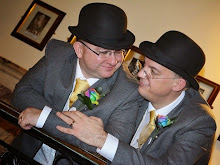
Update: Thanks to then Young Liberal Democrat Chair Sara Bedford for this photo from that very night, featuring Paddy, her, and then Student Liberal Democrat Chair Paul Simpson.

*Update: Excepting Justine McGuinness, who I am reliably informed was the only member of Conference Committee who voted against kowtowing to the police demands.
Labels: Liberal Democrat Conferences, Liberal Democrats, Liberalism, Meddling In Things That Are Nobody's Business But Your Own, Newspapers, Paddy Ashdown, Personal, The Golden Dozen, Top Tips


Tuesday, September 06, 2011
DVD Detail: Doctor Who – The Trial of a Time Lord: The Mysterious Planet
Back in 1986, the BBC high-ups had turned against Doctor Who. They cancelled it, then grudgingly allowed it back eighteen months later with a reduced running time, reduced budget and a series of directives from above that (as the excellent, if dispiriting, set of extras here reveal) were long on criticism and very short indeed in saying what they wanted instead. So when the punch-drunk series returned twenty-five years ago tonight with most of the executives wanting it to fail, it wasn’t a massive success. The Doctor Who production team fought back by giving all fourteen episodes one long story arc: in pretty much the most obvious and postmodern theme in the series’ history, the Doctor’s popularity is tested on a big TV screen while his corrupt superiors are completely stacked against him. It’s the ‘Trial’, symbolising a trial, and it’s sometimes a bit of a trial. So as to avoid swallowing the whole lot at once, it’s broken into several mini-stories as different parts of the ‘evidence’ (structured into past, present and future, inspired by A Christmas Carol), the first being sub-titled The Mysterious Planet. It’s possibly not the best of the Trial, but it’s probably the one of which I’m fondest… And what do other fans think of it? Back in September 2009, Doctor Who Magazine 413 published “The Mighty 200” – 6,700 fans’ votes on all 200ish TV Doctor Who stories to that point – and placed the whole Trial of a Time Lord 142nd (about right, to me) but these first four episodes at a lowly 165ish (I’d put it about thirty places higher).
While this ‘taster’ may not be short, incidentally, my policy in these is not to be too spoilery. So read on without fear of finding out too many key twists from the end.
That Golden Moment
“Listen… You are only a robot. The people out there – the work units, the organics, whatever you choose to call them – they’re living creatures, Drathro. They have a right to their lives.”

Everyone else rightly remembers this story for a special effects sequence that’s still striking a quarter of a century later, or for a star-studded guest cast boasting the likes of Michael Jayston, Lynda Bellingham, Tony Selby and Joan Sims. I remember it for all those things, too, but still more for Colin Baker facing off against someone you’ve probably not heard of in a big metal suit. Colin is a very theatrical actor, and one of the reasons I love his Doctor is that he’s at his best when giving speeches. Robert Holmes was the best of the Twentieth Century Doctor Who writers, and the two or three stories he wrote for Colin give him brilliant speeches that Colin rises to magnificently. The Mysterious Planet is the last more-or-less full story Bob Holmes wrote, and Colin gets superb material here particularly in the first episode – bubbling with enthusiasm then wistfully compassionate as he tells his companion that “nothing can be eternal” – and then again half-way through Part Four, trying to persuade a robot tyrant to let his people go, when the Doctor makes a mistake. Ironically, though you’d expect great speeches of a courtroom drama, not one of them is in the courtroom this time, despite this scene being fine advocacy from an actor who started as a lawyer.
And perhaps surprisingly, the character that I empathised with here even more than the Doctor was the robot tyrant, Drathro.
In September 1986, I was fourteen, and perhaps there’s something about being a bright teenager that leads to empathy with existential crises. The show was certainly in the middle of one, but from the very first time I saw this episode, I knew instinctively that Drathro was having one, too, and that that’s why the Doctor’s advocacy gets it wrong. I’ve never read another reviewer that came to the same conclusion; it may have been a theme of the script, or merely something that I read into it – making it a rare Doctor Who story that was rewritten better in my head as I was actually watching it – but ever since a man in 2000AD’s 1980 Robo-Hunter – Day of the Droids woke up, accidentally opened his face and discovered he was a robot, I’d been fascinated by existential questions. Long before I ever heard of the Turing Test, I was often on the side of robots in sci-fi, reasoning that if I didn’t know if they were sentient or not, perhaps neither did they, and that might be depressing them.
Drathro’s self-absorption is the (self-)centre of the story: the set-up of the two human tribes on the eponymous (or is it?) mysterious planet is a result of his rigid control; the threat of the black light explosion is down to his desire to take everyone with him; even his homoerotic servants Humker and Tandrell deserting him is triggered by his magnificent, hilarious reassurance that his armour means the Tribe of the Free don’t threaten him – “Their guns will destroy only you.” Drathro’s early observation that “organic” intuition often improves on his logic makes him sound slightly admiring and envious of the Doctor, while also seeking to control him – his existential crisis in a nutshell, like Taren Capel in reverse. He’s rather a good design, too, a massive robot with a curved head resembling both a signal receiver in a TV story about TV and a minotaur in a tale of a labyrinth (he looks even better next to his hench-robot, which is a bit rubbish). On the down side, he’s rarely directed to best advantage, but here he towers impressively over Colin as they debate on the crucial question of, if everything’s set to blow up, he should choose to be shut down five minutes early so that the five hundred humans he’s in charge of can live. And with Drathro entirely self-absorbed and far more charismatic than his vassals, it’s easy to miss just how appallingly he’s misused the power he gained through a state of emergency – it’s not just the explosive crisis presented here, but five hundred years in which he’s kept people enslaved by poverty, ignorance and conformity when none of it was necessary. Yet I still find him compelling.
The reason why I love the Doctor’s confrontation with Drathro to bits is that Drathro is tormented by not knowing if he’s self-aware or just programmed like that, which is why he has it in for the organics and why the Doctor’s tactless opening moral argument that he is “only a robot” is saying exactly the wrong thing. The brilliant Doctor winds him up, and the great big robot stops listening, because he doesn’t know whether he’s real or not and doesn’t like the Doctor rubbing it in. He’s such an underrated character, like Marvin the paranoid android done for real – a grumpy mechanical teenager with a marvellously flat, almost sulky delivery (Roger Brierley doing the voice, Paul McGuiness the physical acting).
And I’m certain, too, that the Doctor spots that he’s put his foot in it. His argument dances around Drathro, trying to find anything that will make him pay attention and think about anyone but himself. He offers a moral argument, then a logical argument, then one that’s both scientific and almost poetic; Drathro responds with a very ’80s Thatcherite argument, where he understands “value” only in the most limited sense, then with the sniffy thought that if no-one’s ever seen an explosion like this, well, there’ll be one soon. For me, it’s a major misstep by the script to suddenly inflate this internal debate with a threat to the world – the galaxy – the Universe!! – which seems less an exciting climax than a major loss of faith in the story’s ability to engage us so far, but I still think the misstep of dismissing Drathro’s personhood is a deliberate one: Colin plays it as if he realises what he’s said, and admits his humanity. Because he recognises that to be such a git, Drathro has to be a person – only an individual could be so selfish – and it’s at that point that Drathro’s earned the Doctor being angry at him.
“Hubris – false pride. A human sin. You’ve controlled your pointless little empire for too long – now you can’t see anything beyond it.”Though the Doctor’s honestly talking to him as a person now, Drathro is too sunk in depression to notice – until the Doctor’s friends (and uneasy allies) turn up trying to get in the back way, aiming to persuade Drathro with Great Big Guns. Drathro, who’s been sulkily planning to let everyone else in the story die, then takes hilarious umbrage when he thinks the Doctor’s been having him on and snaps out of depression to malice, hoping to food-process and microwave the intruders to death. His angry response has far more believable undercurrents than any other villain I can think of who presses the button on the giant mincing machine: whether it’s someone tormented with doubt about whether he’s only programmed or ‘real’ and is taking out his existential crisis on everyone else, a superintelligent teenager in a strop, or displaying the self-absorbed hurt and outrage of the terrorist who suddenly twigs that their hostage negotiator is not, in fact, taking a genuine interest in them as an individual after all.
In the background, Nicola Bryant’s companion Peri is great taking the initiative; usually fine guest star Tom Chadbon is inexplicably wooden; and a pair of galactic con-artists have some entertaining moments, quoting from old Who stories, setting up the clue that the ‘muscle’ may in fact be the clever one all along, and in the end providing the very ’80s twist that the Universe is saved not by logic, nor moral force, but by Arthur Daley (oh, no, spoiler!). Just a shame about the gunge tank. But it’s the Doctor and Drathro here that have always fired my imagination.
Something Else To Look Out For
That opening special effects shot? It does still look as fantastic as it did in 1986. Turning around a Time Lord space station that’s like a baroque cathedral among the stars, it was the most complex and expensive model sequence mounted for Doctor Who in the Twentieth Century. Typically, that segues into a scene scripted as a moody procession down a darkened corridor, which ended up having to be shot in an emergency outside a brightly-lit, very tacky door. And that’s the problem with The Mysterious Planet: it can’t help lurching between brilliance and banality.
The lead actors definitely lift it. Colin Baker’s Doctor is not just a great speaker but endlessly watchable, full of entertaining business. He and Peri are at last firm friends, too; engaging and enthusiastic together rather than the previous year’s bickering, in no small part thanks to the actors deciding their characters were going to mellow. While the Doctor’s coat is as garish as ever and his hair more so, Peri now has clothes someone might actually wear, which help her into a far better role. Colin has a very different but just as watchable relationship with Michael Jayston, together turning rather tiresomely written courtroom sparring electric – “The crime was in being there, Doctor!” The coldly powerful Mr Jayston is terrific casting, cutting through Colin’s florid charm (though some of the reason for that, when I gushed over how brilliant he is recently, must remain clouded by spoilerphobia); usually it’s only the Doctor or the villain who light up the screen, but in this case…
“Hear how the Doctor condemns himself with his own words.”The script sets the tone – of being all over the place. Among the few things on which Colin Baker and script editor Eric Saward (who does his bitching in a separate commentary to everyone else, due to his immense popularity) agree is that Bob Holmes was a brilliant writer, though this isn’t his best. Some of the snags are clearly down to Eric’s idea of the Trial, though that’s not the only structural issue. The problem with the Trial set-up emerges very quickly. Although that’s where we start in Part One, soon we’re drawn into the Doctor’s exploration of the mysterious planet, with atmospheric long shots, lighting and music in a dark ruin before Peri makes her shocking discovery (guess) and she and the Doctor share some beautifully elegiac scenes together. It feels like the story’s hitting its stride… And then, with a grinding gear-change, the Trial not only interrupts but sneers at it:
“Can’t we just have the edited highlights?”As if, fourteen minutes into a new series, the production team have lost all faith in it and can’t help ruining any atmosphere the story had built up. And throughout not fourteen minutes but fourteen episodes, this keeps happening. Most of the story works, but interrupting it with the Trial stops it every time it gets started – you can see why they killed off the Time Lords for the next big relaunch two decades later. It doesn’t help that the production values take a tumble once we get back below. After the effectiveness of the subdued lighting and ruined stair as the Doctor and Peri talk of dead worlds, the Doctor is plonked into a brightly lit studio that doesn’t look at all as if it’s suffered five centuries of privation, where he’s jumped by condom-clad men who appear to have been huddled waiting for their cue. The only thing that could make the tunnels look naffer is if a really pathetic vehicle were to trundle through it… Oh. You’ll know, if you watch it, what sort of place this ought to look like. It doesn’t (if only someone had taken a look at Doctor Who Magazine’s End of the Line).
Back in the script, several times there are sinister mentions of things that have already been revealed: both “the Immortal” and the fate of those in the Selection would have far more impact if we didn’t see them trolling along before we heard the terrible rumours, and that’s simply poor plotting. The case in favour of the Trial largely rests with its postmodern inventiveness, alternately playful, threatening and cheap, as various characters watch others on TV. It’s mildly amusing, but all the comments about violence, incoherence and dullness (“I would appreciate it if these brutal and repetitious scenes are reduced to a minimum,” “Why are we doing this?” “I tire of this empty banter”…) are surely rather Ratnerishly unwise, like singing ‘We’re ****, and we know we are’.
“Well, if the rest of his presentation is as riveting as the first little epic, wake me when it’s finished.”With subtler irony, while the Court accuses the Doctor of violence simply because he’s caught up in trying to stop it, pastiching Mary Whitehouse, Joan Sims’ Katryca notices that the Doctor not carrying weapons makes him “unusual” amongst star-travellers; the people sitting in judgement and picking holes don’t understand the Doctor, but the people he meets do. Similarly, while many comments are as unsubtle as people just saying ‘ooh, this isn’t very good!’ and hoping the audience at home will disagree or titter rather than nod and switch over, having Handbag and Handrail expound on syllogisms immediately before Drathro jumps to a great big syllogism of his own is a clever touch. Though why, exactly, is the screen that the jury watch for most of their time in the Court directly behind them, so everyone has to crick their necks and squint? Surely the most appropriate place for the screen is the fourth wall.
There’s more than poking fun at itself and Colin’s riveting set-piece speeches that make parts of the script shine, however. The pull-back reveal of Glitz and Dibber through the trees is one of the more stylish flashes, juxtaposing the newly relaxed Doctor and Peri pairing with the jarring dark comedy of a seedy, greedy version of the Doctor, a carelessly murderous traveller with immense but often misplaced self-confidence who keeps putting his companion down (the often dull text notes reveal that – rather than the excellent Tony Selby and Glen Murphy – the director had considered French and Saunders for the parts of Minder’s sociopathic future incarnations. I wonder if that’s why they did their sketch on the Trial set?). There are other clever juxtapositions, too – both sets of humans imprisoned by different dead dogmas while the Doctor tells us to “Never believe what is said” but find out for ourselves, and the different sets of hunters who swap places as to which is the threat to our heroes. The Reader of the Books (and, particularly, his books) is funny, and one of Bob Holmes’ best writing tics comes in, with snippets of a history that’s happened offscreen, though it’s a disappointment that the story of “the three Sleepers” is no sooner raised than it’s discarded.
Stolen Secrets
You might also ask, is it a miscalculation or a brilliant gag to do Planet of the Apes for laughs, on a BBC budget, with the climactic revelation ten minutes in? Other sources obviously date the story to 1986 – the Minder-a-likes blasé about mass murder to make a fast grotzit, touches of Spycatcher when elements are excised as “Against the public interest,” the post-apocalyptic Tribe of the “Free” being a tyranny led by a single shouting woman and her mumbling male advisers, with Joan Sims playing both Margaret Thatcher and Tina Turner – but there’s also a spray of naughty Doctor Who allusions. Not only does Colin get to spoof Jon Pertwee (and Peri respond “You’re alive. I knew it” rather than weep over his body), but Bob Holmes writes an outrageous remake of both The Ark in Space (far future, solar flares, Earth abandoned, sleepers, rigidly autocratic rule of survivors) and The Sontaran Experiment (robot with grabbing tentacles, abandoned Earth, Doctor staring right into monstrous villain’s camera) but mixed with The Krotons turned upside-down and made deeper and more layered (from the postmodern games to Drathro’s identity crisis).
I’ve criticised set design that suddenly tumbles from intriguing to just not looking like it gives a toss, but perhaps the biggest single fault is in the direction, which while not actively bad is mostly flat, simply lacking flair, pace and energy. Not even the explosions are up to the usual maniacally dangerous level of BBC enthusiasm. Thank goodness, then, for the music. Dominic Glynn provides a new version of the Doctor Who Theme which has less punch than the two previous versions, but an ethereal, almost water-like sound that suits the rippling titles and is particularly effective on the echoing fade into the story. He’s also responsible for the incidental music, which is some of the best in the series and quite the most consistently good thing about the production. It’s a great shame that, because the master tapes of the music for the next four episodes of The Trial of a Time Lord are the only ones from the ’80s which no longer exist, they chose to include no isolated score on any of these discs: I’d love to be able to play the elegy for Earth under the ground, the piping and the stately march for the Tribe of the Free, the driving music for the otherwise feeble L1 robot… The expansive music as Peri and Glitz yomp their way to the second cliffhanger, for example, is far more thrilling than the cliffhanger itself (a misfiring line that can be taken either as inappropriate despair from the Doctor or a postmodern statement that doesn’t raise a laugh). So the soundtrack, like Colin, is a highlight throughout.
“I did my best. I only hope it’s enough…”Despite flashes of brilliance, too much of The Mysterious Planet feels uninspired, almost going through the motions – not bad, certainly, but not good enough to grab the audience and stick the two fingers up to the series’ BBC enemies that it needed. Ironically, though the direction looked distinctly unadventurous even in 1986, new Who viewers coming to the DVD might find the ‘DVD commentary’ style of the Trial more modern, with the Doctor and the Valeyard even arguing about the deleted scenes.
Classified Material
Colin Baker and Michael Jayston are more harmonious in the 25-minute The Making of The Mysterious Planet (and Colin is a splendid raconteur and ringmaster for the commentary itself), with a strong line-up of interviewees for candid discussions, revelations, and disagreements with the script editor. It’s rather good, and joined by a remarkable host of extra features even on just this first disc in the set: eight and a half minutes of deleted and extended scenes, including the TARDIS materialising in the rain (I’m glad they lost the bickering), the Doctor pointedly pointing out there are ways to come upon knowledge that don’t involve the Time Lords and a sweet scene of Humker and Tandrell skipping off as a couple; ten minutes of trailers and continuity setting the story in the terrifyingly ’80s context of Roland Rat, Noel Edmonds (for the moment…), Paul Daniels, Russ Abbot and – also twenty-five years ago tonight – the very first episode of Casualty… There’s even a cameo from a future incarnation of the Doctor! Add to that some theme remixes and a scored photo gallery which go a little way to making up for the absence of an isolated soundtrack, Wogan, Blue Peter, Points of View (Anne Robinson before she did that to her face and a very badly-written slagging-off letter from a self-important fan. How unlike the home life of our own dear internet). For once, even the DVD menus are quite well put-together, and not too spoilery. PDFs include Radio Times features and a press pack from the time; interesting that the listings threaten the Doctor with “If found guilty, he will forfeit his remaining lives!” – as if some figure from the Doctor’s future would muck about with such things these days – and advertises the new video release of Day of the Daleks (which coincidentally blows its Dalek reveal mid-way through its first episode just as this blows Drathro’s – had neither story heard of cliffhangers? – and does a different bit of Planet of the Apes), when it’s now due out on DVD almost exactly a quarter of a century later. So whatever verdict you reach on the story, it’s a terrific DVD release.

The photos, incidentally, are from the Blackpool Doctor Who Exhibition. A major part of my childhood, it was closed in 1986, making The Trial of a Time Lord its last new season of Doctor Who. A new version opened in the 2000s, but the BBC closed it and flogged off the exhibits two years ago rather than preserve them for the nation. Philistines. So even in these glory days, some BBC brass are still tossers to Doctor Who.
Should you come across the novelisation, it’s not Terrance Dicks’ best, but quite interesting; with more of the original authors taking over in the mid-’80s after a long period in which Terrance had written almost all the Target series, it was his only book for Colin’s Doctor, so his only crack at a description, and a cracking one. It starts well but doesn’t really sustain the style (as well as displaying rather more typos than usual), though fans may note that the chapter title for the climax is The Big Bang – well, it’s better than last year’s, at any rate. Oh, and that opening line Mark Gatiss thinks he made up? It’s here.
“It was a graveyard in space.”As this “Taster” has – as usual – spiralled out of control, you’ll be relieved that I’m being contrary this time: usually I do a whole DVD release at once, even if it’s made up of several stories; The Trial of a Time Lord box set is in theory all one big story, but I’m doing only the first disc with the opening evidence this month. As the Trial continues, the Doctor seems to be his own worst enemy… While the mini-stories alternate between straightforward but perhaps forgettable, and memorable messes of conflicting ideas. So, Next Time…
The Mysterious Planet… In a Hurry
And finally… Richard and Millennium have a few things to say about this story, too. You might also like to read Millennium’s Mysteries of Doctor Who #1: Just What Is so Mysterious about Ravolox? which was the first in an extensive series that later returned with the (more spoilerish, as it covers the next ten episodes too) Mysteries of Doctor Who #15: What the TRUNK is going on at Dr Who’s Trial?
Less seriously than the elephant, and mindful that my articles tend to go on a bit, Richard has helpfully condensed the whole story into two scenes for your entertainment and delectation:
Scene 1: ext. woodland. THE DOCTOR and PERI enter
THE DOCTOR: I wonder what this Mysterious Planet is?
PERI: Oh golly, Doctor, it’s Earth, isn’t it?
THE DOCTOR: Er…
Scene 2: int. underground lair. DRATHRO – a giant robot – is pottering around. QUEEN JOAN of SIMMS enters
QUEEN JOANIE: SIDNEY!!!!!
DRATHRO: Ooh, I feel a bit funny.
DRATHRO collapses on top of QUEEN JOAN; SABALOM GLITZ – a spiv – enters
GLITZ: Ooh, look at those >deleted< They’ll be worth a few grotzits.
THE VALEYARD: (off) Nothing to see here, Sagacity, move along.
Roll titles
Labels: BBC, British Politics, Carry On, Charles Dickens, Colin Baker, Comics, Conservatives, Doctor Who, Douglas Adams, DVD, DVD Details, Michael Jayston, Music, Pictures, Richard, Speeches
Friday, August 26, 2011
Tory Boy Throws Toys Out of Pram: Not Exactly ‘Man Bites Dog’
The Voters Have Spoken
Opinion polls always say that voters want politicians to put aside their differences and work together. Since opinion polls also show the Lib Dem vote share plummeting ever since we did exactly that, we’ve had to get used to the fact that voters can have it both ways and we just have to sit back and take it. Voters have the power over parties, and that’s how it should be, even when they want completely contradictory things: when you’re in government, though, you have to face up to reality. And perhaps the harshest realities are for Tories like Tim Montgomerie, whose childish sense of entitlement screams from every line as he complains that “it's been the Liberal Democrats who are increasingly flexing their 9%-sized muscles.” It’s true, of course, that the Liberal Democrats only won 9% of the MPs last year and the Tories 47% of them – though we might point out that the voters gave us 23% of the vote, just under a quarter, and the Tories 36%, just over a third.
Those of you with finer mathematical skills than Mr Montgomerie will have spotted that all four of those percentages have something in common. Can you see it, children? Yes – they’re all under 50%. Obviously, the Liberal Democrats and the Conservatives disagree on what democracy means: we think power should need support from a majority of the voters, while the Tories think it doesn’t matter if two-thirds of people vote against you, as long as you get the bums on the green seats. But the Conservatives didn’t even get that. So every time you hear a Tory bleat how unfair it is that they don’t get to do everything they want, remember that that’s because the Tories failed not just the piffling test of whether people actually voted for them, but their own test of Parliamentary majority. Claiming the Lib Dems are cheating them of all their toys is a blue herring: the likes of Mr Montgomerie are actually complaining that the voters didn’t give them their rightful power. We didn’t win the election either, so we’ve had to compromise on a lot of what we wanted to do, and some of it’s been horrible. But what a relief that the Tories have had to do just the same. Compare the two parties: many Lib Dems are depressed, because we’re used to being in opposition and hate having to agree with some of the nasty Tory policies as the price of getting 75% of our own manifesto through. But the Tories expected to be in power, so they’re angry that the voters put a brake on their birthright. And Mr Montgomerie’s childish refusals to compromise with reality are the authentic howls of that anger.
Con Home’s Howls of Outrage
The main part of Tim Montgomerie’s article on Conservative Home today is a top ten of Lib Dem perfidy and Tory impotence, snarling out such gems as “At every turn the Lib Dems have frustrated Damian Green and Theresa May's efforts,” “Thwarting of the NHS reforms” and stopping the Tories bossily telling everyone how to live their private lives, all of which should reassure many Lib Dems. If the Conservatives are that unhappy with how much we’ve stopped them doing, it’s worth the price, isn’t it? Here’s a selection:
“(1) Human rights laws: We have Nick Clegg in The Guardian arguing that the human rights laws are essentially sound: "I will refuse to let human rights laws be weakened". Cameron's promise to Sunday Express readers looks impossible for him to meet.”A tricky choice, isn’t it? You have to pity poor Mr Cameron as he looks into his shaving mirror. ‘Treaty obligations drafted under Winston Churchill, British laws, basic freedoms… Or something my spin-doctor said to the Sunday Express for me? Which should I choose? Decisions, decisions.’ Fortunately, the Lib Dems and saner Tories like Ken Clarke – who Mr Cameron, you’ll remember, brought into his team to appeal to the voters despite the shrieking opposition of the likes of Mr Montgomerie – are in government to help Mr Cameron realise where the balance lies. And Mr Cameron needs it. He wants to rip up British human rights while telling other countries they need to improve theirs. Tories like Tim Montgomerie always say one thing in one place and something different in another, but the Deputy Prime Minister is more mature and more consistent. What was the line he took in The Guardian that so infuriated Mr Montgomerie? “Human beings need human rights – in Britain as well as Libya”. It would take a child of six not to see that you can’t run foreign relations by ‘Do as I say, not as I do’. Which is why I was also pleased to see Nick on TV yesterday saying that of course the government won’t be banning social media the way dictatorships do (and please ignore the idiot next to me in Number 10’s knee-jerk application for membership of the Chinese Communist Party, he was too polite to add).
“(4) Green policies. Certainly if George Osborne had had his way the climate change measures announced by Chris Huhne would be a lot less costly to businesses. Reducing Britain's carbon footprint is the lowest priority of the new generation of Conservative MPs but the arithmetic of the Coalition has tipped the balance in favour of unilateral action on global warming. Huhne may be unpopular with Tory activists but I'd suggest he was one of the government's most effective ministers.”The truth of Mr Montgomerie’s position, of course, is that he’s an enemy not just of the Lib Dems, but of Mr Cameron. Mr Montgomerie would have been a very vocal critic of a Tory majority government on Mr Cameron’s programme; when he doesn’t even get that much – because, remember, the voters didn’t give it – he’s apoplectic. He may complain about Lib Dems moving the government away from the Conservative Manifesto, but on this issue it’s Mr Montgomerie and his far right coterie who want to ditch pre-election promises from both parties. It was Mr Cameron’s moving the Tories in a less mouth-foamingly hard right direction that both encouraged enough voters to back him that he had sufficient MPs to offer a coalition rather than being an absolute loser, and allowed enough common ground for the Lib Dems to form that coalition. And the earliest and most visible sign of that move was Mr Cameron’s commitment to greening the Conservatives. Remember “Vote Blue, Go Green”? “Hug a Huskie”? Even the redesigned “Tory Tree” Party logo? So when Mr Montgomerie attacks the Liberal Democrats, while admitting through gritted teeth how effective Chris Huhne is, and when he talks up the Chancellor’s anti-green agenda but pointedly fails to mention the Prime Minister, he’s in the hot air majority of the Conservative Party and poor David Cameron is isolated. With the Liberal Democrats, this government’s becoming the greenest Britain’s ever seen; without us, ironically, it’s clear that Mr Cameron’s biggest single commitment would have been subject to a putsch from his own side. It’s difficult to imagine a more blatant example of saying one thing in place and another somewhere else than Mr Montgomerie’s outrage here that ‘The Liberal Democrats are dragging the Coalition away from the Conservative Manifesto by making us keep to our word!’
Tories Against Tax Cuts and Economic Growth
But perhaps the most telling items in Mr Montgomerie’s countdown are numbers 5 and 6, “Opposition to growth measures” and “Even loading of the public spending cuts”. It takes a remarkable mixture of chutzpah, self-unawareness and economic illiteracy to push those two points together, but he did it; it’s difficult to imagine a more anti-growth policy than plummeting into every single spending cut on day one, with no chance to prepare for it. And he’s quite blatant about why he wanted that, too – not for the economy, but for the Conservative Party:
“It also means politically tricky cuts as deep as year one will be necessary in the run up to the election.”Well, boo hoo. The Coalition is in power when the economy’s been tanked, and thanks to that Coalition, the government’s doing the responsible thing instead of only worrying about Tory election prospects. Continuing his onslaught against green measures, they’re Mr Montgomerie’s main example of being “anti-growth”; nope, the whole point of Green Investment Bank is to build the economy sustainably. And Mr Montgomerie’s top ten also rails against the Lib Dems stopping the Tories blocking immigration – when as all the business lobbies point out, slashing immigration is another stupidly anti-growth measure.
The biggest giveaway of the difference between a Conservative-only government and the Coalition, though, comes when Mr Montgomerie attacks the Lib Dems’ raising Capital Gains Tax as “anti-growth”. Well, where do I start? Seriously; he thinks rewarding lazy slackers for raking in wealth they haven’t earned should be the economic priority. As part of their ‘cosying up to the rich’ agenda, the previous Labour Government had slashed CGT to well below income tax, so that the very rich could dodge tax by plonking their wealth into property. Labour also doubled income tax on the very poorest. I wrote before the election about the big difference between Lib Dem and Tory tax cuts, and the way Mr Montgomerie completely ignores the Coalition’s big tax cut shows that he knows the difference, too. At the General Election, the Lib Dems’ top priority was tax cuts for low and middle earners, with increased taxes on the rich to pay for them. The Tories’ top tax priority was to cut inheritance tax for double millionaires. Never mind fairness; guess which would do more to stimulate economic growth?
The Liberal Democrats insisted in part on raising Capital Gains Tax because it simply wasn’t fair that those with a great deal of money could use lower CGT rates to dodge tax that that everyone else has to pay. But the reason that more economically sane Conservatives in the Coalition agreed to that was that the money from that CGT rise went into paying for the big raise in income tax thresholds, which cuts taxes for low and middle earners. Put more money into the hands of people on low and middle incomes, and they spend it; if you’re very rich, you can afford to save it. One of the things I’m proudest of the Coalition for doing – even if it doesn’t go nearly as far as it would were the Lib Dems in majority government – is starting to raise taxes on unearned wealth and give the money back to people who earn it. But Mr Montgomerie doesn’t even seem to notice that tax cut, and is furious at raising the money to pay for it. I’m grown up enough in my politics to accept that Tories don’t all just hate the poor, but Mr Montgomerie does a striking impression of it.
In Power To Limit Power: It’s A Start
When Liberal Democrats dreamed of being in power, it wasn’t with the economy trollied by Labour, nor with having to accept much of what the Tories want to do. But that’s the limited power the voters gave us, and we’re grown up enough to accept it. We’re getting just 75% of the Lib Dem manifesto implemented – yes, I’d rather it was 100%, but when for the last 90 years of greater purity it’s been 0%, being in partial power is a start. And while being in power just to block the Tories wouldn’t be enough, when you read how upset that makes Mr Montgomerie, it cheers you up, doesn’t it? Thank you, Tim!
Conrad Russell used to point out that you could trace back our party’s history to the Seventeenth Century, and that the founding principle on which early Liberals came together was control of arbitrary power. Just as there were proto-Liberals back then, there were proto-Tories, too. They were the ones who wanted the arbitrary power. Controlling excessive power isn’t the sexiest of slogans to boast about, but it’s still at the heart of Liberalism. Today, it’s an important part of what we’re doing in Coalition. Both sides from the Seventeenth Century would recognise it. So do Tim Montgomerie and all the other Tories with their sense of entitlement to absolute power without the votes to support it.
That’s why they’re so angry with us, and that’s why we should carry on.
This post was commissioned by Helen Duffett of Liberal Democrat Voice and was first posted there.
Update: A couple of weeks later, Andrew Rawnsley makes the same point. Even including the person the mouthfoaming Tories really hate.


Labels: British Politics, Coalition, Conrad Russell, Conservatives, Environment, Liberal Democrats, Liberalism, Tax
Thursday, August 25, 2011
DVD Taster: Doctor Who – The Dominators
Doctor Who – The Dominators may not set the happiest of precedents for this weekend’s Let’s Kill Hitler. With mediocre ratings and bad reviews, it may be set on an obscure planet in a distant galaxy rather than in the recognisable history of the Third Reich, but its authors would claim it’s all about what happens when a culture lacks the moral backbone we showed in 1939, while its detractors point out that the authors set up a fight between fascists and hippies, then side with the fascists. I once wrote about How Doctor Who Made Me A Liberal; ‘not like this’ would be a start. Even the less political broad sweep of fandom don’t much care for this story: back in September 2009, Doctor Who Magazine 413 published “The Mighty 200” – 6,700 fans’ votes on all 200ish TV Doctor Who stories to that point – and placed this at a lowly 191 (at 49.99%, the first to score under half marks). Against all reason, I’m fond of it, so I might put it 20 or so places higher…
While this ‘taster’ may not be short, incidentally, my style in these is not to be too spoilery. So read on without fear of finding out the key twists.

That Golden Moment
“It is not unknown for a leader who is unfit to be replaced.”Easily the most striking figures in The Dominators are the two Dominators themselves, representatives of an empire that stretches across galaxies and towering above the rest of the cast, both physically and in acting presence. We never hear about this empire again, so it’s easy to assume they fall into civil war (possibly giving way to their thrilling robot servants) – the two of them are arguing from the very first scene to the end of the story. Probationer Toba, of the hungrily sadistic expression, wants to destroy everything in sight. His boss, Navigator Rago, is the intelligent one who wants to evaluate and make use of things before just blowing them to bits, and it’s thank to a superb actor that he doesn’t come across entirely as the junior Dominator’s mum, given that most of his role consists of coming home and finding that young Toba’s broken another toy or impatiently directing Toba’s attention to yet another vital fact he’s failed to spot.
“It is not unknown for a mutinous subordinate to be executed!”
This argument comes to a head early in Episode 4, in a much more tense mirror of a scene in Episode 2, both set in the Dominators’ incredibly groovy spaceship control room. In that earlier scene, the Dominators subject the Doctor and Jamie to a series of physical and intelligence tests, a disturbing sequence that might tip into unpleasantly sadistic but for Patrick Troughton and Frazer Hines’ inspired ability to clown around and make things entertaining. Toba, on the other hand, is not one of nature’s jollifiers (despite providing some mirth by apparently peering up Jamie’s kilt in Episode 2). The drama when Toba oversteps the mark and gives Rago reason really to slap him down is more gripping than anything else in the story: the ambitious young subordinate makes the mistake of calling his boss weak during an unfavourable performance review, and suddenly finds himself subjected to exactly the same treatment as their victims. Officially, there’s no music in this story, but quite a bit of it’s actually supplied by Brian Hodgson of the BBC Radiophonic Workshop and the deep clattering tones as a Quark (of which more later) closes threateningly on Toba are very effective. It’s a vicious humiliation, and you wonder just how far Rago is going to push it – the half-crazed joy that comes into Rago’s eyes when he unleashes just a tiny bit of the sort of sadism Toba’s been boasting shows that he is a far more dangerous individual.
Senior Dominator Rago is for me the performance of the story, played by guest star Ronald Allen – a playboy in The Avengers, a send-up in The Comic Strip, and a mainstay of… Crossroads. Yet whatever you’ve heard about that soap, he has massive charisma that’s all the more effective for being underplayed. Playing one of the two characters who has a brain – and doomed by never quite realising that the Doctor is the other – he’s made up to look almost like a zombie, with staring, sunken eyes. Ironically, not only is he far less of a zombie than the Dulcians, and not only does he notice the Doctor’s eyes when his are the most noticeable in the show, but also, out of scary make-up he returned to Doctor Who a couple of years later (in a much better story) and turned out to be very handsome when being laid-back instead of intense. This time round, though, his charisma is very cold indeed.
Something Else To Look Out For
Forty-three years ago this evening, The Dominators was broadcasting its… Middle bit. At the risk of giving the impression that the production was a bit sloppy, what would have been “Episode 3” is forever untitled, as they forgot to stick the caption on it. Inauspicious, you might think (though Terror of the Zygons and The Leisure Hive also began in late August and they were both terrific, so take your pick). At the time, The Dominators was broadcast between a repeat – something so rare, before BBC3 and DVD, that they worked it into the story – of The Evil of the Daleks, Patrick Troughton’s best story, and the first broadcast of The Mind Robber, his next-best story. So it was just one of many stories, with a brilliant one either side. Today, it’s one of the rare survivors of the BBC purges that burnt most of Mr Troughton’s time as the Doctor, forcing attention onto it as it never was in 1968.
This opened the third and last season for Matt Smith’s favourite Doctor, and Mr Troughton’s variable here: brilliant thinking on his feet with the Dominators, entertaining taking an aircraft to bits while flying in it or doing other bits of business with Frazer Hines’ Jamie; bizarrely fond of Dulkis, a planet of dull, two-hearted reactionaries who never do anything, particularly in view of their far scarier counterparts at the opposite end of the season; and noticeably losing interest and hamming it up at some points, having grown the catchphrase “Oh my word!” over the summer. His other companion Zoe gets a bit of a raw deal, as (the special features reveal) did the actress, so no wonder she doesn’t look like she’s having much fun. And another new member of the team, the sonic screwdriver, already has amazing magic powers way beyond its design specs – to think, Deputy Script Editor Terrance Dicks complains about how they use it these days…
Arthur Cox – later seen in last year’s The Eleventh Hour – is often slagged off for his part here as Cully, Dulkis’ James Dean, the oldest, plumpest, most follically challenged teenage rebel in space, but for me he’s up with Beryl Reid as Sigourney Weaver, Bernard Cribbins as Luke Skywalker and using Weta’s The Lord of Rings army-building CGI to make cute waving alien babies as perfectly wonderful Doctor Who casting. And he’s very entertaining, too, from his early “An adventure with Cully is something never to be forgotten” to a glamorous woman (they’ve clearly shagged, and she looks embarrassed about it) right through his exasperation at his civilisation to turning into a gleeful bomber. Cully gets involved by sailing into a danger area in a dodgy ship (it looks like a lemon-squeezer, making one of his party’s use of the word “zest” difficult, difficult, lemon difficult to get away with. Still, it blows up spectacularly, in what may be Doctor Who’s earliest example of serious BBC pyromania) and getting his handsome but dumb passengers killed; they also include a very camp handsome young man who’s clearly heckling because he’d expected to get the part and the girl, who in later life becomes a leading Shakespearean actor and the despicable Bruno Kransky in Brogue Male, and a dumpier, grumpier actor who also had a significant part in The Horns of Nimon, yet didn’t turn up at any of last year’s signings. Perhaps he’s embarrassed. No, for me the only thing about Cully that doesn’t work is that his part of the story was inspired by The Boy Who Cried Wolf: we never hear of his earlier pranks, just that he breaks the rules and so people sneer at him; everything he says on screen is the truth; and, undermining the fable entirely, not only does he never cry wolf, but the whole point of the story is that the Dulcians would never come running to deal with a threat, anyway.
Another element of the story that everyone slags off is the Quarks, the Dominators’ terrifying robot servants (not a spread, a subatomic particle nor a Star Trek character). And, all right, they’re not very terrifying, but they’re an attempt at something different, and I love them. Short boxes with spinning spiked heads and arms that pop out at strange angles, they have memorable voices: intended to sound like homicidal children (and with real schoolboys, mental state unmeasured, within their boxes), their giggling mania is mostly so high-pitched as to be incomprehensible. And then there’s the famous sound effect Quark Goes Berserk and Explodes. They were expressly commissioned as a marketing rival to the Daleks, but this was their only major appearance; as, despite their obviously 360-degree sensors, by the end of the story they’re being tripped up and destroyed in ways so pathetic that you can’t help going ‘Awwhh’ at them, they split fandom. Essentially, some fans think they’re completely rubbish… And on the other side, there’s me. You see, when I was a little boy, I saw photos of three green Quarks striding across the Radio Times Doctor Who Tenth Anniversary Special, and I thought they looked brilliant. Sources differ as to whether they were actually green or grey, but I know for a fact they’re really maroon and orange. Because those were the two colours of paint my Dad had enough of when I was a schoolboy, mental state uncertain, in a home-made Quark box – aged eight, I came second in the local fancy dress competition to my mate Ste’s fantastic Dalek creation (which had the curves). And they’re still really groovy. Even now I’ve seen them.

My Secret Shame: I Was A Pre-Teen Quark

The Quarks have some great point-of-view shots, at least – used to fabulous effect in the brilliant DVD Coming Soon trailer (though this DVD really needs a trailer for The Mind Robber, too) – and an eerie electronic bubbling sound as they open fire; the first, and most expensive, time they kill someone is a chillingly memorable effect. Andrew Skilleter’s moody cover for Ian Marter’s taut and gripping Target novelisation of the story helped, too, and the book encouraged me to play with chemistry sets (I bet one friend’s bedroom ceiling is still covered in marks after I persuaded him to let me mix the more poppable substances in his). I can’t see them coming back on telly this Autumn, or next, though. Not least because after the Macra returned in 2007’s marvellous Gridlock, I wrote about how I’d redesign the ‘homicidal children’ Quarks in the forms of spheres with spikes and expandable implements, like evil penknives… And then along came the Toclafane two months later.
How To Make Doctor Who A Bit Fascist
I like Cully. I like the Quarks. And yet even for me, The Dominators remains fatally flawed. I’ve not gone over how dull the script can be, how repetitive the ‘action’ ping-ponging between Island and City, how jaw-droppingly unflattering the dresses the Dulcians wear, how it’s not remotely as kinky as the title might make you hope. The problem is deep in the story’s very conception. I have problems with the series’ moral compass for this year’s stories, but this story’s moral compass isn’t uncertain – it’s pointing in absolutely the wrong direction, save the points where the producers intervened or the writers simply messed up their own conservative allegory. The production team wanted ‘the new Daleks’; the writers wanted to write a Terry Nation story, with much of it taken from the original The Daleks and The Dalek Invasion of Earth (though later Doctor Who borrows from The Dominators, too; not just the Toclafane, but look at the plot behind Aliens of London, or at The Sontaran Experiment, telling a similar story at 40% the length, with more style, but not as fab a robot). And what they took from The Dalek Invasion of Earth is not just the solution, and not just ‘what if the Nazis had landed,’ but ‘what if the Nazis had landed after those bloody hippies had taken over’.
The intimidatingly prolific Doctor Who blog TARDIS Eruditorum loathes The Dominators with a fiery passion and a plausible argument:
“…instead of pacifists being good people who can be made better, pacifists are deluded fools and it's funny to watch them die. It is easily the most cynical and mean-spirited scene I have seen yet in Doctor Who. It is a scene that exists only to take people who are acting out of a genuine moral conviction and mock them for their own morality.”And that’s about the toned-down version of the story, once the production team had taken a hatchet to it. If you read his article, you’ll find my partial defence underneath, though there’s not much I can do to salvage the politics. Basically, writers Mervyn Haisman and Henry Lincoln hated hippies and thought their peacenik ways a threat to all that made Britain great, so wanted to write a story showing them rightfully getting their noses bloodied. It’s the horribly misbegotten Doctor Who equivalent of Carry On Camping, which made exactly the same mistake at almost exactly the same time of putting a resolutely anti-authoritarian series on the wrong side of the youth divide (though if you want to see Wendy Padbury’s Quarks, you’ll have to watch The Blood On Satan’s Claw). In part, they were toned down by the production team; in part, they just weren’t talented enough right-wing polemicists not to torpedo their own message. But it’s bad enough, and, yes, “mean-spirited” probably hits it, and that’s just not something Doctor Who should be.
“It is an overt attack on the ethical foundations of Doctor Who. Not only is it an attack on the entire ethos that underlies the Doctor as a character, it's an attempt to twist and pervert the show away from what it is and towards something ugly, cruel, and just plain unpleasant.”
Whether it’s just the nature of Doctor Who or the writers making a hash of it, there are points at which the series’ innate Liberalism breaks through. Though Dulkis is presented as a world long after the hippies have taken over – men in frocks, horrors – they’re also rich and conservative, and while the younger generation (well, one of them) are rebelling to rediscover excitement, asking questions and resisting authority is not just Liberal but, well, counter-cultural. Not only do they not ‘get’ what the hippies stand for nor the courage of non-violence, but they don’t understand that backing a youth rebellion against stuffy old men undermines their attempt to pit the series against ‘young people today’. Even the younger Dominator does it; hopefully, the writers failed to spot that he is, in practical terms, right – the more intelligent, analytical Dominator is brilliantly played and written like the grown-up, but if he’d just shot everyone in a spasm of bloodlust as Toba wanted, he’d have won. So the script’s ‘We should stand against the Nazis and the hippies!’ message manages to fall apart both in a more Liberal and in an even-more-fascist-than-it-thinks-it’s-being direction. And as for the sexual politics… Well, the text notes reveal what the BBC thought of the purposes of their actresses, while star student Kando on screen is so blatantly as thick as two short planks that when she’s praised by her tutor after not even getting her parrot-fashion lines right, it’s difficult not to conclude that he must be shagging her (add that Jamie suddenly knows what “homework” is and that Zoe, with her perfect recall, shouldn’t think much of her). Though perhaps she is qualified to Dulcian standard, as Educator Balan turns out to be absurdly literal to the point of idiocy, too.
Mervyn Haisman and Henry Lincoln having previously written two rather good stories, this is where they hit a brick wall and never wrote for the series again – the latter, hilariously, starting the whole Knights Templar / Holy Grail / Jesus’ bloodline conspiracy fad with The Holy Blood and the Holy Grail – though not necessarily for their politics being watered down, nor for their final couple of episodes being shredded. No, it was because they and the BBC fell out over who would profit from the Quark goldrush. Titter ye not. I’d still love a toy Quark, but I bet Character Options won’t touch those two’s contracts with a barge pole.
New Bits!
If this hasn’t been a wholehearted recommendation of the DVD, there are more reasons to buy it – not least because it has one of the biggest leaps in picture quality from the VHS. I watched my twenty-year-old tape recently, and it’s shocking how almost unwatchably fuzzy the first episode was, in particular; the improvement for the opening titles and space fleet is fantastic. Some of the old film stock remains quite perished, but if you have the story on tape, compare and marvel. Slightly more of the picture’s been captured here, too, as I suddenly noticed on spotting part of Barry Newbery’s lovely sets that I’d never seen before. There’s also about half a minute of ‘new’ footage, all from late in Episode 4 and the start of Episode 5 where censors slashed the shooting of Brian Cant (Brian Cant!), the torture of Teel – even in this restored version we only hear it, but if anything watching Toba’s greedily gleeful face is more disturbing – and Balan’s killing, which now goes on horribly long but is still very badly edited, not to spare our feelings but because it was just clumsily cut between shots in the first place.
As well as a photo gallery, pdfs and a feature on press clippings, Recharge and Equalise is a proper ‘Making of’ which essentially turns into one big bitching session about who’s to blame between the co-writer and the script editor, on separate cameras! Frazer’s a sweetie, though, while Brian Hodgson is handsome and dignified, and the late director comes across as a horribly sexist martinet. The commentary is similar but more variable, thanks to swapping people in and out – it only really catches light when teaming companions Wendy Padbury (now an agent, who discovered Matt Smith) and Frazer Hines, and that’s not often enough. Episode 4’s is probably the best, but perhaps I just enjoyed the shagging gossip and young David Troughton’s long-suffering reaction to one glamorous woman… I enjoyed the text notes revealing just how much Patrick Troughton and Frazer Hines worked out between them in rehearsal, too – including the laxative joke that About Time and TARDIS Eruditorum claim helped put him off the part – but am disappointed that, given that the sixth episode was dropped and the fifth written by the script editors rather than the writers, who took their names off it, there’s absolutely nothing about the storyline of the original ending.
I remain very fond of bits of The Dominators, but there’s a lot that just doesn’t work on screen (and sometimes that’s a blessing). Paul Cornell, Martin Day and Keith Topping’s seminal Doctor Who – The DisContinuity Guide (the first to include analysis – and mockery – rather than just an episode guide) called it sadistic and dull, and those two words stuck in my head. I remember some years ago talking about the story – goodness knows why – with Doctor Who writer Rob Shearman. Now, Rob’s written a great many erudite and a great many more piss-taking Who reviews in his time, and it’s sometimes difficult to tell which is which. There’s no other person I know with such a talent for barefaced Devil’s Advocacy. But when, unconsciously echoing Cornelltoppingday’s words, I told him how much I’d like to like it, but whenever I watch it, it just seems sadistic and dull, “But that’s what I like about it,” he replied judiciously, “its dullness, and its… sadism…” At which point he corpsed, defeated. Not even Rob could lie with a straight face about enjoying The Dominators.
Finally, these days Paul Cornell is a major TV and comics writer and author of the superb Doctor Who TV stories Human Nature and Father’s Day. Back in 1995, he was known to a smaller audience for short stories, reviews and silly songs, and author of the superb Doctor Who New Adventures novels Human Nature and Timewyrm: Revelation. While he didn’t think much of The Dominators in 1995’s The DisContinuity Guide, at around the same time that was published, the story and Blur’s Parklife inspired him to write some lyrics to a possibly familiar tune. As it’s hard to find these days, Paul’s kindly given me permission to reprint it here…
Quarklife
(from the tune by Blur)
Resilience is a preference for the spiked practitioners of what is known as…– Paul Cornell, 17th April 1995
Quarklife!
And big-shouldered suits should be avoided if you want to make it through what is known as…
Quarklife!
Toba’s got a padded suit, he gets intimidated by the Dulcians, they’d love a bit of him.
Who’s that fat Time Lord snooping? You should cut down on your porklife, mate, get some exercise!
Dominators
The Dominators
They both go hand in hand
Hand in hand through their
Quarklife…
I activate when my power’s replenished, except on Wednesday when I’m rudely awakened by Dominator Rago.
I check my disintegrator, flap my arms about, and then think about leaving the saucer.
I spin my head, I sometimes spin my whole body. It gives me a sense of enormous well-being.
And then I’m happy for the rest of the day, safe in the knowledge there will always be a part of my programming devoted to it.
Dominators
The Dominators
They both go hand in hand
Hand in hand through their
Quarklife…
It’s got nothing to do with your Ka Faraq Gatri, you know…
And it’s not about you Chumblies who go round and round and round…
Labels: Carry On, Digby Spode, Doctor Who, DVD Tasters, Matt Smith, Music, Obscure Doctor Who Jokes, Patrick Troughton, Personal, Pictures, Reviews
Wednesday, August 24, 2011
Rogue Male and Michael Jayston
Geoffrey Household’s original book was written in 1939, on the eve of the Second World War, and neither the British antihero nor the European dictator he takes a fancy to stalking like big game are named; the only significant character with a name is Major Quive-Smith, and while that’s certainly a name, it’s certainly not his. Michael Jayston’s unabridged reading was made for BBC7 (as was) in 2004, and was instantly so acclaimed that it’s been a feature of the station’s programming every year or two since (I praised it last four years ago).
Rogue Male is a compelling thriller, its first-person narrative ideal for a talking book, but it’s Mr Jayston that makes it. I’ve always thought he was a terrific actor, and his reading is brilliantly sardonic – the perfect note for a central character’s voice that we can’t hate, or the story wouldn’t work, but that it’s impossible to like. He’s been perfectly cast as both heroes and villains; this anti-hero’s pretty much dead-centre in between. One of his most memorable roles for me was A Bit of A Do’s Neville Badger, almost the archetypal Mr Nice Guy; the Rogue Male is about as far from a nice guy as you can get, and yet his pursuers are very much nastier. In reading the character as slightly distanced from the action, he almost seems to be taking you into his confidence, and succeeds in getting you on his side – no mean feat for a “gentleman” both of and very much outside the establishment who’s best-known as a big game hunter, and whose ambition for the ultimate game seems to have precipitated a reversal in which the hunter becomes the hunted. Though, of course, it may not be as straightforward as that…
I still hold with what I said in 2007, that I generally prefer my old-fashioned heroic adventures more tongue-in-cheek than this gritty ‘test of manhood’, and yet the way the story turns from rugged pursuit to philosophical introspection to near-feral survival instinct – and above all the layers of moral question and the layers the central character does or doesn’t reveal about himself – utterly draw me in. Decades ahead of its time, there are points when it anticipates The Day of the Jackal, with just as much tension but in many more shades of grey. So give it a go.
Incidentally, if you happen to know what the keening, mournful music is that sets the scene for each episode, could you let me know?
Michael Jayston and Rogue Male
Due to multitudes of ill health that it’s far too tedious to go into here, last weekend was the first time I managed to get to a Doctor Who convention for a full year. Two of them, in fact, and knackeringly (by the very reasonable Fantom Films people). The reason I swerve into this is that the biggest draw for me was special guest Michael Jayston, the weekend’s main Doctor. I jabbered excitedly about several of his roles as I got him to sign a bundle of DVD inserts, and regretted that there’s no CD of Rogue Male I could bring along to add to the pile. “Well, they’re always repeating it,” he suggested, with just a touch less enthusiasm than I might have expected, before moving on to ask if I’d heard the sequel, Rogue Justice; “I don’t think it’s nearly as good,” he commented. A bit of a relief, as I’m wary of telling people at signings which bits of their work aren’t so great, and though his performance was nearly as good when BBC7 got him in to record Rogue Justice in 2009, the novel really isn’t. A sequel written more than forty years later, abandoning the tension and claustrophobia of the original to leapfrog across different countries and this time blatantly pitting the main character against the Nazis, I told him I agreed: “It doesn’t have anything like the same intensity or ambiguity.” He nodded at that. But why the lack of enthusiasm for the original reading, when everyone I’ve talked to or read about it had loved it too?
Up on stage after he’d finished signing autographs, I had my answer. In a wide-ranging interview that only started at Doctor Who, Mr Jayston caught my eye in the audience and raised Rogue Male. At the time, he’d just spent two or three months doing audiobooks and was, as he said, “match fit”; they booked him for six days to record Rogue Male, and he did it in three, flying through that sort of work after a couple of months’ limbering up. So when it began broadcasting and friends in the business – directors, other actors – starting ringing him up to say how brilliant it was, he thought they were taking the piss. To him, it was just a job he’d galloped through with ease in three days, but because people rate it so highly and it’s frequently repeated, he feels mildly embarrassed at the attention it gets. The same is true of his Only Fools and Horses, again only a few days’ work, and the one drunks always recognise him for – he’ll go through most of his career, than say “I was the one who found the watch” last, and it’s always that.
Doctor Who and The Valeyard
Michael Jayston was the first actor to play James Bond on the radio in Britain, and (along with Patrick Mower and Anthony Hopkins) nearly got the big job in the ’70s; he’s the only actor to be both a partly apocryphal James Bond and a partly apocryphal Doctor. In 1986’s Doctor Who – The Trial of a Time Lord, he was the Valeyard, prosecuting counsel in the Doctor’s trial, and a title that’s said to mean ‘Doctor of Law’. In fact, it’s a wholly made-up word with a bogus definition as a hint: he’s really the Doctor’s future self, and has it in for himself in a big way, at least according to the orthodox interpretation – Millennium’s made a convincing case that he’s really the goodie. And asked if he’d like to return as the Valeyard – or simply Doctor – Mr Jayston was quite certain: yes.
“There’s no doubt about it – I am one of the Doctors.”That was when he played a figure not entirely unlike the Doctor or John Steed in UneXpected, one of the stranger episodes of Steven Moffat’s first TV series, Press Gang – and viewers of The Trial of a Time Lord might find the Doctor’s evil other self or a story inspired by A Christmas Carol not entirely un-Moffated in Amy’s Choice or, indeed, A Christmas Carol. But let’s hope he comes round to re-using Michael Jayston, too. I have to admit, seeing the Valeyard himself act out the final scene of Terror of the Vervoids live on stage on Sunday was a particular highlight…
“I keep sending messages to Steven Moffat… He was a very young writer when I worked for him and I thought, he’s good, he’s going places.”
And did you know that he’s been a friend of Tom Baker’s since 1969, often exchanging unprintable emails with him and describing Tom as “as mad as ever”? Though it wasn’t Mr Jayston (Tsar Nicholas) who got Tom his major role in 1971’s film of Nicholas and Alexandra: Peter O’Toole (ironically also the lead in the film version of Rogue Male that no-one’s ever seen) was cast as Rasputin, but it took a while for them to put the film together – so his contract ran out and he put up two fingers to the producer. Laurence Olivier suggested out of work actor Tom Baker, because he was very talented. And they could get him for a pittance, which they did.
“‘He’s working on a building site,’ said Sir Larry. ‘I admire his dedication – it’s marvellous for building up the muscle tone for parts.’ ‘Bugger muscle tone,’ said Tom. ‘I need the fucking money.’”
Sorry, I’ve Got No Head
Meanwhile, as I type, I’m half-watching and laughing at another episode of mostly fabulous sketch show Sorry, I’ve Got No Head on BBC1. Now in its third season, if you’ve ignored it because it debuted on CBBC or because it goes out on weekday afternoons, don’t; like every sketch show, some bits are better than others, but the better bits are great. If you’ve seen it this before, there are twists in how the complete git parents have developed, or Marcus Brigstocke’s overgrown French exchange student who’s been there twenty years; David Armand’s Witchfinder General still has anyone who winds him up even slightly, usually in a queue, carried off as a witch (a curious mixture of evil witch-hunt and, er, consumer champion); and while I don’t think much of the new ‘mousetrap’ sketches, Mel Giedroyc looking for her big dog makes me laugh (and beat Wilfred to it), you can’t fail to be moved by a deadly serious study of the misery of addiction (involving a clown’s reaction to custard pies), and they’ve dropped the tedious computer game characters. The snowman’s still a frighteningly Daily Mail sort of sketch, though. If you’ve got something against kids’ shows, bear in mind that the cast’s pretty much the same as for, say, The Armstrong and Miller Show and That Mitchell and Webb Look, and some of James Bachman’s characters tend to bleed into Harry Biscuit, which is a bonus (cakes. Why did it have to be cakes?).
As far as I’m concerned, though, nothing can beat the increasingly postmodern and multi-layered (and that’s just their blouses) Jasmine and Prudith. Look, if you can’t work your home recording device of choice (maybe my bees can help?), it’s on iPlayer, too, and that costs nothing more than your internet connection.
Oh, here we go. Money. Filthy lucre. Nothing’s free these days! Internet connections – with the telephone wires on top, and fibre-optics paid by the strand. The sound doesn’t come cheap, either. Extra for each pixel, too, I shouldn’t wonder. And a special supplement on the TV licence for using your is when you play them. When all’s said and done, I shouldn’t think you’d get much change out of a thousand pounds!
What?
Oh, I should say about a thousand pounds. It’s what these things cost these days.
No, no, it doesn’t cost –
A thousand pounds! It’s too much, a thousand pounds!
Labels: Books, Colin Baker, Comedy, Doctor Who, Fandom, James Bond, Matt Smith, Michael Jayston, Radio, Reviews, Tom Baker
Sunday, July 31, 2011
Why Daniel Radcliffe Is A Liberal

You may remember Daniel Radcliffe backing the Liberal Democrats in the election last year. Unlike some celebrity backers – who you may or may not consider spineless fairweather friends who threw their toys out of the pram at the first opportunity – I believe that Mr Radcliffe is still a Lib Dem supporter. Whether I’m right about that or not, it’s not difficult to see why he was drawn to the Lib Dems, and it wasn’t a single issue: I can’t think imagine anyone but an instinctive, conviction Liberal picking that one line as their inspiration. Whatever his party, there’s no doubt of his philosophy.
And, really, have you seen some of the other lines famous actors and musicians have come up with? Walk into your local HMV (if there still is one; sorry, they’ve gone a bit downhill from putting up those posters in July 2009 to July 2011) and wince at some of the choices other people made.
“The rights of the uncommon man must always be respected,”a line defending someone who sticks out a bit from Roger Livesey’s character Dr Frank Reeves in Powell and Pressburger’s 1946 classic A Matter of Life and Death shows that, as well as being an instinctive Liberal, Daniel Radcliffe also has excellent taste (not seen it? Go on, do).
So yay for Mr Radcliffe for picking a quote that meant something to him and probably had tabloids fuming. And yay for him, too, for putting his money where his mouth is and not just supporting the Lib Dems but standing up for the rights of the uncommon man and woman through the Trevor Project. If anything, he seems more consistently and intelligently Liberal than the messages of the part and films for which he’s famous – not qualities with which most actors and massive film franchises are usually associated.
And finally, hurrah for his being quite comfortable taking his clothes off. Is it just for the roles, or is he on course to become a celebrity nudist? Hurrah, anyway (and for getting quite handsome with it. If he’s still doing it in a decade or two’s time when he’s filled out a bit, I might quite fancy him myself). In the meantime, well done for helping cast a Liberal spell over the young folks (whether they fancy the Lib Dems or not).
Update: I’ve been reminded of this on the politics of Harry Potter, too.
Labels: Adverts, Fantasy, Film, Harry Potter, Liberal Democrats, Liberalism, Naturism, Pictures, The Golden Dozen, What the Lib Dems Stand For
Friday, July 29, 2011
What the Lib Dems Stand For – By the Four Mayoral Contenders
The Question
People say all politicians are the same. Everybody talks about experience, hard work, listening to local people. So what really motivates you? What makes you different from any other party?
If someone asked you on the doorstep, the hustings or on TV to sum up in one or two sentences what the Lib Dems, uniquely, stand for, and why anyone should vote for us, what’s your answer?
The Asking
Ideally, I prefer to put people on the spot and get their instant, instinctive answer, but in this case I emailed all four of the candidates last Saturday, and they all took a little time to think about it (I wonder how different their replies would have been in the cold glare of a hustings). I was inspired by Brian Haley last Saturday put up an article setting out his stall on Lib Dem Voice. Other candidates have done so before or since, but it happened to be on reading Mr Haley’s that I remembered my favourite question – perhaps because he’s the only one of the candidates I’ve never met nor heard speak, so the only one I for whom I had no real idea of his personal politics. I asked him this question in the comments section, then also sent it to the email address he’d provided in his article. Immediately afterwards, I emailed all three of the others with exactly the same question, in each case saying I aimed to publish their answers this week. In each case, I told them I was also asking the other three.
One replied just two days later; three needed various levels of reminder, in which I set a final deadline of publication today, and the final two replies both came in last night. By which time I admit I’d mentioned that I’d conducted a Google search for pictures of a tub of lard should they not get back to me in time. While that may have been mean, it concentrated minds, and as all four got back to me before my deadline I won’t say which was which.
As the campaign manager of one of the candidates aggressively demanded to know who I supported before he’d condescend to pass on my enquiry, should you want a summary of my biases, at the moment I’m not yet committed to any of the four; I know two of them quite well, and like them; I can see strengths and weaknesses in each of them; there’s one I’m leaning more towards than the others; and I’m afraid that as I don’t know Brian Haley at all, he starts at a disadvantage for me – though he’s on an equal playing field for these answers. I hope to read all they have to say (their manifestos are here, if you’re not a London Lib Dem member; for me, two of them come out strongly there, and the other two much less so in their different ways) and, ideally, get to one of the hustings – I couldn’t make the central London on last Wednesday, but if you scroll down @libdemlife’s timeline to 27th July, he livetweeted it. I hope to write up what I think of each of the candidates and their campaigns within the next couple of weeks (and perhaps give my opinion of the answers below), but as I’m not standing for election, I can afford to be lazier than those wanting my vote…
The Answers
The answers below are exactly as I received them, though in alphabetical order rather than necessarily in order of preference or of when I received them:
Brian Haley
What I care passionately about
In the preamble to our Constitution, it says that "Liberal Democrats exist to build and safeguard a fair, free and open society, in which we seek to balance the fundamental values of liberty, equality and community, and in which no-one shall be enslaved by poverty, ignorance or conformity" and it was these values, inspired by John Stuart Mill's Essay on Liberty, which attracted me to the party.
Historically, Liberals have put these ideas into practice for the nation's benefit. Lloyd George introduced Old Age Pensions in 1908 to ‘lift the shadow of the workhouse from the homes of the poor’, and Lord Beveridge, a Liberal, wrote the blueprint for the National Health Service.
Today, Liberal Democrats have lifted everyone earning less than £10,000 out of the tax bracket, and plan to do more as the economy improves. Our belief in personal liberty led us to successfully oppose Labour's proposed ID card system, ensure children get the individual attention, protect hard-won British civil liberties with a freedom bill, to oppose the BSKY B bid and to probe the phone-hacking scandal. All more consistently than the other parties.
I became disillusioned with Labour's failure to provide jobs and homes. So many inner London Boroughs have had 40 years of Labour control, 13 years of Labour Government and still have some of the worst housing in Europe. I switched to the Liberal Democrats after lengthy talks. The values above are what I care passionately about.
Lembit Öpik
What do the Lib Dems uniquely stand for?
The Lib Dems' unique quality giving a voice to the voiceless, and defending citizens against conformity and ignorance. Other parties tend towards being authoritarian, and a blown by fashion to make knew jerk policy in crises. the Lib Dems at their best resist those superficial tendencies and cherish freedom and fair distribution of wealth in the party's political heart.
Why should people vote Lib Dem?
People who care about righting the wrongs of financial and power imbalance in our communities should vote Lib Dem. People who believe politics can stand up for those who do not enjoy great wealth or political might should vote Lib Dem. Quite simply, if you're someone who cares about people, not just yourself, the Lib Dems are the natural and logical choice.
Brian Paddick
The Liberal Democrats uniquely want to provide equality of opportunity to everyone, no matter what their social background, ethnic background, sexual orientation or any other irrelevant difference. Uniquely we want to provide everyone with as much freedom as possible, with the least interference as possible from government or the law, with decisions made by local people who know what is best for them and their community.
That is why I am totally disillusioned, after more than a decade of Labour's financial mismanagement, restricting civil liberties and creating hundreds of new criminal offences, totally disillusioned with the Tories wanting to restrict privileges to the better off, disregarding the impact of policies on the poor and on the environment, and totally committed to the Liberal Democrats who are the only party I believe are worth voting for and fighting for, despite the coalition!
Mike Tuffrey
On the door step I say we need government to be on your side - helping you do the right thing like recycling your waste, switching to public transport or improving your skills for work. Doing, helping, not taking over.
Echoing Gladstone, my philosophical approach is 'trust the people' but tempered by the recognition that a big city like London needs active government, if we are to create and sustain a fair, free and open society, and not leave our fellow citizens left by the wayside.
And if you are a London Lib Dem, don’t forget to get your vote in by August 31st!
Labels: Liberal Democrats, Liberalism, London, The Golden Dozen, What the Lib Dems Stand For